







Abstract
ABSTRACT
Slow strain rate tensile (SSRT) experiments were applied to comprehensively examine the strain rate susceptibility of the stress corrosion cracking behaviour of commercial Zr702 used in the spent nuclear fuel reprocessing environment. Results revealed that layers formed on Zr702 in boiling HNO3 solutions was composed of monoclinic ZrO2 (m-ZrO2) and tetragonal ZrO2 (t-ZrO2). With strain rates above 10−4 s−1, oxide layers ruptured rapidly, evidenced by the drop down of opened circuit potential (OCP). However, the OCP curve displayed fluctuation with 10−5 s−1 during straining, indicating that oxide layer alternately ruptured and repaired, resulting in the thickening of the oxide layer and increasement of stress corrosion cracking susceptibility.
Introduction
Nuclear energy, a type of clean energy, was becoming more and more significant as society develops. By 2025, it is anticipated that 40% of the world's electricity will come from nuclear power, cutting carbon emissions by 1-2 gigatons of carbon per year [1]. More than 440 commercial nuclear reactors existed in China as of 2012, which accounted for 15% of the world's power production. The design life of these nuclear power plants is typically 40 years, although many will be able to function longer [2]. With the rapid development of nuclear industry, the management of spent nuclear fuels (SNFs) as well as other nuclear wastes have been receiving special attentions in recent years. The reprocessing of SNFs was mainly conducted in boiling nitric acid solutions, which required corrosion-resistant metallic materials for equipment manufacturing. Because traditional austenitic stainless steel suffers from severe intergranular corrosion under high oxidation conditions, extensive research has been conducted around the world to select suitable materials for the manufacture of high oxidation nitric acid equipment in spent fuel reprocessing plants [3,4]. Zirconium alloy, particularly zirconium alloy-4 (Zr-4), was widely utilised as structural and cladding materials in pressurised water reactors, boiling water reactors and CANDU reactors. Because of its superior hydrothermal corrosion performance and appropriate mechanical qualities, it has a low thermal neutron absorption cross-section [5].
Commercial zirconium (Zr702) has been successfully used in industrial reprocessing equipment, including dissolver and pipelines, due to its ultra-low corrosion rate in HNO3 media [6,7]. However, one of the most concerns for zirconium alloys in SNF reprocessing applications is their stress corrosion cracking (SCC) resistance [8]. Researchers have proven that Zr702 would experience brittle fracture in concentrated nitric acid solutions at boiling point or even at lower temperatures [9]. Our previous research [10] has demonstrated that the acid concentration plays vital role in SCC behaviour of commercial Zr702 at boiling point. Understanding the stress corrosion mechanism of Zr alloy is a major challenge due to the complexity of the environment in which they are used in nuclear fuel reprocessing. Improving the stress corrosion resistance and structural strength of post-treatment zirconium alloys has always been a focus of attention for scholars both domestically and abroad. Therefore, the study of SCC has become an important issue in the field of Zr alloy applications [11]. Bernard et al. [12] studied the corrosion and SCC properties of zirconium used in the La Hague nuclear fuel reprocessing plant in France and reported that zirconium is susceptible to SCC, as indicated by a remarkable ductility loss, at the passivation breakdown potential. Tao Xiao et al. [13]. investigated the influence of three-stage homogenisation on Zr alloy mechanical characteristics and stress corrosion resistance. Uniform grains can increase the elongation and impact the toughness of an alloy. Furthermore, corrosion resistance and stress corrosion resistance are lowered due to the elimination of large-angle grain boundaries favourable to corrosion channels. Beavers et al. [14] proved that Zirconium alloy is prone to stress corrosion cracking in the nitric acid environment with a concentration of more than 20%. Yau and Webster [15] investigated SCC for commercially pure Zr, Zr-l.5% Sn alloy and Zr-2.5%Nb alloy in HNO3 by the U-bend and C-ring tests, and reported that although all of them have high SCC resistance in 70% HNO3 up to the boiling point, they become susceptible to SCC in HNO3 above 80%.
Early studies [10] showed a direct influence of corrosive media on the SCC performance of Zr702 and quantified the impact of HNO3 concentration on SCC sensitivity. SCC failure is a severe form of corrosion, especially in the service environment of spent fuel processing. Therefore, extensive research is necessary to understand the behaviour of SCC. However, our studies have investigated the SCC behaviour of zirconium alloys in boiling nitric acid, and it is essential to systematically investigate SCC sensitivity and the effect of applied potential on SCC sensitivity. In order to understand the SSRT (Slow Strain Rate Tensile) behaviour of commercial Zr702, we adjusted the concentration of HNO3 to determine whether SCC sensitivity would occur in Zr702 under different concentrations of nitric acid. The results showed that the SCC sensitivity of commercial Zr702 increased with the increase of HNO3 concentration. On the other hand, the synergistic effect of electrochemical properties and SCC has not received much attention in the literature. Therefore, this study focuses on the influence of the SSRT rate on the SCC sensitivity of Zr702 and its impact on the electrochemical behaviour of commercial Zr702.
Experimental procedures
Materials
Measured chemical composition of the commercial Zr702 (in weight %).

SSRT test and electrochemical measurement
To perform SCC analysis of Zr702 in boiling HNO3 solutions, SSRT test and electrochemical measurement and SSRT specimen were designed correspondingly.
As shown in Figure 1(a), the test system was mainly composed of an SSRT system designed for boiling HNO3 solutions and Zr702 SSRT specimen. During the experiment, an oil bath heater heated the HNO3 in the experimental pool to boiling, then condensed it in a glass condenser. The solution was collected and recycled in a glass collector below the condenser in the test pool. The strain rate was regulated with a contact extensometer. The experiment uses a special slow strain rate tensile testing machine, the requirements of the testing machine: (1) under the load of the sample, the equipment has enough stiffness, not to deformation; (2) can provide reproducible constant stretch speed; (3) equipped with test vessel can maintain test conditions and other control and recording. The extensometer had enough length, which created a relatively close strain rate even in the elastic zone. To achieve the post-treatment condition of SNF, we selected strain rate (1 × 10⁻⁵ s−1, 1 × 10⁻⁴ s−1 and 1 × 10⁻³ s−1) at 107°C (boiling point) in 8 mol/L HNO3 environments and compared with 0 mol/L HNO3. The open-circuit potentials (OCP) of Zr702 samples were measured using a CS350S electrochemical workstation (Wuhan Corrtest Instruments Co. Ltd.).
(a) Mechanical-electrochemical part of the SSRT test apparatus, (b) SSRT specimen size.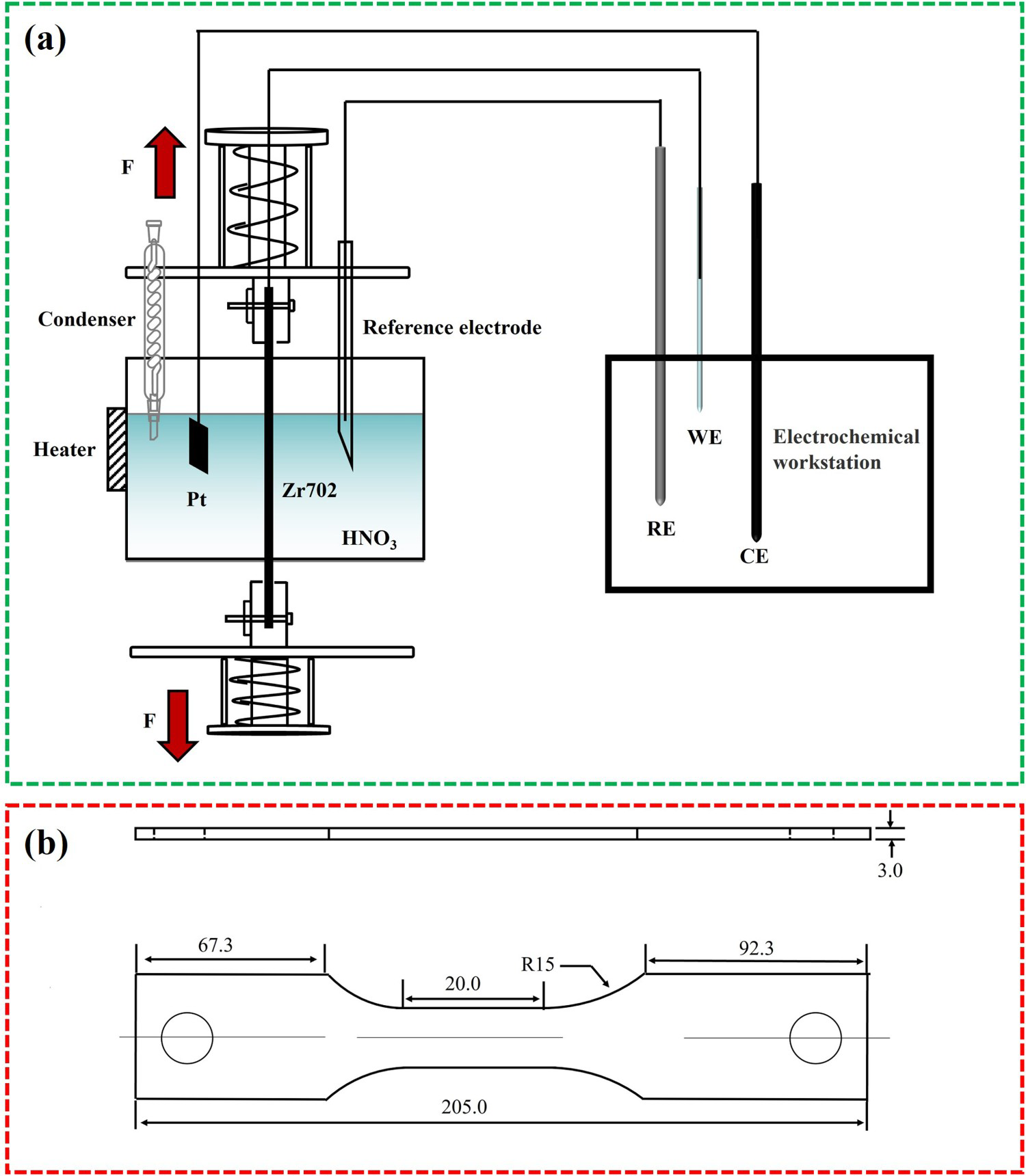
Specimens were strained to failure at different strain rates (1 × 10⁻⁵ s−1, 1 × 10⁻⁴ s−1 and 1 × 10⁻³ s−1) during SSRT tests, and they were kept under open-circuit electrochemical potential conditions. The effect of strain rates on SCC at boiling temperature was evaluated by a stress–strain curve. The specimens’ fracture and lateral surfaces after SSRT were systematically characterised using OPTON: HS-OP-810 scanning electron microscope (SEM).
Results and discussions
Figure 2(a) shows stress–strain curves of commercial Zr702 at the different strain rates of 1 × 10⁻³, 1 × 10⁻⁴ and 1 × 10⁻⁵ s−1 in the air as well as HNO3 solutions, respectively. The results indicate that under all conditions, the specimens exhibited uniform plastic deformation, and after reaching the ultimate tensile strength (UTS), they exhibited elastic behaviour. Table 2 shows the fracture stress and elongation values of Zr702. Furthermore, there is no significant difference in the curve characteristics of the linear elastic stage of the three samples after stretching in air and nitric acid medium. After yield, the three samples all had strain-hardening characteristics. As the strain increased (before 10%), the stress gradually increased, which was the stage of uniform plastic deformation. After the stress reached its maximum, microcracks formed locally. These microcracks then propagated slowly, releasing the stress produced by strain strengthening and resulting in a slight decrease of stress with increasing strain, known as the necking stage. As the metal underwent further tensile deformation, the microcracks continued to expand and coalesce until visible necking appeared on the macroscopic surface of the sample. The deformation then became increasingly focused until the sample ultimately fractured.
(a) Engineering stress–strain curves of Zr702 in different HNO3 concentrations and strain rates, (b) OCP of Zr702 anode under 1 × 10⁻³ s−1 stress corrosion, (c) OCP of Zr702 anode under 1 × 10⁻⁴ s−1 stress corrosion, (d) OCP of Zr702 anode under 1 × 10⁻⁵ s−1 stress corrosion. The tensile data and SCC sensitivity of commercial Zr702 measured by SSRT in 107°C HNO3 solution and air.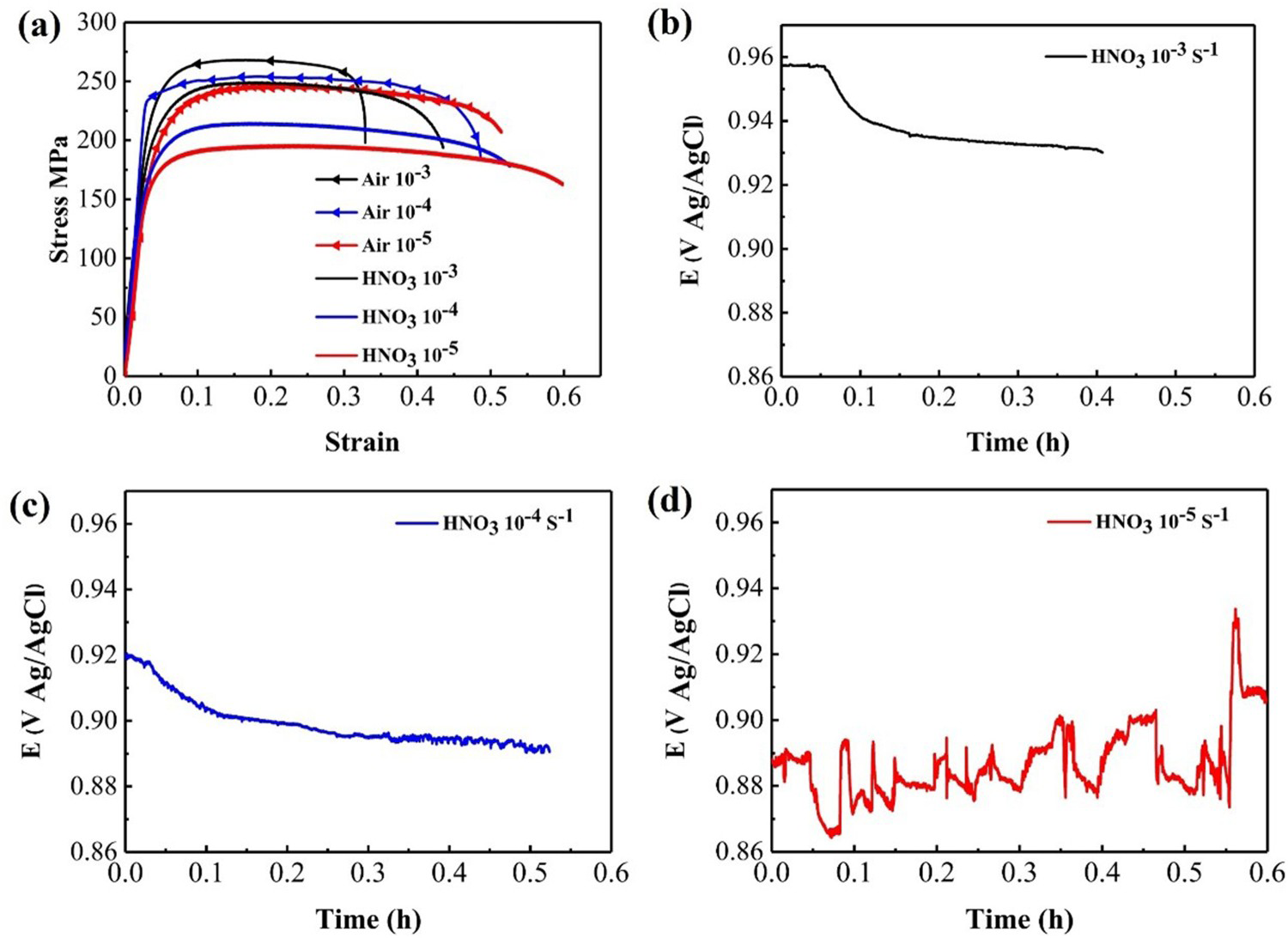
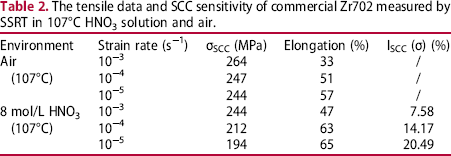
The slow strain rate tensile results of different tensile rate samples in air and nitric acid media were also compared in Figure 2(a). The elongation of Zr702 with a strain rate of 1 × 10⁻⁴ was 1.5 times higher than that of Zr702 with a strain rate of 1 × 10⁻³, and the elongation was still increasing when the strain rate was 1 × 10⁻⁵. The results demonstrate that the extension of the sample in a nitric acid medium rises as the strain rate decreases, which piques our interest. Table 2 shows the results of calculating the stress corrosion sensitivity of samples with varied tensile rates. The calculations demonstrate that Zr702 is subject to stress corrosion following corrosion in boiling nitric acid. It was obvious that when the strain rate increased, ISCC fell dramatically from 20.49% to 7.58%
The SCC susceptibility index (ISCC) determined by the loss of fracture stress measured in a solution is given by the following equation [16].

When the current density was zero, the OCP curve represented the change in electrode potential with time. Its objective was to evaluate the corrosion propensity of the alloy based on the positive and negative electrode potential from a thermodynamic standpoint. The lower the likelihood of corrosion, the higher the electrode potential in OCP. Figure 2(b–d) shows that when the tensile rate was 10−3 and 10−4, the electrode potential of Zr702 steadily declined with time, from 0.957 V at ambient temperature to 0.93 V at 110C, indicating that the propensity of corrosion in Zr702 was growing due to temperature and stress. When the tensile rate was 10−5, the OCP varied continually with increasing stress and was difficult to stabilise.
To further understand the strain rate sensitivity of the stress corrosion cracking behaviour of commercial Zr702 in boiling HNO3, the sample under stress with a strain rate of 1 × 10⁻⁵ s−1 was analysed (Figure 3a). It can be seen that with a tensile rate of 1 × 10⁻⁵ s−1, the vicinity of the sample fracture became black, which was also observed in samples with 10−3 and 10−4 s−1 tensile rates. Furthermore, some micro-voids are visible on the surface of the macroscopic section, which may be due to additional void expansion after the interaction between the corrosive medium and the surface micro-voids. The micro-morphology of the area shows that there were apparent microcracks near the fracture, indicating that during the tension process, micro-voids first appear on the surface due to the accumulation of dislocations. Then, these micro-voids expand and connect to form microcracks, and crack coalescence was predominant until final fracture occurs. Two areas, which referred to fracture region (a1) and the area away from the fracture region (a2), were characterized in detail. A significantly larger number of cracks were observed in the region (a1) compared to the region (a2). Figure 3(c) shows the EDS results of the surface of Zr702. Compared with the crack (area b2), the oxygen content in the surface area of the sample (area b1) was significantly higher, indicating the breakdown of the oxide film.
Analysis of the failure mechanism of commercial Zr702 during SSRT in boiling 8 mol/L HNO3 solution. (a) Appearance of the Zr702 sample after SSRT in boiling 8 mol/L HNO3 solution. (b) SEM micrograph of the lateral surface of Zr702 sample after SSRT in boiling 8 mol/L HNO3 solution. (c) EDS analysis of the surface of Zr702 in boiling 8 mol/L HNO3 solution.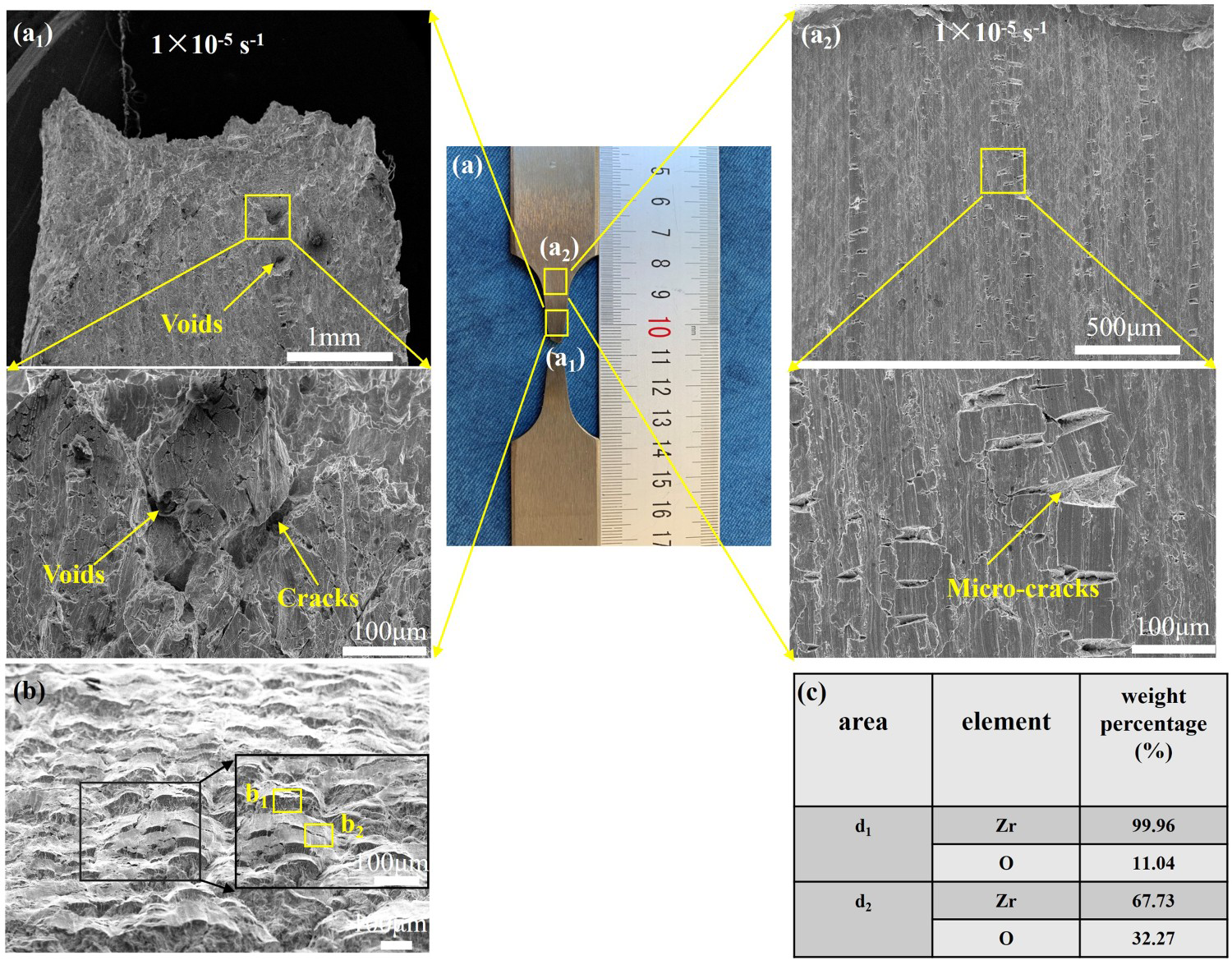
Vibrational spectroscopy is an excellent method for identifying substances by providing unique fingerprint spectra. Raman spectroscopy is one of the fastest and non-destructive analytical technique that give the vibrational spectrum and physical or chemical information of virtually any matrix in any state of matter [17]. Raman spectra were performed on the surface of Zr702 specimens soaked in the solution. Under visible excitation (Figure 4), the vibrational symmetry modes of ZrO2 were observed in the sample. Results revealed that the layers formed on Zr702 in boiling HNO3 solutions were composed of monoclinic ZrO2 (m-ZrO2) and tetragonal ZrO2 (t-ZrO2) [18,19], during the SSRT process. This passive film on the sample was ruptured, resulting in a change in the OCP (Figure 2(b–d))
Indexed Raman spectra obtained from the surface of Zr702 specimen after SSRT tests in boiling 8 mol/L HNO3 solution.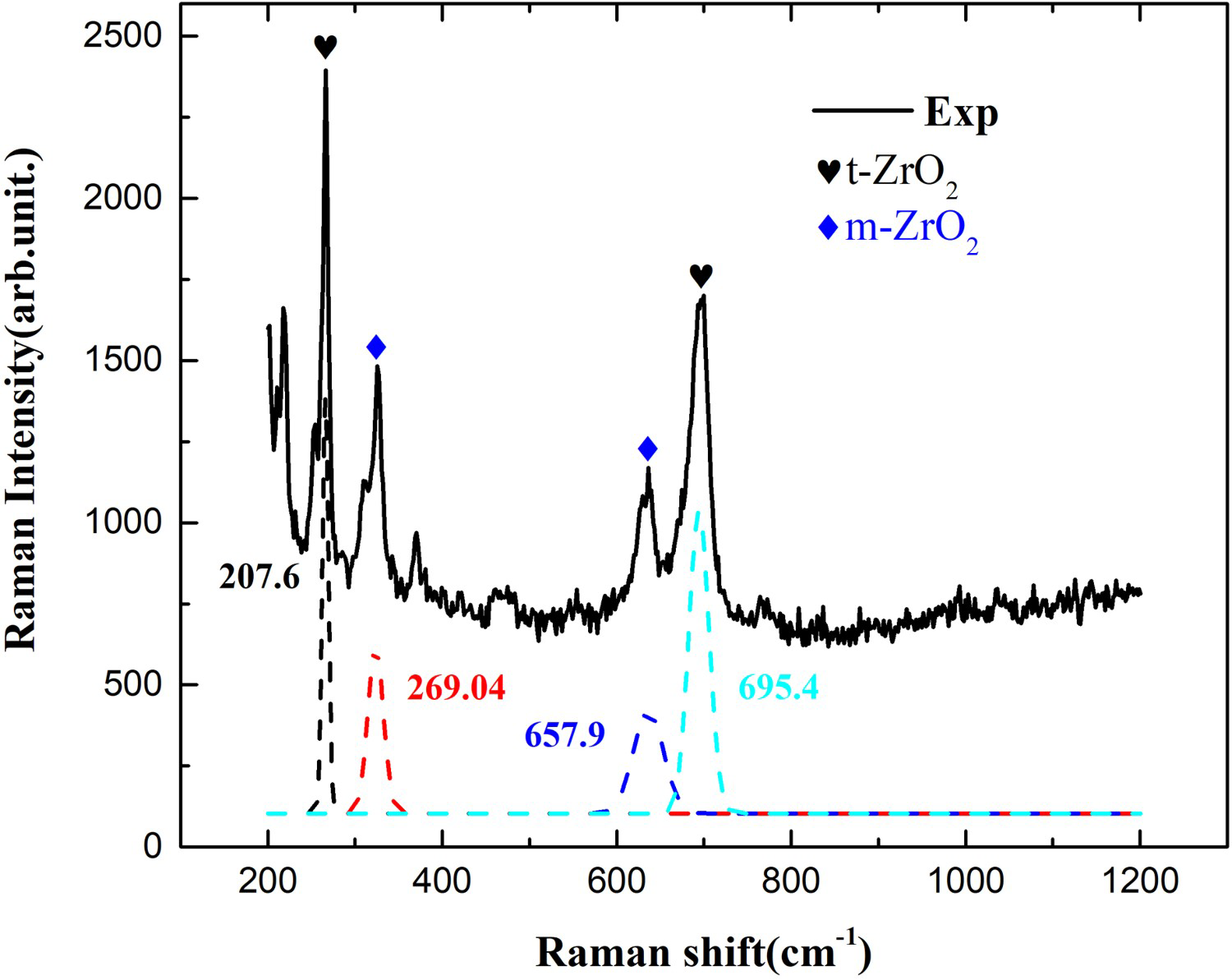
As shown in Figure 5(a–c), it can be observed that the fracture surfaces of commercial Zr702 tested in HNO3 contain two distinct regions. The cracking initiation region exhibits cleavage features, while the rest of the centre region exhibits ductile features. However, with decreased strain rate, the depth of the cleavage facets of the sample increases. It is apparent that the dissociation crack depth of 1 × 10⁻⁵ s−1 (204.5 μm) is more significant than that of 1 × 10⁻³ s−1 (40.48 μm), which also explains why the strength of Zr702 decreases with increasing tensile rate.
Port morphology at different tensile rates (all the observations are from same location in the samples) (a) 1 × 10⁻³ s−1, (b) 1 × 10⁻⁴ s−1, (c) 1 × 10⁻⁵ s−1.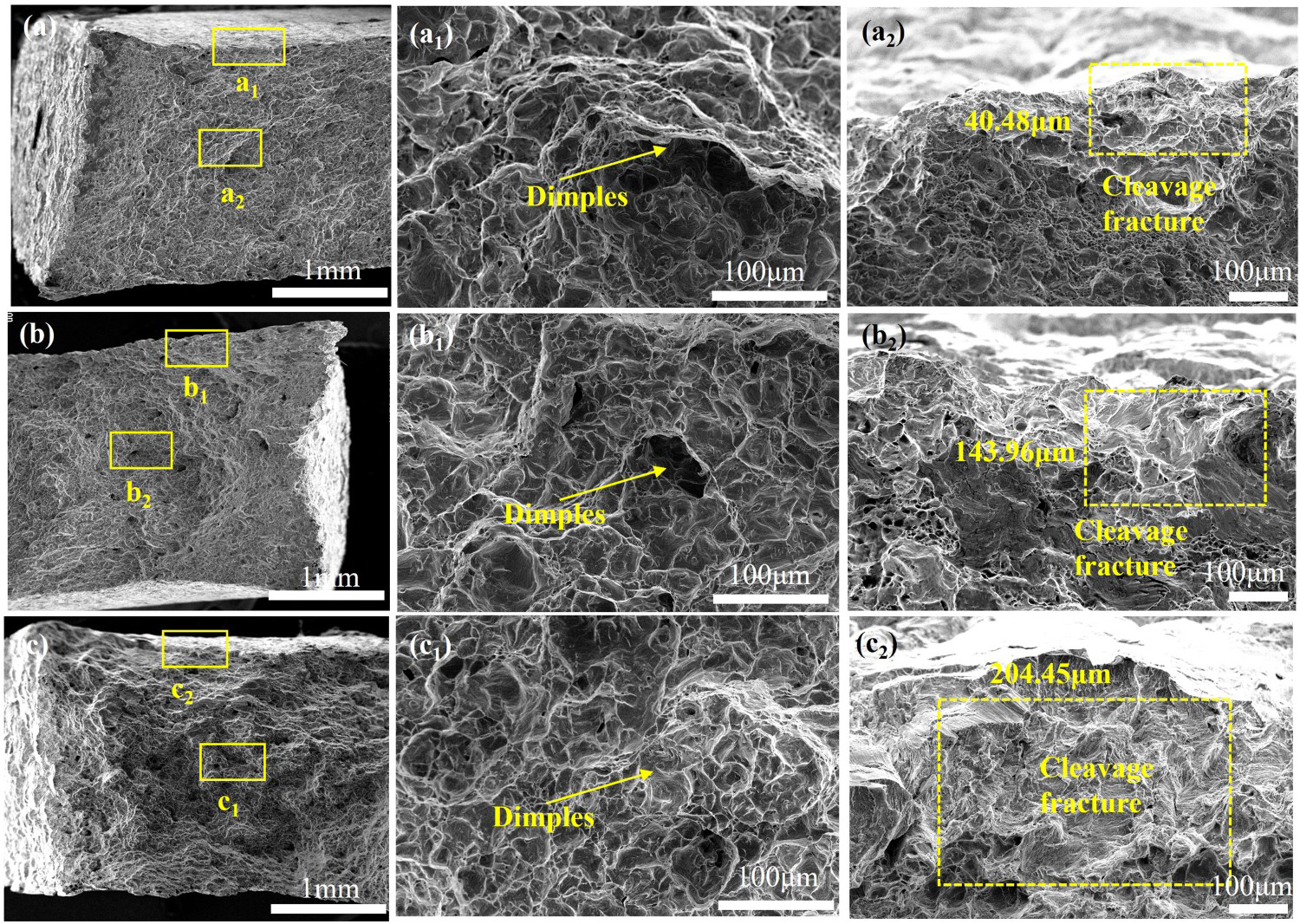
During SSRT tests in air, the fracture mode of commercial Zr702 is typically ductile, as evidenced by the presence of high-density dimples in the fracture surface. However, during SSRT in boiling HNO3 solutions, cleavage cracks are first initiated at specimen surfaces, which are the oxide layers. In the subsequent straining process, ductile fracture occurs, ultimately resulting in rupture. The drop in fracture stress is caused by these cleavage cracks resulting from the failure of oxide layers.
Figure 6 shows that the passivation film's rupture might describe the system's SCC mechanism. When the strain rate is higher (e.g. 1 × 10⁻⁴ s−1), the oxide layer cannot effectively cover the substrate because of the increased strain rate of the specimen, resulting in a reduction in the strength of Zr702 in HNO3. According to the results, the flexibility of Zr702 at a low strain rate was higher than at a high strain rate (Figure 2(a)).
Drawing diagram. (a) Fast rate, (b) slow rate.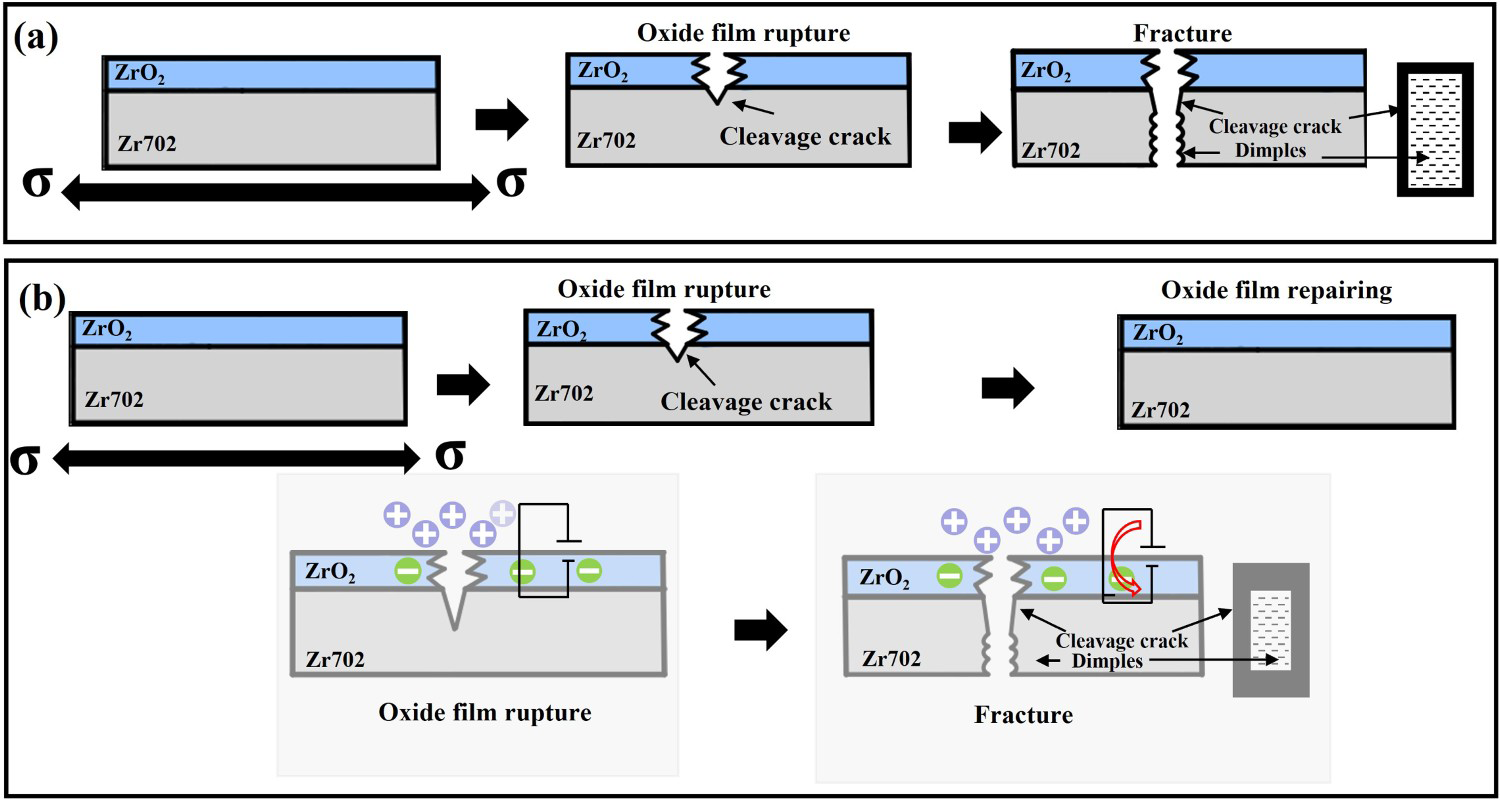
In the experiment, due to the compression of surface pits during the strain process, the electrochemical activity in the intrusion and extrusion regions was positively correlated with the metal content of the surrounding matrix. These regions acted as anodes in the reaction process and promoted dissolution pit corrosion in the high-temperature nitric acid environment [20].
It can be observed that the OCP values continuously decreased for the specimens with strain rates of 10−3 and 10−4 s−1 (Figure 2(b–c)). This indicates that the protective oxide layers were ruptured during straining. After the rupture, new oxide layers were formed on the Zr702 matrix that was exposed to the nitric acid solution. However, these layers were directly torn due to the relatively high strain rates, as shown in the schematic diagram in Figure 6(a). In contrast, for specimens with a strain rate of 10−5 s−1, the OCP values fluctuated during the straining process since the passive layers were able to form or repair at the ruptured positions due to the low strain rate. The rupture and repair of the oxide film under slow strain rate in an HNO3 environment explain why the sample's elongation increased in the HNO3 environment as the strain rate decreased (Figure 2(a)). Consequently, as shown in Figure 6(b), extra cracks formed on the surfaces of Zr702 specimens during SSRT tests, which ultimately reduced the mechanical properties of Zr702 in boiling nitric acid solutions.
When Zr702 is stretched in nitric acid environment, the oxide film on the sample is stretched and ruptured, exposing the matrix to the solution and generating potential fluctuations. Since the corrosion potential of the metal matrix (without film) is higher than that of the metal covered by the oxide film, whenever the oxide film ruptures, the metal matrix comes into direct contact with nitric acid, causing the electrode potential to suddenly swing to a negative value [21]. When the strain rate is too high, the passive film ruptures quickly, leading to significant potential loss (Figure 6(a)). Compared with breaking the passive layer, passivation is a relatively slow process. When the strain rate is the same as the repassivation rate, we expect the oxide layer on the matrix exposed to nitric acid environment to regrow with the rupture process. Passivation recovers, causing the electrode potential to gradually return to its previous value (Figure 6(b)).
Conclusions
In this paper, the strain rate dependence of SCC behaviour for commercial Zr702 in boiling HNO3 solution was systematically investigated. Depending on the electro-mechanical measurements and microstructural characterisations, the following conclusions could be drawn.
Strain rate affected the stress corrosion cracking of commercial Zr702 during SSRT tests in HNO3: with the growing strain rate (1 × 10⁻⁵ s−1, 1 × 10⁻⁴ s−1 and 1 × 10⁻³ s−1), the stress corrosion susceptibility continuously decreased. The depth of cleavage cracks of Zr702 decreased from 204.5 μm (1 × 10⁻⁵ s−1) to 40.48 μm (1 × 10⁻³ s−1), which explained the drop down of fracture stress (σSCC) and the increment of stress corrosion susceptibility (ISCC). Raman spectra results showed that Oxide layers formed on commercial Zr702 in boiling 8 mol/L HNO3 solutions was composed of monoclinic ZrO2 (m-ZrO2) and tetragonal ZrO2 (t-ZrO2). By analysing OCP curves during SSRT in boiling HNO3 solution, with strain rates above 10−4 s−1, the ZrO2 layers directly broke down. With strain rates of 10−5 s−1, the ZrO2 layers alternatively ruptured and repaired, which accelerated stress corrosion of Zr702.
Footnotes
Disclosure statement
No potential conflict of interest was reported by the author(s).