







Abstract
In this study, undoped and Sr2+ doped BaZrO3 ceramics were prepared by solid-state reaction using 3 wt-% B2O3 as sintering aid. The phase composition and microstructure of BaZrO3 were studied by X-ray diffraction (XRD) and scanning electron microscopy (SEM). The results show that introducing an appropriate amount of Sr2+ makes BaZrO3 ceramics Q × f value and density increase. In addition, the dielectric constant of BaZrO3 ceramics increases with the increase of Sr2+ addition. With excellent microwave dielectric properties, ϵr = 34.17 and Q × f value of 39,070 GHz(@ 7.8 GHz) τf = + 140 ppm/°C were obtained in 6 at.-% Sr2+ doped BaZrO3 with 3 wt-% B2O3 sintering aid at 1275°C for 5 h. Using this material as the medium, the simulation of GPS antenna by HFSS software shows that this material has the potential to be used as the antenna medium material.
Introduction
The development of modern communication technologies such as mobile communication, satellite communication and global positioning system (GPS) has put forward higher requirements for microwave components such as microwave resonators, filters and microwave substrates. Microwave dielectric ceramics have high dielectric constant and low microwave loss. Low-temperature coefficient has become a key material for manufacturing microwave components [1,2].
BaZrO3 is a typical perovskite structure material [3], characterised by high thermal conductivity, high mechanical strength, low thermal expansion system, high bandgap width, medium electrical conductivity and corrosion resistance, which is widely used in fuel cells [4–7], luminescent materials [8–10] and refractory materials [11]. However, the extremely high sintering temperature (1600°C) [12] makes it difficult to prepare BaZrO3 ceramics under conventional experimental conditions. This limits the application of BaZrO3 ceramics to some extent. Therefore, scientists have tried to reduce the sintering temperature of BaZrO3 ceramics. Among them, Jong Song Park et al. [13] prepared BaZrO3 ceramics with a relative density greater than 95% at 1500°C by using CuO as a sintering aid. Peter Babilo et al. [14] reduced the sintering temperature of yttrium-doped BaZrO3 ceramics to 1300°C by using ZnO as the sintering aid, and at the same time achieved the density of more than 93%. In addition, materials such as NiO, SnO, BaO, MgO and Al2O3 have also been used by scholars as sintering aids in the sintering of BaZrO3 based ceramics, and some achievements have been made [15].
In the report on the dielectric properties of BaZrO3 ceramics, S. Parida et al. obtained the dielectric properties of ϵr = 38.4,Q × f = 5731 GHz, τf = 324.35 ppm/°C when sintered at 1670°C by solid phase method [16]. After using Ga3+ and Nb5+ to replace Zr4+ in BaZrO3 ceramics, Kolodiazhnyi et al. [17] successfully obtained excellent results of ϵr = 36.7, Q × f = 172THz, τf = 110 ppm/°C at 1600°C. This result encourages the research on ion substitution direction of BaZrO3 ceramics. In our previous study, B2O3 was used as the sintering aid to reduce the sintering temperature of BaZrO3 ceramics to 1300°C after adding 3 wt-% B2O3.
Patch antennas are widely used in global positioning systems, 5G communications, vehicle navigation, and other systems owing to their small size, ease of fabrication, and strong stability [18,19]. The GPS antenna is prone to phase shift during transmission owing to its long propagation distance, which makes signal decoding difficult. Circular polarisation antenna can enable signal reception from any phase to overcome the problem of phase offset in the signal, and can suppress multipath fading to reduce signal loss during transmission, making it the first choice for GPS antenna applications [20]. Therefore, in this paper, B2O3 was used as sintering agent to prepare Ba1−xSr x ZrO3 ceramics, and the effects of Sr2+ doping on the microstructure and microwave dielectric properties of BaZrO3 ceramics were studied. Excellent microwave dielectric properties were obtained by adjusting the content of Sr2+. The GPS antenna is designed. The 10 dB bandwidth of the antenna is 80 MHz, the maximum gain is 5.7 dB, and the axis ratio is less than 3 dB in the range of −68° to 68° to achieve circular polarisation.
Experimental procedure
Ba x Sr1−xZrO3(x = 0,0.02,0.04,0.06,0.08,0.1) ceramics were prepared by solid-state reaction. Take ZrO2 (Country medicine group chemical reagent limited company > 99%), BaCO3(Country medicine group chemical reagent limited company > 99%) and SrCO3 (Country medicine group chemical reagent limited company > 99%) as raw materials, weigh them according to massage proportion, then grind them with zirconia balls in deionised water for 4 h, and dry them. The dry powder was calcined in air at 1200°C for 3 h. Then 3 wt-% B2O3(Country medicine group chemical reagent limited company > 99%) was added to the pre sintered powder for secondary grinding for 6 h and drying. Add 10 wt-% PVA solution to the powder for granulation, and press the granulated powder into a cylindrical sheet with a diameter of 13 mm and a thickness of 5–8 mm under the pressure of 100 Mp. Finally, the pressed cylinder was held at 450°C for 2 h to remove the binder, and the ceramic samples were obtained at 1250–1350°C for 5 h.
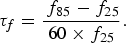
The density was measured by Archimedes method, the micro morphology and sintering state of the sample were observed by using a desktop scanning electron microscope (Phenom ProX), the phase analysis and crystal structure analysis were performed by using an X-ray diffractometer (Bruker D8), and the quality factor and dielectric constant of the sample were tested by using the Hakki Coleman method with an Agilent E8363A vector network analyzer, Calculate the temperature coefficient of the resonant frequency using Formula (1), where f25 and f85 are the resonant frequencies of the sample at 25°C and 85°C, respectively.
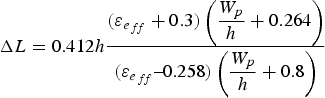
Results and discussions
Generally speaking, the substitution of Sr2+ for Ba2+ in the same main group is easy to occur ion substitution to form solid solution [21–24]. In Figure 1 the XRD spectrum of Ba1−xSr
x
ZrO3 ceramics sintered at 1300°C for 3 h. It can be seen from the figure that all components present BaZrO3 (Pm-3 m, JCPDS No-74-1299) phase with obvious perovskite structure. In addition, a small number of unknown phases were observed in the XRD spectra of all components, so it is known that these unknown phases were not caused by the introduction of Sr2+. It is worth noting that in our previous studies, the introduction of B2O3 will produce a similar phase in BaZrO3 ceramics, which is probably BaZr(BO3)2 phase by XRD standard card comparison, and this phase will have some effect on the microwave dielectric properties of BaZrO3 ceramics. The specific mechanism of the effect is worth further study. The diffraction peak of the second phase does not change significantly with the increase of the amount of Sr2+ substitution, so the influence of Sr2+ and B2O3 on BaZrO3 is relatively independent. As the amount of Sr2+ increases, the diffraction peak shifts slightly from the high angle because the radius of Sr2+ ions (1.18 Å) is slightly smaller than that of Ba2+ ions (1.35 Å), so Sr2+ enters the Ba2+ position to form a solid solution and results in a decrease in the lattice constant.
XRD patterns of the BaZrO3 ceramics with different Sr2+ contents sintered at 1300°C for 3 h.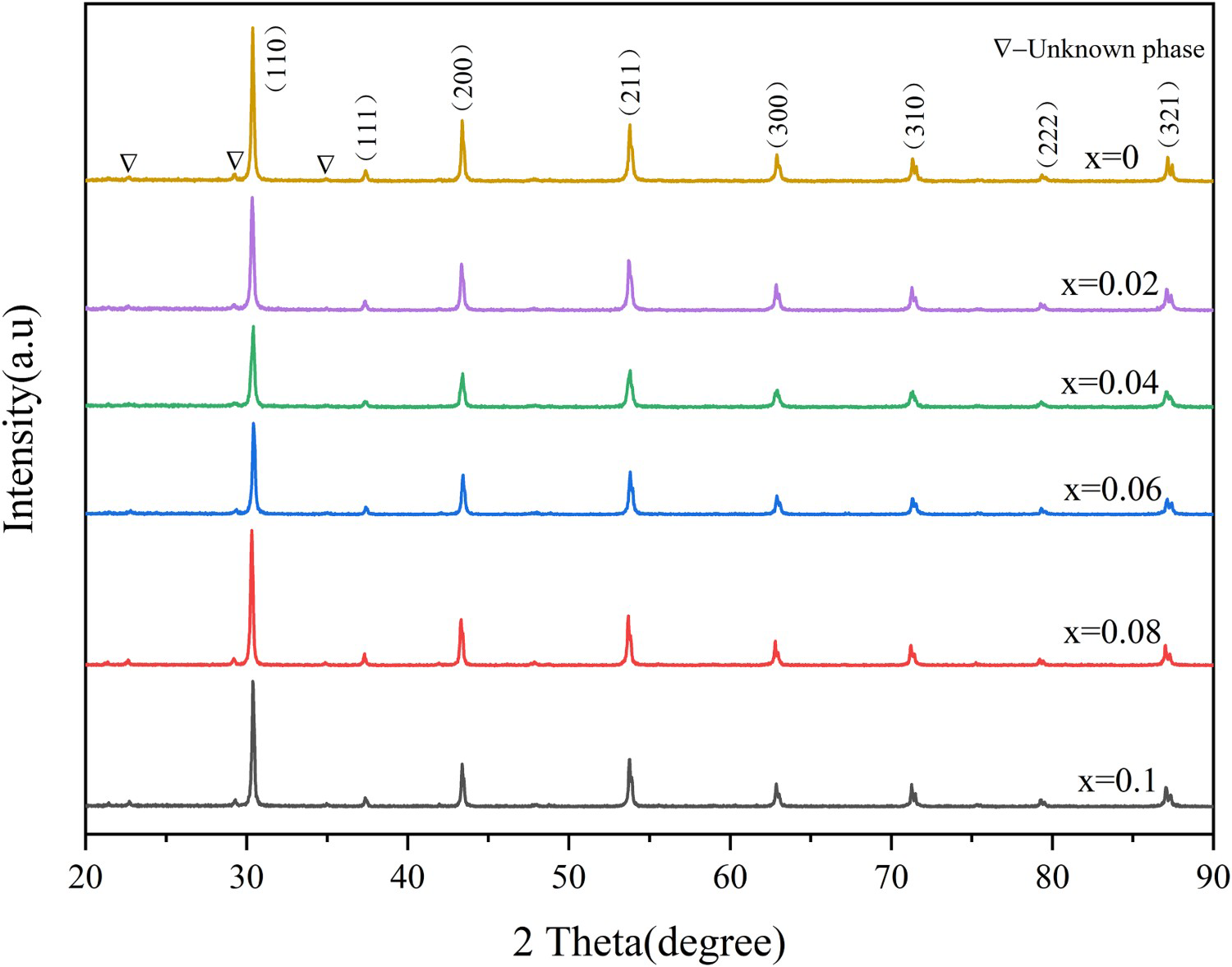
Figure 2(a) shows the curve of BaZrO3 ceramic density changing with x value. It can be seen from the figure that the density value is basically above 5.7 g/cm3. When the x value is less than 0.06, the density value increases with the increase of x. This is because Sr2+ enters into the crystal structure of BaZrO3 to form solid solution [15], which promotes the sintering of ceramics. At 1325°C, the density reaches the maximum value of 5.825 g/cm3 when the x value is 0.06, After the x value increases to 0.08, the density value begins to decrease by 5.75 g/cm3, which is related to the abnormal growth of grains after the x value increases. Although there is still a certain gap with the relative density of BaZrO3 ceramics (6.23 g/cm3), the relative density has stabilised at about 95.5%, which indicates that it has been densified and sintered at this time.
Variation curve of density of Ba1−xSr
x
ZrO3 ceramics sintered at different temperatures with x value (a) bulk density (b) relative density.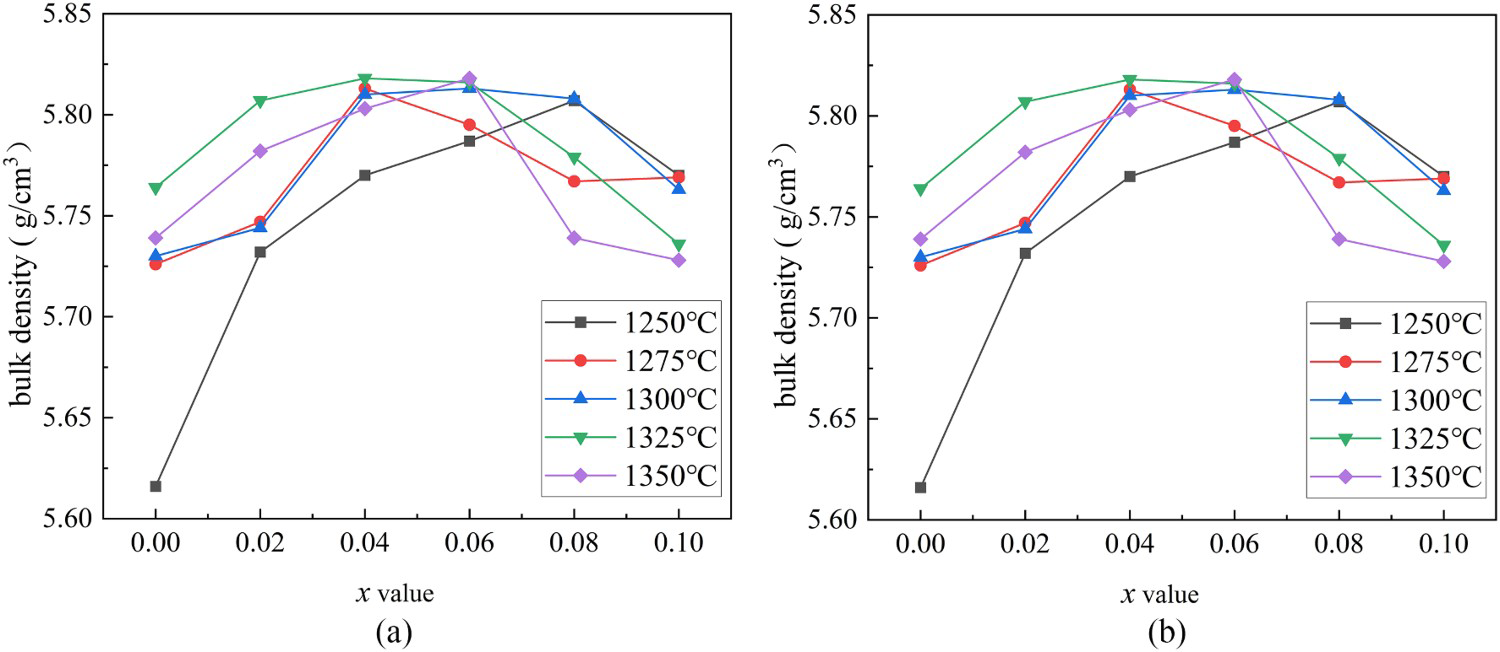
In order to better observe the effect of Sr2+ on the sintering state of BaZrO3 ceramics, the natural cross sections of each group of samples sintered at 1300°C were observed by SEM. As shown in Figure 3. It can be seen from the figure that the ceramic grain presents a blocky structure. When x = 0, there are a few pores in the ceramic. With the introduction of Sr2+, the pores of the ceramic disappear, and the ceramic sintering is dense. In the report between [25], the introduction of Sr2+ will inhibit the growth of BaZrO3 grains to some extent and agglomeration will occur with the increase of Sr2+ content. Although two kinds of grains of the same size appeared with the increase of x value in this study, there was no agglomeration phenomenon, which may be owing to the small amount of Sr2+ added in this study and the introduction of sintering additives to promote the rearrangement of grains and weaken the agglomeration phenomenon to a certain extent. When sintered at 1600°C, the average grain size of BaZrO3 ceramics without doped elements reported in the literature is 1.8–3.2 μm [17], it can be seen from the SEM diagram that most of the grain size in this study is within this range, which indicates that the effect of densification sintering has been achieved at this time.
SEM image the BaZrO3 ceramics with different Sr2+ doping concentrations sintered at 1300°C for 3 h. (a) x = 0; (b) x = 0.02; (c) x = 0.04; (d) x = 0.06; (e) x = 0.08; (f) x = 0.1.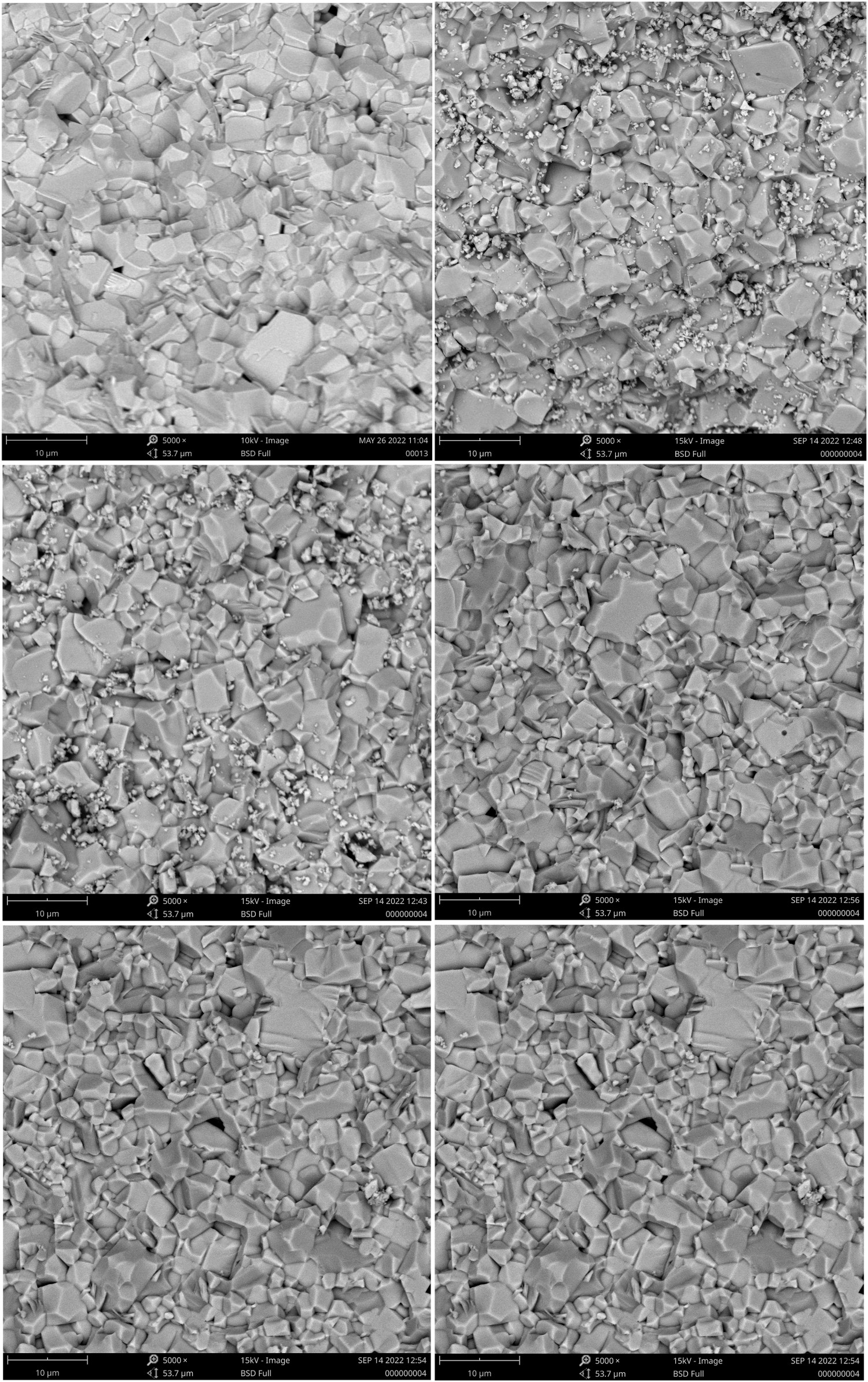
Similar to the change of density value, the dielectric constant of Ba1−xSr
x
ZrO3 ceramics also increases first and then decreases with the increase of sintering temperature, as shown in Figure 4.
Variation curve of Ba1−xSr
x
ZrO3 dielectric constant with temperature.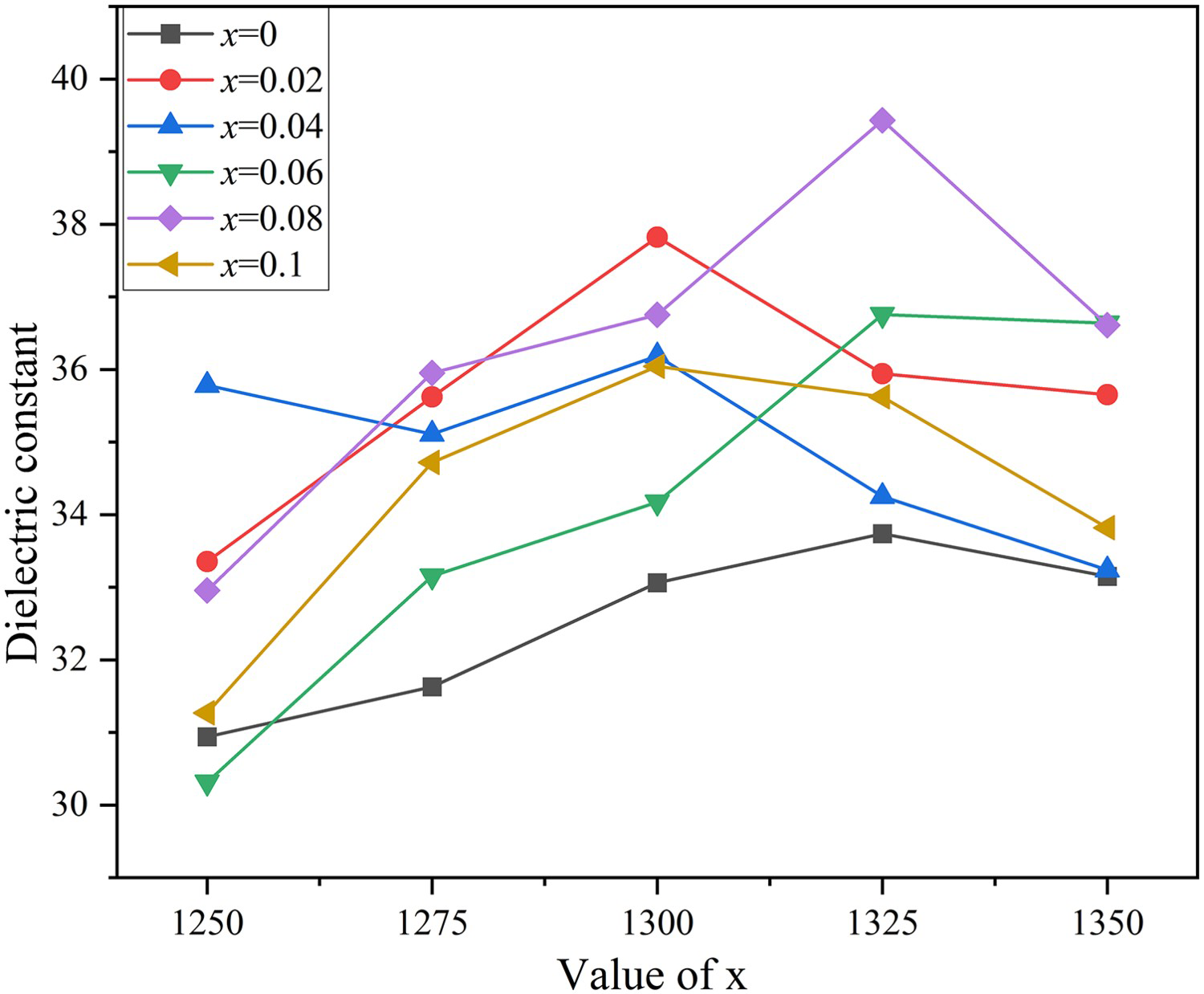
Generally, the main factors affecting the dielectric properties of materials were divided into intrinsic characteristics and extrinsic characteristics. The intrinsic characteristics mainly include ionic polarizability and crystal structure, and the extrinsic characteristics are porosity and second phase.
It can be seen from the figure that the dielectric constant of the ceramics increases first and then decreases with the increase of temperature. This is similar to the change of density, indicating that the dielectric constant is greatly affected by extrinsic characteristics. Although the ionic polarizability of Sr2+ (4.25 × 10⁻²⁴ cm3)is lower than that of Ba2 + (6.40 × 10⁻²⁴ cm3) [26], and the dielectric constant of SrZrO3 is also low, it can be seen from the samples sintered at the same temperature that the overall dielectric constant of Sr2+ is higher than that of the samples added, and the dielectric constant tends to decrease with the increase of the amount of Sr2+ added, because one side of the ceramics is still BaZrO3 ceramics, only a small amount of Sr2+ added will not lead to the formation of SrZrO3 phase, On the other hand, the addition of Sr2+ can promote the growth of grains, which will also increase the dielectric constant. Finally, the maximum value of 39.432 is obtained at 1325°C, x = 0.08.
Figure 5(a) shows the curve of Q × f value versus x value of Ba1−xSr
x
ZrO3 ceramics at different temperatures. It can be seen from the figure that Q × f value increases first and then decreases with the increase of x. On the one hand, the introduction of Sr2+ will increase the density of BaZrO3, reduce the number of pores, reduce the dielectric loss, and increase the Q × f value. Because the quality factor of SrZrO3 ceramics is low [27] (Q × f = 13,700 GHz), the continued increase of Sr2+ will lead to the decrease of the increased Q × f value. On the other hand, the lattice parameters will decrease with the increase of Sr2+ concentration [23], which may lead to the increase of dielectric loss.
Curve of Q × f value and temperature coefficient of Ba1−xSr
x
ZrO3 ceramics changing with x value.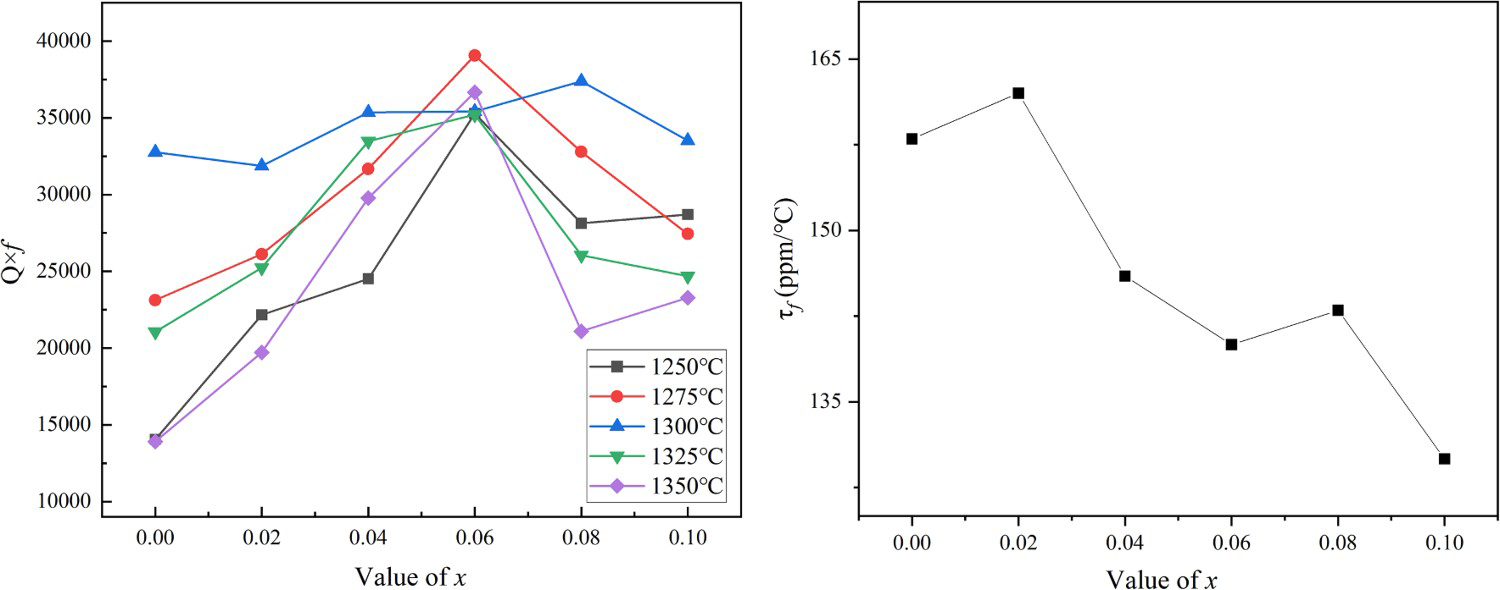
When two materials with different resonant frequency temperature coefficients are compounded, the overall resonant frequency temperature coefficient of the material can be calculated according to Lichtrncker's rule of thumb [28]. Where v1 and v2 are the volume fractions of BaZrO3 and SrZrO3 respectively, and τf1and τf2 are the respective temperature coefficients.

A GPS patch antenna was designed using self-developed Ba1−xSr
x
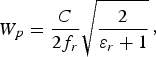
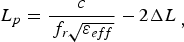
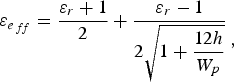
ZrO3 (x = 0.06) ceramics. As shown in Figure 6, the patch antenna is composed of three layers, including the upper radiation layer, the middle layer is a ceramic dielectric layer, and the bottom layer is a grounding layer. We choose the coaxial line as the feed mode of the antenna. In order to achieve circular polarisation of the antenna, it is necessary to adjust the feed position and cut a corner from the radiation layer. After the antenna size is calculated by Matlab software, the HFSS software is used to fine tune the antenna to achieve the best performance. The specific dimensions of the final antenna are shown in Figure 6.
3D Schematic diagram and dimension diagram of GPS antenna.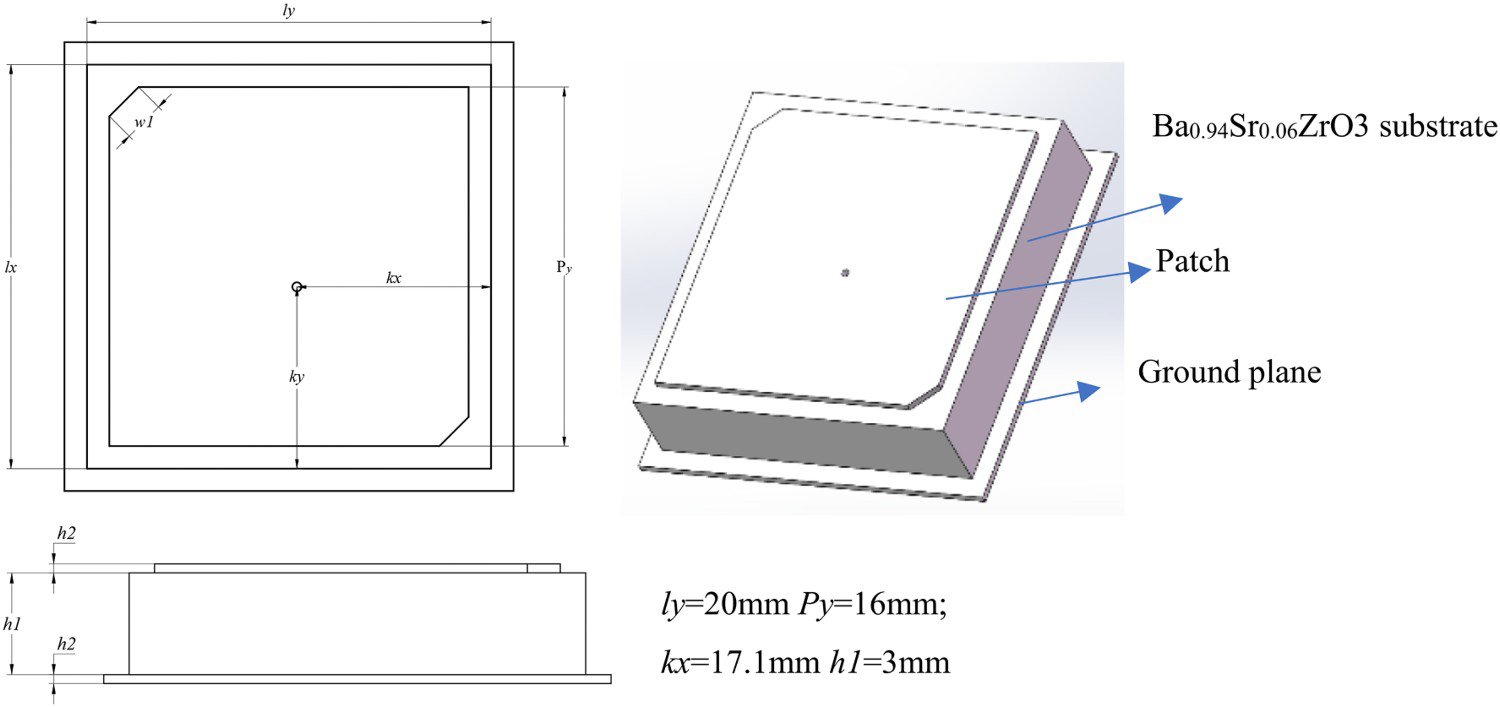
For the antenna, the matching degree is the premise of the normal operation of the antenna, and the gain is the index used to evaluate the antenna radiation ability. Both are the key parameters of the antenna. Axis ratio can be used to evaluate the polarisation ability of antenna. For this reason, the S11 parameter and the antenna gain are simulated in this paper. In the S parameter diagram in Figure 7(b), it can be seen that the antenna | S11 | is greater than 10 dB in the frequency range of 1.57–1.58 GHz, indicating that good matching can only be generated in this frequency band at this time. It can be seen from the gain curve in Figure 7 that the gain is greater than 3 dB from −48° to 48°, meeting the design requirements. The axial ratio can be used to display the polarisation degree of the antenna. When the axial ratio is less than 3 dB, it means that the length of the major axis and the minor axis in the radiation direction is close to each other, which can be approximately regarded as circularly polarised radiation. In the axial ratio diagram in Figure 7(b), it can be seen that the axial ratio is less than 3 dB from −68° to 68°, which means that the antenna can realise circularly polarised radiation at this time. From the simulation results, it can be seen that Ba1−xSr
x
ZrO3 is completely suitable for the design of GPS ceramic antenna and is expected to become one of the materials of ceramic antenna.
GPS antenna simulation diagram. (a) antenna gain diagram, (b) antenna axis ratio diagram, (c) antenna S11 curve diagram, (d) antenna model diagram, (e) antenna radiation pattern.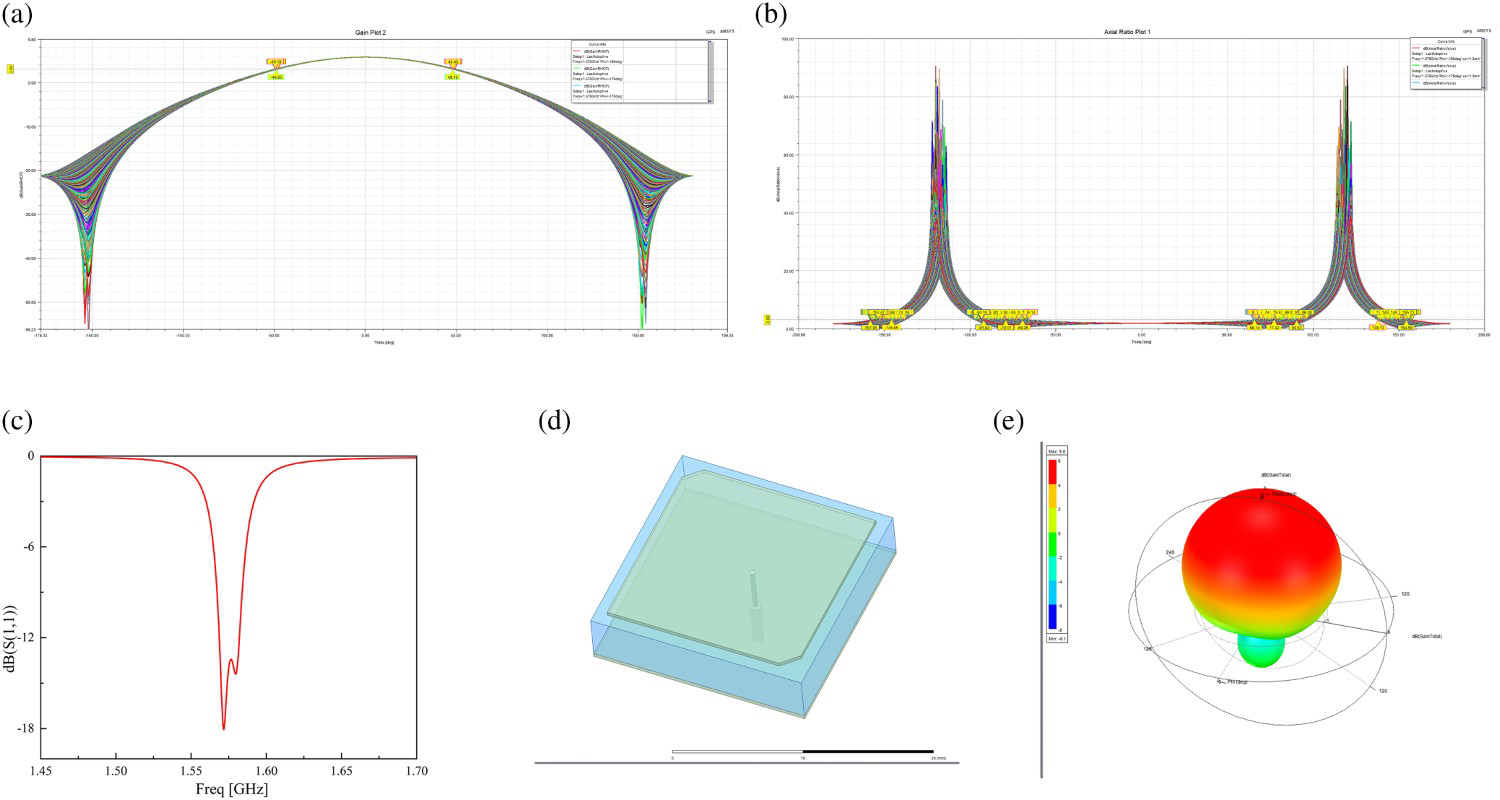
Conclusions
In this paper, BaZrO3 of 3 wt-% B2O3 is used as the research object to study the effect of Sr2+ on the sintering and microwave dielectric properties of BaZrO3 ceramics. It is found that solid solution is formed in BaZrO3 ceramics after Sr2+ is added, BaZrO3 ceramics cell shrinks, and Sr2+ has a certain role in promoting the sintering of BaZrO3 ceramics to make the dielectric constant and Q × The value of f increases. Excellent dielectric property: ϵr = 34.17, Q × f = 39,070 GHz, τf = + 140 ppm/°C. Using Ba0.94Sr0.06ZrO3 ceramics as the medium, the simulation of GPS circularly polarised antenna was carried out. The matching is good at 1.58 GHz|S11 |>10 dB, the maximum gain exceeds 5 dB, and the axial ratio between −68° and 68° is less than 3 dB to achieve circular polarisation. This material is expected to be one of the choices of ceramic antenna materials.
Footnotes
Disclosure statement
No potential conflict of interest was reported by the author(s).