







Abstract
The wood properties were examined for Larix sibirica naturally grown in Tosontsengel, Mongolia. The dynamic Young's modulus of the logs ranged from 6.31 to 9.65 GPa. The mean values of wood properties were as follows: water-extracted basic density = 0.44 g cm−3, air-dry density = 0.59 g cm−3, shrinkage at 1% moisture content change in the radial and tangential directions = 0.18% and 0.32%, modulus of elasticity = 11.24 GPa, modulus of rupture = 102.4 MPa, compressive strength parallel to the grain = 53.1 MPa, and mass loss by Fomitopsis palustris and Trametes versicolor = 10.4% and 18.6%. Mass loss in the heartwood was higher than that in the sapwood, indicating that the larger mass loss values in the heartwood of L. sibirica might be related to the larger amount of arabinogalactan.
Introduction
Larix sibirica (Münchh.) Ledeb. is extremely resistant to cold and drought, and consequently has an unusually large range extending from polar tree lines at a latitude of approximately 70° N to the desert regions of northwestern China, or a latitude of 43° N from the Ob River in the west to Lake Baikal in the east (Semerikov et al. 2013). This species has been planted in plantations in Finland because it has a higher growth rate than Pinus sylvestris and Picea abies on fertile sites (Luostarinen 2011). The wood of Larix species is used as structural lumber because of its high strength properties (Gupta and Ethington 1996).
As of January 2012, the forest of Mongolia accounted for 11.84% of total land area or 18,592.4 thousand ha (FAO 2014a). Larix sibirica is the most common forest tree in Mongolia, covering not less than 80% of the forest area (Dulamsuren et al. 2010). With the introduction of a market economy to Mongolia at the beginning of the 1990s, the forest industry's GNP share in Mongolia is currently at 0.26% compared with 4.1% in 1990 (Ykhanbai 2010). The production of industrial roundwood has gradually increased from 49,000 in 2010 to 162,000 m3 in 2014 (FAO 2014b). The recovery of the forest and wood products industry with appropriate forest management interventions is necessary for economic development in Mongolia. Basic wood information is needed to effectively utilise L. sibirica in Mongolia.
In this study, the basic density, shrinkage, bending properties, compressive strength, decay resistance, and amounts of chemical components of L. sibirica grown in Mongolia were investigated.
Materials and methods
Materials
Stem diameter, tree height, and dynamic Young's modulus of logs in three sample trees.
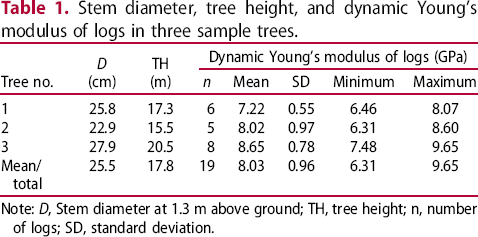
Note: D, Stem diameter at 1.3 m above ground; TH, tree height; n, number of logs; SD, standard deviation.
Dynamic Young's modulus of the logs
The dynamic Young's modulus of the logs was measured by vibrational analysis (Sobue 1986). The first resonance frequency due to sound emitted by hitting the cross section of a log with a hammer was measured by a handheld fast Fourier transform analyzer (AD3527, A&D) equipped with an accelerometer (PV-85, Rion). After the first resonance frequency was measured, green weight and volume were measured to determine green density. The volume was calculated from length and mean values of diameter in both ends of cross section. Dynamic Young’ s modulus (Ef) was calculated by the following equation:

Wood properties
Wedge-shaped specimen (30° in central angle) was obtained from each disk. Samples were cut at 1 cm intervals from the pith of the wedge shape specimens. Basic density was calculated by dividing oven-dry weight by the water-saturated volume determined by the water displacement. Samples were water-saturated by soaking in tap water for 1 week before volume was measured.
Bending properties, compressive strength parallel to the grain, shrinkage, and decay resistance were determined on 30 mm-thick bark-to-bark radial boards (one board per a tree) cut from the 2 m long logs sectioned. The log from tree no. 3 was collected from 1.3 to 1.7 m above the ground because of the existence of heart rot 1.0 m above the ground. After air-drying, the boards were planed to 20 mm in thickness, and then successively cut at 20 mm intervals from the pith to bark in both directions to obtain static bending specimens (320 (L) by 20 (R) by 20 (T) mm). A total of 10, 8, and 10 bending specimens were obtained from the bark-to-bark radial boards of tree numbers 1, 2, and 3, respectively. Specimens for compressive strength parallel to the grain (60 (L) by 20 (R) by 20 (T) mm), shrinkage (20 (L) by 20 (R) by 20 (T) mm), and decay resistance (10 (L) by 20 (R) by 20 (T) mm) tests were cut from the bending specimens after they were tested.
Radial and tangential dimensions in the shrinkage specimen were measured with a screw metre (MDC-25M, Mitutoyo) at air-dry and oven-dry conditions. The number of specimens was the same as bending specimens. The shrinkage in the radial and tangential directions per 1% moisture content change was calculated using methods described in Japanese Industrial Standard (JIS) Z 2101:2009 (JIS 2009).
The static bending test was conducted using a universal testing machine (MSC-5/500-2, Tokyo Testing Machine). Load was applied to the center of the span (280 mm) at a rate of 5 mm min−1. The modulus of elasticity (MOE) and modulus of rupture (MOR) were calculated from the load and deflection data recorded on a personal computer.
Compressive strength tests were conducted on a universal testing machine (RTF-2350, A&D) at a load speed of 0.5 mm min−1. The number of specimens was the same as bending specimens. Compressive strength parallel to the grain was calculated by dividing the maximum load (N) by the cross sectional area (mm2).
Small clear specimens (10 (L) by 20 (R) by 20 (T) mm) were cut from bending and compressive test specimens to determine air-dry density and moisture content. Moisture contents of the bending and compressive specimens were 9.8 and 10.0%, respectively.
Decay test
The decay test was conducted using a previously described method (Takashima et al. 2015), using brown rot fungus (Fomitopsis palustris, FFPRI 0507) and a white rot fungus (Trametes versicolor, FFPRI 1030). Three specimens from each radial position were prepared for each fungus. The specimens were dried at 60°C for 48 h, weighed, and then sterilised with propylene oxide for 48 h. The specimens were placed on 100 mL medium (4% glucose, 0.3% peptone, 1.5% malt extracts, and 2.0% agar) inoculated with a given fungus in plastic bottles (9.5 cm in diameter, 850 mL in volume) and incubated at 26 ± 2°C and 70% relative humidity for 12 weeks. After 12 weeks, the specimens were removed, and the mycelium was removed using a small brush or a pair of tweezers. The decayed specimens were air-dried for 24 h and then oven-dried at 60 ± 2°C for 48 h. Mass loss was calculated by dividing the decay weight loss by the initial weight of the specimen. Mean values of mass loss at each radial position were calculated by averaging results of the three specimens in a radial position in each fungus.
Chemical components
Wood meal (42–80 meshes) prepared from the heartwood and sapwood of each sample tree were used to determine hot water extractive level, 1% NaOH solubility, ethanol-toluene extractive level, Klason lignin, holocellulose, and α-cellulose (Japan Wood Research Society 2000). Each chemical component in each position and tree was quantified three times, and then the mean value was calculated.
Results
Dynamic Young's modulus
Mean values of the dynamic Young's modulus ranged from 6.31 to 9.65 GPa (Table 1), and averaged 8.03 GPa. The mean value of the dynamic Young's modulus of the logs in the L. sibirica examined in this study was similar or relatively lower than values for L. sibirica grown in Russia (Koizumi et al. 2003) and Larix kaempferi grown in Japan (Takata and Hirakawa 2000; Nagao et al. 2003; Ishiguri et al. 2008). Dynamic Young's modulus of the logs increased slightly with height from 1.3 to 5.3 m and then gradually decreased towards the tree top (Figure 1).
Longitudinal variations in the dynamic Young's modulus (DMOE) of logs. Circles, triangles, and squares indicate the values of tree nos. 1, 2, and 3, respectively. Dotted lines indicate the mean values of the three trees. The first log from the base in tree no. 3 was collected from 1.7 to 3.3 m because of the existence of heart rot below 1.7 m position.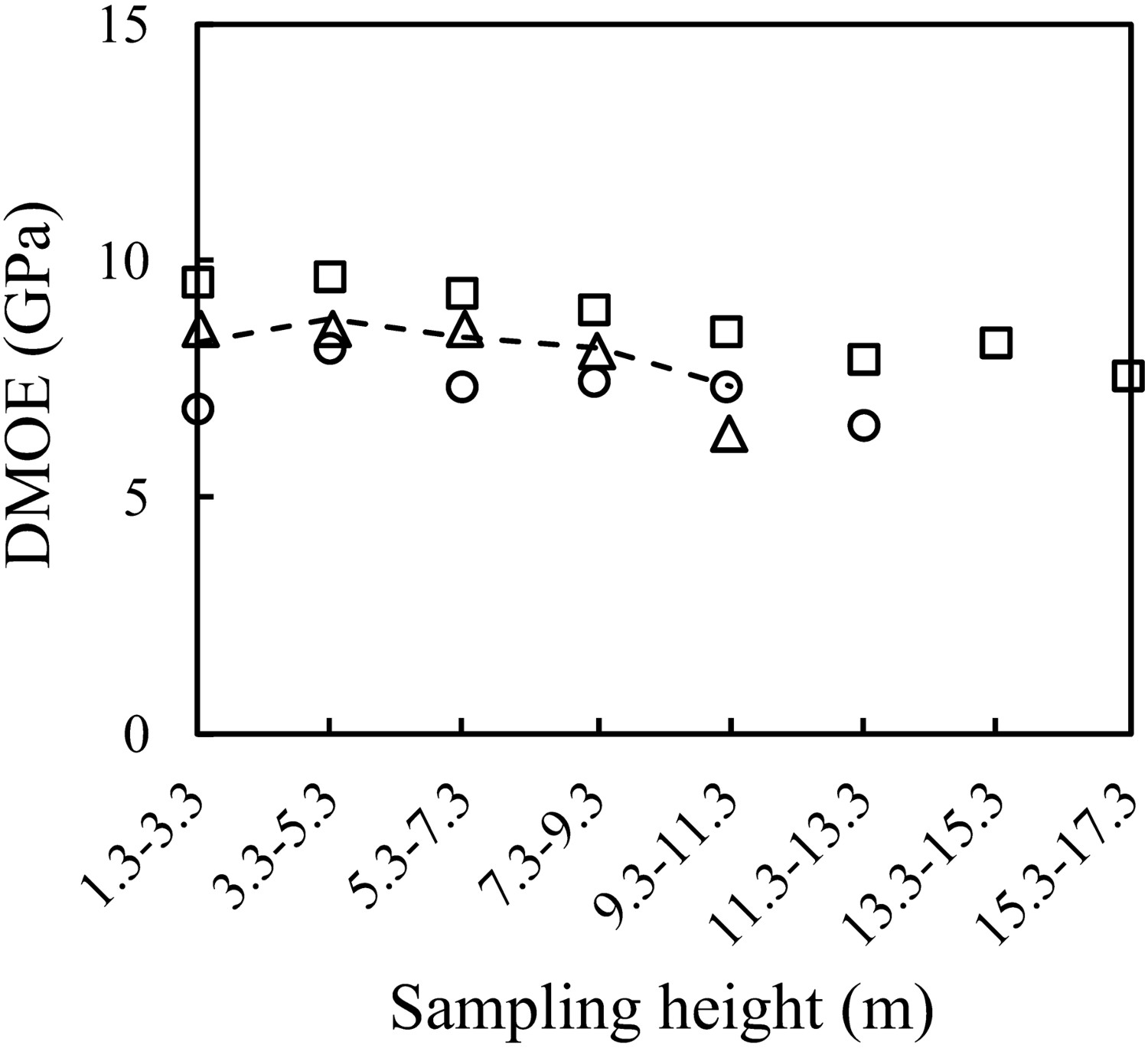
Wood properties
With a few exceptions, the water-extracted basic density was similar at all heights from the pith to the bark but slightly lower near the pith compared with those at other radial positions (Figure 2). Water-extracted basic density ranged from 0.43 to 0.47 g cm−3 (Table 2). Water-extracted basic densities below 5.3 m from the ground were higher than those above that level. Mean air-dry density of the specimens used to evaluate mechanical properties averaged 0.59 g cm−3 at 9.3% moisture content (Table 2), and were similar to those for L. kaempferi (Koizumi et al. 2005), lower than those of L. dahurica (Gupta and Ethington 1996), and higher than those of fast-growing L. sibirica (Luostarinen 2011).
Radial variations in water-extracted basic density measured after water extraction. Symbols and dotted lines refer to Figure 1. Mean values of wood properties of materials cut from three sample trees. Note: n1, number of specimens; n2, number of trees; SD, standard deviation; BD, basic density after extraction with water; AD, air-dry density of the specimens for mechanical properties (moisture content: 9.8%); δr and δt, shrinkage at 1% moisture content change in the radial and tangential directions, respectively; MOE, modulus of elasticity; MOR, modulus of rupture; CS, compressive strength parallel to the grain. Samples of wood properties in tree no. 3 were prepared from the log collected from 1.3 to 1.7 m height above the ground because of the existence of heart rot.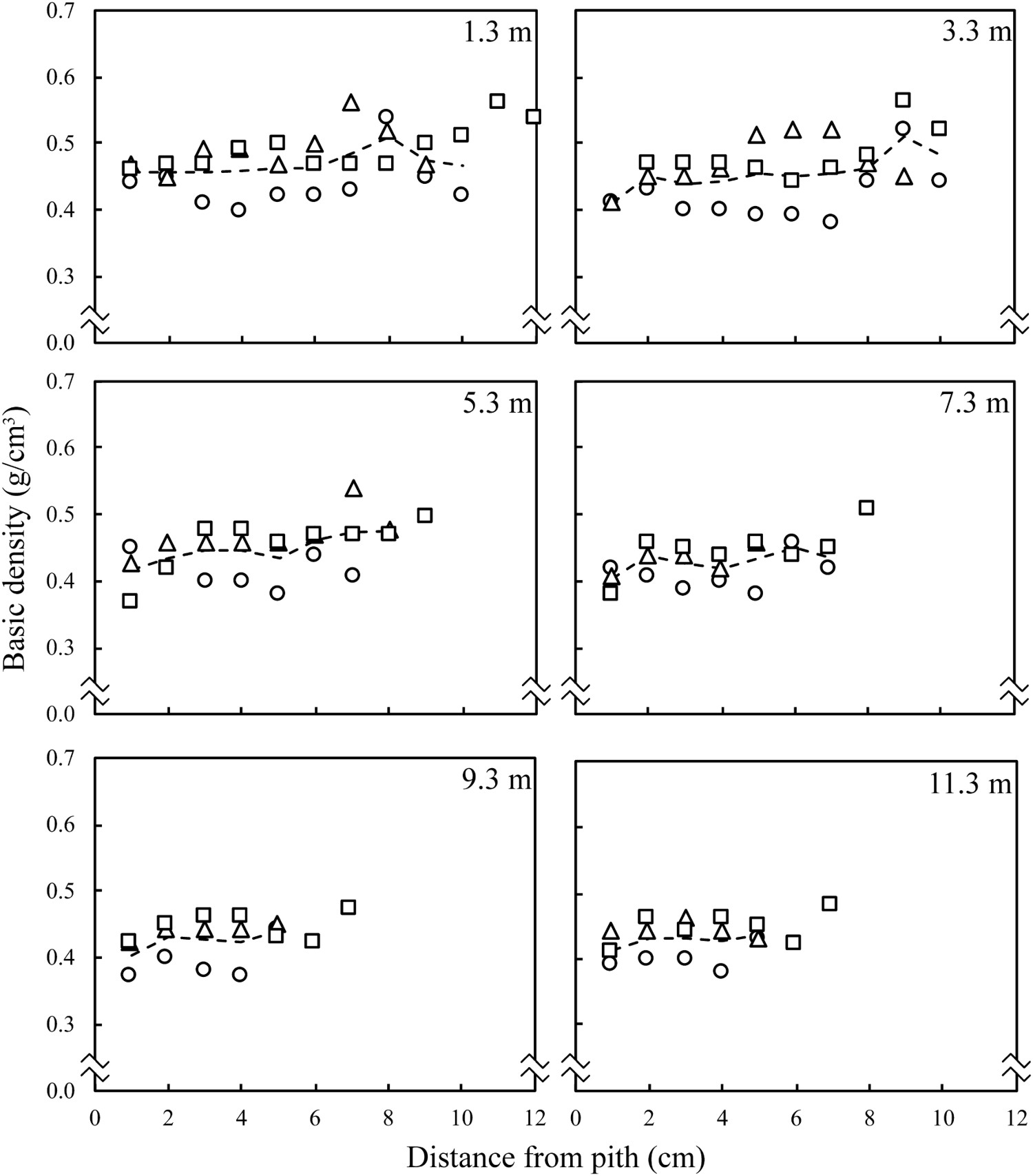
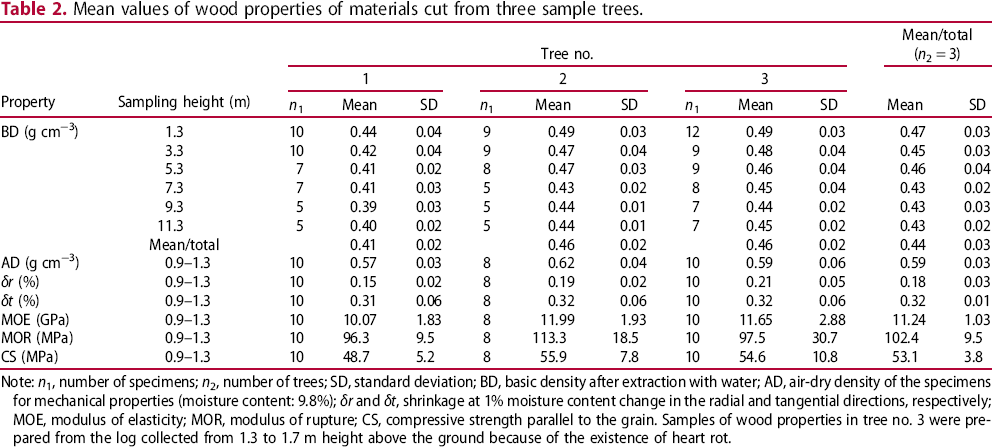
The shrinkage per 1% moisture content change in the radial direction was almost constant from the pith to the bark (Figure 3), and the mean value for the three trees was 0.18% (Table 2). Shrinkage per 1% moisture content change in tangential direction increased to 4 cm from the pith and then remained constant around 0.3% (Figure 3). Shrinkage values reached 0.3–0.4% near the bark. The mean value in the tangential direction of the three trees was 0.32% per 1% moisture content change (Table 2).
Radial variations in shrinkage at 1% moisture content (MC) change in the radial and tangential directions. Symbols and dotted lines refer to Figure 1.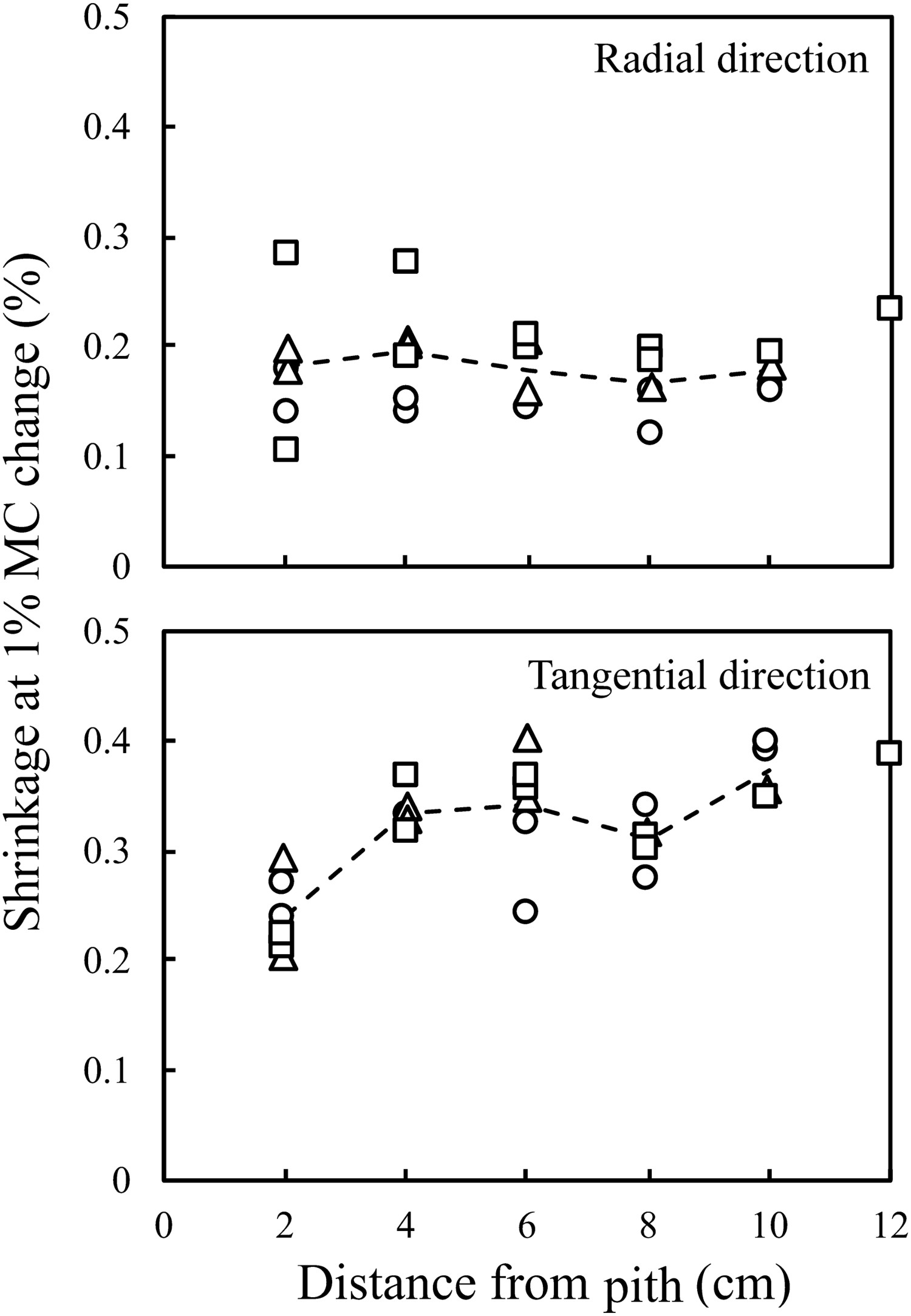
Radial variations in MOE, MOR, and compressive strength are shown in Figure 4. Properties were lowest near the pith, and increased 4 cm from the pith, then became constant. A similar radial trend was found in L. kaempferi (Koizumi et al. 2005). Mean MOE, MOR, and compressive strength values were 11.24 GPa, 102.4 MPa, and 53.1 MPa, respectively (Table 2). The mean values of L. sibirica in the present study were higher than those of L. laricina (Beaudoin et al. 1989), and higher than or almost the same as those of L. kaempferi (Koizumi et al. 2005).
Radial variations in the MOE, MOR, and compressive strength (CS) parallel to the grain. Symbols and dotted lines refer to Fig. 1.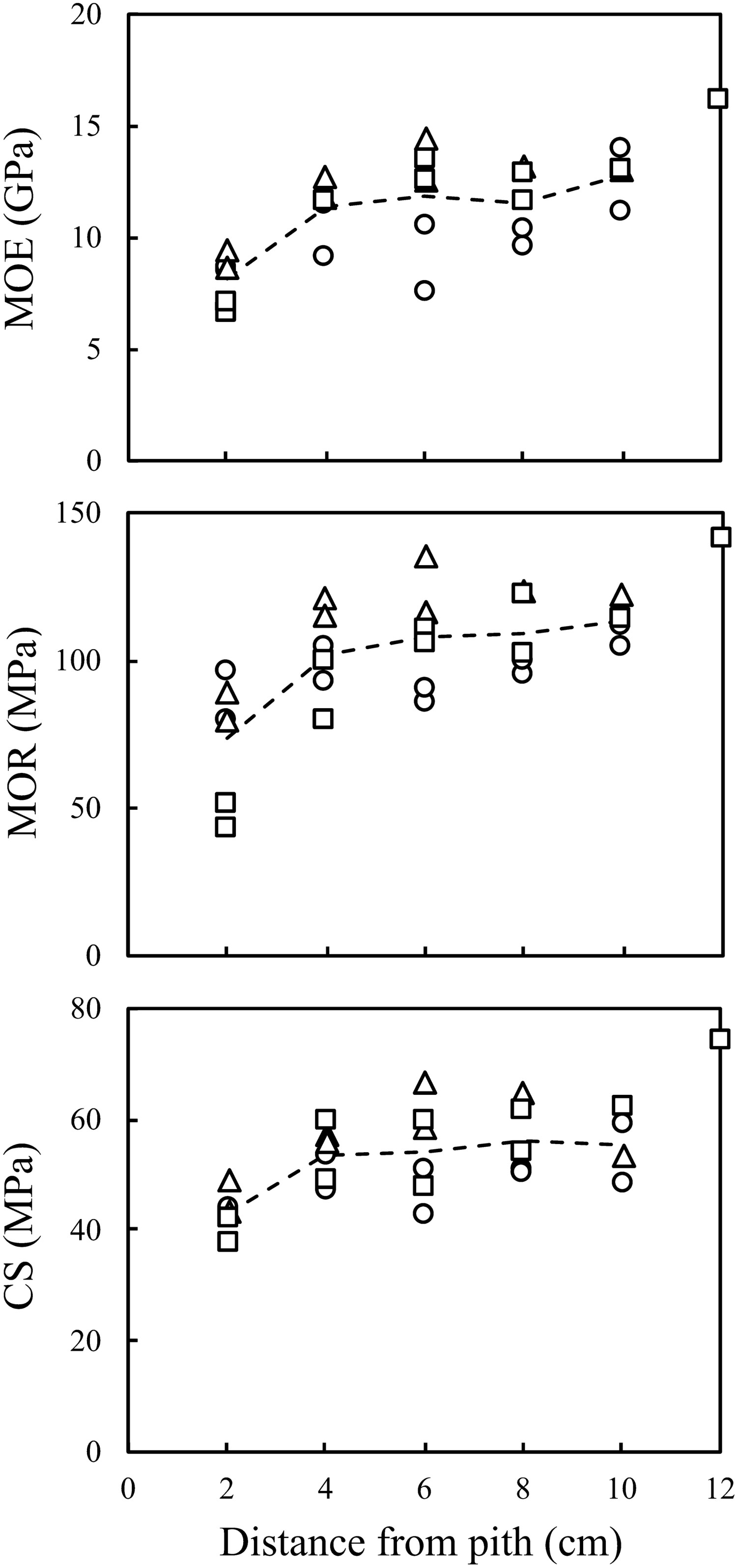
Decay resistance
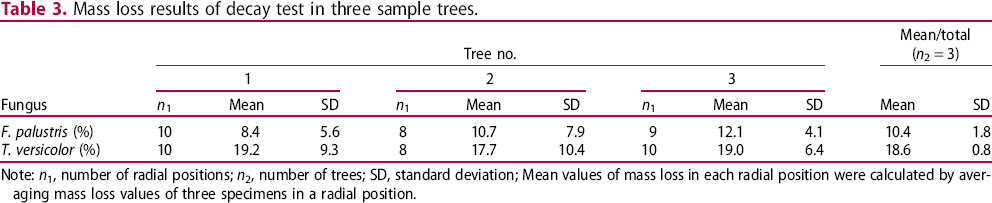
Mass loss of blocks exposed to T. versicolor was higher than those exposed to F. palustris (Table 3). Mass losses gradually decreased from the pith to the bark (Figure 5). Mean mass losses in F. palustris and T. versicolor were 10.4 and 18.6%, respectively (Table 3). Venäläinen et al. (2006) reported mean mass losses in L. sibirica heartwood decayed by three brown rot fungi (Coniophora puteana, Poria placenta, and Gloeophyllum trabeum) averaged 21.3%. Jebrane et al. (2014) also reported that the mass losses of L. sibirica from Siberia and Sweden were 3.1 and 3.3% by T. versicolor, 7.2 and 26.9% by C. puteana, 12.0 and 17.5% by P. placenta, and 8.7 and 14.6% by G. trabeum, respectively. Morrell and Freitag (1995) reported that average mass losses of 180–200 year old L. dahurica wood ranged from 13.7 to 34.5% with P. placenta and 9.6 to 34.9% with T. versicolor.
Radial variations in mass loss by brown rot (F. palustris) and white rot (T. versicolor) fungi. Symbols and dotted lines refer to Figure 1. Open and closed symbols indicate heartwood and sapwood, respectively. Each symbol represents average values of mass loss for three blocks in each radial position. Mass loss results of decay test in three sample trees. Note: n1, number of radial positions; n2, number of trees; SD, standard deviation; Mean values of mass loss in each radial position were calculated by averaging mass loss values of three specimens in a radial position.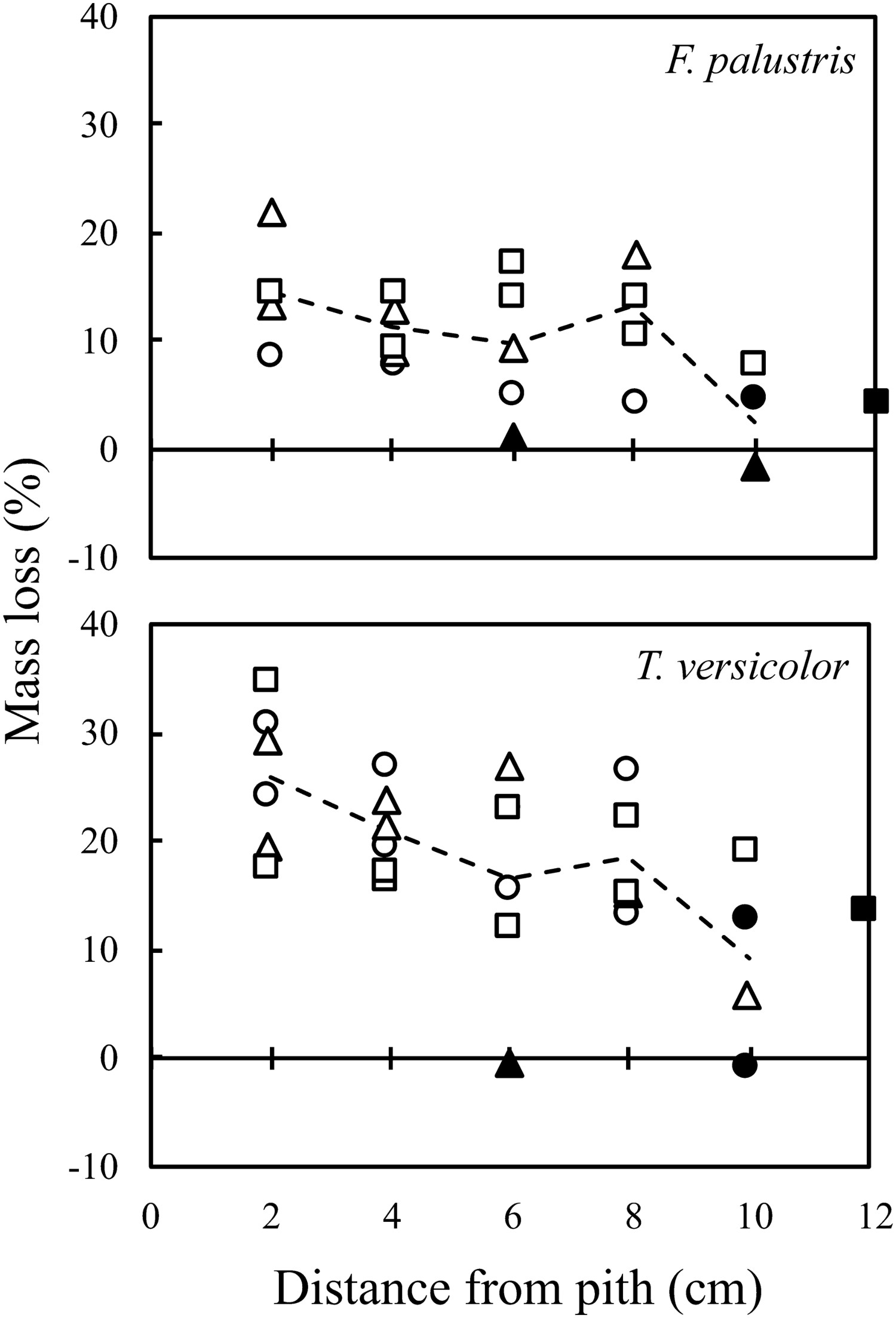
Chemical components
Chemical characteristics of heartwood and sapwood of three sample trees.
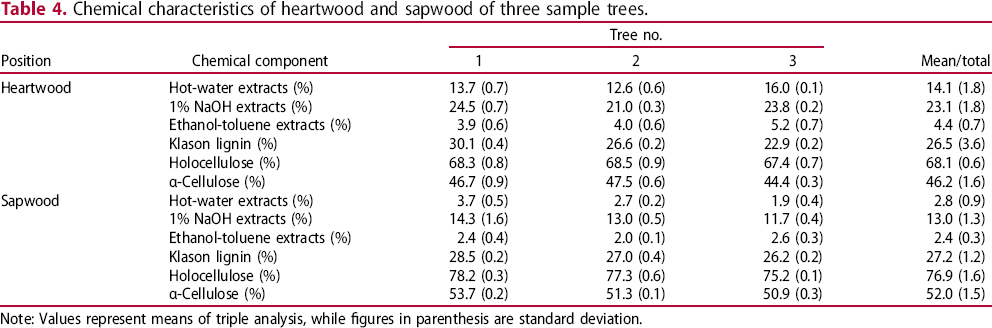
Note: Values represent means of triple analysis, while figures in parenthesis are standard deviation.
Discussion
Dynamic Young's modulus of the logs gradually increased from the base to 5.3 m, and then gradually decreased towards the tree top (Figure 1). Yamashita et al. (2000) found three types of longitudinal variations in the dynamic Young's modulus of logs in Cryptomeria japonica: (1) stable from the base to the top, (2) gradually increasing from the base to a certain height, and (3) the base part showing lower values, but the other parts showing an almost constant value. They also suggested that longitudinal variations in the dynamic Young's modulus of logs were related to differences in microfibril angle and wood density. Although the microfibril angle was not measured in this study, the MOE values increased up to 4 cm from the pith and then remained almost constant (Figure 4). Juvenile wood tends to have higher MFAs than mature wood and should have accounted for those differences. On the other hand, basic density values gradually decreased from 1.3 to 11.3 m above ground (Table 2), and were similar from the pith to the bark (Figure 2). Longitudinal variation in dynamic Young's modulus of L. sibirica logs is considered to be mainly related to the variation in MFA. On the other hand, juvenile wood in softwood is formed within 15 to 20th annual ring from pith, and characterised by wood with higher microfibril angle and lower Young's modulus (Tanabe et al. 2016). MOEs in the present study (Figure 4) suggest that juvenile wood is presented within 4 cm from pith. Although annual ring widths were not measured, there were more than 30 annual rings at 4 cm from pith. This suggests that juvenile wood formation period in the sample trees might be extended due to the extremely slow radial growth rate. However, further research is needed to clarify the radial and longitudinal variations in MFA and formation of juvenile wood in this species.
The relationship between decay and extractives levels in heartwood of Larix species is well established (Windeisen et al. 2002; Gierlinger et al. 2004). Gierlinger et al. (2004) reported that higher phenolics concentrations synergically contributed to higher decay resistance, and phenolics might therefore be a promising method for rapidly evaluated decay resistance in Larix species. On the other hand, Larix heartwood contains higher levels of water soluble extractives (Srinivasan et al. 1999; Gierlinger et al. 2004), increasing arabinogalactan at levels reaching around 20% (Côté et al. 1966; Venäläinen et al. 2006). Water extractives levels in heartwood in the present study showed larger values than those in the sapwood (Table 4), suggesting that the L. sibirica used in the present study might also contain more arabinogalactans in the heartwood. On the other hand, Takahata et al. (1994) examined the effects of the addition of water extractives from Larix sp. on the mycelial growth of six edible mushrooms, and found that mycelial dry weights increased with the addition of Larix sp. water extracts to the medium. Mass losses in the heartwood were higher than those in the sapwood (Figure 5). Similar results were obtained by Curnel et al. (2008): the mean values of mass loss in the inner wood decayed by P. placenta and C. puteana were relatively larger than those in the outer wood. These results indicate that larger mass losses in the heartwood of L. sibirica might be related to the larger amounts of arabinogalactan. However, further research is needed to clarify the effects of arabinogalactan on fungal decay.
Conclusions
Dynamic Young's modulus of the logs, water-extracted basic density, shrinkage, bending properties, compressive strength, decay resistance, and amounts of wood chemical components of L. sibirica naturally grown in Mongolia were investigated. MOE, MOR, and CS were lowest near the pith, and increased to 4 cm from the pith, suggesting that juvenile wood affected the results. Mass losses of the heartwood were higher than those of sapwood, suggesting that the existence of arabinogalactan were involved. Thus, existence of juvenile wood and arabinogaractan should be considered utilising L. sibirica wood produced in Mongolia.
Footnotes
Acknowledgements
The authors express their appreciation to Mr Sarkhad Murzabek and Mr Biligt Battuvshin of the Mongolian University of Science and Technology, as well as Mr Ei Igarashi of Utsunomiya University, for their assistance in the field experiments.
Disclosure statement
No potential conflict of interest was reported by the authors.