







Abstract
The north of Chile is characterised by a large content of caliche minerals which represent high amounts of sodium and potassium nitrates. The presence of these nitrates, in copper-containing aqueous acid leach solutions, are responsible for serious problems in the hydrometallurgical extraction of copper-from-ore. The main problems are: extractant losses due to nitration and/or hydrolysis and negative effects upon bioleaching microorganisms such as lower growth cell and higher microbial lag times. On the basis of these problems, the objective of this work was to evaluate electrodialysis (ED) as an alternative method for removal for nitrates from copper-containing aqueous acid leach solutions. For this purpose, ED experiments in a three-compartment cell using both real and synthetic solutions at different current densities, flow rate and temperature were studied. It was found that high temperature, high flow rate and low current densities favour the ED performance, under the range investigated. Thus, optimum operating conditions were found at 40 °C, 120 Lh-1and 150 A m−2, where current efficiencies (CE) of 96.4% and 89.4% were obtained for synthetic and real catholyte, respectively. Likewise, the energy consumption (EC) was 25% lesser (0.75 kWh kg−1) with real catholyte versus 1.01 k Wh kg−1 consumed using synthetic catholyte. These results demonstrated that electrodialysis could be applied for removal of nitrates from copper-containing aqueous acid leach solutions as an alternative technology.
Introduction
Three stages are well-known for the copper hydrometallurgical extraction: leaching (and/or bioleaching), solvent-extraction (SX) and Electrowinning (EW). These processes are responsible for around 4.5 million tons of copper cathode per year (Schlesinger et al. 2011). The basic principle of the global process is to dissolve copper-containing minerals into an aqueous H2SO4 solution to produce a pregnant leach solution (PLS). The PLS is then treated via SX in order to obtain a Cu-enriched solution using an organic phase (extractant), which acts selectively with copper over other cations presents in the PLS. Finally, the Cu-enriched solution is treated in EW, where a direct current is applied and copper cathodes of high quality are obtained.
Considering that leaching is the first stage in the process, it is responsible for many problems in terms of impurities, which, in turn, will depend on the mineralogy of the ore. Copper oxides, for instance cuprite (Cu2O) and tenorite (CuO), and some sulfides such as chalcocite (Cu2S) and covellite (CuS), are typically the main ore minerals involved in this process. In the case of Chilean copper mining, mineral deposits are found mainly in the north of the country, specifically in the Antofagasta region. In fact, in 2015 this region was responsible for more than 50% of the total copper production and for 82% of the production of copper cathodes at the national level (Servicio Nacional de Geología y Minería 2015). This zone is also characterised by a large content of caliche minerals which represent high amounts of sodium and potassium nitrates (Wisniak and Garcés 2001; Torres et al. 2015). These nitrates are leached with the copper ores, resulting in high contents of nitrates in the PLS (up to 30 g L−1 depending on the soil mineral), which cause several problems in the next stage, SX. One of the problem occurs when the organic and aqueous phase come in contact, especially at nitrate levels higher than 10 g L−1. In this case, nitration and/or hydrolysis of the oximes (the main functional group of extractant) can take place, causing large losses of extractant. Furthermore, nitrated oximes form a strong complex of copper, which cannot be effectively stripped in the typical operating conditions, producing losses of copper as well (Virnig et al. 2004). Besides the degradation caused over SX reagents, recent studies have shown detrimental effects over bioleaching microorganisms. Thus, in spite of the high microorganism adaptability, lower growth cell and higher microbial lag times are some of the problems due to the presence of nitrates (Blight and Ralph 2008; Schlesinger et al. 2011; Shiers et al. 2014).
To treat the excessive content of nitrates, the leach liquor is recycled to a fresh heap in order to maintain low level of nitrates prior to SX (Shiers et al. 2014). Additionally, a patent was developed to treat the PLS, by adjusting the physical and chemical properties of the leach liquor to avoid the extractant degradation (Virnig et al. 2004). The current contents of nitrates demand the search of new alternatives to this problem, and electrodialysis could be one of them.
The electrodialysis (ED) is a membrane separation process in which ions are transported through ion selective membranes from one solution to another under the influence of an electric field. As a result, two new solutions are obtained: one that is more diluted and another that is more concentrated than the original (Bernardes et al., 2014). This technique has advantages such as selective desalination, low use of other chemicals and high water recovery. It is why ED has been widely applied in processes such as the removal of heavy metals in electroplating wastewater treatment (Peng et al., 2011; Deghles and Kurt, 2016), as well as in sea/brackish/ground water and brine desalination (El Midaoui et al. 2002; Banasiak and Schäfer 2009).
In mining processes, ED has been tested with satisfactory results in the recovery of acid mine drainage (Buzzi et al. 2013) and in the treatment of copper smelter wastewater (Hansen et al. 2015) among others. Considering the advantages and the wide area of applications previously mentioned, the objective of this work was to study the feasibility of separating the nitrates present in copper-containing aqueous acid leach solutions using ED. The influence of current density, flow rate and temperature were studied in order to obtain the best operating conditions. The ED performance was evaluated through the current efficiency (CE) and the energy consumption (EC).
Experimental
Materials
Composition of the synthetic and real solutions.
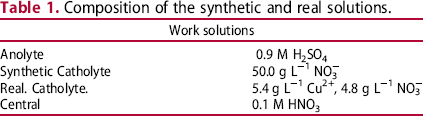
The synthetic solution was prepared with a nitrate concentration 10 times higher than the real one in order to evaluate the transport properties through the membrane in extreme conditions.
Two commercial ion-exchange membranes were used: the Hidrodex HDX200 anion- exchange membrane and the Hidrodex HDX100 cation-exchange membrane.
ED setup and experimental procedure
The cell configuration, shown in the Fig. 1, was composed of three compartments separated alternately by anion-exchange and cation-exchange membranes with an effective area of 25 cm2 per membrane. Two pieces of Monel 400 (nickel alloy) were used as anode and cathode with an effective area of 38.9 and 28.7 cm2 respectively. The three solutions of 1 L were circulated independently using magnetic drive pump, whose capacity was around 120 L h−1 and flow metres for adjusting the flow rates. It is important to mention that in the seventh experiment, a central solution of 0.5 L was used. Different temperatures were maintained at the desired value using a circulated water bath (model Thermo Haake DC5). Direct electrical current was applied with a 3.0 A – 40 V power supply (model M10-SP406E).
Electrodialysis cell representation (AEM and CEM are anion- and cation-exchange membranes, respectively).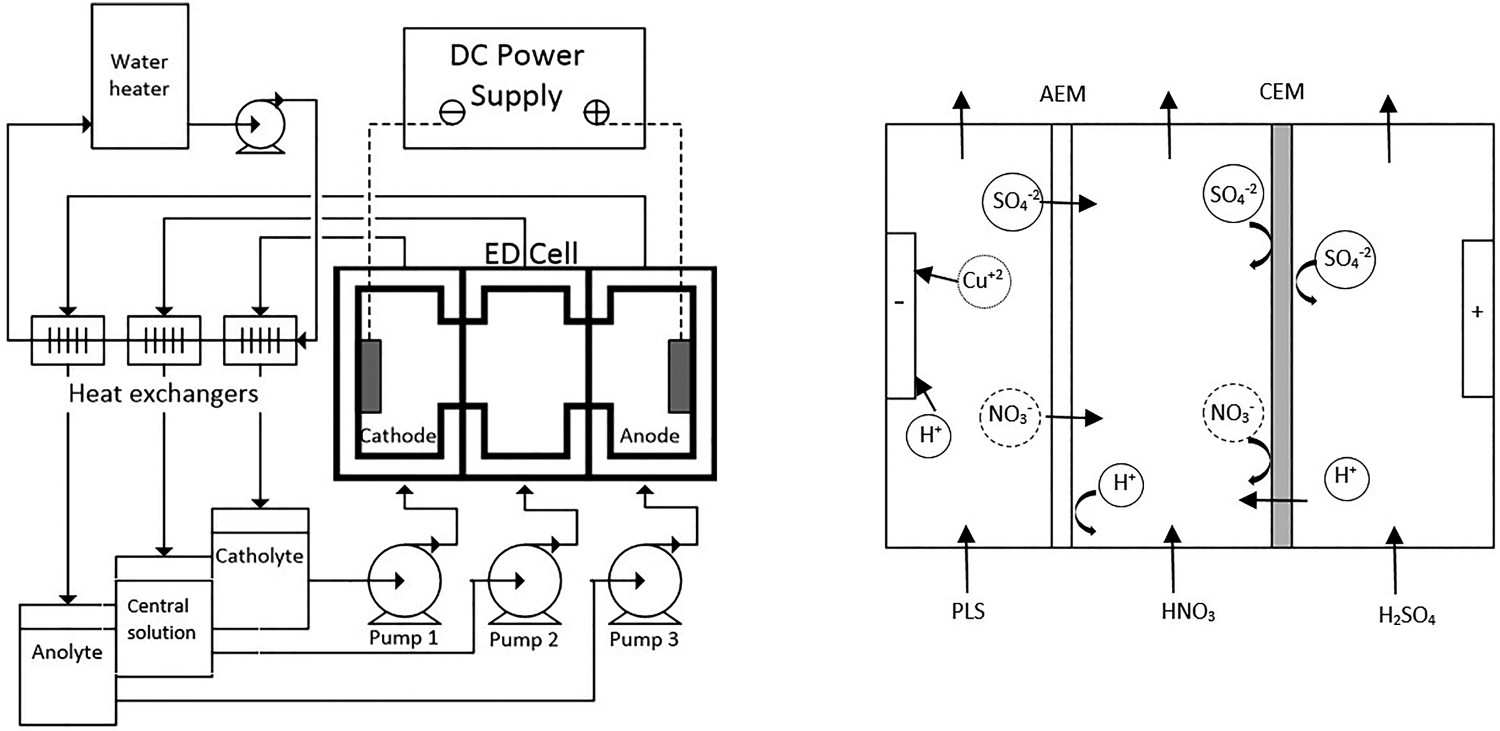
Seven different experiments varying temperature, flow rate and current density were performed. The first five experiments were performed using synthetic solution in the catholyte in order to determine the best operating conditions for the ED process. Subsequently, with the best conditions it was decided to compare the ED performance during 10 h using synthetic and real electrolyte in the catholyte. It is worth mentioning that the catholytes used in the sixth (synthetic) and seventh (real) experiments differ not only in terms of the nitrate contents, but also in the metals content. In fact the real solution presents, besides copper, the others typical components (not analysed in this case) present in a PLS, as, for instance, Fe, Al, Co, Ca, Mn, Zn among others (Schlesinger et al. 2011).
Summary of the experimental conditions.
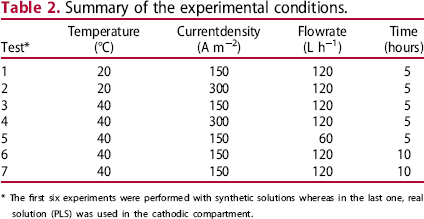
*The first six experiments were performed with synthetic solutions whereas in the last one, real solution (PLS) was used in the cathodic compartment.
Data analysis
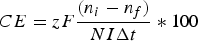
In order to evaluate the influence of the operating parameters on the performance of ED process, the current efficiency (CE) and the specific energy consumption (EC), defined, respectively, by Eqs (1) and (2) (Gherasim et al. 2014; Bernardes et al., 2014), were determined:.
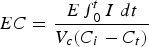
Generally, the energy consumption due to electrode reactions is neglected, since its contribution is much lesser if compared to the energy consumption ascribed to the electrical resistance associated to the big number of membrane pairs. Membranes represent an electrical resistance and, consequently, a high cell voltage is obtained, which results in a high energy-consumption. However, in the configuration used in this work, with just one membrane pair, the electrode reactions play a significant role in the consumption of energy, therefore their contribution is included in the results.
Results and Discussion
Effect of current density and temperature
In an electrodialysis process, it is desirable to operate with the highest possible current density in order to achieve the maximum ion flow per unit of membrane area. The higher the current density, the lower the membrane area required for a given rate of desalting, decreasing the investments costs and the need to replace membranes. Nevertheless, the higher the current density, the higher the energy consumption (EC) which could not necessarily be accompanied by satisfactory values of current efficiency (CE), so the selection of the operating current density will depend on how the different operating conditions, in this case: temperature, flow rate and concentration; maximise the CE and minimise the EC values. Figures 2 and 3 show the effects of the current density and of the temperature over the specific energy consumption (EC) and the current efficiency (CE), respectively. On the one hand, it can be noticed from Figure 2 that increasing the current density from 150 to 300 A m−2, a proportional increase on EC is obtained. This result is consistent with the theory, since the cell voltage increases in proportion to the current density, so more energy is consumed. Besides, a decrease of around 20% on CE is observed (Figure 3) independently of the temperature. It is clear that the lower current density improves the utilisation (see Eq. 1). By the increment in the cell voltage, some side reactions could be carried out, causing the decrease on the CE, as for instance:.
Effect of temperature and current density over specific energy consumption. Effect of temperature and current density over current efficiency.


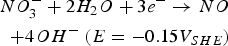

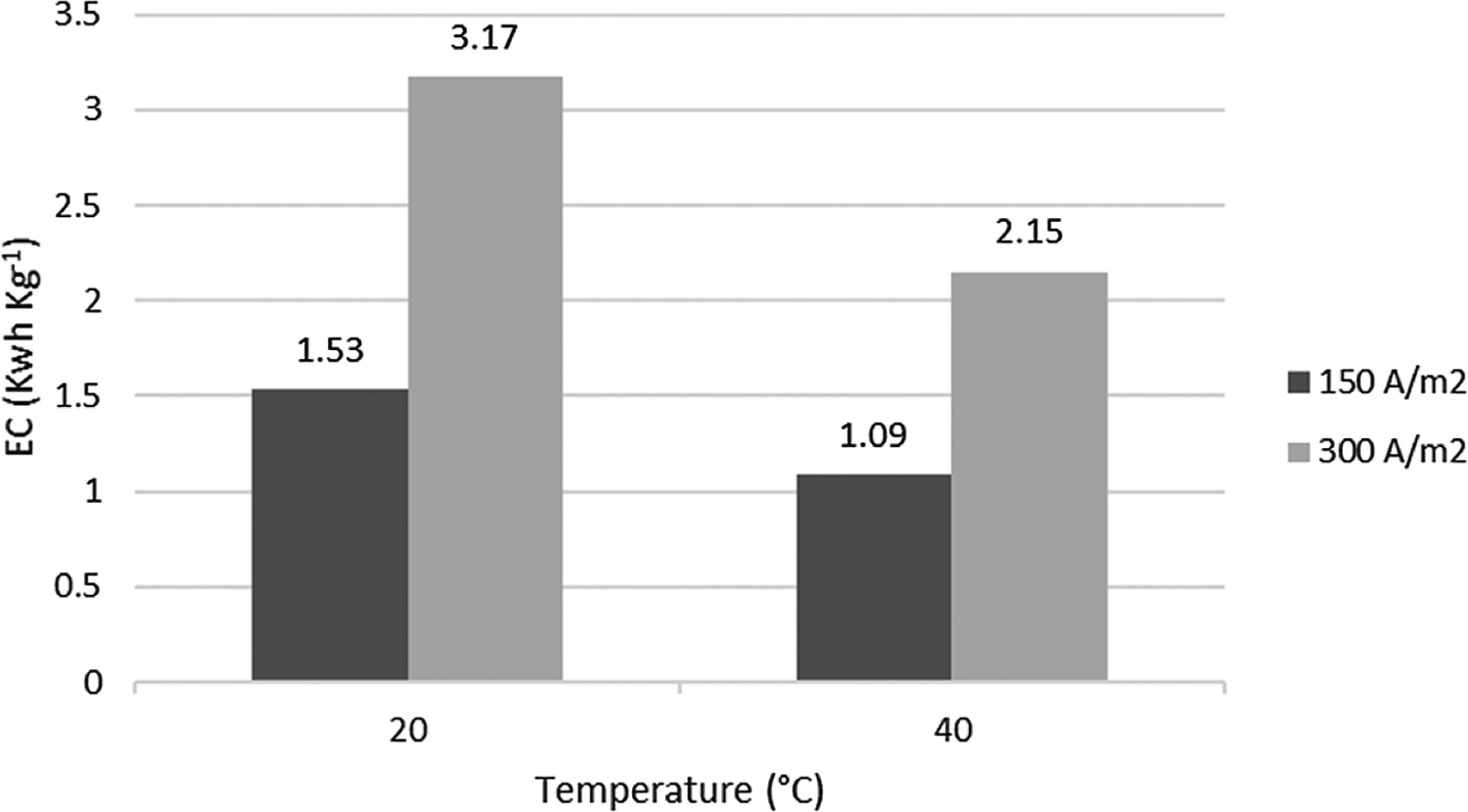
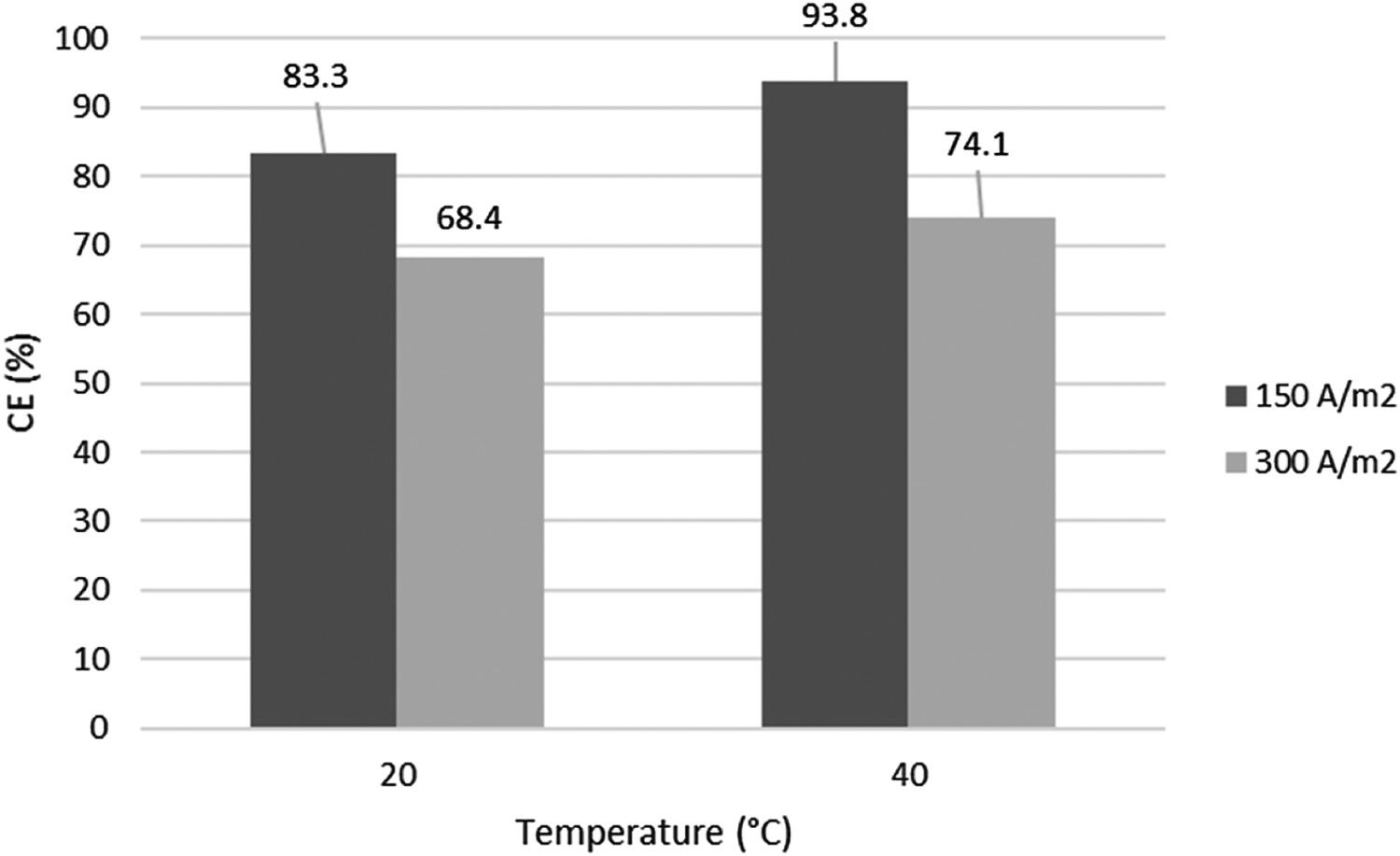
Considering that the synthetic catholyte contains only nitrates anions, the main possible products, shown in the above equations, could also explain the decrease in the CE. On the one hand, since some nitrates could suffer reduction, less nitrates will be available to be transported. On the other hand, the hydroxyls formed will compete with the nitrates to pass through the membrane, reducing the transfer of nitrates and consequently the CE. From the process point of view, it would be favourable the transport of nitrates without reduction, as some reduction products could still have some pernicious effects on the extractant. The formation of these products was not verified for being beyond the scope of this study. It can be also observed from Figures 2 and 3 that increasing the temperature from 20 to 40 °C there is a decrease on EC (around 30%) with a simultaneous increase on CE (around 10%). The improvement caused by increasing the temperature may be ascribed to several concepts. Firstly, an increase in the temperature favours the ion mobility decreasing the electrical resistance of the solutions, which, in turn, enhances the transfer of the ions through the membranes, reducing energy consumption (Abou-Shady et al. 2012; Gherasim et al. 2014; Bernardes et al. 2014). Another advantage is the reduced solution viscosity. The water viscosity at 20 °C is 1.00 cP whereas at 40 °C this value lowers to 0.65 cP (Lange and Forker 1949). Although the solution has other components, these values show the tendency of the impact of increasing the temperature on viscosity. This will result in lower pumping costs (not included in these calculations) and in a smaller width of the boundary layer at the membrane surfaces. However, operating at high temperatures will be limited by the deterioration associated with the degradation of the membranes and spacers due to their polymeric nature, as well as the costs of heating. Moreover, Table 4 shows that the amounts of transported nitrates across the anionic membrane are in accordance with the previous discussion. Thus, the higher the current density, the higher the number of nitrates transported (tests 2 and 4). It can be also noticed from Table 4 that an increase in temperature improved the transport of nitrates (tests 3 and 4 compared to the 1 and 2, respectively). Thus, since the best values of CE (93.8%) and EC (1.09 kWh kg−1) were obtained at 150 A m−2 and 40°C, the next studies were accomplished under these conditions.
Effect of flow rate
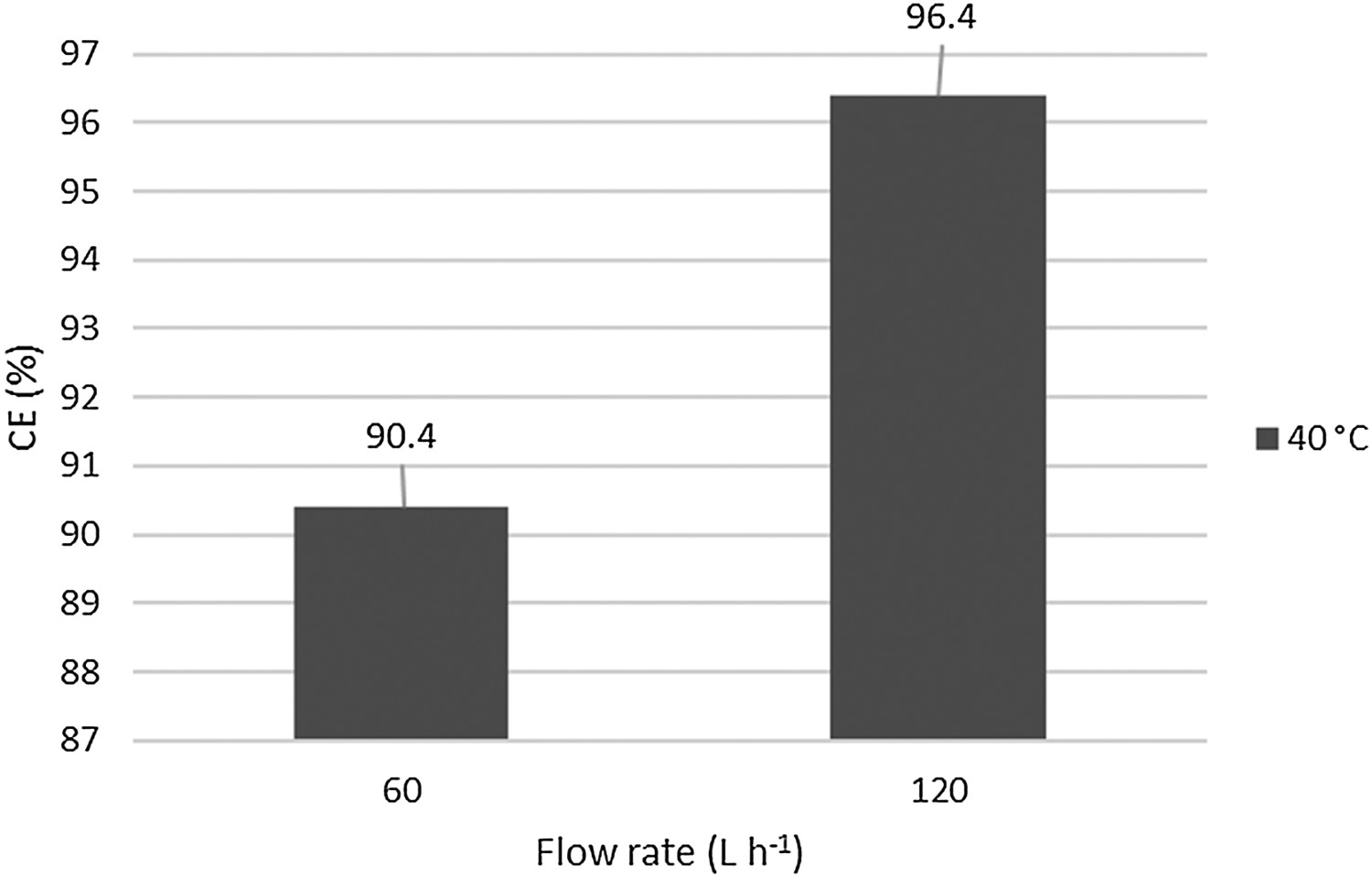
The flow rate of the solutions has a significant role in the ED performance, as the ion transport through the membranes could be strongly influenced by it. The objective of working at an appropriate flow rate, is to minimise the polarisation concentration phenomenon. Figures 4 and 5 show the effect of varying the flow rate on EC and CE respectively. An increase in the flow rate from 60 to 120 L h−1 enhances the process, causing a decrease of around 20% in EC and a slight increase in the CE. It is important to highlight that these values were obtained in a lab scale and should not be considered as absolute values, but as a tendency of the system. It is known that, as the flow rate increases, the hydrodynamic conditions are improved, i.e. the thickness at the boundary layers at the membrane surfaces decreases, and thus the transfer of the ion through the ion exchange membranes can increase (Gherasim et al. 2014).
Effect of flow rate over energy consumption. Effect of flow rate over current efficiency.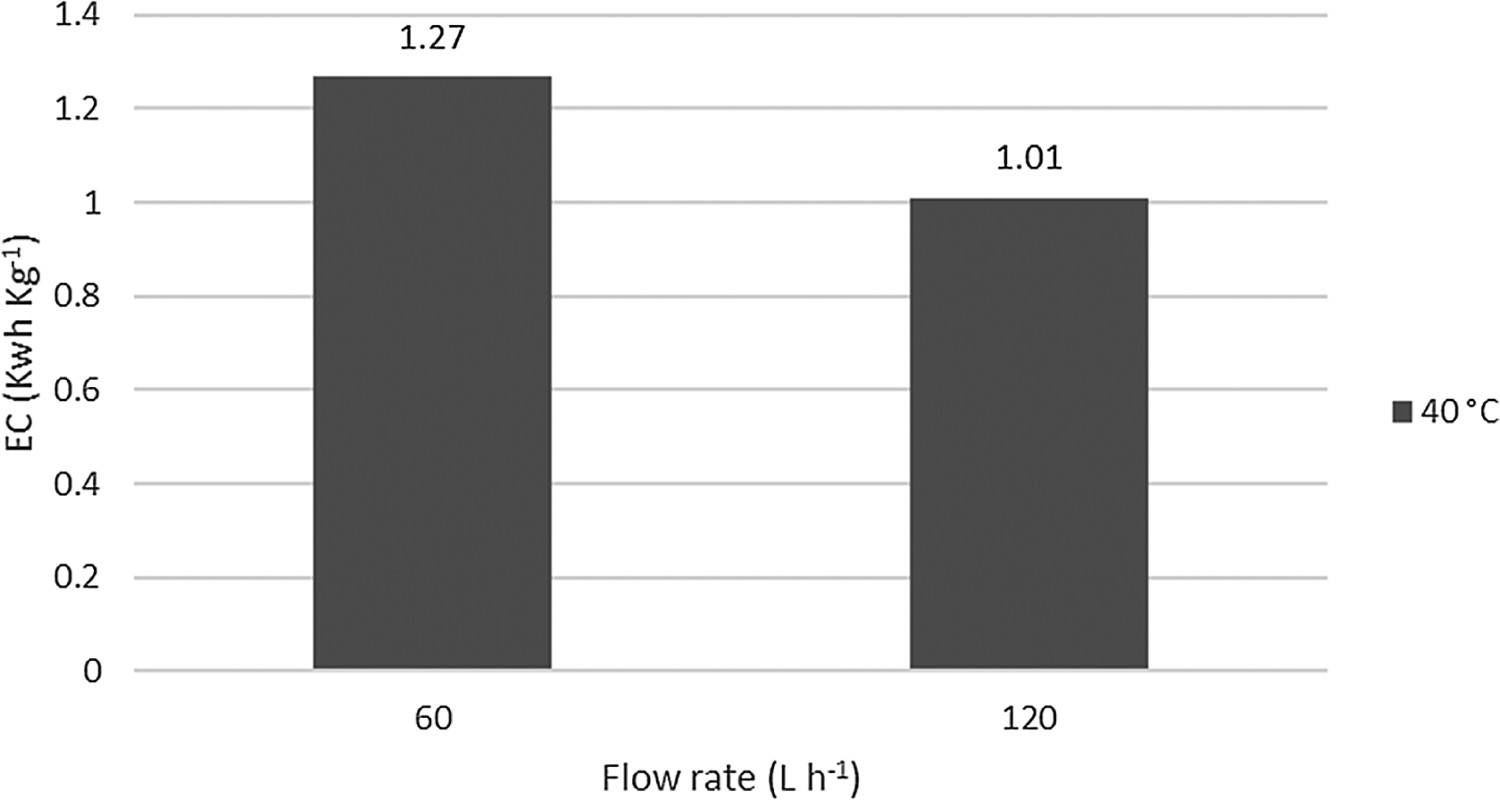
Furthermore, another important aspect is related to residence time. The higher the flow rate, the lower the residence time, and consequently ions could not have enough time to be transported through the membranes, which would affect the ED performance. This situation was not observed in the flow rates investigated, but several researches have shown this behaviour (Abou-Shady et al. 2012; Gherasim et al. 2014; Frioui et al. 2017), therefore the study of this parameter should be always considered.
Effect of the type of catholyte
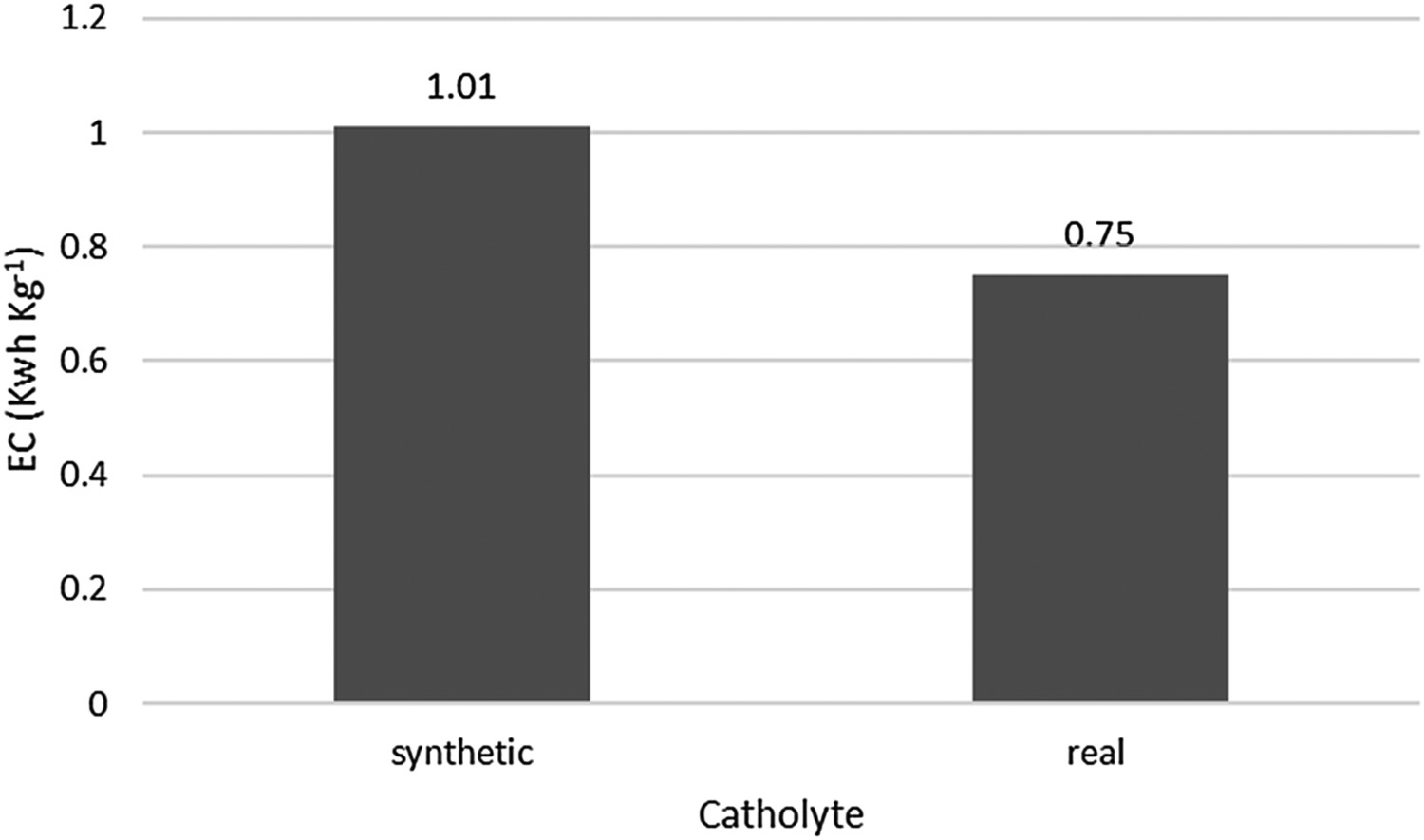
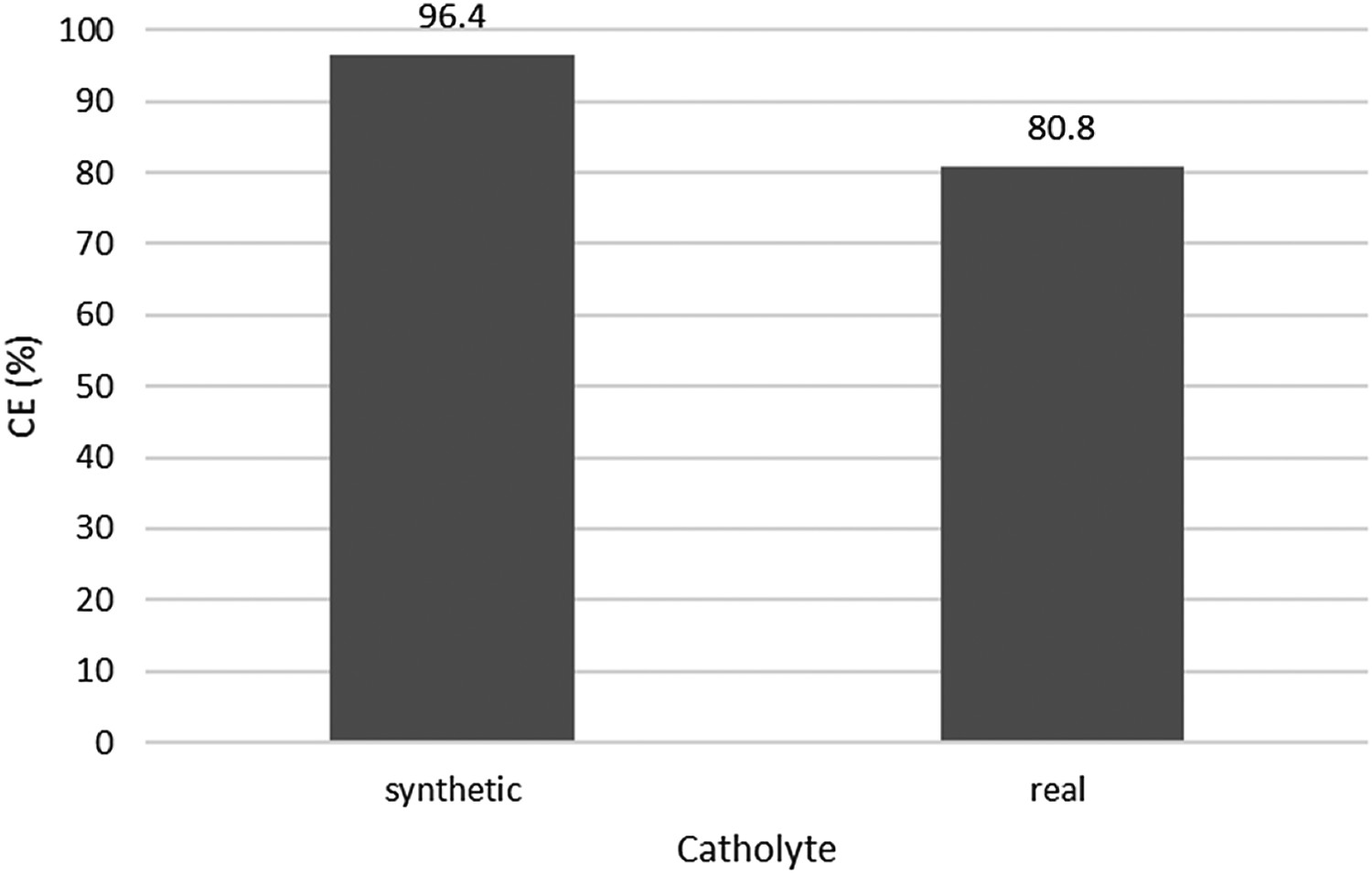
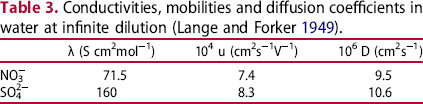
Figures 6 and 7 show the effects of using a synthetic and real catholyte over EC and CE. It can be observed that both EC and CE decreased when the real solution was used in the catholyte. Thus, with real solution the EC was 25% lesser than for synthetic catholyte, whereas the decrease in the CE was much less marked. The decrease in the CE can be attributed to the fact that the real electrolyte has less nitrates and much more ions (anions like sulfates, carbonates, etc.) Than the synthetic electrolyte, which compete with the nitrates, diminishing the CE. In fact, the conductivities and mobilities of sulfate in water are presented on Table 3. Based on the conductivities and on the relation of Nernst-Einstein, one can calculate also the diffusion coefficient:.
Effect of type of catholyte over current energy consumption. Effect of type of catholyte over current efficiency. Conductivities, mobilities and diffusion coefficients in water at infinite dilution (Lange and Forker 1949).
 is the molar limiting conductivity for the ion j (S cm2mol−1),
 is the charge number for the ion j and F is the Faradaýs constant (96, 485 C/mol).
Summary of the results including the mass of nitrates transported for each experiment.
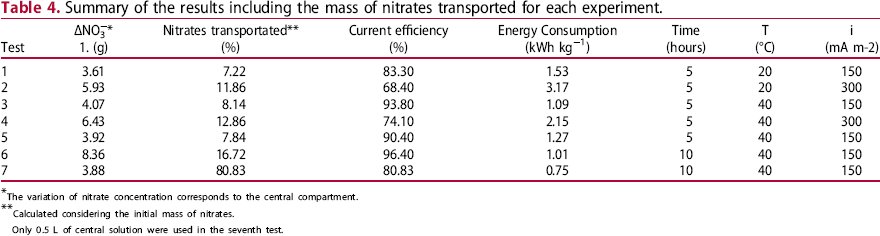
*The variation of nitrate concentration corresponds to the central compartment.
**Calculated considering the initial mass of nitrates. Only 0.5 L of central solution were used in the seventh test.
With regard to EC, its marked reduction can be understood according to equation 9:.

 and
and
 are the anode and cathode potentials (V); and finally,
 are the electrical resistances (ῼ) of anolyte, catholyte, central solution and membranes respectively.
The main electrode reactions are described by equations (10), (11) and (12),.



With the real catholyte, the main cathode reaction must be the reduction of copper (Eq. 11). This reaction requires a lesser polarisation in the electrode, which leads to a reduction in the
 and
and
 terms of equation (9). On the contrary, with synthetic catholyte the copper is not present, and thereby, the cathode reaction should be the reduction of proton to gaseous hydrogen (Eq. 10), which causes the opposite effect, i.e. higher
 and
and
 , thus a higher EC is obtained.
The cell potential was measured during the experiments and the values are 2.25V and 1.55 V for the experiment with the nitrate synthetic solution and with the real solution, respectively. The smaller potential is associated to a smaller EC.
Proposed electrodialysis process
Based on the results reported here, an alternative ED process with another ED configuration can be suggested.
In the present study, a portion of the copper present in the PLS was deposited, which is detrimental for the process, as less copper will be treated in the SX stage. A simple solution to this problem could be to isolate the electrodes using a five-compartment cell, as presented in Figure 8. In this configuration, the PLS could be circulated in the central compartment (using support electrolyte in the rest of the compartments). Furthermore, this setup could also suggest the use of the concentrate to produce nitric acid or sulfuric acid, or even, the reuse of this solution in some leaching process; whereas the dilute solution could be use as water of reposition.
. Alternative five-compartment cell showing the main species (AEM and CEM are anion- and cation-exchange membranes, respectively).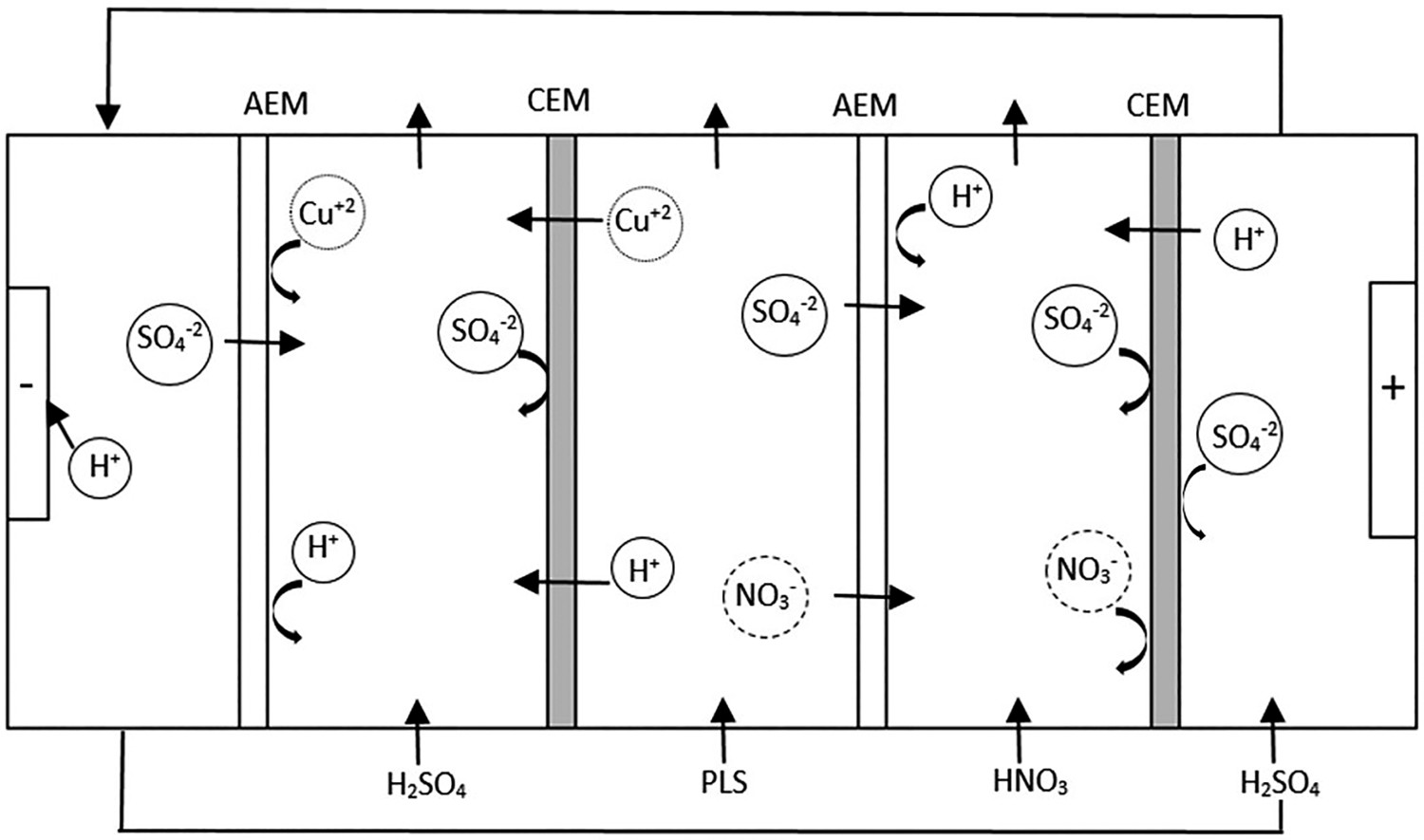
Conclusions
The findings obtained in the present research showed electrodialysis (ED) as an interesting alternative on the removal of nitrates present in copper-containing solutions. The system employed allowed to study the effect of different operating conditions, showing that high temperature, flow rate and low current densities favour the ED performance, under the range investigated. Thus, optimum operating conditions were found at 40 °C, 120 L h−1and 150 A m−2, where current efficiencies (CE) of 96.4% and 80.3% were obtained for synthetic and real catholyte respectively. Likewise, the energy consumption (EC) was 25% lesser (0.75 k Wh kg−1) with real catholyte, versus 1.01 kWh kg−1 consumed using synthetic catholyte. In the same conditions, considering the initial mass of nitrates, the 16.72% of nitrates was transported for synthetic solution versus 80.8% for real solution (tests 6 and 7, see Table 4), demonstrating the feasibility of this technique.
Acknowledgments
The authors wish to thank the support given to this work by Departamento de Investigaciones Científicas y Tecnológicas (DICYT) and by Vicerrectoría Académica (VRA) of Universidade Santiago de Chile via project no. 1555LD. The authors would also like to thank Asociación de Universidades Grupo Montevideo (AUGM) for their collaboration.
Footnotes
Disclosure statement
No potential conflict of interest was reported by the authors.