







Abstract
As metal mineral resources get depleted over time, there is a need to recover metals from ores of lower grades and waste. Mining wastes are largely characterized using physical and mineralogical heterogeneity properties. There is variation in the geochemical properties with different grain sizes, thus, different metal recovery potential. The research evaluated mine waste characterization and identified opportunities for optimizing project economics using fragmentation analysis. This study linked petrographic, compositional and quantitative mineralogical analyses with fragmentation data resulting from conventional mechanical communition of mined-out waste rock. The results improve the understanding of what grain sizes are optimal for metal recovery from the waste rock and established that environmental threats can be mitigated by removing fines from waste. The economic metals including Ni and Cu sulphides are predominantly held in pentlandite and chalcopyrite within the rocks. Maximum liberation and metal recovery are in the finer grains.
Keywords
Introduction
Mining waste context-definition
Mining waste can be described as a part of the materials that come from the exploration, mining and processing of materials (Scoble et al. 2003; He and Kappler 2017). In the mining industry, the term ‘mining wastes’ covers diverse products resulting from the extractive industry. Waste rocks consist of non-mineralized and low-grade mineralized rock removed from, around, or within the orebody during extraction activities. The cut-off grade that distinguishes low-grade waste rock from usable ore is an economic distinction and may differ over time. Processing waste or tailings are the waste solids or slurries that remain after the treatment of minerals by separation processes (Nagaraj 2005; Mankosa et al. 2016; He and Kappler 2017).
According to Eurostat estimations (Eurostat 2016), mining and quarrying wastes account for more than 720 million tonnes in 2016, matching 28% of the total waste production in Europe by at least 27 countries. Studies have shown that it is difficult to obtain precise numbers concerning the historical mining wastes. There is no detailed estimation that accounts for waste generated by the mining industry globally. However, it is believed that waste volumes are extremely high. Statistics further reveal that the production of 1 tonne of copper generates 110 tonnes of waste ore and 200 tonnes of overburden (Anon 2006). Globally, the copper industry in 2004 generated 3348 million tonnes (Taylor et al. 2006a, 2006b).
The concept of fragmentation analysis to optimize project economies
Studies have discovered (e.g. Noy 2012; Mohamed et al. 2019) that fragmentation analysis is a commonly practiced technique as part of economic optimization of a mining project. Despite its essential role in directing the overall economics of a mining operation, the expected blasting performance is often judged almost exclusively based on poorly defined parameters such as power factor and is often qualitative which results in a very subjective assessment of blasting performance (Singh et al. 2016).
Fragmentation of ore and waste rock is achieved through blasting. Effective blasting is determined by examining the relationship between blast design constraints and fragmentation. It is extremely important to link rock blasting results and their influence on the downstream operations to cushion any perceived economic implications. It is well acknowledged that fragmentation has a serious upshot on the loading operations. However, little quantitative evidence is available, upon which rational blasting approaches can be drawn (Monjezi et al. 2009; Enayatollahi et al. 2014; Singh et al. 2016).
Even though the likelihood for ore geochemical properties with different particle sizes coming from metallurgical processes has been established for a while now, the phenomenon is not normally given full investigation. Thus, it is common at the initial stage of resources estimation in mining ventures for waste and ore materials to be characterized inside the smallest mine unit blocks models and present as containing uniform blocks with regards mineralogical and geochemical properties. However, fragmentation has the potential to greatly change the economic paradigm of the projected mine schedule. In this paper, an evaluation of mine waste characterization to identify opportunities for optimizing project economics using fragmentation analysis is presented to redefine a suitable cut-off grade from mine waste rock. Throughout mining activities, blasting of rock is intended and carried out to break down the in-situ rock mass to aid excavation and transportation of the material to a stockpile or processing plant.
According to Pearce et al. (2019) run-of-mine (ROM) fragmentation is regarded optimal when the material is fine and loose enough to support efficient excavation and loading operations. Kanchibotla et al. (1999) stated that the blasting optimization approach is usually centred on lessening total mining costs and maintaining the optimal ROM fragmentation characteristics.
Concept of cut-off grade evaluation in defining material types (waste, low grade and high grade)
The cut-off grade for an ore deposit is used to classify the material as ore or waste. For a metallic ore deposit, the material over the determined cut-off grade is considered as ore and can be mined whilst the material below the cut-off grade is regarded as waste and depending upon the mining method used, it may be left in-situ or haul to the waste dumps (Cetin 2018). As presented by Asad (2005), and Cetin and Dowd (2013), to get maximum profit from a mineral deposit, optimum cut-off grades must be applied. Optimum cut-off grades can be attained only by decreasing the order of the cut-off grades strategy. Nevertheless, the establishment of an optimum cut-off grades plan that gives an extreme profit is a very compound process. For this to be achieved, one must reorder the grade tonnage distribution of the mineral deposit after each stage of mining mine operation.
Frequently, a numeric cut-off grade is applied within the model province using appropriate approximation parameters when differentiating between ore and waste in a mine plan and block models. Ore zones may be further split into low-grade, high-grade and waste zones. The waste may further be split into several classes based on acid mine drainage (AMD) threat in many mining practices (Pearce et al. 2012). A generic sliding scale (Figure 1) to highlight the basic connection between Cut-off grade and material description has been illustrated by Pearce et al. (2012). Three critical zones are recognized: ore zone-materials with a grade above the cut-off value, and are hauled to processing facilities; marginal zone may be regarded as ore or waste depending on the existing economics and market price of the material; and finally, waste zone-material whose grade is extremely low. For such material, even if project economics and market prices improve and the cut-off grade is reduced, it is very unlikely that it can be processed into a saleable product.
Sliding scale to represent the use of cut-off grades in the definition of waste and ore (after Pearce et al. (2012), slightly modified by the author of this publication (Tamba Komba)). Images are available in colour online.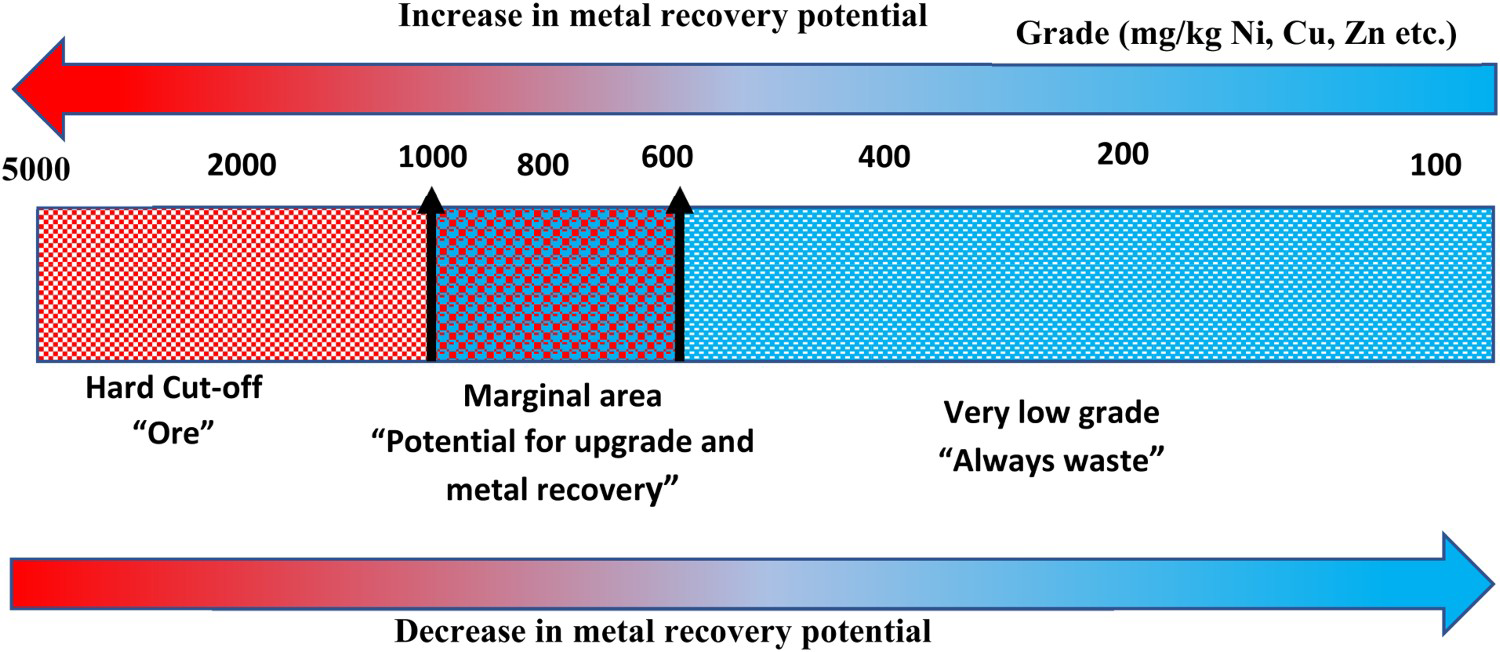
Mined-out waste rock characteristic threat and minerals in mine waste
The oxidation of sulphide minerals, especially pyrite is the major factor that triggers the threat of environmental pollution from the mined-out waste rock (Jambor 1994a; Quispe et al. 2013). As a general best practice, mine tailings are often kept covered by water during active mine operations to prevent oxidation reaction. However, in the long-term, the water may disappear allowing atmospheric oxygen to the sulphides creating an oxidation reaction with the fine-grained sulphide. Consequently, there is the generation of highly acidic water having elevated sulphate, and potentially toxic metals. This situation is best described as acid mine drainage (Bobos et al. 2006).
Several approaches have been taken in classifying the types of minerals in mine waste. Considering tailings and primary waste dumps; Jambor (1994b) distinguished primary minerals as those that have been crushed during milling but have not been unaltered. Whereas secondary minerals are those formed within tailings impoundments as a result of chemical weathering, tertiary minerals as those formed after tailings have been removed from the impoundment, and quaternary are those minerals formed during sample storage. According to Lottermoser (2010), he referred to secondary minerals as those that formed from weathering of sulphides either pre-or post-mining. Jamieson (2011) disconnected primary sulphide from non-sulphide minerals and introduced a category for solid phases formed as a result of ore processing. The most useful approach should fit all the situations in modern mining practice where mineral–water reactions influence drainage chemistry and environmental threat. For the fragmentation analysis aspect of this project, primary minerals were considered to exist pre-mining, and secondary minerals to form post-mining (post-depositional minerals). A further third category comprises those compounds that form due to mineral processing and water treatment found in waste materials.
It is acknowledged (e.g. Koski 2010) that in some cases there is questionability as to the origin of a given mineral; especially for the products of sulphide oxidation, classically Fe oxides, and sulphates that form through oxidizing hydrothermal processes (hypogene) in more recent pre-mining weathering (supergene) processes or by post-mining weathering processes.
Prediction and estimation of rock fragmentation to enhance project economies
Prediction and assessment of the rock size fractions dispersal generated by blasting are key concerns in appreciating the blasting practice. Rock fragmentation impacts all downstream activities, and also ore recovery in beneficiation processes (Michaud et al. 1997). Fragmentation by blasting models generally gives predictions for the parameters of a certain fragment size distribution (Djordjevic 1999; Ouchterlony 2005). The prediction of rock fragmentation is one of the foremost concerns in open-pit mines. Long- and short-term design engineers can evaluate the size distribution of sludge pile for collection purposes or mill feed with some degrees of confidence where there is strong fragment predictability (Morin and Ficarazzo 2006). Similarly, throughout the history of mining, there have been several methods developed, trying to predict and estimate the rock size distributions. Accordion to Bamford et al. (2017) three common approaches are involved; image analysis, visual observation and sieve analysis. Visual observation is believed to be subjective, as it involves examining the rock pile and subjectively arbitrating the quality of the blast only. This method is prone to inaccurate results. Sieve analysis comprises taking a sample of the blasted rock pile being studied and passing it through a series of various size sieves. The rock size distribution is computed by quantifying the mass or volume of the rock material that leftover on each tray.
This technique is thought to generate more reliable results than visual observation. This method is however expensive and could be time-consuming, and the rock sample size distributions may not be statistically representative of the entire rock heap.
With the advent of computer image processing and analysis tools, image analysis techniques have been established. Conducting image analysis involves taking stereo images, 2D photos, or 3D laser scans of the rock heap and processing the images to define particle size distribution. Image analysis techniques enhance the hands-on, fast, and relatively precise dimension of rock fragmentation. Details of these methods are elucidated by Bamford et al. (2017).
Many factors have been noted to influence rock fragmentation, and ultimately its prediction. These factors have been described as controllable and uncontrollable dynamics, and are effectively categorized into three: rock mass properties, blast design parameters and explosive properties. These dynamics were further elaborated by Hudaverdi et al. (2011); Kulatilake et al. (2010, 2012) respectively that, blast design parameters (burden, bench height, spacing between boreholes, drill hole etc.) and explosive properties constitute the controllable dynamics. Rock quality designation (RQD), discontinuities tensile strength, etc. are part of the uncontrollable dynamics. When describing rock fragmentation, a series of pairs of numbers are required such as fraction or percentage passing and size. These are usually limited to various sizes at some characteristic passing fractions (20%, 50%, 80% etc.).
Rock fragmentation produces some fines. Several approaches have been used to estimate the number of fines that are generated in blasting and other fragmentation operations. One of such approaches is an engineering approach, and the Rosin–Rammler based distribution function model has been used extensively to predict the expected proportion of rock fragments. Julius Kruttschnitt Mineral Research Centre (JKMRC) has successfully applied this particular approach for many years. Moreover, this approach has been modified with the introduction of a new model to calculate the potential volume of the resultant crushed material from both the crushing and shearing stages of blasting (Onederra et al. 2004). The approach uses two empirical models-the two-component model (TCM) and the central zone model (CZM). Details of these models have been explained by Kanchibotla et al. (1999) and Djordjevic (1999) respectively.
Method
A common practice in a mining operation to ensure significant downstream economic optimization is to scientifically manage and predict fragmentation of ore and waste rock from an upstream operation. Fragmentation analysis is a frequently used method in the economic optimization of mining projects (Singh et al. 2016). In this study, fragmentation analysis, alongside geochemical and petrographic investigation has been used on waste rocks of various size fractions. The analysis involves examining the particle size distribution of mined-out waste material. The most employed technique to account for fragmentation is to find out the size dispersal using digital imaging processing techniques (Mohamed et al. 2019). This technique is considered to be low-cost and practical. It is the second reliable technique after sieve analysis. Rendering this technique, images acquired from excavators, haul trucks, conveyor belts, etc. are defined automatically through the use of digital image processing procedures, and the size distribution of fragmented rocks is established.
The use of ZEISS mineralogical mining software packages has been applied extensively to statistically examine economic metals concentration, distribution and recovery potential from the mined-out Ni–Cu–PGE waste rock samples in this study. Waste rock samples were a collection from an open cast mine, the sample preparation, crushed, sieved and then milled. The mine is called Kevitsa Ni–Cu mine. It is a magmatic layered-intrusive Ni–Cu–PGE deposit that is located on the north of Finland in Lapland within the Sodankyla Municipality, 140 km north of the Arctic Circle. It is a large mine that has one of the largest nickel reserves in Finland. Kevitsa is positioned about 125 km east of the Finland/Sweden border. Access to the Kevitsa mine site is through well-maintained, sealed roads. Port facilities are accessible at Kemi Harbour which is approximately 290 km from the property by road (Gregory et al. 2011). The area has a gently undulating terrain, and it is a plateau at an altitude between 220 and 240 m. The deposit is located at the watershed between the Mataraoja stream towards northwest and Viivajoki draining towards east and southeast.
The Kevitsa deposit is hosted within a composite olivine-pyroxenite/websterite complex, an ultramafic cumulate. Two economically significant mineralization patterns have been distinguished within the Kevitsa deposit; regular Ni–Cu mineralization and Ni–PGE mineralization. The predominant mineralization types are Ni–Cu and comprise almost 95% of the deposit. The variability of Cu and Ni is relatively low, but there are distinct precincts of Cu and Ni-rich mineralization. Predictable mineral resources for the Kevitsa mine deposit are believed to be around 240 Mt. The economic metals in the ore are estimated as 0.41% Cu and 0.30% Ni
Nickel–copper–PGE sulphide ore has been mined and processed at the Kevitsa mine since August 2012. The mining is by conventional truck and shovel operations. The mining operation utilizes drilling, blasting and digging, loading with a hydraulic excavator, hauling using dump trucks followed by crushing to obtain the concentrates. The ore is either tipped directly into the primary crusher or stockpiled on the ROM (run-off-mine) Pad for blending.
Chemical analysis was carried out on different size fractions of the milled samples, and a few of the bulk samples were subjected to petrographic analysis to establish mineral assemblage of the economic metal sulphides. To ensure an accurate size fractions representation of economic metal sulphides from the bulk waste rock, representative samples were cautiously selected from 114 bulk samples that had formerly undergone geochemical investigation. The samples were screened into +22 and −22 mm size fractions. Portions of the screened samples were comminuted using a standard jaw crusher. The subsequent product was homogenized and then milled into nine main size fractions for geochemical and elemental analysis.
Results and discussion
Particle size distribution
In fragmentation analysis, particle size distribution encompasses a significant part of investigating particle fraction size characteristics profile. Profiles for the particle size distribution (PSD) of the Ni and Cu PGE waste rocks display strong resemblances regardless of the content of the metals in the rock samples. This shows that reducing rock size, either by mechanical comminution using jaw crushers or through blasting generates a consistent material product concerning grain size that may not necessarily dependent on the inherent properties of waste material. The PSD profiles further indicate that a similar physical processing technique may be used during the recovery process of metal from waste.
Compositional and mineralogical characterization
Upon establishment of the PSD profile of the mechanically crushed waste rock, geochemical examination of selected particle size fractions was carried out for compositional and mineralogical characterization. Compositional and mineralogical characterization of the selected waste rock displays a strong positive correlation concerning the three main mineral phase abundance for the selected samples. The silicate minerals; Tremolite, Clinopyroxene Olivine and a few Mica Group of minerals show a fairly homogenous ultramafic mineralogical characteristic as the mineral phases of abundance hosting the economic metal sulphides (Ni and Cu) minerals.
Pyrrhotite, pentlandite, chalcopyrite are the main sulphides. Nickel is hosted within pentlandite and Olivine. Approximately 450 ppm is likely to be hosted in the silicates following a mineralogical examination using a scanning electron microscope (SEM). In the sulphide phase, chalcopyrite is observed to solely host over 90% of Copper.
To provide additional information on the mineralogical characterization and variation that may be responsible for the concentration of metallic sulphide (nickel and copper) in the finer particle size fractions, a mineralogical investigation was done using XRF and XRD. The result shows that tremolite is the principal mineral phase across all the analysed samples. Also, higher concentrations of nickel-bearing pentlandite and copper-bearing chalcopyrite were observed in the <2.5 mm size fractions
To appreciate the impact of grain size in terms of metal concentration in the waste rocks and their resulting metal recovery potential, bulk samples rejects that had previously undergone geochemical analysis were separated into three classes on the bases of content; Low Ni, Medium Ni and High Ni concentrations (ppm). Fifteen elements were reported, of which Nickel, Copper and Sulphur are critically significant for metal recovery potential and environmental considerations.
The maximum Ni and Cu values relate to the smallest size fraction (0.06 mm) for each of the sample classes. Also, it was observed that the sulphur contents increase as the fraction sizes decrease, but increase consistently with a matching increase in the Ni and Cu content.
Therefore, by removing more finer particles for processing, there is both greater potential for project economy optimization, and reducing the potential of an acid mine drainage (AMD) release in the environment from a larger size fraction stockpiled in a waste dump.
Metal recovery and liberation potential of Ni and Cu
Theoretical grade recovery curves were generated to characterize the theoretical maximum mineral recovery at each particle grade class and do not reflect any other recovery factors that could affect the metallurgical process. Even though the theoretical recovery is marginally lower for Cu and Ni sulphides in <1 mm (Figure 2), but still reasonable for the <63 µm (Figure 3). Carbonate has a better theoretical grade versus recovery than Ni and Cu sulphides. This is because the carbonate in the sample classes is mostly composed of dolomite which is easily liberated; whereas, Ni and Cu are mostly hosted in minerals that are predominantly locked within the silicates. There is an improving theoretical grade recovery (Figure 3) as with the mode of liberation into the finest size fractions (<63 µm) for Ni and Cu sulphide in all sample classes (Figure 5).
Lower theoretical grade recovery for Cu and Ni at −1 mm sizing. Images are available in colour online. Reasonable Cu and Ni grade recovery but still lower than the carbonate at the same sizing range. Images are available in colour online.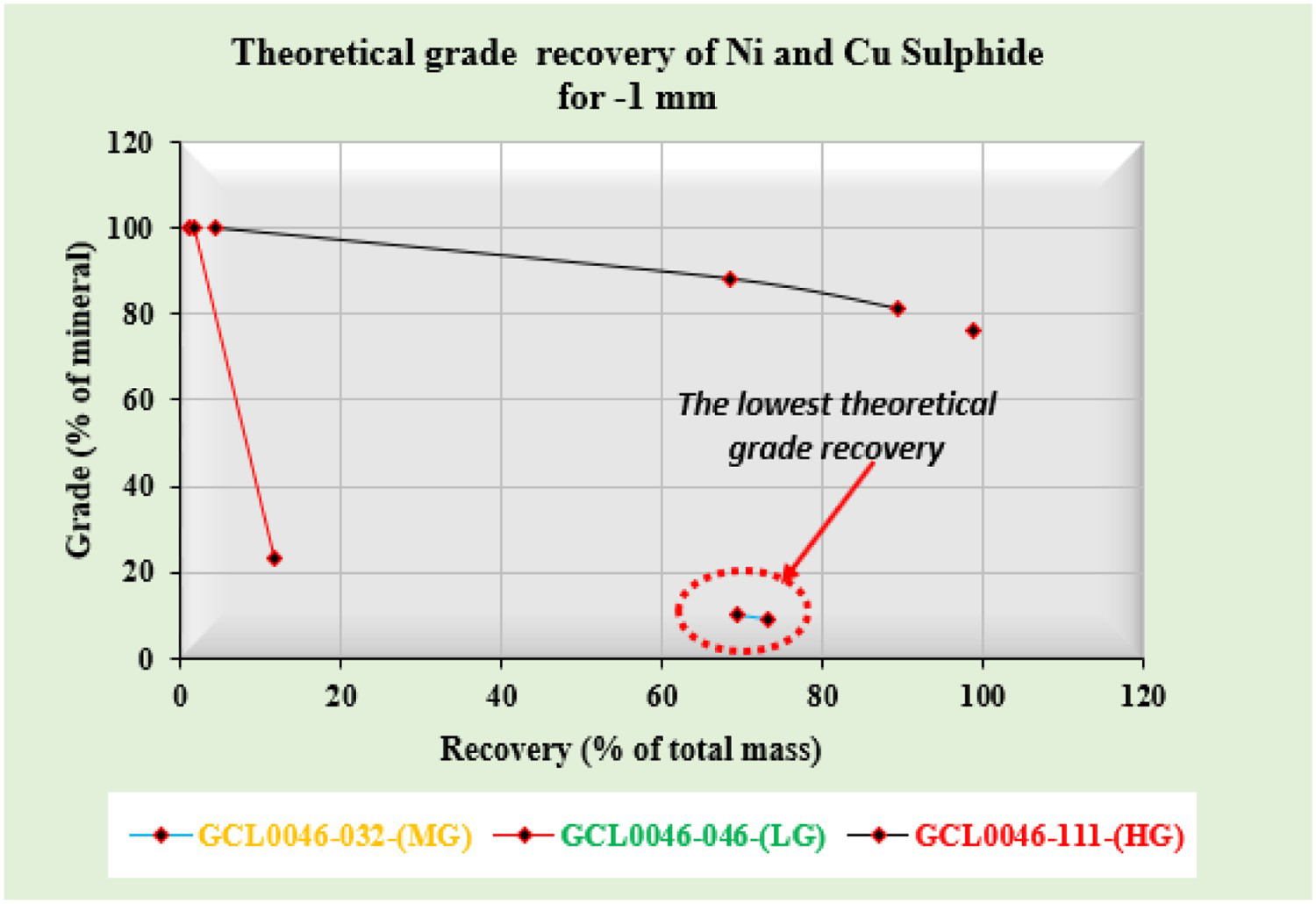
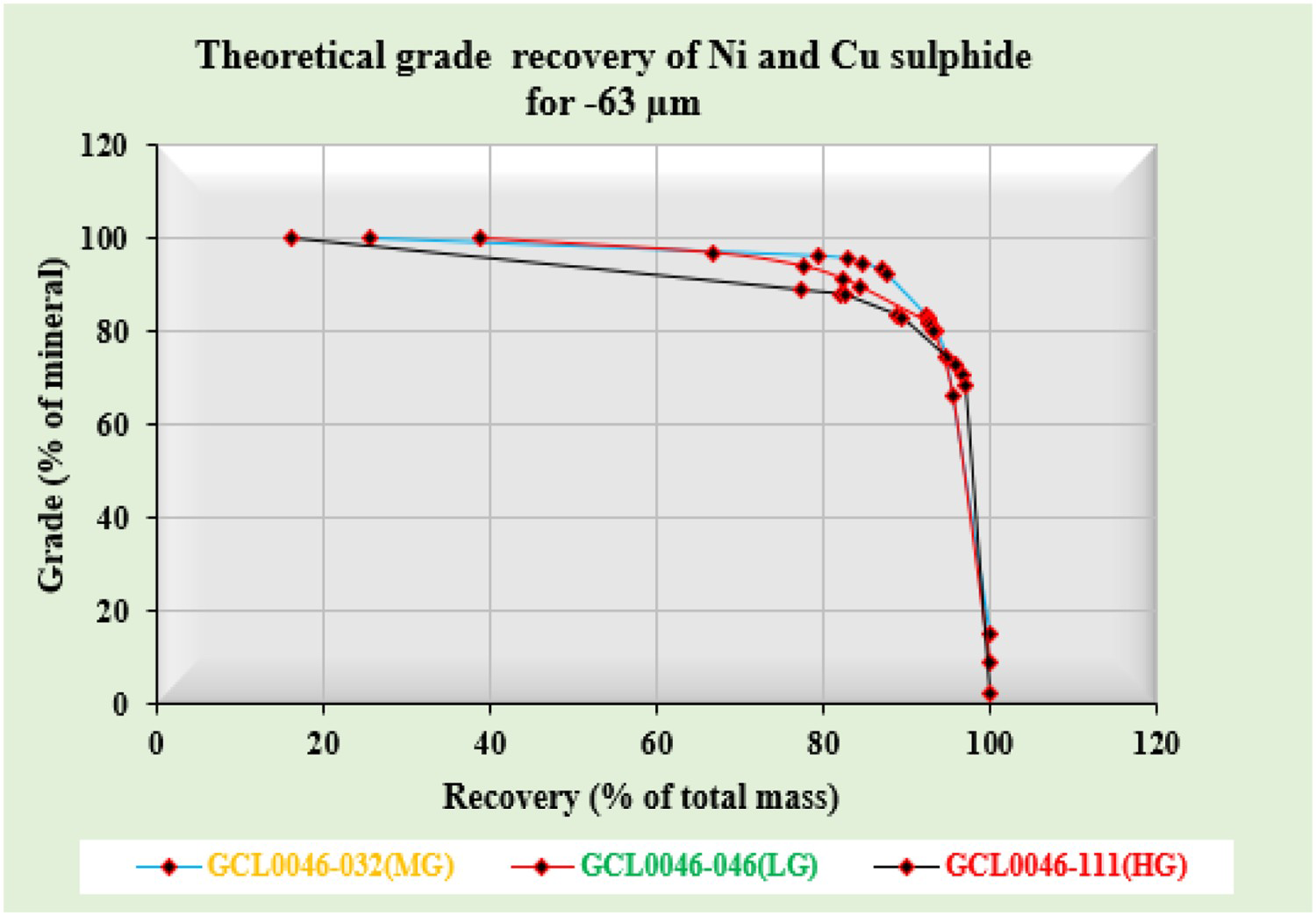
Where LG, MG and HG represent sample labels for low-grade, medium-grade and high-grade usable waste rock (Figure 4).
Carbonate showing a better grade versus recovery than Ni and Cu sulphides for <1 mm. Images are available in colour online.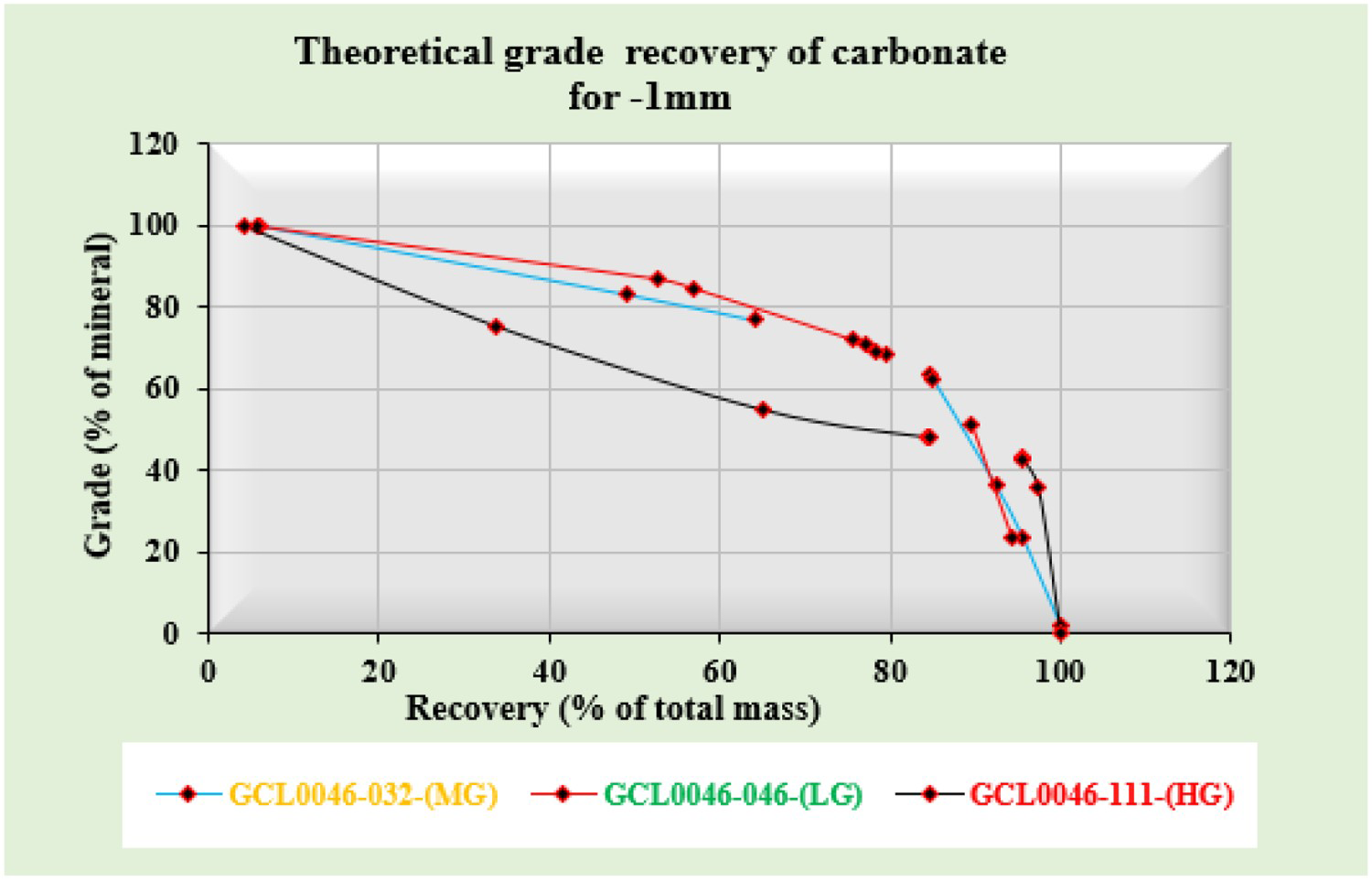
Predictive recovery and liberation model
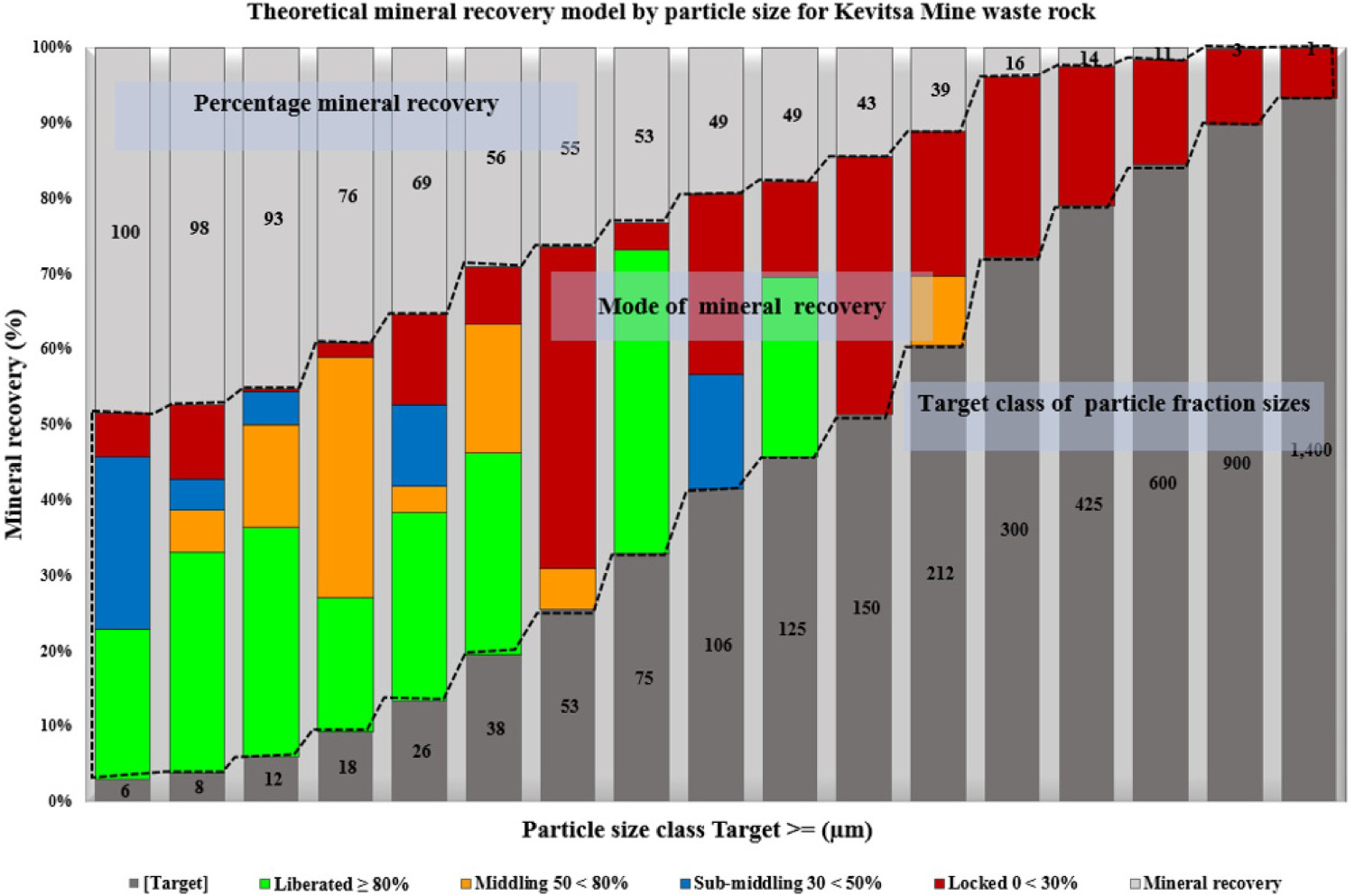
Results from an advanced mineralogical and microprobe analysis establish a theoretical mineral grade versus recovery curves by particle size fractions. The curves reveal that carbonates normally display the best trend of enhanced liberation into the finer particle size classes usually below 75–106 µm. Above this, all samples indicate variable degrees of liberation, with particles <75 µm showing an excellent liberation in all samples. The mode of liberation for Cu and Ni sulphides markedly improves at slightly finer particle size classes (<38–53 µm) which show moderate to good liberation.
Conversely, as with the carbonates around 35 wt-% of the Ni and Cu sulphides are hosted in the finer particle size classes where liberation conspicuously increases. There is remarkable variability in theoretical mineral recovery by particle sizes for Ni and Cu and carbonate in ultramafic Ni and Cu PGE of the waste rocks. Nickel and copper sulphide display a low liberation and high locking that is erratic across the size fractions >53 µm. Whereas, carbonate exhibits a consistent high liberation and low locking in almost all the size fractions of the sample. The reason for that may be due to the silicate minerals hosting the metals.
There is a noticeable increase in carbonate liberation moving from the coarsest size grains to the finest size ones (Figure 5). Carbonate liberation, almost in every size fraction of the samples shows a higher degree of liberation than in Cu and Ni sulphides. Copper and Nickel sulphides liberation is moderate to good for all samples, and that liberation levels for all samples analysed are around 40–60%. Additionally, all the samples display a consistent amount of 30–40% of the Cu and Ni sulphides that can be regarded locked. There is an increase in Cu and Ni sulphide liberation when moving from the coarsest size fractions to the finest size fractions.
Carbonate showing a better grade versus recovery than Ni and Cu sulphides for <−63µm. Images are available in colour online.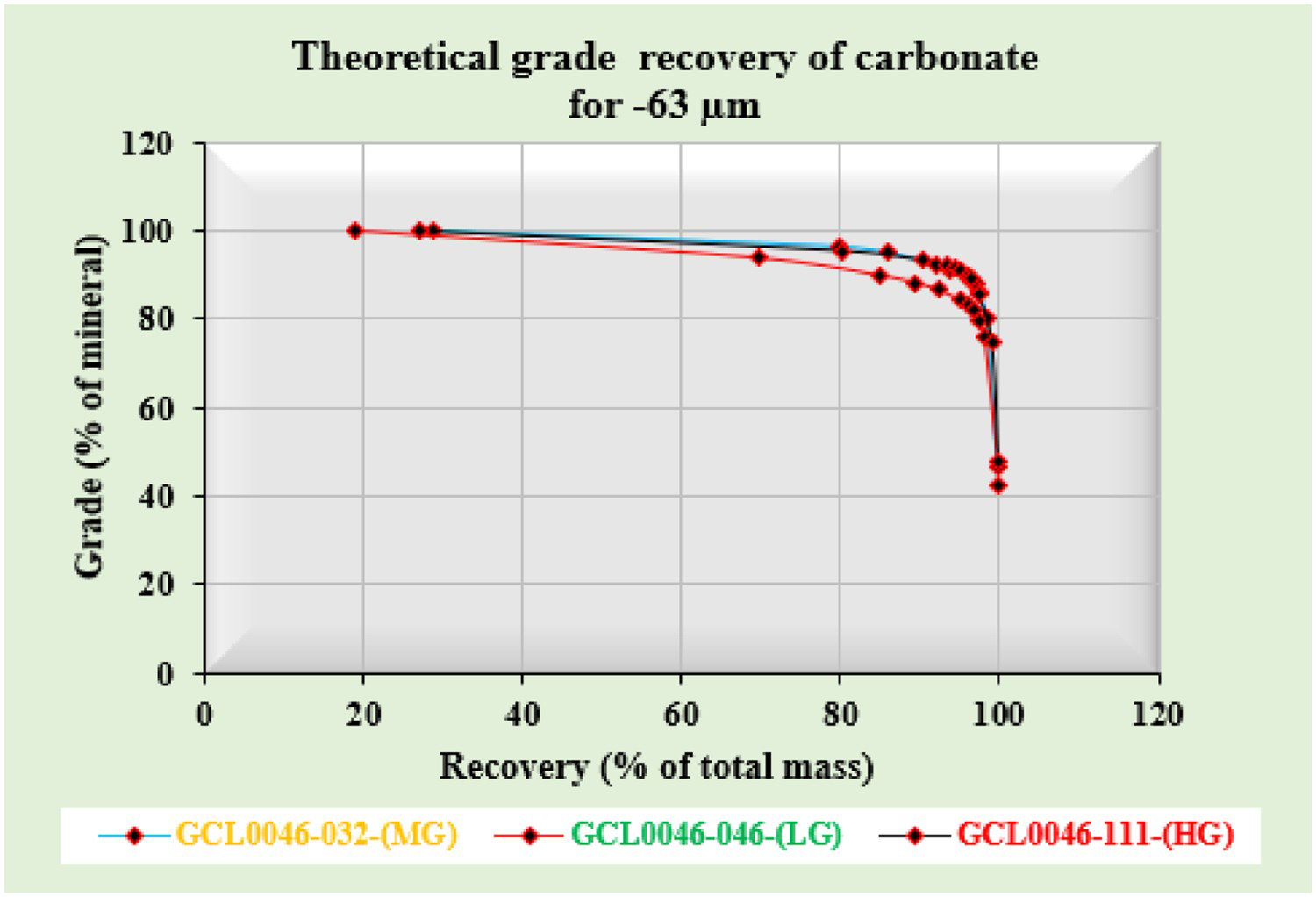
A model for the pattern of liberation and metal recovery for particle size fractions has been developed (Figures 6 and 7).
Ni and Cu sulphides mode of liberation at various sizes range. Images are available in colour online. A model for metal recovery with different target class particle size fractions. Images are available in colour online.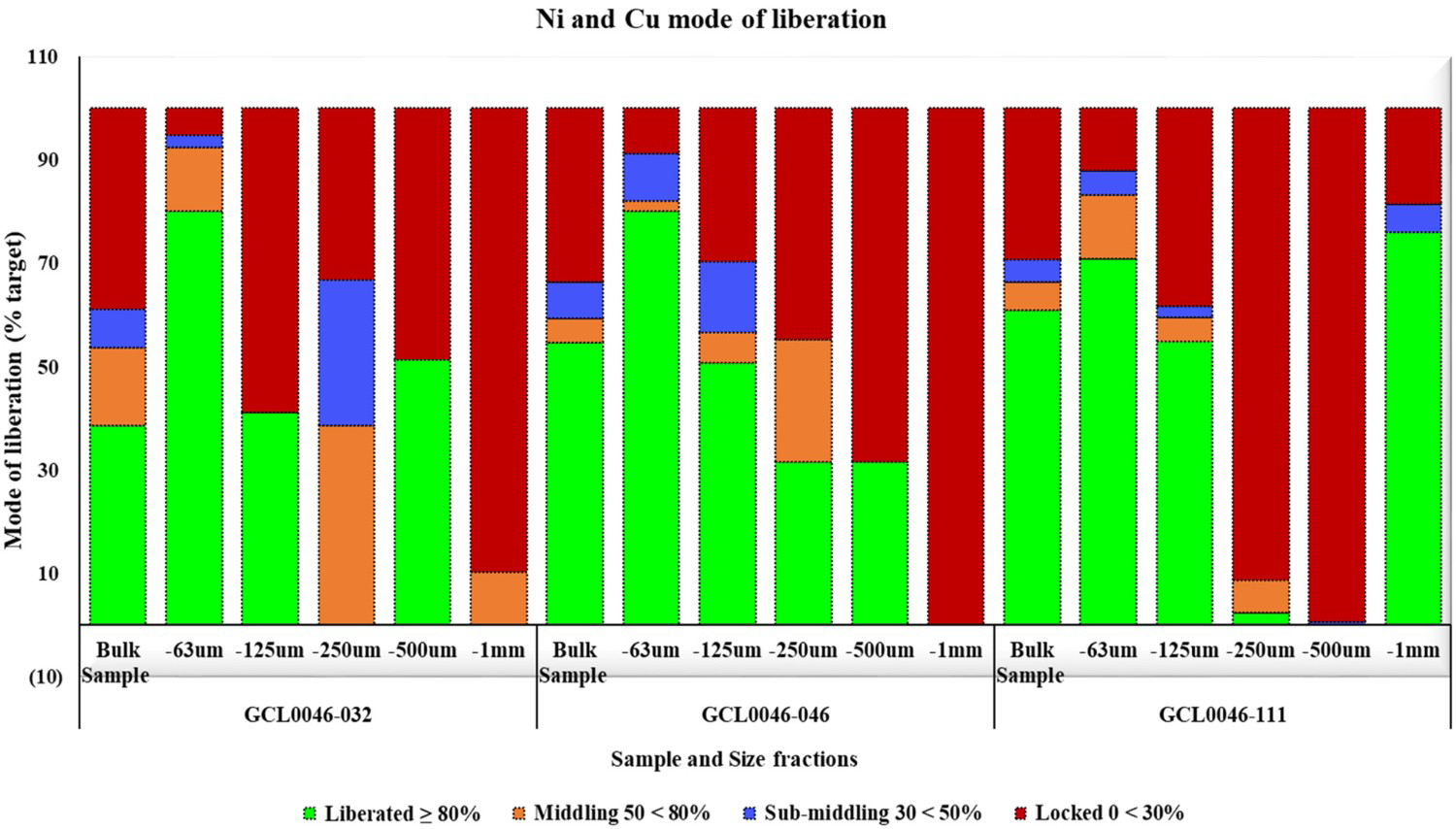
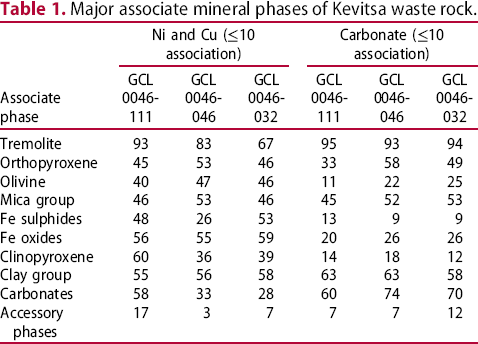
To determine the proportion of each mineral association across individual size fractions in the phases within three samples representing the waste rocks and to define the cut-off grade for Ni and Cu sulphide, each target mineral is grouped into one of three particle associations (Figure 8).
Minerals association across selected representative samples. Images are available in colour online.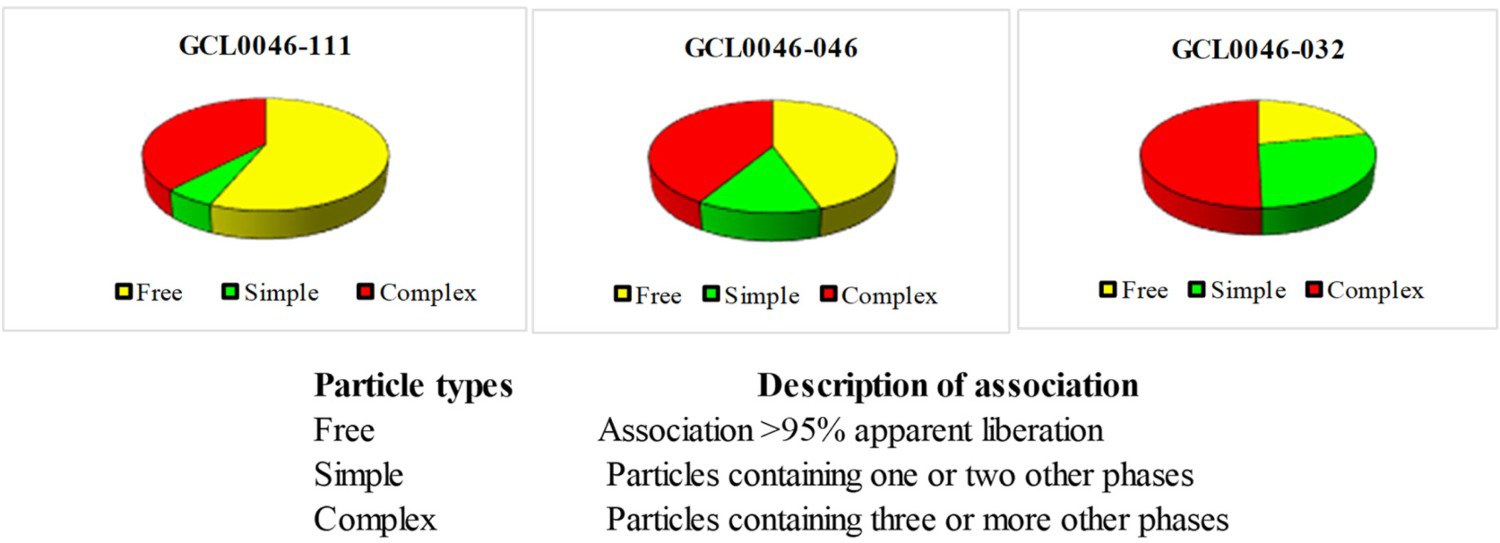
Major associate mineral phases of Kevitsa waste rock.
Petrographic thin section analysis of mineral phases
Pentlandite, pyrrhotite and chalcopyrite were identified as the key mineral phases hosting the copper and nickel sulphides which are the economic metals in the waste rock. As observed in the thin section, these minerals do not form a common association at any given point. Nevertheless, pyrrhotite appears as the predominant ore mineral that can co-exist with any of the other mineral phases relatively.
Commonly, pentlandite displays parting cracks instead of a normal cleavage pattern and sometimes reveals evidence of minor alterations. The principal silicate mineral in close assemblage with the metal sulphides is; forsterite-Mg-rich end-member of the olivine group of minerals, clinopyroxene and orthopyroxene. Clinopyroxene sometimes has inclusions of tremolite in which the sulphide minerals are often entirely locked. Hence, inhibits liberations of the economic metal sulphides, but occasionally liberate iron oxide in the form of magnetite (Figure 9(a,b)).
Microphotographs of petrographic analysis: (a) General view of coarse fraction showing original gabbroic fragments, and liberated calcite (cal) and clinopyroxene (cpx) in-plane polarized transmitted light); (b) high magnification image of magnetite (mag) and sulphides locked or partially liberated within the coarse size fraction. Magnetite is coarse and partially liberated within the fragment on the right but disseminated in the middle fragment. Intergrown sulphides of pyrrhotite (po), chalcopyrite (cpy) and pentlandite (pn) are coexisting within a composite fragment on the left inside the red sphere; (c) cross polarized light showing image ‘at 500 µm’. Images are available in colour online.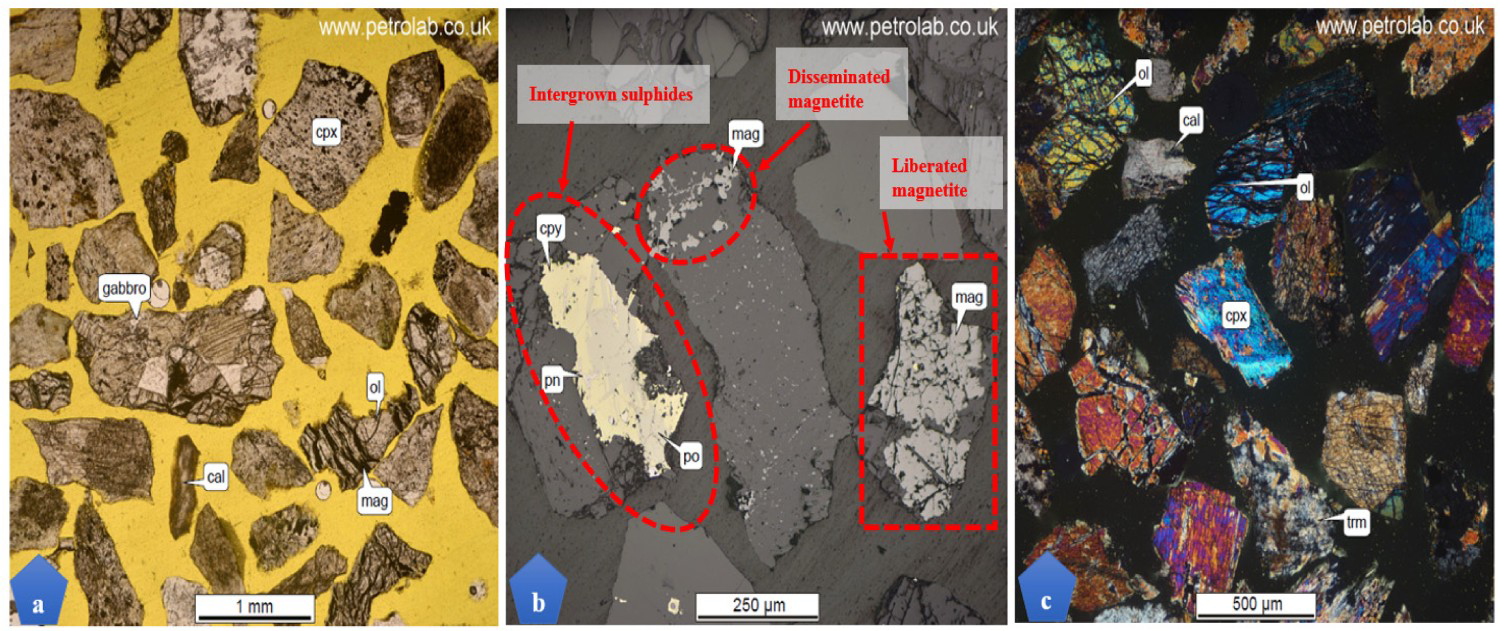
Supplementary optical petrography was carried out on three samples by conventional transmitted and reflected light polarizing microscopy using a Nikon research polarizing microscope.
This was to further simplify questions about the mineral association within the waste rock samples with specific attention to sulphide textures, and their liberation.
A Digital photomicrograph was taken to have a pictorial estimate of relative phase abundance. It was detected that the main minerals across the sample are very much comparable, and have a derivative of gabbroic rock. Tremolite gives the impression of the principal mineral phase. Liberation across the size grains increase from coarse to fine grains (Figure 10).
Microphotograph showing the degree of liberation five size fractions. Images are available in colour online.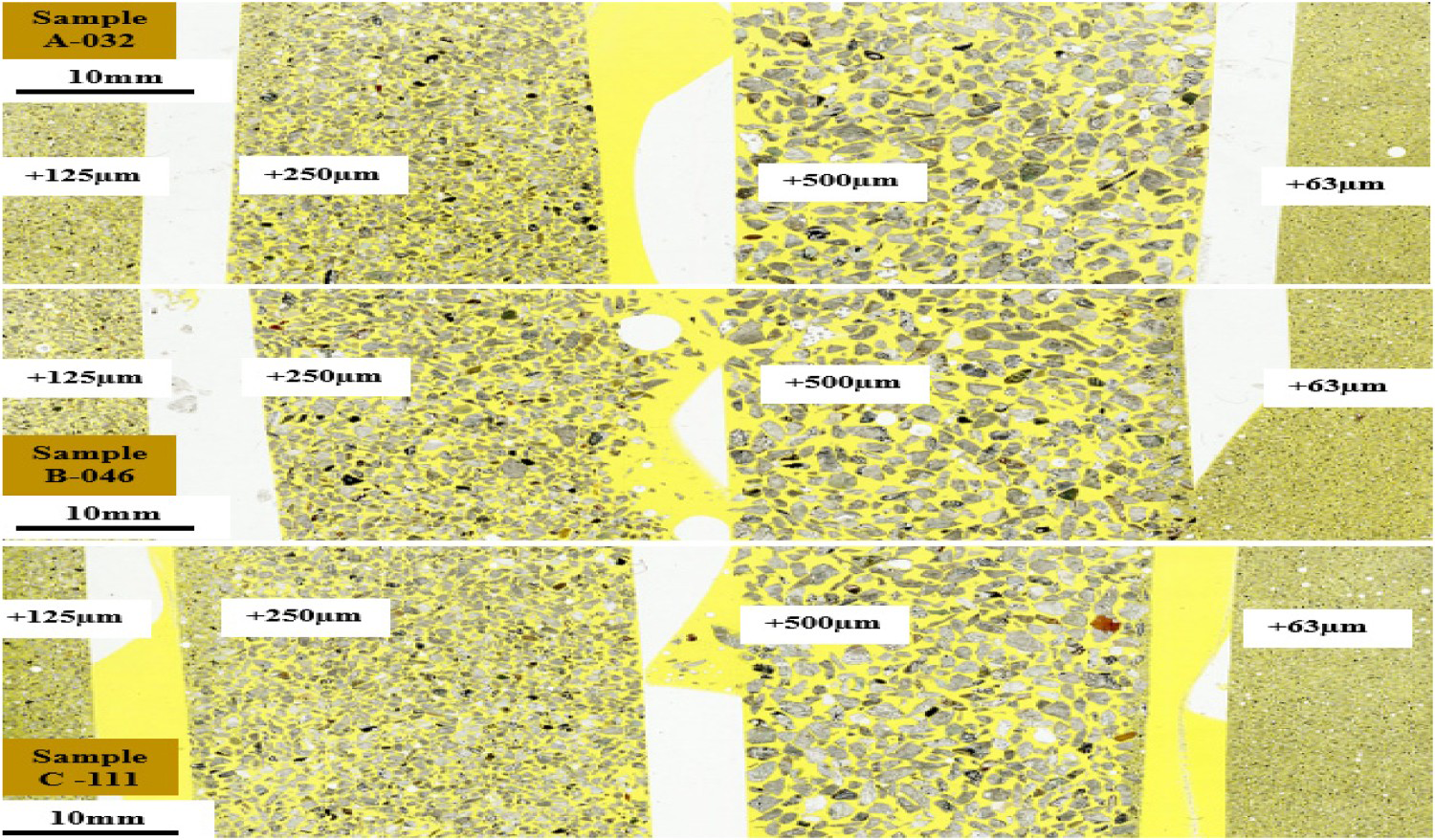
Optimal cut-off grade assessment
The predicted grades and waste classification from the fractions size limits have produced a cumulative probability grade estimation (Figure 11) and a normal grade distribution (sampling error analysis, Figure 12) with a 902 ppm Ni cut-off. These figures show the gradual addition of more ore reserve in the resource as the most optimal option without moving away from the specification of 1000 ppm as the cut-off grade between ore and the marginal waste. This essentially means, changing the grade cut-off by removing fraction size to ≥1.5 mm during screening will enhance optimum recovery of the metal sulphides. The cumulative Ni and Cu concentration will continue to increase with finer fractions (Figure 11).
A cumulative probability of estimated metal grade concentration and recovery potential for Ni in the waste rock. Images are available in colour online. A standard sampling error for normal distribution of Ni concentration, slightly above 900 ppm. Images are available in colour online.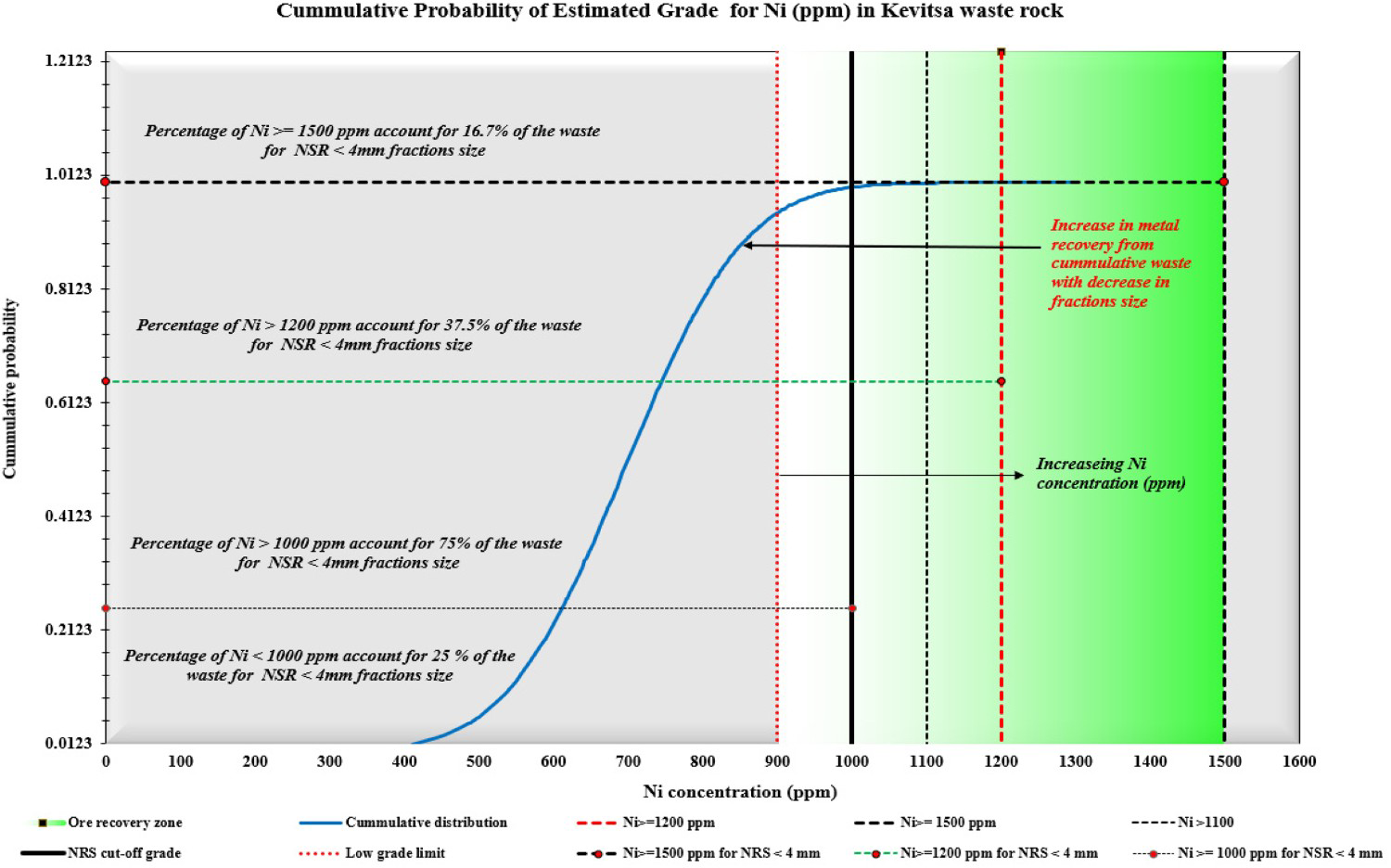
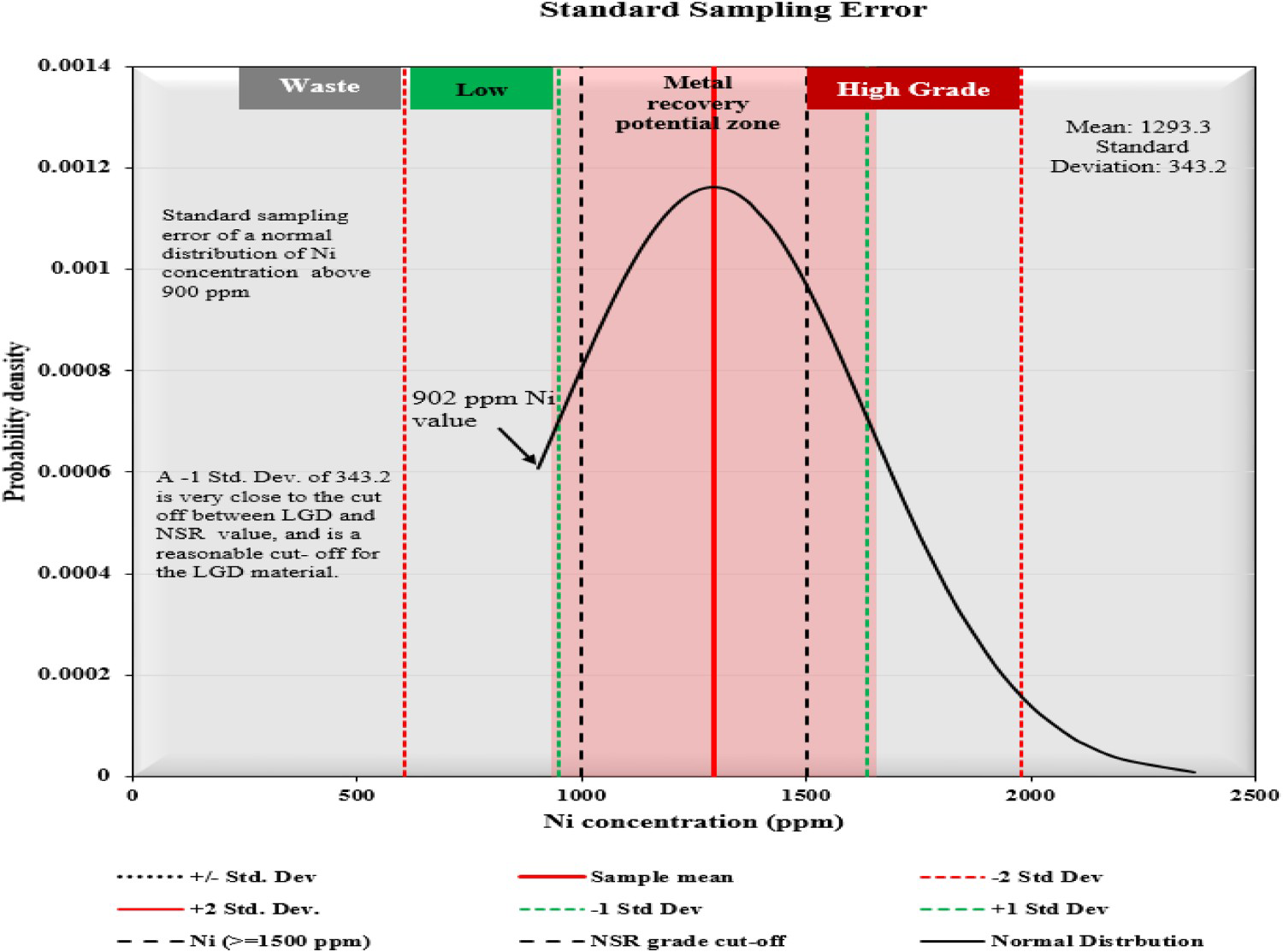
The geological continuity of the ore deposit may be good enough to permit further upgrade of the waste into ore by incorporating fractions size when defining the grade control block model. Following a standard sampling error analysis (Figure 12), it was discovered that −1 Std. Dev. of 343 is very close to the COG between LGD and the defined NSR value (1000 ppm). This indicates a reasonable cut-off for the LGD. Besides, this assessment is based on the spatial coincidence (similarities) observed between the PSD profiles after crushing, sieving and milling of the waste.
Conclusion
An evaluation of mine waste characterization to identify opportunities for optimizing project economics using fragmentation analysis had been completed. This study expands our knowledge about what size fractions are ideal for metal recovery from Ni–Cu–PGE waste rock. It further reveals that environmental risk resulting from metalliferous drainage may be mitigated by removing finer size grains that would have been otherwise left in waste dumps.
Thus, it can be concluded that various size fractions have substantial impacts on the amount of metal that may be recovered from waste rock. It can therefore be summarized that:
Nickel sulphides are concentrated in the fines, and they are more liberated in the fines. Recovery of Ni and Cu sulphides in the fines is key to reducing AMD risk to the environment. Fragmentation has the potential to substantially upgrade the copper and nickel sulphides content in finer fractions. This implies grades of the economic metals move nearer to that of ore than the predefined waste. Moreover, processing productivity is often controlled by the economic metal sulphide concentration; and since the material now has a finer fraction size, there will be not as much necessity for grinding and screening the material. Nickel in the coarser fractions is less liberated and has a lower concentration. As such, lower release potential for environmental degradation and resource recovery. Fragmentation analysis can be used as a suitable guide in designing blasting patterns in waste zones as it may provide benefits to control the physical properties of the waste product at the upstream source level. Blasting could be custom-made to generate finer or coarser waste products that may provide opportunities to recover both metals and carbonates that may provide positive cost benefits. Such practice will invariably permit some control over acid mine drainage threats. The prevalent use of block models as a component of waste management strategy in recent mining practice is considered an important stride in refining the mine planning paradigm towards the project's long-term economic cost optimization. The main sulphides are pyrrhotite, pentlandite and chalcopyrite with occasional pyrite. The main carbonates are calcite and to lesser extent dolomite, with trace ankerite. Further, this study establishes that opportunities to expand project economics can be recognized by incorporating fragmentation analysis in the mining operations. The reason being the recovery potential of hypothetically economic metals from material earlier categorized as waste may be redefined as ore since the COG values between waste and ore are sometimes marginal.
Footnotes
Acknowledgements
I will like to express my profound thanks to Mining and Environmental Management Ltd, Geochemic Ltd, all in the UK for their logistical and financial support in carrying out this project.
Disclosure statement
No potential conflict of interest was reported by the author(s).