







Abstract
Carbonatite occurrences are reported in Lueshe, Kirumba, Bingo and Mombadio in the Democratic Republic of Congo (DRC), within the western branch of the East African Rift System (EARS). These rocks intrude Precambrian rocks, which are mainly quartzites and mica schists. Lateritic profiles from Lueshe and Bingo are ore-bearing minerals enriched in Nb2O5 and phosphate minerals. The Lueshe and Bingo exploitable quantities are estimated to be 30 Mt at a grade of 1.34% Nb2O5 and 7 Mt at a grade of 2.86% Nb2O5, respectively. These carbonatites were explored and exploited by some mining companies in the 1970s and 2000s. They show geological and geochemical similarities to other exploitable carbonatites in the EARS, including Mrima Hill in Kenya, Panda Hill in Tanzania and the world-class Araxá and Catalão carbonatites in Brazil. The Lueshe and Kirumba alkaline massifs dates, determined using the whole-rock Rb–Sr method, are respectively 822 ± 120 and 803 ± 22 Ma and are intimately linked to the Rodinia Supercontinent breakup. These dates are analogous to other regional carbonatite dates like the Matongo carbonatite in Burundi. However, further geological, petrological and geochemical studies on carbonatite complexes are essential in DRC. Most importantly, the economic potentials of Kirumba and Mombadio should be evaluated. Simultaneously, the dates of the Bingo and Mombadio carbonatites are crucial for the elucidation of their geodynamic settings.
Introduction
Owing to their endowment in critical metals, carbonatites and alkaline rocks are crucial for the sustainability of modern green technology industries (Weng et al. 2015; Sovacool et al. 2020). Research and exploration are expected to continue growing in the future, owing to the shift from fossil fuels to green metals to mitigate global climate change (Buchert et al. 2009; Long et al. 2010; Moss et al. 2011; Wall 2014; Dutta et al. 2016; Schulz et al. 2017; Goodenough et al. 2018). About 527 carbonatite and alkaline massifs have been reported worldwide (Woolley and Kjarsgaard 2008; Woolley and Bailey 2012). Some of these occurrences have been extensively studied, while others remain poorly understood.
The Democratic Republic of Congo (DRC) is one of the African countries with carbonatite complexes (Woolley 2001). Some of these complexes, such as Lueshe and Bingo, are mentioned in the literature, but little work has been completed. Many geologic reports are not even in the public domain. Previous reviews include Kampunzu et al. (1985), Lubala et al. (1985) and Woolley (2001), but these studies lack details for many of the DRC carbonatites, hindering further studies and mineral exploration. Compared with carbonatites near the Congo (Eby et al. 2009; Stoppa and Schiazza 2013; Midende et al. 2014; Decrée, Boulvais, Cobert, et al. 2015; Decrée, Boulvais, Tack, et al. 2015; Ntiharirizwa et al. 2018; Witt et al. 2018; Jung et al. 2019; Buyse et al. 2020), the DRC carbonatites lack basic information on their geology, petrography, mineralogy and geochemistry but are promising in their rare metal potential.
Therefore, this paper's principal objective is to review all the available information related to the geological settings, ore localisation, isotopic age(s) and economic potentials of carbonatites in DRC. The data to be derived from this review highlight the current knowledge gaps and provide a geological basis for detailed exploration of these carbonatites. It also focuses on the economic potentials of the carbonatites and their geological and mineralogical comparisons with surrounding carbonatites in the East African Rift System (EARS).
Carbonatites
Definition and petrogenesis
Carbonatites are igneous rocks that have more than 50% modal composition of carbonate minerals (Le Maitre 2002). These carbonate minerals are mostly calcite (CaCO3), dolomite (CaMg(CO3)2), siderite (FeCO3) and ankerite (Ca(Mg, Fe2+,Mn)(CO3)2).
Diverse origins have been suggested for carbonatites and their parent magmas. However, field relations, geological and geochemical studies have shown that an individual carbonatite complex may be emplaced by a combination of magmatic processes (Bell 2005). Thus, carbonatite emplacement may result from crystal fractionation of nephelinite- or melilite-rich magma (Gittins 1989); liquid immiscibility of carbonate-rich and silica-rich melts (Lee and Wyllie 1998; Halama et al. 2005; Brooker and Kjarsgaard 2011); and partial melting of a carbonated mantle (Gittins and Harmer 2003; Amsellem et al. 2020).
Classification of carbonatites
There are several ways to categorise carbonatites. Mineralogical and genetic characteristics of carbonatites provide two major classes: primary carbonatites and carbothermal residua (Mitchell 2005). Primary carbonatites are further subdivided into those associated with nephelinite, melilite, kimberlite and aillikite; while carbothermal residua, also known as pseudocarbonatites, are associated with magmas saturated or undersaturated in sodic peralkaline or potassic chemical character derived from a lithospheric mantle (Mitchell 2005).
Depending on their chemistry, carbonatites are subdivided into four different classes (Woolley and Kempe 1989): (i) calcite-carbonatite (calciocarbonatite), which typifies where the main carbonate mineral is calcite; it is a sövite when it is coarse-grained or an alvikite when it is medium to fine-grained. (ii) Dolomite-carbonatite (magnesiocarbonatite), also called beforsite, has dolomite as the main carbonate mineral. (iii) Ferrocarbonatite is where the main carbonate is an iron-rich mineral. (iv) Natrocarbonatite is composed of sodium, potassium and calcium (Zaitsev and Keller 2006). Natrocarbonatite is found at Oldoinyo Lengai in Tanzania, a unique active volcano of carbonatite in the world (Fischer et al. 2009).
Tectonic settings of carbonatites
About 88% of carbonatites are found in stable cratonic and intraplate regions (Woolley and Bailey 2012), where they occur in extensional settings associated with continental rift valleys (Bell 2005). Many carbonatites and alkaline rocks in Africa are associated with the EARS (Woolley 2001). About 10.5% of carbonatites and alkaline massifs are emplaced in non-cratonic continental and orogenic settings such as in British Columbia, Canada (Millonig et al. 2012), Himalaya, India and Naantali, southwest Finland (Woodard and Hetherington 2014). Carbonatites are also found in ocean island settings (Schmidt and Weidendorfer 2018), representing about 1.5% of known carbonatites (Woolley and Bailey 2012). Three oceanic carbonatite occurrences are located in the Canary, Cape Verde and Kerguelen Islands (Bell 2005; Schmidt and Weidendorfer 2018; Simandl and Paradis 2018).
Economic values of carbonatites
Carbonatites are a host of several important commodities, including niobium, rare-earth elements (REEs), copper, titanium and industrial minerals such as vermiculite, apatite, feldspar and calcite (Mariano 1989; Bell 2005; Simandl and Paradis 2018).
As hosts for metallic minerals, carbonatites provide niobium which is concentrated in pyrochlore ((Na, Ca)2Nb2O6) (Mackay and Simandl 2014, 2015). Mines in Araxá and Catalão (Brazil) and Saint-Honoré (Canada) supply most of the world niobium (Bell 2005). Most of the niobium concentrations are included in supergene deposit resulting from the chemical decomposition of carbonatites and alkaline massifs (Mitchell 2014).
Carbonatites host REEs enriched in carbonate and phosphate minerals (Chakhmouradian and Wall 2012). Important light REE-bearing minerals extracted from carbonatites are bastnaesite ((Ce, La)(CO3)F) and monazite ((Ce, La,Nd, Th)PO4) (Jordens et al. 2013; Hoshino et al. 2016; Verplanck et al. 2016; Balaram 2019). Large REE mines are located in the Bayan Obo and Maoniuping in China; Mount Weld in Australia and Mountain Pass in the USA (Kanazawa and Kamitani 2006; Wall 2014; Hoshino et al. 2016; Voncken 2016; Zhou et al. 2017; Goodenough et al. 2018).
As hosts for industrial minerals, carbonatites provide apatite (Ca5(PO4)3(OH, F,Cl)), which is a phosphate mineral used as one of the major ingredients for fertiliser production. The Dorowa carbonatite, in Zimbabwe, provides phosphate resources for fertilisers (Barber 1991), while the Khibina carbonatites in the Kola Peninsula Province (Russia) also host large apatite deposits (Kogarko 2018). Carbonatites can be applied directly to soils as rock fertilisers to amend soil structure and reverse soil acidity (Jones et al. 2020). Other industrial minerals are vermiculite, phlogopite, fluorite and carbonates for cement manufacture (Simandl and Paradis 2018).
Temporal and spatial distribution of carbonatites
Globally, there are nearly 600 known occurrences of carbonatites (Woolley and Kjarsgaard 2008). Carbonatites have been recognised from the Archaean to the recent ages. Archaean carbonatites are localised in Phalaborwa (South Africa), Short Lake (Canada) and Siilinjärvi (Finland) (Yuhara et al. 2005; O'Brien 2015; Simandl and Paradis 2018). The world's oldest carbonatite is in Tupertalik (Greenland), while the youngest is at Oldoinyo Lengai in Tanzania (Bell 2005). A cursory survey of the age distribution of carbonatites shows that younger carbonatites are more prevalent than older ones (Simandl 2015; Simandl and Paradis 2018). This may be attributed to the tectonic movements, which occurred in the Neoarchean period and provided favourable geological conditions for carbonatites emplacement (Woolley and Kjarsgaard 2008).
Methods
Both published and unpublished literatures were considered and grouped based on the geology, mineralogy, geochronology and economic potentials of carbonatites in DRC and the EARS. Some of the data were tabulated for better presentation and understanding. Calcite-carbonatite chemical data from published papers were recalculated for their average value using MS Excel and were tabulated for comparison with selected carbonatites in DRC with those of the western branch of the EARS. Existing geological maps of carbonatites and alkaline complexes were digitised using ArcGIS 10.3.
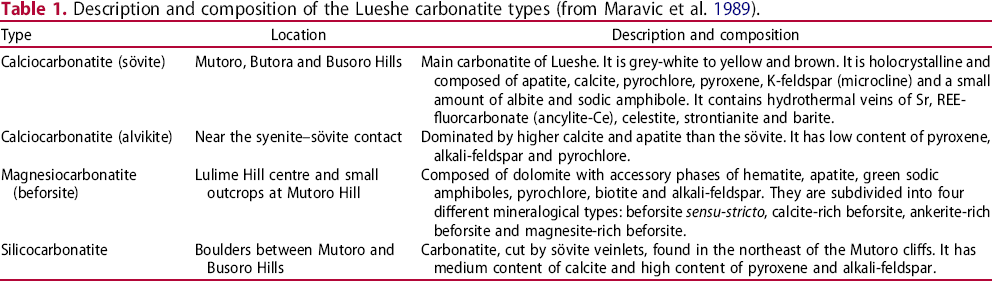
Description and composition of the Lueshe carbonatite types (from Maravic et al. 1989).
Modal composition of calcite carbonatites of Lueshe in wt-% (Maravic and Morteani 1980).

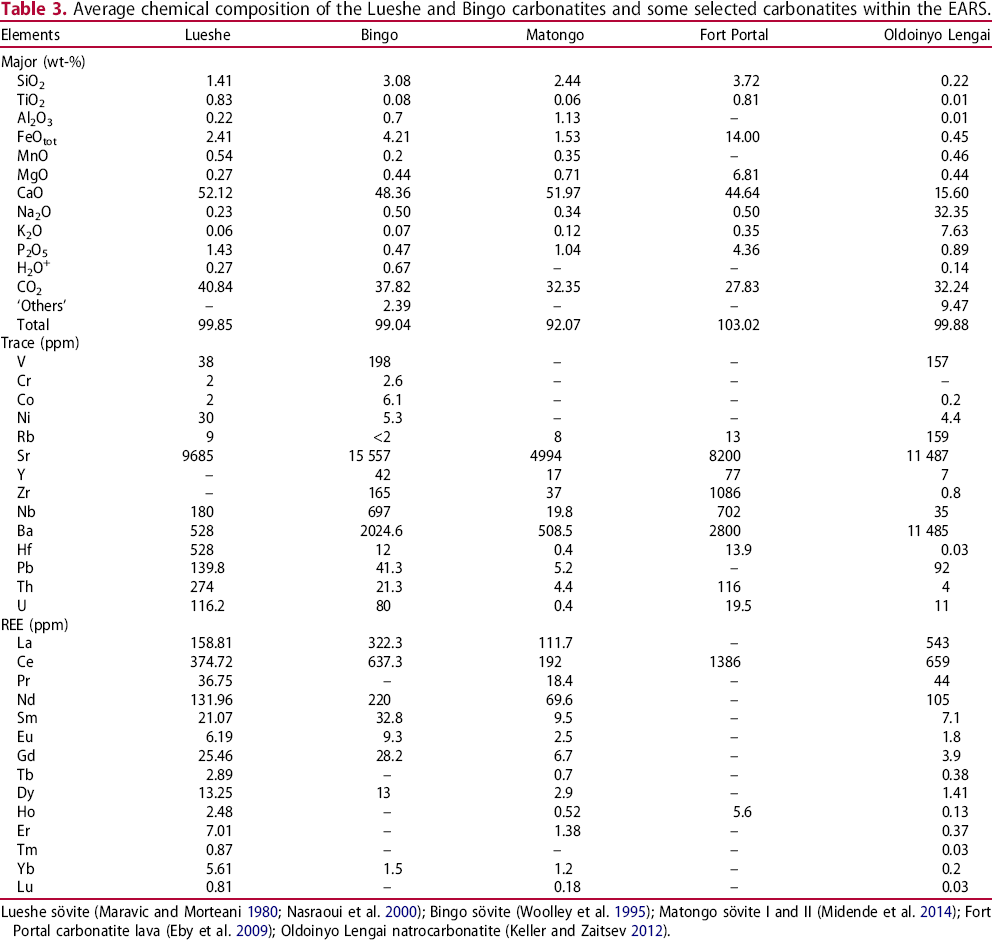
Average chemical composition of the Lueshe and Bingo carbonatites and some selected carbonatites within the EARS.
General geology of EARS
The EARS is the main continental rift located in East Africa. It extends over several kilometres and passes through many countries, including Burundi, DRC, Ethiopia, Kenya, Malawi, Mozambique, Rwanda, Tanzania, Uganda and Zambia. The EARS is subdivided into eastern and western branches, which are characterised respectively by more potassic and more sodic magmas (Rosenthal et al. 2009). The eastern branch extends over a distance of 2200 km from Ethiopia (Afar Triangle) through Kenya to northern Tanzania (Chorowicz 2005). In comparison, the western branch stretches from Lake Albert to Lake Malawi, over a distance of 2500 km (Kampunzu, Bonhomme, et al. 1998; Chorowicz 2005). Both branches contain numerous carbonatite complexes and alkaline massifs, as well as Cenozoic volcanic provinces (Kampunzu and Mohr 1991; Rosenthal et al. 2009; Koptev et al. 2016). In the western branch, two active volcanoes (Nyiragongo and Nyamulagira) are located in DRC, while in the eastern branch, the Oldoinyo Lengai active volcano produces natrocarbonatite in Tanzania (Rosenthal et al. 2009; Jung et al. 2019).
Carbonatites in DRC
There are four known carbonatite complexes in DRC; they are located in Mombadio, Bingo, Lueshe and Kirumba (Maravic and Morteani 1980; Lubala et al. 1985; Woolley and Kjarsgaard 2008). These complexes are within the western branch of the EARS (Figure 1). Some of them have been subjected to geological, mineralogical, geochemical and economic investigations. However, most of these studies were carried out in the 1990s. Hence, there is the need to update geological information on these carbonatites and associated rocks.
. Carbonatites distribution in DRC within the western branch of the EARS (after Maravic and Morteani 1980).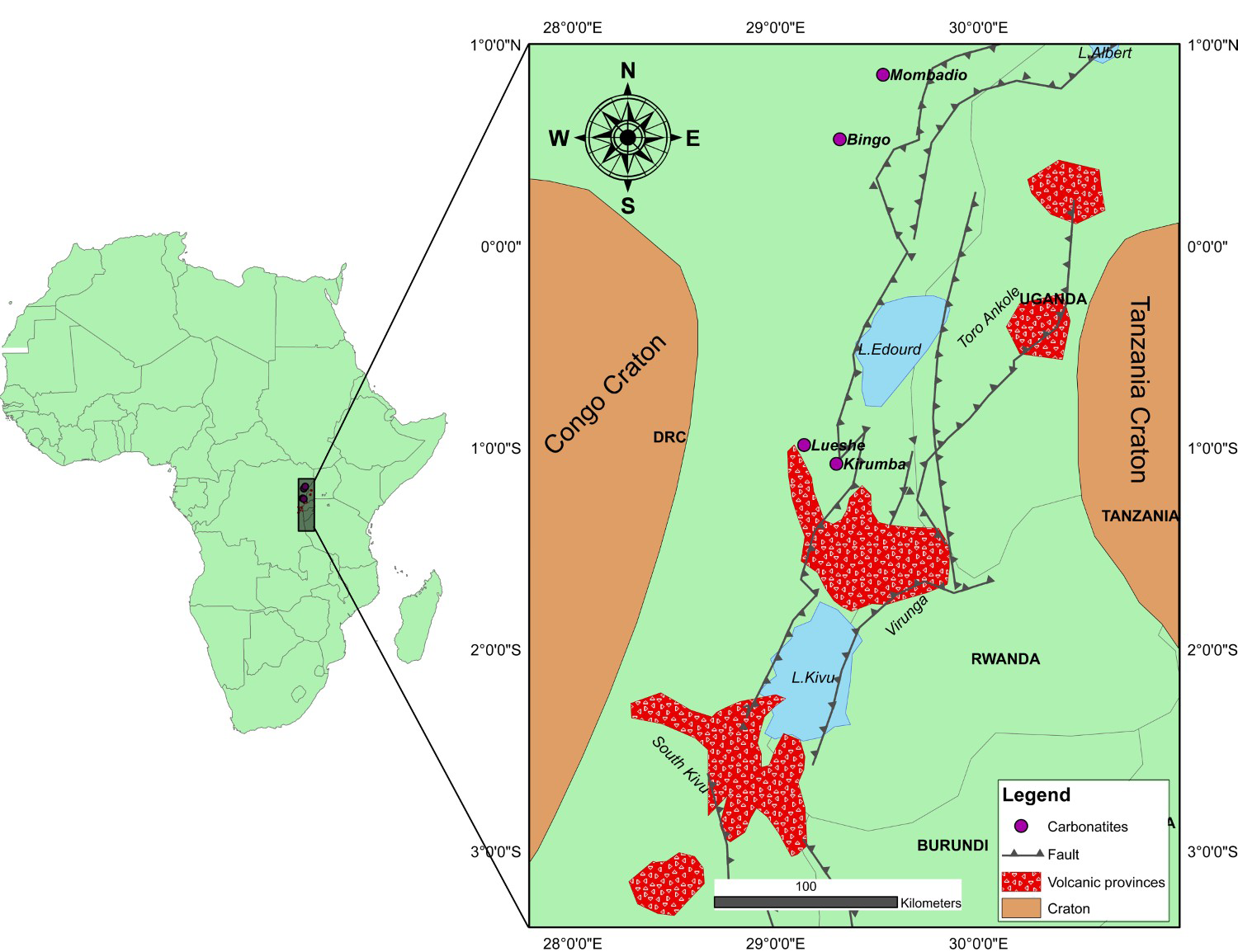
Lueshe carbonatite complex
Location and geological setting
The Lueshe carbonatite complex is located in North Kivu, east of DRC (Figure 1). It is within the western branch of the EARS and situated in the Rwindi Mountains. Rocks of the Rwindi Mountains strike NNE-SSW, between Lake Edward and Luholu graben. The carbonatite complex intrudes quartzites and garnet, biotite, sericite and kyanite schists of Precambrian age. The Lueshe Complex morphology is dominated by four hills (Figure 2), namely Buroso, Butora, Mutoro and Lulime Hills (Maravic et al. 1989).
. Geological map of the Lueshe alkaline massif (after Maravic et al. 1989).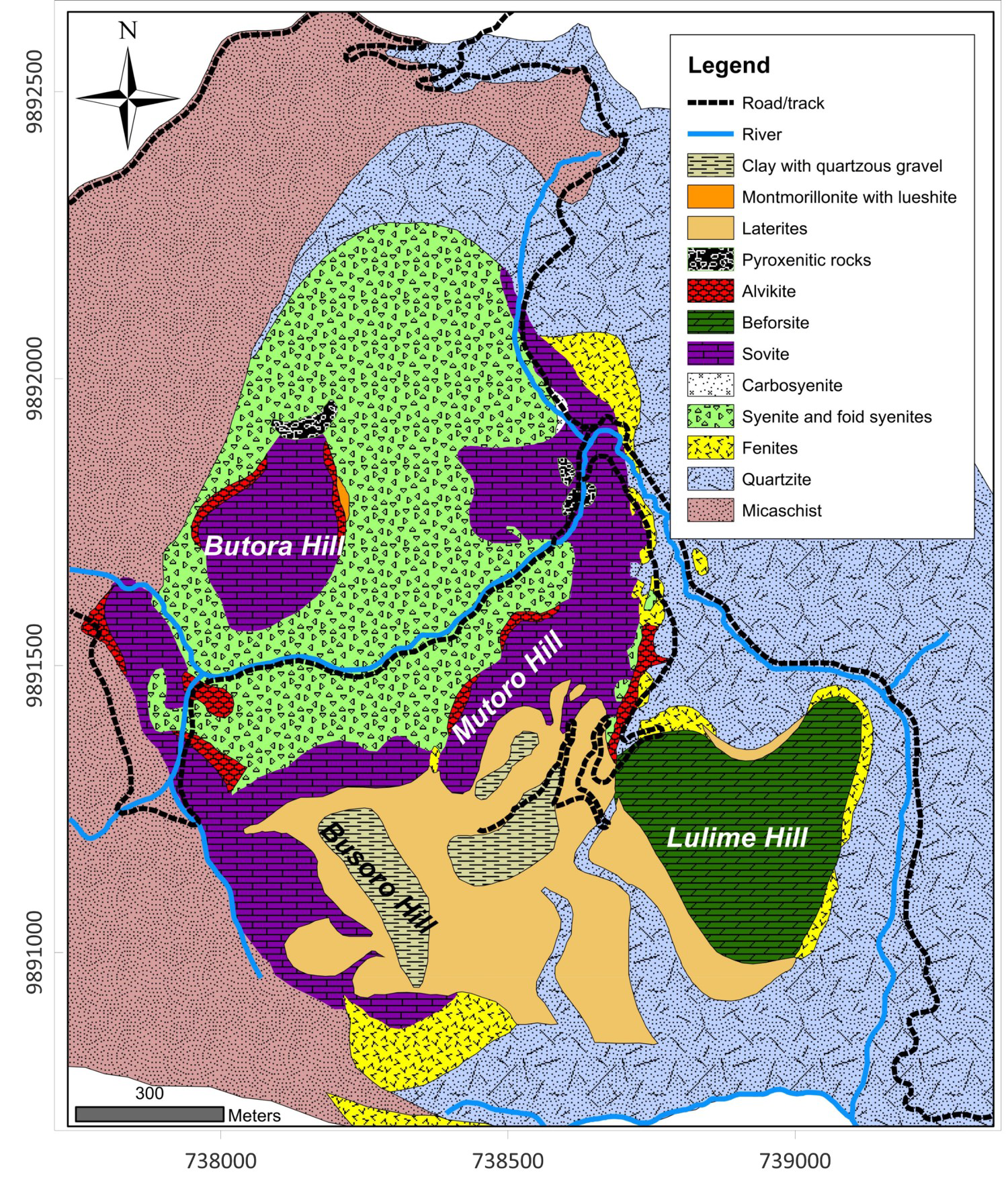
Mineralogical composition and petrography of the rock units
The petrography of the Lueshe massifs was described for the first time by De Bethune and Meyer (1956). Meyer and De Bethune (1958) later gave details of the compositions of the carbonatites, syenites and fenites. Other workers focused on the petrography, petrology and geology of the Lueshe Complex (Maravic and Morteani 1980; Maravic et al. 1989; Nasraoui 1996; Kramm et al. 1997). The rock types of Lueshe Complex are presented in Figure 2. They include syenite, carbonatite, fenite, mica schist, quartzite and pyroxenitic rocks. These rocks are covered by thick lateritic soils of between 30 and 150 m. The Busoro and Mutoro Hills are deeply weathered and covered with thick laterites rich in clay and sand minerals. Clay minerals are dominated by kaolinite and montmorillonite. Laterites are also enriched in crandallite, goethite, goyacite, wavellite, florencite, psilomelane and cryptomelane.
- Syenites
Syenites are medium-grained rocks and composed of feldspars (microcline, orthoclase, perthite and plagioclase), feldspathoids (cancrinite) and ferromagnesian minerals such as biotite and augite. Accessory minerals include zircon, pyrochlore and apatite. The syenites are subdivided into cancrinite-plagisyenites, cancrinite-syenites and cancrinite-bearing alkali-feldspar syenites.
- Carbonatites
Based on their chemical characteristics and textures, the carbonatites of Lueshe are subdivided into four different types: calciocarbonatite, ferrocarbonatite, magnesiocarbonatite and silicocarbonatite. The location, mineralogical composition and description of these types of carbonatite are presented in Table 1. Their modal composition in wt-% is shown in Table 2. The average chemical composition of the Lueshe calcite carbonatite (DRC) is presented in Table 3 together with those of Matongo, Fort Portal and Oldoinyo Lengai for comparison.
- Fenites
Fenites are located at the contact zone between calcite-carbonatite and cancrinite-syenite, in the valley between Lulime and Mutoro Hills. They are composed of anhedral quartz, biotite, garnet and muscovite.
- Pyroxenitic rocks and country rocks
Pyroxenitic rocks are located at the north of Mutoro Hill and the north of the Butora Hill calcite carbonatite (Nasraoui 1996). They are composed of dark pyroxenes layers and pale feldspars layers. Microcline and perthite are the main feldspars. Apart from pyroxenes (augite), dark layers are also composed of biotite, magnetite, sphene and pyrochlore.
Quartzite and quarzitic phyllite are one part of the country rock of the eastern part of the carbonatite complex; while mica schists are another component of the country rock in the western part of the carbonatite complex (Figure 2). They are classified into garnet-bearing schists, kyanite schists and sericite schists.
Economic potentials
Mineralogical and geochemical investigations of the altered and unaltered pyrochlores, lueshites and apatite, as well as the economic potentials of the carbonatite and its residual soils, are well-documented (Van Wambeke 1965, 1978; Safiannikoff 1966; Maravic et al. 1989; Philippo 1995; Nasraoui 1996; Van Overbeke 1996; Wall et al. 1996; Philippo et al. 1997; Moutte and Nasraoui 2000; Nasraoui and Bilal 2000; Nasraoui et al. 2000). The Lueshe carbonatite is well-known for being a huge repository of pyrochlore and apatite (Chernoff and Orris, 2002; Van Wambeke 1960, 1965, 1997; Maravic et al. 1989; Berger et al. 2009). The lateritic deposit is an economic repository of Nb2O5, from which exploitations were carried out between 1984 and 1993 and between 2000 and 2003 by ‘Société Minière et Industrielle du Kivu (SOMIKIVU)’, owned by the Congolese Government. The reserves are estimated at 30 Mt at a grade of 1.34% Nb2O5 (Maravic and Morteani 1980; Maravic et al. 1989). Clays derived from pyroxenitic rocks and carbosyenites also show the Nb2O5 grade of about 7% (Maravic et al. 1989).
Pyrochlore is the most important Nb-bearing mineral in the Lueshe carbonatite deposit (Maravic et al. 1989). Pyrochlore of the Lueshe deposit is subdivided into weathered and unweathered pyrochlore (Wall et al. 1996). The weathered pyrochlore in the laterites is K-rich pyrochlore which was initially called kalipyrochlore and now hydropyrochlore (Atencio et al. 2010; Christy and Atencio 2013). K-bearing hydropyrochlore is a Na-poor and K-rich pyrochlore type dominating in the Lueshe carbonatite residual soils (Van Wambeke 1978; Nasraoui 1996; Wall et al. 1996). It is generated by weathering of pyrochlore through the complete leaching of Na, Ca and F by the action of K-ions rich waters (Van Wambeke 1978). Other types of pyrochlores in the laterites are Ca- and zero-valent-dominant pyrochlores (Maravic et al. 1989; Wall et al. 1996; Nasraoui and Bilal 2000; Christy and Atencio 2013). Niobium is also found in other minerals, such as columbite (FeNb2O6), ferrocolumbite ((Fe, Mn)(Nb, Ta)2O6), baotite (Ba4(Ti, Nb)8Si14O28Cl) and fersmite (CaNb2O6) in the northwestern side of the deposit (Wall et al. 1996). Lueshite (NaNbO3) is found at the contact zone between the carbonatite and cancrinite-syenite and in the vermiculite-rich layers of fenites (Van Wambeke 1965, 1978).
Apatite is the main phosphate-bearing mineral at Lueshe, and it is estimated at a grade of 7% (Chernoff and Orris, 2002). Phosphate minerals are found in the weathering profiles, where intense alteration dissolve apatite and forms huge quantities of secondary minerals like aluminous phosphates, iron oxides and clays (Nasraoui and Bilal 2000).
REE-bearing minerals of the Lueshe Complex are synchysite (Ca( . Chondrite-normalised REE abundance patterns of the Lueshe, Bingo, Matongo calciocarbonatites and Oldoinyo Lengai natrocarbonatite (chondrite normalisation values are from Taylor and McLennan (1985)).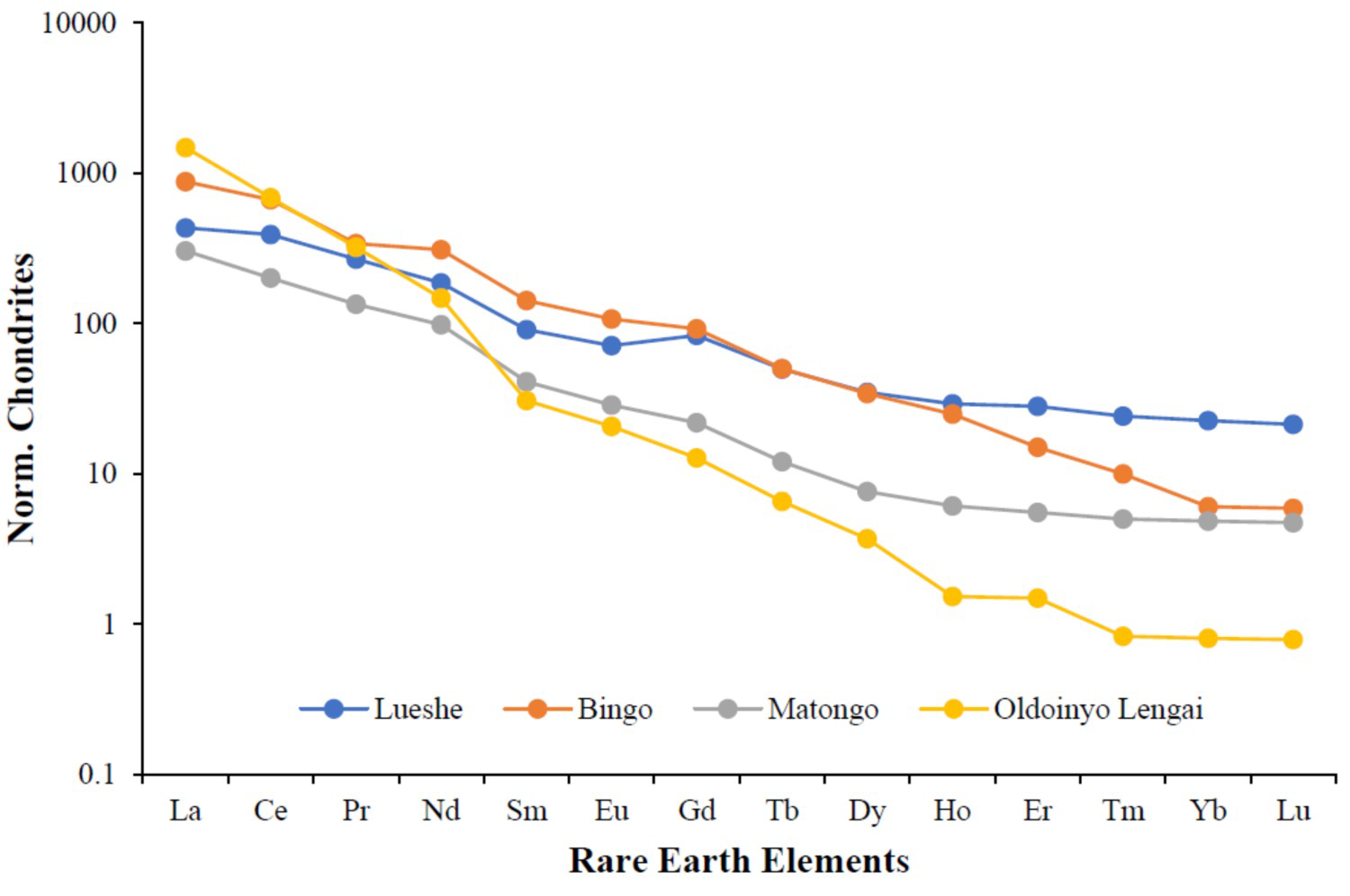
Age
The K–Ar biotite dating carried out on the Lueshe calciocarbonatite gave a date of 516 ± 26 Ma (Bellon and Pouclet 1980). However, the whole-rock Rb–Sr dating gave a date of 822 ± 120 Ma (Kampunzu, Kramers, et al. 1998). Midende et al. (2014) used U–Pb on zircon megacrysts from Lueshe carbonatites to get a mineral age of 798.5 ± 4.9 Ma.
Bingo carbonatite complex
Location and geological setting
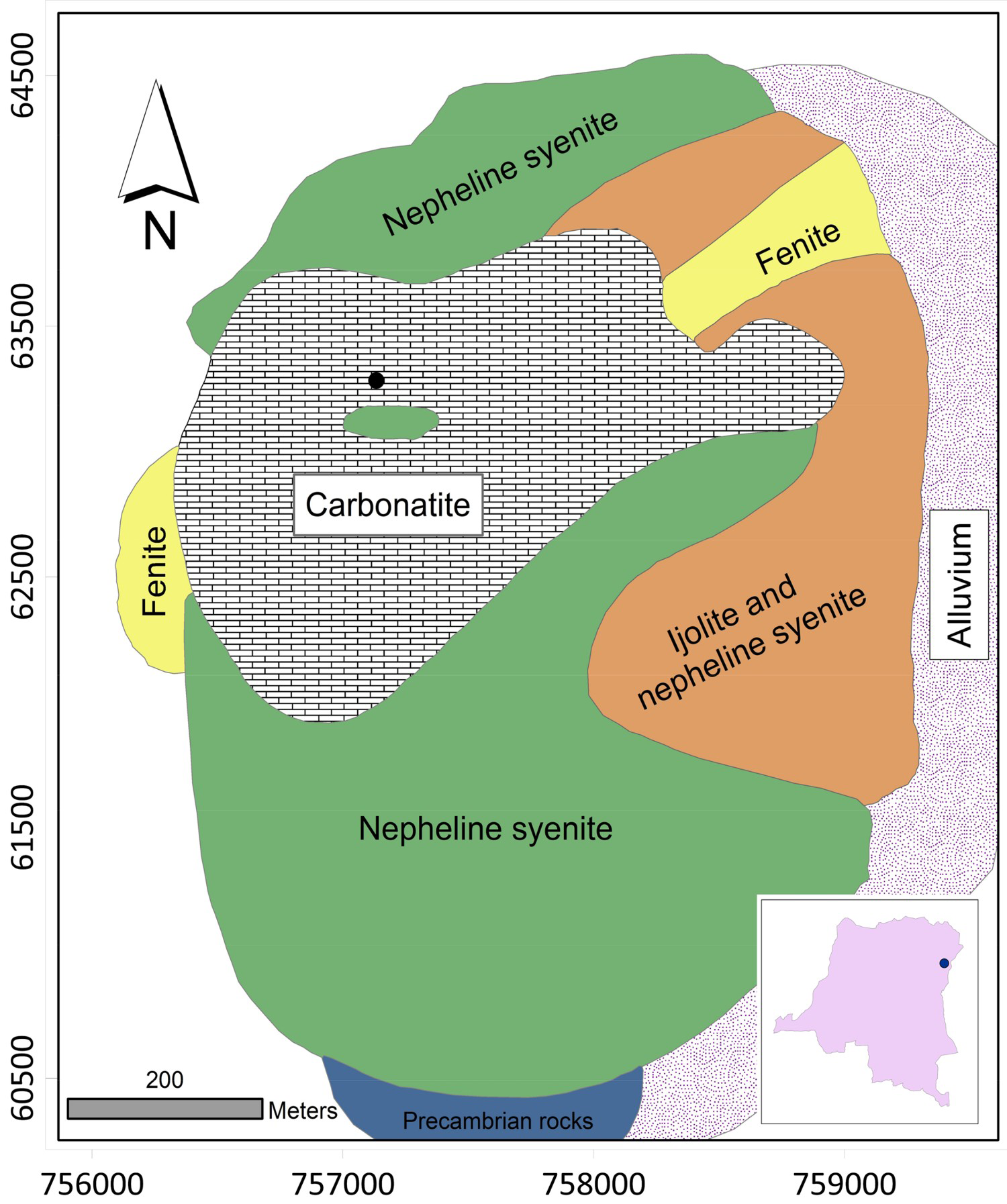
Bingo is located in North Kivu in DRC at longitude 29.28 and latitude 0.6 (Figure 1). Bingo Complex was discovered in 1958 (Van Wambeke 1960). Boulders of carbonatite are observed in the field, while a fresh outcrop is located north of Mt Home. The carbonatite complex intruded Precambrian orthogneisses and is surrounded by two abundant groups of igneous silicate rocks: ijolites and nepheline syenites (Figure 4; Woolley et al. 1995). The country rocks are quartzite, dolerite and gabbro (Woolley et al. 1995; Kasay 2018). The carbonatite is surrounded by ijolites, nepheline syenite and fenites (Figure 4). These rocks are covered by thick lateritic soils (over 100 m at places), composed of iron oxides, goethite, brooksite, ringwoodite, albite, chlorite, hematite and magnetite (Philippo 1995). The laterites contain other minerals, such as carletonite (KNa4Ca4Si8O18(CO3)4(OH, F)·H2O) and polyhalite (K2Ca2Mg(SO4)4·2H2O) (Kasay 2018).
Mineralogical composition and petrography of the rock units
- Nepheline syenites
Nepheline syenites are located at the southern and northern parts of the carbonatite complex, with some boulders near the fenites. They are coarse-grained and composed of alkali-feldspar, nepheline, aegirine, sodalite and cancrinite. Accessory minerals include calcite, titanite, melanite, biotite, wollastonite, fluorite, götzenite, eudialyte and zircon. These rocks are peralkaline with the highest alkalinity ratio in the nepheline syenite. The presence of eudialyte and götzenite in the rock suggest extreme fractionation of the parent melts (Woolley et al. 1995).
- Ijolites
Ijolites are located in the eastern part of the carbonatite. They contain feldspars and are classified into four categories. The first category is the nepheline–pyroxene rocks, which do not have feldspar (called ijolite sensu-stricto). The second is a heterogeneous rock with patches of ijolite sensu-stricto surrounded by feldspar-rich ijolite or nepheline syenite. The third is a rock with euhedral nepheline crystals in a fine-grained pyroxene matrix, nepheline and alkali-feldspar. The fourth is an ijolitic rock having different proportions of alkali-feldspar and nepheline (Woolley et al. 1995).
- Fenites
Fenites are identified on the northeastern and western margin of the Bingo Carbonatite Complex. They are composed of amphiboles, quartz and biotite.
- Country rocks
The country rocks are orthogneisses, quartzites, dolerites and gabbro (Woolley et al. 1995; Kasay 2018). The gabbro is composed of clino- and orthopyroxenes, and amphiboles. There is no clear relationship between these rocks and the carbonatite intrusion, according to Woolley et al. (1995).
- Calcite carbonatite
The carbonatite is a calciocarbonatite marked by low Mg and moderate Fe contents (Woolley et al. 1995). It is composed of calcite, magnetite, phlogopite and aegirine. Accessory minerals include apatite, pyrochlore, Sr–Ba and Sr–REE carbonates (Woolley et al. 1995). The average chemical composition of the Bingo calcite carbonatite is presented in Table 3.
Economic potential
Bingo is notably famous for its high niobium (Berger et al. 2009) and phosphate contents (Carlotta et al. 2002). Geochemical analyses and economic evaluation of the carbonatite and overlying lateritic soils in Bingo show a high concentration of Nb2O5 and geochemical associations of Nb–Sr–Ba–REE (Van Wambeke 1971). Niobium is hosted in pyrochlore. The unique type of pyrochlore identified in the laterites is a zero-valent-dominant pyrochlore (bariopyrochlore). Pandaïte, a hydrated barium pyrochlore, is found in the Bingo carbonatite (Van Wambeke 1971). The niobium deposit was exploited, through adits (Figure 5), in early 1970 by ‘Société Minière Union Carbide (SOMUCAR)’, a mining company jointly owned by the Congolese (Zaire) Government, Union Carbide Corporation and the Belgian interests (McDonald 1971). The Bingo Nb2O5 reserve is estimated at 7 Mt at a grade of 2.86% (Philippo 1995).
. Geological and geometric map of the adits of the Bingo carbonatite lateritic soils and the exploitation area (after Kasay 2018).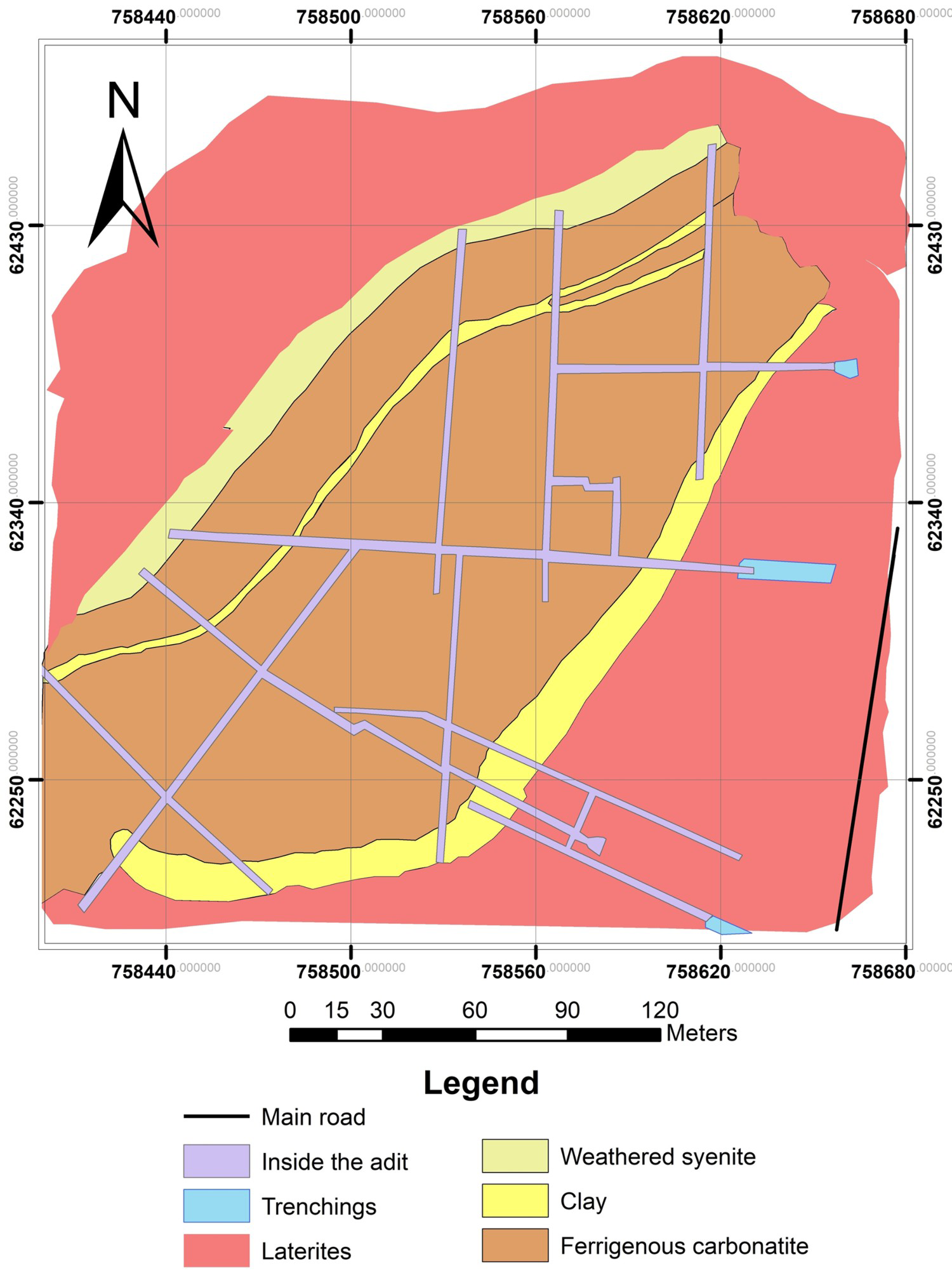
The carbonatite and its laterites show a concentration of significant La, Ce, as shown by REE patterns in Figure 3, and phosphate minerals (Kasay 2018). The trace amounts of REE-carbonate and fluorcarbonate minerals are reported in Van Wambeke (1971) and Williams et al. (1997).
Phosphate minerals in the Bingo deposit include apatite and crandallite (Van Wambeke 1971; Williams et al. 1997). Apatite is concentrated in the overlying laterites. Phosphates can, therefore, be exploited economically (Chernoff and Orris, 2002; Kasay 2018).
Age
The Bingo carbonatite has never been dated. Its anticipated age may not be very different from other carbonatites in the regions of Lueshe and Kirumba in DRC and Matongo in Burundi (Woolley et al. 1995; Midende et al. 2014).
Kirumba syenite and carbonatite complex
Location and geological setting
The Kirumba Alkaline Complex is located in North Kivu, DRC, at longitude 29.3 and latitude −1.08 (Figure 1). The rocks include syenites and carbonatite; they are intrusive into metamorphic rocks of Precambrian age, which are mica schist, quartzite and banded iron formations (BIFs) (Denaeyer 1958, 1959, 1966; Makutu 1990). The large areas of the Kirumba Complex are underlain by syenites (Figure 6; Denaeyer 1959). The carbonatite intrusion was described by Denaeyer (1966) and Kampunzu et al. (1985).
. Geological map of the Kirumba Alkaline Complex (after Denaeyer 1959).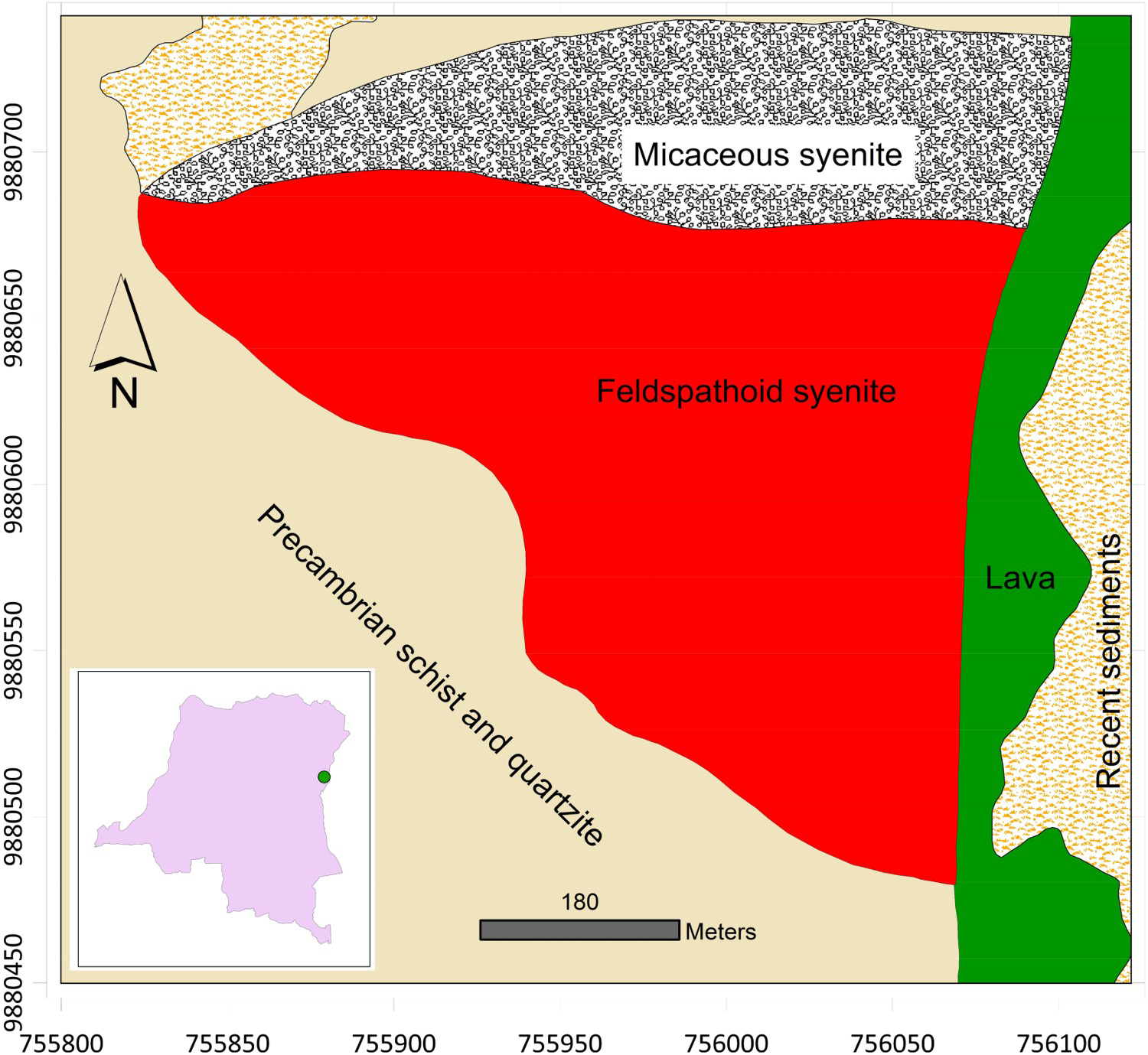
Mineralogical composition and petrography of the rock units
The large areas of the Kirumba Alkaline Complex are underlain by syenites of four different categories (Denaeyer 1959). Micaceous syenites are found in the field in three different types depending on their micas; these are syenites with muscovite, with biotite and with both micas. Feldspathoidal syenites are classified according to their feldspathoid modal abundances: nepheline syenites with both sodalite and cancrinite; syenites with sodalite and cancrinite but without nepheline; and syenites with either sodalite or cancrinite without nepheline. Barkevikite syenites are another type of syenites. The last type is rocks with aegirine which consist of nepheline and aegirine; they are lujaurite cancrinite (also known as a cancrinite-aegirine syenite), ordosite and melteigite.
The carbonatite intrusion is iron-rich and principally composed of ankerite (Kampunzu et al. 1985). Sediments overlie the northwestern and eastern parts of the alkaline complex. The sediments are composed of breccias and pebbles, originating from the flanks of different mountains in the area.
Economic potential
The Kirumba alkaline massif is speculated to have REE potential (Orris and Grauch 2002). The REE-bearing minerals include chevkinite (Ce, Nd), cerite (Ce, La) and allanite (Ce) (Denaeyer 1959). The negligible amounts of REEs are also included in pyrochlore (Lubala et al. 1985). Although not much is known about the economic prospects of the Kirumba alkaline massif, it might be a potential host of economic minerals.
Age
The nepheline syenite of the Kirumba Alkaline Complex, determined using a whole-rock K–Ar method, has a date of 259 ± 13 Ma (Bellon and Pouclet 1980). However, Cahen and Snelling (1966) applied the Rb–Sr method on biotite from the nepheline syenite and the syenite, which gave ages of 555 ± 17 and 635 ± 33 Ma, respectively. Subsequent dating using the whole-rock Rb–Sr gives a date of 803 ± 22 Ma (Kampunzu, Kramers, et al. 1998).
Mombadio carbonatite complex
The Mombadio carbonatite is located in North Kivu at the northeast of the Bingo carbonatite. It is situated at longitude 29.53 and latitude 0.85 (Figure 1). This carbonatite has not been studied but delineated on a regional map. Thibaut (1982) made a geological map of Haut Zaire and North Kivu at a scale of 1/500 000, where Mombadio is shown as an alkaline complex with carbonatite. Other regional maps have also identified Mombadio as a carbonatite (Tack et al. 1984; Woolley and Kjarsgaard 2008). The geological, petrological, geochemical and isotopic aspects of this carbonatite are required to unravel the carbonatite economic potentials.
Comparison of DRC carbonatites with some neighbouring ones in Central Africa
The EARS is subdivided into the eastern and western branches. This alignment has numerous alkaline and carbonatite massifs (Figure 7). Several carbonatite complexes have been studied in the EARS, and their geological characteristics are given in Table 4. These carbonatites are generally associated with alkaline igneous rocks (Figure 7). They show a clear correlation, which is reflected in their mineralogical attributes and similar geochronological ages. The ages of most carbonatites in the EARS range between Late Proterozoic and Cenozoic (Kampunzu et al. 1985; Kampunzu, Bonhomme, et al. 1998). Emplacement date of the Lueshe calciocarbonatite using the K–Ar biotite is 516 ± 26 Ma (Bellon and Pouclet 1980). This date is associated with the Pan African thermal event. Using U–Pb on zircon megacrysts, the Lueshe carbonatite age is 798.5 ± 4.9 Ma and is related to the Rodinia Supercontinent breakup. The date of Kirumba nepheline syenite, determined by the whole-rock K–Ar method, is 259 ± 13 Ma and is interpreted as Mid-Permian diastrophism, which affected the carbonatite (Bellon and Pouclet 1980). Nevertheless, the ages of the Kirumba nepheline syenite and syenite, using Rb–Sr biotite, are 555 ± 17 and 635 ± 33 Ma, respectively (Cahen and Snelling 1966). These ages suggest that the alkaline complexes emplacement took place after the Katanga metamorphism (630 Ma) (Maravic and Morteani 1980). The whole-rock Rb–Sr dates of Kirumba and Lueshe are, respectively, 803 ± 22 and 822 ± 120 Ma (Kampunzu, Kramers, et al. 1998). This 800 Ma of the Kirumba and Lueshe carbonatites is related to the breakup of the Rodinia Supercontinent in the western branch of the EARS in central Africa (Kampunzu et al. 1997; Kampunzu, Kramers, et al. 1998; Deblond 2004). This date is similar to the carbonatite intrusions of Matongo in Burundi, which are emplaced in the Burundian System terrains (Kampunzu et al. 1997; Deblond 2004; Midende et al. 2014). The disparity in dates obtained from the Kirumba Alkaline Complex necessitates further work to elucidate the field relationships and date the complex using U–Pb zircon and apatite dating. This is anticipated to precisely give the Kirumba Alkaline Complex age and enable adequate elucidation of its geodynamic evolution. Geochronological studies of the Bingo and Mombadio Complexes are of much interest in elucidating their geodynamic setting.
Geological and mineralogical characteristics of some carbonatite occurrences in the EARS.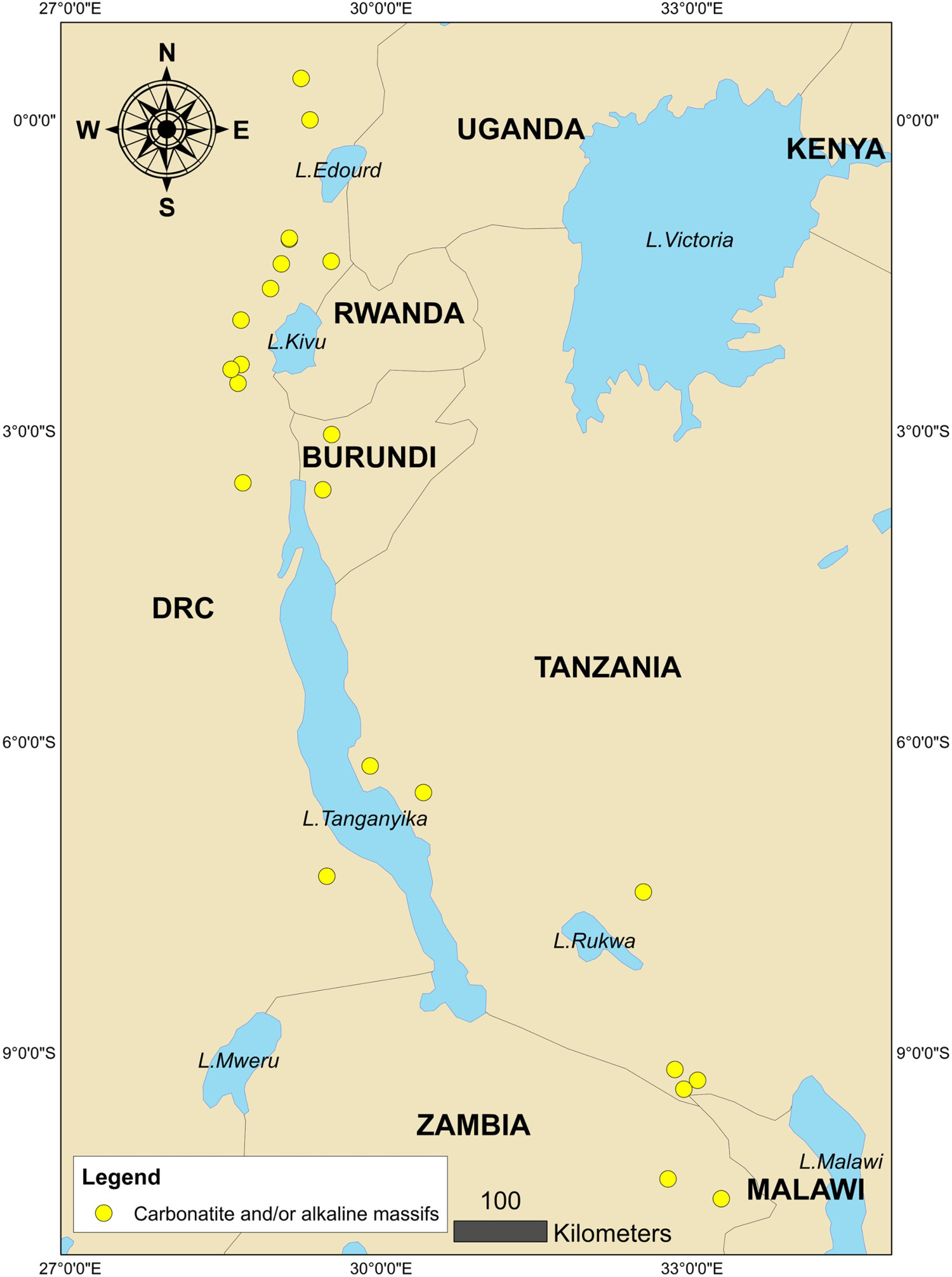
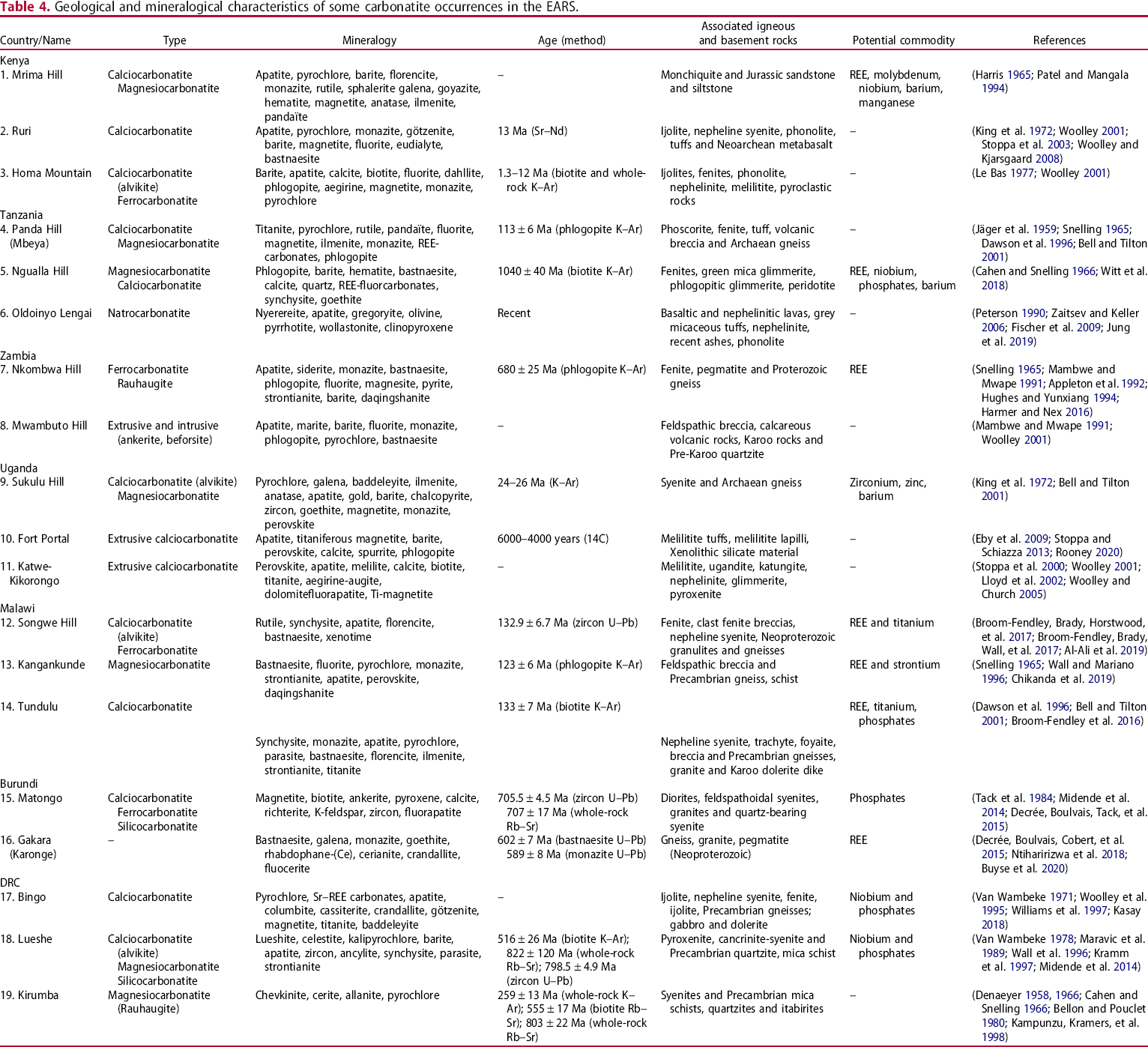
Available geological data and artisanal mining activities showed that carbonatites of the DRC host minerals of economic interests, including pyrochlore and phosphates (Table 4). Mining companies in Bingo and Lueshe exploited these minerals, but exploitation stopped due to civil unrest and poor governance. The Bingo and Lueshe laterites hold good REE prospects, owing to their high Nb2O5 grades (Goodenough et al. 2018). Detailed exploration is crucial to verifying their REE concentrations, as Bingo is speculated to be REE-enriched (Orris and Grauch 2002). REE enrichments in laterites are mainly exploited in world-class deposits, including in Mount Weld in Australia, Araxá and Catalão in Brazil (Jaireth et al. 2014; Spandler et al. 2020). The Lueshe and Bingo carbonatites, with their in situ-derived lateritic profiles, share some similar mineralogical and geochemical characteristics with the Mrima Hill in Kenya and Ngualla Hill laterites in Tanzania (Patel and Mangala 1994; Witt et al. 2018). Therefore, detailed geological and exploration studies of carbonatites in the DRC should be carried out to appraise their REE and other economic minerals. In Burundi, the Gakara REE deposit (Table 4) was discovered and developed to be the first REE producer in Africa. It is currently owned by Rainbow Rare Earths (Harmer and Nex 2016; Ntiharirizwa et al. 2018). Its main REE-bearing minerals, enriched in hydrothermal veins, are bastnaesite, ancylite and monazite (Decrée, Boulvais, Cobert, et al. 2015; Buyse et al. 2020). Besides, the Matongo carbonatite in Burundi is overlain by supergene breccia lenses, economically enriched in phosphate minerals associated with fluorapatite (Decrée, Boulvais, Tack, et al. 2015). However, in western Uganda, carbonatite complexes are extrusive in their mode of emplacements and located in Fort Portal, Katwe-Kikorongo and Bunyaruguru, as shown in Table 4, while those in DRC are mainly intrusive into the Precambrian rocks (Woolley and Church 2005; Eby et al. 2009).
Conclusion and prospects
Carbonatites have been investigated in many districts around the world due to their economic and petrogenetic interests. They are mainly distributed along major lineaments, with the EARS being one of the most famous. There are four known carbonatite complexes in the DRC; they are located in Mombadio, Bingo, Kirumba and Lueshe. The Lueshe and Bingo carbonatite deposits are potential targets for critical minerals, which include niobium and REE, and sources of phosphate minerals for fertilisers companies. While several carbonatites have been extensively studied in the EARS, there is a dearth of information on the geology, petrogenesis, isotopic ages and economic potentials of some carbonatites in DRC. For instance, the Bingo Carbonatite Complex has never been dated, and its geodynamic setting is largely unknown, while the Mombadio carbonatite remains unexplored. Being in the tropical region, these carbonatites are highly susceptible to weathering with numerous bedrocks mantled by thick residual profiles, which make access to fresh rock samples impossible at locations such as Lueshe and Bingo. This is why studies involving detailed geological mapping and geochemistry of the lateritic profiles are important for studying the processes related to rare minerals enrichment and REE behaviour in the lateritic profiles. Additionally, detailed and more researches may reveal other carbonatite complexes in the country.
Footnotes
Acknowledgements
We are grateful to the African Union for financial support through the Pan African University PhD scholarship. The first author also acknowledges the Else-Kroener-Fresenius-Stiftung, the Panel members of the BEBUC scholarship program. We extend our thanks to the Editor-in-chief, Dr Simon Jowitt and two anonymous reviewers for their comments, which improved the manuscript of this paper. This paper is part of the first author's PhD thesis at the Pan African University of Life and Earth Sciences, University of Ibadan, Nigeria.
Disclosure statement
The authors reported no potential conflict of interest.