







Abstract
The genesis and potential industrial applications of Lwamondo and Zebediela Kaolins in South Africa were determined. Selected physico-chemical characteristics were determined. Mineralogical characteristics were determined using XRD and SEM; and geochemical characteristics were determined using XRF and LA-ICP-MS. Kaolin colours were generally light (Lwamondo) and brown (Zebediela). Both kaolins had low pH (<6.5) and EC (<50 µS/cm). The texture of Lwamondo Kaolin was generally loam and clay loam, whereas that of Zebediela was clayey, silty and loamy. Major mineral phases were kaolinite, smectite and plagioclase in Lwamondo Kaolin, and kaolinite in Zebediela Kaolin. The morphology of the kaolins consisted mainly of stacks of kaolinite flakes. The most dominant major oxides were SiO2, Al2O3 and Fe2O3, and the kaolins were slightly depleted in light rare earth elements. The studied characteristics indicated that the kaolins (i) formed in a supergene environment and (ii) are suitable for hollow bricks.
Introduction
Kaolin is a soft white clayey naturally occurring earth material. Depending on their genesis, kaolin could either be primary or secondary. Primary kaolins form in stu and they are grouped into (i) supergene kaolins, formed from the weathering of aluminosilicate rocks; (ii) hypogene kaolins, resulting from hydrothermal activities and (iii) mixed kaolins, formed as a combination of both supergene and hypogene processes [1]. Secondary or sedimentary kaolins are those that had been formed elsewhere, then transported and deposited in a different location [2]. The genesis of kaolin has a direct impact on its industrial uses [3]. Specific physical, mineralogical and chemical properties of kaolin are dependent on the parent rock, environment of deposition and genesis [4,5].
These specific characteristics of kaolins make them useful in a wide range of industries, such as paper, ceramics, construction, pottery, pharmaceutical and cosmetics industries to name a few. Kaolins are used as filling and coating agents in the paper industry [6]. In construction and ceramics, kaolins are used as raw materials for bricks, whitewares and tiles [6]. Kaolins are also used to manufacture geopolymers, which provide reduced energy consumption and a lower carbon footprint in the construction and ceramic industries [7,8]. In the pharmaceutical and cosmetics industries, kaolins are either used as drug ingredients or as active ingredients in several solid and semi-solid medicines administered orally and topically, and in cosmetics products [9,10]. The physical, mineralogical and chemical properties of kaolins have been widely used to infer their potential industrial applications [3,11–17].
Ekosse [18] reported 20 kaolin deposits and occurrences in South Africa. The most important of these are in the Eastern Cape, Western Cape and Northern Cape Provinces, and isolated deposits in KwaZulu Natal, Gauteng and Limpopo Provinces [19]. According to Heckroodt [19], these kaolins are usually residual, either derived from granites (Western Cape and KwaZulu Natal kaolins) and/or sediments (Eastern Cape, KwaZulu Natal and Limpopo kaolins). The grade or quality of kaolins is greatly affected by the presence of impurities such as iron oxide and hydroxide and titanium-bearing minerals, which influence their uses in different industries [20]. Though these kaolins are mostly used in the ceramics and construction industries; their beneficiation could produce high-grade raw material that could be used in the paper, paint, polymer, medical cosmetics, and pharmaceutical industries.
In response to the rising global demand for kaolin, South Africa is concentrating on boosting its kaolin production capacity. From 2010 to 2019, South Africa's kaolin production grew at an annual rate of 2.2% per annum, with an increase of 18.3% from 23.5 kilotons in 2018 to 27.8 kilotons in 2019, as demand for ceramics also increased. The construction and ceramic industries are booming sectors for the kaolin market in Africa in general, and South Africa in particular because of the growing urbanisation and industrialisation in both urban and rural areas [21]. Moreover, there also is a growing need for kaolin in pharmaceutics and cosmetics. This demand encourages the exploration and exploitation of more kaolin deposits in South Africa and their further beneficiation. The kaolins in Limpopo Province in South Africa have not been widely studied. Therefore, this study aims at elucidating the hypogene or supergene origin of the Lwamondo and Zebediela Kaolins in Limpopo Province; and discussing their potential industrial applications with respect to their physico-chemical, mineralogical and geochemical characteristics.
Geology of the area
Lwamondo and Zebediela kaolins are in Thulamela and Lepelle-Nkumpi Municipalities in Limpopo Province, South Africa. The geology of Lwamondo and Zebediela areas has been detailed in Raphalalani et al. [22]. Lwamondo is mainly dominated by rocks of the Proterozoic Soutpansberg Group [23], whereas Zebediela is made up of rocks of the Proterozoic to Jurassic Transvaal Group [24,25]. The geology of Lwamondo and Zebediela is presented in Figure 1.
Geologic setting of (a) Lwamondo Kaolin occurrence and (b) Zebediela Kaolin occurrence.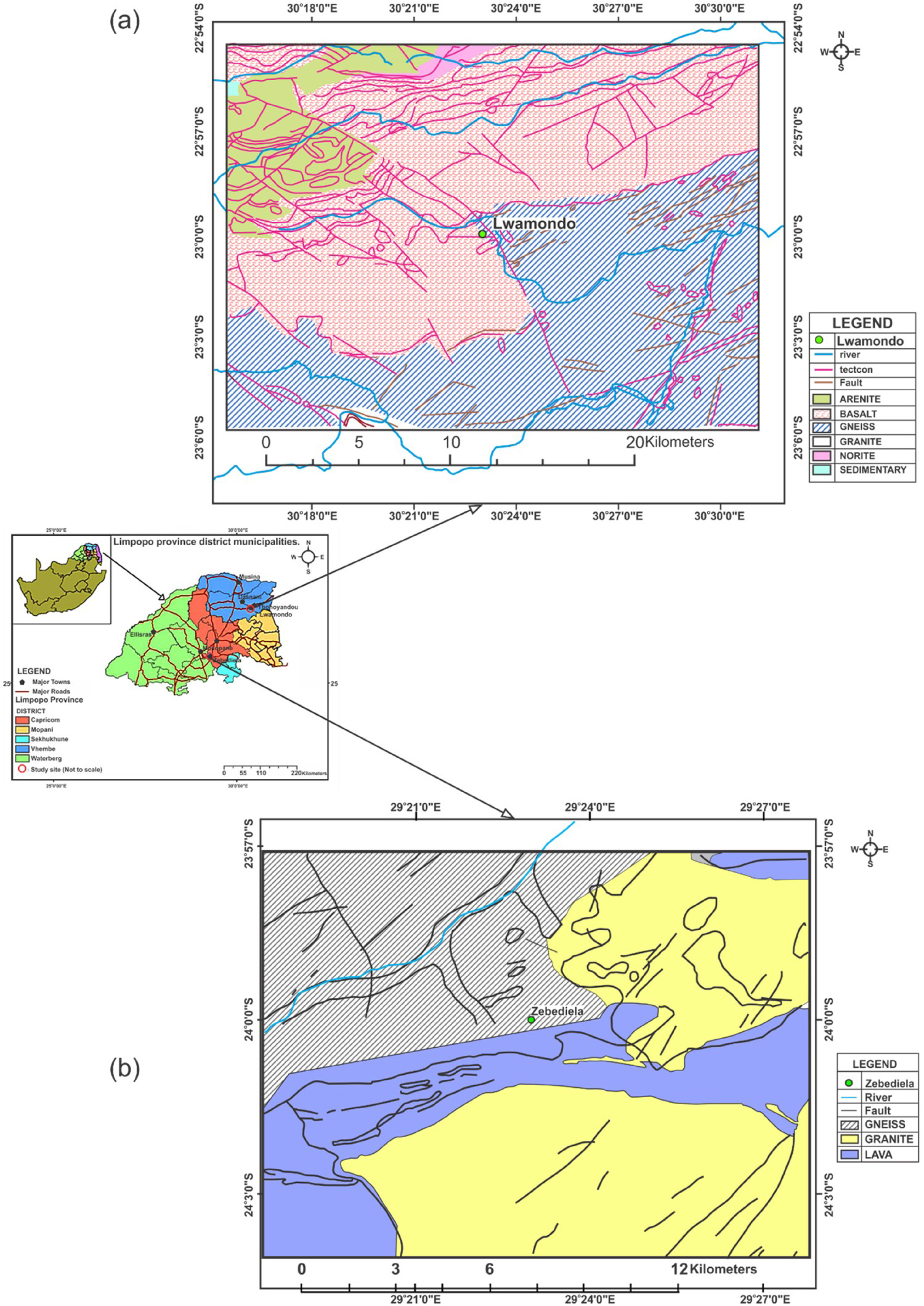
The country rocks surrounding the Lwamondo Kaolin are made up of basalt, shale and minor conglomerates and minor pyroclastic rocks. The Lwamondo Kaolin is generally white, brownish, red, pink and yellow, with an overburden of 2–3 m thick (Figure 2).
Lwamondo Kaolin: (a) Ferruginous kaolin and (b) Whitish kaolin.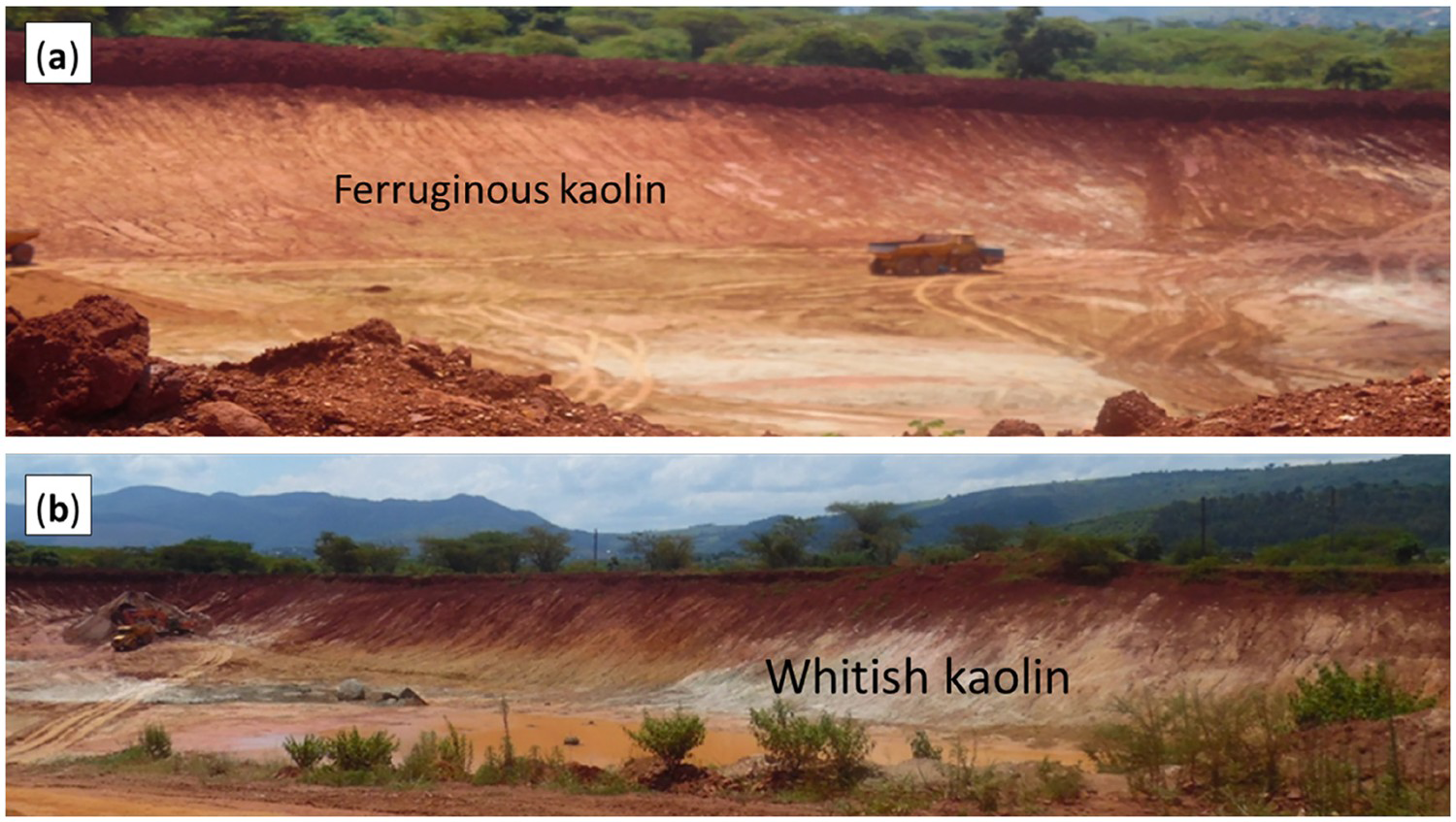
The Zebediela Kaolin is exposed in three quarries. The country rocks comprised mudrocks, shale, breccia, and chert. The first quarry comprised a yellowish kaolin at the base, overlain by reddish-brown, pale brown, and light brown kaolin layers (Figure 3(a)). The second quarry has greyish and reddish kaolins. An iron-rich vein cuts across the kaolins in one of the quarries, and above which is found a brown to reddish kaolin layer (Figure 3(b)). The third quarry had whitish kaolin (Figure 3(c)), whose formation was characterised by a major NNW-SE trending fault, truncated by numerous smaller veins.
Zebediela kaolin: (a) Rbk: Reddish brown kaolin, Lbk: Light brown kaolin and Yk: Yellowish kaolin; (b) Iron duricrust cutting across the kaolin; (c) Whitish kaolin.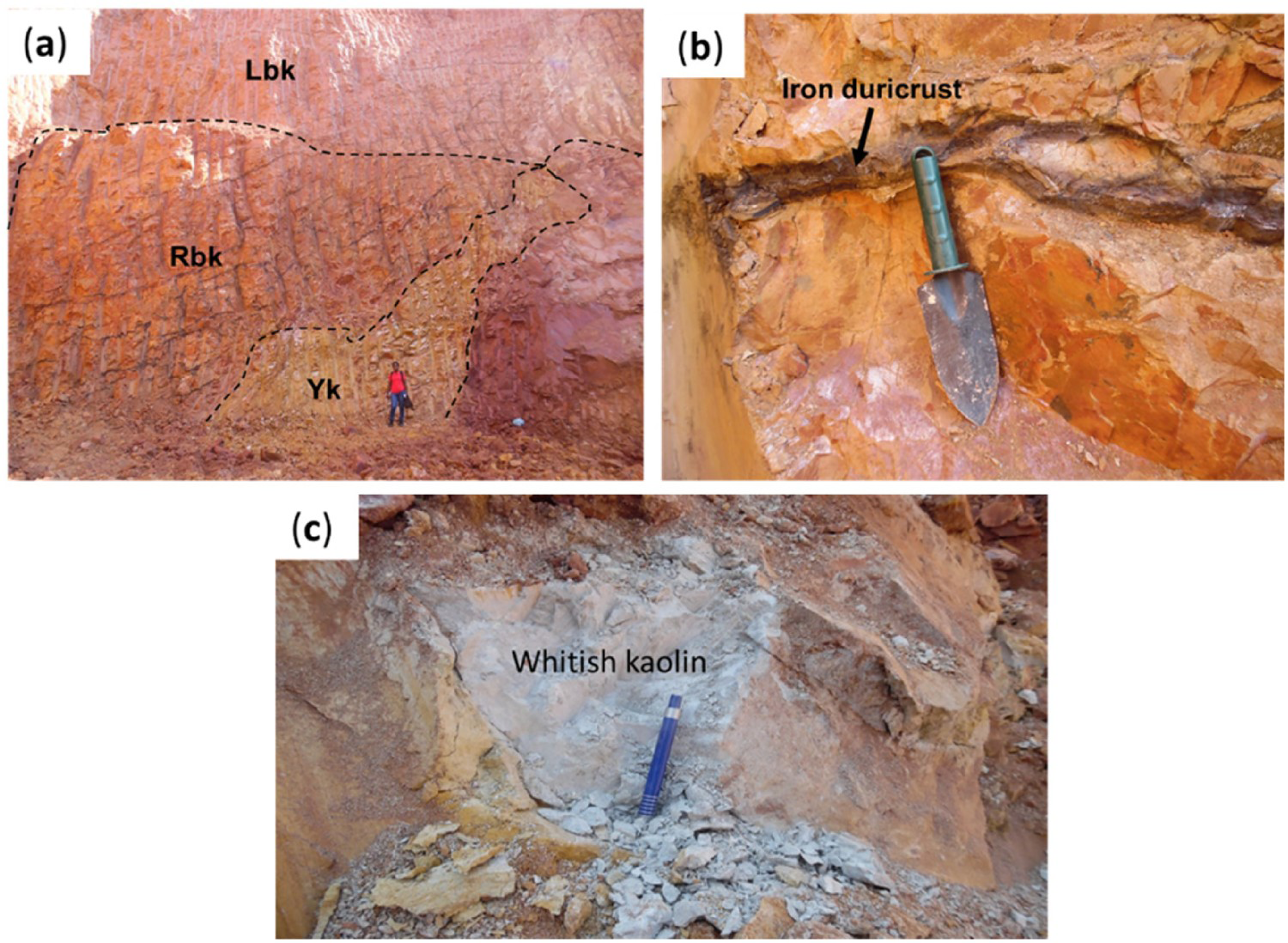
Sampling and sample preparation
Eighteen kaolin samples, coded as LWA1 – LWA9 and ZEB1 – ZEB9 were collected from Lwamondo and Zebediela Kaolins, respectively. Before analyses, the samples were sieved through a 2 mm mesh sieve. The fraction of the samples less than 2 mm was used as bulk samples. Organic matter was removed from bulk samples using hydrogen peroxide, based on the method described by van Reeuwijk [26].
Laboratory analyses
The physico-chemical tests were conducted on bulk samples to determine their colour, hydrogen ion concentration (pH), electrical conductivity (EC) and texture. Colour was determined using the Munsell Soil Color Book [27]. Hydrogen ion concentration (pH(KCl)) was determined using a pH meter Basic 20 and the EC was determined using conductimeter Basic 30 as described by van Reeuwijk [26]. The determination of the texture of the samples was conducted using the hydrometer method in accordance with Stoke's Law as described by van Reeuwijk [26].
The mineral phases present in the bulk samples were identified by powdered X-ray diffractometry (XRD) at iThemba Labs, Cape Town South Africa. The XRD preparations were side-loaded to minimise preferred orientation of the kaolinite particles [28,29]. The samples were subjected to X-ray diffraction using the Philips PW 3710 X-ray diffractometer, operated at 40 Kv and 45 Ma, with a Cu-kα radiation and graphite monochromator [30]. Xpert data collector/identify software was used to obtain and interpret XRD spectra [31]. Samples were scanned from 2°2θ to 40°2θ and their diffractograms were recorded. Mineral phases were identified using X'Pert Highscore Plus Software, and the Rietveld method was used to estimate the relative phase amounts (weight %). Morphological analysis of the kaolins was performed using a VEGA3 TESCAN scanning electron microscope equipped with energy dispersive X-ray microanalysis (SEM-EDX) at the University of Johannesburg, South Africa. A small amount of bulk kaolin powder was poured on the carbon tape which was attached to the machine to coat the sample [32]. Particle images were obtained with the aid of a secondary electron detector.
Chemical analyses were carried out at the Central Analytical Facilities (CAF), University of Stellenbosch, South Africa. Major elements concentrations of pulverised bulk kaolin samples were determined by X-ray fluorescence (XRF) spectroscopy using a PANalytical Axios wavelength dispersive spectrometer with a 2.4 KWatt Rh X-ray tube using a 7 g of high purity trace element and REE-free flux mixed with 0.7 g of the sample prepared as fused beads. Loss on ignition (LOI) was determined as the weight loss or gain of each sample after heating overnight at 1000 °C. Laser ablation inductively coupled plasma mass spectrometry (LA-ICP-MS) was used to determine the concentrations of trace elements in the studied kaolins using an Agilent 7700. The laser was used to vaporise the surface of the solid sample, whereas the vapour, and any particles were then transported by the carrier gas flow to the ICP-MS. Ablation was performed on pressed pellets of milled sample powder in helium at a flow rate of 0.40 L/min, then mixed with Ar (0.9 L/min) and N (0.002 L/min) just before introduction into the ICP plasma. Two spots of 104 µm each were ablated on each sample using a frequency of 8 Hz and 3.5 mJ/cm2 energy.
The chemical index of alteration (CIA) and chemical index of weathering (CIW) were calculated to determine the degree of chemical weathering of Lwamondo and Zebediela Kaolins using Equations (1) and (2), respectively [33].


Physico-chemical characteristics
Physico-chemical characteristics of Lwamondo and Zebediela Kaolins.
Physico-chemical characteristics of Lwamondo and Zebediela Kaolins.

The pH for Lwamondo samples was acidic, ranging from 3.59 (LWA1) to 5.04 (LWA7) and with a mean pH value of 4.30. Zebediela samples also had acidic pH, ranging from 3.48 (ZEB1) to 4.50 (ZEB5), with a mean pH value of 3.88. Lwamondo kaolins had EC values generally ranging between 24.0 µS/cm (LWA6) to 43.5 µS/cm (LWA7). The EC values of Zebediela kaolin generally ranged between 15.0 µS/cm (ZEB3) and 34.4 µS/cm (ZEB2).
The texture of Lwamondo and Zebediela Kaolins is shown in Figure 4. The Lwamondo Kaolin had a sand fraction between 20 wt-% (sample LWA4) and 46 wt-% (sample LWA1 and LWA3), silt fraction between 24% (sample LWA3) and 62% (sample LWA4), and clay fraction between 12% (sample LWA7) and 36% (sample LWA6). Therefore, Lwamondo kaolin was generally loam and clay loam, except for LWA3 (sandy clay loam) and LWA4 and LWA8 (silt loam). Zebediela kaolin contained 10 wt-% (ZEB3) to 46 wt-% (ZEB2) of sand, 24 wt-% (ZEB8) to 72 wt-% (ZEB6) of silt, and 10 wt-% (ZEB6) to 46 wt-% (ZEB8) of clay. Hence, ZEB1 and ZEB6 were clay, ZEB5 and ZEB9 were clay loam, ZEB3 was silty clay, ZEB4 was silty clay loam, ZEB2 was loam, ZEB6 and ZEB7 were silty loam.
Textural triangle of Lwamondo and Zebediela Kaolin samples.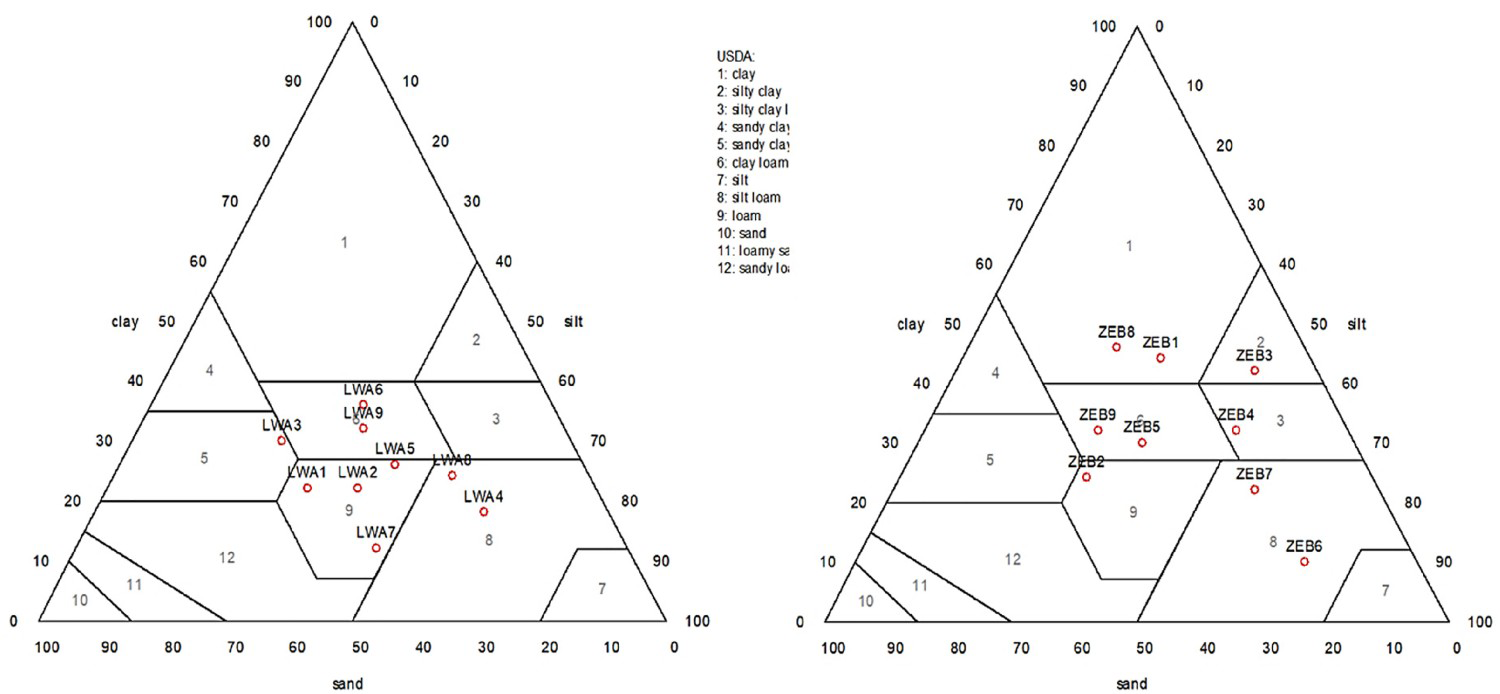
In Lwamondo Kaolin, kaolinite was the most dominant mineral phase in LWA1 (58 wt-%), LWA2 (90 wt-%), LWA3 (81 wt-%) and LWA9 (43 wt-%); smectite was the most dominant mineral in LWA5 (42 wt-%) and LWA6 (54 wt-%); and plagioclase was the most dominant mineral in LWA4 (39 wt-%), LWA7 (57 wt-%) and LWA8 (43 wt-%). Iron-rich minerals (goethite and haematite) were not detected in all samples except in LWA9, where their abundances were 23 wt-% and 12 wt-%, for goethite and haematite, respectively. Titanium-rich minerals (rutile and anatase) were only detected in LWA1, LWA3 and LWA6, with abundances between 1 and 2 wt-%. Other minerals determined in varying amounts were clinochlore, microcline, muscovite, quartz, and talc (Figure 5(a)).
Mineral abundances in (a) Lwamondo Kaolin and (b) Zebediela Kaolin.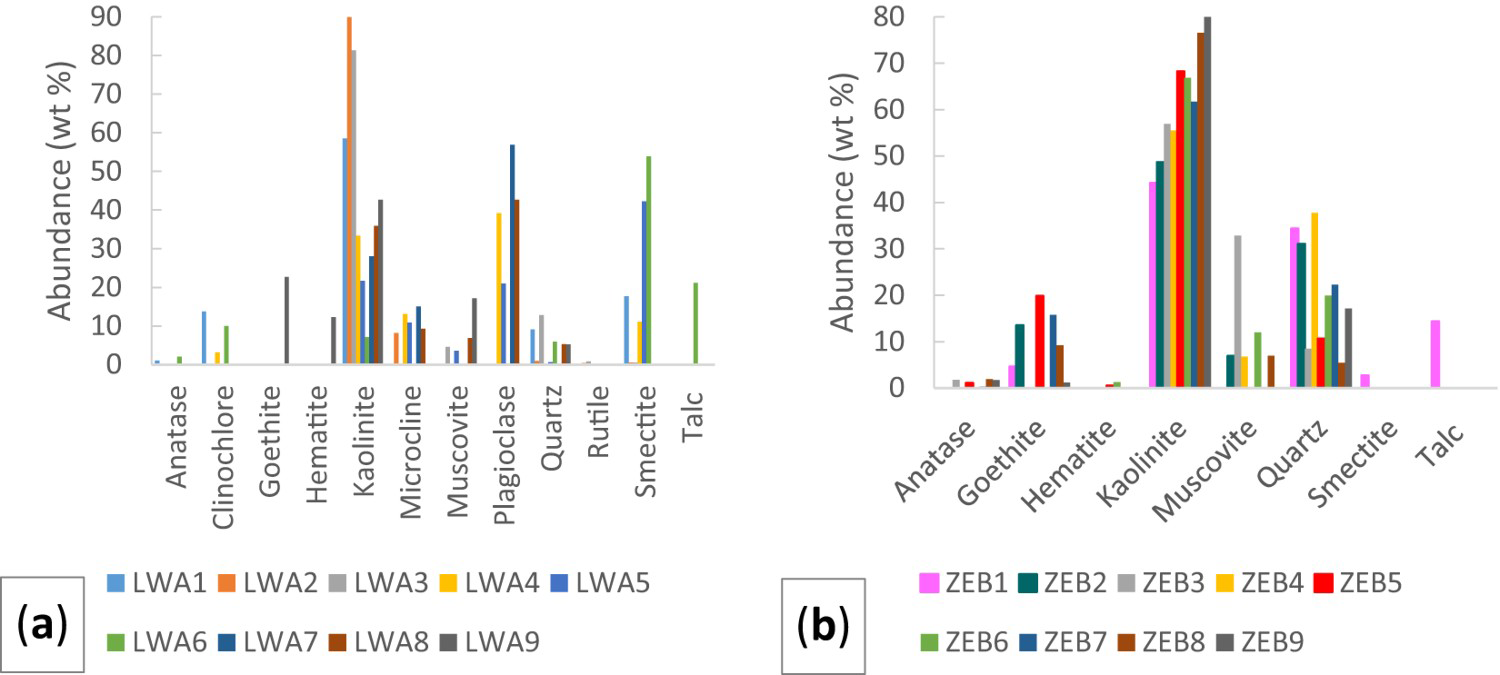
In Zebediela Kaolin, kaolinite was the most abundant mineral in all the samples, with concentrations varying between 44 wt-% (ZEB1) and 80 wt-% (ZEB9). Quartz was generally the second most abundant mineral, with concentrations varying from 5 wt-% (ZEB8) to 38 wt-% (ZEB4). The main mineral impurity was goethite, with a concentration up to 20 wt-% in ZEB5. Muscovite occurred in about 56% of the samples, with abundances up to 33 wt-% (ZEB3). Anatase and haematite generally occurred in traces (Figure 5(b)). On average, kaolinite was much more abundant in Zebediela samples (62 wt-%) than in Lwamondo samples (44 wt-%); unlike in Lwamondo Kaolin, feldspar minerals were not observed in Zebediela Kaolin; muscovite was more abundant in Zebediela Kaolin (13 wt-%) than in Lwamondo Kaolin (8 wt-%); and smectite was much more abundant in Lwamondo Kaolin (21 wt-%).
The morphologies of the Lwamondo and Zebediela Kaolins were well defined and classified under the following three groups, namely (i) kaolinite booklets and stacks; (ii) flakes and platelets (the most common in the studied kaolins) and (iii) accordion morphology (Figure 6).
Scanning electron microscopy photographs for Lwamondo and Zebediela Kaolins, showing (a) Kaolinite booklets and stacks, (b) Irregular flakes and platelets, and (c) Accordion kaolinite morphology.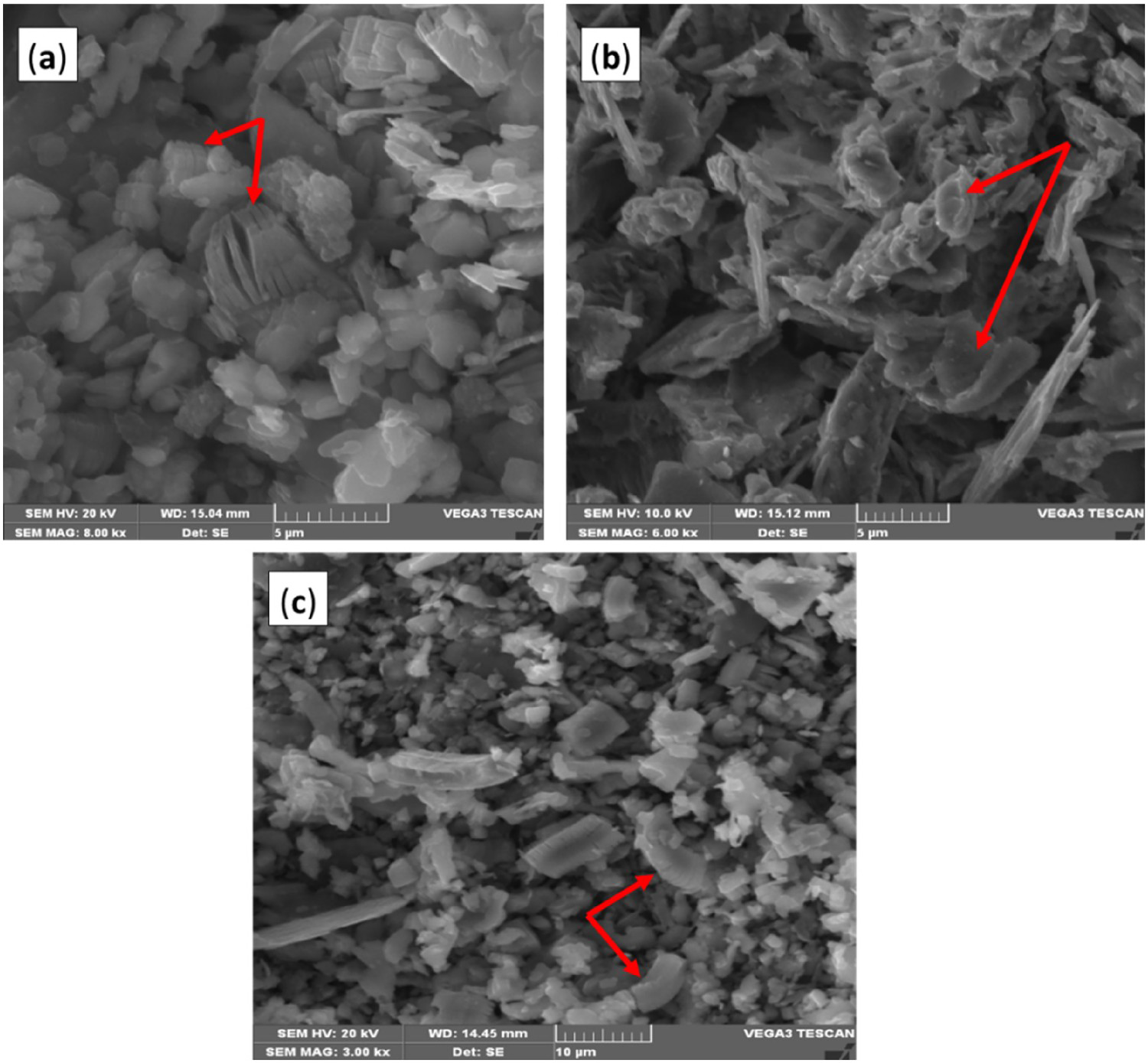
Major oxides
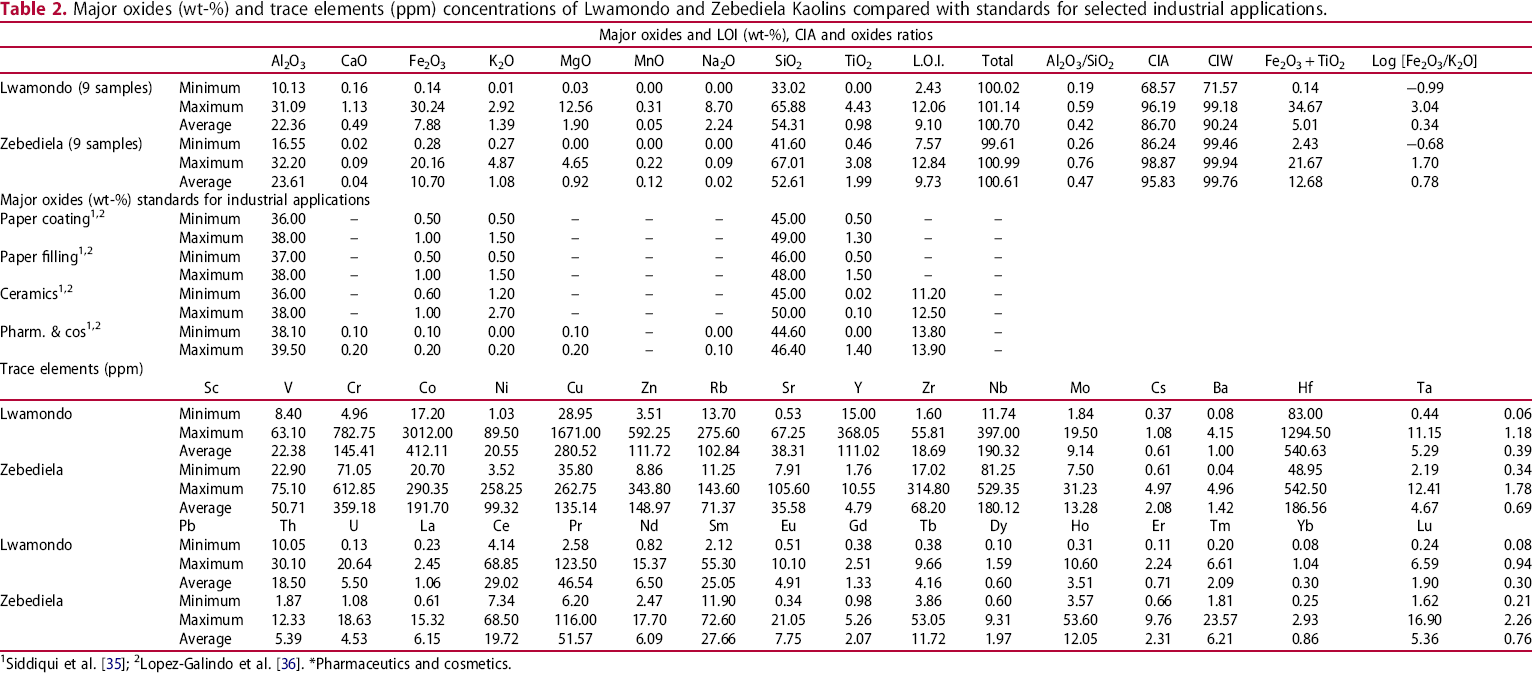
Mean oxides concentrations in Lwamondo Kaolin increased from MnO (0.05) < CaO (0.49) < TiO2 (0.98) < K2O (1.39) < MgO (1.90) < Na2O (2.24) < Fe2O3 (7.88) < Al2O3 (22.36) < SiO2 (54.31). Silica (SiO2) ranged from 33.02 wt-% (LWA9) to 64.49 wt-% (LWA7) and Al2O3 ranged from 10.13 wt-% (LWA6) to 31.09 wt-% (LWA2). The main impurity was Fe2O3, ranging from 0.14 wt-% (LWA7) to 30.24 wt-% (LWA9). The loss on ignition (LOl) ranged from 2.43 wt-% (LWA7) to 12.69 wt-% (LWA1) with a mean of 9.10 wt-%.
In Zebediela Kaolin, mean oxides concentrations increased from NaO2 (0.02) < CaO (0.04) < MnO (0.12) < MgO (0.92) < K2O (1.08) < TiO2 (1.99) < Fe2O3 (10.70) < Al2O3 (23.61) < SiO2 (52.61). Silica ranged from 41.60 wt-% (ZEB5) to 67.01 wt-% (ZEB4) and Al2O3 ranged from 16.55 wt-% (ZEB1) to 32.20 wt-% (ZEB8). As for the Lwamondo kaolin, the main impurity in Zebediela kaolin was Fe2O3, which ranged between 0.23 wt-% (ZEB4) and 20.16 wt-% (ZEB7). The LOl ranged from 7.57 wt-% (ZEB6) to 12.84 wt-% (ZEB8), with a mean of 9.73 wt-%.
Trace elements
Figure 7 shows trace elements concentrations of Lwamondo and Zebediela Kaolins normalised to upper continental crust (UCC) values [34]. Lwamondo and Zebediela Kaolins had a similar composition in high field strength elements (HFSE – Y, Zr, Nb and Hf) as the UCC. Regarding large ion lithophile elements (LILE – Rb, Ba, Sr, Th and U), both deposits were enriched in Rb, depleted in Sr, Ba and Th, and had similar Zr composition as the UCC. Both kaolins were enriched in transition trace elements (TTE – V, Co, Cu, Ni and Sc) relative to UCC. The UCC-normalised rare earth elements (REE) showed that Lwamondo kaolin was slightly depleted in REE, except for Eu, whereas Zebediela Kaolin was slightly depleted in light rare earth elements (LREE) and enriched in heavy rare earth elements (HREE) (Table 2).
(a) UCC – normalised trace elements (b) UCC – normalised REEs in Lwamondo and Zebediela Kaolins. Major oxides (wt-%) and trace elements (ppm) concentrations of Lwamondo and Zebediela Kaolins compared with standards for selected industrial applications.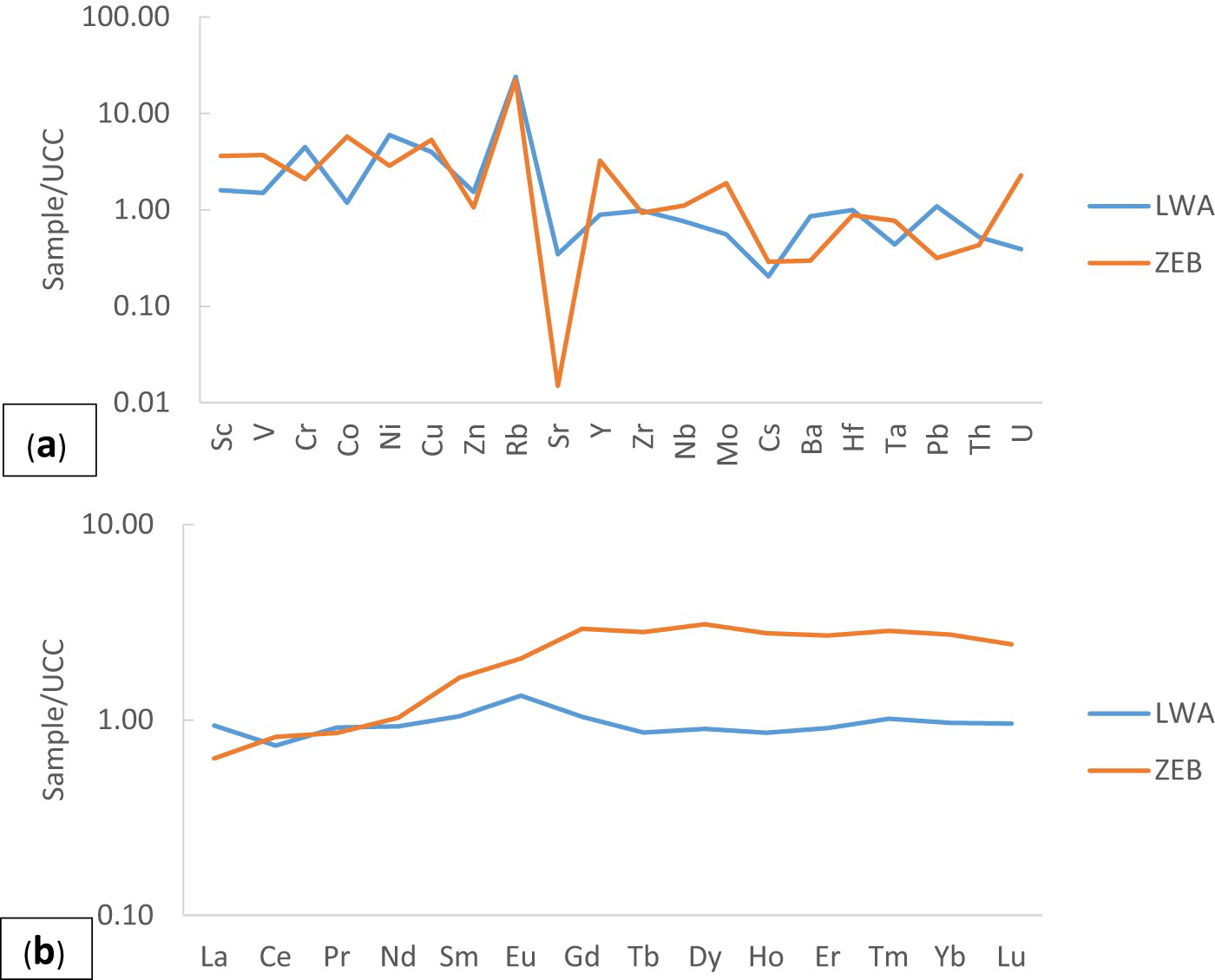
Genesis
Of the four minerals that constitute the kaolin group (kaolinite, halloysite, nacrite and dickite), kaolinite is the one that can form over a wide range of temperatures, due to weathering, diagenesis, or hydrothermal deposition and alteration [37]. Given that it is the only kaolin mineral identified in Lwamondo and Zebediela Kaolins, and no high-temperature minerals, such as dickite, nacrite, pyrophyllite, topaz were identified, it is believed that these kaolins formed through supergene processes. The presence of plagioclase, muscovite, microcline and quartz indicate the partial (moderate) weathering of some of the samples. Feldspars and muscovite are the most common primary minerals of kaolins and smectites [38,39]. This explains their relative abundance in the studied kaolins. The stacks or books of kaolinite flakes, and accordion morphology of Lwamondo and Zebediela Kaolins, observed in SEM images, are typical of kaolins formed from weathering processes [3]. The occurrence of irregular platelets and flakes suggests incomplete feldspar dissolution and precipitation of kaolins, and pseudo-hexagonal particles with angular to sub-angular edges identified in some samples also infer formation by weathering processes at low temperature and moderate structural order [40,41].
Chemical index of alteration (CIA) values for Lwamondo Kaolin ranged from 68.57 to 96.19 with an average of 86.70, suggesting moderate to extreme silicate weathering of the parent rocks. However, the CIA values for Zebediela Kaolin were above 80 with an average of 95.83, suggesting extreme silicate weathering of their parent rocks [42]. Values of the chemical index of weathering (CIW) were above 70 in Lwamondo Kaolin and above 99 in Zebediela Kaolin (Figure 8). The weathering indices (CIA and CIW) suggest that the kaolins probably formed under a humid climate. However, according to the Köppen-Geiger climate classification, Limpopo Province, where the studied kaolins are found, has an arid steppe hot climate characterised by temperatures above 18°C [43,44]. Previous estimation of the temperature of kaolinisation of studied kaolins showed that the Lwamondo Kaolin formed under temperatures of 26.9 ± 3.6°C, whereas the Zebediela Kaolin formed under temperatures of 36.6 ± 4.2°C [22]. This suggests that in the area, there has been a climatic change from humid when the kaolins formed to arid steppe currently. The moderate to extreme silicate weathering of the parent rocks resulted in the low feldspar content in these kaolins [3,42,45,46], especially in the Zebediela Kaolin in which feldspar was absent.
CIW versus CIA plot of Lwamondo and Zebediela Kaolins.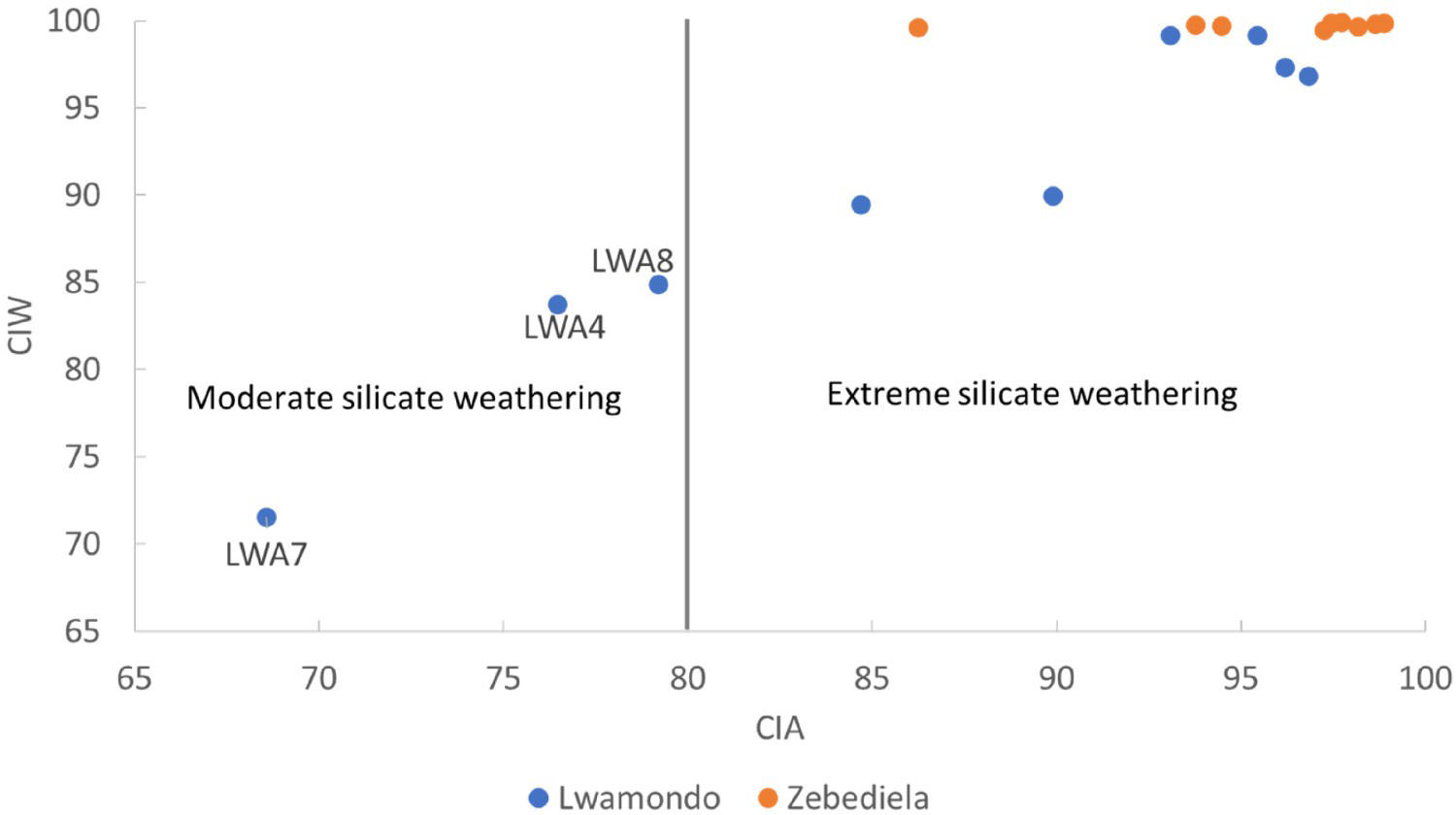
On the Al2O3 – CaO* + Na2O –K2O (ACNK) diagram (Figure 9), Lwamondo and Zebediela Kaolins plotted close to the Al2O3 apex dominated by kaolinite and suggested that the kaolins formed from a source affected by relatively high and intensive chemical weathering, which resulted in the depletion of selectively leached elements (Ca, Na, K) from the deposits [3,42,45,46]. The high acidity, indicated by the low pH values, suggested continuing weathering and intense hydrolysis processes [47,48]. An acidic environment favours the migration of several chemical elements during kaolinisation [49].
Ternary plot of A (Al2O3)–CN (CaO* + Na2O)–K (K2O).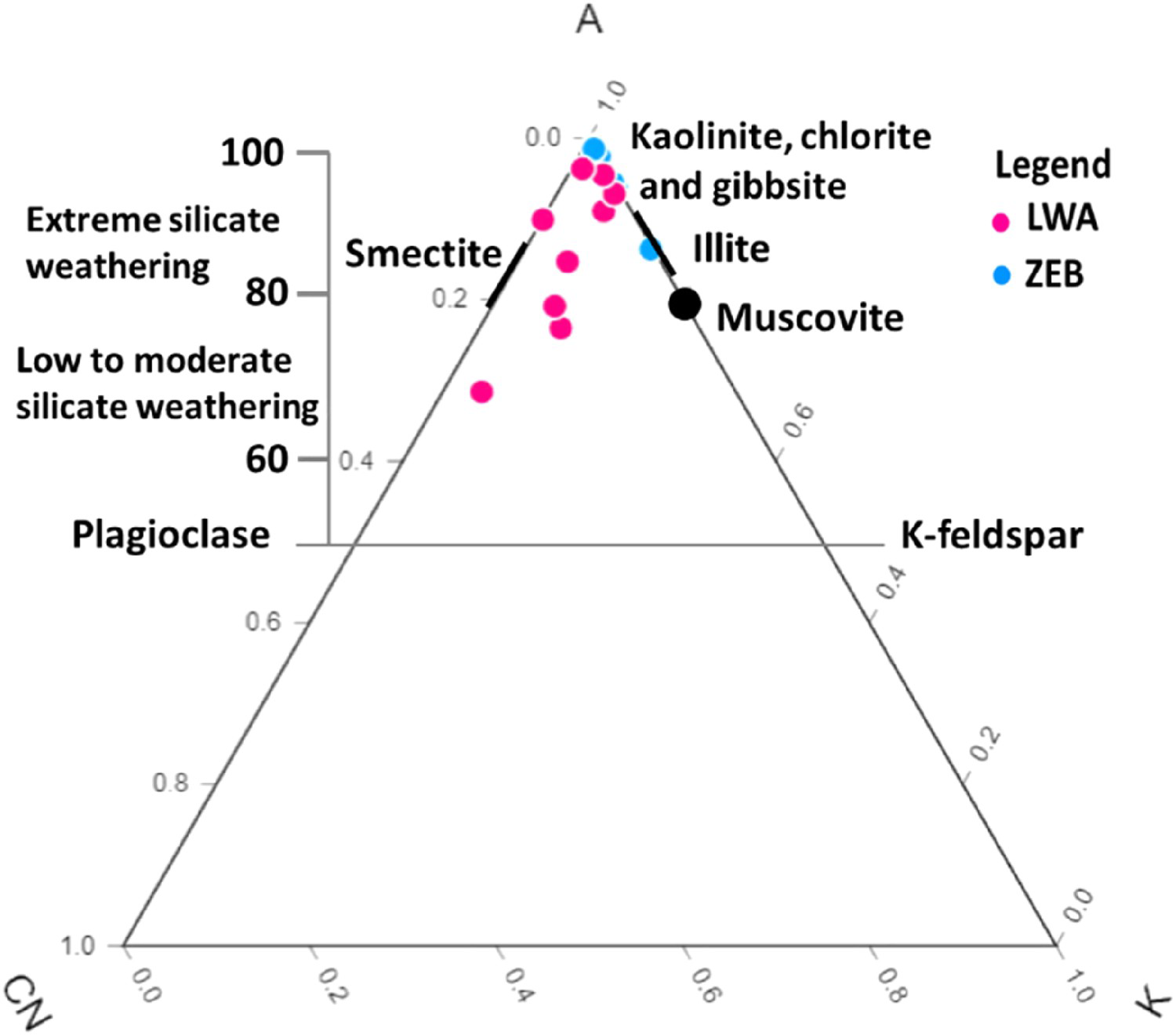
Trace elements distribution in clays and sediments are influenced by weathering processes and nature of the parent rocks [50,51]. The REE pattern and the content of other trace elements show evidence of weathering process related to kaolinitisation in the Lwamondo and Zebediela Kaolins. The slightly negative Eu anomaly in Lwamondo Kaolin and the positive Eu anomaly in the Zebediela Kaolin are due to the presence of feldspar in most Lwamondo samples and the absence of feldspar in all Zebediela samples [16]. This is because the substitution of Ca2+ by Eu2+ causes a negative Eu anomaly [52]. Barium and Sr were depleted in all the studied kaolins, indicating that they were easily mobilised during weathering and removed from the environment [45,49]. The HREEs were more enriched than LREEs, indicating sub-weathering or weathering of parent rocks [53]. Binary and ternary plots of major, trace and rare earth elements combinations could also be used to discriminate between supergene and hypogene kaolinisation [54]. On the basis of the Ba + Sr vs La + Ce + Y and Fe2O3 +TiO2 vs Cr + Nb plots (Figure 10), Lwamondo and Zebediela Kaolins generally have a supergene origin.
Mode of formation of Lwamondo and Zebediela Kaolins based on the Ba + Sr vs La + Ce + Y plot. Fields after Dill et al. [54].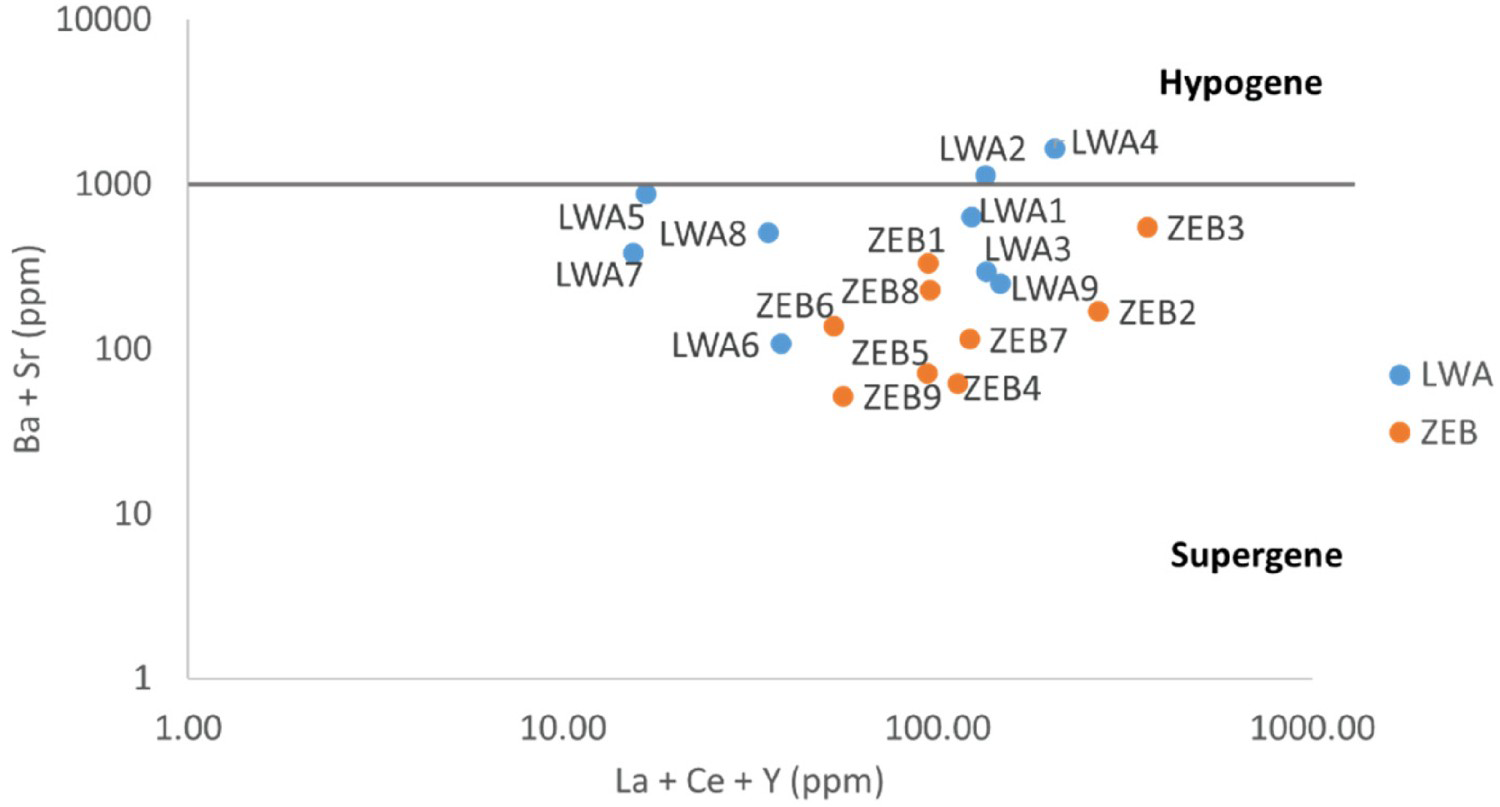
Kaolins have a wide range of industrial applications (paper coating and filling, paint, rubber, ceramic, plastic, pharmaceutics, cosmetics, pesticides, oil absorbers, cosmetics and more), based on their physical, mineralogical and chemical characteristics [3,4]. To be classified as a kaolin ore deposit, the deposit must contain at least 10 wt-% of kaolin minerals [55]. However, kaolinite content of the deposit is the main indicator for its grade [32]. Kaolin ore grade can be classified into kaolinitic sand/siltstone (10–50 wt-% kaolinite), sandy/silty kaolin (50–75 wt-% kaolinite; 5 wt-%–50 wt-% quartz/feldspar) and kaolin grades (>75 wt-% kaolinite) based on their kaolinite and quartz content [56]. Kaolin grade with 75% kaolinite is considered a high grade. Based on their kaolinite content, Lwamondo Kaolin is a kaolinitic sand/siltstone (44 wt-% kaolinite; 26 wt-% quartz + feldspar), whereas Zebediela Kaolin is a sandy/silty kaolin (62 wt-% kaolinite; 21 wt-% quartz with no feldspar).
Iron and titanium are the main impurities found in kaolins. To successfully carry out beneficiation of kaolin or its firing to at least nearly white, the sum of iron oxide/hydroxide and titania concentrations in the kaolin should not exceed 10 wt-% [56]. Averages of the sum of iron oxide/hydroxide and titania concentrations in Lwamondo and Zebediela Kaolins were 5.01 and 12.68 wt-%, respectively. Conversely, the Log [Fe2O3/K2O] can be used to discriminate between ferrugineous (Log [Fe2O3/K2O] > 0.6) and non-ferrugineous kaolins (Log [Fe2O3/K2O] < 0.6; Awad et al. [57]). Average Log [Fe2O3/K2O] values of studied kaolins are 0.34 and 0.78 for Lwamondo and Zebediela Kaolins, respectively. From the above, Zebediela Kaolin had high iron content, which makes it unusable for ceramics [58], and it may not be successfully beneficiated to improve its colour.
Particle size distribution of argillaceous sediments strongly affects the ceramic strength of any clayey material. The percentage of finer particles in clays is very important for some applications and confer good binding properties [59]. The Winkler's scheme was developed to evaluate the suitability of clay materials in bricks and ceramics using their particle size distribution [60]. According to this scheme (Figure 11), Lwamondo and Zebediela Kaolins are suitable for thin-walled hollow bricks [61].
Grain size classification of studied kaolins according to Winkler's scheme. Fields after Dondi et al. [61].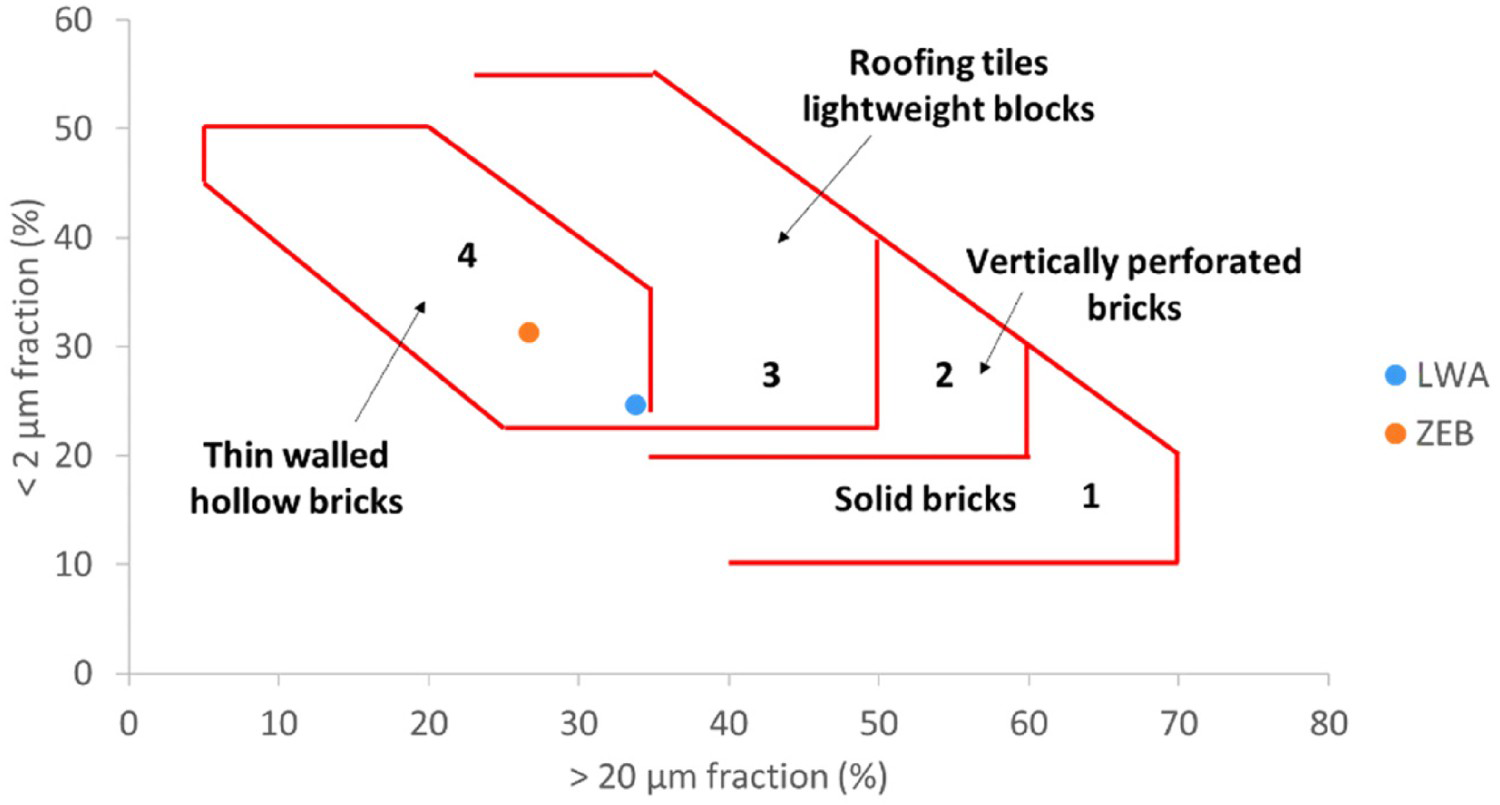
In Figure 12, the relation between particle size and its controls over porosity and permeability of the kaolins is shown. Lwamondo and Zebediela Kaolins both plot in the low porosity and low permeability field. The same trend was observed in clays from Amezmiz Region in Morocco, which showed low porosity and low permeability, and was suitable for hollow bricks [14]. The low porosity and permeability improve the mechanical strength, load-bearing capacity and corrosion resistance [62].
Ternary diagram of studied kaolins showing the relation between particle size and its controls over porosity and permeability. Fields after McManus [63].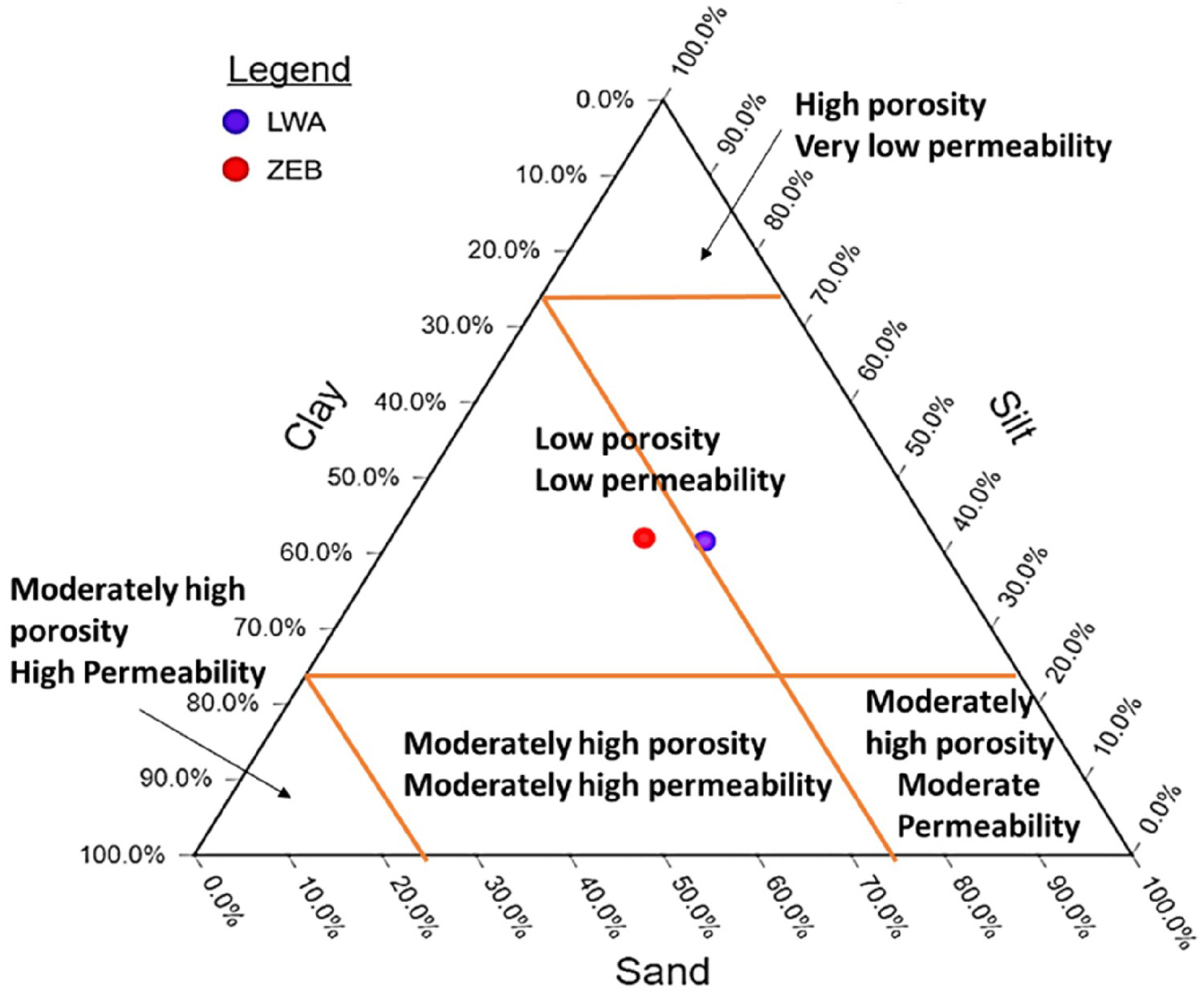
The pH and EC of kaolins are used to detect the presence of impurities and salts. The low pH (<6.5) and EC (<50 µS/cm) values of the Lwamondo and Zebediela Kaolins showed that the kaolins contained little to no amount of soluble salts [3,64,65]. Low soluble salts correlate with low viscosity and thixotropy, which result in high bulk density and mechanical strength of greenwares in ceramics [66]. Moreover, compared to major oxides concentrations of kaolins used for paper filling and coating, pharmaceutics and cosmetics [35,36], the Lwamondo and Zebediela Kaolins have relatively lower Al2O3 and higher SiO2, which do not make them suitable for these applications.
This study presented the genesis and potential industrial applications of Lwamondo and Zebediela Kaolins, and concluded as follows:
Mineralogical and geochemical data showed that the kaolins formed through supergene processes in a humid climate, and the kaolins resulted from moderate to intense silicate weathering of their parent rocks. Based on their characteristics, Lwamondo and Zebediela Kaolins have different ore grades. Lwamondo Kaolin is a kaolinitic sand/siltstone, whereas Zebediela Kaolin sandy/silty kaolin. These grades strongly impact their potential industrial applications. Lwamondo Kaolin could be suitable for ceramics while Zebediela Kaolin is not. Both deposits have low porosity and permeability, which make them suitable for hollow bricks.
Footnotes
Acknowledgements
The authors are grateful to the management of Lwamondo Vhavenda Bricks and Zebediela Bricks for allowing the field component of the study to take place in their premises. The authors also acknowledge Mr Rivers Nkuna for drawing the maps in Figure 1.
Disclosure statement
No potential conflict of interest was reported by the author(s).