







Abstract
Objectives:
To investigate the changes in adrenocorticotropic hormone (ACTH) and cortisol in heroin addicts given Jitai tablet treatment during abstinence.
Design:
Double-blind, randomized, placebo-controlled clinical trial.
Settings/Location:
Drug Rehabilitation Bureau of Shanghai Police, China.
Participants:
99 volunteers, including 69 heroin addicts and 30 healthy volunteers.
Interventions:
69 heroin addicts randomly divided into two groups: the Jitai tablet group, which comprised 34 heroin addicts given Jitai tablet treatment during abstinence, and the placebo group, which comprised 35 heroin addicts given placebo. A control group consisted of 30 sex- and age-matched healthy volunteers.
Outcome Measures:
ACTH and cortisol in plasma were measured in all groups at baseline and in the Jitai tablet and placebo groups on the third, seventh, and 14th days of abstinence.
Results:
Levels of both ACTH (p<.01) and cortisol (p<.001) were significantly higher in heroin addicts at baseline than in the healthy volunteers. Jitai tablet treatment restored plasma cortisol levels to normal more rapidly than did placebo treatment (p<.05), but not ACTH levels. A positive correlation between ACTH and cortisol values at baseline (p<.01) was also found with withdrawal symptom scores and daily dosages of heroin.
Conclusions:
Heroin addicts could respond to Jitai tablets through changes in the hypothalamus-pituitary-adrenal axis.
Introduction
D
Therefore, mitigating withdrawal symptoms induced by cessation of opiate use is a key clinical goal. In practice, many different types of pharmacologic agents have been used to treat withdrawal symptoms, including opioid agonists, partial opioid agonists, opioid antagonists, and α2-adrenoreceptor agonists. 3 –5 However, the use of these pharmacologic medications are limited. Opioid and partial opioid agonists have addictive potential, and nonaddictive medications, for example α2-adrenoreceptor agonists, can lead to severe adverse effects, such as postural hypotension. 6 Thus, research into more effective and safety drugs remains important in the field of drug addiction.
Traditional Chinese Medicine (TCM) has been used for more than 200 years to treat opiate addiction in China. TCMs show no dependence and have a comprehensive effect on withdrawal symptoms. 7 –9 These advantages of TCM have encouraged its widespread use in acute opiate detoxification. Currently, Jitai tablet is one of 10 TCMs approved by the China Food and Drug Administration for use in the clinical treatment of opiate addiction, prescribed by Jitai Yang, a famous doctor in the Qing Dynasty. The unique pharmacologic effects of each herb and their precise combination have a positive effect on physical detoxification. For example, Jitai tablets are equal in efficacy to clonidine for controlling withdrawal symptoms in morphine-dependent animals. 7 Clinical research has further confirmed that Jitai tablets have good efficacy in controlling both acute and protracted opiate withdrawal symptoms. 8 –10
Morphine may influence the hypothalamus-pituitary-adrenal (HPA) either by directly acting on the opioid receptors of hypothalamic neurons or by competitively replacing endogenous opioid receptor ligands. 11,12 Preclinical studies have demonstrated that a single administration of morphine can lead to increasing activity of the HPA axis. 13,14 Conversely, long-term administration would gradually induce tolerance. 15,16 Many studies on heroin addicts have shown that a single or long-term use of opioids decreases the activity of the HPA axis, which leads to a decrease in plasma cortisol concentrations. 17 –19 In addition, normal circadian rhythm, prominently expressed as high cortisol concentrations in the morning and low concentrations at night in normal adults, also changes in opioid abusers. 20
A variety of injuries and other factors (i.e., stress) could cause adrenal hypertrophy and increased secretion of corticosteroids. 21 Further studies have shown that one-time stress stimulation could cause increasing secretion of adrenocorticotropic hormone (ACTH) for several hours, which only gradually decreases to normal levels. 22 –24 The more intense the stimulation is, the more substantial the increase in ACTH secretion and the longer the duration. 23,24 Acute withdrawal caused by a sudden deprivation of heroin is a strong stimulant. Some studies show that heroin withdrawal can lead to augmentation of HPA activity in both animals and humans. 22 –24 Heroin withdrawal is also accompanied by strong negative emotions, such as anxiety and depression, which are mediated by activation of the HPA axis. 22,25 However, the duration of elevated levels of ACTH and cortisol has been inconsistent across different studies; thus, further studies are needed.
Although Jitai tablet is has controlled withdrawal symptoms in these studies, its effect on the HPA axis has not yet been evaluated. The present study measured the plasma concentrations of ACTH and cortisol at different time points in heroin addicts treated with Jitai tablet during withdrawal in order to investigate its effects on the HPA axis.
Materials and Methods
Participants
Patients newly admitted to the Drug Rehabilitation Bureau of Shanghai Police between March 2010 and April 2011 were screened by testing their urine morphine metabolites. Among them, 69 patients met the criteria of the Diagnostic and Statistic Manual of Mental Disorders, Fourth Edition, of the American Psychiatric Association for heroin dependence. Selection criteria included urine positive for morphine metabolites; last heroin intake before screening no more than 36 hours previously; no severe psychiatric illness (dementia, psychosis) or major cognitive impairment; no severe, chronic liver illness (aminotransferase >200 U/L), renal disease, or other chronic medical disorders or immunodeficiency, including HIV positivity; and no codependence on alcohol, amphetamines, cannabinoids, or benzodiazepines (however, sporadic use [less than a month with negative urine screen at recruitment] was not considered an exclusion criterion).
In addition, 30 healthy volunteers were recruited from hospital staff as the control group. They had never used illicit psychotropic drugs or misused alcohol. They passed a physical examination and routine biochemical tests. Exclusion criteria were the same as those used for the heroin addicts.
The study adhered to the ethical principles of the Declaration of Helsinki and the Good Clinical Practice guidelines. The ethics committee of Peking University, Beijing, China, approved the study. All participants gave informed written consent.
Study design and treatment
This was a double-blind, randomized, placebo-controlled clinical trial. Heroin addicts were randomly assigned to the Jitai tablet group or the placebo group according to a computer-generated randomization sequence list.
Treatment lasted for 10 days. Participants in the Jitai tablet group received four Jitai tablets orally three times daily from days 1 to 5; frequency was then reduced to two tablets three times daily from days 6 to 10. Patients in the placebo group received placebo according to the same pattern.
Jitai tablets (0.4 g, lot number 0904010, ratification number of China Food and Drug Administration Z20044197) were prepared by Shanghai Traditional Chinese Medicine Technology Co. Ltd, Shanghai, China, as meeting good manufacturing practices. It was a mixture of extracts of 15 kinds of TCM herbs (Table 1), with volatile oil extraction, ethanol percolation, water extraction technology, and then use of the preparation and coating. In addition to quality control of medicinal materials according to Chinese Pharmacopoeia (2010) and Enterprise Standard, monitoring points of every process were developed for intermediates. The quality specification of the tablet preparation was carried out based on approval number Z-253 (2009, China Food and Drug Administration). In each tablet, the extract of volatile ether and tetrahydropalmatine (C21H25NO4) should be at least 3.2 mg and 20 μg, respectively, and the content of scopolamine hydrobromide (C17H21NO4·HBr·3H2O) was between 0.05 mg and 0.09 mg. Placebo comprising dextrin and starch was also prepared by Shanghai Traditional Chinese Medicine Technology Co. Ltd.
Data collection strategy
Case report forms requesting the following information were given to all participants by the investigators: demographic data (sex, age, height, and weight), heroin-abuse characteristics (e.g., duration of heroin abuse, average daily dosage, and last dosage).
The heroin addicts were also asked to evaluate their withdrawal symptoms and anxiety at 8 a.m. on the day before treatment commenced. Withdrawal symptoms were evaluated using the Withdrawal Syndrome Rating Scale (WSRS). 26 Anxiety assessments were made using the Hamilton Anxiety Scale (HAMA). 27
Measurement of plasma ACTH and cortisol levels
For the heroin addicts, blood samples were collected at baseline (D0) and on the 3rd, 7th, and 14th days of abstinence for assessment of endocrine system function. Two-milliliter blood samples were collected at 9.00 a.m., 1 hour after the daily Jitai tablet or placebo intake each morning via a catheter inserted in the cubital vein. For the healthy volunteers, blood samples were collected at 9.00 a.m. at baseline. Test tubes used for blood collection were precoated with ethylenediaminetetraacetic acid (EDTA) for ACTH measurement or heparin for cortisol measurement. All samples were stored or transferred at 4°C in less than 30 minutes, and plasma was obtained by centrifugation at 4°C at 3000 rpm for 10 minutes. The concentrations of ACTH and cortisol were tested by electrochemiluminescence (cobas® E601, Roche Diagnostics, Mannheim, Germany). 28 Specimen handling and determination were strictly carried out according to the protocol.
Statistical analysis
Data are presented as mean±SEM. For endocrine levels, the dependent variables were the concentrations of plasma ACTH and cortisol and were analyzed by repeated-measures mixed linear models with the between-subjects factors group and the within-subjects factors time (days 0, 3, 7, and 14). 29 The dependent variables of WSRS and HAMA were the total scores of the scales, and they were analyzed by the same method with the between-subjects factors group and the within-subjects factors time (days 0–10). For normally distributed data, comparison between the two groups was made by means of the t-test while the Pearson correlation test was used for correlation analysis. For non–normally distributed data, the comparison use the Wilcoxon test, while the Spearman correlation test was used for correlation analysis. Significance levels for all tests were set at p<.05. The analyses were performed with SAS software, version 9.13 (SAS Institute, Inc., Cary, North Carolina).
Results
Participant characteristics
Social demographic data
Table 2 shows social demographic data of all participants. Sex, age, height, and weight did not significantly differ between the Jitai tablet group and the placebo group.
Data are presented as mean±SEM.
Characteristics of heroin abuse in heroin addicts
Table 3 shows the heroin-abuse characteristics of heroin addicts. Duration and dosage of heroin abuse did not significantly differ between the Jitai tablet and placebo groups. Moreover, at baseline, there was no significant difference between the Jitai tablet group and the placebo group for the severity of withdrawal symptoms and anxiety (WSRS: t-test, t=0.31, p=.76; HAMA: t-test, t=−0.73, p=.47).
Data are presented as mean±S.E.M.
WSRS, Withdrawal Syndrome Rating Scale; HAMA, Hamilton Anxiety Scale.
Effects of Jitai tablets on withdrawal symptoms and anxiety
After Jitai tablet or placebo treatment, WSRS and HAMA scores gradually decreased and the daily reduction rates gradually increased over the treatment period. Although the Jitai tablet group and placebo group did not significantly differ for WRSR scores (group effect: F [1,83]=1.05, p=.31; time effect: F [9,540]=33.24, p<.0001; group×time interaction: F [9.540]=1.43, p<.0001) and HAMA scores (group effect: F [1,71]=1.22, p=.27; time effect: F [2,133]=71.88, p<.0001; group×time interaction: F [2.133]=0.80, p=.45), withdrawal and anxiety symptoms were alleviated more rapidly in the Jitai tablet group than the placebo group and ultimately disappeared. Changes in WSRS and HAMA scores over time were presented in Figure 1.
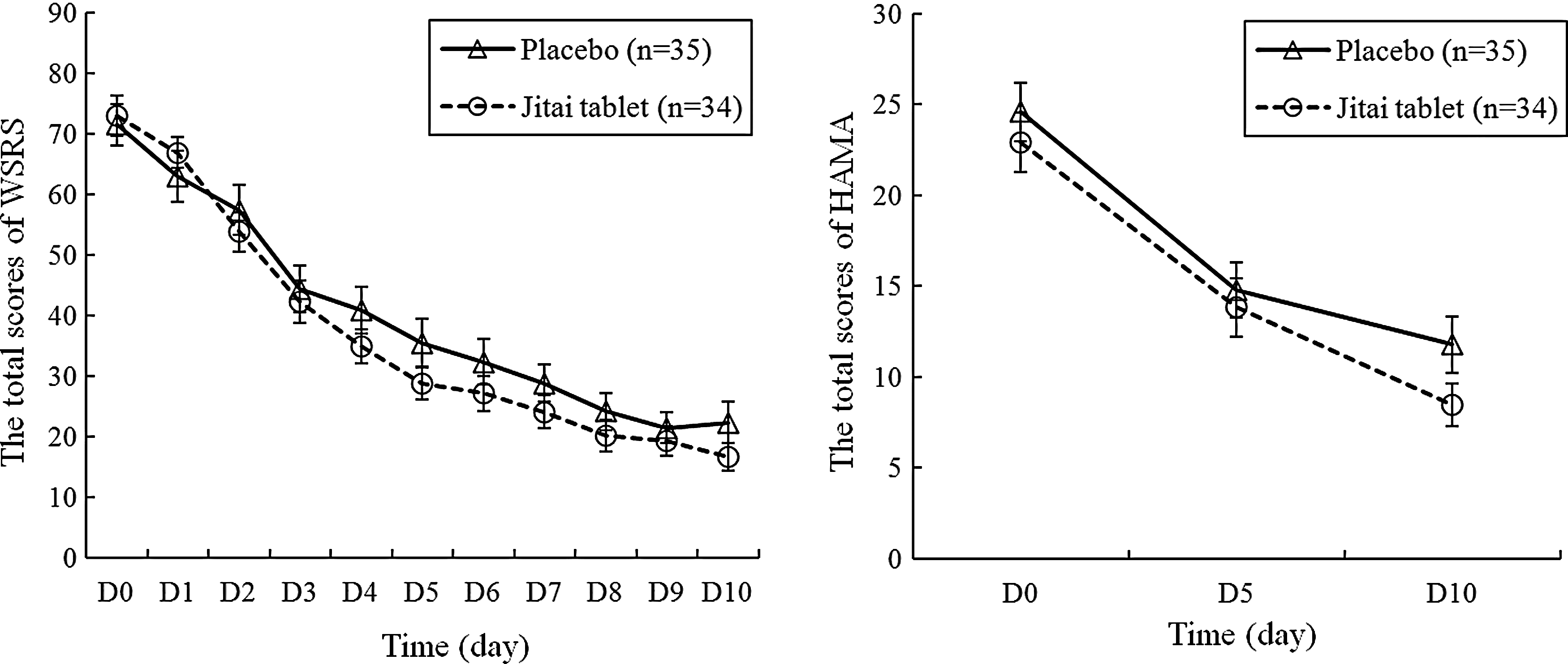
Effects of Jitai tablets on withdrawal symptoms and anxiety in heroin addicts. In both the Jitai tablet group and the placebo group, the Withdrawal Syndrome Rating Scale (WSRS) and Hamilton Anxiety Scale (HAMA) scores were lower day-by-day, but there was no significant difference between the two groups (WRSR: group effect, F [1,83]=1.05, p=0.31; time effect, F [9,540]=33.24, p<.0001; group×time interaction, F [9.540]=1.43, p<.0001; HAMA: group effect, F [1,71]=1.22, p=.27; time effect: F [2,133]=71.88, p<.0001; group×time interaction: F [2.133]=0.80, p=.45). Data are expressed as mean±SEM.
Heroin withdrawal increased plasma ACTH and cortisol levels
After withdrawal, plasma ACTH and cortisol levels of heroin addicts were significantly elevated compared with those in healthy volunteers (ACTH: Wilcoxon test, chi-square=8.20, p<.01; cortisol: t-test, t=−14.49, p<.001) (Fig. 2).
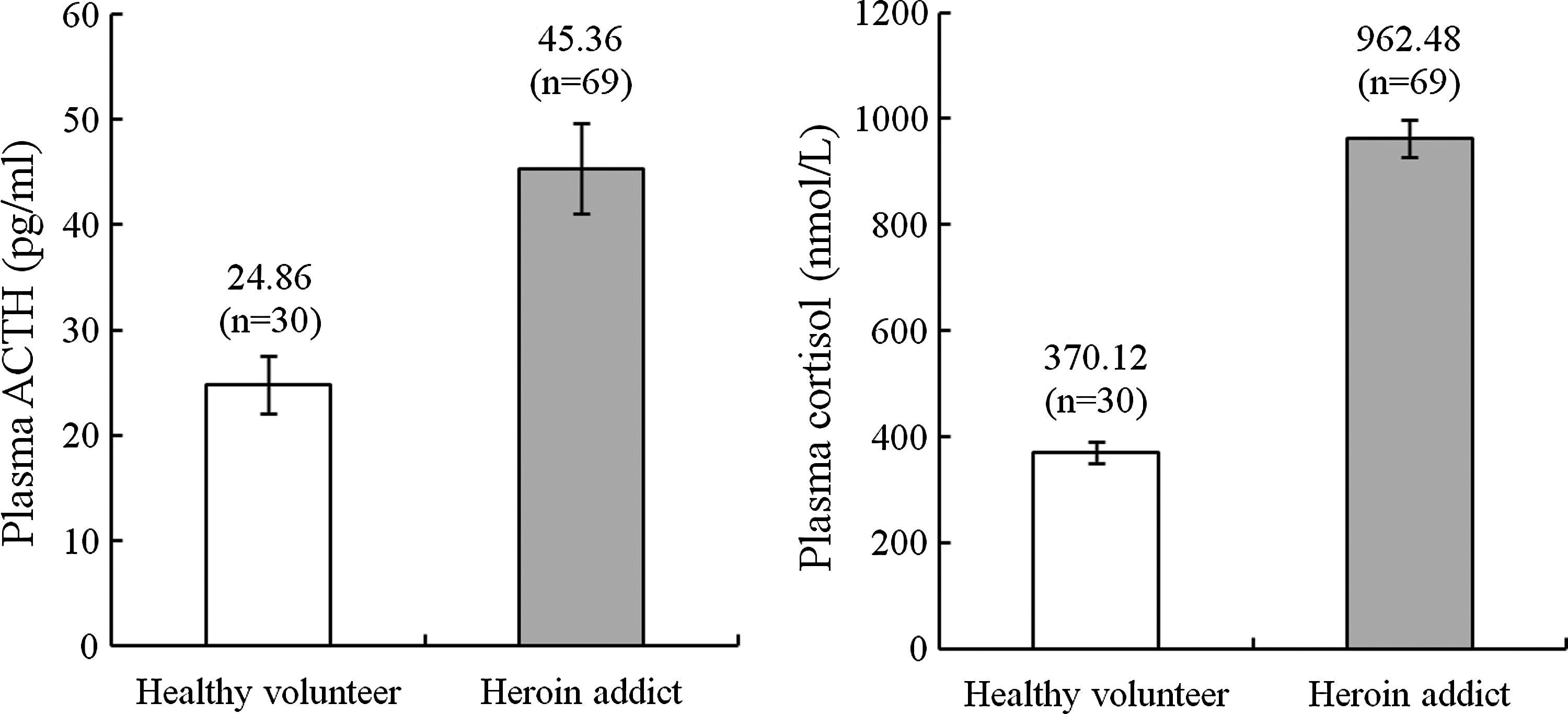
Effect of heroin withdrawal on plasma adrenocorticotropic hormone (ACTH) and cortisol levels. Both ACTH and cortisol were significantly higher in heroin addicts at 36 hours after abstinence than in healthy volunteers (ACTH: Wilcoxon test, chi-square=8.20, p<0.01; cortisol: t-test, t=−14.49, p<.001). Data are expressed as mean±SEM.
Correlations between endocrine hormones, total WSRS and HAMA scores, and heroin abuse
A significant positive correlation was found at baseline between concentrations of ACTH and cortisol for heroin addicts. There was also a positive correlation between levels of ACTH, cortisol, total WSRS scores, and average daily dose of heroin, but no correlation with the duration of drug abuse and the last dose abused. Baseline cortisol values also correlated with the total scores on HAMA, but there was no significant correlation between ACTH and HAMA scores. The results of correlation analysis are shown in Figure 3.
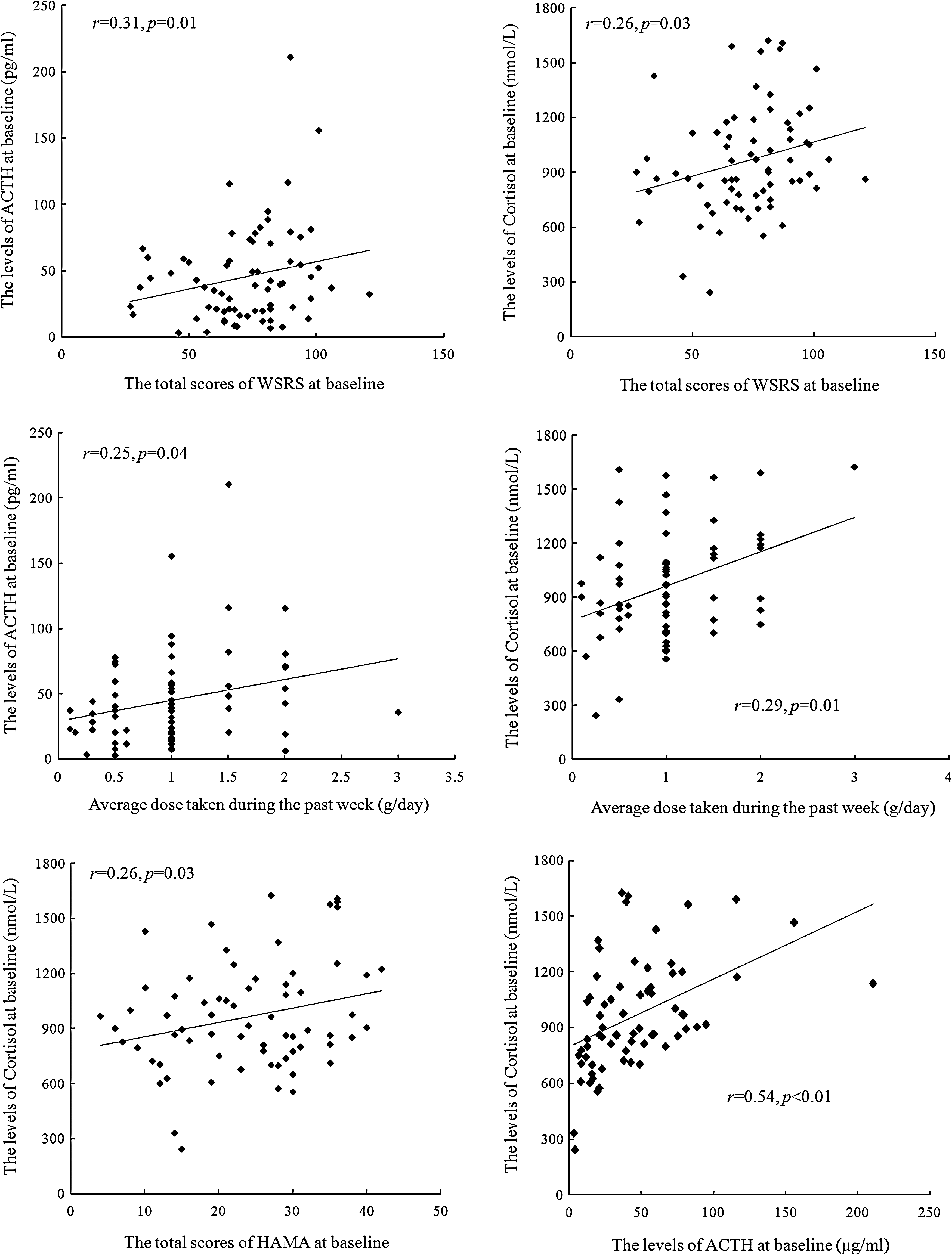
Correlations between endocrine hormones, total WSRS and HAMA scores, and heroin abuse.
Effects of Jitai tablets on concentrations of plasma ACTH and cortisol
Levels of ACTH and cortisol were highest at baseline (D0) in both the Jitai tablet group and the placebo group, and there was no significant difference between the two groups (ACTH: Wilcoxon test, chi-square=0.11, p=.75; cortisol: t-test, t=0.11, p=.92).
The most significant decline in ACTH appeared on the third day, continued to decline, and then remained stable from the seventh day to the 14th day (Fig. 4). In the placebo group, it was only on the 14th day that plasma ACTH levels were lower than those in the healthy volunteers (chi-square=4.08, p=.04). However, in the Jitai tablet group, the levels of ACTH were significantly lower than in the healthy volunteers on the third day (chi-square=6.19, p=.01), the seventh day (chi-square=13.39, p<.01), and the 14th day (chi-square=7.39, p<.01) of abstinence. No difference was found between the Jitai tablet group and the placebo group (group effect: F [1,146]=3.51, p=.06; time effect: F [3,138]=11.98, p<.0001; group×time interaction: F [3,138]=0.33, p=.81).
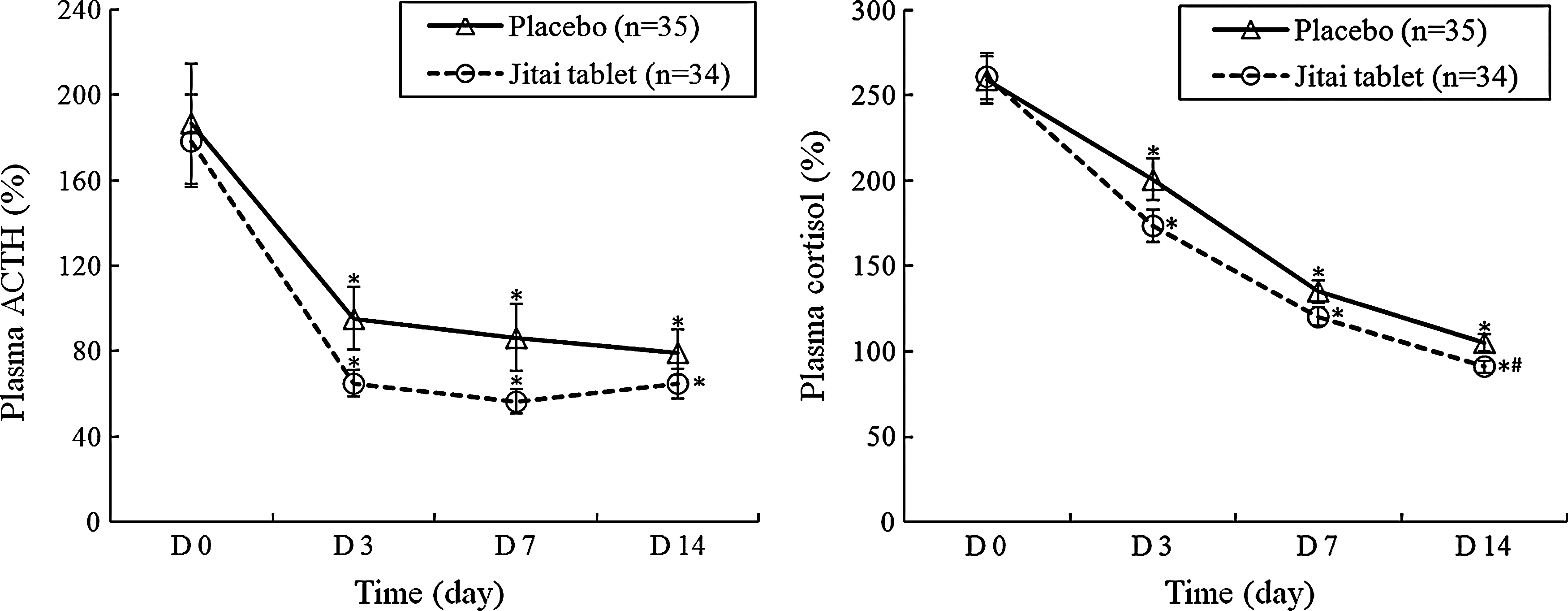
Levels of plasma ACTH and cortisol of heroin addicts treated with Jitai tablets or placebo. Participants in the experimental groups received Jitai tablets or placebo for 10 days. The percentage change in plasma ACTH or cortisol levels were calculated as x/c ×100%, where x is plasma ACTH or cortisol levels in placebo group and Jitai tablet groups and c is plasma ACTH or cortisol in healthy volunteers. *p<.05 versus D0; # p<.05 versus corresponding placebo group. Values are mean±SEM.
In eight participants in both the Jitai tablet group and the placebo group, ACTH levels were above the normal range (7.2–63.3 pg/ml) at baseline (D0). In the placebo group, only six of eight participants with elevated ACTH showed restoration to normal levels by the third day and two participants in this group still had elevated levels on the 14th day. However, after Jitai tablet treatment, ACTH levels in three participants were restored to the normal range on the third day, while for five participants ACTH levels were decreased below the normal range on the third day and were maintained at this lower level until the 14th day.
In both the Jitai tablet group and placebo group, the concentration of cortisol decreased gradually compared with measures taken on the third day and the seventh day, and returned to normal by the 14th day (Fig. 4). There was a significant main effect of group (F [1,173]=4.07, p<.05) and time (F [3,108]=114.07, p<.0001), but the interaction of group and time was not (F [3,108]=0.47, p=.70).
At baseline (D0), 100% of the Jitai tablet group and 95% of the placebo group had cortisol levels above the normal range (171–563 nmol/L). By the 14th day, four participants in the placebo group still had elevated levels; however, cortisol levels for all participants in the Jitai tablet group returned to normal. No participants in either the Jitai tablet group or the placebo group had plasma cortisol level below the normal range at any time during abstinence.
Discussion
In this study, Jitai tablets were compared with placebo for relieving the acute withdrawal symptoms of opiate dependence and restoring the abnormal levels of endocrine hormones (ACTH and cortisol). Total scores of withdrawal symptoms and anxiety in both groups declined gradually over the treatment period, and no significant differences were found between the two groups. Significantly higher levels of both ACTH and cortisol were found in heroin addicts at 36 hours after abstinence. However, Jitai tablet treatment restored plasma cortisol levels to normal more rapidly than placebo treatment, rather than ACTH.
TCMs have been used widely in acute opiate detoxification during the last decade in China. Although previous studies demonstrated that Jitai tablets control withdrawal symptoms, 7 –9 the current study did not find Jitai tablets to be more effective in treating opiate acute withdrawal symptoms than placebo. This may be due to the size of the samples. There was a significant difference between the Jitai tablet group and the placebo group for WRSR scores after the samples were extended to 150 patients (data not shown).
ACTH and cortisol have been used as markers of HPA axis function. Heroin withdrawal can lead to the augmentation of HPA axis activity. 22 –24 In accordance with previous findings, 22,30,31 the current study observed an increase in plasma ACTH and cortisol levels in heroin addicts at 36 hours after abstinence.
The study found that on the third day of abstinence, elevated ACTH levels dropped sharply in heroin addicts treated with Jitai tablets or placebo. This trend continued to the 14th day, when ACTH levels declined to below normal for both treated groups. Research has shown that long-term administration of opiates can lead to the suppression of ACTH. 18 Some previous studies found that the persistent depression of ACTH existed from the third day to the 30th day after withdrawal in heroin addicts with nonmedicated treatment. 32 Therefore, we supposed that the levels of ACTH had already restored to the state before withdrawal when it was lower than normal, but there was no difference between the two groups. The change of ACTH in heroin abstainers depended on treatment during abstinence and abstinence duration. For example, elevation of ACTH levels in heroin addicts was found after rapid opioid detoxification with naloxone 30 or after acupuncture and electrical stimulation together with limited doses of naloxone. 31 However, ACTH levels decreased to normal in heroin addicts who were treated with methadone for 6 months. 33
Unlike ACTH, hypercortisolism in 100% of the heroin addicts in the Jitai tablet group and 83% of the placebo group returned to normal after 14 days of withdrawal. However, another study showed that the hypercortisolism of heroin addicts would not return to normal until the 30th day during nonmedicated withdrawal. 32 The result clearly showed that cortisol could normalize more rapidly after Jitai tablet or placebo treatment during withdrawal. Moreover, persons treated with Jitai tablets appeared to have a faster recovery than placebo recipients. The study also showed that the levels of cortisol decreased continuously until the 14th day; thus, a further study on the effects of a longer treatment period is needed.
The impairment of HPA axis function caused by long-term opioid consumption may lead to the symptoms, such as fatigue, malaise, anorexia, weight loss, gastrointestinal discomfort, and depression, reported frequently by heroin addicts, as well as some of the symptoms observed during protracted withdrawal. 34 Studies indicated that HPA axis was related to withdrawal symptoms. 35,36 In accordance with previous data, the current study also found that the levels of ACTH and cortisol in heroin addicts during 36 hours of abstinence showed a significant positive correlation with withdrawal symptoms. Moreover, this study also found an obvious decline in ACTH on the third day of abstinence, and the withdrawal symptoms eased at the same time. Clinical research confirmed that the withdrawal symptoms of heroin addicts treated with Jitai tablets for 10 days could be significantly alleviated, 8,9 which may partially be due to the normalization of the HPA axis, such as cortisol. Some studies found that the individual herbs that were components of Jitai tablet, such as Rhizoma corydalis and Flos daturae, may contribute to the normalization of function of HPA axis. 37,38 The study also found that heroin addicts still experienced some symptoms, such as anxiety and insomnia, after a prolonged withdrawal. There were even some positive results on the recovery of both ACTH and cortisol levels; however, the study also found that the function of HPA axis did not recover fully after the treatment. For example, ACTH levels in 6 of 34 (18%) participants appeared below normal on the 14th day of abstinence. Further studies are needed to determine whether these symptoms were related to the impaired HPA axis.
In summary, the study investigated the changes of ACTH and cortisol in heroin addicts treated with Jitai tablets during withdrawal. However, further study is needed to determine how long ACTH could be restored to normal after Jitai tablet treatment. The study also showed that Jitai tablets were helpful for the recovery of cortisol, indicating that the tablets might play a role through the HPA axis. Some studies found that individual components of Jitai tablet, such as R. corydalis, ligustrazine, and Salvia miltiorrhiza, may also contribute to the normalization of impaired immunity. 39 –41 Moreover, basic research demonstrated that Jitai tablets could significantly enhance the immune function of morphine-dependent mice. 42 Therefore, further investigation is needed to clarify the effect of Jitai tablets on the immune system so that its mechanisms can be further evaluated comprehensively.
Footnotes
Acknowledgments
This work was supported by the National Science and Technology Support Program of China (2008BAI49B01) and the National Basic Research Program of China (2009CB522000). The authors thank all staff members in the Drug Rehabilitation Bureau of Shanghai Police.
Author Disclosure Statement
No competing financial interests exist.