







Abstract
Abstract
Background:
The Scientific Auriculotherapy Diploma Program in the University of Paris medical school system has evolved from the early teaching of Paul Nogier, MD, to a dedicated, 228-hour, comprehensive educational approach to auricular acupuncture as an evidence-based medicine technique.
Objective:
The purpose of this article is to present the current status of the medical education of auricular acupuncture at the Faculties of Medicine of the Universities of Paris XIII and XI.
Methods:
The past and present approaches to auriculotherapy medical education are discussed, drawing some contrasts between the Universities of Paris medical degree program and examples of other auriculotherapy educational approaches in France and in the United States. Recent advances in auricular cartography and in treatment technique research at the Universities of Paris utilized in teaching are noted. Future directions of auriculotherapy education at the medical schools of the Universities of Paris are discussed.
Conclusions:
This medical auricular acupuncture degree program has useful features that may collectively serve as a model for the development of similar programs in the future.
Introduction
T
Twenty years later, in 1985, the first 1-year medical diploma program in auriculotherapy for physicians was created in the Faculty of Medicine of the University of Paris North by Pierre Cornillot, MD, The original medical degree awarded was the University Diploma, which is known in France as the Diplôme Universitaire, and abbreviated as DU. This medical education degree program was subsequently supervised, developed further, and expanded by David Alimi, MD.
In this article, which includes the perspective of the Paris program's new director (coauthor Claire-Marie Rangon, MD, PhD), the current approach to auriculotherapy medical education is discussed, including its clinical paradigm as an evidence-based medicine, the enrollment criteria and curriculum program for physician–students, and the clinical model of instruction for patient care. The latest developments in auricular cartography and recent research in treatment methods utilized are indicated. Diploma requirements are reviewed. Some illustrative contrasts are drawn between the Universities of Paris program and examples of other auriculotherapy educational approaches in France and in the United States. This is followed by a look to the future of auriculotherapy education at the medical schools of the Universities of Paris.
The Degree Program
Establishment of the Program
In 2006, a higher medical degree in auriculotherapy was authorized by the University of Paris system, called the Inter University Diploma, known in France as the Diplôme Inter Universitaire, and abbreviated DIU. The DIU degree in auricular acupuncture (that is, auriculotherapy) was offered jointly by the Faculties of Medicine of the University of Paris XIII North and the University of Paris XI South, under the guidance of Dr. Alimi, in order to strengthen auriculotherapy's scientific basis and scope of education. Indeed, the duration of the academic medical program was extended from 1 year to 2 years, entailing 228 hours spread out over 7 weekends, from November to May annually. Why was this done? The answer speaks to the most noteworthy aspects of this DIU degree program: Professors now sought to introduce and explain the fundamental biologic basis of auriculotherapy (including elements such as embryology, anatomy, genetics, and neurophysiology) in the course of the first year of the program. In addition, during the second year of the program, professors offered further instructions in clinical applications of auriculotherapy pertaining to every field of medicine (including neurology, cardiology, endocrinology, pulmonary medicine, pediatrics, etc). During this process, emphasis was placed on general and specific patient clinical case discussions, particularly involving pathology and pathophysiology, as well as diagnosis and treatment planning.
Consequently, students are no longer asked to learn therapeutic formulas and to execute them mechanically. Instead, students are taught how to unravel the pathophysiologic mechanisms of the patient's signs and symptoms in order to provide individualized auricular acupuncture treatments. This approach reflects Dr. Alimi's clinical viewpoint that auriculotherapy is applied neurophysiology.
Program Components
The clinical method taught during the 2 years of the DIU degree program is composed of the following steps:
(1) History and review of laboratory data (2) Physical examination (3) Auricular physical examination—including ear inspection and point detection (most commonly through focal ear tenderness to pressure or a probe, or by use of a microvoltmeter).
Note that the DIU degree program does not include instruction in the Vascular Autonomic Signal (VAS), in the Nogier phases or in other elements of auriculomedicine. This is because the teaching staff at the Universities of Paris XI and XIII consider auriculotherapy to be an evidence-based medicine, whereas auriculomedicine has not yet achieved that recognition.
Additional steps are:
(4) Diagnosis—based on allopathic, biomedical, (and not traditional Oriental), concepts of health and disease (5) Treatment of auricular acupuncture points—selected from a neuropathophysiologic perspective.
The sectography and universal cartography used at the Universities of Paris XIII and XI were developed by Dr. Alimi, 4 and are shown in Figures 1–5. This sectography and universal cartography were recognized and validated by the World Federation of Chinese Medicine Societies in 2011. 5
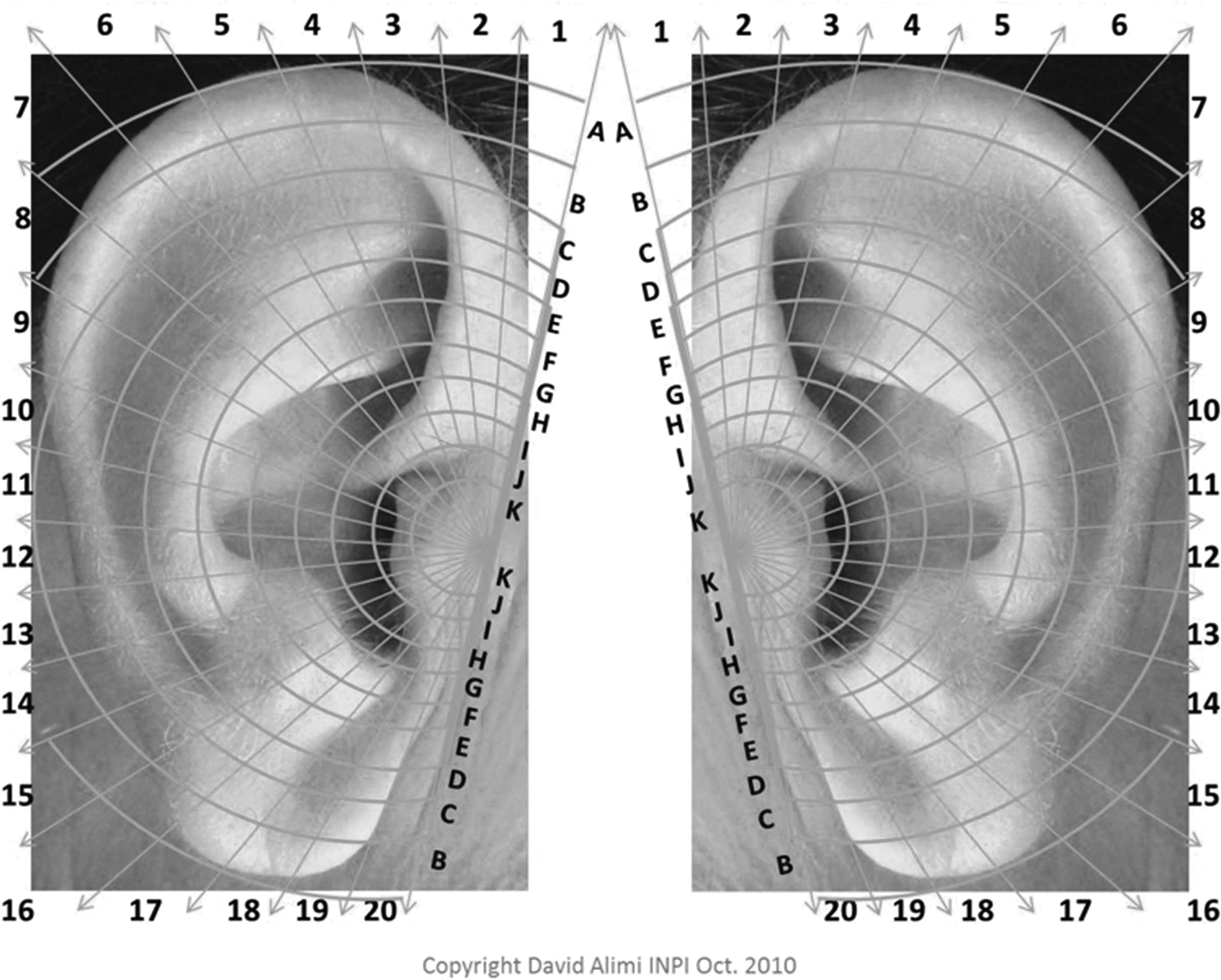
Segmentogram of lateral auricles (© David Alimi, MD, with permission).
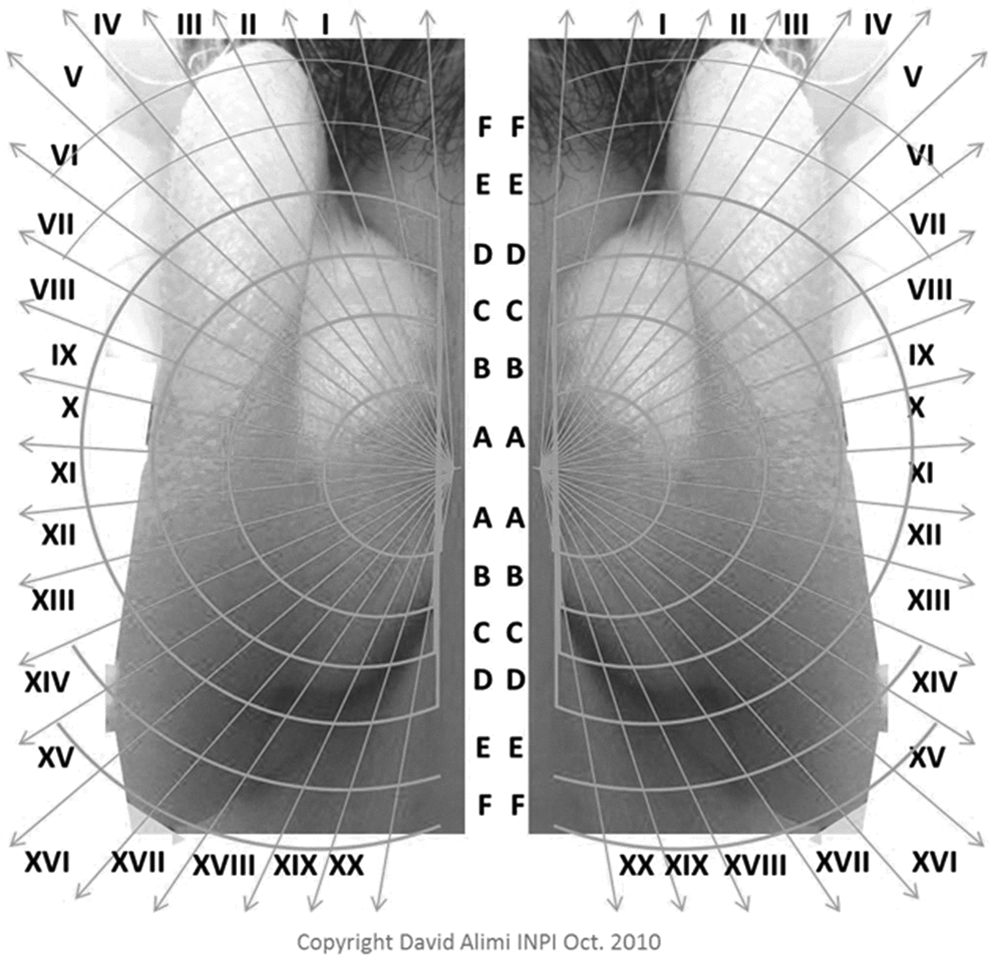
Segmentogram of medial auricles (© David Alimi, MD, with permission).
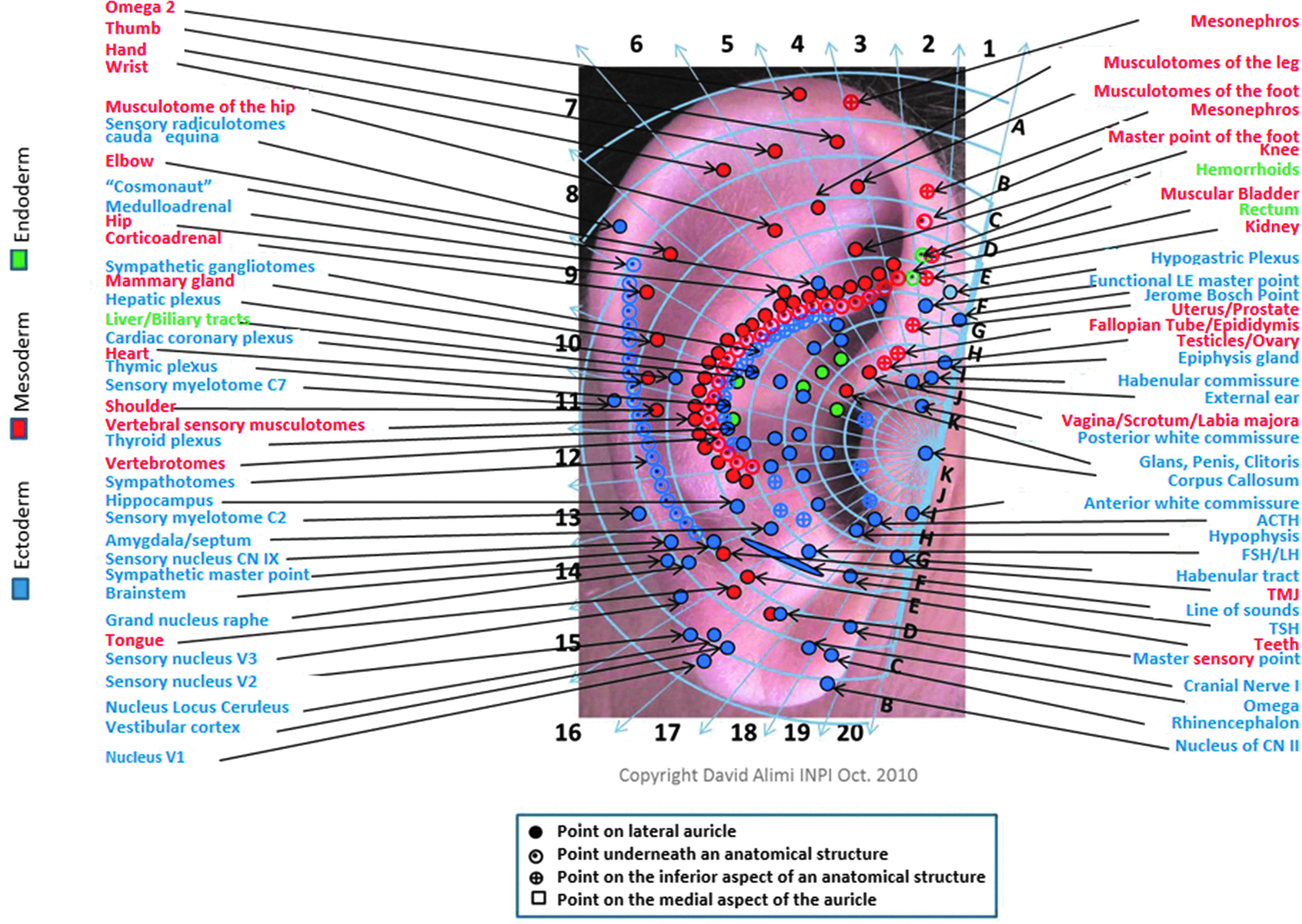
Right lateral auricular segmentogram and points (© David Alimi, MD, with permission). Note: “cosmonaut” refers to the sympathetic gangliotome of T12, and is approximately equivalent to the Shenmen of Chinese auricular acupuncture; C2 and C7 refer to relevant sensory spinal-cord segments; I, II, V1, V2, V3, and IX refer to sensory functions of relevant cranial nerves and their branches; TMJ refers to the sensory aspect of the temporomandibular joint; LE refers to lower extremity; FSH, LH, ACTH and TSH refer to relevant pituitary hormones, which are, respectively, follicle-stimulating hormone, luteinizing hormone, adrenocorticotropic hormone, and thyroid-stimulating hormone.
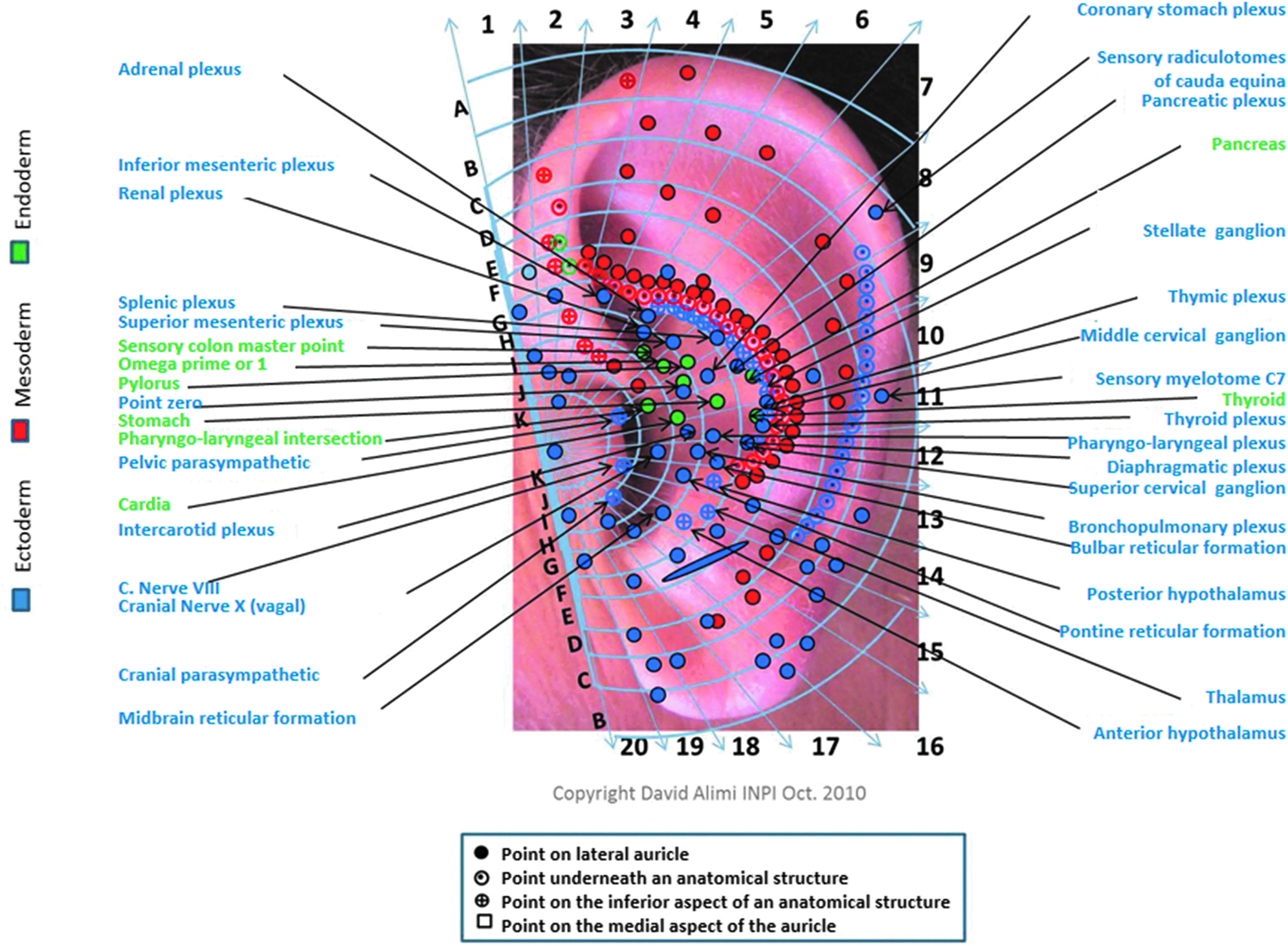
Left lateral auricular segmentogram and points (© David Alimi, MD, with permission). Note: VIII refers to cranial nerve VIII; C7 refers to the sensory spinal-cord segment of C7.
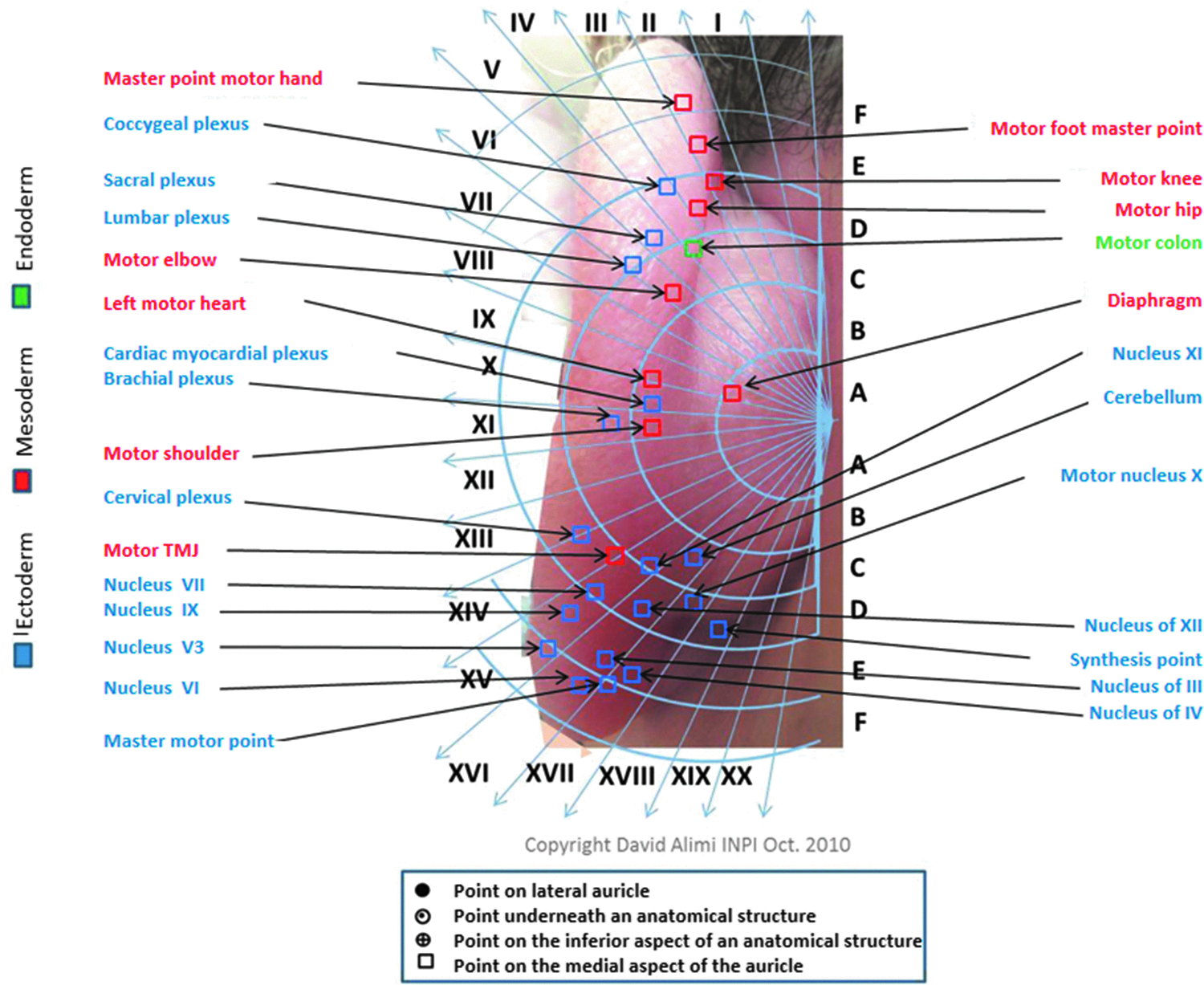
Left medial auricular segmentogram and points (© David Alimi, MD, with permission). Note: TMJ refers to the motor functions of the temporomandibular joint; III, IV, V3, VI, VII, IX, X, XI, XII all refer to motor functions of relevant cranial nerve nuclei and their branches.
For auriculotherapy treatment, either standard acupuncture or ASP (“semipermanent”) needles are chosen, using a sterile technique at all times. In 2010, a nonneedling technique using the focal application of N2O gas to ear points, called “cryoauriculotherapy,” was introduced by Dr. Alimi. The goal of this research was to increase the comfort and safety of patients, especially younger ones. Typically, auriculotherapy treatments are repeated at 4–6-week intervals.
The teaching staff is international but predominantly French, and includes experienced physicians trained in auriculotherapy, with backgrounds in internal medicine and surgery and their various subspecialties. The instructional program consists of 200 hours distributed over 2 years in weekend seminars. PowerPoint presentations are routinely used, and are shared readily with the physician–students. Note-taking is encouraged. There is ample opportunity for questions and answers. The atmosphere is collegial. The esprit de corps among faculty and students is excellent.
The didactic portion of the Paris DIU program is principally offered in university classrooms but also occurs at two Foundations located in Paris, including the Lecourbe Social Medical Center and the Cognacq Jay Hospital, which are dedicated to welcoming patients with motor disabilities and patients in need of palliative care, respectively. Physician–students are given the opportunity from the beginning of their courses to evaluate and follow actual patients, thereby assessing the effects of auriculotherapy first-hand.
Moreover, the Paris DIU program involves at least 28 hours of supervised, hands-on hospital rotation time. It is noteworthy that clinical instruction is mainly given in the prestigious Institut Gustave Roussy, a premier European research and teaching hospital for patients with cancer. There, students learn that auriculotherapy is very helpful not only in alleviating pain and suffering caused by cancer itself, but also in dealing with side-effects of its treatment, including complications resulting from chemotherapy, radiation therapy, and surgery. Students are also encouraged to attend their instructors' private auriculotherapy practices, allowing them to learn treatment strategies for patients with a broad variety of problems (such as those involving aspects of internal medicine, otorhinolaryngology, dermatology, etc.).
Finally, students are trained to evaluate their own work through research. The award of the DIU degree in auricular acupuncture by the medical schools of the Universities of Paris XI and XIII requires attendance in didactic courses and clinical sessions, successful completion of midterm and final examinations (consisting of multiple choice questions and essays, in French) and successful completion of a research project called a “Mémoire.” The latter involves an investigation among a broad variety of possible subjects. Examples include topics related to auricular neurophysiology; auriculotherapy neuroimaging with brain functional MRI; clinical research, involving various types of treatment trials in adults and children; auriculotherapy of medical, neurologic, and psychiatric disesase; novel treatment techniques such as cryoauriculotherapy; and history of auriculotherapy. In the case of clinical trials, a Mémoire must include testing of a minimum of 10 subjects. The acceptance of a Mémoire for the purpose of awarding a diploma by the Universities of Paris XIII and XI is up to the judgment of the program director and the staff.
Program Eligibility
Another difference in the instructional program offered by the GLEM is that the Paris DIU program is restricted to doctors of medicine. However, medical students who are still in school and who are preparing theses may also attend. The reason for this restriction is to select health care providers who are able to make clinical diagnoses and plan auriculotherapeutic treatments based upon a knowledge of physiology and pathophysiology.
Most often, the students are physicians and surgeons of various clinical backgrounds, occasionally medical students, in classes typically numbering 25 people in each year of the 2-year program. Other allied health care providers, such as physical therapists and occupational therapists, are not eligible to participate in this auricular acupuncture program. This is in accordance with French law, which restricts the legal practice of acupuncture primarily to doctors of medicine. See Table 1 for statistics pertaining to the current attendees.
Discussion
The medical school DIU degree program of the Universities of Paris XIII and XI has certain useful features. It is a dedicated, comprehensive auriculotherapy program. This differs from other prestigious programs, such as the Structural Acupuncture for Physicians course at Harvard Medical School, where auriculotherapy is taught as a component of a medical acupuncture program. 6 The Paris program is not just a continuing medical education program for physician–students that requires primarily their attendance; course participants must demonstrate competence through clinical supervision and examination testing in auriculotherapy in order to receive the DIU degree. The program promotes clinical research directly by requiring successful completion of a research Mémoire to receive the degree. The Paris program emphasizes the scientific method by emphasizing the neurophysiologic basis of auriculotherapy, a scientific approach to research, and promotion of reviews and publication of auriculotherapy literature. The current authors' PubMed review of the literature did not find an analysis of a similar medical school instructional program dedicated specifically to auriculotherapy.
The Paris program has certain strengths. It is delivered by experienced physician instructors from various disciplines. Students must have a medical background, optimizing the diagnosis and treatment of patients. This program requires a significant time commitment of 228 hours that goes beyond the modular approach to auriculotherapy found in broader acupuncture programs, or in isolated, brief weekend or week-long instructional seminars. The Paris program involves supervised hands-on experience in a prestigious teaching hospital of a major city. It promotes a scientific approach. It is also affordable (costing less than $600 annually).
However, the DIU program has a few drawbacks. The instruction is currently delivered only in French. No official DIU program auricular acupuncture textbook or other printed course materials are currently available. The 28-hour clinical hands-on training portion of the program involves only 12% of total instruction time, which is a lower percentage than the medical acupuncture program at Harvard University and certain other medical schools. There is currently a lack of real-time video capacity in the classrooms and clinics to facilitate viewing of the ears of subjects for diagnostic and treatment purposes. There are no classes focused exclusively on literature reviews. There is limited discussion comparing different schools of thought. For example, alternative French, German, or Chinese auricular acupuncture cartographies are typically not presented in the core curriculum. The French and German practice of auriculotherapy is based on a biomedical model of health and disease, whereas Chinese auricular acupuncture is based on traditional Oriental concepts of health and disease. As there are important similarities and differences among all forms of auricular acupuncture, comparative study of these undoubtedly would lead to further improvements in the field.
Nevertheless, increasing numbers of physicians and surgeons outside of France are interested in the DIU degree program, coming not only from Europe (e.g., Italy, Belgium, Switzerland, Portugal, and Romania) but also from countries outside of the European Union (including the United States, Saudi Arabia, Algeria, and Indonesia.)
Conclusions
This DIU degree medical education program in auriculotherapy has several useful features:
(1) It is a comprehensive scientific program dedicated to evidence-based theory and practice of auriculotherapy. (2) It restricts course participants to students who are trained in biomedicine to optimize diagnosis and treatment planning. (3) It includes testing of program participants to certify their competence. (4) It promotes scientific research by requiring completion of a research project. (5) It uses the latest developments in auricular acupuncture normative nomenclature, and has introduced research in a new treatment modality, cryoauriculotherapy.
The current authors hope that the graduates of this program will develop similar dedicated, scientific auriculotherapy programs in their own countries, for the benefit of patients.
Future Directions
Dr. Rangon, who is also a neuropediatrician at the Lecourbe Social Medical Center and a pain-medicine specialist at the Kremlin-Bicêtre Hospital, which is affiliated with the University of Paris XI, has some new ideas for the program. She plans to introduce e-learning via the Internet, in order to allow students outside of France to attend the courses virtually. It will thereby become easier for foreign students to join the DIU degree auricular acupuncture program because they will no longer be required to physically attend the didactic courses, although they will have to participate in the hands-on hospital rotations. This type of virtual teaching approach associated with mandatory clinical experience is currently utilized successfully in the Harvard Medical School medical acupuncture course. In the future, the goal will be to allow physician–students to take the written midterm and final examinations by means of e-testing. Consideration will be given toward increasing the percentage of student time spent in clinical hands-on training. In addition, implementation of oral and practical midterm and final examinations of students will be considered, possibly to include external, international auricular acupuncture examiners. An instructional program option in English may be considered.
Footnotes
Acknowledgments
The authors, both of whom have received the DIU in auricular acupuncture, wish to thank Dr. Alimi for his inspiration and instruction. The current authors also thank him for his permission to reproduce the sectography and cartography that he developed at the Universities of Paris XI and XIII, and for his review of this article.
Disclosure Statement
No competing financial interests exist.