







Abstract
The 5-hydroxytryptamine 2C (5-HT2C) receptor is a member of the serotonin 5-HT2 subfamily of G-protein-coupled receptors signaling predominantly via the phospholipase C (PLC) pathway. Stimulation of phosphoinositide (PI) hydrolysis upon 5-HT2C receptor activation is traditionally assessed by measuring inositol monophosphate (IP1) using time-consuming and labor-intensive anion exchange radioactive assays. In this study, we have developed and optimized a cellular IP1 assay using homogeneous time-resolved fluorescence (HTRF), a fluorescence resonance energy transfer (FRET)-based technology (Cisbio; Gif sur Yvette, France). The measurement is simple to carry out without the cumbersome steps associated with radioactive assays and may therefore be used as an alternative tool to evaluate PI hydrolysis activated by 5-HT2C agonists. In Chinese hamster ovary (CHO) cells stably expressing 5-HT2C receptors, characterization of 5-HT2C agonists with the HTRF platform revealed a rank order of potency (EC50, nM) comparable to that from intracellular calcium mobilization studies measured by the fluorometric imaging plate reader (FLIPR). A similar rank order of potency was seen with conventional radioactive PI assay with the exception of 5-HT. Lastly, the new assay data correlated better with agonist-induced calcium responses in FLIPR (R2 = 0.78) than with values determined by radioactive IP1 method (R2 = 0.64). Our study shows that the HTRF FRET-based assay detects IP1 with good sensitivity and may be streamlined for high-throughput (HTS) applications.
INTRODUCTION
G-protein-coupled receptors (GPCRs) are seven transmembrane domain proteins that comprise the biggest family of drug targets.1 –3 GPCR activation produces modulation of a broad range of signal transduction pathways.4 , 5 Two major pathways lead to either regulation of intracellular cAMP levels or Ca2+ levels. While Gs- and Gi-coupled GPCRs regulate intracellular cAMP, Gq-coupled GPCRs activate phospholipase C (PLC) leading to subsequent hydrolysis of phosphatidylinositol bisphosphate (PIP2) into diacylglycerol and inositol (1,4,5) trisphosphate (IP3). IP3 acts on intracellular calcium stores leading to the release of calcium ions into the cytoplasm. The extent of ligand-mediated Gq-coupled receptor activation or antagonism can therefore be quantitatively determined by measuring the concentration of intracellular IP3 or measuring the release of intracellular Ca2+.
A number of high-throughput fluorescence-based optical platforms and calcium-sensitive fluorescent dyes are available to measure receptor-activated increase in intracellular Ca2+ measured using Ca2+-binding fluorescence dyes, for example, fluorescence imaging plate reader (FLIPR). These assays are in common use for the screening of Gq-coupled receptors, including the 5-HT2C receptor.6 However, FLIPR assays are limited in their usefulness in determining inverse agonist activities and are not readily applicable to measurements in native tissue.6 , 7
The direct measurement of IP3 has proven to be challenging as well. IP3 is unstable and has an extremely short half-life, making it unsuitable for assessing Gq receptor modulation. IP3 rapidly hydrolyzes to inositol monophosphate (IP1) that accumulates within the cell and is stable in the presence of LiCl. Hence, increases in intracellular IP3 may be assessed indirectly by measuring IP1 levels. Traditional IP1 assays involved the use of radioactive [3H] inositol, were time-consuming, and required labor-intensive anion exchange chromatography procedures. Improvements in the measurement of [3H] inositol, for example, scintillation proximity assay (SPA)-based formats, are homogeneous and therefore do not require separation steps, but still employ radioactivity with attendant disposal concerns and costs.
Cisbio (Cisbio; Gif sur Yvette, France) recently developed and validated a cellular IP1 assay using homogeneous time-resolved fluorescence (HTRF),8 , 9 a non-radioactive dual labeling technique that combines the advantages of the time-resolved fluorescence (TRF) and the fluorescence resonance energy transfer (FRET) techniques. HTRF is one of the most powerful homogeneous fluorescence readouts in HTS. The HTRF-IP-One assay is a competitive immunoassay that uses a cryptate-labeled anti-IP1 monoclonal antibody (MAb) and a modified allophycocyanin-, d2, labeled IP1. It can be run in microplates and requires only a single 1 h incubation after the cells are stimulated. This assay has been well characterized for several recombinant receptor systems including muscarinic M1 and M3, histamine H2, oxytocin OT, glutamatergic mGluR1 and mGluR5.9 The methodology has been shown to be suitable for examination of agonists and inverse agonists and may be used with native tissues.9 However, a low signal-to-background ratio observed in our initial experiments prevented this assay from being adopted directly according to manufacturer’s instructions for quantitative assessment of IP3 release subsequent to activation by 5-hydroxytryptamine of 5-HT2C receptors, a member of the serotonergic 5-HT2 subfamily of Gq-coupled receptors.10 , 11
In this study, using Chinese hamster ovary (CHO) cells stably expressing 5-HT2C receptors, we have developed and optimized the Cisbio cellular IP1 assay for quantitative assessment of 5-HT2C receptor functional activity. The rank order potency of several 5-HT2C agonists using the HTRF platform was comparable with that obtained from intracellular calcium mobilization studies measured by fluorometric imaging plate reader (FLIPR) and that seen with conventional radioactive PI assays. Our study shows that the HTRF FRET-based assay detects IP1 with good sensitivity and may be adapted with ease for HTS applications.
MATERIALS AND METHODS
Materials
5-HT and probenecid were purchased from SIGMA-ALDRICH. WAY-161503,12 WAY-161504,12 WAY-163909,13 WAY-163907,13 and other test compounds were synthesized at the Medicinal Chemistry Department at Wyeth Research. Myo[3H]inositol was purchased from GE Health Care (Arlington Heights, IL). The fluorescent dye Calcium 3 was from MDS Pharma (Sunnyvale, CA). The cell-based IP-One HTRF assay kit was obtained form Cisbio (Cisbio International, Bagnols-sur-Ceze, France). Cell culture and assay reagents were purchased from GIBCO and SIGMA-ALDRICH. Cell culture plasticware was purchased from Falcon or Corning Costar. Robbins tips used on the FLIPR were from Molecular Bioproducts. The transfection reagents were obtained from Invitrogen.
Cell Culture and Transfection
Human 5-HT2C-VNI receptors were expressed in stably transfected CHO cell lines (expression level of 200 fmol/mg protein). The cells were cultured in Dulbecco’s modified Eagle’s medium (DMEM) supplemented with 10% fetal bovine serum, nonessential amino acids, penicillin/streptomycin, and relevant selection markers and were maintained in T-175 tissue culture flasks in a 37°C incubator with a humidified atmosphere containing 5% CO2. Passaging or plating of the cells occurred upon reaching ∼80% confluence.
IP1 HTRF assay
Agonist-induced IP1 accumulation in 5-HT2C-VNI receptor expressing CHO cells was measured using the Cisbio IP-One kit according to manufacturer’s instructions unless otherwise specified. Cells were plated 24 h before the experiment into white tissue culture 96-well plates (PerkinElmer, Waltham, MA) at a density from 25,000 to 100,000 cells per well. In preparation for the assay, assay buffer supplemented with 10 mM HEPES, 1 mM CaCl2, 0.5 mM MgCl2, 4.2 mM KCl, 146 mM NaCl, 5.5 mM glucose, 50 mM LiCl, pH 7.4 (stimulation buffer) was used to dilute IP1 standards and test compounds. On the day of the assay, the medium was removed, and 70 µL of stimulation buffer containing test compounds was added. Following incubation at 37°C for 30 min, the reaction was terminated by addition of 15 µL of IP1-d2 tracer and 15 µL of terbium(Tb)-cryptate-labeled IP1 monoclonal antibody (mAb) diluted in lysis buffer. The plates were allowed to incubate for 60 min at room temperature and were then read in EnVision reader (PerkinElmer, Boston, MA) with 100 flashes, 60 µs delay, and 100 µs window time. The HTRF ratio is given as HTRF ratio = 10,000 × [emission (665 nm)/emission (615 nm)].8 , 9
Measurement of radioactive inositol monophosphate (IP1) accumulation
The cells were harvested and plated in 11-mm diameter wells (24-well plate) in maintenance medium at an initial density of 120,000 cells per well, and labeled with 2 µCi myo[3H]inositol/mL for 18 to 24 h. The cells were then pre-incubated with DMEM containing 25 mM HEPES and 10 mM LiCl for 30 min to inhibit the phosphatase. At the end of the pre-incubation, the medium was removed, and the cells were incubated with test compounds for an additional 30 min. The reaction was terminated by aspiration of the incubation medium and addition of 0.5 mL ice-cold 5% perchloric acid to extract the accumulated inositol phosphates. After 15 min at 4°C, 200 µL of 0.5 M Tes/1.5 M K2CO3 was added to each sample to neutralize to pH 7, and samples were centrifuged to separate the liquid and the precipitated salt. The supernatant samples were applied to columns (Dowex AG 1-X8 resin—formate form, 30 × 1 cm, 100–200 mesh) to elute the [3H]-IP1 fraction. [3H]IP1 in the eluates was quantified with liquid scintillation counting. Compounds undergoing antagonism studies were included both during the 30-min pre-incubation with DMEM/LiCl and throughout the 30-min agonist exposure. The increase in [3H]-IP1 counts corresponded to the receptor-mediated agonist response.14
Calcium Mobilization
Stimulation of intracellular Ca2+ mobilization was measured using the FLIPR384. CHO cells stably transfected with 5-HT2C-VNI receptors were plated at a density of 50,000 cells per well into 96-well black wall clear bottom plates 24 h prior to the experiment. Hank’s balanced saline solution (HBSS) supplemented with 20 mM HEPES and 2.5 mM probenecid was prepared fresh on the day of assay and was used as FLIPR buffer. Preparation of drug stock solutions, compound plates, and FLIPR assay procedure with Calcium 3 fluorescent dye were as described previously.15 For evaluation of antagonist activities, compounds were included during the second half hour of the dye-loading procedure, followed by the addition of an EC80 concentration of 5-HT by FLIPR. Cells were exposed to the antagonist during the pre-incubation time period and throughout agonist activation.
Data Analysis
Agonist-stimulated calcium responses were determined as peak minus basal fluorescence intensities and were expressed as a percentage of a maximal 5-HT (10 µM) response. Concentration–effect data were analyzed by nonlinear regression fitted to a four-parameter logistic equation to derive half-maximal effective concentrations (EC50 or IC50) and the relative intrinsic activities (E max or I max, maximal drug effect) for the test compounds.
RESULTS
The IP1 HTRF assay utilizes a specific terbium-cryptate-labeled monoclonal anti-IP1 antibody (donor) and fluorophore (d2)-tagged IP1 (acceptor). The antibody has no cross reaction with myoinositol, PIP2, IP2, IP3, IP4, or PIP3 up to a concentration of 50 µM (HTRF® package insert document reference: 62P1APEB rev02). The assay relies on excitation (615 nm)-induced energy transfer from antibody via FRET to d2 IP1 and subsequent emission at 665 nm. An IP1 calibration curve was prepared by exogenously adding cold IP1 to compete with fluorophore-tagged IP1-d2 for binding to the terbium-cryptate-labeled anti-IP1 antibody. The emission signal at 665 nm was inversely proportional to the concentration of IP1 added exogenously to prepare the calibration curve. A concentration-dependent decrease in signal was observed with an IP1 EC50 of 0.18 µM and a Hill slope of −0.93 (Fig. 1A). In the cellular assay, 5-HT2C receptor agonists stimulated IP1 production in a concentration-dependent manner. IP1 was retained in the cell lysates and detected by a competitive HTRF. In the initial studies, WAY-161503, a 5-HT2C receptor agonist, was tested in CHO cells expressing the 5-HT2C receptor using the assay protocols recommended by the vendor (Fig. 1B). The assay performance was evaluated at multiple plating densities. WAY-161503 elicited a concentration-dependent increase in cellular IP1 production. The EC50 for IP1 production were 6.74 × 10⁻¹¹ M, 1.5 × 10⁻⁹ M, and 1.35 × 10⁻⁹ M at plating densities of 100,000, 50,000, and 25,000 cells per well, respectively. However, the signal was very weak when compared with the IP1 calibration curve and spanned only the top part of the calibration curve representing very low IP1 production in the cellular assay. The background noise in the assay (represented by baseline emission ratio) and the signal-to-background (S/B) ratios were 3,000 (S/B = 1.5), 2,500 (S/B = 1.6), and 2,000 (S/B = 2) at plating densities of 25,000, 50,000, and 100,000 cells per well. Agonist-stimulated IP1 accumulation was proportional to the plating density of the cells and was higher at larger cell numbers. The maximal concentration of cellular IP1 produced by WAY-161503 in the assay was <1 µM, based on the calibration curve shown in Figure 1A. Nevertheless, there was a larger assay window and a reduced FRET background at a higher cell density due to elevated cellular IP1 production. The largest S/B ratio of 2 and lowest FRET background of 2,000 were observed at the highest cell density of 100,000 cells per well.
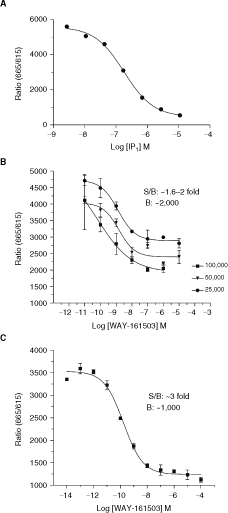
WAY-161503 induced HTRF-IP1 response in Chinese hamster ovary (CHO) cells expressing 5-HT2C receptors plated at varied densities. (
As the background was largely caused by nonspecific FRET, the supplier’s protocols were modified to minimize nonspecific FRET and optimize the signal produced by cellular IP1 in the assay. The concentration of tracer, IP1-d2, was reduced to 50% of the supplier’s protocol. Terbium-cryptate concentration was downscaled accordingly. In addition, cells were seeded at 100,000 per well to maximize agonist-stimulated cellular IP1 production. These modifications were made according to a hypothesis that these conditions should result in a low basal association of the donor and acceptor in the absence of cellular IP1, allowing the detection of much lower concentration of cellular IP1 in 5-HT2C-expressing CHO cells with a satisfactory signal-to-background ratio. The concentration–response profile of WAY-161503 in Figure 1C illustrated a clearly improved assay window, where FRET background noise was reduced to nearly 1,000 and S/B ratio reached ∼3. A similar improvement in signal-to-background ratio and reduced background was seen with the IP1 responses induced by a series of agonists (5-HT, 5-CT, mCPP, RO 60-0175, WAY-163909, and WAY-161504) tested in this assay using the modified assay protocol (Fig. 2). The results are summarized in Table 1. The potency values determined using the HTRF assay were in better agreement with the potencies of agonist-induced calcium release measured in the FLIPR Ca2+ flux assay (coefficient of correlation R 2 = 0.78), compared to those obtained by conventional radioactive IP1 assay (coefficient of correlation R 2 = 0.64; Table 1). Collectively, these findings revealed a rank order of potency (EC50) comparable to that obtained in FLIPR studies: WAY-161503 (0.4 nM) ≥ 5-HT (0.5 nM) > mCPP (5 nM) ≥ TFMPP (5.3 nM) > RO 60-0175 (7 nM) > WAY-163909 (8 nM) > 5-CT(89 nM). A similar rank order of potency was seen with conventional radioactive PI assay with the exception of 5-HT (Table 1). In addition, no appreciable 5-HT-stimulated IP1 production was observed in the parental CHOK1 cell line (data not shown).
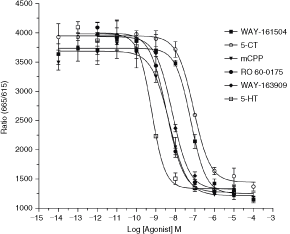
Concentration responses of six 5-HT2C receptor agonists on intracellular IP1 production measured using the HTRF-IP1 method. Data are expressed as HTRF ratios and represent the mean ± SEM from 3 independent experiments.
HTRF-IP1 data were assembled from illustrated Figures 2 and 3. FLIPR and radioactive IP1 results were historical data from our laboratory (plots not shown). All data represent the mean ± SEM from 3 independent experiments.
Abbreviation: NT, not tested.
To further validate the HTRF-IP1 assay, we characterized two pairs of enantiomers of 5-HT2C agonists WAY-161503/WAY-16150412 and WAY-163909/WAY-16390713 with significant differences in their 5-HT2C potency, for agonist-induced IP1 production in the HTRF-IP1 assay and compared the results with the radioactive IP1 measurements (Fig. 3). In HTRF-IP1 studies, both WAY-161503 and WAY-161504 appeared to be efficacious in stimulating IP1 accumulation (Fig. 3A and 3B), yet WAY-161503 was more potent (EC50 = 0.4 nM) of the two, with a potency ratio of 155 over its isomer, WAY-161504 (EC50 = 62 nM; Table 1). In the traditional IP1 assay, the potencies of these 2 compounds were 8 and 1,300 nM, respectively (Table 1), with a potency ratio of 162 (Table 2). Despite the different potencies of the enantiomeric pair in the HTRF-IP1 and the conventional IP1 assays, the potency ratio was similar in the 2 assays. In the case of the second pair of enantiomers, WAY-163909 showed greater potency compared to its enantiomer WAY-163907 in both assays, EC50 = 8 and 6,500 nM in the HTRF-IP1 assay and EC50 = 76 and 1,254 nM in the conventional IP1 assay, respectively. Although the calculation and comparison of potency ratio between the 2 assays could not be achieved due to the partial agonism of WAY-163907 in the radioactive assessment, there still existed a pharmacological rank order agreement between the 2 studies (Fig. 3 and Table 2).
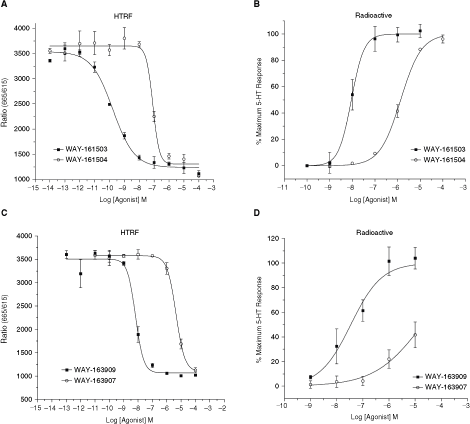
Effects of 2 enantiomeric pairs of agonists with significant differences in 5-HT2C potencies on intracellular IP1 production measured using HTRF and traditional radioactive competitive [3H] IP1 displacement methods. (
SB-206553, a 5-HT2C/2B antagonist, was also characterized in the HTRF assay. The estimated IC50 value of 17 nM was in accordance with those from both the FLIPR assay (IC50 = 13 nM) and conventional radioactive measurement (IC50 = 6 nM, Table 2).
Additionally, optimization of the IP1 HTRF assay with reduced cell numbers was conducted. Comparable results were found in HTRF assays when cell number was reduced to 50,000, or even 25,000 per well and the amount of tracer IP1, IP1-d2, and terbium conjugate were adjusted accordingly (Table 3). While similar assay quality was achieved with 50,000 cells, a decrease of assay window was observed at 25,000 seeding density. Still, the S/B remained above 2 when IP1-d2 and terbium conjugate were scaled down to 25% of the supplier’s protocol.
Abbreviation: NT, not tested.
DISCUSSION
The present report describes the development of an assay suitable for assessment of the effects of 5-HT2C receptor agonists via modulation of changes in IP1 levels. Our results indicate that the application of a modified protocol for use with cell-based IP-One HTRF technology (Cisbio) provides a high-throughput and cost-effective alternative to radioactive IP3 assays and the measurement of intracellular calcium concentration mobilized in FLIPR.9 The IP-One assay employs an IP1-selective antibody coupled to an appropriate terbium-cryptate fluorescent donor and a stable IP1 analog conjugated with the fluorescent acceptor molecule d2. Binding of the IP1 analog to the tagged antibody permits HTRF to proceed as a result of the close proximity of fluorescent donor and acceptor molecules. In competition binding mode, IP1, produced in cells after 5-HT2C receptor activation, is liberated by cell lysis and competes for binding to the IP1-antibody-terbium-cryptate, blocking access to the labeled IP1 analog and thus inhibiting HTRF intensity. This technology has emerged as a sensitive alternative method for the functional measurement of the activity of ligands for Gq-coupled GPCRs.
Radioactive IP3 assays have been used historically to assess the activity of ligands of Gq-coupled GPCRs.16 However, the radioactive IP3 assay has multiple disadvantages that limit its usefulness. The assay requires in vivo labeling of cells with 3H-inositol, which creates substantial costs in the form of radioisotope disposal. In addition, as each data point requires individual ion exchange chromatography, in screening applications, the throughput of the radioactive IP3 assay is not suitable for HTS or even medium throughput.17 While alternative assays for determination of IP3, such as scintillation proximity assay (SPA), have resulted in improvements in throughput, the methodology remains dependent upon the use of radioisotopes, thereby increasing costs and handling and rendering the technology less than advantageous for use in HTS.18 Alternatively, the function of Gq-coupled GPCRs can be determined by the measurement of intracellular calcium concentration. FLIPR-based intracellular calcium assays that employ Ca2+-binding fluorescence dyes are in common use for the screening of Gq-coupled receptors, including the 5-HT2C receptor.6 However, FLIPR assays indirectly assess the action of IP3 on intracellular Ca2+ stores and do not give a direct measure of IP3/IP1 produced in the signal transduction process.
Comparison of the effects of several 5-HT2C receptor agonists in IP1 HTRF, radioactive IP1, and FLIPR assays revealed a consistent rank order of potency amongst the technologies, indicating that the IP1 HTRF approach is suitable for discerning the pharmacological distinctions between compounds. The results obtained with the IP1 HTRF correlated more closely with the FLIPR data (R 2 = 0.78) than with values determined with the radioactive IP1 assay (R 2 = 0.64). We attribute the difference in potencies in the HTRF and radioactive assays to the differences in the experimental conditions assay principles and sensitivity of detection of each assay. The HTRF as well as the FLIPR assays rely on fluorescent readouts upon the PI turnover from the membrane as a direct measure of IP1 using immuno-FRET response in the HTRF assay or an indirect assessment of downstream Ca2+ release in the FLIPR assay. The radioactive assay relies on incorporation of [3H] myoinositol into the membrane lipid followed by a receptor activation-induced hydrolysis of PI analogs that are separated by anion exchange chromatography. The IP1 HTRF was further capable of detecting the differences in the potency of 2 separate pairs of enantiomeric compounds. These results were obtained using a modified assay protocol that was optimized with respect to the amount of IP1-antibody-terbium-cryptate fluorescent donor and IP1-d2 fluorescent acceptor. Under initial conditions, the assay exhibited high basal response and poor S/B ratio. By reducing these concentrations to half of those recommended by the manufacturer, lower basal responsiveness was achieved with an improved S/B ratio, while at the same time decreasing reagent costs. Further assay optimization was achieved by altering the cell density. While 100,000 cells/well provided enhanced sensitivity, permitting the validation of an assay with signal/background of about 3, reductions in cell number to 25,000 resulted in a satisfactory assay with S/B > 2 and allowed adaptability to 384-well format. In its modified form, the IP1 HTRF assay is accurate and sensitive, providing an effective alternative to the assessment of compounds that modulate Gq-coupled receptors, including the 5-HT2C receptor.
AUTHOR DISCLOSURE STATEMENT
J.Y.Z., D.M.K., S.P.N., J.D., M.H.P., and R.P. are employees of Discovery Neuroscience, Wyeth Research.