







Abstract
The primary objective was to find the pharmacological targets of doxorubicin and their mechanisms of action, with a dual focus on their therapeutic relevance in skin cancer treatment and their potential involvement in resistance to doxorubicin in cancer cells. The targets of skin cancer and potential targets of doxorubicin were searched from multiple databases. Common targets were chosen using the GeneVenn tool and then imported into the STRING database to construct a protein–protein interaction network. Topological factors were evaluated with Cytoscape to identify core targets. FunRich was used to identify the signaling pathways, molecular functions, cellular components, and biological processes involving the top targets. Molecular docking was conducted using the Molecular Operating Environment software. The top five target genes identified as therapeutic targets of doxorubicin for treatment of skin cancer are poly(ADP-ribose) polymerase, epidermal growth factor receptors, heat shock protein 90 alpha family class A member 1, Harvey rat sarcoma viral oncogene homolog, and mammalian target of rapamycin. In addition, doxorubicin-induced resistance mechanisms were also predicted. Further research on innovative methods of delivering doxorubicin to maximize its effectiveness in treating skin cancer and to prevent the development of resistance to the drug is necessary.
INTRODUCTION
Skin cancer represents a significant global health burden, with its incidence continuing to rise over recent decades. As per the World Health Organization, presently, an estimated annual incidence of 2–3 million nonmelanoma skin cancers and 132,000 cases of melanoma skin cancer has been observed worldwide. 1 Among its various forms, melanoma and nonmelanoma skin cancers are the most prevalent. Malignant melanoma, although less common compared to nonmelanoma skin cancers, represents the primary cause of mortality associated with skin cancer and tends to be more frequently identified and accurately diagnosed than nonmelanoma skin cancers. 2 Despite advancements in therapeutic as well as diagnostic modalities, 3 the management of advanced or metastatic skin cancer and any type of cancer per se remains a challenge due to its mechanistic complexities. 4
Doxorubicin, a potent anthracycline chemotherapeutic agent, 5 has demonstrated efficacy in a broad spectrum of malignancies. It is one of the most widely prescribed anticancer drugs for chemotherapy, mainly for the treatment of lung, breast, and other solid tumors.6,7 Despite its high efficacy, doxorubicin is associated with several side effects such as myelosuppression, alopecia, mucositis, as well as cardiotoxicity in many cases. 8 Therefore, researchers are now finding alternative methods other than intravenous administration of doxorubicin. Several drug delivery techniques have been formulated so as to reduce the interaction of doxorubicin with normal tissue and have shown promising results.9–11 Given the successful efficacy and usage of doxorubicin, its clinical utility in skin cancer has been limited due to concerns regarding cardiotoxicity and acquired drug resistance.12–14 Doxorubicin resistance reduces its therapeutic efficacy, particularly in treating metastatic skin cancers. 15 Doxorubicin resistance in cancer cells reduces its cytotoxic effectiveness and induces adverse effects such as cardiotoxicity due to increased doses required for therapeutic impact. 13 In skin cancer, resistance mechanisms result in limited treatment success and higher toxicity risks, emphasizing the need for targeted strategies. The known mechanisms of resistance include drug-induced autophagy16,17 and the activation of survival pathways such as AKT. 18 To circumvent the resistance, researchers have recently developed liposome-encapsulated doxorubicin and celecoxib at a 1:10 ratio. They reported that the synergistic action results in a significant (>90%) decrease in A431 (epidermoid carcinoma cell lines) cell viability. 19 Another study reported that dermal delivery of Doxorubicin by Dox-loaded solid lipid nanoparticles on murine melanoma (B16F10) cells and melanoma-induced Balb/C mice showed significantly (p < 0.05) better results from Doxorubicin solution. 20 Similarly, several recent studies have shown the importance of novel drug delivery systems of doxorubicin to evade resistance, and they have been useful for application in skin cancer.21–27 However, if we deduce the molecular mechanisms and targets involved in the development of resistance against Dox, novel and more targeted approaches can be taken for skin cancer therapeutics. Bioinformatics tools can give us insights into the molecular mechanisms by which drugs can be used for therapeutic applications as well as their resistance mechanisms. In this context, computational approaches such as network pharmacology can give insights into the complex interactions underlying drug action.28,29
In silico network pharmacology integrates computational methodologies with pharmacological principles to find the multiple interactions between drugs, targets, and the biological pathways, affecting the physiology of the disease. 30 By analyzing drug–target interactions, signaling pathways, and protein–protein interaction (PPI) networks, this approach enables the identification of potential therapeutic targets and prediction of drug efficacy, thereby facilitating rational drug design and repurposing. Network pharmacology starts with exploring the existing databases (available online) to get a set of predictable drug targets. 31 Parallelly, disease targets are collected using online databases such as OMIM and DisGeNET. 32 Consequently, the common targets between the drug targets and disease targets are noted, and their PPI network is made so as to study the correlation between the common targets. One of the most popular web-based tools for molecular network visualization is Cytoscape. 33 One can integrate gene expression data and highlight the specific edges of the molecular network. This makes it easy for researchers to analyze large sets of data collected for a specific disease. Cytoscape also provides different topological parameters such as number of nodes, number of edges, and degree of freedom. This allows the researchers to select molecular targets with a high predictability to bind to disease targets. Finally, molecular docking is performed to arrive at the candidate showing minimum energy at a specific conformation with the disease target. 34 Since the past 2 decades, many software have worked on several algorithms that simulate the binding of a ligand to a disease target and calculate the ΔG, that is, the affinity scoring function.
In this study, we employed an in silico network pharmacology approach to investigate the potential therapeutic targets of doxorubicin in skin cancer. By analyzing drug–target interactions and network-based pathway enrichment, we aimed to find the molecular mechanisms behind the action of doxorubicin in skin cancer and identify potential biomarkers associated with drug response and resistance.
MATERIALS AND METHODS
Drug Target and Disease Target Prediction
Doxorubin was searched on PubChem, and its Canonical SMILES[CC1C(C(CC(O1)OC2CC(CC3=C2C(=C4C(=C3O)C(=O)C5=C(C4=O)C(=CC=C5)OC)O)(C(=O)CO)O)N)O] was copied and pasted in the SwissTargetPrediction online tool. Similarly, DrugBank, Therapeutic Target Database, Comparative Toxicogenomics Database, and Binding Database were searched for drug molecular targets. 35 The molecular targets of doxorubicin obtained from all the abovementioned databases were compiled in an Excel spreadsheet, and duplicates were removed. Side by side, the targets associated with skin cancer were searched from online gene discovery tools such as OMIM and DisGeNET. 36 Furthermore, GeneVenn online tool was used to find the common targets and formulate a Venn diagram, constituting the overlapping genes. 37
PPI Network and Compound-Target Network
STRING database was used to construct a PPI network to deduce the functional associations of the overlapping genes. 38 It is a well-established tool that provides data on functional associations among proteins, derived from multiple sources, including experimental evidence and predictive algorithms. The list of genes was entered in the tool, and a summary of the links between the genes was presented graphically. A confidence score threshold of 0.7 (high confidence) was selected to filter interactions. The molecular network obtained from the STRING tool was imported into Cytoscape (v3.2.1) to construct the compound-target network by defining the attributes to each target. 39 Cytoscape is an open-source tool for the visualization of molecular interaction networks. It can integrate large datasets, customize network attributes, and provide topological parameters such as degree centrality, betweenness, clustering coefficients, number of nodes, edges, and degree of freedom. It is a widely used tool for identifying hub genes and key interactions within complex protein–protein interaction networks. Finally, the number of nodes, number of edges, and degree of freedom were obtained. Nodes with a degree of freedom higher than the average degree across the network were selected as core targets.
Functional Enrichment
The core target candidates, selected from the degree of freedom analysis, were copied and pasted into the FunRich software to make a new dataset. The dataset was then analyzed to find out the functional aspects of the core targets, that is, biological pathways, molecular functions, cellular components, and biological processes. Unlike other tools, FunRich is a stand-alone platform that enables detailed annotation and graphical representation of attributes such as biological pathways and biological processes. FunRich can analyze custom datasets without relying on built-in databases, which makes it a reliable tool for studying specific gene sets. In addition, FunRich also provides customizable graphical visualizations for presenting complex data in a simple format for biological interpretation. All the functional aspects were displayed graphically. 40 In addition, we also conducted a functional enrichment analysis of the core target genes in melanoma using the Gene Ontology (GO) term enrichment online tool. GO term uses the PANTHER Classification System, which categorizes genes based on their functions and associated biological processes. Consequently, for pathway analysis, we utilized the Kyoto Encyclopedia of Genes and Genomes (KEGG) database to identify significantly enriched pathways involving the target genes. Statistical significance for both GO terms and KEGG pathways was set with threshold at p < 0.05.
Molecular Docking
Molecular docking was utilized to mimic the interactions between doxorubicin and selected candidates, potentially occurring within the skin tumor environment, with the aim of identifying target candidates that are highly probable to bind with doxorubicin, leading to therapeutic benefits. Molecular docking was done between the top 13 target candidates, as obtained from Cytoscape, and doxorubicin by employing Molecular Operating Environment (MOE) software. 41 MOE is a freely available Scientific Vector Language (SVL)-based drug discovery tool that has a user-friendly interface. It offers quick and precise energy minimization and active site identification that ensures accurate modeling of molecular interactions. The Site Finder algorithm in MOE identifies and ranks potential binding sites within a protein in just one click. The software also provides detailed 3D visualization tools to examine ligand–target interactions, such as hydrogen bonding, hydrophobic contacts, and steric fit for the presentation of docking results.
First, the structures of the selected candidates were collected from Protein Data Bank (PDB) at www.rscb.org. The structures were selected as per some set criteria such as structures should contain a previously reported ligand, structures should belong to Homo sapiens, and structures should have high resolution (<2 Å). In addition, the docking procedure underwent validation by docking with internal ligands extracted from the obtained PDB IDs of the target candidates. 42 Molecular docking was performed on the 13 chosen targets with their respective standard ligands (as obtained from PDB structures), followed by doxorubicin. Preparation of the target proteins for docking involved removing ligands, minimizing energy, eliminating water molecules or redundant chains, and adding hydrogen atoms. Site Finder algorithm was used to find the active sites. 43 Docking was subsequently conducted to assess the interactions between doxorubicin and the target candidates. Five poses were obtained for every target, and each of their S scores was noted. Based on the S score, the best five target candidates were noted for coexpression analysis using the STRING database.
RESULTS
Target Retrieval
A total of 1,587 genes were obtained as skin cancer targets from the OMIM and DisGeNET databases (Supplementary Data S1). The drug (doxorubicin) targets obtained from multiple databases were collected, and duplicates were removed in an Excel file (Supplementary Data S2). Both these lists (disease targets and drug targets) were copied and pasted onto the online GeneVenn tool, and 24 gene target candidates were identified as common targets (Fig. 1). These 24 genes were chosen for subsequent analysis as potential targets implicated in skin cancer while undergoing treatment with doxorubicin.
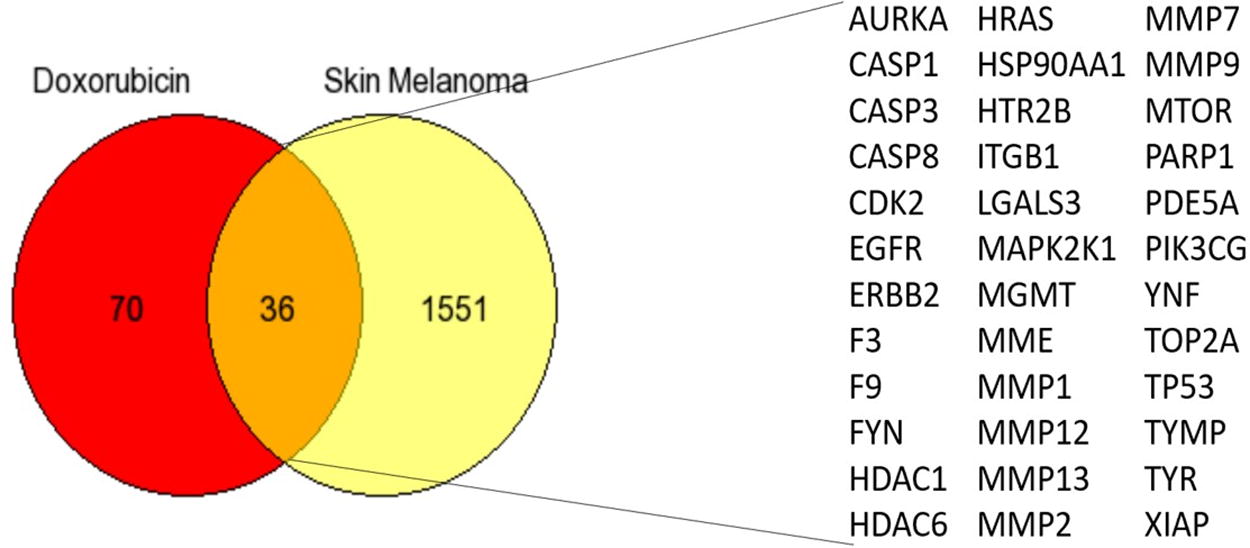
Venn diagram of doxorubicin and skin cancer targets revealing common target candidates for application of doxorubicin in the treatment of skin cancer using GeneVenn online platform.
PPI Network and Compound-Target Network
The online STRING tool was employed to construct a PPI network of the selected 24 common target candidates (Fig. 2). The PPI network provided a comprehensive perspective on the connections between the selected targets and proteins engaged in the same biological pathways. Attributes of targets and drugs were fixed, and a compound-target network was constructed using the Cytoscape software (Fig. 3). Furthermore, topological analysis of the obtained PPT network was done by using Cytoscape. In the interactome, nodes (depicted as circles) correspond to genes, while edges (connecting lines) indicate documented interactions. The network of target proteins had 35 nodes and 252 edges. Table 1 shows the 24 genes obtained with their degree of freedom. The highest value of 32 was obtained for TP53, and the average value of all the selected core targets was 14.4. All the targets exhibiting a degree of freedom higher than the average value were selected for further functional enrichment. Thus, the selected target candidates after the topological analysis were Tumor Protein 53 (TP53), epidermal growth factor receptor (EGFR), tumor necrosis factor (TNF), Caspase 3 (CASP3), Erb-B2 Receptor Tyrosine Kinase 2 (ERBB2), Matrix Metalloproteinase-9 (MMP9), Heat Shock Protein 90 Alpha Family Class A Member 1 (HSP90AA1), Poly(ADP-ribose) polymerase 1 (PARP1), Harvey Rat Sarcoma Viral Oncogene Homolog (HRAS), mammalian target of rapamycin (MTOR), Matrix Metalloproteinase-2 (MMP2), cyclin-dependent kinase 2 (CDK2), and Caspase 8 (CASP8).
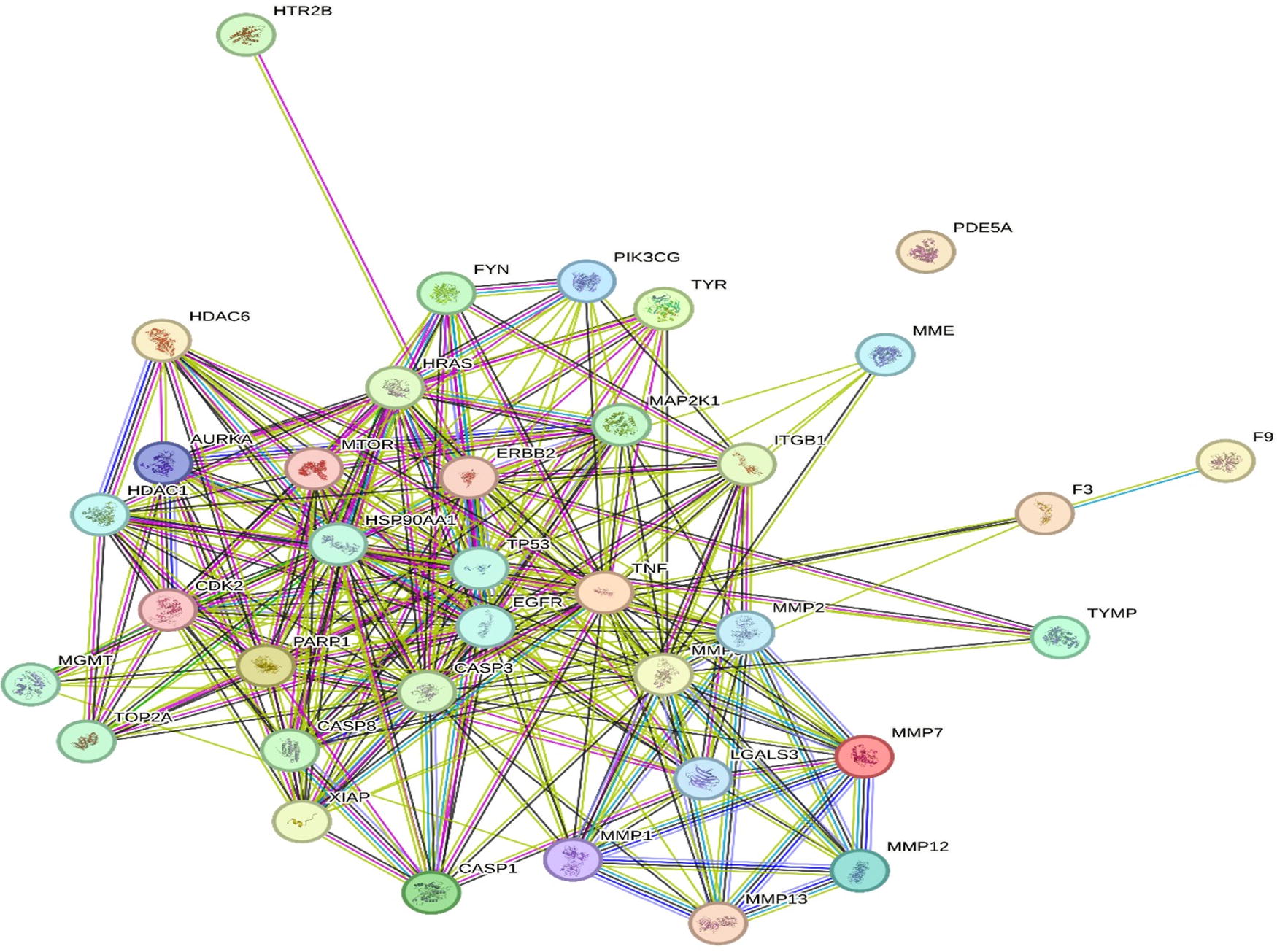
Protein–protein interaction network between the common target candidates for application of doxorubicin in the treatment of skin cancer, using the STRING online tool.
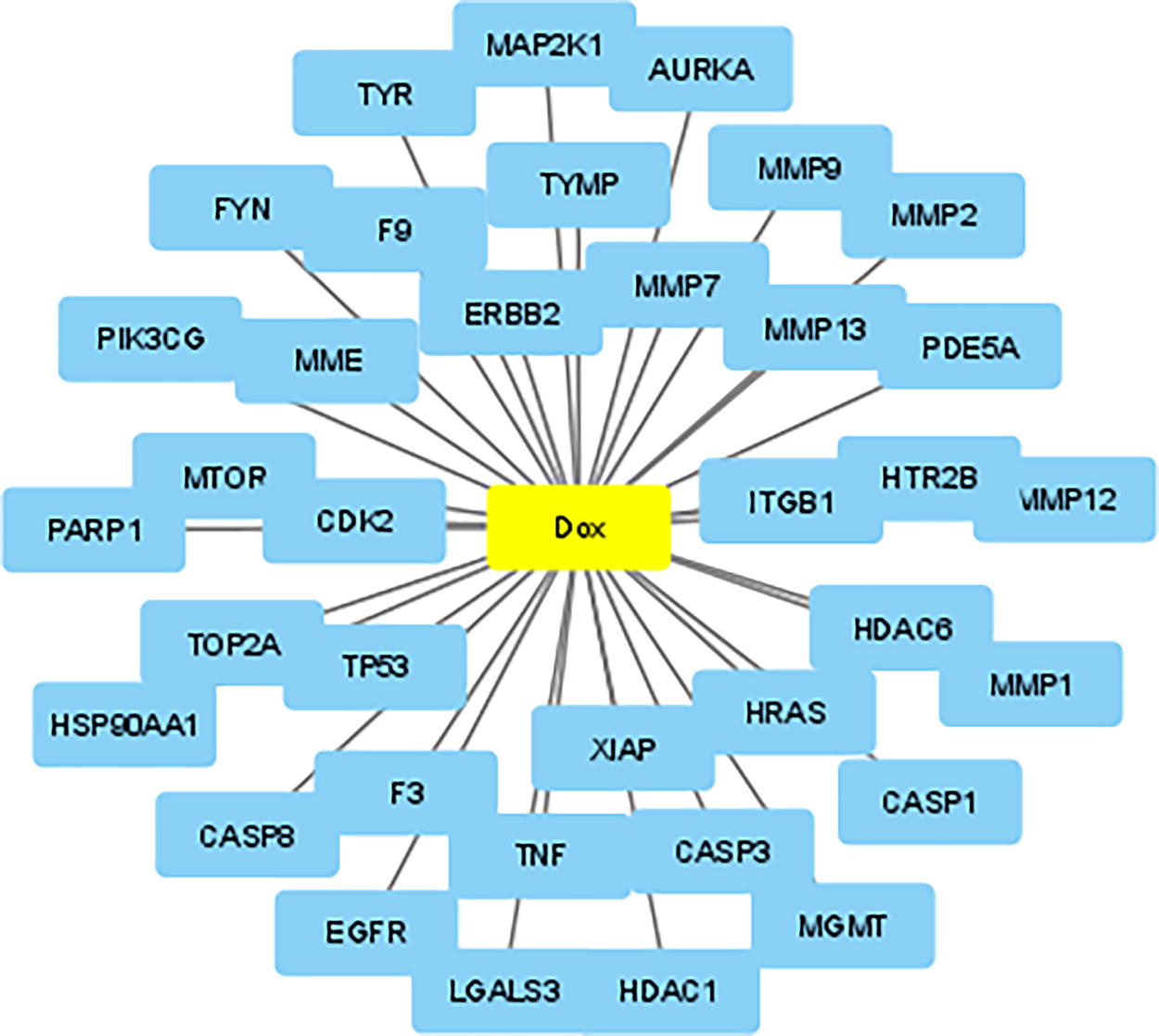
The compound-target network of doxorubicin with its targets for application in skin cancer. The network was constructed using Cytoscape software.
Topological Attributes of Potential Targets of Doxorubicin for Skin Cancer
Functional Enrichment
The biological characteristics and functional aspects of the selected candidates were analyzed using the FunRich software. The selected genes were entered into the software, and the top 10 of each of the biological pathways, molecular functions, cellular components, and biological processes were analyzed graphically (Fig. 4). It was found that the selected genes were majorly involved in the following biological pathways, PDGFR-beta signaling pathway, Arf6 downstream pathway, Class I PI3K signaling events mediated by AKT, internalization of ERBB1, ARF6 signaling events, Class I PI3K signaling events, S1P1 pathway, integrin-linked kinase signaling, LPA receptor-mediated events, and TRAIL signaling pathway (Fig. 4a). This involvement suggests potential therapeutic targets and pathways for further investigation, particularly in the context of doxorubicin-based therapies. It was also found that the selected genes are involved in apoptosis, protein metabolism, cell communication, signal transduction, and regulation of nucleobase, nucleoside, nucleotide, as well as nucleic acid metabolism (Fig. 4b). All of these biological processes are related to cancer prognosis. Cellular component enrichment showed that the genes were mostly a part of the extracellular space, cytosol, mitochondria, basolateral plasma membrane, nucleolus, and the plasma membrane (Fig. 4c). Finally, the molecular functional enrichment reported that the majority of the target candidates were involved in kinase activity (15.4%), cysteine-type peptidase activity (15.4%), transmembrane receptor protein tyrosine kinase activity (15.4%), and metallopeptidase activity (15.4%) (Fig. 4d). The GO enrichment analysis showed that the target genes were involved in apoptotic process, signal transduction, cell proliferation, and response to DNA damage stimulus. Molecular function analysis indicated significant enrichment in protein kinase activity, cysteine-type endopeptidase activity involved in apoptotic process, and transcription factor binding. Cellular component analysis showed localization primarily in the nucleus, plasma membrane, and cytosol.
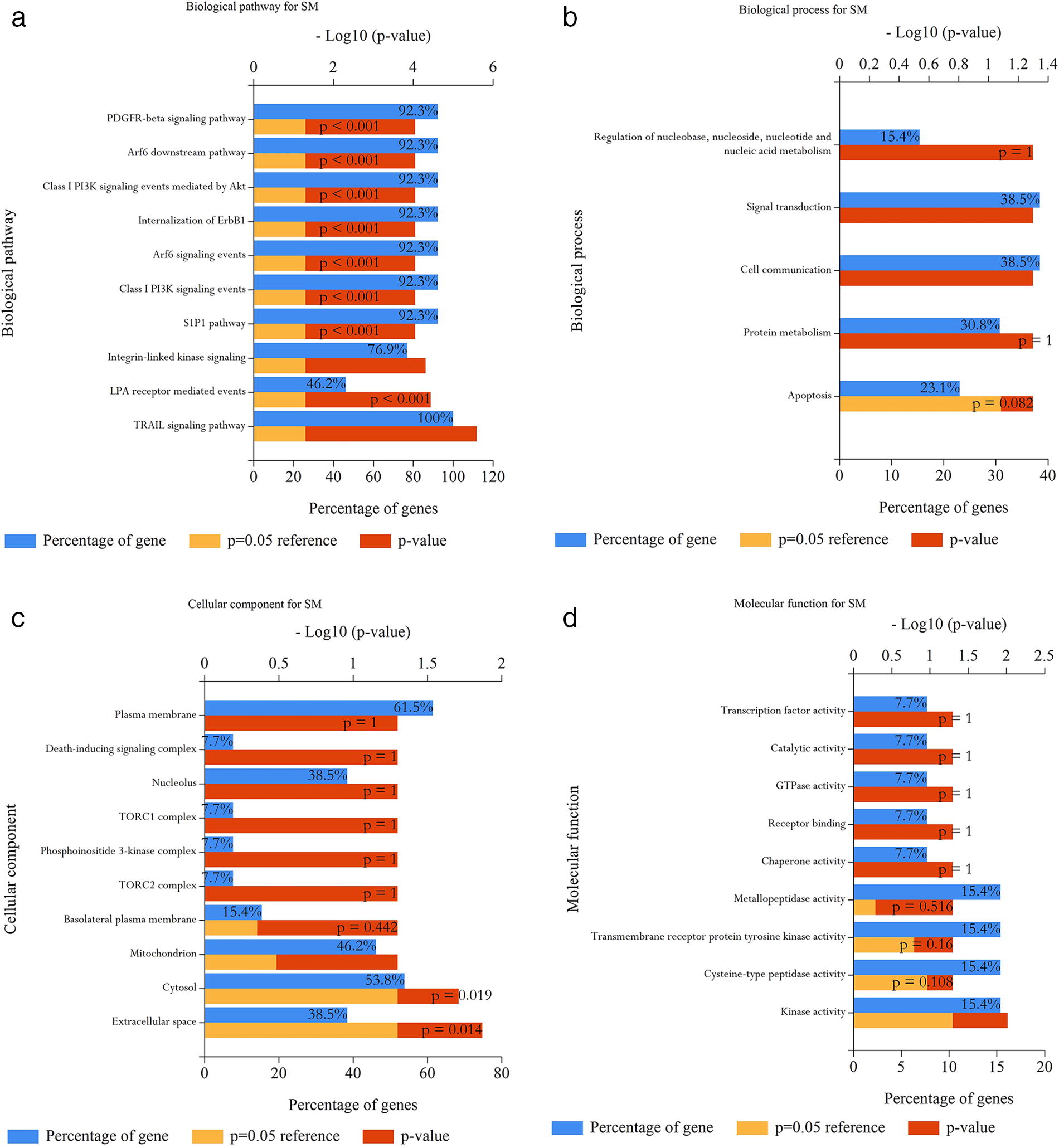
Enrichment analysis of the targets of doxorubicin for application in skin cancer was performed using FunRich version 3.1.4.
KEGG pathway analysis identified several significantly enriched pathways, including p53 signaling pathway (TP53, CDK2, CASP3), PI3K–AKT signaling pathway (EGFR, ERBB2, and MTOR), MAPK signaling pathway (HRAS, EGFR), TNF signaling pathway (TNF, CASP8), and apoptosis (CASP3, CASP8, TP53). Therefore, the FunRich software analysis showed that the selected gene candidates are involved in key skin cancer-related pathways and have significant roles in apoptosis, cellular communication, and various molecular functions such as kinase activity and metallopeptidase activity.
Molecular Docking
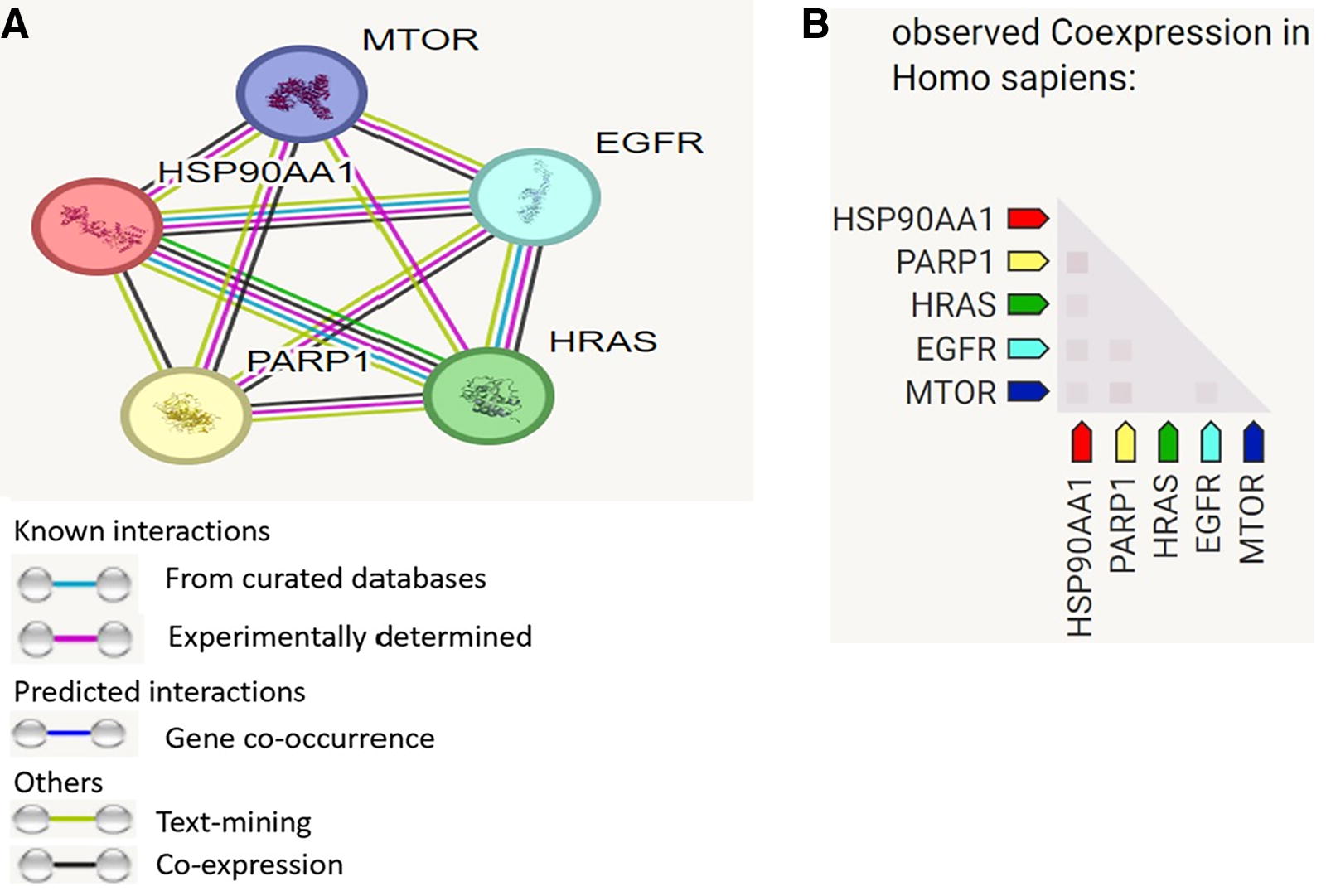
The top 13 target candidates obtained from topological analysis were employed to carry out the molecular docking simulation with doxorubicin. In order to start with the molecular docking process, the appropriate structures of the selected proteins that met the inclusion standards were selected from the PDB database. The selected PDB IDs of the 13 candidates were as follows: 1A26 (PARP1), 1AQQ (CDK2), 1CLU (HRAS), 1F9E (CASP8), 1M17 (EGFR), 1NME (CASP3), 2A91 (ERBB2), 2AZ5 (TNF), 2OW1 (MMP9), 2VUK (TP53), 3JBZ (MTOR), 5H22 (HSP90AA1), and 7XGJ (MMP2). Each candidate structure was docked against doxorubicin and a standard extracted from the PDB ID structure. Docking results showed five different poses for every protein candidate (Supplementary Data S3) and their respective S scores. The S scores were marked on a comparative basis to analyze docking results. The S scores obtained by docking the protein with doxorubicin and their respective standard ligands were noted and compared graphically (Fig. 5). Finally, the top five target candidates were poly(ADP-ribose) polymerase (PARP), EGFR, heat shock protein 90 alpha family class A member 1 (HSP90AA1), Harvey rat sarcoma viral oncogene homolog (HRAS), and MTOR. The molecular interactions between the top five targets and doxorubicin in 2D are shown in Figure 6. Coexpression analysis of the top five targets using STRING software revealed that there existed experimentally determined interactions between the top targets (Fig. 7a and b).
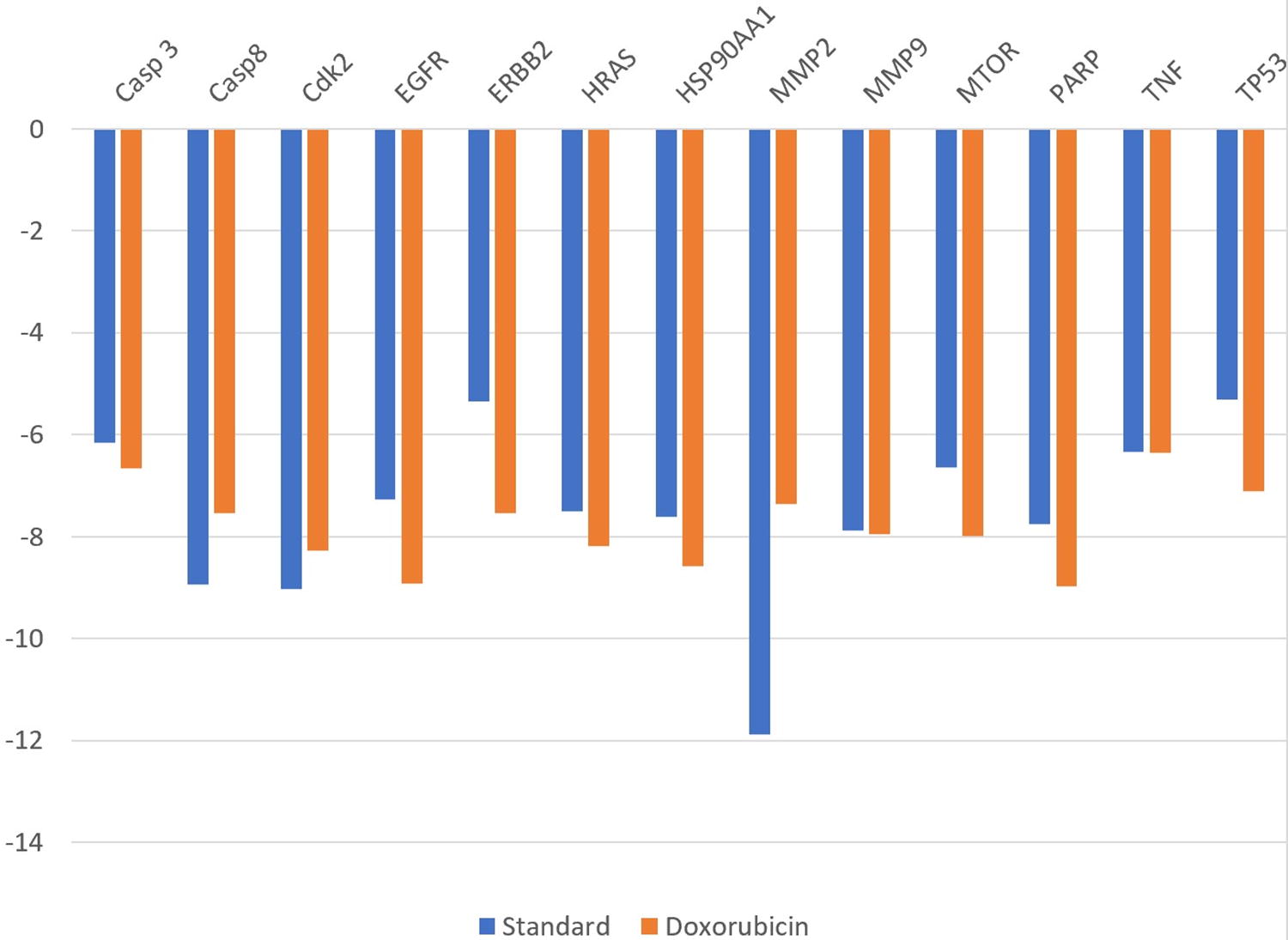
Bar graph representing molecular docking analysis reveals top targets for doxorubicin (PARP, EGFR, HSP90AA1, HRAS, MTOR). Dock scores of standard ligands were used for comparison. EGFR, epidermal growth factor receptors; HRAS, Harvey rat sarcoma viral oncogene homolog; HSP90AA1, heat shock protein 90 alpha family class A member 1; MTOR, mammalian target of rapamycin; PARP, poly(ADP-ribose) polymerase.
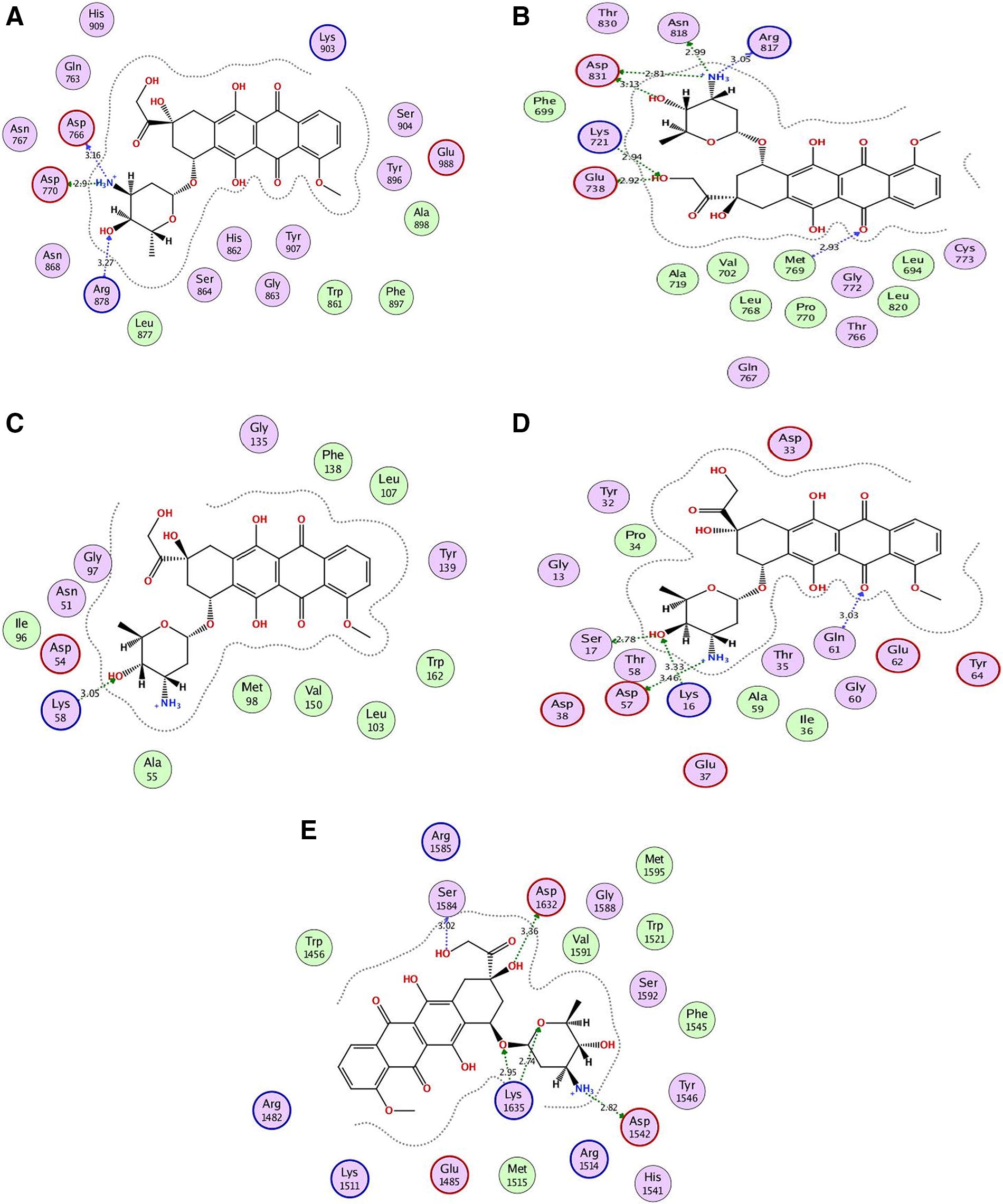
2D molecular docking images of doxorubicin with
DISCUSSION
In this study, we utilized an in silico network pharmacology approach combined with molecular docking to investigate the potential therapeutic targets of doxorubicin for the treatment of skin cancer. Our findings reveal that doxorubicin can be a potential therapeutic drug that can be used against skin cancer. By employing comprehensive analysis of drug–target interactions, network-based pathway enrichment, and molecular docking simulations, we could identify five core protein targets of doxorubicin in context of skin cancer, namely PARP, EGFR, HSP90AA1, HRAS, and MTOR.
Through topological analysis of the PPI network using Cytoscape, we identified key targets based on their degree of freedom, with TP53 exhibiting the highest value (30) among the selected core targets. Approximately half of all skin malignancies in healthy persons display p53 mutations. The frequency increases to 90% in skin malignancies of patients with xeroderma pigmentosum. 44 P53, acting as a transcription factor, controls the activity of several genes related to important physiological functions such as DNA repair, cell cycle, differentiation, and apoptosis, this regulation is facilitated by a DNA-binding domain that is crucial for its interaction with specific DNA sequences. 45 It is popularly known as the “guardian of the genome.” 46 The utilization of P53-activating drugs proves to be a promising treatment strategy, especially when used in combination with existing chemotherapies, significantly enhancing their anticancer efficacy. Specifically, in melanoma, promising therapeutic results could be obtained by combining p53-activating medications with inhibitors of BRAF and MEK. 47 Although TP53 showed the highest degree of freedom through topological analysis, molecular docking results showed a higher S score of −7.1053. Therefore, while TP53 presents itself as a promising target candidate for treating skin cancer, we were able to reach on 5 better protein targets that could play a role in enhancing the therapeutic effectiveness of doxorubicin in treating skin cancer.
The enrichment analysis of selected genes in skin cancer therapeutics related to doxorubicin revealed a significant involvement in specific biological pathways. The TRAIL signaling pathway is implicated in apoptosis induction.48,49 TRAIL refers to tumor necrosis factor-related apoptosis-inducing ligand, which is a type II transmembrane protein and also a part of the TNF superfamily. TRAIL triggers apoptosis by interacting with and stimulating signaling through trimeric death receptors, resembling the mechanism of action of other “death ligands” such as TNFα. 50 Therefore, a drug involved in the TRAIL signaling pathway opens itself to potential avenues for promoting cancer cell death in skin cancer therapeutics. PDGFR-beta signaling pathway plays a crucial role in regulating cell growth and survival, suggesting potential targets for inhibiting cancer cell proliferation for downregulation of the pathway.51,52 The Arf6 downstream pathway is associated with cytoskeletal rearrangements and cell migration, implicating its role in metastasis and tumor progression in skin cancer.53–55 Class I PI3K signaling events mediated by AKT are linked to cell survival and proliferation, highlighting their importance in cancer cell survival and resistance to therapy.56,57 Internalization of the ERBB1 pathway suggests potential strategies for targeted therapy against specific receptor tyrosine kinases involved in skin cancer progression. ARF6 signaling events and LPA receptor-mediated events are associated with cell migration, invasion, and metastasis,58–60 offering insights into mechanisms underlying tumor spread in skin cancer. Integrin-linked kinase signaling pathway indicates a potential role in regulating cell adhesion, migration, and invasion, which are critical processes in cancer metastasis.61,62 S1P1 pathway involvement suggests a potential role in tumor angiogenesis and lymphangiogenesis, highlighting its relevance in tumor growth and metastasis. 63
Our molecular docking simulation has shown that PARP is the most potent target of doxorubicin with the lowest S score of −8.9775 among all the selected 13 targets. PARP plays a critical role in DNA repair mechanisms, particularly in the repair of single-strand DNA breaks. 64 Targeting PARP (like PARP inhibitors) with doxorubicin can amplify cytotoxic effects by hindering DNA repair processes, leading to heightened accumulation of DNA damage and apoptotic cell death in cancerous cells. 65 Recent research has suggested that PARP inhibitors may also be utilized in a wide array of cancers lacking the Breast Cancer Susceptibility Gene (BRCA) mutation but exhibiting elevated mutations in DNA damage repair pathways, including melanoma. 66 However, it has also been reported that PARP inhibition leads to the activation of the AKT survival pathway. This activation of the AKT survival pathway might weaken the cytotoxic effects of PARP inhibition and lead to resistance to doxorubicin treatment, indicating that inhibiting the AKT pathway in combination with PARP inhibition could improve the effectiveness of doxorubicin in skin cancer therapy, 67 Thus, to counteract the activation of the AKT survival pathway linked to PARP inhibition, combination therapies with AKT inhibitors could be explored to improve treatment outcomes.
EGFR is also one of the promising candidates with an S score of −8.9086. It is a transmembrane receptor tyrosine kinase that regulates cell growth, proliferation, and survival. 68 Overexpression or dysregulation of EGFR is commonly observed in various cancers, including skin cancer.69,70 By targeting EGFR, doxorubicin can interfere with downstream signaling pathways involved in cell proliferation and survival, thereby inhibiting tumor growth and progression in skin cancer. In a recent study, a team of researchers administered cetuximab (anti-EGFR antibody) as a combination therapy with EGFR-targeted immunoliposome with 5-Fluorouracil (5-FU) and reported that this strategy reduced tumor progression by almost twofold. 71
Among the other three top targets, HSP90AA1 is a molecular chaperone protein (ATP-dependent) involved in the folding, stability, and function of proteins associated with cancer cell survival and proliferation such as EGFR, HER2, AKT, HIF-1α, and cyclin-dependent kinase. 72 It has also been reported that doxorubicin upregulates HSP90AA1 in osteosarcoma cells. Upregulated HSP90AA1 induces autophagy and inhibits apoptosis, thereby contributing to drug resistance. HSP90AA1 stimulates autophagy through the PI3K/AKT/mTOR pathway and inhibits apoptosis via JNK/P38 pathway. 73 Cotargeting HSP90AA1 and its associated pathways can reduce resistance and improve the therapeutic impact of doxorubicin.
HRAS is a member of the RAS family of small GTPases involved in regulating cell proliferation, differentiation, and survival. 74 Mutations or dysregulation of HRAS are frequently observed in various types of skin cancer. 75 By targeting HRAS, doxorubicin can interfere with downstream signaling cascades, such as the MAPK pathway, thereby inhibiting tumor growth and inducing apoptosis in skin cancer cells with HRAS mutations. Finally, MTOR is a serine/threonine kinase that regulates cell growth, proliferation, and survival in response to various stimuli, including growth factors and nutrient availability. 76 Dysregulation of MTOR signaling is commonly observed in skin cancer, where it promotes tumor growth and survival through the AKT overexpression. 77 By inhibiting MTOR, either directly or indirectly through downstream signaling pathways, doxorubicin can suppress cancer cell proliferation and induce apoptosis, offering a potential therapeutic strategy for treating skin cancer.
It should be noted that in silico studies are just the first step in translating findings into clinical relevance. Future studies should focus on validating the identified key targets (e.g., PARP1, EGFR, HSP90AA1, HRAS, MTOR) through quantitative PCR to quantify their messenger RNA expression levels and Western blot to assess corresponding protein expression and pathway activation in melanoma cell lines treated with doxorubicin. Therefore, the top core targets and signaling pathways reported in our study can be further confirmed by in vitro or in vivo studies.
LIMITATIONS
Although network pharmacology shows promise, it still has limitations and is incomplete without empirical data. Various database flaws have been identified, including algorithmic discrepancies. 78 Hence, it is crucial to carefully choose suitable algorithms for conducting in silico analysis. Another significant issue is that the online databases are still incomplete. 79 Therefore, it is crucial to combine empirical data with theoretical studies to overcome these limitations. However, this method provides a significant motivation for developing novel medications and repurposing currently approved pharmaceuticals for therapeutic purposes.42,80 Researchers can enhance the accuracy of predictions in drug development by integrating experimental data with computational modeling. This comprehensive method speeds up the discovery of possible drug candidates and improves our comprehension of intricate biological processes.
CONCLUSION
Our study identified the possible applicability of doxorubicin for the treatment of skin cancer. By employing tools of network pharmacology and molecular docking, we were able to report top five (PARP, EGFR, HSP90AA1, HRAS, and MTOR) targets of doxorubicin of therapeutic efficacy against skin cancer. However, it should be noted that doxorubicin is associated with several side effects, which can be effectively reduced by employing appropriate drug delivery strategies. Moreover, it is important for researchers to devise strategies to target the reported proteins as part of combination therapies to overcome drug resistance and improve treatment outcomes in skin cancer.
One of the key findings of our study is the possible mechanisms of action of doxorubicin resistance in cancer cells. Our molecular docking simulation shows that doxorubicin can increase drug resistance by the induction of autophagy and inhibiting apoptosis. In addition, PARP inhibition activates the AKT survival pathway, potentially reducing PARP inhibitor cytotoxicity and causing resistance to doxorubicin treatment. These findings highlight the importance of understanding the molecular interactions involved in drug resistance mechanisms, providing valuable insights for the development of strategies to overcome resistance and improve the efficacy of doxorubicin-based therapies in cancer treatment. Overall, the findings from our study offer valuable insights into the pharmacological basis of doxorubicin in skin cancer treatment and provide a foundation for further clinical translation, particularly in the development of different drug delivery systems.
Footnotes
AUTHORS’ CONTRIBUTIONS
Y.Y.: Writing—original draft, investigation, and data curation. S.K.: Methodology and writing—review and editing. J.A.: Project administration and validation. M.A.K.: Conceptualization, validation, and supervision.
DISCLOSURE STATEMENT
No competing financial interests exist.
FUNDING INFORMATION
No funding was received for this article.
SUPPLEMENTARY MATERIAL
Supplementary Data S1
Supplementary Data S2
Supplementary Data S3