







Abstract
G
Claudin-2 is increased in the HIV-infected human intestine 3,4 and in the SIV macaque model. Previously, there have been limited small animal models for HIV. Although combined antiretroviral therapy has dramatically reduced HIV viral load, immune activation persists and is believed to drive a number of comorbid conditions associated with HIV. Increased gut permeability and microbial translocation are key processes driving persistent immune activation.
The emergence of humanized mice reconstituted with human leukocytes and infected with HIV provides a powerful tool to address HIV pathogenesis in vivo in small animals. We used the NOD SCID IL-2R−/− Hu-PBMC mice to study HIV infection in the gut. These mice are immunocompromised and do not express the common FCγ chain, which enables their immune reconstitution with human peripheral blood mononuclear cells (Hu-PBMCs). Because it is unclear whether the humanized mouse intestine recapitulates some of the pathological features described in HIV-infected human gut, we used NOD SCID IL-2R−/− Hu-PBMC mice to study intestinal Claudin-2 in the context of HIV infection. NOD SCID IL-2R−/− Hu-PBMC mice were infected with HIVBal and 2 weeks postinfection the intestinal epithelial tissue was harvested, fixed, and assessed by immunofluorescence (IF) staining.
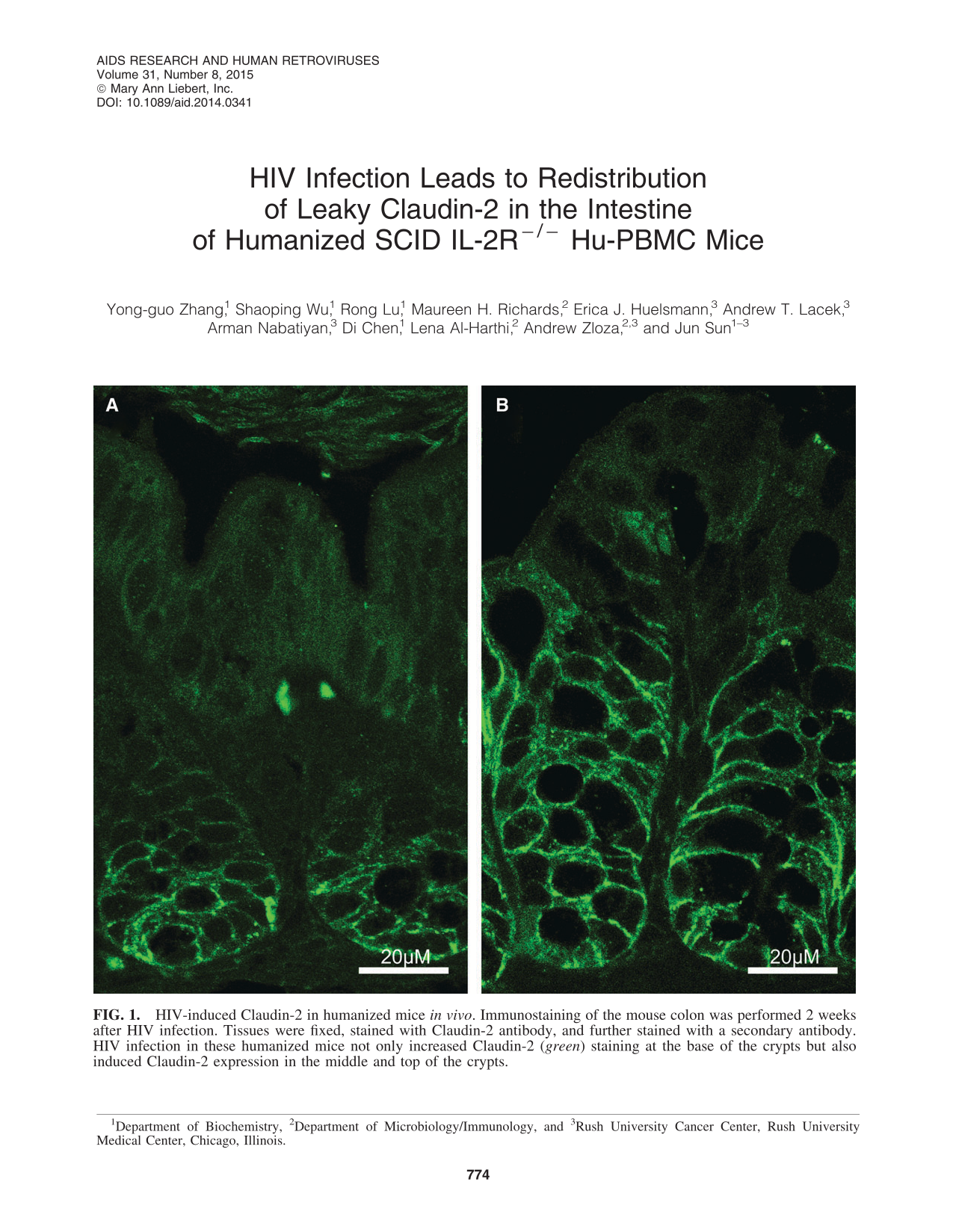
In the colon of uninfected mice, Claudin-2 was found at the epithelial base, and was restricted to the cell membrane (Fig. 1A). In contrast, in HIV-infected humanized mice, Claudin-2 expression was increased at the base of the crypts, and was detected in the middle and top of the crypts and along the crypt–villous axis (Fig. 1B). The distribution of Claudin-7 did not change in the mouse intestine following HIV infection (data not shown). Western blot data confirmed a significant increase of Claudlin-2 in the gut of HIV-infected humanized mice compared to uninfected controls (data not shown). Increased Claudin-2 is a hallmark indicator of disrupted and opened tight junctions. These data indicate that HIV infection alters the integrity of the intestinal epithelia. These findings model the ability of HIV infection to enhance intestinal permeability that is evident in HIV-positive patients and could elucidate previously unrecognized changes in intestinal homeostasis in the context of HIV infection.
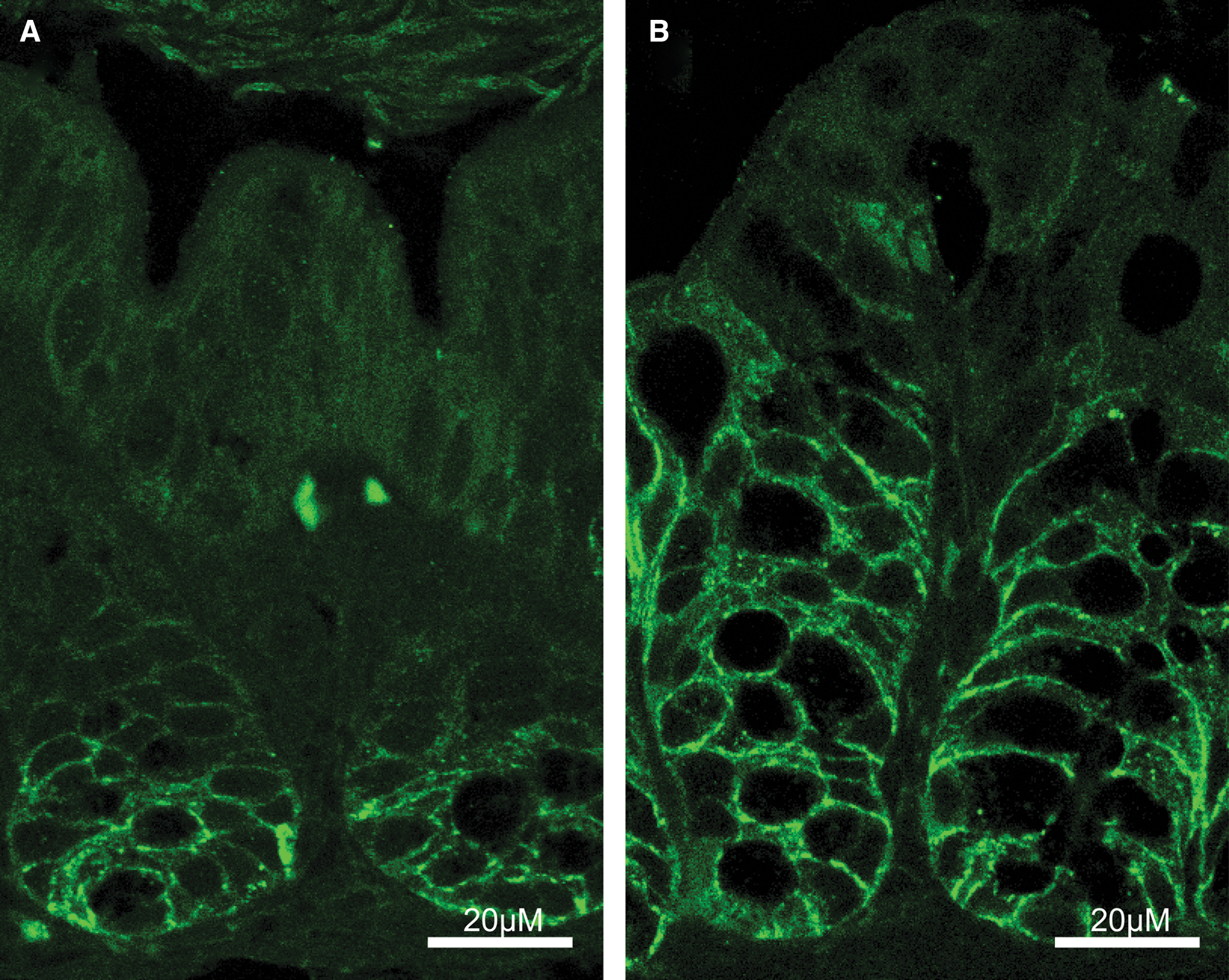
HIV-induced Claudin-2 in humanized mice in vivo. Immunostaining of the mouse colon was performed 2 weeks after HIV infection. Tissues were fixed, stained with Claudin-2 antibody, and further stained with a secondary antibody. HIV infection in these humanized mice not only increased Claudin-2 (green) staining at the base of the crypts but also induced Claudin-2 expression in the middle and top of the crypts.
Footnotes
Author Disclosure Statement
No competing financial interests exist.