







Abstract

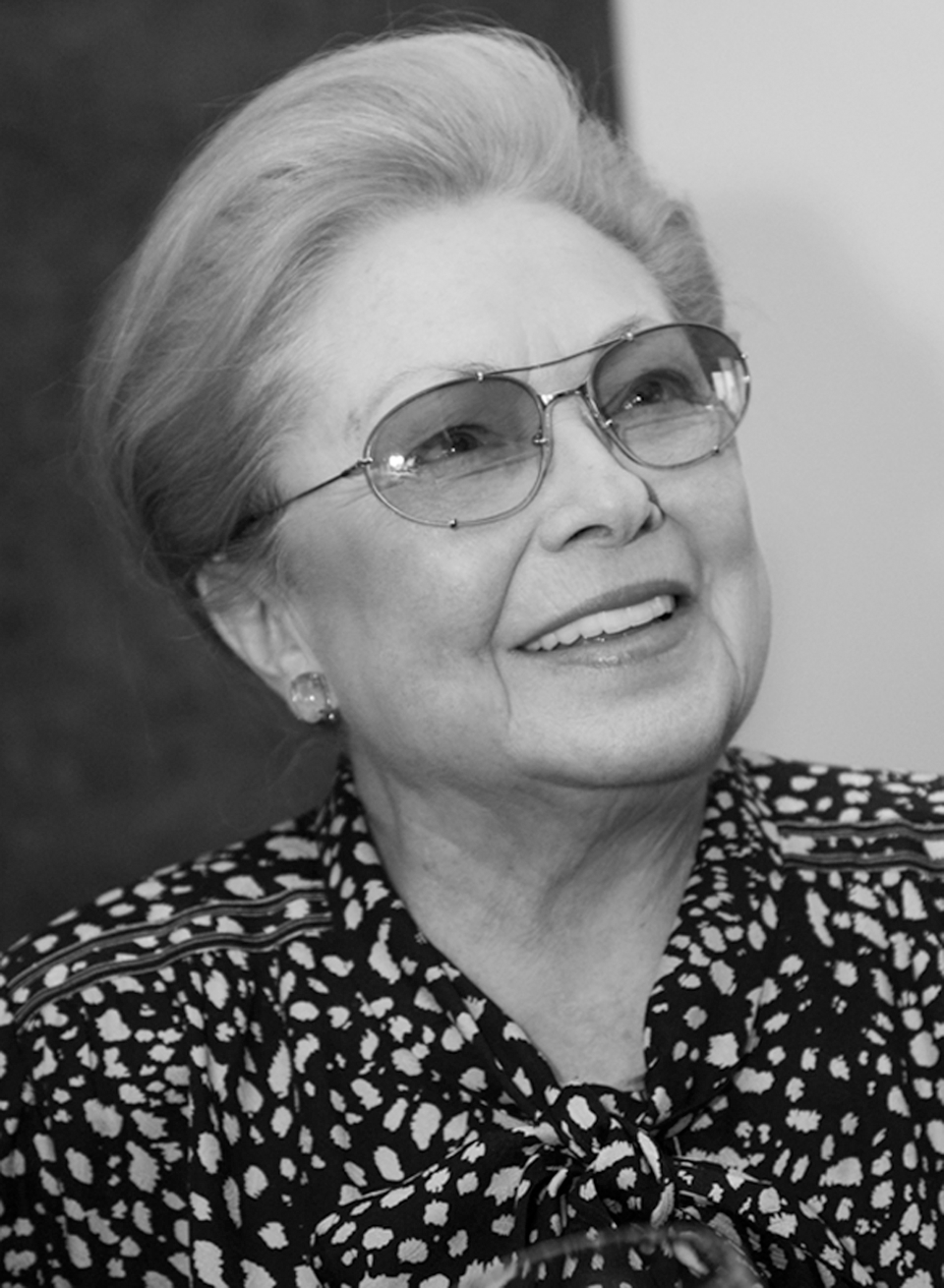
Photo reproduced with permission, courtesy of Tom Zuback
E
Much has been written and said about Dr. Krim since her passing. In pondering how to memorialize Dr. Krim, I asked myself what might have been left unsaid.
I had the privilege of spending a great deal of time with Dr. Krim over the years, particularly in the past 10 years since becoming amfAR's CEO. And after Dr. Krim retired to her beautiful home in Kings Point, Long Island, I made regular treks out to see her, sometimes for lunch, sometimes for dinner, and sometimes just for tea and cookies, but always for another chance just to bask in the warm embrace of her life's glow.
On some of those occasions I would take amfAR folks with me, or mutual friends would accompany me such as Peter Staley, Dr. Ken Mayer, and Randy Apgar and Allen Black from Philadelphia.
But the visits I think Dr. Krim looked forward to most were those when I would bring a scientist to share the latest news on HIV research. Once, I brought a young Harvard researcher named Tim Henrich who was doing some innovative work on HIV cure. We spent the hour-long drive to her home with him grilling me on what to expect in his meeting with Dr. Krim. It was not hard to tell that he was nervous about meeting her for the first time and wanted to make a good impression. I tried to put his mind at ease, but I will not lie: I took some small pleasure in impressing upon this young scientist the powerful intellect that was Dr. Krim's and the likelihood of her probing his research in some detail. I think he squirmed a bit at the prospect. But the one rule I told him he had to respect was that when you were invited to Dr. Krim's for dinner, under no circumstances would the conversation start until after the PBS NewsHour.
But whenever I made my way to her home in Kings Point, past the majestic linden tree that leaned ever so slightly over the driveway, I would walk the gravel forecourt to her front door where Dr. Krim was without fail waving and waiting to greet you. It was impossible not to be completely disarmed by this most charming, most loving, most beautiful human being.
Many of the things I have read about Dr. Krim since her passing have highlighted the contrasts that her life presented. Her radiant beauty and her steely resolve; her unyielding principles and her irrepressible sense of humor; her ability to mingle just as easily with the disenfranchised as with the rich and powerful. As Norman Lear once said of her: “She's sweet and tender and tough and sharp—the original iron butterfly.”
Yet it was not the contrasts of her life that struck me most, but the consistencies. For the cause of human rights was the thread that bound the fabric of Dr. Krim's life, a life defined by an unwavering commitment to the principle that every life was of equal value. She had neither the patience for, nor the interest in, moralizing or philosophizing on the human condition. Dr. Krim celebrated life in all its beautiful diversity, for she loved a colorful world.
Dr. Krim had so many gifts, and we can all be grateful that she chose to share those gifts with us. One in particular struck me as something she must have possessed from a very early age—and that was her ability to find just the right thing to say at just the right time.
She once told me the story of her time in the White House during the Johnson administration. It was in the days immediately after the Reverend Dr. Martin Luther King had been killed, and she and the president were standing alone on the Truman balcony. As they looked out over Washington, DC, Dr. Krim said they could see smoke billowing up into the skies as the people of the city rioted. The president was visibly shaken by the riots and at one point, without even turning to look at Dr. Krim, he said “Why Mathilde? Why, after all we've accomplished together, why would they do this now during my Presidency.” Dr. Krim told me that she turned to the president and said, “They riot, Mr. President, because for the first time in their lives, they can.”
Dr. Krim passed away on the anniversary of the birth of Martin Luther King, who famously said, “The arc of the moral universe is long, but it bends toward justice.” Dr. Krim spent her life dedicated to bending the curve of the moral universe toward justice. She brought all of her formidable gifts to bear in her unyielding efforts to serve the cause of human rights.
In pondering the lessons to be learned from the AIDS epidemic, Dr. Krim wrote, “First of all, AIDS is giving us a lesson in humility. For all mankind's arrogance and destructive powers, we are not yet the masters of the universe. AIDS has also taught us a lesson that we should have learned long ago, namely that there is a high price to be paid whenever prejudice prevails over human solidarity. And one more thing: because it makes us suffer and grieve for those we have lost, AIDS is teaching us to value life.”
“If we understand the lessons taught us by AIDS in these difficult times,” she concluded, “then we can not only rid the world of AIDS but make it, in many other respects as well, a much healthier, safer and more civilized place for future generations.”
That would be a fitting legacy for a most remarkable woman—a woman it has been, and will always be, my privilege to have known.