







Abstract
ARS was aimed at advancing the erstwhile niche field of redox biology to a more central position in research. Currently, ARS ranks first (impact factor: 8.456) in the field of redox biology. Of 8336 journals listed in Journal Citation Reports, ARS ranks 205th. The next journal in redox biology ranks 449th. ARS ranks 169th of 8336 in immediacy index. The next journal in redox biology ranks 923rd. Thus, ARS is the primary source of hot papers in redox sciences and healthcare. To grow footprint and overall impact, ARS has nearly doubled the annual publication volume from roughly 200 to 400 in one year. Because the manuscript volume represents the denominator of the impact factor calculation, such a sharp increase in volume would be predicted to a proportionally lower impact factor. Because of the robust current upward momentum, ARS will be affected less than that predicted by simple arithmetic and will maintain its top position even after such aggressive volume expansion. As another year passes, the additional manuscripts will get more time to be cited, and therefore the impact factor is expected to bounce back resulting in a much stronger journal with a substantially enhanced overall presence. ARS currently publishes 36 issues annually as two series:
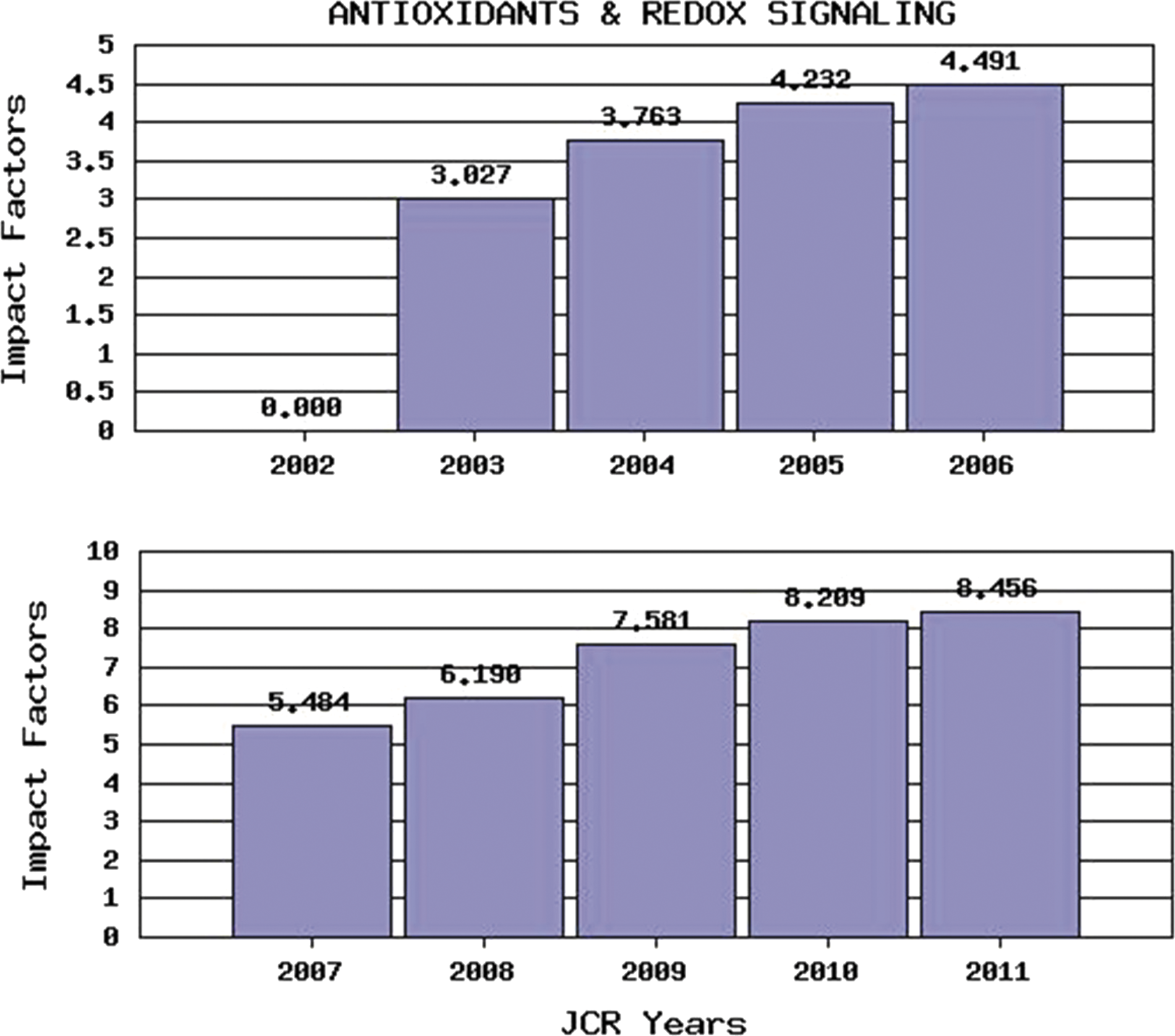
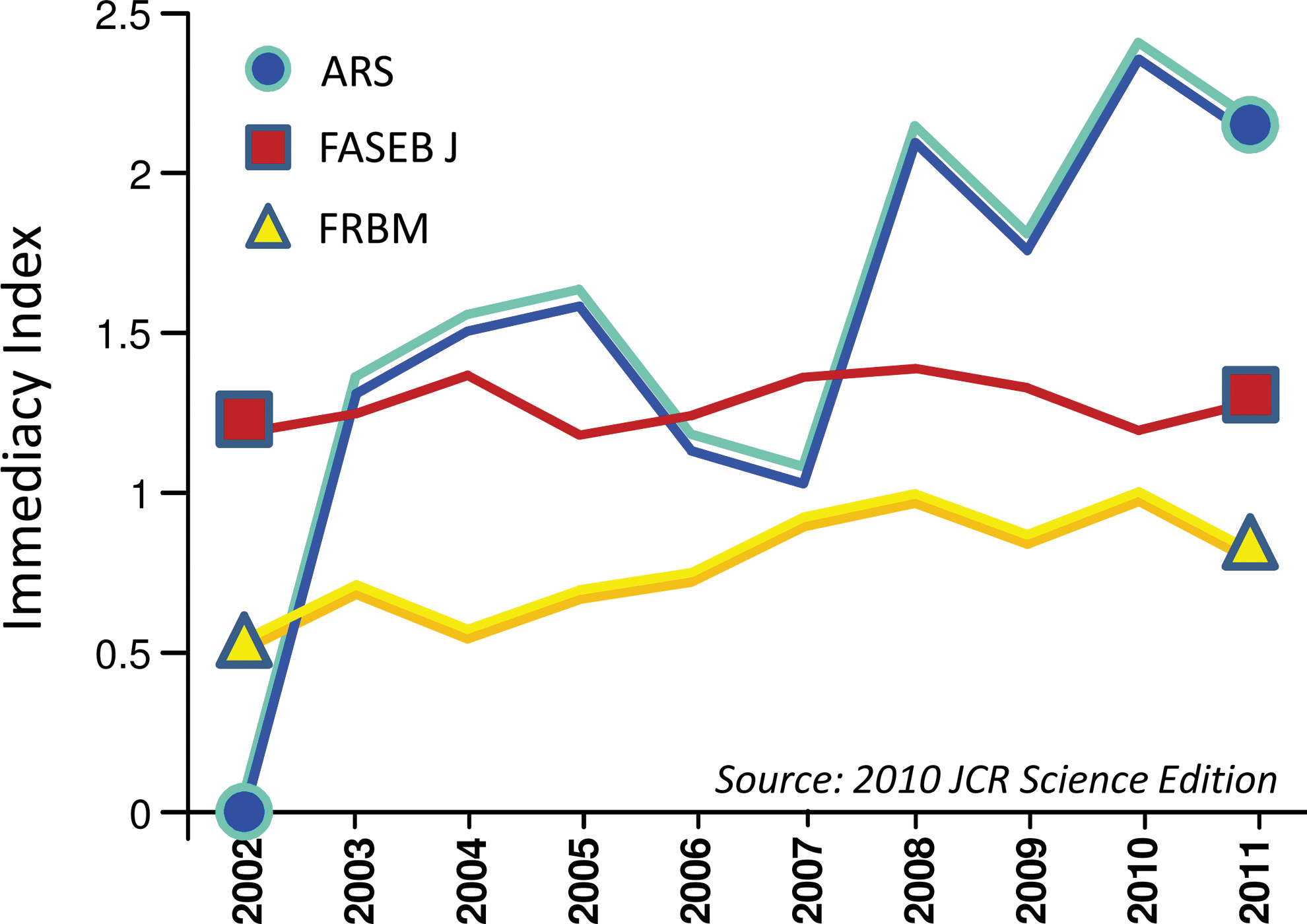
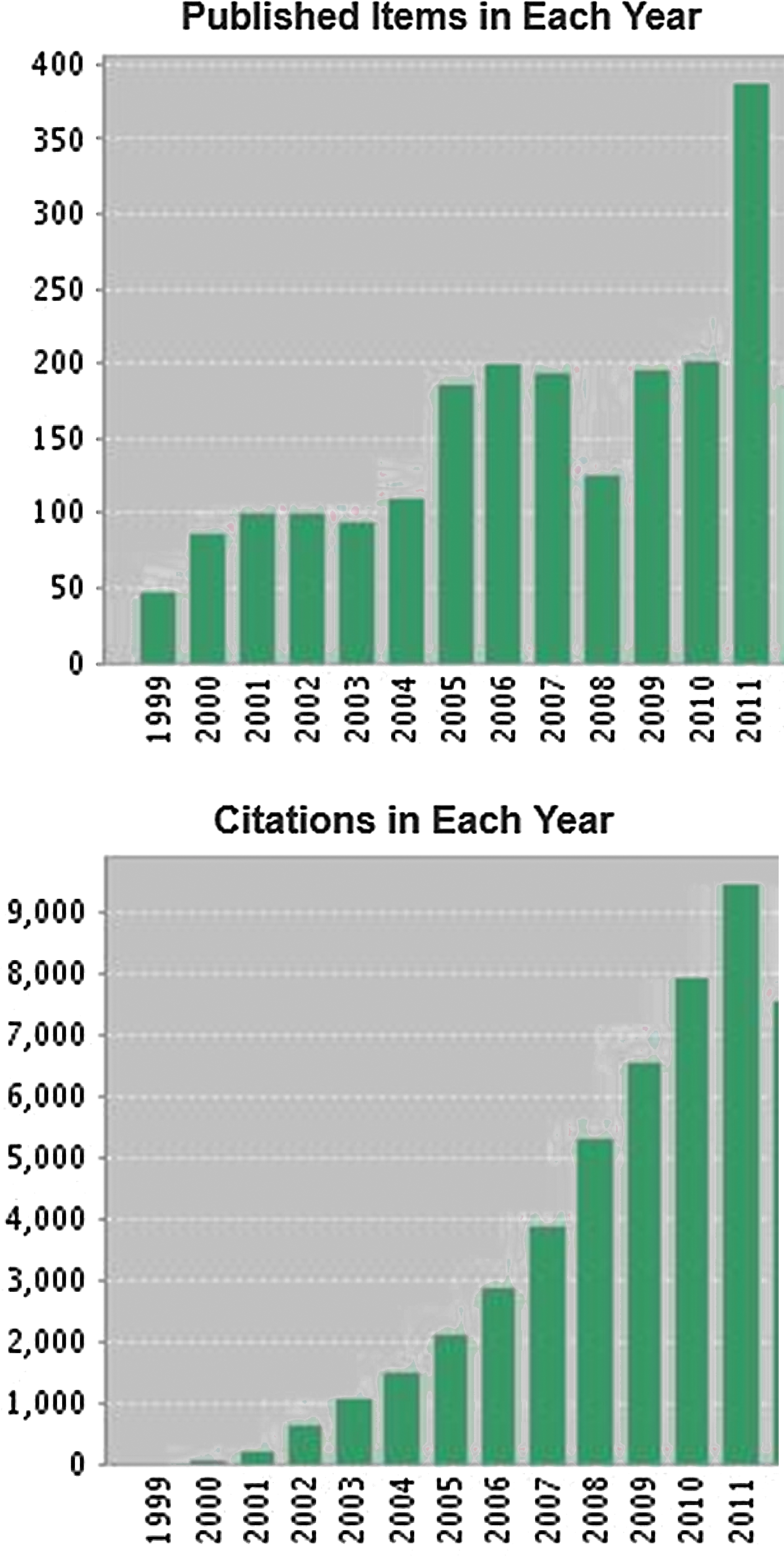
Growth and success comes with increased responsibility. We are responsible to grow the ARS footprint such that it may have a much broader impact on mainstream biomedical sciences. One strategy to substantially increase the footprint is to publish a larger volume of high-quality manuscripts every year, while not substantially compromising the impact factor. No other journal in redox biology has ever broken the barrier of seven in the impact factor. ARS did and is fully committed to stay much above seven long terms. Because manuscript volume represents the denominator of the impact factor calculation, any sharp increase in volume is arithmetically predicted to proportionally lower the impact factor. Because of the robust current upward momentum, ARS will be affected less than that predicted by simple arithmetic and will maintain its top position even after such aggressive volume expansion. In the interest of our redox community who now submit a substantially larger number of manuscripts to ARS, we have nearly doubled the annual publication volume from roughly 200 to 400 (Fig. 3). ARS is now the only journal in the field of redox biology, publishing 36 issues a year, bringing three issues to your desk every month. As you will find from Instructions for Authors posted in the journal website, ARS is now published as two series of one journal (with one impact factor):
Inherent strengths of ARS serve as capital to resource plans for growth. Our unusually stringent peer review system (see Instruction for Authors) is helping elevate the quality of submitted science (1). Thanks to our responsive authors who are willing to put up with the rigor of being reviewed by a community of 4–6 reviewers in most cases. Again, thank you for your co-operation in building the field through effective partnership between the wisdom of a community of reviewers that critique each submission and the authors. Extreme bias of any single reviewer is effectively managed through our reviewer community approach protecting authors and their science. The Rebound Peer Review system (1), introduced by ARS, is aimed at safe-guarding author interests and protecting innovative science from the imperfections of the current peer-review system. The peer-review process at ARS is conducted in a timely manner with our current average time to first decision being well below three weeks. This is exemplary on the part of our distinguished reviewers.
Conducting the editorial charge under current dynamic conditions has been challenging, and I have personally enjoyed every bit of it. On behalf of the ARS family, I warmly welcome your continued engagement and feedback. Let us continue to partner to raise ARS and this fascinating field of redox research and healthcare.
Footnotes
Acknowledgment
I am thankful to the Institute for Scientific Information, Web of Science and Manuscript Central as sources of data reported.
*
The first volume of ARS was published as a quarterly in 1999. In 2010, it expanded to a two-volume per-year publication, leading the Journal to 18 volumes by 2013.