







Abstract
Significance:
During my long career in the field of redox biology, I met many inspiring people, especially Lester Packer.
Recent Advances:
This special issue of Antioxidants & Redox Signaling is dedicated to Lester Packer.
Critical Issues:
In this short review, I explore how Lester and other pioneers helped to develop the redox biology field and how I interacted with them.
Future Directions:
In our research to advance the field of redox biology, we stand on the shoulders of giants, including Lester Packer. Antioxid. Redox Signal. 38, 792–802.
Introduction
I am honored that Chandan Sen and Jiankang Liu invited me to share my memories of the late Lester Packer with the readership of Antioxidants and Redox Signaling (ARS). They also asked me to write about my memories of the early history of European redox biology from my time in the United Kingdom, and to pay tribute to the late John Gutteridge. So here are my memories and thoughts.
In 2009 and 2020, I wrote two extensive invited articles (65, 69), “the wanderings of a free radical” and “reflections of an aging free radical,” describing my career in research from early days until now, as summarized in Table 1. Previous articles had described my early life (64, 66), as does a Wikipedia entry (
Life History
The Early Days; from Oxford to King's College London (Biochemistry)
As references (64 –66) indicate, I became interested in free radicals and antioxidants during my BA honors degree in Biochemistry at Oxford, and stayed on to do a D.Phil (the Oxford term for PhD) in the Botany School. I must be one of the few biomedical scientists with a PhD in Botany! To quote (64), I mainly worked on photorespiration, the pathway that plants use to recycle 3-carbon compounds accidentally sent into the wrong direction when O2 instead of CO2 reacts with the first enzyme in the photosynthetic pathway, ribulose bisphosphate carboxylase.
We discovered that H2O2 plays a key role in photorespiration, and my work showed that plant organelles readily make H2O2. I also observed that illuminated chloroplasts reduce cytochrome c, and this was blocked by catalase. Yet, H2O2 does not reduce cytochrome c, it oxidizes reduced cytochrome c. The solution to this conundrum came when I read the papers of Joe McCord and Irwin Fridovich (115, 116), describing the isolation of superoxide dismutase (SOD) and showing how it could contaminate other proteins. I wondered if this was true of catalase. Indeed it was; it was the SOD contaminating the catalase that inhibited cytochrome c reduction, and chloroplasts were making superoxide (62).
I continued to work on plants for a while, and postulated a new metabolic pathway by which chloroplasts use ascorbate and GSH to remove H2O2, now known as the Halliwell–Foyer–Asada cycle or the Foyer–Halliwell–Asada cycle (49). Christine Foyer was my first PhD student, and has gone on to have a stellar career in plant science. But soon, being in a medical school (see below), I was drawn to problems of human disease. Worldwide interest in SOD and superoxide was awakening after the pioneering work of the Fridovich group (115, 116), and everyone wanted to explore the role of free radicals and antioxidants in human disease.
After a period of further research at Oxford, I was lucky enough to be offered a junior (but tenure track) academic position (“lecturer,” the U.K. equivalent of Assistant Professor) in the Biochemistry Department of the medical school of King's College London (KCL). What was the “ROS research” landscape like in London at the time? The pre-eminent researcher in the field was Trevor Slater at Brunel University (Fig. 1). His group did much early fundamental work in free radical biochemistry, with a special emphasis on the role of free radicals in toxicology, frequently using carbon tetrachloride as an example (154).
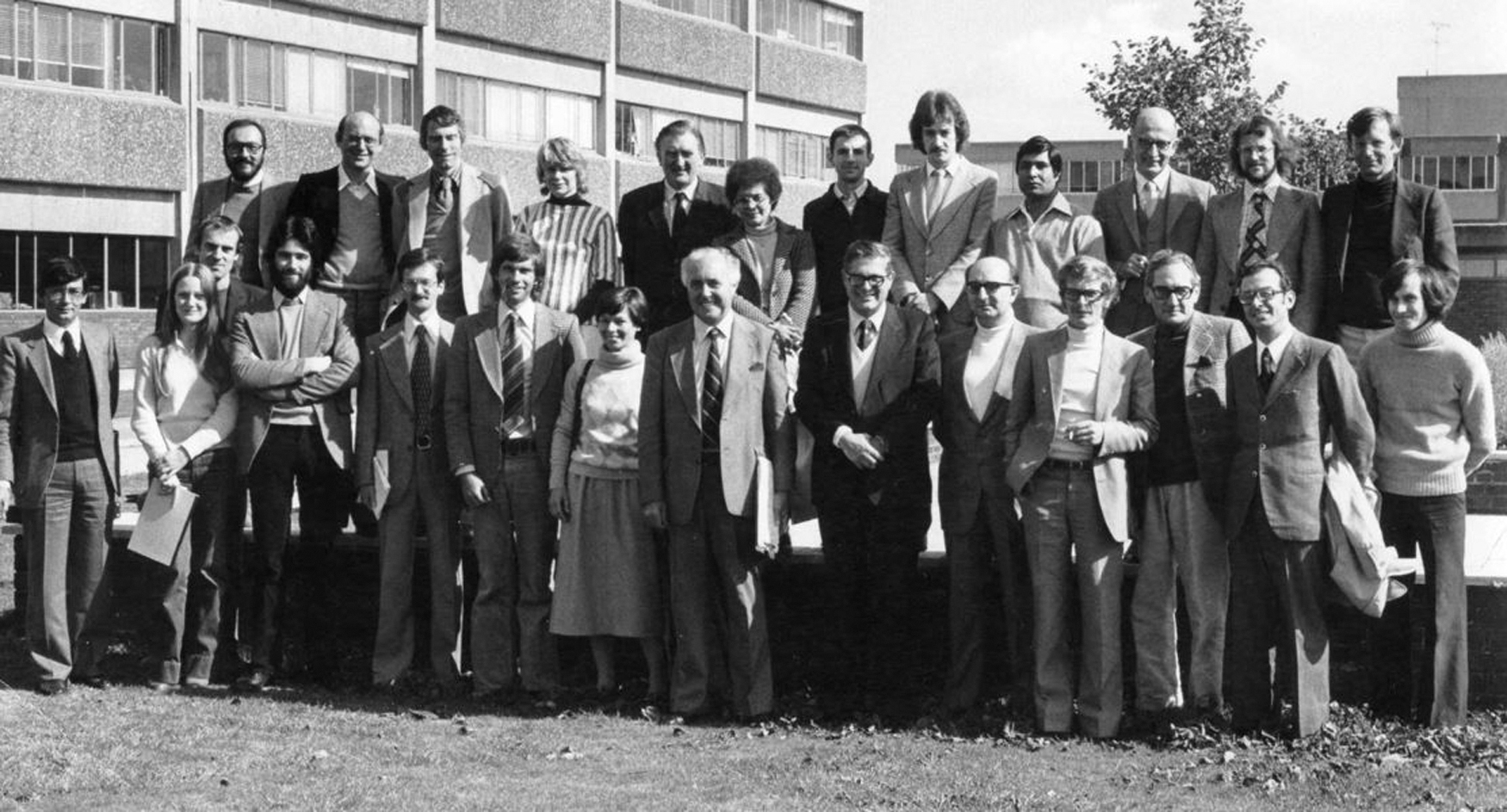
His work had a heavy focus on lipid peroxidation, especially in exploring the biological effects of aldehydes, including alkenals such as 4-hydroxynonenal, generated during peroxidation (140, 154). He also developed methods to measure lipid hydroperoxides in human body fluids and tissues (20, 21, 36, 88). In exploring this topic, he built strong relations with eminent scientists in Europe, including Emanuele Albano, the late Mario Dianzani, Giuseppi Poli, the late Hermann Esterbauer, Aldo Tomasi, and Chiara Benedetto. Trevor was a special lover of and visitor to Italy, for its history, culture, and science. Robin Willson, also at Brunel University and who worked closely with the Slater group, performed much fundamental free radical work (31, 45, 48, 170), and had access to pulse radiolysis facilities. Very sadly, Robin passed away on July 19, 2022 and a tribute to him can be found at (doi.org/10.1530/REM-22-0015).
One noteworthy use of these facilities was the direct observation, in vitro, of a free radical interaction between vitamins E and C (131), confirming an earlier suggestion by the late AL Tappel (160). Whether this interaction happens in vivo is still not fully established, but most of us believe in it! Trevor was also an early and effective applier of electron paramagnetic resonance (EPR/ESR) spin trapping techniques to biological systems (20, 32 –35, 52, 153, 167). Some of this work was carried out with Michael (Mike) Davies, who later developed an outstanding reputation as an expert on oxidative protein damage by various reactive species (51, 85).
Trevor and Robin also played a key role in formation of an Antioxidant Society in the United Kingdom, in April 1982, with an inaugural meeting at the Royal Institute (London) on July 9, 1982, which I of course attended, along with 138 others. From this sprang SFRR Europe, which has been highly successful.
Despite the eminence of the Slater group, I never managed to do any joint work with them. In part, that was because I made a strategic decision to investigate problems different from those that they focused on. I also felt that they were not keen on having a competing group! Thus I avoided working on spin trapping, and instead focused on developing other methods to detect and measure reactive oxygen species (ROS) in vivo, initially aromatic hydroxylation of salicylate and phenylalanine (56, 63, 74, 82, 84, 96 –98, 147, 158) and deoxyribose degradation (59, 74, 79) to detect OH•, followed by later work on the conversion of urate to allantoin and other oxidation products as a biomarker of several ROS (55, 58, 99).
I was able to work with several distinguished scientists and clinicians, including David Blake (London) (11, 12, 80, 96), Keith Lim (Singapore) (109), Roberto Bolli (Texas) (158, 159), Ronan Kelly (Singapore) (101), Raymond Seet (Singapore) (149 –151), and Frank Kelly (London) (58), to apply our methods to the in vivo situation. When the need arose for my group to measure lipid peroxidation, we set up the mass spectrometry-based methods to measure isoprostanes, learning from the outstanding early work on this topic by Jason Morrow and his colleagues (120, 121). We used measurements of F2- and F4-isoprostanes regularly in our human studies (83, 102, 103, 114, 130, 149 –151), and were aided in this by productive collaborations with Eric Anggard and his colleagues (especially Jaffar Nourooz-Zadeh) at the William Harvey Research Institute, St. Bartholomew's Hospital, London (53, 124, 125).
When we needed pulse radiolysis facilities, we were lucky to be offered collaboration by John Butler at the Christie Institute in Manchester, an expert on pulse radiolysis with whom we did many productive studies (9, 10, 14, 39, 87, 141), including measurement of the rate of constants for reaction of certain iron chelates with O2 •− (14) and a characterization of the ROS-scavenging ability of N-acetylcysteine (8). This compound is widely used as an “antioxidant,” but whether it really acts in this way in vivo is hotly debated (123, 139). Another use of rate constant determination was our collaboration with Bob Pasternack, a visiting scientist to my laboratory; we were one of the first to show that certain porphyrins could be effective scavengers of O2 •− (138).
Oxidative DNA damage was little studied in the United Kingdom at the time, but we were able to link up with Miral Dizdaroglu in the United States to learn how to measure it using mass spectrometry (5 –7, 44, 73, 156), and our experiments further reinforced the importance of •OH formation in vivo as a source of oxidative damage (73, 156). Of these productive and fruitful collaborations probably the longest lasting was with John Gutteridge, as reviewed recently (70). Again distinguishing ourselves from the Brunel group, we focused on hydroxyl radicals and Fenton chemistry, especially the role of “catalytic iron” in vivo, which was largely ignored in the United Kingdom at that time but turned out to be very important in the end and led to fundamental new concepts (reviewed in 69, 72, 75 –78). The recent growing interest in ferroptosis has reinforced the role of catalytic iron in vivo. David Blake, an expert rheumatologist in London, worked with us to elucidate the role of iron in inflammatory joint disease (11, 12).
The Brunel group was not the only player in the free radical/antioxidant field in the United Kingdom. To my mind, one unsung hero was Eric Wills, who did much early work on microsomal lipid peroxidation and how peroxidation influences chemical carcinogenesis (54, 118). Early on, he identified the protective effects of desferrioxamine (169), later expanded on by John and myself (61). He was not a good self-publicist, and his work was undervalued in my view.
More prominent was the group at Guy's Hospital, led by Tony Diplock, an expert on vitamin E and lipid peroxidation and an excellent organizer of meetings (4, 38). He was scientific advisor to the then UK Ministry of Agriculture, Fisheries and Food (MAFF) and persuaded them to invest heavily into fundamental work on biomarkers of oxidative damage (3), a decision that helped support several research groups in the United Kingdom, including mine. Granting agencies rarely like to invest in the hard slog of method development, validation, and calibration, but without accurate methods, no valid data can be generated, as recently reviewed in-depth (123). MAFF was a key supporter of this work, thanks largely to Tony.
Tony's group was enhanced by the presence of Catherine Rice-Evans, an indefatigable organizer of research groups, conferences, and meetings, who swiftly developed a reputation as an expert on the antioxidant effects of flavonoids and other polyphenols, especially using methods, such as ABTS, for determining their antioxidant activity in vitro (143, 155, 168). I was pleased to collaborate with her on several projects combining our different skills (126, 136, 137, 145). Tony was a coauthor on one of our papers (145). Also working on vitamin E at the time was Malcolm Jackson in Liverpool, who swiftly developed a reputation as a leading expert on the role of ROS in muscle function (93, 142). Lester Packer (about whom more later) also did much early work on muscle damage by exercise and the role of vitamin E in collaboration with Kelvin Davies, another prominent figure in the field (30, 134).
Another important part of the ecosystem was Tony Segal, originally in Bristol, but he soon moved to University College London. He established much of our knowledge about the neutrophil NADPH oxidase system (22, 108). John Gutteridge and I had the pleasure of working with him to investigate the antioxidant role of lactoferrin, which binds “catalytic” iron in nonredox active forms, thereby exerting antioxidant properties (60).
London Continued: from Biochemistry to Pharmacology
Another London group interested in the role of oxidative damage and iron in human disease was that of Peter Jenner and David Dexter, in the Pharmacology Department at King's College. Their focus was on Parkinson's Disease (PD), and they had already shown the role of increased iron and decreased GSH in its pathology (37, 95). They also did joint work with Trevor Slater on lipid peroxidation in PD (36). Due to reorganizations and mergers at King's College, I ended up moving from Biochemistry to Pharmacology, and relocated to the Chelsea campus, just off the King's Road, a great part of London to be in.
The Pharmacology Department had a strong research ethos and, as well as the Jenner/Dexter group, also housed Bob Hider, an outstanding expert on iron chelation (86), also very interested in “catalytic” iron and its role in iron overload diseases. We had many fruitful research discussions together, but only published one joint paper, also involving Catherine Rice-Evans (136). Far more productive was our work with Peter and David. We used our methods of detecting ROS and oxidative damage to show increased levels of oxidative damage to proteins and DNA in the brains of PD subjects (1, 2), and helped to reveal how proteasomal dysfunction and the mutant forms of α-synuclein and parkin that cause familial PD were ultimately connected with oxidative damage (89 –92, 105, 106, 117).
We also extended these studies to other neurodegenerative diseases (104, 107, 112, 113). Administering 6-hydroxydopamine to rodents is a popular animal model of PD, and we used our aromatic hydroxylation and DNA damage techniques to show that OH• and reactive nitrogen species were involved (46, 47). Upon moving to Singapore, I continued work on PD with the clinician Raymond Seet, showing that oxidative damage levels are also elevated as demonstrated by blood biomarkers (150).
From London to Belgrade, California, and Back
I did a brief sabbatical in Belgrade in 1998, studying oxidative damage during hibernation (15, 16). In 1998, I went on sabbatical from King's College to the National University of Singapore (NUS), and have not left there yet (Table 1), apart from a brief sabbatical at University College London, and frequent visits to Imperial College as a Visiting Professor. Apart from NUS, my most interesting and productive time overseas was in California where I first met Lester Packer. How did I end up there? Carroll Cross, from UC Davis, was visiting the laboratory of Adrian Allen in Newcastle upon Tyne, but also spent time with me at King's and we ended up publishing a joint paper with Adrian in Lancet postulating the antioxidant function of mucus (26). We used pulse radiolysis facilities to help demonstrate this (26).
Carroll persuaded me to visit Davis, which I planned to do for a year's sabbatical. I ended up spending substantial time there for the next 5 years, until I eventually ran out of H-1 visas. Carroll and I worked together on antioxidants in the respiratory tract (23 –25, 27 –29, 81, 111), and I was also privileged to meet not only Reen Wu (156) but also Albert van der Vliet and Jason Eiserich; my collaborations with these productive and talented investigators greatly expanded my understanding of reactive nitrogen species (39 –43, 162 –165), including a joint paper with John Butler (39). Carroll is still research active and refuses to retire! (119).
I also interacted with John Longhurst, a prominent cardiologist, and we used our aromatic hydroxylation methods to detect OH• during muscle contraction, cardiac ischemia/reperfusion, and cardiovascular reflexes in his animal models (128, 129, 144, 157). Carroll and I had frequent visits to UC Berkeley, more of which later.
In my first year in California, I stayed in Davis, the (then) small town where the UC Davis campus (including Carroll's laboratory) is located. Being more of a big city fan, I soon moved to San Francisco and commuted to Davis as needed. San Francisco to Berkeley is an easy journey on the BART system, which enabled me to spend much more time at UC Berkeley. There were at least two attractions there. One was the famous Bruce Ames, who had become interested in oxidative damage, and we had frequent conversations and bounced ideas off each other. Our names ended up together on two papers (23, 27), but we did not develop any in-depth collaborations. The second was, of course, Lester.
It was at Berkeley that I first met Lester; he moved there in the early 1960s and was there for 40 years or so. Lester was truly a ball of fire, with boundless energy and enthusiasm. Having done fundamental work on photosynthesis in his early days (reviewed in 161), he moved over to study biomedical systems, including the role of ROS in exercise (30, 134). Lester published hundreds of scientific papers, edited or published >100 books, was an editor for multiple journals, and an outstanding organizer and facilitator of meetings. I met him in Berkeley, and again and again all over the world at major scientific conferences that he facilitated and often chaired. He visited NUS, and we ended up coediting a book (132).
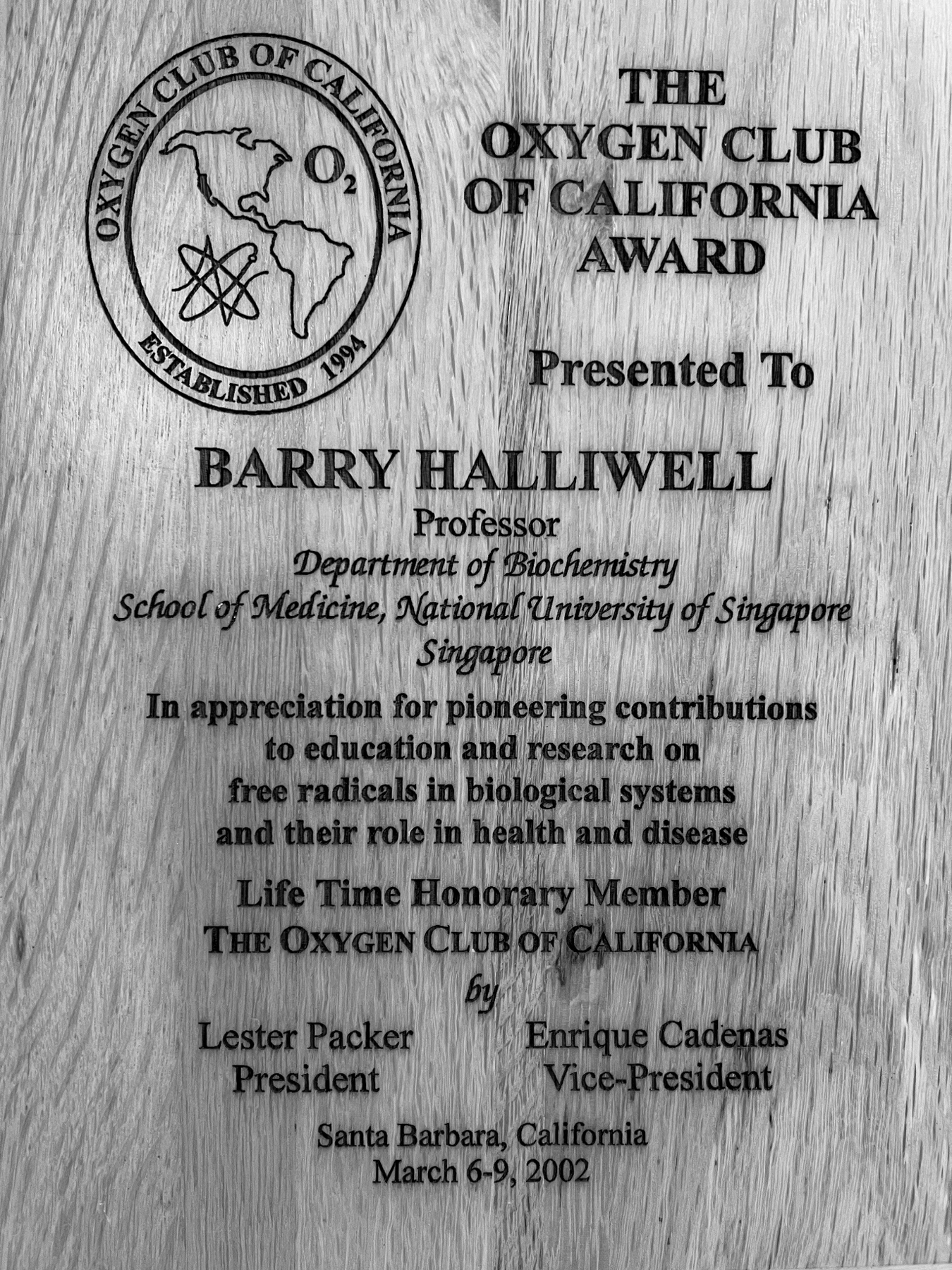
He developed the Oxygen Club of California, which ran many impactful meetings, and Lester was kind enough to put me up for Lifetime Membership (Fig. 2). We chatted endlessly during my frequent visits to his Berkeley laboratory, and he introduced me to many top-level scientists, including John Maguire (also deceased, sadly), Valerian Kagan, and Abe Reznick, all highly talented researchers and productive individuals. I ended up publishing three papers with Lester, Abe being on all of them (28, 127, 146). I was also inveigled/persuaded/cajoled into writing chapters for several of his books: it was hard to say no to Lester. Lester once called me in a private conversation, “the artifact man,” since he said so many of my papers dealt with artifacts. A Pub Med search revealed 23 such articles, so he was right.
They included artifacts in studying antioxidants in cell culture (67, 68), in measuring the life span of Caenorhabditis elegans (57), in the thiobarbituric acid (TBA) test (17, 71), in evaluating the neurotoxicity of dopamine (19), in measuring DNA damage by ROS and reactive nitrogen species (44, 110), and in measuring allantoin (58) and nitrotyrosine (50, 100). I argued my case that failure to understand the oxidative stress of cell culture has led to many erroneous results and if we do not measure biomarkers of oxidative damage properly (avoiding artifactual further oxidative damage during the analytical steps) we can be similarly led astray, as a recent multiauthor review emphasizes (123). He saw my point, and we went off to enjoy a nice dinner and a bottle of excellent California red wine.
Lester was always interested in novel antioxidants, and he introduced me to lipoic acid, the study of which he pioneered (122, 133), including suggesting its role in the treatment of diabetes (135). Indeed, one of our joint papers dealt with lipoic acid (127). Inspired by Lester, I continued to study this fascinating molecule (13, 148, 152, 166), although its role in diabetes treatment is still unclear (94). I currently focus on ergothioneine, a thiol/thione (18). I miss Lester a lot, as do many other researchers globally. John Gutteridge is also sorely missed, as are John Maguire, Tony Diplock, Trevor Slater, Mario Dianzani, Hermann Esterbauer, Robin Willson and other pioneers of redox biology. Like Isaac Newton, we stand on the shoulders of giants.
