







Abstract
N-tert-butyldimethylsilyl-N-methyltrifluoroacetamide (MTBSTFA), mixed with the solvent N,N-dimethylformamide (DMF), is used as a derivatizing reagent by the Sample Analysis at Mars (SAM) experiment onboard NASA's Curiosity rover and will soon be utilized by the Mars Organic Molecule Analyzer experiment onboard the ESA/Roscosmos Rosalind Franklin rover. The pyrolysis products of MTBSTFA, DMF, and the MTBSTFA/DMF mixtures, obtained at different temperatures, were analyzed. Two different pyrolysis modes were studied, flash pyrolysis and ramp pyrolysis (35°C/min), to evaluate the potential influence of the sample heating speed on the production of products in space chromatographs. The effect of the presence of calcium perchlorate on the pyrolysis products of MTBSTFA/DMF was also studied to ascertain the potential effect of perchlorate species known to be present at the martian surface. The results show that MTBSTFA/DMF derivatization should be applied below 300°C when using flash pyrolysis, as numerous products of MTBSTFA/DMF were formed at high pyrolysis temperatures. However, when an SAM-like ramp pyrolysis was applied, the final pyrolysis temperature did not appear to influence the degradation products of MTBSTFA/DMF. All products of MTBSTFA/DMF pyrolysis are listed in this article, providing a major database of products for the analysis of martian analog samples, meteorites, and the in situ analysis of martian rocks and soils. In addition, the presence of calcium perchlorate does not show any obvious effects on the pyrolysis of MTBSTFA/DMF: Only chloromethane and TBDMS-Cl (chloro-tertbutyldimethylsilane) were detected, whereas chlorobenzene and other chlorine-bearing compounds were not detected. However, other chlorine-bearing compounds were detected after pyrolysis of the Murchison meteorite in the presence of calcium perchlorate. This result reinforces previous suggestions that chloride-bearing compounds could be reaction products of martian samples and perchlorate.
1. Introduction
Searching for organic molecular biosignatures is one of the main goals of the Sample Analysis at Mars (SAM) experiment (Mahaffy et al., 2012) onboard the NASA Curiosity rover. It is also a primary goal of the Mars Organic Molecule Analyzer (MOMA) instrument onboard the ESA/Roscosmos Rosalind Franklin rover, which will launch in 2022 and will land at Oxia Planum for the purpose of investigating martian surface and subsurface sedimentary rocks (Goesmann et al., 2017). For both missions, pyrolysis-gas chromatography, and mass spectrometry (Py-GC-MS) combined with derivatization methods are employed to analyze the organic content of the collected samples.
Three derivatization reagents have been selected for this purpose. N-tert-butyldimethylsilyl-N-methyltrifluoroacetamide (MTBSTFA)/dimethylformamide (DMF) (Ming et al., 2014) and tetramethylammonium (TMAH) (He et al., 2020, 2021; Williams et al., 2020) are used for silylation and methylation derivatizations by both SAM and MOMA. DMF-dimethylacetal (Rodier et al., 2002, 2005; Freissinet et al., 2010; Pietrogrande, 2013; Goetz et al., 2016), a derivatization reagent specifically dedicated for chiral separation, is also used by MOMA.
MTBSTFA was chosen, because it is one of the most popular silylation reagents. Silylation is a chemical reaction in which a labile hydrogen atom in OH, COOH, SH, NH, CONH, POH and SOH functional groups, or enolizable carbonyl, is replaced with a silyl group, most frequently with tert-butyldimethylsilane (TBDMS). An MTBSTFA/DMF mixture is often used, with the DMF acting as a solvent as well as a proton acceptor, significantly increasing the silylation reaction yield (Buch et al., 2009; Freissinet et al., 2019). The MTBSTFA/DMF mixture has been shown to enable controlled reactions resulting in stable derivatives (Mawhinney et al., 1986) and can maintain its derivatization efficiency after exposure to ionizing radiation (Freissinet et al., 2019), making it suitable for space applications.
Figure 1 shows an example of derivatization of fatty and amino acids with MTBSTFA/DMF. This is a process related to the SN2 mechanism, with the formation of a transition state derived from the nucleophilic attack of the analyte on the silicon atom (Kashutina et al., 1975). Silylation of organic compounds results in better thermal stability, enhanced volatility, and reduced polarity of the silyl-derivatives with respect to the native analytes (Pagliano et al., 2018) and it improves the GC analysis (Moldoveanu and David, 2019).
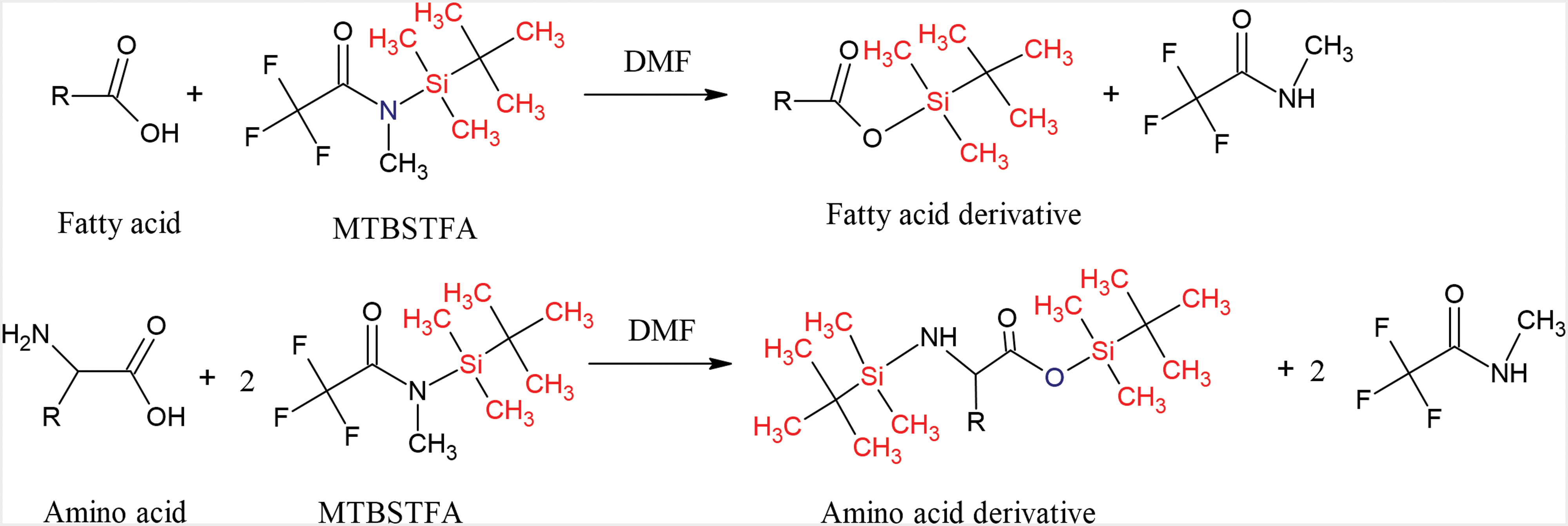
Example of fatty acids and amino acids derivatized by MTBSTFA. MTBSTFA, N-tert-butyldimethylsilyl-N-methyltrifluoroacetamide. Color images are available online.
However, the degradation of MTBSTFA/DMF may sometimes lead to misinterpretations in the characterization of organic compounds present in unknown samples. Important ionized fragments of the MTBSTFA pyrolysis products include m/z 75, m/z 147, m/z 134, m/z 127, m/z 41, and m/z 15. The m/z 75 fragment comes from the MTBSTFA pyrolysis product tert-butyldimethylsilanol (monosilylated H2O or MSW), m/z 147 comes from 1,3-bis(1,1-dimethylethyl)-1,1,3,3-tetramethyldisiloxane (bisilylated H2O or BSW) (Malespin et al., 2018), m/z 124 from tert-butyldimethylfluorosilane (TBDMS-F), and m/z 41 from 2-methylpropene (C4H8). A significant contribution at m/z 15, either CH4 or methylene ions, was found by Stern et al. (2015).
The characteristic fragmentation patterns presented by MTBSTFA derivatives are mainly the fragments of the molecular ion [M]+, [M − 57]+ and [M − 131]+, of which [M − 57]+ is generally dominant in the mass spectrum. [M − 57]+ results from cleavage of the t-butyl moiety [-C(CH3)3], whereas [M − 131]+ results from cleavage of the t-butyl-dimethyl silyl moiety. [M]+, [M − 15]+, and [M − 89]+ are the characteristic fragments of BSTFA-derivatives and [M]+ is the main ion (Schummer et al., 2009). [M − 15]+ results from cleavage of the methyl group from the molecular ion, whereas [M − 89]+ results from cleavage of the trimethylsilyl ether moiety.
The steric hindrance and molecular mass play a very important role in the choice of the best derivatization reagent. It is not always possible to use MTBSTFA, especially when the target compound presents sterically hindered sites or when the m/z of fragments resulting from the derivatized compounds is outside of the mass spectra range.
The derivatization products of MTBSTFA/DMF are often detected in Py-GC-MS, but the lack of mass spectra of MTBSTFA-derivatized molecules in the National Institute of Standards and Technology (NIST) library is the main challenge for the identification of the chromatographic peaks (Bishop et al., 2013). MTBSTFA/DMF is usually used at low temperatures, varying from 50°C to 150°C (Molnár-Perl and Katona, 2000). However, the degradation products of MTBTSFA and DMF at different temperatures, especially at high temperatures, have not been systematically studied.
The Wet Chemistry Lab onboard NASA's 2008 Phoenix Lander first detected the perchlorate ion (ClO4 −) in the martian soil (0.4–0.6 wt %), with calcium and magnesium perchlorate identified as its probable sources (Hecht et al., 2009). Later, oxychlorines were suggested to have been present at the Viking landing sites (Navarro-González et al., 2010) and were also detected in Gale crater by SAM (∼0.4–2 wt % of ClO4 −) (Glavin et al., 2013; Sutter et al., 2017). Some Cl-bearing compounds have also been detected by SAM, including hydrochloric acid, chloromethane, and dichloromethane (Ming et al., 2014).
Chlorobenzene and other chlorinated hydrocarbons detected on Mars may be the reaction products of oxychlorine species such as perchlorate and indigenous martian organic carbon; for example, benzene carboxylic acids may be the organic precursor of chlorobenzenes detected by SAM (Freissinet et al., 2015; Miller et al., 2016; Szopa et al., 2020). However, it is also possible that analytical components of the instrument, such as Tenax® adsorbent trapping (Miller et al., 2015; Buch et al., 2019) and derivatization reagents, contribute as sources of carbon–chloride-bearing compounds. For example, MTBSTFA/DMF has been considered as one of the possible precursors of the chlorine-bearing compounds, through the reaction of MTBSTFA/DMF with perchlorate (Ming et al., 2014).
To summarize, utilizing MTBSTFA/DMF with Py-GC-MS to analyze soils and rock samples on Mars raises several issues: (i) The degradation of MTBSTFA/DMF can produce organic products that can interfere with the identification of indigenous organics present in the martian sample; (ii) the presence of calcium perchlorate could influence the degradation of MTBSTFA/DMF; and (iii) MTBSTFA/DMF could be the possible precursor of chlorine-bearing compounds in the presence of calcium perchlorate. For these reasons, it is of key importance to study the behavior of MTBSTFA/DMF under pyrolytic conditions, in the presence as well as in the absence of perchlorate.
In this study, we assessed the effects of pyrolysis temperature and heating mode on the degradation of MTBSTFA, DMF, and an MTBSTFA/DMF (4:1) mixture. We also assessed the effect of calcium perchlorate on the degradation of MTBSTFA and DMF. All products of MTBSTFA and DMF were identified to form a database to support the interpretation of data obtained from the SAM and MOMA space instruments. Moreover, we propose a plausible mechanism of MTBSTFA and DMF degradation, which may shed additional light on the interpretation of SAM findings as well as future MOMA results. Finally, we note that this work is consistent with the conclusions of Freissinet et al. (2015), which proposes indigenous organics in martian samples as the carbon source of detected chlorobenzene compounds.
2. Experimental
2.1. Chemical products
MTBSTFA (>97%; Sigma-Aldrich), DMF (anhydrous, 99.8%; Sigma-Aldrich), and an MTBSTFA/DMF mixture (v:v = 4:1) made from individual chemical compounds were used in this study. Calcium perchlorate tetrahydrate (99%; Aldrich) was used to make the calcium perchlorate solution (in ultra-pure water). Calcium perchlorate was considered to be a better candidate for the perchlorate species present in martian samples analyzed by SAM compared with Fe-, Mg-, Na-, and K-perchlorates, since the release temperature of oxygen from calcium perchlorate is consistent with rover data (Leshin et al., 2013; Freissinet et al., 2015; Millan et al., 2019). Naphthalene-D8 (isotopic purity, 99 atom % D; Sigma-Aldrich) was used as an internal standard (He et al., 2019a).
The concentration of calcium perchlorate solution (1.375 M) was measured by Atomic Absorption Spectrometry (Varian Australia Pty Ltd.) (Zagatto et al., 1979; Milačič et al., 1992; Fayiga and Ma, 2006; Špirić et al., 2013), using the air-acetylene flame, with a calcium cathode lamp set at the 422.7 nm resonance wavelength.
The abundance of
where
In the SAM experiment, each derivatization cup was filled with 500 μL of the MTBSTFA/DMF (4:1) mixture. We note that the first measurements on Mars completed by SAM showed the presence of leaks from at least one cup (Glavin et al., 2013). Estimates led to the suggestion that the maximum amount of MTBSTFA still present in the cup was ∼100 nmol (Glavin et al., 2013). To be conservative, simulating a leak of MTBSTFA worse than that in the SAM case, 3 μL of the MTBSTFA/DMF mixture was used in our experiments, representing about 10 μmol of MTBSTFA.
To test the influence of oxychlorines, different amounts of calcium perchlorate were introduced in the MTBSTFA/DMF mixture. Calcium perchlorate was used as the
The hydration states of perchlorates could influence their thermal decomposition behavior (Royle et al., 2017); therefore, the use of the same drying conditions could make it possible to test a sample containing calcium perchlorate with the same or with a very similar composition of hydration states. In addition, the products of calcium perchlorate under flash pyrolysis (600°C) were analyzed to confirm the purity of its solution. As shown in Supplementary Fig. S1, only minor amounts of CO2 were detected, which showed that there was no organic contamination in the solution of calcium perchlorate.
2.2. Pyrolysis experiments
An EGA/PY-3030D micro-oven pyrolyzer equipped with a MicroJet Cryo-trap (Frontier Lab) was used. It was installed on the split/splitless (SSL) injector of the gas chromatograph. Different volumes of Ca(ClO4)2 solution were deposited in a capsule, followed by the drying process of Ca(ClO4)2 solution under a stream of nitrogen; then, 3 μL of MTBSTFA/DMF (4:1, v/v) was injected into a capsule. That capsule, carried by an eco-stick (Frontier Lab), was attached to the top of the pyrolyzer and the pyrolyzer head space was purged for 2 min before proceeding. Flash pyrolysis and SAM-like ramp pyrolysis, reaching maximum temperatures of 210°C, 300°C, 600°C, and 850°C, were used for our study. For the flash pyrolysis, the sample was dropped inside the oven at a set temperature (with a 1 min hold).
For the SAM-like ramp pyrolysis, the heart-cut EGA analysis method was used, in which a capsule carried by an eco-stick (Frontier Lab) was introduced inside the oven (initial temperature was 50°C) and flushed by 1 mL/min of helium. The oven was programmed to reach the final temperature (hold 1 min) at the SAM heating rate of 35°C/min. The liquid nitrogen MicroJet Cryo-trap was used to trap and preconcentrate all products of pyrolysis at −180°C at the chromatographic column inlet. When the pyrolysis process was finished, the liquid nitrogen flow was stopped, and the temperature of the column inlet was quickly increased to 40°C. All products were then released and sent to the GC-MS by helium flow (1.2 mL/min).
In addition, to study the influence of calcium perchlorate on the pyrolysis of MTBSTFA/DMF, step pyrolysis of MTBSTFA/DMF with and without calcium perchlorate was performed by using the SAM-like temperature ramp. The sample was injected into the pyrolyzer and heated from 50°C to 100°C, and then the temperature was increased up to 900°C by steps of 100°C.
Finally, for the analysis of the Murchison meteorite powder sample (Murchison USNM 5453), 5 wt % of calcium perchlorate was injected in a capsule and dried under nitrogen flow; then, about 5 mg Murchison sample was added, and they were pyrolyzed in the flash mode at a temperature of 850°C.
2.3. Analysis of pyrolysis products
A gas chromatograph (Trace GC Ultra; Thermo Scientific) coupled to a quadrupole mass spectrometer (ISQ LT; Thermo Scientific) was used in this study. The GC instrument was equipped with a Supelco SLB-5MS Inferno column (30 m × 0.25 mm i.d. × 0.25 μm film thickness). More details have been described in a previous work (He et al., 2019a). The temperature programming of the column started at 40°C and was held for 2 min, then ramped up to 300°C at a heating rate of 3°C/min, and maintained for 1 min at this final temperature.
Helium (ultra-high purity grade >99.9999%; Air Liquide) was used as the carrier gas, and its flow rate in the column was set to 1.2 mL/min. The split mode was used with a 24 mL/min split flow value. The temperature of the SSL injector was set to 280°C. The ions were scanned between m/z 40 and m/z 500 (full scan mode), which revealed the total ion current chromatograms. All the products were identified on the basis of their full scan mass spectra by comparison with the NIST library. The ionization energy of the electron impact source was set to 70 eV.
3. Results
3.1. MTBSTFA and DMF flash pyrolysis at different temperatures
3.1.1. DMF flash pyrolysis at different temperatures
The DMF was independently pyrolyzed at temperatures of 210°C, 300°C, 600°C, and 850°C, respectively. Figure 2 shows the chromatograms that were obtained for each temperature, and Table 1 lists the chemical compounds that were detected. These results show that the decomposition of DMF started between 300°C and 600°C (Fig. 2). The abundance of DMF detected at 850°C decreased drastically as it thermally decomposed into several other products (Supplementary Fig. S2).
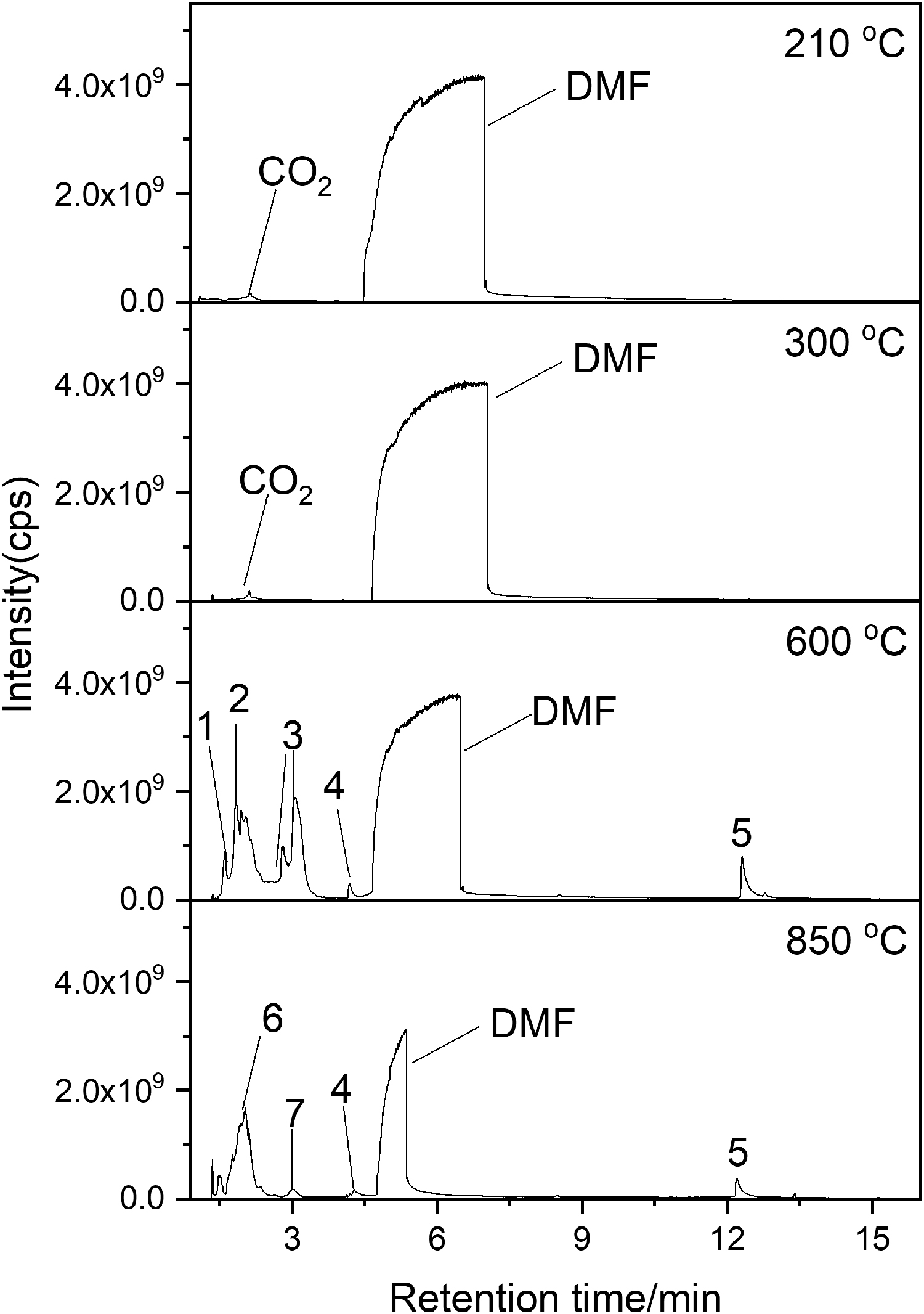
Chromatograms (TIC) of the compounds detected after DMF pyrolysis at different temperatures. Peak attributions: 1: Dimethylamine; 2: Ethanolamine; 3: N,N,N′,N′-tetramethyl-methanediamine; 4: Dimethylamino-acetonitrile; 5: Hexahydro-1,3,5-trimethyl-1,3,5-trazine; 6: Hydracrylonitrile; 7: Benzene. DMF, N,N-dimethylformamide; TIC, total ion current.
Products Detected from DMF Flash Pyrolysis at 210°C, 300°C, 600°C, and 850°C, Refers to Figure 2
DMF = N,N-dimethylformamide.
Note: aThe mass of the main fragments are in order of decreasing abundance.
During the pyrolysis at 600°C, more and new products were formed, such as hydracrylonitrile (containing a
3.1.2. MTBSTFA flash pyrolysis at different temperatures
The flash pyrolysis of MTBSTFA at temperatures of 210°C, 300°C, 600°C, and 850°C was also studied. The resulting chromatograms are shown in Fig. 3. Table 2 provides a list of the chemical species detected as well as additional information about them. The number of compounds detected from the pyrolysis of MTBSTFA was significantly higher at 850°C than 210°C or 600°C.
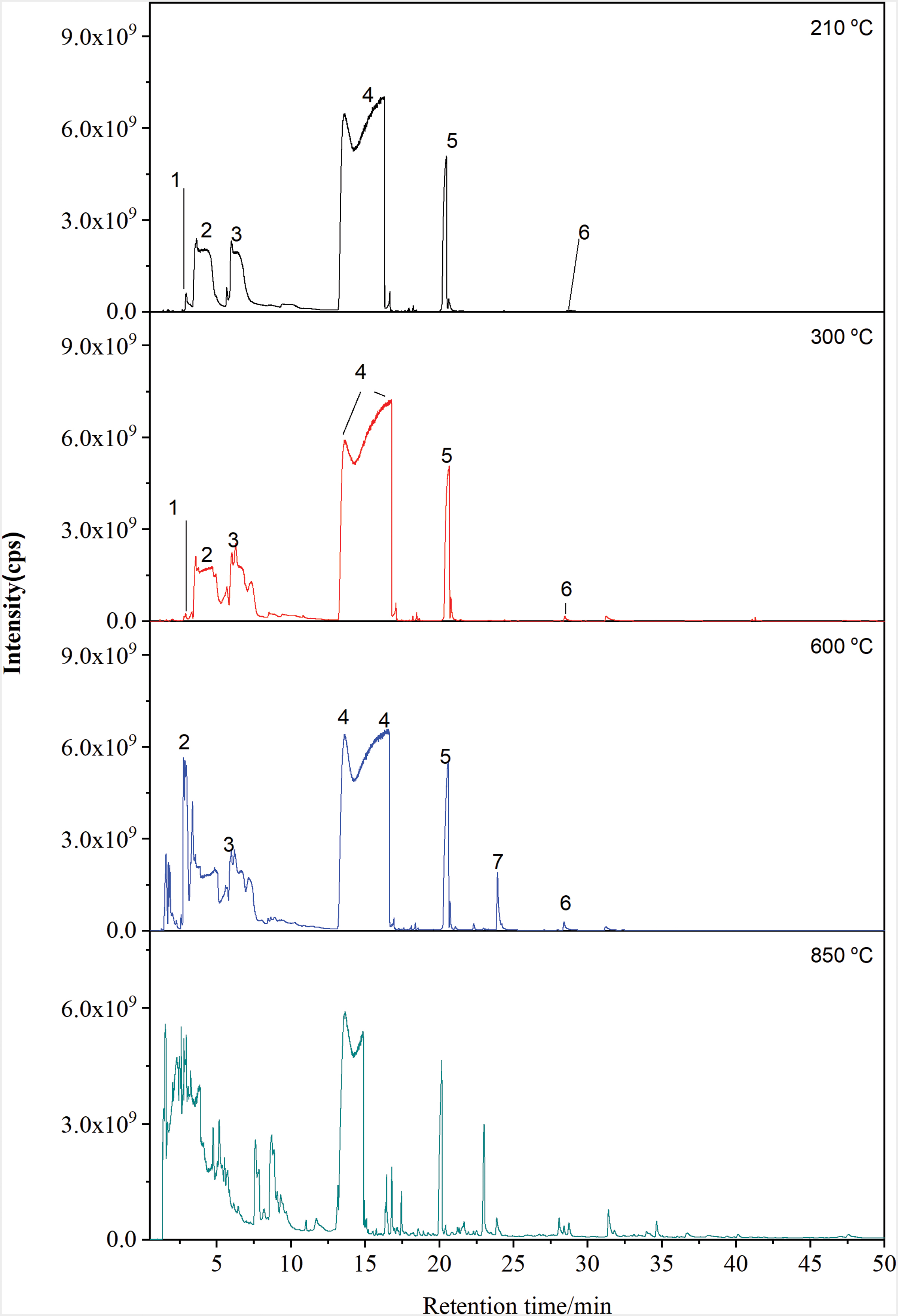
Chromatogram (TIC) of MTBSTFA flash pyrolysis at different temperatures. The GC conditions can be seen in Section 2.3 analysis of pyrolysis products. Peak attributions: 1: tert-butyldimethylsilylflurosilane; 2: TFMA; 3: MSW; 4: MSTFA; 5: BSW; 6: Tris(trimethylsilyl)borate; 7: 3-methyl-3H-cyclonona[def]biphenylene. BSW, 1,3-bis(1,1-dimethylethyl)-1,1,3,3-tetramethyldisiloxane; MSTFA, N-methyl-N-(trimethylsilyl)trifluoroacetamide; MSW, tert-butyldimethylsilanol; TFMA, N-methyltrifluoroacetamide. Color images are available online.
The Main Products of MTBSTFA Flash Pyrolysis at Different Temperatures, Refers to Figure 3
MTBSTFA = N-tert-butyldimethylsilyl-N-methyltrifluoroacetamide.
Note: athe mass of the main fragments are in order of decreasing abundance.
As also noted by other authors (Shareef et al., 2004; Malespin et al., 2018), when heated to 210°C, the pyrolysis products of MTBSTFA were found to be dominated by N-methyl-N-(trimethylsilyl)trifluoroacetamide (MSTFA), N-methyltrifluoroacetamide (TFMA), MSW, and BSW. MSTFA is one of the products of MTBSTFA pyrolysis formed by the breakage of the Si-C bond connecting the tert-butyldimethyl functional group. TFMA and tert-butyldimethyl radicals were formed by the cracking of the N-Si bond of MTBSTFA, whereas tert-butyldimethyl radicals were stabilized by other radicals, such as OH radicals, to form the MSW. BSW is a typical byproduct of MTBSTFA when there is H2O in the system (Glavin et al., 2013).
Tris(trimethylsilyl)borate was also detected from MTBSTFA pyrolysis at different temperatures. The borate may originate from the borate glass used to contain MTBSTFA (Buch et al., 2019). At 210°C, other pyrolysis products of MTBSTFA primarily included Si- and F-containing compounds, which were easily distinguishable from the natural samples during the derivatization analysis of organics. Increasing the temperature of MTBSTFA pyrolysis to 300°C did not lead to the detection of any additional products, with only minor additional products detected at low intensities at 600°C (Fig. 3).
The response from the original MTBSTFA molecule is significantly decreased at 850°C (compared with lower pyrolysis temperatures), showing severe decomposition. The main products at this increased temperature were aromatic and polyaromatic compounds.
Light aromatic compounds such as toluene, xylene, and ethylbenzene were identified at retention times of 4.83, 7.31, and 7.76 min, respectively. Naphthalene and related compounds were also detected, including methyl-naphthalene, dimethyl-naphthalene and their isomers, biphenyl and diphenylmethane, both of which contain two benzene rings. Polyaromatic compounds were detected with retention times after 40.00 min and contained three (9H-fluorene, phenanthrene, methylphenanthrene, phenyl-naphthalene, and their isomers), four (pyrene, fluoranthene, 3,4-benzophenanthrene, triphenylene, and their isomers), or five (benzo[k]fluoranthene and 9H-cyclopenta[a]pyrene) carbon rings.
F-containing aromatics and benzonitrile compounds were also formed during the pyrolysis of MTBSTFA at 850°C. The F-bearing aromatics include fluorobenzene, p-fluoro-styrene, 2,3-dimethylfluorobenzene, difluorobenzene, difluorobiphenyl, trifluoromthyl-benzene, and 2,3,4-trifluorobenzaldehyde and their isomers. Fluoro-naphthalene and fluorbenzol[a]anthracene were also detected. Benzonitrile compounds included benzonitrile, naphthonitrile, and their derivatives and isomers. Pyridine and its derivatized compounds were also observed in the chromatograms, such as 5,6-dimethyl-1,10-phenathroline, dimethyl-bipyridine, 1-hydeoxyphenazine, and its isomers. The main pyrolysis products are listed in Table 2, and a tabulation of all products of MTBSTFA at 850°C can be found in Supplementary Table S1.
3.1.3. MTBSTFA/DMF flash pyrolysis at different temperatures
The chromatograms obtained when pyrolyzing MTBSTFA alone and the MTBSTFA/DMF (4:1) mixture at different temperatures are shown in Supplementary Fig. S3. Compared with the pyrolysis of DMF and MTBSTFA, respectively, no new main products were observed after the pyrolysis of the MTBSTFA/DMF (4:1, v/v) mixture across all temperatures. The MSTFA, TFMA, MSW, and BSW are the main products of the mixture of MTBTSFA/DMF pyrolysis at temperatures of 210°C and 300°C, which is similar to our results for MTBSTFA and DMF pyrolysis individually. This suggests that there is no obvious cross-reaction between MTBSTFA and DMF during the pyrolysis process.
However, when the pyrolysis temperature was increased to 600°C and 850°C, the mixture of MTBTSFA/DMF was extensively fragmented (Supplementary Fig. S3), resulting in a crowded chromatogram populated by the numerous products coming from both MTBSTFA and DMF. The main products are listed in Table 2.
3.2. MTBSTFA/DMF flash pyrolysis with Ca(ClO4)2 at different temperatures
The effects of calcium perchlorate on MTBSTFA/DMF flash pyrolysis at different temperatures (210°C, 300°C, 600°C) were also studied. Calcium perchlorate does not have any obvious qualitative effects on the pyrolysis of the MTBSTFA/DMF mixture at 210°C (Supplementary Fig. S4); that is, no new pyrolysis products were detected. This is assumed to be because calcium perchlorate is thermally stable up to 210°C, and it is expected that the reactivity of oxychlorine species in pyrolysis is effective only from the gaseous compounds it produces, such as HCl (Millan et al., 2020). However, the presence of oxychlorine can influence the quantity of products released by the mixture. Therefore, the effect of calcium perchlorate on the main pyrolysis products of MTBDTFA/DMF at 210°C was studied.
Figure 4 shows the effect of calcium perchlorate on the main products of MTBSTFA/DMF, including MSTFA, TFMA, BSW, and TBDMS-F. At 210°C, the detection of DMF was not affected by calcium perchlorate. This suggests that the presence of calcium perchlorate should not affect the performance of DMF at least up to this temperature. The abundance of TFMA increased with the addition of calcium perchlorate when the abundance of ClO4 − is lower than 20 wt %. However, the presence of calcium perchlorate did not influence the formation of BSW, whereas it promoted the formation of TBDMS-F when the abundance of ClO4 − was higher than 15 wt %.
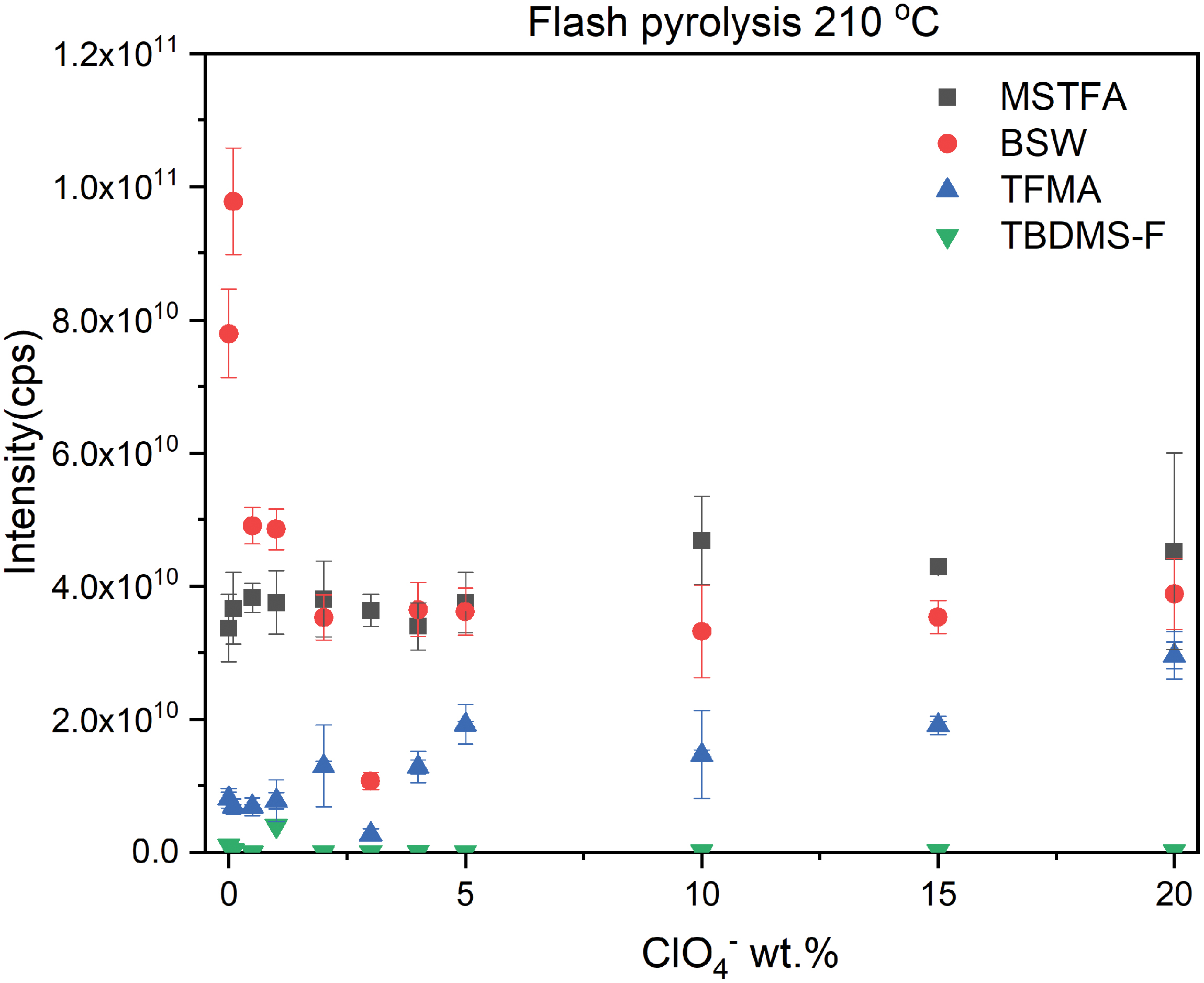
Influence of calcium perchlorate on the abundance of main products of MTBSTFA/DMF flash pyrolysis at 210°C. Color images are available online.
The presence of calcium perchlorate did not show significant influence on the degradation of MTBSTFA/DMF up to, and including, pyrolysis temperatures of 600°C (Supplementary Figs. S5 S6, S7). Higher temperatures were not tested, as the severe extent to which MTBSTFA/DMF degrades without Ca-perchlorate at 850°C is enough to prohibit the use of this mixture for silylation at high temperatures.
3.3. MTBSTFA/DMF and calcium perchlorate pyrolysis with SAM-like ramp
Fewer products were detected when MTBSTFA/DMF was subjected to an SAM-like pyrolysis ramp compared with flash pyrolysis at the corresponding temperatures (Fig. 5). The MSTFA, TFA, MSW, and BSW were again the main pyrolysis products of the MTBSTFA/DMF mixture when the final pyrolysis temperatures were 300°C, 600°C, and 850°C. In contrast to flash pyrolysis at 850°C, no new products were produced from MTBSTFA/DMF pyrolysis when using the SAM-like ramp pyrolysis. This demonstrated that the MTBSTFA/DMF mixture has the potential to be utilized under SAM-like ramp pyrolysis conditions at high temperatures, including 850°C. The Cl–bearing compound detected were chloro-tertbutyldimethylsilane (TBDMS-Cl) and chloromethane at relatively low levels.
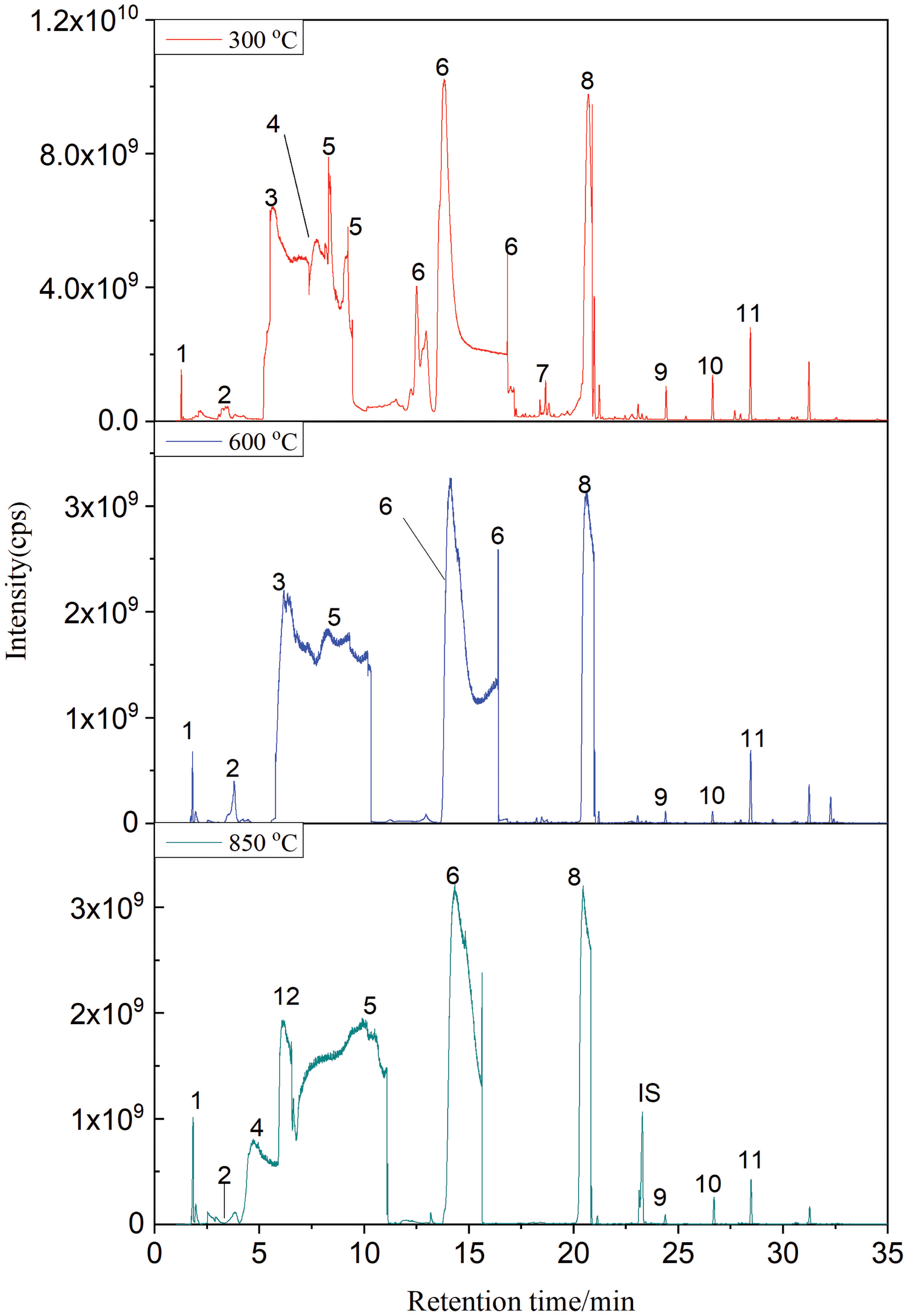
Chromatograms (TIC) of MTBSTFA/DMF (4:1) mixture pyrolyzed at different temperatures. Peak attributions 1: CO2; 2: TBDMS-F; 3: DMF, 4:TFMA; 5: MSW; 6: MSTFA; 7: Ethyl isopropyl(dimethyl)silyl ether; 8: BSW; 9: Bis(tert-butyldimethylsilyl)amine; 10: tert-butyldimethylsilyl isocyanate; 11: Tris(trimethylsilyl)borate; 12: tert-butyl(methoxy)dimethylsilane; IS: Naphthalene-d8(Internal standard). TBDMS-F, tert-butyldimethylfluorosilane. Color images are available online.
The presence of calcium perchlorate had no obvious impact on most of the main pyrolysis products of MTBSTFA/DMF subjected to an SAM-like ramp pyrolysis with a final temperature of 300°C (Fig. 6). Only the formation of MSTFA was affected by the presence of calcium perchlorate; the yield of MSTFA increased with the increasing perchlorate abundance when perchlorate abundance was more than 3 wt %. However, the presence of 20 wt % of perchlorate promoted the decomposition of MSTFA. Even when the final temperature of the SAM-like pyrolysis ramp was 850°C, the presence of calcium perchlorate had no significant influence on the main pyrolysis products of MTBSTFA/DMF (Supplementary Fig. S8).
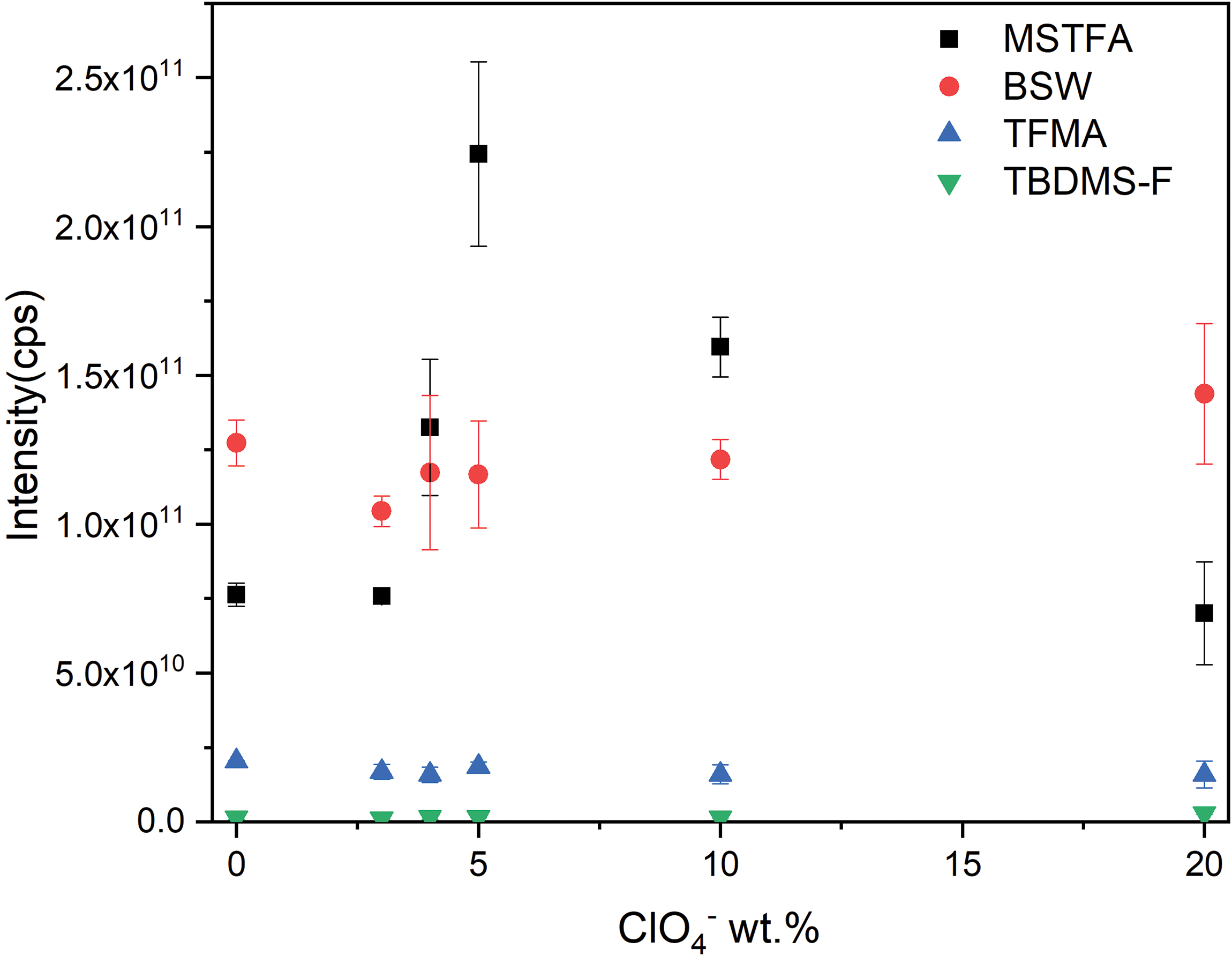
Influence of the amount of calcium perchlorate on the main chemical products observed when MTBSTFA/DMF (4:1) is pyrolyzed using an SAM-like ramp with a final temperature of 300°C. SAM, Sample Analysis at Mars. Color images are available online.
3.4. Flash pyrolysis at 850°C of Murchison meteorite and calcium perchlorate
Figure 7 shows a chromatogram of the flash pyrolysis (850°C) of the Murchison meteorite. Most of the main compounds are aromatic compounds, including light aromatics such as benzene, toluene, m-, p-, or o-xylene and their isomers. Polyaromatic compounds, including naphthalene, methylnaphthalene, fluorene, phenanthrene, pyrene, and their isomers, were also detected. Sulfur-containing compounds were also identified, for example, sulfur dioxide, N-methyltaurine, thiophene, benzenethiol, dibenzothiophene, and phenalenol[1,9-bc]thiophene. Among these S-bearing compounds, the abundance of N-methyltaurine is the highest. These sulfur-bearing compounds have been previously identified (Komiya and Shimoyama, 1996; Remusat et al., 2005; Schmitt-Kopplin et al., 2010; Okumura and Mimura, 2011; Remusat, 2014) in Murchison samples. Acetonitrile was also detected.
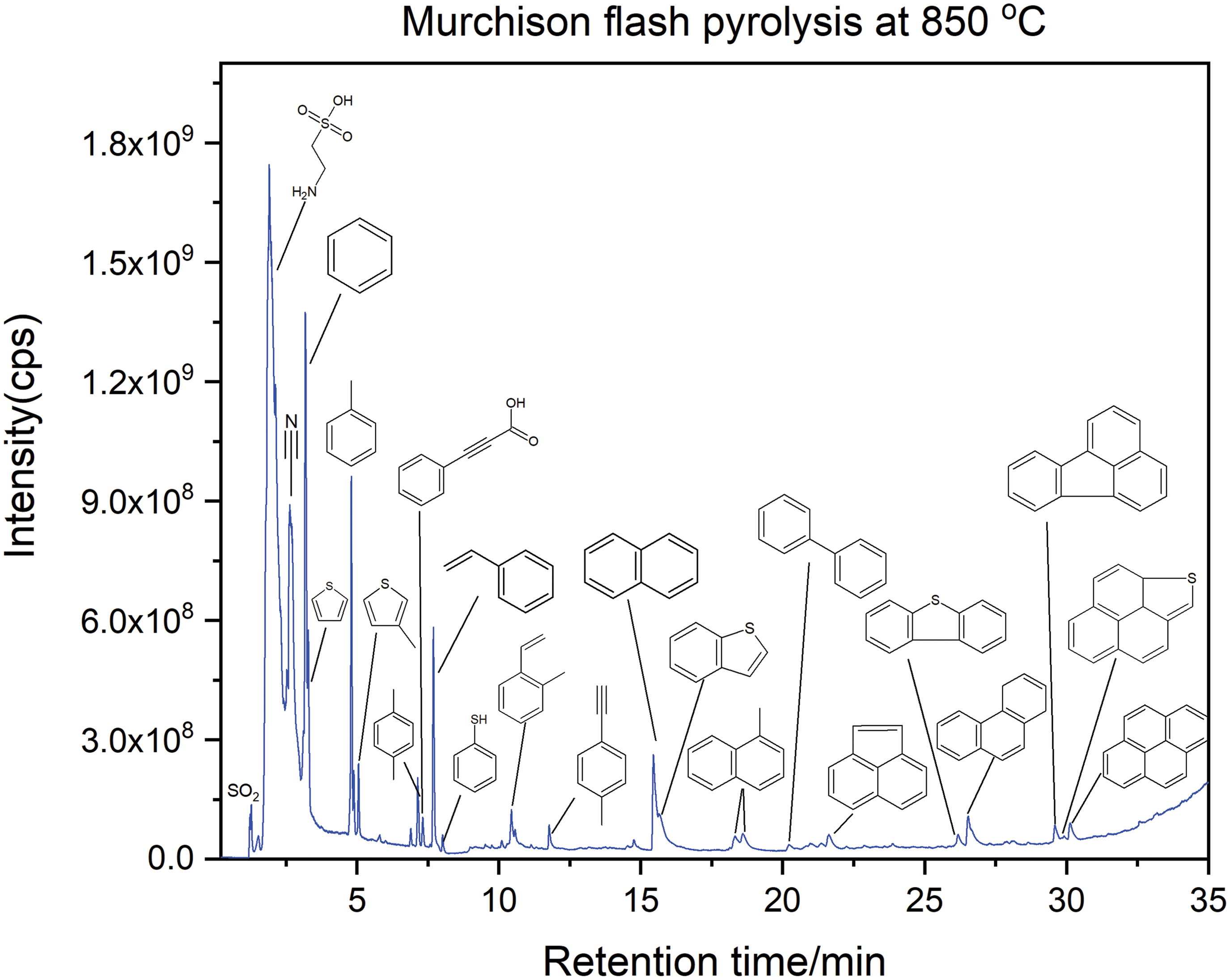
Chromatogram of flash pyrolysis at 850°C of the Murchison meteorite. Color images are available online.
Figure 8 shows the chromatogram of the flash pyrolysis of both Murchison and carbon-free Murchison with calcium perchlorate. In addition to aromatic compounds, S-bearing compounds, N-bearing compounds, and Cl-bearing compounds were also detected. These Cl-bearing organic compounds include chlorobenzene, di-, tri-, tetra-, and penta-chlorobenzene and they have retention times of 6.60, 11.48, 15.17, 18.54, and 22.55 min, respectively.
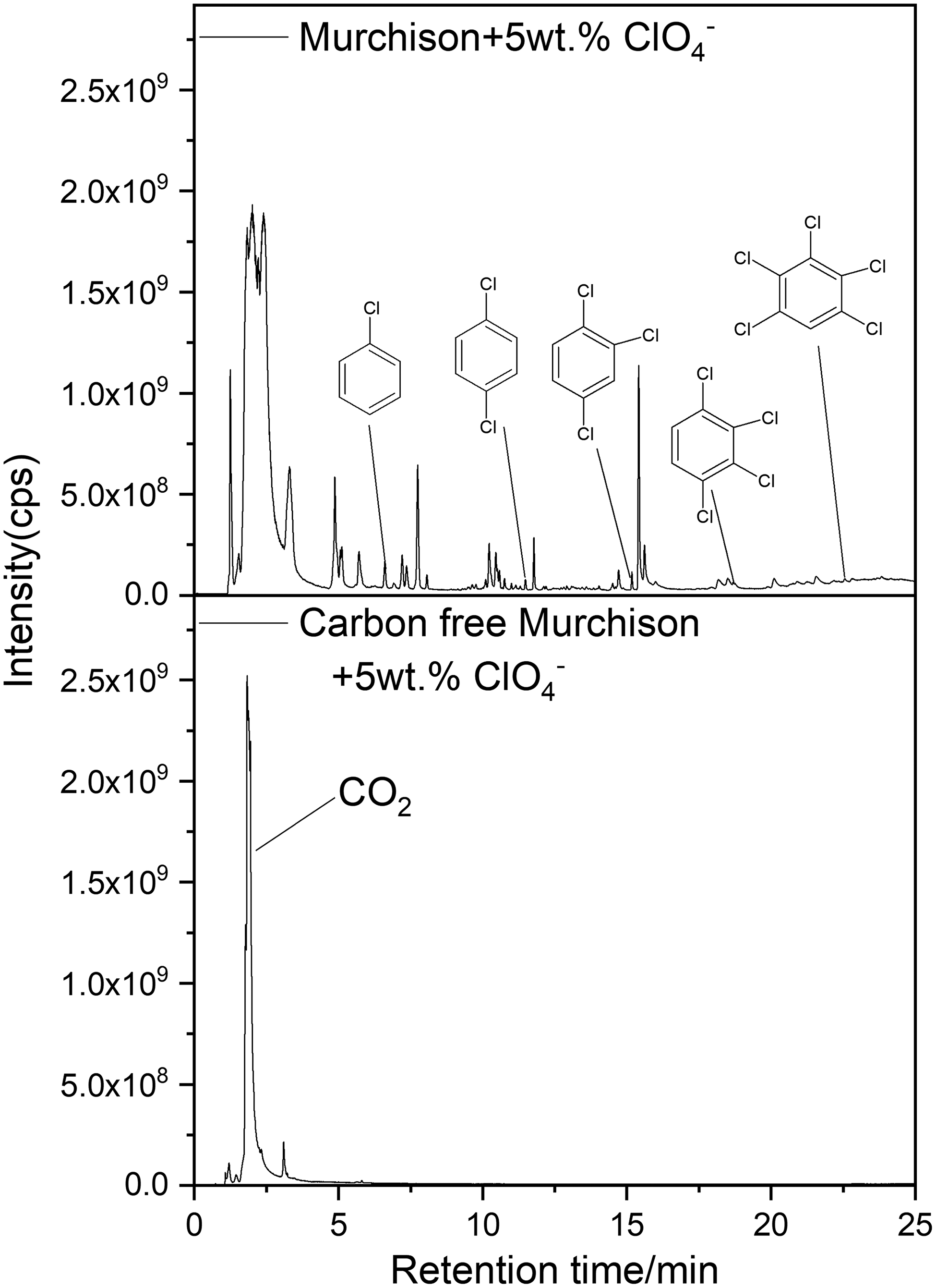
Chromatogram of flash pyrolysis of Murchison and carbon-free Murchison with calcium perchlorate (chloro-bearing benzene and their isomers).
To confirm that the carbon source of the Cl-bearing organic compounds is from the Murchison sample, Murchison residue (named as carbon free Murchison) was collected after the pyrolysis (850°C) of the Murchison meteorite samples. As a control experiment, the Murchison residues were pyrolyzed at 850°C in the presence of calcium perchlorate. Carbon dioxide was the main product, and no other organics were identified in the chromatogram.
4. Discussion
4.1. The mechanism of MTBSTFA/DMF degradation at different temperatures
Increasing the (flash) pyrolysis temperature resulted in an increased number of Si-bearing compounds, a decreased number of TBDMS-bearing (i.e., derivatized) compounds, and increased aromatization. When MTBSTFA was pyrolyzed at temperatures below 600°C (Fig. 3 and Fig. 9), MSTFA, BSW, MSW, TBDMS, and TBDMS-bearing compounds were the main products detected, in agreement with previous studies (Schummer et al., 2009; Malespin et al., 2018).
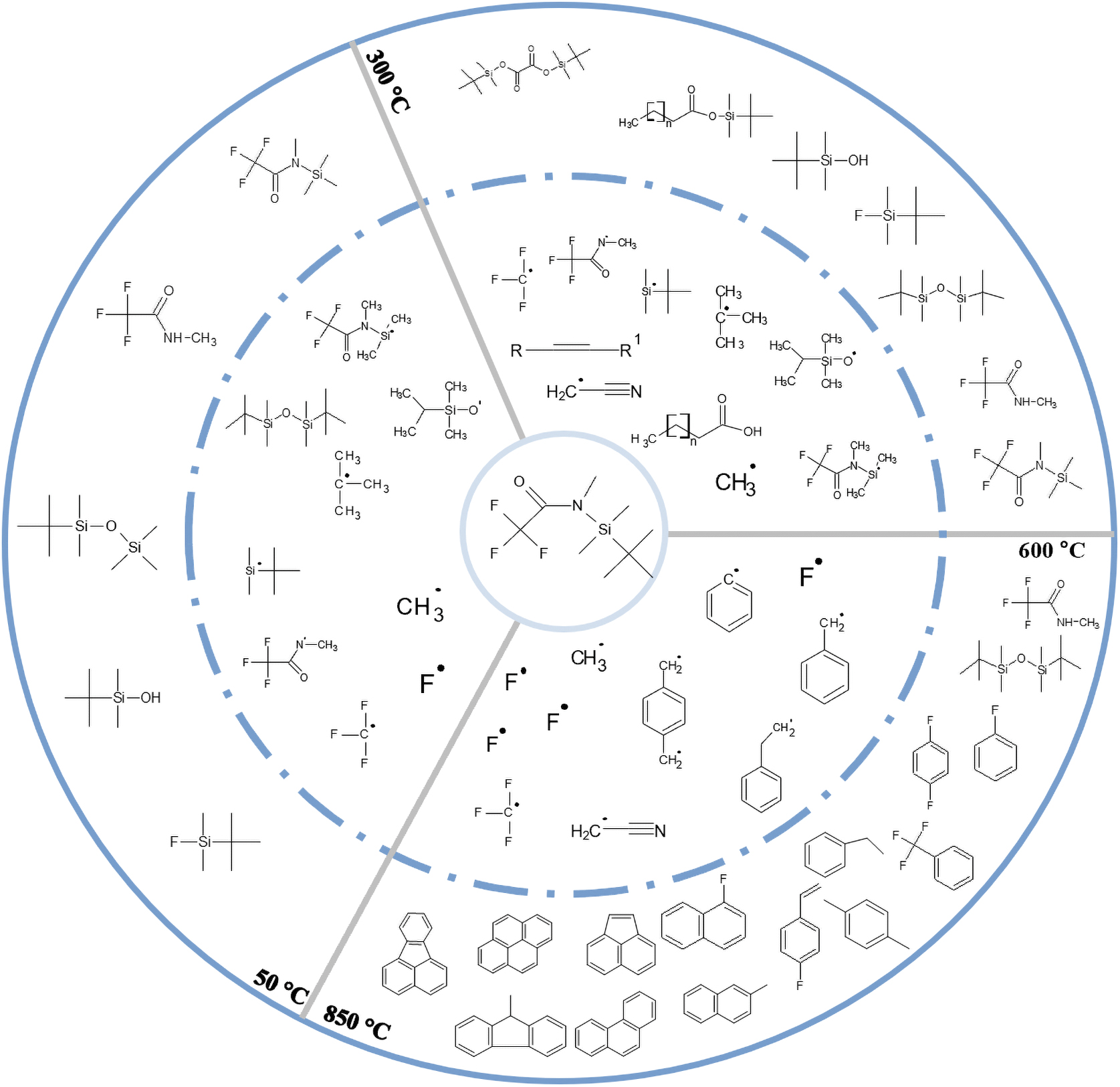
Distribution of the products detected from MTBSTFA flash pyrolysis at different temperatures. Color images are available online.
However, the high degree of aromatization observed at pyrolysis temperatures of 850°C implies that increased temperatures promoted the formation of abundant active radicals (e.g., F•, •CH3, and •NH2) from the cracking of F-C, N-Si, Si-C, and N-C bonds of MTBSTFA. The increased production of fluorine radicals at higher temperatures also enhanced the formation of nitrogenous heterocycles and F-containing compounds (Fig. 9 and Fig. 10). The cracking of MTBSTFA at high temperature during flash pyrolysis appears to significantly decrease the efficiency of derivatization. When the temperature is lower than 300°C, fewer products are detected. We, therefore, conclude that the MTBSTFA derivatization should be operated below 300°C for flash pyrolysis.
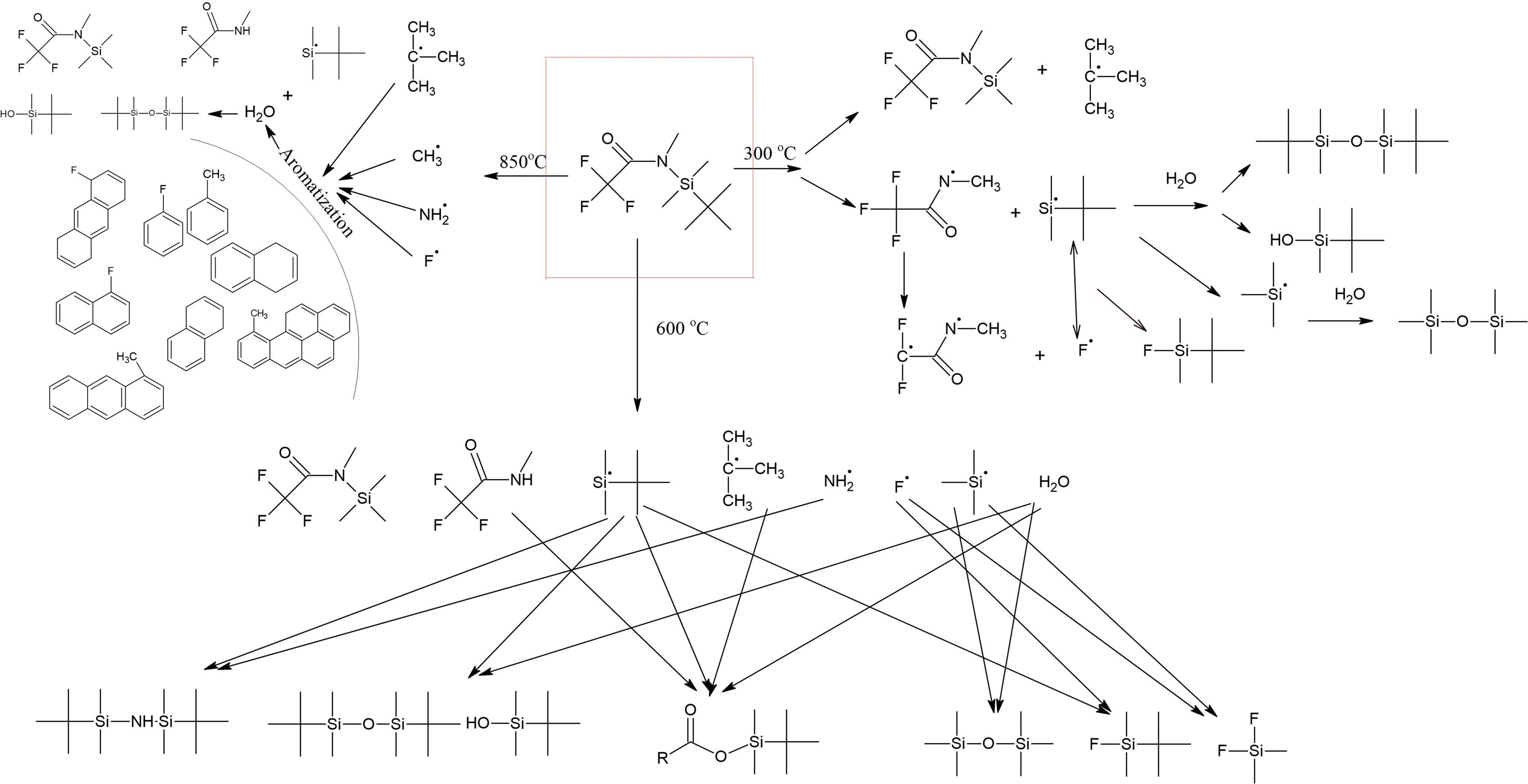
Possible reaction pathways of MTBSTFA pyrolyzed at different temperatures. Color images are available online.
The products of MTBSTFA/DMF pyrolysis when using an SAM-like heating ramp were different than those resulting from flash pyrolysis, especially at high temperature (600°C and 850°C). This is because the heating rate affects the internal reactions of pyrolysis products, even when the final pyrolysis temperature is the same (Angin, 2013). The difference in volatile products from MTBSTFA/DMF pyrolysis between the SAM-like pyrolysis and the flash pyrolysis indicates the difference in timing of the reactions, which, in turn, leads to different secondary reactions. When the flash pyrolysis temperature is lower than 300°C, only some main products are formed, such as MSTFA, BSW, and MSW.
However, the products of MTBSTFA/DMF formed during the SAM-like ramp at 600°C and 850°C were almost in alignment with the products from the flash pyrolysis at 300°C, demonstrating that MTBSTFA/DMF can be used for derivatization when using an SAM-like ramp pyrolysis even for high final temperatures. This limitation of the number of products observed after an SAM-like ramp is obviously important for in situ analyses, as it will limit the risk of misinterpretation in attributing identifications to organic molecules detected in the analyzed sample.
Finally, under high temperature conditions, we conclude that it would be difficult to determine the origin of organic compounds detected in experiments performed on Mars. There are simply too many products from MTBSTFA (above 600°C), DMF (above 600°C), and MTBSTFA/DMF flash pyrolysis (above 300°C). Therefore, the MTBSTFA/DMF mixture should be used at temperatures lower than 300°C to limit this effect.
4.2. The mechanism of MTBSTFA/DMF pyrolysis in the presence of calcium perchlorate
Calcium perchlorate releases O2 and Cl2 when heated above its decomposition temperature; thus, any organic matter present in the samples may be combusted (Glavin et al., 2013). Perchlorate-induced combustion of MTBSTFA was inferred to be the source of CO2 observed in SAM experiments (Leshin et al., 2013). For this reason, the abundance of CO2 from MTBSTFA/DMF pyrolysis with Ca(ClO4)2, using a flash pyrolysis and an SAM-like ramp pyrolysis, was investigated (Fig. 11). When MTBSTFA/DMF was pyrolyzed at temperatures below 300°C, there were no obvious changes in the CO2 abundance, even with an increase in calcium perchlorate. However, the increase in CO2 abundance with an increase in calcium perchlorate concentration at pyrolysis temperatures between 300°C and 850°C is due to the decomposition of calcium perchlorate, which includes three main stages (Migdał-Mikuli and Hetmańczyk, 2008).
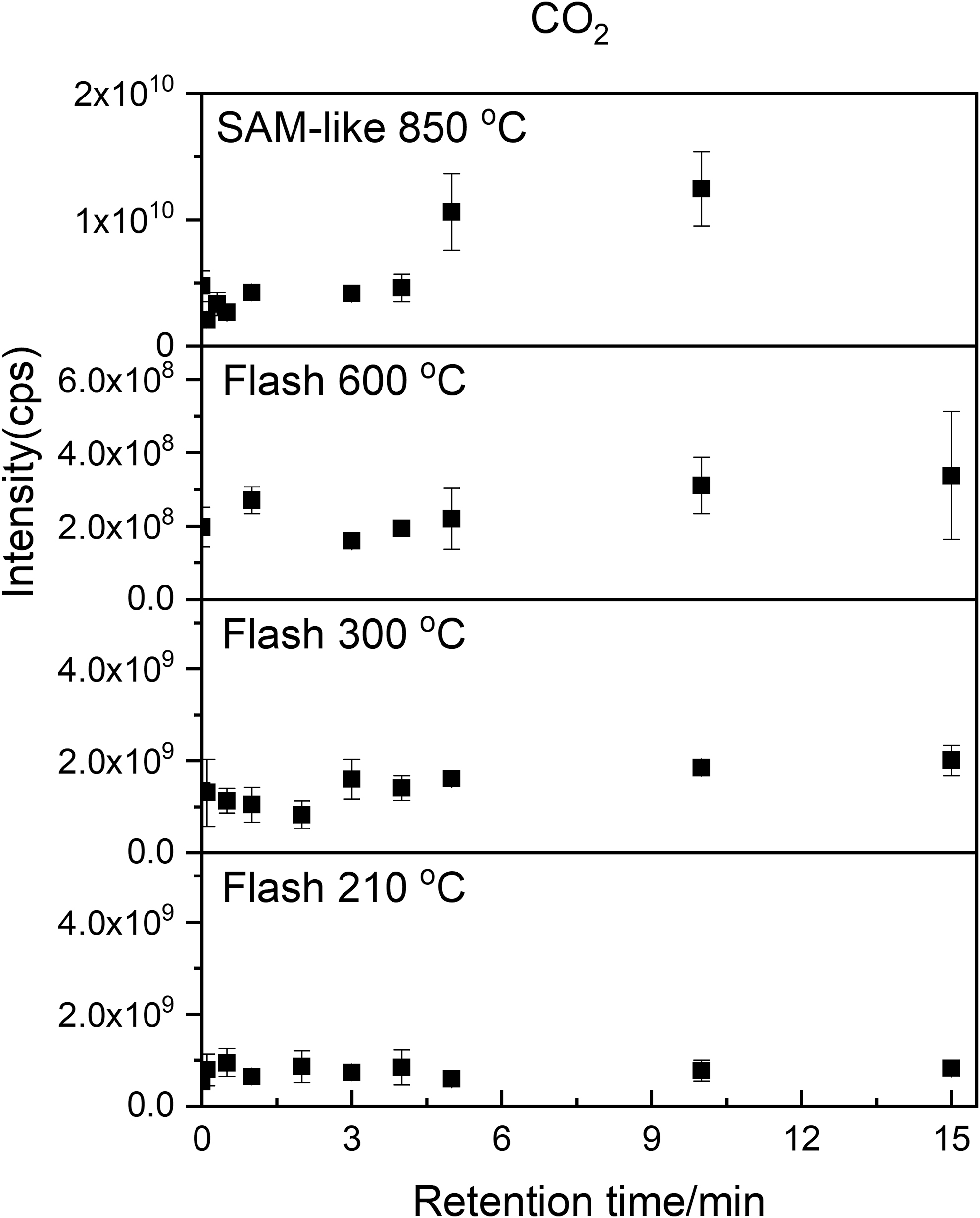
Abundance of CO2 from MTBSTFA/DMF pyrolysis with Ca(ClO4)2 across different conditions.
The first stage is the process of dehydration, as shown in Reaction (1). The second stage is the phase transition of solid to melted calcium perchlorate, according to the differential scanning calorimetry curve at 346°C to 416°C, as shown in Reaction (2). The third stage is the decomposition of Ca(ClO4)2, which happens concurrently with the formation of CaCl2 and the release of O2 at about 462°C (3). When water is present, CaCl2 could react with H2O and release HCl at pyrolysis temperatures higher than 450°C (Glavin et al., 2013), as shown in Reaction (4).

We observed that the abundance of O2 released from the decomposition of calcium perchlorate increased slightly with the increase in the concentration of calcium perchlorate. As more calcium perchlorate was added, more CO2 was formed and detected when the pyrolysis temperature was higher than 600°C (for both flash and SAM-like pyrolysis). This demonstrates that some, but not all, of the carbon from the MTBSTFA/DMF derivatization reagent was oxidized by O2 to CO2, since the abundance of the main products of MTBSTFA, such as MSTFA, BSW, and MSW, did not show a significant decrease with increasing calcium perchlorate. For example, the abundance of BSW was significantly higher than of CO2 (e.g., roughly 2800 times higher than the yield of CO2) during the pyrolysis of MTBSTFA/DMF in the presence of 15 wt % of calcium perchlorate.
These results suggest that the presence of calcium perchlorate will not influence the performance of MTBSTFA/DMF during the derivatization process in the presence of natural samples, a result that is consistent with results obtained by Glavin et al. (2013).
Chlorinated compounds have become a hot topic since the detection of chlorine-bearing products at Mars (Biemann et al., 1977). The origin of the carbon and chlorine components of these compounds is controversial. There are two main possible explanations for the carbon source and for the chlorine source of these chlorinated compounds, including either source that is indigenous to the martian sample and/or from contaminants present in the sample handling chain and from leaked reagents (Glavin et al., 2013; Freissinet et al., 2015; Kenig et al., 2016).
As MTBSTFA/DMF is one of the derivatization reagents onboard SAM and MOMA, it is essential to understand the possible chlorinated compounds that can be formed during the pyrolysis of MTBSTFA/DMF in the presence of perchlorate salts such as calcium perchlorate. In previous SAM and MOMA studies, chlorinated compounds, such as chloromethane, chloromethylpropenes, and chlorobenzenes, have been reported, as shown in Table 3.
The Chlorinated Compounds That Have Been Detected in Previous Sample Analysis at Mars and Mars Organic Molecule Analyzer Studies
In this study, only chloromethane and TBDMS-Cl were detected in the presence of calcium perchlorate. Chloromethane was only present after the SAM-like ramp pyrolysis, suggesting that a low percentage of chloride present in the GC-MS system can contribute to the formation of chloromethane.
The abundance of chloromethane was relatively low after the pyrolysis with a final temperature of 300°C, since this temperature is lower than the decomposition temperature of calcium perchlorate, meaning that theoretically no chloride is released during the pyrolysis process. When the temperature was increased up to 850°C, the yield of chloromethane increased slightly with an increase in the percentage of calcium perchlorate (Fig. 12). This result illustrates that the chloromethane detected in SAM experiments could be partially from MTBSTFA/DMF degradation in the presence of calcium perchlorate, as suggested by previous studies (Summons et al., 2019; Szopa et al., 2020).
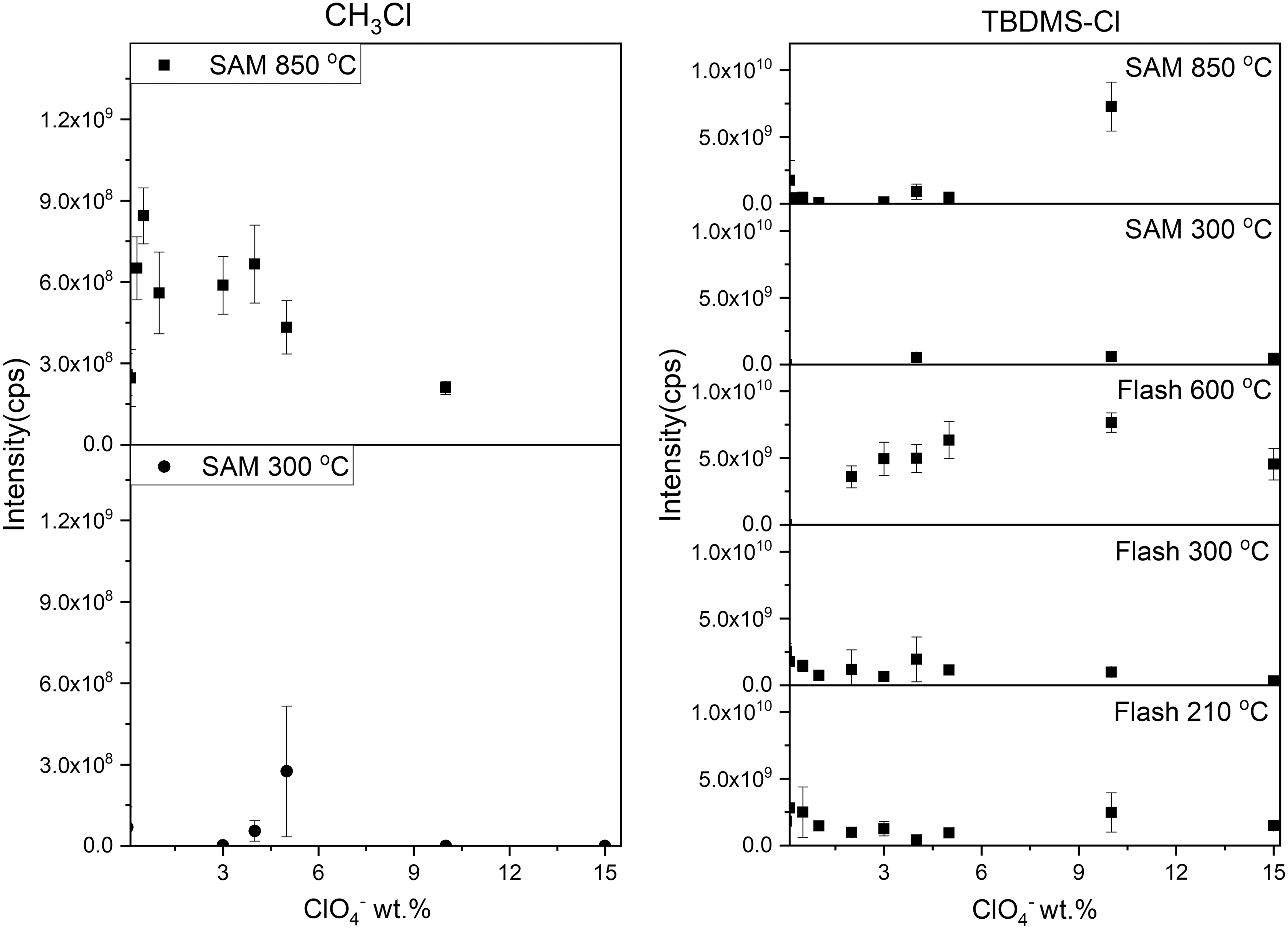
Chlorinated compounds detected from the pyrolysis of MTBSTFA/DMF with calcium perchlorate.
Unlike chloromethane, TBDMS-Cl was detected in both the flash pyrolysis and the SAM-like ramp pyrolysis (Fig. 12). Because the degradation of calcium perchlorate occurs after 300°C, its abundance was the highest after flash pyrolysis at 600°C, and the yield of TBDMS-Cl increased consistently with an increase in the percentage of calcium perchlorate. This chemical species has been detected among the pyrolysis products of the Rocknest soil sample that was analyzed on Mars (Buch et al., 2013). It could be formed during the reaction of the TBDMS molecule with the Cl− ion when calcium perchlorate decomposed to CaCl2 (Migdał-Mikuli and Hetmańczyk, 2008).
It should be noted that neither dichloro-related compounds nor chlorobenzene were detected in this study. If chlorobenzene was one of the pyrolysis products of MTBSTFA/DMF and calcium perchlorate, benzene-bearing substances are expected to be formed (Miller et al., 2016). However, the aromatization of organic compounds occurs when pyrolysis temperatures are higher than 600°C (He et al., 2017, 2019b) and, additionally, no chlorobenzene is detected after a higher temperature SAM-like pyrolysis with a final temperature of 850°C.
To further study the mechanism of MTBSTFA/DMF degradation, the stepwise pyrolysis of MTBSTFA/DMF from 50°C to 1000°C, with and without calcium perchlorate, was conducted. Figure 13 shows the chromatograms of MTBSTFA/DMF (4:1) after stepped pyrolysis with 15 wt % of ClO4 − at different temperatures. Most of the MTBSTFA/DMF was decomposed between 50°C and 100°C, and the TBMDS functional group was formed. This shows an important advantage of MTBSTFA, which can be used as a derivatization reagent at low temperatures. The abundance of CO2 increased with increasing pyrolysis temperature and was the highest between 300°C and 500°C, which means that the O2 was formed during the decomposition of calcium perchlorate, combusting some of the carbon from the pyrolysis system.
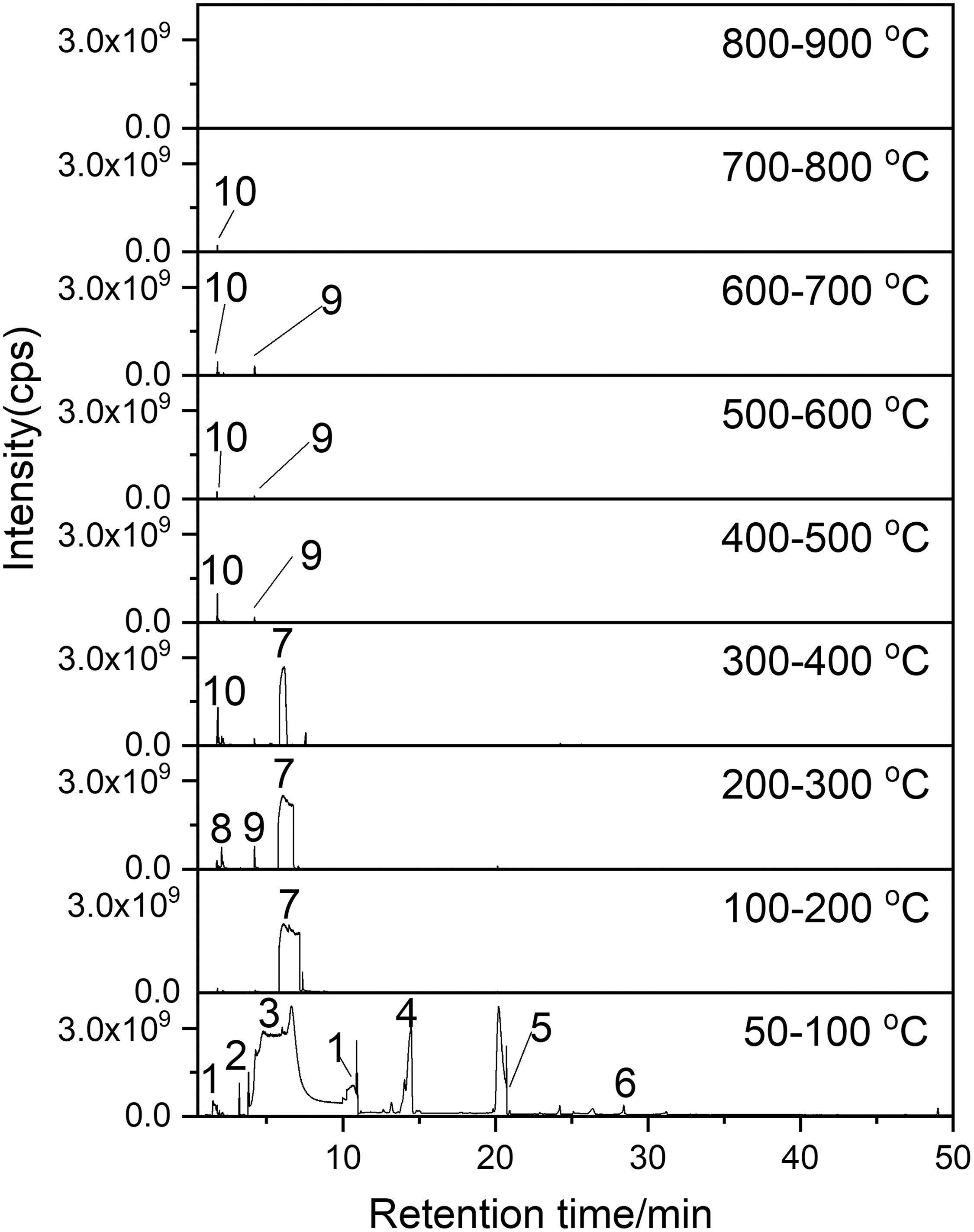
Chromatograms of MTBSTFA/DMF (4:1) stepped pyrolysis with 15 wt % of ClO4 − at different temperatures. Peak 1: MSW; 2: TBDMS-F; 3: TFMA; 4: MSTFA; 5: BSW; 6: Tris(trimethylsilyl)borate; 7: DMF; 8: trimethylamine; 9: N,N-dimethyltrifluoroacetamide; 10: Carbon dioxide.
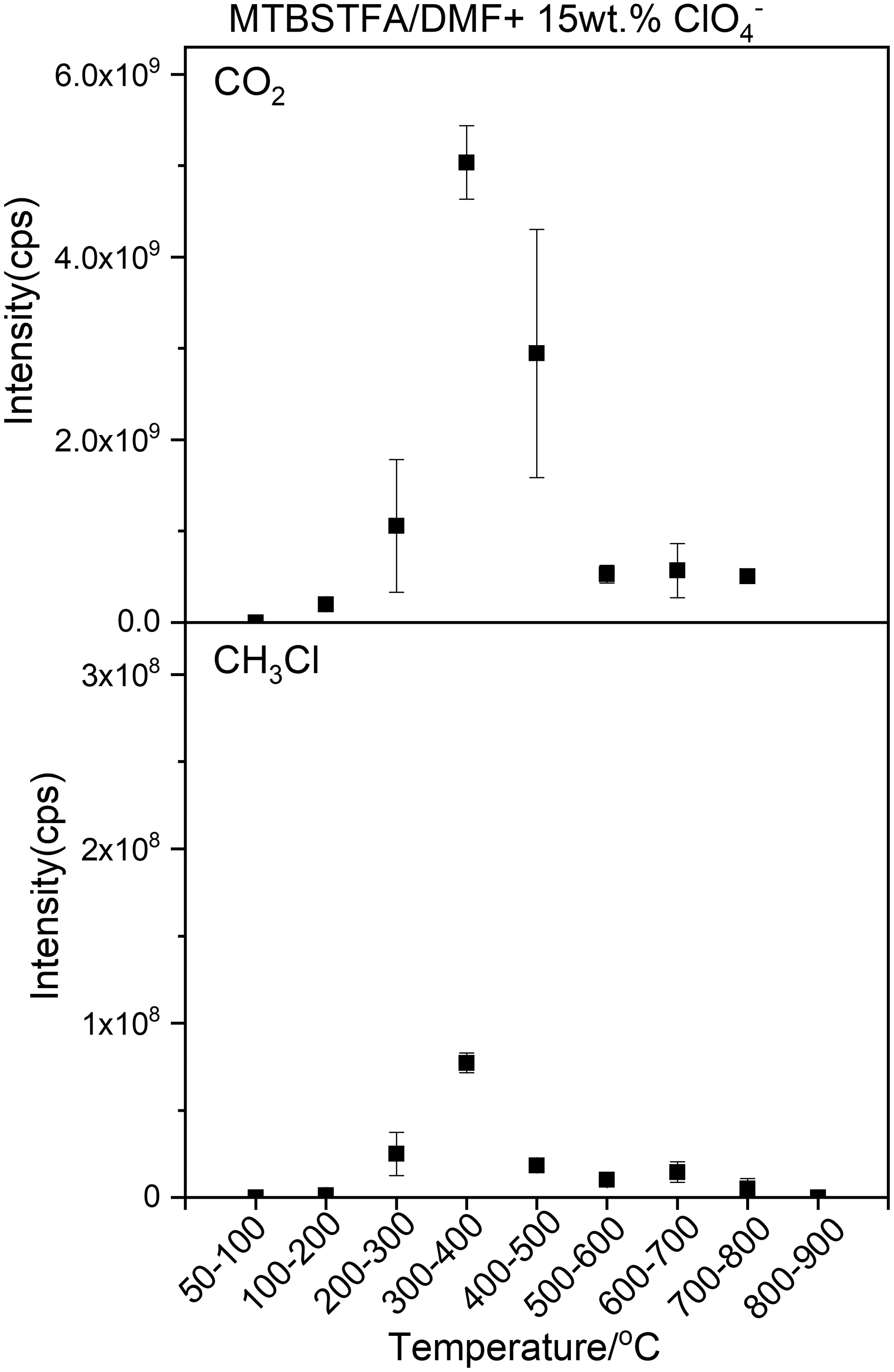
Distribution of CO2 and CH3Cl of MTBSTFA/DMF (4:1) step pyrolysis with 15 wt % of ClO4 − at different temperatures.
In addition, chloromethane was formed and detected primarily during the step pyrolysis of MTBSTFA/DMF from 200°C to 500°C (Fig. 13). When the pyrolysis temperature was lower than 300°C, the calcium perchlorate was not sufficiently degraded, so there was no overlap between the degradation of MTBSTFA/DMF and calcium perchlorate. The nondetection of chlorobenzene after SAM-like pyrolysis in our experiments demonstrates that MTBSTFA/DMF cannot be a source of chlorobenzene in SAM, which is consistent with the conclusions of Freissinet et al. (2015). Our results suggest that the presence of calcium perchlorate has no obvious influence on the performance of MTBSTFA/DMF.
4.3. Consequences on the origin of chlorine-bearing organic molecules detected from the pyrolysis of martian rock samples with the SAM experiment
Chlorobenzene (∼150–300 ppbw) has been detected by Viking (Guzman et al., 2018) and by the SAM experiment onboard the Curiosity rover (Freissinet et al., 2015). Both functionalized aromatic compounds indigenous to the martian sample and MTBSTFA/DMF have been considered as possible sources of the carbon component of the chlorobenzene (Glavin et al., 2013; Leshin et al., 2013). However, since no chlorobenzene was detected after the pyrolysis of MTBSTFA/DMF in the presence of calcium perchlorate in this study, MTBSTFA/DMF is not a likely source of the carbon component of the chlorobenzene detected by SAM. To test the hypothesis of indigenous organic compounds as the source of the chlorobenzene, 5 wt % calcium perchlorate was applied to a sample of the Murchison meteorite and underwent flash pyrolysis at 850°C.
4.3.1. The formation of organic compounds from the pyrolysis of the Murchison meteorite
Several organic compounds have been detected in samples of the Murchison meteorite, including soluble organic compounds such as sugar derivatives (Cooper et al., 2001), amino acids (Callahan et al., 2014), nucleobases (Martins et al., 2008), and amines and amides (Hayatsu et al., 1975). Carboxylic acids, which could be decomposed easily when the Murchison sample is pyrolyzed at high temperatures, are the most abundant (330 ppm) among these soluble organic compounds (Krishnamurthy et al., 1992).
The insoluble carbon present in the Murchison meteorite is also mainly in the form of aromatic structures; only 20% to 30% of the carbon constitutes aliphatic bonds, which represents the aliphatic bridge among aromatic units (Remusat, 2014). These macromolecular structures could be destroyed by thermal pyrolysis and decomposed into light aromatic and polyaromatic compounds (He et al., 2017, 2019b; Yan et al., 2018). Indeed, mainly aromatic compounds were identified after the flash pyrolysis at 850°°C of the Murchison meteorite (Fig. 7). Remusat et al. (2005) also detected aromatic compounds such as benzene, naphthalene, and pyrene from the pyrolysis of the Murchison meteorite at 900°C.
In addition, phenylpropiolic acid was detected in our results, which could be from the decomposition of the skeleton structure of insoluble organic matter present in the Murchison sample. This is consistent with results that suggest the presence of carboxylic acid functional groups in the molecular modeling of Murchison inorganic matters (Derenne and Robert, 2010).
4.3.2. The formation of Cl-containing compounds from the pyrolysis of the Murchison meteorite
In this study, Murchison samples and calcium perchlorate were pyrolyzed at 850°C, which was high enough to produce Cl• radicals. With the degradation of the skeleton structure of the Murchison sample, a huge number of aromatic units, especially benzene radicals with one or more active sites, could be formed. The formation of benzene radicals could accelerate the formation of chlorine-bearing aromatics. Indeed, chlorobenzene, di-, tri-, tetra-, and penta-chlorobenzene were detected, with chlorobenzene as the most abundant of the Cl-bearing aromatics detected (Fig. 8). No Cl-bearing aromatics were formed when the Murchison residue was pyrolyzed with calcium perchlorate, which demonstrates that the organic carbon present in the Murchison meteorite was the carbon source of Cl-bearing aromatic compounds.
Carboxylic acids containing a benzene ring, rather than benzene or toluene, are the preferred precursor of chlorobenzene detected by SAM (Miller et al., 2016). The organic compounds contained in the Murchison sample, such as carboxylic acids, aromatic hydrocarbons, and aliphatic hydrocarbons (Remusat, 2014), are possible precursors of the Cl-containing aromatics detected after the reaction of the Murchison sample and calcium perchlorate. Szopa et al. (2020) also reported that polycyclic aromatic hydrocarbons, amino acids, and carboxylic acids would be plausible organic precursors of the dichlorobenzene isomers (∼0.5–17 ppbw) and trichloromethylpropane detected with SAM.
Therefore, our results confirm that indigenous carbon, especially aromatic units, could be the carbon source of chlorinated benzenes detected on Mars by Viking and Curiosity's SAM (Freissinet et al., 2015; Guzman et al., 2018; Szopa et al., 2020). However, the effect of sulfur- and nitrogen-bearing functional groups, especially as components of aromatic compounds, on the formation of Cl-bearing compounds will need to be studied further in the future.
5. Conclusions
Here, we report the pyrolysis products of MTBSTFA/DMF at the different temperatures of 210°C, 300°C, 600°C, and 850°C, in both the absence and presence of calcium perchlorate. Results demonstrate that MTBSTFA/DMF can be used effectively below 300°C during flash pyrolysis, resulting in relatively few products. TFMA, MSW, and BSW were the main products, formed after the cracking of the N-Si bond from the TBDMS derivatization functional group during the pyrolysis process. Far more F-containing compounds were formed when the pyrolysis temperature was increased to 850°C, which demonstrates that the F-C bond breakage is enhanced at high temperature. Various aromatics were formed, such as benzene, toluene, naphthalene, fluoranthene, and pyrene. Chloromethane and chloro-tert-butylmethylsilane were also detected.
In addition, compared with the numbers of products of MTBSTFA/DMF flash pyrolysis, less products of MTBSTFA/DMF were detected during SAM-like ramp pyrolysis across all final temperatures. Therefore, we conclude that MTBSTFA/DMF can be used with a slow heating rate with a final temperature up to 850°C. The presence of calcium perchlorate has no obvious effect on the ramp pyrolysis of MTBSTFA/DMF, which is additional validation that this reagent is a good fit for the SAM and MOMA experimental operations. Finally, our results confirm that the chlorobenzene that has been detected by SAM is probably from the indigenous carbon (especially macromolecular aromatic structures) present in the martian sample.
Footnotes
Acknowledgments
The authors are grateful for the support of the French Space Agency (Centre National d'Etudes Spatiales) and SAM/MOMA funding, and the CSC scholarship (201701810036).
Author Disclosure Statement
No competing financial interests exist.
Funding Information
Supplementary Material
Supplementary Figure S1
Supplementary Figure S2
Supplementary Figure S3
Supplementary Figure S4
Supplementary Figure S5
Supplementary Figure S6
Supplementary Figure S7
Supplementary Figure S8
Supplementary Table S1
Abbreviations Used
Associate Editor: Christopher McKay
References
Supplementary Material
Please find the following supplemental material available below.
For Open Access articles published under a Creative Commons License, all supplemental material carries the same license as the article it is associated with.
For non-Open Access articles published, all supplemental material carries a non-exclusive license, and permission requests for re-use of supplemental material or any part of supplemental material shall be sent directly to the copyright owner as specified in the copyright notice associated with the article.
