







Abstract
Responsible space exploration is a cornerstone of planetary protection, particularly at sites in the Solar System with a high potential for the existence of extant life. To limit bioburden, spacecraft assembly occurs in cleanroom facilities. Cleanroom levels are established through air particulate counters that can assess particle size distribution and concentration but cannot detect bioaerosols. Additionally, these devices do not detect in real-time, which poses a risk to critical flight hardware assemblies or even mission timelines. A first-of-its-kind study was conducted to simultaneously detect bioaerosols, inert particles, and their size distribution in real-time in operational spacecraft assembly cleanrooms at NASA's Jet Propulsion Laboratory in Pasadena, CA, USA, using the BioVigilant IMD-A® 350 (Azbil Corporation, Tucson, AZ, USA). The IMD-350A continuously sampled during operations and no-operation 6 h intervals in two facilities per cleanroom class: ISO 6, ISO 7, and ISO 8. A positive correlation was established between human presence in the cleanroom and elevated bioaerosol counts. Smaller particles of sizes 0.5 and 1 μm constituted an average ∼91% of the total bioaerosols detected in At Work intervals across all ISO classes observed. The results of this study were used to establish bioburden particulate thresholds for the most stringent JPL cleanrooms used in the assembly of the Sample Caching System for the Mars 2020 Perseverance rover.
Introduction
Planetary Protection is a scientific discipline that protects explored environments in the Solar System from Earthborn biological contamination, so-called forward contamination. Likewise, it would protect Earth from potential biological contamination that may someday be returned from an explored celestial body, so-called back contamination. The search for extraterrestrial environments capable of harboring life is relevant to current NASA directives. Contamination of these sites by spacecraft transmitting Earthborn microbes remains a significant area of concern for NASA planetary protection measures (National Research Council, 2006). Such inadvertent contamination could jeopardize the scientific integrity of future life-detection missions. Thus, space missions are regulated by stringent, objective-specific, internationally agreed-upon requirements established by the Committee on Space Research (COSPAR) to prevent the contamination of pristine celestial environments (COSPAR, 2002). NASA adheres to COSPAR guidelines with a planetary protection policy defined by the NASA Policy Directive 8020.7G: Biological Contamination Control for Outbound and Inbound Planetary Spacecraft (NASA, 2013). This directive requires that all probe, lander, and Earth-return missions with target bodies where “the chemical evolution and/or the origin of life” could be elucidated and/or “scientific opinion provides a significant chance that contamination could compromise future investigations” assemble and maintain spacecraft and payloads in cleanrooms of ISO 8 or lower (NASA, 2011).
Cleanrooms are highly controlled, nearly aseptic environments with laminar flow and High-Efficiency Particulate Air (HEPA) filter systems that regulate particulate air density (particles/m3) to prevent contamination of sensitive assemblies such as medical devices and spacecraft. Cleanroom levels are certified to strict particulate air density limits established by the International Organization of Standards (ISO). To demonstrate, the classification “ISO 8” indicates a limit of 3,520,000 particles sized ≥0.5 μm per cubic meter of air; while ISO 7 suggests a limit of 352,000 particles sized ≥0.5 μm per cubic meter of air, and ISO 6 indicates a limit of 35,200 particles sized ≥0.5 μm per cubic meter of air (ISO, 2015).
Humans are known symbionts to diverse microflora, including bacteria, fungi, and archaea (Grice and Segre, 2011; Probst et al., 2013), and could be the critical transporters of aerosolized biological particles into the cleanroom airstream via skin shedding and regular working activity. This assumption, however, has not been systematically assessed. For interplanetary missions, cleanroom operators must use microbial barriers to prevent hardware contamination in the cleanroom, donning “bunny suits” comprising coverall gowns, hoods, hair and face coverings, gloves, and booties. Bunny suits are generally comprised of non-shedding plastic polymer fibers; however, detection of these fibers is outside the scope of this manuscript. Further cleanroom cleanliness is achieved by gowning antechambers, air showers, tacky doormats at cleanroom entry thresholds, and frequent wiping of work surfaces in the cleanroom with compatible solvents such as isopropanol and acetone.
Standard bioaerosol detection techniques involve multiple sample processing steps, have a minimum biomass requirement, and cannot provide the real-time, temporal resolution necessary to study the dynamics of extended bioaerosol monitoring periods. Intrinsic fluorescence-based bioaerosol detection systems are nondestructive and may be superior to conventional particle counting since they can be paired with cultivation-based bioburden assays to assess total particulates. In addition to particle size distribution and biological status detection, intrinsic fluorescence-based bioaerosol detection systems have been shown to detect even heat-stressed microbes, which are intrinsically unable to form colonies (Irie et al., 2014) and therefore are not detectable through culturing. A fluorescence-based bioaerosol detection system was used to show that activities such as removing HEPA filter grilles, turning off an air handling unit, and performing tasks that required personnel presence near the detection apparatus, such as cleaning and disinfection, led to a high generation of bioaerosols and presented a microbiological risk to the cleanroom (Sandle et al., 2014). The BioVigilant IMD-A® 350 (Azbil Corporation, Tucson, AZ, USA) is an air particle counter that can operate in real-time, continuously monitor, and simultaneously interrogate the particle size and biological status of airborne particles. It is a non-cultivation-based method with synchronized video and data collection capabilities for contamination point-source determination. IMD-A® 350 detects the presence of bioaerosols by simultaneously measuring the size and intrinsic fluorescence assessed by 405 nm the laser targeting three organo-fluorescent biomarkers: riboflavin (Vitamin B2), a coenzyme necessary for cellular function; nicotinamide adenine dinucleotide (NADH), a coenzyme found in all living cells; and dipicolinic acid (DPA), a compound found in endospores. The device is adaptable and can be placed in key areas of critical flight hardware assembly facilities for continuous monitoring when contamination event assessment and resolution are imperative to the scientific objectives of the mission and project timelines. The study's objective was to monitor size-resolved bioaerosols and inert particles during at-work and at-rest periods in Jet Propulsion Laboratory (JPL) spacecraft assembly cleanrooms to systematically assess human contamination risk to flight hardware. The findings of this study resulted in the development of biological contamination risk thresholds in the most stringent JPL cleanrooms used during the assembly of critical hardware for the Sample Caching System of the Mars 2020 Perseverance rover (Chen et al., unpublished data).
Materials and Methods
BioVigilant IMD-A® 350
The BioVigilant IMD-A® 350 (Azbil Corporation, Tucson, AZ, USA) is an air particle counter with distinct capabilities that include real-time operation, simultaneous detection of particle size (ranging from 0.5 to 10 μm) and biological status of aerosols, continuous monitoring, data collection software, video recording to detect point source contamination, and non-cultivation-based measurement. The device employs conventional particle counting to determine aerosolized particle size distribution while simultaneously measuring each particle's intrinsic fluorescence (or absence of fluorescence) interrogated by the laser with a wavelength of 405 nm. A broad profile of bioaerosols can be assessed through laser detection of three organo-fluorescent metabolites: riboflavin and nicotinamide adenine dinucleotide (NADH) are markers in the detection of metabolically active or vegetative bacteria and fungi, while dipicolinic acid (DPA) is used as an indicator for metabolically inactive or nonvegetative spores. Particle counts and biological status data were returned by the IMD-A® 350 PharmaMaster Software (Version 2.1.0.421), proprietary. This article refers to the “total particles” as the sum of the inert particle and biological particle counts and “bioaerosols” as biological particle counts. It is important to note that the IMD-A® 350 interrogates each particle as it passes through the detector to generate unique counts; thus, two biological particles entering the system simultaneously would be counted as one microbe. Likewise, two inert particles entering the system simultaneously would be counted as one inert particle.
Sampling method
At ISO levels 6, 7, and 8, two JPL spacecraft assembly cleanroom facilities were studied: ISO 8 (Facilities 1 and 2), 7 (Facilities 3 and 4), and 6 (Facilities 5 and 6). Airborne particulate matter was interrogated by the BioVigilant IMD-A® 350 air sampler in “continuous mode,” during a 6 h At Work and a 6 h At Rest period, in triplicate. Some At Rest data were only captured in duplicate due to the unavailability of the cleanroom facility for study. Periods were designated as At Work when working operators were present in the cleanroom and At Rest while there was no operator activity in the cleanroom. In the present study, we refer to cleanroom personnel as “operators.” During each 6 h sampling interval, air particles were sampled at 28.3 L/min (LPM), equaling 10,188 L of sampled air (10.19 m3) per interval. PharmaMaster Software returned particle counts and biological status data at a 10 s resolution, with particles size categories 0.5, 1.0, 3.0, 5.0, 7, and 10 μm. For each sampling interval, metadata including cleanroom temperature range, relative humidity, the average number of operators present, and cumulative average hours of operator presence in the cleanroom was recorded.
Results
Cleanroom metadata
Metadata for each cleanroom, including ISO level, temperature, humidity, facility volume, the average number of operators, and their presence in hours was collected and compiled with the BioVigilant results of the average total particle counts and average bioaerosols, Table 1. Of particular interest to this study was the number of operators and hours operators worked in each cleanroom, as it was hypothesized that increased operator presence would proportionately increase bioaerosols and total particles across all cleanroom classes. The ISO 7 Facility 3 cleanroom had the highest number of operators, five on average, and up to 23 ± 6 h of operator presence cumulatively, on average, during the 6 h sampling intervals. The average bioaerosols/m3 for this facility comprised over 75% of the Average Total Particles/m3 for this facility, suggesting a proportional relationship between operators, bioaerosols, and total particles. By contrast, in the smallest cleanroom with the least number of operators and least cleanroom operator presence in hours, the ISO 6 Facility 6 had zero average total particles and bioaerosols per cubic meter.
Operational Metadata Collected from Six JPL Cleanrooms
Operational Metadata Collected from Six JPL Cleanrooms
3.2. Bioaerosol size distribution in At Work cleanrooms
For each JPL cleanroom sampled during At Work, particle counts and their size distribution were used to calculate the relative percentage of bioaerosols. It was hypothesized that small bioaerosol percent contribution vastly outnumbered larger bioaerosols, which was demonstrated to be true across all cleanroom classes in this study (Figs. 1A, 1C, 2A, 2C, 3A). Relative percentages of small bioaerosols of sizes 0.5–1 micron were summed for each cleanroom. The average percentage of bioaerosols of 0.5–1 micron particles across all cleanroom ISO levels was 90.98% ± 0.063.
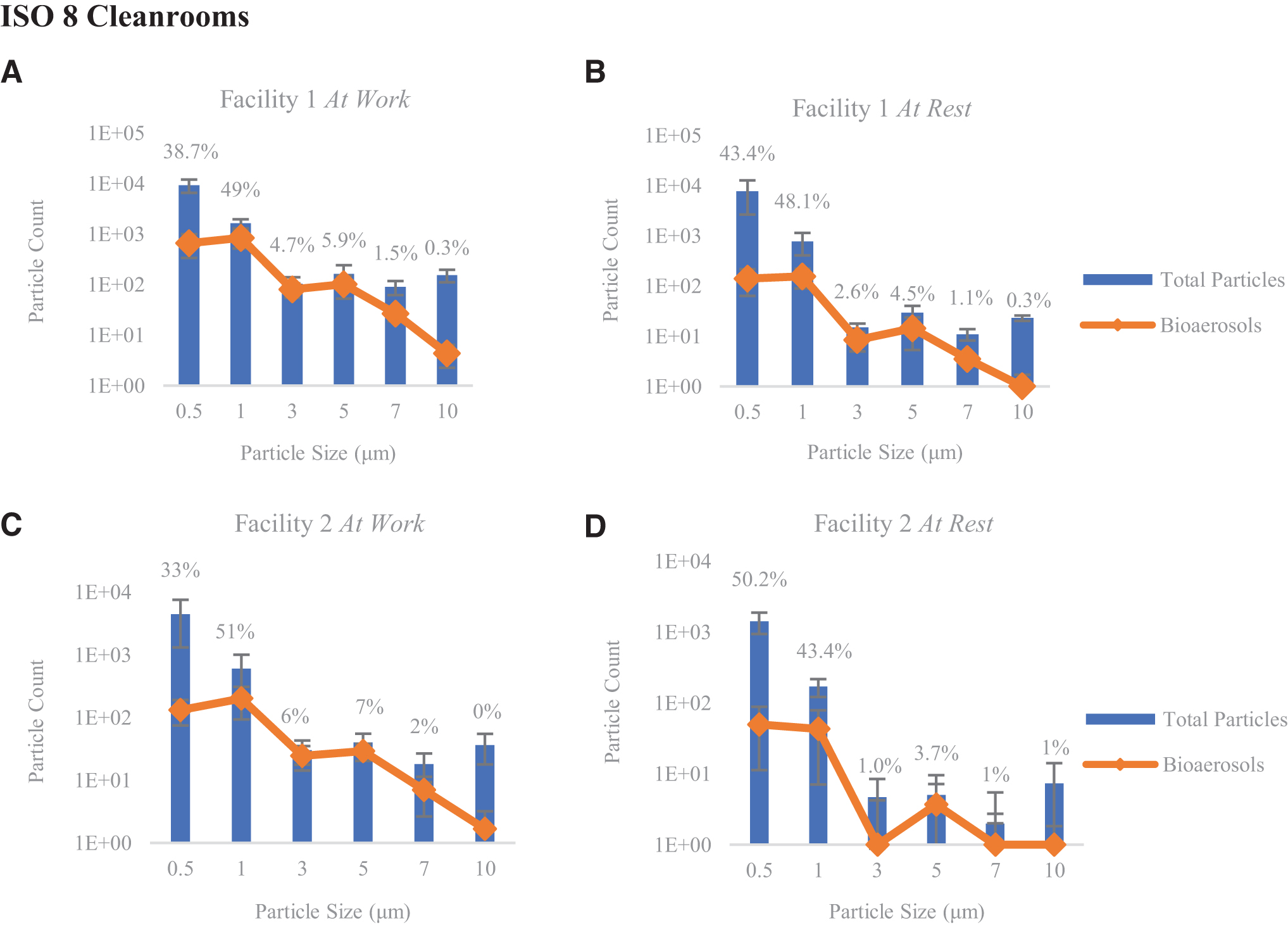
Biological and inert particle counts and size distribution (∓ SE) in two ISO 8 cleanrooms. Particle counting was performed in two JPL ISO 8 cleanrooms, Facility 1 and Facility 2, over three 6 h shifts: At Work (
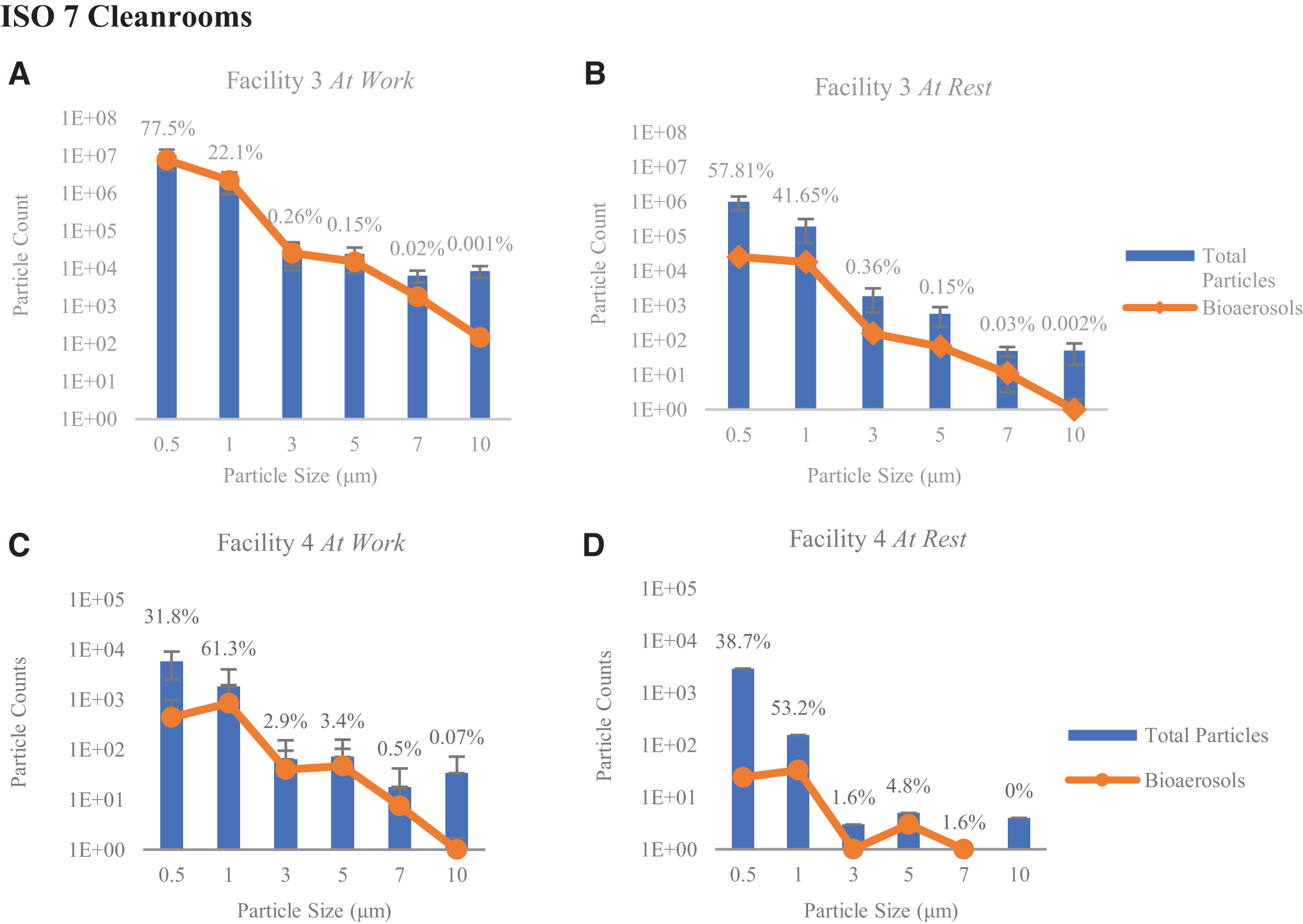
Biological and inert particle counts and size distribution (∓ SE) in two ISO 7 cleanrooms. Particle counting was performed in two JPL ISO 7 cleanrooms, Facility 3 and Facility 4, over three 6 h shifts: At Work (
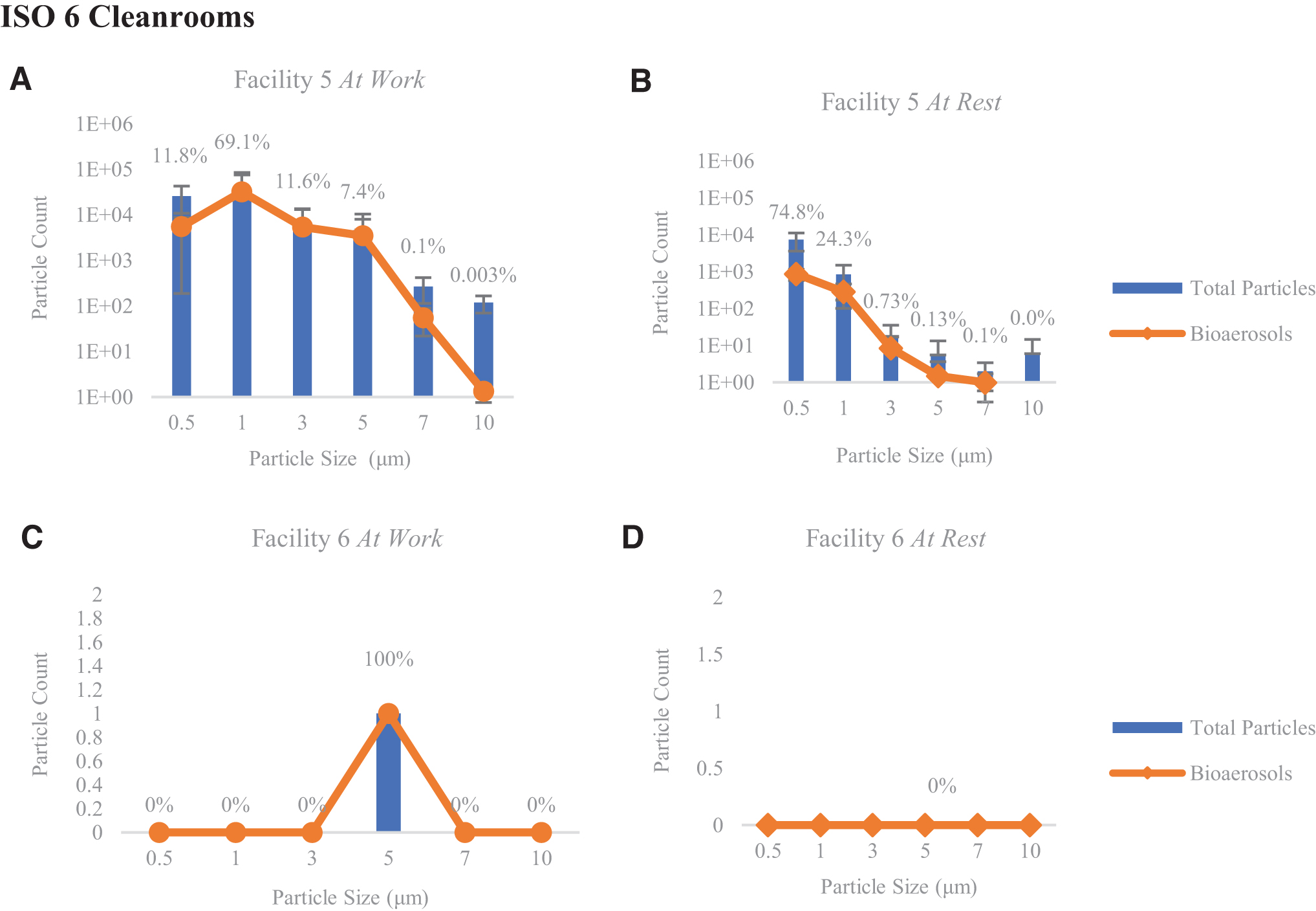
Biological and inert particle counts and size distribution (∓ SE) in two ISO 6 cleanrooms. Particle counting was performed in two JPL ISO 6 cleanrooms, Facility 5 and Facility 6, over three 6 h shifts: At Work (
3.3. Bioaerosol size distribution in At Rest cleanrooms
For each cleanroom, At Rest sampling using the IMD-A® 350 was performed continuously for 6 h with no operator presence in the cleanroom. Bioaerosol counts and size distribution were returned, and the relative percentage of bioaerosols was calculated. It was hypothesized that small bioaerosol percent contribution greatly outnumbered larger bioaerosols. Relative percentages of small bioaerosols of sizes 0.5–1 micron were summed for each cleanroom, and an average percentage of bioaerosols of 0.5–1 micron particles across all ISO levels of cleanrooms was determined to be 95.11 % ± 0.035 (Figs. 1B, 1D, 2B, 2D, 3B).
Size distribution results from BioVigilant air sampling support the hypothesis that total particles of size 0.5–1 micron outnumber larger particles across all ISO levels of cleanrooms during At Work and At Rest conditions. Our data indicate that there is at least a one log reduction between the total particle counts in small particles (of sizes 0.5–1 micron) compared to larger particles in every operational condition and across all levels of cleanroom (Figs. 1, 2, 3A, 3B). Facility 6 only had one bioaerosol count, of size 3 microns, throughout the At Work and At Rest periods (Fig. 3C, 3D). Additionally, total particle counts At Work and At Rest were compared; total particles At Work were observed as always greater than total particles At Rest across all cleanroom levels (Figs. 1, 2, 3A, 3B).
Particle counts coincide with human activity
This study aimed to elucidate the extent of human impact on inert particles and bioaerosol levels. Biological and total particle count data are expressed as hourly particle count events in the most high-traffic or highly occupied cleanroom, ISO 7 Facility 3. A significant difference was observed in total biological particle counts when comparing At Work and resting conditions in this cleanroom (p = 0.0264). An overall decrease to on average 10,000 particles was observed in resting periods after operators had departed working shifts, at about 17:00:00 (PST) (Fig. 4D). Bioaerosol levels increased during the arrival of operators, and the majority of the particles were of size 0.5–1 micron as shown in Fig. 4.
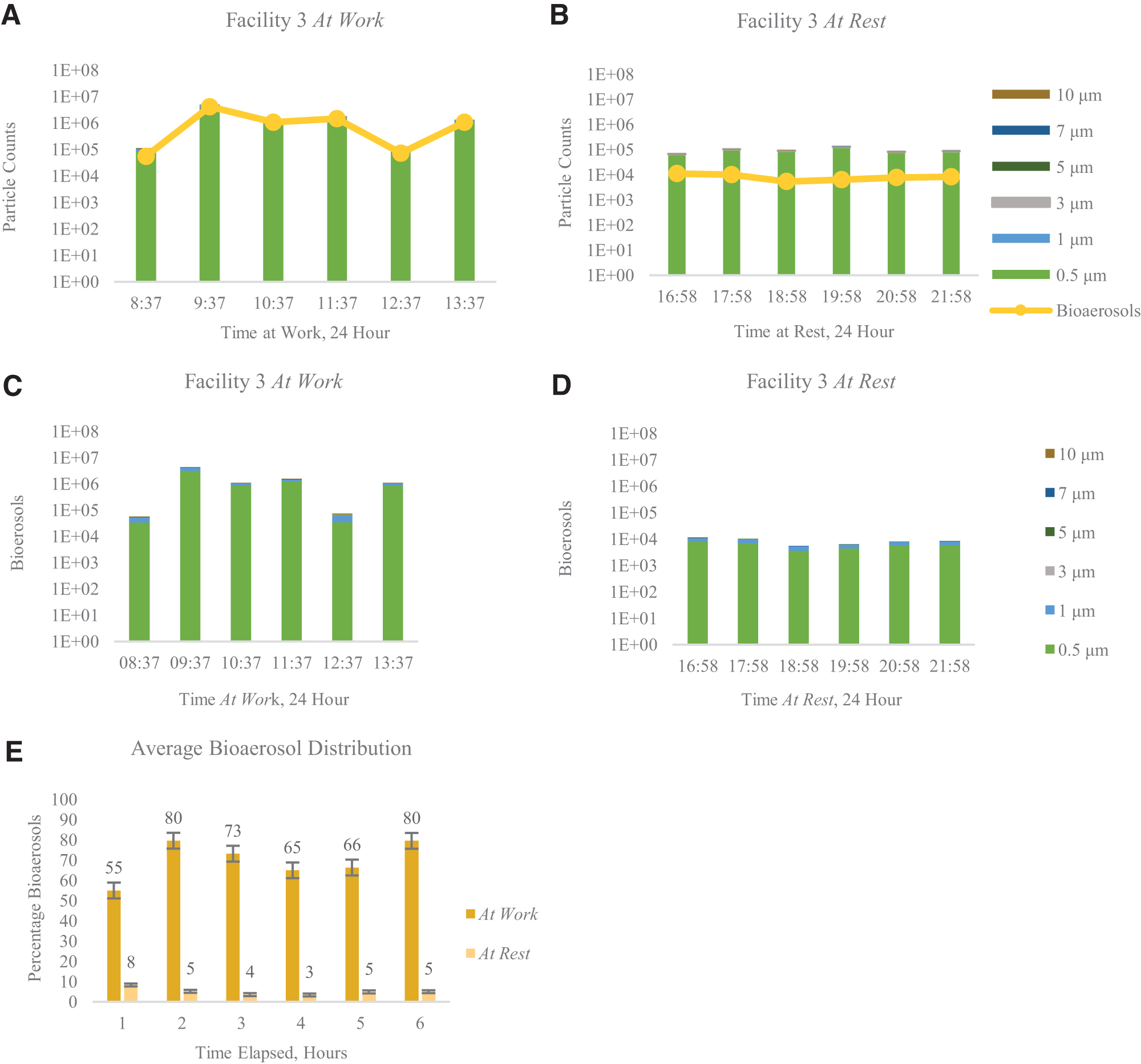
Biological particle counts and size distribution of particles in ISO 7 Facility 3 cleanroom. Particle count data derived from BioVigilant at 10 s resolutions was compiled to represent 6 h of At Work and At Rest shifts in high traffic, ISO 7 cleanroom, Facility 3. Bioaerosols are represented by trend lines in graphs (
It was hypothesized that increased operator presence in the cleanroom would proportionately increase bioaerosols and total particles across all cleanroom classes. The findings of this study suggest that cleanroom size, ISO level, number of operators, as well as number of hours of operation, influence cleanroom particulate levels across all classes; but these factors, as well as facility volume, relative humidity, and temperature range, must be studied more robustly to illuminate this relationship further. The results of BioVigilant air sampling indicate that cleanrooms across all ISO levels studied account for most bioaerosols of sizes 0.5–1 micron during At Work periods. However, for Facility 6, of ISO level 6, only one particle count, sized 3 microns, was observed throughout the triplicate work periods (Fig. 3C). Further study of ISO 6 or lower-level more stringent cleanrooms may be needed to support this hypothesis more systematically. These results may arise from the human transport of small bioaerosols into the cleanroom, which support the relationship between particles less than 0.5 and 1 micron and viable airborne microbes reported in hospital environments (Armadans-Gil et al., 2013).
Cleanrooms across all ISO levels studied accounted for a majority of bioaerosols of size 0.5–1 micron during At Rest period (Figs. 1B, 1D, 2B, 2D, 3B). Facility 6, of ISO level 6, had zero average particulate counts throughout the triplicate rest periods (Fig. 3D). Additionally, it was shown that there was at minimal a threefold reduction in bioaerosol particle counts from At Work to At Rest periods in all ISO levels (Figs. 1, 2, 3A, 3B). These results suggest that operators transport biological particles into the cleanroom, since lack of operators coincided with fewer bioaerosols in the cleanroom across all resting periods of non-operation. These results also support the hypotheses that HEPA filtration and laminar flow systems effectively remove all larger-sized biological particles. At the same time, smaller, suspendable bioaerosols remain afloat in the airstream created by the cleanroom filtration system.
Our data indicate that there is at least a one-logarithmic reduction between the total particle counts in small particles (of sizes 0.5–1 micron) compared to larger particles in every operational condition and across all levels of cleanroom (Figs. 1, 2, 3A, 3B). Facility 6 only had one bioaerosol count of size 3 microns throughout the At Work and At Rest periods (Fig. 3C, 3D). Additionally, total particle counts At Work and At Rest were compared; total particles At Work were observed as always greater than total particles At Rest across all cleanroom levels (Figs. 1, 2, 3A, 3B).
Given that the average biological particle distribution over the average 6 h At Work period for the most highly populated cleanroom in our study, ISO 7 Facility 3, ranged from 55% to as much as 80%, as compared to the At Rest periods where less than 10% of biological particles were observed, we can assume that humans are a source of biological material in the cleanroom airstream. Interestingly, an evident fluctuation in particle counts, both inert and biological, can be observed at the beginning of work shifts at 08:00:00–09:00:00 (PST), presumably, as more personnel arrived to support work in the cleanroom. Similarly, a nearly two-logarithm decrease in inert and biological counts can be observed during periods when operators may have gone on lunch break at 11:30:00–12:30:00 (PST) (Fig. 4A, 4C). This is supported by the levels of particulates observed during the At Rest periods, which remained relatively constant (Fig. 4B, 4C).
A positive correlation between surgical operation length and fine particulate dust load was shown by continuously monitoring hospital operating theaters (Scaltriti et al., 2007), and it was demonstrated that particle concentrations near patient beds were much higher than those taken near air inlets in hospital cleanrooms of varying ISO levels (Li and Hou, 2003). In domestic and office environments, it was shown that the presence of people was the most significant parameter causing elevated indoor bioaerosol counts (Kalogerakis et al., 2005). However, these studies poorly demonstrate particle dynamics in spacecraft assembly cleanrooms since contamination sources, maintenance protocols, microbial profiles in hospitals, surgical settings cleanrooms, and uncontrolled domestic and business premises may differ significantly from spacecraft assembly facilities. Our study was the first to systematically assess whether humans were essential transporters of biological aerosols into the cleanroom. We demonstrated that humans were a significant source of biological material in the cleanroom airstream, particularly in the particle size range of 0.5–1 micron, for both biological and inert particulates (Figs. 1–4). However, to better understand these findings, a suite of methodologies including fluid dynamics, modeling to account for facility metadata, and culture-based and DNA-based microbial bioburden assessment are recommended for future studies.
Conclusion
This study systematically assessed bioaerosol contamination risk during spacecraft hardware assembly at three facilities of varying ISO levels at NASA's Jet Propulsion Laboratory in Pasadena, California. The results of this study were used to establish the bioburden particulate thresholds for work areas in the most stringent JPL cleanrooms used in the assembly of critical hardware for the Sample Caching System of the Mars 2020 Perseverance rover, which in 2021 successfully collected and cached the first-ever cores of martian rock for potential future sample return to Earth. Those biological contamination control thresholds will be published in the Astrobiology special collection MARS 2020 Planetary Protection and Contamination Knowledge Investigations. The results of this study may apply to future critical cleanroom designs, improvement of bioaerosol transport models, and real-time quantification and mitigation of hardware contamination risk from human-transported biological and inert material. Further studies of cleanroom air particle transport dynamics are needed to systematically assess cleanroom particle profiles at various hardware assembly facilities in conjunction with microbial assays.
Footnotes
Acknowledgments
The research described in this publication was carried out at the Jet Propulsion Laboratory, California Institute of Technology, under a contract with NASA. The authors wish to express their gratitude to Taguhi Arakelian (JPL) for support during the cleanroom sampling and Peter Noverini (Azbil Corporation) for technical assistance.
Author's Disclosure
The authors declare that they have no competing interests.
Funding Statement
The research was carried out at the Jet Propulsion Laboratory, California Institute of Technology, under a contract with the National Aeronautics and Space Administration (80NM0018D0004).
Copyright Disclosure
© 2023. All rights reserved.