






Abstract
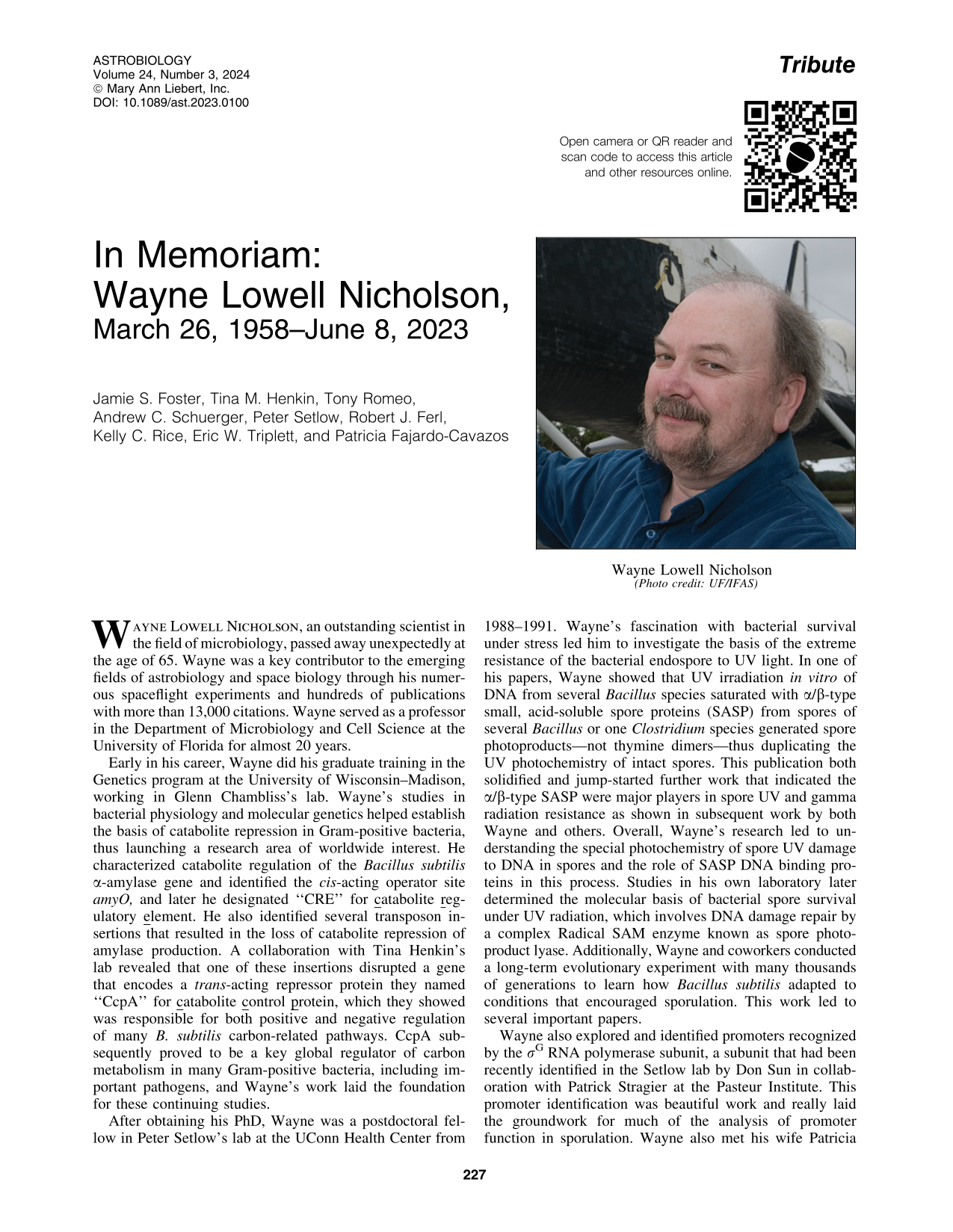
Wayne Lowell Nicholson(Photo credit: UF/IFAS)
Wayne Lowell Nicholson, an outstanding scientist in the field of microbiology, passed away unexpectedly at the age of 65. Wayne was a key contributor to the emerging fields of astrobiology and space biology through his numerous spaceflight experiments and hundreds of publications with more than 13,000 citations. Wayne served as a professor in the Department of Microbiology and Cell Science at the University of Florida for almost 20 years.
Early in his career, Wayne did his graduate training in the Genetics program at the University of Wisconsin–Madison, working in Glenn Chambliss's lab. Wayne's studies in bacterial physiology and molecular genetics helped establish the basis of catabolite repression in Gram-positive bacteria, thus launching a research area of worldwide interest. He characterized catabolite regulation of the Bacillus subtilis ɑ-amylase gene and identified the cis-acting operator site amyO, and later he designated “CRE” for
After obtaining his PhD, Wayne was a postdoctoral fellow in Peter Setlow's lab at the UConn Health Center from 1988–1991. Wayne's fascination with bacterial survival under stress led him to investigate the basis of the extreme resistance of the bacterial endospore to UV light. In one of his papers, Wayne showed that UV irradiation in vitro of DNA from several Bacillus species saturated with α/β-type small, acid-soluble spore proteins (SASP) from spores of several Bacillus or one Clostridium species generated spore photoproducts—not thymine dimers—thus duplicating the UV photochemistry of intact spores. This publication both solidified and jump-started further work that indicated the α/β-type SASP were major players in spore UV and gamma radiation resistance as shown in subsequent work by both Wayne and others. Overall, Wayne's research led to understanding the special photochemistry of spore UV damage to DNA in spores and the role of SASP DNA binding proteins in this process. Studies in his own laboratory later determined the molecular basis of bacterial spore survival under UV radiation, which involves DNA damage repair by a complex Radical SAM enzyme known as spore photoproduct lyase. Additionally, Wayne and coworkers conducted a long-term evolutionary experiment with many thousands of generations to learn how Bacillus subtilis adapted to conditions that encouraged sporulation. This work led to several important papers.
Wayne also explored and identified promoters recognized by the σ G RNA polymerase subunit, a subunit that had been recently identified in the Setlow lab by Don Sun in collaboration with Patrick Stragier at the Pasteur Institute. This promoter identification was beautiful work and really laid the groundwork for much of the analysis of promoter function in sporulation. Wayne also met his wife Patricia Fajardo-Cavazos at UConn, as Patricia was a graduate student in the Setlow lab. Wayne and Patricia were an incredibly productive team. They worked and published together for over 25 years.
One additional research area where Wayne had an outstanding impact was lithopanspermia, when he explored the various natural or artificial mechanisms by which microbes could be transferred between planetary bodies. Wayne's efforts regarding lithopanspermia provided novel and very practical insight into the survival mechanisms of bacteria in the space environment, in particular radiation and microgravity. His use of sounding rockets, rifle ranges, and other unique approaches provided important new insights into the survivability of microbes in the space environment. Wayne literally blasted bacteria off of rocks using projectiles traveling at interplanetary speeds, thereby replicating the shock and jerk forces that microbes might experience while being ejected from a donor planet.
Wayne also participated in numerous spaceflight experiments that examined issues related to the germination and metabolism of Bacillus subtilis in the space environment (Fig. 1), the effects of radiation on probiotics, and mechanisms of antimicrobial resistance after spaceflight. Wayne's work has laid a critical foundation for much of the current microbial tracking that is occurring on the International Space Station and other spacecraft.
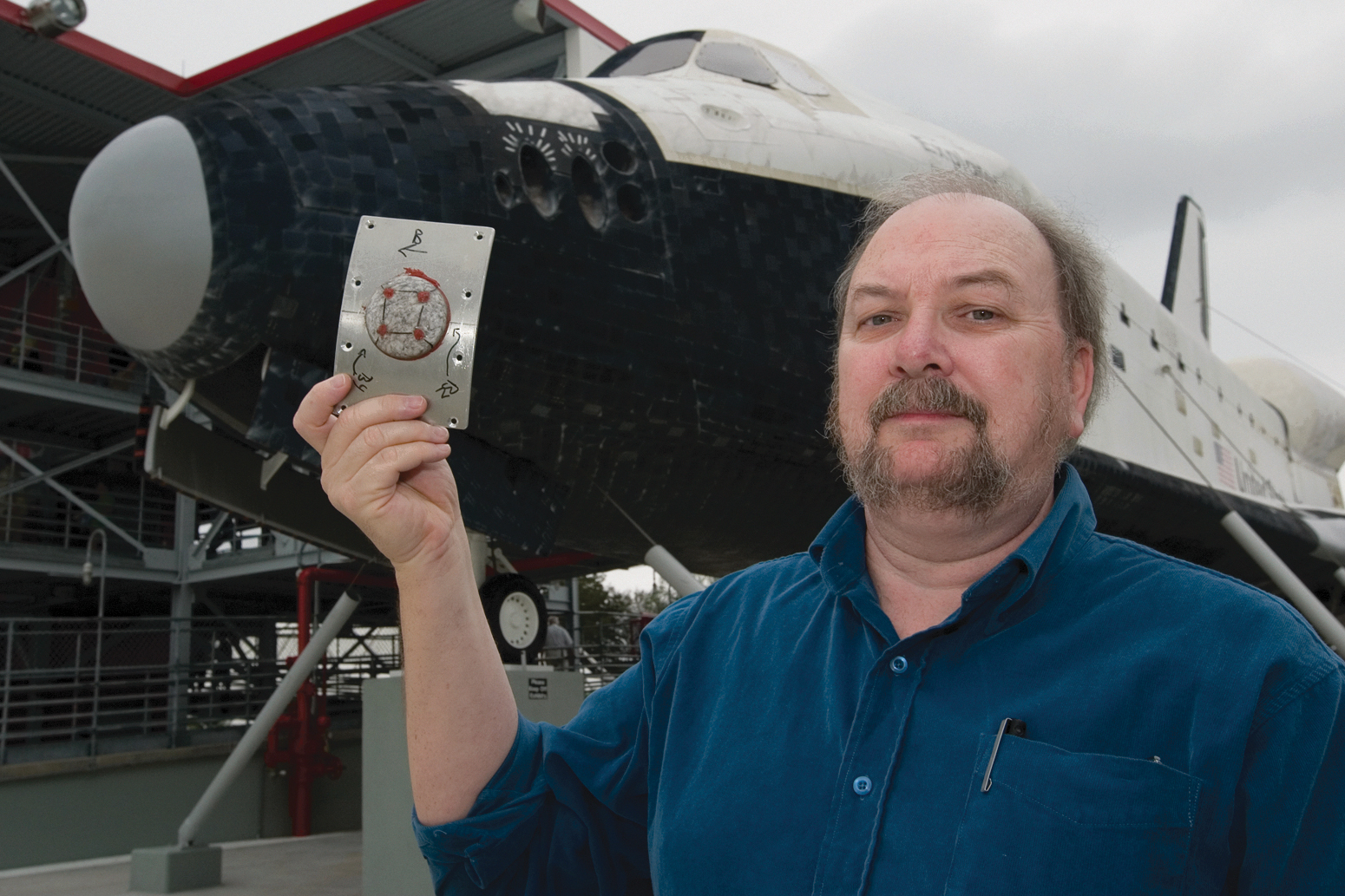
Wayne showing his simulated meteorite dosed with Bacillus subtilis spores that he used to examine the survival of microbes during spaceflight (image by UF IFAS).
It is notable that, throughout his career, Wayne worked from first principles. He was masterful in taking conclusions only as far as permitted by experimental evidence and in designing experiments that dispelled seductive, but unproven, assumptions of his field. Wayne's legacy will continue to live on in that throughout his career he generated a rich resource of microbial strains exposed to spaceflight and spaceflight-like conditions, which have been deposited in culture collections and in NASA GeneLab for future use by other researchers and include several Carnobacterium spp. that have been shown to survive simulated martian conditions. His work will serve as an important foundation for the next generations of space biologists to explore how microbes respond to, and change, under the stresses of spaceflight (Figs. 2 and 3).
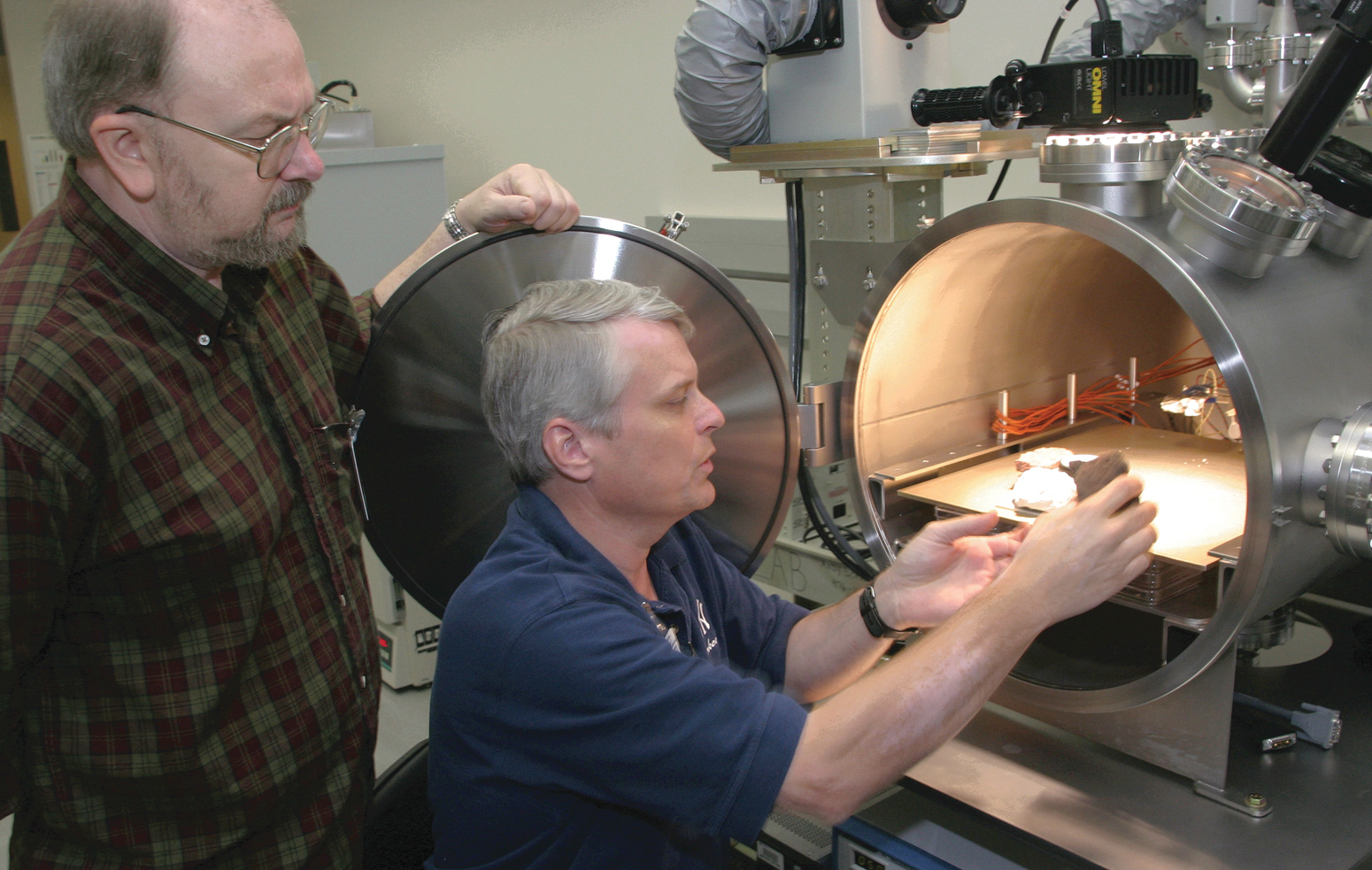
Wayne and Andrew Schuerger loading their samples into the Martian Simulation Chamber to test spore survival under space-like conditions (image by UF IFAS).
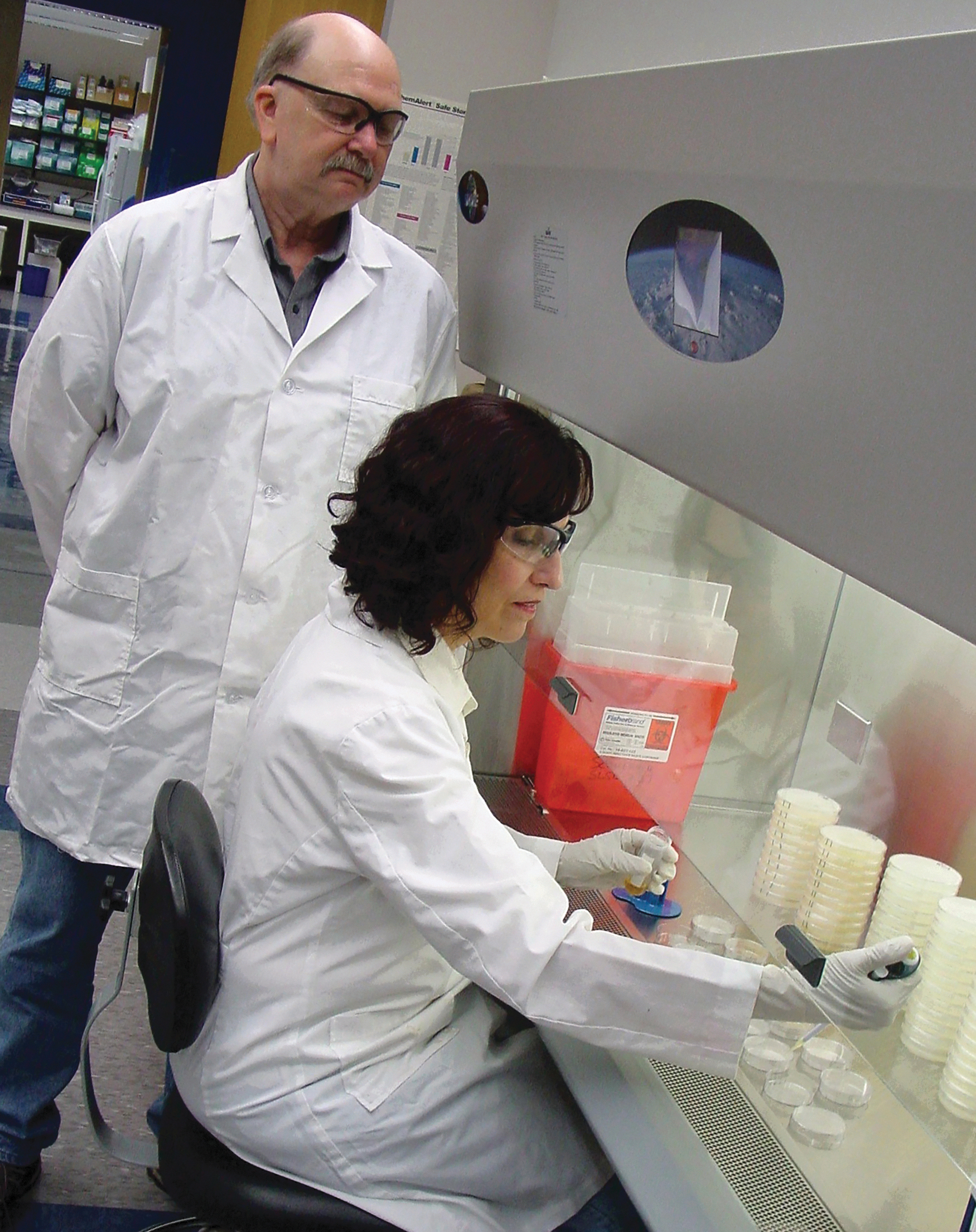
Wayne and his wife Patricia preparing Bacillus subtilis for the BRIC-21 spaceflight experiment to examine the effects of spaceflight on spore physiology (image by Andrew Schuerger).
In addition to his research efforts, Wayne took an active role in the astrobiology and space biology research communities. Through his service on numerous committees, working groups, and strategic planning efforts, he helped shape the past few decades of research in the field and has left a lasting legacy of research, teaching, and mentorship. Wayne was a dedicated educator, a source of inspiration to students and colleagues, and a generous and unending source of knowledge. While always maintaining high academic standards, his genuine interest in the scientific growth of students and others was apparent, as recognized by the outpouring of sympathy and compassion from former students, postdocs, and others upon his passing.
In recognition of these important career achievements, Wayne was awarded the title of Distinguished Professor by the University of Florida as well as inducted as a fellow in the American Association for the Advancement of Science in 2019. During that process, an author of one of his external letter writers referred to Wayne as a “National Treasure.” We could not agree more. Although Wayne would be the first to admit these accolades were never important to him, he enjoyed the work and the numerous collaborations with space scientists and students across the globe.
In addition to his prolific career in science, Wayne had many other interests. He loved music, especially blues and rock, and was an accomplished guitarist (Fig. 4). He also enjoyed playing the banjo and mandolin. Wayne was fascinated by nature and was an enthusiastic observer of the myriad of bird species, reptiles, and other animals that inhabit the Florida coast. He enjoyed reading, especially those works that involved science, science fiction, and technology, and he had extensive knowledge of modern film. He also loved old Western movies. In fact, you could periodically hear Wayne whistling the theme song to the classic western The Good, the Bad, and the Ugly while he walked the halls of the Space Life Science Lab.
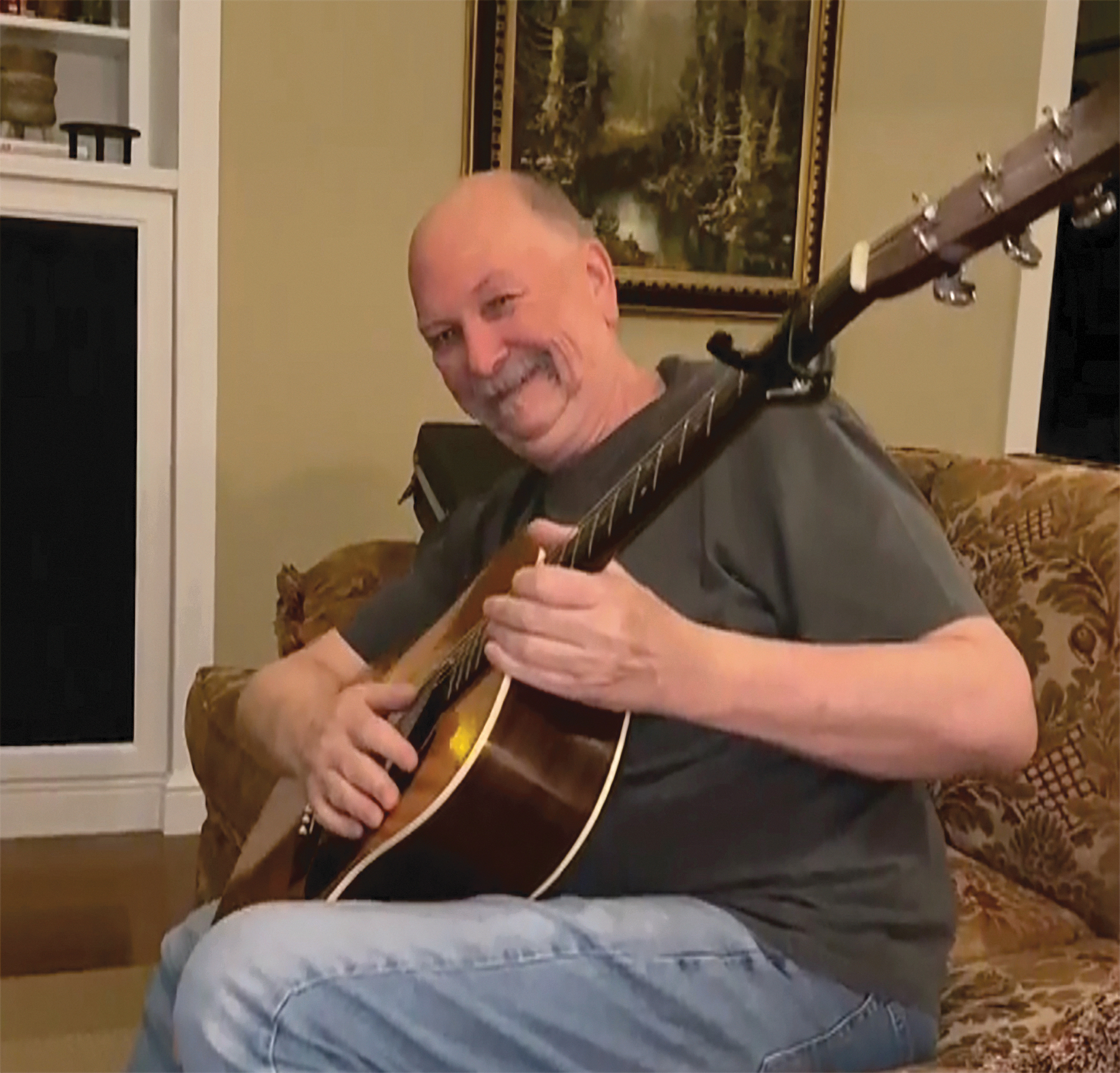
Wayne playing guitar for friends and family (image by Tony Romeo).
Wayne was a loving father to David and Emilia and a devoted husband to Patricia. His wit, wry sense of humor, and brilliant scientific insight endeared him to many. Wayne was a wonderful scientist and person, and he will be missed.
Footnotes
Associate Ediror: Sherry L. Cady