







Abstract
Community Brief
Why is this an important issue?
People with intellectual and developmental disabilities (I/DD) have a difficult time getting and keeping jobs. I/DD encompasses a range of conditions, including autism with or without intellectual disability and other conditions that begin in childhood. Of all the disability types, autistic people have the hardest time securing and sustaining employment. Job coaches can assist people with I/DD in getting and keeping jobs. Family members of people with I/DD and employers can also support employees with I/DD vocationally. However, job coaches, family members, and employers do not always know how to help people with I/DD. This is because job coaches and employers do not always get a lot of training about I/DD. Also, family members do not always know how job coaches can help. Finally, to effectively improve the employment outcomes of people with I/DD, it is important to know the firsthand perspectives of individuals with I/DD and people in their support networks.
What was the purpose of this study?
The purpose of this study was twofold: first, we wanted to develop a training curriculum for job coaches, family members, and employers, who in turn will support career development for people with I/DD. Second, we wanted to test the curriculum to see if it effectively improved understanding of I/DD among job coaches, employers, and family members.
What did the researchers do?
This study had two main components. The first part involved developing the training curriculum, called DIVERSE, which stands for Developing Inclusive and Vocational Education and Resources for Success in Employment. The researchers collaborated with community stakeholders, including autistic people, people with other forms of I/DD, job coaches, family members, employers, educators, and mental health providers, to form a working group. Collectively, working group members contributed to the development of DIVERSE by reviewing an existing curriculum developed by the research team, discussing targeted topics, sharing personal and professional stories related to the employment of people with I/DD, and providing feedback on the curriculum as it was being developed.
The second part was testing the DIVERSE curriculum to see how well it worked. The research team recruited job coaches, family members, and employers to the training curriculum. The researchers also asked participants to respond to survey questions before and after the training.
What were the results of this study?
For curriculum development, we collaboratively produced seven DIVERSE training videos and the accompanying handouts and quizzes.
In the curriculum assessment part of the study, we found that DIVERSE resulted in the improvement of participants’ knowledge about I/DD across stakeholder groups. Also, job coaches felt more confident and capable of doing job coaching with autistic people and people with intellectual disabilities.
What do the findings add?
Our study introduces a training curriculum designed with community input that shows promise in increasing confidence and knowledge for providers supporting the employment of adults with I/DD.
What are the potential weaknesses?
Potential weaknesses included having a limited number of community meetings, some participants dropping out during the study, and fewer employers being represented in the group.
How will these findings help autistic adults now or in the future?
The research team will work to improve the training and make it accessible to more people. Job coaches, family members, and employers can use the DIVERSE training or a future version of it to help them support autistic adults in the workplace.
Introduction
The workforce underrepresents autistic individuals. 1 According to the U.S. Bureau of Labor Statistics, in 2022, people with a disability across all age groups were much less likely to be employed (21.3%) than those without a disability (65.4%). 2 Compared with people with disabilities in general, those with intellectual and developmental disabilities (I/DD), such as autism, have a lower rate of employment. 3 In a nationally representative sample, only 14% of autistic adults held a job for pay in the community. 4 In the same study, autistic adults with no intellectual disability (ID) or with mild ID more often had paid jobs in the community than autistic adults with moderate or severe ID. 4 This employment disparity represents a lost opportunity for the individual, employer, and community at large. Jobs promote participation and socialization within society and offer opportunities for independence, acquisition of new skills, better health, higher self-esteem, and a higher quality of life. 5 Employment of autistic individuals also benefits their families, employers, and society as a whole. 6
Studies have shown that autistic individuals struggle in both securing and maintaining competitive employment7,8 due to communication differences and social difficulties with supervisors and coworkers. 9 In navigating employment, people with I/DD often need additional support to master the necessary social skills for job interviews and, once hired, may need guidance in advocating for accommodations within the workplace,10,11 especially given that job retention is a bigger issue than job acquisition for people with disabilities. 12 Because there is a wide spectrum of abilities and needs for each individual with I/DD, it is necessary to apply specific strategies at both the individual and organizational levels to successfully support employment for autistic individuals 9 and people with other conditions under the umbrella of I/DD. 13 Numerous studies have shown that job coaches (i.e., professionals who help individuals with disabilities or those who face challenges in obtaining or maintaining employment by providing personalized support, training, and guidance on job search or job retention) can effectively help integrate individuals with I/DD into the workplace and maintain their jobs by providing specific training for job readiness and on-site training.14B15 -17 Researchers also found that the availability of job coaches and their responsiveness to employers are important factors in an employer’s decision to hire individuals with I/DD.18-20
Although studies have shown that job coaching improves employment outcomes for adults with I/DD, the quality of job coaching is highly heterogeneous, as many job coaches often have little or no formal training in evidence-based practices (EBPs). There is scant literature on how to train job coaches to implement EBPs, such as task analysis and simultaneous prompting.21,22 Researchers have published a few pilot studies on training paraprofessionals to coach students and adults with I/DD23,24; however, the training sessions involved live, interactive coaching sessions and required resources and staff, which may be deemed too costly and time-consuming by job coaches and employers. A clear training program efficient in cost and time, with tactics informed by individuals with I/DD and developed through a systematic process, is needed to create adequate training for job coaches.
Community-based participatory research (CBPR) is a crucial methodology in increasing the quality of research and initiatives for individuals with I/DD, including autistic individuals with or without ID.25,26 CBPR ensures that community stakeholders are directly engaged in the design and execution of the research, with shared decision-making power between researchers and community members. 25 To our knowledge, before the development of DIVERSE, people with I/DD, researchers, and other stakeholders have not codeveloped a curriculum using CBPR for providers supporting the employment of individuals with I/DD.
Our project aimed at expanding the scope of an existing autism-focused curriculum to fit the needs of people who support adults with I/DD in the workplace. We captured perspectives from multiple stakeholder groups—people with I/DD, their family members, job coaches, employers, educators, and mental health providers. The new psychoeducational intervention, named “Developing Inclusive Vocational Education and Resources for Success in Employment” (DIVERSE), aims to improve the knowledge and skill levels of support workers and employers in working with individuals with I/DD, thereby improving employment outcomes of people with I/DD. While the term I/DD encompasses individuals with IDs and other developmental disabilities (DDs), including autism, individuals with these conditions can present with diverse support needs. While targeting a broader I/DD population, we acknowledge the heterogeneity within I/DD populations, including autistic individuals with or without IDs, through a person-centered approach. In this article, we report (1) the development of the DIVERSE curriculum, which was developed to improve employment outcomes of people with I/DD using a CBPR approach, and (2) a prospective cohort trial assessing the efficacy of the DIVERSE curriculum in job coaches, family members, and employers.
Methods
This study’s main objective was to elevate job coaches, family members, and employers’ knowledge and skills in working with individuals with IDD by revising our existing curriculum. We developed DIVERSE for people with I/DD from the original version of Training for Service Providers to Adults with Autism (TSPAA) for autistic adults. The team made this decision at the time of the grant application when they proposed the study to the California Department of Developmental Services (DDS). California DDS is a state department charged with serving the I/DD population of California. Based on the characteristics of Regional Center consumers reported by the California DDS at the end of December 2023 (https://www.dds.ca.gov/transparency/facts-stats/), 50.3% had an autism diagnosis (with and without intellectual disability), 41.5% had ID, 9.8% had cerebral palsy, 10.6% had epilepsy, and 10.9% had other DDs. The high prevalence of autism in the population served by the DDS justified expanding TSPAA to develop DIVERSE. This is also the same population the participants of this study support.
The Institutional Review Board of Stanford University approved this study, which included two parts: (1) development of the DIVERSE curriculum and (2) pilot assessment of the DIVERSE curriculum.
Part 1: Development of the DIVERSE curriculum
The development of the DIVERSE curriculum followed an iterative and collaborative process (Fig. 1). Below, we report our approaches in engaging the community and forming the working group, and the CBPR processes used in developing DIVERSE.
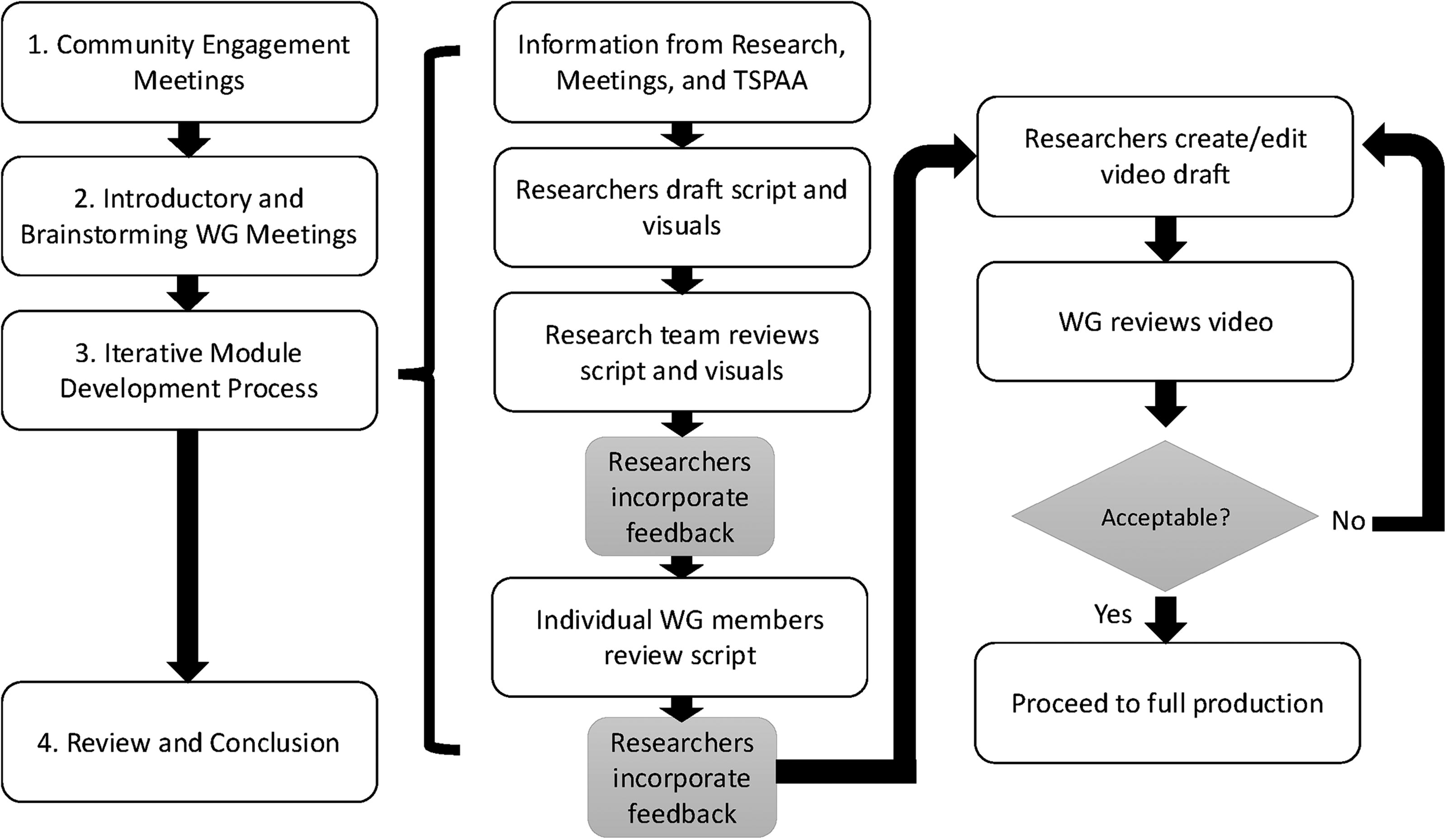
Schematics for the development of Developing Inclusive Vocational Education and Resources for Success in Employment (DIVERSE). TSPAA, Training for Service Providers to Adults with Autism; WG, working group.
Preparation for working groups
We held four community engagement meetings in the first 2 months of the project to provide information about the project. The team advertised the project through Regional Centers in California, mental health clinics, autism advocacy organizations, and other organizations associated with I/DD. The Regional Centers in California are private nonprofit organizations that contract with the California DDS to coordinate and provide services (e.g., providing job coaches) to individuals with I/DD.
Over 180 individuals participated in the community engagement meetings. We directed individuals interested in joining the working group to an interest form via a project webpage. The researchers verified eligibility criteria with interested participants, who also noted their relationship to the I/DD community. The eligibility criteria for working group members were as follows: (a) 18 years or older and (b) English-speaking. We obtained informed consent from all participants. To ensure that the working group represented perspectives from the most relevant stakeholder groups, the research team predetermined that the working group would include people with I/DD, parents of individuals with I/DD, employment specialists (e.g., job coaches, job developers), employers of individuals with I/DD, educators, and mental health providers. We recruited a total of 30 individuals to form the working group to codevelop training materials for increasing the knowledge and skills of service providers (especially job coaches), employers, and family members to support individuals with I/DD in the workplace. The study compensated each working group member for their participation in the meetings and review of materials associated with the DIVERSE curriculum. Beyond the working group, the research team communicated monthly with employment specialists of three Regional Centers in the San Francisco Bay Area, as the I/DD community is the target consumer group of services offered by Regional Centers in California.
From May to August 2021, S.W. and L.K.F. developed the TSPAA curriculum by remodeling an existing curriculum, the AGI Residential/Daily Living Training for Direct Support Providers to Adults with Autism. The Stanford Neurodiversity Project acquired this curriculum from V.P. With extracted information from the AGI resource, TSPAA consisted of 5–10-minute video modules on topics such as person-centered planning, communicating with autistic people, and the hidden curriculum (i.e., unstated social expectations in various settings). See Supplementary Data S1 for further information about TSPAA and its development. The working group then reviewed, modified, and supplemented the TSPAA curriculum to create DIVERSE.
Working group meetings
In the first meeting, we introduced the working group members to the project and collaborative processes emphasizing inclusivity, equal participation, and respect for diverse perspectives. Researchers introduced ground rules and implemented them throughout all meetings. To increase the effectiveness of discussions, we divided members into two smaller groups. The member composition of each group was representative of the key stakeholder groups. Each group met nine times during the development phase of the curriculum.
Drawing upon the hierarchy of citizen participation 27 and subsequent applications in participatory autism research, 28 the engagement of the working group members progressed from the “informing” level to “coproducing” in the later stages of the study. Specifically, the first two meetings were informational sessions in which the research team introduced the study purpose and goals and defined the study objectives with the community members. Over the next nine meetings, the researchers developed the DIVERSE curriculum through continuing engagement and consultation from both sides, stemming from working group members’ living experiences and the research team’s knowledge. We reiterated the curriculum by incorporating stakeholders’ perspectives, reviewing the prototypes created by the research team, and having further discussions in the working group meetings and assignments distributed between sessions. Thus, this phase reflected the levels of consultation, engagement, and coproduction. 27 In total, we conducted ten 1.5-hour working group meetings, with each member contributing an average of 13.5 hours in session and up to 8 hours on assignments between sessions.
To create a safe space to contribute ideas and reduce the power differential between the research team and working group members, working group members took turns to cofacilitate working group meetings. We incorporated universal design principles and suggestions on conducting coproduction projects with autistic adults 26 into the meetings. The research team explicitly normalized the existence of different perspectives and prompted individuals to participate, even if they disagreed, so that all perspectives could be considered. Participants had multiple opportunities to provide feedback. The team also implemented the following strategies to facilitate participation and accommodate individual needs during the meetings. Working group members received premeeting email reminders containing meeting details and agendas. We recorded all meetings, and the recordings were made accessible for review. Working group members received postmeeting emails with links to meeting recordings and assignments. Members also had the option to provide their assignments in the form of audio responses instead of typing.
Working group content
Working group members and three Regional Center specialists completed a survey to define key competencies expected from job coaches working with the target population. Researchers in the working group generated survey items based on the “Systems Approach to Placement” (SAP) framework. 29 The SAP framework proposed eight subsystems of knowledge, skills, and competencies needed by vocational rehabilitation professionals across cultures, including client, health, education, family, social, employer, placement, and funding. 29 Prior research using the SAP framework identified critical competencies of vocational rehabilitation professionals as providing job-seeking and social skills training, addressing job modification needs, performing job analysis, and referring clients to community-based support services. 30 Researchers invited working group members to select the competency items they considered “critical”; they also determined the key competencies of this study by identifying critical competency items shared by the working group and Regional Center specialists.
Working group members reviewed TSPAA modules. In addition to revising TSPAA materials, working group members provided extensive feedback on the format and content of the new curriculum. The content of the DIVERSE curriculum included materials from TSPAA and those derived from new themes identified through thematic analysis of participant feedback and key competencies from the job coach survey. The research team synthesized the feedback from the working group and wrote outlines of each module to the working group in the subsequent meeting for further discussion. We summarized and analyzed feedback on module outlines to inform iterative development of the content for the DIVERSE curriculum. Researchers used reflexive thematic analysis 31 to identify themes from working group members’ feedback on the TSPAA materials and their suggestions on new content for the DIVERSE curriculum. The working group identified seven major topics, as presented in Table 1 and discussed in the Results section. The research team then further developed a learning module for each major topic of interest. We expanded the outlines into full scripts with embedded image links for each module. One of the members of the research team wrote each script, and three other research team members and three working group members reviewed it before sharing it with the rest of the members. The researchers analyzed feedback from both in-meeting discussions and assignments thematically and integrated it into the new curriculum. Upon script finalization, we produced corresponding training videos and presented them to the working groups for feedback. The researchers then incorporated video editing suggestions from the working group members. The working groups provided feedback on the scripts and images for each module, following the iterative review process depicted in Figure 1.
DIVERSE Curriculum Modules
Part 2: Pilot assessment of DIVERSE
We conducted a prospective cohort trial of DIVERSE with three stakeholder groups (job coaches, family members, and employers). Below, we list our hypotheses for the trial. Compared with the baseline, the participants’ knowledge about I/DD and employment (as measured by the DIVERSE Knowledge Quiz) at the end of the DIVERSE training or 6 weeks after initiation of the training will be higher among all stakeholder groups. Of note, we used 6 weeks after the initiation of training as a measurement cutoff for those who did not complete the training on time. Compared with the baseline, job coaches’ levels of confidence, self-efficacy, and knowledge about I/DD and job coaching competencies (as measured by the Attitudes, Norms, and Self-Efficacy of Service Providers survey and the Systems Approach to Placement Self-Assessment for Students and Counselors (SAP-SASC) survey) will be higher at the end of the DIVERSE training or 6 weeks after the initiation of the training.
Recruitment
We recruited participants through local outreach at disability-focused events, collaboration with Regional Center specialists, and social media and online outreach to disability- and employment-focused groups. Eligible participants included adults living in California who met the criteria for one of the participant types: job coach, family member, or employer. Given the funding of this project by the California DDS, we focused recruitment on individuals who supported Regional Center consumers. Job coach participants included individuals providing job coaching services to Regional Center consumers with I/DD. Family member participants included individuals who are parents or guardians of adult Regional Center consumers with I/DD. Employer participants included individuals in an employer, manager, or supervisor role who were currently employing or would be willing to employ Regional Center consumers with I/DD.
Screening
Participants completed an online screening form to determine eligibility. If eligible, we directed them to a video call with research staff to review informed consent and the study protocol.
Intervention
The DIVERSE curriculum (accessible through https://med.stanford.edu/neurodiversity/NaW/DIVERSE.html) included seven core modules hosted on the LearnMed platform. LearnMed is an instance of the Canvas Learning Management System, managed by the Educational Technology team at Stanford University, to deliver educational content to learners. Each module included a 15–20-minute video with an accompanying handout. The curriculum required participants to score at least 80% on each quiz before proceeding to the next module. The study allotted participants up to 6 weeks to complete the curriculum, starting when they submitted the Module 1 quiz. At the 3-week point, researchers emailed participants to remind them of their remaining time and to offer support. We sent automated reminders during the final 3 days allotted for the curriculum.
Outcome measures
Before starting the DIVERSE curriculum and after the 6-week period or completion of the curriculum, participants completed a battery of surveys. Three months after the completion of DIVERSE, research staff contacted participants for a follow-up survey.
DIVERSE Knowledge Quiz
The research team created the DIVERSE Knowledge Quiz, which consisted of 14 multiple-choice questions from the postmodule quizzes (i.e., two questions per module). The working group developed the postmodule quizzes with a focus on content validity. The quiz questions assessed knowledge related to topics covered by the DIVERSE curriculum. We invited all participants to complete the DIVERSE Knowledge Quiz before and immediately after the training.
Attitudes, norms, and self-efficacy of service providers
This questionnaire is an adaptation of the attitudes, norms, and self-efficacy of mental health provider questionnaires for delivering therapy to adults with I/DD conditions, including autistic individuals.39,40 In addition to general information about caseload and experience for job coaching clients with I/DD, this questionnaire contained subscales of positive/negative attitudes toward working with this population (6 items, α = 0.89–.96), general self-efficacy for coaching (4 items, α = 0.43–.60), self-reported knowledge on autism or ID (6 items, α = 0.95–.97), and confidence in specific coaching-related skills (10 items, α = 0.92–.97) for (1) autistic clients with or without ID and (2) nonautistic clients with ID separately. We assessed attitudes by inviting job coaches to rate on a 0–10 scale their feelings about starting job coaching services with different client populations across pairs of adjectives, such as “unpleasant/pleasant” or “useless/effective.” Self-efficacy items included rating agreement on a 5-point scale statements such as, “I have the skills needed to start job coaching with these clients,” when a target client population is described. Respondents rated self-reported knowledge on a 5-point scale, including rating subjective knowledge for topics such as, “core characteristics of autism.” Finally, they rated confidence in job coach skills on a 5-point scale with items such as, “How confident are you that you can assist with ADA accommodation requests?” Job coach participants completed the Attitudes, Norms, and Self-Efficacy questionnaire before and immediately after the DIVERSE curriculum or 6 weeks after the Module 1 quiz was completed.
Systems approach to placement
The SAP-SASC 30 consists of 78 items in which participants rate their level of knowledge or skill related to core competencies, knowledge, and skills expected of vocational rehabilitation professionals (e.g., “teaching independent living skills,” “determining job modification needs”) on a 5-point scale. Researchers calculated the means of the total scale, with high levels of internal consistency, with Cronbach’s alphas of 0.99 for both pre-DIVERSE and 3-month follow-up time points. Job coaches completed the SAP-SASC before starting the DIVERSE curriculum and 3 months after completing the DIVERSE curriculum.
Statistical analyses
The research team tested H1 using paired-sample t-tests with the DIVERSE Knowledge Quiz at precurriculum and postcurriculum as the outcome variable. In addition, we conducted univariate ANOVAs on normalized score changes in knowledge to assess if there were differences in change by participant type. We tested H2 using the job coach subsample only. Again, we conducted paired-sample t-tests with attitudes, norms, and self-efficacy measures at precurriculum and postcurriculum, and we conducted paired-sample t-tests with SAP-SASC at precurriculum and at the 3-month follow-up. Due to multiple comparisons, we applied Bonferroni corrections. We utilized a significant p value cutoff of 0.0045 for the 11 pairwise comparisons for main hypothesis testing.
Results
Part 1: Development of the DIVERSE curriculum
Characteristics of working group members
Supplementary Table S2 shows the demographic characteristics of working group members and research team. The average age was 44 years, ranging from 19 to 69 years. The team was diverse with respect to race, ethnicity, gender, and relationship to I/DD community. Specifically, 53% of the group membership represented individuals with I/DD, 35% of the participants were autistic individuals, 44% were parents of individuals with I/DD, and 90% were professionals in fields associated with I/DD.
Findings from working group meetings
Working group members selected a variety of topics from the SAP survey as key competencies of job coaches, including the following: (1) assessing the client with I/DD, (2) skill training, (3) barrier identification, and (4) referring clients with I/DD for assistance. In addition to competencies listed in the SAP survey, participants also provided suggestions on additional job coaching competencies, including the following: (5) empathy and client-centered skills, (6) serving as a bridge between the employer and the employee, and (7) professional development. Table D in Supplementary Data describes more details about these key competencies.
Within a survey, we asked working group members to select topics in TSPAA that should be retained in DIVERSE. The DIVERSE curriculum included topics receiving the endorsement of more than 50% of working group members, including person-centered approach; socialization; evidence-based strategies and natural support; key aspects of communication and autism; visual supports; learner snapshot; hidden curriculum; augmentative and alternative communication; promoting self-care, exercise, and health nutrition.
In addition to content development, working group members contributed to improvements in the delivery of all training materials. Notably, we adapted the training curriculum to include all I/DD conditions, compared with the previous curriculum’s focus on autism. Furthermore, we implemented the use of neurodiversity-friendly wording and the inclusion of employment-related examples in the video production.
After a discussion of job coaching key competencies and the most important training topics endorsed by the working group members, the research team determined the six key ideas of the DIVERSE curriculum using thematic analysis as follows:
Clear definition of job coach responsibilities. Empathy, building rapport, and supporting communication. Teaching basic job skills and work-related hidden curriculum. Assessing the needs and concerns of the employer. Workplace accommodation. Evidence-based strategies to work effectively with the client, especially on understanding the client and recognizing behaviors as communication.
Example quotes of the ideas are presented in Supplementary Data S2 and S3.
Redesign of the DIVERSE curriculum
Based on working group feedback on key job coach competencies, suggestions on changes to TSPAA, and new topic suggestions, the research team developed an outline for the DIVERSE curriculum. The DIVERSE curriculum comprises seven core modules (see Table 1), divided into two foci as follows: (1) Training job coaches, employers, and family members to work with individuals with I/DD, and (2) training job coaches, employers, and family members to support individuals with I/DD in employment-related issues. We strategically designed each module to address specific aspects crucial for effective employment support, which are described in Table 1 under “Module Design.”
In addition to curating the content, the working group promoted a supportive and inclusive learning environment by applying several design features to redesign the DIVERSE curriculum. The DIVERSE training incorporates considerations of universal design for learning, such as producing concise 15-minute videos mindful of audience attention spans and providing optional captions for accessibility. Delivered in a virtual, self-paced format, the training offers an asynchronous learning environment that caters to diverse learning needs. Furthermore, we implement a strengths-based approach in the DIVERSE curriculum. For instance, the training uses strengths-based instead of deficit-based terminologies throughout, which identifies and dispels common myths and misconceptions about autism and I/DD. We emphasize strengths-based concepts and strategies such as understanding the client’s “PINS” (preferences, interests, needs, and strengths), person-centered planning, and creating an I/DD-friendly work environment in the curriculum.
Part 2: Pilot assessment of DIVERSE
Prospective cohort study sample characteristics
A total of 86 participants enrolled in DIVERSE (46 job coaches, 26 family members, 14 employers). The majority of enrolled participants (n = 81, 94.19%) completed all seven modules. Of the individuals who did not complete all modules, one completed six modules, three completed three modules, and one completed one module. A total of 78 participants completed at least one postcurriculum survey (44 job coaches, 22 family members, 12 employers).
Table 2 presents the demographic information about sample characteristics for individuals who completed at least one postcurriculum survey. About 81% of participants were female. Most participants were White (55%), followed by Asian (23%) and Latino/Hispanic (15%). Chi-square analyses indicated no differences in gender or racial/ethnic distribution across participant types. In addition to the primary participant type, overlap was present between categories, such that 33 parents or guardians of adults with I/DD, nine other family members of someone with I/DD, 15 employers of people with I/DD, 43 employment service providers of people with I/DD, 21 other service providers of people with I/DD, and three individuals with I/DD were present in this sample. Participants included individuals across the state of California, with the majority located in the San Francisco Bay Area.
Demographic Characteristics of Participants Completing DIVERSE (N = 78)
May add up to over 100% due to allowing multiple responses. Not all participants chose to disclose racial/ethnic status.
At baseline, job coaches ranged from 0 to 30 years of job coach experience, with an average of 7.73 (SD = 8.10) years. They reported an average of 18.35 (SD = 25.74, range = 0 to 160) clients on their current caseload, with an average of 8.59 (SD = 9.86, range = 0 to 50) current autistic clients with or without ID. They reported having an average of 6.12 (SD = 7.51, range = 0 to 30) current autistic clients with ID and an average of 6.15 (SD = 8.41, range = 0 to 33) nonautistic clients with ID on their current caseload. In their careers, job coaches reported providing employment assistance to an average of 52.89 (SD = 153.46, range = 0 to 1200) autistic clients (regardless of ID), an average of 55.95 (SD = 191.69, range = 0 to 1500) nonautistic clients with ID, and an average of 58.15 (SD = 195.36, range = 0 to 1500) autistic clients with ID. We did not find significant correlations between baseline caseload size, caseload composition, or past experience and any outcome measures at baseline.
Prospective cohort results
We hypothesized (H1) that, compared with the baseline, the participants’ objective and subjective knowledge about I/DD and employment at the end of the DIVERSE training (or 6 weeks after initiation of the training) would be higher among all stakeholder groups. We used paired-samples t-tests. As hypothesized in H1, the mean DIVERSE Knowledge Quiz scores increased from before (M = 8.85, SD = 1.57) to after (M = 9.70, SD = 1.46) DIVERSE training, t (71) = −4.41, p < 0.001, d = −0.52. We found no significant differences between participant types for the DIVERSE Knowledge Quiz scores before or after DIVERSE, and no significant difference in score increase by participant group, as measured by ANOVAs.
We hypothesized (H2) that, compared with baseline, job coaches’ levels of confidence, self-efficacy, and knowledge about I/DD and job coaching competencies will be higher at the end of the DIVERSE training (or 6 weeks after initiation). Supporting H2, job coaches demonstrated increased self-reported knowledge related to working in coaching roles for clients with ID [t (37) = −3.39, p < 0.0008, d = −0.55] or autism [t (37) = −2.82, p < 0.004, d = −0.46], as per paired-samples t-tests. Our study found no significant differences between participant types in the amount of change in knowledge or self-efficacy. Supporting most of H2, job coaches demonstrated increased levels of self-efficacy and confidence related to working in coaching roles for clients with ID or autism, as per paired-samples t-tests, with absolute values of effect sizes ranging from 0.49 to 0.59 (see Table 3 for detailed results). In addition, confidence in core competencies of job coaching increased from before DIVERSE to the 3-month follow-up, t (22) = −4.50, p < 0.0001, d = −0.94. However, contrary to H2, paired t-tests indicated that job coaches did not demonstrate an increased positive attitude toward working with autistic clients or with clients with ID after completing the DIVERSE curriculum.
Detailed t-Test Results
p < 0.0045.
p < 0.001.
Post-DIVERSE scores for knowledge, Department of Developmental Services (DDS) training, autism, and ID scales are immediately after DIVERSE completion. Post-DIVERSE scores for SAP-SASC and its subscales are 3 months after DIVERSE completion.
Outcome measure administered only to job coaches.
DIVERSE, Developing Inclusive Vocational Education and Resources for Success in Employment; ID, intellectual disability; SAP-SASC, Systems Approach to Placement Self-Assessment for Students and Counselors.
In summary, participants’ objective knowledge about I/DD and employment significantly increased from pre- to post-training without significant differences between participant groups. Job coaches showed significant increases in self-reported knowledge, self-efficacy, confidence, and core job coaching competencies after training, although no significant improvement in positive attitude. Confidence gains persisted at the 3-month follow-up.
Discussion
The DIVERSE curriculum is the first educational intervention codesigned with the I/DD community to improve the support of individuals with I/DD in the workplace. Using CBPR, we have developed a community-informed and neurodiversity-affirming curriculum for job coaches, family members, and employers of adults with I/DD. It demonstrates promise in increasing confidence, self-efficacy, and knowledge among job coaches specifically, as well as knowledge about I/DD among all stakeholder groups.
Development of DIVERSE
While job coaches play a crucial role in supporting the I/DD community in employment, the specific job descriptions and responsibilities of job coaches vary among agencies. Often, individuals with I/DD and their families do not know what to expect from their job coach. Therefore, our first step of curriculum development was identifying what competencies the I/DD community considered critically important in job coaches. Working group members identified important competencies in job coaches, including (a) cultivating empathy and client-centered skills; (b) assessing the client’s strengths, interests, needs, and challenges; (c) referring clients to formal and informal support and training; (d) identifying barriers in employment and acting as a liaison between employer and employee; and (e) receiving continued education and professional development for vocational rehabilitation professionals.
Competencies (a) and (b) underscore the autistic and I/DD community’s emphasis on the person-centered and strengths-based approach.41,42 While existing training programs or interventions are often based on the medical model, which adopts a deficit-based perspective, we developed the DIVERSE curriculum based on the strengths-based model of neurodiversity 43 and the self-determination theory. 44 For instance, key concepts of person-centered planning45,46 served as the bedrock of the DIVERSE curriculum. The team intentionally designed modules with an awareness of and inclusivity toward the PINS of individuals with I/DD. The PINS model, introduced in Module 1 of the DIVERSE curriculum and applied throughout subsequent modules, guided this approach to ensure that the training remained person-centered.
Competencies (c) and (d) suggest that effective job coaching goes beyond the work between the job coach and the client; there is a need to build a system of support for employment. One key feature of DIVERSE is the underlying concept of an ecosystem framework for employment. Existing literature has suggested the benefits of community-based vocational sources provided within the context of a supportive ecosystem in improving employment outcomes for autistic adults.12,47 A later study further supported that vocational services may have limitations if only focused on the individual and neglect system-wide capacity building. It proposed an ecological approach that emphasizes four key elements for the successful employment of autistic adults, including the prospective employee, the family, the vocational support agencies, and the broader community resources and public policy. 48 Consistent with previous research, the DIVERSE curriculum adopted an ecosystem approach to employment. The team designed this curriculum for job coaches, employers, family members, and other key professional and personal support personnel who can share a common language and collectively support the autistic individual or person with I/DD. The DIVERSE training does not require specific educational or professional prerequisites, allowing accessibility with minimal learning barriers.
Competency (e) highlights the necessity for more educational and professional development opportunities within the job coach profession due to the multifaceted nature of the job coach’s responsibility. While the role of job coaches is crucial in enhancing employment outcomes for the autistic and I/DD population,5,15,16 there is currently no training specifically designed for job coaching competencies and responsibilities. Existing research on job coach training has focused on training job coaches in using systematic instruction with students with I/DD.21,22 However, there has been a notable gap in developing a competency-based curriculum that covers the diverse range of responsibilities associated with the role of a job coach. 49 Currently, the two recognized certifications in supported employment for individuals with disabilities are ACRE (Association of Community Rehabilitation Educators) and CESP (Certified Employment Support Professional). ACRE is a comprehensive, competency-based training for professionals working in employment services. The ACRE curriculum spans approximately 40 hours and costs hundreds of dollars per participant. 50 The CESP certification is based on one’s ability to pass the competency examination and does not include training. 51
ACRE and DIVERSE curricula cater to different needs in the system. ACRE primarily focuses on the job search process, making it suitable for job developers who specialize in identifying and securing appropriate employment positions for clients. In contrast, DIVERSE focuses on job coaches who provide services to clients after obtaining a job. DIVERSE is also suitable for employers interested in increasing their competencies when working with people with I/DD. While ACRE provides comprehensive training for job developers, it does not address the unique responsibilities and training needs of job coaches. In addition, the cost of ACRE training may be prohibitive for job coaches, who often work part-time or on an hourly basis with lower pay. 52
An innovative aspect of this study is its utilization of CBPR throughout the curriculum development process, along with the integration of direct feedback from a diverse sample of the neurodiverse community. While CBPR has found application in certain health sectors for curriculum development and implementation,53B54 -57 its utilization within autism research predominantly focuses on creating tools,58B59 -61 understanding the autistic experience, 60 or informing future research and care.25,26,62 The current study pioneers the extensive application of CBPR in developing a training curriculum for the professional and personal support systems within the autism and I/DD communities. The development of the curriculum followed an iterative and collaborative process that involved continuous and active participation from key community stakeholders. The study aimed to ensure that the curriculum integrates academic and professional perspectives while rooted in the lived experiences and preferences of the autism and I/DD communities. Moreover, consistent with previous research, working group members reported feeling empowered by this process, highlighting an additional benefit of the CBPR approach. 25
Assessment of DIVERSE
The prospective cohort trial of the DIVERSE curriculum with job coaches, family members, and employers indicates many potential benefits, including increased knowledge, self-confidence, and self-efficacy in both broad and specific domains related to providing employment support to adults with I/DD. Such training is critical for job coaches, who serve an essential role to many employees with I/DD but may lack substantial training in providing this support.5,16,21 Not only did job coaches show an increase in knowledge (both objectively and subjectively measured) and self-confidence immediately after the training, but they also demonstrated an increase in self-confidence across job coaching competencies beyond what DIVERSE had covered 3 months after completing DIVERSE. It is not clear why job coaches reported increased self-confidence even for the domains not covered by DIVERSE. We speculate that increased self-efficacy in the specific domains targeted in DIVERSE motivated job coaches to seek out additional resources to support clients with I/DD in domains outside the scope of DIVERSE. Future research should assess the mechanisms behind this finding.
Although many outcome measures focused on job coaches, family members and employers demonstrated improvement in knowledge as well. This inclusive approach allows for clearer communication across professions for stakeholders and a more holistic support for the employee with I/DD. Family members can serve as an important resource for employees and job seekers with I/DD, but they may face conflicts and misunderstandings when working with employment service providers. 63 Having training curricula such as DIVERSE available for both family members and employment service providers can bridge this communication divide. In addition, including employers in the training process can allow support for employees with I/DD who may not have job coaches.
Despite the positive changes in job coaches’ self-efficacy, self-confidence, and subjective and objective knowledge, we found no significant changes in attitudes toward clients with I/DD. It is possible that job coaches who opted to enroll in the study to improve their knowledge already had highly positive attitudes toward people with I/DD. It is possible that a more attitudinal change would be apparent among participants who previously held less personal and professional investment in the well-being of people with I/DD.
Limitations
Although this study demonstrates the potential benefits of the DIVERSE curriculum with stakeholder groups, there are limitations to note. One limitation of developing the DIVERSE curriculum is the duration and number of working group meetings. More meetings and discussions could have further enriched the curriculum’s content. Another limitation is that only one team member was responsible for reflexive thematic analysis when analyzing qualitative data provided by working group members. This may potentially introduce bias to the generation of themes associated with the working group meetings. In addition, while the curriculum incorporated key job coaching competencies identified by the working group members, it may not fully account for variations in job coach responsibilities across different service agencies and cultural groups. Cultural and social backgrounds might influence lifestyles and employment needs, potentially altering perspectives on job coaching priorities and competencies. Future research could involve further development and customization of the DIVERSE curriculum to cater to individualized needs across cultures and different service agencies. For example, the research team has recently completed the translation of DIVERSE into Cantonese and Spanish to increase accessibility for a broader range of stakeholders.
Regarding the prospective cohort trial, one limitation was attrition within the sample. The reasons behind the attrition are unclear, but it is possible that such participants lacked sufficient motivation due to the lack of financial compensation or had other time commitments. Another limitation was that the sample consisted of individuals who were likely more motivated, knowledgeable, and felt more positively toward working with clients with I/DD than the general stakeholder population, as these individuals volunteered to participate in this training. However, it is notable that despite a potentially higher level of knowledge and positive attitudes compared with the baseline, we still found a significant increase in knowledge and self-efficacy in this sample. In addition, the research team included mostly job coaches and family members in the sample, which did not include as many employers. It is also worth noting that the findings primarily focus on internal changes within the participants. The next step would be to assess how these improvements in knowledge, confidence, and self-efficacy would translate into practice and more desirable employment and mental health outcomes for adults with I/DD. The study originally planned to assess employment outcomes for Regional Center consumers affiliated with study participants before and 3 months after completing DIVERSE. However, the sample size was too low for a full analysis of the data. Despite this limitation, exploratory analyses described in Supplementary Data S4 indicate promising trends regarding work outcomes for adults with I/DD in terms of hourly wages and weekly hours employed. The self-efficacy measure demonstrated low levels of reliability, so we should interpret results from such measures with caution. Finally, we limited the participant sample to those affiliated to California Regional Centers, limiting generalizability to stakeholders whose needs or contexts may differ from this group.
Conclusions and Next Steps
In summary, the DIVERSE curriculum holds promise in enhancing employment support for a diverse range of autistic individuals and people with I/DD, fostering a more inclusive workforce, and promoting a neurodiversity-friendly society. This study warrants a larger scale prospective randomized trial of DIVERSE in job coaches, employers, and family members of autistic individuals. This future trial will need to demonstrate employment and mental health outcomes for autistic adults associated with providers trained by the DIVERSE curriculum.
Footnotes
Acknowledgments
The authors thank Prof. Mark McGovern for reviewing this article, as well as Katherine Sanders, Julian McCarthy, and Rose Casarez for providing input on the DIVERSE curriculum and assistance with recruiting participants. The authors thank Ms. Cassondra Kati Vellucci, a member of the DIVERSE working group, for her contributions to the project.
Authorship Confirmation Statement
The authors confirm their respective contributions to the article as follows: L.K.F. was the principal investigator and played the leading role in conceptualizing the study, securing funding, revising all versions of this article, and supervising all stages of the research. J.Z., R.A.V., and Y.J.H. conducted the research and led working group meetings. S.W. and L.K.F. developed TSPAA, while V.P. developed earlier materials for TSPAA. In DIVERSE curriculum development, J.Z. designed the prototype and drafted scripts for Modules 1, 2, 3, 4, 5, and 7; R.A.V. drafted the script for Module 6. In video production, S.W. produced videos for Modules 4, 5, and 6; Y.J.H. produced videos for Modules 1, 2, 3, and 7. All working group members contributed to the development of scripts, images, videos, handouts, and quizzes for the DIVERSE curriculum. S.W., R.A.V., and J.Z. conducted the literature search. J.Z. and R.A.V. analyzed the data for the development of the curriculum. R.A.V., J.Z., and Y.J.H. conducted the research in the pilot study phase, with R.A.V. creating the online infrastructure and conducting the data analysis. In article preparation, J.Z. drafted Part 1 (Development) of the article, as well as preparing Table 1, Supplementary Data S2, S3, Supplementary Table S1, and References; S.W. drafted the Introduction section and Supplementary Data S1. R.A.V. drafted Part 2 (Assessment) of the article and References, while also creating Figure 1, Tables 2 and 3, Supplementary Data S4, and  . R.A.V. wrote the Community Brief. All authors reviewed and edited the article before submission. This article has been given solely to this journal and is not published, in press, or submitted elsewhere.
Author Disclosure Statement
The authors have no conflicts of interest to disclose.
Funding Information
Funding for this study was awarded to L.K.F. from the California Department of Developmental Services through an Employment Grant (2022-WSSEG-0006).
References
Supplementary Material
Please find the following supplemental material available below.
For Open Access articles published under a Creative Commons License, all supplemental material carries the same license as the article it is associated with.
For non-Open Access articles published, all supplemental material carries a non-exclusive license, and permission requests for re-use of supplemental material or any part of supplemental material shall be sent directly to the copyright owner as specified in the copyright notice associated with the article.
