







Abstract
Background:
Autistic people experience significant societal stigmatization and frequently use camouflaging strategies to conceal their autistic traits and survive or form relationships in a predominantly non-autistic world. They tend to have smoother and more rewarding interactions with autistic than non-autistic people. Emerging research has identified that social context plays a significant part in one’s camouflaging decision-making and strategies, and the perception of their behavior, which has not yet been investigated qualitatively.
Method:
We conducted semi-structured interviews with 15 autistic adults, focusing on their perception of camouflaging in different social contexts as well as when around autistic and non-autistic people. We then analyzed and interpreted the transcripts using thematic analysis.
Results:
The study identified three themes in the data: perceptions of psychological safety, fit with a person, and expectations and dynamic identity negotiation. Participants tended to feel safer and camouflage less around those they perceived as accepting or similar in communication style. The latter included some, but not all, autistic people. This suggests that camouflaging could be part of a dynamic identity negotiation process as participants met or subverted the perceived expectations of a particular context.
Conclusions:
This study emphasizes the nuanced nature of camouflaging and stresses the need for fostering inclusive environments.
Community Brief
Why is this an important issue?
Many autistic people change their behavior to make their autistic traits less visible to others. This happens because they do not feel safe or accepted. This is referred to as camouflaging. Some research suggests that camouflaging may look different in different social situations. We know that it is often easier for autistic people to interact with other autistic people, and previous studies suggest that is due to feeling more accepted and a similarity in communication styles.
What was the purpose of this study?
We wanted to find out how autistic people view and use their camouflaging in different contexts, especially in interactions with autistic versus non-autistic people. Understanding what camouflaging looks like in different situations may help explain the reasons for camouflaging and its consequences.
What did the researchers do?
We interviewed 15 autistic adults about their experiences of camouflaging, focusing on interactions with autistic and non-autistic people. Afterward, we analyzed what participants had said to see if there were any common themes or experiences.
What were the results of the study?
We identified three main themes after analyzing the data. The first theme showed that feeling safe was a key factor in camouflaging. Participants usually felt safer and camouflaged less when interacting with other autistic people. While most non-autistic people did not provide the same sense of safety and acceptance, some of participants’ loved ones did. The second theme described the idea of fit between an autistic person and the person with whom they were interacting. A match between their communication styles made interactions easier. This often, but not always, happened in interactions where both people were autistic. Finally, the third theme explored how camouflaging interacted with the social environment. We found that participants felt that camouflaging allowed them to respond to perceived expectations of social situations. Sometimes, participants camouflaged to meet those expectations, but many chose to be open about their autistic traits and identity.
What do these findings add to what was already known?
This study highlights the role of the social context in camouflaging by showing how it depends on the perceived safety and expectations of a particular environment. The findings also show that not all interactions between autistic people are easy and feel safe and that autistic people can form close and authentic relationships with non-autistic people with some mutual effort.
What are potential weaknesses in the study?
Our participants were mostly White British and highly educated. All had fluent speech. Camouflaging may look different for autistic people from different backgrounds and with different abilities. We do not know if the findings would apply to those not represented in this sample.
How will these findings help autistic adults now or in the future?
These findings highlight that it is important to create safe environments where autistic people can be themselves without fearing judgment. Understanding why some interactions between autistic people are challenging can help autistic people form stronger relationships with other autistic people.
Introduction
Camouflaging was initially conceptualized as the behavioral concealment of one’s autistic traits as a survival strategy in a predominantly neurotypical society. 1 Subsequent research identified specific behaviors and motivations involved in camouflaging and linked it to mental health challenges, including anxiety, burnout, and depression.2,3 However, emerging evidence points to a complex interplay between the perceived “success” of camouflaging and the social context in which it occurs,4,5 highlighting the need for research into the role of social environments in camouflaging. The present qualitative study aims to investigate how autistic people may perceive their camouflaging across interactions with autistic and non-autistic people.
Camouflaging has traditionally been viewed as a collection of social modification behaviors and strategies aimed at concealing one’s autistic traits, compensating for social differences that could be perceived as disadvantageous, and the intent to “put on an act” in social interactions. 6 Camouflaging is also sometimes referred to research and lived experience narratives as masking. 7 In this study, camouflaging is used as a broad term for the process of minimizing the perception of one’s autistic traits for the purposes of consistency, as some researchers have argued for camouflaging to be an umbrella term covering all aspects of that phenomenon. 6 However, camouflaging is now also understood as a form of transactional impression management, a strategy used to convey a more socially favorable or safer impression through modulating behavior, whether consciously or unconsciously. 4 Impression management is not specific to autism, and the rationale for it is similar across diverse marginalized social groups, as many are compelled to engage in impression management “to mitigate stigma and sustain social functioning,” 4 as well as avoid trauma, dehumanization, violence, and misunderstanding.7,8 These social costs of not camouflaging may be too high for it to be voluntary, especially for autistic people with other marginalized identities, such as those from ethnic minority groups or transgender people. 9 In that way, autistic people who may not “fit in” due to experiencing compounding marginalization may rely on camouflaging to avoid further stigma and discrimination. 7
Thus, camouflaging may also be understood through its relationship with the immediate social context, which may affect the perception of one’s behavior in a given environment. Observational research suggests that the social context surrounding an autistic person may contribute to the “success” of camouflaging at reducing the perception of one’s autistic traits. For instance, Dean et al. 5 found that, in children, the social dynamics of groups of girls enabled autistic girls’ social difficulties to be less conspicuous, while male groups served to highlight autistic boys’ autistic traits. As such, the phenomenon of camouflaging may extend beyond individual strategies used by the person but interact with the social context; for instance, certain social environments may reduce the visibility of one’s autistic traits without any conscious camouflaging on their part.
The perceived “effectiveness” of camouflaging and impression management may also be related to mental health, which is particularly relevant given the link between camouflaging and increased mental health challenges. 10 Research suggests that, among other minority groups, those who believe their stigmatized identities to be concealable experience reduced anxiety related to anticipated stigmatization, 11 and autistic people who report a stronger conscious intent and need to modulate their behavior are more likely to experience impaired mental health. 12 Furthermore, preliminary findings suggest that autistic people who experience more stigma and discrimination tend to experience higher levels of depressive symptoms, which is explained, in part, by increases in self-reported camouflaging. 13 This suggests that the relationship between camouflaging and mental health could be additionally influenced by the social context, which is particularly relevant given the pervasive stigma faced by autistic people. 14 Specifically, those who are compelled to conceal more, due to perceiving their traits as accentuated in a particular context or anticipating higher levels of stigmatization, 13 may experience higher levels of anxiety. Therefore, studying the contextual differences in camouflaging in autistic people may shed light on the diverse motivations and consequences of camouflaging.
Milton’s 15 double-empathy theory aims to explain the social interaction and communication difficulties autistic people face in terms of a two-way breakdown between autistic and non-autistic communication styles: both sides are vulnerable to being misunderstood, but because non-autistic communication styles are more dominant in society, autistic people are compelled to adapt via camouflaging. This suggests that autistic people may camouflage less when surrounded by other autistic people, who are more likely to have a similar communication style. Indeed, research on autistic–autistic interactions found increased communication efficacy 16 and a reduced perceived need to camouflage, attributed to a sense of belonging and the ability to be oneself in autistic circles with less fear of stigma.17,18 In that way, psychological safety, defined as the comfort to be oneself without fearing judgment or exclusion,19,20 may be a key contributor to camouflaging. In such settings, autistic people may feel safe enough to “unmask”; while there is no agreed-upon definition of “unmasking,” it may incorporate a spectrum of behaviors ranging from fully behaving in ways that feel authentic to each person to deliberately reversing some previously adopted camouflaging strategies when safe.7,14,17
While previous studies indicate that autistic people are highly aware of the stigma they face and the coping and concealment strategies they use in response, there is, to our knowledge, little research on autistic people’s perceptions of the decision-making related to camouflaging across social contexts, particularly distinctions between cross- and within-neurotype social interactions. Understanding the social factors that affect the nature and extent of camouflaging in autistic people could contribute to clinical and advocacy efforts aimed at fostering positive social interactions within the autistic community and across neurotypes.
The Present Study
The present study continues the qualitative research tradition into the lived experiences of autistic people through exploring how they view the underlying decisions and processes behind camouflaging across different contexts, namely in within- and cross-neurotype social interactions. We used semi-structured interviews with autistic adults to address the following research questions:
Are there differences in how autistic people describe their camouflaging (e.g., in terms of the strategies used, perceived efficacy, extent) in different contexts, namely in within- and cross-neurotype social interactions? How do autistic people describe their internal experiences of camouflaging, including any underlying decision-making?
Methods
Theoretical framework
We chose critical reflexive thematic analysis (TA) as a method for qualitative data analysis,21,22 with the goal of understanding participants’ shared experiences from the latent lens of camouflaging. We took a critical realist approach and assumed that an underlying reality of experiences is mediated by language, society, and culture. This approach allowed us to acknowledge the interplay of individual experiences and overarching societal forces.23,24
Given that the lead researcher is not autistic, we strived to include autistic perspectives through participatory methods and reflexivity. We collaborated with the Birmingham Psychology Autism Research Team’s Advisory Committee to refine the interview schedule through shared decision-making. During data analysis and write-up, the second author, who is autistic, independently verified and enhanced the first author’s interpretations.
Ethics
The University of Birmingham Science, Technology, Engineering and Mathematics Ethics Committee approved this study (ERN_1809-Mar2024). All participants provided full informed consent before participation.
Participants
We aimed to recruit 15 participants in total; a sample of 12 participants is usually recommended for qualitative TA studies, which we increased to 15 to account for potential variability within the sample. 25 We recruited 13 participants from the Birmingham Psychology Autism Research Team database. Upon completion of the interview, they received monetary compensation. Two additional participants, who confirmed a clinical autism diagnosis, came from the psychology undergraduate participant pool at the University of Birmingham and received course credit. Table 1 contains the demographic information.
Demographic Information
Data collection
Eligible and interested participants received a study information sheet by email. Once they provided initial consent, they chose whether to have the interview in-person (n = 10) or online via Zoom (n = 5). We audio-recorded and transcribed verbatim all interviews. Before the interview, participants completed the full informed consent form and measures of camouflaging, anxiety, and depression to situate the sample. We provide a description of the measures used and a summary of the scores and intercorrelations in the Supplementary Data.
Interview schedule
The interviews were semi-structured in nature: we determined the interview schedule in advance but asked follow-up questions for the purposes of clarification or elaboration. The questions centered around participants’ experiences of navigating social situations, namely with autistic and non-autistic people; the full interview schedule is included in the Supplementary Data. We asked participants whether they concealed their autistic traits in social situations, and if so, how, when, and why. We then asked participants to imagine themselves in social situations with autistic and non-autistic individuals and consider their likely thoughts, feelings, and behaviors.
Data analysis
This study followed the six recursive steps of TA as follows21,22,26:
Familiarization: We read each interview transcript twice to understand participants’ experiences and noted initial observations. Coding: We coded the transcripts by identifying key pieces of text relevant to the research questions. Generating themes: We examined the codes to identify provisional themes (clusters of codes that share at least one thematic element) and any patterns. Reviewing themes: We reviewed initial themes to ensure that their content was grounded in the data, distinct from each other, and relevant to the research questions. Defining and naming themes: We named and analyzed the themes to determine their contributions to the research questions. Result write-up: We synthesized the results of the TA to provide a narrative account of the themes illustrated by direct quotes from the transcripts.
Results
During the interviews, participants discussed their experiences of camouflaging in diverse social settings, including the skills and strategies involved in interactions with autistic and non-autistic people. TA identified three main themes explaining how participants made decisions with regard to camouflaging: namely, the relationship between camouflaging and initial safety judgments, the nuances of perceived communication style fit, and assessing expectations within singular social interactions and responding by choosing either to meet or subvert them. The themes and subthemes are illustrated in Figure 1.
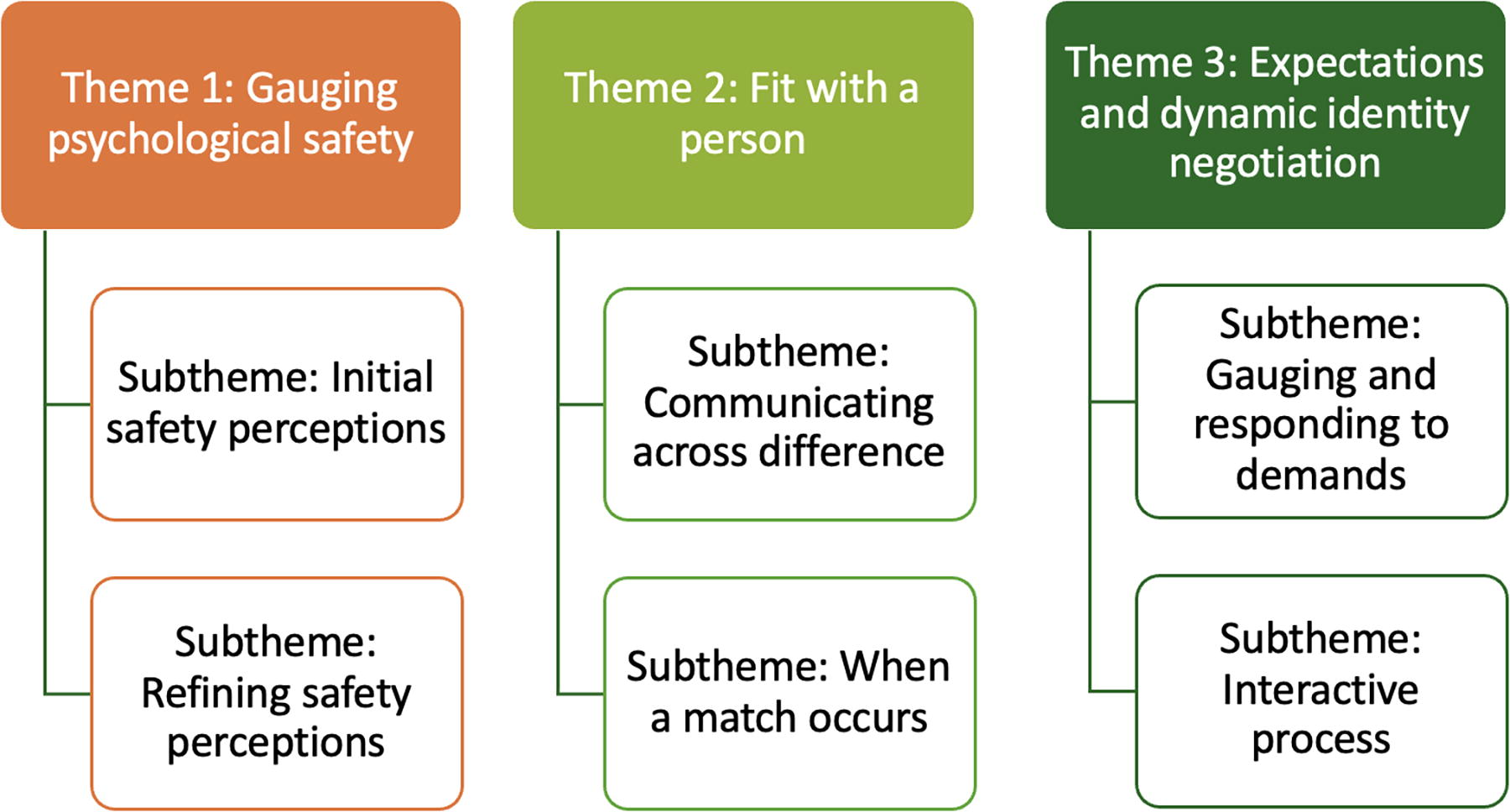
A diagram depicting thematic structure arising from participant responses.
Theme 1: Gauging psychological safety
Participants frequently reported that feeling accepted in a particular social context was a crucial determinant of their camouflaging behavior and valued environments where they felt safe to express their authentic selves. Non-autistic people tended to be seen as generally less accepting than autistic people, therefore prompting participants to camouflage their autistic traits more frequently. However, it was appreciated that non-autistic people could provide safe spaces where autistic people do not need to camouflage.
Subtheme 1: Initial safety perceptions
Participants’ initial perceptions of their interaction partners were a starting point in determining the anticipated levels of acceptance. Often, this involved an intuitive guess as to whether the interaction partner was likely to be autistic, which was based on “vibes” (P13), which signaled a greater sense of safety. This informal detection of potentially autistic people was linked to participants feeling safer and less pressured to camouflage, as they anticipated feeling understood and heard:
I don’t like to assume … But I feel like there’s always a bit of an inkling of it, because it seems to feel like a safer interaction and immediately comfortable a lot of the time … It just feels like interactions fall into place easier, and there’s less pressure. (P12)
Conversely, participants reported instinctively feeling compelled to conceal their autistic traits around people they perceived as non-autistic. A general lack of ease and feeling unsafe around “people who are very clearly neurotypical, because … there’s a lot less acceptance” (P01) due to past negative experiences were commonly discussed. Participants were also cautious about other safety risks, which also affected their camouflaging. They thus consciously endeavored to modulate some of their autistic traits to avoid safety issues in situations they could not control: “I suppose just not trying to speak as much because I am a talker … I’m overly friendly with people, which can be misconstrued with me as well, and it’s got me into trouble” (P14).
This ingroup–outgroup dynamics extended to other social identities, by which holding an additional marginalized identity frequently reinforced participants’ desire to camouflage their autistic traits, based on their “very black and white” (P14) perceptions of group membership, especially in situations where they held little power: “I’m always like, ‘They’re posh, I’m common’… So I know that I have to act in a certain way with these kinds of people, so like a class thing” (P14), which hints at a multidimensional identity negotiation process (see Theme 3). Thus, we interpreted initial perceptions of safety as not solely related to the interaction partner’s perceived neurotype but to other relevant intersecting social identities, which may inform which behaviors are modulated and to what extent.
Subtheme 2: Refining safety perceptions
The initial association of safety with autistic people and lack thereof with non-autistic people was not uniform. Participants valued their relationships with non-autistic people who were deemed safe, accepting, and understanding: “They just take time to listen to me” (P05), and who made an effort to resolve any communication mishaps without judgement: “They’ve got to know me as a person, which means if I say something that comes across as very autistic, they will know what I meant” (P03). This suggests that being respected as they were without any judgment played a vital role in establishing trust and safety, regardless of neurotype. Consequently, some participants felt less pressure to camouflage around their non-autistic loved ones compared with other situations, thus leading to authentic and fulfilling connections: “A lot less masking and a lot more being myself … less of the stock questions” (P07). At the same time, participants occasionally felt compelled to conceal their autistic traits even around some other autistic people due to fears of judgment unrelated to their shared neurotype: “That doesn’t have anything to do with her autism. It’s just she’s a Tory, and I don’t trust her … I already feel that she’s judging because of that” (P01).
Therefore, Theme 1 illustrated some of autistic people’s initial decision-making in social situations; their perceptions of psychological safety may be initially heuristic but subsequently refined. This refinement was understood to happen through additional cues, such as the effort made by their conversation partner and the nature of their relationship with the other person. Thus, although the preliminary impression, which likely included the perceived neurotype of the conversation partner, seemed to indicate a certain level of psychological safety, it was fine-tuned using additional information to inform camouflaging decision-making.
Theme 2: Fit with a person
Throughout the interviews, participants explored the role of perceived fit between themselves and their interaction partners in terms of communication styles. When communication styles aligned, interactions were easier and had fewer perceived camouflaging demands. While this match frequently occurred with fellow autistic people, it was not universal.
Subtheme 1: When a match occurs
The idea of perceived communication compatibility leading to smoother interactions was frequently expressed when discussing autistic–autistic interactions: “I would find it a lot easier to interact, a lot easier because there’s no ambiguity … There’s no words that are just insignificant… because we’re trying to conserve energy too” (P04). This translated into participants feeling free to communicate in a way that is authentic to them: “They will understand what I’m saying” (P09); “There’s an element of safety there” (P12).
A further layer of communication style alignment was the presence of additional forms of neurodivergence. For the two participants who disclosed a co-occurring attention deficit/hyperactivity disorder (ADHD) diagnosis, interactions with other autistic people with ADHD were more comfortable:
I find it easy communicating with people that are generally autistic and ADHD, as opposed to just autistic or just ADHD. So, people that are quite similar in terms of communication style and pace of communication, it flows a lot easier. (P02)
This perceived communication style fit with other autistic people was also anticipated by participants in interactions with unfamiliar people: “I love meeting other autistic people” (P14), even though they might still maintain some level of camouflaging with autistic strangers: “a lot less social masking around autistic people I know than autistic people I don’t know well” (P07). Even if some participants had limited experience of interactions with other autistic people, they still imagined that such interactions would feel easier and more authentic: “If he’s autistic, probably no … I wouldn’t [camouflage]” (P11). Participants anticipated a sense of inclusion with other autistic people, thus hinting at an expectation of mutual acceptance and nonjudgment and a perceived freedom to unmask: “I will happily [stim] more freely” (P12); “I won’t mask as much, like needing to imitate their behaviour, and I feel a lot more comfortable” (P13); “I feel that I can just kind of take off the mask, and I can be like my weird dorky self” (P14); “You can just share your joy in an unhindered manner, talk about weird things without judgment, knowing that the other person will at least be excited that you’re excited, even if the topic doesn’t necessarily interest them” (P01). This perceived match in terms of communication style may, therefore, underlie the heuristic assumption that autistic people are likely to confer a higher sense of psychological safety in social interactions discussed earlier.
Subtheme 2: Communicating across difference
Participants were highly conscious of the “disjoint in communication styles” (P02) between them and (mostly) non-autistic people. Experiences of misinterpretation were common, especially when participants advocated for themselves: “To some, I come across as uncomfortable or weird, and others find me quite aggressive, which I think comes from the way that I talk or interact” (P13). Moreover, some felt as if non-autistic people attributed false intentions to their communication: “But if someone doesn’t know me, then they might assume I’m being sarcastic when I’m not or assume I mean something else” (P03).
Participants reported that deliberate camouflaging, especially in the form of scripting or mimicry, was their default social strategy: “Looking at how the people are standing or facial expressions, acting” (P07); “if you’re copying behaviours, you’re able to fit in more” (P12). Some were confident in their ability to navigate non-autistic social contexts: “I’m good with small talk” (P14), suggesting a degree of compelled adaptation through deliberately cultivating certain skills that may not have come naturally.
Nonetheless, even among their non-autistic friends, some participants were still conscious of communication chasms and felt forced to camouflage, resulting in feelings of inauthenticity and tension, despite the close nature of their relationship:
I’m always worried that I’m upsetting them … So it’s a bit more on edge and a bit more making sure that I’m asking things that they can answer, and listening and responding to their answers in ways that are acceptable. (P07)
I don’t know if I’m true to my friends now either, because sometimes they want to go to places that I’ve got no interest in, and we haven’t actually got anything in common … And they’re lovely and things like that. But I don’t know. I don’t think I can be myself with friends. (P14)
In that way, participants’ awareness of different challenges that could arise in social interactions and camouflaging being their default response were interpreted as a response to having navigated many interactions with people they did not “match” with. They were thus accustomed to stigmatization, feeling drained, or losing relationships.
As challenging as communicating across difference was, it did not always translate into negative experiences. Indeed, many participants had mutually supportive and accepting relationships with non-autistic people and felt confident in their ability to deal with any communication issues:
I go to my mate. He takes me as I am, and he knows that I’m autistic … Do we both get it wrong? Yeah, absolutely. Is it difficult, hard, draining? Yes. Is there a miscommunication or a mismatch at times? Yes, but we come back together and actually discuss it. (P04)
A few suggested that “non-autistic knowledge” (P03) and the support of their non-autistic loved ones could be used strategically to navigate certain social contexts, although that did not solve the underlying issue of the stigmatization and lack of acceptance of autistic communication styles in society:
In a social setting, I have a number of sort of silent signals that I have with my wife where she can sort of tell me how the conversation’s going, and if I’m talking too much, if I’m not talking enough that only we know about. (P03)
This appreciation of their non-autistic loved ones’ friendship and support in social situations was additionally understood as a recognition of communication as a two-way street, by which both parties are to put in the effort to have a positive close relationship. This was in contrast to participants’ interactions with strangers or in other situations where there could be a risk of judgment, in which participants defaulted to camouflaging instead of engaging more authentically. However, this strategy only seemed possible after establishing a sense of safety and trust.
Although the idea of misalignment was commonly discussed in the context of interactions with non-autistic people, participants recognized the possibility of communication breakdowns with other autistic people: “I’ve got one [friend] who literally took everything that I said out of context” (P04). Moreover, some participants found it challenging to navigate conflicting autism-related communication needs: “There are other times when we can’t stand the sight of each other, because our autism just clashes so badly” (P03), such as interactions perceived as overly one-sided: “You never get to say what you want to say … No one gets the point across, cause they just want to talk about their interest, and I don’t wanna listen to their interest” (P05). This was interpreted as participants, despite their general willingness to engage with other autistic people, recognizing the nuances of their own communication needs and those of others. Thus, participants did not seem to view effective communication as an automatic result of a shared neurotype but as something that could be fostered and honed across difference.
Theme 2 highlighted differences in the strategies, including camouflaging, used by participants across social interactions in diverse contexts. While Theme 1 revealed how participants initially established a sense of safety based on certain clues, Theme 2 clarified the nuance around perceived “fit” with their interaction partners and how a lack of fit could be overcome. However, what remains to be explored is the interactive process of navigating one’s identity across a single social interaction.
Theme 3: Expectations and dynamic identity negotiation
Even within single interactions, the sense-making around camouflaging evolved across time. Navigating their communication needs was a dynamic and interactive process for participants. This incorporated an assessment of perceived expectations and demands, in addition to psychological safety as discussed above, and a subsequent decision as to how to respond—whether with varying degrees of camouflaging or disclosure of their autistic identity.
Subtheme 1: Gauging and responding to demands
Participants were often conscious of the demands and expectations associated with social settings through past experiences or self-study and how they may find them difficult to navigate: “I have difficulties with the interrupting, or knowing when people are finished” (P02). As a result, many participants consciously created ways to compensate for their perceived challenges, which allowed them to meet those expectations:
Knowledge of social settings, like at least for me, I think everything I do is based on having studied and then done, almost like a little normal distribution of what is the appropriate behaviour. So I think because my brain works really quite scientifically, I do almost like little models and little algorithms for every situation. (P01)
A sense of self-awareness was thus named as a precursor to camouflaging when it occurred. Understanding one’s innate tendencies and how they may interact with social demands allowed participants to adjust their behavior to meet perceived expectations in social situations when motivated: “I tend to be a lot more blunt than most, and so, being aware of that being part of the condition and therefore being able to identify it, isolate it, and reduce it, if I so choose” (P15). Alternatively, participants may have disclosed their specific social challenges that could make them vulnerable to misinterpretation: “When I start the conversation, I apologise in advance if I inadvertently interrupt you” (P02). This understanding of social expectations in different contexts and the subsequent decision to modulate one’s behavior were interpreted as a dynamic process of impression management aimed at minimizing friction in social situations. However, this also suggested that participants felt the responsibility to modify their behavior, whether consciously or unconsciously, for the sake of social harmony to be theirs instead of their interaction partner.
The aforementioned appraisal of expectations resulted in some participants rejecting the social norms and expectations dictating what behavior is considered “normal”: “I feel pretty comfortable in myself and how I act, and I don’t try to appear normal. I don’t think that’s a bad thing, so I try and embrace my difference, and act fairly natural and fairly authentic” (P15). This involved consciously choosing not to camouflage altogether or through pre-emptively disclosing they were autistic, such as through wearing an identifying badge. The primary motivation for choosing disclosure over concealment was a desire for others to know in the hopes for greater patience or understanding, especially if they needed additional support: “I want the awareness to be there … if I get really overwhelmed. I’m just like right, read [the badge], it says I’m autistic” (P04). However, participants were aware that disclosure did not necessarily lead to more acceptance: “Even actually, when [the badge] was there in full view, you could see it says ‘I have autism.’ It was actually ignored even then” (P04). This was interpreted as an illustration of the complexities surrounding camouflaging, concealment, and disclosure and the related decision-making; not concealing one’s autistic identity or disclosing it was interpreted as a willingness to counteract and challenge extant noninclusive social norms, even in the face of rejection.
Subtheme 2: Interactive process
Participants’ other social identities interacted with the expectations of a given situation, thus influencing the degree of camouflaging. For instance, some participants indicated that because of their other social identities, any perceived communication differences were not always seen as stemming from autism. Interestingly, this facilitated them blending in without any deliberate camouflaging efforts on their part and thus served to reduce their perceived need to modulate their behavior: “I can’t fully mimic people’s body language, but no one really expects me to, because wheelchair” (P07). Another participant, who is transmasculine and nonbinary, found that after they transitioned, they experienced fewer negative reactions to their autistic traits and thus felt safer to consciously “unmask” (P12) and be themselves: “Because I am read as male now, there is kind of less pushback to my autistic behaviours because of societal conceptions, which is really f***ed up if you ask me” (P12). They attributed this change to misconceptions surrounding feminine-presenting autistic people: “I’m just believed more” (P12).
In some ways, this reported dynamic seemed to reflect an awareness of a broader societal phenomenon of differential expectations placed on different social groups (whether fairly or not), which these participants have been able to avail of. Dovetailing with the previous interpretation that participants felt less compelled to camouflage when they felt psychologically safe, participants thus seemed to engage in a complex process of negotiating their multidimensional identity and self-presentation: not camouflaging when they felt safe or not expected to and camouflaging otherwise.
Discussion
This qualitative study examined autistic people’s perceptions of their camouflaging decision-making across different social contexts, taking into account interactions with autistic and non-autistic people. Participants described how conscious and unconscious perceptions of psychological safety contribute to self-modulation and camouflaging. They frequently reported that interacting with autistic people felt safer than with non-autistic people, resulting in a reduced need for camouflaging and enhanced authenticity. However, these safety perceptions were predominantly based on a sense of communication style fit and the nature of the relationship rather than solely on their neurotype. Communicating with those with different communication preferences was at times frustrating, in part, due to a felt need to camouflage, but could be rewarding through mutual efforts to bridge the gap, thus leading to social connections.
Participants’ decision-making surrounding camouflaging was interpreted to be linked to the immediate and broader social context. In line with previous research,1–4 past rejection and stigmatization resulted in an increased intent to modify one’s behavior, in addition to understanding when camouflaging might be more socially desirable or safer, rather than being solely about blending in, which was particularly prevalent in contexts where they held limited power. Camouflaging served as an adaptive impression management tactic that could sometimes be deployed consciously and strategically as needed, echoing impression management research on other social identities, 4 although many aspects of camouflaging were unconscious and automatic. That decision-making was also informed by participants’ multidimensional identities, namely other forms of neurodivergence, physical disabilities, and social class. This is in line with the transactional impression management framework, which highlights the context-dependent nature of camouflaging and impression management more broadly. 4 Blending in and standing out may not always be the result solely of one’s behavior, but rather the interaction of their behavior with its perception in a given social context, as seen in the way participants felt that different environments accentuated or attenuated their differences in Theme 3. This was also seen in the study by Dean et al, 5 where different social contexts were shown to change the visibility of autistic people’s social differences, and the qualitative data from this study provide further support for the interactive relationship between the social environment and one’s behavior.
The contextual and dynamic nature of camouflaging was further supported by participants’ descriptions of consciously choosing to unmask at least partially by acting in ways that felt more authentic in situations when they felt safe to do so. This is in line with previous research describing such social contexts as autistic-centered and with non-autistic social norms overhauled. 17 Such contexts are scarce, and this study indicates that conscious camouflaging, at least, is driven by the appraisal of the relative costs and benefits of concealing one’s autistic traits or identity in a given environment. This is seen in other studies of autistic narratives, through which protecting oneself from potential harm via concealment is balanced with coming out in the interest of community and authenticity.27,28
Unmasking also occurred when participants felt that they had found the right communication style “fit.” This sense of fit was understood to occur organically with some, although not all, autistic people. Participants described non-autistic people as inherently dissimilar and difficult to understand, which often hindered the flow of cross-neurotype social interactions. This is in line with empirical studies highlighting communication breakdowns occurring in interactions between non-autistic and autistic people, such as Crompton et al., 18 which may serve to exacerbate the perceived need for camouflaging. However, our findings are also in line with Milton’s conception of double empathy 15 in that any communication breakdowns are not one sided, with shared neurotype (e.g., autistic, autistic and ADHD, or non-autistic) being an added layer of complexity across which interaction has to function.
Participants generally viewed other autistic people as similar to them in terms of communication style and needs, making interactions easier and smoother, which matches the results of previous research.16,29 However, they also recognized the diversity within the autistic community. Not all autistic people were seen as safe or inherently similar, sometimes negating the perceived advantage of within-neurotype communication. Some autistic people expressed views that made participants feel unsafe or judged, leading them to camouflage to avoid stigmatization, regardless of whether the potential judgment was related to their autistic traits or other aspects of their identity. Conflicting autism-related needs did not seem to result in camouflaging but rather avoidance of interactions. These findings highlight the importance of shared values and needs in fostering psychological safety in autistic people, which is supported by previous research. Welch et al. 30 suggested these factors, and perceived familiarity, contribute to interpersonal trust, suggesting that they can lead to a reduced intent to camouflage and more authentic connections in autistic people.
Participants reported camouflaging significantly less around people they had close relationships with, whether they were autistic or non-autistic. While interacting with non-autistic people has been described as more challenging, 16 this study highlights the possibility of rewarding and authentic connections if trust and closeness are established and both sides endeavor to bridge the gaps. Indeed, research shows that in romantic relationships between autistic and non-autistic people, partner responsiveness and clear communication are key for relationship satisfaction on both sides.31,32 This study thus demonstrates that mutual effort can help resolve autistic/non-autistic communication differences in social relationships. Furthermore, it is possible that the drivers and inhibitors of camouflaging—namely, a sense of trust, connection, and acceptance and maintaining an open line of communication—are similar in interactions with autistic and non-autistic people, even though an initial rapport might be easier to establish with a fellow autistic person.
While the interviews suggested a dynamic appraisal of factors such as perceived safety and demands driving camouflaging in some cases, some participants referred to camouflaging as their default and automatic social strategy, which is in line with the autistic community narratives on camouflaging being an ingrained response to the stigma faced by autistic people.7,33 In those cases, unmasking may thus represent a conscious choice to reverse that instinctive response fully or partially, a finding echoed in literature on autistic people’s decisions and motivations surrounding unmasking.7,33 This aligns with the way our participants used the term “unmasking” when referring to the perceived freedom to move and communicate in ways that felt authentic. However, the distinction between “not camouflaging” and “unmasking” remains unclear. It is beyond the scope of this study to delineate that difference in a way that is representative of the community’s experiences, but these potentially different experiences should be empirically clarified in future research. It is possible that “not camouflaging” could mean the absence of conscious or unconscious behavior modification, while “unmasking” may entail deliberately responding in ways that feel more authentic. 33 The two likely have different psychological outcomes or act as counters to automatic or conscious camouflaging, which should be explored in further research. It has been proposed that automatic and conscious camouflaging coexists 4 and may become more prominent in different contexts; for instance, automatic camouflaging could be a response to low-stakes social situations that may still pose a risk of stigmatization, and conscious camouflaging may emerge in situations where making a certain impression may be more important.
Strengths and contributions
This study provides preliminary qualitative support for a context-based approach to camouflaging, highlighting its interactive nature and how it may be dependent on decision-making informed by the immediate social context.
The sample consisted of a greater proportion of participants identifying as men than in other qualitative studies on similar topics.1,2 While this study did not examine gender differences in how participants described their camouflaging experiences, it challenges the framing of camouflaging as solely a “female” experience 34 and provides additional nuance and context from a group underrepresented in qualitative camouflaging research.
Finally, the finding that autistic people may feel ambivalent about interacting with other autistic people because their expectations of psychological safety or similar ways of communicating are not realized adds an additional layer of nuance to the extant theory and research. While some studies, such as by Crompton et al., 18 suggest an increased ease of communication between autistic people, this study shows that this may not always be the case due to the diversity of autistic people’s communication needs and other social identities.
Implications for practice
This study shows that awareness of psychological safety and mutual attempts to mitigate the differences may allow autistic (and other neurodivergent) individuals to feel more at ease during cross-neurotype interactions. This can help foster open communication in clinical settings and fostering inclusive environments where people feel safe to be themselves, regardless of their neurotype. Furthermore, this study highlights the importance of open communication and acceptance even in autistic–autistic interactions, which could inform the delivery of peer support services.
Limitations
The sample in this study was highly biased toward White, British, highly educated autistic people who were able to participate in an oral interview. While participants were aware of the safety concerns they may face when not camouflaging, the risks are compounded for Black and racialized communities. 9 Moreover, participants’ views about interacting with other autistic people were mostly positive due to expectations of inclusion and acceptance. However, the autistic community can uphold societal systems of oppression, and the attitudes of Black and racialized autistic people toward interacting with other autistic people are likely to differ. 35
Participants’ experiences of camouflaging may be related to their education status. Higher levels of camouflaging are linked to higher educational and professional attainment, 36 and the ability of participants in this study to successfully navigate the expectations of higher education is also not universal among the autistic community (in 2021, only 21.8% of autistic people aged 21 to 64 in the United Kingdom had qualifications at degree level 37 ). In addition, camouflaging may look different in autistic people with intellectual disabilities, as they may encounter more stigma, navigate different social contexts, and experience distinct self-modulation challenges. Therefore, the issues of psychological safety our participants identified are likely to be more prevalent and more salient in those with other marginalized identities who may face stigma or violence separate to being autistic. 14
The nature of the questions likely affected the data gathered by focusing more on social camouflaging rather than camouflaging sensory discomfort or repetitive behaviors, experiences of which may vary. Furthermore, although participants alluded to unconscious camouflaging, this study was mostly limited to reporting on conscious camouflaging. Unconscious camouflaging is, by nature, very difficult to identify and describe via self-report or qualitative interviews.14,33,38 Thus, detailed understanding of the ways in which camouflaging occurs more unconsciously (and/or automatically) will necessitate the use of diverse methods and paradigms.
Further directions
Further research should further explore psychological safety as a key moderator of camouflaging in more diverse samples. In addition, autistic people’s experiences or expectations surrounding autistic–autistic social interactions could be studied in the context of their connection to the autistic community as a whole, 39 which may shed light on the nuance surrounding those social contexts. Finally, future qualitative and quantitative studies should examine the distinction between automatic and conscious camouflaging and the implications for social relationships and mental health.
Conclusion
This qualitative study examined how autistic people describe their decision-making process surrounding camouflaging in different social contexts, particularly when interacting with autistic and non-autistic people. Camouflaging was shown to be a dynamic, context-dependent strategy largely moderated by perceived safety, demands and expectations, fit with the interaction partner, and the nature of the relationship. For participants, interacting with other autistic people generally felt safer and more authentic due to fewer camouflaging demands and expectations of inclusion compared with non-autistic people. However, shared values and efforts at understanding and inclusion seemed to be more significant than a shared diagnosis, thus reinforcing the importance of reducing societal stigma and creating inclusive environments for autistic people to thrive.
Footnotes
Acknowledgments
The authors sincerely thank the Birmingham Psychology Autism Research Team’s Advisory Committee, the autistic adults who participated in the study, and the peer reviewers for their constructive comments.
Authorship Confirmation Statement
V.K.: Conceptualization, methodology, investigation, formal analysis, and writing—original draft. X.L.: Validation and writing—review and editing. S.S.-C.: Conceptualization, writing—review and editing, and supervision. A.D.R.S.: Conceptualization, validation, writing—review and editing, and supervision. The article has been submitted solely to Autism in Adulthood.
Author Disclosure Statement
The authors have no conflicts of interest to disclose.
Funding Information
No funding was associated with this research.

References
Supplementary Material
Please find the following supplemental material available below.
For Open Access articles published under a Creative Commons License, all supplemental material carries the same license as the article it is associated with.
For non-Open Access articles published, all supplemental material carries a non-exclusive license, and permission requests for re-use of supplemental material or any part of supplemental material shall be sent directly to the copyright owner as specified in the copyright notice associated with the article.
