







Abstract
The demand for intensive care units (ICUs) is steadily increasing, yet there is a relative shortage of medical staff to meet this need. Intensive care work is inherently heavy and stressful, highlighting the importance of optimizing these units’ working conditions and processes. Such optimization is crucial for enhancing work efficiency and elevating the level of diagnosis and treatment provided in ICUs. The intelligent ICU concept represents a novel ward management model that has emerged through advancements in modern science and technology. This includes communication technology, the Internet of Things (IoT), artificial intelligence (AI), robotics, and big data analytics. By leveraging these technologies, the intelligent ICU aims to significantly reduce potential risks associated with human error and improve patient monitoring and treatment outcomes. Deep learning (DL) and IoT technologies have huge potential to revolutionize the surveillance of patients in the ICUs due to the critical and complex nature of their conditions. This article provides an overview of the most recent research and applications of linical data for critically ill patients, with a focus on the execution of AI. In the ICU, seamless and continuous monitoring is critical, as even little delays in patient care decision-making can result in irreparable repercussions or death. This article looks at how modern technologies like DL and the IoT can improve patient monitoring, clinical results, and ICU processes. Furthermore, it investigates the function of wearable and advanced health sensors coupled with IoT networking systems, which enable the secure connection and analysis of various forms of patient data for predictive and remote analysis by medical professionals. By assessing existing patient monitoring systems, outlining the roles of DL and IoT, and analyzing the benefits and limitations of their integration, this study hopes to shed light on the future of ICU patient care and identify opportunities for further research.
Introduction
With the global aging population and advancements in medical conditions, an increasing number of hospitals have established comprehensive intensive care units (ICUs), and some specialties have set up dedicated ICUs to meet the growing treatment needs of critically ill patients. 1 A survey in the United States reveals that there are over 6,300 ICUs in 3,200 acute-care hospitals, providing a total of 94,000 intensive-care beds. However, critical care medicine demands high levels of competence and experience from doctors and nurses. 2 Patients in ICUs are often critically ill and unstable, with conditions that can change rapidly. Additionally, ICUs house a large amount of equipment that operates continuously. 3
Despite the increasing number of ICU patients, many doctors and nurses have not kept pace, leading to a significant manpower shortage in many ICUs. This results in a heavy workload, high occupational stress, and frequent exhaustion among medical staff. Such conditions can lead to oversight of patient condition changes and delays in treatment, ultimately affecting the quality and effectiveness of care in the ICU. While increasing the number of doctors and nurses could alleviate this issue, it would also significantly raise labor costs4,5 Therefore, it is essential to rationally plan the layout of ICUs and optimize and standardize work processes to improve efficiency and reduce errors. The concept of a “smart ward” has emerged in recent years as a new approach to hospital management. By utilizing modern scientific and technological advancements, smart wards aim to promptly identify and address problems in inpatient management, improve efficiency, reduce medical errors caused by human factors, optimize human resource allocation, and enhance the use and monitoring of medical instruments and equipment. 6 Key technologies integrated into smart wards include 5G communication, the Internet, the Internet of Things (IoT), artificial intelligence (AI), and big data analytics.7–9
ICU patients, who are in critical condition and require numerous instruments and equipment, have particularly urgent and high requirements for intelligent solutions. Research on intelligent ICUs has been increasing, focusing primarily on ICU setup, intelligent monitoring, and alarm systems, with some studies also exploring risk prediction.10,11 This article summarizes the current research on intelligent ICUs, providing an overview and progress update on related studies. The ICU is a specialized section within hospitals designed to provide intensive treatment and monitoring for patients suffering from severe or life-threatening conditions. These environments necessitate continuous and meticulous supervision, utilizing life support systems and medication to maintain vital bodily functions. While it is ideal for treating physicians to constantly oversee these critical patients, it is often impractical due to time and resource constraints. Consequently, resident doctors are stationed within the ICU to provide continuous monitoring and immediate care. 12 In emergencies, resident physicians must promptly contact the treating physicians through communication devices, such as phones or beepers, or by locating them in person, which can result in delayed response times during critical moments. Health care specialists are increasingly harnessing the potential of technological advancements to address these challenges and enhance medical practices both within and beyond hospital settings. Electronic health (EHealth) applications and health management systems, which are driven by information and communication technology, are being widely adopted by consumers to enhance and expand their health care networks.13,14
As shown in Figure 1, these systems enable seamless communication between patients and health care providers, especially during urgent situations, with notifications sent directly to specialists or family members. Health analysts recognize the transformative potential of these technologies to revolutionize the health care market, facilitating a crucial shift toward more efficient and accessible medical care. 15 The widespread adoption of mobile health (M-Health) and EHealth applications by everyday consumers and health care professionals is driving this significant change. These platforms enable users to support their health management proactively, contributing to a more resilient and responsive health care ecosystem. 16 A persistent and reliable communication framework, similar to the Patient Management System, is essential for this transformation. One of the major societal challenges is the deficiency of adequate social security in health care. As highlighted by the World Health Organization, achieving an exemplary medical system is paramount for individual well-being. Modern health care solutions must be innovative and adaptive to provide effective and sustainable medical care.17,18
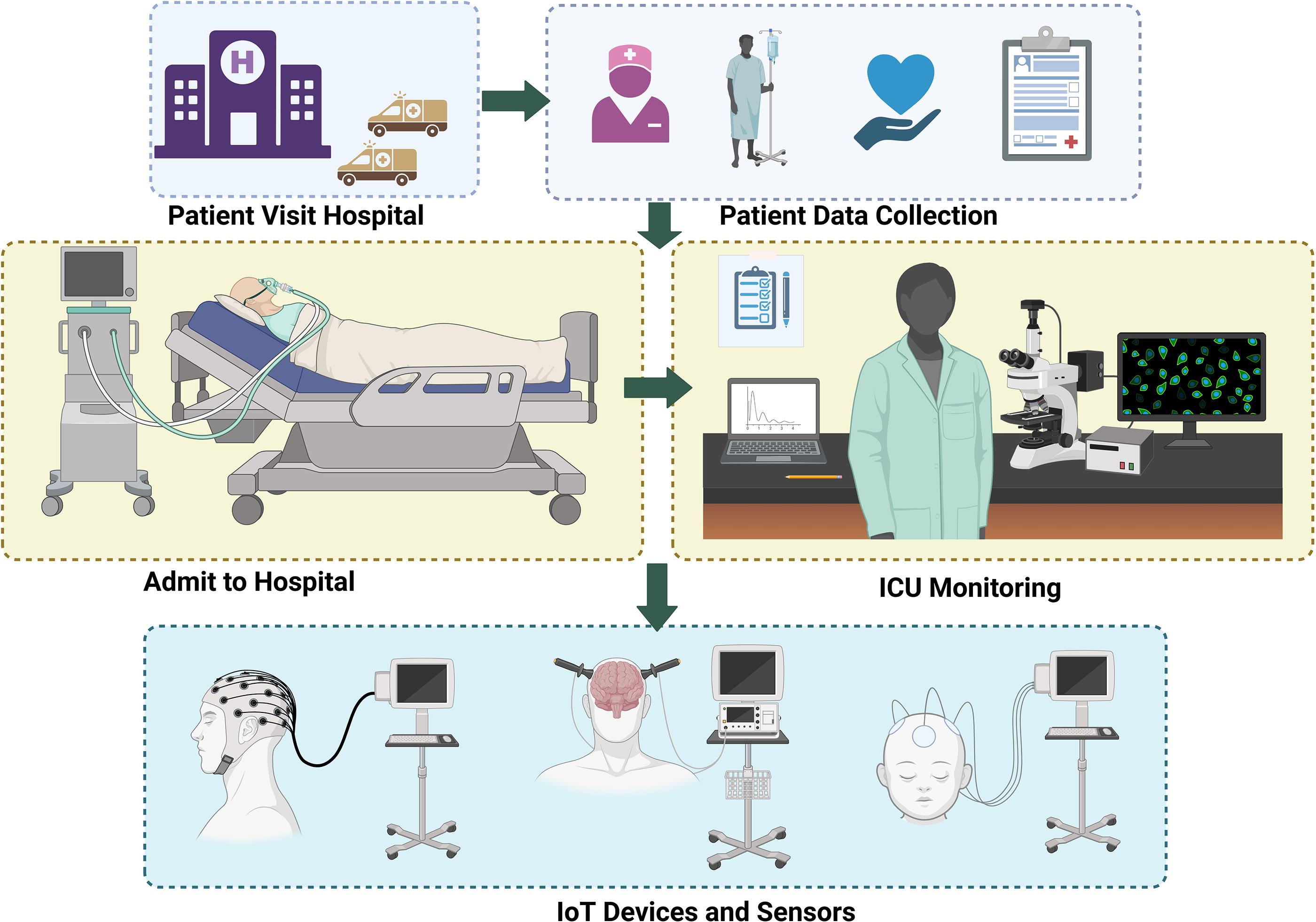
Interaction between IoT systems and Patient. IoT, Internet of Things.
Integrating IoT technology into health care can significantly enhance the safety and efficiency of medical services. IoT systems rely on interconnected sensors and remote systems, enabling users to access and share information seamlessly. Nowhere is the impact of IoT more profound than in the health care sector. The adage “health is wealth” underscores the critical importance of leveraging technology for better health outcomes. 19 Thus, establishing a secure and efficient IoT framework for health care analysis is essential. Currently, the health care industry is transitioning from traditional, human-centric methods to technologically advanced, automated systems. This evolution is particularly crucial as population’s age and the prevalence of chronic diseases rises, necessitating more sophisticated and responsive health care solutions. 20
IoT and related technologies promise to enhance remote health monitoring and support independent living by enabling real-time tracking and analysis of vital health data. These advancements are particularly relevant in ICUs, where timely and precise monitoring can make a significant difference in patient outcomes.15,16 IoT-based systems, combined with deep learning (DL) and AI, offer the potential for real-time data analysis, predictive analytics, and more efficient resource allocation, paving the way for a transformative impact on patient care and medical practices. Moreover, the integration of DL with IoT in ICU settings is set to revolutionize patient care by providing advanced predictive analytics and decision support systems.17,18 DL algorithms can process vast amounts of data generated by IoT devices, uncovering patterns and insights that may not be immediately apparent to human observers. For example, predictive models can analyze continuous streams of vital signs data to forecast critical events, such as cardiac arrest or sepsis, allowing for timely interventions. These predictive capabilities can significantly improve patient outcomes by enabling proactive rather than reactive care. 25 Additionally, the use of DL can automate routine tasks such as monitoring vital signs and alerting health care providers to anomalies, thereby reducing the cognitive load on ICU staff and allowing them to focus on more complex and critical aspects of patient care. Furthermore, the seamless integration of IoT and DL technologies enhances the personalization of patient care in ICUs. Wearable devices and smart sensors continuously collect data on various physiological parameters, which are then analyzed in real-time by DL algorithms to tailor treatment plans to individual patient needs. 26 This personalized approach ensures that treatments are more effective and reduces the risk of adverse events. IoT-enabled health monitoring systems can also facilitate remote monitoring, where specialists can oversee patient data and provide consultations without being physically present in the ICU. This is particularly beneficial in cases where specialists are not readily available on-site, ensuring that patients receive expert care promptly. The integration of these technologies not only optimizes ICU workflows but also improves the overall quality of care, making health care more responsive, efficient, and patient-centric.27,28 As these technologies continue to evolve, they hold the promise of transforming the landscape of critical care medicine, offering new avenues for research, innovation, and improved patient outcomes.
Hence, it becomes imperative to establish an IoT framework that ensures secure and robust data analysis capabilities. Currently, traditional institutional practices are transitioning toward technologically driven, personalized systems. As global demographics shift toward aging populations and an increasing prevalence of chronic diseases like diabetes and cardiovascular ailments, there is a growing emphasis on supporting both physical and mental health to maintain independent living. 29 Innovations in sensing technologies, remote health monitoring, and the integration of IoT are pivotal in addressing these challenges.11,30 The IoT has garnered significant attention across various disciplines, particularly in personalized health care, where body area sensor networks play a crucial role in ubiquitous health monitoring. For instance, ECG (electrocardiogram) monitoring has emerged as a vital tool for diagnosing cardiovascular conditions.
Literature Review
In recent years, there has been a notable surge in the adoption of wearable sensors, which are increasingly affordable and readily available in the market, facilitating personal health care and activity monitoring. Researchers are exploring these advanced devices for medical applications, focusing on data recording, management, and continuous patient health monitoring. The IoT represents a transformative technology poised to elevate health care services to new heights.32,33 It promises cost-effective, reliable, and portable devices that can be seamlessly integrated into patients’ daily lives, fostering continuous connectivity among patients, medical devices, and health care providers. These sensors continuously capture physiological signals, which are then correlated with essential health parameters and transmitted wirelessly. 34 The resultant data is stored, processed, and analyzed alongside existing health records.
This real-time analysis enables health care providers to make more informed prognoses and recommend early interventions, even in the absence of direct physician oversight. Leveraging machine learning algorithms on accumulated datasets allows today’s technology to not only predict potential health issues but also derive tailored treatment strategies from comprehensive medicinal databases. 35 Such technological advancements promise to revolutionize health monitoring, significantly reducing health care costs and advancing the precision of disease prediction. This article proposes a service model that addresses both the technological and economic implications of IoT in enhancing patient comfort and outlines the current challenges in deploying IoT solutions within the medical field. 36
Ensuring scientific validity and rationality in diagnosis while protecting patient privacy is paramount in smart health care. Various studies have explored the application and adoption of technologies in different sectors, providing valuable insights into robust decision-making frameworks and the integration of advanced technologies. Deretarla et al. 37 emphasize the effectiveness of the Complex Proportional Assessment (COPRAS) method for vendor selection in logistics and supply chain management. Similarly, Stilic et al. 38 propose a Modified Integrated Weighting MCDM (multi-criteria decision-making) Model for ranking agrarian datasets, promoting sustainable development. Both studies highlight the importance of structured methodologies in optimizing operational efficiencies and achieving sustainability goals.
Hsu et al. 39 integrate quality function deployment with MCDM for green supplier selection, aligning supplier choices with environmental objectives. Mishra et al. 40 utilize the SWARA (Step-Wise Weight Assessment Ratio Analysis)-COPRAS approach for prioritizing investments in high-tech industries, showcasing a systematic evaluation of investment opportunities. These studies underline the critical role of integrated frameworks in fostering eco-friendly and strategic investment decisions. In health care, Vogel et al. 41 explore the adoption of wearable sensor products for pervasive care in neurosurgery and orthopedics, illustrating the potential of such technologies in enhancing patient outcomes. Said 42 identifies key determinants influencing the adoption of M-Health services in developing countries, such as ease of use, perceived usefulness, and patient-centric benefits. These findings are crucial for understanding the dynamics of technology acceptance in health care.
Nizetic et al. 43 compare IoT platforms using quantitative and qualitative criteria, emphasizing the need for balanced evaluations in technology selection. Ben Arfi et al. 44 discuss the importance of consumer trust in enhancing IoT technology adoption, while Liu et al. 45 apply the technology acceptance model and the unified theory of acceptance and use of technology to identify external factors affecting IoT adoption. These studies collectively underscore the significance of trust, security, and comprehensive evaluation in the successful deployment of IoT technologies. Boonsothonsatit et al. 46 employ Analytic Hierarchy Process and Fuzzy Technique for Order Preference by Similarity to Ideal Solution for evaluating and selecting M-Health applications, presenting a multi-criteria decision-making approach tailored to the health care industry’s unique requirements. This methodology ensures the selection of optimal M-Health solutions through a structured and systematic process. Kamal et al. 47 delve into the dual-factor concepts of acceptance and resistance in telehealth adoption, providing insights into factors that influence the implementation of telehealth solutions. This study is instrumental in identifying both facilitators and barriers to telehealth adoption, informing strategies to enhance user acceptance.
Rajabzadeh et al. 48 apply interpretive structural modeling to analyze factors influencing IoT adoption in Chinese agricultural supply chains, highlighting the complex interplay of various elements in technology adoption. Affiaet et al. 49 propose a composable threat assessment framework for medical IoT (MIoT), emphasizing the need for robust security measures in MIoT deployments. Chatautet et al. 50 conduct a comprehensive review of IoT applications in high-risk environment, health, and safety industries, underscoring the need for stringent safety protocols and reliable technology solutions. Bolonne and Wijewardene 51 explore factors affecting the intention to adopt big data technology in Sri Lanka’s financial services industry, identifying key drivers and barriers. Li et al. 52 examine technology adoption in patient-centered medical homes, providing insights into facilitators and obstacles in adopting patient-centric technologies. Khan et al. 53 model barriers to IoT adoption in food retail supply chains, highlighting challenges in integrating IoT solutions. Gregório et al. 54 use fuzzy analytic network process to determine the importance of factors in hospital information system adoption, presenting a nuanced analysis of adoption decisions. Li et al. 55 evaluate factors affecting IoT adoption in Chinese agricultural supply chains, offering a detailed examination of elements driving or hindering adoption.
The integration of IoT in ICU settings further enhances monitoring capabilities by enabling seamless connectivity between medical devices, patient data systems, and health care professionals. IoT facilitates the transmission of real-time data from sensors embedded in medical devices to centralized monitoring systems, allowing for continuous monitoring of vital signs and other critical parameters. This interconnectedness not only improves the efficiency of ICU workflows but also supports remote monitoring and telemedicine initiatives. For instance, IoT-enabled devices can transmit patient data securely to off-site specialists, enabling timely consultations and interventions regardless of geographical location. This capability is particularly advantageous in managing ICU patients in rural or underserved areas where access to specialized care may be limited.
Despite the transformative potential of DL and IoT in ICUs, several challenges must be addressed for widespread adoption and integration into clinical practice. These challenges include data privacy and security concerns, interoperability issues between different medical devices and information systems, and the need for robust validation of AI algorithms in clinical settings. 56 Moreover, the implementation of these technologies requires substantial investment in infrastructure, training of health care personnel, and adaptation of existing protocols to accommodate new technologies. Overcoming these challenges will be crucial in realizing the full potential of DL and IoT to enhance ICU patient care, improve health care outcomes, and optimize resource utilization in health care facilities. Future research efforts should focus on addressing these challenges while exploring novel applications of DL and IoT in ICU settings to further advance patient-centered care and clinical decision-making.
ICU Monitoring with Real-Time IoT Sensors
The volume and information content of clinical data for critically ill patients are enormous. Statistics indicate that a single patient in ICU medical monitoring can involve up to 236 data variables at any moment. Some studies have utilized big data for guidelines and treatment plan formulation. In 2018, researchers studied whether Sepsis 3.0 would delay diagnosis, and another study retrospectively analyzed 69,000 clinical cases from 2008 to 2016, finding that AI diagnosis could be 4 to 12 hours earlier than that of doctors.
Current patient monitoring systems in ICUs
Traditional ICU monitoring relies on various devices to track patient vitals such as heart rate, blood pressure, and oxygen levels. These systems, while crucial, often suffer from data fragmentation, limited predictive capabilities, and the need for manual intervention. ICUs represent the pinnacle of digital medical device integration within clinical settings as shown in Figure 2. These units are equipped with an array of sophisticated equipment including bedside monitors, central monitors, multifunctional ventilators, anesthesia machines, electrocardiographs, defibrillators, pacemakers, and infusion pumps. The data generated by these devices, combined with inputs from medical staff operations and patient data from various departments and laboratories, consolidates the ICU as a hub of multifaceted information. 57 This data encompasses demographic details (e.g., patient identifiers), vital signs (e.g., blood pressure, temperature, heart rate, ECG), laboratory test results (varied frequencies based on clinical judgment), medication records, interventions (e.g., intubation, resuscitation), and textual medical notes. The high-dimensional, noisy, sparse, heterogeneous, and imbalanced nature of ICU monitoring data poses significant challenges for timely intervention prediction by clinical teams. Here, AI algorithms excel, offering faster and more consistent analyses than human experts, thereby enhancing clinical decision-making through synergistic collaboration between AI and medical professionals. While experienced clinicians can detect patient trends through prolonged bedside observation, this approach is labor-intensive and impractical for managing multiple patients simultaneously. 58 Machine learning algorithms leverage historical intervention data to develop predictive models for CRRT initiation, enabling timely interventions and improving hospital outcomes for patients with septic shock-induced renal failure. AI applications in health care encompass diverse functions such as treatment decision support, virtual assistance, disease prediction, and intelligent nursing. AI excels in handling repetitive tasks, complex conditions, and rule-based scenarios, significantly enhancing medical efficiency and accuracy. Within the ICU context, intensive care information systems (ICIS) play a pivotal role by integrating patient vital signs into a unified system. 59 ICIS seamlessly interfaces with hospital information systems, laboratory databases, and medical imaging systems, facilitating real-time patient monitoring, timely alerts, and adherence to treatment protocols. By consolidating ICU data streams—comprising vital signs, blood gas analyses, complete blood counts, and ventilator metrics—ICIS forms a robust clinical knowledge base. Future research in clinical decision-making is poised to harness AI algorithms for data extraction and analysis within ICUs, thereby shaping the future landscape of intensive care through enhanced predictive analytics and personalized patient management strategies.
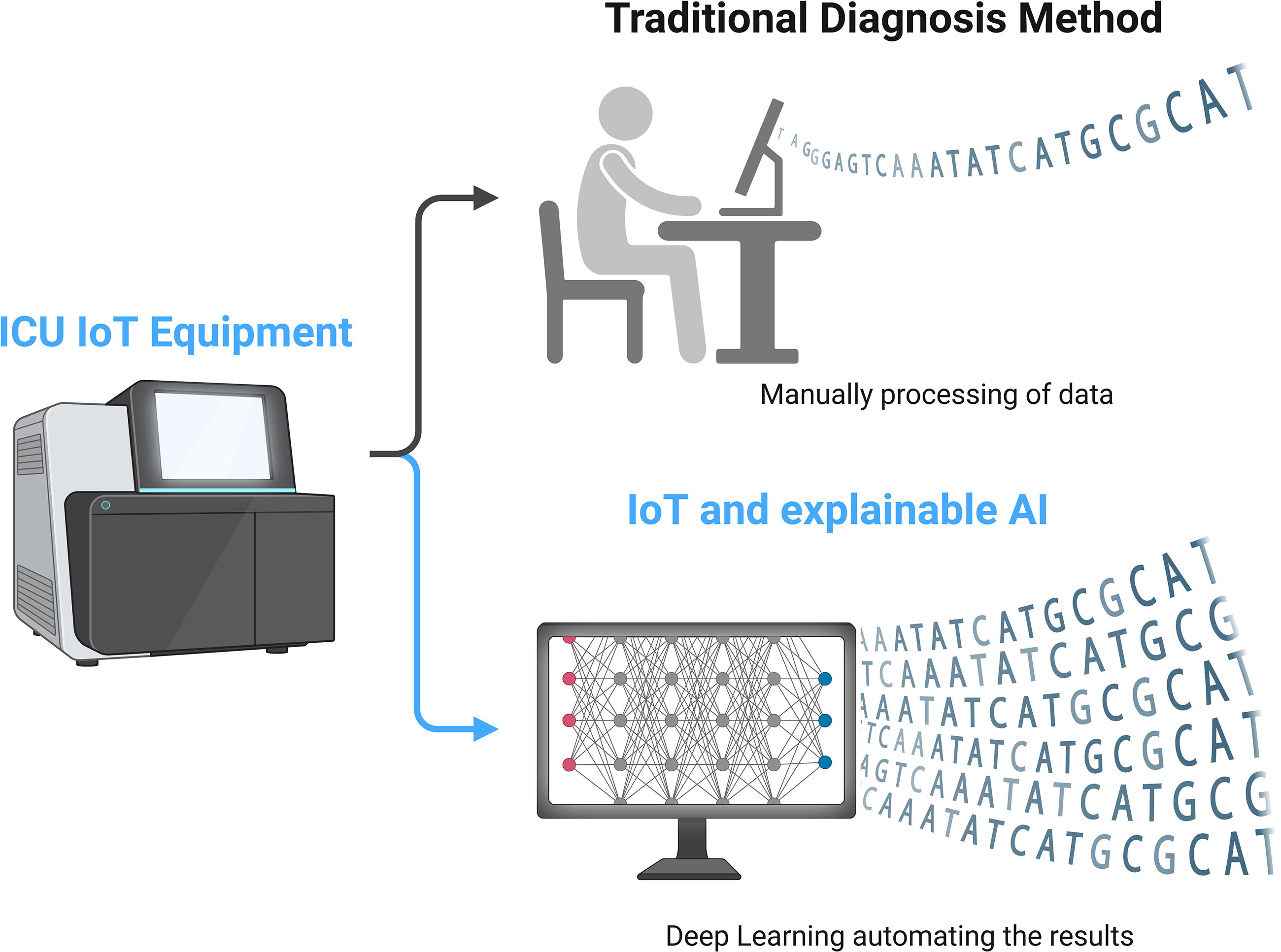
Impact of AI in ICUs. AI, artificial intelligence; ICUs, intensive care units; IoT, Internet of Things.
ICU monitoring with deep learning
DL, a subset of machine learning, involves training neural networks with large datasets to identify patterns and make predictions. In health care, DL has shown promise in diagnostic imaging, disease prediction, and patient outcome forecasting. DL algorithms can analyze complex datasets more accurately and quickly than traditional methods. ICUs are pivotal environments where continuous and precise patient monitoring is paramount. While traditional monitoring systems have been effective, they often encounter challenges related to data accuracy, response times, and predictive capabilities. The emergence of DL and IoT technologies presents unprecedented opportunities to revolutionize ICU patient monitoring. DL, particularly within AI frameworks, enables advanced data analysis techniques that can handle the complexity and volume of ICU data streams. 59 This includes real-time monitoring and predictive analytics, which are crucial for early detection of deteriorating patient conditions and timely interventions. By leveraging DL algorithms, ICU teams can potentially improve patient outcomes through proactive care strategies and optimized treatment plans tailored to individual patient needs.
AI is increasingly integrated into ICU management to enhance clinical decision-making and patient outcomes. AI algorithms analyze vast amounts of patient data, including vital signs, laboratory results, and imaging studies, to predict disease progression and optimize treatment strategies. Machine learning models, trained on diverse datasets, can identify patterns indicative of sepsis onset or acute respiratory distress syndrome (ARDS) before clinical symptoms manifest, enabling early interventions that significantly improve survival rates. Moreover, AI-powered predictive analytics help ICU teams allocate resources efficiently, prioritizing patients at higher risk of deterioration. As AI continues to evolve, its application in ICU settings promises to transform critical care by making it more personalized, proactive, and effective.
ICU monitoring with the IoT
The IoT refers to interconnected devices that collect and exchange data. In health care, IoT devices such as wearable sensors and smart monitors can continuously gather patient data, providing a real-time view of patient health. These devices can improve data accuracy and enable remote monitoring. IoT has garnered substantial interest in ICU settings, where it streamlines patient monitoring, minimizes manual errors, and enhances overall efficiency. 60 Innovations like IoT-based patient monitoring systems and smart medical beds have demonstrated significant potential for application in ICUs. 61 Countries like China and Indonesia are actively integrating IoT into their health care systems to improve patient care and operational efficiencies. 62 The convergence of AI with health care further enriches these developments, particularly in interpreting medical data and predicting critical conditions such as septic shock. 63 As AI continues to evolve, it promises to play a pivotal role in ICU care, leveraging real-time clinical data to enhance patient outcomes and resource allocation effectively. Recent advancements in wearable sensors have transformed health care by enabling continuous monitoring of vital signs and activities. These sensors, now more affordable and user-friendly, have expanded beyond fitness tracking to include medical-grade applications. For instance, sensors embedded in clothing or worn as wristbands can monitor heart rate variability, and blood pressure, and even detect anomalies in respiratory patterns. Such continuous monitoring provides a wealth of real-time data that can be crucial for the early detection of health issues like arrhythmias or sleep apnea. The integration of these sensors with IoT platforms ensures seamless data transmission to health care providers, facilitating timely interventions and personalized treatment plans. 64 The IoT has revolutionized health care delivery by creating interconnected systems that enhance patient care and operational efficiencies. IoT devices in health care can range from wearable monitors to hospital infrastructure management systems, all aimed at improving patient outcomes and reducing costs. For instance, IoT-enabled smart beds equipped with sensors can monitor patient movement and vital signs, alerting nurses to potential complications such as bedsores or respiratory distress. Moreover, IoT applications extend to medication management, where smart pill dispensers ensure patients adhere to prescribed regimens, reducing medication errors and hospital readmissions. These advancements not only improve the quality of care but also optimize resource utilization in health care facilities. 65
Integration of deep learning and IoT in ICUs
Combining DL and IoT can enhance ICU patient monitoring by leveraging the real-time data collection capabilities of IoT and the predictive analytics power of DL. This integration can lead to early detection of health deterioration, personalized treatment plans, and improved patient outcomes.
Key Technologies
System characteristics
AI-based auxiliary diagnostic system application has the following characteristics:
66
Large Medical Knowledge Base: The knowledge base mainly comprises digitized knowledge abstracted from domain knowledge and experience. Algorithm and Computational Power as Core Technical Support: For natural phenomena that cannot be explained by algorithms, AI cannot operate. Therefore, AI cannot fully replace human decision-making. AI Combined with Automated Systems: AI can complete repetitive and complex manual operations, effectively improving the accuracy and quality of manual operations. Predictive algorithms in AI can assist in preemptive strategy planning, effectively controlling unexpected events.
Application technical principles include natural language processing technology, machine learning and DL [66], establishing critical knowledge base, big data analysis, and distributed real-time stream processing.
Natural language processing technology
Using predefined or knowledge-based analysis and mining technologies, resources are processed to generate knowledge in the form of concepts, topics, and other structures. This knowledge is then utilized for analysis and reasoning. Based on this, the provided user text across various fields can be annotated, classified, and semantically processed. The outcome enables the delivery of knowledge-driven services, including recommendations, search, classification, and filtering.
Deep learning
A kind of AI algorithm based on data representation learning, can be divided into supervised learning and unsupervised learning, is the current mainstream machine learning technology.
67
The main characteristics of this technology are:
Supervised Training Process: In the data training process, use correct results for supervision, ensuring the final result’s reliability. Based on Large-scale Data: The reliability of DL algorithms increases with the scale of training data.
Critical knowledge base and big data analysis
Refer to the Multiparameter Intelligent Monitoring in Intensive Care data model to establish a critical big data system, realizing the critical knowledge base, diagnostic rule base, etc., automatically generating critical knowledge maps. Using AI methods to achieve intelligent treatment intervention needs to establish a knowledge base, abstract rule base based on factual knowledge, through the rule engine to generate rules and distribute to real-time monitoring systems, changing monitoring system monitoring rules. 68 It can realize multi-dimensional data mining and analysis, deep insights into user data refined statistical analysis, second-level processing, real-time updates, and supporting private deployment of data analysis tools. Business intelligence data analysis platforms organize structured data into visual data marts, providing users with efficient and intuitive data presentation.
Distributed real-time stream processing
Distributed real-time stream processing framework is real-time processing of high-concurrency, time-sensitive big data stream events’ open-source framework. The current mainstream frameworks include Apache’s Storm framework, Spark Streaming, etc. Research focuses on reducing deployment costs, and flexible rule distribution.
Goals of Smart Health Care in the “Internet +” Era
Developing “Internet +” medical services
To build an integrated online and offline medical service model before, during, and after consultations, health care institutions need to use internet and information technologies to expand medical service space and content as shown in Figure 3. This integration aims to connect medical resources up and down, share information, and achieve efficient collaboration. Services like appointment scheduling, bidirectional referrals, and telemedicine should be conveniently conducted, with health care alliances also utilizing internet technologies. Within these alliances, upper-level medical institutions can use AI to provide remote consultations, remote ECG diagnostics, and remote imaging diagnostics to primary care. Test and inspection results can be accessed and shared in real-time across medical institutions. 69 The construction and application of intelligent information platforms for family doctor services allow residents to access online health consultations, appointment referrals, chronic disease follow-ups, health management, and extended prescriptions. Online prescriptions for common and chronic diseases, reviewed by pharmacists, can be delivered by qualified third-party institutions. Retail drug consumption information and health care institution prescription information are interconnected and shared in real-time.
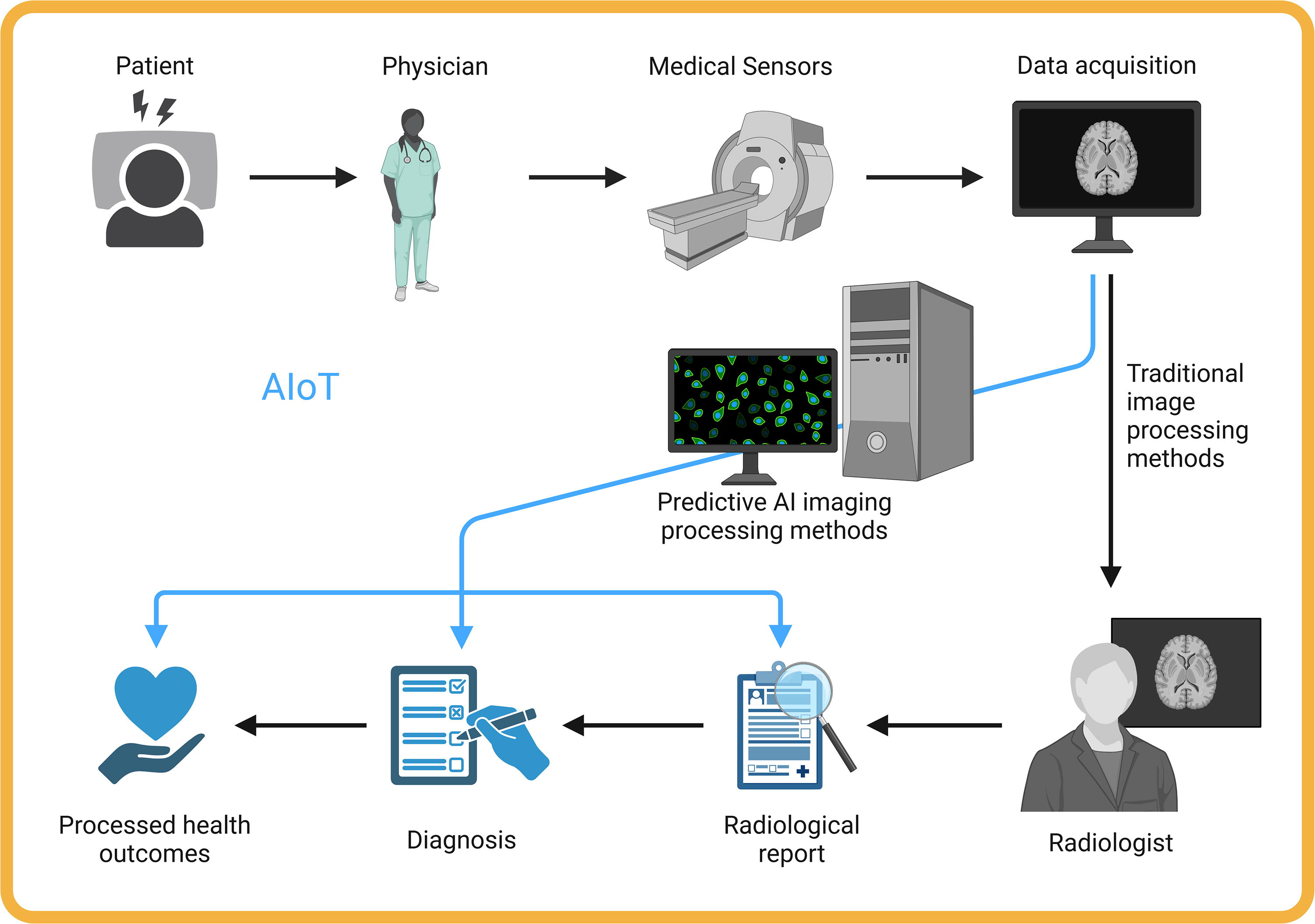
Comparison between traditional and AI-based approaches. AI, artificial intelligence.
Promoting “Internet +” AI application services
Smart medical imaging recognition, pathology analysis, and multidisciplinary consultations are being implemented. Intelligent voice technology is applied in various health care scenarios to improve service efficiency. AI-assisted systems for traditional Chinese medicine diagnostics enhance primary care services. Mobile medical demonstrations based on AI technology and smart health care devices are conducted for real-time health monitoring and assessment, disease warning, and proactive intervention in chronic disease screening.
Improving hospital management and convenience services
Given the growing demand, information technology is used to optimize service processes, enhance service efficiency, match medical service supply with demand, improve the “Internet + Health care” service guarantee level, and strengthen health care infrastructure capabilities. This scientific layout and rational configuration of the health care service system enhance its construction.
Changes Brought by Smart Hospitals in the “Internet +” Era
Advancement, innovation, compatibility
Hospital management, performance management, and cost accounting are reflected in information systems. Decision-making is supported by information and big data, and business integration and collaboration are achieved with electronic medical records at the core. 70 The deep application of big data in electronic medical records drives hospital information construction and lays the foundation for smart health care. Smart health-care promotes the construction of hierarchical diagnosis and treatment systems, optimizing medical services, and enhancing bidirectional referrals.
High conformity with medical business needs, achieving lean management
Based on the MIoT, applications such as mobile nursing, patient monitoring, infusion monitoring, equipment management, equipment efficiency management, valuable asset tracking, vital sign monitoring, and cold chain temperature and humidity monitoring significantly improve work efficiency and safety. These applications are highly aligned with medical business needs and achieve refined management of health care institutions.
Enhanced medical application management level
Smart health care based on IoT conducts a comprehensive and precise analysis of real data on the input-output ratio, usage rate, idleness rate, and economic benefits of medical equipment. This provides scientific data support for managers in allocating medical resources, optimizes medical business processes, ensures work safety, protects health care workers’ safety, enhances patient safety during visits, and improves work efficiency. It further explores reception potential, enhances medical service quality, improves patient satisfaction, and supports harmonious doctor-patient relationships.
Conclusion
Expanding various IoT application systems, such as intelligent management systems for medical equipment, IoT smart infusion monitoring systems, maternal and child safety management systems, patient monitoring systems, and wireless alarm systems, can help health care institutions improve management efficiency, reduce medical accidents, foster harmonious doctor-patient relationships, enhance patient experience, and optimize clinical business processes. With the continuous advancement of “Internet + Health care,” traditional clinical-centered medical services will evolve significantly.
Introducing AI technology into medical systems poses challenges, necessitating standardized and unified medical information systems, and designing intelligent diagnostic assistance systems tailored to specific diseases. Such systems require support from medical expertise and extensive clinical experience. Therefore, the involvement and guidance of experienced physicians and medical experts are crucial. Although many clinical physicians look forward to new diagnostic and therapeutic methods brought by AI, heavy clinical tasks make it difficult to devote substantial time and effort to related research. Health care technology transformation requires interdisciplinary collaboration, organizational incentives, and effective policies, including establishing innovation centers and implementing integrated strategies for academia-industry-research collaboration, promoting rapid and healthy development in the field of AI.
Footnotes
Acknowledgment
Thanks for reviewer and editor for providing suggestion in improving the article.
Authors’ Contributions
Y.B.: Conceptualization, data collection, article writing, and visualization. B.G.: Methodology, data analysis, and draft preparation. C.T.: Supervision, project administration, and final article review.
Author Disclosure Statement
The authors declare there is no conflict of interest.
Funding Information
No funding was received for this article.