






Abstract
Background:
Peripheral blood leukocytes (PBLs) are the main source of DNA in blood samples. A common protocol is to store buffy coat specimens for future DNA isolation, and such samples may remain in frozen storage for years. However, the currently available methods to maintain buffy coat specimens can be optimized for better quality and cost efficiency.
Study Design and Methods:
Seventeen donors (aged 24–34 years) were enrolled in this study. Initially, five centrifugal speeds were chosen to examine the distribution of PBLs in the cell layer; the buffy coat was then harvested to evaluate the cell quantity and viability after storing at 4°C for various times. Finally, the buffy coat was isolated, snap frozen, and kept at −80°C for 1 hour, 1 week, or 4 weeks until the DNA was extracted. Agarose gel electrophoresis and multiplex PCR were used to verify DNA integrity and amplifiability.
Results:
There was a linear positive correlation between the amount of fresh PBLs and the DNA yield. At least 70% of PBLs were collected in the uppermost 40% of the cellular material when the centrifugal force was over 800 g compared to 400 g. Storing blood at 4°C for no more than 24 hours did not have an effect on the amount of PBLs or their viability. In addition, the amount of extracted DNA was decreased in the frozen buffy coat that was stored for more than 7 days, though the DNA quality was acceptable.
Conclusion:
DNA should be extracted from fresh buffy coat samples as soon as possible after collection, especially for very important samples. Retaining the upper 40% of the cell pack of blood instead of whole blood could improve the storage efficiency of biobanking such samples. Our study provides a recommended option for blood collection and processing protocols in biobanking.
Introduction
W
In many biobanks, blood needs to be transported to the laboratory, which may require a prolonged period of time, at least 24 hours at 4°C, after which the buffy coat is isolated and stored at −80°C for variable periods of time. These samples will be affected to some degree by the storage conditions and the time between blood collection and DNA extraction. However, it is unclear whether the pretreatment time has any effect on the quantity and quality of white blood cells (WBCs), and whether they are significantly degraded or suitable for future genetics studies.
To document the effects of conditions occurring during the collection, transport and storage of WBCs on DNA quality and quantity, we sought to document the effects of centrifugal force on the distribution of white blood cells to determine how much blood cell pack should be stored. The effects of storage time on DNA quality and quantity before DNA extraction were also investigated.
Materials and Methods
Blood collection
Ethical approval for this study was granted by the Ethics Committee of the Obstetric and Gynecology Hospital, Fudan University, Shanghai, China. All women gave written consent to participate in this study.
Sample preparation
Seventeen donors were enrolled in the investigation. All blood was collected into EDTA-Vacutainers. The overview of the workflow and subgroups is shown in Figure 1.
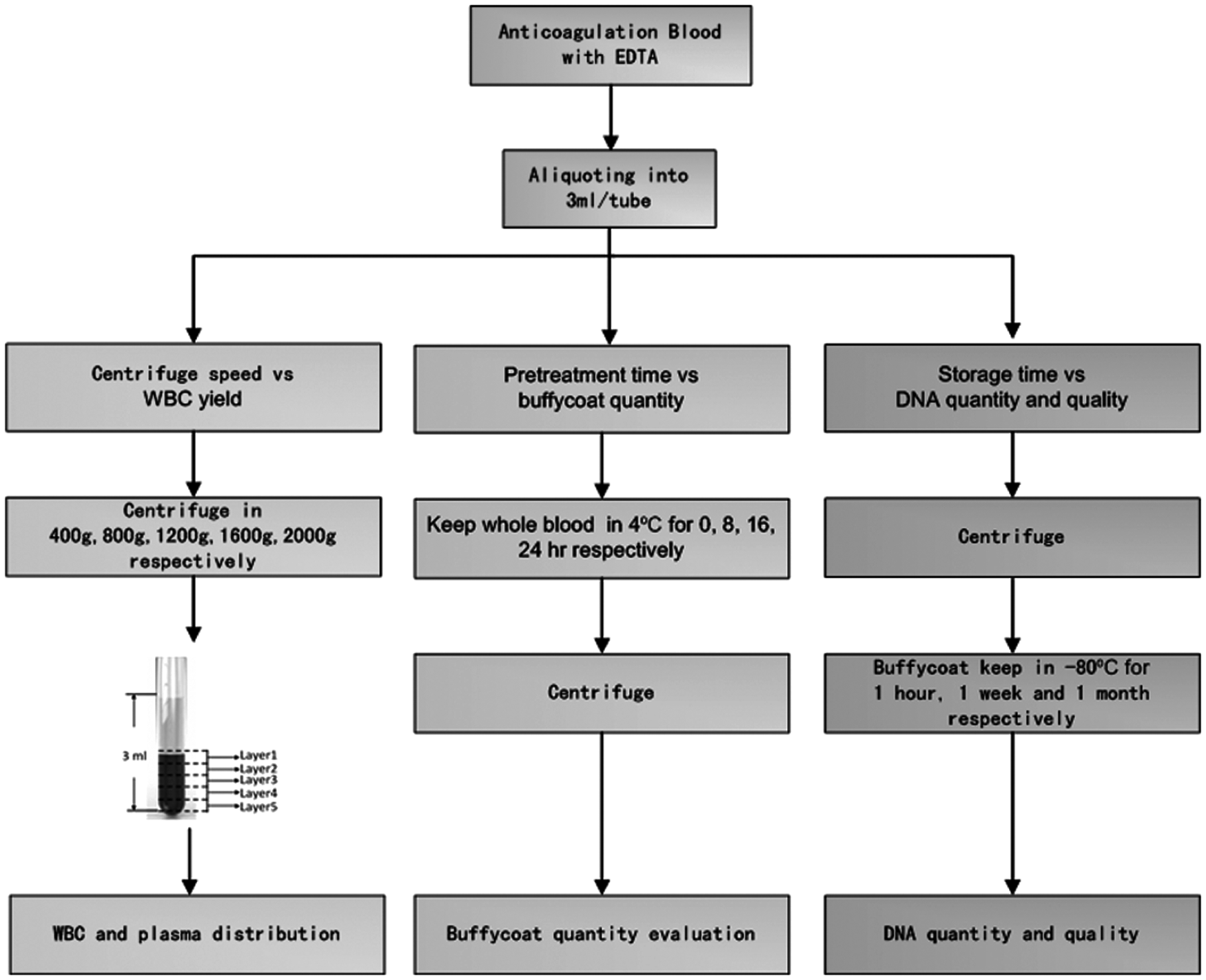
Flow chart for blood collection and grouped data. The first set, five centrifugal forces, 400 g, 800 g, 1200 g, 1600 g, and 2000 g, were used to test the effects of centrifugal force on the distribution of peripheral blood leukocytes (PBLs); the second set, pretreatment time for buffy coat yield and viability using trypan blue and LDH assays; the third set, testing the effects of storage time on DNA quality and quantity.
For the first set of experiments, 50 mL blood was collected from 6 donors and divided into five groups of centrifugal forces: 400 g, 800 g, 1200 g, 1600 g, and 2000 g, to test the effects of centrifugal force on the distribution of peripheral blood leukocytes (PBLs). Each group contained three 3-mL aliquots. After centrifugation at 4°C and recording the volume of plasma, the remaining blood was collected automatically using the Tecan Freedom EVO blood ALQ workstation, for five aliquots of 300 μL, and cell counts and the distribution of PBLs were evaluated.
The second and third set of experiments required whole blood from 11 donors. The second set of samples was used to verify the effects of pretreatment time on the yield and viability of the buffy coat. The WBC count was determined using a hematology analyzer, and WBC viability was measured using trypan blue and lactate dehydrogenase (LDH) assays. The third set of experiments was designed to test the effects of storage time on the DNA quality and quantity. Once blood was collected, each tube was inverted 6–8 times, and a 3-mL aliquot was kept at 4°C for the indicated time period or processed immediately following centrifugation.
For the pretreatment time test, blood was centrifuged at 800 g at 4°C for 10 min and kept at 4°C for 0 hour, 8 hours, 16 hours, or 24 hours until the buffy coat was collected for cell counting and cell viability assessment.
To evaluate the influence of WBC storage time on DNA quality and quantity, buffy coats were collected either by extracting the DNA instantly or after freezing immediately and storage at −80°C for 1 hour, 1 week, or 1 month until DNA extraction.
Lactate dehydrogenase assay for PBLs membrane integrity
The LDH assay (A020-2, JianCheng, Nanjing, China) was carried out according to the manufacturer's instructions. Briefly, plasma was collected from blood after storing at 4°C for the indicated time. The plasma was then diluted with double-distilled water at 1:10, and 20 μL per well was transferred in triplicate into wells in a 96-well plate; 250 μL of LDH assay reaction mixture was then added. After 30 min incubation at 37°C, the optical density was measured at a wavelength of 450 nm using a Tecan M200.
DNA extraction and quantification
Buffy coats were isolated using AxyPrep Blood Genomic DNA Miniprep Kit (for 200–250 μL whole or processed blood), which is based on a unique two-phase partitioning technique in combination with the selective binding of DNA to a special Axyprep column. The DNA was quantitated using an Infinite® 200 NanoQuant plate (Tecan) to measure the concentration and assess the purity of the DNA through standard A260/A280 and A260/A230 ratios.
DNA quality
The quality of DNA was assessed by both agarose gel 6 electrophoresis and multiplex PCR. A 3-μL aliquot of the DNA solution was evaluated for DNA length distribution and potential degradation by electrophoresis through a 2% agarose gel using a molecular weight ladder with ethidium bromide staining. For multiplex PCR, five pairs of control gene PCR primers, as shown in Table 1, were designed to amplify products of exactly 100 bp, 200 bp, 300 bp, 400 bp, and 600 bp to assess the quality of DNA. 7 The primer was added in a 1:1:1:1:2 ratio from 25 pmol to 50 pmol, with a MgCl2 concentration of 2 mM.
Statistical analysis
The calculations were performed using SPSS 11.5 for Windows. The results were analyzed using a one-way Anova, and the means from at least three independent experiments were calculated. Differences were considered significant at p<0.05.
Results
The DNA yield had a linear relationship with the cell number of fresh PBLs
To verify the relationship between DNA yield and PBL cell number, buffy coats were separated from whole blood after centrifugation at 800 g at 4°C for 10 min; the buffy coat was separated manually, and the DNA was extracted. The yield of DNA increased with the amount of fresh PBLs, showing a linear relationship (Fig. 2).
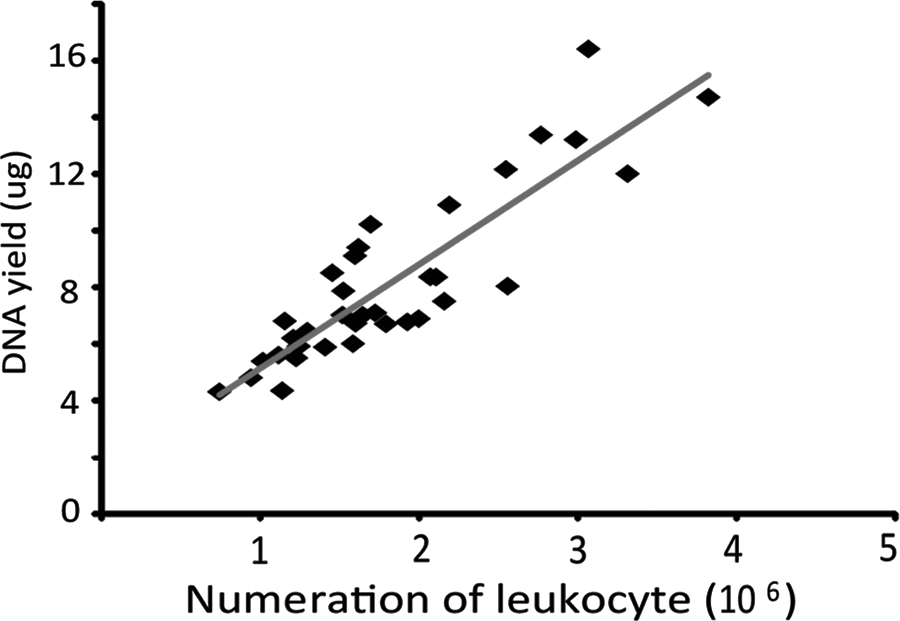
DNA yield correlated to the amount of fresh white blood cells in a linear relationship.
The centrifugal force affects the quantity of leucocytes in buffy coat and the amount of plasma
Five centrifugal forces were selected to examine their effects on the distribution of PBLs. Blood was layered into five 300-μL aliquots after removing the plasma, as shown in Figure 3A. The cell yields from buffy coats with a centrifugal force over 800 g showed a significant difference versus 400 g (p=0.023, LSD). There were 4.2–4.9×10⁷ cells collected from the buffy coat layer when the centrifugal force was over 800 g, but only 2.98×10⁷ cells at 400 g (Fig. 3B).
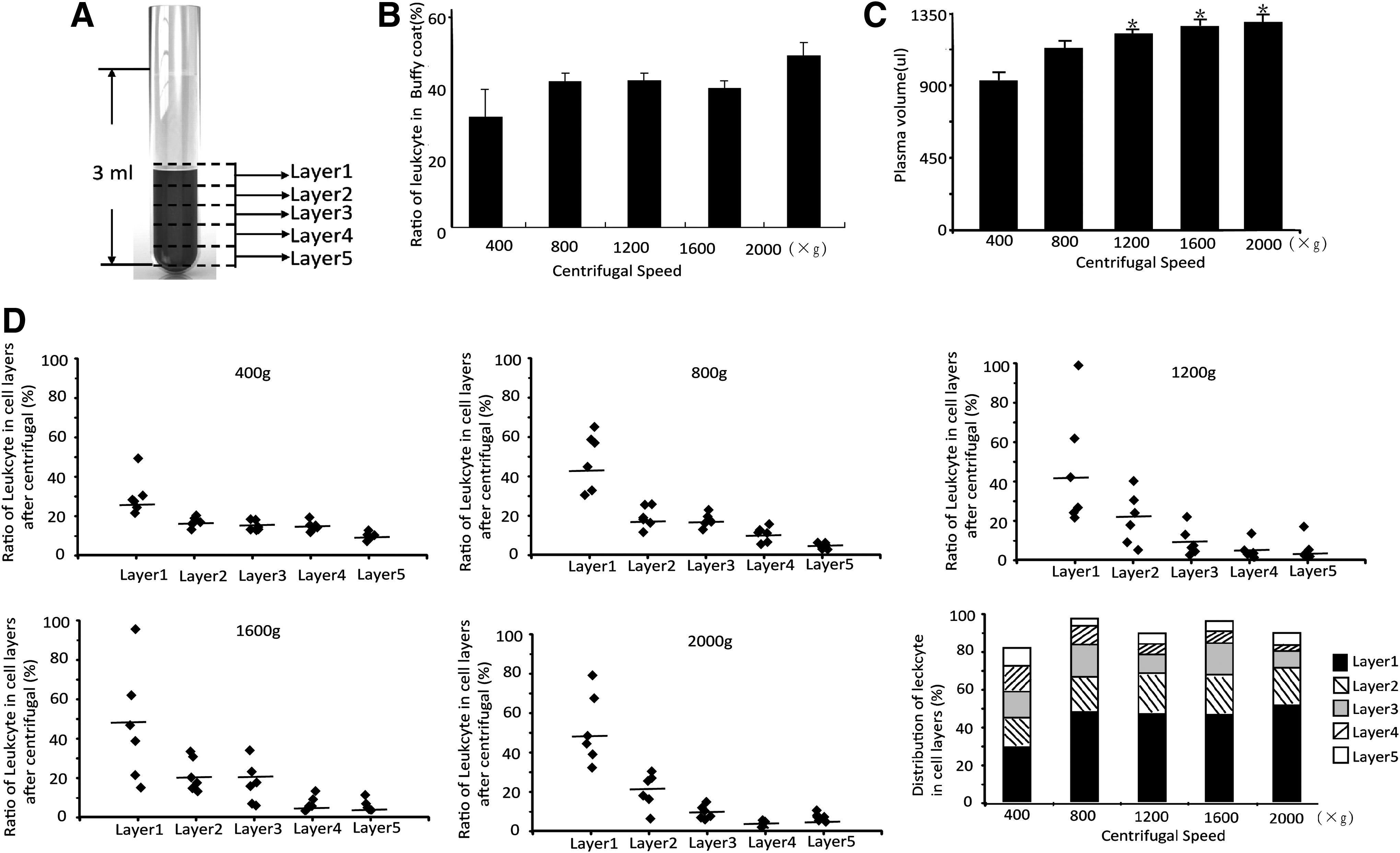
The correlation between the distribution of leukocytes and centrifugal force.
The amount of plasma increased along with an increase in centrifugal force, as shown in Figure 3C. A yield of only 936 μL plasma was achieved at 400 g, whereas the yield of plasma reached a range of 1214–1280 μL when the centrifugal force was over 1200 g, with a significant difference among the groups (p=0.006, LSD).
The blood cell pack was divided into five layers, and the ratio of cells in each layer was calculated. Approximately 70% of the white blood cells were partitioned into the uppermost two layers of the blood cell pack, as shown in Figure 3D, when the centrifugal force was over 800 g.
Short storage duration at 4°C has no effect on the quantity and viability of leukocytes
To evaluate the effects of short-term storage on the quantity of leukocytes, blood was centrifuged at 800 g for 10 min and stored at 4°C for 1 h, 8 h, 16 h, and 24 h, and the PBLs were counted, as shown in Figure 4A. There was no significant difference between each time point (p=0.071, LSD), and the range of buffy coat output was 3.8–4.7×10⁷ cells. The viability of PBLs was also evaluated with trypan blue, showing no difference (data not shown).
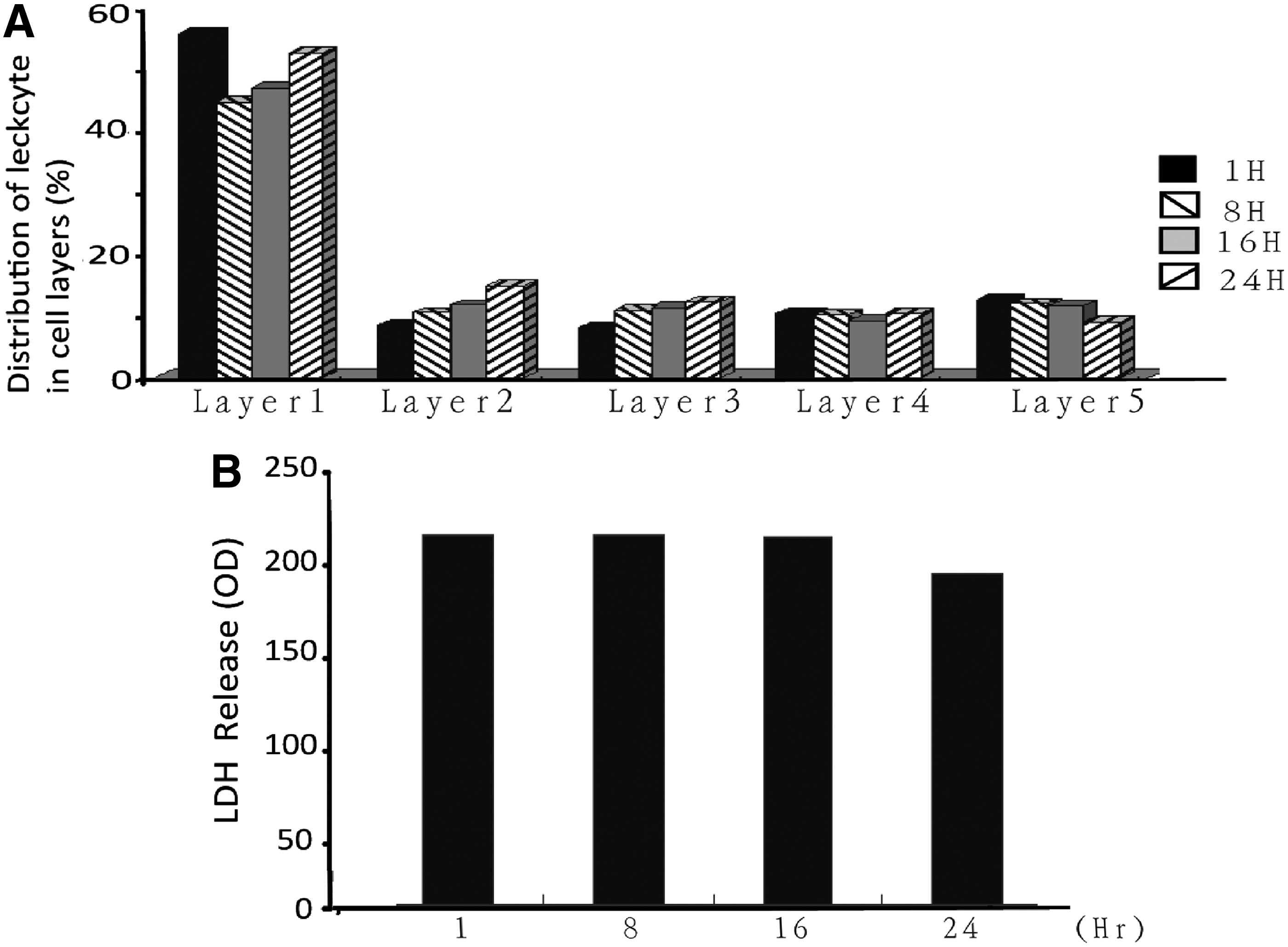
Effects of centrifugal force and pretreatment time on the yield of the blood fraction.
LDH, an enzyme widely present in the cytosol, converts lactate to pyruvate, and the release of LDH from cells into the surrounding medium is a typical marker for cell death. In this study, we did not find a significant difference among 4 time points (p=0.978, LSD), as shown in Figure 4B, which indicated that storing blood at 4°C for 24 hours may not have any effect on the viability of PBLs.
The storage time of frozen buffy coats affects the yield of DNA
Frozen buffy coats are a common source of DNA. To test the effect of storage time on the amount of DNA obtained from such samples, the buffy coat was snap frozen and kept at −80°C for 1 hour, 1 week, and 1 month, respectively. DNA from fresh blood was used as the control at 0 hours. The amount of DNA from frozen buffy coats declined markedly after storage at a lower temperature over 1 week, as shown in Figure 5A. For 106 cells, there was an average of approximately 5.3 μg DNA obtained from fresh buffy coat, and 4.9 μg DNA from buffy coat frozen for 1 hour, whereas the yield declined to 3.1 μg after freezing at −80°C for 1 week and was stable at 3.01 μg even after 1 month. These results from frozen sample over 1 week show a significant difference compared with the fresh and 1 hour frozen samples (p<0.001, LSD).
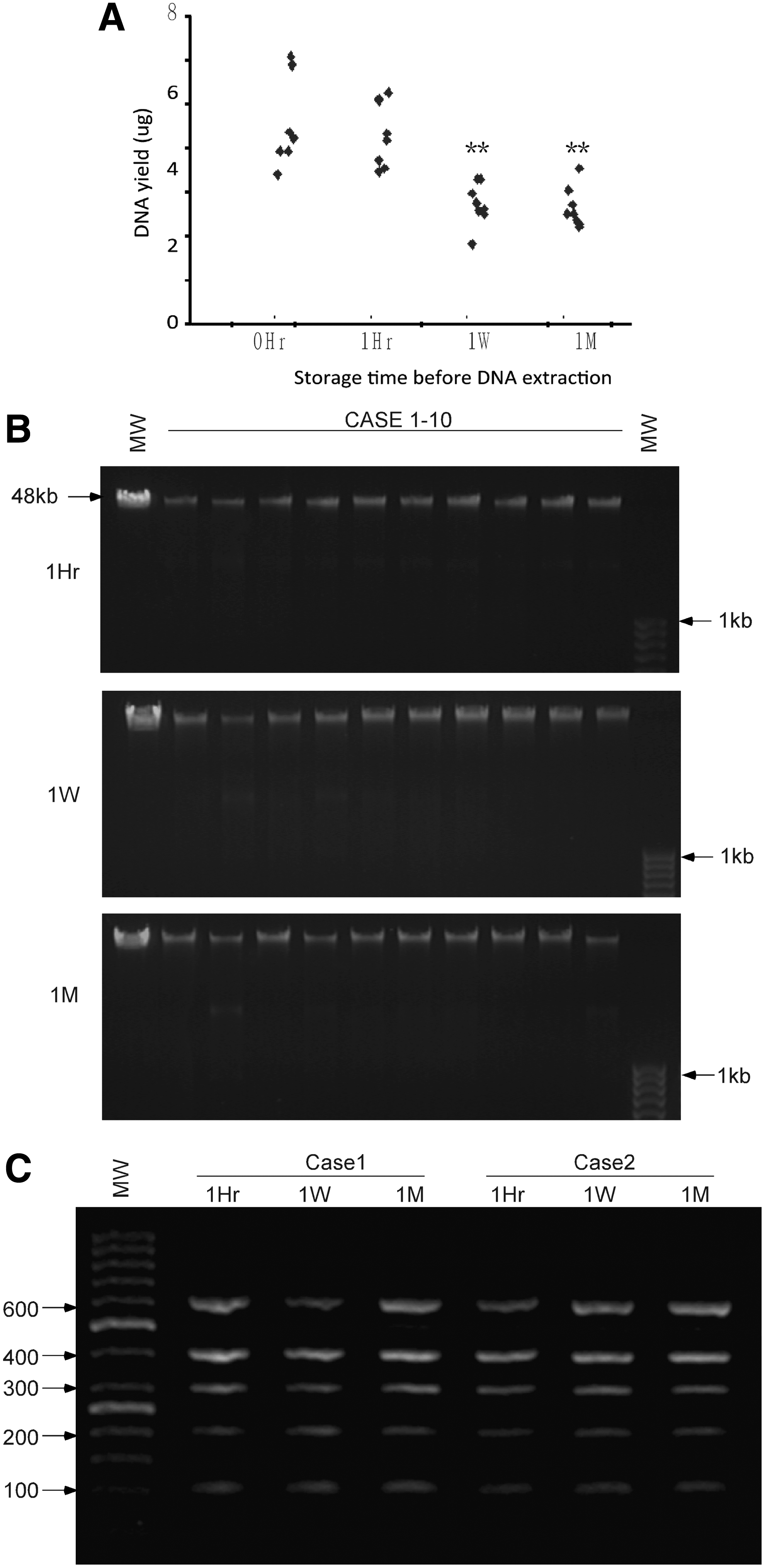
DNA quantity and quality effects due to storage time. Buffy coats were snap frozen and kept at −80°C for 1 hour, 1 week, or 1 month before DNA extraction, with fresh buffy coats used as the control.
DNA quality control
To confirm the quality and quantity of the DNA isolated, agarose gel electrophoresis and multiplex PCR were performed, as shown in Figure 5B. The analysis of each DNA sample by agarose gel electrophoresis, including a molecular weight standard (Fermentas), showed clear, bright banding at 48.5 kb for all of the samples. This is indicative of high molecular weight DNA and the absence of obvious DNA degradation. For each time point, multiplex PCR was also used to assess the amplifiability and integrity of the DNA, as shown in Figure 5C. In all samples, the amplified products were at least 600 bp, with no clear difference among the time points.
Discussion
Blood samples are the primary DNA source for many genomic and epidemiologic studies. 8 Whole blood not only offers a readily accessible resource but also provides comparatively large quantities of high-quality DNA. One of the basic challenges for biobanking is to maintain a balance between sample quantity and storage space, 9 indicating that in biobanking, cost efficiency should be practiced while storing sufficient samples for future use.
Based on our study, DNA yield has a linear relationship with the number of fresh PBLs, which indicates that cost efficiency can be achieved between sample volume and storage space by controlling the amount of PBLs collected. In recent articles, Rosinger et al. 6 and Mitchell et al. 5 recommended storing an “all-cell-pellet” (ACP) fraction composed of all cells pelleted by centrifugation instead of the buffy coat, and then freezing the ACP, which contains 80% of the DNA extractable from an equivalent quantity of whole blood.
Centrifugal force affects the distribution of PBLs in blood. In our study, we found that at 400 g, only 28% of PBLs are present in the buffy coat; however, we obtained approximately 50% of PBLs at a centrifugal force of 800, which are stable even at 2000 g. We also found that the upper 40% of the cell pack can contain at least 70% of the PBLs, providing a major portion of the DNA from collected blood. This finding suggests that we may retain the uppermost 40% of the cell pack instead of whole blood or ACP for better storage efficiency. For example, for 3 mL whole blood centrifuged at 800 g for 10 min, the volume of ACP is approximately 1.8 mL; retaining a 600–700-μL cell pack can provide 70% of cells and space savings of up to 60%.
Maximizing the quantity and quality of extracted DNA is the highest priority for both biobanking and molecular analyses of clinical samples. The storage time and temperature are important factors related to the quantity and quality of DNA. Richardson's 10 study showed a negative correlation between the number of storage days at 4°C and DNA yield, though the study enrolled many people over the age of 80. Erkeller-Yuksel et al. 11 found a statistically significant (p>0.005) halving in leukocyte count from birth (cord blood) to adults in the 18-year to 70-year age group, and studies of reference ranges for lymphocyte subsets have also shown a decline with age. 12 Thus, the observed decline in DNA yield that Richardson detected may represent a continual decline in leukocyte number with increasing age. In our study, all donors were reproductive-age women, with ages from 24 to 34, and the cell yields showed no significant difference even after sample storage at 4°C for 24 hours, which indicates that the storage of blood at 4°C may provide an alternative to the current temporary storage options before further treatment.
The storage time for frozen buffy coats also has an effect on the yield of DNA. In our study, 11 samples with three aliquots of buffy coat were extracted, immediately snap frozen, and kept at −80°C for 1 hour, 1 week, and 1 month until DNA extraction. We observed an obvious decline in DNA yield after storing the snap-frozen buffy coat at −80°C for 1 week, though the DNA yield exhibited no further losses after storage for 1 month. Several studies have also demonstrated a decrease in DNA yield with frozen storage over time. To some extent, our observation is in agreement with these studies.13,14 We speculate that the effects of storage time on the total yield of DNA may be the result of the denaturation of blood proteins or DNA degradation by enzymes released through cell lysis, especially erythrocyte lysis.
Many research studies have shown that DNA is stable at reasonable storage temperatures, even at ambient temperature.15,16 In our study, we used agarose gel electrophoresis and multiplex PCR to test the amplifiability and integrity of DNA. No degradation of DNA was detected using these techniques. The Ross study 17 also demonstrated that DNA yield is adversely affected by freezing, with yield reductions of more than 25% using blood samples frozen only once, though the integrity examined by digestion, electrophoresis, and Southern blot analyses using DNA fingerprinting techniques showed no DNA degradation. This reflects the finding that the use of fresh or briefly stored samples will yield much more DNA compared to preserving specimens under long-term storage.
The results of this pilot study provide some options for blood processing in biobanking: 1) Storage of blood samples for no more than 24 h at 4°C has no effect on the buffy coat yield or cell viability; 2) Blood samples can be centrifuged at 800 g for 10 min, followed by retention of the uppermost 40% of blood cells packed, which can consist of at least two-thirds of PBLs from whole blood; 3) If possible, DNA should be extracted from fresh or short-term frozen buffy coats, especially for samples that are difficult to obtain. At least 1.5 times as much DNA can be obtained from fresh frozen buffy coat as from long-term-stored samples, for example, for over 1 week. However, the final choice of blood processing remains with the individual biobank and is dependent on their research goals.
Footnotes
Author Disclosure Statement
No competing financial interests exist.