






Abstract

T
Myriad had been foretold by Ex parte Latimer, 3 Judge Learned Hand's adrenaline decision, 4 Funk Brothers, 5 and the Fourth Circuit's Vitamin B12 6 decision; Mayo by Morse, 7 Eibel Process, 8 and Diehr. 9 For astute observers, the tread into the natural world as it pertains to eligible subject matter was foretold in Justice Breyer's dissent in Laboratory Corp., 10 involving claims directed to correlating homocysteine and vitamin deficiencies:
In my view, claim 13 is invalid no matter how narrowly one reasonably interprets that doctrine.
There can be little doubt that the correlation between homocysteine and vitamin deficiency set forth in claim 13 is a “natural phenomenon.” …
At most, respondents have simply described the natural law at issue in the abstract patent language of a “process.” But they cannot avoid the fact that the process is no more than an instruction to read some numbers in light of medical knowledge. … In my view, that correlation is an unpatentable “natural phenomenon,” and I can find nothing in claim 13 that adds anything more of significance.
While many commentators wrung their hands in woe, a few saw clearly that the decisions, especially Myriad, changed nothing. Eric Guttag noted that:
The Opinion for Court written by Justice Thomas pretty much cabined the patent-ineligible part of the holding, more so than you might think. Also, besides saying that Myriad's claimed cDNA was patent-eligible (versus the claimed “isolated” DNA which wasn't), I actually take solace from the following two sentences at pages 14–15 of the slip opinion:
“Myriad's claims are simply not expressed in terms of chemical composition, nor do they rely in any way on the chemical changes that result from the isolation of a particular section of DNA. Instead, the claims understandably focus on the genetic information encoded in the BRCA1 and BRCA2.”
In other words, Myriad's claimed “isolated” DNA sequences didn't look enough like an altered chemical molecule to be divorced from the native DNA, i.e., the claimed “isolated” DNA sequences were not a “difference in kind rather than degree” which comes straight out of the “product of nature” doctrine cases. 11
The “product of nature” cases, beginning with Ex parte Latimer, required that the natural product be modified in a way that resulted in a substantial difference in the properties or utility of the natural product for patentability. In the adrenaline case, the separation of adrenaline from the adrenal gland for the first time made adrenaline available for therapeutic use and hence patentable in the purified form. In the Vitamin B12 case, the Fourth Circuit held:
The compositions of the patent here have all of the novelty and utility required by the Act for patentability. They never existed before; there was nothing comparable to them. If we regard them as a purification of the active principle in natural fermentates, the natural fermentates are quite useless, while the patented compositions are of great medicinal and commercial value. The step from complete uselessness to great and perfected utility is a long one. That step is no mere advance in the degree of purity of a known product. From the natural fermentates, which, for this purpose, were wholly useless and were not known to contain the desired activity in even the slightest degree, products of great therapeutic and commercial worth have been developed. The new products are not the same as the old, but new and useful compositions entitled to the protection of the patent. 12
Neither Myriad nor Mayo criticized these decisions. Thus, the concept that naturally occurring materials are patent eligible if man's activities, such as purification, give them properties or utilities not possessed by the form found in nature is well-established in U.S. patent law. The problems began with the follow-on Federal Circuit decisions applying the Supreme Court decisions and, to a lesser extent, the USPTO “guidance” to the examining corps on how to apply those decisions.
Mayo
It was admitted that doctors had been administering drugs that provided the 6-thioguanine metabolite in vivo, and that doctors knew that the metabolite was the active metabolite treating the gastrointestinal disorder and that too much caused adverse side effects, while too little provided an insufficient therapeutic benefit. Further, doctors routinely determined the metabolite's blood level, since it was known to impact both adverse events and the drug's effectiveness. 13 The issue in Mayo was what the patent claimed. Claim 1 is illustrative:
A method of optimizing therapeutic efficacy for treatment of an immune-mediated gastrointestinal disorder, comprising:
(a) administering a drug providing 6-thioguanine to a subject having said immune-mediated gastrointestinal disorder; and
(b) determining the level of 6-thioguanine in said subject having said immune-mediated gastrointestinal disorder,
wherein the level of 6-thioguanine less than about 230 pmol per 8x10⁸ red blood cells indicates a need to increase the amount of said drug subsequently administered to said subject and
wherein the level of 6-thioguanine greater than about 400 pmol per 8x10⁸ red blood cells indicates a need to decrease the amount of said drug subsequently administered to said subject. 14
In regards to the claim, the Court noted:
Beyond picking out the relevant audience, namely those who administer doses of thiopurine drugs, the claim simply tells doctors to: (1) measure (somehow) the current level of the relevant metabolite, (2) use particular (unpatentable) laws of nature (which the claim sets forth) to calculate the current toxicity/inefficacy limits, and (3) reconsider the drug dosage in light of the law. These instructions add nothing specific to the laws of nature other than what is well-understood, routine, conventional activity, previously engaged in by those in the field. And since they are steps that must be taken in order to apply the laws in question, the effect is simply to tell doctors to apply the law
The key point is the claimed method did not require an increase or decrease in the dose, but simply indicated that the natural law suggested a need to increase or decrease the dose at some unknown point in the future. The claim itself did not require the use of the law of nature to achieve any goal, and had the claim used the law in that manner, a different result would have been likely.
The claim would be infringed by the simple act of determining the metabolite's level in the blood after administration, something doctors had been doing long before Prometheus filed for a patent. Adding specific limits that indicated a “need” did not require any action. The Court specifically limited its holding to the facts of the case by indicating it was not considering a situation where any of the steps involved were less conventional, leaving that decision to another day. Mayo's conclusions should not have been such a great surprise when considering the controlling legal precedent. However, Mayo's limited holding was stretched beyond its elastic limit by the Federal Circuit in Sequenom. 16 In Sequenom, the Federal Circuit found the following claim to be patent ineligible even though the technique it protected was universally acknowledged as ground breaking:
1. A method for detecting a paternally inherited nucleic acid of fetal origin performed on a maternal serum or plasma sample from a pregnant female, which method comprises amplifying a paternally inherited nucleic acid from the serum or plasma sample and detecting the presence of a paternally inherited nucleic acid of fetal origin in the sample. 17
The Federal Circuit ignored the admonishment in Mayo that:
We need not, and do not, now decide whether were the steps at issue here less conventional, these features of the claims would prove sufficient to invalidate them. For here, as we have said, the steps add nothing of significance to the natural laws themselves. Unlike, say, a typical patent on a new drug or a new way of using an existing drug, the patent claims do not confine their reach to particular applications of those laws. 18
Although the Supreme Court noted that it did not reach the issue where one or more of the steps were not conventional, the Federal Circuit charged ahead and applied Mayo anyway without considering whether the discovery of the source of the problem that had prevented others from finding the paternally inherited nucleic acid (cffDNA) in the mother's blood was sufficient to render the combination of steps non-conventional. The Federal Circuit considered the claim to be drawn to patent-ineligible subject matter since the steps used to recover the cffDNA were conventional DNA amplification steps. The Federal Circuit did not consider the question as to whether the discovery of the source of the problem made it non-conventional. In contrast, the Supreme Court, facing almost the same fact pattern in Eibel Process, found both patent eligibility and patentability. In Eibel Process, the invention related to solving the problem of premature breaking of the paper web on a paper-making machine. The patentee discovered it was the mismatch of the speed between the paper web and underlying support wire that was the cause of the problem. The solution used gravity, a natural law, to speed up the paper web. The Supreme Court noted that:
In considering this phase of the controversy, we must not lose sight of the fact that one essential part of Eibel's discovery was that the trouble causing the defective paper product under high machine speed was in the disturbance and ripples some 10 feet from the discharge, and that they were due to the unequal speeds of stock and wire at that point and could be removed by equalizing the speeds. The invention was not the mere use of a high or substantial pitch to remedy a known source of trouble. It was the discovery of the source not before known, and the application of the remedy, for which Eibel was entitled to be rewarded in his patent. 19
The Federal Circuit did not give credence to Sequenom's argument that it was the discovery of the source of the problem that made the claims both patent eligible and patentable. Like Eibel, Sequenom's invention lay in discovering the source of the problem: where to look for the cffDNA. Once the source of the problem was found, Sequenom then applied known technology to recover the cffDNA, just like Eibel's use of gravity to speed up the paper web. Both took advantage of a natural law to solve a problem using known technology in a new way. The Federal Circuit simply brushed aside the fact that until the discovery of where to find the cffDNA, no one had been able recover it from the mother's blood because they did not know where to look. This was the problem, and the Sequenom inventors solved it and made possible a powerful, non-invasive diagnosis of the fetus' condition.
After Sequenom, the Federal Circuit's next venture into natural laws and process claims was Genetic Technologies Ltd. (GTG). 20 The patent involved 21 the discovery of certain DNA sequences in coding regions (exons) of certain genes correlated with non-coding regions (introns) within the same gene. The non-coding regions before the discovery had been referred to as “junk DNA,” because they previously had no known use. The discovery sped up and improved the accuracy of the techniques used to identify mutant genes. GTG claim 1 read:
1. A method for detection of at least one coding region allele of a multi-allelic genetic locus comprising: a) amplifying genomic DNA with a primer pair that spans a non-coding region sequence, said primer pair defining a DNA sequence which is in genetic linkage with said genetic locus and contains a sufficient number of non-coding region sequence nucleotides to produce an amplified DNA sequence characteristic of said allele; and b) analyzing the amplified DNA sequence to detect the allele. 22
Claim 1 is not limited to any specific purpose for the detection or to any specific generic trait, nor to any specific alleles linked to any specific non-coding sequences. In effect, the claim preempted the use of the natural law. The Federal Circuit, in affirming the decision finding the claim to be drawn to patent ineligible subject matter, noted that a claim is patent ineligible if it merely informs about a law of nature, even newly discovered ones. The additional steps consist only of well-understood, routine, conventional activity already engaged in by the scientific community:
Here, the phrase “to detect the allele” in claim 1 of the ’179 patent also merely informs the relevant audience—e.g., doctors or others seeking to make a genetic diagnosis—to apply a law of nature for a purpose—detecting a polymorphism within a coding region of an allele of interest. The limitation “to detect the allele” merely asks the user to compare the non-coding sequence he has amplified and analyzed with a library of non-coding sequences known to be in linkage disequilibrium with certain coding region alleles. This instruction to undertake a simple comparison step does not represent an unconventional, inventive application sufficient to make the claim patent-eligible. “[T]o transform an unpatentable law of nature into a patent-eligible application of such a law, one must do more than simply state the law of nature while adding the words ‘apply it.’” Mayo, [566 U.S. at 71,] 132 S. Ct. at 1294 [,182 L. Ed. At 327] (citing Benson, 409 U.S. at 71–72[, 93 S. Ct. 253]). 23
The Federal Circuit noted that at the time of filing, no one was using the non-coding sequence as a surrogate for the coding region allele. The court finally concluded:
But the novelty of looking to non-coding DNA to detect a coding region allele of interest resides in the novelty of the newly discovered natural law of linkage disequilibrium between coding and non-coding regions and adds little more than a restatement of the natural law itself. We thus hold that the simple mental process step of “detect[ing] the allele” in claim 1, either alone or in combination with the physical steps described above, does not supply sufficient inventive concept to make the claim patent-eligible under § 101. 24
The problem with this analysis is similar to Sequenom: no one would have applied this known step without knowledge of the predictive nature of the non-coding regions, i.e., a situation like Eibel Process. The claim's preemption of all uses of the natural law doomed it in the eyes of the Federal Circuit. Here, the claims placed no limits whatsoever on the coding region or the type of mutations to be detected. That is, there was no written description of how to use the technique for all generic traits. In effect, anyone using the law necessarily infringed the claim. The claim defined its target functionally, without adequate written description of which coding written alleles were identifiable by the method. Where one is attempting to define a genus functionally, it is necessary to either provide sufficient species meeting the functional limitation or describe common structural features so that one can visualize what is encompassed. 25 GTG did neither.
The Federal Circuit subsequently decided Rapid Litigation, 26 another natural law case, in favor of patent eligibility. Hepatocytes, a type of liver cell, are useful for testing, diagnostic, and treatment purposes—for example, to determine how drugs are metabolized by the liver. Hepatocytes have only a short life after removal from the liver. Cryopreservation had been developed to preserve hepatocytes, but it had its problems. The process often damaged the cells, which resulted in a poor recovery of viable cells when thawed. Another problem was that it could not successfully be used to preserve pooled samples recovered from multiple donors. Pooled cells were used to determine a drug's impact on a representative patient population. To prepare pooled cells for use, the cells from each donor had to be separately preserved and mixed after thawing to form the pool. It was considered that the cells could be frozen only once, and that when thawed, had to be used immediately or discarded.
The inventors discovered that the viable cells, after being frozen and thawed, could be refrozen and thawed again to provide viable cells. This allowed for making the desired pooled cells more easily prepared and also allowed for the re-freezing of the cells and later use of them with no loss of viability. This capability of the cells was a natural one possessed by a subset of the cells which were selected because of the freeze-thaw cycle. Claim 1 reads:
1. A method of producing a desired preparation of multi-cryopreserved hepatocytes, said hepatocytes being capable of being frozen and thawed at least two times, and in which greater than 70% of the hepatocytes of said preparation are viable after the final thaw, said method comprising:
(A) subjecting hepatocytes that have been frozen and thawed to density gradient fractionation to separate viable hepatocytes from nonviable hepatocytes,
(B) recovering the separated viable hepatocytes, and
(C) cryopreserving the recovered viable hepatocytes to thereby form said desired preparation of hepatocytes without requiring a density gradient step after thawing the hepatocytes for the second time, wherein the hepatocytes are not plated between the first and second cryopreservations, and wherein greater than 70% of the hepatocytes of said preparation are viable after the final thaw. 27
The district court had identified as the natural law the cells' capability of undergoing multiple freeze-thaw cycles. The Federal Circuit reversed because the claims were not directed to the ability of the cells to survive multiple freeze-thaw cycles, but to a new and novel way of cell preservation. The claims do not claim the cells' ability to survive multiple freeze-thaw cycles but the use of that property to create a new way of preserving hepatocyte cells for later use. 28
The Federal Circuit distinguished GTG: 29
For example, in Genetic Technologies, the claim recited methods for detecting a coding region of DNA based on its relationship to non-coding regions. Genetic Techs., Ltd. v. Merial L.L.C., 818 F.3d at 1369, 1373–74 (Fed. Cir. 2016). Because the relationship between coding and non-coding sequences was a law of nature, the claim amounted to nothing other than identifying “information about a patient's natural genetic makeup.” Id. at 1375.
That is, in GTG the claims identified the law of nature, whereas in Rapid the claims used the law of nature in a specific way. The claims were limited to techniques where at least 70% of the cells were viable upon thawing.
Vanda 30 is another example of a claim including a natural law that was held to be patent eligible. In Vanda, Judge Sleet conducted an in-depth analysis of the relevant Supreme Court decisions and found claim 1 of U.S. Patent 8,586,610 (’610) directed to selecting the proper dose to be given a patient as patent eligible. The claim at issue read:
A method for treating a patient with iloperidone, wherein the patient is suffering from schizophrenia, the method comprising the steps of: determining whether the patient is a CYP2D6 poor metabolizer by: obtaining or having obtained a biological sample from the patient; and performing or having performed a genotyping assay on the biological sample to determine if the patient has a CYP2D6 poor metabolizer genotype; and if the patient has a CYP2D6 poor metabolizer genotype, then internally administering iloperidone to the patient in an amount of 12 mg/day or less, and if the patient does not have a CYP2D6 poor metabolizer genotype, then internally administering iloperidone to the patient in an amount that is greater than 12 mg/day, up to 24 mg/day, wherein a risk of QTc prolongation for a patient having a CYP2D6 poor metabolizer genotype is lower following the internal administration of 12 mg/day or less than it would be if the iloperidone were administered in an amount of greater than 12 mg/day, up to 24 mg/day. 31
Judge Sleet began his analysis by referring to the Alice 32 decision:
First, we determine whether the claims at issue are directed to one of those patent-ineligible concepts. If so, we then ask, “[w]hat else is there in the claims before us?” To answer that question, we consider the elements of each claim both individually and “as an ordered combination” to determine whether the additional elements “transform the nature of the claim” into a patent-eligible application.
Judge Sleet noted that Alice also stated that “an invention is not rendered ineligible for patent simply because it involves an abstract concept.” 33 The court found that the claims depend upon the relationship between iloperidone, CYP2D6 metabolism, and QTc prolongation, all laws of nature (citing the ’610 patent at col. 2 ll. 34–38). Thus, the court found that the claim included limitations to a patent ineligible concept. The court considered the issue to be whether the claims incorporate sufficient additional steps to transform the claims into patent-eligible claims. The court then considered Mayo and noted the Supreme Court's admonishment that: “We need not, and do not, now decide whether were the steps at issue here less conventional, these features of the claims would prove sufficient to invalidate them.” 34
The court found that the patent addresses natural relationships to which the claim added conducting CYP2D6 genotyping to determine the appropriate dose of iloperidone to reduce the QTc-related risks. Determining the dosage adjustment was not routine as evidenced by Novartis' failure in clinical trials to determine the relationship between dosing, QTc prolongation and CYP2D6 metabolism. The court found that Roxane had not proven that the precise test and the discovered results were routine or conventional. The court went on to say:
The court finds it persuasive that the dosage step in the ’610 Patent does not apply to all patients, but only a specific patient population based upon their genetic composition. The dosage step requires applying genetic tests in a highly specified way. Moreover, the process of using this genetic test to inform the dosage adjustment recited in the claims was not routine or conventional and amounted to more than a mere instruction to apply a natural relationship. This combination of elements is sufficient to ensure that the claims amount to significantly more than just a natural law. 35
The court then looked to the Federal Circuit's decision in Rapid Litigation, 36 for the proposition that:
a “particular ‘combination of steps’” can lead to valid patent claims that depend upon a natural relationship. Id at *4 (quoting [Diamond v. ]Diehr, 450 U.S. [175] at 188[, 101 S. Ct. 1048, 1058, 67 L. Ed. 2d 155, 167 (1981)]). This is true even though the individual steps may have been well known. Id at *7. “To require something more … would be to discount the human ingenuity that comes from applying a natural discovery in a way that achieves a ‘new and useful end.’” Id (quoting Alice, 134 S. Ct. at 2354[, 189 L. Ed. at 304]). 37
The court concluded its analysis by noting that the claims at issue did not preempt biological sampling or genotyping and thus did not inhibit further discovery by roping off laws of nature from use by others. 38
There are several key factual differences between Vanda and Mayo and GTG. First, Vanda had introduced evidence that adjusting the dose for CYP2D6 metabolizers did not reduce the risk of QTc prolongation for many drugs, including antipsychotics having chemical structures like iloperidone. Second, the claim requires that the dose administered was set by the result of the test. That is, the law was used in a specific way.
In Mayo, the impact of a too-low or a too-high metabolite level was known, and it was known to adjust the dose administered to bring the metabolite level to an amount which was clinically effective but not so high that adverse events occurred. 39 The Mayo claims did not require an increase or decrease in the dose, but simply indicated a need to do so. In GTG, the claims effectively precluded all uses of the natural law, i.e., preemption. In Vanda, however, the court specifically noted that the natural laws were not preempted.
Vanda and Rapid Litigation represent a turn of the wheel in favor of the use of natural law in medical technology. This will have a positive effect on protecting patient selection technology. The key is drafting claims which are clearly using the natural law. As this is being written, the appeal in Vanda at the Federal Circuit is still in the briefing stage.
USPTO
Other than advising its patent examiners of the Sequenom decision, the USPTO has provided no specific guidance for the decision. It has however provided “guidance” with respect to claims for diagnostic methods that rely on a natural law. The guidance plays word games in distinguishing between claims directed to “diagnosing” a condition and “detecting” a condition. The former is patent ineligible, while the latter is patent eligible. The diagnostic examples provided by the USPTO in its Example 29. 40
The USPTO guidance described claim 1 as patent eligible and claim 2 as patent ineligible. The USPTO's rationale is that according to Mayo, steps (a) and (b) in claim 1 do not recite any patent ineligible subject matter (e.g., natural law, abstract ideas, mental steps). Yet for claim 2, the USPTO described step (c) as directed to a natural law and that steps (a) and (b) added nothing patentable. This latter statement is incredible since these are the only steps in claim 1 which the USPTO views as patent eligible. The absurdity of this position is highlighted by re-writing claim 2 to be dependent on claim 1, which means it includes all the limitations of claim 1: “2. The method of claim 1 which further comprises diagnosing the patient with julitis when the presence of JUL-1 in the plasma sample is detected.” Since claim 1 is patent eligible, isn't dependent claim 2 which carries all the limitations of patent-eligible claim 1 similarly patent eligible? 41
The USPTO guidance in many places does not consider the full implications of its conclusions. Fortunately, in the case of diagnostics, claims like claim 1 are preferred since all of the steps are under the control of a single entity, the testing lab. When one adds the diagnosing step, a second actor, the doctor, is added. Further, the sequence of steps recited in claim 2 requires the doctor to make his diagnosis after receiving the test results. Usually, however, the doctor makes his diagnosis first and then orders the test to confirm it. Such a sequence would not infringe claim 2. This highlights the need for careful claim drafting to avoid unnecessary limitations which can complicate enforcing one's patent.
Myriad
Myriad was followed by the Federal Circuit's decision in In re BRCA1- and BRCA2-Based Hereditary Cancer Test Patent Litigation (BRCA1). 42 The method claims read:
Claim 7 (revised to include the language of claim 1 upon which depends):
A method for screening germline of a human subject for an alteration of a BRCA1 gene which comprises comparing germline sequence of a BRCA1 gene or BRCA1 RNA from a tissue sample from said subject or a sequence of BRCA1 cDNA made from mRNA from said sample with germline sequences of wild-type BRCA1 gene, wild-type BRCA1 RNA or wild-type BRCA1 cDNA, wherein a difference in the sequence of the BRCA1 gene, BRCA1 RNA or BRCA1 cDNA of the subject from wild-type indicates an alteration in the BRCA1 gene in said subject[,] wherein a germline nucleic acid sequence is compared by hybridizing a BRCA1 gene probe which specifically hybridizes to a BRCA1 allele to genomic DNA.
Claim 8 (revised to include the language of claim 1 upon which depends):
A method for screening germline of a human subject for an alteration of a BRCA1 gene which comprises comparing germline sequence of a BRCA1 gene or BRCA1 RNA from a tissue sample from said subject or a sequence of BRCA1 cDNA made from mRNA from said sample with germline sequences of wild-type BRCA1 gene, wild-type BRCA1 RNA, or wild-type BRCA1 cDNA, wherein a difference in the sequence of the BRCA1 gene, BRCA1 RNA, or BRCA1 cDNA of the subject from wild-type indicates an alteration in the BRCA1 gene in said subject[,] wherein a germline nucleic acid sequence is compared by amplifying all or part of a BRCA1 gene from said sample using a set of primers to produce amplified nucleic acids and sequencing the amplified nucleic acids.
The Federal Circuit looked to both Alice 43 and its prior 2012 decision in Myriad to determine if these claims were patent eligible:
Here, we treat separately the first paragraphs of claims 7 and 8, which describe the comparison of wild-type genetic sequences with the subject's genetic sequence and correspond to the first step of Alice, and the second paragraphs, which describe the techniques to be used in making the comparisons and correspond to the second step of Alice.
We have already addressed the first paragraphs—the comparison step—in our own 2012 Myriad decision. Claims 7 and 8 at issue here depend from claim 1. Claim 1, which is the first paragraph of claims 7 and 8, is the comparison step. In our 2012 decision, we held that claim 1 was patent ineligible because it claimed an abstract mental process of “comparing” and “analyzing” two gene sequences. Myriad, 689 F.3d at 1334. We found:
[The] claim thus recites nothing more than the abstract mental steps necessary to compare two different nucleotide sequences: one looks at the first position in a first sequence; determines the nucleotide sequence at that first position; looks at the first position in a second sequence; determines the nucleotide sequence at that first position; determines if the nucleotide at the first position in the first sequence and the first position in the second sequence are the same or different, wherein the latter indicates an alteration; and repeats the process for the next position. Id. 44
The court specifically noted for the first paragraph that there was no limitation on the number of comparisons, the comparisons were not restricted by its purpose, they included undiscovered alterations, and were not limited to the detection of cancer. The patent only described the detection of the risk of breast and ovarian cancers. As to the second paragraph, the court held that the techniques of the second paragraph were well understood and routine. The real problem was that Myriad was seeking to preempt all screening of the BRCA1 gene for any use, including non-disclosed uses that went far beyond what was disclosed in Myriad's patents. The court's off-hand dismissal of the Supreme Court's comments in Myriad 45 that the claims identified in Judge Bryson's Myriad opinion, including claim 21 cited by Myriad during the appeal, were patent eligible is troubling. The court dismissed the comments because the Supreme Court did not specifically express approval of the individual claims identified by Judge Bryson. What the Supreme Court specifically stated was that:
Similarly, this case does not involve patents on new applications of knowledge about the BRCA1 and BRCA2 genes. Judge Bryson aptly noted that, “[a]s the first party with knowledge of the [BRCA1 and BRCA2] sequences, Myriad was in an excellent position to claim applications of that knowledge. Many of its unchallenged claims are limited to such applications.” 689 F.3d, at 1349. 46
The Supreme Court was clearly signaling that use of the natural law would not run afoul of the judicial exception to patent eligibility. To its credit, the Federal Circuit did explain that the scope of claim 21, to which Myriad and Judge Bryson had referred, was of quite different scope from the claims on appeal. Claim 21 was limited to specific mutations the inventors had discovered for the specific purpose of identifying increased susceptibility to specific cancers. Claim 21 did not preempt all mutations for all conditions, as did the claims on appeal. The issue in BRCA1 was not that different from the Morse case 47 where Morse sought protection for all uses of electromagnetism to communicate over a distance. The Supreme Court refused to find the claim as being directed to a natural law, but did invalidate it as lacking a written description of how to achieve the result for anything other than the telegraph. Here, the Federal Circuit used patent eligibility to reach a similar result.
The BRCA1 and Morse decisions are a warning that excessive claim breadth will result in the claims being invalidated for lack of written description or patent ineligibility as being directed to an abstract idea. 48 When read with this background, the result in BRCA1 is quite reasonable for diagnostic claims.
The BRCA1 decision is also important for its discussion of claims to the DNA primer, which are short, synthetic, single-stranded DNA molecules that bind to a target sequence. Myriad argued that the primers are not naturally occurring because they are not found in the body and were synthetically created. This argument was rejected because the DNA segments isolated from nature and those synthetically produced were identical. 49 However, unlike its argument to the Supreme Court in the earlier case, here Myriad also argued that the primers have a fundamentally different function than when they are part of the strand: “When part of the naturally occurring genetic sequence, DNA ‘stores the biological information used in the development and functioning of all known living organisms,’ but when isolated as a primer, the DNA fragment ‘prime[s], i.e., … serve[s] as a starting material for a DNA polymerization process.’” 50
The Federal Circuit rejected the argument because the primers at issue do not perform a significantly different function from that performed in nature:
Rather, the naturally occurring material is used to form the first step in a chain reaction—a function that is performed because the primer maintains the exact same nucleotide sequence as the relevant portion of the naturally occurring sequence. One of the primary functions of DNA's structure in nature is that complementary nucleotide sequences bind to each other. It is this same function that is exploited here—the primer binds to its complementary nucleotide sequence. Thus, just as in nature, primers utilize the innate ability of DNA to bind to itself. 51
Thus, the Federal Circuit recognized that a fundamentally different or new function for a claimed natural segment or purified natural product from that it possessed in nature would be sufficient to support patent eligibility. That is, isolated DNA segments may be patent eligible if the segment has a significantly different or new function from that when it's part of the double helix.
USPTO
The USPTO guidance overlooks and is inconsistent with this portion of BRCA1 when it provides examples of substances isolated from natural environments with a fundamental change in a property. Example 28, directed to vaccines, provided guidance that vaccines containing a “live attenuated virus” or an “inactivated virus” were patent eligible since the attenuated or inactivated virus did not exist in nature. 52 However, a vaccine containing a peptide isolated from the virus and water was not patent eligible since such a mixture existed in nature. In reaching its conclusion the guidance stated, “there is no indication that mixing these components changes the structure, function, or other properties of the peptide or water.” 53 The guidance did not compare the isolated peptide to what was found in nature, the virus. BRCA1 compared the properties of the isolated fragment to its properties in nature to find the change insufficient to convey patent eligibility to the isolated segment. Here, the USPTO compared the isolated peptide in the vaccine to the peptide itself and not to the composition in which it was found in nature. Isolating the peptide from the virus resulted in a vaccine which protected one from the virus while in its natural form, it would infect the person. A more significant change cannot be imagined.
The USPTO guidance is inconsistent not only with BRCA1 but also with its own decision tree it provides examiners, which states:
Claims including a nature-based product are analyzed in Step 2A to identify whether the claim is directed to (recites) a “product of nature” exception. This analysis compares the nature-based product in the claim to its naturally occurring counterpart to identify markedly different characteristics based on structure, function, and/or properties. The analysis proceeds to Step 2B only when the claim is directed to an exception (when no markedly different characteristics are shown). 54
The nature-based counterpart is the virus. The isolated peptide is to be compared to the peptide in its form as it is found in nature, as in BRCA1 (the double helix), not isolated from the virus. The USPTO is not following its own guidance.
Conclusion
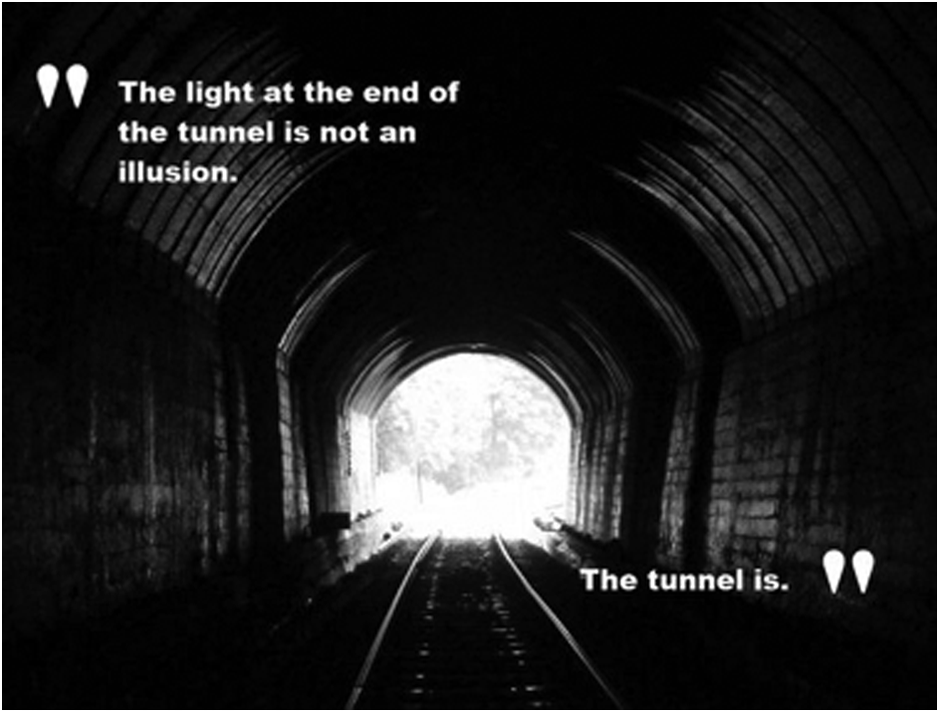
The patent eligibility “tunnel” was not created by the Supreme Court but rather by attorneys, the USPTO, and the Federal Circuit. The Supreme Court simply applied long settled legal precedents which had been forgotten or overlooked as new technologies came on the scene. As is typical, people overreacted, creating a tale of woe where none existed. By stepping back and looking at prior precedents, one realizes that the tunnel was created in some cases by forgetting the law, and in others by sloppy claim drafting.