






Abstract
The Rosalind Franklin Society (RFS), in partnership with Mary Ann Liebert, Inc., publishers, enthusiastically congratulate our distinguished recipient of the 2022 annual
Li Jiang and Hong Yang, “Generic Drugs and Innovative Drug Incentives: Early Dispute Resolution Mechanism in China,” Biotechnology Law Report 41, no. 4 (August 2022): 186–193, http://doi.org/10.1089/blr.2022.29278.lj.
Abstract
The early dispute resolution mechanism created a new foundation for pharmaceutical innovation and expanding access to generics in China. This article examines the evolution of pharmaceutical regulation, explores the structure of early dispute resolution provisions, and analyzes the implications for generics and innovators through a comparative approach. It concludes that the early dispute resolution will encourage generic companies to challenge patents early and often. For example, the long exclusivity, the short waiting period, and the bifurcated adjudication system provide legal incentives to early generic entry. The unclarified and unlimited notification system set legal impediments to disincentive innovators asserting their right. Moreover, an increase in filing of weak generic claims motivated by the prospect of a future long exclusivity might bring little consumer benefit.
Biosketch
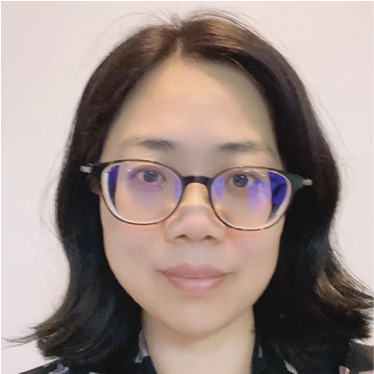
Dr. Li Jiang is an associate professor of intellectual property law at Shanghai International College of Intellectual Property (sicip), Tongji University, People's Republic of China, where she teaches patent law, new frontiers of intellectual property law, and biotechnological invention intellectual property protection. Prior to joining sicip, she was a lecturer at Kenneth Wang School of Law, Soochow University. She holds a PhD from Bangor University Law School, UK; an LL.M from Shandong University, China; and a BS in biotechnology from University of Science and Technology Beijing. Her scholarship focuses on the scope of patentability in respect to the application of the moral exclusion to patent application as well as regulation of emerging biotechnology, such as stem cell technology and genome editing technology. Li has written one book published by Springer and many articles in scholarly journals such as New Genetic and Society, Science and Engineering Ethic, Biosocieties, and Biotechnology Law Report. She also has been awarded funding by National Social Science Foundation in China, Ministry of Justice, and China Law Society related to the ethical, social, and regulatory issues that arise from the uptake of genome editing research and human embryonic stem cell. Li is also a lawyer and patent attorney in China.