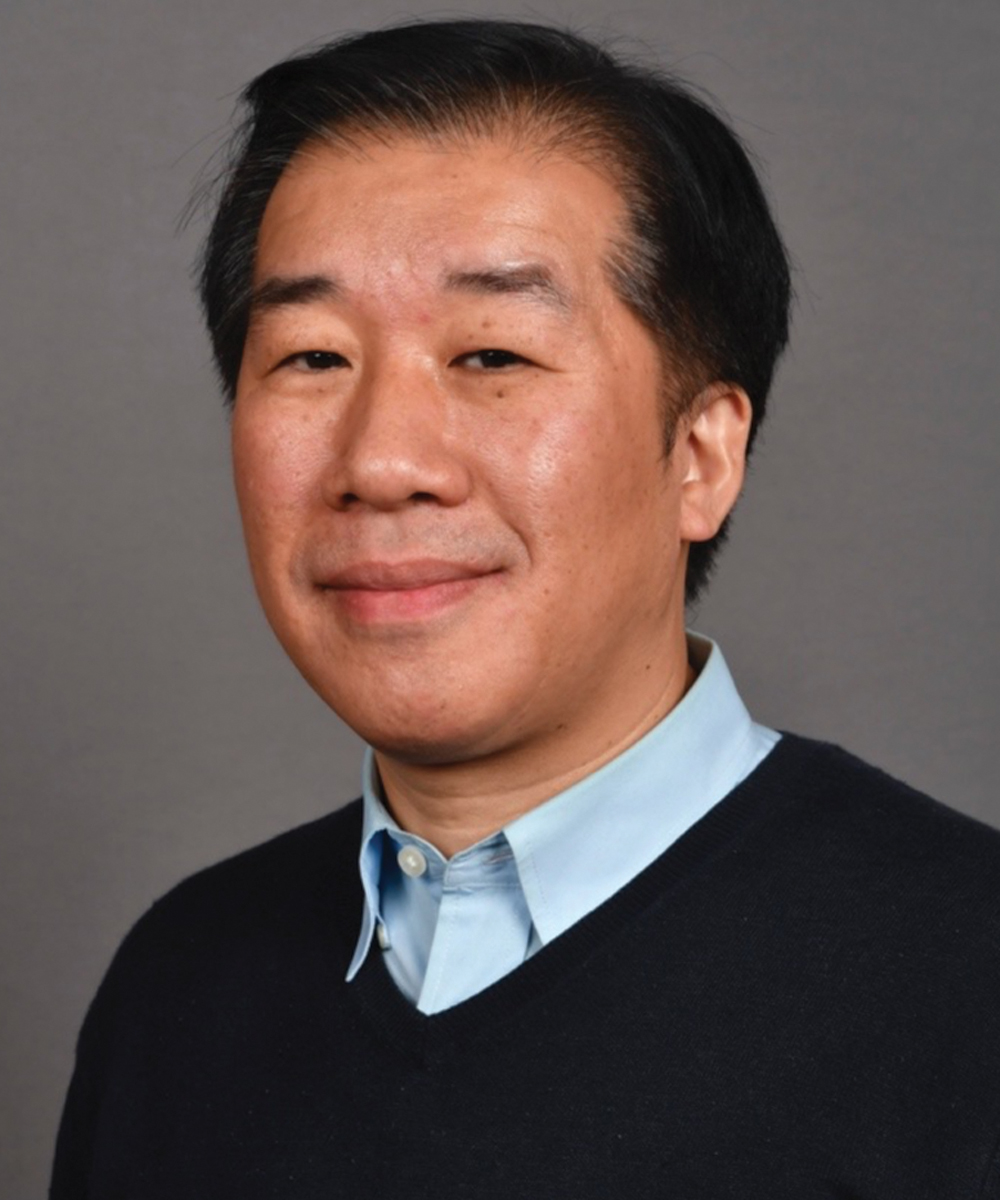
Dr. Dung-Fang Leeis an assistant professor and CPRIT scholar in cancer research at the University of Texas Health Science Center at Houston. The Lee research laboratory is dedicated to understanding the pathological mechanisms behind cancer by applying patient-specific induced pluripotent stem cells (iPSCs) and/or engineered embryonic stem cells (ESCs) as models. The central directions of the Lee laboratory include (1) systems-level analyses and characterization of mutant p53 in Li–Fraumeni syndrome-associated tumor initiation, (2) systematic analyses of genome alterations during Li–Fraumeni syndrome-associated osteosarcoma development, and (3) modeling of familial cancer syndromes with a predisposition to osteosarcoma through patient-specific iPSC methods.
Introduction by Dr. Carlos-Filipe Pereira
(Editor-in-Chief, CELLULAR REPROGRAMMING)
Dr. Pereira: Good afternoon. My name is Filipe Pereira, professor at Lund University and editor-in-chief of Cellular Reprogramming. I am very happy to bring you a new episode of Reprogramming Stars, our flagship series capturing the findings, projects, and ideas of the leaders in cellular reprogramming.
Today we have with us Dr. Dung-Fang Lee, assistant professor at the University of Texas Health Science Center at Houston (UTHealth Houston) and a CPRIT Scholar at the Cancer Prevention Research Institute of Texas. Dr. Lee received his undergraduate degree in chemical engineering from the National Tsing Hua University in Taiwan before completing his Ph.D. in cancer biology from the University of Texas Graduate School of Biomedical Sciences where he studied molecular mechanisms of tumorigenesis with a focus on the mammalian target of rapamycin (mTOR) and nuclear factor kappa B (NF-κB) pathways in the laboratory of Dr. Mien-Chie Hung at the University of Texas MD Anderson Cancer Center.
Dr. Lee did his postdoctoral training, for which he received the NYSCF Druckenmiller fellowship, in the laboratory of Dr. Ihor Lemischka at the Black Family Stem Cell Institute at Mount Sinai where he investigated critical pathways for the maintenance of stem cell self-renewal and reprogramming. During his postdoc, he also pioneered the modeling of hereditary human cancers with induced pluripotent stem cell (iPSC) methodologies. In 2016, he was recruited to UTHealth Houston with the help of a First-Time Tenure-Track Award from CPRIT.
By combining his cancer and stem cell expertise, Dr. Lee has pioneered the study of how cancer begins in children with Li–Fraumeni syndrome, an inherited condition that confers a genetic predisposition to osteosarcoma. He created a “disease in a dish” platform for elucidating p53 mutation-mediated disease pathogenesis. Since these iPSCs were generated from nontransformed fibroblasts, any recapitulated features of osteosarcoma must be due to the single gene alterations found in patients.
The patient-specific iPSC model, therefore, provides a powerful system to elucidate unique gene function in tumor etiology. He continues applying patient-specific iPSCs and TALEN/CRISPR genetically engineered iPSC to illuminate cancer pathological mechanisms that we will learn more about today. Dr. Lee receives funding from prestigious institutions in the United States such as the NIH. Dr. Lee, thank you so much for joining me today. It is a pleasure to have you featured as a Reprogramming Star.
Dr. Lee: Hello Filipe. It is my great pleasure and honor to have an interview with you.
Dr. Pereira: Your laboratory combines great expertise in cancer and cellular reprogramming, and in the past years you have published completely new models of cancer-based iPSCs and uncovered new important aspects of the biology of disease. I find this approach fascinating, and wonder if you could tell us a little bit more about your journey in the field of reprogramming.
Dr. Lee: My interest in cellular reprogramming started when I was a postdoc fellow in Dr. Ihor Lemischka's laboratory at the Icahn School of Medicine at Mount Sinai. At that time, the entire stem cell community was crazy about applying patient-derived iPSCs to modeling diseases and understanding disease etiology. Ihor and I were interested in using this powerful human system to study disease mechanisms. Since my PhD training is in cancer research, I discussed with Ihor and decided to investigate the cancer-prone genetic disorder Li–Fraumeni syndrome, a genetically inherited cancer syndrome characterized by increased susceptibility to early-onset development of multiple tumors.
The Li–Fraumeni patients carry mutations in the tumor suppressor gene TP53. These patients suffer from an extremely high cancer risk throughout their lives, commonly developing breast cancers, soft tissue sarcomas, osteosarcomas, and brain tumors.
In 2015, we established the first Li–Fraumeni syndrome iPSC model (Lee et al, 2015). In 2016, I moved to the University of Texas Health Science Center at Houston and started my own laboratory. Today, we continue to investigate the oncogenic role of mutant p53 in tumorigenesis using the Li–Fraumeni syndrome iPSCs (Kim et al, 2018). We have also expanded our research interests to other osteosarcoma-prone genetic disorders such as Rothmund–Thomson syndrome (Jewell et al, 2021) and hereditary retinoblastoma (Tu et al, 2022).
Dr. Pereira: This was when you first encountered stem cells and reprogramming, but you come from a different field, right? You did your degree in chemical engineering and then studied mainly cancer mechanisms, right?
Dr. Lee: Yes. I received my bachelor's degree in chemical engineering but I realized I like biology more than engineering. Therefore, I did my master's degree in radiobiology and my PhD degree in cancer biology.
Dr. Pereira: What was your motivation to go to Texas, U.S., to study cancer? What was the event that elicited your interest in cancer and to link it with the stem cell field?
Dr. Lee: Filipe, that is quite a long story. When I was a graduate student at MD Anderson Cancer Center, I studied cancer signaling pathways in great detail. I noticed that many cancer signaling pathways I studied were already well understood. Hence, at that time, I made up my mind and set a future goal to discover a novel signaling pathway that had not been demonstrated previously. To achieve this goal, I decided to use human embryonic stem cells (hESCs) as cell sources to explore novel “stem cell”-like cancer signaling. That is the reason that I completely switched my research field from cancer to stem cells and joined Ihor's laboratory.
Indeed, I achieved this goal when we identified the Aurora kinase A—p53 axis in controlling embryonic stem cell self-renewal and differentiation (Lee et al, 2012). After that, I switched my research interests to focus on studying mutant p53 function using Li–Fraumeni syndrome patient-derived iPSCs.
Dr. Pereira: That is an interesting perspective… to set yourself apart from what people were doing at the time, right?
Dr. Lee: Yes.
Dr. Pereira: Are there other laboratories performing similar studies for other cancer types or are you the only one who currently uses stem cells to model cancer? If you had to name the top three cancer lessons we learned from stem cells, what would you say they were?
Dr. Lee: Okay, the first question, we are not the only laboratory interested in applying the patient iPSCs to study cancer. Another outstanding scientist, Eirini Papapetrou at Icahn School of Medicine at Mount Sinai, is also a pioneer of using patient iPSCs to model myelodysplastic syndrome, a preleukemia disorder. Regarding the second question, the current iPSC model is more suitable to study the tumor initiation stage since we cannot use cancer cell lines to investigate the early stage of tumorigenesis. This is especially the case since, as you know, cancers are genome-disordered diseases.
There are many gene mutations and/or chromosome rearrangements in the cancer cell lines we use. This dysregulated signaling caused by these mutations and/or chromosome rearrangements completely masks the gene function we want to study. We believe the use of iPSCs carrying the singular genome alteration of interest can offer us a clearer model to understand how the loss or gain of this gene function can result in cancers, and especially their roles in tumor initiation. The findings from iPSCs can be used for cancer treatment but also prevention for cancer-prone patients and to save their lives.
Dr. Pereira: That is a fantastic point. Studying the tumor initiation, the early steps of tumorigenesis, with iPSC models. It would be interesting to hear more about your recent contributions. For example, you had two very nice studies published, one in PNAS and the other one in PLoS Genetics, which are entitled, “Hereditary retinoblastoma iPSC model reveals aberrant spliceosome function driving bone malignancies” and “Patient-derived iPSCs link elevated mitochondrial respiratory complex I function to osteosarcoma in Rothmund–Thomson syndrome.” So, very different studies with completely new insight into cancer biology. I was just wondering whether you could tell us a little bit more about these two articles.
Dr. Lee: As we know, hereditary retinoblastoma patients have more than a 400-fold increased incidence of developing osteosarcoma. In our PNAS article (Tu et al, 2022), we exposed the epidemiological link between the RB1 tumor suppressor gene mutation and osteosarcoma development. To identify the novel cancer hallmarks involved in RB1 loss-associated osteosarcomagenesis, we applied an unbiased approach to compare the biological processes, pathways, and signatures between the RB1 wild-type and mutant osteoblasts derived from wild-type and hereditary retinoblastoma iPSCs as well as mutation-corrected isogenic controls.
We unexpectedly found that more than one-third of spliceosomal genes are significantly upregulated in hereditary retinoblastoma iPSC-derived osteoblasts. RB1 functions as a transcriptional repressor by antigaming E2F3a transcriptional activities.
This one-third of spliceosomal genes are coregulated by RB1 and E2F3a through both gene promoters and enhancers. These findings significantly indicate that the spliceosome can be the Achilles heel for RB1-mutant osteosarcoma. In general, cancers harboring RB1 mutation and/or deletion are vulnerable to spliceosome inhibition. Currently, some spliceosome inhibitors have been examined in the caliceal trial and showed promising results. We believe that our findings will strongly influence the design of future trials of several spliceosome inhibitors for RB1-mutant cancer treatment currently under clinical or preclinical investigation.
Dr. Pereira: In your first article, does the phenotype only reveal when you differentiate the cells into osteoblasts?
Dr. Lee: It is a really good question. The upregulation of spliceosomal genes can be found in iPSC-derived mesenchymal stem cells, osteoblasts, and lung epithelial cells. We believe RB1/E2F3a-regulated spliceosomal gene expression is a general phenomenon.
Dr. Pereira: Okay, but not in the undifferentiated iPSCs.
Dr. Lee: We have not examined them yet but we expect to reach the same conclusion showing increased spliceosomal gene expression in hereditary retinoblastoma iPSCs compared with wild-type iPSCs.
Dr. Pereira: You mentioned you can inform clinical intervention. So, is spliceosome targeting an approach that is currently being explored in bone cancer?
Dr. Lee: Not yet. The spliceosome is an essential cellular machinery to process and generate functional mRNAs, therefore, many spliceosome inhibitors are extremely toxic to both normal cells and cancer cells. Since RB1-mutant cancers are more sensitive to spliceosome inhibition, we can adjust the proper dose of spliceosome inhibitors, such as SD6 in our study, to kill RB1-mutant cancers but have no or limited effect on normal cells Although SD6 is still on the preclinical stage, we believe SD6 has a potential of future clinical application to treat RB1-mutant osteosarcoma and other cancers.
Dr. Pereira: Very cool. About your second study, can you tell us more about mitochondrial respiration in Rothmund–Thomson syndrome?
Dr. Lee: Yes, Rothmund–Thomson syndrome (RTS) is a very rare genetic disorder. Type II RTS patients have compound heterozygous mutations in RECQL4, a DNA helicase. Around 33% of Type II RTS patients develop osteosarcoma. Actually, the chance is much higher in patients with hereditary retinoblastoma or Li–Fraumeni syndrome. We generated RTS Type II iPSCs and then differentiated them into their corresponding osteoblasts.
We further analyzed and compared transcriptome profiles and discovered abnormal upregulation of the mitochondrial respiration complex I gene expression and its activity in RTS osteoblasts (Jewell et al, 2021). Based on our findings, we conclude that mitochondrial complex I can be the therapeutic target for RTS Type II patients with osteosarcoma, but how the dysregulation of mitochondrial complex I leads to osteosarcomagenesis is still unclear.
Dr. Pereira: How does it work to do research in this field? Do you get patient biopsies from the hospital in Texas or do you get them from collaborators? Do you generate iPSC en masse? How many clones have you generated since you started your laboratory?
Dr. Lee: We collaborated with Dr. Lisa L. Wang in the Texas Children's Hospital to have RTS patient fibroblasts. Lisa is the director of the Bone Tumors Program and clinical leader of the Musculoskeletal Tumor Clinic at Texas Children's Hospital. She established the RTS Patient and Family Registry and takes care of RTS patients. Initially, we started with more than four different patient families, but we only generated the paired iPSCs from two families in the end. We encountered difficulties to generate RTS iPSCs because RECQL4 is a critical enzyme participating in DNA replication and repair. The mutation on RECQL4 potentially damages somatic reprogramming; therefore, we only obtain a few iPS clones.
Dr. Pereira: Because this one is very rare, right?
Dr. Lee: Yes. RTS is a rare genetic disorder. Fewer than 500 individuals have been reported in the English-language literature so far.
Dr. Pereira: Do you have different clinical collaborators for these projects, or is this an institutional effort, granting you access to these fibroblasts?
Dr. Lee: Definitely, we have different clinical collaborators for our projects. The UTHealth Houston is optimally located in the Texas Medical Center. We are able to collaborate with many physicians in our institute or other institutes located in Texas Medical Center such as Baylor College of Medicine, Texas Children's Hospital, MD Anderson Cancer Center, and Methodist Hospital to obtain patient samples for our research.
Dr. Pereira: Very interesting. I am wondering whether you could tell us a little bit more about what you are doing in the laboratory right now. Can you tell us more about your current projects?
Dr. Lee: Of course. Although we have discussed many research topics related to osteosarcoma, we are interested in not only osteosarcoma but also other malignancies in Li–Fraumeni syndrome patients. One of the patients in our study has astrocytoma, a type of benign glioma. Therefore, we are also exploring the mutant p53's gain-of-function in astrocytoma initiation and progression. We have discovered mutant p53 hijacks m6A epitranscriptome and H3K4me3 epigenome functions, which promotes astrocytoma development in Li–Fraumeni syndrome patients. In addition, we continue to explore tumor-associated splicing variants caused by RB1 mutation and investigate the oncogenic function of these splicing variants in osteosarcoma.
Dr. Pereira: Do you know the molecular link between p53 and m6A readers?
Dr. Lee: Yes. We have some clues. We found mutant p53 is able to recruit and form a novel protein complex to transcriptionally regulate m6A reader YTHDF2 expression. Mutant p53 may alter epitranscriptomic networks through YTHDF2.
Dr. Pereira: You told us a lot about your findings and accomplishments, which are amazing, and I am wondering whether you could also highlight some of the challenges you faced by building a laboratory around the idea of modeling cancer with iPSCs, and how to take those findings into new interventions for cancer.
Dr. Lee: The challenge is the current iPSC model is more suitable for studying tumor initiation. However, based on our experience, we are confident that the signaling transduction and gene regulation pathways we discovered can be generalized to both the early and late stages of tumorigenesis. In addition, the iPSC model is more expensive and time consuming than cancer cell lines and mouse xenografts. I hope we and other groups such as Eirini Papapetrou's team at Icahn School of Medicine at Mount Sinai, who use iPSCs or engineered cancer-mutation pluripotent stem cells, can set up the standard and improve this model to encourage more cancer researchers to apply iPSCs for cancer research.
Dr. Pereira: So you have initiation, or the mutation that will initiate all the processes, and that first phase you can model with iPSCs, but the progression of the disease and the accumulation, secondary and tertiary mutations that lead to metastasis, is currently more challenging to model.
Dr. Lee: Yes. It is quite challenging to use iPSCs to investigate metastasis. However, it is feasible to study the mutation accumulations during cancer progression using iPSCs. Right now, we have one project to dissect secondary and tertiary mutations using Li–Fraumeni syndrome iPSC-derived osteoblasts and investigate the role of these mutations. The mutation identified in our study could be the second hit for osteosarcoma development in Li–Fraumeni syndrome patients.
Dr. Pereira: Have you attempted to use long-term cultures such as organoids, where you could induce secondary mutations with chemicals or ultraviolet (UV) to test whether you could use them as a model for metastasis?
Dr. Lee: We have not tried long-term cultures of iPSC-derived cells with chemicals or UV to induce secondary mutations and metastasis. However, we have inoculated Li–Fraumeni syndrome osteoblasts in nude mice and collected the in vivo hyperproliferative cells for whole exome sequencing. We did find interesting oncogene and tumor suppressor gene mutations. Regarding metastasis, we will try it based on your suggestions.
Dr. Pereira: I have seen some studies that showed that you can combine two organoids to create what is called an assembloid, and follow the migration from one to the other; this could be an interesting way of modeling metastatic capacity.
Dr. Lee: I agree. The assembloid can be an excellent system for modeling metastatic capacity such as breast cancer metastasis to the brain.
Dr. Pereira: The other challenge that is often associated with modeling is the degree of variability. Is that currently still a challenge? Variability between iPSC clones and between individuals?
Dr. Lee: I think that the variability of iPSC clones and individuals is still the main issue for iPSC modeling. Presently, we use at least four independent clones from each individual combined with isogenic controls to eliminate the variability. As shown in our hereditary retinoblastoma study (Tu et al, 2022), this strategy works very well.
Dr. Pereira: There are some challenges to overcome in the future and it will be interesting to follow this study. I want to ask you a bit more about your institution, UTHealth Houston, and your environment. You moved from Mount Sinai to UTHealth. Was this important for you to achieve the aims? Did you establish new collaborations?
Dr. Lee: Yes, no doubt. UTHealth Houston is an outstanding institute and Texas Medical Center is an outstanding research environment. Importantly, Texas supports cancer research. That is why I have the CPRIT recruitment award from the Texas government to support my research. More importantly, the energetic and attractive research environment is a key factor in my decision to move to Houston. At Texas Medical Center, we also have MD Anderson Cancer Center and many outstanding cancer researchers at diverse institutes. It is very easy to establish collaborations with many cancer experts.
Dr. Pereira: Very good. It looks like you are in the right place. As we approach the end of the interview, I want to ask more general questions about your ambition for the future, and your vision for the future of the cell reprogramming field. What do you think we are going to be doing in the next 10 years?
Dr. Lee: I believe it is related to your work “reprogramming to immune cells” since cancer immunology is a potential target for cancer therapy.
Dr. Pereira: That is very nice of you.
Dr. Lee:Cellular Reprogramming should interview you and ask your opinions on your study. Although we and other groups use the cancer-prone iPSC model to study cancer mechanisms currently, sooner or later we need to think about how to use cell reprogramming techniques for cancer treatment. Luckily, you and other researchers have started to adapt these techniques, either direct reprogramming or establishing lineage differentiation from iPSCs, to generate functional immune cells such as T cells, NK cells, and dendritic cells for cancer immunotherapy. The future of cell reprogramming in the cancer field should be exploring the cancer mechanism study and therapeutics development, especially cancer immunotherapy. I am very excited and cannot wait to know how much we move forward to help cancer patients.
Dr. Pereira: The challenge is that it is not easy to generate immune cells from iPSCs, but there are several laboratories that are attempting to. But with immunotherapy leading the way with impressive results, and long-term effects in patients with highly mutated cancers, there is an opportunity there to use iPSCs to contribute to cancer immunotherapy. I also wonder whether some of the effects you see in cancer could be rooted in immune cells… iPSCs could be an interesting way to model immune function in cancer with a hereditary genetic origin. Cancer progression could be attributed to defects in the arms of the immune system. Do you have any advice for young reprogramming scientists that start their careers now in the field?
Dr. Lee: Yes, young reprogramming scientists can think about cancer immunotherapy. We also need to pay attention to traditional chemotherapy. The chemo drugs commonly induce cardiotoxicity, neurotoxicity, and hepatotoxicity. They are also important fields for young reprogramming scientists to use iPSCs to explore the mechanisms and find out the treatment solutions in the future.
Dr. Pereira: Very good point. I want to finish the interview with two questions that are not strictly related to science or research, for the audience of Cellular Reprogramming to know you better. If you were not a scientist, what would you be?
Dr. Lee: When I was a kid, I participated in after-school painting classes. I do enjoy drawing and painting, and watching many different colors falling into my papers. However, when we grow up, we need to face reality and give up some beautiful dreams we had. If I were not a scientist, I would like to be an artist or art dealer and work on anything related to art and enjoy visiting different museums such as the Metropolitan Museum, the Guggenheim Museum, and the Museum of Modern Art (MoMA). Although I choose to be a scientist, I still treat every publication as an artwork and try my best to show the best results and beautiful illuminations.
Dr. Pereira: Yes, I do remember you mentioning that one of your favorite painters was Chagall, right? There are linked ways of thinking as well, because we need to be creative as scientists, right, and as an artist, you are also creative, but in a completely different way. And then, the last question is, what is the best piece of advice that you have ever been given? This could be professional or not.
Dr. Lee: “Do whatever you want.” It is my two former mentors Dr. Mien-Chie Hung and Ihor Lemischka told me. They encourage me to think about science and find out the interesting topics I want to presume. Always do what you like because it is a big motivation to devote yourself to work on it.
Dr. Pereira: Very good. Do what you love and everything will be easier, right?
Dr. Lee: Absolutely.
Dr. Pereira: Dr. Lee, thank you so much for joining me today, and thank you for your time. It was great to learn more about you and your science.
Dr. Lee: Filipe, thank you very much.
References
1.
LeeDF, SuJ, AngYS, et al. Regulation of embryonic and induced pluripotency by aurora kinase-p53 signaling. Cell Stem Cell, 2012; 11(2):179–194.
2.
LeeDF, SuJ, KimHS, et al. Modeling familial cancer with induced pluripotent stem cells. Cell, 2015; 161(2):240–254.
3.
KimHS, YooS, ZhouR, et al. Oncogenic role of SFRP2 in p53-mutant osteosarcoma development via autocrine and paracrine mechanism. Proc Natl Acad Sci U S A, 2018:115(47):E11128–E11137.
4.
JewellBE, XuA, ZhuD, et al.Patient-derived iPSCs link elevated mitochondrial respiratory complex I function to osteosarcoma in Rothmund-Thomson syndrome. PLoS Genet, 2021; 17(12):e1009971.
5.
TuJ, HuoZ, YuY, et al.Hereditary retinoblastoma iPSC model reveals aberrant spliceosome function driving bone malignancies. Proc Natl Acad Sci U S A, 2022; 119(16):e2117857119.