







Abstract
Abstract
Background:
Social networking sites such as Facebook afford new opportunities for behavior-change interventions. Although often used as a recruitment tool, few studies have reported the use of Facebook as an intervention component to facilitate communication between researchers and participants. The aim of this study was to examine facilitator and participant use of a Facebook component of a community-based intervention for parents.
Methods:
First-time parent groups participating in the intervention arm of the extended Infant Feeding, Activity and Nutrition Trial (InFANT Extend) Program were invited to join their own private Facebook group. Facilitators mediated the Facebook groups, using them to share resources with parents, arrange group sessions, and respond to parent queries. Parents completed process evaluation questionnaires reporting on the usefulness of the Facebook groups.
Results:
A total of 150 parents (from 27 first-time parent groups) joined their private Facebook group. There were a mean of 36.9 (standard deviation 11.1) posts/group, with the majority being facilitator posts. Facilitator administration posts (e.g., arranging upcoming group sessions) had the highest average comments (4.0), followed by participant health/behavior questions (3.5). The majority of participants reported that they enjoyed being a part of their Facebook group; however, the frequency of logging on to their groups' page declined over the 36 months of the trial, as did their perceived usefulness of the group.
Conclusions:
Facebook appears to be a useful administrative tool in this context. Parents enjoyed being part of their Facebook group, but their reported use of and engagement with Facebook declined over time.
Introduction
Mass media campaigns using traditional platforms such as television, radio, and billboard advertising have long been used for promoting public health. 1 In recent years, the rapid growth of technology and online social networks has afforded novel opportunities for health promotion practitioners and researchers alike. In particular, web-based interventions are commonly used and have been shown to be effective in changing behaviors such as smoking, alcohol consumption, and physical activity.2,3
Online social networks, that is, web-based platforms that allow individuals to produce either a private or public profile and connect with other users, 4 are growing in popularity and show promise as avenues for the delivery and administration of health behavior change interventions.5,6 Although traditional web-based interventions have been relatively passive, social networking sites and the new generation of web-based interventions encourage participants to actively engage with intervention content 7 and potentially allow researchers to engage with participants in a range of ways.
Social media use is high. In 2016, 69% of both American 8 and Australian 9 Internet users reported using some type of social media. Facebook (Facebook, Inc., Menlo Park, California; www.facebook.com) is the most popular platform, with 79% of American Internet users 8 and 95% of Australian social network users 9 reporting having a Facebook profile. There is also growing evidence that parents are high users of social media platforms and commonly use them to access parenting information and support.10–12 In particular, new mothers have been shown to have high usage of social networking sites13–15 ; 58% of new mothers report visiting Facebook at least once per day. 14 In 2011, ∼23 million Facebook users identified as a mother, 16 with Facebook being reported as the preferred social media platform for mothers because of its convenience. 17
Given its broad reach and frequent use, there appears to be great opportunity to utilize social media platforms in research. To date, Facebook has largely been used as a successful recruitment tool in research.18–22 Since 2010, interventions have begun to be delivered through social media platforms.5,6 However, a recent systematic review of social networking sites in behavior change interventions reported that usage data were seldom and inconsistently reported, 5 suggesting that further research is required to determine how researchers and participants in behavior change interventions use and engage with social networking sites.
A review investigating the use of social media in child health found little evidence of its use in families with young children and for the purposes of health promotion (i.e., most studies targeting parents of young children were in acute conditions). 23 Few studies have used social media to deliver resources and facilitate communication between researchers and participants in the context of promoting healthy childhood behaviors. The aim of this study was to examine facilitator and participant use of a Facebook component of a community-based intervention for parents of young children and perceived usefulness from participants.
Materials and Methods
Recruitment and Participants
Data for the current study were drawn from the extended Infant Feeding, Activity and Nutrition Trial (InFANT Extend) Program, details of which have been previously published. 24 Briefly, the InFANT Extend Program was a community-based cluster-randomized controlled trial of an early childhood obesity prevention program, delivered to parents in their existing first-time parent groups. The InFANT Extend Program was built on early outcomes of the Melbourne InFANT Program 25 by enhancing the program with, among other things, the use of web-based materials and engagement with Facebook.
The main delivery mode of the InFANT Extend Program was six 2-hour group sessions, delivered in existing first-time parent groups, from child age ∼3 to 18 months. After this time, parents received six e-mailed newsletters from child age 18 to 36 months. Sixty-two first-time parent groups, comprising 508 parents, were initially recruited to InFANT Extend; 31 groups (260 parents) were randomized to the intervention arm. All recruited parents were mothers. Ethical approval for the program was granted by the Deakin University Human Research Ethics Committee (EC-175-2007 Part 2-2007-175) and the Department of Early Childhood Development (2011_001000).
At baseline, that is, child age 3 months, mothers completed surveys reporting their demographic characteristics (including age, pre-pregnancy BMI, marital status, country of birth, weekly household income, level of education, and employment status). They were also asked to report whether they were a member of Facebook, how often they logged in to Facebook, and whether they could imagine using Facebook to connect with other new mothers. During the second face-to-face intervention group session (child age ∼6 months), mothers were given information about the Facebook groups. Mothers who provided written informed consent were sent a friend request from the InFANT Facebook page. Once the participant accepted the friend request, they were added to their specific group on Facebook with the other mothers in their first-time parent group; that is, each first-time parent group had their own private Facebook group. Only mothers within the private group were able to see and respond to posts and comments provided to that specific group. Twenty-nine of the 31 intervention groups were invited to join a Facebook group; the two groups not invited were past the second session at the time that the InFANT Facebook page was set up. Of the 29 invited, 27 (93.1%) groups agreed with a total of 149 (57.3%) participants. In addition, the partner of one of the participants joined their particular Facebook group.
Facebook Groups
Each Facebook group was mediated by a dedicated group facilitator working on the project, for up to 1 hour per week. During the first 15 months of the trial (i.e., while mothers were still attending face-to-face sessions), Facebook was used predominantly by the group facilitators to share resources with mothers and to arrange group sessions. The resources posted were consistent across all groups (i.e., all facilitators were instructed to post the same material). Mothers were informed that their InFANT facilitator would post information about topics relevant to the timing of the group sessions. Resources were mainly links to websites with information about parenting or children and were focused around nutrition and infant feeding, as well as active play and physical activity. These posts were provided as opportunities to reinforce key messages delivered in the previous InFANT Extend sessions.
Facilitators also used Facebook to arrange convenient times for group session locations/times and to remind participants about upcoming sessions. Participants were encouraged to share information or ask questions on their Facebook group; facilitators did not have to approve posts. Facilitators did not have to approve posts, but did have the ability to remove inflammatory posts or respond to inaccurate posts, although there were no experiences of these in the study. Facilitators responded to any participant queries and directed them to appropriate resources or health professionals where necessary, for example, if queries were related to allergies mothers would be directed to contact their general practitioner or Maternal and Child Health Nurse. After the first 15 months of the program, that is, when face-to-face contact with participants concluded, facilitators ceased regular posting of resources; however, Facebook was used to deliver newsletters to participants (in addition to receiving them through e-mail) and to direct participants to specific pages of the InFANT Program website (www.infantprogram.org). Finally, Facebook was used as a recruitment tool for substudies within the InFANT Extend Program. 26 A summary of the standard posts received by each group is presented in Table 1.
Summary of Standard Facebook Posts Each Group Received
Measures
After program completion, data from the Facebook groups, including the actual “post” (i.e., the content), the number of members who saw, liked, or commented on the post, and the content of the comments, were extracted. Posts were then categorized by one author (K.L.D.) as poster (i.e., facilitator or participant) and type (e.g., resources, study information, participant enquiry, and so on).
At the conclusion of sessions 4, 5, and 6 (i.e., child age 12, 15, and 18 months), a subsample of 27, 43, and 59 of the 150 participants (18.0%, 28.7%, and 39.3%) completed process evaluation questionnaires. Process evaluation of the Facebook component was only initiated toward the end of the study. Given the staggered recruitment, only a subsample of mothers participating in the intervention completed Facebook evaluations. Mothers were asked to report how useful it was being a friend of InFANT on Facebook, how often they logged on to their group's page, whether they enjoyed being part of the Facebook group, and whether they had shared any of the content from Facebook with others (as the group pages were private, participants were only able to share website links provided on the InFANT Facebook group to their private page and were not able to share general posts such as questions or photos).
At the conclusion of the intervention (child age 3 years), a subsample of 86 (57.3%) participants completed process evaluation questionnaires. They were asked to report how often they logged on to their group's page after the group sessions finished, whether they had shared any of the content from Facebook with others, and whether they would have found it useful for the facilitator to continue to keep in touch more regularly once the face-to-face sessions had finished. At intervention conclusion, the following main intervention outcomes for the children were assessed: researcher-measured height and weight [used to calculate BMI (kg/m2) z-score 27 ] and waist circumference (cm) z-score according to the British 1990 Growth Reference (UK90); fruit, vegetable, water, non-core drink, non-core sweet snack and non-core savory snack intake (g/day), and energy intake (kJ/day) from a food frequency questionnaire; parent-reported television viewing (min/day); and ActiGraph accelerometer-assessed light-, moderate-, and vigorous-intensity physical activity (LMVPA; min/day) worn during waking hours for 7 days with LMVPA classified using age-appropriate cut points. 28
Data Management and Analysis
Data from the Facebook groups were extracted into a Microsoft Excel spreadsheet. Baseline demographic and Facebook use, process evaluation, and main outcome data were entered into SPSS 23 (SPSS Incorporated, Chicago, IL). All data were then transferred to Stata 14 (StataCorp, College Station, TX) for analyses. Descriptive statistics was used to describe the Facebook posts, with proportions calculated based on the number of participants in each group. Fisher's exact, chi-squared, and t-tests were used to determine differences in baseline demographics and Facebook use and main outcomes.
Results
Table 2 presents baseline demographic characteristics and Facebook use for participants who joined their Facebook group and those that did not join. Participants who joined their Facebook group were less likely to be working part- or full time and more likely to be keeping house/raising children full time compared to participants who did not join (p = 0.005). As would be expected, participants who joined their Facebook group were also more likely to report being a member of Facebook at baseline and could imagine using Facebook to connect with other new mothers compared to those who did not join (p = 0.04). No other significant differences were observed between participants who joined and participants who did not join their Facebook group.
Baseline Participant Characteristics and Facebook Use for Parents Who Did not Join and Parents Who Joined Their Facebook Group
Bold indicates statistical significance.
Data not available for all participants (sample size ranges from n = 64 to 99).
Data not available for all participants (sample size ranges from n = 134 to 146).
These participants subsequently became a member of Facebook to join their group.
SD, standard deviation.
Within individual groups, an average of 53.3% of mothers (range 17.6%–90.9%) joined their InFANT Facebook group. The number of participants per Facebook group ranged from 2 to 10, with a mean of 5.6 [standard deviation (SD) 2.5] participants per group.
Facebook Posts
The mean number of posts per group was 36.9 (SD 11.1). The number of facilitator posts ranged from 23 to 40 per group, with a mean of 31.7 (SD 4.1). The number of participant posts varied widely between groups, ranging from 0 to 38 with a mean of 5.1 (SD 8.8); 10 of the 27 groups had no participant posts. There were no distinct patterns in the types of groups that had no participant posts; group size ranged from 2 to 10 participants and the proportion of mothers within the first-time parent group ranged from 25.0% to 90.9%. Table 3 shows a summary of the types of posts initiated by both facilitators and participants, with the average number of “likes” and comments per post type.
Summary of Facilitator and Participant Facebook Posts with Examples
These are not unique posts as most were duplicated across all groups.
Some responses to questions were “comments” on the original post rather than new posts.
Participant Interaction with Facebook
Participants tended to interact more with posts, that is, by commenting, if the post sought an administrative (rather than conversational) response, for example, for organizing group sessions. The highest average number of comments (4.0 comments per post) was for facilitator administration posts, for example, for booking group sessions. There were also a high average number of comments (3.0 comments per post) on participant health/behavior questions. Participants often responded to other participants' questions, before the facilitators' response (Fig. 1). Responses to general comments or questions posed by facilitators (e.g., asking participants what strategies they use for particular health behaviors) were also relatively low (0.5 comments on average per post).
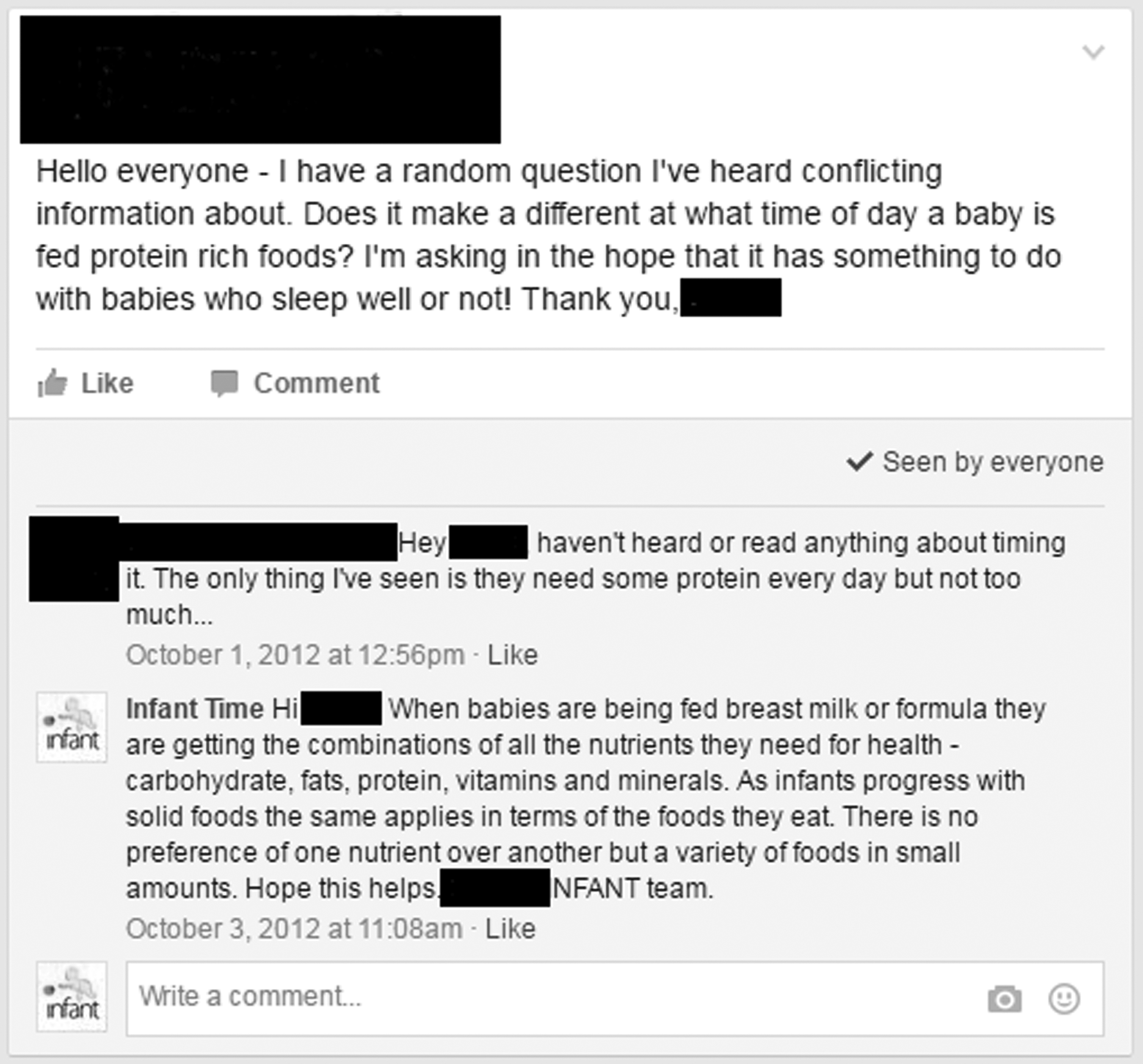
Example of a participant question and responses.
There were also a relatively high number of comments (1.4 comments per post) on participants' information sharing posts, with participants in some groups sharing tips or ideas around physical activity and child feeding practices and other participants replying in agreeance or with replying to provide further ideas (Fig. 2). In addition, participants indicated a “like” on other participants' posts more frequently than on facilitator posts. There were an average of 1.0 “likes” per participant post compared to 0.2 “likes” per facilitator post; the most “liked” posts (1.6 per post) were photos shared by participants (usually photos of their children).
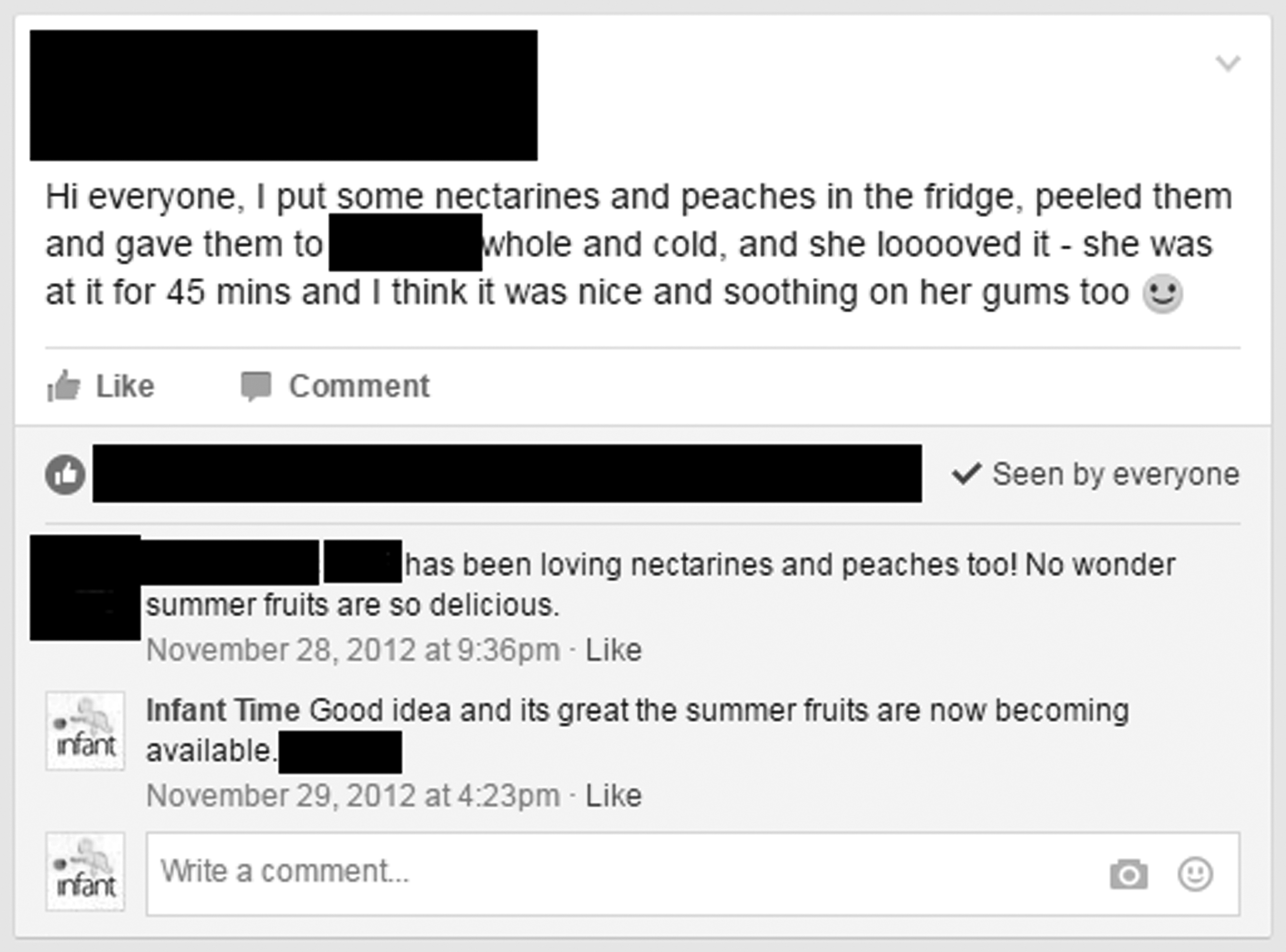
Example of a participant information sharing post and responses.
In terms of the types of posts or questions asked by participants, the vast majority were around child eating and nutrition. Shared photos tended to be mostly of their children eating, while information sharing posts tended to be about recipes or foods that their children were enjoying (Fig. 3). Similarly, participants' questions were all around either nutrition or eating behaviors (Fig. 4). Groups with larger numbers of participants tended to have more participant posts (i.e., asking questions and sharing information or photos) than groups with smaller numbers of participants; there was an average of 1.0 versus 7.6 participant posts for groups with 4 or less versus more than 4 participants, respectively.

Example of a participant information sharing post.
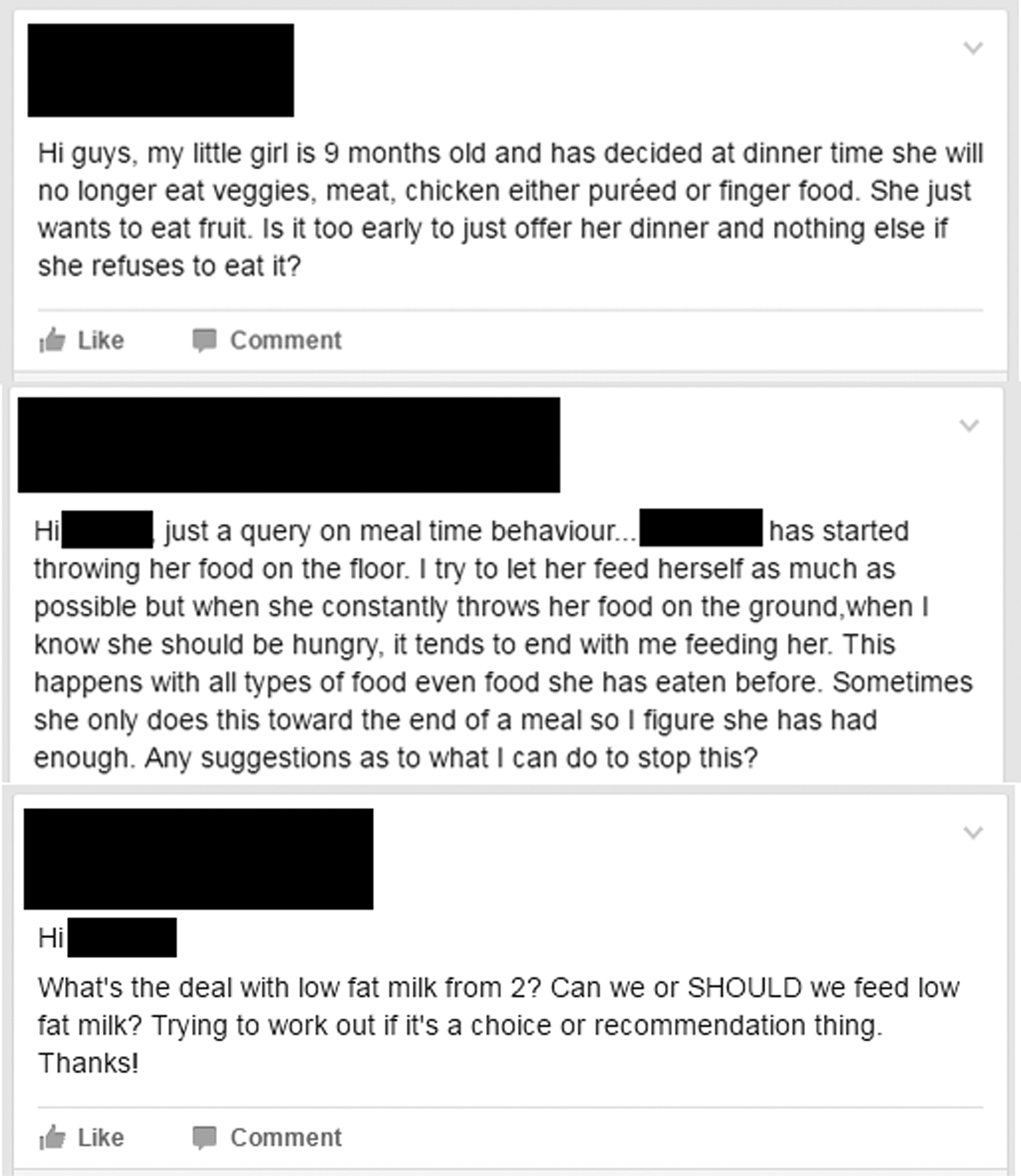
Examples of participant questions.
Participant use of the Facebook group tended to decline over time; Figure 5 presents the percentage of participants who saw each of the 27 standard content posts from facilitators. Initially, an average more than 90% of each group saw the posts. After the 13th post, which was around child age 18 months (i.e., at the time that the face-to-face sessions finished), this declined to less than 80%. There was a sharp decline after the 15th post and less than one third (32.1%) of participants on average saw the final two facilitator posts (26th and 27th).
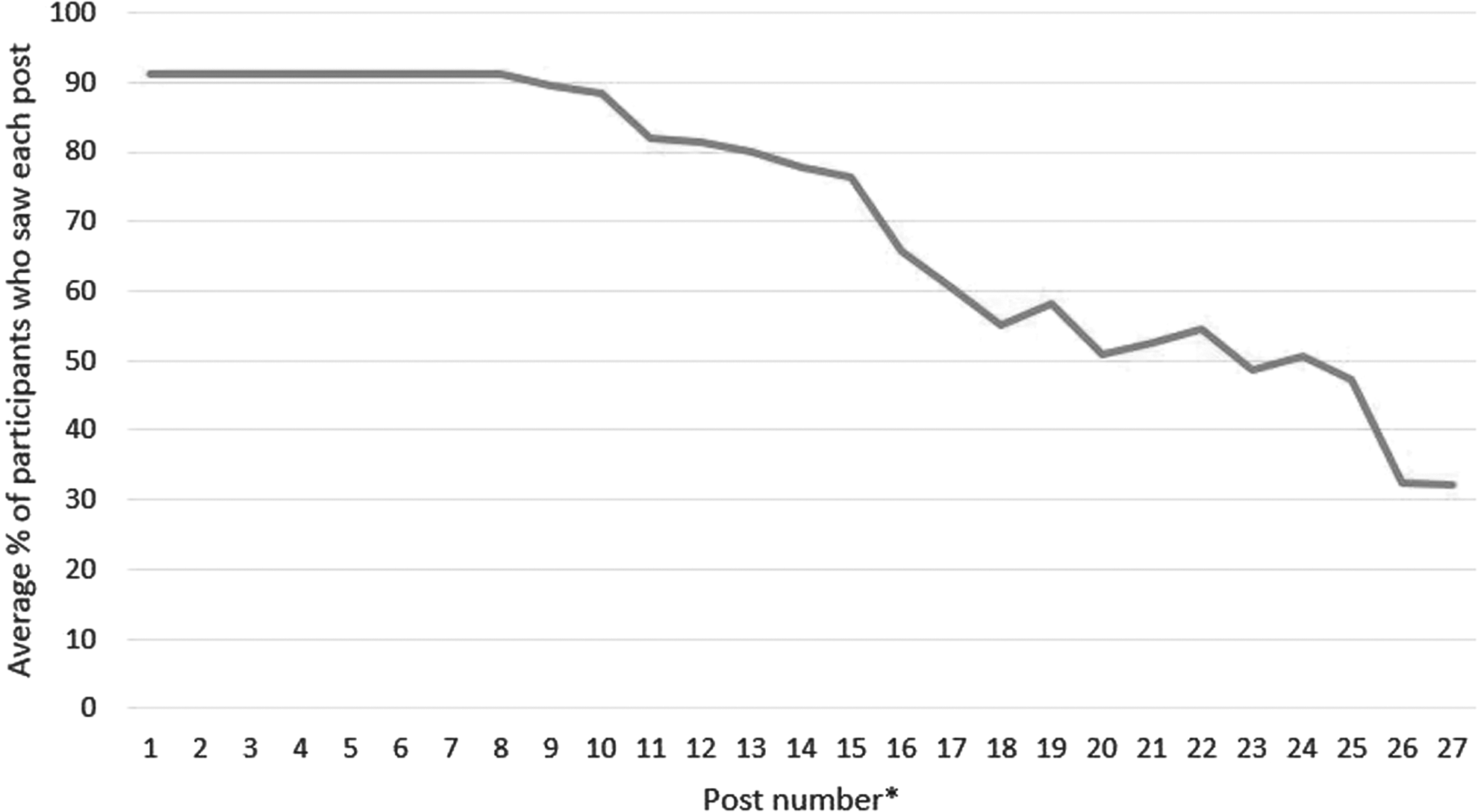
Percentage of participants who saw each Facebook post. *This includes only the standard facilitator-delivered posts.
Facebook Usefulness
At completion of each of sessions 4, 5, and 6, almost all participants (≥86.4%) reported that being a member of their InFANT Facebook group was at least a little bit useful, with 75.0%, 50.0%, and 43.5% reporting it to be quite useful or very useful after session 4, 5, and 6, respectively (Table 4). The frequency of logging on to the Facebook groups also declined over time; after session 4, almost a quarter of participants reported logging in at least daily, compared to only 10.9% after session 6. Participants were mostly positive about being part of a Facebook group; the majority (≥86.0%) reported that they had enjoyed being a part of their group on Facebook at least a little bit.
Process Evaluation of Facebook During the Program from Child Age 12 to 18 Months
Process evaluation questionnaires were not conducted at sessions 1 to 3.
At the 3-year-old assessment, participants reported much lower frequency of logging into their group Facebook page compared to at the start of the program; the majority (87.2%) reported that they logged in about once a month or less (Table 5). Around three-quarters (74.1%) of participants reported that they would have found it at least a little useful if their facilitator had continued to keep in touch regularly through Facebook after the face-to-face sessions finished.
Process Evaluation of Facebook at 3-Year-Old Assessment
Effect of Facebook on Intervention Main Outcomes
Table 6 presents main outcomes for children whose mothers joined their Facebook group versus children whose mothers did not join their Facebook group. There were no significant differences for BMI z-score, waist circumference z-score, vegetable intake, water intake, non-core drink intake, non-core sweet snack intake, non-core savory snack intake, television viewing, or LMVPA between children whose mothers joined and children whose mothers did not join their Facebook group. However, children whose mothers joined their Facebook group had significantly higher fruit intake compared to children whose mothers did not join their Facebook group (p < 0.05).
Intervention Main Outcomes for Children Whose Parents Did not Join and Children Whose Parents Joined Their Facebook Group, All Mean (Standard Deviation)
n = 69 for parents not in Facebook group and n = 118 for parents in Facebook group.
n = 63 for parents not in Facebook group and n = 107 for parents in Facebook group.
n = 23 for parents not in Facebook group and n = 47 for parents in Facebook group.
LMVPA, light-, moderate-, and vigorous-intensity physical activity.
Bold indicates statistical significance.
Discussion
This study aimed to investigate researcher and participant use of and engagement with a Facebook component of InFANT Extend, a parent-focused childhood obesity prevention program. In this study it appeared that Facebook was a useful tool to facilitate administrative-type communication between facilitators and participants.
Although many participants viewed posts, relatively few engaged through the use of “likes” and comments. There tended to be more likes and comments on other participants' posts, in comparison to facilitator posts. These findings differ from recent American data showing social media engagement in the broader population, where 44% of Facebook users reported “liking” content posted by their friends at least once per day and 29% doing so several times a day. 29 The frequency of commenting reported in that data was slightly lower, with 31% of Facebook users commenting on their friend's photos on a daily basis and 15% doing so several times a day. 29 Potentially participants in this study were more inclined to interact with posts from other mothers whom they considered friends, as opposed to their group facilitator. In addition, participants may have been engaging with each other on Facebook outside of their InFANT group.
Facilitator administration posts elicited the most number of comments; that is, when facilitators asked questions about availability for upcoming face-to-face sessions, participants responded. This suggests that Facebook is an effective and efficient means of communicating with participants. It is also potentially more cost-effective than traditional communication channels; using Facebook for administrative tasks such as organizing group sessions, traditional phone calls and e-mails are replaced and participants can communicate with each other and see each other's responses, resulting in decreased researcher time (and hence potential costs).
There was a lack of overt engagement by participants with facilitator resource posts. However, the aim of these types of posts was to reinforce previous messages and content provided in face-to-face sessions, rather than to provide new information. For example, if active play was discussed in a session, resources posted after the session related to active play to remind mothers and reinforce the message. It may be that Facebook is a useful avenue to expose participants to intervention messages in different ways, but does not necessarily prompt them to overtly engage with content.
Another benefit of the use of Facebook in this context was the provision of group support. In this study, mothers often responded to each other's questions or replied in agreeance with concerns. Previous research has reported the use of Facebook to provide social support in interventions, with participants encouraged to share information and advice. 6 Having the Facebook groups in this study monitored by group facilitators allowed for supported information sharing, that is, facilitators were able to reply to participants or join in discussions with relevant and appropriate information and advice. In addition to the social support, potentially mothers in the current study felt comfortable receiving and sharing information because there was a facilitator providing evidence-based advice and information. A small qualitative study with Hispanic pregnant women and mothers of young children showed that while many of them used Facebook, they did not trust it as a source for pregnancy and child health information because anyone could post information. 30 While that sample may not be generalizable, it does point to the levels of trust associated with information on Facebook generally.
In terms of the types of participant posts and questions, participants seemed largely focused on nutrition and eating behaviors and less on physical activity and screen time. A Google Consumer Survey found that new and expecting parents perform twice as many Google searches as nonparents, with feeding being the third most frequently searched topic (behind health and clothes) for parents of infants. 31 This suggests that parents may lack confidence regarding feeding and, hence, have a particular interest in information of this nature. In addition, parents of infants and preschool-aged children generally believe that children are naturally active, 32 which may mean that they are less interested in receiving or seeking information regarding physical activity and hence did not feel the need to ask questions about activity in the current study.
An interesting finding was that children whose mothers joined their Facebook group had significantly higher fruit intake than children whose mothers did not join their Facebook group, suggesting that Facebook may have increased adherence to that intervention message, in particular. It is possible that this may be a spurious finding given the number of analyses conducted. Yet despite the lack of significant differences in other main outcomes, the majority of outcomes did favor the participants who joined their Facebook group (i.e., BMI z-score, vegetable intake, water intake, non-core sweet and savory snacks, television viewing, and LMVPA outcomes were all more favorable for those that joined Facebook compared to those that did not join) providing greater confidence in the association detected for fruit intake. Prior research has shown that reinforcement through intermittent prompts and reminders of key messages can encourage behavior change. 33 Potentially the provision of additional resources relating to key messages of the InFANT Extend Program encouraged adherence to the intervention and, therefore, improved some outcomes.
Engagement with the Facebook groups declined over time in this study. A systematic review of health behavior change interventions using social network platforms found that only 3 of the 10 included studies reported on engagement over the course of the intervention; however, all three studies reported that engagement did gradually decline. 6 In the context of this study, it may be that when children of participating mothers were younger (i.e., breastfeeding and not mobile), mothers may have had more time and opportunities to be on Facebook. Research has shown that almost half of mothers (44%) report that their Facebook use increased after giving birth. 14 In the current study, as children got older, mothers may have returned to part- or full-time work and, therefore, had less time to be on Facebook. Currently, 39% of all Australian mothers with children under the age of 2 years return to work, with almost all (90.9%) of those mothers returning in the first 12 months after childbirth. 34
It may also be that as confidence in parenting increases, the perceived need for advice (through Facebook or other means) declines. Finally, cohesion of the group socially may have affected engagement with their InFANT Facebook group. In Victoria, Australia, first-time parent groups are initiated by Maternal Child Health Nurses and run until child age 3 months. While most of these groups subsequently become independent social groups that continue to meet, around 12–18 months later many groups discontinue meeting. 35 Future research could consider qualitative work to gain in-depth insight into parents' use of Facebook and why their engagement in these types of groups declines. Previous research has suggested that to enhance engagement in social media interventions, content should be interactive (as opposed to passive, i.e., simply broadcasting information). 36 In addition, including an element of “friendly competitiveness” may be an effective approach to increase engagement, particularly in situations where participants have preestablished relationships before entering the study. 6
Some limitations of the current study should be noted. First, while the study measured perceived usefulness of the Facebook groups from participants, facilitators were not asked to report their perceived usefulness. However, the data around the number of participant comments on administrative posts (e.g., arranging group sessions) suggest that Facebook was useful from the facilitator perspective in terms of more efficient communication with participants. Second, participants were not asked to report their usual Facebook “behavior” (i.e., usual frequency of liking and commenting on posts) before they entered the program. Collecting this type of data would potentially help to explain the lack of overt engagement in some of the groups. It will be important for future studies to consider collecting these data to provide more insight into participants' usual Facebook use.
Conclusions
Findings from this study suggest that Facebook is a useful tool to facilitate communication between facilitators and participants. Although participants did not appear to actively engage with resources (i.e., by “liking” or commenting), there was high engagement with facilitator administration posts (e.g., arranging group sessions). The percentage of participants who saw the posts declined over time, suggesting that additional strategies may be needed to sustain parents' interest and engagement.
Footnotes
Acknowledgments
The InFANT Extend Program was funded by a World Cancer Research Fund grant (no. 2010/244). K.L.D. is supported by a National Health and Medical Research Council Postgraduate Scholarship (GNT1092876). K.D.H. is supported by an Australian Research Council Future Fellowship (FT130100637) and an Honorary Heart Foundation Future Leader Fellowship (100370).
Author Disclosure Statement
No competing financial interests exist.