






Abstract

Kamruzzaman Ratan / Getty Images
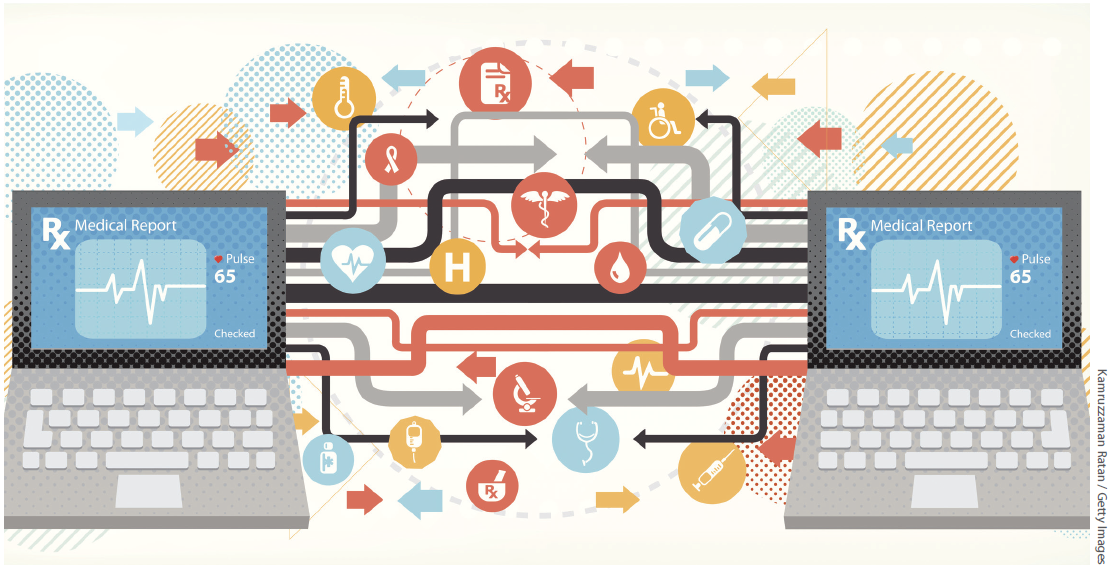
Four years in the making, and another year and a half between its launch and enrolling its first oncologists, health information technology platform CancerLinQ has been signing up—at a feverish pace—new health systems and oncology practices eager to benefit from its big data analytics capabilities.
According to Kevin Fitzpatrick, CEO of CancerLinQ, a nonprofit subsidiary of the American Society of Clinical Oncology (ASCO), one of the driving forces behind Cancer-LinQ springs from a call by the Institute of Medicine last decade for the establishment of rapid learning systems in healthcare that collect data from patients, follows those patients longitudinally, and assembles that data to provide clinical support to physicians. Further, all oncologists who use CancerLinQ feed data back into the system. The more who participate, the more likely a community oncologist in Nebraska or Maine will have de-identified data of similar cases available to them to help make clinical decisions for that new patient who came to their office today with stomach cancer.
But Fitzpatrick is clear that the big data HIT platform is not just a tool for smaller hospitals or oncology practices. It also helps health providers of all sizes keep pace with the latest research. “It is really hard, no matter your practice setting, to keep up with the pace of discovery. That knowledge transfer is difficult no matter where you practice, so that is a founding objective of Cancer-LinQ,” he said.
While the ability to leverage big data and the latest research as a clinical decision support tool represents CancerLinQ being used at the peak of its capabilities, first steps with the tool are often more modest, according to Keith Thompson, M.D., medical oncologist with Montgomery Cancer Center, in Montgomery, AL. Dr. Thompson said that the three-location practice implemented the technology because it needed more insight into how it was delivering care, beyond what it could glean from a patient’s electronic health record.
“Our electronic health record has the ability to do some reporting such as how many patients we saw today, or how many infusions we performed, but that is all organized around what an administrator would want to see,” Dr. Thompson said. “When we have researchers and clinicians looking at this data, they ask a different set of questions: Am I seeing a lot of cancer from one geographic area? How often is a test being used in our practice and in what setting? Knowing these answers is important because we want to continue to push to deliver a higher level of care.”
Montgomery Cancer Center is just a couple of months into their roll out of CancerLinQ—what Dr. Thompson refers to as phase 1—which for the moment means working to clean up and feed data from its EHR into the system. The practice will initially examine internal data to make determinations about how consistently it is performing in its care delivery. It also plans to share this performance data with payers to bolster its position as a provider of choice.
“When you sit down with a payer, if you don’t have your own data, you are a bit of a victim to whatever data they have,” said Dr. Thompson.
In time, however, he said the center intends to use the CancerLinQ tool to compare its treatment regimens against national standards of care to see how they stack up and eventually to leverage the data to find insights that could improve care delivery. Yet, while improved care is at the heart of Dr. Thompson’s reason for employing the data tool, there is also a sense of contributing to something far greater.
“At the end of the day, all of us want to feel like we had the chance to push the big ball a little farther along the path,” he explained. “The opportunity to contribute to a database that allows the best and brightest minds in this country, and around the world, to analyze large data blocks—to participate in that big picture that hopefully leads us to better care across the board—is exciting to us.”