






Abstract


Population genomics company Color has been awarded $4.6 million in initial funding from the National Institutes of Health (NIH)'s All of Us Research Program to establish the project's nationwide genetic counseling resource. The funding is expected to reach $25 million over five years. “We work with hundreds of self-insured employers already, but All of Us is our biggest project by far,” said Othman Laraki, Color's CEO.
All of Us plans to sequence 1 million genomes from participants across the U.S. “This is the world's largest precision medicine research program,” said Brad Ozenberger, Ph.D., and genomics program director of All of Us. The project is unusual not just for its size, but also because it is focusing on encouraging participation from under-represented populations, and will return health information to participants. That's where Color comes in. “We understand the importance of returning that information in a responsible and efficient way,” Ozenberger said. Color is providing the technological infrastructure for that process. “The core of our model is a fully integrated experience for return of results and genetic counseling,” noted Laraki.
Color has developed a set of tools that improve the efficiency and capacity of genetic counseling. It also has tools that enhance the participants' experience, including software to build family trees collaboratively online with relatives, explore personal and family history of disease, automatically calculate risk assessment, schedule appointments online, and share online access to reports. “At most hospitals, it takes four-to-six weeks to schedule a genetic counseling session,” Laraki explained. “But with our online model, more than 90% of patients get a session within a day or two.”
Brad Ozenberger, Ph.D., Genomics Program Director, All of Us

The company is building up its network of counselors to meet the new demand from the All of US program. Participants with actionable results will get an invitation to review those with a counselor as well as access to all of the Color tools to share that information with their healthcare team, receive additional educational information and support, and more, according to Lauren Ryan, head of Color's clinical counseling services.
This is a critical capability for All of US. “There are just 5,000 certified genetic counselors in the U.S., so we need to be innovative to make sure everyone who needs to see a counselor can, and Color is doing that,” said Amy Sturm, president of the National Society of Genetic Counselors and leader of Color's steering committee. “They have built tools that remove traditional barriers to genetic counseling and testing.” The company, she points out, has conducted more than 15,000 genetic counseling sessions to date. Color is also working to shape the training of future genetic counselors.
The actual process of returning results will also likely be studied. “The participants' privacy and the need to always consult their doctor before taking any heath care action is emphasized,” Ozenberger said, “But we do want more research on the effectiveness of how results are delivered to participants and how they respond to this information.”
Adds to Genome Center Designation
This latest award is in addition to Color's ongoing NIH funding. In collaboration with the Broad Institute and Harvard's Laboratory of Molecular Medicine, Color received an All of Us genome center award in September 2018, when NIH awarded $28.6 million to establish three of these centers around the country. Awards were based on the applicants' track record at generating genomic data at scale, providing clinical validation services to verify medically-relevant variants, and participating in large-scale research collaborations. The award designation periods may extend up to five years, based on progress and the availability of funds.
The NIH has not specified when the genome centers will begin genotyping and whole genome sequencing, but it's expected to happen in 2020. At that time, participants will be able to decide if they'd like to receive test results. Initially, the results will include information about the American College of Medical Genetics and Genomics' ACMG59—the set of 59 genes known to be associated with risk of diseases that have proven actions doctors can take to help treat and prevent disease. The centers will also return information about drug-gene interactions that may help guide prescribing for certain medications. In the future, information about participants' ancestry and some traits will also be provided.
Color is responsible for clinical interpretation and confirmation for the genome centers, as well as assessing what the genetic data means for the participant's health, and confirming the accuracy of the primary data, according to a spokesman. The company is also involved in the program development phase of the full genomics and reporting workflow, and it will deploy its reporting and signout software so the three genome centers have an efficient way to provide oversight in order to deliver consistently rendered results reports.
The focus on recruiting people from underserved populations is another signficant feature of All of Us. “There is ample evidence that our genetic databases are currently biased toward people of European ancestry,” Ozenberger said. By collecting a more diverse set of genomes, researchers hope to create better risk score estimates for a broader range of individuals. It will also help if it's easier to integrate data from a range of databanks. “The NIH has a number of initiatives to help integrate across databanks, such as All of Us, the UK Biobank, and others,” Ozenberger said. One stumbling block is the need for tight security around the data. “All of that essential security makes integrating harder,” he added.
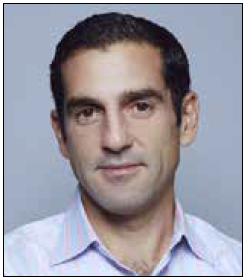
Othman Laraki, CEO, Color
Still, All of Us has gotten off to a good start. Enrollment began in May 2018, and the program already has netted more than 175,000 participants. That represents almost one-fifth of the total number of participants the project aims to recruit. The project's data will be available to researchers and will include data from health surveys, physical measurements, biospecimens, electronic health records, and digital health information to start. In the future, All of US leaders plan to add additional types of data, including from bioassays and health care claims.
More than 15 years after the first human genome was sequenced, programs like All of US have shown, “the promise of genomic medicine has been realized,” said Sturm. “Every person on the planet could benefit from their genetic code.”