






Abstract

When CVS Pharmacy launched its first MinuteClinics in the Minneapolis-St. Paul area in 2000, the clinics—then called QuickMedx centers—were limited to treating seven common medical conditions: Strep throat, mono, flu, pregnancy testing, and infections of the bladder, ear, and sinus.
Two decades later, CVS has grown into a broader pharmacy and healthcare provider called CVS Health with approximately 9,900 namesake pharmacies, and more than 1,100 walk-in MinuteClinics offering diagnosis and treatments for minor illnesses, injuries, and skin conditions; as well as vaccinations and injections, health screenings, and physicals; and monitoring for chronic conditions. In 2019, CVS established its first HealthHUBs offering additional health services and wellness products for everyday care and chronic conditions.
CVS Transform Oncology Care will leverage the testing labs of Chicago-based precision medicine company Tempus and use its xT test, a broad-panel, 596-gene test for both solid and hematologic malignancies.
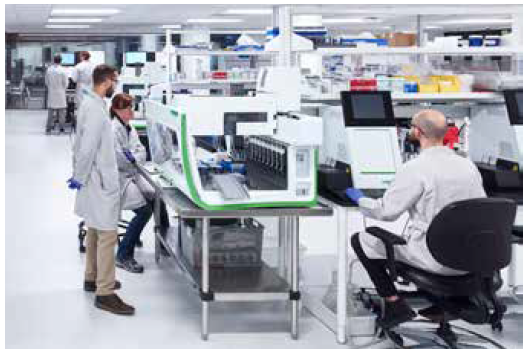
CVS is now capitalizing on its extensive footprint of retail pharmacies, MinuteClinics, and HealthHUBs, with the aim of positioning itself as a leading player in reshaping the diagnosis and treatment of cancer.
Through its new program—named for its ambitious goal—Transform Oncology Care, CVS aims to help health-care providers by connecting patients with genomic testing for cancer at the point-of prescribing. The test results, CVS reasons, will enable it to start patients on the best treatment sooner and, for eligible patients, to match them to clinical trials for new therapies.
The goals of Transform Oncology Care, according to CVS, include improving patient outcomes while reducing overall costs for payers and providers.
“Transform Oncology Care is the latest example of how CVS Health is working to transform the consumer health-care experience by using capabilities from across our enterprise to build a model that is easier to use, less expensive, and puts the consumer at the center of their care,” Christina Beckerman, director, Corporate Communications, CVS Health, told Clinical OMICs. “The program also uses our accessible, local footprint, connected data, and integrated systems to help better identify and intervene with patients who could benefit from preventive or screening services when they are thinking about their health.”
Many of these services, Beckerman said, are available to all of CVS' retail customers. For example, MinuteClinic offers Human Papillomavirus (HPV) and Hepatitis B vacci-nation services and tobacco-cessation interventions. In 2018, CVS launched its CVS Kidney Care program focused on chronic kidney disease management and dialysis services, and enhanced the program last year when it launched a clinical trial for its HemoCare Hemodialysis System.
Six cancers
CVS' Transform Oncology Care will initially target six Stage III and Stage IV cancers: non-squamous cell lung, breast, colon, pancreatic, ovarian, chronic lymphocytic leukemia, and chronic myeloid leukemia.
“We anticipate that we will expand that list in the future,” Beckerman said. “Additional cancer screening and management services will be added at CVS Pharmacy, MinuteClinic and the company's new HealthHUB locations—which will surpass 1,500 in 2021—to help better serve all customers, including patients and payors.”
Transform Oncology Care uses existing CVS care management programs designed to help create a more personalized experience for patients and their caregivers, including “whole-patient” support in between provider visits with nurse-led care by a team that understands each patient's disease and diagnosis.
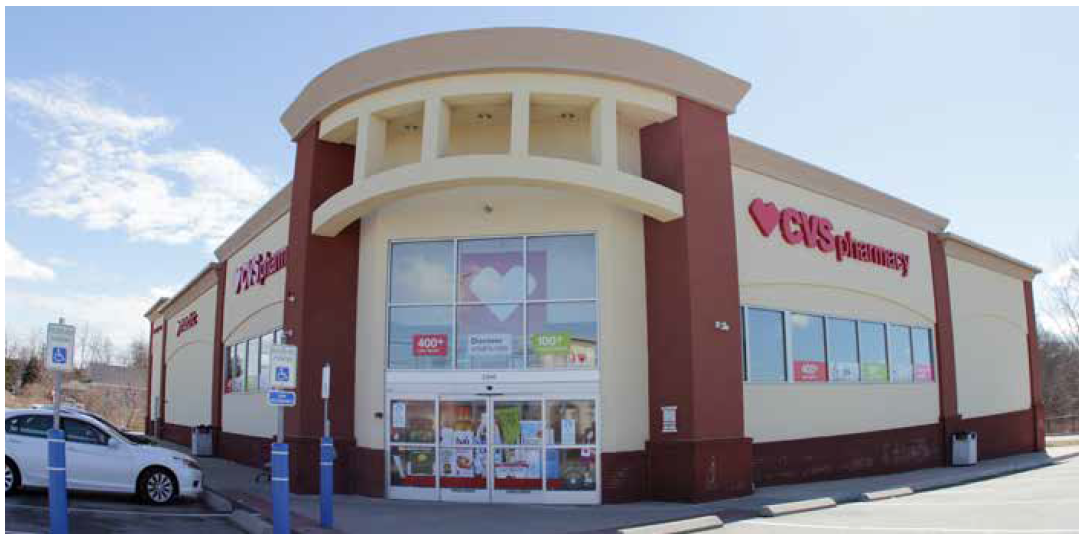
CVS Health plans to expand its position as a consumer health company with its recent launch of Transform Oncology Care. [CVS Health]
CVS has cited a study published in 2019 in Journal of Clinical Oncology showing such whole-patient support reduced hospitalizations by 44% and lowered overall medical costs. According to the study, inpatient rates per 1,000 Risk Period Days for managed patients decreased during the 14 days following chemotherapy by 44% from baseline (3.02 vs. 5.39), while increasing by 29% for non-managed patients (2.33 vs. 1.81). Emergency room rates per 1,000 Risk Period Days were not significantly different for managed patients (2.72 vs. 2.35), but more than doubled for non-managed patients (2.34 v 1.08).
Ryan Fukushima, COO, Tempus
Aetna—the insurance giant acquired by CVS for $69 billion in a deal completed in November 2018—has adopted Transform Oncology Care for fully insured commercial populations, and is rolling it out with participating Aetna provider networks in 12 states: Connecticut, Florida, Georgia, Illinois, Maryland, Maine, Missouri, North Carolina, Nebraska, New Jersey, Pennsylvania, and Utah.
“As part of the precision medicine strategy, payors can also adopt value-based contracts that use provider networks to drive high-quality care and lower costs. This component builds on the success of Aetna's oncology patient-centered medical homes and helps to foster economic alignment between providers and payors,” Beckerman said. “Ultimately, the approach helps ensure better treatment for the patient by encouraging on-label prescribing and expanding access to novel therapies to the right patients at the right time.”
Leveraging data
CVS locations will leverage data from both CVS and Aetna to help guide oncology care via Transform Oncology Care.
“Today, we use claims data to help identify patients who could benefit from prevention and screening solutions. Notifications are sent to these patients and their local providers to help close gaps in care,” Beckerman said. “In the future, our retail footprint and HealthHubs will enable us to grow the engagement in Transform Oncology Care locally, and we will be working to expand programs and services over time.”
Transform Oncology Care is also available to other health plans, regardless of whether the payor is a current CVS Health pharmacy benefit management client.
“Aetna-CVS is the first group to do this payer-pharmacy combination, and through CVS they have the locations to be able to reach these patients,” said Harry Glorikian, general partner with New Ventures Funds, a healthcare venture investment platform based in Virginia Beach, VA. “Aetna obviously has a large pool of patients that they interact with. Other insurance groups or payor groups may want to utilize the site capabilities that CVS brings to the table.”
Harry Glorikian, general partner, New Ventures Funds
Potential competitors for Transform Oncology Care, he said, include large health-care providers—some of which, like Geisinger, have their own health plans—and pharmacy chains looking to evolve beyond filling prescriptions: “I think the Walmarts and so forth will eventually evolve to be points of entry. They're going to have to work out the insurance part, because that combo is where the biggest bang for the buck comes.”
The longer-term vision for entities interested in oncology diagnosis and treatment is the development of blood tests capable of diagnosing multiple forms of cancer, added Glorikian, a consultant in the life sciences/healthcare industry. “It's not there today, in the sense of being implemented, but you can see where this would go very soon, within five years,” he added. “It's not going to take 10, 15, 20 years, I don't care what anybody says. The technology is moving too fast.”
Tempus, a precision medicine technology company focused on collecting and analyzing molecular and clinical data, is partnering with CVS to provide broad-panel genomic sequencing and clinical trial services for providers and healthcare plans under Transform Oncology Care.
596 genes
The program is using Tempus' xT test, a broad-panel, 596-gene test for both solid and hematologic malignancies. The panel is designed to sequence a patient's tumor DNA and RNA, as well as matched normal blood or saliva, in order to help ordering clinicians determine the targeted therapies and/or clinical trials that are most appropriate for their patients.
“The use of a broad-panel test is essential as it enables efficient testing of all potentially relevant genes from one patient sample,” Tempus COO Ryan Fukushima told Clinical OMICs. “When a patient receives broad-panel sequencing, drug selection and drug sequencing decisions can be driven by the combination of the patient's molecular and clinical data.”
In addition to sequencing, Fukushima said, Tempus provides personalized clinical trial services to match patients to trials based on their specific molecular and clinical data. Tempus also works with qualifying provider organizations within the program to enhance their ability to open specific clinical trials locally in their offices, offering patients more access to emerging therapies.
“Tempus collects molecular data, clinical data, and operational data. Tempus runs tumor/normal tests, which sequence both the tumor and blood so that we can identify somatic and germline variants, eliminating the potential for false positives,” Fukushima said. “The report we provide to physicians includes their patient's clinical data and specific variants, as well as all available therapies, including treatments and clinical trials that target them. We aim to arm physicians with the data they need to personalize treatment for their patients.”
Tempus will also collect operational data related to the program that is specifically focused on how the company's products and services can continue to enhance healthcare decision making, and thus improve the value in healthcare delivery.
“The aim of data aggregation and analysis in any field is to enhance future decisions with the lessons learned from prior decisions. Matching patients with the right drug, at the right time continues to be the focus for the data analysis,” Fukushima explained.
“Here, we are presented with two primary opportunities to learn from the analyzed data: First, by analyzing the patient's molecular data from the sequencing and combining that data with the patient's clinical data. Tempus then provides a report to the provider and CVS Health detailing treatment and clinical trial opportunities matched to the patient's profile,” Fukushima added. “Second, by aggregating the data, the initiative seeks to understand how broad-panel sequencing can improve the value (improved health outcomes and cost) of oncology care at a population level.”