







Abstract
This systematic review and meta-analysis aims to estimate the overall prevalence of Internet addiction among Iranian university students. A total of 49 articles written in Persian or English, without time limitation, were gathered. Databases of Scientific Information Database, MagIran, PubMed, Scopus, and Web of Science were searched during the period from February 13 to March 13, 2018. The following keywords and their possible combinations were used: Iran, student, Internet dependency, Internet addiction, and problematic Internet use. The Cochran's Q test was used to test the heterogeneity among the studies, and because heterogeneity was not significant, the random effects model was used to estimate the overall prevalence of Internet addiction. Data analysis was performed using STATA, version 12. Meta-analysis of 49 selected articles with a total sample size of 16,585 indicated that the overall prevalence of Internet addiction among Iranian students was 31.51 percent (95% confidence interval: 26.47–36.55). In addition, meta-regression analysis showed no significant relationship between Internet addiction and year of publication (p = 0.972) and sample size (p = 0.915). About one-third of Iranian students have Internet addiction. It is necessary to provide training workshops on learning about the consequences of Internet addiction and its management.
Introduction
Internet is one of the essential requirements of today's life and is an extremely important communication and social tool that facilitates sharing of information.1,2 Over the past few decades, the Internet has changed the way of working, playing, learning, communicating, and generally people's lives.2,3 Unlimited use of the Internet leads to negative outcomes such as escaping from reality into the virtual world, and ultimately leads to problematic Internet use and Internet addiction.4,5 Many recent studies have focused on the newly emerging mental health problems caused by Internet addiction.6,7 The problematic Internet use is a disorder in which an individual experiences an increase of tension or incitement before using the Internet, but feeling relieved or enjoyed after using the Internet. 8
Excessive use of new technologies (especially online social networks) can be addictive for young people. 9 Orsal et al. quote Young as saying “Internet addiction is generally defined as uncontrolled reluctance to use too much of the Internet, decreasing value of time spent without an Internet connection, anxiety and intense invasion during Internet deprivation, and gradual deterioration of social and family life.” 10 With the increasing growth of information technology over the past decade, young people nowadays spend more time in the virtual world. 11 The impact of Internet addiction on university students, as a particular group, is a hot issue in public health. 12
Most Iranian teenagers are studying at different levels, and Internet addiction distracts them from studying and learning. 5 People are dependent on the Internet for various reasons, and this dependence on the Internet will disconnect them from real life and also can have negative effects on their daily lives. 13 Given that university students use the Internet more than other people in the society, Internet addiction is more common among them.14,15 Various studies in this area showed that young people with Internet addiction suffered from many complications. For example, Dol believed that Internet addiction can have a negative effect on the health of university students. 14
Internet addiction has many negative psychosocial consequences, especially in the field of social communication. 16 The results of various studies have shown that there is a relationship between Internet addiction with impaired interpersonal communication,17,18 decreased well-being, decreased self-esteem, social incompatibility, and decreased life satisfaction.19–22 Also, it may cause physical problems, visual fatigue, musculoskeletal complaints and pain,14,23,24 and may create negative self-image.14,18,23,24
The prevalence of Internet addiction in young people in Asia varies from 8 percent to 26 percent and in Europe and the United States of America from 2 percent to 8 percent.21,25,26 Different results have also been reported by studies conducted in Iran. Based on these studies, the prevalence of Internet addiction among Iranian students varies from 9.9 percent to 69.7 percent.27,28 Planning interventions for managing or reducing effect of Internet addiction, preventing, and controlling complications of Internet addiction requires awareness of its prevalence. Therefore, the main goal of this study is to estimate the prevalence of Internet addiction among Iranian University students.
Methods
In this systematic review and meta-analysis, the prevalence of Internet addiction among Iranian university students was investigated by reviewing published articles in national and international journals. No time limitation was set for selecting dates of published articles in this field. Articles were selected through searching national and international databases, namely, Scientific Information Database (SID), MagIran, PubMed, Scopus, and Web of Science.
The key words of Iran, student, Internet dependency, Internet addiction, and problematic Internet use along with their combinations were searched (Table 1). Keywords were selected based on the study of related review articles and consultation with several authors and librarians. Owing to the fact that Iranian databases are not sensitive to Boolean operators, the search was done in a single word. To access more information and conduct a more comprehensive search, the references of the chosen articles were also reviewed to find more articles that cover the topic of interest.
Search Strategy Results in International Databases
Study selection and data extraction
Initially, all articles in which the prevalence of Internet addiction among Iranian university students was referred to were collected. Articles were included if they were observational, access to their full text was possible, and were written in either Persian or English language. Unrelated studies, interventional studies, duplicate studies, and studies that examined the incidence of Internet addiction in groups other than university students were excluded. To reduce bias, search, selection, and qualitative assessment of articles, data extraction was conducted by two researchers independently. In case of disagreement, the decision was made after consultation between the two researchers.
Data such as first author's name, publication year of the study, location of the study, total sample size, sample size of men and women, language of the study, and the percentage of people with Internet addiction in general and with respect to gender were extracted and recorded using a data extraction form. The methodological quality of the articles was evaluated based on a tool that was used in several previous studies. This tool includes five items, namely design of the study, comparison group, a description of characteristics of study population, sample size, and the research tool. Each item is scored from 1 to 3. Scores range from 0 to 15, and higher score indicates higher methodological quality. Accordingly, the articles were classified into three categories of poor (0–5), moderate (5–10), and strong quality (>10).29,30 More details are reported in Table 2.
Criteria for Rating the Methodological Quality of Included Articles
Statistical analysis
In this systematic review and meta-analysis, point estimate of the prevalence and a 95% confidence interval (CI) for the prevalence of Internet addiction in the selected articles were estimated with respect to binomial distribution. The variance of each study was also calculated according to the variance of a binomial distribution. To combine the results from the selected studies and estimate the pooled prevalence, a weight was assigned to each study based on the inverse of the variance. Owing to the heterogeneity in the selected studies, the pooled prevalence was estimated using the random effects model (Dersimonian and Laird).
A Forest plot was used for each study to provide a comprehensive and visual display of the prevalence values of Internet addiction and their 95% CIs. The I2 index was used to examine the percentage of total variation across included studies. Based on the I2 index, heterogeneities were classified into three categories of <25 percent (low heterogeneity), 25 percent to 75 percent (moderate heterogeneity), and >75 percent (high heterogeneity). 31 To investigate the relationship between the prevalence of Internet addiction and the variables publication year and sample size, regression analysis was used.
Using subgroup analysis, the pooled prevalence was estimated with respect to gender and five regions of Iran. To identify the effect of a single study on overall meta-analysis, we performed a sensitivity analysis using a random effects model. Furthermore, Egger's regression test for funnel plot asymmetry was used to investigate publication bias and the effect of small studies. Data analysis was performed using Stata 12.
Results
A total of 918 articles were extracted after searching national and international databases. In the identification and screening stage, 729 unrelated articles were excluded from the study, and the full texts of the remaining 189 articles were read. Out of 189 articles, 149 were excluded for various reasons; for instance, if the study included population other than university students (n = 78), did not report the Internet addiction prevalence among the university students (n = 92), provided incomplete data (n = 1), used researcher-made tools for investigating the prevalence of Internet addiction (n = 2), had low methodological quality (n = 3), and was qualitative or review, or if access to its full text was not possible (n = 3). Finally, 49 articles were analyzed according to the PRISMA statement (Fig. 1). 32
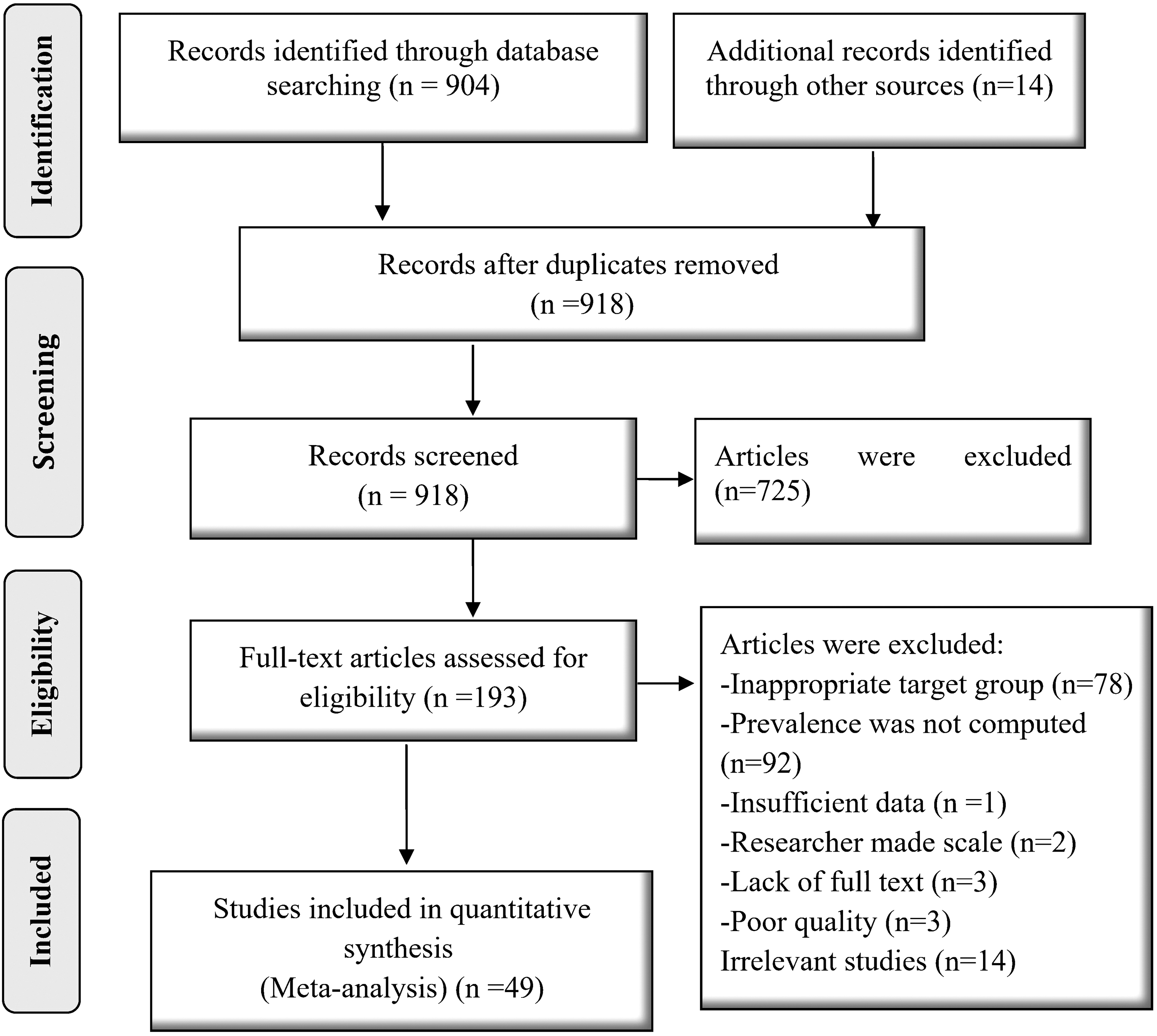
Flowchart of screening and selection of qualified articles according to the PRISMA guideline.
The total sample size was 16,585. The smallest and largest sample size were 87 and 1,081, respectively. Out of 49 selected studies, only 3 studies had strong methodological quality, and 46 articles had moderate methodological quality. More details are provided in Table 3.
Characteristics of the Included Articles in the Meta-Analysis (N = 49)
Pooled prevalence of Internet addiction among Iranian university students was 31.51% (95% CI: 26.44–48.55). The prevalence of Internet addiction among students of Medical Sciences Universities in Iran was 30.3 percent (95% CI: 24.42–36.20) and that among students of other universities was 34.85 percent (95% CI: 24.86–84.44). The subgroup analysis of the prevalence of Internet addiction, with respect to national zoning, showed that the highest prevalence of Internet addiction was allocated to the third region (39.97 percent; 95% CI: 19.08–60.86) (Fig. 2 and Table 4).
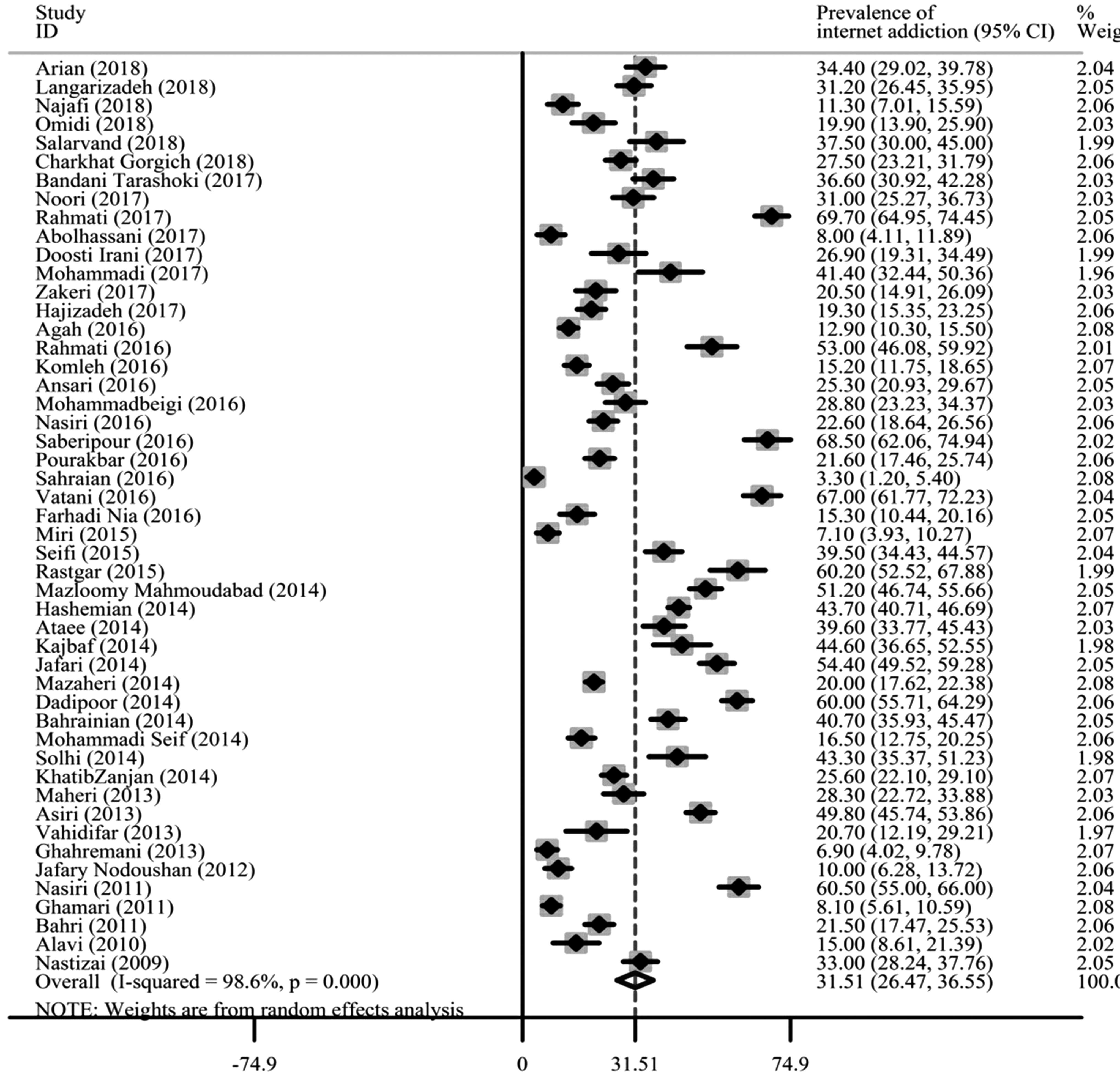
Forest plot of the prevalence of Internet addiction among Iranian University students. The 95% CI for each study is shown in the form of horizontal lines around the central mean and midpoint of the dotted line represents the mean of the overall score and the lozenge shape shows the CI of the prevalence of this disorder. CI, confidence interval.
Prevalence of Internet Addiction Based on Variables of Country Regions, University Type, and Article Quality
Region 1: the provinces of Tehran, Alborz, Qazvin, Mazandaran, Semnan, Golestan, and Qom; Region 2: the provinces of Isfahan, Fars, Boushehr, Chaharmahal va Bakhtiari, Hormozgan, and Kohkilouyeh va Boyerahamad; Region 3: the provinces of eastern Azarbaijan, western Azarbaijan, Ardebil, Zanjan, Gilan, and Kurdistan; Region 4: the provinces of Kermanshah, Ilam, Hamedan, Markazi, Lorestan and Khouzestan; Region 5: the provinces of Khorasan Razavi, southern Khorasan, northern Khorasan, Kerman, Yazd, and Sistan va Balouchestan.
Meta-regression analysis revealed no relationship between the prevalence of Internet addiction and the publication year (p = 0.972) or the sample size (p = 0.915) (Fig. 3).
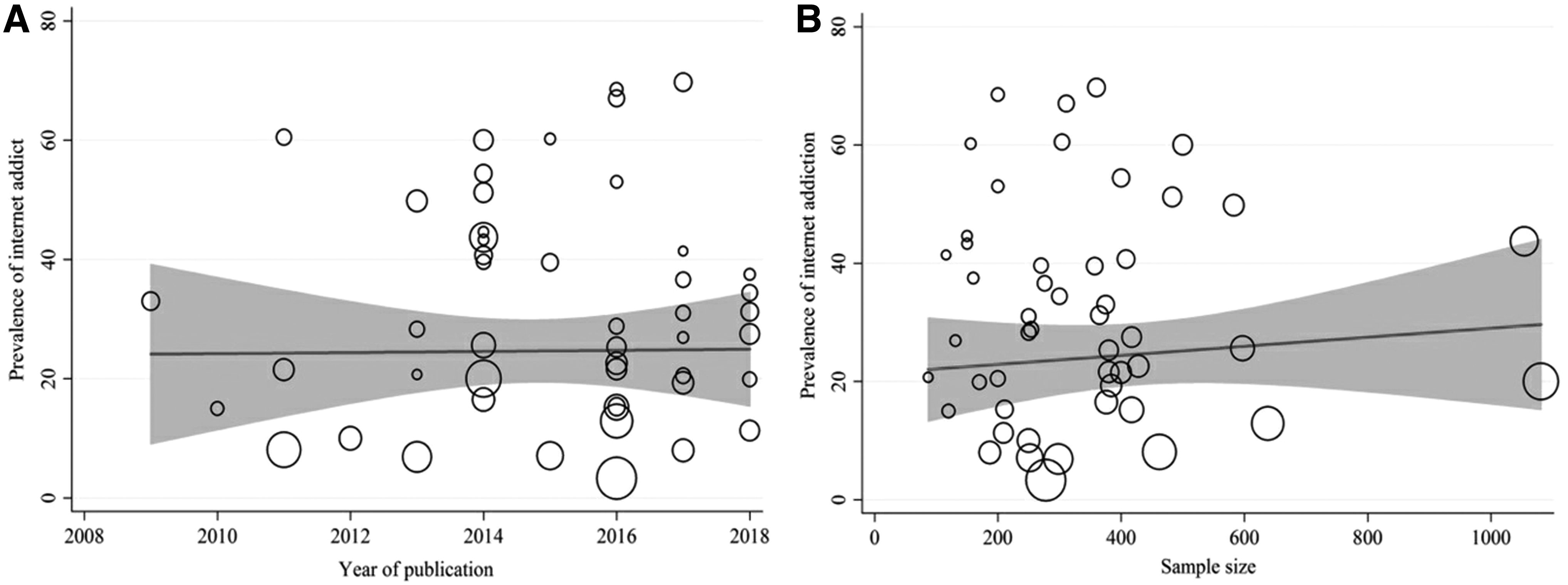
The meta-regression of the prevalence of Internet addiction among Iranian University students based on the publication year
Sensitivity analysis showed that none of the studies independently had a significant effect on the pooled prevalence of Internet addiction and the result showed that the estimates from a single study are closer to the combined estimate, which means that there is no effect of a single study on an overall study. In this meta-analysis, publication bias, as displayed in Figure 4, was significant (p = 0.0001).
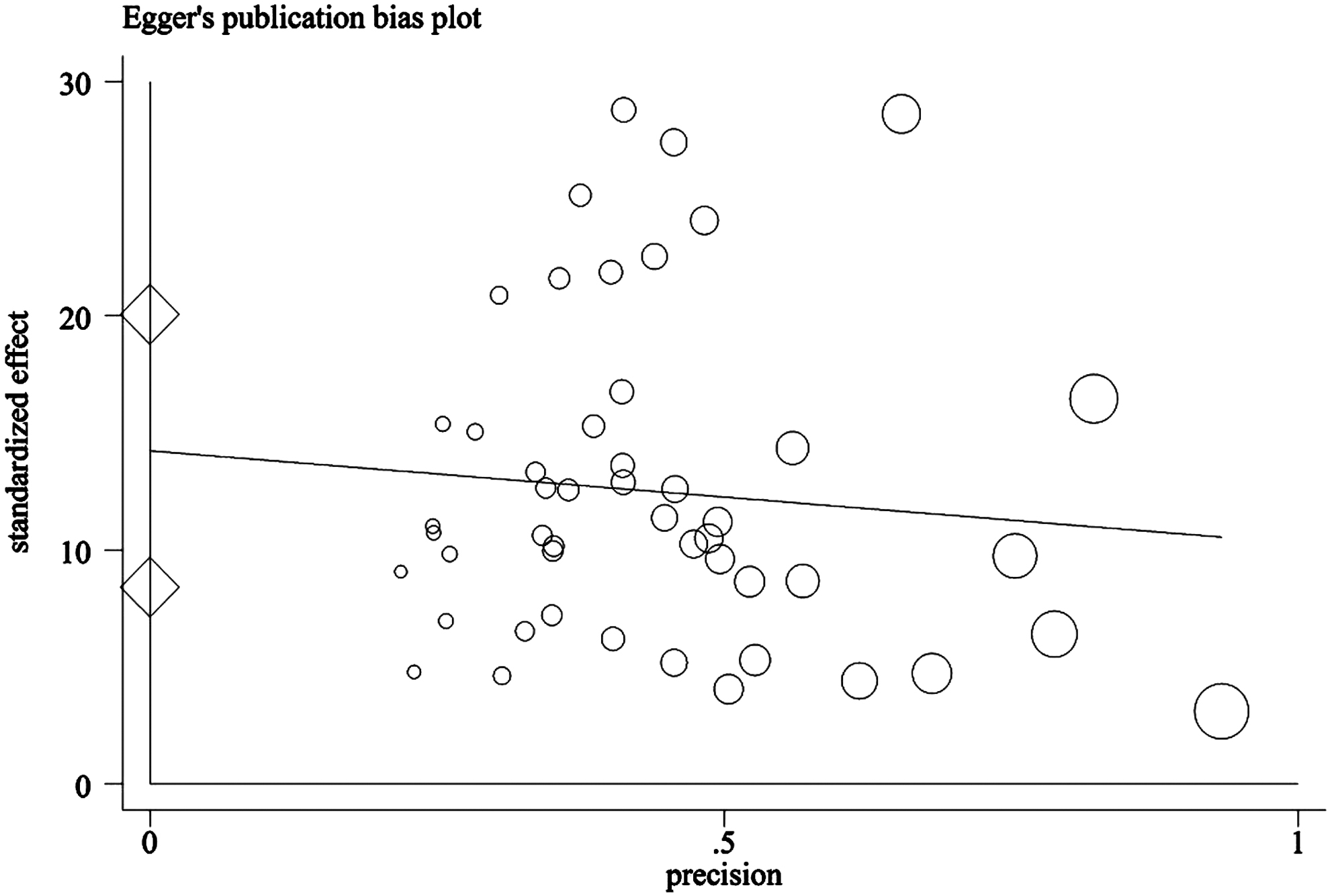
Publication bias.
Discussion
This study showed that the weighted overall prevalence of Internet addiction among Iranian university students was ∼31.51 percent (95% CI: 26.47–36.55). In other words, nearly one-third of Iranian university students were addicted to the Internet. Li et al. analyzed studies on Internet addiction among Chinese university students. The results of their meta-analysis demonstrated that the prevalence of Internet addiction was 11.3 percent among Chinese university students, suggesting that the prevalence of Internet addiction among Chinese university students was lower than that among Iranian university students. 15
The results of a recent meta-analysis showed that the global prevalence of Internet addiction was 6 percent and the highest and lowest prevalence were in the Middle East (10.9 percent), northern and western Europe (2.6 percent), respectively. 78 Contrary to the mentioned studies, the results of a systematic review and meta-analysis found that one-third of medical students were addicted to the Internet, which is in line with our findings. 79 This difference can be attributed to inadequacy of academic books and textbooks in Iran, which makes students more inclined toward online sources other than libraries.
The prevalence of Internet addiction among students of Medical Sciences' Universities was lower than that among students of other universities (31 percent vs. 34 percent), however, this difference was not significant. In their meta-analysis, Zhang et al. examined the prevalence of Internet addiction among medical students worldwide. They concluded that the prevalence of Internet addiction was 30.1 percent, 79 which is similar to that reported in this study. The results of Cheng and Li meta-analysis revealed that the global prevalence of Internet addiction was 6 percent among the general population of 31 investigated countries. 78
The high prevalence of Internet addiction among university students, in comparison with the general population, is due to more Internet usage for accessing online curriculum, conducting research, and performing online learning and assessment. Students, in contrast, may be more involved in surfing the Internet on irrelevant websites, chat rooms, and online games than the general public. 80 Problematic Internet use is associated with abuse of alcohol and substance, 81 obsessive-compulsive disorder, 82 social phobia, 83 phobic anxiety, 84 depression, anxiety and stress, 85 attention deficit hyperactivity disorder, 86 and changes in sleep pattern. 87
The results of studies conducted in neighboring countries showed that the prevalence of Internet addiction among university students was 38.3 percent in Turkey and was 10 percent in Kuwait.88,89 Shao conducted a study in 2018 using meta-analysis design, and reported the prevalence for Internet addiction to be 11 percent. 12 The highest prevalence of Internet addiction was in the third region. Region 3 includes provinces of eastern Azarbaijan, western Azarbaijan, Ardebil, Zanjan, Gilan, and Kurdistan, which are located in the west and northwest of Iran. The financial situation of the residents of region 3 is somewhat lower than other regions of Iran, and the lack of recreational facilities may cause students to spend most of their free time on the Internet, surfing, and social networks.
Comparing the findings of the aforementioned studies with those of this study revealed that Internet addiction among Iranian university students was more prevalent than most of university students in other countries, which is an issue of major concern. The results of the meta-regression in this study indicated that the prevalence of Internet addiction among Iranian students has not changed significantly during 2009–2018. One of the main constraints of this research was the existence of some articles with inadequate data.
One of the strengths of this research was its novelty and the somewhat large number of studies included in the meta-analysis. Given the high prevalence of Internet addiction among university students, the inclusion of information on this issue in university students' curricula and conducting awareness workshops among incoming students are highly recommended.
This study presents the general prevalence of Internet addiction in Iranian students and has contributed to the current knowledge in this emergent disorder of Internet addiction. Through the current findings, some future research directions have been identified. The duration and frequency of Internet use depend on the economic and cultural situation. Owing to the high cost of Internet use in Iran and existence of cultural, economic, and personality differences among students, it is suggested that future studies should focus on the relationship between Internet addiction and personality, cultural, and socioeconomic characteristics of students.
Furthermore, Internet addiction might be a sign of depression or anxiety or both. Hence, by identifying factors associated with Internet addiction, proper interventions can be conducted that would help in the prevention/reduction of psychiatric disorders among students and so minimize its social and economic burden on families and the society as well. Therefore, more studies are needed to identify factors associated with this emergent disorder that researchers need to pay close attention to in future studies.
Conclusion
In a nutshell, this study showed that approximately one-third of Iranian university students were addicted to the Internet, which is a worrying situation. Internet addiction as an emergent disorder may be perceived differently in each society, so there is still controversy as to whether Internet addiction is a “Problematic Internet Use,” a “Pathological Internet Use,” or just a simple discomfort. But since there is no evidence-based treatment, the need for preventive interventions and an early diagnosis is undeniable.
The rapid identification of this group can help in conducting early interventions designed to control for the effect of this disorder and prevent any future negative consequences on this segment of the population and reduce the socioeconomic burden on the families and society in general. Universities and schools need to provide appropriate education and counseling to students to create a proper understanding of Internet addiction, adopt a healthy lifestyle, and to acquaint students with the dangers of Internet addiction.
Footnotes
Author Disclosure Statement
No competing financial interests exist.
Funding Information
No funding was received for this article.