






Abstract

The Rosalind Franklin Society (RFS), in partnership with Mary Ann Liebert, Inc., publishers, enthusiastically congratulate our distinguished recipient of the 2022 annual
Melissa J. Schoelwer, Lauren G. Kanapka, R. Paul Wadwa, Marc D. Breton, Katrina J. Ruedy, Laya Ekhlaspour, Gregory P. Forlenza, Erin C. Cobry, Laurel H. Messer, Eda Cengiz, et al., “Predictors of Time-in-Range (70–180 mg/dL) Achieved Using a Closed-Loop Control System,” Diabetes Technology & Therapeutics, 23, no. 7 (July 2021): 475–481,
Abstract
Studies of closed-loop control (CLC) in patients with type 1 diabetes (T1D) consistently demonstrate improvements in glycemic control as measured by increased time-in-range (TIR) 70–180 mg/dL. However, clinical predictors of TIR in users of CLC systems are needed. We analyzed data from 100 children aged 6–13 years with T1D using the Tandem Control-IQ CLC system. Continuous glucose monitor data were collected at baseline and during 12–16 weeks of CLC use. TIR for those in the first, second, third, and fourth quartiles was 54%, 65%, 71%, and 78%, respectively. Lower baseline TIR was associated with lower TIR on CLC. However, lower baseline TIR was also associated with greater improvement in TIR on CLC. During CLC, participants in the highest versus lowest TIR-quartile administered more user-initiated boluses daily and received fewer automated boluses.
Higher baseline TIR is the strongest predictor of TIR on CLC in children with T1D. However, lower baseline TIR is associated with the greatest improvement in TIR. As with open-loop systems, user engagement is important for optimal glycemic control.
Biosketch
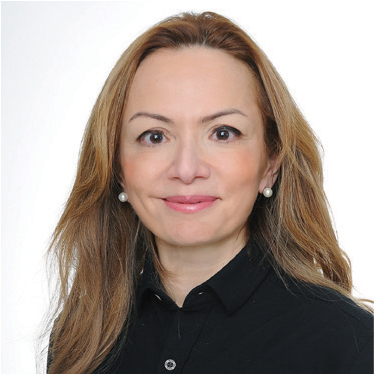
Eda Cengiz is professor of pediatrics at the University of California San Francisco (UCSF) School of Medicine, Benioff UCSF professor in children's health, and director of the UCSF Pediatric Diabetes Program. Dr. Cengiz has spearheaded diabetes-related clinical studies focusing on methods to accelerate insulin action, diabetes technology, and closed-loop systems. She is a member of the National Institutes of Health Initiative to Advance Pediatric Therapeutics Diabetes Core Group and served as an elected advisory board member for the International Society of Pediatric and Adolescent Diabetes. Dr. Cengiz collaborates with pediatric diabetologists abroad and oversees multinational projects in diabetes research and management to promote the well-being of children with diabetes.
Dr. Cengiz is a world-renowned scholar who has received numerous distinguished awards from premier academic institutions, been the institutional principal investigator of various diabetes-related clinical trials and has been awarded numerous research grants to conduct investigator-initiated studies.