







Abstract
Abstract
Benzothiazoles (BTs) appear in the environment mainly due to their production and use as industrial chemicals in the leather and wood industries, and mainly as vulcanization accelerators in rubber production. Doubts about the possibility to biodegrade these compounds efficiently have been raised. Ozonation has been proposed in literature as a suitable method for detoxification of wastewater containing 2-mercaptobenzothiazole (MBT). Feasibility of the ozonation process to remove selected BTs and facilitation of subsequent biological wastewater treatment were studied in our work. Ozonation experiments were carried out in a lab-scale jet loop ozonation reactor. Synthetic wastewater contained MBT, BT, 2-hydroxybenzothiazole (OHBT), 2-aminobenzothiazole (ABT), benzothiazole-2-sulfonate (BTS), and aniline as the main organic pollutants of industrial wastewater. Kinetics of organic pollutant removal was investigated at pH=8.5 and 5.8. Significantly higher influence of the pH value (thus also the influence of ozone reaction mechanisms) on the BT removal in the presence of other BT derivatives in comparison with published data for single BT removal follows from the results of our work. Higher removal rates of MBT and BT were observed at higher pH value. On the other hand, removal rate of MBT was 2.8 times higher compared to that of BT. MBT and BT removals occurred according to a first-order reaction. Observed pathway of the MBT and BT removals differed from that presented in literature as a result of single MBT ozonation in pure water. Accumulation of BTS was observed as the concentration of MBT declined during the ozonation performed at both the pH values. After the removal of MBT, BTS reduction was also realized. At the same time, the removal rate of BT significantly increased. The removals of BT, OHBT, and ABT occurred simultaneously during this period of ozonation. Significantly higher conversions of OHBT and ABT were observed also during the ozonation carried out at higher pH.
Introduction
Correspondingly, these xenobiotic compounds are widely distributed in the environment and have been detected in industrial wastewater, as well as in soils, estuarine sediments, and superficial waters (Valdés and Zahor, 2006). BTs pose an environmental concern when released into watercourses (Valdés et al., 2008). These compounds inhibit microorganism activity in conventional biological wastewater treatment systems and most of them are not readily biodegradable (de Wewer and Verachter, 1997; de Wewer et al., 2007). Moreover, these compounds can be absorbed into cell membranes, which leads to bioaccumulation (Gaja and Knapp, 1998). Unfortunately, conventional biological wastewater treatment cannot effectively remove such contaminants because of their resistance to biodegradation (Valdés and Zahor, 2006). According to Knapp et al. (1982), 7 mg L−1 of BT causes a 50% and 54 mg L−1 a 100% inhibition of ammonia oxidation, while nitrate utilization is not affected (de Wever and Verachtert, 1997). Tomlinson et al. (1966) indicated 75% inhibition of ammonium nitrogen oxidation at a concentration of 3 mg L−1 of 2-mercaptobenzothiazole (MBT). At 60 mg L−1, OHBT affects 100% the inhibition of oxidation of ammonium nitrogen (Hauck, 1972). Thus, the development of efficient treatment/pretreatment processes is required in order to eliminate their discharge into aquatic ecosystems. Ozonation has been proposed as a suitable method for detoxifying of wastewater containing MBT by Fiehn et al. (1998). Feasibility of the ozonation process for the removal of selected BTs and facilitation of subsequent biological wastewater treatment were studied in our work. The reason for this investigation was the relatively high content of BTs in an industrial wastewater with the inhibition effect on biological processes at higher concentration values, particularly on the nitrification process. Reaction kinetics was evaluated for two reasons: first, for the quantification of effect of pH on degradation of selected pollutants and second, for the estimation of kinetic parameters of main pollutants in synthetic water. The kinetic parameters obtained will be used to design the conditions for ozonation process for treatment of real industrial wastewater that also contains other components. The results obtained will be applied for scale-up purposes.
Materials and Methods
Characterization of wastewater
Synthetic wastewater containing MBT, BT, 2-hydroxybenzothiazole (OHBT), 2-aminobenzothiazole (ABT), benzothiazole-2-sulfonate (BTS), and aniline (AN) as the main organic pollutants of an industrial wastewater produced by the production of N-cyclohexyl-2-benzothiazol-sulfenamide was treated. Brief characterization of the industrial wastewater was reported by Derco et al. (2001). Demineralized water was spiked with 0.4 mmol L−1 MBT, 0.99–1.29 mmol L−1 BT, 0.62–0.67 mmol L−1 OHBT, 0.56–0.60 mmol L−1 ABT, 0.65–0.086 mmol L−1 BTS, 0.4 mmol L−1 AN using 1.5% (v/v) methanol. All chemicals excepting BTS (Sigma-Aldrich) were provided by Merck (≥95.5% purity).
Experimental equipment and procedures
Ozonation experiments were carried out in a lab-scale jet loop ozonation reactor. A scheme of the jet loop ozonation equipment is shown in Fig. 1. The system was operated in batch mode with regard to wastewater samples. The samples were added into the jet loop ozonation reactor at the beginning of the trials.
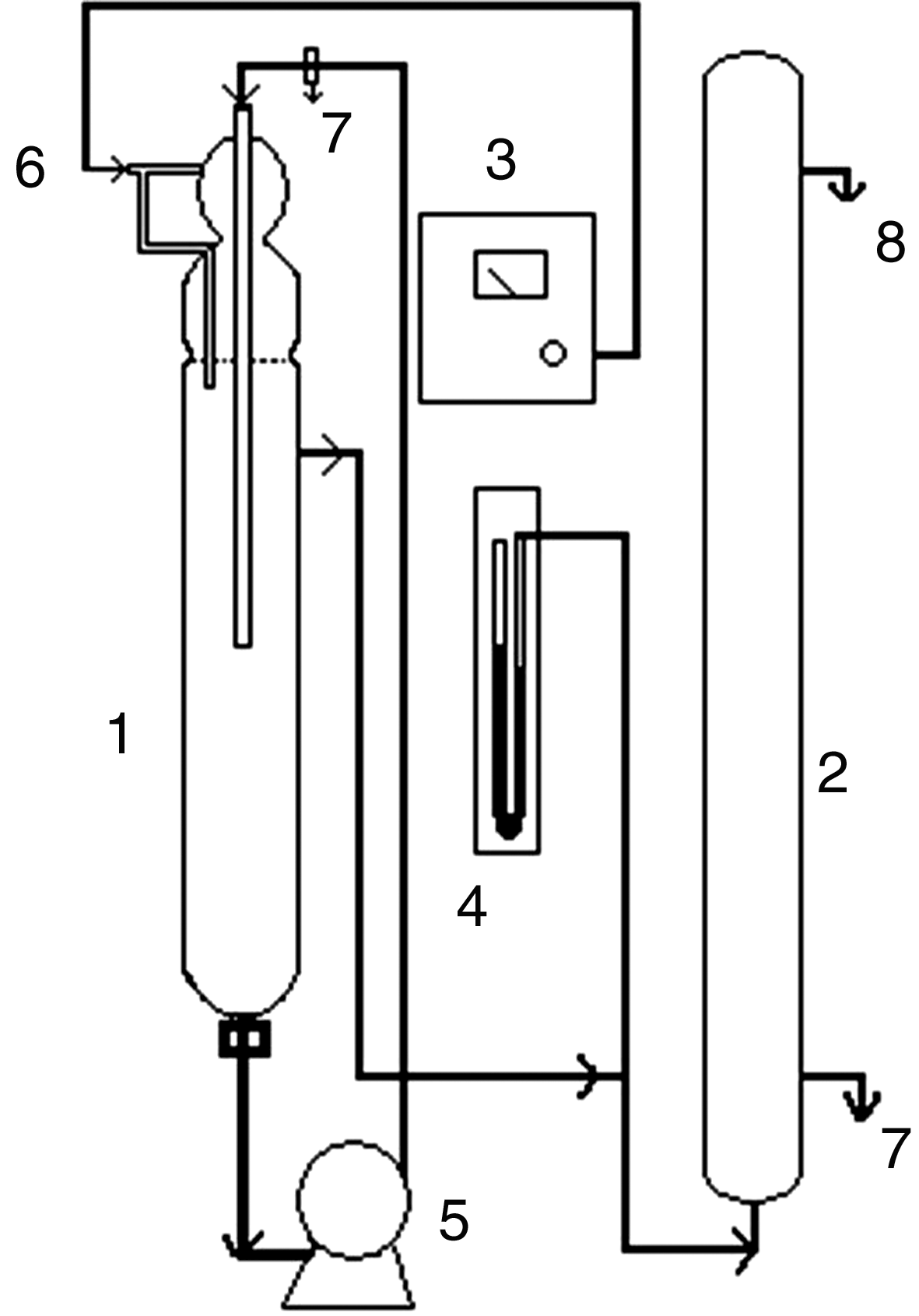
Schematic diagram of the experimental apparatus. 1: ozonation jet loop reactor; 2: destruction of excess O3; 3: ozone generator; 4: manometer; 5: pump; 6: inlet of the mixture of O3 and O2; 7: sampling; 8: gas outlet.
The ozonation reactor was 0.06 m in diameter and 0.6 m in height. Effective volume of the reactor was 1.0 dm3. External circulation of the reaction mixture was maintained at 0.5 dm3 min–1 by a membrane pump. A diaphragm pulsation damper (SERA 721.1 Seybert & Rahier) was used to minimize pulsation of external circulation. A Lifetech ozone generator with a maximum ozone production of 5 g h–1 was used.
A mixture of O3 and O2 was injected into the wastewater sample through a Venturi ejector. At the same time, the ejector sucked the mixture of O3 and O2 from the reactor headspace. This, together with external circulation, should improve the efficiency of ozone utilization in the ozonation reactor. The outlet gas mixture was conducted into a bubble column through a fine-bubble porous distribution element. The bubble column was 0.04 m in diameter and 1.7 m in height. The column was filled with a solution of potassium iodide. The excess ozone destruction was carried out in this column. Likewise as the ozonation reactor, effective volume of the bubble column was 1.0 dm3.
Continuous flow of oxygen of 20 dm3 h–1 was applied to generate ozone. Ozonation trials were carried out at 30% of the ozone generator's maximum power.
Analytical procedures
Analytical control of raw wastewater and monitoring of the treatment procedures included pH and Chemical Oxygen Demand determination (ISO 6060, 1989; Greenberg et al., 2005). MBT, BT, and their derivatives were analyzed using a Hewlett Packard Liquid chromatograph series II 1090 with a DAD detector. A direct injection method was applied using linear gradient of RP-HPLC with an UV-DAD detector on the column C18 (Merck).
Mathematical treatment of experimental data
Experimental data were fitted by zero [Eq. (1)], first [Eq. (2)], and second [Eq. (3)] order reaction kinetic models. For a batch reaction system, under the assumption of a constant reaction volume, the following relationships were obtained.
St (g m–3) denotes the value of corresponding compound concentrations in wastewater in time t; S0 (g m–3) denotes the initial value of corresponding compound concentrations in wastewater; k0 (g m–3 h–1), k1 (h–1), and k2 (g–1 m3 h–1) denote the rate constants for the kinetics of zero, first-, and second-order kinetics, respectively.
Parameters of the applied kinetic models were calculated by the grid search optimization procedure. The residual sum of squares (
Results and Discussion
MBT removal versus ozone supplied at different pH values are presented in Fig. 2. The best fit of MBT experimental data was obtained by the first kinetic model. The rate constant values and those of
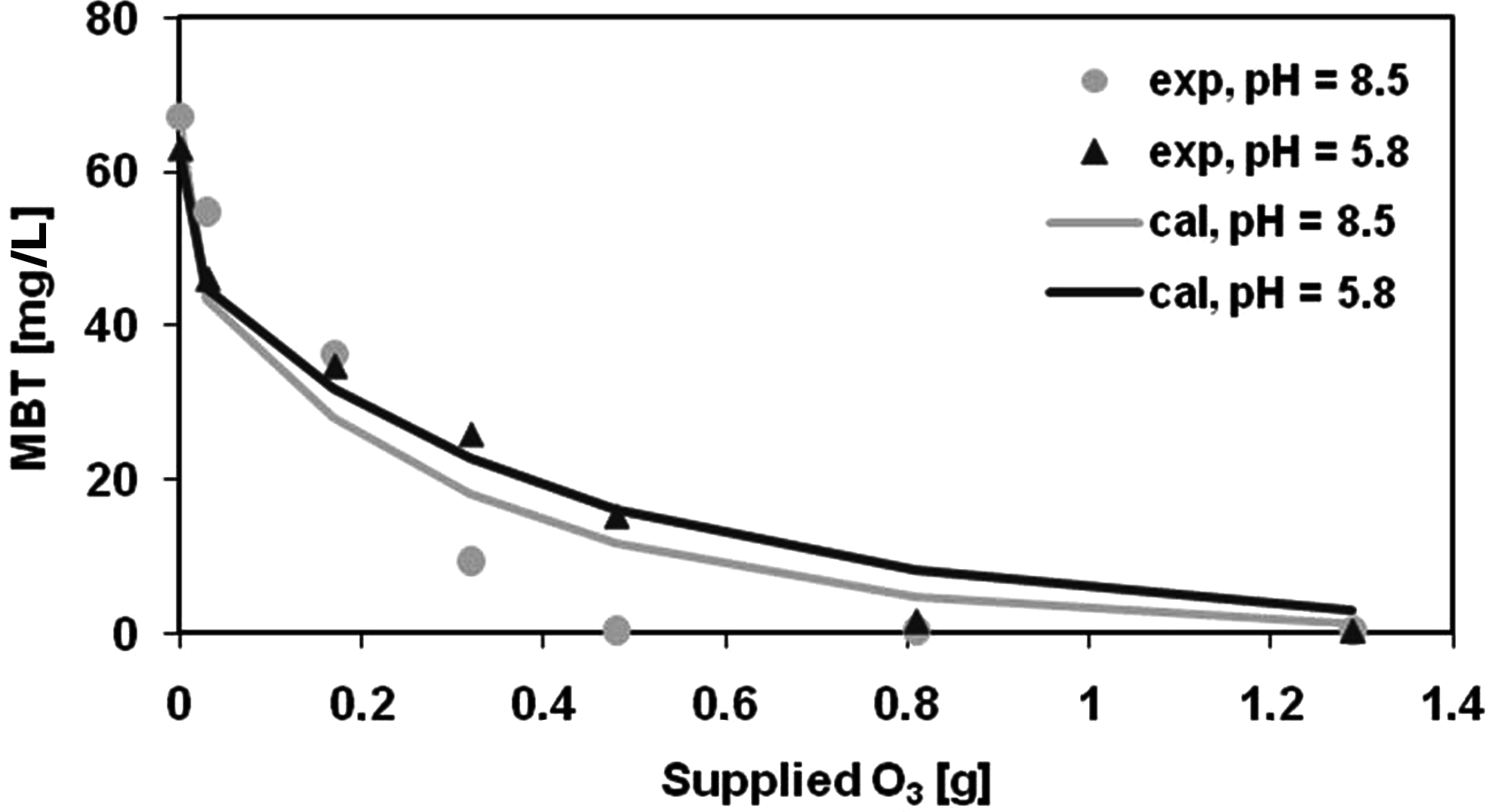
MBT removal dependencies on ozone supplied during ozonation of model wastewater samples at different pH. MBT, 2-mercaptobenzothiazole.
MBT, 2-mercaptobenzothiazole; BT, benzothiazole.
Figure 3 shows the courses of BT removal on ozone supplied during the ozonation of model wastewater samples performed at different pH values. Similarly for MBT, the best description of experimental data was also obtained by the first kinetic model when fitting BT experimental data.
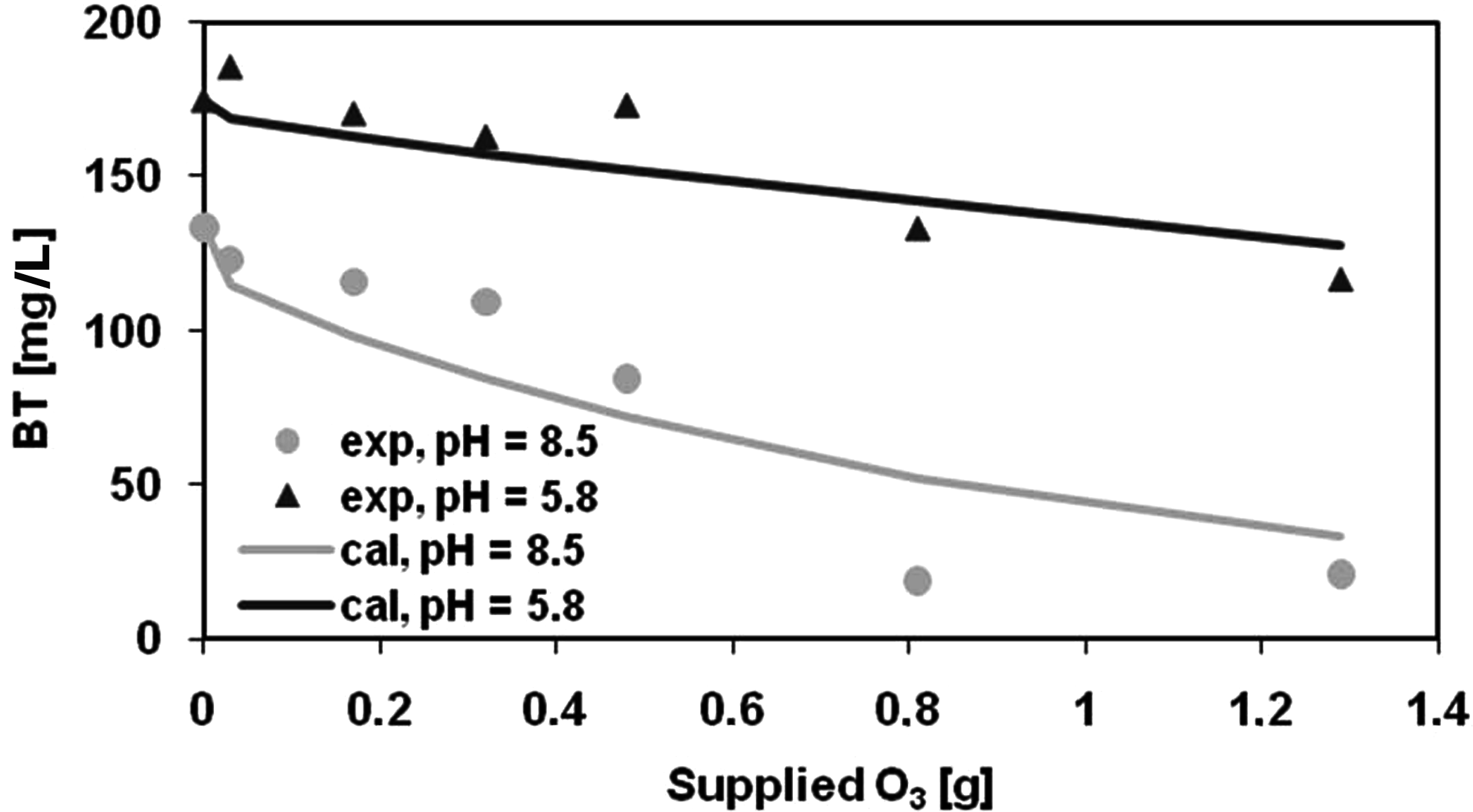
BT dependencies on supplied ozone amount during ozonation of model wastewater samples at different pH values. BT, benzothiazole.
The values of kinetic parameters and those of
According to the results shown in Figs. 2 and 3 and Tables 1 and 2, higher removal rates of MBT and BT with ozone were observed at higher pH values. The conversion of MBT reached about 100% after 40 min of ozonation (transferred ozone about 0.5 g) at pH=8.5 and after 60 min of ozonation (transferred ozone 0.8 g) at pH=5.8. The conversion of BT was lower in comparison to that of MBT and achieved approximately 80% after 60 min of ozonation (transferred ozone dose of 0.8 g) at pH=8.5 and only about 20% after the same period of ozonation at pH=5.8.
The importance of pH for indirect reactions of ozone with BT was demonstrated by Valdés et al. (2003). From the presented results of ozonation of this single pollutant, it follows that the influence of pH is significant particularly at low pH values. On the other hand, only small differences in the BT removal carried out at pH=7 and pH=9 were observed.
However, from the dependencies plotted in Fig. 2 as well as from the values of the kinetic constant for BT (Tables 1 and 2), the significantly higher influence of the pH value (thus also the influence of ozone reaction mechanisms) on the BT removal in the presence of other BT derivatives is obvious.
Dependencies of OHBT and ABT concentration values on the amount of ozone supplied during the ozonation are plotted in Figs. 4 and 5, respectively.
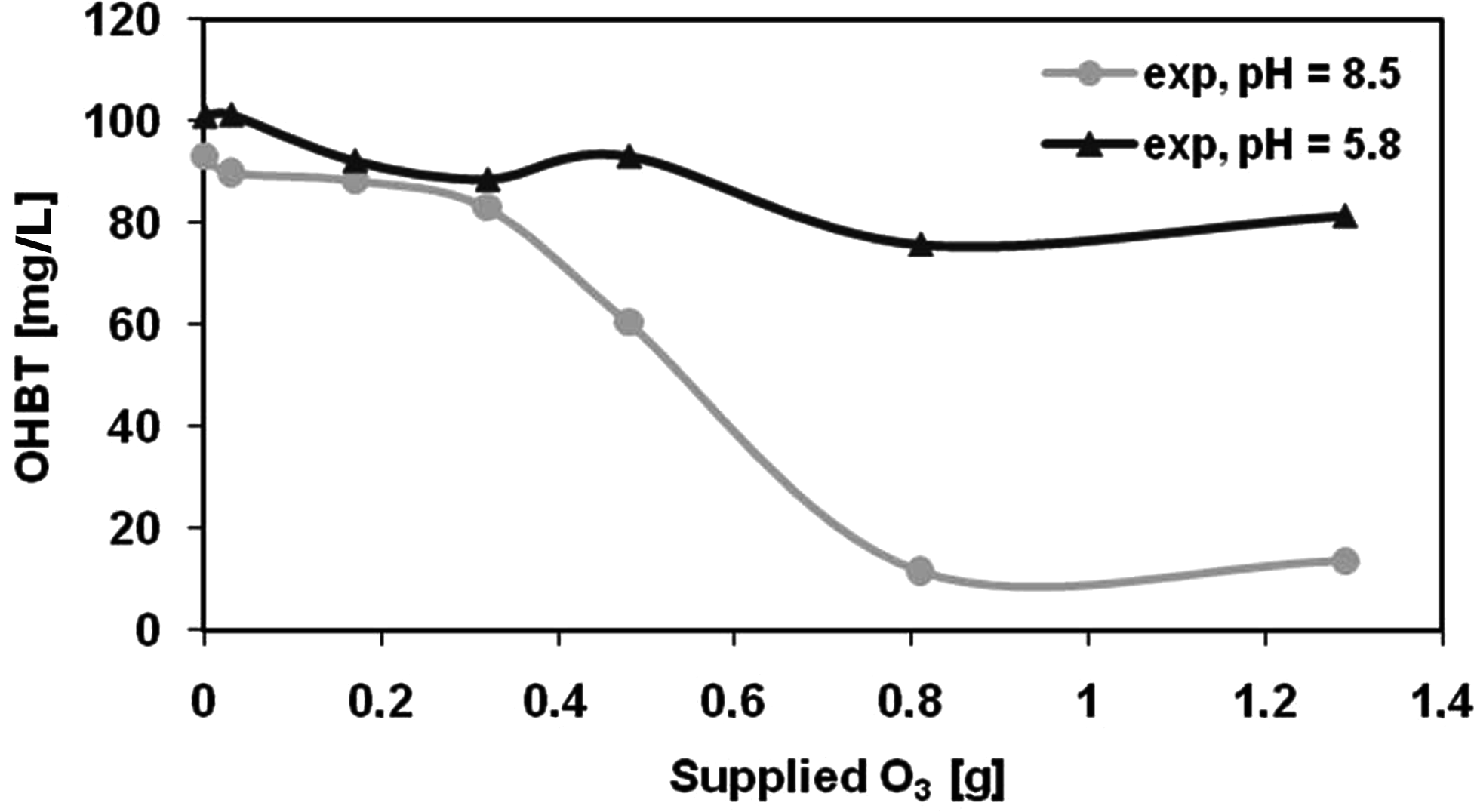
OHBT removal during ozonation of model wastewater samples at different pH. OHBT, 2-hydroxybenzothiazole.
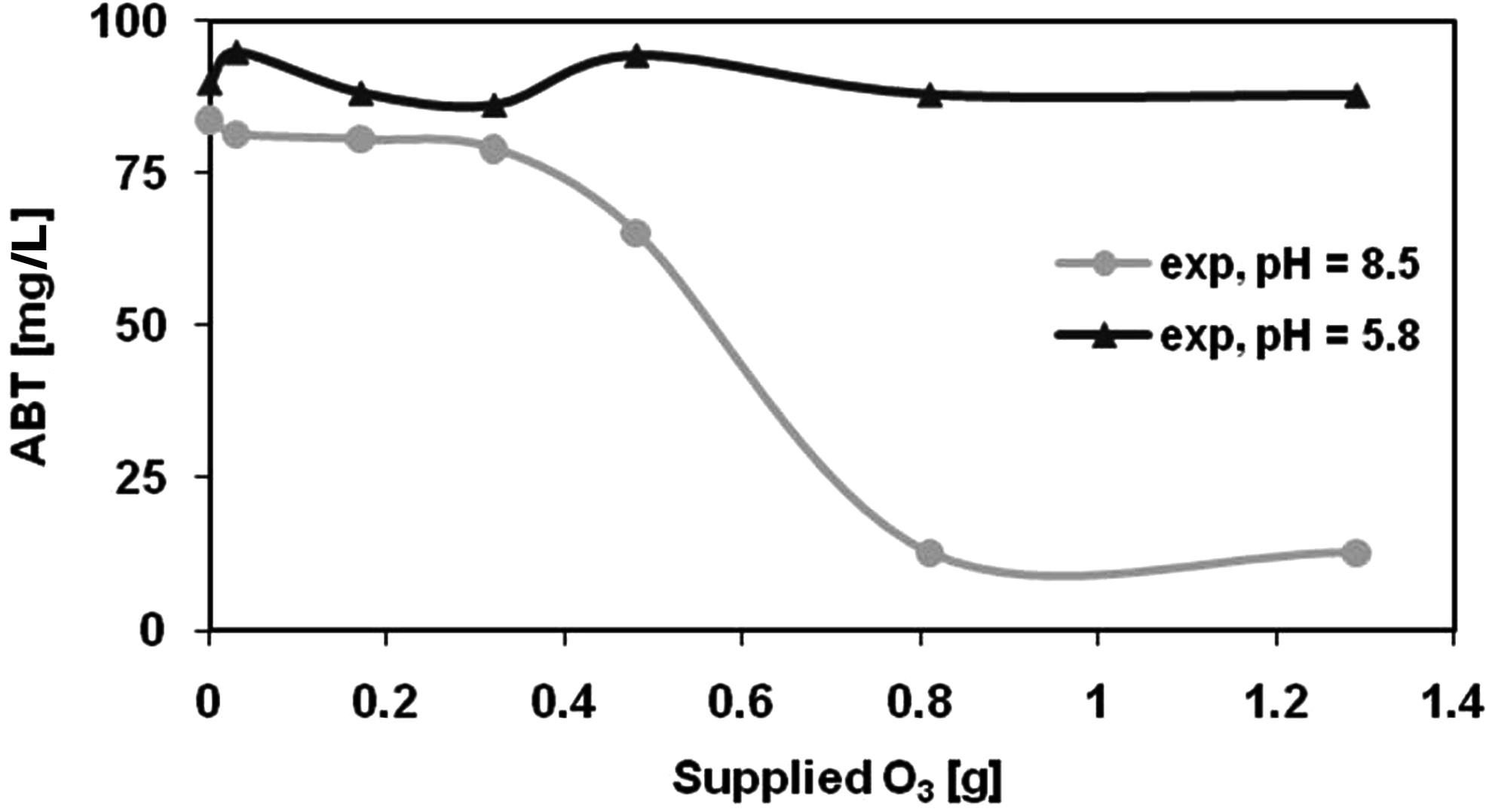
ABT removal during ozonation of model wastewater samples at different pH. ABT, 2-aminobenzothiazole.
Similar to the MBT and BT removals, significantly higher conversions of OHBT and ABT during the ozonation performed at higher pH values were also observed. Similar to BT (removal efficiency 85.9%), the removal efficiencies of 87.5% and 84.9% were achieved for OHBT and ABT, respectively, after 60 min (ozone transferred 0.8 g) of ozonation at pH=8.5. On the other hand, insignificant removals of OHBT and ABT are shown in Figs. 4 and 5 during the ozonation carried out at pH=5.8.
Dependencies of MBT, BT, and BTS concentrations on the amount of ozone supplied during the ozonation at pH=8.5 are plotted in Fig. 6.
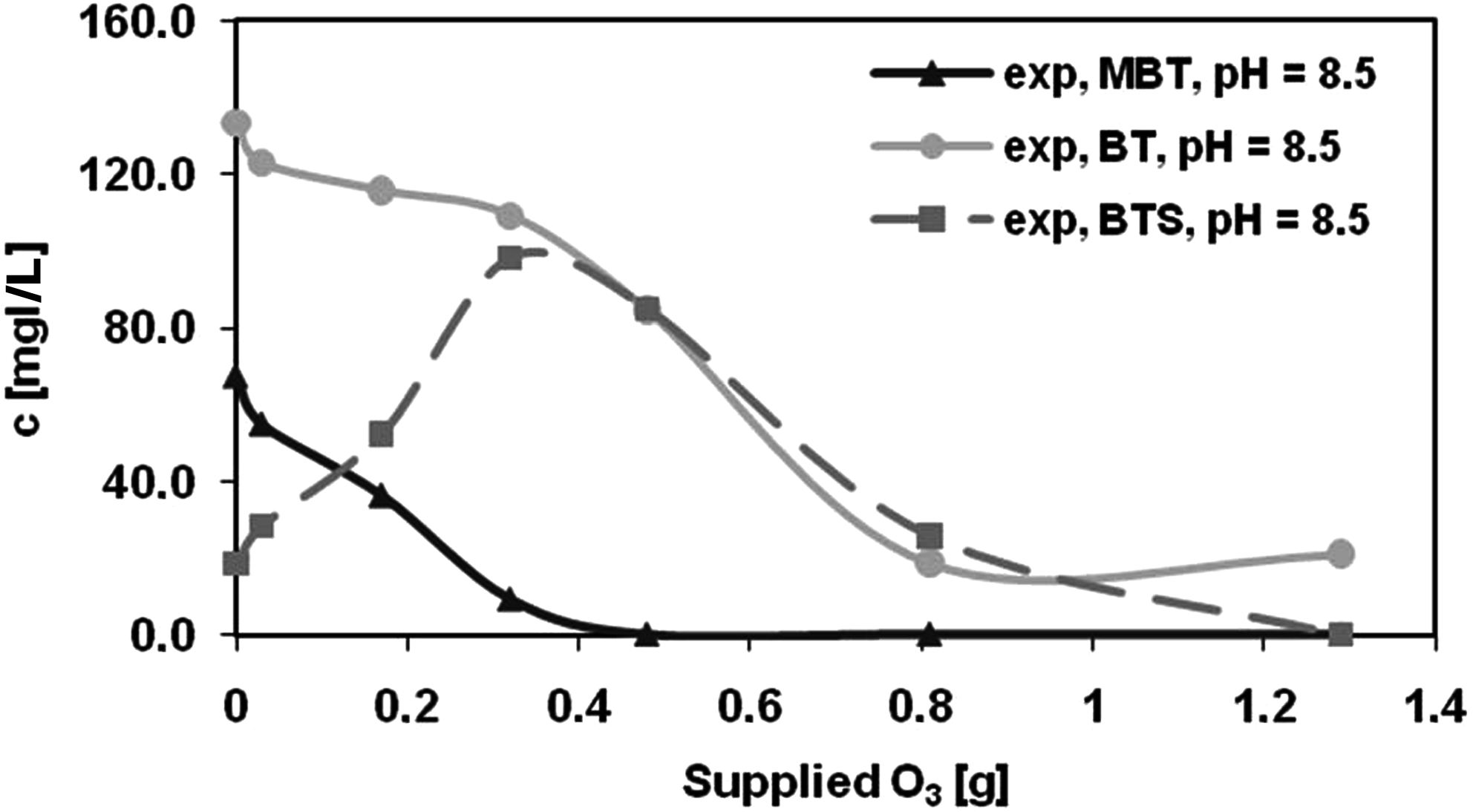
MBT, BT, and BTS dependencies on the ozone dose during the ozonation of model wastewater samples at pH=8.5. BTS, benzothiazole-2-sulfonate.
It is obvious from Fig. 6 that MBT shows the highest removal rate during the first period of ozonation. The concentration of BTS increases as the concentration of MBT decreases. After the removal of MBT, the decrease of the BTS concentration occurred. At the same time, the removal rate of BT significantly increased. Very similar trends of the BT, OHBT, and ABT removals at pH=8.5 follow from the comparison of the dependencies on Figs. 4–6. In other words, the removals of BT, OHBT, and ABT occurred simultaneously. The removal pathway observed in this work differs from that published by Fiehn et al. (1998) during ozonation of single MBT in pure water, where OHBT was suggested as a possible intermediate between BT and benzothiazole-2-sulfite (BTSO2) showing a slower reaction than that of the BT destruction but a faster one than that of the BTSO2 ozonation.
Dependencies of MBT, BT, and BTS on the amount of ozone supplied during the ozonation at pH=5.8 are plotted in Fig. 7. Significantly lower removal or conversion rates of MBT and BT are obvious when compared with Fig. 5 (pH=8.5). Accumulation of BTS during the MBT removal or conversion follows also from the results of this ozonation.
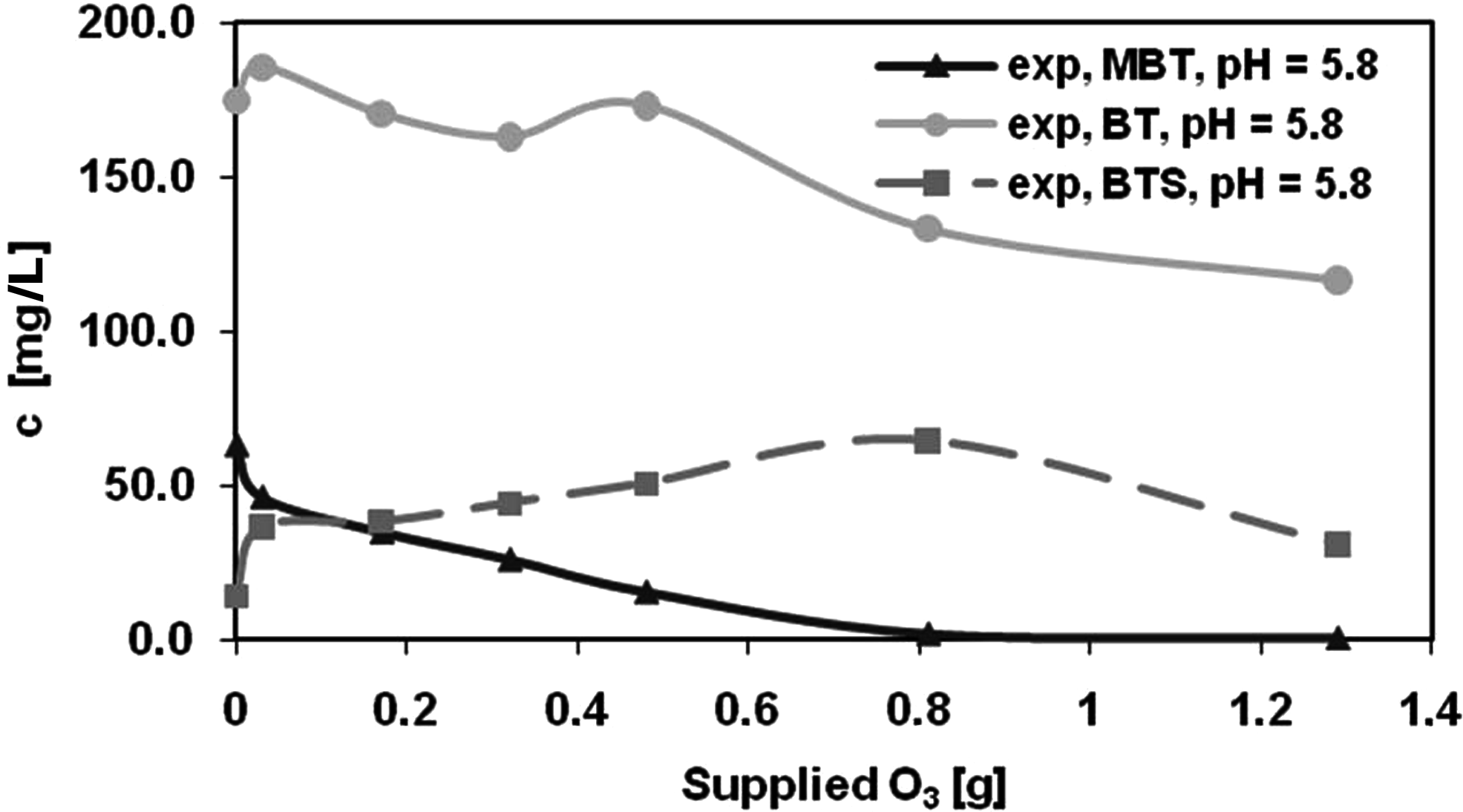
MBT, BT, and BTS concentration dependencies on the transferred ozone during the ozonation of model wastewater samples at pH=5.8.
Dependencies of the sum of all BT derivatives on the transferred ozone are presented in Fig. 8.
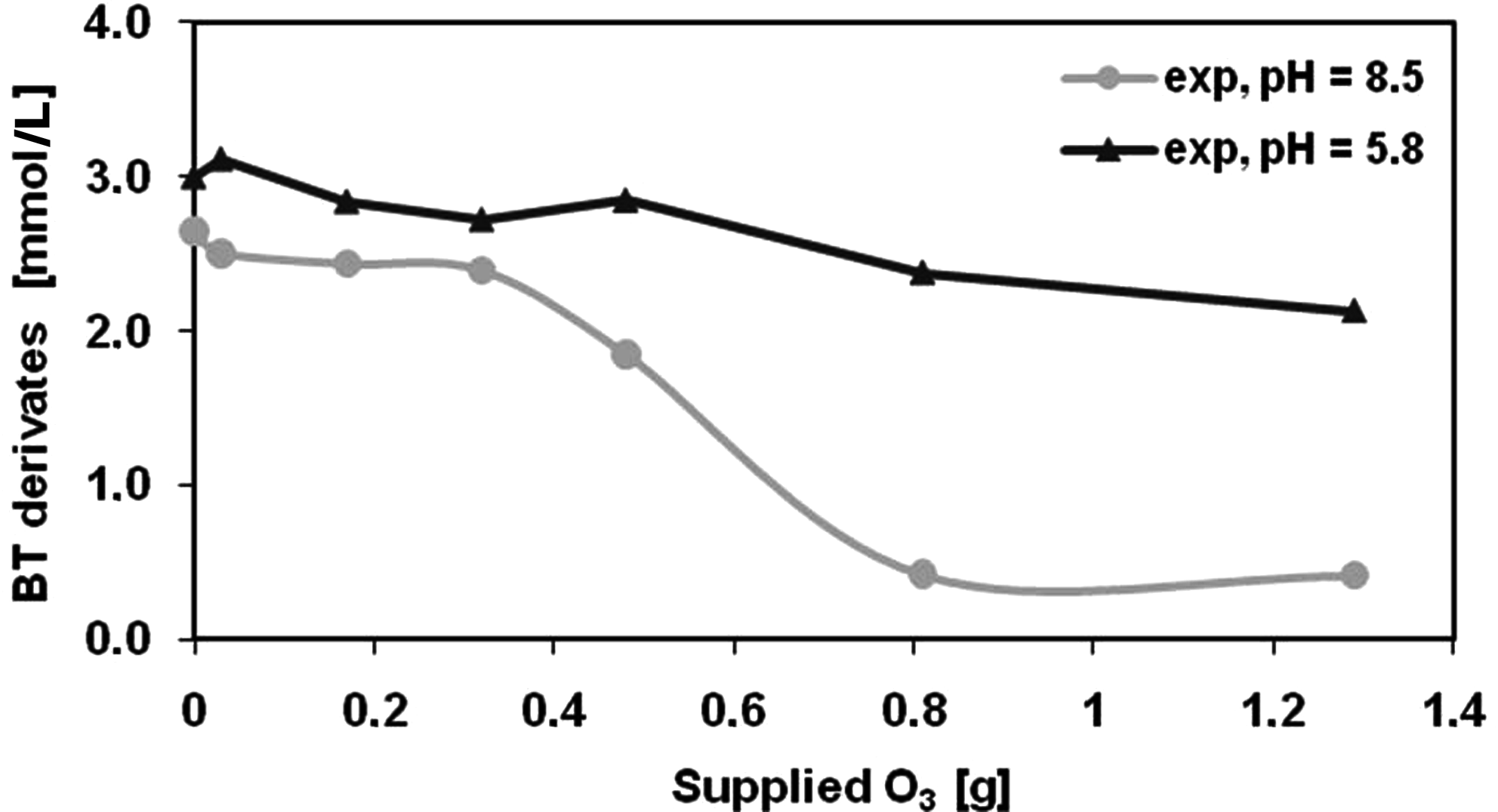
Dependencies of the sum of concentrations of all BT derivatives on the transferred ozone during the ozonation of model wastewater samples at different pH.
This figure confirms the influence of higher pH values on the removal of BT derivatives. During the first period of ozonation (up to the transferred ozone about 0.3 g), mainly transformation of MBT occurs followed by the accumulation of BTS. For the next period of ozonation (up to the transferred ozone about 0.8 g), the removal rate of BT derivatives significantly increases, particularly at higher pH values with the total removal efficiency of 84% of all BT derivatives. For comparison, removal efficiency of only 20.8% of BT derivatives was observed during the ozonation at pH=5.8.
Conclusions
The results of this work indicate the feasibility of ozonation pretreatment of the investigated wastewater prior to the biological treatment stage.
Higher removal rates of MBT and BT with ozone were observed at higher pH values. The conversion of MBT reached 100% after transferred ozone of 0.5 g at pH=8.5 and after transferred ozone of 0.8 g during the ozonation carried out at pH=5.8. The conversion of BT was lower in comparison to that of MBT and achieved approximately 80% after transferred ozone of 0.8 g at pH=8.5 and only about 20% after the same time of ozonation performed at pH=5.8. The first-order kinetics provides the best description of BT and MBT decline by ozonation.
The highest removal rate of MBT was observed during the first period of the ozonation process. The concentration of BTS increased as the concentration of MBT decreased. After the removal of MBT, the decline of BTS concentration occurred. At the same time, the removal rate of BT significantly increased. The removals of BT, OHBT, and ABT occurred simultaneously during this period of experiments.
Significantly higher conversions of OHBT and ABT were observed also during the ozonation performed at higher pH values. The removal efficiencies of 87.5% and 84.9% were achieved for OHBT and ABT, respectively, after 60 min (transferred ozone 0.8 g) of the ozonation at pH=8.5.
Footnotes
Acknowledgments
This research was conducted as a part of the bilateral Slovak-Slovene Project SK-SI-0019-10 and Project APVV-0168-07. The financial support is greatly appreciated. The analysis was performed in cooperation with Biont, Inc., in Bratislava.
Author Disclosure Statement
The authors declare that no competing financial interests exist.