







Abstract
Abstract
Dechlorination of pentachlorophenol (PCP) by zero-valent iron (Fe0) and palladium (Pd)/iron (Fe) bimetallic nanoparticles (NPs) immobilized in nylon 6,6/PEG membranes was investigated at room temperature. Pd/Fe bimetallic NPs were synthesized by two different approaches, sequential and simultaneous reduction of trivalent iron (Fe3+) and divalent palladium (Pd2+) ions. Pd/Fe NPs prepared by simultaneous reduction showed a much smaller particle size, only 30 nm in average, and significantly higher reactivity toward PCP dechlorination than the other two materials. Almost 85% PCP removal within 45 min was qualified in terms of both phenol emergence and chlorine ion release. In contrast, dechlorination efficiency by Pd/Fe NPs immobilized by sequential reduction was insignificant. Iron oxides between Fe0 and Pd0 during the sequential reduction process impeded their effective contact, and enhanced PCP sorption on membranes. Spectra of X-ray photoelectron spectroscopy confirmed the existence of both Fe0 and iron oxide on the surface of these three NPs. This investigation has revealed that Pd/Fe NPs immobilized by simultaneous reduction may serve as a suitable medium for in situ remediation, even though it is difficult to avoid the formation of iron oxides.
Introduction
Nanoscale zero-valent iron (nZVI) is a cost-effective and environmentally-friendly material for dechlorinating chlorinated organic contaminants at ambient temperature. nZVI has been used as a readily available medium for both permeable reactive barriers and in situ injection (Kim and Carraway, 2000; Choe et al., 2001; Cheng et al., 2010). In addition, coating a second noble metal (bimetallic system) can greatly promote the reactivity of nZVI (Meyer et al., 2004; Wei et al., 2006). However, without surface protection, the freshly synthesized iron or bimetallic nanoparticles (NPs) tend to agglomerate, resulting in a decrease in reactivity. To overcome this problem, iron NPs have been immobilized onto a solid matrix such as activated carbon (Shareef and Zaman, 2010), chitosan and silica (Zhu et al., 2006), and microfiltration membranes (Parshetti and Doong, 2009). A porous microfiltration membrane is an ideal support, because the open structures and large pore sizes are conducive to contaminant diffusion (Xu and Bhattacharyya, 2007; Parshetti and Doong, 2009). Wang et al. (2008) reported that palladium (Pd)/iron (Fe) NPs immobilized in a polyacrylic acid/poly-PVDF membrane showed high reactivity toward trichloroacetic acid (TCAA) degradation. Parshetti and Doong (2009) noted a complete dechlorination of trichloroethylene by nickel (Ni)/Fe NPs immobilized in PEG/PVDF and PEG/nylon 6,6 membranes.
Bimetallic NPs immobilized in membranes can be prepared by two different procedures based on discrepant reduction potentials between iron and the second metal. The reduction potentials of Ni and Fe are so close that an additional reducing agent may be required to reduce divalent nickel (Ni2+) ions to Ni (Xu and Bhattacharyya, 2005). Membrane-immobilized Ni/Fe NPs were synthesized by immersing the membrane in a coating solution containing Fe2+ and Ni2+, followed by sodium borohydride (NaBH4) reduction (Meyer et al., 2004; Wu and Ritchie, 2006). In contrast, the big potential gap makes it possible to directly reduce Pd2+ to zero-valent palladium (Pd0) by the freshly synthesized Fe0 (Wang et al., 2008; Xu and Bhattacharyya, 2008). In real application, it is difficult to maintain a strictly anoxic condition to avoid Fe0 corrosion. A recent study showed that as-prepared, Fe0 NPs immobilized in a nylon 6,6 membrane in deoxygenated water had a typical core/shell structure with iron oxides coated in the Fe0 core (Tong et al., 2011). Nevertheless, the reactivity of Pd/Fe NPs immobilized in the membrane by coating Pd2+ onto the as-prepared core/shell Fe0 NPs has not been evaluated, and a comparison of the characteristics and reactivity of Pd/Fe NPs immobilized in membrane by sequential and simultaneous reduction is lacking.
In the present study, Pd/Fe NPs immobilized in the PEG/nylon 6,6 membranes were synthesized by sequential and simultaneous reduction of trivalent iron (Fe3+) and Pd2+ ions. The freshly prepared and reacted samples were characterized by scanning electron microscopy (SEM), Fourier-transform infrared, X-ray diffraction (XRD), and X-ray photoelectron spectroscopy (XPS). The performances of these two Pd/Fe NPs immobilized in membrane were evaluated in dechlorinating PCP in solution. The main objective was to compare the characteristics and reactivity of Pd/Fe NPs immobilized in a membrane prepared by sequential and simultaneous reduction of Fe3+ and Pd2+.
Experimental
Materials and chemicals
PCP (>98.5%) was purchased from Shanghai General Reagent Factory. All other less-chlorinated phenols were purchased from Sigma-Aldrich. Phenol (>99.5%) was from Tianjin Reagent Factory. Ferric sulfate [Fe2(SO4)3] was obtained from Sinopharm Chemical Reagent Co., and palladium acetate (47.4% [w/w] Pd) was from Shanxi Kaida Chemical Reagent Co. PEG was supplied by Tianjin Kermel Chemical Reagent Development Center. Nylon 6,6 microfiltration membranes (0.45-μm pore size, 22-mm diameter) were obtained from Shanghai Xinya Purification Device Co. All other chemicals were above analytical grade. Deionized water (18.2 MΩ·cm) was deoxygenated by purging nitrogen gas (N2; 99.98%) before use.
Synthesis of Fe0 and Pd/Fe NPs immobilized in PEG/nylon 6,6 membranes
The aqueous coating solution was prepared by dissolving 0.19 M Fe2(SO4)3 and 2 mM PEG. Fe2(SO4)3 rather than ferrous sulfate (FeSO4) was used as the precursor of iron NPs, because the coexistence of Pd2+ and Fe2+ leads to the precipitation of Pd particles. PEG was used as the cross-linking agent. The solution pH was adjusted to 2 by 0.1 M sulfuric acid (H2SO4) to keep Fe3+ free in solution (Liang et al., 2010). After immersion in 200 mL of coating solution for 10 min, the nylon 6,6 membranes were heated at 110°C for 3 h for PEG grafting. The Fe3+ ions grafted in the PEG/nylon 6,6 membranes were reduced to Fe0 NPs by soaking PEG/nylon 6,6 composite membranes in 0.2 M NaBH4 solution for 5 min, and then washed with ethanol three times. The freshly prepared Fe0 NPs were further immersed in 20 mL of acetone solution containing 0.028 mM palladium acetate (1% Pd in Pd/Fe) for 20 min. The color change of the acetone solution suggests the reduction of Pd2+ to Pd0 by Fe0. For the simultaneous reduction, 2.0 mM palladium acetate was dissolved in a small amount of concentrated H2SO4 and then mixed with the coating solution. All the other procedures needed to conduct the simultaneous reduction are the same as the synthesis of membrane-immobilized Fe0 NPs (Fig. 1).
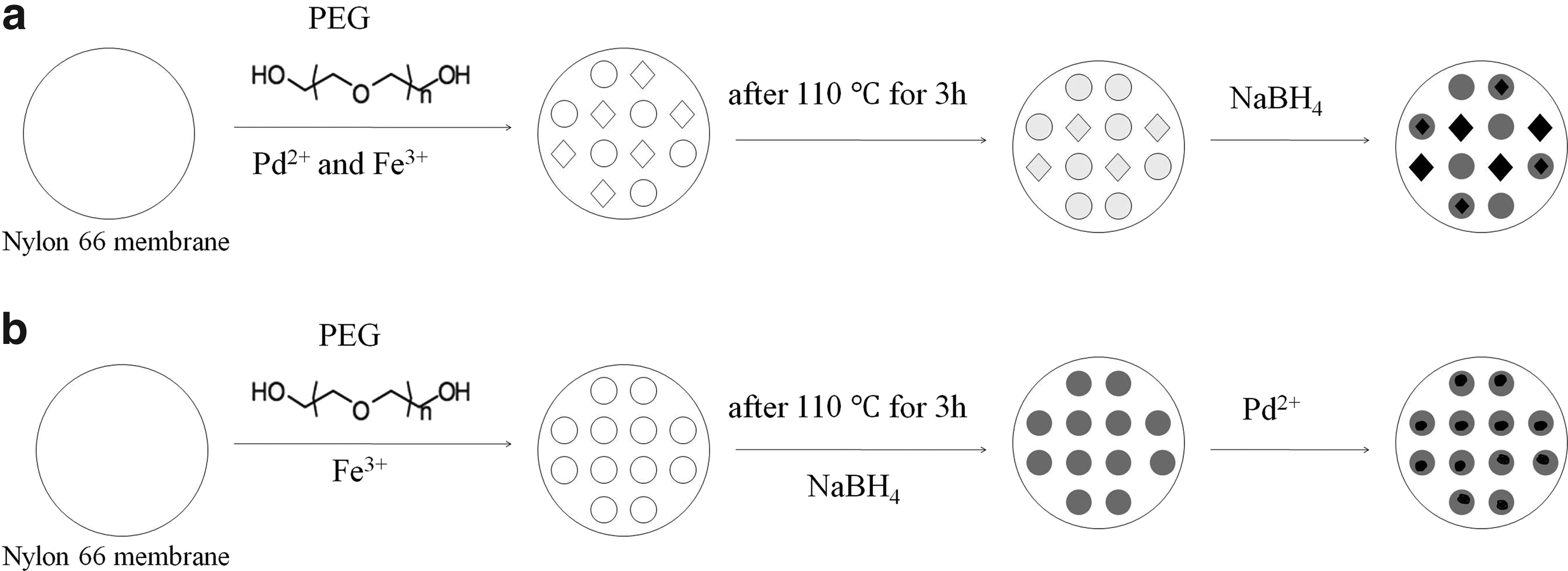
Schematic illustration of immobilization of Pd/Fe bimetallic nanoparticles (NPs) in nylon 6,6 membrane by
Dechlorination of PCP in aqueous solution
PCP was dechlorinated in 30-mL serum glass vials. Twenty milliliters of PCP solution (15 mg/L) was added into the vial containing three pieces of nylon 6,6 membranes with freshly prepared Fe0 or Pd/Fe NPs. Solution pH was not adjusted during the treatment. After purging the headspace with pure N2 for 20 s, the vials were immediately sealed with rubber septa and incubated in an orbital shaker (120 rpm, 28°C±2°C; SHA-C reciprocating water bath thermostatic oscillator, Guohua Electric Appliance Co.). At predetermined time intervals, aqueous samples were measured by HPLC after filtration through 0.45-μm filtration membrane. PCP and other byproducts adsorbed in the membrane were extracted by ethanol (pH 10) for 20 min.
Analysis and characterization
The quantity of PCP and its byproducts was analyzed by an Agilent 1200 HPLC equipped with a G-1314B UV-Vis detector and a Varian C-18 reverse-phase chromatographic column. The mobile phase for PCP and tetrachlorophenol (TeCP) determination consisted of a mixture of 0.5% acetic buffer and methanol (v/v=20:80), and 45:55 (v/v) for phenol determination. The flow rate was 1.0 mL/min. The detection wavelength for PCP and all other less-chlorinated phenols was 305 nm, and 275 nm for phenol. Chloride ion was detected by a DX-100 ion chromatograph (Dionex). Calibration curves were drawn for quantitative analysis. The coefficients of the fitted line were >0.990.
To further understand the degradation mechanism, the pristine nylon 6,6 membrane and the membrane containing NPs were characterized. Before characterization, the freshly prepared nylon 6,6 membranes were dried under vacuum and stored in serum bottles full of nitrogen. The morphologies of the membranes were characterized by SEM (JSM-6700F). The samples were sprayed with a thin layer of gold, and the acceleration electron voltage of 5 kV was applied. The crystalline-phase composition of the immobilized NPs was characterized on a PANalytical B.V. X'Pert MPD PRO X-ray diffractometer with Ni-filtered Cu Kα radiation. XPS surface was analyzed on a VG Multilab 2000 analysis system using monochromatic Mg Kα radiation.
Results and Discussion
Characterization
Figure 2 shows the SEM images of membrane-immobilized NPs. The pristine nylon 6,6 membrane has a highly porous microstructure (Fig. 2a). Fe0 NPs are densely distributed in the membrane and have an average particle size of 120 nm (Fig. 2b). Figure 2c shows a nonuniform distribution of Pd/Fe NPs immobilized by sequential reduction with sizes ranging 20–120 nm. Agglomeration of the NPs was not significant. The immobilized Pd/Fe NPs prepared by simultaneous reduction (Fig. 2d) demonstrates a visually smaller particle size of 30–50 nm and a dense and uniform particle distribution. This result may partly due to the minor difference of composition of coating solution, because some inorganic salts could a pose positive effect in dispersing the metal precursor (Zhang et al., 2010). After 60 min of reaction, Figure 2e suggests that the membrane surface was covered with a film, which may composed of iron oxides (Noubactep, 2008). The XRD spectra of the membranes did not exhibit any featured peak for Fe0 (2θ=45°, 65°) or Pd0 (2θ=40.1°, 46.7°), indicating that the content of crystalline iron was low. Since the iron oxides ubiquitously formed on the surface of nZVI, it is difficult to distinguish any significant peak for Fe0 or Pd0 (Tong et al., 2011).
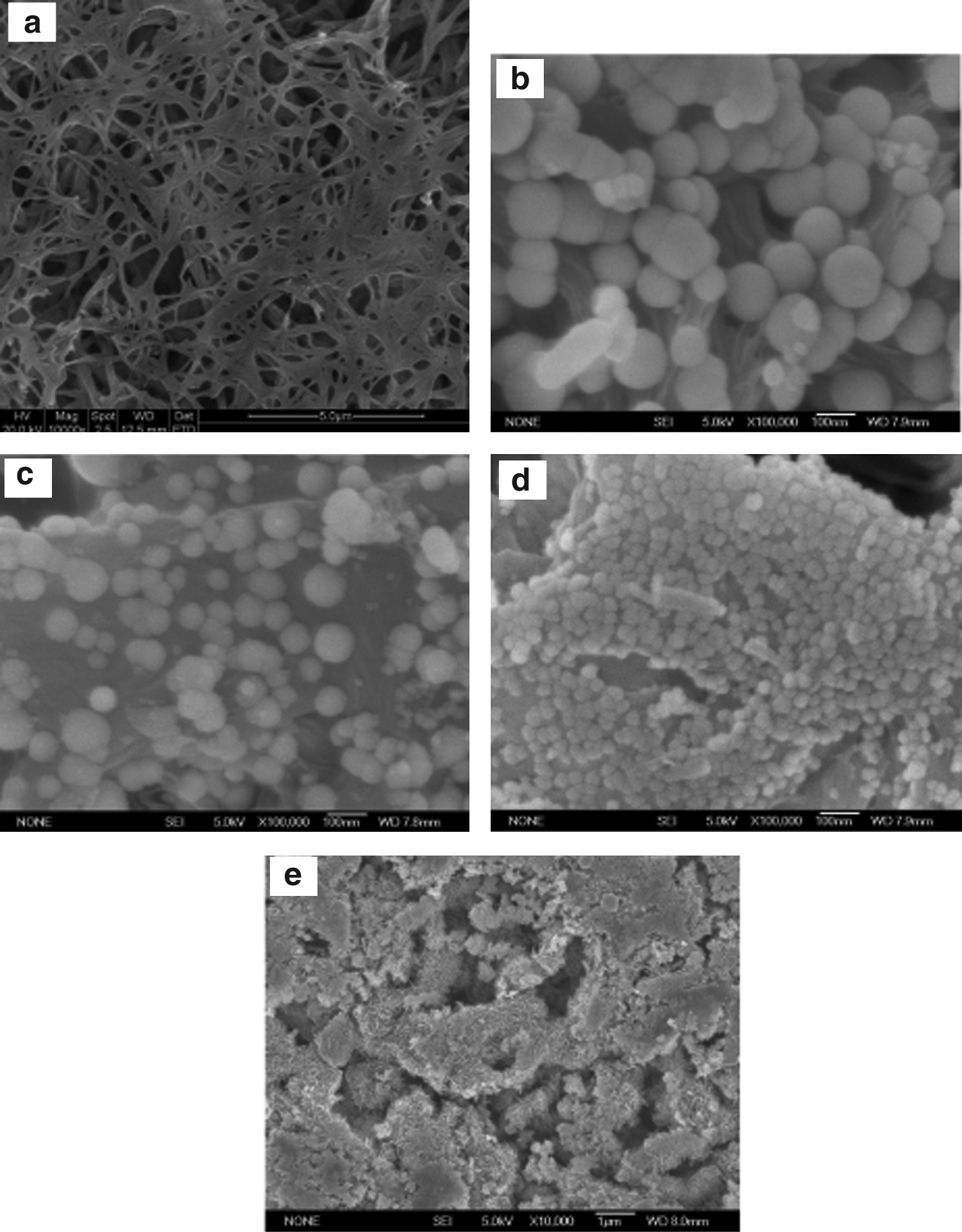
Scanning electron microscopy images of
The XPS spectra of different immobilized Pd/Fe NPs are depicted to analyze the surface elemental content and valent state. Figure 3a reveals the existence of Pd0 in the Pd/Fe NPs immobilized by sequential reduction, because two peaks with binding energies of Pd3p3/2=340.6 and Pd3p5/2=335.9 eV correspond to Pd0 (Doong and Lai, 2005; Kidambi and Bruening, 2005). Pd peaks were not observed for Pd/Fe NPs immobilized by simultaneous reduction, probably because of the low content of Pd coating the surface of the membrane and the oxide film formed during preparation (Muftikian et al., 1996; Xu and Bhattacharyya, 2007). The presence of iron oxides is reflected in Fig. 3b. Two characteristic peaks at 723 and 710 eV indicate that the membranes may be covered by iron oxides consisting of Fe2+ and Fe3+ (Doong et al., 2003; Doong and Lai, 2005; Yamashita and Hayes, 2008). Moreover, the high atomic percentage of O1s for the freshly prepared samples also accounts for the existence of iron oxides (Table 1). These iron oxides may be formed during preparation, because nZVI can be easily oxidized upon exposure to air or water (Zhang et al., 2010). Fe0 can also be observed at peaks of Fe2p1/2=720.5 and 706.7 eV (Muftikian et al., 1996). However, the peak intensity of 720.5 and 706.7 eV for Pd/Fe NPs immobilized by simultaneous reduction is higher than that of the Pd/Fe NPs immobilized by sequential reduction, suggesting the presence of more Fe0 NPs.
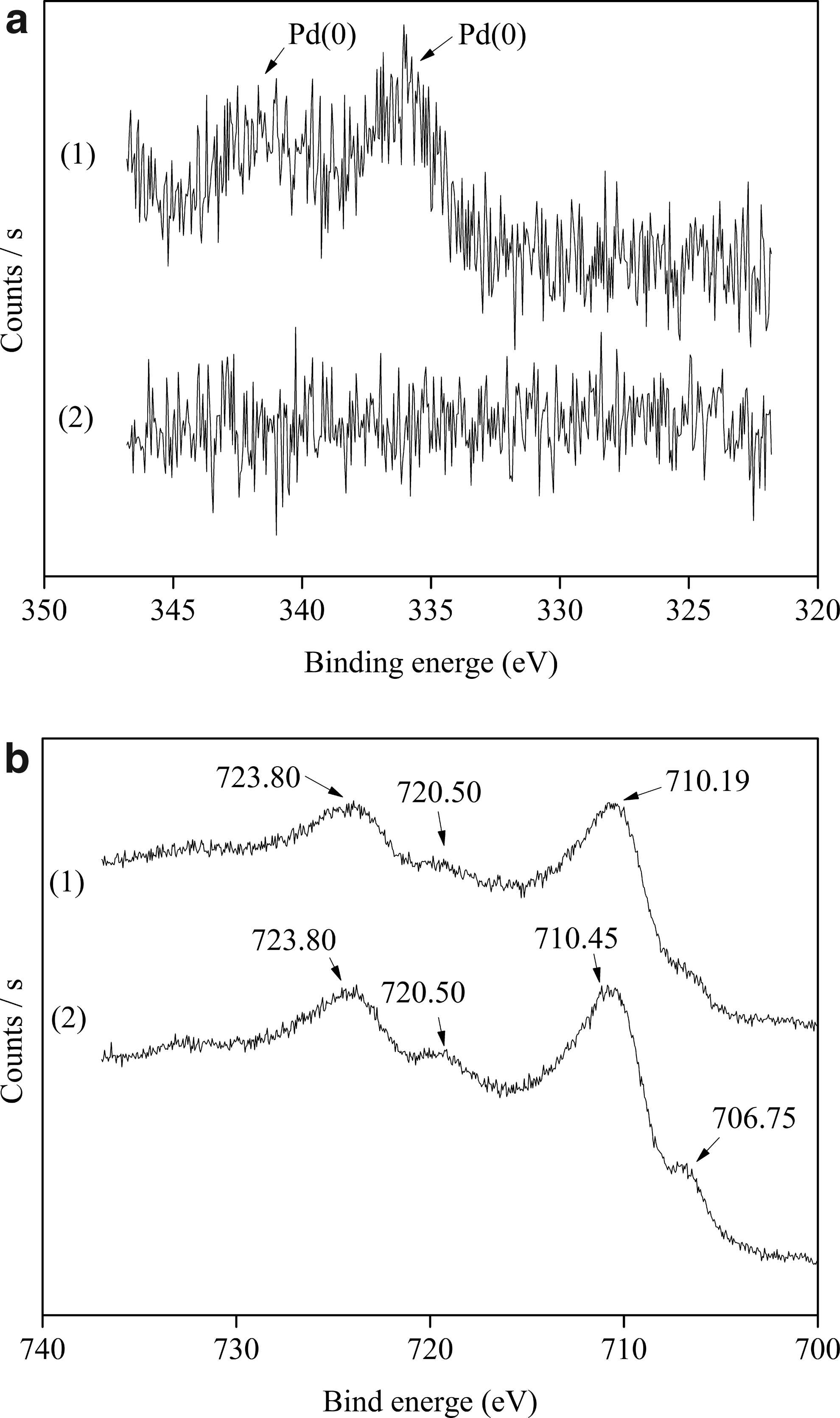
X-ray photoelectron spectroscopy patterns of
Pd/Fe NPs immobilized in nylon 6,6 membrane prepared by sequential reduction of Fe3+ and Pd2+.
Pd/Fe NPs immobilized in nylon 6,6 membrane prepared by simultaneous reduction of Fe3+ and Pd2+.
NPs, nanoparticles.
Performance comparison in PCP dechlorination
The dechlorination of PCP using immobilized Fe0 NPs was first investigated. Figure 4a reveals that only 20% of PCP was dechlorinated to phenol. Without Pd loading, hydrodechlorination process for chlorinated aromatics is difficult to proceed on a bare Fe0 surface (Kim and Carraway, 2000; Cheng et al., 2010). Moreover, PCP fraction in aqueous solution decreased quickly in the first 30 min due to the adsorption onto the membrane (Fig. 4b). The efficiency herein is much lower than that for nitrobenzene reduction by Fe0 NPs immobilized in a membrane (Tong et al., 2011).
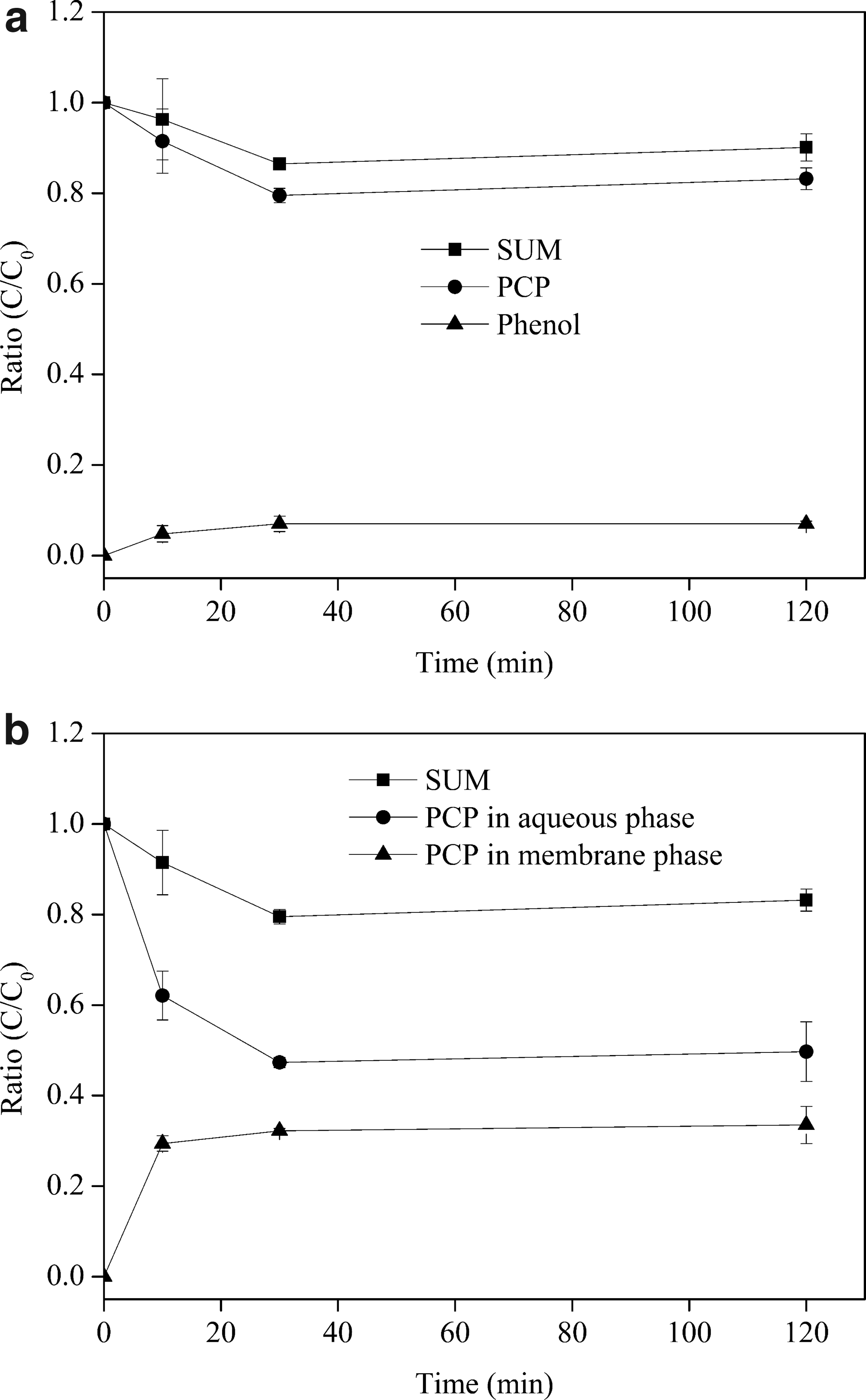
After deposition of Pd onto the immobilized Fe0 NPs, the performance in PCP dechlorination was not enhanced (Fig. 5a). Kim and Carraway (2000) also reported that PCP dechlorination by Pd/Fe prepared by sequential reduction was much slower than that of bare iron. Nonetheless, compared with the immobilized Fe0 NPs, more PCP was adsorbed on the membrane (Fig. 5b). The difference in PCP adsorption may be because of the different extent of iron corrosion. The surface of iron oxides contains binding sites for organic compound adsorption (Gu et al., 1994; Burris et al., 1995; Johnson et al., 1998). nZVI particles with Pd deposition were exposed for a longer time before use than that of immobilized Fe0 NPs, so more iron oxides may be formed during this process. This routine for Pd/Fe NPs preparation was widely used (Xu and Bhattacharyya, 2007; Wang et al., 2008; Xu and Bhattacharyya, 2008), and high dechlorination efficiency for TCAA and polychlorinated biphenyls were reported. Since the synthesis was not conducted under strict anoxic conditions in this study, the possible explanation of low dechlorination rate may involve competitive sorption of PCP on iron corrosion and coverage of iron oxide, which could cause a decrease in Pd deposition.
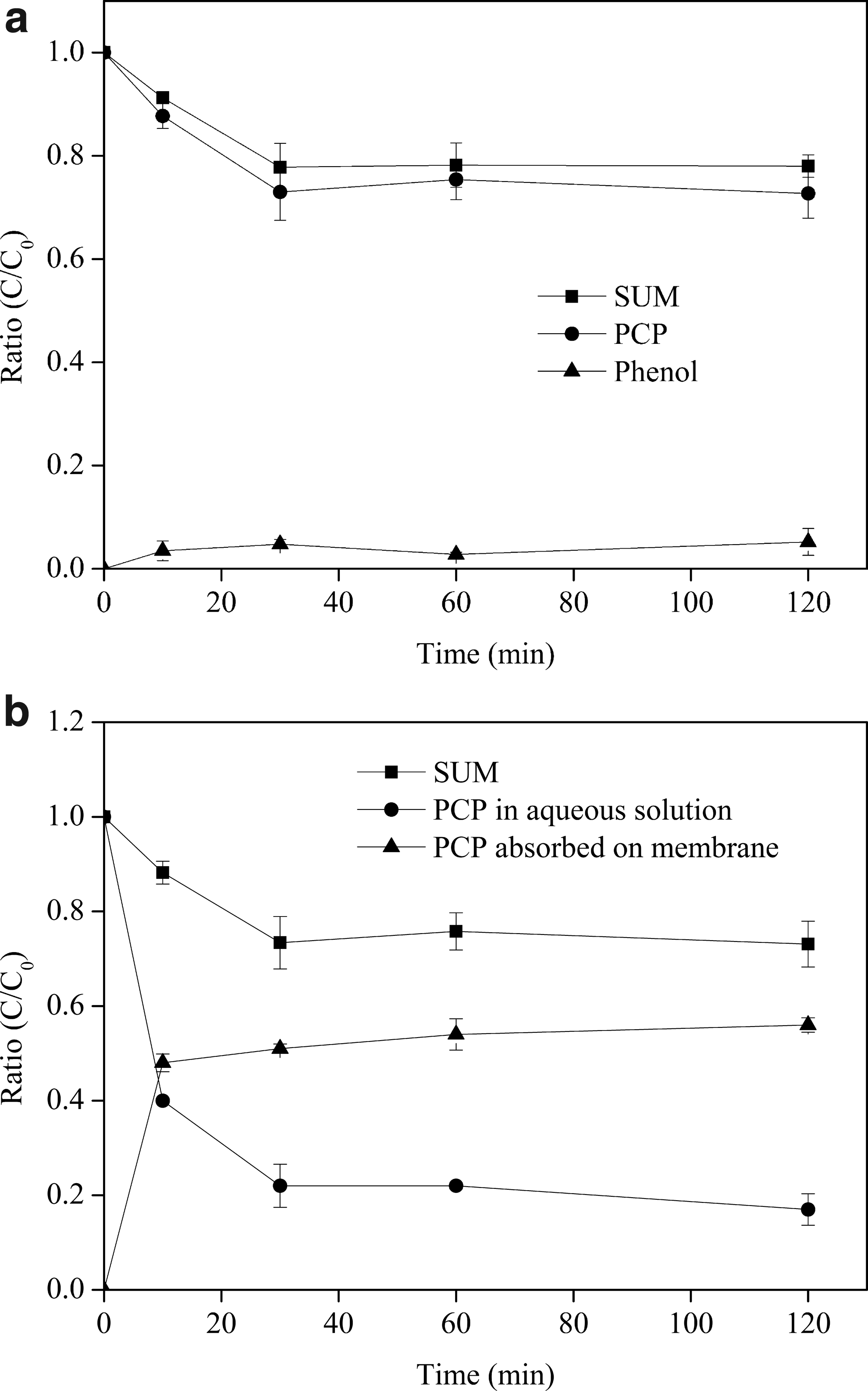
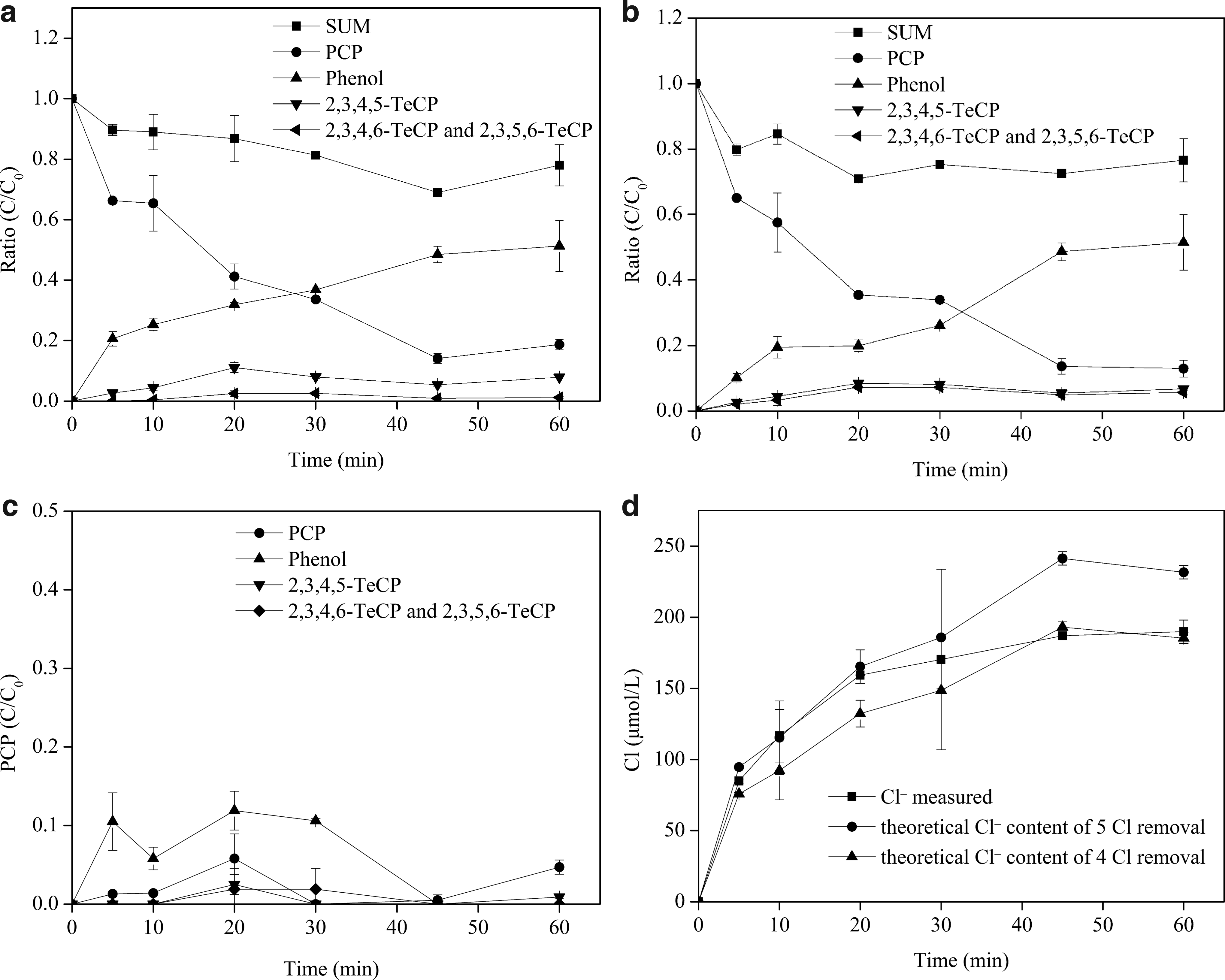
Figure 6 shows the dechlorination profile of PCP by Pd/Fe NPs immobilized in membrane by simultaneous reduction of Fe3+ and Pd2+ ions. The carbon mass balance was maintained at about 80%, suggesting a nearly complete recovery of dechlorination products. PCP was dechlorinated by 85% within 60 min, and 51.4% were converted to phenol and 5.6% to 2,3,4,6-TeCP and 2,3,5,6-TeCP. The concentrations of 2,3,4,6-TeCP and 2,3,5,6-TeCP reached a maximum at 20 min and then decreased, but the concentration of phenol increased in the whole process. A stepwise dechlorination can be deduced for PCP degradation. Moreover, PCP and its dechlorination products were mainly present in the aqueous solution (Fig. 6b, c). This is probably because of the quick dechlorination of PCP with the production of phenol, which tends to partition in aqueous solution. Figure 6d shows the concentration of chloride generated in the aqueous solution and the theoretical concentration with 4 and 5 chlorine release per degraded molecule of PCP (each molecule having 5 chlorine atoms). The number of chloride ions released during PCP dechlorination was found to be close to five per degraded molecule of PCP after 30 min of reaction, indicating a nearly complete dechlorination of PCP to phenol and also demonstrating that dechlorination is the major reaction mechanism. The smaller particle size of NPs provides larger reactive surfaces. Further, for preparation of immobilized Pd/Fe NPs by simultaneous reduction, excessive NaBH4 was used, ensuring an extremely anoxic condition. As a consequence, the oxidative corrosion of nZVI was suppressed. Both are accountable for its higher efficiency for PCP dechlorination.
Conclusions
This study compared the characteristics and reactivity of Pd/Fe NPs immobilized in a membrane prepared by different approaches. The main conclusions are drawn as follows:
(1) Pd/Fe NPs immobilized in membranes prepared by simultaneous reduction had much smaller particle sizes and higher Fe0 content than that prepared by sequential reduction. Both Fe0 and iron oxide existed in Pd/Fe NPs, and the surface of NPs was mainly covered by iron oxides.
(2) Both immobilized Fe0 NPs and immobilized Pd/Fe NPs prepared by sequential reduction showed low reactivity toward PCP dechlorination, which is due to the production of iron oxide between Fe0 and Pd0.
(3) Pd/Fe NPs immobilized by simultaneous reduction of Fe3+ and Pd2+ reached high efficiency for PCP dechlorination. Near-complete dechlorination of PCP to phenol was attained. Excessive use of NaBH4 during preparation ensured an anoxic condition and a complete reduction of Pd2+ to Pd0.
Footnotes
Acknowledgments
This work was supported by the Natural Science Foundation of China (NSFC, no. 40801114) and the Open Fund of State Key Lab of Biogeology and Environmental Geology, China University of Geosciences.
Author Disclosure Statement
No competing financial interests exist.