







Abstract
Abstract
Polyaminated crosslinked Ni(II)-imprinted chitosan derivative [P-C-CTS (Ni)] beads were first synthesized by molecular imprinting, crosslink reactions, and polyamination methods. Structure, size, and shape, and doping level of the adsorbents were analyzed in detail by X-ray photoelectron spectroscopy data, scanning electron microscope images, and Fourier transform infrared spectra. Study of Ni(II) adsorption on the prepared P-C-CTS (Ni) beads gave evidence that chemisorption was the main sorption mechanism and adsorption kinetics were fitted with a pseudo-second-order model. The adsorption capacity of 2.746 mmol/g for Ni(II), which was 2.6 times higher compared with unpolyaminated beads, was achieved by using the prepared P-C-CTS (Ni) beads. According to the results of Ni(II) adsorption quantities with different Ni(II)/citrate ratios (1:2, 1:1, 2:1) and pH (2.0, 3.0, 4.0, 5.0, 6.0), the effects of the pH and citrate ligands on Ni(II) adsorption quantities and the micromechanism of adsorption were discussed. The adsorption capability of the prepared P-C-CTS (Ni) beads was stable up to eight adsorption–desorption–regeneration cycles.
Introduction
Recently, chitin derivatives, as a kind of natural biopolymer adsorbents, have been received with considerable attention due to their advantages of low operating cost, high adsorption efficiency, easy regeneration, wide availability, and minimization of the volume of chemicals and sludge to be disposed off during the metal adsorption process (Gerente et al., 2007; Kolodynska, 2012). In addition, another attractive feature of chitin derivatives is that they possess a number of different functional groups, such as hydroxyls and amines, to which metal ions can bind either by chemical or by physical adsorption (Deans and Dixon, 1992). Chitosan (CTS), one of the most common derivatives of natural chitin biopolymers, has been employed for a broad variety of industrial and biomedical applications, especially as a chelating agent (Guibal et al., 1998). However, CTS cannot stand long use due to its poor mechanical stability and its biodegradability when used as adsorbents. Various physical and chemical modifications have been extensively studied to improve the chemical stability of bioadsorbents in acid media and in its resistance to biochemical and microbiological degradation (Wan Ngah et al., 2002). On the other hand, Yoshihide (1998) has reported that the adsorption capability for recovery of heavy metals from the municipal waste incineration plant was enhanced by highly polyaminated CTS beads. Moreover, molecular imprinting, a technique to create template-shaped cavities in polymer matrices with memory of the template molecules to be used in molecular recognition, has been recently applied for preparing the adsorbents with high affinity and selectivity (Xie et al., 2011). However, to the author's best knowledge, little information on the modification of CTS materials using the combined techniques of molecular imprinting, crosslinking, and polyamination for nickel removal from aqueous solutions has been reported up to date.
The aims of this study were to develop an inexpensive, stable, and effective CTS-based adsorbent using molecular imprinting, crosslink reactions, and polyamination methods, to characterize the prepared adsorbents using the Fourier transform infrared (FT-IR), scanning electron microscope (SEM), and X-ray photoelectron spectroscopy (XPS) techniques, to investigate the effects of various experimental parameters, such as solution pH, contact time, humic substance of citrate, and temperature, on the adsorption behaviors toward nickel(II) ions with the developed polyaminated crosslinked Ni(II)-imprinted CTS derivative [P-C-CTS (Ni)] adsorbents, and to elucidate the adsorption kinetics and the possible adsorption mechanism.
Materials and Methods
Chemicals and materials
CTS powder was purchased from Sanland Chemical Reagent Co., Ltd. Sodium hydroxide (NaOH), epichlorohydrin (ECH), and tetraethylenepentamine (TEPA) were obtained from Guangfu Finechemicals Co., Ltd. Acetic acid, H2SO4, and NiSO4·6H2O were supplied by Tianjin Chemistry Reagent Factory. Except where noted, all reagents were of the reagent grade and all solution preparations were made using double distilled deionized water.
Synthesis of P-C-CTS (Ni) adsorbents
Thirty grams of CTS powder and 3.35 g of NiSO4·6H2O were dissolved in 1 L of 4% acetic acid solution followed by stirring vigorously for 12 h. The CTS-Ni beads with diameters of 2.0 mm were formed by adding the CTS-Ni-acetic acid solution into the 10% NaOH solution drop by drop. The neutral CTS-Ni beads were rinsed with deionized water. The crosslinked CTS-Ni (C-CTS-Ni) beads were prepared by immerging 10.0 g of the CTS-Ni beads into 50 mL of aqueous solution containing 3% (v/v) of ECH at 80°C for 5 h. Then, the C-CTS-Ni beads were polyaminated in a mixture solution of 30 mL water and 30 mL TEPA at 80°C for 5 h. Finally, the Ni2+-imprinted CTS [P-C-CTS (Ni)] derivative beads were obtained by desorbing Ni2+ from the polyaminated C-CTS-Ni (P-C-CTS-Ni) beads in a dilute H2SO4 solution via oscillation.
Characterization methods
The XPS spectra were recorded using a Kratos Axis Ultra DLD spectrometer (Shimazu-Kratos) equipped with a monochromated Al-Kα x-ray source (hv=1486.6 eV), hybrid (magnetic/electrostatic) optics, as well as a multichannel plate and a delay line detector. The surface topographies of the adsorbent beads were characterized with a SS-550 SEM (Shimadzu) at an accelerating voltage of 10 kV. The FT-IR spectra were recorded by using a Nicolet MAGNA-560 FT-IR spectrometer (Thermo Fisher Scientific).
Adsorption–desorption–regeneration experiments
Five grams of CTS, CTS-Ni, C-CTS-Ni, P-C-CTS-Ni, and P-C-CTS (Ni) beads were separately oscillated in 25.0 mL of 50 mmol/L Ni2+ solution at room temperature for 24 h. The adsorbents were then removed by filtration through a membrane filter (0.45 μm; Millipore) and the Ni2+ in the filtrates was determined using butane dioxime spectrometry. A blank experiment was also performed under the same conditions. The adsorption capacity (Q) and moisture content (W) of the as-prepared beads were determined based on the following equations, respectively:
where Q (mmol/g) is the adsorption capacity of the as-prepared adsorbents, Qt (mmol/g) is the adsorbed amount at t hour(s), W (%) is the moisture content of the adsorbents, C0 (mmol/L) and Ce (mmol/L) are the initial and equilibrated Ni2+ concentrations, respectively. The m0 and m1 are the masses of the adsorbents before and after drying at 50°C, respectively. All experimental data were recorded based on the averages of triplicate measurements.
The adsorbed Ni2+ on the P-C-CTS (Ni) beads was desorbed by immerging the beads in 100 mL of 0.1 mol/L H2SO4 solution at room temperature for 24 h under the oscillation condition. The P-C-CTS (Ni) beads were then rinsed until no Ni2+ was detected in the rinse water. After placing in a NaOH solution (0.4 mol/L) for 4 h, the beads were rinsed and used for adsorption of Ni2+ in the next cycle. The adsorption–desorption procedure was repeated for eight cycles. The regeneration efficiency and reutilization capability of the adsorbents were investigated.
Effects of solution pH and citrate on nickel adsorption
The process of metal ions adsorption onto the adsorbents is significantly related with the metal and coexisting ligand species in solution (Deepatana and Valix, 2006). As we well know, the composition and pH of the aqueous solution have significant influence on the speciation of metal ions in solution. Hydrolysis of metal ions or chelation with other ligands present in solution may change the mechanism of metal ion adsorption onto the adsorbent beads. On the other hand, the H+ itself has significant effects on the adsorption behaviors of the adsorbents. In an industrial process, such as nickel plating, citrate acid was one of the most widely used ligands. Thus, investigation of the effects of pH and citrate on the Ni (II) adsorption onto the prepared adsorbents is necessary to reasonably elucidate the adsorption mechanism.
To study the effects of solution pH and citrate on the absorption of Ni2+ onto the P-C-CTS (Ni) beads, the absorbents were placed in solutions containing Ni(II) and citrate with the molar ratios of 1:1, 1:2, and 2:1, respectively. And at each molar ratio, a series of test aqueous solutions at pH 2.0, 3.0, 4.0, 5.0, and 6.0, were prepared. The pH was adjusted by the NaOH or H2SO4 diluted solution and measured by pH meter. After 24 h, the Ni(II) and citrate (designated as [Cit]) concentrations in solutions were determined, and the Ni(II) adsorption quantities onto the P-C-CTS (Ni) absorbents were calculated based on Equation (1).
Removal of Ni(II) in real waters using the P-C-CTS (Ni) adsorbents
To demonstrate the application of the prepared P-C-CTS-(Ni) beads in real water samples, the industrial wastewater samples containing Ni(II) were collected from two electroplating factories in Tianjin and the environmental water, including lake and river water, collected from the Nankai University. The adsorption experiments were carried out by monitoring the Ni(II) concentration change in 100 mL of collected wastewaters and spiked environmental waters with 20 mg/L of Ni(II) at room temperature since the Ni(II) concentrations were low in lake and river waters. After 24-h oscillation, the adsorbents were then removed by filtration through a membrane filter (0.45 μm; Millipore). The concentrations of Ni2+ in solution before and after the adsorption experiment were determined.
Results and Discussion
Adsorption capacities and moisture content
The moisture content and Ni2+ adsorption capacities of the as-prepared adsorbents are listed in Table 1. The order of the moisture content in the adsorbent beads (CTS>CTS-Ni>C-CTS-Ni>P-C-CTS-Ni), due to the increasing of the molecular weight, indicated that the crosslink reaction between CTS-Ni and ECH and the polyamination between C-CTS-Ni and TEPA had taken place under the current experimental conditions. Meanwhile, the increase of the moisture in P-C-CTS (Ni) beads was attributed to the decreased molecular weight after the Ni2+ desorption from the P-C-CTS-Ni beads. On the other hand, the Ni2+ adsorption capacity of the CTS-Ni was less compared with the CTS since the reactive amino groups (−H2N:) are efficient sites for Ni2+ adsorption and some of the −H2N: groups in CTS-Ni were occupied by Ni2+. The absolute decrease in the −H2N: group number and the absolute increase in molecular weight contributed to the relative decrease in −H2N: groups per unit mass of CTS-Ni. For the same reason, the number of −H2N: groups per unit mass of C-CTS-Ni decreased as a result of the increase in molecular weight after the crosslink reaction. Therefore, the value of the QC-CTS-Ni was smaller compared with the QCTS-Ni. The results that the QP-C-CTS-Ni was evidently greater than the QC-CTS-Ni indicated that the Ni2+-imprinted technology played an important role in improving the adsorption capacity for the prepared P-C-CTS (Ni) adsorbents. The greater QP-C-CTS(Ni) value obtained with ψ of 25 mg/g than that with ψ of 5 mg/g illustrated that more Ni2+ content in CTS and more −H2N: groups protected in the crosslink reaction.
The Ni2+ content in CTS was designated as ψ mg/g.
The 5 mg/g Ni2+/CTS was obtained by changing the mass of NiSO4·6H2O to 6.70 g.
P-C-CTS (Ni), polyaminated crosslinked Ni(II)-imprinted chitosan derivative.
The results of the Ni2+ adsorption capacities and moisture content of the as-prepared adsorbents confirmed that the new polyamination method and Ni2+-imprinted technology were suitable for P-C-CTS (Ni) synthesis. The maximum adsorption capacity of the P-C-CTS (Ni) was 2.75 mmol/g, which is 2.6 times higher compared with the unpolyaminated beads. Magnetic CTS microspheres and the crosslinked magnetic CTS-isatin Schiff's base resin were prepared for adsorption of Ni2+ (Zhou et al., 2009; Monier et al., 2010). The maximum adsorption capacities were 0.026 and 0.68 mmol/g, respectively, according to the best interpretation of the equilibrium data given by Langmuir isotherm. Compared to these previous studies, the polyaminated crosslinked Ni(II)-imprinted CTS derivative [P-C-CTS (Ni)] beads synthesized in the work possessed a higher Ni2+ adsorption capacity.
The P-C-CTS (Ni) beads prepared with ψ of 25 mg/g were used to carry out the following experiments, including the characterization and Ni2+ adsorption behaviors.
Characterization of the P-C-CTS (Ni) beads
The FT-IR spectra of CTS, CTS-Ni, C-CTS-Ni, and P-C-CTS (Ni) are shown in Fig. 1. The broad and strong peak at 3400–3200 cm−1 represents the overlapping peaks of the O–H and N–H groups. The peak at 1071 cm−1 in Fig. 1c is the characteristic peak of the C−O−C group. The stronger peaks at 2930 and 2880 cm−1 correspond to C–H in the methyl and methylene groups. The peak at 1599 cm−1 represents as the −H2N: groups. The peak changes and shifts at 1599 and 3415 cm−1 indicate that most of the −H2N: groups have been chelated with the Ni2+ in CTS-Ni. The enhanced peak of the C−O−C groups at 1071 cm−1 in C-CTS-Ni illustrates that the crosslink reaction occurred between CTS-Ni and ECH and the new groups (C−O−C) were introduced in C-CTS-Ni. Meanwhile, the peak at 3423 cm−1 becomes narrower, indicating that the −OH groups in the galactose residues of CTS were involved in the crosslink reactions. Compared with the C-CTS-Ni spectra, the adsorption peak of C–N in the fatty amine appears at 1230–1030 cm−1, as shown in Fig. 1d. It indicates that the TEPA molecules were introduced into the P-C-CTS (Ni) beads. The adsorption peak observed at 3423 cm−1 in Fig. 1c was shifted back to 3415 cm−1 in Fig. 1d indicating that the Ni2+ is no longer present in the P-C-CTS (Ni).

Fourier transform infrared spectra of adsorbents:
The XPS spectra of NiSO4·6H2O, CTS, CTS-Ni, and P-C-CTS (Ni), as shown in Table 2, illustrated that the C1s photoelectron spectrum peaks of CTS, CTS-Ni, and P-C-CTS (Ni) beads had no difference. The chemical state of the C element in these adsorbents did not change during the above-mentioned chemical reactions. All results of the XPS spectra indicated that a portion of Ni chelated with −H2N: groups in CTS-Ni through the isolated electrons of the nitrogen atom. This chelation resulted in a decreased electron cloud thickness around the nitrogen atoms, which contributed to the higher shift in the nitrogen atom binding energy. Moreover, the increased electron cloud thickness around the nickel atoms contributed to the lower shift in binding energy. No nickel photoelectron spectrum peak was observed from 850 to 890 eV. It confirmed the absence of Ni2+ in P-C-CTS (Ni), which was concluded from the FT-IR data. Meanwhile, two N1s photoelectron spectrum peaks in P-C-CTS (Ni) were observed at the binding energies of 399.2 and 400.2 eV. The former peak corresponds to the protected −H2N: groups in CTS by Ni2+ in the crosslink reactions, and the corresponding spectrum peak shifted back to 399.2 eV after desorption of Ni2+. The latter peak corresponds to the free −H2N: groups in CTS.
Unit: eV.
The prepared P-C-CTS (Ni) beads were dried at 50°C in vacuum until their weight kept stable. The SEM photographs of the appearance and internal cross section of P-C-CTS (Ni) are shown in Fig. 2. As illustrated in Fig. 2a, the dried P-C-CTS (Ni) beads are still spheroids with a uniform diameter of 1.0 mm. The mesoporous structures, which have significant effects on the adsorption performance of the adsorbents, were observed on the prepared P-C-CTS (Ni) beads, as presented in Fig. 2b. The data of the FT-IR, XPS, and SEM spectra indicated that the P-C-CTS (Ni) beads could be successfully prepared using the described procedures.
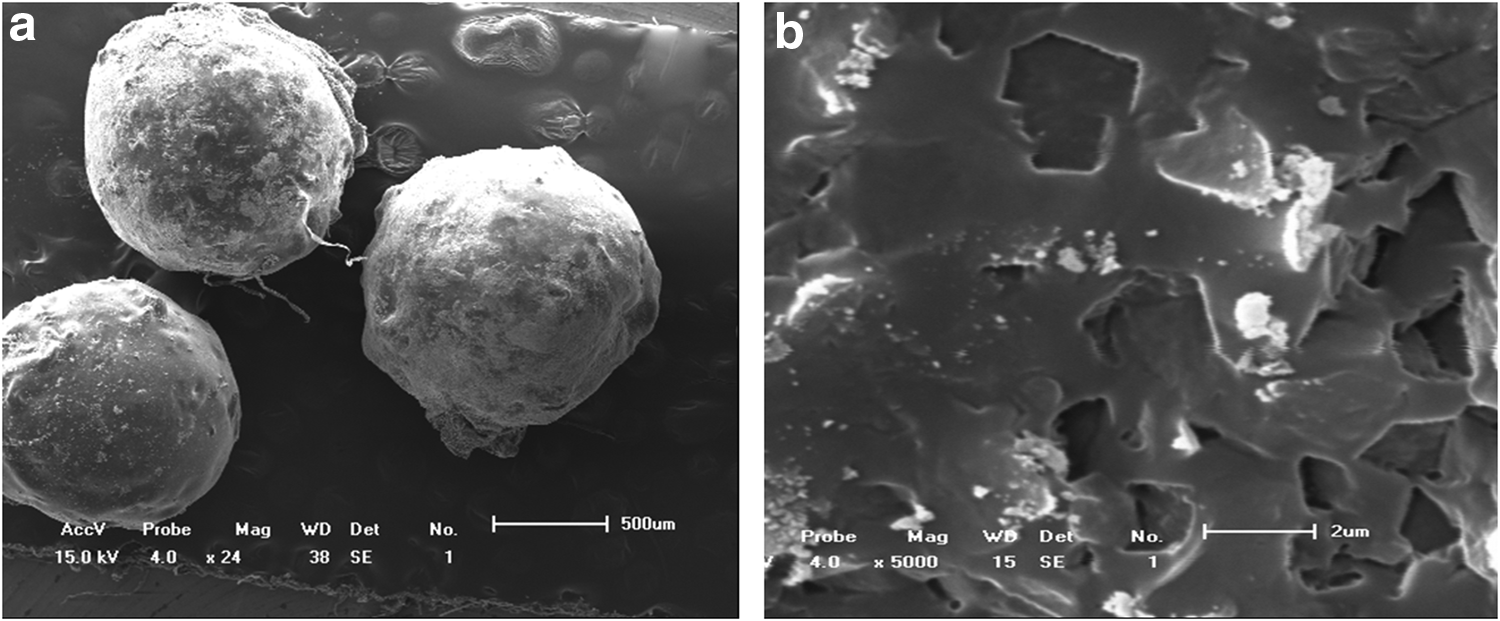
Scanning electron microscope photographs of the P-C-CTS(Ni):
Adsorption kinetics
The P-C-CTS (Ni) beads were immerged into 25.0 mL of 100.0 mg/L Ni2+ aqueous solution with oscillations at 30°C, 40°C, and 50°C, respectively. The adsorption kinetics was investigated by the time course study of the absorbed Ni2+ (Qt), which was determined based on Equation (1), in P-C-CTS (Ni) beads at 5, 10, 20, 30, 40, 50, 60, 90, 120, 240, 360, and 480 min.
As shown in Fig. 3, the curves illustrated the process of Ni2+ adsorption in P-C-CTS (Ni) beads at different temperatures. The higher the temperature, faster the Ni2+ adsorption, and greater the adsorption capacity for the prepared P-C-CTS (Ni) beads. All results supported that the adsorption mechanism for Ni2+ on the P-C-CTS (Ni) beads is chemisorption. Several −H2N: groups, such as those employed onto the surface of adsorbents via polyamination, supplied the active sites for the adsorption Ni2+ through chelation. If the Ni2+ monolayer adsorption saturation was presumably achieved at the temporary balance stage, three fitting lines were obtained (Fig. 4) based on the kinetic Equation (3):
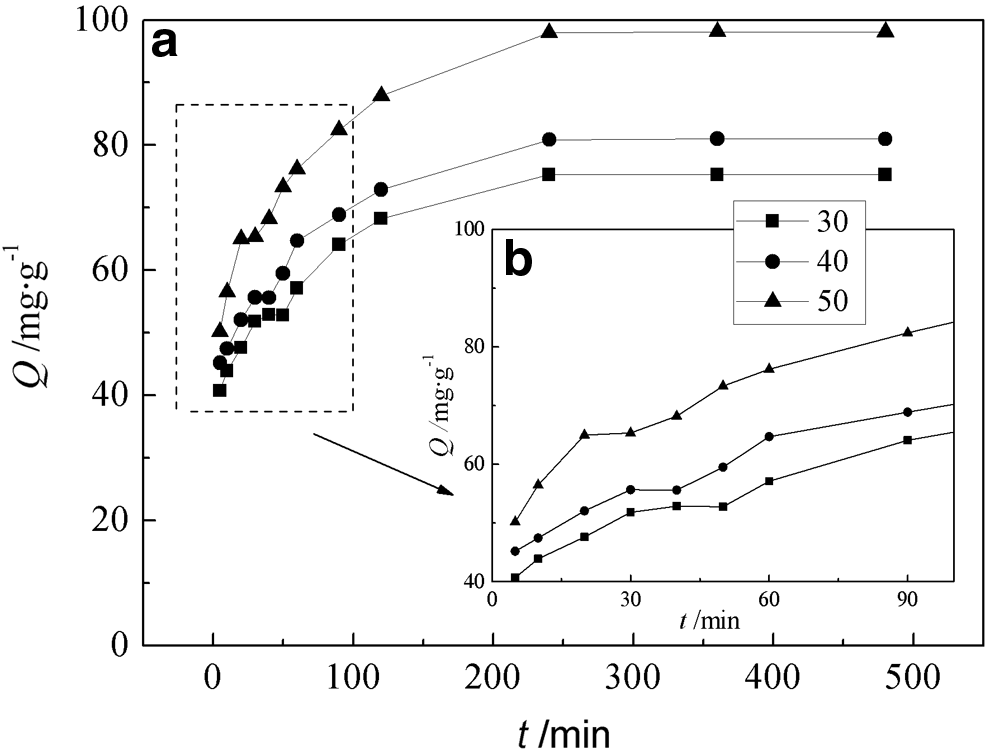
Time course of adsorbed Ni(II) in P-C-CTS (Ni) beads at different temperatures.
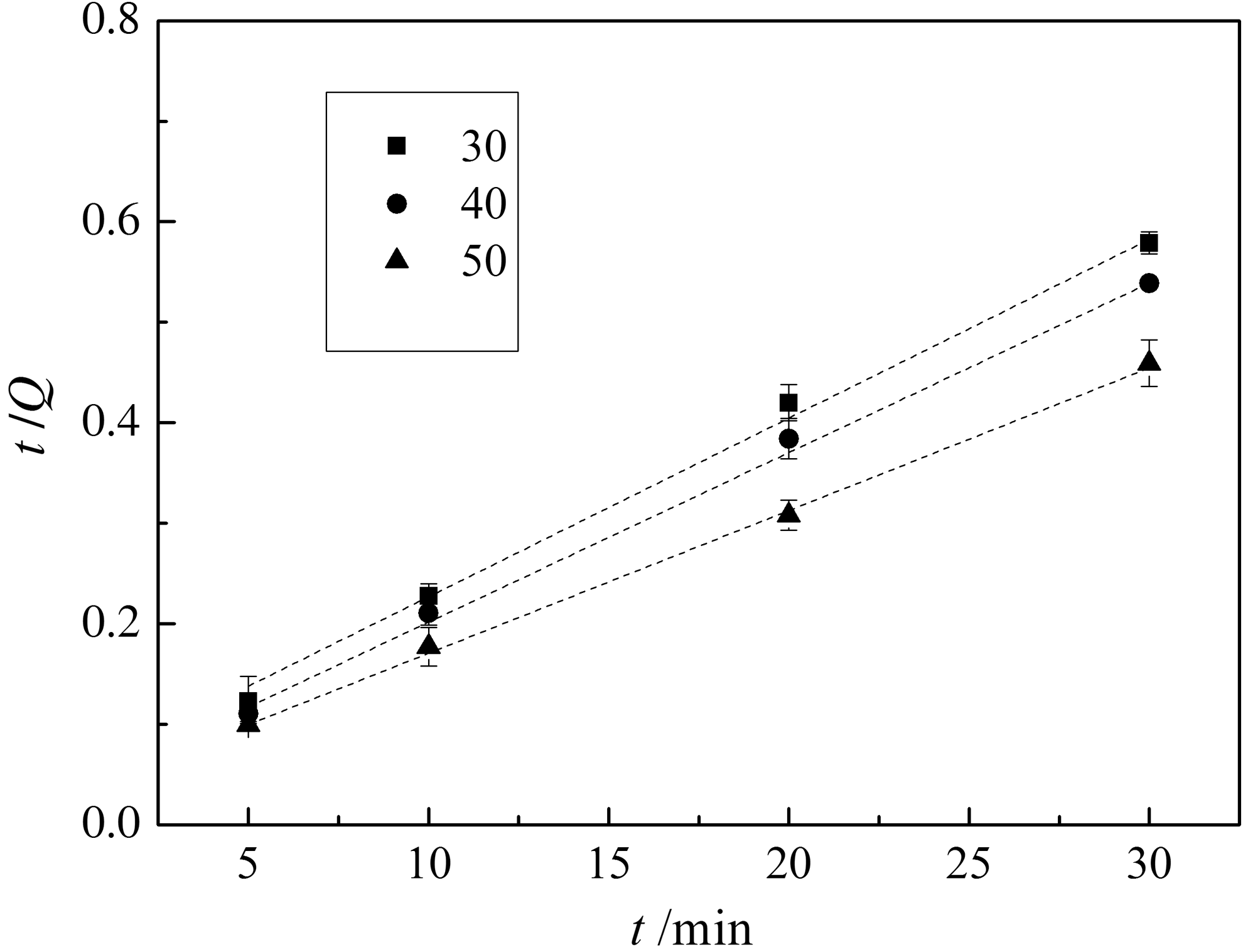
Kinetic curves of Ni(II) adsorption by P-C-CTS (Ni) beads at different temperatures.
where Qt (mg/g) is the adsorption quantity at t hour, k is the adsorption rate, and Qe (mg/g) is the adsorption capacity of the adsorbent. k and Qe can be determined based on the slopes and intercepts of the lines.
The Arrhenius equation (k=Ae-Eα/RT) was used to obtain lgk=−Ea/2.303 RT+lgA, although a nonlinear relationship exists between lgk and 1/T. This nonlinear relationship between lgk and 1/T indicates that effects of the temperature on the adsorption rates do not follow the Arrhenius equation. Pseudo-first-order, pseudo-second-order, and internal diffusion kinetic models were applied to interpret adsorption dynamics to investigate the mechanism of adsorption kinetics. These kinetic models are given as the following equations.
Pseudo-first-order kinetic model:
Pseudo-second-order kinetic model:
Internal diffusion model:
where k1 is the pseudo-first-order adsorption rate constant, k2 is the pseudo-second-order adsorption rate constant, ki is the internal diffusion rate constant, and r12, r22, and r32 are the corresponding correlation coefficients. To fit the adsorption kinetics curve at 30°C to the pseudo-first-order, pseudo-second-order, and internal diffusion kinetic models, the kinetic parameters for Ni2+ adsorption on P-C-CTS (Ni) were k1 (min−1)=5.9×10⁻² (r12=0.9697), k2 (g/[mg·min])=8.1×10−3 (r22=0.9968), and ki (mg/g·min−0.5)=6.8 (r32=0.7501). Based on the correlation coefficients, the adsorption behaviors of P-C-CTS (Ni) for Ni2+ fitted well with the pseudo-second-order kinetic model. It confirmed that chemisorption was the mechanism of Ni2+ adsorption onto the P-C-CTS (Ni) adsorbents.
To verify that chemisorption was the mechanism of Ni2+ adsorption onto the P-C-CTS (Ni) adsorbents, the thermodynamic behavior of the adsorption of Ni2+ though the change in free energy (ΔG°), enthalpy (ΔH°), and enthopy (ΔS°) were evaluated. As shown in Table 3, the positive values of ΔH° for Ni2+ suggest an endothermic nature of adsorption. This is also supported by the increase of adsorption capacity with temperature increasing. The positive value of ΔS° showed an increase in randomness at the solid/solution interface during the adsorption of Ni2+. Furthermore, the negative value of ΔG° at different temperatures indicates that the adsorption of Ni2+ is spontaneous. The observed decrease in negative values of ΔG° with increasing temperature implies that the adsorption becomes more favorable at a higher temperature. The slight change of the TΔS° value at all temperatures and |TΔS°|>|ΔH°| indicates that the adsorption process is dominated by entropic rather than enthalpic changes (Atia et al., 2006). The results also verified that chemisorption was the mechanism of Ni2+ adsorption onto the P-C-CTS (Ni) adsorbents.
Effect of pH on Ni2+ adsorption onto P-C-CTS (Ni) adsorbents without citrate
The Ni2+ adsorption quantities onto the P-C-CTS (Ni) adsorbents at different pH are shown in Fig. 5. The QNi increases from pH 2.0 to 5.0 in the absence of citrate in the solution since the −H2N: groups on beads were occupied by high concentration of H+ instead of the Ni2+ to form −[H2N:H]+ at lower pH. The chelation competition with H+ contributes a smaller QNi at lower pH. With pH value increases, the concentration of H+ decreases leading to the weaker competition and the increase of QNi. The saturated Ni2+ adsorption almost reaches at pH 5.0 and no change at pH 6.0. It indicates that the chelation between −H2N: and Ni2+ is the mechanism for the Ni2+ adsorption in the absence of citrate in the solution.
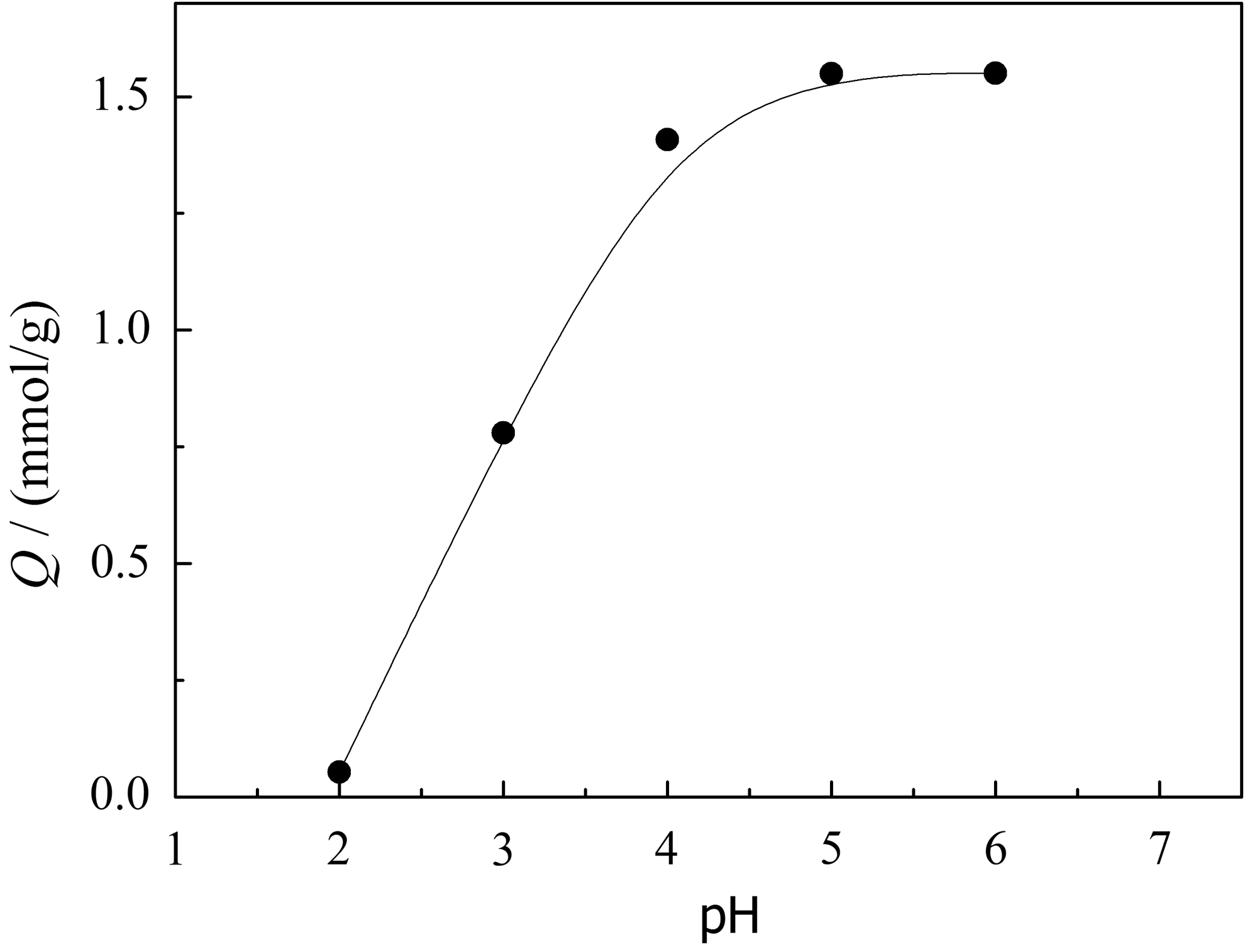
Effect of pH on Ni(II) adsorption onto P-C-CTS (Ni) adsorbents without citrate.
Effect of citrate on Ni2+ adsorption onto P-C-CTS (Ni) adsorbents at different pH
The ratios of the adsorption quantities onto adsorbents between nickel and citrate (QNi:QCit) and the changes of the nickel concentration (ΔCNi) in solution before and after adsorption at different pH are listed in Table 4. The citrate ligands significantly affect the adsorption of Ni2+ onto the P-C-CTS (Ni) adsorbents in all the tested solutions at different pH. Both the QNi:QCit and ΔCNi increased with the increasing ratio of the nickel/citrate. The citrate ligands, especially when present in excess over the nickel metal ions, may decrease the adsorption capacity of the adsorbents due to the competition for the amine groups in adsorbents between the nickel species and citrates.
ΔCNi is the concentration change of Ni(II) in solutions before and after adsorption (mmol/L).
Removal efficiency of Ni(II) in real water samples using the P-C-CTS (Ni) adsorbents
As shown in Table 5, the proposed P-C-CTS (Ni) beads were successfully applied for removal of Ni(II) from electroplating wastewaters and fortified environmental waters. The removal efficiency was over 92%. Of those, the relative low removal efficiency from fortified lake and river waters may result from the more dissolved organic matters in natural waters than in wastewaters from an electroplating factory.
The pH of water samples was adjusted to 4.0 using a NaOH or H2SO4 diluted solution.
Stability of the P-C-CTS (Ni) adsorbents
In this study, the stability of the prepared P-C-CTS (Ni) adsorbents was investigated by measuring the Ni2+ adsorption quantity in eight adsorption–desorption–regeneration cycles. The QNi, which was determined based on Equation (1) and the m value was the weight of the fresh beads, decreased only 5% after eight adsorption–desorption–regeneration cycles, as shown in Fig. 6. On the other hand, the color and appearance of the P-C-CTS (Ni) beads have no apparent difference after eight regeneration and reusing cycles.
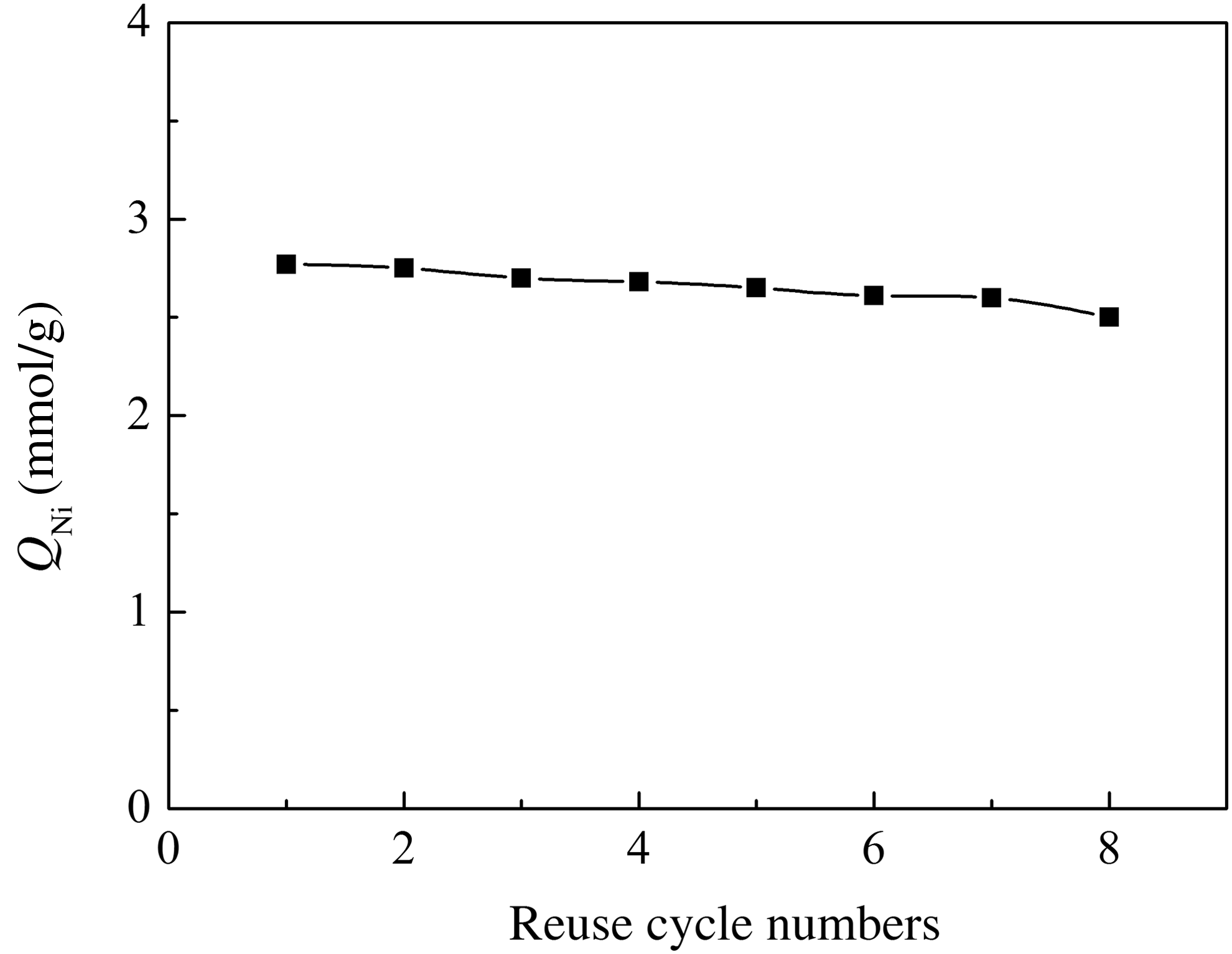
Ni(II) adsorption quantity in eight adsorption–desorption–regeneration cycles.
Conclusions
The stable P-C-CTS (Ni) beads were prepared by using the molecular imprinting technique, crosslink reactions, and polyamination method and successfully applied for the Ni(II) removal from real wastewater and environmental waters. Chemisorption was found as the main mechanism of Ni(II) adsorption on P-C-CTS (Ni) beads. The adsorption processes and adsorption quantities were significantly affected by the pH and the citrate ligands in solution. The adsorption capability of the P-C-CTS (Ni) beads was stable up to eight reuse cycles. The prepared P-C-CTS (Ni) beads were the promising absorbents for Ni(II) removal from the industrial wastewaters.
Footnotes
Acknowledgments
The authors gratefully acknowledge financial support by the Asia Research Center of Nankai University, the National Natural Science Foundation of China (NSFC 21207102; 51176077), and the Key Natural Science Foundation of Tianjin (12JCZDJC29300).
Author Disclosure Statement
No competing financial interests exist.