







Abstract
Abstract
Oxygen transfer capacity is of paramount importance for an aerobic bioreactor because it is a bottleneck of aerobic processes. In this study, the evaluation of oxygen transfer characteristics was carried out under different working conditions by employing a new pilot-scale internal-loop airlift bioparticle (ILAB) reactor, which was fabricated specifically for simultaneous partial nitrification (PN) and anaerobic ammonia oxidation (ANAMMOX). Results showed that as for tap water, the oxygen transfer rate (OTR) was 138.24 mg/min and the aeration efficiency was 30.21% at the airflow rate of 1.0 m3/h. As for the ammonia-bearing wastewater, the OTR was 147.21 mg/min and the aeration efficiency was 40.21% at the airflow rate of 0.8 m3/h. The ILAB reactor easily met the aeration requirements (4.540 mg/L·min) at nitrogen loading rate (NLR) of 5.44 kg·N/m3·day, which is reported as the maximum so far in the literature, and satisfactorily allows the trial of NLR higher than the maximum value (5.44 kg·N/m3·day). At different airflow rates, estimated values of alpha and beta factors were in the range of 0.69 to 1.2 and 0.98 to 1.0, respectively. The study highlighted the fact that bottleneck of single-stage PN-ANAMMOX, oxidation of ammonia to nitrite, can be eliminated by designing a proper reactor and aerator.
Introduction
A
Airlift reactors are considered to be superior to traditional stirred-tank reactors for the growth of microorganisms (Merchuk and Gluz, 2002). In view of the above promising benefits associated with single-stage system, a pilot-scale internal-loop airlift bioparticle (ILAB) reactor was fabricated specifically for simultaneous PN-ANAMMOX process. However, in the PN-ANAMMOX process, oxygen is a key substrate for microbial metabolism and it often becomes a limiting factor due to its low solubility in aqueous solutions (Garcia-Ochoa and Gomez, 2009; Garcia-Ochoa et al., 2010). The oxidation of ammonia to nitrite is the first and important step in the PN-ANAMMOX process. The oxygen transfer rate (OTR) of pilot-scale ILAB reactor is decisive to the capacity of PN and even to the PN-ANAMMOX. Considering the above factors and to avoid system collapse, it was imperative to have an objective evaluation of oxygen transfer characteristics in pilot-scale ILAB reactor before undertaking the PN-ANAMMOX process in it. A newly designed oval aerator was installed in the ILAB reactor to enhance the aeration efficiency and minimize the power consumption.
In this article, OTR, aeration efficiency, and effect of wastewater component were investigated in the ILAB reactor so as to set up a high-rate system for simultaneous PN-ANAMMOX process.
Theoretical background
Two-film theory is the basis of gas–liquid mass transfer, and it states that flux through each film is the product of the driving force and mass transfer coefficient. Variation of dissolved oxygen (DO) concentration with time in water under aeration can be given as follows:
where dC/dt is the rate of change of oxygen concentration with time, C (mg/L) is the DO concentration assumed to be uniform throughout the water, (C∞) (mg/L) is equilibrium saturation concentration (at infinite aeration time), and KLa (1/t) is mass transfer coefficient. In fact, KLa is a product of liquid film coefficient (KL) and area (a), but usually lumped together as single parameter due to the difficulty involved in individual measurement (Rajesh et al., 2012).
OTR in a bioreactor is the product of dC/dt and volume of water (V) under aeration, which can be derived as follows:
Performance of a bioreactor is expressed in terms of standard parameters, such as standard oxygen transfer rate (SOTR) and standard oxygen transfer efficiency (SOTE), and specified with reference to standard test conditions, such as tap water as the aerated medium, water temperature 20°C, 1 atm (atmospheric pressure), and zero DO concentration (ASCE, 2007).
The SOTR is the mass of oxygen transferred per unit time into a given volume of water and is given as follows:
where C∞(20) is the equilibrium saturation concentration (C∞) at infinite aeration time at a water temperature of 20°C.
The SOTE is the fraction of oxygen actually transferred or dissolved into the liquid at standard conditions and is given as follows:
where Qa(m) is the influent air mass flow rate (kg/h) and the mass fraction of oxygen in the air is assumed to be 0.228 kg O2/kg air. The air density used in the calculations is 1.2041 kg/m3 at 20°C.
To account for the effect of dissolved organics on mass transfer coefficient (KLa), an alpha (α) factor is defined as the ratio of mass transfer coefficient in wastewater to tap water, and to account for the effect of wastewater constituents on oxygen saturation, a beta (β) factor is defined as the ratio of saturation in wastewater to tap water.
Measured values of mass transfer coefficient (KLa) and equilibrium saturation concentration (C∞) need to be appropriately adjusted using some formulas, if temperature and pressure conditions of water differ from the standard ones (Casey, 2009). In this work, standard conditions (temperature 20°C, 1 atm, zero DO concentration) were maintained in the ILAB reactor for both the tap water and the synthetic wastewater.
Materials and Methods
The ILAB reactor was made of stainless steel having a height of 122 cm with an internal diameter of 15.25 cm. The oval aerator was located at the bottom of the reactor. An air pump was used to supply air and the airflow rate was controlled with the help of a flowmeter. The volume used during the experiments for both tap water and synthetic wastewater was 8 L. The DO concentration was measured after suitable time intervals by a calibrated DO probe (Mettler Toledo) installed in the center of the bioreactor. Standard temperature of 20°C was maintained by automatic mode of the ILAB reactor. The tested water was deoxygenated by adding 0.655 g of sodium sulfite (Na2SO3) as reactant and 0.0176 g of cobalt chloride (CoCl2) as catalyst.
The rate of reoxygenation was monitored after suitable time intervals. Using reoxygenation data, a graph between DO concentration (mg/L) and time (min) was constructed. Nonlinear regression was then used to estimate mass transfer coefficient (KLa) and equilibrium saturation concentration (C∞). Equations (1)–(3) were used to calculate OTR, SOTR, and SOTE, respectively (Figs. 1 and 2).
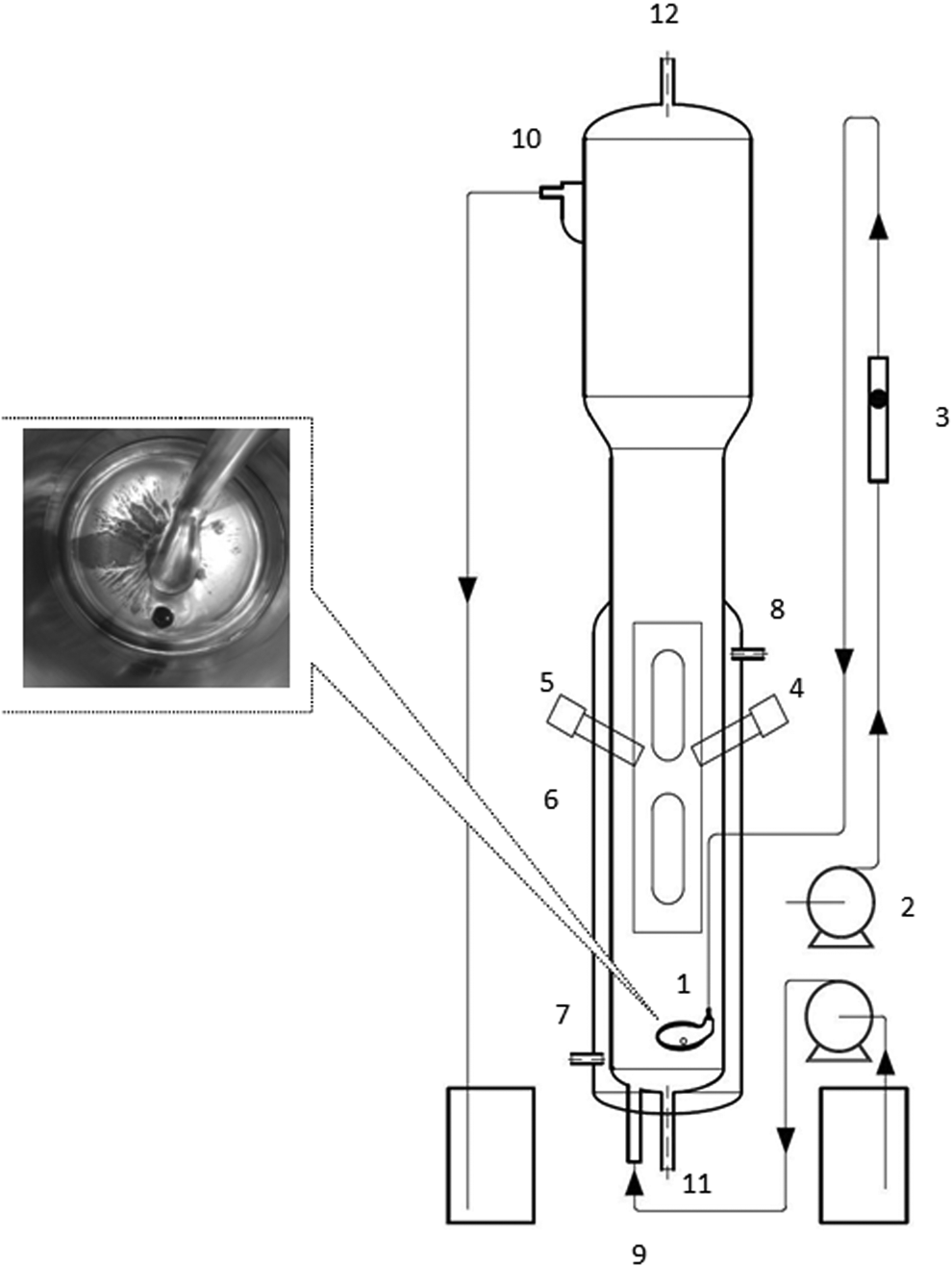
Schematic diagram of pilot-scale ILAB reactor. 1, oval aerator; 2, air pump; 3, airflow meter; 4, DO probe; 5, pH probe; 6, temperature jacket; 7, hot water inlet; 8, hot water outlet; 9, influent inlet; 10, effluent outlet; 11, material removal port; 12, gas removal port. DO, dissolved oxygen; ILAB, internal-loop airlift bioparticle.
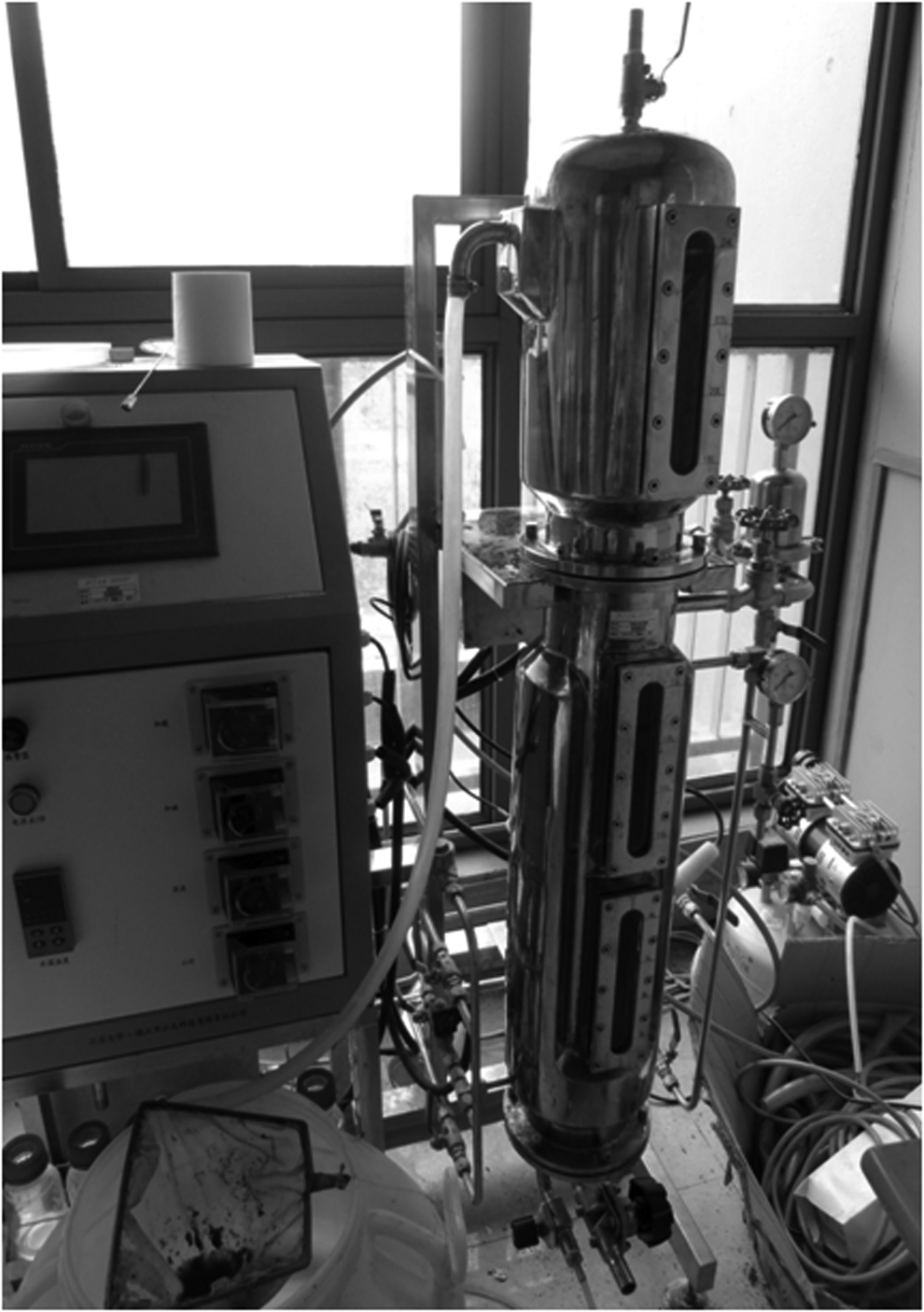
Pilot-scale ILAB reactor.
Aeration Efficiency of the ILAB Reactor
The pilot-scale ILAB reactor would be used to remove nitrogen from wastewater in a single-stage, which incorporates the PN-ANAMMOX process, so aeration capacity of the reactor should be evaluated whether it supplies sufficient air at higher nitrogen loading rates (NLR) or not. So far, the maximum volumetric NLR and volumetric nitrogen removal rate (NRR) documented by our laboratory using a single-stage autotrophic system are 5.44 and 2.57 kg·N/m3·day, respectively (Wang et al., 2012). Therefore, synthetic wastewater with the same composition was employed to evaluate the aeration performance of the ILAB reactor. The synthetic medium contained 2 g/L (NH4)2SO4 (nitrogen source), 2 g/L NaHCO3 (carbon source and alkalinity), and mineral solutions. The mineral solutions involved 0.01 g/L KH2PO4, 0.0056 g/L CaCl2.H2O, and 0.3 g/L MgSO4.7H2O and trace element solutions I, II which included EDTA, FeSO4.7H2O, H3BO4, MnCl4.4H2O, ZnSO4.7H2O, CoCl2.6H2O, NiCl2.6H2O, Na2MoO4.2H2O, and vitamin. The total ammonium concentration of the synthetic medium was 431.7±25.5 mg·N/L. Using the synthetic medium, OTR and aeration efficiency were also calculated.
Calculation of OTR for highest NLR
Calculation of total oxygen consumption rate for the above-cited study (Wang et al., 2012) was carried out here so that a close comparison can be made with OTR in the ILAB reactor. The PN-ANAMMOX process requires oxygen for AOB to remove nitrogen from the wastewater. However, the nitrite can be further oxidized by NOB, which also needs oxygen. The reaction equations for the processes are given below:
ANAMMOX bacteria:
According to the stoichiometry of aerobic ammonium oxidation [Eq. (4)], ANAMMOX [Eq. (5)], and nitrite oxidation [Eq. (6)], the oxygen/nitrogen ratio of the PN-ANAMMOX process (1.95) was different from nitrification–denitrification process (4.57) (Wang et al., 2012).
Using O/N=1.95, oxygen consumed in the PN-ANAMMOX process was calculated as=2.57×1.95=5.011 Oxygen kg/m3·day.
Using O/N=4.57, oxygen consumed by nitrification for nitrate formation is calculated as=4.57×Total NO−3.
Total nitrate=Ammonia conversion rate − Total NRR
= 3.69 − 2.57=1.12 kg/m3·day
NO−3 produced by NOB=Total NO−3 − NO−3 produced by ANAMMOX process
= 1.12 − 0.26×2.57/2 [from Eq. (5)]
NO−3 produced by NOB=0.334 kg/m3·day
Oxygen consumed in nitrification by NOB for NO−3 formation=0.334×4.57
= 1.526 Oxygen kg/m3·day
Total oxygen consumption rate at 5.44 kg·N/m3·day=5.011+1.526
= 6.538 Oxygen kg/m3·day
= 4.540 mg/L·min
Results and Discussion
Oxygen transfer to tap water
As Table 1 shows that at an airflow rate of 0.2 m3/h, mass transfer coefficient was found to be 0.13/min in the ILAB reactor with SOTR and SOTE values of 14.53 mg/min and 15.88%, respectively. As the airflow rate was raised to 0.8 m3/h, mass transfer coefficient, SOTR, and SOTE continued to improve and reached 0.66/min, 99 mg/min, and 27.04%, respectively. At the airflow rate of 1 m3/h, the highest numerical values of mass transfer coefficient (0.91/min), SOTR (138.24 mg/min), and SOTE (30.21%) were recorded out of all the tested airflow rates. Higher airflow rates (1.2 and 1.4 m3/h) yielded lower values of mass transfer coefficient, SOTR, and SOTE confirming the highest amount of oxygen transfer to tap water at an airflow rate of 1.0 m3/h. Figure 3 shows oxygen saturation concentration (Cs) for tap water. The mass transfer coefficient (KLa) and equilibrium saturation concentration (C∞) values for different airflow rates were obtained from Fig. 4 using nonlinear regression.
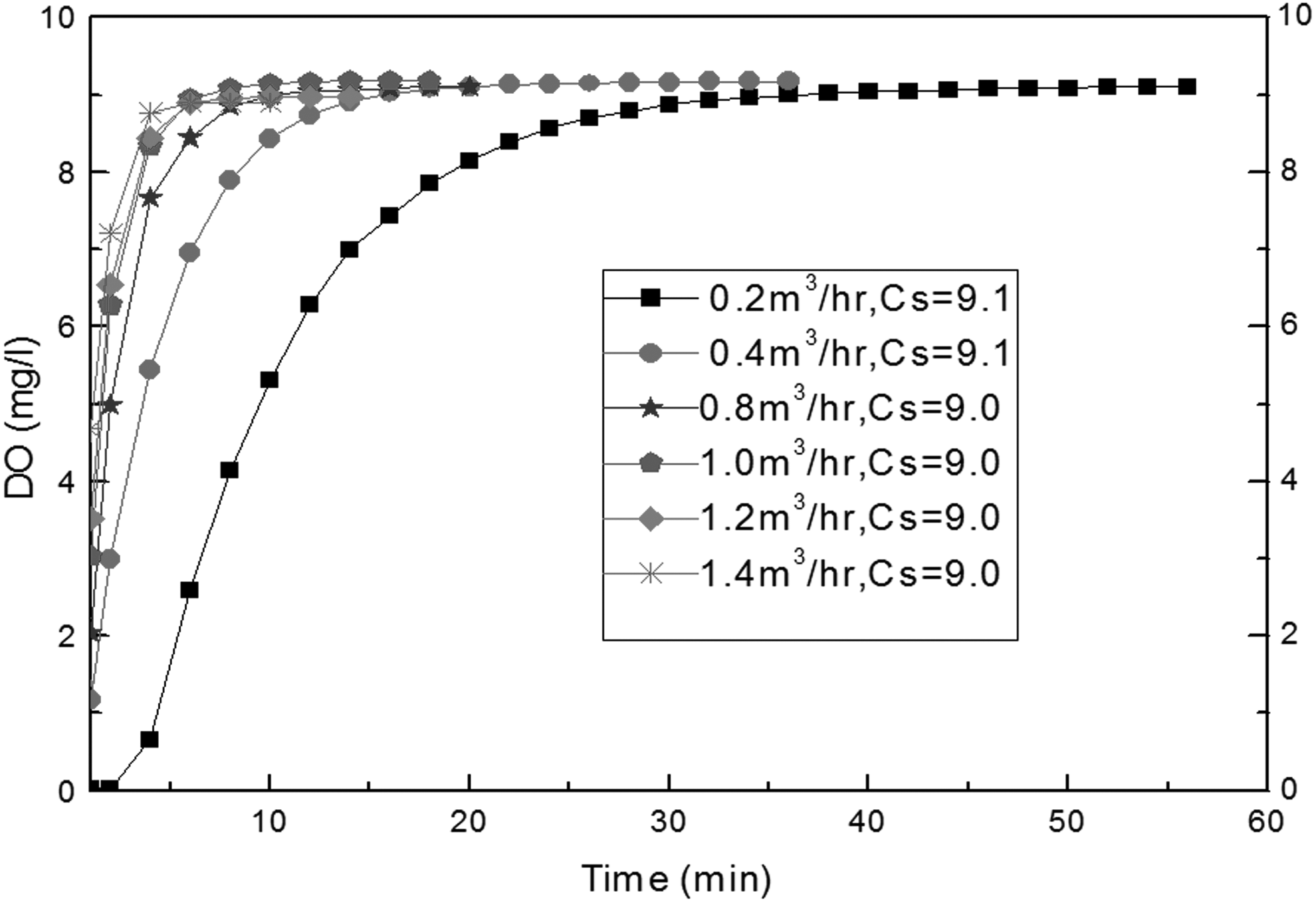
Estimation of Cs at different airflow rates for tap water.
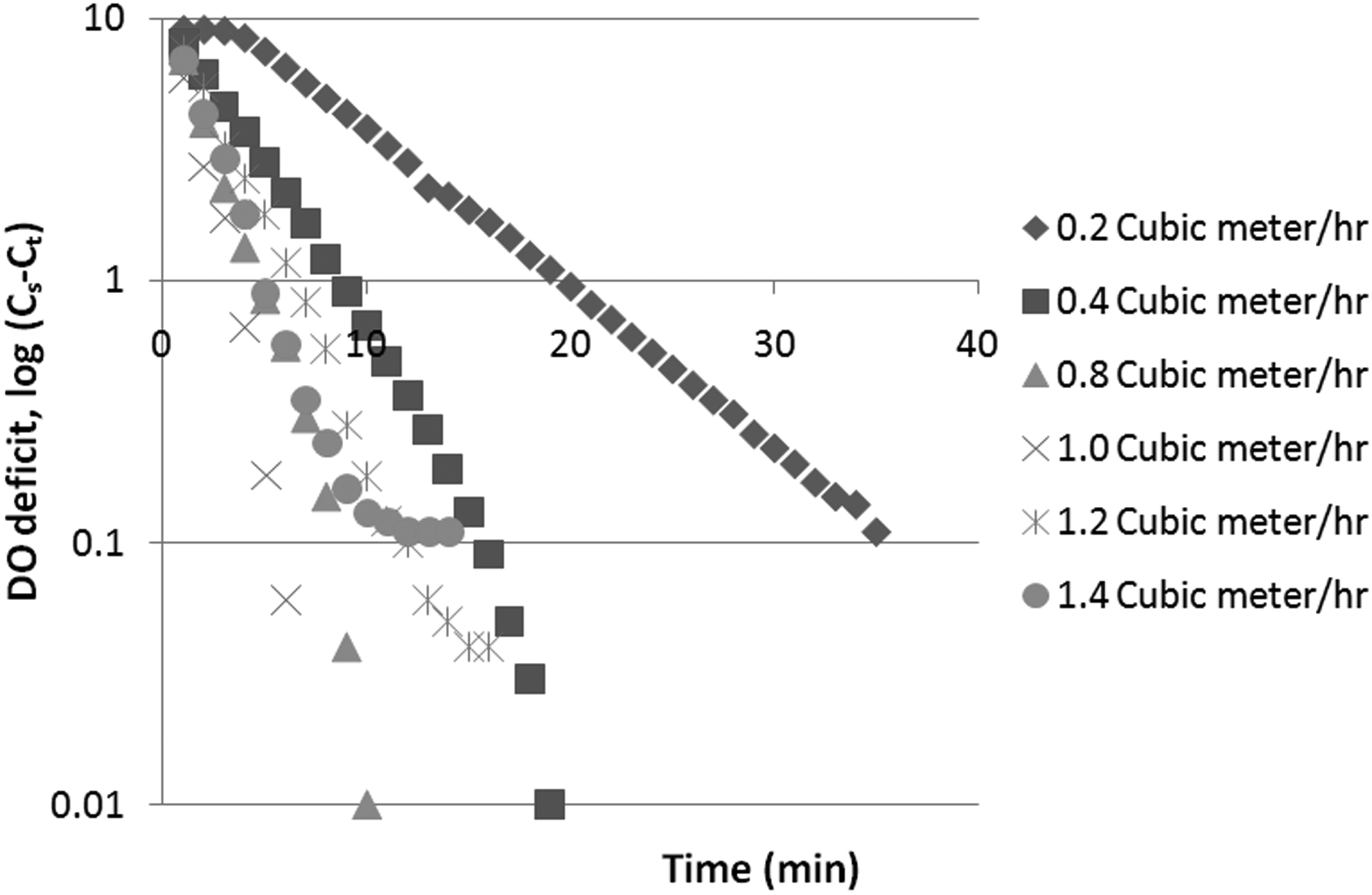
Estimation of KLa and C∞ at different airflow rates for tap water.
Temperature: 20°C; pressure: 1.0 atm; volume of tap water: 8 L.
SOTE, standard oxygen transfer efficiency; SOTR, standard oxygen transfer rate.
The graph (Fig. 5) between airflow rate and SOTE clearly shows a gradual rise of SOTE with increasing air flow rate until it touches the maximum value of oxygen transfer to tap water, and then, SOTE drops sharply at airflow rates beyond 1.0 m3/h. Likewise, the graph between airflow rate and mass transfer coefficient indicates a gradual improvement in mass transfer coefficient with increasing airflow rate until it reaches the maximum value of 0.91/min and then tends to go down at airflow rates beyond 1.0 m3/h.
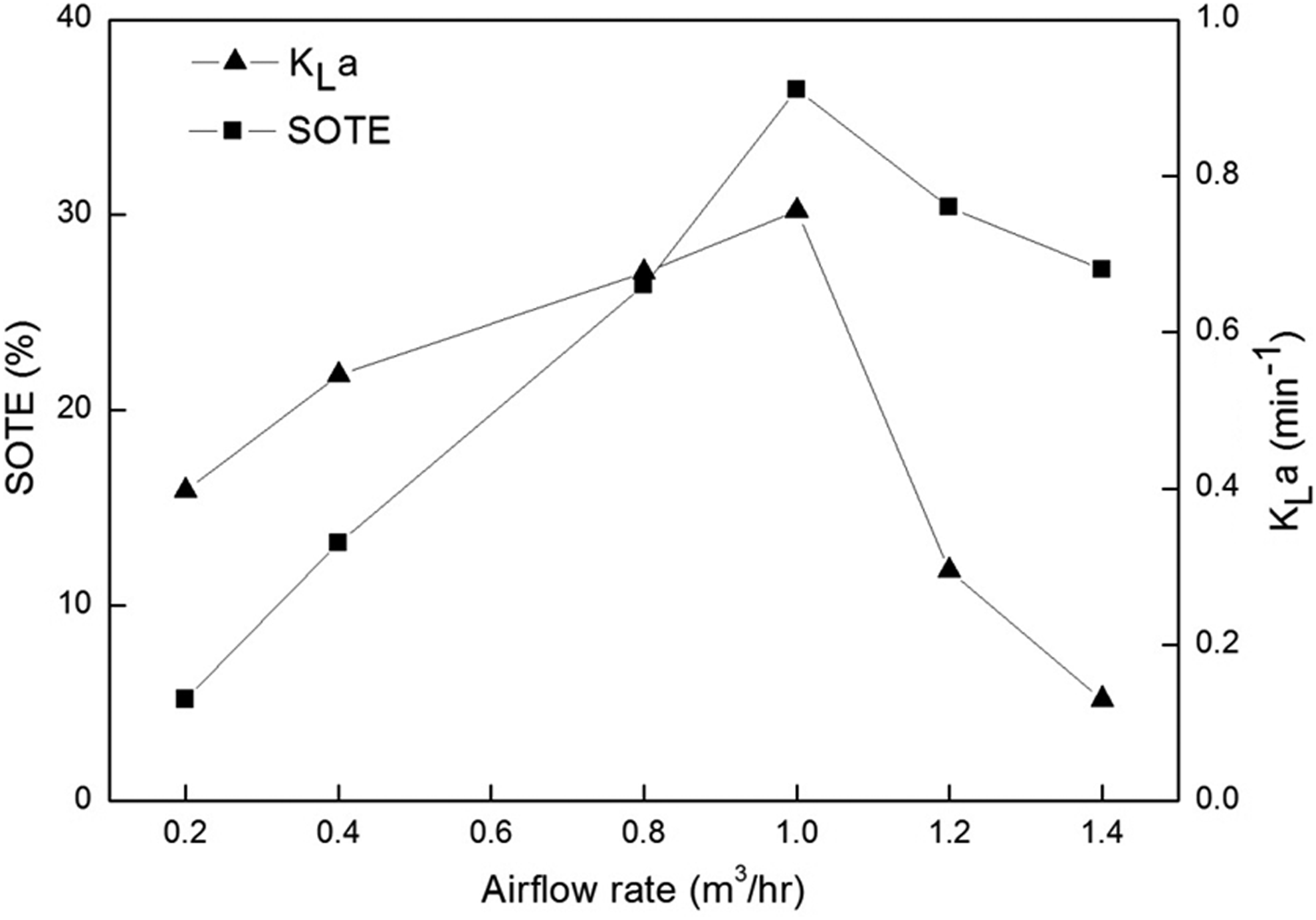
Different airflow rates versus KLa (1/min) and SOTE (%) for tap water. SOTE, standard oxygen transfer efficiency.
Oxygen transfer to synthetic wastewater
The same airflow rates were tested for synthetic wastewater and relatively good oxygen transfer results were observed compared with tap water. With increasing airflow rates, mass transfer coefficient, SOTR, and SOTE increased proportionately. As Table 2 shows that at airflow rate of 0.8 m3/h, maximum SOTR (147.21 mg/min) and SOTE (40.21%) were registered with corresponding mass transfer coefficient of 0.63/min. When airflow rates of 1.0 and 1.2 m3/h were examined, mass transfer coefficient increased from 0.70 to 0.91/min, SOTR from 91.33 to 122.66 mg/min, and SOTE from 19.96 to 22.34% showing small improvement. A higher airflow rate of 1.4 m3/h led to a decline of mass transfer coefficient, SOTR, and SOTE figures, which confirmed the maximum SOTR and SOTE at airflow rate of 0.8 m3/h. Figure 6 shows oxygen saturation concentration (Cs) for synthetic wastewater. The mass transfer coefficient (KLa) and equilibrium saturation concentration (C∞) values for different airflow rates were obtained from Fig. 7 using nonlinear regression.
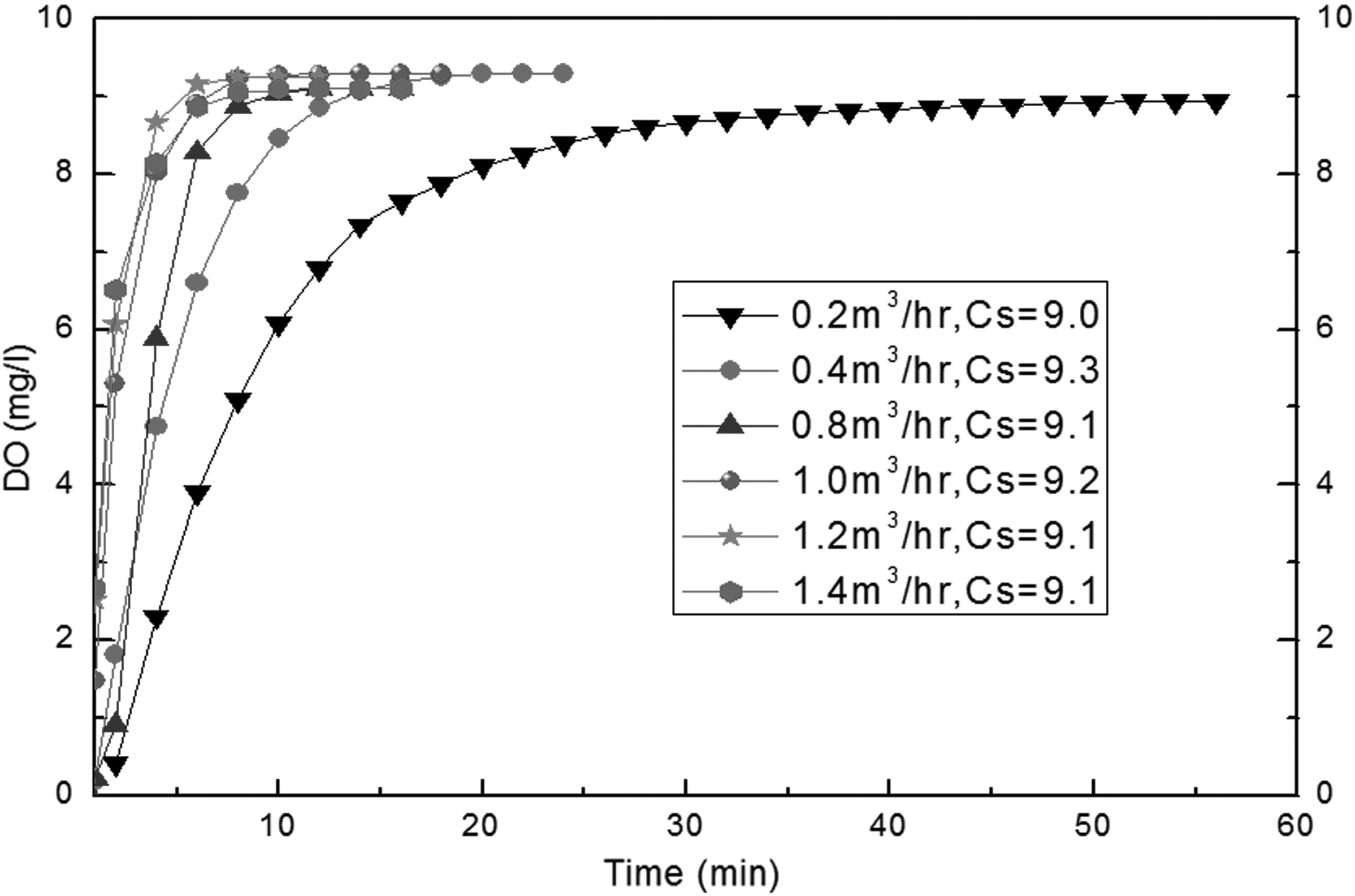
Estimation of Cs at different airflow rates for synthetic wastewater.
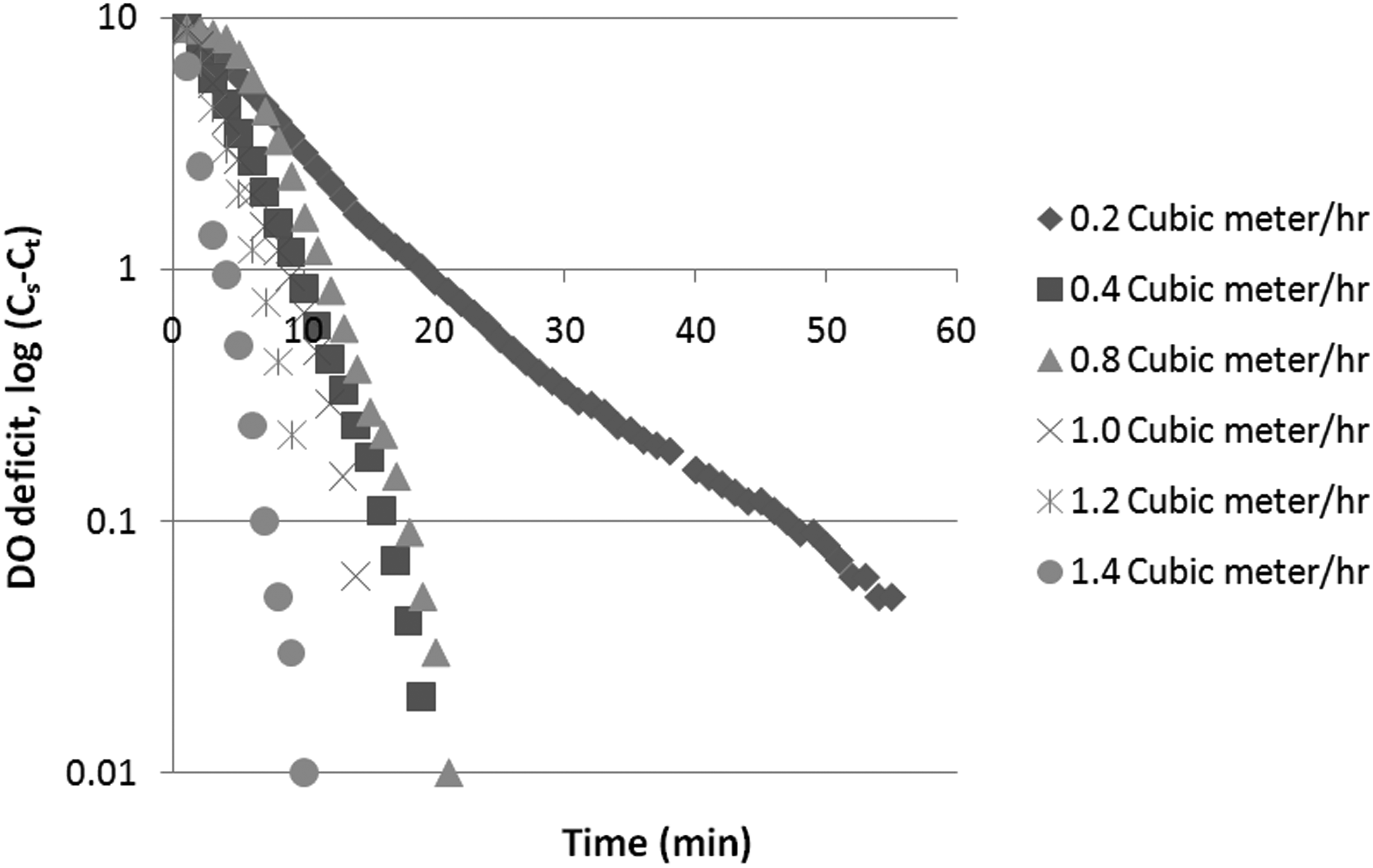
Estimation of KLa and C∞ at different airflow rates for synthetic wastewater.
Temperature: 20°C; pressure: 1.0 atm; volume of synthetic wastewater: 8 L.
Almost the same graphic behavior (Fig. 8) was seen during oxygen transfer to synthetic wastewater. SOTE rises steadily with increasing air flow rate until it reaches 40.21%, which is the largest value, and then depicts a falling trend after 0.8 m3/h. Similarly, mass transfer coefficient rises with increasing airflow rate and drops to 0.68 (1/min) after 1.2 m3/h.
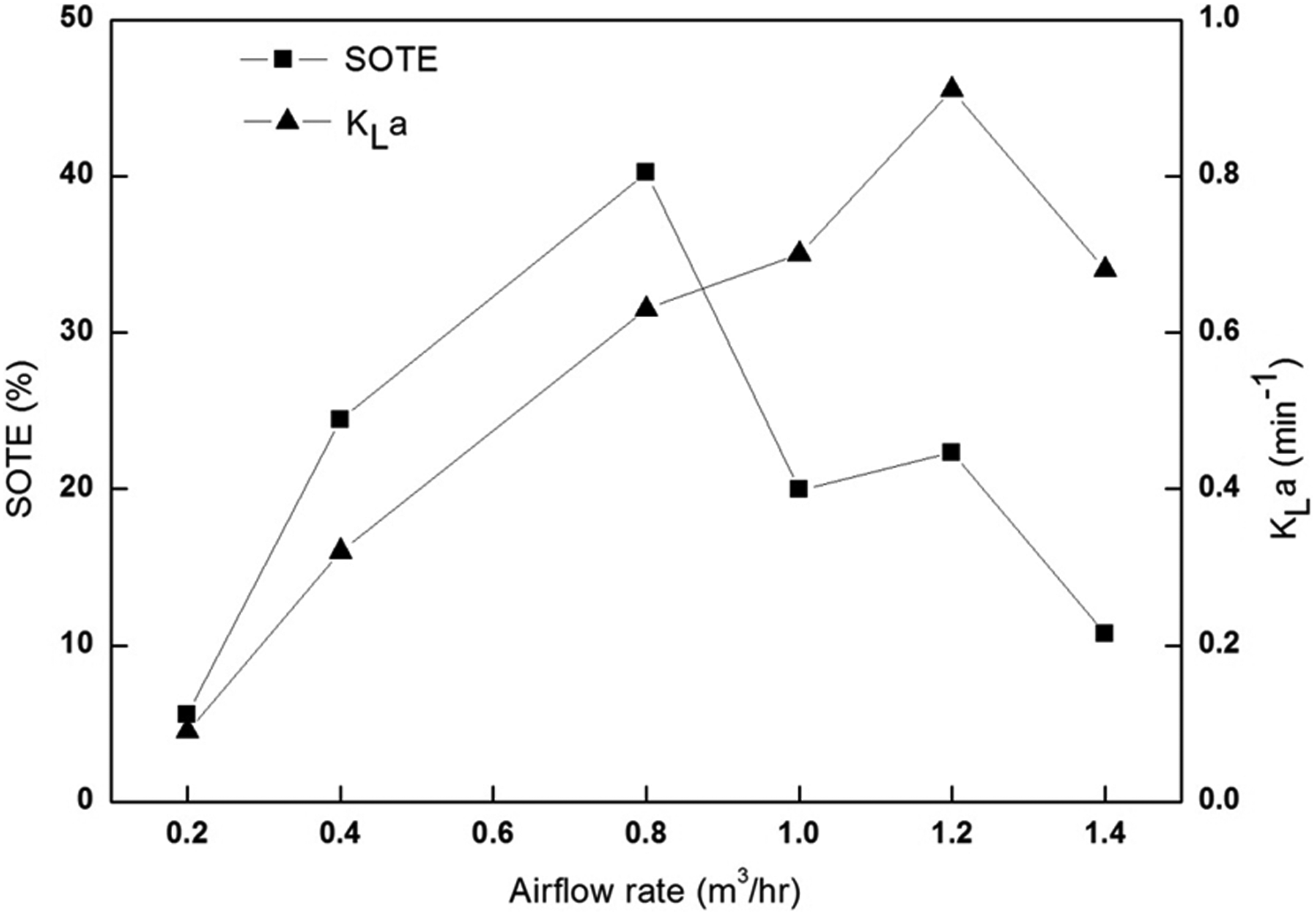
Different airflow rates versus KLa (1/min) and SOTE (%) for synthetic wastewater.
Hence, increasing airflow rate provided a larger driving force and higher surface renewal rates, which caused higher mass transfer coefficient, SOTR, and SOTE for both tap water and synthetic wastewater. But after a certain airflow rate, these values tended to go down.
In fact, bubble diameter is a function of airflow rate, and an airflow rate higher than the optimum value affects bubble shape, bubble rise velocity, and turbulence in the reactor. Higher airflow rate influences overall bubble surface area, surface renewal rates, bubble size distributions, and thus reduces the OTR and aeration efficiency (Gillot and Heduit, 2000; Eckenfelder et al., 2002). Equilibrium saturation concentration (C∞) is also one of the key factors determining OTR in an aerobic bioreactor. At higher airflow rates, prevailing equilibrium pressure changes the local oxygen saturation concentration, the bubble volume, and interfacial area, causing less OTR in the reactor (Eckenfelder et al., 2002). In the case of synthetic wastewater, better oxygen transfer results were realized compared with tap water, especially SOTE was 10% higher than SOTE of tap water. This can be attributed to equilibrium saturation concentration (C∞) and the presence of dissolved salts in the synthetic wastewater, which caused favorable changes in bubble shape, bubble size, and surface renewal at the air–water interface (Eckenfelder et al., 2002).
The NLR of 5.44 kg·N/m3·day required a total oxygen consumption rate of 4.540 mg/L·min for efficient removal of nitrogen from the wastewater. For the ILAB reactor, the calculated SOTR (mg/L·min) figures (third column from right in Table 2) satisfy the total oxygen consumption rate required at 5.44 kg·N/m3·day. SOTE efficiency of the ILAB reactor at airflow rates of 0.4 to 1.2 m3/h was high enough (Table 2) to allow the trial of NLR higher than 5.44 kg·N/m3·day. Hence, the oval aerator revealed excellent SOTE performance from 0.4 to 1.2 m3/h, and the PN-ANAMMOX process could be undertaken without any doubt of failure. Moreover, the study highlighted the fact that bottleneck of single-stage PN-ANAMMOX (Wang et al., 2014), oxidation of ammonia to nitrite, can be eliminated with the proper design of reactor and aerator.
Table 3 shows typical SOTE values (EPA, 1989; Johnson, 1993) for various aerators reported in the literature. It is difficult to make a precise comparison of performance of an aerator with another due to the variations of aerator material, shapes, depth, and airflow rate (Eckenfelder et al., 2002). However, pilot-scale ILAB reactor revealed excellent SOTE values from 0.4 to 1.0 m3/h for both tap water and synthetic wastewater at an aerator depth of 0.56 m. A comparative look at Table 3 (EPA, 1989; Johnson, 1993) indicates that our aeration efficiency values are satisfactory.
Effect of wastewater component on oxygen transfer (alpha and beta values)
The alpha factor describes how well oxygen will diffuse into wastewater compared with tap water (Marupatch et al., 2010). The beta factor, referred also as salinity correction factor, quantifies how dissolved salts hinder the diffusion of oxygen when compared with tap water having a few dissolved salts (Eckenfelder et al., 2002). Under different airflow rates, estimated alpha and beta values (Table 4) were in the range of 0.69 to 1.2 and 0.98 to 1.02, respectively. In the synthetic wastewater, KLa values were slightly less than the counterparts in the tap water (Table 4), but alpha factor above 1.0 was observed by virtue of decisive equilibrium saturation concentration (C∞) and higher surface renewal at the air–water interface through violent mixing in the ILAB reactor (McCarthy, 1982; Eckenfelder et al., 2002). Moreover, oval aerator and the presence of dissolved salts in the synthetic medium might have created finer bubbles, which resulted in good alpha values. Kiiskinen (1979) examined the efficiency of seven types of diffusers using tap water and cited evidences to show that alpha factor for fine bubble system ranged from 0.40 to 0.50.
Generally, alpha factor depends on aeration device, its geometry, surfactants type, and its concentration in the real wastewater. Surfactants in wastewater are generally acknowledged to be the wastewater components having most effect on oxygen transfer (McCarthy, 1982). The low concentrations of some surfactants might have a significant impact on oxygen transfer (Stenstrom and Gilbert, 1981; Eckenfelder et al., 2002). Barnhart (1969) hypothesized that film's effect depended on the type of surface active agents, the number of carbon atoms, molecular configuration, and the time necessary to reach adsorption equilibrium. Apart from surface-active substances, salts also impact KLa values. Hantz (1980) showed that alpha significantly increased with increasing specific conductivity. These laboratory studies were conducted with distilled water and mixtures of distilled water and tap water with a total dissolved solids (TDS) concentration of about 600 mg/L. Stenstrom and Redmon (1996) showed similar trends with the addition of sodium chloride to water. He demonstrated that the high salt concentrations cancelled the effects of surfactants added to the mixture. The effect of wastewater on alpha is highly wastewater specific and may or may not have a greater impact on the OTR. Alpha factor decreases with increasing concentration of surface-active materials. The synthetic wastewater did not contain any surface-active materials, so their absence might also be the reason for higher alpha values. The surface-active materials, such as short-chain fatty acids and alcohols, create a concentration of molecules or additional film at the air–water interface, which retards molecular diffusion and decreases alpha values (McCarthy, 1982) (Table 5).
The effects of wastewater on oxygen transfer also occur as a result of changes in the steady-state oxygen saturation concentration. The dissolved salts and organics in the real wastewater tend to lower the oxygen saturation concentration. A beta factor (β=1 − 5.7×10⁻⁶ TDS) was developed in terms of TDS after chlorinity data in Standard Methods (Eaton et al., 1995) was scaled up to TDS using NaCl (1.65×chlorinity) from 0 to 20,000 mg/L TDS. ASCE committee on oxygen transfer standards showed consensus on the scaled up factor (β=1 − 5.7×10⁻⁶ TDS) and assumed that the wastewater inorganic composition is similar to that in seawater. For municipal wastewater at TDS <1,500 mg/L, β is commonly taken as 0.99. For industrial wastewater such as pharmaceutical waste at a TDS of 10,000 mg/L, β will be as low as 0.94. However, it can vary over a much broader range for industrial wastewaters.
In our pilot-scale study, this factor was found to be almost unity. Figure 9 depicts the variation of alpha and beta factors with increasing airflow rates. When the airflow rate is raised from 0.2 to 0.4 m3/h, alpha factor increases but it stays same till 0.8 m3/h. At 1.0 m3/h, alpha drops to 0.76 and it reaches a maximum value of 1.2 at 1.2 m3/h, whereas it assumes a value of unity at 1.4 m3/h. Beta value remained almost constant with the rise of airflow rate.
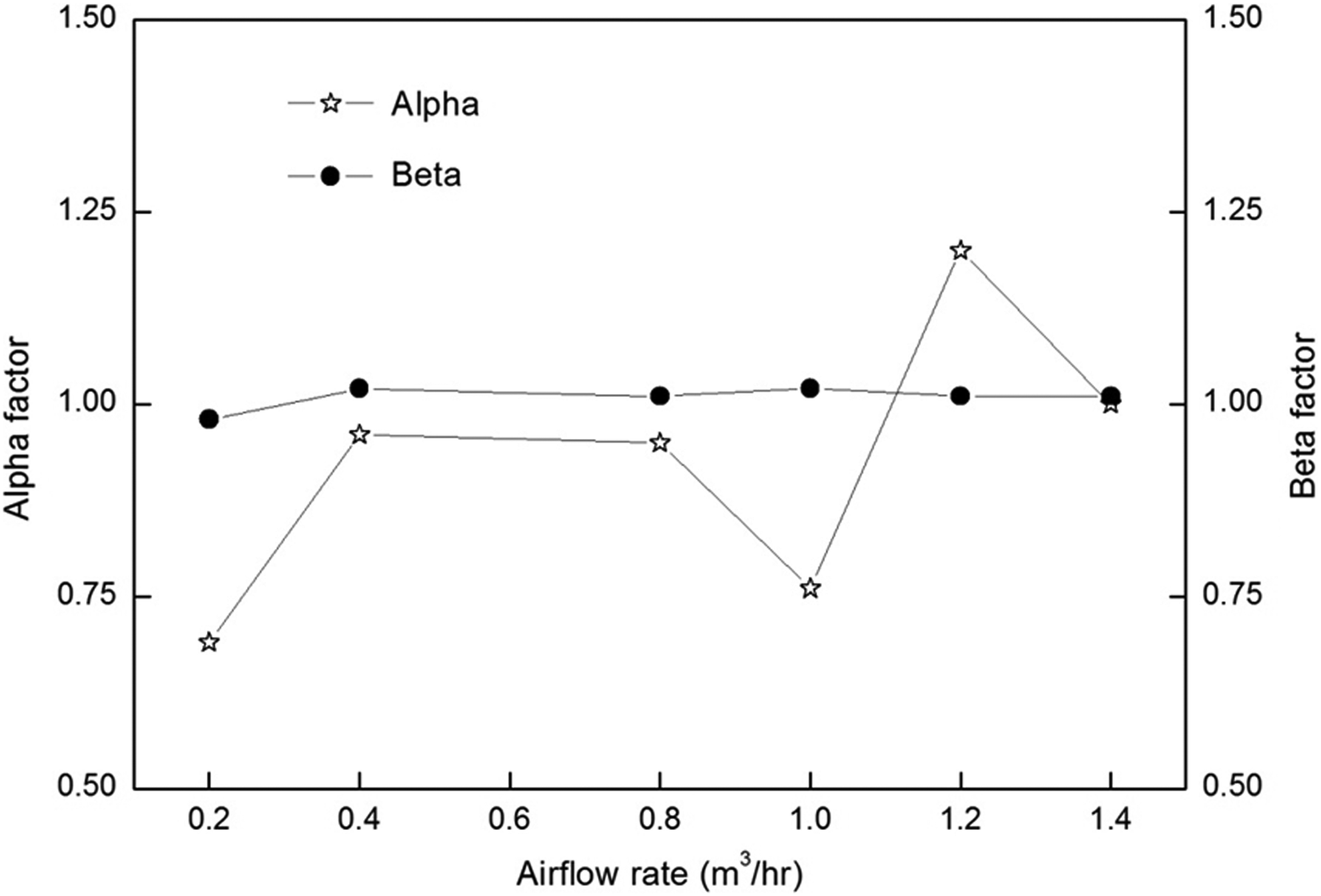
Different airflow rates versus alpha and beta factors.
Conclusions
OTR from gas to liquid phase is a rate controlling step in an aerobic bioreactor. In this study, oxygen transfer characteristics were investigated in a newly developed ILAB reactor under different working conditions using tap water and synthetic wastewater. In the case of tap water, the OTR was 138.24 mg/min and the aeration efficiency was 30.21% at the airflow rate of 1.0 m3/h. For the ammonia-bearing wastewater, the OTR was 147.21 mg/min and the aeration efficiency was 40.21% at the airflow rate of 0.8 m3/h. The ILAB reactor was capable of supplying oxygen more than 4.540 mg/L·min required at 5.44 kg·N/m3.day reported as the highest NLR in the literature for single-stage system. Aeration efficient system can eliminate the bottleneck of nitrification in the PN-ANAMMOX process.
Footnotes
Acknowledgments
The study was supported by the National High-Tech Research and Development (R&D) Program of China (2009AA06Z311), the Natural Science Foundation (31070110), Zhejiang Provincial Natural Science Foundation (Z5110094), Ph.D. Programs Foundation of Education Ministry of China (J 20120067), and Higher Education Commission (HEC) of Pakistan.
Author Disclosure Statement
No competing financial interests exist.