







Abstract
Abstract
This study is focused on identifying the relationship between structural properties and filtration performance of membranes with and without AgNPs. For this purpose, Ag nanoparticles (AgNPs) (0, 0.2, 0.4, 0.8 wt%) were embedded into hollow fiber (HF) membranes by using the blending method. The dry-wet phase inversion method was used for the fabrication of HF membranes. Successful embedding of AgNPs into the HF membrane matrix was confirmed by different analytical techniques such as scanning electron microscopy (SEM) with energy-dispersive X-ray (EDX), water contact angle (CA), electrokinetic analyzer for zeta-potential measurement, and dynamic mechanical analyzer for mechanical stability. Model solutions (protein and real activated sludge) were used for the determination of filtration performance of pristine and nanocomposite membranes. AgNPs reduced the CA value of pristine membrane from 94°±1° to 69°±2°. From SEM-EDX measurement, it was realized that the dual-layer structure was obtained as well as finger-like pores were increased when AgNPs were added. In addition, AgNP concentration increment increased the pore size at the outer surfaces of the HF membranes. EDX measurement showed existence of AgNP throughout the outer surface of the membranes. Similar to these results, addition of AgNP increased permeability of membranes from 120 L/m2·h·bar to 212 L/m2·h·bar. According to the model solution filtration results, AgNP improved both protein and activated sludge filtration performances of membranes regarding rejection properties. Besides, AgNPs increased mechanical stabilities of HF membranes. Considering all results, it was concluded that HF membranes with embedded AgNPs having finger-like dual-layer cross-section structure, highly hydrophilic surface, mechanical strength, pore size, and low fouling properties are suitable, especially for membrane bioreactor systems.
Introduction
I
Several types of fouling exist regarding the nature of foulants. Among all types of fouling, biofouling is the most serious problem (Vrouwenvelder et al., 2011; Mollohosseini et al., 2012), especially in membrane bioreactor (MBR) applications. The main strategies used for biofouling prevention in MBR systems can be classified as (1) injection of a biocide into the system, (2) physical or chemical washing of fouled membranes, and (3) developing fouling resistance membranes (Mollahosseini et al., 2012). Recently, membrane fabrication has focused mostly on the antifouling property. For the development of antifouling membranes, the following surface modification techniques can be used: (1) bulk modification of polymer material, (2) surface modification of fabricated membranes, and (3) blending (Zhao et al., 2013a). Through surface modification, it is possible to localize the hydrophilic material within membrane pores so that they can exert positive effects on fouling reduction. Bulk modification can be achieved through sulfonation of polymer material (Guan et al., 2006; Rahimpour et al., 2010; Zhao et al., 2013a, 2013b; Prince et al. 2014), grafting of carboxylic or other groups (chlorosulfonic, hydroxyl, carboxyl, etc.) to the polymer. However, blending is widely used, since it is, by far, the simplest method.
In the blending method, the hydrophilic polymers such as polyvinylpyrrolidone (PVP) and polyethylenegylcol (PEG) are directly added to the dope solution and the polymeric membranes can be easily modified. Other applied blending materials include amphiphilic copolymers such as styrene-maleic anhydride and amphiphilic pluronic copolymer and surface modifying macromolecules (Zhao et al., 2013a). Vast literature is available on blending methods with different materials, for example, Loh et al. (2011) used pluronic copolymers to fabricate HF ultrafiltration membranes where they found that the addition of pluronic copolymers into the membrane structure increased the performance of the membranes in terms of permeability and solute rejection. In another study, Zhang et al. (2011) fabricated polyvinyl butyral HF membranes by using PVP as an additive and realized that PVP changes the kinetic property of the dope solution where an increase in PVP concentration resulted in increased flux and rejection, respectively.
In recent years, modification of membrane surfaces using nanoparticles has widely been studied. Nanoparticles have unique magnetic, electrical, mechanical, and/or structural properties and also exhibit enhanced high perm-selectivity, high hydrophilicity, and fouling resistance (Celik et al., 2011). Further, it was proved that some nanoparticles such as copper, silver, titanium, and zinc oxide show high toxicity to some microorganisms. Razmjou et al. (2012) have studied the effect of TiO2 nanoparticles on polyethersulfone (PES) HF membranes where they used both mechanically and chemically modified TiO2 nanoparticles to fabricate membranes having higher thermal resistance, permeability, porosity, pore size, lower elasticity, and tensile strength. Daraei et al. (2013) used magnetic nanoparticles for membrane fabrication, proving that the addition of magnetic nanoparticles exhibited superior hydrophilicity and preferable antifouling properties. Booshehri et al. (2013) fabricated Ag nanoparticle/multiwalled carbon nanotubes (MWCNT) composite membranes and found out that these membranes showed excellent antimicrobial and antifouling properties.
Combination of polymeric materials with AgNPs in membrane fabrication has recently become significant due to high antibacterial properties of silver against bacteria and viruses (Basri et al., 2011; Koseoglu-Imer et al., 2013). Taurozzi et al. (2009) investigated the antibiofouling and virus-removal ability of AgNPs added to polysulfone membranes. Antibacterial capacity of AgNPs was found to be effective in reducing intrapore biofouling in porous membranes of a wide range of porosities. For antibacterial properties of AgNPs, some researchers reported that the positive charge on the Ag+ ion was crucial for its antimicrobial activity because of the electrostatic attraction between the negatively charged cell membrane of the microorganism and positively charged nanoparticles (Mollahosseini et al., 2012; Yang et al., 2012). The other possible explanation for AgNPs toxicity is the generation of reactive oxygen species that stimulate the toxicity mechanism (Yang et al., 2012; Ivask et al., 2014). Xiu et al. (2012) have argued well that the physicochemical properties of AgNPs are important and they change the magnitude of toxicity due to the changes in the degree of dissolution and delivery of silver ions. In general, these antibacterial properties are valid for AgNP suspensions but for the membranes having AgNPs incorporated, the antifouling effects of AgNPs can be explained by the AgNP location in the membrane matrix because AgNPs can act as Ag+ ion deposit (Sile-Yuksel et al., 2014).
To our knowledge, only limited work has been reported on the fabrication of nanocomposite HF membranes with AgNPs. Sawada et al. (2012) grafted the acrylamide onto PES HF membranes, followed by embedding AgNPs within grafted acrylamide, and investigated whether the fabricated HF membranes have antifouling and antibacterial properties. According to their results, the membranes containing silver nanoparticles showed high antibacterial activity and inhibited the growth of Escherichia coli. In another study, Prince et al. (2014) used poly(acrylonitrile-co-maleic acid) as a linker to chemically attach PEG and AgNPs to PES HF membranes and obtained results that are in correlation with Sawada et al. (2012), where the nanocomposite HF membranes had high antibacterial properties. In another study, Gunawan et al. (2011) coated Ag/multiwalled carbon nanotubes on a polyacrylonitrile (PAN) HF membrane. Their results supported the results of other studies. In these studies, AgNPs are embedded into the PES membrane structure by chemical surface modification methods (grafting, photografting, thermal grafting).
In this work, the main aim is to study the determination of filtration performances of AgNP HF membranes The membranes were characterized for Porometer, scanning electron microscopy (SEM)-energy-dispersive X-ray (EDX), contact angle (CA), zeta potential, and dynamic mechanical analyzer (DMA). The filtration performance of the membranes was determined by model protein and activated sludge followed by silver release studies from the membranes, which was determined by inductively coupled plasma (ICP) analysis.
Materials and Methods
Chemicals
Polyethersulfone was purchased from BASF chemical company. Two different types of polyvinylprrolidone (PVP-K30 [Mw=65,000] and PVP-K90 [Mw=1,500,000]) were purchased from ISP. N-N-dimethylformamide (DMF) was acquired from Ak-Kim Kimya San. Ve Tic. A.Ş. and was used as a solvent. AgNPs (particle size<35 nm) were purchased from Nanostructured and Amorphous Materials Inc. (Nanoamor). For the preparation of HF membrane modules, the glue was purchased from PHILOS. All chemicals in this study were used without further purification.
HF membrane fabrication
Hollow fiber membranes were fabricated by the dry-wet phase inversion method using the pilot scale HF membrane fabrication machine at the National Research Center on Membrane Technologies located at Istanbul Technical University. Dope solutions contain 20 wt% of PES, 5 wt% of PVP-K30, 2 wt% of PVP-K90, and 73–72.2 wt% of DMF. High- and low-molecular-weight PVP were used to provide high permeability and selectivity, respectively. To prepare pristine PES dope solution, first PES was dried for 2 h at 100°C. Dried PES, PVP K90, and PVP K30 were added slowly to the solvent and mixed for 12 h at 90°C followed by sealing the dope solution under vacuum. For the preparation of AgNPs blended PES dope solution, first three different concentrations of AgNP (0.2, 0.4, and 0.8 w/w) were homogeneously dispersed in DMF using a Bandelin-Sonopuls homogenizator. The dried PES, PVP K90, and PVP K30 were added to this solution as previously described. The dope solutions were sonicated for 30 min in an ultrasonication bath to get rid of the air bubbles and then sealed under vacuum.
A standard spinning method was used for pristine and AgNPs HF membrane fabrication. A schematic view of the setup and the triple spinneret can be seen in Figs. 1 and 2, respectively. The dope, bore, and outer solutions were pumped to the spinneret where all solutions were combined by using pressurized nitrogen gas (2 atm). Before plunging the solution into the first coagulation tank, the solution was passed through an air gap after it exited from the spinneret. Extruded fiber first enters the first coagulation bath, followed by the second coagulation bath, and finally it is collected on the take-up roll.
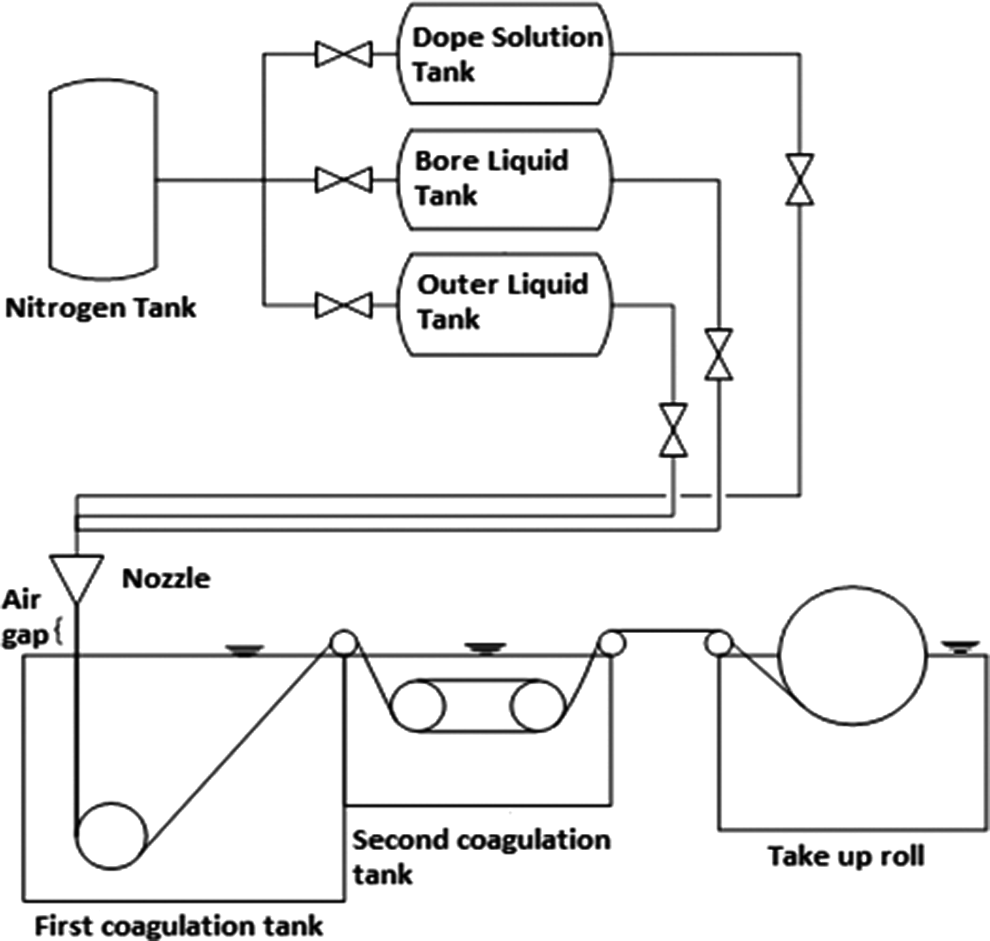
Hollow fiber (HF) spinning line.
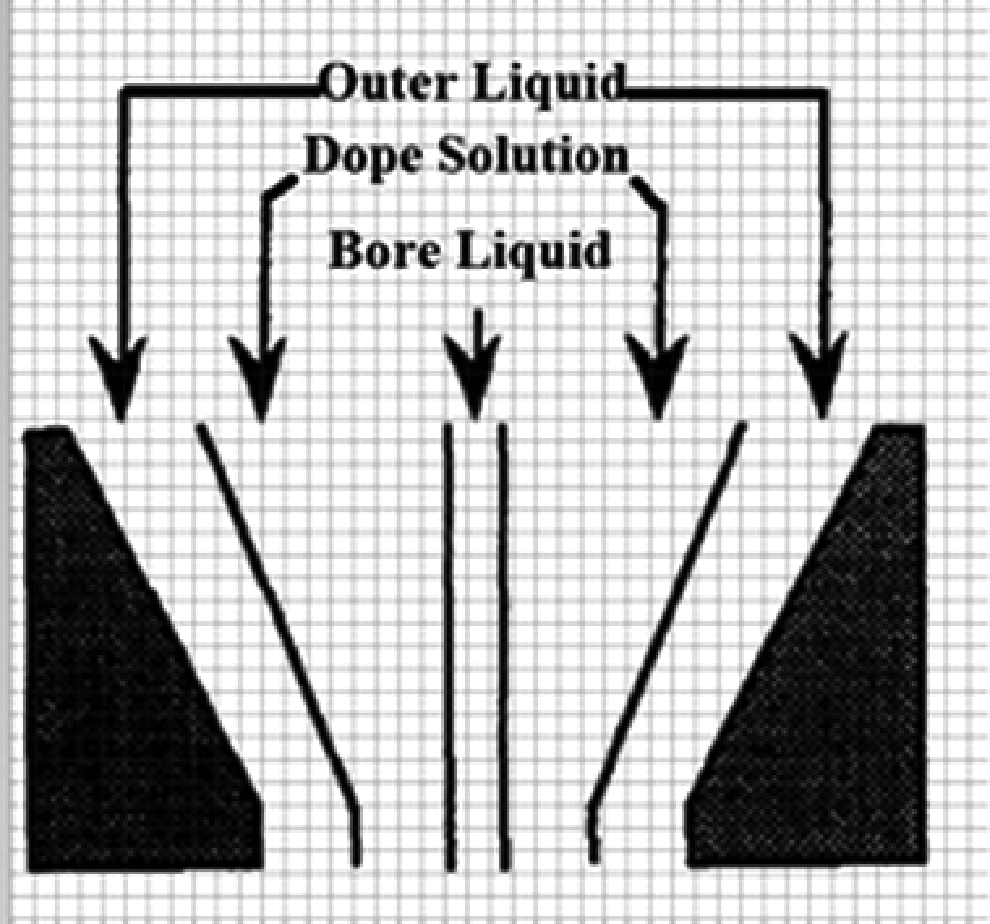
Schematic of triple spinneret.
In our experiments, 70%/30% (w/w) DMF/water was used for both the bore liquid and the outer liquid. Air gap, take-up speed, and coagulation bath temperature were chosen to be 15 cm, 4.82 m/min, and 50°C, respectively. After fabrication, the membranes were flushed with distilled water at 40°C water for 12 h using a membrane flushing system. Membranes were post-treated at 4,000 mg/L NaOCl for 2 days to remove the excess amount of PVP (Tsai et al., 2006; Li and He, 2007; Zhang et al., 2008). To prevent pore collapse, membranes were placed in 10%/90% (w/w) glycerol/water solution for 12 h.
SEM-EDX analysis
Surface and the cross-section morphologies of the membranes were directly observed by SEM (Philips-XL30 SFEG) in high vacuum mode after coating with gold to observe the pore structure. Before SEM analysis, the membrane samples were immersed in ethanol/water solution at room temperature followed by step dehydration with 25, 50, 75, and 100% ethanol for 10 min. The membranes were then dried at room temperature to be ready for SEM scan. The presence of AgNPs on the surfaces of HF membranes was evaluated by EDX coupled with SEM (at 150 eV resolution).
Permeability test
Extruded HF membranes were cut 20–30 cm in length, and the modules (7.5 cm2 surface area) were prepared for dead-end flow filtration. For permeability experiments, a slightly modified dead-end filtration cell (Sterlitech Corporation) was used (Sengur, 2013). All membranes were compacted for 30 min at 1 bar with distilled water before permeability tests for the removal of any remaining solvent or unreacted polymer. After compaction, at three different pressure values (0.5, 1, and 1.5 bar), flux measurements were performed with distilled water and the flux values were calculated as given next (Vatanpour et al., 2012a):
where V is the volume of permeate (m3), A is the membrane effective area (m2), and T is the permeation time (h). Further, the flux data were transferred to excel and the slope of the data was drawn to find the permeability.
CA measurement
Hydrophilicity of the fabricated membranes was measured by the Sessile drop method using Attension T200 Theta CA equipment. Approximately 3 μL of diwater was placed on top of the dry membrane surface in the air. For each membrane, data were collected five times at different places on the membrane.
Mechanical stability measurements (DMA)
Mechanical properties of HFs were measured using SII DMS 6100 Exstar DMA. HF membrane was placed between the grips and fastened. A cross-sectional thickness measuring device was used to calculate the cross-sectional area of the membranes. Data were collected every 3 s in force increments of 250 N over 20 steps for a total load of 5,000 N. For each sample, measurements were performed in triplicate and average values were reported.
Zeta-potential measurement
Streaming current measurements were performed with an electrokinetic analyzer (SurPASS, Anton Paar GmbH) using a measuring cell for solid samples with a planar surface. For each measurement, membrane samples of 20×10 mm were fixed on sample holders using double-sided adhesive tape. The sample holders were inserted into the adjustable-gap cell such that the membrane surfaces were facing each other separated with a gap of 100 μm. Before sample mounting, membranes were soaked in a 10−3 mol/L KCl solution for 24 h. Before starting the measurement, the samples were thoroughly rinsed with the measuring electrolyte. A 10−3 mol/L KCl solution was used as the background electrolyte, and the pH of this aqueous solution was adjusted as 6.2 with 0.1 M HCl. The measurements were repeated twice for different membrane samples.
Filtration tests with model solutions
Protein filtration
Bovine serum albumin (BSA) was chosen as the model protein solution for evaluating the fouling property of pristine and nanocomposite HF membranes. In the BSA experiment, 100 mg/L BSA solution was prepared in phosphate buffer solution (PBS, pH 6.0). Filtration tests of membranes were conducted at room temperature, and BSA rejection data were collected from the permeation and feed solutions. Concentrations of BSA solutions were determined by Hach Lange DR500 UV Spectrophotometer. BSA rejection was calculated using the equation given next (Vatanpour et al., 2012b):
where
R, rejection (%),
Cp, protein concentration at permeate (mg/L)
Cf, protein concentration at feed (mg/L).
Activated sludge filtration
After membrane characterization, activated sludge filtration experiments were carried out. A real activated sludge that had a suspended solid concentration of 3,000±210 mg/L was used. At 0.8 bar, the activated sludge solution was filtrated in vacuum mode for 3 h. The filtration performance was determined as described in protein filtration tests.
Results and Discussion
Membrane characterization
For the morphological and structural characterization of pristine PES and AgNP-PES membranes SEM-EDX, CA and zeta-potential analyses were conducted. SEM images of cross-section and top surface of HF membranes are presented in Figs. 3 and 4, respectively. In Fig. 3a, it can be seen that pristine PES membrane had a sponge-like cross section; however, addition of AgNP changed the cross-section morphology of HF membranes from sponge like to finger like. Moreover, addition of AgNPs resulted in the formation of a dual-layer finger-like cross-section, which means that the double finger-like pores arise from inner and outer surfaces to the center of the fiber (Fig. 3b). This dual structure was formed due to the usage of both outer liquid and bore liquid simultaneously during membrane fabrication.
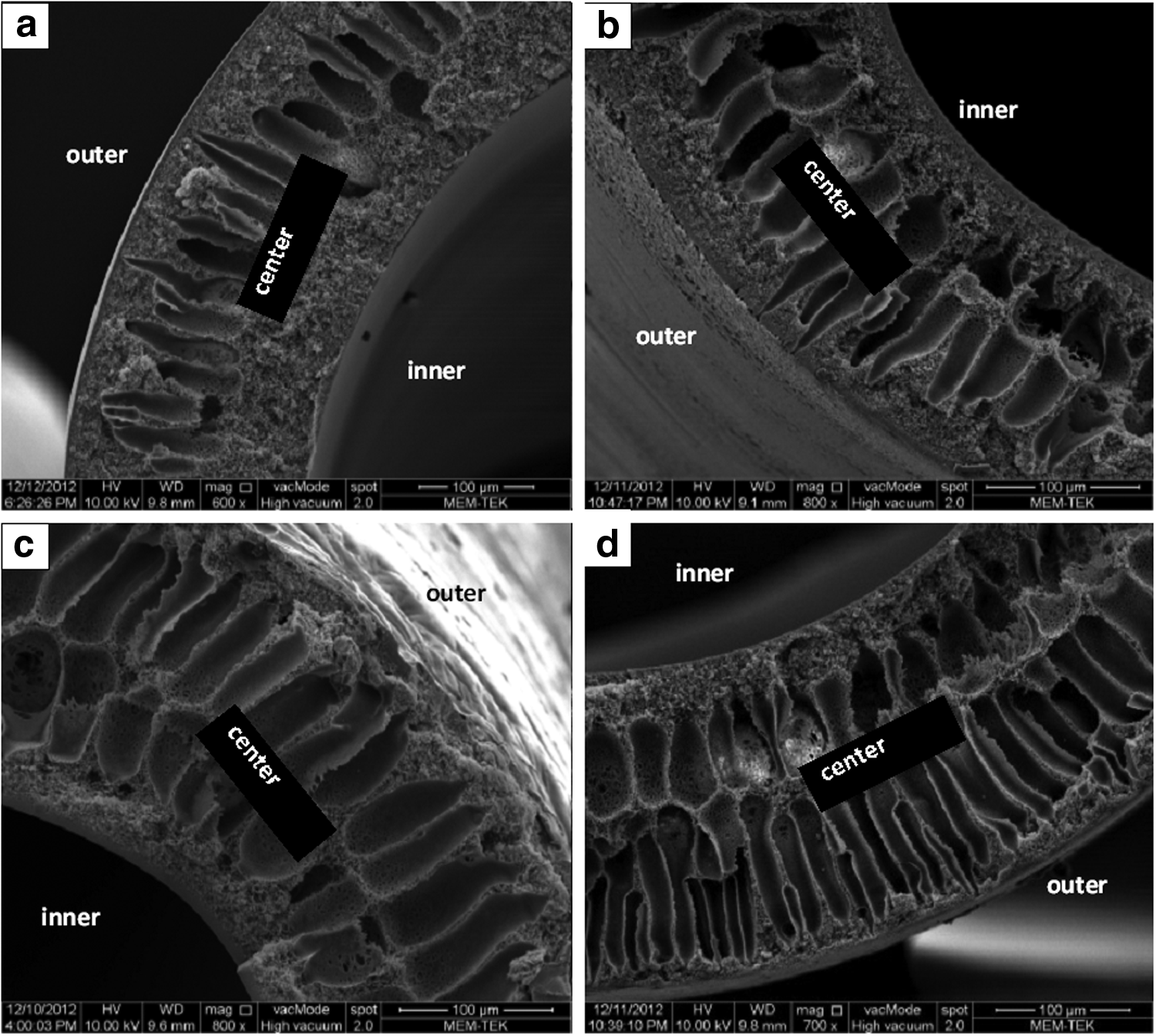
Cross-sectional view of fabricated Ag-polyethersulfone (PES) nanocomposite HF membranes,
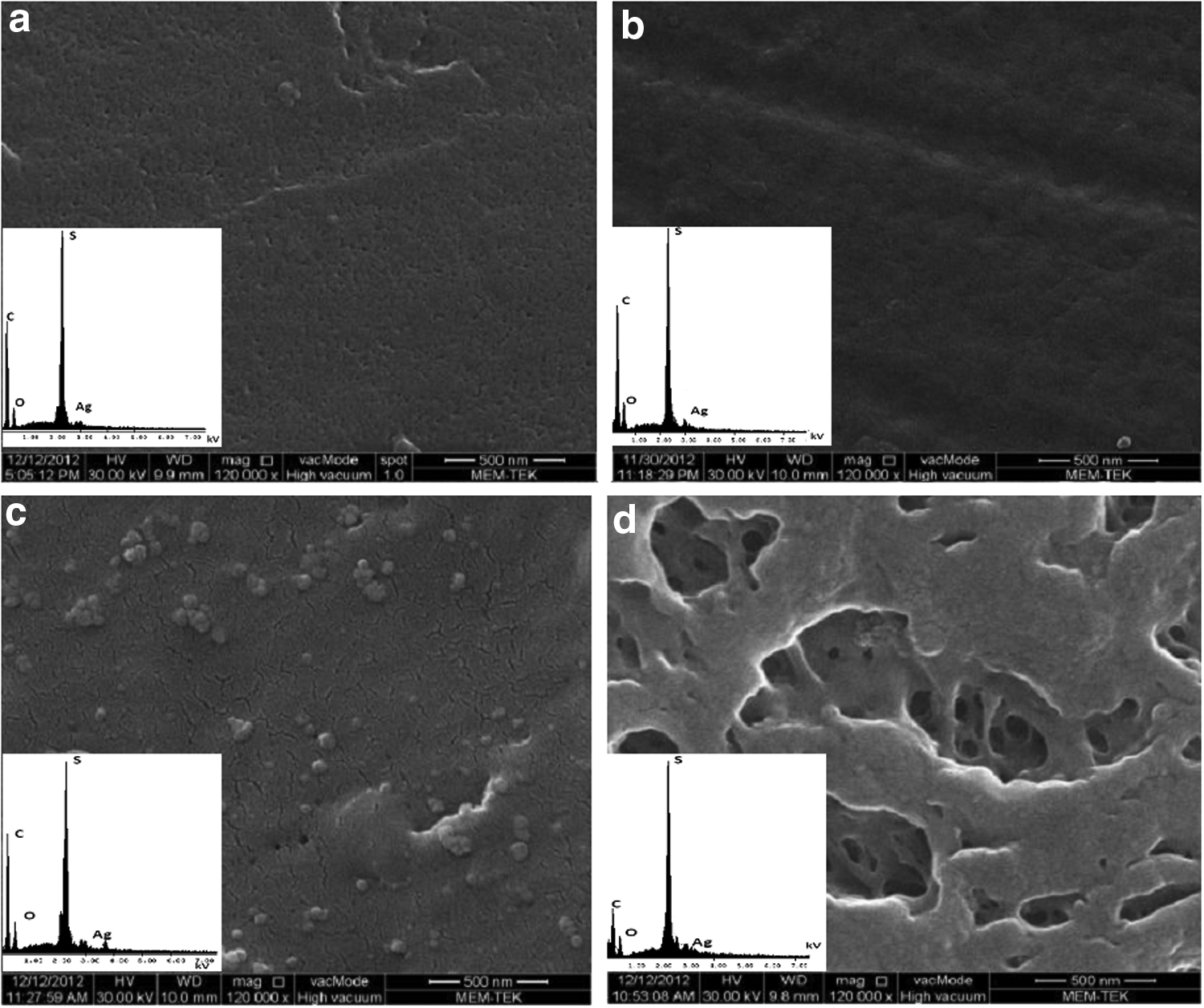
Outer surface images and energy-dispersive X-ray spectra of fabricated Ag-PES nanocomposite HF membranes,
The main advantage of the HF structure having a dual-layer cross-section lies in utilizing both sides of the membrane for filtration (from outer to inner and from inner to outer). However, pristine membranes (Fig. 3a) do not have a dual-layer structure, although they were fabricated under the same conditions with AgNP membranes. It can be said that the addition of AgNPs decreased the exchange time between the solvent and non-solvent during the phase inversion process and so the coagulation process was completed faster in AgNP membranes than in pristine PES membranes. As seen in Fig. 4a, the outer surface of the pristine membrane had a nonporous surface. After the addition of AgNP, pores were observed on the outer surface of the membranes. The increase in AgNP concentration increases the pore size on the outer surface of the membranes. In literature, it was observed that the addition of hydrophilic substances to the dope solution fastens the exchange rate between non-solvent–solvent and, in turn, encourages the formation of porous structures (Peng et al., 2012; Yin et al., 2013).
Presence of Ag particles was confirmed by EDX analysis, as can be seen in Fig. 4 with surface SEM images. The EDX spectra showed Ag peaks around 3 KeV and sulfur peaks around 2.5 KeV (Prince et al., 2014), respectively. Ag peaks show that AgNPs were successfully embedded in a polymer matrix.
CA results are presented in Fig. 5. It can clearly be seen that the addition of AgNPs increased the hydrophilicity of the pristine membrane. The pristine membrane had the highest CA value of 94±1° whereas AgNPs blended membranes had 69±2°, 78±3°, and 89±2° for 0.2, 0.4, and 0.8% AgNP, respectively. At relatively high AgNP concentrations, the CA values seem to be increasing, which we attribute to the aggregation of AgNPs within the polymer matrix. The polymer material having hydrophobic properties may coat AgNP aggregations, and, hence, it may eliminate the effect of AgNPs. Improvement of PES membrane hydrophilicity with the addition of AgNP was explained with different scenarios. Oxidation of AgNP can release Ag+ in aqueous phase and these Ag+ ions can be absorbed on the surface of AgNP. Hydrated Ag+ ion formation can be the probable source of AgNP hydrophilicity (Liu and Hurt, 2010; Li et al., 2013). Basri et al. (2011) attributed these changes in hydrophilicity to the lowered surface tension of PES due to the presence of AgNP.
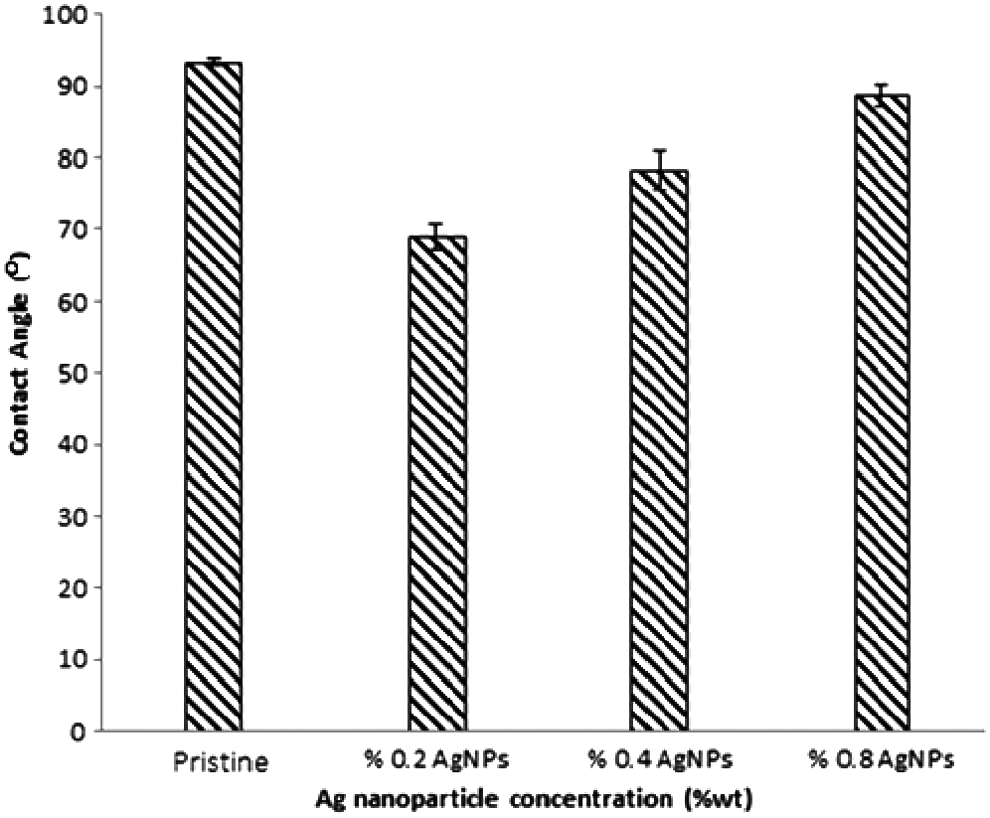
Contact angle values of fabricated Ag-PES nanocomposite HF membranes.
Pristine and AgNP nanocomposite membranes were characterized for their charging behavior in terms of zeta potential at a constant pH value. pH 6.2 was chosen because the filtration model solutions had this pH value. Figure 6 shows the zeta-potential values of membranes. The surface charge of the membranes has a significant influence on the fouling phenomenon and membrane filtration process. The surface charge of a membrane or a particle in solution leads to the formation of an electric double layer consisting of a fixed layer and a diffuse layer to neutralize the charge and the shear plane forms in between this layer. The movement of ions in shear plane renders electric potential and this electrical potential is called zeta potential (ζ), which can be determined by the measurement of streaming potential (Han et al., 2011). Compared with the pristine membrane, the addition of AgNPs increased the surface negative charge of the membrane. This reduction in zeta potential of the membrane surface is caused by the preferential adsorption of OH− and Cl− ions from the electrolyte solution or from the charges originating from the dissociation of surface groups of membrane that were apparently detached (Han et al., 2011). Morga et al. (2014) coated mica surface with AgNP and found that silver led to the reduction of zeta potential. Membranes having a negative surface charge cause negative zeta-potential values. AgNP increases the surface negative charge of the membrane, because hydroxyl (OH−) ions may accumulate on the silver surface. The zeta potential of the membranes with 0.2% and 0.4% AgNP had similar zeta potential (more negative) values, while the zeta potential of the membrane having 0.8% AgNP has a higher negative charge similar to that of the pristine PES membrane. The reason for this trend was explained by Vatanpour et al. (2014), where they measured the zeta potential of MWCNT/PES membranes and found that at high concentrations nanoparticles agglomerate.
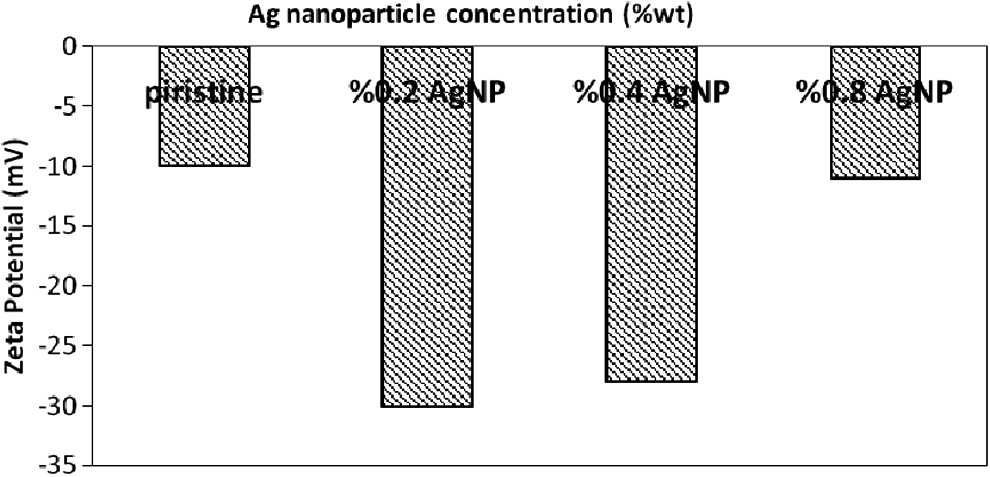
Surface charge values of fabricated Ag-PES nanocomposite HF membranes.
Membrane permeability
Figure 7 shows the permeability values of the membranes. The properties of membranes (porosity, pore interconnection, pore size, and hydrophilicity) affect the membrane permeability (Lang et al., 2007). As can be seen in Fig. 7, PES-AgNP membranes have higher permeability values than the pristine PES membrane, which can be related to the lower CA values and high surface pore size of the PES-AgNP membranes (as shown in SEM surface images). Up to 0.4% AgNP concentration, the permeability values increased; however, for 0.8% AgNP concentration, the permeability decreased. Although the pore size is bigger for AgNP membranes with 0.8 wt% AgNP, high AgNP concentration may cause agglomeration of nanoparticles in the membrane pores, which, in turn, causes clogging problem along the membrane matrix and lowers permeability values.
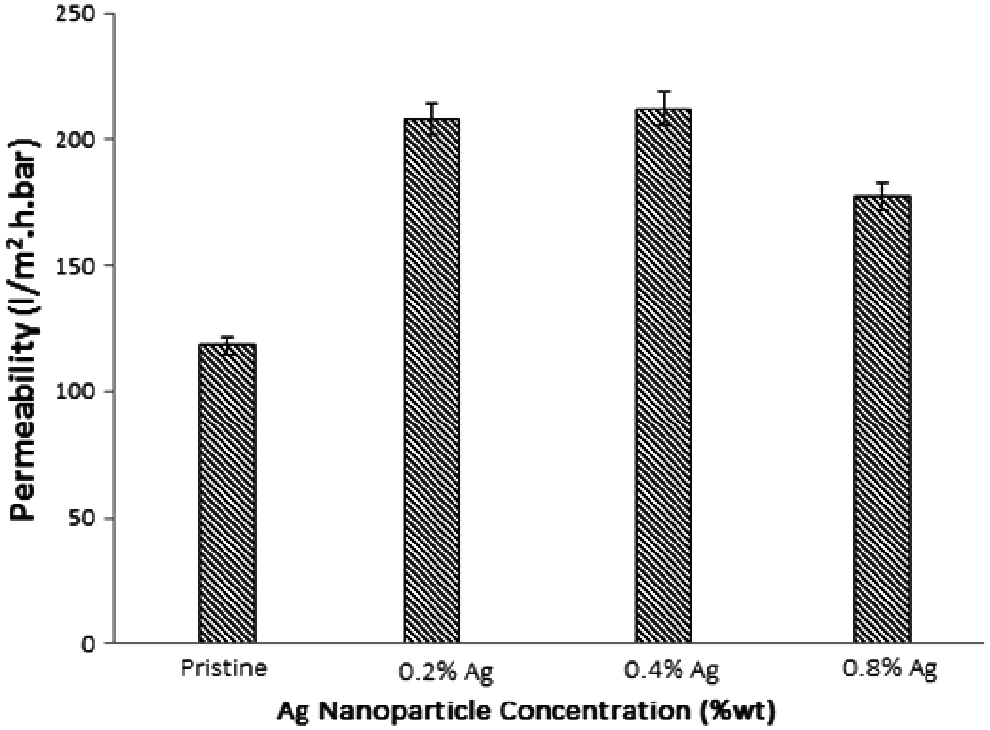
Water permeability data of fabricated Ag-PES nanocomposite HF membranes.
Filtration performances of membranes
Protein filtration performance
The protein filtration performance of pristine PES and AgNP-PES membranes was determined by measuring BSA flux values for a 60 min filtration. Some interactions between solution and polymer chemistry; molecules and membranes; ionic strength; and pH and membrane morphology can be related to the protein fouling (Kang et al., 2007).
Flux values versus time graph of the fabricated membranes is given in Fig. 8. The AgNP-PES membrane with 0.2% AgNP has the best protein filtration performance. In literature, it was shown that the short-term BSA filtration performance was generally membrane dependent (Koseoglu-Imer et al., 2013). AgNP-PES membrane having 0.2% AgNP concentration has the lowest CA, high permeability, and the highest negative zeta-potential values. It is known that protein filtration in membranes depends on hydrophilicity, surface roughness, pore size, and surface charge (Vatanpour et al., 2012b). The 0.2% AgNP-PES membrane, which is more hydrophilic, with high negative surface charge and higher permeability could improve the protein filtration performance and simultaneously AgNP significantly enhances the protein rejection of the pristine PES membrane (Fig. 9). According to Fig. 9, BSA rejection of nanocomposite membranes increased when AgNP concentration increased. In this study, especially the surface charge affected the protein rejection and flux values.
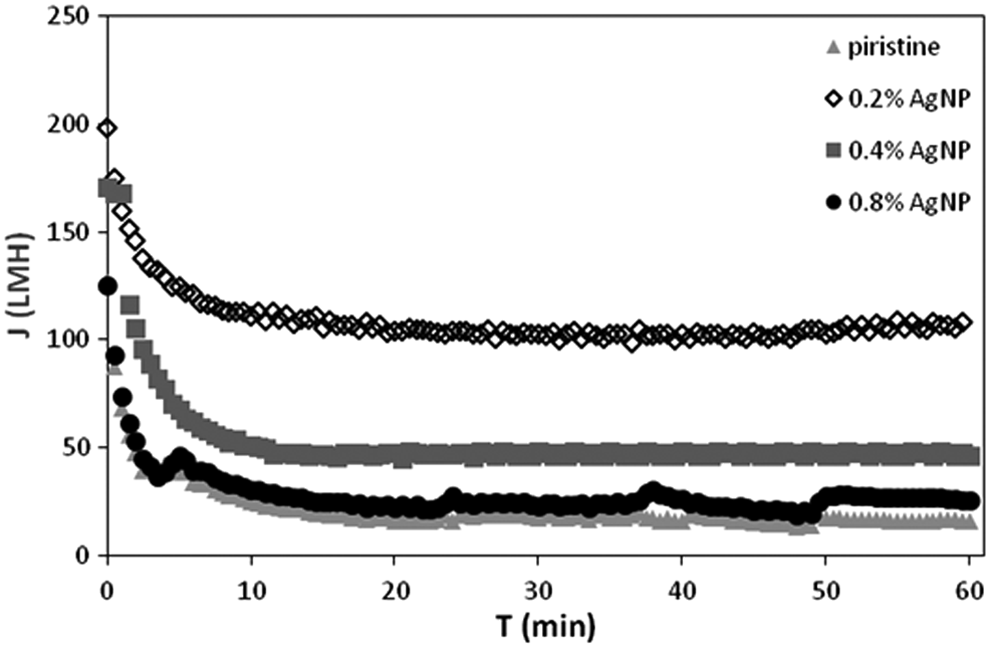
Bovine serum albumin (BSA) filtration flux versus time.
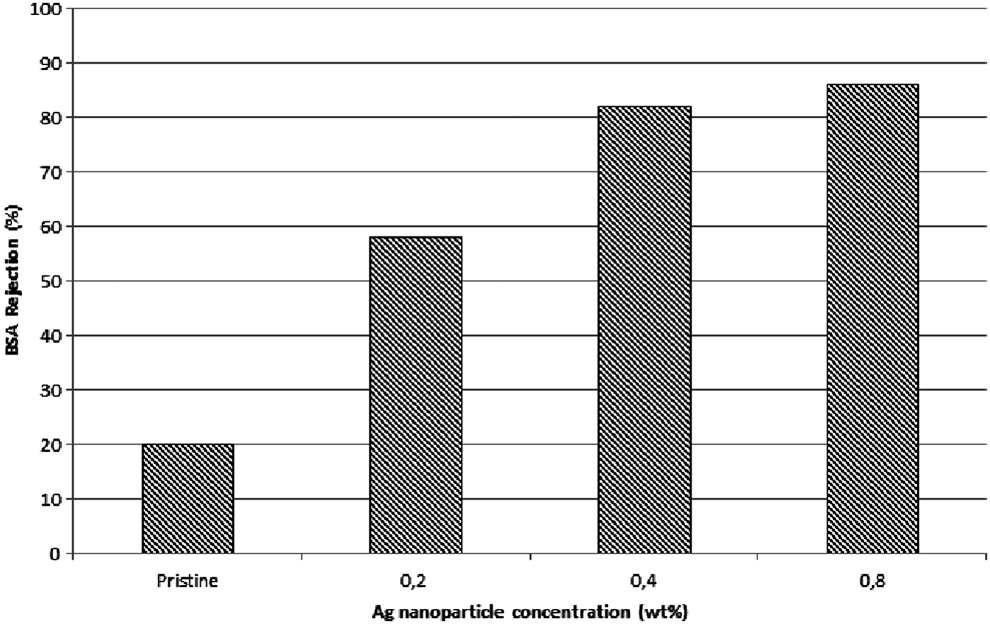
BSA rejection values of fabricated Ag-PES nanocomposite HF membranes.
Electrostatic interactions between the charged groups of the protein and any charged groups on the polymeric membrane play a major role in the aggregation/deposition/adsorption phenomena and have been reported to be a major cause of fouling during protein filtration (Pinelo et al., 2012). At pH 6.2, BSA particles are negatively charged because the value is higher than the isoelectric point, which is pH 4.7. Therefore, 0.2% AgNP-PES membrane has the highest negative surface charge at this pH. This contributes toward minimizing the tendency to form BSA aggregates onto 0.2% AgNP-PES membrane surface, because the repulsion among the membrane and BSA particles and within leads to the formation of higher permeate flux and lower protein rejection. However, when the negativity of surface charge is decreased, it results in decreased permeate flux and increased protein rejection.
Activated sludge filtration performance
The filtration studies of nanocomposite and pristine PES membranes were conducted using real activated sludge obtained from lab-scale MBR. The activated sludge filtration flux values of the membranes were monitored for 1 h. The flux graph is given in Fig. 10. The PES nanocomposite membrane with 0.2% AgNP concentration has the highest flux values, and the pristine PES membrane has the lowest flux values after 1 h of filtration. The flux values of composite membranes slightly decreased with an increase in AgNP concentration. This result was similar to the decrease of membrane permeability with an increase in AgNP concentration of the membrane as discussed in the membrane permeability part. The exact mechanism of the AgNP effect on activated sludge deposition is unclear and will be studied in our future experiments, especially with long-term MBR studies. However, the possible reason is that the protection of membrane pores with AgNPs could provide many advantages as well as AgNPs onto the membrane surface could restrict the bacterial development with producing ionic silver (Ag+). Our last study about the effect of AgNP location in the membrane matrix on the antibacterial mechanism showed that the location of AgNP along the membrane matrix changed the bacteriostatic effects of nanocomposite membranes because the interaction between AgNP and bacterial cells depends on the release of ionic silver from AgNP embedded within the membrane (Sile-Yuksel et al., 2014). HF membranes have a larger surface area than flat-sheet membranes; therefore, AgNPs can locate onto the membrane surface more easily and thus the contact area between AgNPs and bacteria cells is enhanced. Consequently, in HF nanocomposite membranes, AgNP may promote the activated sludge filtration and these membranes are convenient for usage in MBR systems.
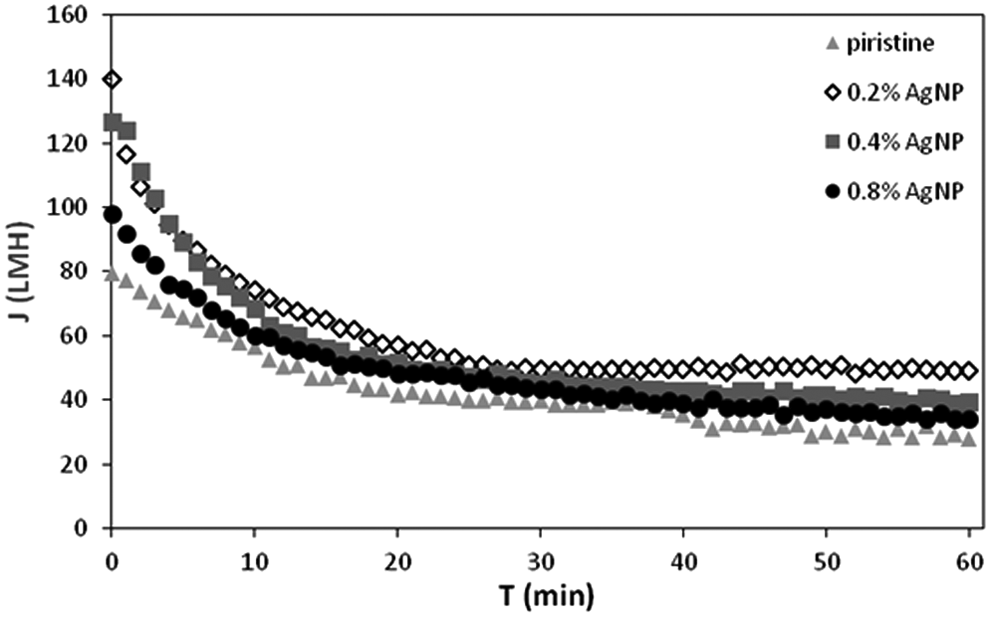
Activated sludge filtration flux versus time.
Mechanical stability of the membranes
Figure 11 presents Young's modulus data of the fabricated HF membranes. It can be seen that the addition of AgNP to the membrane matrix improved Young's modulus value of the pristine PES membrane. The best mechanical stability was observed with 0.4% Ag concentration, which is 42.2 MPa. In the literature, it was explained that the incorporation of nanoparticles into the membrane matrix even at low concentrations usually improves the mechanical properties of the membranes, but higher concentrations of nanoparticles could deteriorate the mechanical properties (He et al., 2014). In our membranes, this deterioration was observed with 0.8% AgNP concentration. From the SEM images (Fig. 4), it can clearly be seen that 0.8% AgNP nanocomposite membranes have the highest porous structure but, in turn, have decreased mechanical property. In this study, these AgNP membranes were fabricated as a prelude to MBR studies. In MBR systems, HF module design and development as well as the mechanical properties of the membranes are significant. High mechanical stability of AgNP membranes may provide better module designs and better service life in the MBR system with low fouling properties.
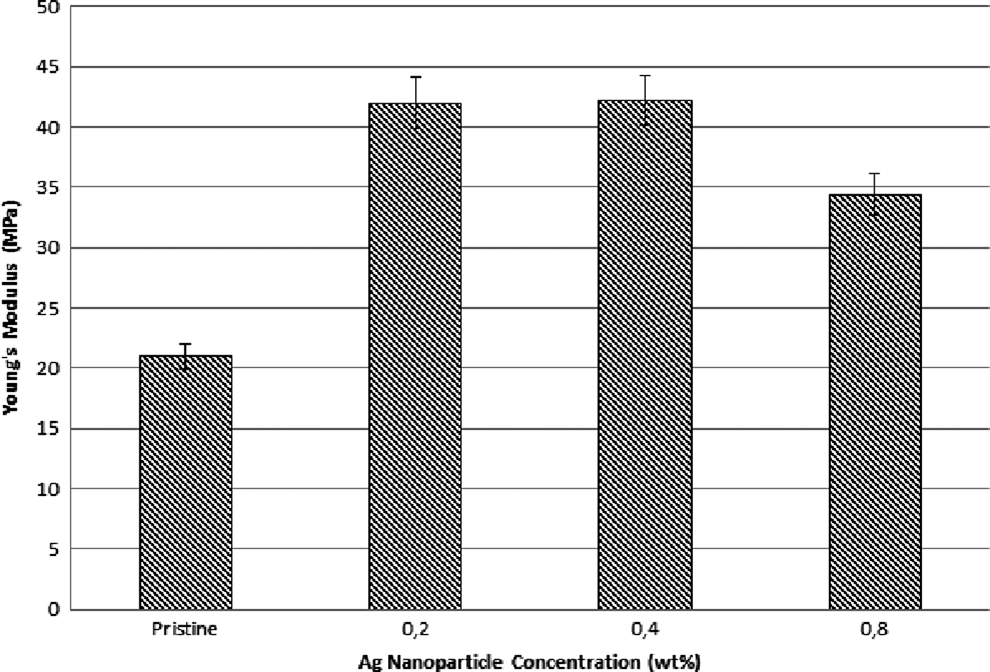
Young's Modulus values of fabricated Ag-PES nanocomposite HF membranes.
Conclusions
Major findings of this study can be summarized as follows:
• Addition of AgNP changed the cross-section morphology of HF membranes from sponge like to finger like. AgNPs help in forming the dual-layer cross-section inside the fibers and double finger-like pores. Along with an increase in AgNP concentration, the pore size of the membranes also increased. The presence of AgNPs has been confirmed by EDX analysis. • From CA and zeta-potential analysis, the addition of AgNPs increased both the hydrophilicity and surface negative charge of the pristine membranes. • According to the permeability and model filtration tests, it was found that PES-AgNP membranes have higher permeability values compared with pristine PES membranes. AgNPs significantly enhanced the protein filtration flux value and the rejection efficiency of the pristine PES membranes. BSA rejection of nanocomposite membranes increased when AgNP ratio was increased. In activated sludge filtration results, the PES nanocomposite membrane with 0.2% AgNP concentration showed the highest flux values while the pristine PES membrane had the lowest flux value. The flux values of composite membranes slightly decreased with an increase in AgNP concentration. AgNPs could promote the activated sludge filtration, and these membranes are promising for their use in MBR systems. • According to the DMA analysis, the addition of AgNPs to the membrane matrix improved Young's modulus value of the pristine PES membrane. High mechanical stability of AgNP membranes may provide better module designs and better service life in the MBR system with low fouling properties.
Footnotes
Acknowledgments
The authors would like to thank Serkan Guclu for his help in obtaining SEM images and Dr. Murat Eyvaz and Dr. Raghu Sarma Mokkapati for their contributions to the study.
Author Disclosure Statement
No competing financial interests exist.