







Abstract
Abstract
Activated carbon (AC) adsorption is an important method to control the emission of dioxins and dioxin-like congeners (polychlorinated dibenzo-p-dioxins and dibenzofurans [PCDD/Fs] and polychlorinated biphenyls [PCBs]), of other semi-volatiles (such as Polycyclic Aromatic Hydrocarbons) and heavy metals (mainly mercury) arising from municipal waste incineration and other effluents. Investigating the adsorption characteristics of AC for PCDD/Fs allows selection of the best AC types, to meet the new and more stringent PCDD/F emission standards. In this study, the adsorption of dioxins on three kinds of commercial AC was evaluated through three bench-scale experiments. A dioxin generator was applied to generate a PCDD/Fs containing gas stream with constant concentration. Physical properties of AC, including its density, Brunauer–Emmet–Teller–surface, pore volume, and pore size distribution, were considered. The results show that the removal efficiencies of PCDD/Fs correlate more strongly with pore volume (r2>0.93) than with the surface area (r2<0.48). Among the three types of AC tested, the coconut shell sample with wide pore size distribution reached the highest adsorption efficiency. Under the testing conditions used, the total removal efficiency reached over 96%, much more than the 81.7% efficiency achieved by lignite AC. In addition, the selectivity of lignite AC for 17 toxic PCDD/F congeners is distinct from the two other samples.
Introduction
I
Several techniques could be applied to control the emissions of PCDD/Fs, for example, activated carbon (AC) adsorption, thermal oxidation, and the promising catalytic combustion (Everaert and Baeyens, 2004a). But in China, AC adsorption is still widely used to control the dioxin emissions from MSWI. Generally, AC can be applied in three ways, that is, entrained flow, fixed bed, and moving bed adsorption (Everaert et al., 2003a). Previous researches have been done by Everaert et al. (2003a, 2003b) and Everaert and Baeyens (2004b) for the comparison and assessment of AC adsorption in entrained flow and in fixed/moving bed. They used the results obtained from operational tests of incineration plants for municipal and industrial waste, to describe the efficiency of dioxin sorption. Results indicated that emission abatement of PCDD/Fs from flue gas can be achieved by any methods. But because of the higher removal efficiency and lower cost, entrained flow adsorption is more commonly used in MSWIs (Donghoon et al., 1999; Everaert et al., 2003a, 2003b), whereas fixed/moving bed adsorption is used mostly in other thermal processes (Fell and Tuczek, 1998; Everaert and Baeyens, 2004b; Karademir et al., 2004). However, in either case, the characteristic of adsorbents (AC) is one of the critical factors for the PCDD/Fs adsorption.
Investigating the adsorption characteristics of AC for PCDD/Fs allows to select the best AC types used in entrained flow as well as in fixed/moving bed, to meet the new and more stringent PCDD/F emission standards. However, the adsorption performance of AC could depend on numerous parameters, such as specific surface area, pore volume, and pore size distribution. Hence, these are critical factors to achieve adequate adsorption efficiency (Sing et al., 1982; Lastoskie et al., 1993). In general, the AC pore size should be somewhat larger than the size of the adsorbate molecules to make the pore volume fully accessible (Pelekani and Snoeyink, 2000). Nagano et al. (2000) calculated the size of dioxin structures as: longer axis 1.4 nm, shorter axis 0.74 nm, and thickness of 0.35 nm. Thus, the pore size of AC for adsorbing dioxins should be larger than 1.4 nm. Other requirements are: a Brunauer–Emmet–Teller (BET) surface of more than 500 m2/g, as well as a pore volume of more than 0.2 cm3/g, and a pore size between 2 and 5 nm (Tachimoto and Abe, 2000). Chi et al. (2006) identified the surface area of mesopores (2–20 nm) as a critical factor affecting PCDD/Fs adsorption capacity on the basis of their results from pilot-scale adsorption experiments.
However, because of the low volatility of dioxins, it is difficult to generate their vapors consistently and control their concentration at a suitably low concentration range (parts per trillion to parts per billion). This makes it difficult to do bench-scale experiments for testing their adsorption behavior on ACs in the laboratory. Some previous researchers usually used model compounds (e.g., chlorobenzenes or nonchlorinated dibenzofuran), instead of PCDD/Fs to study adsorption experiments (Li et al., 2005, 2008). In this work, a special dioxin generator generating a PCDD/Fs-laden stream in a suitably low concentration range was used for studying dioxin adsorption. The objective of the present study is to determine the adsorption efficiency and tendency of PCDD/F congeners on three commercial ACs, and describe the correlation between the physical properties of ACs and the adsorption of PCDD/Fs.
Experimental
The three ACs tested
The three commercial ACs tested differ in starting material and hence in structure. They were Lignite AC, Coconut shell AC (Gongyi Songshan Filter Activated Carbon Factory) and Medical AC, made from wood (Hangzhou Hengxing Activated Carbon Co., Ltd). They are further called LignAC, CnAC, MAC, respectively. Some 1.0 g of each AC was oven dried for 24 h at 105°C before adsorption.
Test methods and equipment
Adsorption of N2 on each sample was performed at 77 K (using TriStar II 3020; Micromeritics Instrument Corporation) to determine the physical properties of the ACs. Their specific surface areas were calculated according to the BET method whereas their pore size distributions were derived according to the Barrett–Joyner–Halenda (BJH) method.
Gas samples were collected after adsorption treatment using consecutive absorption in XAD-2 polymeric resin and toluene. The sample pretreatment and quantification were conducted in accordance with the USEPA Standard Protocols (Method 1613B). The samples were successively Soxhlet extracted, concentrated by a rotary evaporator, cleaned up by sulfuric acid and by chromatographic columns, and concentrated again to 20 μL in a vial by a gentle stream of nitrogen. During this pretreatment process, labeled recovery standard mixture, labeled cleanup standard mixture, and labeled PCDD/Fs internal standard mixtures were spiked in turn.
The analysis was performed by HRGC/HRMS on a 6890 Series gas chromatograph (Agilent) coupled to a JMS-800D mass spectrometer (JEOL). A DB-5 ms (60 m×0.25 mm I.D., 0.25 μm film thickness) capillary column was used for separating the PCDD/F congeners. The quantitative determination of PCDD/Fs followed the USEPA method 1613 (USEPA, 1994). Only the 17 toxic PCDD/F congeners (2,3,7,8-substituted PCDD/Fs) were quantified in this study.
Adsorption testing procedure
The PCDD/Fs experimental system is shown in Fig. 1. The PCDD/Fs generator is composed of a microsyringe and a syringe feed pump for PCDD/F stock solution, a capillary nebulizer, a temperature controller maintaining isothermal, a quartz tube, and a gas flow controller (Ji et al., 2013). Nitrogen is used as carrier gas, at a flow rate of 1 L/min. Since the presence of moisture or other gas contents (e.g., SOX, NOX) and products of incomplete combustion (e.g., polycyclic aromatic hydrocarbons [PAHs] and polychlorinated biphenyls [PCBs]) in real flue gas will cause competitive adsorption phenomena, it is disadvantageous to investigate the correlations between AC properties and dioxin adsorption. So in the present laboratory test, moisture and other contents in real flue gas (e.g., SOX, NOX, PAHs, PCBs) have not yet been considered.
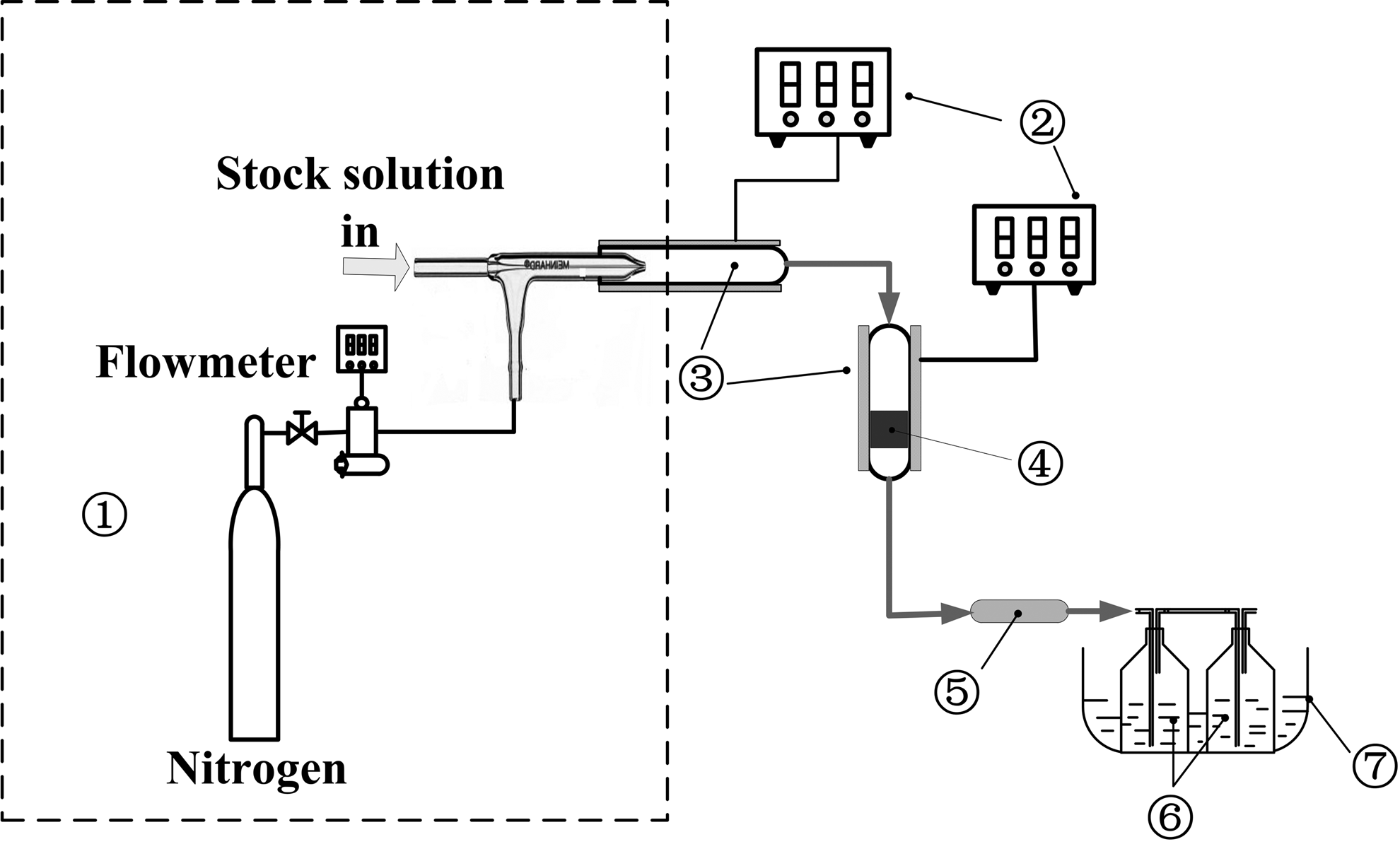
Schematic diagram of the experimental fixed bed adsorption system. ➀ dioxin generator; ➁ temperature controller; ➂ quartz tube; ➃ activated carbon; ➄ XAD-2 resin; ➅ toluene; and ➆ ice-bath.
The required concentration of PCDD/Fs was obtained by injecting an appropriate flow of PCDD/F stock solution into the heated quartz tube. The PCDD/F stock solution used in this study was prepared by solvent (n-nonane) extraction of fly ash, collected from a municipal waste incinerator in Hangzhou. The injection rate of n-nonane is controlled at 1 μL/min. The amount of n-nonane is not so high in 1 L/min feed gas. On the other hand, because the same injection rate is applied, the effect of n-nonane is similar for all the adsorption samples. So in the present article, the effect of n-nonane is neglected.
Reproducibility tests were conducted before the adsorption experiments and indicated that the PCDD/Fs recovery efficiency varied in between 94% and 106%, confirming that the PCDD/Fs concentration in the gas could be stable and authentic. The PCDD/F inlet concentration was set as 7.12 ng I-TEQ/Nm3. About 1 g of AC was placed into a quartz tube of 2.0 cm i.d. and kept at 150°C (simulating the temperature of flue gas). The velocity of the gas stream flowing through the AC bed is 5.31×10⁻² m/s. The residence times in the AC bed are 0.074 s (LignAC), 0.12 s (CnAC), 0.17 s (MAC), respectively. After having passed the adsorbent column, the residual PCDD/Fs in the gas stream was collected by an adsorbent column of XAD-2 resin followed by two scrubbing bottles of toluene. Two samples were collected for each AC, and the mean value of removal efficiency was used in the present article. Removal efficiency was calculated as:
Results and Discussion
Physical properties of ACs
Three commercial ACs were characterized by means of the BET method. Their N2 adsorption isotherms at 77 K are shown in Fig. 2. According to the classification of adsorption isotherms by the International Union of Pure and Applied Chemistry (Sing et al., 1985), the adsorption isotherm of Lignite AC belongs to the I type; this indicates that AC is a microporous (<2 nm) type of carbon material. The other two samples show isotherms with hysteresis loops; hence, both belong to the IV type isotherm group. These two kinds of ACs have more mesopores (2–50 nm) and macropores (>50 nm) than the lignite sample. This can also be observed directly from the pore size distribution represented in Fig. 3. Especially, the Coconut shell AC has most of mesopores between 5 and 25 nm. It is a typical mesoporous material.
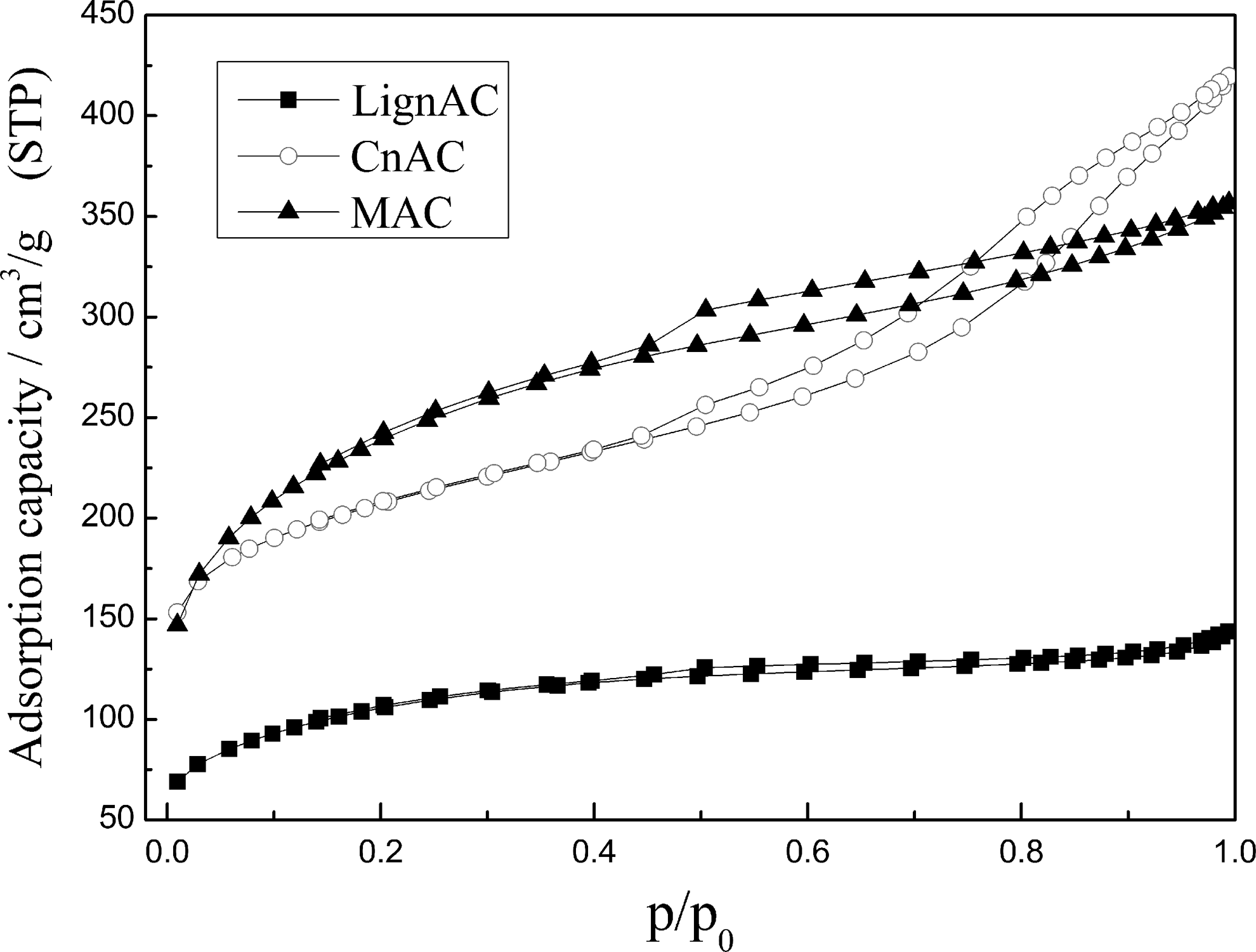
N2 adsorption isotherms of three activated carbons at 77 K.
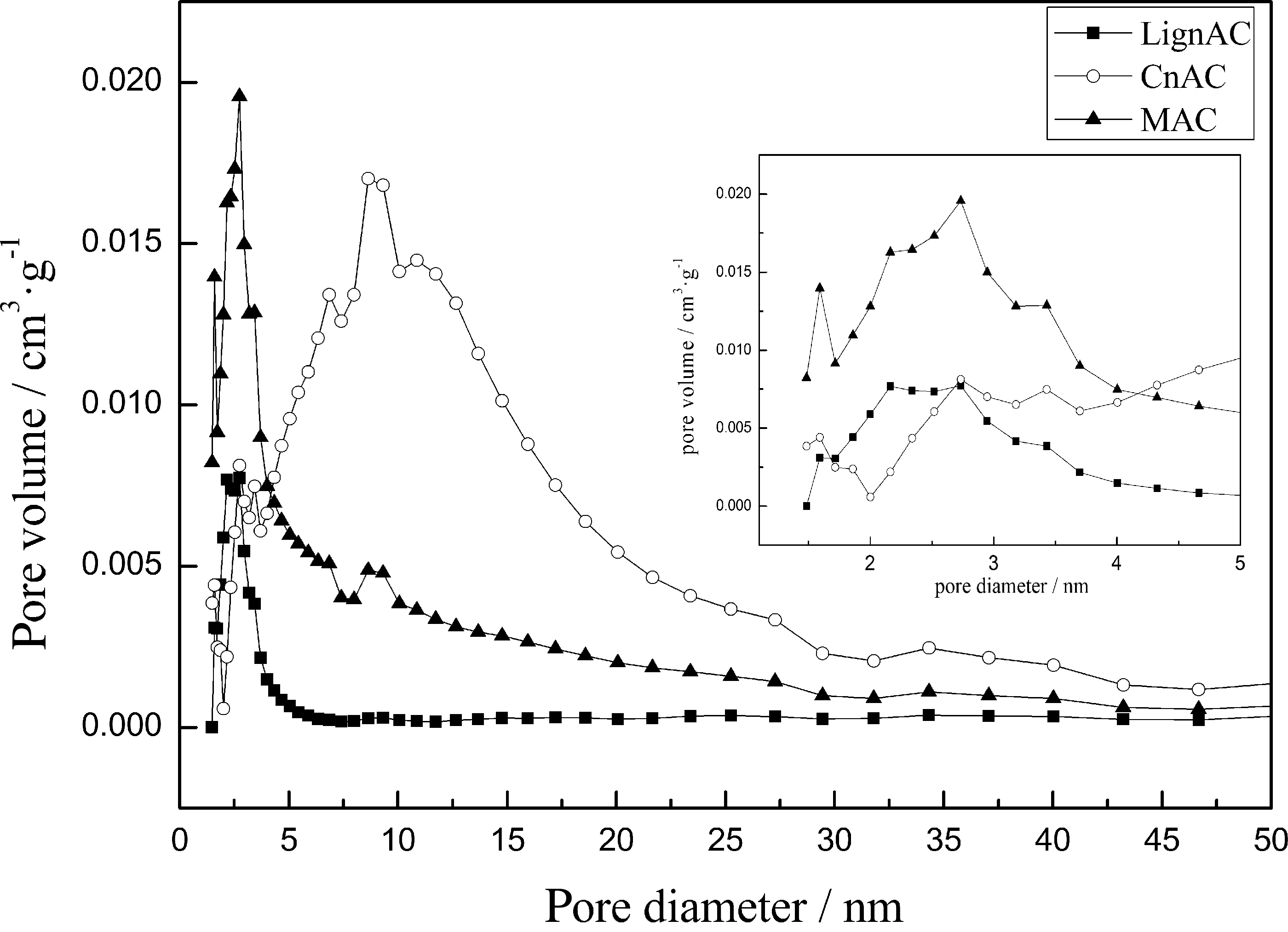
Pore size distribution of three activated carbons calculated by the Barrett–Joyner–Halenda method.
The textural parameters of the three ACs are shown in Table 1. The total pore volume Vt was obtained from the N2 volume adsorbed at the relative pressure of 0.97. The micropore surface area Smicro and volume Vmicro were calculated by the t-plot method, whereas the mesopore surface area Smeso and volume Vmeso were obtained by the BJH method. Table 1 tells that Medical AC has the largest BET surface area, whereas the Coconut shell AC has the largest mesoporous volume. Lignite AC has the lowest surface area and pore volume.
ρb, bulk density; SBET, BET surface area; Smicro, micropore surface area; Smeso, mesopore surface area; Vt, total pore volume; Vmicro, micropore volume; Vmeso, mesopore volume.
Removal efficiency of ACs
Original and the residual PCDD/Fs concentrations and the TEQ concentration after AC adsorption are shown in Fig. 4. Both the total dioxin concentration and the TEQ concentration significantly declined after AC adsorption. The residual PCDD/Fs TEQ concentration can be efficiently controlled below 1.0 ng I-TEQ/Nm3 (the current PCDD/Fs emission limit for MSWI in China) by adsorption with coconut shell AC and medical AC. But the total removal efficiency achieved with Lignite AC is only 81.7%. This lower adsorption efficiency is attributed to a lower surface area, a smaller pore volume, and a narrower pore size distribution. On the other hand, the Coconut shell AC achieved a 96.6% removal efficiency and reduced the PCDD/Fs concentration in the treated gas below 0.5 ng I-TEQ/Nm3. A removal efficiency of 90.9% is achieved by Medical AC.
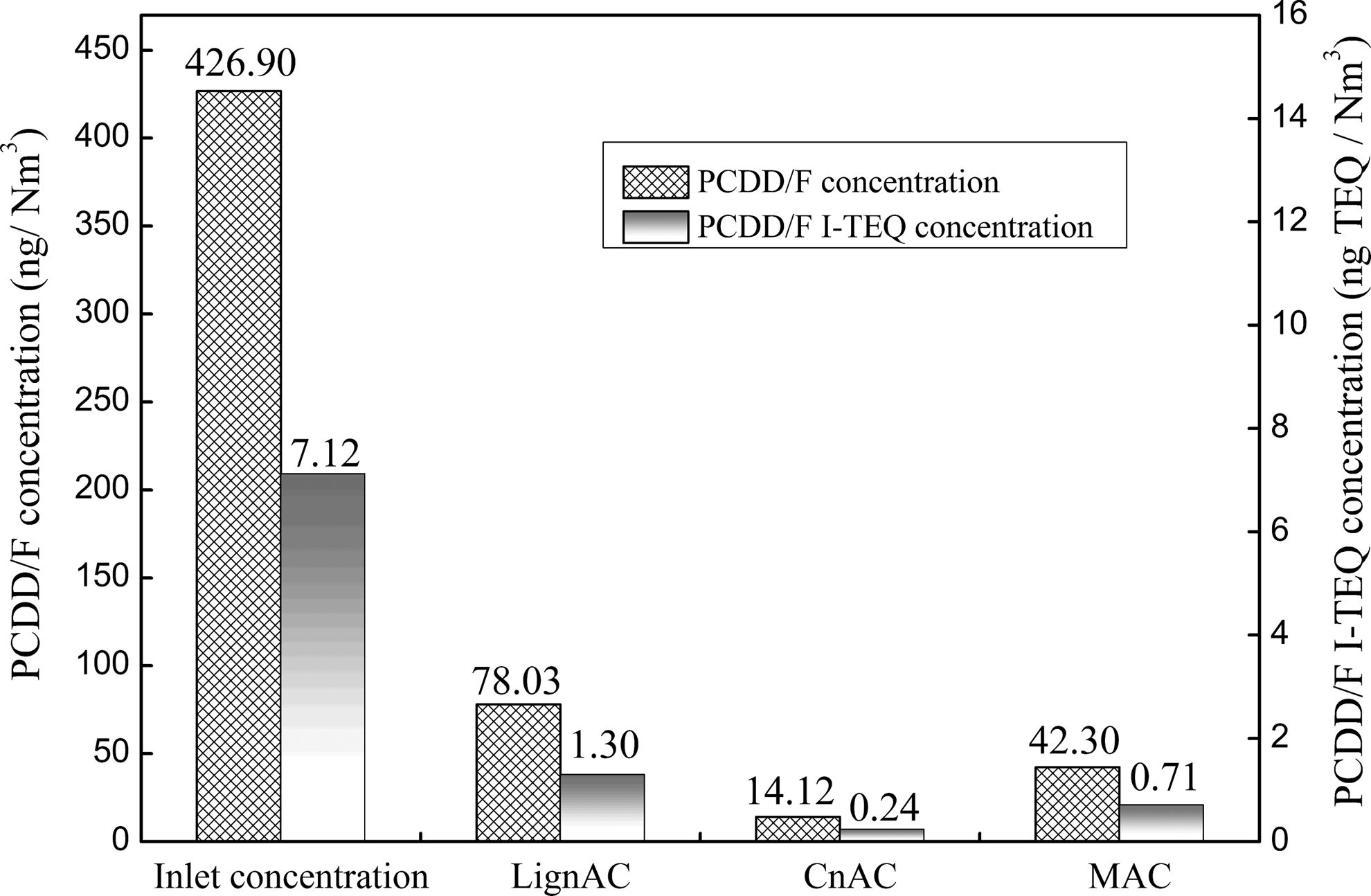
Original and residual polychlorinated dibenzo-p-dioxins and dibenzofurans (PCDD/Fs) concentrations and toxic equivalent quantity (TEQ) concentrations after adsorption.
In general, the BET surface area of AC is regarded as the main indicator of adsorption capacity (Donghoon et al., 1999; Everaert et al., 2003a). According to the previous studies (Bansal and Goyal, 2010), the porous structure of AC is mainly arranged in the ways shown in Fig. 5. Macropores directly link with the outer surface, and the mesopores are branches of the macropores, whereas micropores are again branches of mesopores. For small molecules, micropores play a significant role in adsorption whereas macropores and mesopores mainly act as a passage for adsorbate molecules. However, when the molecular size becomes larger such as for dioxin molecules, mesopores will play a more important role since such pores act as a pass-through as well as supplying adsorption sites. So the high removal efficiency of PCDD/Fs by coconut shell AC is due to the highly developed mesoporous stucture and the wide pore size distribution.
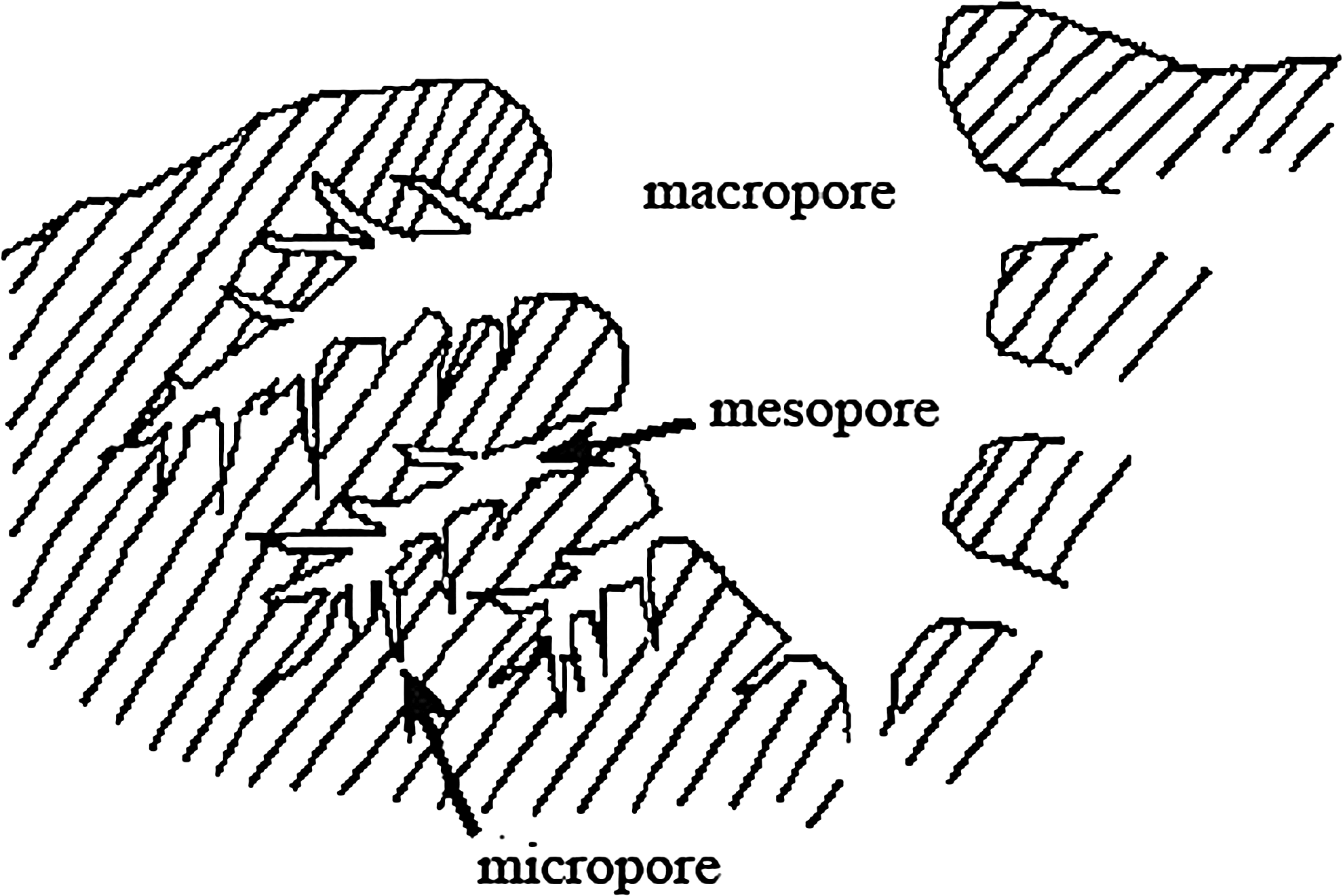
Surface pore structure of activated carbon.
Physical properties are critical factors for the adsorption of PCDD/Fs. In this study, the relationship between surface area, pore volume, and removal efficiency of PCDD/Fs is examined. The results are shown in Fig. 6. The removal efficiency increases with rising pore volume. However, there is no such strong tendency between the surface area and removal efficiency. Compared to surface area, the pore volume correlates better with the removal efficiencies of PCDD/Fs. From Table 2 it follows that several physical parameters, that is, BET, micro-surface and meso-surface are strongly correlated. Conversely, their negative correlation with the residual fraction of dioxins is rather weak and in a sequence:
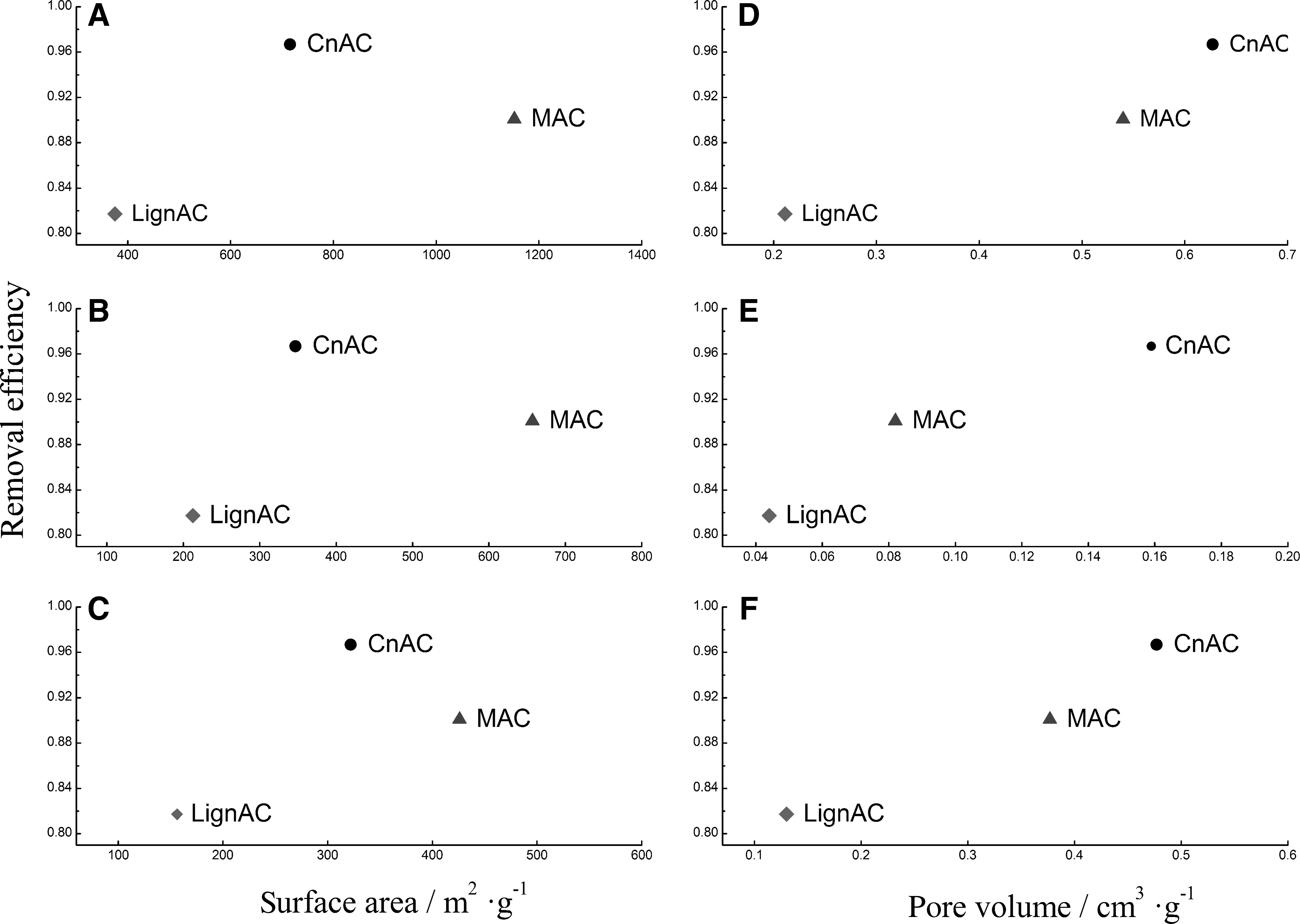
Comparison of PCDD/F removal efficiency with the variation of surface areas of micropore and mesopore in three types of activated carbons.
SBET, BET surface area; Smicro, micropore surface area; Smeso, mesopore surface area; Vt, total pore volume; Vmicro, micropore volume; Vmeso, mesopore volume; residual dioxins, residual dioxin concentration after adsorption.
A reason could be that the surface area in AC is predominantly contained in micropores with an effective diameter smaller than 2 nm. Generally, their specific surface area constitutes about 95% of the total surface area of AC (Pelekani and Snoeyink, 2000; Bansal and Goyal, 2010). But as mentioned above, pore size of AC should match the molecule size of PCDD/Fs congeners, too large or too small pore size is negative for the adsorption. Micropores have only a weak effect on the adsorption of large dioxin molecules. Another reason is that, in real flue gas, the presence of moisture or other gas contents (e.g., SOX, NOX) will cause competitive adsorption phenomena. The phenomena could affect the adsorption of PCDD/Fs. AC with large BET surface could weaken the effect of competitive adsorption. But in the present article, nitrogen is used as carrier gas so that there is hardly any competitive adsorption. AC with large mesopore volume and wide pore size distribution could more effectively adsorb macromolecule (PCDD/Fs). So that under this consideration, pore volume and pore size distribution may be better adsorption indicators.
Removal tendency of 17 toxic PCDD/F congeners
Fingerprints are essential for evaluating dioxin emissions from MSWI (Everaert and Baeyens, 2001, 2002). So it gets necessary to investigate the adsorption tendency of AC for 17 toxic PCDD/F congeners. Some previous data from real flue gas investigation indicated that the adsorption efficiencies of PCDD/F congeners vary with the number of substituted chlorines (Chang et al., 2004; Karademir et al., 2004; Chi and Chang, 2005; Mori et al., 2005; Hung et al., 2011).
In this bench-scale experiment the removal tendency of 17 toxic PCDD/F congeners is also discussed as shown in Figs. 7 and 8. Obviously, for the adsorption by lignite AC, the results are similar to the results of Chi and Chang (2005) and Hung et al. (2011). The adsorption efficiency of PCDD/F congeners tends to increase with the chlorination level of the PCDD/F-molecule. Highly chlorinated (hexa-, hepta-, octa-) PCDD/Fs in the gas stream are more easily adsorbed than the low chlorinated (tetra-, penta-) ones by AC. The lower vapor pressure of highly chlorinated PCDD/F congeners makes them adsorb more easily to the particles (Kaupp and McLachlan, 1999). However, for the adsorption by coconut shell AC, the removal efficiencies of all PCDD/Fs are almost the same. The results are partly explained by the high adsorption efficiency of PCDD/Fs (more than 95%) by AC prepared from coconut shell. It also has sufficient capacity to adsorb all 17 PCDD/F congeners evenly, so that their removal efficiencies are almost the same. Another part of the explanation is in its suitable pore size distribution. The adsorption mechanism indicates that adsorption selectivity and molecular sieve ability could be enhanced in primary micropores or small mesopores, yet this selectivity will decrease rapidly with growing pore size (Mamchenko et al., 1982; Pelekani and Snoeyink, 2000). The highly developed mesopores and wide pore size distribution weaken the molecular sieve ability whereas they enhance the adsorption ability of PCDD/Fs.
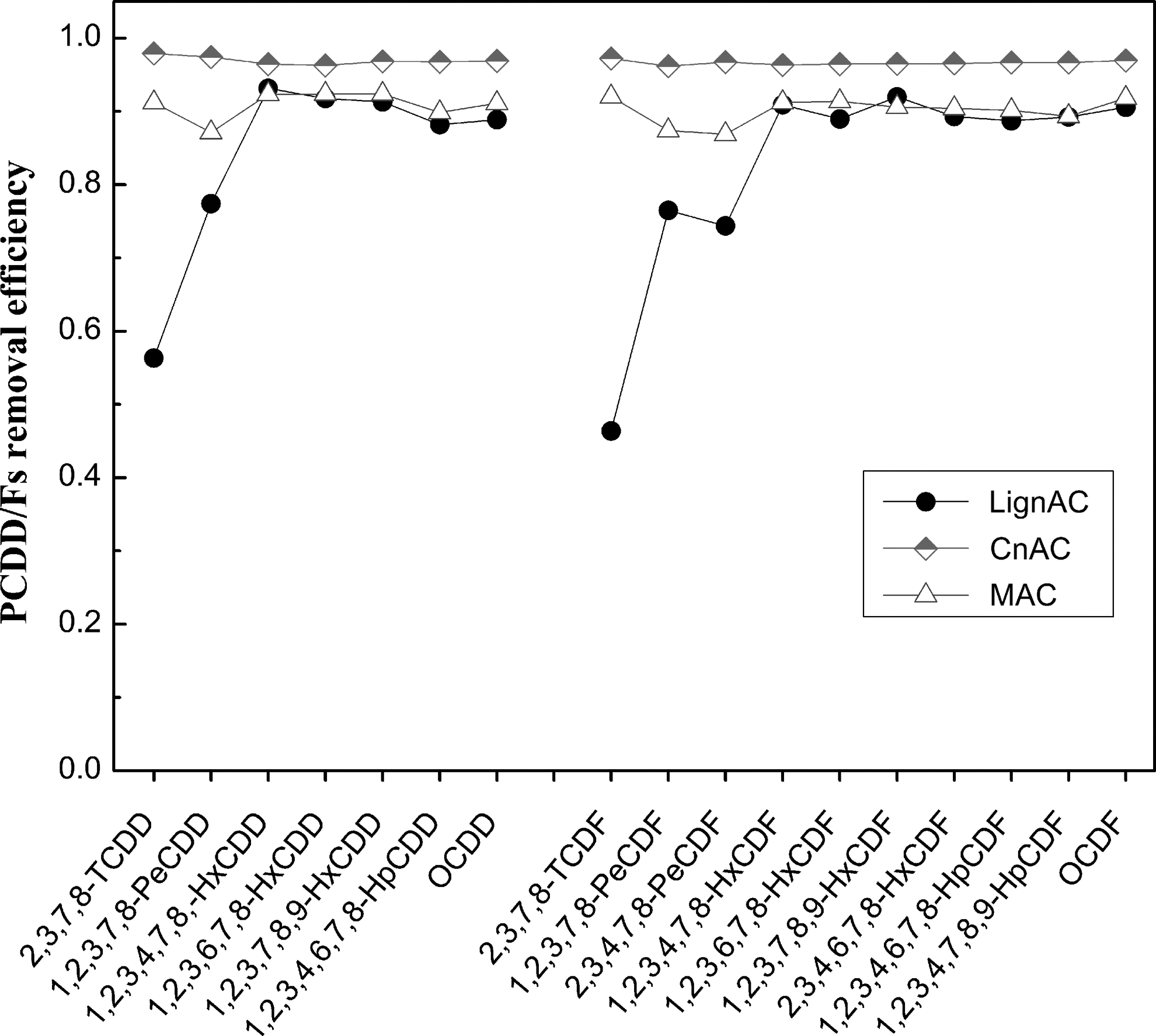
Removal efficiencies of the 17 toxic PCDD/F congeners.
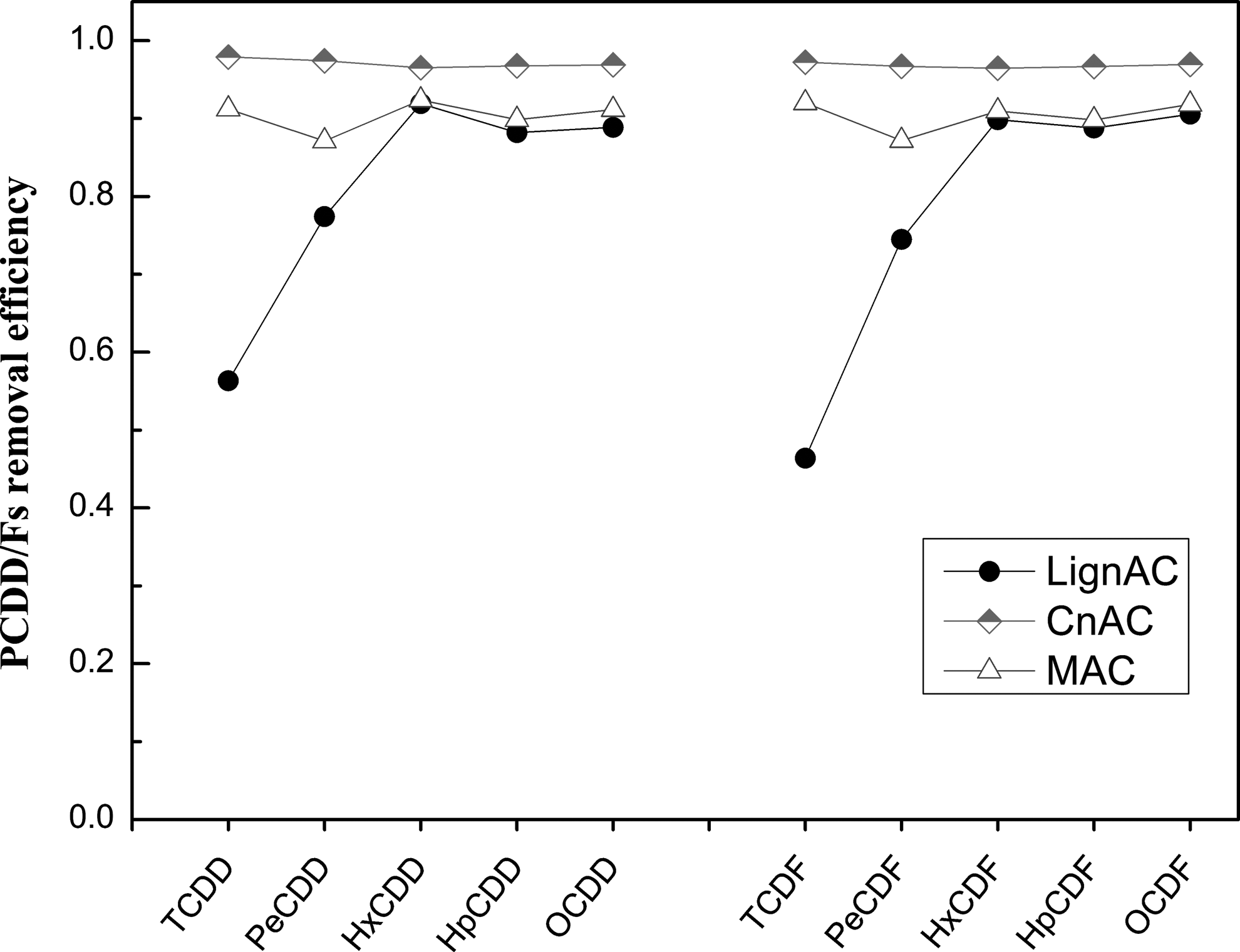
Removal efficiencies of the 17 toxic PCDD/F congeners with different number of substituted chlorines.
Table 3 shows a comparison of the removal efficiencies of PCDDs and PCDFs. It is observed that their removal efficiencies are almost the same, due to the similar efficiency of PCDD/Fs congeners with the same number of substituted chlorines. This result is similar to those obtained by (Mori et al., 2005) with the adsorption of AC fiber.
PCDD, polychlorinated dibenzo-p-dioxins; PCDF, polychlorinated dibenzofurans.
Conclusions
The removal efficiency and selectivity of 17 toxic PCDD/F congeners by AC adsorption was studied. The lignite AC with microporous stucture had the lowest removal efficiency (81.7%), whereas the coconut shell AC with mesoporous stucture achieved the highest removal efficiency (96.6%) and could control the PCDD/Fs TEQ concentration below 0.5 ng I-TEQ/Nm3. It is probably because that highly developed mesoporous structure and wide pore size distribution are advantages to adsorbing adsorbates with big molecules such as dioxin homolog compounds. In this study, compared to surface area, pore volume correlated more strongly with removal efficiencies of PCDD/Fs. It seems that pore volume is a better indicator for the adsorption capacity of PCDD/Fs. In addition, due to the various vapor pressures of PCDD/F congeners, adsorption efficiencies of poor performance AC for 17 toxic congeners are increasing with the number of substituted chlorines. But there is almost no difference of removal efficiency between PCDDs and PCDFs.
Footnotes
Acknowledgments
This work was supported by the National Key Basic Research Development Program of China (973 program, No. 2011CB201500), the Specialized Fund for Doctoral Program of Higher Education of China (No. 20120101110099), the Fund of State Key Laboratory of Clean Energy Utilization of Zhejiang University (No. ZJUCEU2012009).
Author Disclosure Statement
The authors state that no competing financial interests exist.