







Abstract
Abstract
This article presents an experimental investigation of the photocatalytic oxidation of several volatile organic compounds (formaldehyde, benzene, and toluene) under realistic indoor conditions. A novel annular reactor coated with TiO2 was designed to perform kinetic studies on (1) pollutant removal, (2) mineralization by CO2 formation, and (3) intermediate formation and removal in the gas phase. The pollutant(s) was/were injected at a constant rate in a 1.95-m3 environmental chamber ventilated at a constant rate between 3.8 and 4.2 m3/h. The annular reactor was installed on an external recirculation loop, and processed air was reintroduced into the chamber. Recirculation rates were set at 25–200 m3/h, corresponding to recycle ratios between 6 and 50. Reaction area and residence time were greatly increased when fins were added in the annular reactor, and the removal efficiency and mineralization rate were, therefore, obviously improved. The pressure drop produced by the fins was insignificant and increased as a function of the recirculation rate. Intermediates were identified by using the GC-MS instrument, and GC-FID was used for the CO2 measurements. Benzaldehyde, benzyl alcohol, benzene, phenol, and acetone (or propionaldehyde) were the main intermediates in the gas phase. Increase in residence time for a reactor operating in a high face velocity regime was an important factor that led to the complete oxidation of primary and secondary pollutants. For mixture oxidation, selectivity toward benzene and toluene blocked the elimination of formaldehyde. A simple model was developed to predict removal efficiency by the recycle ratio. Model predictions showed good agreement with the experimental results.
Introduction
I
Thermal oxidation (Xu et al., 2011), biological treatment (Aydogan and Montoya, 2011), activated carbon adsorption (Sidheswaran et al., 2012), and photocatalytic oxidation (PCO) (Passalía et al., 2012; de Richter et al., 2013; Farhanian et al., 2013) are among the proposed solutions for the decontamination of VOCs.
PCO technology commonly uses semiconductor photocatalysts, such as TiO2, which is deposited on a support and exposed to UV light, to induce VOC oxidation. The PCO process is implemented under ambient temperature and pressure and has the potential to decompose a broad range of VOCs, including some compounds that are hardly mineralized by other techniques (Lu et al., 2010). The VOCs were then converted into benign and odorless constituents, namely H2O and CO2. Thus, this technology appears to be a promising approach for reducing the levels of indoor air contaminants.
Significant research efforts have been made in the past two decades to investigate VOC removal efficiency within a batch reactor and to achieve kinetic coefficients within different operational parameters (Debono et al., 2011, 2013; Jamali et al., 2013). However, some points still need to be clarified: (1) Most batch reactors are suitable for the investigation of degradation kinetics because the residence time of this type of reactor is not a limiting parameter (Mills and Le Hunte, 1997), but a continuous flowing process is the preferred approach for photocatalytic treatments under realistic indoor conditions (Zhou et al., 2011) and the residence time is typically much less than 1 s; (2) PCO degradations potentially reduce pollutants into H2O and CO2, but some reactants may generate partially oxidized intermediates that accumulate in the air (Sleiman et al., 2009; Mo et al., 2013; Farhanian and Haghighat, 2014), thus inhibiting the full-scale application of PCO technologies in indoor environments. Hence, further studies should be conducted on the aforementioned obstacles.
This article focuses on the PCO degradation of several familiar VOCs (formaldehyde, benzene, and toluene) in a continuous-flow annular reactor under realistic conditions. The experiments were conducted to evaluate the effectiveness of the reactor in reducing the chamber concentrations of primary and secondary pollutants. Efforts were also made to identify the major gas-phase reaction intermediates, which are closely related to the full-scale application of PCO technologies, to obtain further information on photocatalytic processes.
Experimental Materials and Methods
Annular photocatalytic reactor
The annular reactor we designed (Fig. 1) consisted of a stainless steel exterior cylinder and several fins. The exterior cylinder and the fins formed fan-shaped channels. Each fin had a triangular gap at one end, thus making this reactor a continuous single-pass reactor. The air pollutants can flow in a zigzag pattern from one channel to another, and the changes in direction may act as static mixers that renew the velocity field of air pollutants. The exterior cylinder had an inner diameter of 10 cm and a length of 45 cm. Both the fin surface and inner side of the exterior cylinder were covered with photocatalysts.
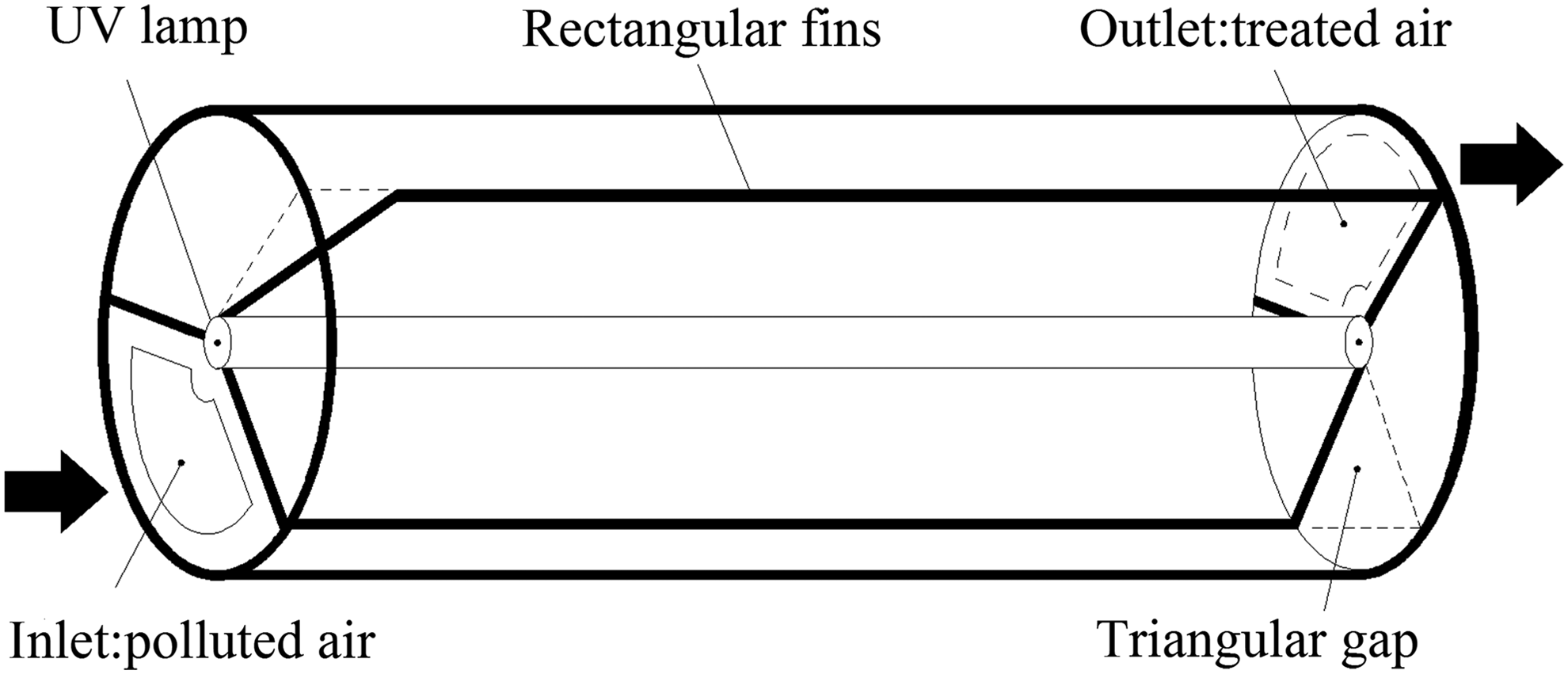
Schematic of annular reactor with fins.
TiO2-coated film
Degussa P25 TiO2 was used as the photocatalyst. The exterior cylinder and the fins were dipped into an ultrasound bath containing a water suspension with 5 wt% of TiO2 for 2 min, and then were calcined at 200°C for 1 h to form the TiO2-coated film. The same coating process was repeated several times. The amount of TiO2 deposited was determined by the weight difference before and after the coating procedure. The weight of TiO2 coated was 1.2 mg/cm2 in all experiments. This value was made slightly excessive to ensure that the catalytic surface was fully covered, and the experimental results were obtained under a kinetic control regime. In our experiments, the density of the catalyst was about 4 g/cm3, thus the thickness of the TiO2 film was equal to 3 μm. This meant that the 254-nm light could not penetrate the TiO2 film that we used (Yang et al., 2007).
UV lamps and light measurements
Illumination was provided by a 15-W germicidal lamp (TUV 15W Philips) emitting light at a primary wavelength of 254 nm. The lamp's external diameter was 2.8 cm and the total lamp length, including the electrical base, was the same as the exterior cylinder, with an average UV intensity of 4.87 mW/cm2 on the lamp surface. The emitted UV power was close enough to the room temperature range, so the temperature of air and catalysts weakly depended on the light intensity.
Considering the symmetric nature of the structure inside the reactor, the UV intensity on the reaction surface was measured in only one channel before the PCO reaction began. For the measurement, a UVC power meter was used with the sensor close to the reaction surface. The values were assumed to remain unchanged during the whole experiment.
Environmental chamber
Figure 2 describes the environmental chamber operating at a constant air exchange rate. The chamber had a volume of 1.95 m3 and was built from gas-tight stainless steel with no VOC sources or sinks. The annular reactor was installed on an external recirculation loop that reintroduced processed air into the chamber. The reaction mixture, initially composed of air and pollutant(s) only, was introduced at a constant rate into the chamber. The air was taken directly from the lab and passed through an activated carbon filter, and then supplied through a mass flow controller to the chamber. The liquid pollutant(s) was/were placed in a glass syringe and injected continuously into the air by a syringe pump through a septum. A heating system covering the needle evaporated the solution and determined the air temperature. The ventilation rate of the chamber was kept in the range of 3.8–4.2 m3/h, corresponding to an air exchange rate of about 2 h−1. A centrifugal fan operating inside the chamber supplied the required recirculation rate, which was measured by a Venturi tube flow meter. The recirculation rate was set in the range of 25–200 m3/h, corresponding to recycle ratios between 6 and 50. The recycle ratio was the ratio between the recirculation and chamber ventilation rates. All experiments were conducted at a room temperature of 25°C±2°C. The relative humidity was set to a common air conditioning level of 50%±10%.
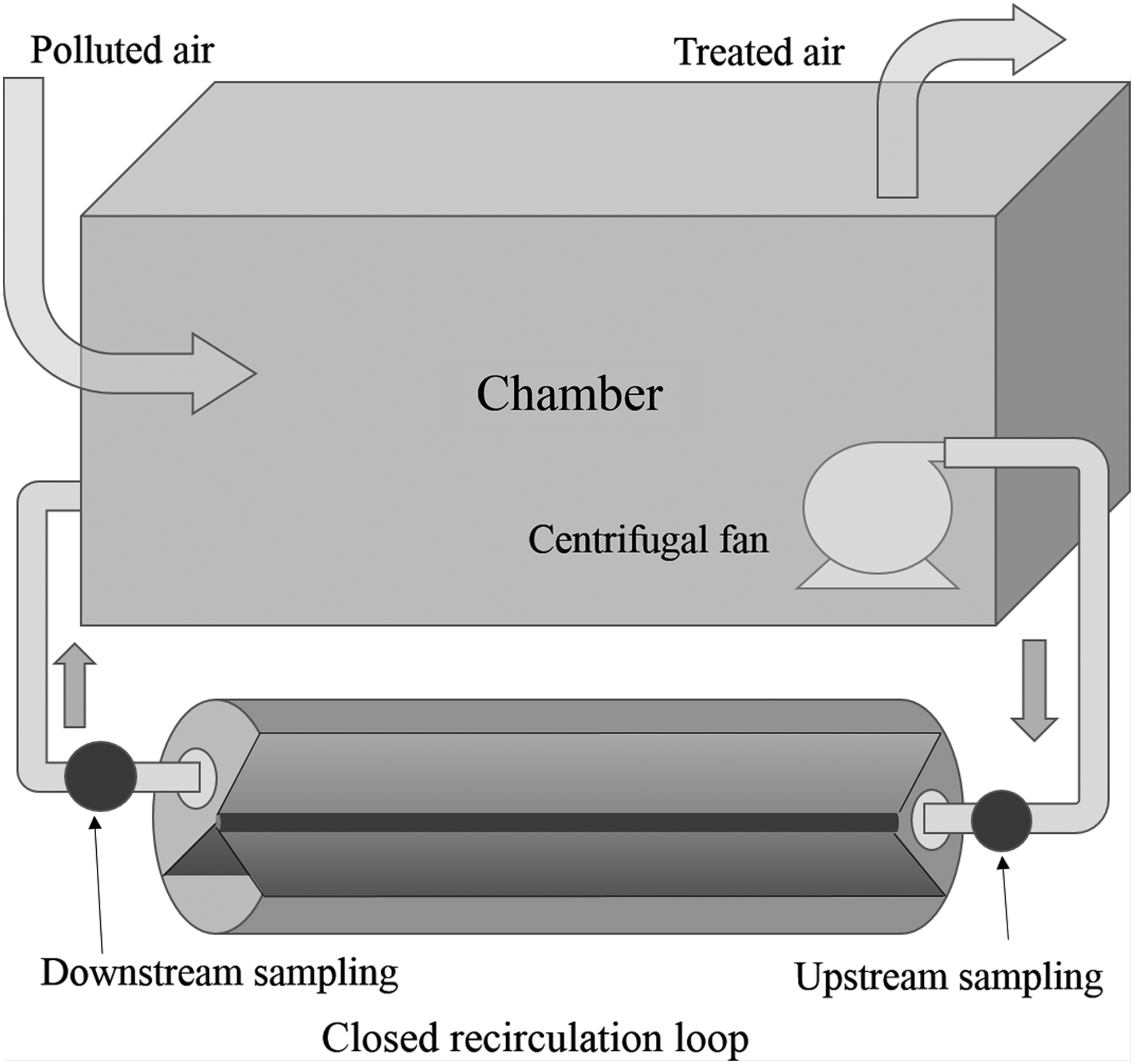
Schematic of environmental chamber with an external photocatalytic oxidation reactor.
Sampling and analysis
The VOC concentration in the chamber air was controlled at 0–9 ppmv for formaldehyde, 0–2 ppmv for benzene, and 0–3 ppmv for toluene. The concentrations of individual pollutants were collected simultaneously by Tenax sorbent tubes from the upstream and downstream of the recirculation loop. The initial concentration was determined with samples taken with the occluded lamp; when a steady-state condition was achieved, the lamp was uncovered. Then, samples were taken until the experimental system reached a new steady state, and Tenax tubes were analyzed by Agilent GC-MS 5973N. The gas-phase intermediates needed to be concentrated from the downstream gas by Tenax sorbent tubes before the qualitative analysis because of the detection limit of GC-MS and the low concentration of the intermediates. The concentration process was conducted for more than 4 h. The gas chromatograph (Varian CP 3800) equipped with a flame ionization detector was calibrated for the detection of CO2 formation because of photocatalytic mineralization.
Results and Discussion
Adsorption of target compounds on TiO2 surface
In the preliminary test, the environmental chamber and the PCO reactor were operated at a steady state for 3 h with the UV lamp turned off to determine the contaminant adsorptive capacities of the TiO2 film. As the contrast experiment, the system was operated for another 3 h in the absence of the TiO2 film to test the stability in the concentration of target compounds. The target pollutant selected was formaldehyde injected at a constant into the chamber air during the whole test. The reactor with three fins was used and kept at a constant recirculation rate between 70 and 72 m3/h. Figure 3 depicts the concentration profiles with an initial concentration of 4.7 ppmv during the adsorption test. Before the test, the formaldehyde concentration had reached equilibrium in the chamber ventilated at a constant air exchange rate, as seen from the steady concentration within 0.5 h of formaldehyde introduction. At t=0, the PCO recirculation loop was turned on.
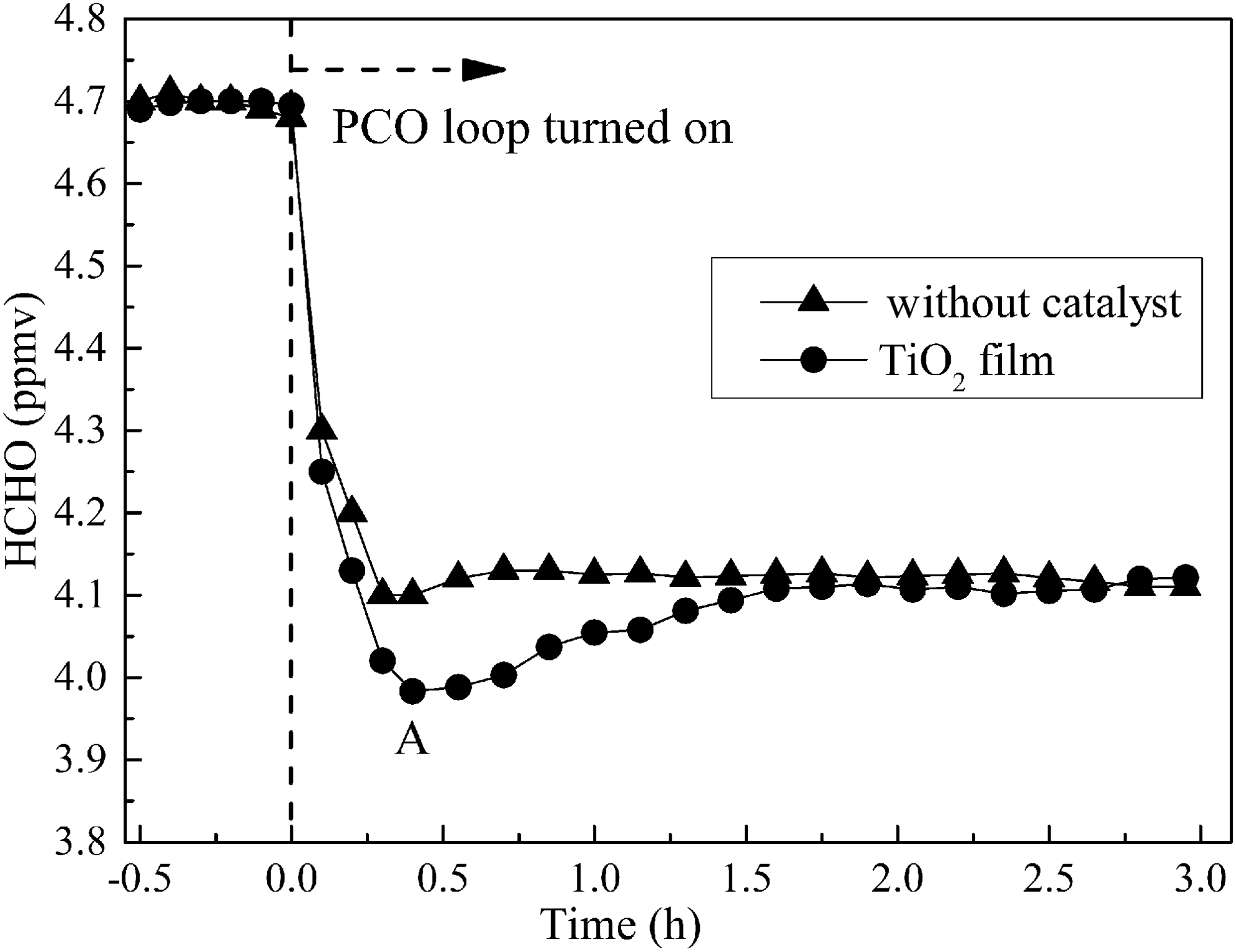
Adsorption test for formaldehyde introduced at a constant rate in the chamber. Temperature and relative humidity (RH) are 25°C and 56%, respectively. PCO, photocatalytic oxidation.
When the loop was turned on, the formaldehyde concentration dropped sharply due to the increase of effective volume and the adsorption by the TiO2 film. The reactor with the TiO2 film could reach point A, then the adsorption capacity of the TiO2 film decreased, causing the formaldehyde concentration to augment gradually until the adsorption capacity reached saturation. Similar results were observed for benzene and toluene. After about 2.5 h of continuous adsorption, the system reached a steady state, in which the concentrations of admitted compounds equilibrated with the TiO2 film. It could be thus concluded that the TiO2 film served as a sink for gas-phase organic compounds, and samples determined at t>2.5 h were considered to be representative of the final steady concentration.
Effect of fins
Pressure drops
The pressure drops of the three types of annular PCO reactors (three fins, five fins, and no fins) were compared. The pressure drop was measured with an atmospheric microtonometer and recorded on each side of the annular reactor. Figure 4 describes the dependence of the pressure drop across the catalytic surface at various recirculation rates. All pressure drops increased as functions of the recirculation rate according to a quadratic polynomial. The pressure drop of the reactor without fins was negligible relative to that of other reactors. However, the difference between the pressure drops of the two reactors with fins was insignificant.
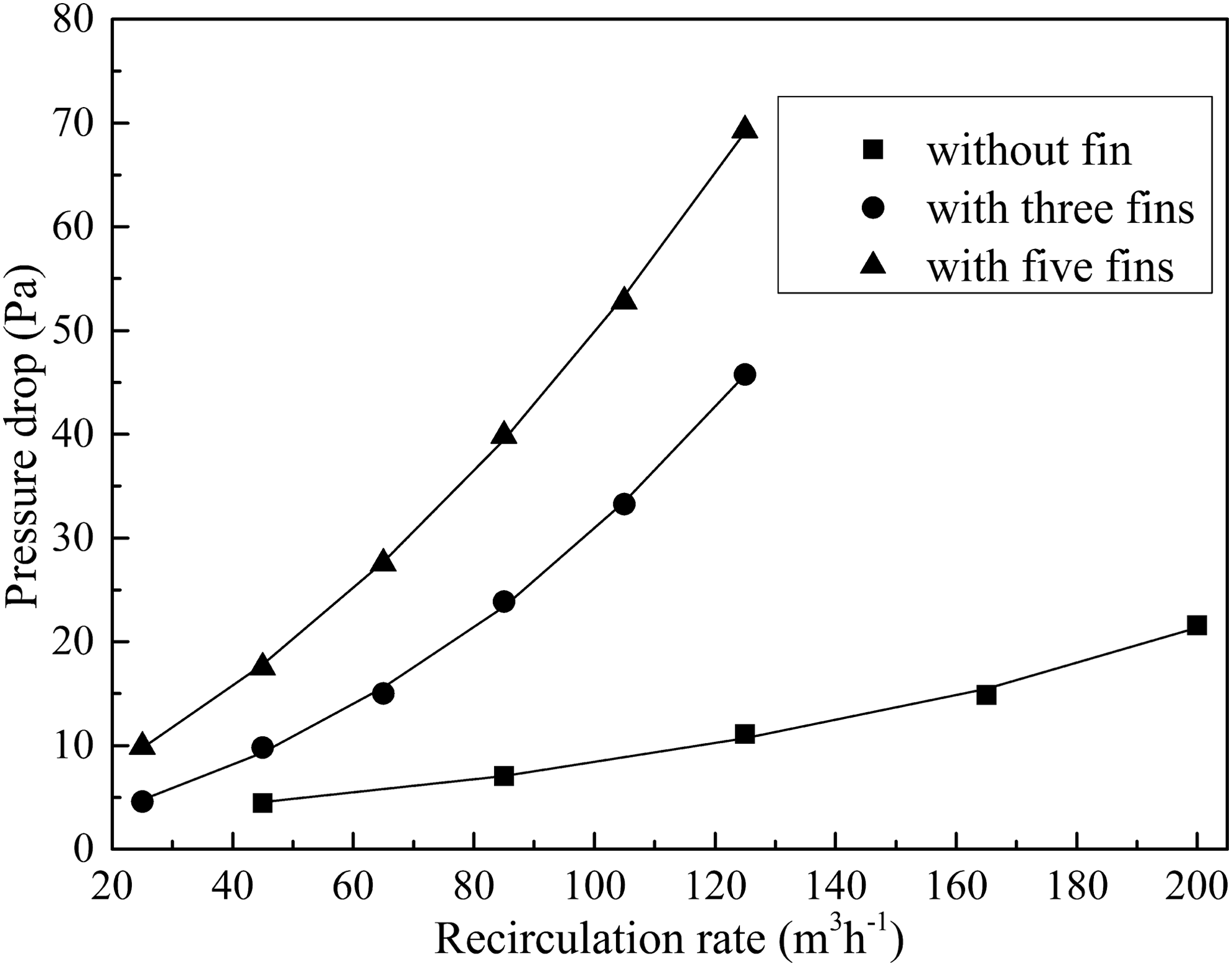
Dependence of pressure drop on the recirculation rate.
Irradiation
Considering the channel symmetry, the UV radiation intensity was measured only in 1 channel (Fig. 5). The measurements were taken at 15 different positions, 6 on the inner surface of the exterior cylinder and 9 on the fin surface. The 15 positions were set along the lines parallel to the lamp axis, and their geometric relationship with the channel is shown in Fig. 5.
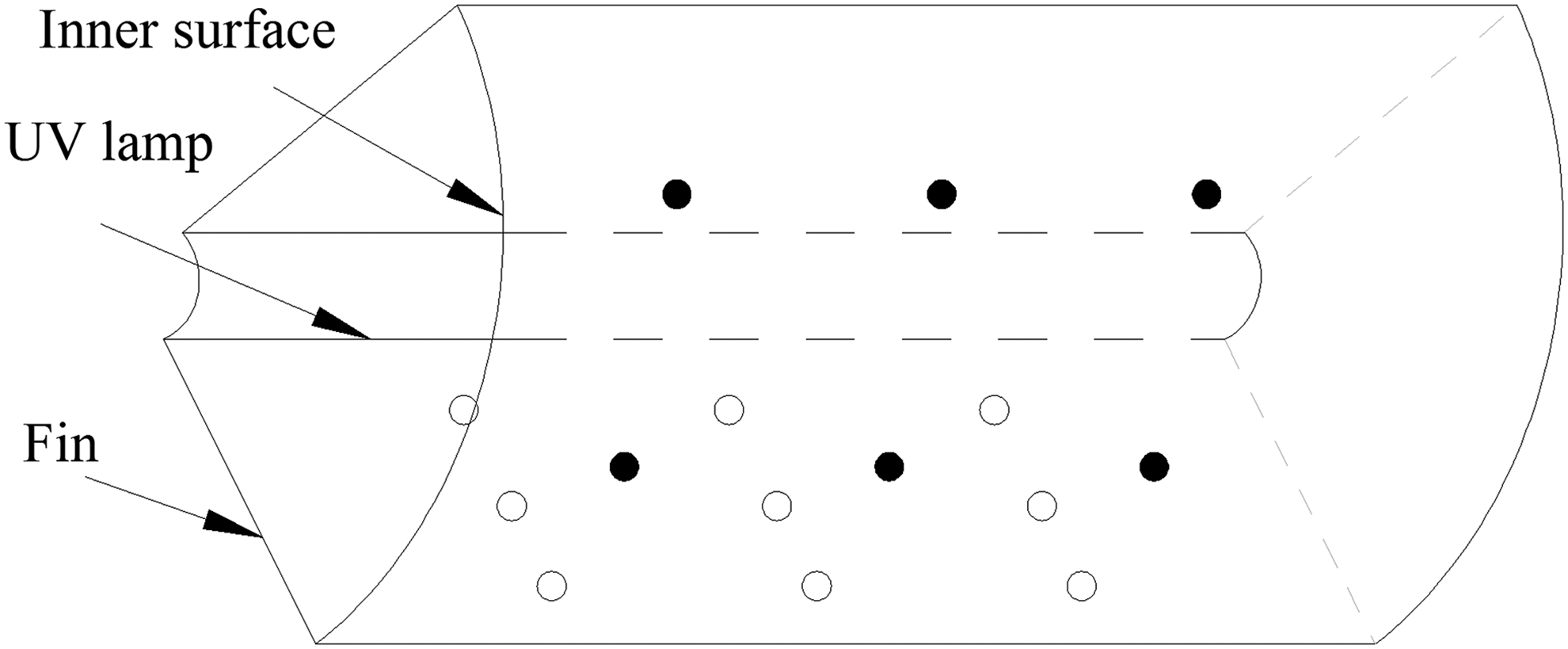
Schematic for a single channel in the reactor with fins. Open circles correspond to the positions on the fin surface, and solid circles correspond to the positions on the inner surface of the exterior cylinder.
For the reactor without fins, the radiation intensity on the inner surface of the exterior cylinder ranged between 1.9 and 2.2 mW/cm2. For the reactor with three fins, the radiation intensity on the inner surface of the exterior cylinder ranged between 1.3 and 1.5 mW/cm2. The measurements taken in front of the fin were those with maximum intensity, that is, ranging between 3.5 and 3.8 mW/cm2. Measurements from the middle and back of the fin were in the range of 1.2–1.3 mW/cm2 and 0.8–1 mW/cm2, respectively. The corresponding measurements were slightly lower for the reactor with five fins. The radiation intensity on the inner surface of the exterior cylinder was reduced by about 35% because of the fins. However, the degradation rate increased by at least 90% compared with the reactor without fins, as shown in Fig. 6.
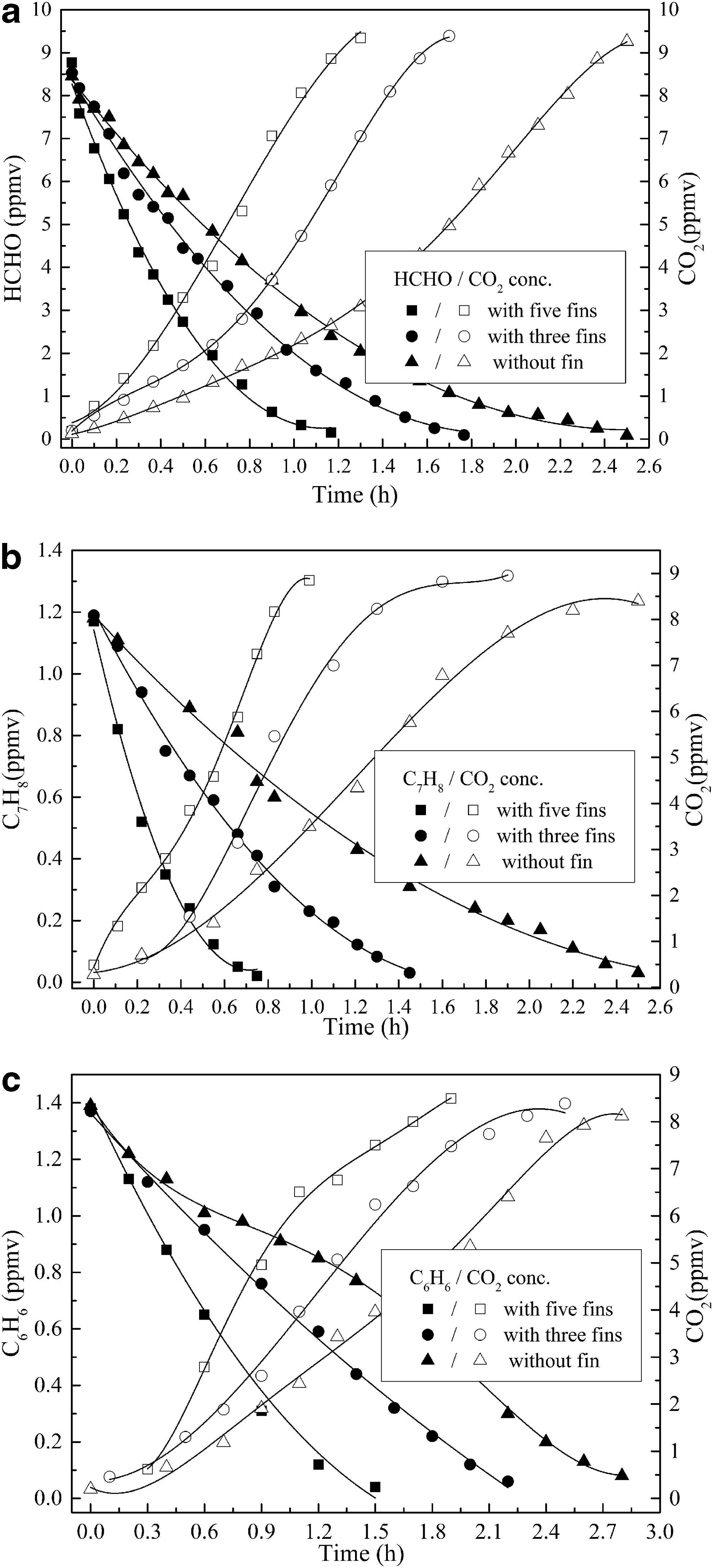
Consecutive degradation of formaldehyde
Removal performance
The initial concentrations chosen to maintain the same amount of carbon were 8.4 ppmv for formaldehyde, 1.2 ppmv for toluene, and 1.4 ppmv for benzene. Figure 6 shows the experimental results of pollutant removal in the reactor with and without fins. The reactor was maintained at a constant recirculation rate between 70 and 72 m3/h. The time necessary for complete degradation was inversely proportional to the number of fins of the reactor. The contact time between pollutant molecules and TiO2 and the quantity of affixed TiO2 present in the reactor were considered the two main reasons for the difference in efficacy. Figure 6 also shows the formation of CO2. The convexity of the CO2 curves turned toward the time axis implied the formation of intermediates during the PCO process (Taranto et al., 2009). The CO2 formations were almost completed after the VOCs were eliminated. The final CO2 concentration was slightly higher than that from complete degradation of the corresponding pollutant. According to the discussion in the Adsorption of Target Compounds on the TiO2 Surface section, the TiO2 film served as a sink for gaseous compounds, and some of the reactants were adsorbed on the TiO2 surface before the collection of air samples began; thus, the CO2 from the air samples was underestimated.
Gas-phase reaction intermediates
Formation of reaction intermediates was monitored, and five VOCs were evidenced in the environmental chamber gas phase during the degradation of the three individual pollutants. Table 1 summarizes the intermediates identified by GC-MS.
25°C temperature; 56% RH; 100 m3/h recirculation rate; initial concentrations of 8.40 ppmv for formaldehyde, 1.2 ppmv for toluene, and 1.4 ppmv for benzene.
RH, relative humidity.
Traces of benzaldehyde, benzyl alcohol, benzene, and phenol were identified, but the compounds with a 58 molecular mass may be one or a mixture of acetone and propionaldehyde. In the toluene PCO process, benzaldehyde appeared as the main gaseous intermediate, whereas Benzyl alcohol and benzene were detected at a relatively low concentration. Under our conditions, no benzoic acid was detected in the gas phase. These results agreed with the study of Debono et al. (2011), who indicated that benzoic acid was only detected in the adsorbed phase during toluene degradation. Only one lighter intermediate (acetone or propionaldehyde) was detected for benzene and none for toluene, probably due to the detection limit of GC-MS. However, this result did not indicate that other lighter compounds, such as acetaldehyde, formaldehyde, methanol, and ethanol, were not formed during the PCO of benzene or toluene (Mo et al., 2009). We also noted that even in the high-concentration regime, no gas-phase intermediate was found during the formaldehyde PCO degradation. By contrast, a previous study (Ao et al., 2004) identified formic acid as the intermediate of formaldehyde with the concurrent degradation of NO and SO2. This difference might be attributed to the presence of SO2, which inhibited the yield of formic acid, and the rapid conversion of generated formic acids to CO2 and H2O. Further experiments should be conducted to confirm this hypothesis.
The mineralization of pollutants was closely related to the full-scale application of PCO technologies; therefore, the evaluation of CO2 formation will be necessary. For this purpose, we defined the mineralization rate r, the ratio between measured CO2 and the CO2 formation potential of the given pollutants, as follows:
where [CO2] up and [CO2] down refer to the upstream and downstream CO2 concentrations (ppmv), respectively; Cup and Cdown are the upstream and downstream concentrations (ppvm) of the corresponding pollutant, respectively; and N is the stoechiometric coefficient of the PCO reaction (one for formaldehyde, six for benzene, and seven for toluene).
Figure 7 shows the average mineralization rate of target compounds at different initial concentrations. It indicated that an increase in initial concentration lead to a decrease in the mineralization rate. This result implied that the quantity of generated intermediates is extremely important. The competitive adsorption effect between intermediates and reactants became more significant with increasing initial concentrations (Assadi et al., 2012). Some oxidation intermediates could not be reduced easily and occupied available active sites on the TiO2 surface, thus leading to effective reduction in the number of active sites. We also noted that the mineralization rate increased with increasing reaction area mainly because a larger reaction area could increase the contact times between pollutants and TiO2. This phenomenon would facilitate the mineralization of both the reactant and intermediate.
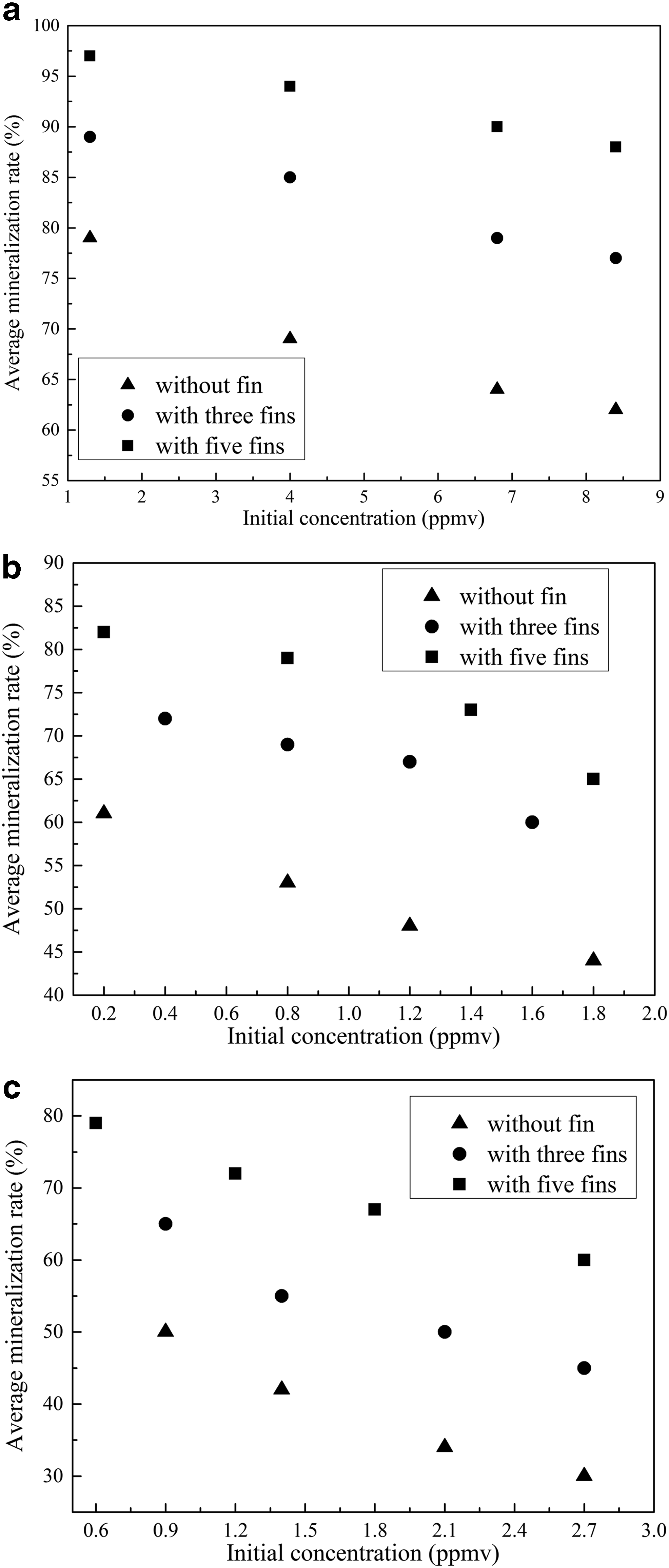
Variation of mineralization rate versus initial concentration of formaldehyde
Effect of residence time
Residence time of a parcel of air inside the reactor was determined as the ratio between the effective volume of the reactor and the recirculation rate. Experiments using the reactor with three fins were conducted in identical operating conditions, except for the recirculation rate. The recirculation rate was set in the range of 25–200 m3/h, corresponding to the residence time between 0.509 and 0.064 s.
The degradation rate R, mmol/(m2·h), was defined with the following equation to achieve the effect of the residence time on PCO degradation:
where G is the recirculation rate (m3/h) and A is the reaction surface area (m2).
Figure 8 depicts the average degradation rates of target pollutants as measured at different initial concentrations and residence times. We noted that residence time was a critical factor in improving the removal performance. The degradation rate increased at least 60% for all initial concentrations with increasing residence time from 0.064 to 0.509 s. The decrease in the recirculation rate would cause two antagonistic effects: the decrease in the mass transfer rate and the increase in residence time. The typical face velocity expected in the heating, ventilation, and air conditioning (HVAC) applications is ∼2–3 m/s, thus the mass transfer effects were not considerable. The condition wherein a lower recirculation rate led to improved degradation rates confirmed that residence time was the prevalent factor. This phenomenon is consistent with what has been reported in the literature (Zhong et al., 2010) on some VOCs.
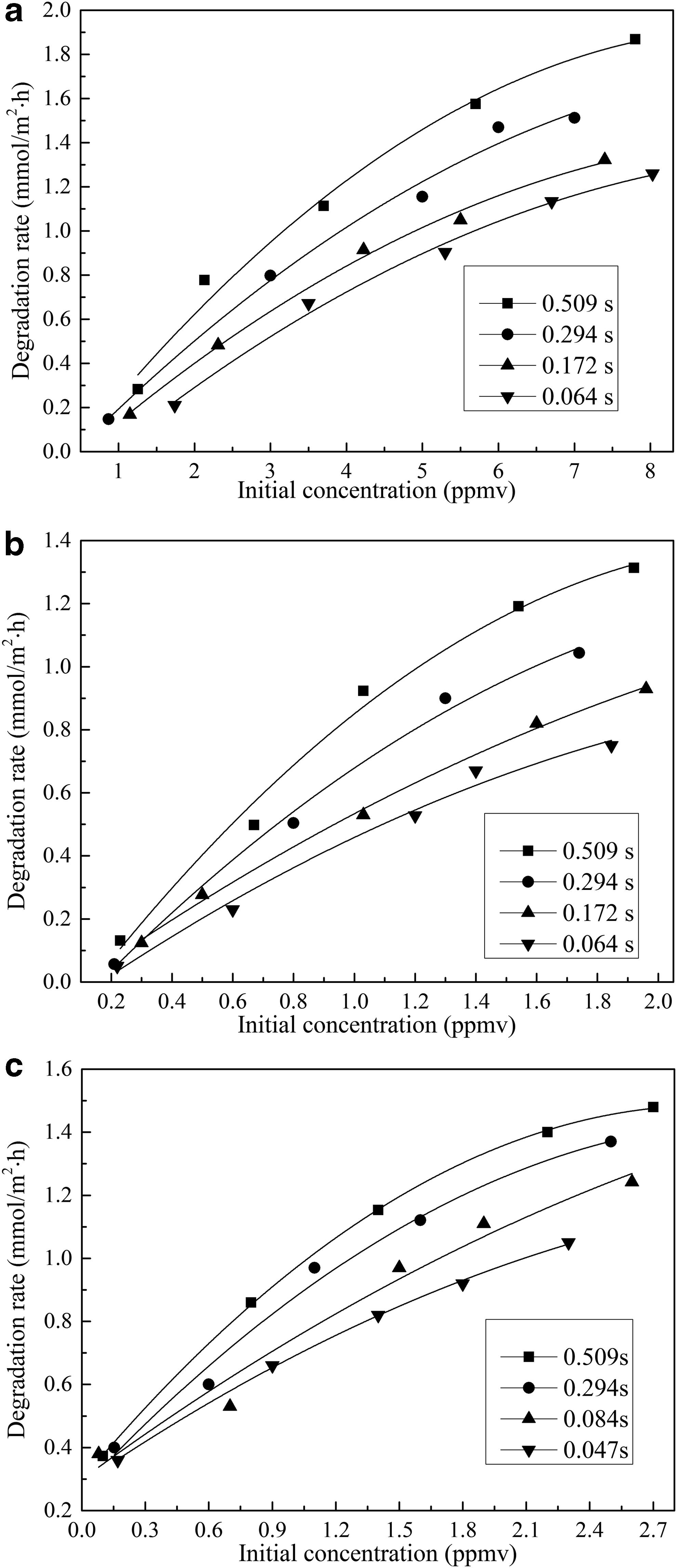
Variation in the degradation rates of formaldehyde
Advantages associated for a reactor with fins
The reaction area and residence time are critical parameters that should be optimized in the PCO reactor design. PCO reactors with high airflow rates are preferred for indoor air applications since more air can be purified for commercial HVAC applications. As shown above (Removal Performance section), at a recirculation rate of 70 m3/h (face velocity of 2.5 m/s), the reactor without fins limited the degradation rates to values that may not be enough for HVAC applications. In that case, the use of the reactor with fins could make sufficient reaction area and residence time at the same face velocity. The efficacy of the two types of reactors (with three fins and without fins) was compared in Fig. 9. The removal efficiency ηt was calculated by the following equation:
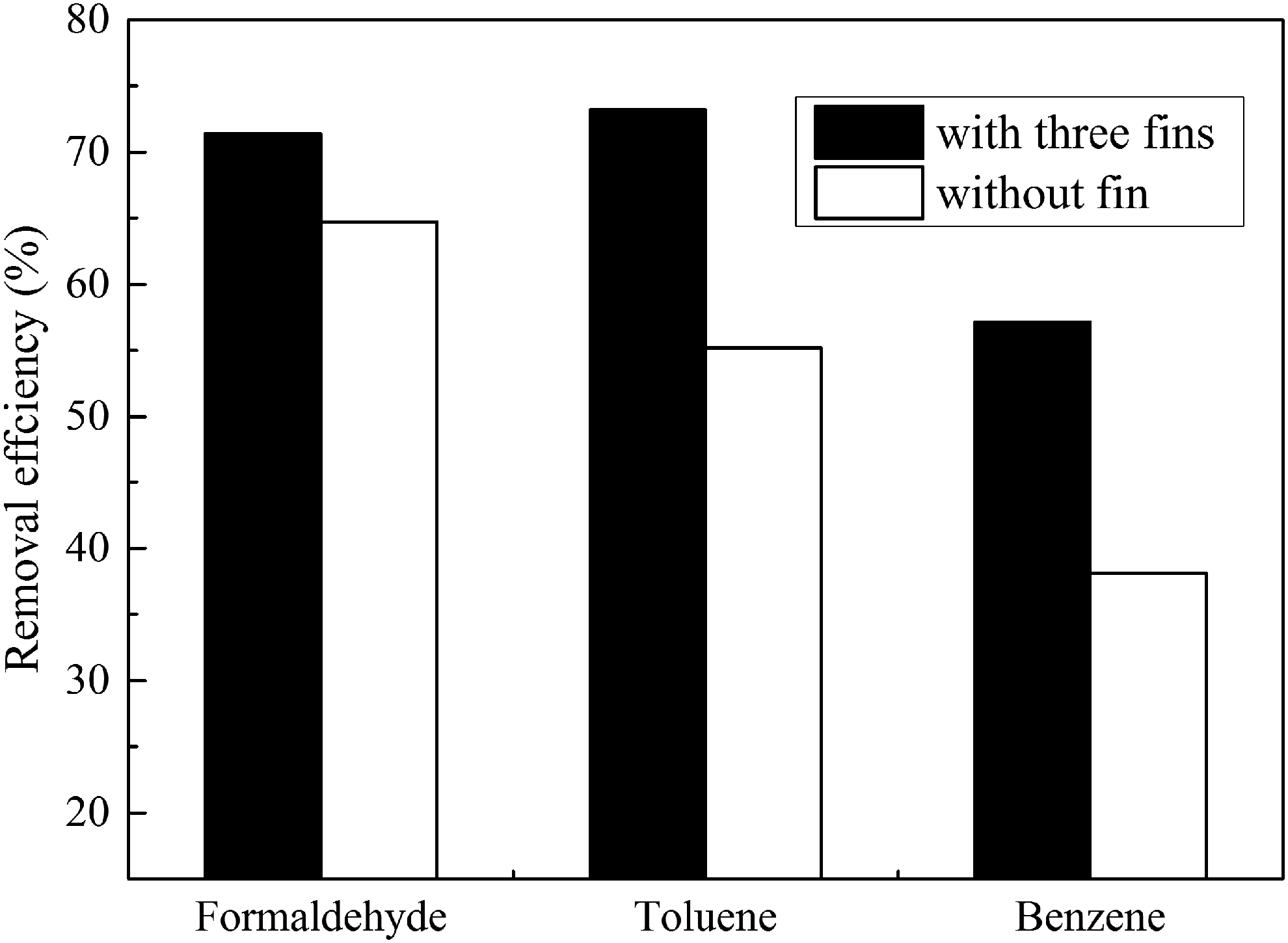
Removal efficiency of formaldehyde, toluene, and benzene. t=1 h. Operational conditions as in Fig. 6.
where C0 is the initial chamber concentration measured with occluded lamps (ppmv) and Ct is the chamber concentration at time t (ppmv).
The reactor with fins could provide accessible higher contact times between contaminants and the TiO2 surface. Therefore, the removal efficiency of formaldehyde, toluene, and benzene was obviously improved.
Figure 10 shows the variation of both removal efficiency and mineralization rate of toluene as a function of residence time. The initial concentration of toluene was 1.2 ppmv.
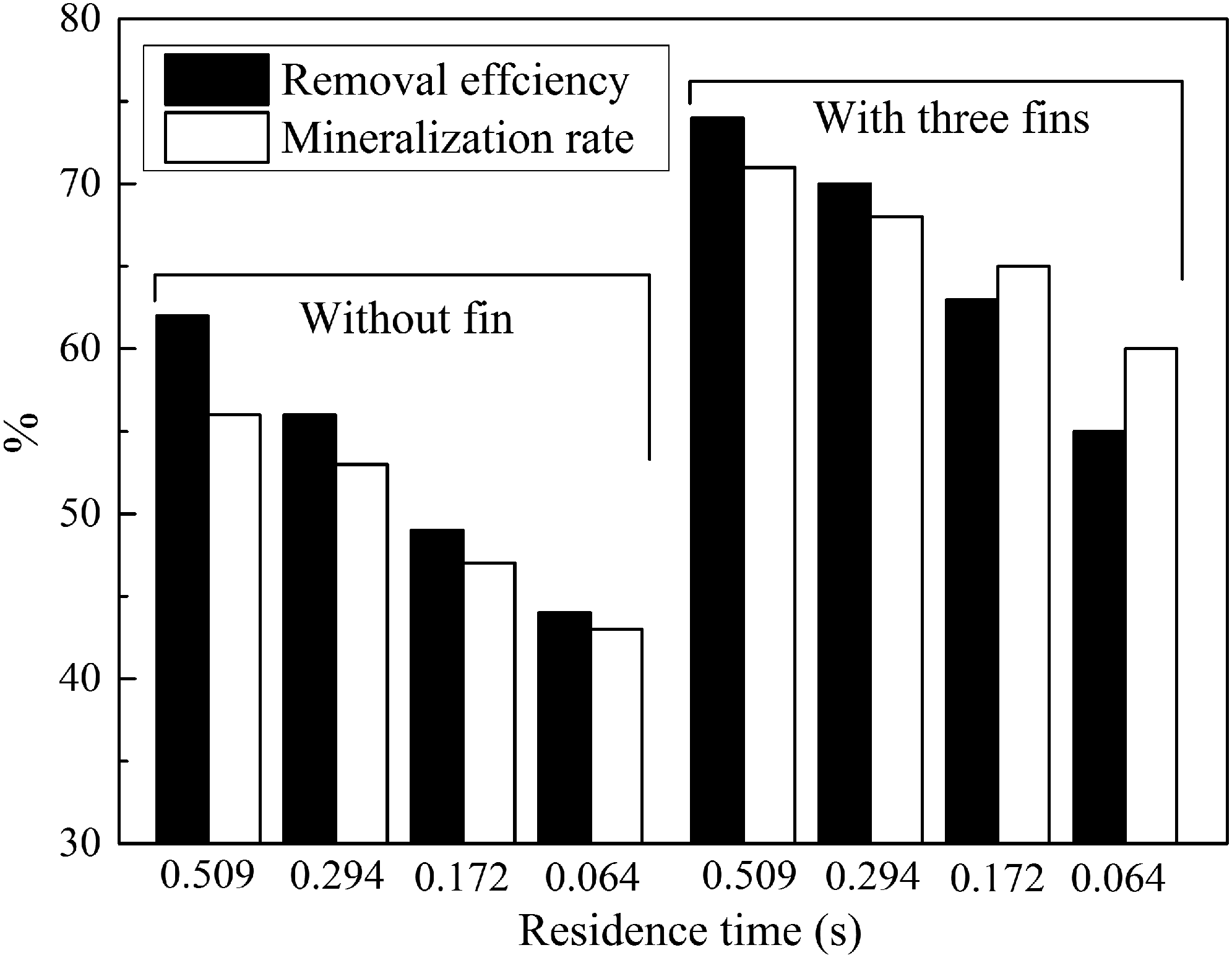
Variation of removal efficiency and mineralization rate of toluene against residence time. t=1 h. Temperature and RH are 25°C and 56%, respectively.
As it can be seen, a decrease of residence time resulted in a significant decrease of toluene removal efficiency, while residence time made much less influence on the mineralization rate, especially for the reactor with fins. Removal efficiency of toluene corresponded only to the initial step of the PCO process and it strongly depended on the contact times between contaminants and the TiO2 surface. However, the mineralization of toluene was the result of multiple PCO reactions of intermediates leading to CO2. Residence times in the studied range were sufficient to complete the series of PCO reactions, thus the residence times exhibited limited influence on the mineralization rate, particularly for the reactor with fins.
Accordingly, we conclude here that the use of fins in an annular reactor was shown to improve photocatalytic efficacy and reduce yields of secondary pollutants.
Degradation of mixture of pollutants
Indoor air contaminants contain more than one pollutant in reality; hence, the degradation of a pollutant mixture containing formaldehyde, benzene, and toluene was performed (Fig. 11). The initial concentration was set at ∼1.5 ppmv for all individual pollutants in the mixture, and the recirculation rate was maintained at a constant between 70 and 72 m3/h. Figure 11 shows that an obvious selectivity existed toward benzene and toluene, which degraded faster than formaldehyde. The PCO system even had a net production of formaldehyde over periods of 1.5–3 h. This phenomenon clearly showed an opposite degradation trend, as shown in Fig. 6. This behavior seems to be consistent with the results of Debono et al. (2011) who reported that volatile aldehydes, such as formaldehyde, were abundant intermediates in the degradation of the aromatic compound and stayed in the reactor longer than the parent compound. On the other hand, the CO2 concentration increased nearly linearly with time and depicted that the mineralization of all pollutants was uniform. After 4 h, the mineralization rate gradually decreased, and then became insignificant as confirmed by the CO2 concentration reaching a steady state.
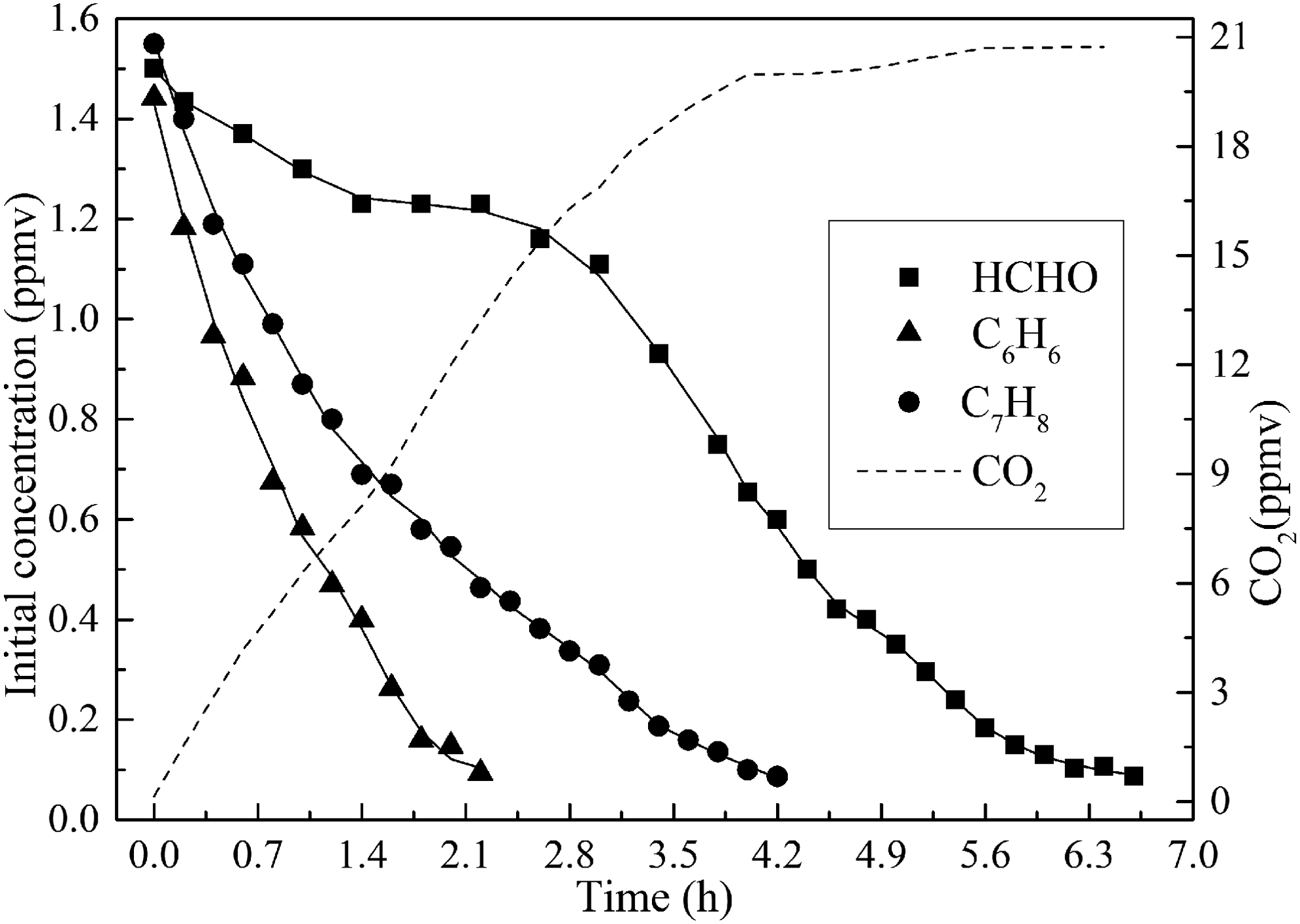
Consecutive degradations of pollutant mixture under the following operational conditions: 25°C temperature; 56% RH; 70 m3/h recirculation rate; 1.5 ppmv initial concentration.
Effect of the recycle ratio
A series of experiments were also conducted to evaluate the effect of the recycle ratio on removal efficiency. The reactor with three fins was chosen, and the initial concentrations were 8.4 ppmv for formaldehyde, 1.2 ppmv for toluene, and 1.4 ppmv for benzene. The overall removal efficiency ηs was calculated by the following equation:
where Cs is the chamber concentration when the PCO process reaches a steady-state condition (ppmv).
Fractional conversion of a PCO reactor, ɛ, was defined as follows:
By comparing the experimental results, we found that the fractional conversion was a function of the recycle ratio even when the degradation was about to end. At a constant pollutant injection rate and air exchange rate, considering that the ventilation could ensure a perfectly mixed gas phase, the mass conservation in the chamber can be written as follows:
where V is the volume of the PCO system (m3), Q is the ventilation rate of the chamber (m3/h), M is the molecular mass (g/mol), and E is the mass flow rate of the introduced pollutant (mg/h). E can be calculated by the following expression:
When the degradation achieved a steady-state condition under irradiation, the degradation was considered dCup/dt=0 and Cs=Cup. Equation (6) can then be rewritten as follows:
where β is the recycle ratio. Substituting Equations (4) and (5) in Equation (8) provides the following:
where ɛs is the fractional conversion under a steady-state condition, which is considered a constant and takes the value as the average of the last 30 min of determinations. Equation (9) is a simple model and can be derived to evaluate the effect of the recycle ratio on the overall removal efficiency. Figure 12 represents the variation of overall removal efficiency obtained for each pollutant versus the recycle ratio. Equation (9) is represented in Fig. 12. The overall removal efficiency seemed to be well depicted by the model described by Equation (9). However, an extremely high recycle ratio could decrease the contact time between pollutant molecules and TiO2; this phenomenon would decrease ɛs. Therefore, the overall removal efficiency could not reach a value of 100% under realistic indoor conditions, and an optimal value of the recycle ratio should exist for maximum overall removal efficiency.
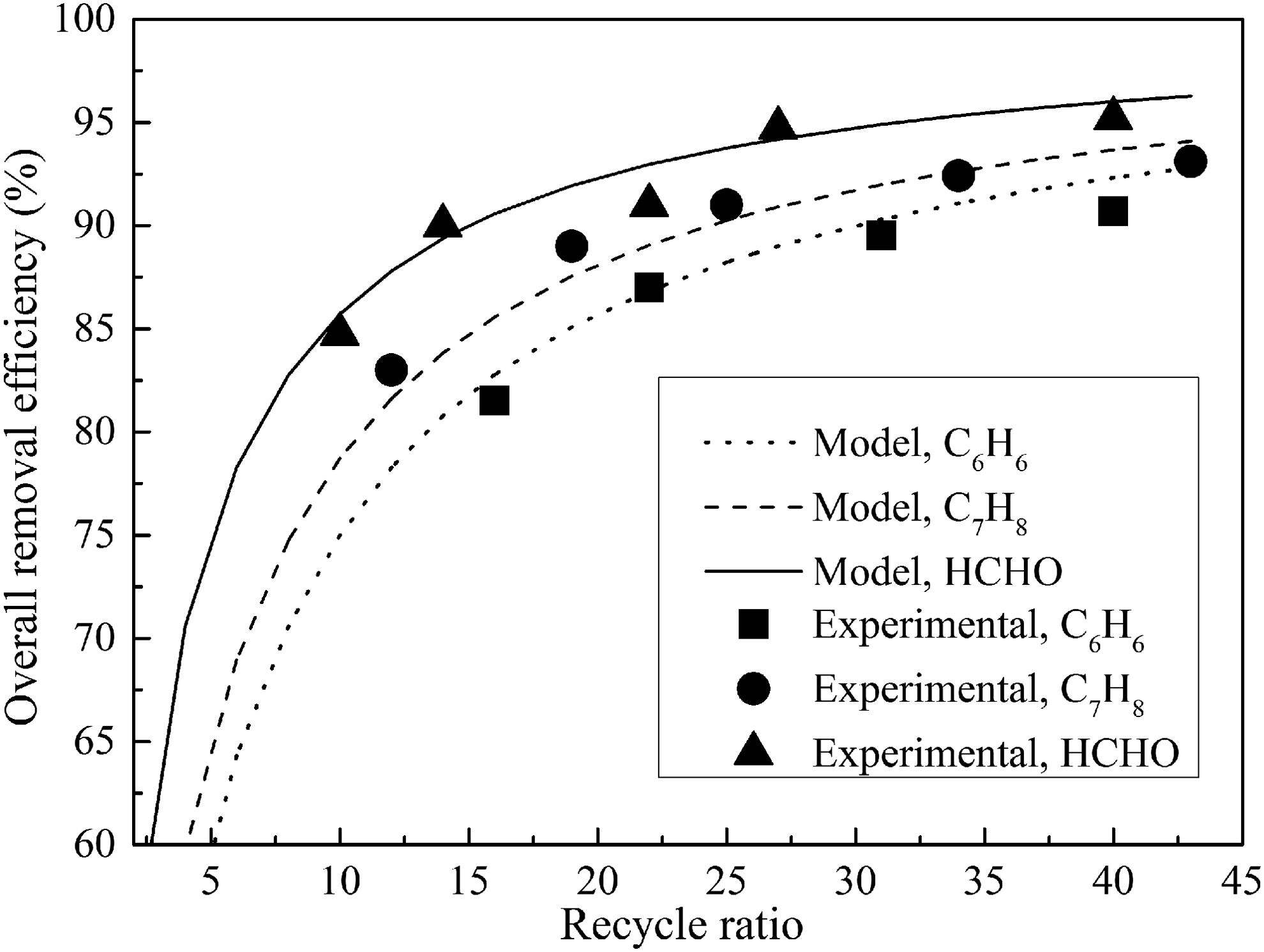
Variation of removal efficiency with recycle. Curves represent solutions to Equation (9). Points represent experimental results.
Conclusions
A photocatalytic annular reactor inserted with fins was applied for the degradation of several toxic VOCs (formaldehyde, benzene, and toluene). The reactor was designed to achieve efficient reaction area and residence time. The photocatalytic efficacy of three types of annular reactors (three fins, five fins, and no fins) was compared using an environmental chamber operating at a constant air exchange rate. We observed that both the removal efficiency and mineralization rate were obviously improved by adding fins to the reactor. A major finding was that the increase of residence time for a reactor operating in a high face velocity regime was critical for the complete degradation of primary and secondary pollutants. Another effort was made to identify the gas-phase intermediates during the PCO process. Benzaldehyde, benzyl alcohol, benzene, phenol, and acetone (or propionaldehyde) were the main intermediates detected in the gas phase. Moreover, the intermediate of formaldehyde was not detected in this study. The selectivity of benzene and toluene could block the elimination of formaldehyde with respect to mixture degradation. A simple numerical model was developed to predict the overall removal efficiency by the recycle ratio, and the model predictions were validated by the experimental results.
Footnotes
Acknowledgment
This work was supported by the National Science and Technology Support Projects of China (Grant No. 2011BAJ03B13).
Author Disclosure Statement
No competing financial interests exist.