







Abstract
Abstract
A magnetic multiwalled carbon nanotubes (MWCNTs) nanocomposite was synthesized and was used as an adsorbent for removal of furazolidone (FZD) and Cu(II) from aqueous solutions. Influence of parameters on the adsorption capacity, including initial pH, contact time, and temperature, were investigated. Langmuir and Freundlich adsorption models were used for the mathematical description of adsorption equilibrium. Experimental data were analyzed by pseudo first order, pseudo second, and intraparticle diffusion order kinetic models. Thermodynamic parameters such as ΔH0, ΔS0, and ΔG0 calculated from adsorption process revealed that the adsorption process was spontaneous, exothermic, and a physical process in the experimental temperature range. Cu(II) had a strong suppression effect on FZD binding in the simultaneous adsorption and FZD preloading experiment. As for Cu(II) simultaneous adsorption and preloading, the impact of FZD on Cu(II) desorption was almost negligible. The practical application of magnetic MWCNTs and regeneration of magnetic MWCNTs for several cycles using hydrochloric acid and N,N-dimethylformamide were also investigated. Results of the study showed that the carbon nanotubes have good regeneration property and can be used as potential adsorbent for FZD and Cu(II) in water/wastewater.
Introduction
F
Cu(II) is one of the most widespread heavy metal ions in the environment, which has universally been considered to be very toxic at high values/guidance of maximum allowable Cu(II) content in the environment. It can cause poisoning effect in humans such as gastrointestinal problems, kidney damage, hair loss, nausea, anemia, hypoglycemia, severe headaches, and even death (Salehi et al., 2012). As with most heavy metal ions, once Cu(II) goes into water and soil, it is difficult to be eliminated due to its nonbiodegradable and enrichment ability in organisms. Therefore, some physical and chemical methods have been used to treat aqueous solutions containing Cu(II), and the more efficient one was adsorption (Salehi et al., 2012).
Generally, the common adsorbents for heavy metal removal, such as Cu(II) included activated carbon, fly ash, and clay; however, the practical application of these materials was limited due to the adsorption efficiency not being satisfactory and the regeneration of the adsorbent was difficult (Ji et al., 2012). In this sense, it is necessary to find an effective method to remove residual FZD and Cu(II) in various water solutions.
Multiwalled carbon nanotubes (MWCNTs) as a novel absorbent have caused extensive concern because of their extremely high aspect ratio and very high surface area (Kumar and Mohan, 2012). Recent studies have shown that the MWCNTs exhibit excellent adsorption properties for organic and heavy metal ions (Ren et al., 2011). However, the reuse of MWCNTs usually needs some complex processes such as filtration or centrifugation, which limit its further use and increase the cost of processing procedure.
In recent years, magnetic separation has been combined with MWCNTs and the composite product (magnetic MWCNTs) processes a good property of separation from the aqueous mediums with ordinary magnet after adsorption. Although magnetic MWCNTs have been used as adsorbent to remove organic and heavy metals and achieved good results, a few studies about simultaneous adsorption of organic and heavy metals on MWCNTs as well as competitive sorption between organic contaminants and heavy metals have been reported. In general, different contaminants usually exist in a mixed condition in the natural water environment, where they may affect each other's physical and chemical behaviors. The adsorptions characteristics may be quite different when heavy metals and organic pollutants were coexisting compared with when they have been on single-solute systems (Chen et al., 2009).
In the study, a simple method was used to modify MWCNTs with magnetic Fe3O4 nanoparticles and the magnetic MWCNTs were applied to remove Cu(II) and FZD from some water samples. The adsorption kinetics, isotherms, and thermodynamics of FZD and Cu(II) on magnetic MWCNTs and the influence of parameters, including initial pH, contact time, and the effect of Cu(II) on the sorption of FZD would be investigated to understand the mechanism of Cu(II)–FZD interactions on the surface of magnetic MWCNTs.
Experimental
Materials
MWCNTs were purchased from Chengdu Organic Chemicals Co. Ltd., Chinese Academy of Sciences. The parameters provided by the manufacturer are as follows: outer diameter: 8∼15 nm; length: 50 μm; purity:> 95%; surface area:> 233 m2/g; conductivity:> 100 s/cm. The other chemicals used in this study were of analytical grade or the highest purity and purchased from Tianjin Jiangtian Chemicals Co., Ltd. All experiments were performed using double-distilled water (DDW) and the glassware was soaked 12 h in dilute nitric acid then rinsed three times with DDW. FZD (C8H7N3O5; MW 225.16; CAS: 67-45-8; purity 98%) was purchased from Aladdin Industrial Corporation and used directly without further purification. The Chemical structure of FZD is shown in Fig. 1.
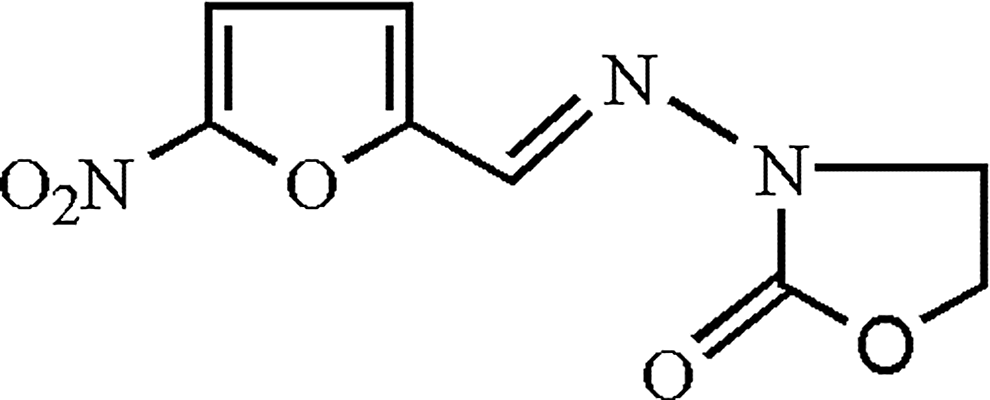
Chemical structure of FZD, furazolidone.
Synthesis of magnetic MWCNTs
According to the method previously reported (Ren and Xiong, 2013), the magnetic MWCNTs nanocomposite was prepared. Typically, 1.5 g MWCNTs were first dispersed into a 250-mL flask that contains 150 mL concentrated nitric acid. The flask was heated up to 60°C and refluxed for 12 h under stirring. At the end of the reaction, the sample was cooled down to room temperature and washed by double-distilled water until the filtrate was neutral. The obtained MWCNT was dried at 100°C for 4 h then placed in a desiccator.
Subsequently, an amount of 1.0 g of the purified MWCNTs was suspended in 200 mL of mixed solution containing 1.7 g (NH4)2Fe(SO4)2 · 6H2O and 2.51 g NH4Fe(SO4)2 · 12H2O, followed by the dropwise adding of 10 mL of 8 M ammonia under the condition of nitrogen atmosphere at 50°C with the ultrasonic assisted stirring for 10 min. The value of the pH of the final reaction solution was kept at the range of 11–12. The reaction was allowed to be continued for 30 min and the color of the reaction solution will change from black to brown during the reaction time. The reaction vessel was cooled at room temperature after the completion of the reaction. A permanent magnet was used to isolate the generated magnetic MWCNTs from the suspension and the product was washed with plenty of water and ethanol subsequently, then dried under 50°C in a vacuum.
Characterization methods
Surface functional groups of MWCNTs, magnetic MWCNTs and Fe3O4 were detected in the frequency range of 400–4,000 cm−1 with an AVATAR 380 Fourier transform infrared spectroscopy (Nicolet Co.). The size and morphology of MWCNTs, magnetic MWCNTs, and Fe3O4 were characterized by transmission electron microscopy (TEM) using a JEOL JEMAGNETIC2100F microscope with an operating voltage of 200 kV.
Batch adsorption experiments
A series of 250-mL flasks containing 50 mL test solution were used in the adsorption experiments. Under certain conditions, the pH of the solutions was adjusted to required values by adding 0.01 M HCl or 0.01 M NaOH solution. The flasks were then transferred to a HZQ-QS rotary shaker at 150 rpm. After a fixed time interval, the magnetic MWCNTs were isolated from the aqueous solution by a permanent magnet. The residual concentration of FZD or Cu(II) were determined. The quantity of FZD and Cu(II) (qt) adsorbed at time t [mg/g] was calculated according to Equation (1):
where qt is the adsorbed amount of the adsorbate on the adsorbents (mg/g); C0 represent the initial concentrations of the adsorbate and Ct is the concentrations of the adsorbate at time t (mg/mL); V is the volume of the solution (mL) and m is the dry biomass of adsorbents used (g).
Competitive sorption between FZD and Cu(II)
To investigate the interaction between FZD and Cu(II) on magnetic MWCNTs, the competitive adsorption experiments were carried out when FZD and Cu(II) were simultaneously adsorbed or one of them was preloaded onto magnetic MWCNTs. In the simultaneous adsorption experiments, the initial concentration of FZD and Cu(II) were kept at a constant of 10 and 20 mg/L, respectively, while the concentration of Cu(II) (or FZD) were varied. In the preloading experiments, the magnetic MWCNTs were used to adsorb single FZD or Cu(II), and then the FZD-adsorbed or Cu(II)-adsorbed magnetic MWCNTs were added into different concentrations of Cu(II) (or FZD) solutions for further adsorption. The above experiments were all operated in flasks containing 50 mL of 0.8 g/L of magnetic MWCNTs at pH 6.0.
Analysis
Concentration of FZD in the supernatants was quantified by UV–VIS spectrophotometer at wavelength of 365 nm; while the concentration of Cu(II) was determined by a PerkinElmer Analyst 800 atomic absorption spectrophotometer (wavelength 324.7 nm, narrow 0.7 nm, lamp current 4.0 mA, air flux 10.0 L/min, acetylene flux 1.6 L/min, height of the flask 11.0 mm). The quantities of adsorbed FZD or Cu(II) in the solutions were calculated according to the difference between initial and final equilibrium concentrations.
Results and Discussion
Characterizations of magnetic MWCNTs
TEM images of Fe3O4, MWCNTs, and magnetic MWCNTs are shown in Fig. 2. It can be seen that the diameter of MWCNTs was about 20 nm and had a tubular structure with crosslinks (Fig. 2a). A TEM image of the Fe3O4 was displayed in Fig. 2b, in which the diameter of iron oxides was about 15 nm and gathered together closely. Figure 2c shows that the MWCNTs were successfully modified by magnetite nanoparticles.

TEM images of MWCNTs
Figure 3 shows the FT-IR spectra of magnetic MWCNTs, MWCNTs, and Fe3O4. In Fig. 3a, the absorption peak at 557 cm−1 was attributed to the stretching vibration of Fe-O in Fe3O4 (Ma et al., 2005). The spectra of MWCNTs and magnetic MWCNTs show that the shapes of the absorption peaks are almost the same, except the appearance of a peak at 557 cm−1 which was the peak of Fe3O4 and it further confirmed that the iron oxides were loaded on MWCNTs. The absorption peaks in Fig. 3b at 3,410, 1,635 (1,652), and 1,558 cm−1 were corresponding to the stretching vibration of O–H, C = O, and –COO−, respectively. The magnetic MWCNTs can easily disperse in aqueous solution due to the functional groups of O–H, C = O, and –COO− as all are hydrophilic. In addition, the peaks nearby 2,359 and 669 cm−1 found in all the samples could be attributed to the asymmetric stretching vibration and bending vibration of C = O in carbon dioxide adsorbed (Jain et al., 2013).
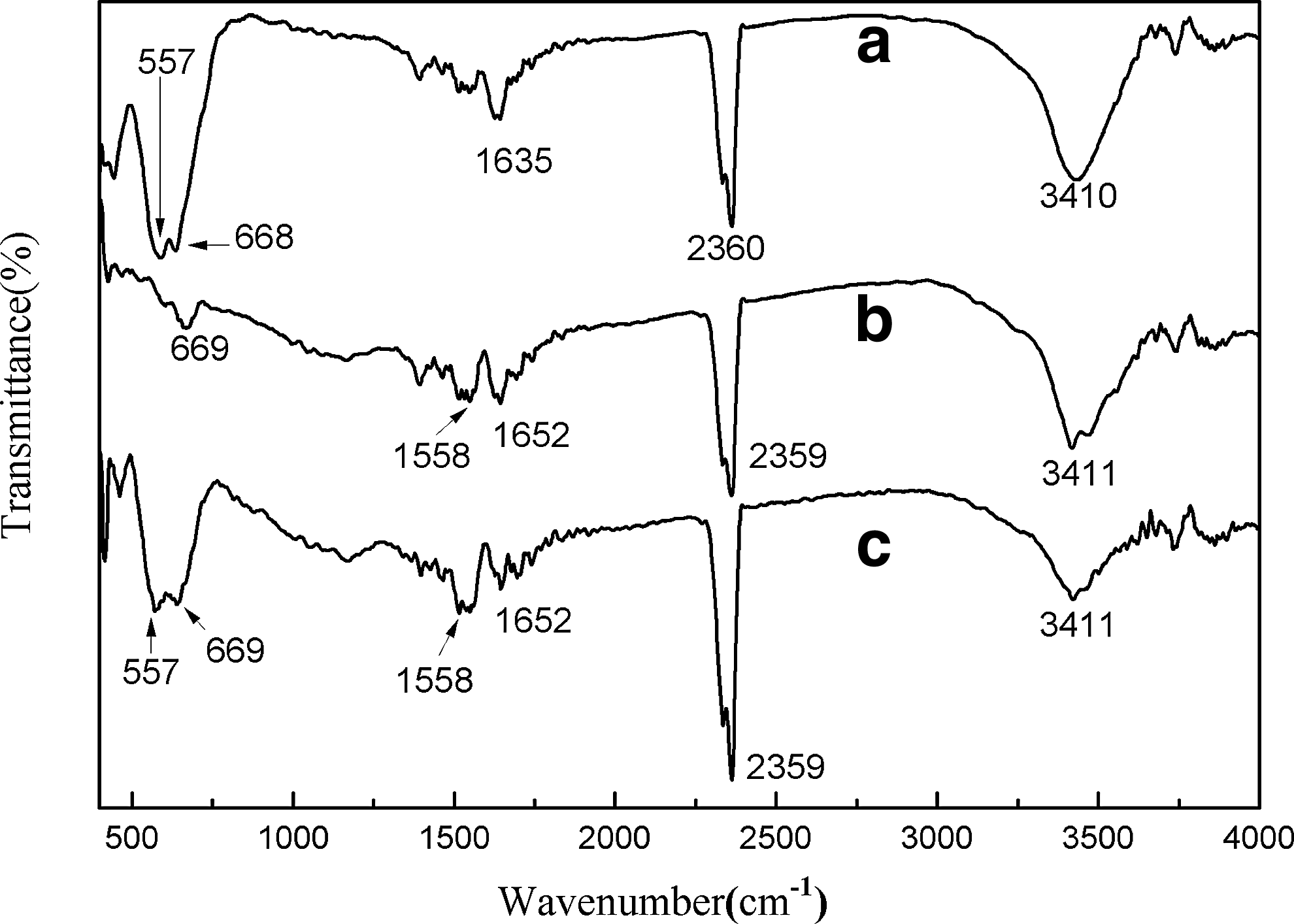
FT-IR spectras of Fe3O4
Effect of pH on adsorption capacity
Effect of pH on adsorption of FZD by magnetic MWCNTs is shown in Fig. 4a. The results show that the adsorption quantity remained nearly constant and keep a high value with the pH values increasing from 2.0 to 7.0, but when pH >7, the adsorption quantity were significantly decreased. The above phenomenon may be due to the serious decomposition of FZD in the alkaline medium (Sharaf and Hassan, 2014), therefore, the pH was adjusted to 6.0 in the later studies.
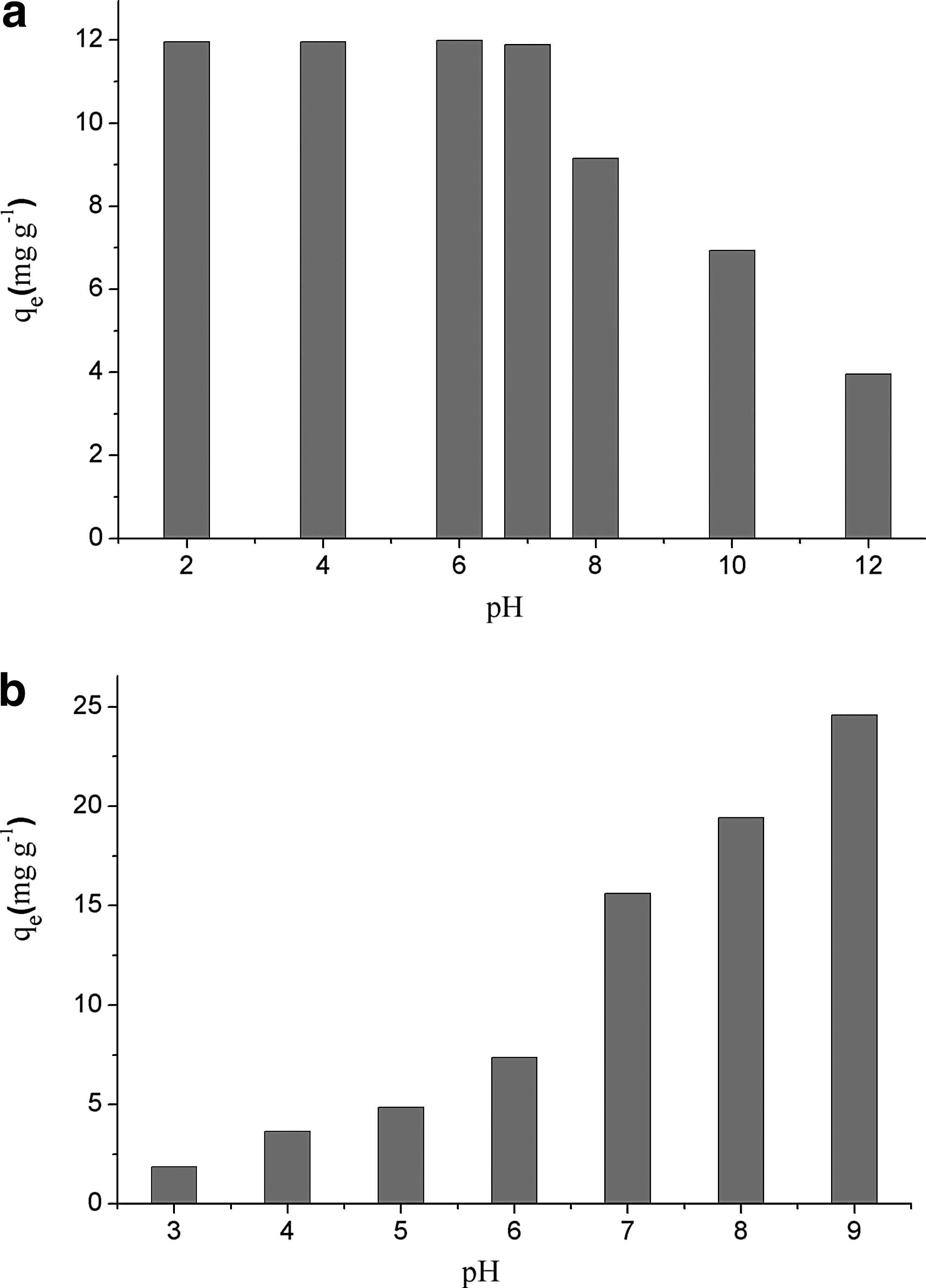
Effect of pH on adsorption of FZD
The influence of pH on adsorption of Cu(II) is shown in Fig. 4b and it can be seen that higher the pH value, greater was the adsorption capacity of Cu(II); in addition, the adsorption capacity increased rapidly especially in the range of 6.0–9.0. This phenomenon may be attributed to the competitive sorption between hydrogen ions and Cu(II). In general, if the pH was at a low level, the hydrogen ions will occupy the adsorption sites on the surface of magnetic MWCNTs, resulting in difficulty to the adsorption of Cu(II) due to the electrostatic repulsion between hydrogen ions and Cu(II) (Tong and Xu, 2013).
Moreover, the hydrolysis of copper (II) developed to the extent that most copper species formed hydroxide particles in the pH range of 6.0–9.0. Under this condition, the removal efficiency of Cu(II) increased significantly mainly due to the precipitation of copper (II) hydroxide, but not the adsorption of copper (II) on magnetic MWCNTs, therefore, the pH of adsorption of Cu(II) remained on weak acid range in the further experiments.
Adsorption kinetics
Sorption kinetic experiments were performed at pH 6.0, the suspensions were shaken at 150 rpm for predetermined time interval, and the residual concentration of FZD or Cu(II) was determined. Figure 5 shows the effect of contact time on the adsorption capacity for FZD (Fig. 5a) and Cu(II) (Fig. 5b) onto magnetic MWCNTs. In Fig. 5a, the adsorption rate of FZD on magnetic MWCNTs increased sharply in the initial 30 min, then the apparent equilibrium was reached in subsequent 5 h; in Fig. 5b, the adsorption capacity of Cu(II) increased significantly within 40 min, and presented a slow increasing during the subsequent period and finally achieved adsorption equilibrium at about 10 h.
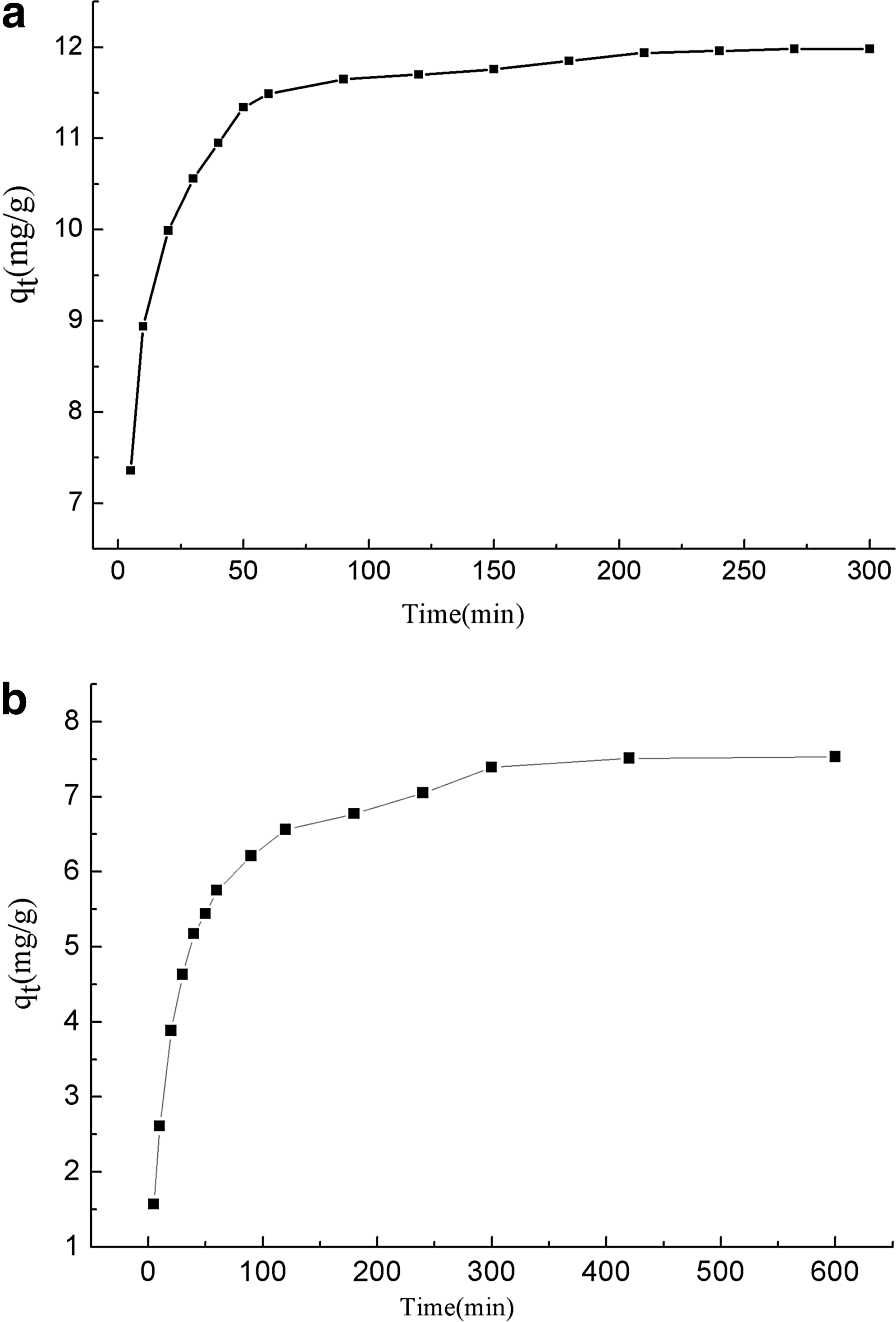
Effect of contact time on adsorbed amount of FZD
Pseudo first order and pseudo second order model
The main contribution of adsorption kinetic is the parameter of adsorption, and the parameters represent the adsorption properties of the adsorbent. For evaluating the adsorption quantity of FZD and Cu(II) on the magnetic MWCNTs, the linear equations of pseudo first order (2) and pseudo second order (3) were employed to deal with experimental data (Al-Johani and Salam, 2011), which can be expressed as follows:
where qe (mg/g) and qt (mg/g) are the amount of FZD or Cu(II) adsorbed on magnetic MWCNTs at equilibrium time and at time t, respectively; k1 (h−1) is the rate constant of pseudo first order and k2 [g/(mg · h)] is the rate constant of pseudo second order. The values of qe and k1 were calculated from the linear plot of ln(qe−qt) versus t. Furthermore, the values k2 for FZD and Cu(II) adsorption onto magnetic MWCNTs were determined through the linear plot of t/q against t. Table 1 gives the values of the kinetic parameters.
FZD, furazolidone; MWCNTs, multiwalled carbon nanotubes.
Results of the straight-line plots of sorption kinetics are shown in Fig. 6a and b. It can be seen that the corresponding regression coefficient R2 values of FZD and Cu(II) for pseudo second order model were very close to 1.0, while the values for pseudo first order model were lower; furthermore, the qe values of calculated and experimental are approximately equal for pseudo second order model. These observations suggested that the pseudo second order model was most appropriate to describe the adsorption kinetics of FZD and Cu(II) on the magnetic MWCNTs.
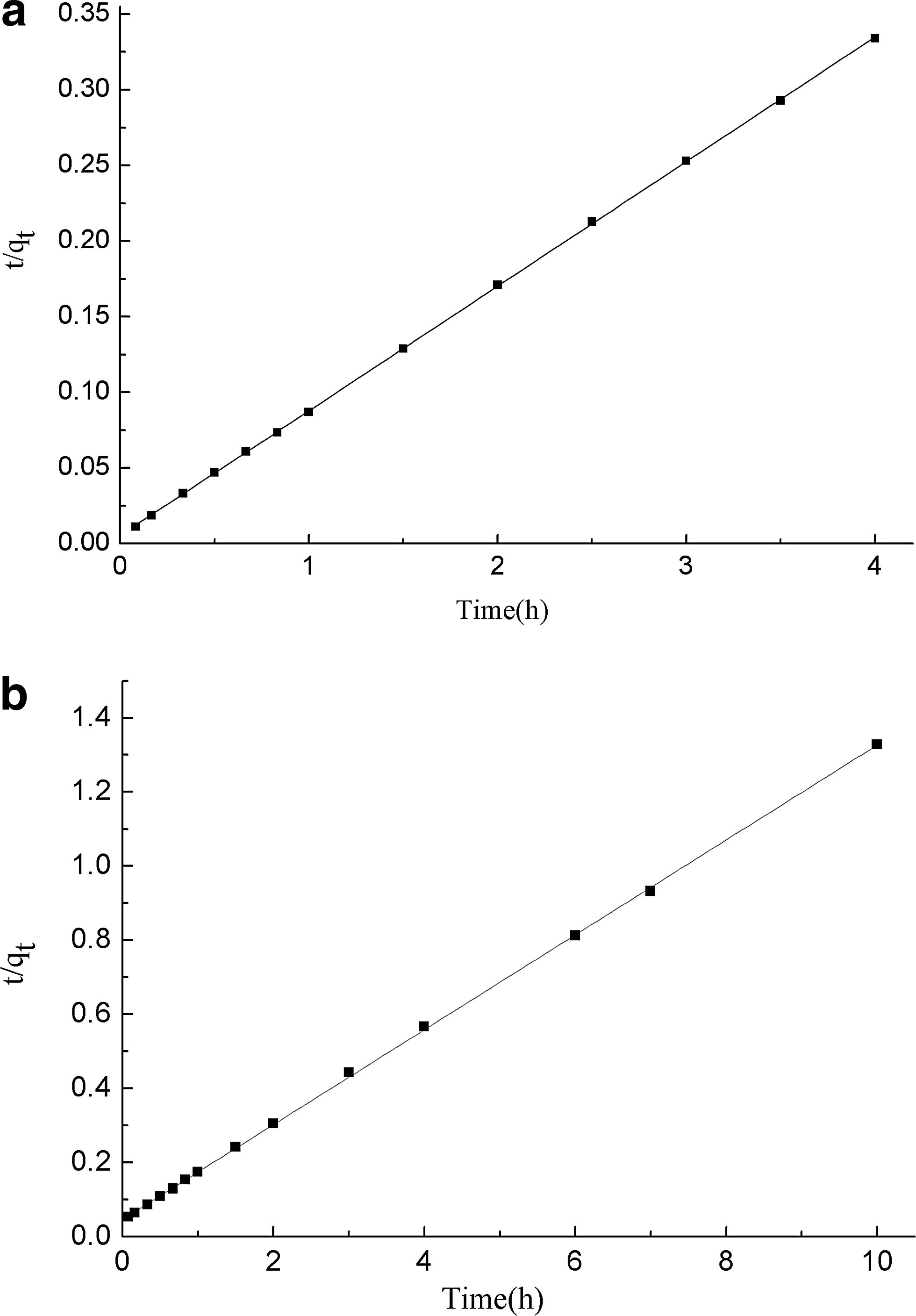
Linearized pseudo second order kinetic model for FZD
Weber–Morris kinetic model
It is necessary to determine the rate determining steps in the adsorption process to understand the adsorption processes. There are a variety of models which can fit kinetic adsorption process, but the intraparticle diffusion model is more consistent with the experimental data (Zhang et al., 2011; Arthy and Saravanakumar, 2013). Therefore, the Weber–Morris diffusion model was utilized (Arasteh et al., 2010):
where Ki (mg−1min−1/2) is the rate constant, and C (mg/g) is a constant related to the thickness of the boundary layer, the greater the value of C, the impact of boundary layer is more significant (Zhang et al., 2011). If the linear fitting chart of qt against t1/2 was just a straight line, then the intraparticle diffusion was the only control factor. Otherwise, the rate-controlling step was influenced by two or more if the linear fitting chart presents multiple line segments.
Linear regression graphs of qt versus t1/2 are shown in Fig. 7a (FZD) and 7b [Cu(II)], and Table 2 provided the values of diffusion model parameters. Figure 7a suggested that the particle diffusion model of FZD is a two-stage adsorption process: the first linear portion (0–40 min) was attributed to the external mass transfer related to boundary layer effect; the second linear segments (40–300 min) represented the procedure of intraparticle diffusion (Fasfous et al., 2010). Figure 7b showed that the linear fitting chart of Cu(II) by magnetic MWCNTs can be divided into three distinct segments; according to the above contents, the first section (0–60 min) and the second portion (60–300 min) can be explained; while the extra linear portion (300–600 min) represented the equilibrium of adsorption–desorption (Al-Johani and Salam, 2011).
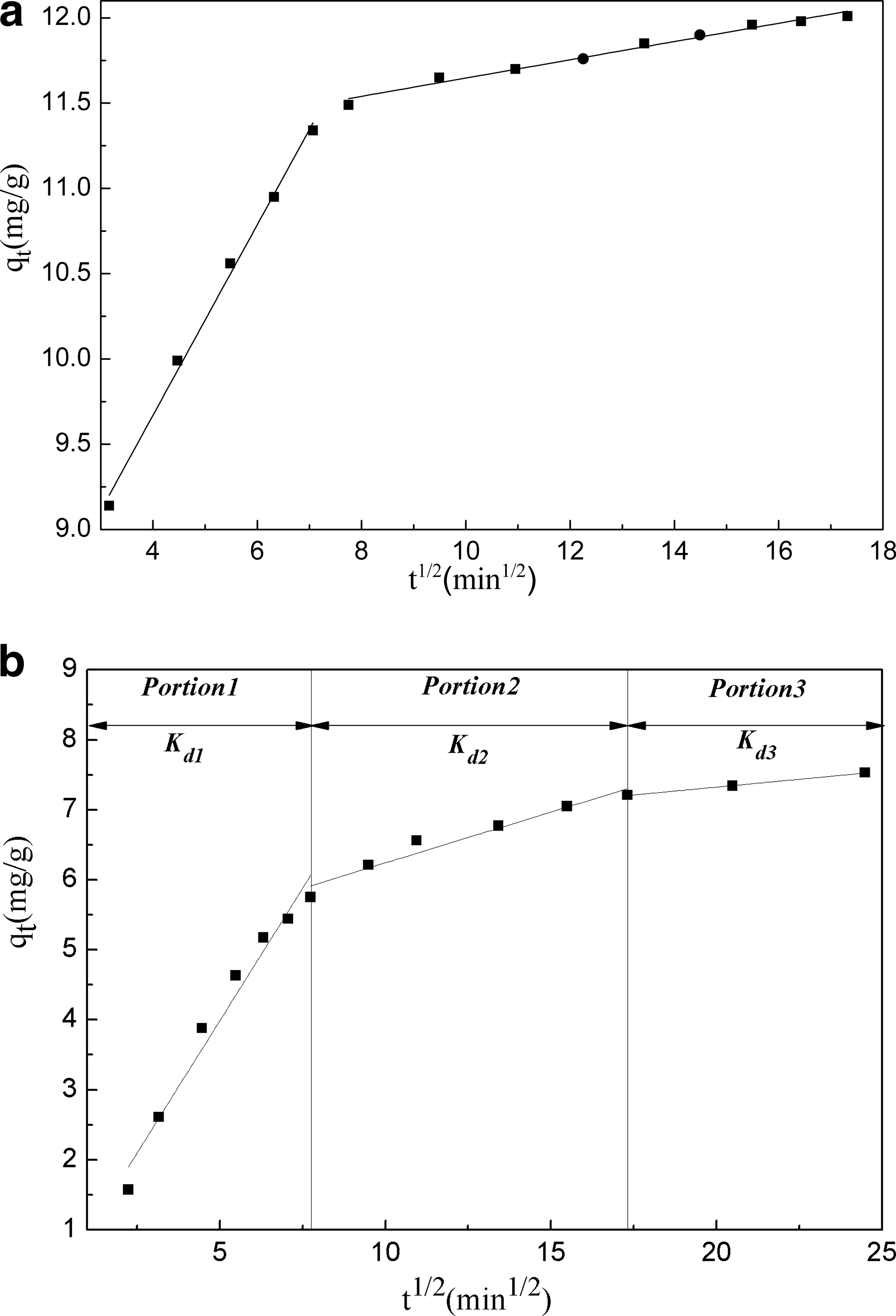
Intraparticle diffusion model for adsorption of FZD
The number of the distinct segments of FZD and Cu(II) are inconsistent indicating that the adsorption mechanism of FZD and Cu(II), by magnetic MWCNTs, vary. Obviously, the molecular structure of FZD is more complex than Cu(II), which results in the diffusion of FZD particles being more difficult than Cu(II). In other words, Cu(II) is more easier to enter the pores of magnetic MWCNTs (transfer within particles) and reach the adsorption equilibrium; so the fitting graphics of Weber–Morris of Cu(II) showed three straight lines, whereas the graphics of FZD only showed two lines. In addition, all the straight lines of FZD and Cu(II) do not pass through the origin, thereby the rate-controlling step was not only determined by intraparticle diffusion (Hu et al., 2012).
Nonetheless, as a result of the large intercepts of the second linear section, the external mass transfer has significant influence for the rate-controlling step (Ghaedi et al., 2013). So the external mass transfer and intraparticle diffusion all affected the adsorption process of FZD and Cu(II) onto magnetic MWCNTs. However, the proportion of the occupation time of external mass transfer to intraparticle diffusion in the adsorption process was about 1:6 (for FZD) and 1:4 [for Cu(II)]; therefore, the intraparticle diffusion plays a major role in rate-limiting step.
Adsorption isotherms
Three different temperatures of 288, 298, and 308 K were applied to investigate the isothermal adsorption process. In the experiment, the initial concentration of FZD and Cu(II) varied from 1.0 to 15.0 mg/L and 5.0 to 50.0 mg/L, respectively, and the mass of magnetic MWCNTs was kept a constant at 40.0 mg.
Langmuir and Freundlich isotherm models were used to describe the experimental data of FZD and Cu(II) adsorbed on the magnetic MWCNTs. The expression for Langmuir Equation (5) and Freundlich model Equation (6) were given as (Chen et al., 2009):
where qe (mg/g) is the equilibrium adsorption quantity of FZD and Cu(II) bound to magnetic MWCNTs; qm (mg/g) is the maximum value of the amount of FZD and Cu(II) adsorbed; Ce (mg/L) is the concentration of FZD and Cu(II) in the solution at equilibrium time; KL (L/mg) is a constant related to the affinity of the binding sites; KF (L/mg) and n are Freundlich constants corresponding to the adsorption amount and the adsorption anchoring strength, respectively.
The sorption isotherms of FZD and Cu(II) at 298 K are shown in Fig. 8a and b, respectively, and the calculated isotherm constants and the corresponding parameters are listed in Table 3. The regression analysis results showed that the adsorption process of FZD and Cu(II) were better fitted by Langmuir isotherm model in the concentration ranges studied. In general, the basic assumption of Langmuir isotherm model is as below: (1) the adsorption of adsorbent is monolayer adsorption; (2) the adsorption energy for different adsorption sites is equivalent; (3) no interaction among the molecules that were adsorbed (Peng et al., 2012). Under the above conditions, the dynamic adsorption equilibrium will be reached and all the adsorption sites in the surface of adsorbent were occupied. Therefore, the adsorption process such as FZD and Cu(II) onto magnetic MWCNTs in aqueous solution were all monolayer adsorption.
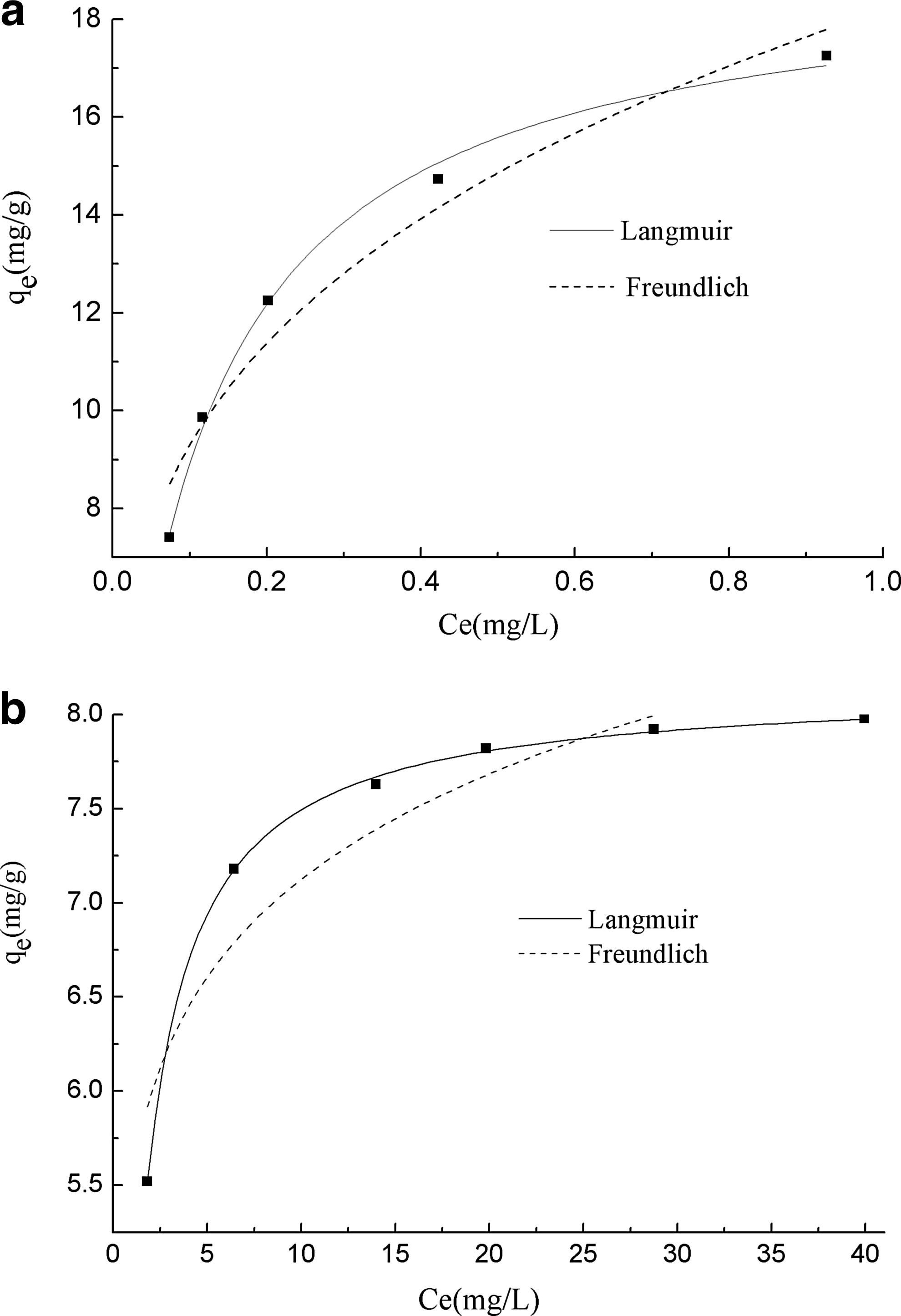
Adsorption isotherms of FZD
The basic characteristics of Langmuir adsorption isotherm can be represented by RL, which is a dimensionless constant and also called separation factor. The values of RL reflect whether an adsorption system is favorable or not and the judgment criteria is as follows: unfavorable (RL > 1), favorable (0 < RL <1), linear (RL = 1), or irreversible (RL = 0) (Ghaedi et al., 2011). The calculation method of RL is as below:
where C0 (mg/L) is the initial concentration of FZD or Cu(II). The values of RL of FZD and Cu(II) were all within the scope of 0–1, which confirm that the adsorption of FZD and Cu(II) onto magnetic MWCNTs was favorable.
Thermodynamic analysis
Through the thermodynamic parameters we can better understand the internal energy changes in the adsorption process. The thermodynamic parameters of free energy of adsorption (ΔG0), standard enthalpy (ΔH0), and standard entropy changes (ΔS0), as well as thermodynamic equilibrium constant K0 at different temperatures were calculated according to the following equations (Abdel Salam and Burk, 2008):
where R [8.314 J/(K · mol)] is the universal gas constant; T is the temperature (K) in Kelvin; K0 is the distribution coefficient.
Values of ΔS0 and ΔH0 can be calculated from the slope an intercept of the data point of lnK0 versus 1/T. The corresponding values of thermodynamic parameters are summarized in Table 4. At a given temperature range, the adsorption process (FZD or Cu(II) adsorbed onto magnetic MWCNTs) was spontaneous because the values of ΔG0 were negative (Salam and Burk, 2010). The negative ΔS0 indicated that the disorder degree at the interface of solid–liquid was reduced. The observed negative ΔH0 revealed that the adsorption process of FZD and Cu(II) onto magnetic MWCNTs were both exothermic. Therefore, the lower temperature is favorable to the adsorption of FZD and Cu(II) in the research scope.
Generally, the characteristics of the adsorption process could be estimated by the value of ΔG0. If the values of the ΔG0 are in the range of 0 to −20 and −80 to −400 kJ/mol, the adsorption processes were physical and chemical adsorption, respectively (Shen et al., 2009). Based on the experimental results, the values of ΔG0 for FZD and Cu(II) are in the range of −15.13 to −13.87 and −17.36 to −16.92 kJ/mol, respectively, and according to the ΔG0 values in the experiment, the sorption process could be mainly physical absorption.
Competitive sorption of FZD and Cu(II)
Competitive sorption between FZD and Cu(II) onto magnetic MWCNTs is illustrated in Fig. 9. In the simultaneous adsorption studies, the adsorption capacity of magnetic MWCNTs to FZD was decreased with the increase of the concentration of Cu(II), which proved that Cu(II) may inhibit the sorption of FZD. This fact can be explained by the following two mechanisms (Tang et al., 2012). First of all, it is explained by the pHPZC of magnetic MWCNTs. The isoelectric point (pHPZC) is defined as the point where the zeta potential of the surface charge is zero. The surface of magnetic MWCNTs was positively charged at pH lower than pHPZC and negatively charged at pH higher than pHPZC.
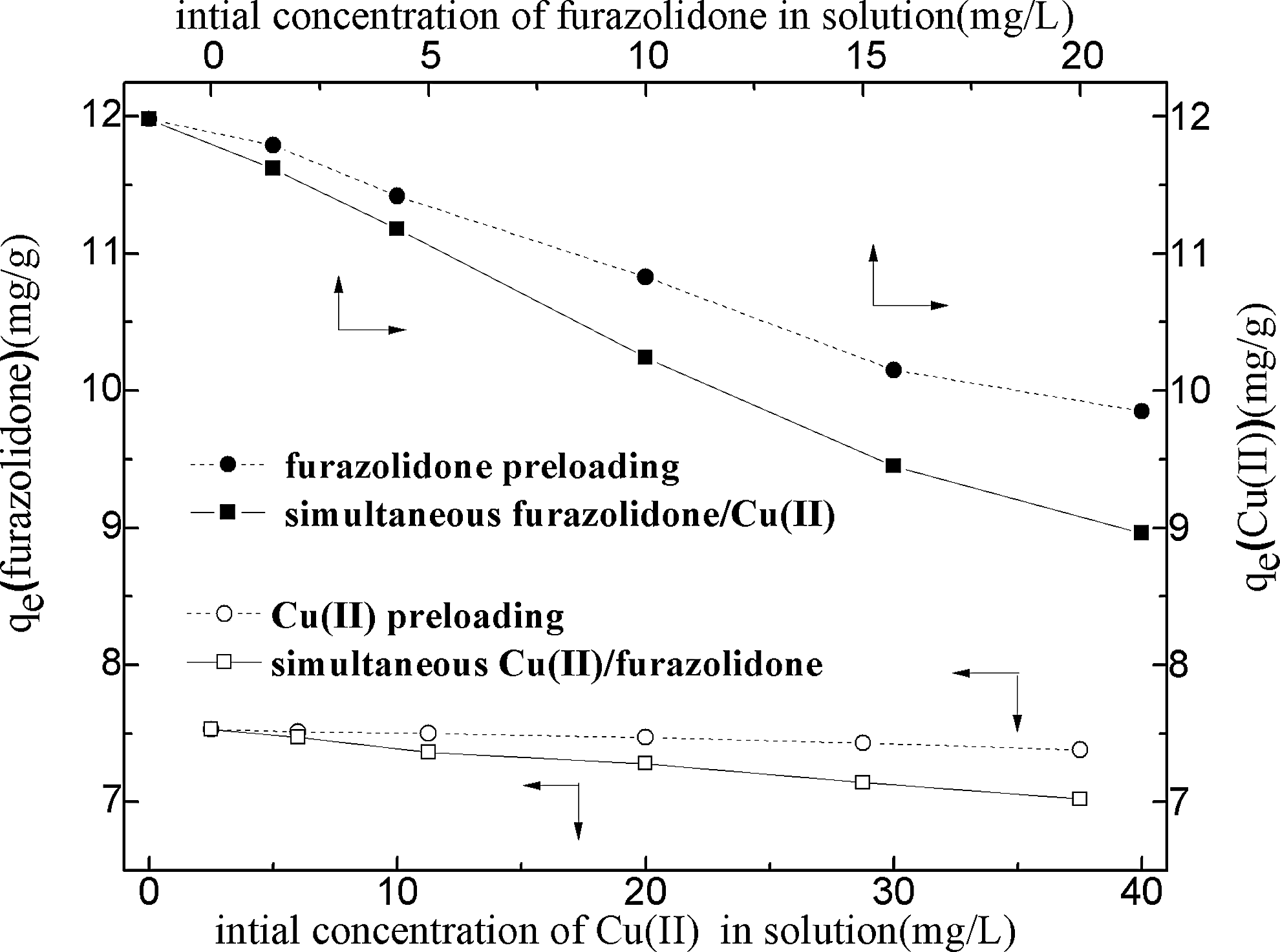
Effects of simultaneous adsorption and preloading on the sorption capacity of magnetic MWCNTs for FZD and Cu(II).
In this experiment, the pH of the solution (6.0) is lower than pHPZC (the early experimental result shows that the pHPZC of magnetic MWCNTs was about 6.8) so the surface of magnetic MWCNTs showed a weak positive charge, positively charged copper ions due to electrostatic repulsion far away from the adsorption sites. So, it seems that Cu(II) cannot directly compete the adsorption sites on the magnetic MWCNTs when the value of pH is below 6.8. However, there are still a small amount of Cu2+ in the aqueous solution at pH = 6.0, copper (II) may complex with the hydroxyl and/or carbonyl group on the surface of magnetic MWCNTs, and even form some coordinate bonds between Cu(II) and oxygen-containing functional groups. These hydration shells on the surface of magnetic MWCNTs will indirectly compete with FZD for sorption sites by the effects of squeezing, shielding, and occupying (Xu et al., 2012), thus leading to a competitive adsorption phenomenon.
In addition, for FZD preloading experiments, it can be found that if the concentration of Cu(II) was becoming higher, more FZD would be desorbed, which confirmed again that Cu(II) can compete the same adsorption sites with FZD. Besides, for the simultaneous adsorption of FZD and Cu(II), there was weak inhibitory effect on FZD for the adsorption of Cu(II) and just a little Cu(II) were desorbed when the FZD were added to the Cu(II)-preloading solution. The above phenomenon may attribute to the electrostatic attraction between Cu(II) and magnetic MWCNTs at pH 6.0, which resulted in forming Cu(II) coordinate bonds, and the steric hindrance effect of the coordination compounds will block FZD being close to the adsorption sites (Wang et al., 2013).
Regeneration of magnetic MWCNTs
N,N-dimethylformamide (DMF) was used as desorption solution for FZD due to its high solubility. Hydrochloric acid can be utilized cleaning the heavy metal ions absorbed on the magnetic MWCNTs due to its low price and good desorption effect (Huang and Li, 2009). In this research, the effects of HCl concentration on the desorption rate of Cu(II) was investigated and the results are listed in Table 5. The results show that the high concentration of HCl will promote the desorption rate of Cu(II). Considering desorption rate and cost, 0.2 M concentration of HCl was selected.
The flasks containing 50 mL test solution of 10 mg/L FZD [or 20 mg/L Cu(II)] and 40 mg magnetic MWCNTs were used in the regeneration experiment. After adsorption equilibrium, the magnetic MWCNTs that adsorbed FZD were added into 50 mL DMF for desorption. Then magnetic MWCNTs were magnetically separated and washed by dehydrated alcohol to remove the residual DMF. The Cu(II)-adsorbed magnetic MWCNTs were added into 50 mL 0.2 M HCl solution for desorption. The magnetic MWCNTs were magnetically separated again and washed by DDW to remove the residual HCl. The regenerated magnetic MWCNTs were reused for next cycle.
Figure 10 gives the results of adsorption/desorption cycle of magnetic MWCNTs, which indicated that the adsorption capacities for both FZD and Cu(II) were all decreased after the fifth adsorption/desorption cycle. The decrease of the adsorption capacity of the adsorbent may associate with its internal conditions (such as the decomposition of the adsorbent), while the main reason probably was that the active surface sites were still occupied due to the incomplete desorption of the adsorbent or because some active sites were destroyed (Huang and Li, 2009). Nevertheless, the adsorption capacities for both FZD and Cu(II) were still keeping a high value [9.74 mg/g for FZD and 6.24 mg/g for Cu(II)], indicating that the magnetic MWCNTs could be efficiently regenerated by using HCl and DMF as washing solvents.
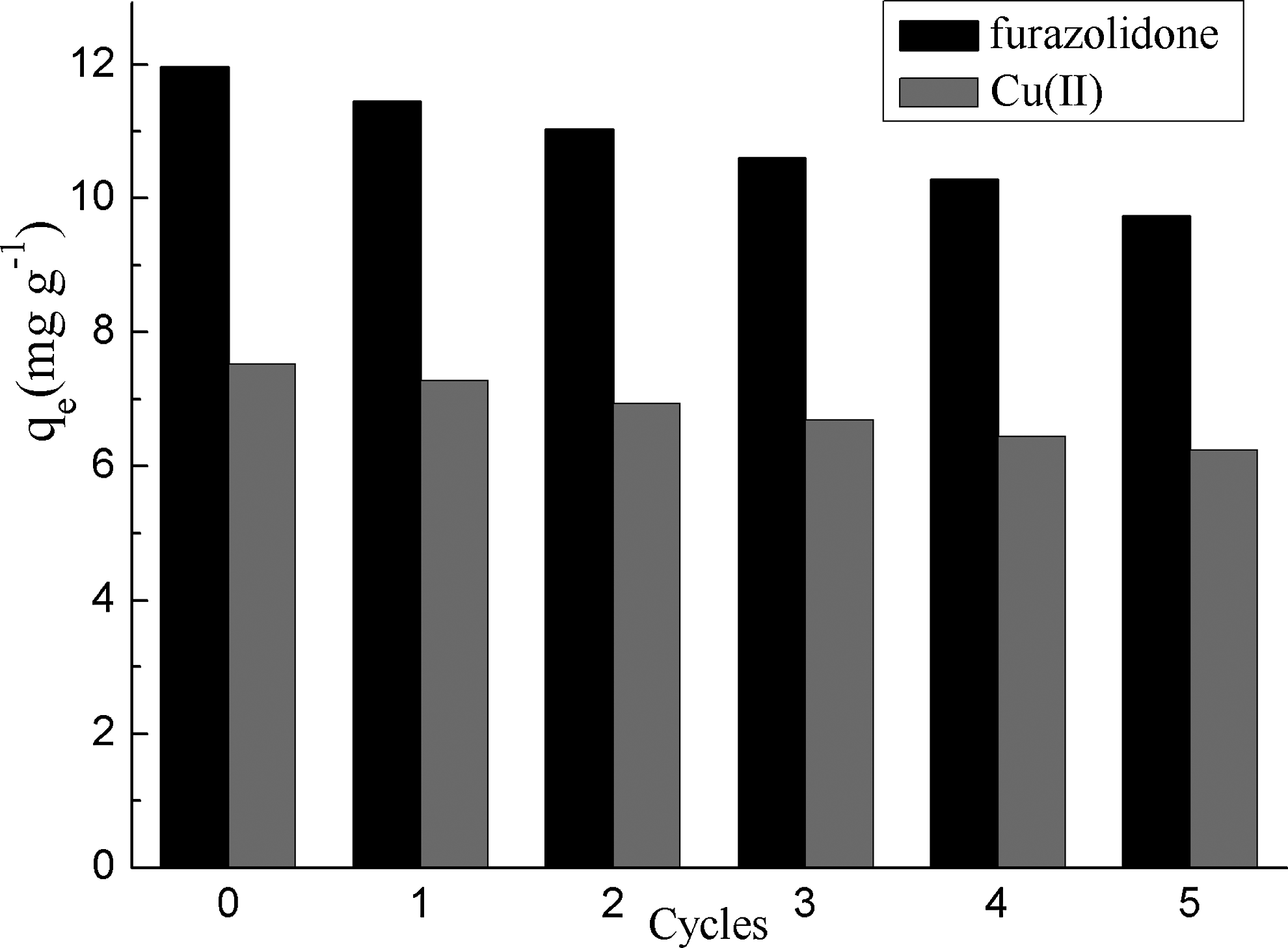
Adsorption–desorption cycles of magnetic MWCNTs for FZD and Cu(II).
Application of magnetic MWCNTs
To investigate the application of magnetic MWCNTs for disposing actual water samples, the tap water and lake water [detection result showed that the water samples do not contain FZD and Cu(II)] were used to prepare solutions of FZD and Cu(II). The pH of the solution was kept at the original value to research the effect of actual water conditions. The tests were performed in flasks containing 50 mL of 10 mg/L FZD [or 20 mg/L Cu(II)] and 40 mg magnetic MWCNTs and the research results are listed in Table 6.
According to the experimental data in Table 6, no matter in tap water or distilled water, the adsorption capacity for FZD almost identical, could account for the value of pH with almost no effect on the adsorption capacity of FZD when pH <7. However, the absorbance for FZD in distilled water was slightly higher than that in lake water. The most likely reason is that the dissolved organic matter in lake water will directly compete with FZD for the adsorption sites on the external of magnetic MWCNTs; furthermore, the absorbed organic compounds will block the pores of magnetic MWCNTs, which reduce available pore volume and surface area (Zhang et al., 2011).
The absorbance of Cu(II) in tap water and lake water were both greatly higher than that in ultrapure water. In addition, this value in lake water was the maximum. The reasons leading to this phenomenon was that Cu(II) in the water could convert quickly into Cu(OH)2 under the pH range of 6.0–9.0 and thus resulted in the decline of Cu(II) concentration. Moreover, the higher absorbance for Cu(II) in lake water could be explained as follows: the soluble organic matter existing in the lake will form complexes with Cu(II), which is beneficial for the sorption of Cu(II) (Guo et al., 2012); besides, the suspended particulate matter in lake water can also provide a synergistic reaction to the sorption of Cu(II) (Barbusinski et al., 2012). These results indicated that magnetic MWCNTs were an effective adsorbent for removing FZD and Cu(II) in practical water samples.
Conclusions
In this research, magnetic MWCNTs have been successfully synthesized and could be well dispersed in the water. After adsorption equilibrium, the magnetic MWCNTs could be easily separated from the water medium with the assistance of external magnetic field. In the optimum conditions, the adsorption capacity for FZD and Cu(II) on magnetic MWCNTs were 11.98 and 7.53 mg/g, respectively. The equilibrium adsorption time of FZD and Cu(II) on magnetic MWCNTs was 5 and 10 h, respectively. The adsorption kinetic of FZD and Cu(II) on magnetic MWCNTs, both followed by pseudo second order kinetic model and the external mass transfer and intraparticle diffusion, were rate-controlling steps.
The equilibrium data were better described by the Langmuir isotherm model for FZD and Cu(II). The sorption of FZD and Cu(II) was an exothermic and spontaneous physical adsorption process. Competitive adsorption experiments showed that Cu(II) has an inhibitory effect on the adsorption of FZD and the adsorbed FZD will be desorbed, while FZD almost had no effect on the adsorption of Cu(II). The magnetic MWCNTs could be effectively regenerated by HCl and DMF and exhibited excellent adsorption performance in actual water samples. In conclusion, magnetic MWCNTs may process a potential application in the treatment of environmental aqueous solutions.
Footnotes
Acknowledgments
This research was supported by the National Nature Science Foundation of China (Grant No. 50878138). The authors thank their colleagues and other students who participated in this work.
Author Disclosure Statement
No competing financial interests exist.