







Abstract
Abstract
CuO/Al2O3-EPC particles (prepared by an electroless plating-calcination method) were used to catalyze ozonation (O3) for the degradation of sulfamethoxazole (SMX) in aqueous solution. First, effects of key parameters including catalyst dosage (0–1.5 g/L), oxygen flow rate (100–500 mL/min), temperature (5–45°C), initial solution pH (3.0–9.0), and initial SMX concentration (19.75–98.75 μM) were investigated. The CuO/Al2O3-EPC/O3 system was effectively applicable for a broad pH range (∼3.0 − 9.0). Furthermore, CuO/Al2O3-EPC particles showed good stability and catalytic activity in CuO/Al2O3-EPC/O3 system. Presence of tert-butanol in CuO/Al2O3-EPC/O3 system accelerated the degradation of SMX. Based on eight intermediates detected by ultra-high performance liquid chromatography-quadrupole time-of-flight mass spectrometry, SMX in CuO/Al2O3-EPC/O3 system was degraded by six pathways. Finally, biological toxicity of SMX solution degraded by CuO/Al2O3-EPC/O3 system was reduced. In brief, this study suggests that the CuO/Al2O3-EPC/O3 system is an effective system for removing SMX from water.
Introduction
Sulfonamides, because of their low broad-spectrum antimicrobial abilities and cost, were overused in livestock feeding, and animal and human infections (Yin et al., 2018). Sulfamethoxazole (SMX), a sulfonamide antibiotic and originally designed for human medicine, is widely used in veterinary medicine as an antimicrobial agent at present (Gao et al., 2014). Because the traditional biological methods were not effective for SMX degradation, SMX is frequently detected in related waters, secondary wastewater, and sediments (Bu et al., 2013; Willach et al., 2017). Because of the high biological activity and long-term persistence of SMX in the ecosystem, it may be threatening the aquatic and neighboring living systems and enhancing bacterial resistance and resistant genes generation (Mulla et al., 2018; Yin et al., 2018). Therefore, it is important to develop effective treatment technologies to degrade SMX in aquatic environments.
Ozone, an effective oxidant, is used in wastewater treatment and also air purification (Xiong et al., 2018b). Ozonation could proceed by two routes: (i) direct oxidation by ozone and (ii) indirect oxidation by the hydroxyl radicals (•OH) generated from the decomposition of ozone (Tisa et al., 2014). The direct oxidation by ozone is relatively slow and selective (Nawrocki and Kasprzyk-Hordern, 2010). Recently, the heterogeneous catalytic ozone for the •OH generation has attracted attention because of its higher oxidation capacity on organic pollutants than sole ozonation (Ren et al., 2018; Xiong et al., 2018a; Zhang et al., 2018).
Copper oxide (CuO) could catalyze ozone by heterogeneous catalytic process, hydroxyl radicals produced could effectively degrade organic matter, but there were drawbacks if CuO was directly used as a catalyst in an aqueous solution (Yang et al., 2017b). It is difficult to separate CuO from water, and the working pH of CuO is narrow. To overcome the above drawbacks, loading CuO on a support is an effective way to overcome the above disadvantages. Recently, catalyst particles prepared by a new method of electroless plating–calcination (catalyst-EPC) showed higher catalytic activity and longer operational life compared with the catalyst particles prepared by impregnation–calcination (catalyst-IC) method (Lai et al., 2018; Ren et al., 2018). Catalyst-EPC has the following advantages compared with catalyst-IC: (i) more uniform and dense CuO was deposited on the surface of aluminum oxide (Al2O3), (ii) stronger adhesion between CuO and Al2O3 was formed (Ren et al., 2018). However, the degradation of SMX by the CuO/Al2O3-EPC/O3 system is hardly known.
The objectives of this study were as follows: (i) to determine the catalytic degradation ability of CuO/Al2O3-EPC/O3 system for SMX; (ii) to assess effects of crucial factors including CuO/Al2O3-EPC dose, oxygen flow rate, experimental water temperature, initial solution pH, and initial SMX concentrations; (iii) to clarify degradation pathways of SMX in CuO/Al2O3-EPC/O3 system by the detected SMX products; and (iv) to evaluate the biological toxicity of the degraded SMX solution.
Experimental
Reagent
Chemicals used in this study include the following: aluminum oxide (Al2O3), copper (II) sulfate pentahydrate (CuSO4·5H2O; ≥99.0%), cupric nitrate [Cu(NO3)2·3H2O; 99.90%–102.0%], boric acid (H3BO3; ≥99.%), sodium hypophosphite (NaH2PO2·2H2O; ≥99.0%), tert-butanol (TBA; ≥99.0%), stannous chloride (SnCl2·2H2O; ≥98.0%), palladium chloride (PdCl2; ≥99.0%), and HCl (37.5%, wt%). They were purchased from Chengdu Kelong chemical reagent factory. SMX (analytical reagent, ≥98.0%) was purchased from AMP NETCONNECT. As given in Supplementary Figs. S1 and S2, the forms of SMX depend on the pH of the solution. Activated sludge was taken from the aeration tank of Chengdu West Hong Kong Sewage treatment plant. The raw Al2O3 was calcinated to active and stable γ-Al2O3 by muffle furnace at 600°C (Ren et al., 2018). CuO/Al2O3 particles were prepared by electroless plating–calcination (CuO/Al2O3-EPC) and impregnation–calcination method (CuO/Al2O3-IC) according to previous literature (Ren et al., 2018). All solutions in this study were prepared by the deionized water. Detailed preparation methods are provided in Supplementary Data.
Analytical methods
Quantification of SMX by HPLC
SMX was quantified by high-performance liquid chromatography (HPLC) (Agilent USA) equipped with a UV detector and Eclipse XDB C-18 column (4.6 × 250 mm, 5 μm) at a wavelength of 264 nm. The mobile phase was a mixture of acetonitrile and oxalic acid solution (0.01 M) (Hou et al., 2013). The limits of quantification (LoQ) of HPLC for SMX was 0.05 ppm and the limits of detection (LoD) of HPLC for SMX was 0.03 ppm.
Quantification of copper ions
Total dissolved copper ion leached from CuO/Al2O3-EPC was detected by an atomic absorption spectroscopy (AA-6300; Shimadzu, Japan).
UV–vis spectrometry
Influent and effluent were analyzed by UV–vis absorption spectroscopy, and the spectral detection range was 190–350 nm.
Analysis by ultra-high performance liquid chromatography-quadrupole time-of-flight mass spectrometry
Ultra-high performance liquid chromatography-quadrupole time-of-flight mass spectrometry (UPLC-QTOF-MS/MS) system, in positive mode, was used to identify products of SMX. Five millimolars ammonium formate and 0.1% formic acid water solution were used as mobile phase A, and acetonitrile was used as mobile phase B. Chromatography was performed with an AgilentG6545 UPLC with an EclipsePlusC18 RRHD (1.8 μm, 3.0 × 50 mm). The initial mobile phase composition (5% A) followed by a linear gradient progressed from 5% to 95% in 1 min, and then 95% mobile phase A followed by a linear gradient progressed from 95% to 2% from 1 to 7 min and then kept for 1 min at 2%. The flow rate was 0.2 mL/min, streath gas temperature was 30°C and injection volume was 5 μL. Ion source parameters were as follows: drying gas, 6 L/min; streath gas temperature, 350°C; gas temperature, 350°C; nebulizer, 40 psig; and sheath gas flow, 11 L/min. MS spectra were acquired over the m/z 50–1,000 range. Another operation condition was collision energy, 10, 20, 40.
Activated sludge inhibition experiments
Activated sludge inhibition of the influent and effluent of the SMX solution degraded by CuO/Al2O3-EPC/O3 system was conducted following the standard described in the International standard (Lai et al., 2018).
Experimental setup
A 39.5 μM SMX stock solution was prepared by simple dissolution of deionized water. Ozone was produced by pure oxygen passing through an OZAT ozone generator (5 g/h; Guangzhou Chuanghuan Ozone Electric Appliance Co., Ltd., China). The dissolved ozone concentration was detected by indigo method (Flamm, 1977; Bader and Hoigni, 1981). The batch experiments were conducted in 500 mL glass beaker; 300 mL SMX stock solution was added into the glass beaker and mixed by using a mechanical stirrer (300 rpm), and the working temperature was maintained with a water bath. The addition of catalyst and the bubble of ozone would initiate the reaction. A scheme of the experimental apparatus is provided in Supplementary Fig. S3. One milliliter samples (i.e., eight samples for each set of experiments) were taken out and quenched with 50 μL sodium thiosulfate pentahydrate immediately, which then were filtered with 0.45 μm filter membrane. The samples of UV–vis analysis were not added to any quenched reagents, and detect it immediately after filtering. The activated sludge inhibition experiments were carried out in aerobic biological treatment aquatic environment systems, and more information is given in Supplementary Data. All experiments have been carried out at least three times.
Results and Discussion
Influence of five reaction parameters (single factor experiments)
CuO/Al2O3-EPC dose
Effect of catalyst dosage (0, 0.1, 0.5, 1.0, and 1.5 g/L) on the degradation of SMX in aqueous solution by the CuO/Al2O3-EPC/O3 system was investigated. Figure 1a indicates that the removal rate of SMX in CuO/Al2O3-EPC/O3 system was increased from 84% to 97% at 24 min, when the CuO/Al2O3-EPC dosage increased from 0 to 0.5 g/L. The total catalyst surface area and the number of available active sites in the reacting system would increase with catalyst dosage, which was beneficial for the activation of O3 to generate free radicals (e.g., O2 •− and •OH) (Ma et al., 2005). Thus, the degradation of SMX would be effectively improved by the increased CuO/Al2O3-EPC. The average crystallite size of CuO on CuO/Al2O3-EPC was 8.6 nm, and the specific surface area and pore volume of CuO/Al2O3-EPC was 146.0 and 158.9 m3/g, respectively (Ren et al., 2018). The SMX removal rate only was increased from 97% to 98% when CuO/Al2O3-EPC dosage further increased from 0.5 to 1.5 g/L. That was because the active sites on the surface of 0.5 g/L CuO/Al2O3-EPC were able to effectively activate ozone when the oxygen flow rate was 300 mL/min. Therefore, the CuO/Al2O3-EPC dosage was selected as 0.5 g/L for the following experiments.
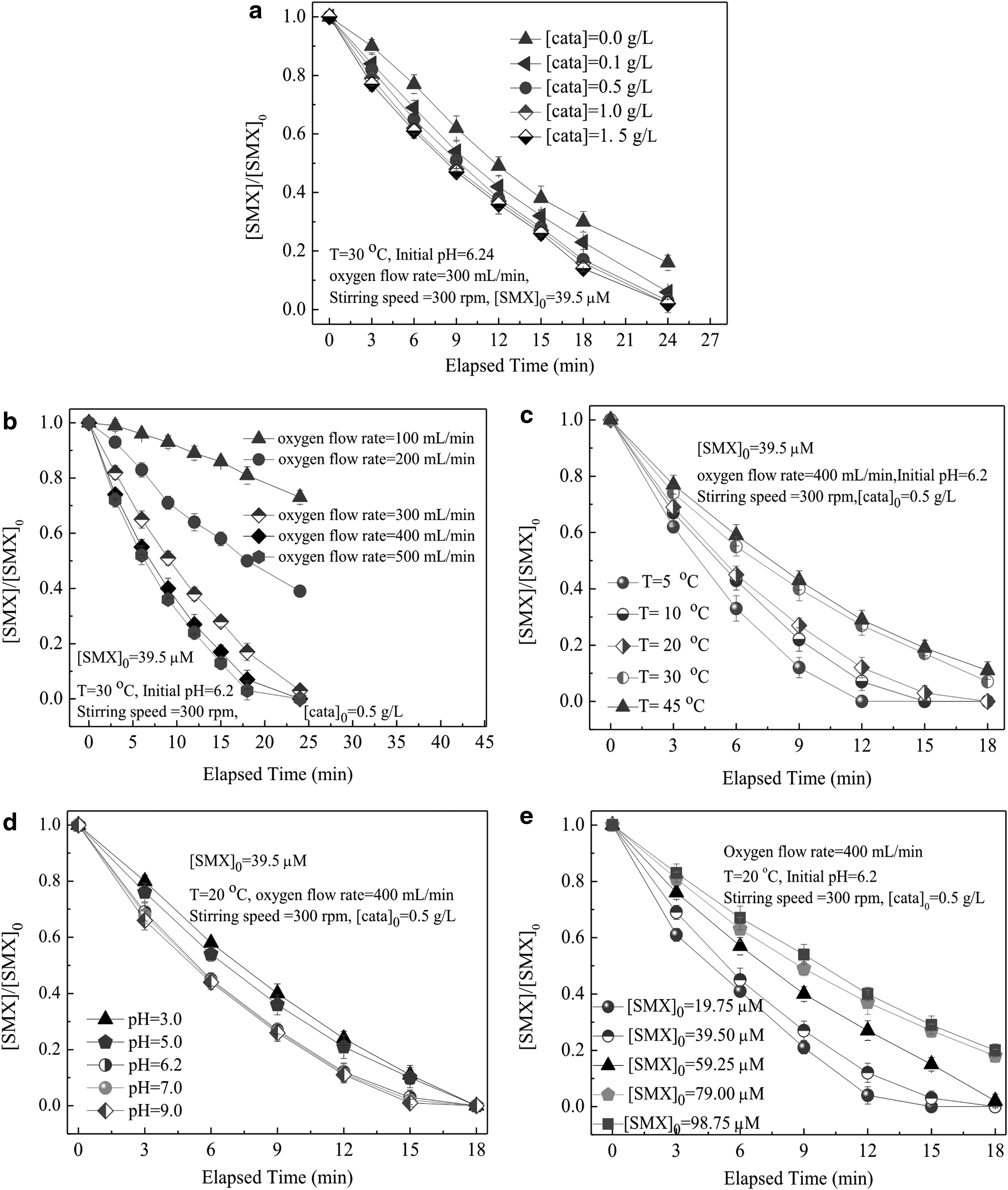
Effects of CuO/Al2O3 dosage
Oxygen flow rate
Effects of oxygen flow rate (100, 200, 300, 400, and 500 mL/min) on the oxidation capacity of CuO/Al2O3-EPC/O3 system were investigated. The SMX removal efficiency was increased from 27% to 100% in 24 min when the oxygen flow rate increased from 100 to 400 mL/min (Fig. 1b). When the oxygen flow rate was further increased from 400 to 500 mL/min, only a slight enhancement SMX removal was observed. The results could be explained by the following three aspects: (i) the competition of SMX and its products for O3 and •OH caused the low SMX removal efficiency before oxygen flow rate reached 400 mL/min; (ii) the more •OH would be produced with the increase of oxygen flow rate before oxygen flow rate reached 400 mL/min in the presence of CuO/Al2O3-EPC (Beltrán et al., 2002; Wu et al., 2008); and (iii) O3 in water might have been basically saturated when the oxygen flow rate increased to 400 mL/min, the limited active sites on CuO/Al2O3-EPC surface did not catalyze more O3 to generate free radicals. Further increasing oxygen flow rate was not an economic strategy, therefore, we chose oxygen flow rate of 400 mL/min for the latter experiments.
Temperature
Effects of temperature (5°C, 10°C, 20°C, 30°C, and 45°C) on the SMX removal ability of CuO/Al2O3-EPC/O3 system were examined. Figure 1c shows the removal of SMX in CuO/Al2O3-EPC/O3 system sharply decreased when the temperature was increased from 5°C to 45°C. When the temperature was <20°C, SMX could be removed to below the HPLC detection limit in 18 min by CuO/Al2O3-EPC/O3 system. However, only 89% SMX was degraded in 18 min by CuO/Al2O3-EPC/O3 system when the temperature reached 45°C. Although the increase of temperature increased the decomposition rate of O3 to form •OH, the solubility of O3 in the water phase was reduced (Von Sonntag and Von Gunten, 2012). As given in Supplementary Fig. S4, the O3 concentrations in water decreased with the increase of temperature in CuO/Al2O3-EPC/O3 system. The increased O3 concentration would enhance the direct ozonation of O3 for SMX. There was a good SMX removal at room temperature in CuO/Al2O3-EPC/O3 system, so we chose 20°C for the next experiment.
Initial solution pH
Previous research reports that the solution pH would affect ozonation (Kasprzyk-Hordern, 2003). Thus, the effects of different initial solution pH (3.0, 5.0, 6.2, 7.0, and 9.0) on CuO/Al2O3-EPC/O3 system were carried out. Figure 1d shows that SMX removals in pH 3.0–9.0 were similar in 15 min (corresponding to 89%, 90%, 97%, 98%, and 99%, respectively). Neutral and alkaline conditions were favorable for the rapid oxidation of SMX, whereas acidic pH exerted a little negative effect. The results could be put down to the following three aspects: (i) the O3 was more susceptible to attack the deprotonated SMX than that of the nonprotonated SMX (Dantas et al., 2008). At pH 3.0, the predominant SMX form was the nonprotonated form, with the increase of pH the deprotonated component of SMX increased accordingly, the SMX molecules were present completely in deprotonated form when the pH was increased to 7.0 (Hou et al., 2013). When the pH increased to 9.0, there was a dissociation of the hydrogen presented in the −NH– group, which would promote slightly the increase of SMX reactivity (Dantas et al., 2008); (ii) the decomposition rate of ozone was strongly influenced by pH (Staehelin and Hoigne, 1985; von Gunten, 2003; Ma et al., 2005; Jung et al., 2017). Higher pH value favored ozone decomposition, and the nonselective hydroxyl radicals generated from the partial decomposition of ozone could easily attack SMX (Chen et al., 2010). Ozone direct oxidation was slower than that of hydroxyl radical oxidation (Qu et al., 2004). The reaction of O3 and OH− created HO2•, and •OH was produced in the next reaction as given in Equations (1)–(3) (Westerhoff et al., 1997).
(iii) Variation of pH would affect the charge distribution on the catalyst surface, which would also affect the presence or absence of copper ions in water (Beltrán et al., 2009). As given in Equations (4) and (5), with the increase of pH, the specials of CuOH2+ decreased and more CuO− were produced.
As mentioned above, the CuO/Al2O3-EPC/O3 system showed a broad pH (3.0–9.0) for efficient degradation of SMX. Furthermore, at initial solution pH of 6.2, only a small amount of copper metal leaching was observed (0.234 mg/L).
Initial SMX concentration
Figure 1e shows the effects of different SMX concentrations (19.75, 39.50, 59.25, 79.00, and 98.75 μM) on the SMX degradation in CuO/Al2O3-EPC/O3 system. The removal of SMX dropped from 100% to 71% at 15 min when the initial SMX concentrations were increased from 19.75 to 98.75 μM. It could be interpreted as that (i) the limited O3 and determined CuO/Al2O3-EPC dosage would limit the SMX degradation; (ii) with the increase of SMX concentration, more SMX products might occupy the catalytic sites on the CuO/Al2O3-EPC surface, which would limit the contact with O3 (Xiong et al., 2018a); and (iii) a number of SMX products could react with reactive radicals, which reduced the radicals reacted with SMX (Ao and Liu, 2017). Therefore, the SMX solution degradation efficiencies of CuO/Al2O3-EPC/O3 system would be declined with the increase of the initial SMX concentration.
Control experiment
SMX degradation in different systems
Six control experiments (i.e., CuO/Al2O3-IC alone, CuO/Al2O3-EPC alone, O3 alone, Al2O3/O3, CuO/Al2O3-IC/O3, and CuO/Al2O3-EPC/O3 systems) were carried out to evaluate the catalytic degradation ability of CuO/Al2O3-EPC/O3 system for SMX. As given in Fig. 2a, ∼1%, 2%, 83%, 86%, 87%, and 97% SMX were degraded at 15 min by CuO/Al2O3-EPC alone, CuO/Al2O3-IC alone, O3 alone, Al2O3/O3, CuO/Al2O3-IC/O3 and CuO/Al2O3-EPC/O3 systems, respectively. SMX could be quickly removed by O3 alone, because the aromatic rings or double bonds presented in SMX were ozone-selective attack targets (Goncalves et al., 2012). Except for the CuO/Al2O3-EPC/O3 system, other catalytic ozonation systems did not degrade SMX to below the HPLC detection limit in 18 min. The results could be accounted for the following reasons: (i) CuO has stronger catalytic activity for O3 than Al2O3 (Qu et al., 2004); (ii) the affinity of water molecules to the surface of Al2O3 is greater than that of O3, which would affect the contact of O3 with the active sites of Al2O3 (Nawrocki and Kasprzyk-Hordern, 2010); (iii) compared with CuO/Al2O3-IC, more uniform, thin, and dense CuO was deposited on the surface of Al2O3 and formed CuO/Al2O3-EPC particles (Ren et al., 2018); (iv) the zero-valent Cu deposited on the surface of Al2O3 by the electroless plating was easily calcined to CuO, whereas during the impregnation process, copper salt (Cu2+) adsorbed on the surface of Al2O3 substrate might be calcined to some by-products, such as copper peroxides, copper hydroxides, and other copper compounds, which were either soluble in water, or activity were not high (Ren et al., 2018). CuO/Al2O3-EPC alone system only degraded 1% SMX, which might be no production of •OH in the absence of O3.
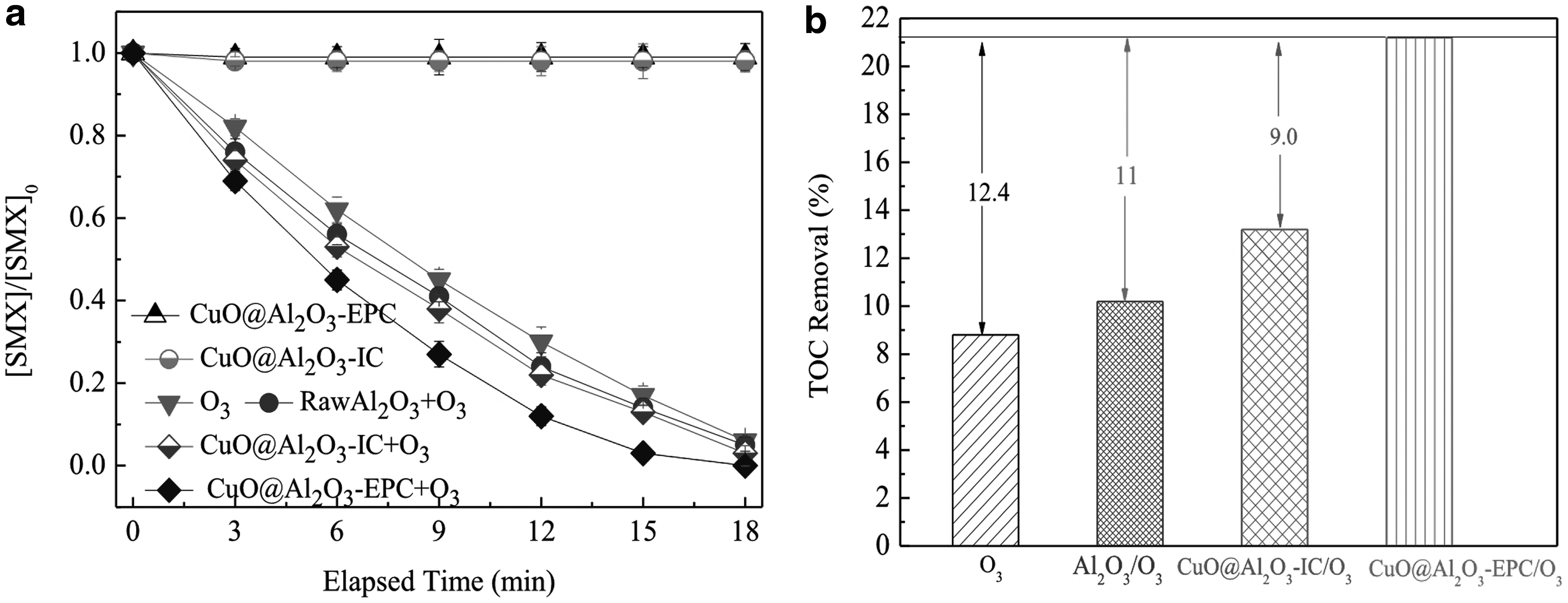
Degradation of SMX in different systems,
TOC removal
TOC removals of SMX degraded by O3 alone, Al2O3/O3, CuO/Al2O3-IC/O3, and CuO/Al2O3-EPC/O3 systems were carried out. As given in Fig. 2b, the combination of CuO/Al2O3-EPC and O3 enhanced the TOC removal, achieving 21.2% TOC removal in 18 min, which was better than other systems (e.g., O3 alone of 8.8%, Al2O3/O3 of 10.2%, and CuO/Al2O3-IC/O3 of 13.2%). Based on all the results discussed previously, it was concluded that CuO/Al2O3-EPC/O3 was an efficient system for the SMX degradation from water.
Operation life of CuO/Al2O3-EPC
To investigate the sustaining catalytic ability of CuO/Al2O3-EPC, the SMX degradation by the CuO/Al2O3-EPC/O3 system was conducted for five cycles. The recycled experiments were tested under the same experimental conditions (i.e., CuO/Al2O3-EPC dosage of 0.5 g/L, oxygen flow rate of 400 mL/min, saturated ozone concentration in water of 4.75 μM, initial solution pH of 6.2, T = 20°C, treatment time of 18 min, stirring speed of 300 rpm, and [SMX]0 of 39.5 μM). As given in Fig. 3, the SMX removal efficiency of CuO/Al2O3-EPC/O3 system was basically unchanged after the fifth run. The result suggests the O3 catalytic activity of CuO/Al2O3-EPC particles was still satisfied after five cycles. Based on our previous study, between CuO and Al2O3 had high adhesion, and which was put down to the electroless plating technology (Ren et al., 2018).
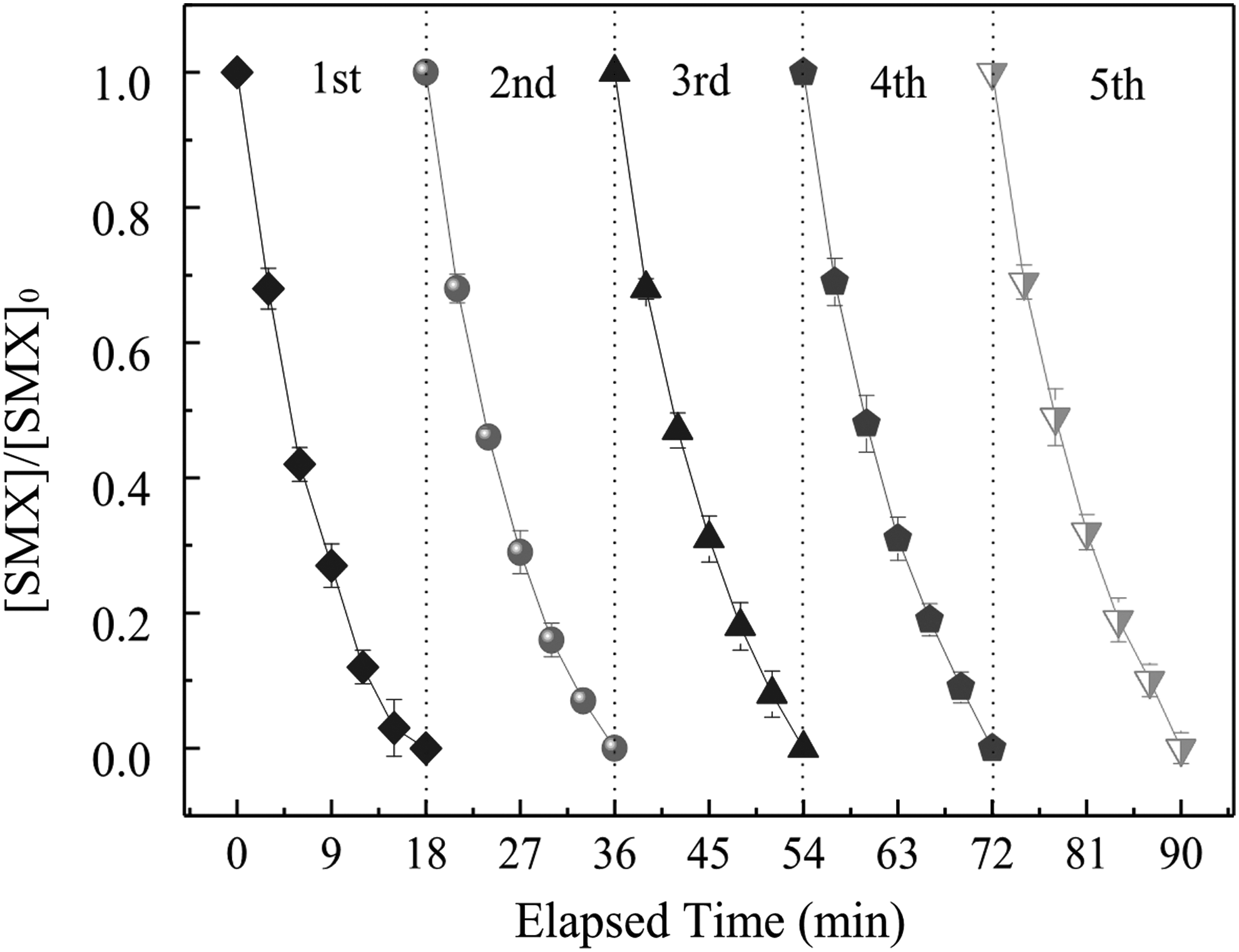
Operational life of CuO/Al2O3-EPC in CuO/Al2O3-EPC/O3 system. Experimental conditions: [SMX]0 = 39.5 μM, [CuO/Al2O3-EPC]0 = 0.5 g/L, oxygen flow rate = 400 mL/min, saturated ozone concentration in water = 4.75 μM, initial solution pH 6.2, stirring speed = 300 rpm, T = 20°C.
Radicals scavenging experiments
Radicals scavenging experiments were carried out to identify the dominant radical species in CuO/Al2O3-EPC/O3 system. It is reported that hydroxyl radical (•OH) was the main reactive species in catalytic ozone process, which could degrade almost all types of organics and inorganics (Huang et al., 1993). The rate constant of TBA and •OH (kHO•/TBA = 6 × 10⁸ M−1s−1) was higher than those of TBA and ozone (
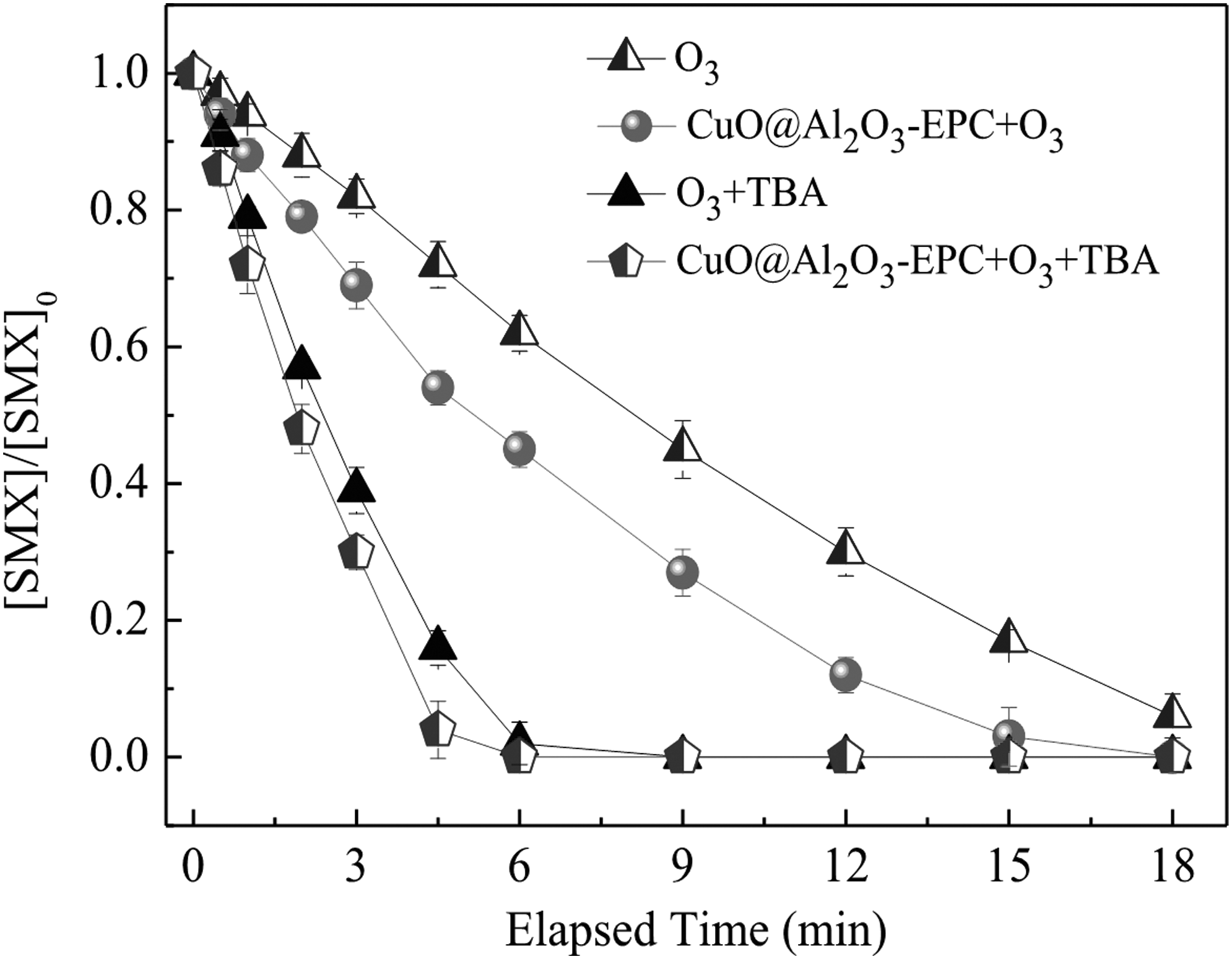
Effect of scavenger (TBA) on the degradation of SMX in the CuO/Al2O3-EPC/O3 and O3 systems (other reaction conditions: [SMX]0 = 39.5 μM, oxygen flow rate = 400 mL/min, saturated ozone concentration in water = 4.75 μM, initial solution pH 6.2, stirring speed = 300 rpm, [cata]0 = 0.5 g/L, T = 20°C, TBA = 20 mM). TBA, tert-butanol.
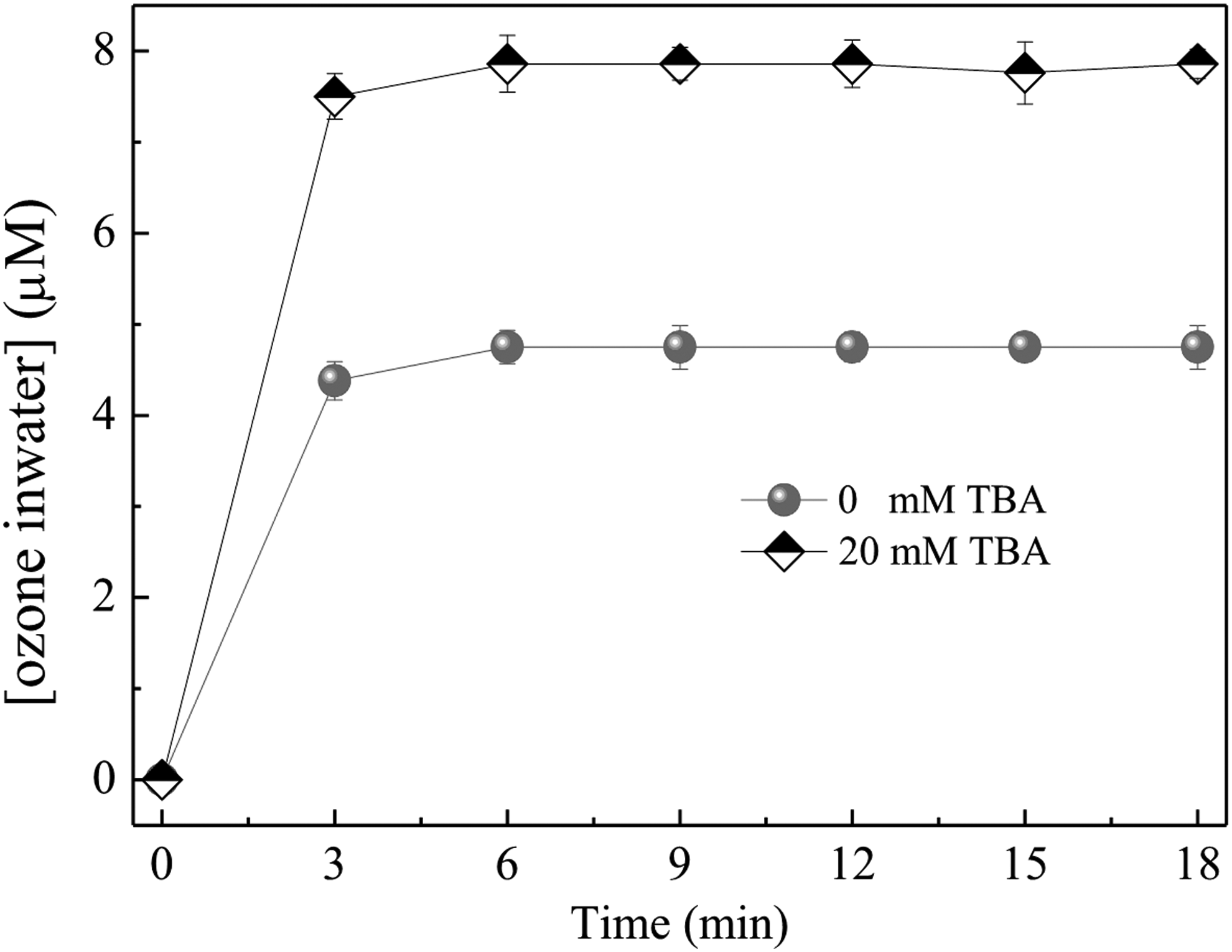
Effect of TBA on ozone concentration in water of the CuO/Al2O3-EPC/O3. Experimental conditions: oxygen flow rate = 400 mL/min, saturated ozone concentration in water = 4.75 μM, stirring speed = 300 rpm, [cata]0 = 0.5 g/L, T = 20°C.
Degradation pathways of SMX
It has been reported that •OH attacks organic compounds by hydrogen abstraction or addition reaction (Zou et al., 2014). To reveal the SMX degradation pathways achieved by the CuO/Al2O3-EPC/O3 system, the UV–vis spectra and UPLC-QTOF-MS/MS examination of the SMX products were carried out.
UV–vis spectral analysis
The UV–vis spectra of the degraded SMX solution by CuO/Al2O3-EPC/O3 and O3 systems are given in Fig. 6. The absorption peak at 265 nm is mainly attributed to the π → π* transition and electron density transfer to benzene ring through S–N bond from isoxazole ring (Vijaya Chamundeeswari et al., 2014). The aromatic rings were activated by the increasing electronic density, which came from the electron donating group (NH2) (Li et al., 2017). Figure 6 illustrates that absorbance intensity of the peak at 265 nm was dropped sharply in 18 min in CuO/Al2O3-EPC/O3 system, whereas that of the peak at 265 nm declined slower in the ozone alone system. The UV–vis spectra also proved the accelerated SMX degradation was achieved by the CuO/Al2O3-EPC/O3 system.
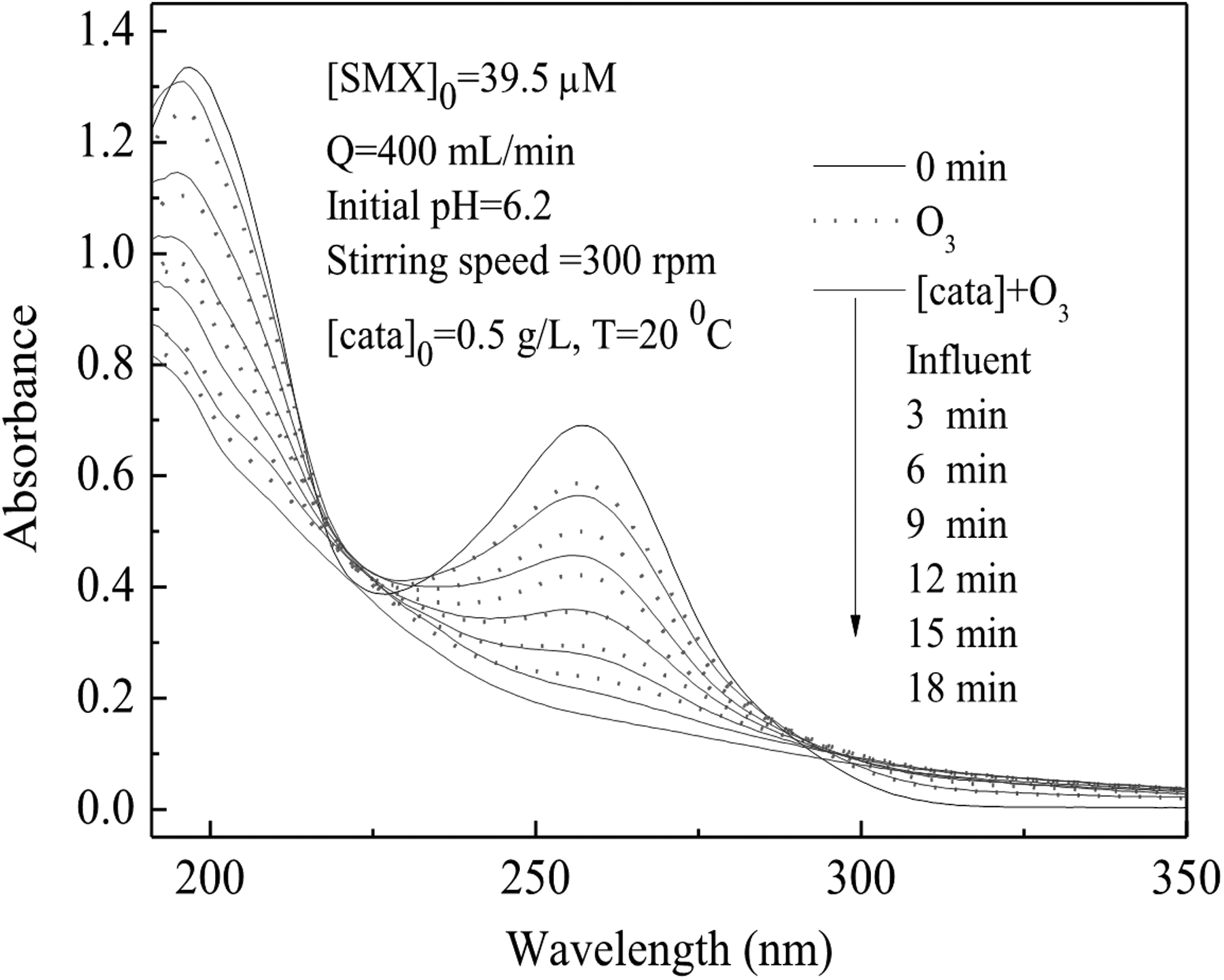
Time course variations of UV spectra during 18 min process in the O3 and CuO/Al2O3-EPC/O3 system.
Possible degradation pathways of SMX by CuO/Al2O3-EPC/O3 system
UPLC-QTOF-MS/MS examination was used to detect the SMX products in CuO/Al2O3-EPC/O3 system, and the detected products were represented by P (Fig. 7). Guo et al. have reported that the most favorable sites of SMX for free radicals attack were C2, C4, C6, S7, N8, O9, O10, and N11 (Fig. 7) (Du et al., 2018).
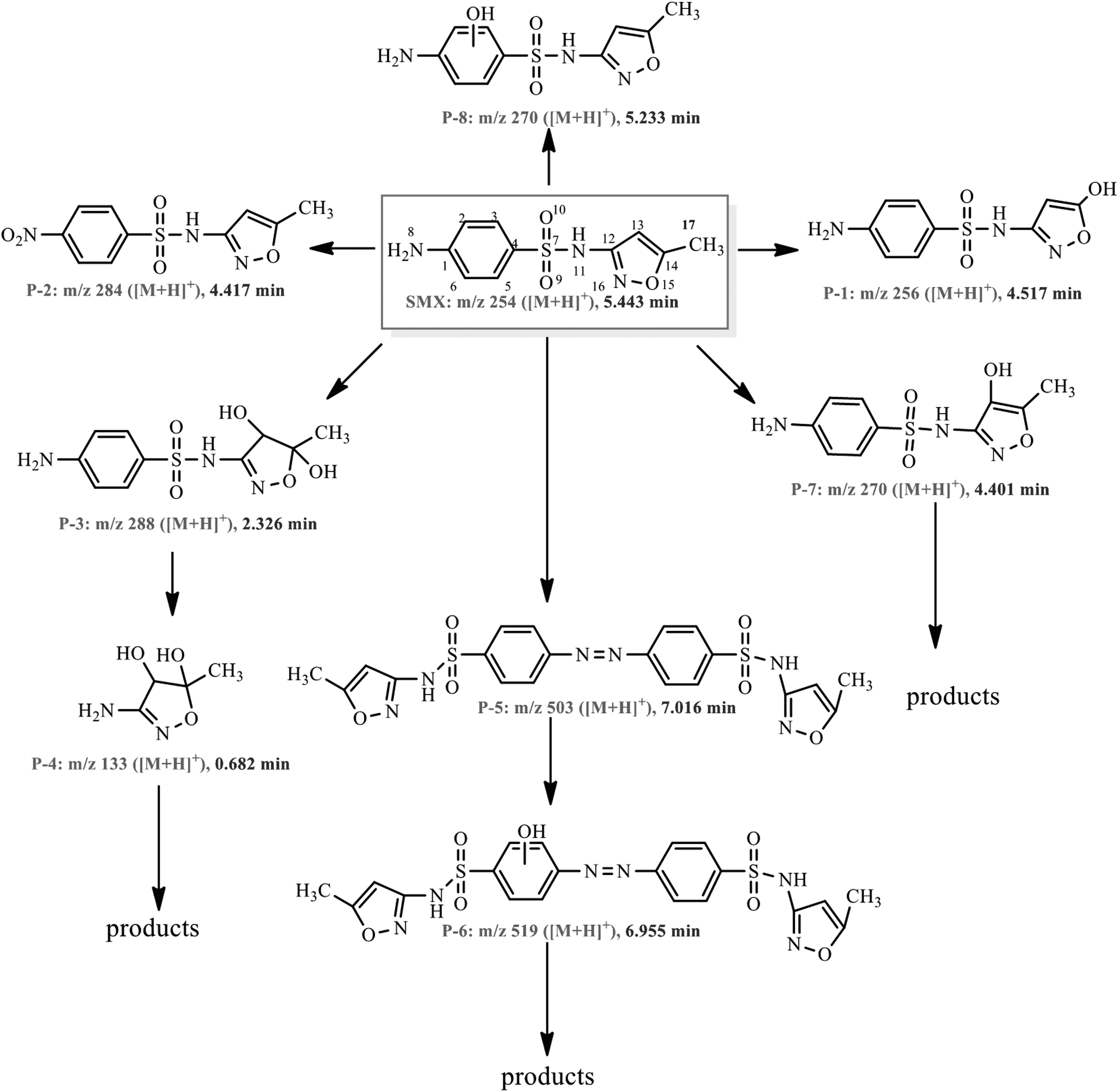
Proposed possible degradation pathways of SMX by CuO/Al2O3-EPC/O3 system.
Eight SMX products were detected in CuO/Al2O3-EPC/O3 system, with [M + H]+ peaks of m/z 256 (P-1), m/z 284 (P-2), m/z 288 (P-3), m/z 133 (P-4), m/z 503 (P-5), m/z 519 (P-6), m/z 270 (P-7), and m/z 270 (P-8) (Table 1 and Supplementary Fig. S5), and some SMX products fragment ions are given in Supplementary Figs. S6, S7, S8, S9, S10, S11, S12, S13. The appearance of fragments in the intermediate spectra indicates a specific part of the original SMX molecule.
Products Detected by Ultra-High Performance Liquid Chromatography-Quadrupole Time-of-Flight Mass Spectrometry During CuO/Al2O3-EPC/O3
RT, Retention Time.
The various degradation reactions could be evidenced by identifying the intermediates, the possible degradation pathways of SMX in CuO/Al2O3-EPC/O3 system are given in Fig. 7. The [M + H]+ peak at m/z 256 (P-1) was from the attack of •OH to C17 (Du et al., 2018). The reactive N8 of SMX was oxidized to NO2–SMX (P-2) (Du et al., 2018). Furthermore, the C13 and C14 of SMX were attacked by the •OH and oxidized to P-3 (m/z 284). The S–N bond cleavage of SMX formed P-4 (m/z 133). The reaction of −NH2 group with •OH would produce N-centered radical, the coupling of the N-centered radical would subsequently form P-5 (m/z 503), which was further oxidized to P-6 (m/z 519) (Yang et al., 2017a). In CuO/Al2O3-EPC/O3 system, two m/z 270 (i.e., P-7 and P-8) were detected, but P-7 and P-8 appeared in the different peak time of chromatogram. Therefore, P-7 and P-8 should be different intermediates. However, their fragment ions were not detected in this study. P-7 might be generated from the oxidation of the C13 of SMX by •OH, P-8 might be generated from the hydroxylation of C2 or C6 of SMX.
Thus, the possible degradation pathways include the following: (i) hydroxylation of C13 (P-7), C2 or C6 (P-8 and P-6), C13 and C14 (P-3); (ii) the cleavage of S-N and hydroxylation of the isoxazole ring (P-4); (iii) substitution reaction in C13 (P-1); (iv) oxidation of the amine group at the benzene ring (P-2); (v) the coupling of the N-centered radical generated from reaction of •OH with −NH2 group would form P-5. All the above SMX products could be further oxidized and mineralized to CO2,
Activated sludge inhibition experiments
To determine the biological toxicities of SMX and its intermediates, the activated sludge experiments were carried out. The inhibition of activated sludge could reflect the biological toxicities of the degraded SMX solution (Arslan-Alaton et al., 2010; Lai et al., 2018). The experimental conditions of the CuO/Al2O3-EPC/O3 system ozonized SMX solution were as follows: [cata]0 = 0.5 g/L, T = 20°C, oxygen flow rate = 400 mL/min, initial solution pH 6.2, stirring speed = 300 rpm, and [SMX]0 = 39.5 μM. The percentage inhibition of oxygen consumption (IOUR) is described by the equations:
where OURb is the oxygen consumption rate (mg/L·h) by the blank control samples, OURS is the oxygen consumption rate (mg/L·h) by the test mixture samples, and IOUR is the percentage inhibition of oxygen consumption. The IOUR1 (37%) of the SMX solution was higher than that of IOUR2 (22%) of the degraded SMX solution (data not given). The result indicates that higher poisonous SMX was degraded into lower toxicity molecules by CuO/Al2O3-EPC/O3 system.
The detected eight intermediates in CuO/Al2O3-EPC/O3 system, except for P-2 and P-5, were hydroxylation products. Hydroxylated products (i.e., P-1, P-3, P-4, P-6, P-7, and P-8) increased hydrophilicity, which decreased the biological toxicity of intermediates (Yang et al., 2017a). In addition, SMX could be converted to
Conclusions
This study demonstrated the O3 catalysis by CuO/Al2O3-EPC for efficient degradation of SMX in water. The CuO/Al2O3-EPC/O3 system could effectively oxidize SMX in water at pH between 3.0 and 10.0. Besides, the CuO/Al2O3-EPC particles kept stable and favorable catalytic performance after five times recycling running in CuO/Al2O3-EPC/O3 system. What's more, the addition of radical scavenger (TBA) in the CuO/Al2O3-EPC/O3 system accelerated the degradation of SMX. Meanwhile, SMX was degraded to eight products through five degradation pathways in the CuO/Al2O3-EPC/O3 system. Finally, the biological toxicity of the degraded SMX solution by CuO/Al2O3-EPC/O3 system was reduced compared with SMX solution.
Footnotes
Acknowledgments
The authors acknowledge the financial support from Science and Technology Project of Sichuan Province (2016JY0154) and Research and demonstration of the protection technology of drinking natural mineral water source in Tibet Autonomous Region Research and demonstration of the protection technology of drinking natural mineral water source in Tibet Autonomous Region.
Author Disclosure Statement
No competing financial interests exist.

References
Supplementary Material
Please find the following supplemental material available below.
For Open Access articles published under a Creative Commons License, all supplemental material carries the same license as the article it is associated with.
For non-Open Access articles published, all supplemental material carries a non-exclusive license, and permission requests for re-use of supplemental material or any part of supplemental material shall be sent directly to the copyright owner as specified in the copyright notice associated with the article.
