






Abstract
An in situ remediation method was developed based on low-frequency ultrasound, and ozone nanobubbles to remediate heavily contaminated Passaic River sediments. This study evaluated the performance of the method to remediate organic pollutants in sediments. The ultrasound brings soil into suspension and causes desorption of contaminants from sediments due to both sono-physical and sono-chemical effects. Ozone oxidizes the desorbed contaminants to products that are water soluble and benign for removal by treatment and subsequent filtration. Nanobubbles are gas cavities in an aqueous solution with diameters smaller than 1 μm. Ozone delivered as nanobubbles enhanced the mass transfer efficiency with long retention time in the aqueous phase when compared to use of commonly found bubbles. Simulated dredge sediments made of synthetic soil contaminated with a known concentration of p-terphenyl to represent polycyclic aromatic hydrocarbons was used to evaluate the proposed technology. Test results showed,with increased sonication power, and longer treatment time, increase in treatment efficiency. The addition of ozone nanobubbles significantly enhanced treatment efficiency when compared with only ultrasound. The prolonged sonication increased the solution temperature and decreased the dissolved ozone and nanobubble concentration. With higher power levels, in addition to the desorption of contaminants, there was breakage of soil particles. Hence, pulsed sonication was used, and ozone was added to the system in stages, before and after sonication. Test results showed a maximum treatment efficiency of 91.50% (initial p-terphenyl 1875 mg/kg) for 1.2 W/cm3 ultrasound power over 4 h of sonication with 2-min pulses, confirmed the removal of organic pollutants in sediments.
Introduction
Background
More than a century of industrial activity and discharges to the Passaic River, NJ, have resulted in high concentrations of legacy pollutants such as dioxin, polychlorinated biphenyls (PCBs), polycyclic aromatic hydrocarbons (PAHs), pesticides, and metals such as Cr and Pb in the river sediments, specifically in the Lower Passaic River and Newark Bay. The contamination of the river has caused poor water quality, banning of fish and shellfish consumption, loss of wetlands, and damaged wildlife habitats. Over 100 industries have been identified as responsible for contaminating the Passaic River. Hence, the USEPA designated the Lower Passaic River as a Superfund site (U.S. EPA, 2016, 2017).
In April 2014, the USEPA announced a proposed cleanup plan for the Lower Passaic River Superfund Site. They proposed bank-to-bank dredging of contaminated sediments to a depth of 1 m and placing an activated carbon cap to prevent movement of contaminants to the river water from contaminated sediments below the depth of dredging. The above would cost $1.38 billion to clean up the lower eight miles of the river. This would result in secure disposal of 3.5 million cubic meters of contaminated sediments after dredging, dewatering, and transporting. This project is expected to be completed in 5 years, making it one of the longest cleanup projects proposed by the USEPA. The Lower Passaic River is a tidal river causing difficulty in transporting dredged sediments in barges during high tides due to several bridges that cross the Passaic River.
In addition, as one of the most congested regions in the country, the above plan has the potential to cause significant disruptions to its economic and social growth. Besides, finding and operating a large dewatering facility in densely populated Newark are a challenge. This will no doubt adversely impact the transfer of people, goods, and services in and out of the region. Cotillas et al. (2020) suggested the need to search for novel treatment technologies that allow a complete and efficient abatement of these pollutants in sediments and in water to avoid their negative impacts on the environment.
Therefore, we have developed a cost-effective and environmentally sustainable in situ remediation method based on chemical oxidation using ozone nanobubbles and ultrasound to treat the contaminated sediments. The proposed treatment method will be evaluated in four stages. This article describes the first stage of evaluating the proposed method to decontaminate soil contaminated with PAHs, as a proof of concept evaluation. Concurrently, the decontamination of inorganic contaminants (the heavy metal chromium) and in the third stage, the combined contamination of both PAHs and one inorganic contaminant (Chromium) in the same sediment will be tested to evaluate the technology. Finally, the actual Passaic River sediments will be tested before field implementation. If successful, this technology will eliminate most of the problems associated with the proposed USEPA cleanup proposal.
Research objectives
The key aim of this research is to evaluate the performance of the developed method to remediate sediments contaminated with organic pollutants. Therefore, the synthetic sediments contaminated with a known quantity of p-terphenyl was used to evaluate the treatment efficiency with different ultrasound and ozone nanobubbles conditions. In this study, ultrasound provided the mechanical energy to desorb the contaminants from the sediments and ozone to oxidize the desorbed contaminants. The use of nanobubbles was to enhance the ozone concentration and ozone half-life in the solution. A comparison was performed between in situ remediation using ultrasound technologies and results obtained from this research.
Remediation Method
Although the ex situ remediation methods are considered promising and have already been field implemented, their high treatment costs and socioeconomic costs should not be neglected. Hence in situ treatment techniques have become attractive (Falciglia et al., 2015). The most common in situ sediment remediation technologies include, but are not limited to, soil vapor extraction, solidification/stabilization, soil flushing, chemical oxidation, electrokinetic separation, bioventing, phytoremediation, monitored natural attenuation, and thermal treatment technologies (U.S. EPA, 2006; Rocha et al., 2019). Because of the tidal action of the Passaic River, most of the above-mentioned methods are not applicable for sediments in a tidal river, leaving the chemical remediation as the only applicable method to treat the Passaic River sediments.
Lemaire et al. (2013) showed that with a proper oxidizer, it is possible for chemical oxidation to remove most of the organic contaminants. An oxidizer can destroy both high and low molecular weight hydrocarbons, thereby reducing the persistent, high-risk chemicals (Peters et al., 1999). Over the past decades, the use of ozone to oxidize chemicals attached to soils has been investigated by many researchers, especially the removal of nonvolatile organic compounds that are not easily removed by conventional methods such as soil venting (O'Mahony et al., 2006).
The chemical oxidation can be combined with other processes to improve the effectiveness of the chemical oxidation of organic contaminants that are strongly adsorbed to the organic and mineral constituents of the soil matrix (Goi and Viisimaa, 2015). Therefore, the ultrasound can be coupled with the chemical oxidation to effectively degrade organic contaminants in the soil/sediments.
Ultrasound and ozone nanobubbles for remediation of sediments
The ultrasound is considered a clean and green treatment method (Tiwari, 2015). Ultrasound-assisted soil remediation relies on desorption and degradation in the treatment of organic pollutants. With the application of ultrasound, sediment will be kept in suspension, and contaminants will be sheared and desorbed from the soil particles due to sono-physical effects such as microstreaming, shockwave, and microjets. Theoretically, for hydrocarbon-contaminated soil, the energy required for desorption of pollutants from the soil depends on the change in Gibbs energy of the system that required to remove the hydrocarbon molecules from the soil surface (Feng and Aldrich, 2000; Effendi et al., 2019). This change in Gibbs energy can be provided by the concentrated energy and the cavitation produced by ultrasound, which facilitates the desorption of organic compounds from the soil surface.
Besides the sono-physical effects of ultrasound to desorption of contaminants from the soil surface, sono-chemical effects facilitate the degradation of organic contaminants due to cavitation. Hoffmann (1996) explained ultrasound-assisted degradation occurs through three pathways: sono-lysis by free radicals, pyrolysis with extremely high pressures and temperatures, and supercritical water oxidation. Hence, with ultrasound, the long carbon chains or aromatic hydrocarbons with complex structures and high molecular weights can be broken down into simpler hydrocarbons (Effendi et al. 2019).
There are several factors that determine the treatment efficiency of ultrasonic sediment remediation: sediment size, ultrasound frequency, power, and intensity, irradiation time, and so on. Particle size is a sediment property that determines how strongly the contaminants are attached to the sediment particles. Among the sediment types, clay has the highest chemical and physical affinity; therefore, the applicability of any remediation effort would depend on the clay content. Clays have high sorption of water, organic compounds, and cations due to high specific surface area, cation exchange capacity, and unsatisfied bonds at the edges of clay structure (Conklin, 1995; Meegoda and Martin, 2019).
Low-frequency ultrasound produces a small number of large bubbles due to cavitation, which then collapse due to microstreaming, hence strong sono-physical effects. In contrast, high-frequency ultrasound produces a high number of much smaller bubbles due to cavitation. This increases both the •OH radical production and diffusion of gas and volatile compounds into bubbles (Hung and Hoffmann, 1999).
Elevated power or power intensity (power/surface area of the ultrasonic transducer) causes higher acoustic pressure (amplitude of vibration), greater cavitation, and more violent collapse of bubbles. Due to the bubble shielding effect, there is the optimum power intensity for the highest reaction rate (Hatanaka et al., 2002; Chen, 2011). Sonication time and the mode of sonication, pulsed or continued mode, were found to be key factors that determine the success of remediation. In general, for longer treatment time, the pulsed mode of sonication increases the treatment efficiency (Chen, 2011).
Many oxidizing agents with high oxidizing potential are used in a multitude of industries. A few of the most common oxidizers are ozone (O3), hydrogen peroxide (H2O2), fluorine (F2), and potassium permanganate (KMnO4). Among the most powerful oxidizing agents for in situ treatment, fluorine and potassium permanganate would require special methods to remove oxidation by-products. The use of hydrogen peroxide requires special handling with respect to storage and is expensive to generate (Dietrich et al., 2017). Furthermore, the ozone is a strong oxidant with much higher oxidation potential than hydrogen peroxide (Speight, 2018). Ozone has an oxidation potential of 2.07 V, which is only lower than the common oxidation agents such as fluorine (F2), hydroxyl radicles (•OH), and atomic oxygen (O), with oxidation potentials of 3.03, 2.80, and 2.42 V, respectively (Son, 2015).
Ozonolysis includes not only direct oxidation but also the indirect reaction of secondary oxidizers such as the formation of •OH radicals due to ozone decomposition, and further increases the oxidation potential of ozone (Staehelin and Hoigne, 1982; Hoigné and Bader, 1983; Glaze et al., 1987; Masten and Hoigné, 1992; Westerhoff et al., 1997; Batagoda et al., 2018). The hydroxyl radical can nonselectively attack both organic and inorganic compounds with high reaction rates (Krishnan et al., 2017; Ameta and Ameta, 2018). Once a hydroxyl radical is formed, it attacks nearly all the organic complexes and leads to a complete breakdown of the organic compound (Krishnan et al., 2017). Therefore, in the organic compound destruction process, the indirect ozone reactions are often responsible.
Theoretically, the organic compound (R-H) reacts with •OH radicals, and it takes away a hydrogen atom causing the formation of organic radicals (•R) (R-H + •OH
The capital and operational costs of ozone-based treatment are high and energy intensive (Krishnan et al., 2017; Ameta and Ameta, 2018). However, with high remediation efficiencies and comparing to other AOPs, the overall costs of ozone-based AOP treatments are preferable (Andreozzi et al., 1999). One of the main drawbacks of the conventional ozone treatment is the low water solubility of ozone and loss of ozone in the treatment. If this wastage can be minimized, it can considerably reduce the cost of ozone treatment.
As stated before, nanobubbles are gas cavities in an aqueous solution with diameters smaller than 1 μm that are filled with different gases. Nanobubbles have remarkable properties, which the ordinary bubbles do not have. Nanobubbles are very small in size; this leads to smaller buoyancy force and hence very slow rising velocity, and are impacted by Brownian motion (Azevedo et al., 2016; Meegoda et al., 2018; Nirmalkar et al., 2018), which ultimately increases the bubble residence time in the solution. However, the long residence time alone would not increase the reactivity and need to control the dissolution. There are believed to be many factors contributing to the dissolution/diffusion of gas, such as diffusion barrier (Uchida et al., 2016) (i.e., ion shielding/accumulation of impurities), rigid interfacial properties (i.e., hard hydrogen bond structure (Ohgaki et al., 2010)), cluster formation (Bunkin et al., 2012; Weijs et al., 2012), and gas supersaturation (Seddon et al., 2012; Weijs et al., 2012; Uchida et al., 2016).
In addition to the long residence time of nanobubbles in aqueous solutions, nanobubbles have large specific surface areas when compared to macrobubbles. When surface areas of macrobubbles, microbubbles, and nanobubbles are compared, nanobubbles with higher specific surface areas have a higher probability of reacting with pollutants. The large surface area will also enhance gas diffusion into water. To calculate diffusion of ozone in water, R, Equation (1) can be used (Johnson and Davis, 1996).
where S is the surface area of the gas bubble,
Proposed in situ remediation technology
For the field implementation, ultrasound transducers will be housed in a containment chamber, which is made of anticorrosive material. The chamber will include an ozone nanobubble delivery system and a wastewater removal system. The wastewater removed will be treated, filtered, and returned to the chamber with additional ozone nanobubbles. The sediment treatment will be performed inside the containment chamber. A sketch of the proposed containment chamber is shown in Fig. 1.
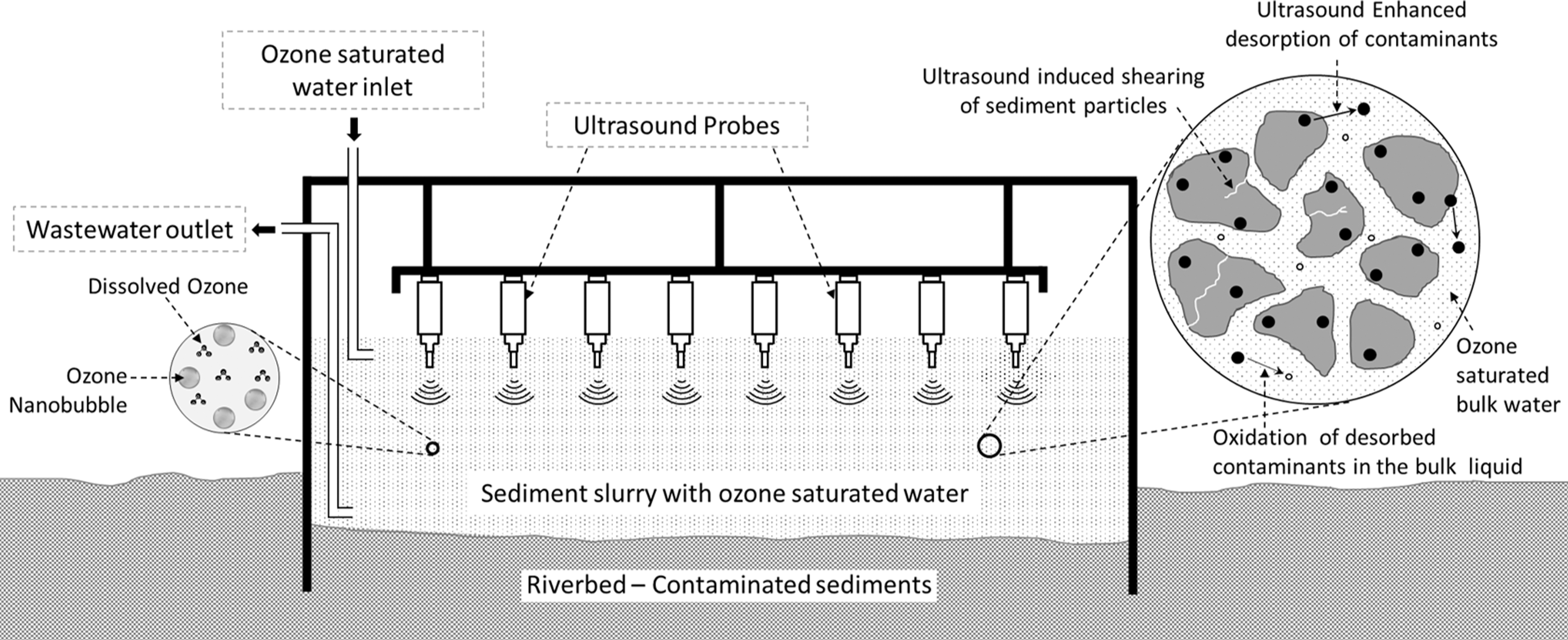
A sketch of the containment chamber used for proposed remediation.
The proposed containment chamber will be 3.5 × 3.5 × 1.5 m (L × W × D), made out of anticorrosive material. Probe type ultrasound transducers will be arranged in a grid of 0.3 m intervals to maximize the impact of the sonication. The chamber in a barge will be lowered to sediments in the river bottom, allowing it to sink into the contaminated sediments. The containment chamber will be filled with ozone nanobubble saturated water, while ultrasound is applied to the contaminated sediments.
Desorbed contaminants from the sediment due to ultrasound will be oxidized by the water saturated with ozone nanobubbles. During the sonication, river sediments will be mixed with water containing ozone nanobubbles to form a slurry. After ultrasound treatment, cleaned sediments inside the chamber are allowed to settle, and the wastewater above the settled sediments will be extracted and treated on a barge. The extracted contaminants are to be oxidized before recirculating the treated water back into the containment chamber. This treatment can be repeated in another section of the river by dividing the river into a 3.5 × 3.5 m grid (Batagoda, 2018).
This experimental study is one in a larger investigation to support the development of a proposed technology. The proposed ultrasound and ozone nanobubble-coupled sediment remediation method is designed as first the desorption of contaminants from the sediment and then oxidizing the contaminants present in the extract. The ultrasound was used to desorb the contaminants from the sediment due to the sono-physical effects such as microstreaming and turbulence forces (Meegoda and Perera, 2001). Then the extracted contaminants degraded utilizing direct and indirect ozone reactions and free radicals formed by sono-chemical effects of ultrasound.
Materials and Methods
Sediment sample preparation
The sediments recovered from the Passaic River contain various organic and metal contaminants, and hence are not suitable for laboratory batch-scale experiments to evaluate the proof of concept. This is due to the variation in the contaminant types, concentration, and distribution within the sediment matrix. Hence, for the bench-scale testing, synthetic sediment was prepared to match the size distribution of the actual Passaic River sediments, and the soil was artificially mixed with the known quantity of selected contaminant (Batagoda et al., 2019).
The laboratory-prepared synthetic sediment sample was a mixture of kaolin, rock flour, silt, and fine sand with pH
Sediment contamination
The prepared synthetic sediment was artificially contaminated with p-terphenyl (CAS No. 92-94-4) (the selected organic compound to represent PAHs). The reason for this selection was because most of the commonly found PAHs in the river are very hazardous and highly toxic to handle under the laboratory conditions, and there are risks to the health and safety of laboratory staff. The p-terphenyl is analogous to regularly encountered PAHs due to its high MW and its physical-chemical properties such as low solubility and low volatility, but comparatively less toxic and less hazardous. Hence, p-terphenyl was selected in this research. (MW: 228.29 g/mol, VP: 4.9 × 10⁻⁶ Pa, MP: 213°C, BP: 448.0°C, water solubility: 0.018 g−3, octanol/water partition constant (log Kow): 6.03, Henry's law constant: 2.9 × 10⁻¹ mol/(m3·Pa), and ionization potential: 7.83 eV). The justification for the selection of p-terphenyl to represent PAH is given in the Supporting Data, Table S2, and Table S3 (ChemSpider, 2020; Lundstedt, 2003; Mackay et al., 1997).
A 0.15 g of p-terphenyl (p-Terphenyl, 99+%, pure; Acros Organics) was mixed with 50 mL of acetone (Certified ACS Reagent Grade with ≥99.5% purity) until all the p-terphenyl flakes dissolve in acetone. Then 80 g of synthetic sediment was mixed with the p-terphenyl in acetone for 2 h until the acetone evaporated from the sediment sample, leaving the p-terphenyl absorbed onto the sediment matrix. The resulting mixture was further mixed for another 2 h to ensure the homogeneous distribution of p-terphenyl in the sediment and air-dried for 24 h before use.
Ozone nanobubble generation
Industrial grade ozone was produced by passing the oxygen through Ozonator (Model T Series; Welsbach Ozone System Corporation, USA and A2Z Ozone Inc. Model MP-3000). Ozone nanobubbles were generated using the microbubble-nanobubble nozzle (Model BT-50FR; Riverforest Corporation), which uses the hydrodynamic cavitation. A pump (Model 4CUK6; Dayton) maintained at a constant running pressure of 0.38 MPa was used to recirculate the nano-ozone mixture (Batagoda et al., 2019). In this experimental setup, ozone nanobubbles were generated in a chamber with a capacity of 25 L filled up to 21 L, and the generation system was operated for 6 min to obtain the maximum ozone concentrations in water.
Ultrasound generation
In this study, the sonication was carried out using the ultrasonic processor (Model vibracell VC-1500, 240 V, Power 1500 W; Sonics & Materials, Inc.,), which operates at 20 kHz frequency. The generator was a horn-type (19 mm tip diameter and 127 mm length).
Sediment remediation
The contaminated sediment prepared in the laboratory was placed in a sediment treatment chamber. The chamber consisted of a high-density polycarbonate (transparent) shell and a high-density polyethylene base. The 80 g of the contaminated sediment sample was placed on top of the U.S. number 325 mesh (mesh aperture of 0.044 mm).
After 6 min of ozone nanobubble generation, 2000 mL of ozone gas-saturated water was pumped into the sediment treatment chamber to form a sediment slurry with a solvent ratio of 4% (w/w as %). Then the probe was dipped 7 cm into the sediment-water slurry, and ultrasound applied for 2 min. The sonication was initiated immediately after adding the ozonated water into the sediment chamber to minimize the depletion of ozone in the solution. The experimental setup for nanobubble generation and treatment chamber is shown in Fig. 2. In this experiment, the ultrasound power and the ultrasound dwell time were varied to determine the impact of each parameter on the removal efficiency. After each sonication trial (2 min of ultrasound), sediments were allowed to settle, and the wastewater drained out from the chamber. This treatment cycle was repeated until the desired total sonication time was achieved.
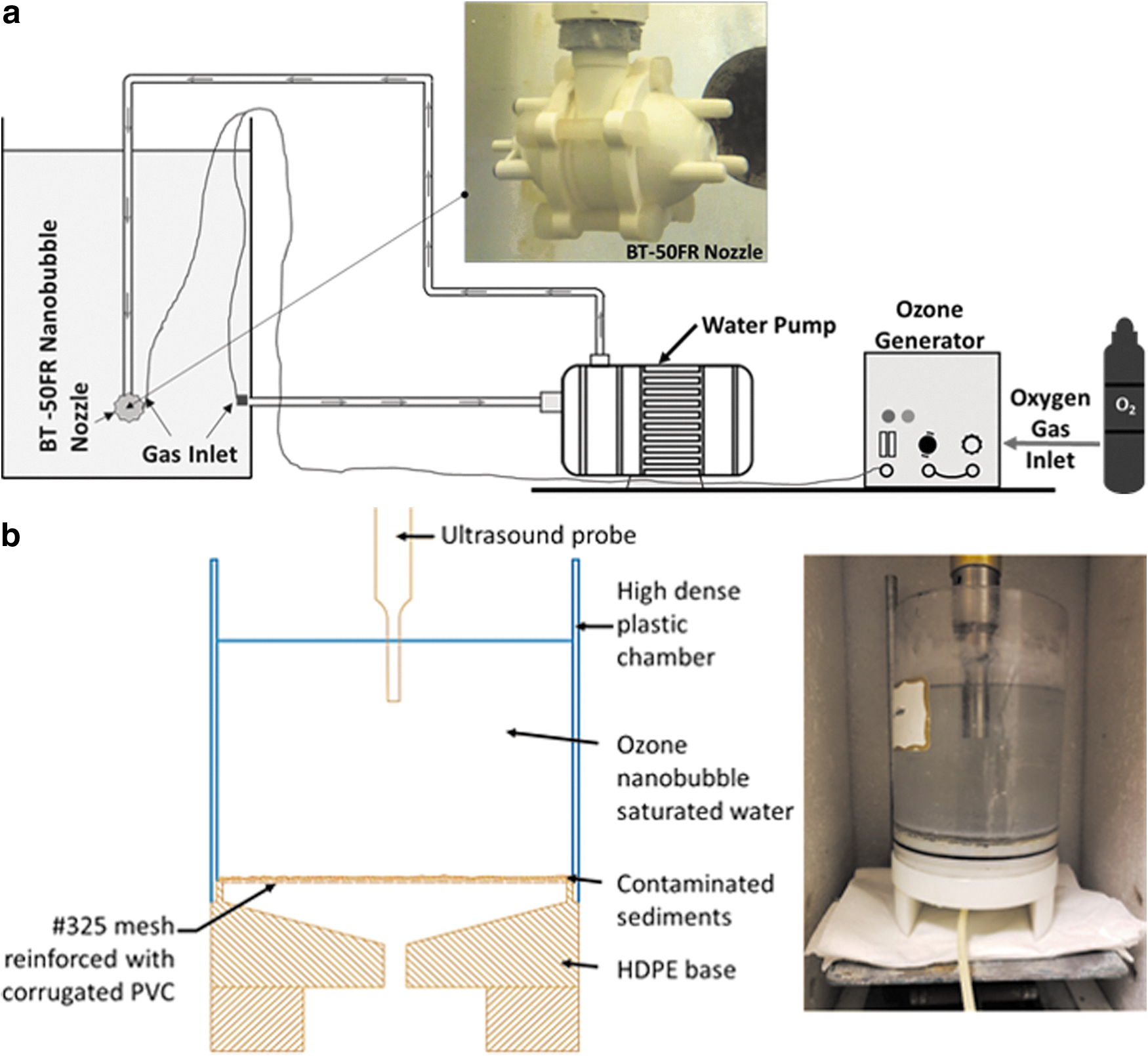
Experimental setups:
After completion of treatment trials, water in the sample was drained out of the chamber, and collected sediment was dried at 60°C for 72 h in a temperature-controlled oven. These sediment samples were brought back to room temperature and were air-dried for another 24 h. Then, the treated sediment samples were subjected to the next phase of analysis to determine the removal efficiency.
Chemical analysis
The EPA method 3550B was used to extract p-terphenyl from the treated synthetic contaminated sediments. The treated and untreated synthetic sediments were extracted using solvent extraction enhanced by ultrasound. A 20 g of the representative sediment sample was extracted from the treated sediment and was placed in a 250 mL beaker with 100 mL of acetone. The acetone and sediment solution was subjected to sonication under the horn type 475 W ultrasound generator (Virtis Virsonic 475 Sonicator). Sonication was applied to the sample in short bursts for around five seconds. These short bursts are carried with a gap of 10 min between each sonication burst to prevent temperature rise, to avoid any change to the chemical composition of the organic materials in the liquid.
After completion of 10 ultrasound bursts cycles, the sample was filtered using filter paper and collected into a 250 mL flask. Then another 100 mL of acetone was added to the sediment sample, and the process was repeated to ensure the complete extraction of all the organic material from the sediment. After the extraction with the ultrasonic probe, the collected acetone samples were concentrated using Kuderna-Danish (K-D) method to 10 mL. The (K-D) column was washed to prevent the loss of organic contaminants during concentration. The concentrated contaminated sample was analyzed using a gas chromatograph with mass spectrometry (GC/MS).
Other measurements
Temperature
A Fluke 53II B thermometer (with an accuracy of 0.05% +0.3°C) was used for the investigation to collect continuous real-time temperature.
Ozone concentration
The dissolved ozone was tested using the 4500-O3 indigo Colorimetric method (Greenberg et al., 1992). A Thermo Scientific™ Evolution 201 and 220 UV-V spectrophotometers were used during the 4500-O3 ozone analysis.
Nanobubble size and zeta potential
The Malvern Nano Zetasizer with Folded Capillary Zeta Cells (model DTS1070) was used for the analysis of nanobubble size and their zeta potential values.
Results and Discussion
Ozone nanobubbles
Figure 3a and b show the nanobubble size distribution and zeta potential, respectively, for three different temperatures (15°C, 20°C, and 25°C). Figure 3c shows the variation of ozone concentration with time for two different solutions: ozone nanobubble solution and regular ozone bubbles (dissolve ozone using a regular diffuser, refere to Figure S1), for three different temperature settings 10°C, 15°C, and 20°C. (Supporting Data provide test setup details for the use of a regular diffuser).
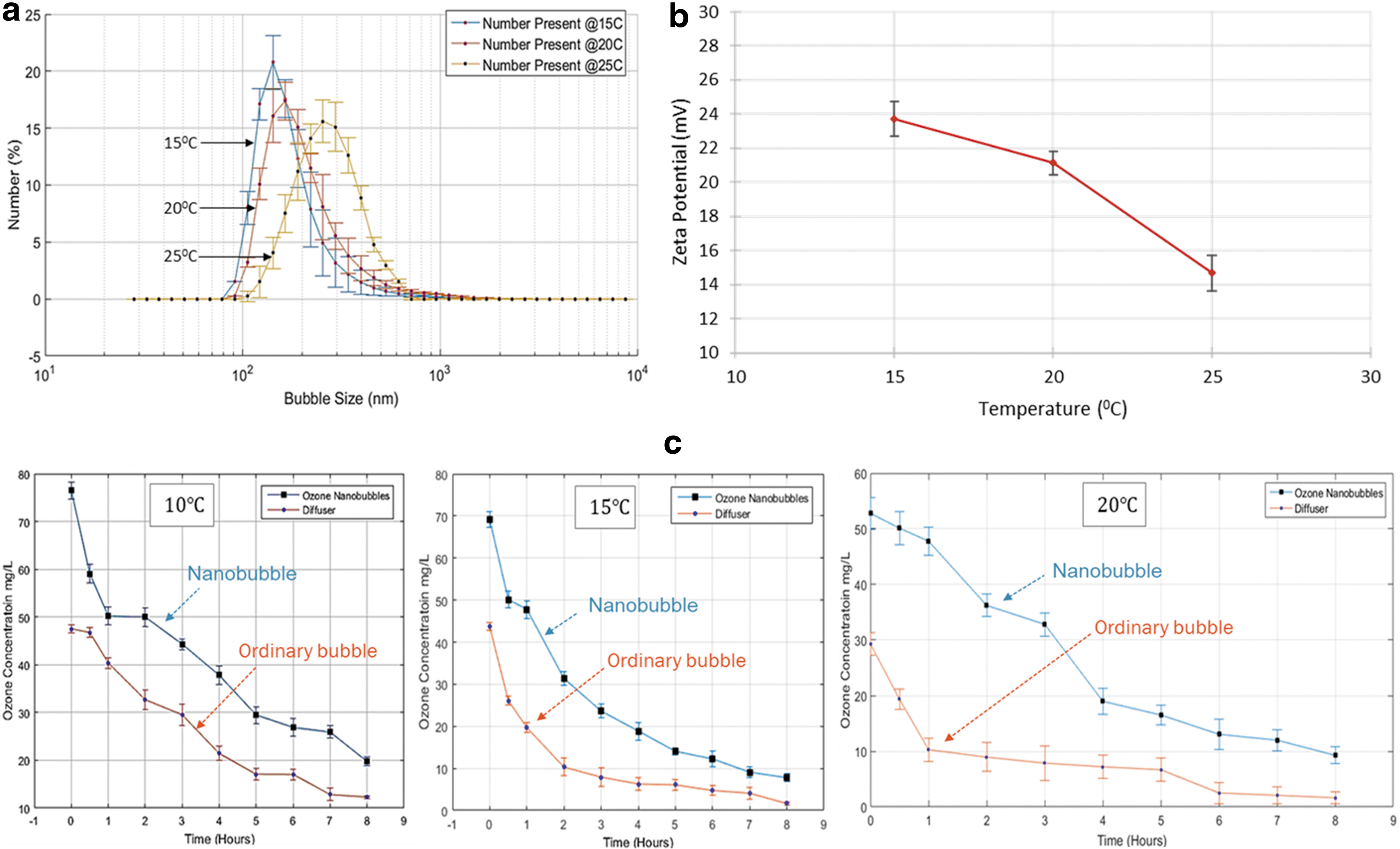
Variation in
On average, the size of ozone nanobubbles was in the range of 100–300 nm, and the negative zeta potential values were in the range of 14–25 mV in magnitude. The increased temperature caused nanobubble sizes to increase, and the magnitude of zeta potential to decrease.
Figure 3c, test results showed that ozone concentration in the nanobubble solutions is much higher than that without nanobubbles (or with the use of the regular diffuser). Also, the concentration of ozone in the solution was high at low temperatures. Also, the rate of decrease in the ozone concentration over time shows a gradual reduction for the nanobubble solution when compared with that for ozone solution made from a regular diffuser, where ozone concentration depleted rapidly with time. Hence, the use of ozone nanobubbles could deliver a much higher dose of ozone to water and can maintain those high ozone concentrations for prolonged periods, allowing time for further oxidation of contaminants.
Bubble size and zeta potential are key factors that determine the stability of nanobubbles in aqueous solutions. The ozone nanobubble stability directly impacts on the dissolved ozone concentration and, thus, the treatment efficiency. Smaller bubbles with higher magnitudes of zeta potentials produce the desired long-term stability of these bubbles and increased gas mass transfer rates of ozone (Meegoda et al., 2018). Also, smaller bubbles have high specific surface areas and also low rising velocities due to low buoyancy forces, which ultimately increase the possibility of reaction between ozone and the contaminants (Batagoda et al., 2018, 2019).
The zeta potential is one factor that increases the bubble stability against coalescence. Higher magnitude of zeta potential ensures lesser coalescence probability by increasing the repulsion forces between the bubbles (Meegoda et al., 2019). Also, the temperature-dependent zeta potentials of nanobubble zeta potential are good indicators of the number of adsorbed ions at the gas-liquid interface at different temperatures. Under neutral conditions, nanobubbles are found to be negatively charged, and this mechanism is believed to be mainly due to absorbed OH− ions at the interface. The decreased zeta potential or decrease in surface charge density may be due to decreased OH− ion concentration on the bubble surface. With increased temperature, mobility of the ions in the solution is higher and, therefore, decreased OH- ion absorption onto the bubble surface (Meegoda et al., 2018).
Therefore, the low temperature improves the dissolved ozone gas concentration and ozone retention time in the solution. The average temperature in the river sediments is below 20°C. However, with the application of ultrasound, the water temperature would increase. Hence, 20°C was selected for all treatment tests, which would be an average temperature during actual implementation. This was easily accomplished by adding ice into the nanobubble generation system.
Impact of ultrasound on solution properties
The application of high-intensity ultrasound can change the solution properties, which will affect treatment efficiency. Hence, changes in solution temperatures, dissolved ozone gas concentration, and particle size distribution due to the application of ultrasound were investigated.
Several tests were conducted to study the variation in temperature and dissolved ozone concentration with the sonication for different power intensities. For that, deionized water was allowed to come to equilibrium with air for 24 h before the experiments. The sonication was performed in a 1000 mL glass beaker for different power levels.
Figure 4 shows the variation in temperature with sonication time for four different power levels 300, 600, 900, and 1200 W. Results showed that an increase in sonication power caused an increased rate of change in temperatures. For the highest power level of 1200 W, test results showed the rate of change in temperature was 0.04°C/s. Increased temperature is not beneficial to the selected treatment of using ozone nanobubbles. Also, elevated temperatures are an indication of energy loss during the sonication. However, on the other hand, the elevated temperature will be beneficial for the desorption of contaminants from sediments with the increased internal energy of adsorbed contaminant molecules.
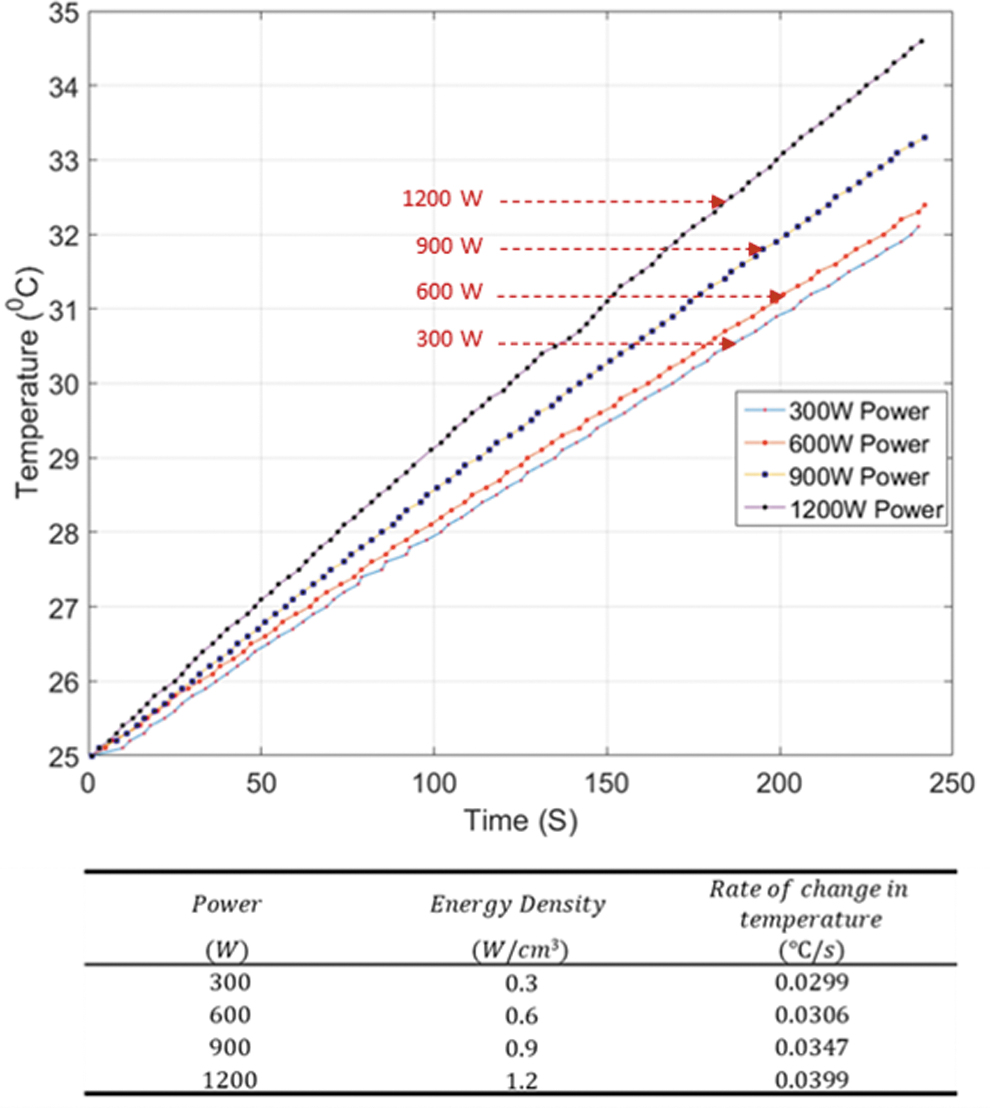
Temperature variation in water to different ultrasonic power.
Figure 5 shows the change in ozone concentration with sonication time for three different power levels, 300, 600, and 900 W, for two different time settings, 15°C and 25°C. The results indicated that ozone concentration decreases with increased sonication time and higher power levels. The reduction in ozone concentration is affected by both the elevated temperature and increased microstreaming associated with higher power level ultrasound.
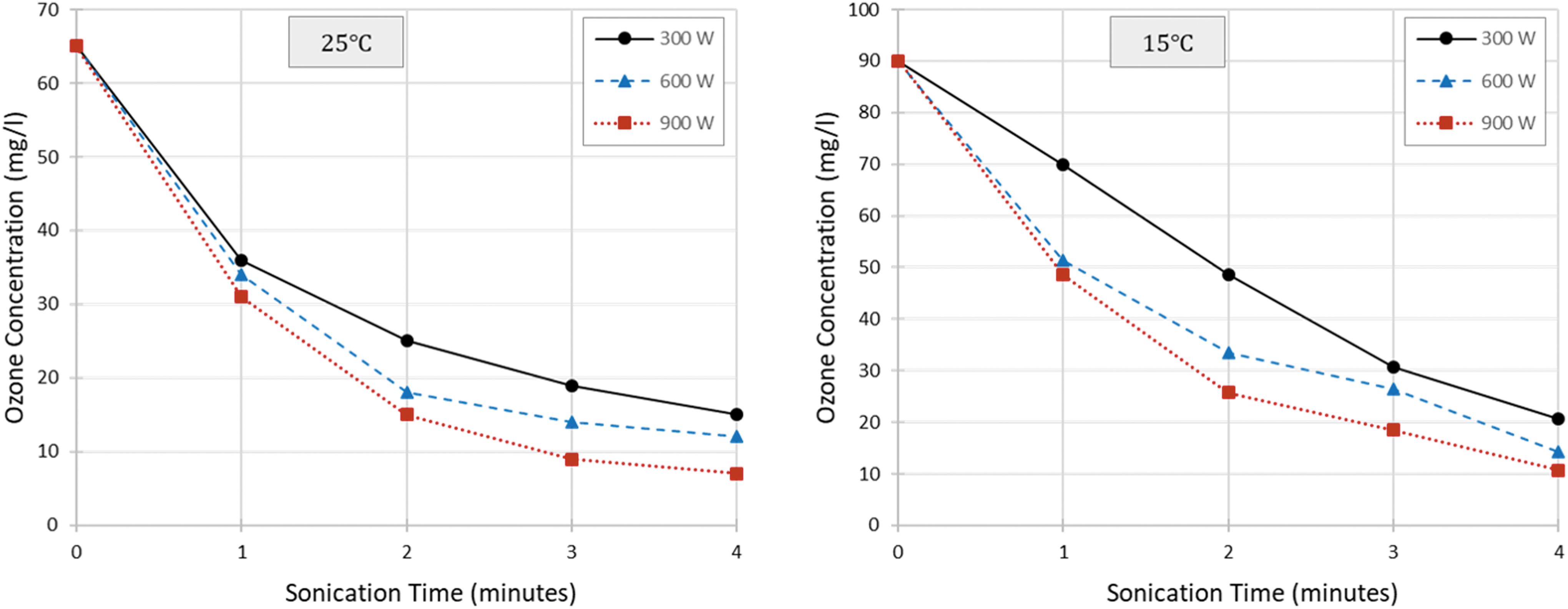
The variation in ozone concentration with time for different sonication power levels.
Increment of temperature and reduction in ozone concentrations are the significant facts that should be taken into account when implementing this treatment method because ozone concentration in the solution directly impacts the treatment efficiency. Therefore, optimum treatment conditions are required, which would effectively desorb contaminants from sediments and maintain sufficient ozone concentration for effective oxidization. The use of pulse sonication can reduce the increase in temperature or loss of ozone.
Change in the particle size distribution of sediments due to sonication
The microstreaming produced during the application of ultrasound is capable of breaking the bonds between sediment and the contaminant, and the same can also shear sediment particles. Hence, the microstreaming can change the particle size distribution as well as the surface texture of sediment particles. The 80 g of sediment sonicated for 100 min with 4-min pulses and test was performed for both the 300 and 1200 W power levels in 1000 mL of sediment slurry. Figure 6 shows the particle size distribution (based on the hydrometer test) before and after sonication for 300 and 1200 W.
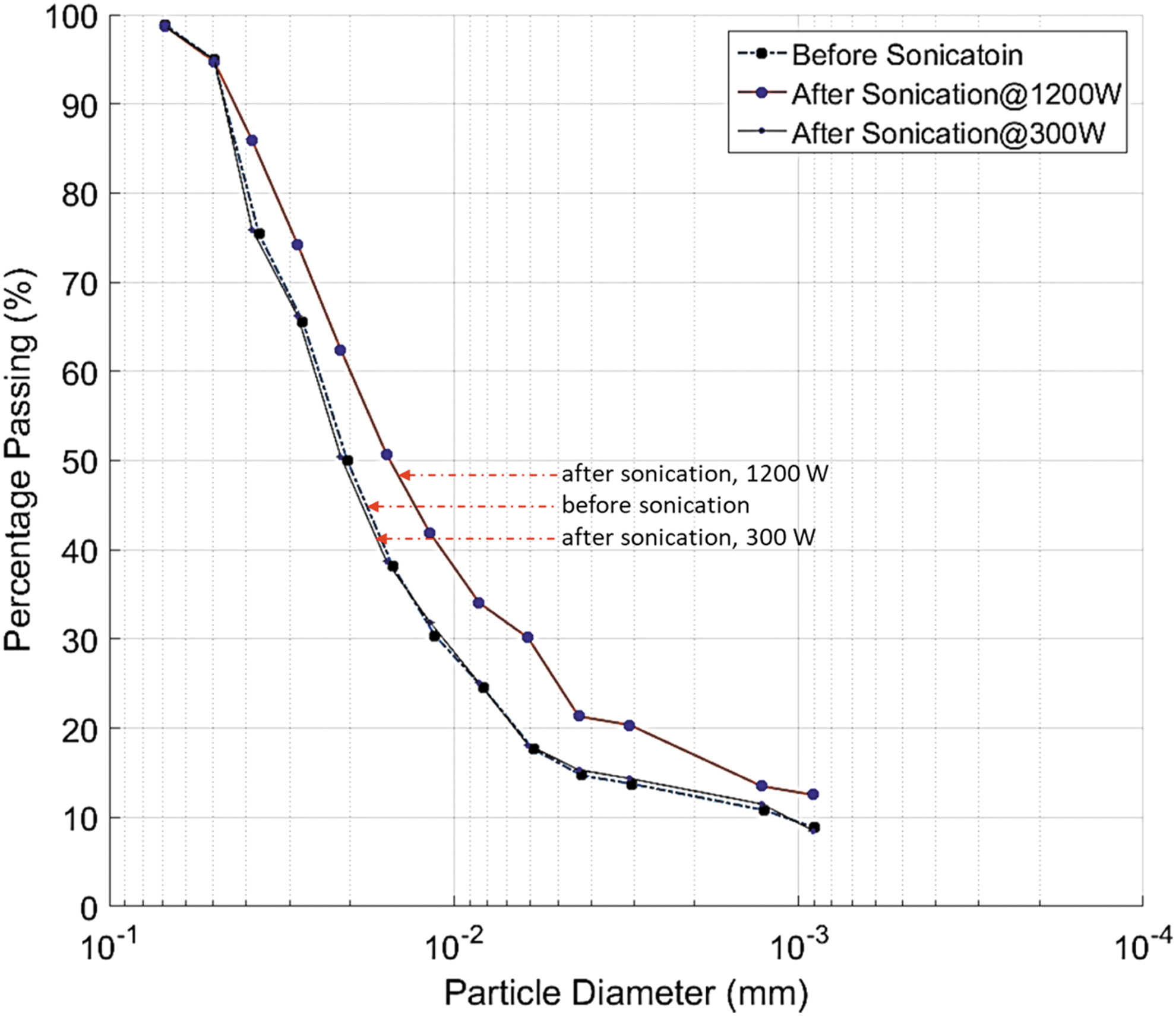
The particle size distribution of sediments with and without sonication.
Figure 6 shows that high-intensity ultrasound increases the shearing effects, which explain that the high-power levels would increase the desorption of contaminants from the sediment surface. However, increased power levels cause sediment particles to be sheared and become finer, which can be considered one limiting factor of the high-power ultrasound in sediment remediation. Finer sediments would take an extended time to settle, causing a delay in the overall treatment time of the Passaic River.
Remediation of sediment using ultrasound and ozone nanobubbles
Table 1 shows the experimental results for two different sets of experiments (Method 1 and Method 2). In Method 1, the treatment chamber was filled by 2000 mL of ozone nanobubble saturated water and then sonicated. In Method 2, ozone was added to the treatment chamber in two steps. In the first step, 1000 mL ozone water was added and sonicated (solvent ratio doubled). Then, immediately after the sonication, another 1000 mL was added. Table 1 shows the treatment efficiency for the initial concentration of 1875 mg/kg p-terphenyl-contaminated sediments after 30 min of sonication for four power levels 600, 900, 1050, and 1200 W. Each experiment was repeated to check for repeatability of results. There was a slight variation in the removal efficiency of ∼0.73% with the same ultrasound power. Figure 7 summarizes the obtained average removal efficiencies for different power levels for both Method 1 and Method 2.
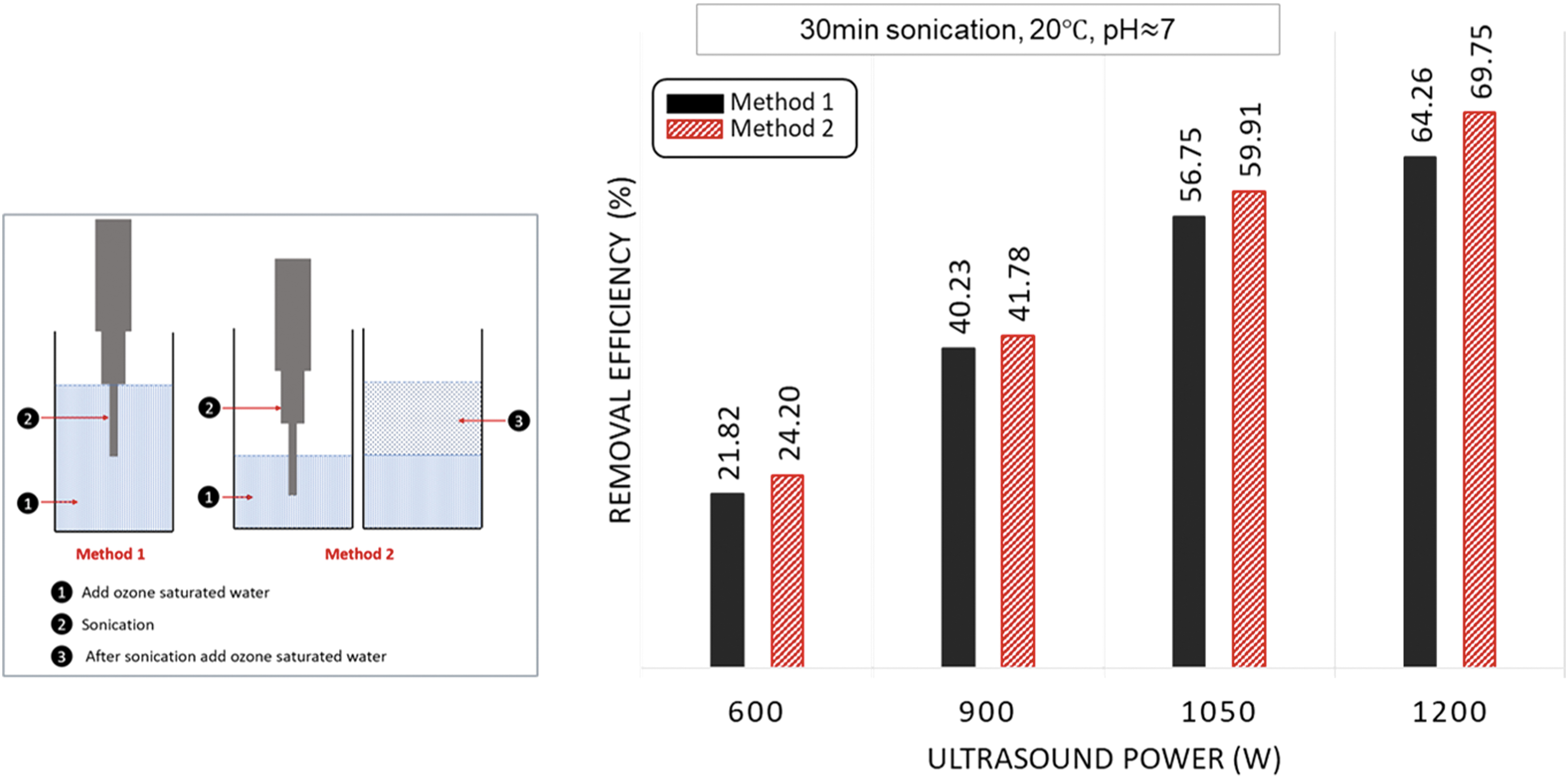
Variation of removal efficiency for different ultrasound power levels.
Impact of Ultrasound Power and Ozone Delivery Method on Treatment Efficiency
Results reported in Table 1 showed that in both Method 1 and 2, treatment efficiency increases with an increase in ultrasound power level. Compared to Method 1, there was a slight improvement in the removal efficiency of p-terphenyl in Method 2. In Method 2, the applied ultrasound power density is higher so that it improves the contaminant desorption process. Also, adding the ozone after the sonication increases the ozone availability for the oxidization of the desorbed contaminants.
Table 2 shows the contaminant removal efficiency for an ultrasound with 1050 and 1200 W power for different treatment durations and Fig. 8 summarizes those results. For all the test results reported in Table 2, ozone was added to the system in two stages (Method 2).
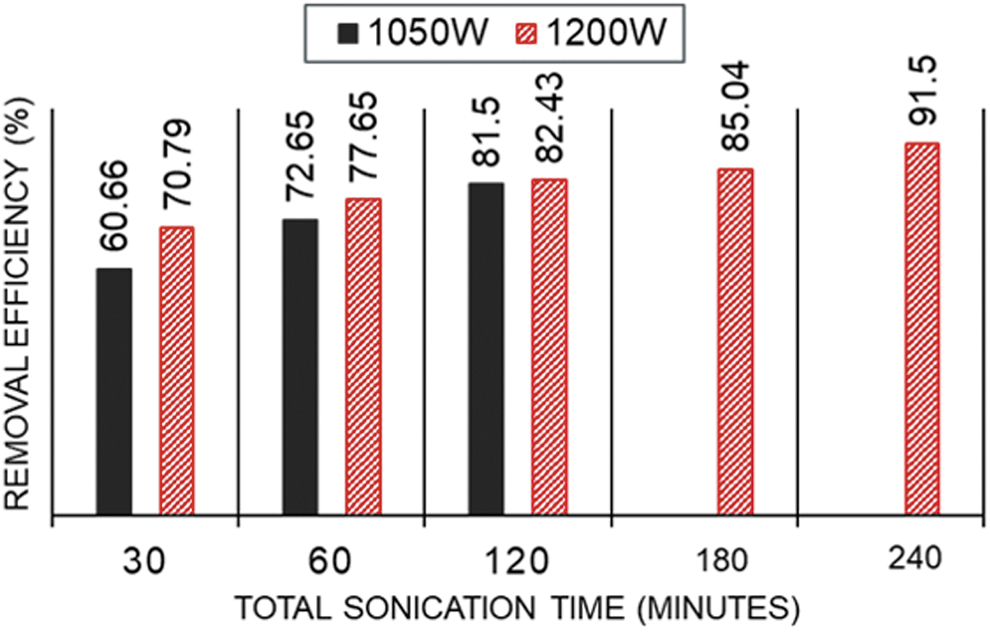
The removal efficiency of p-terphenyl by varying the treatment duration.
The Removal Efficiency of p-Terphenyl by Varying the Treatment Duration
The prolonged ultrasound treatment substantially reduced the p-terphenyl concentration in the sediment. However, with the longer treatment time, there was breakage of sediment particles, observed through the change in gradation of sediment after treatment. The lengthy treatment time with high ultrasound power also increased the degradation of p-terphenyl in the sediments.
The GC/MS analysis for the treated sediment samples shows the residual p-terphenyl in the treated sediment, and hardly recorded very low concentration (ppb levels) of daughter products. The ultrasound coupled ozone has been fully mineralized by the organic p-terphenyl to carbon dioxide and water. According to the GC/MS records, in the wastewater, no p-terphenyl was detected, and there were tracer concentration of daughter products. The GC/MS results for by-product for treated sediments and for wastewater are included in the Supporting Data, Figure S2, and Figure S3, respectively.
The test results indicated that ultrasound application and direct and indirect ozone reactions caused complete oxidation of p-terphenyl molecules. It appears that the broken benzene rings in the p-terphenyl allowed ozone to further oxidize degraded compounds at a faster rate. Hence, exposing contaminated sediments to intense sonication power and ozone nanobubbles for many remediation cycles can remove organic pollutants attached to sediment particles.
The high-power ultrasound produces very high destructive forces that effectively break the bond between sediments and contaminants and allows the pollutants to come into the solution. The ultrasound irradiation to water produces cavitation that can cause contaminant degradation due to both the sono-chemical (radical formation) as well as sono-physical (pyrolysis) effects. Ozone is known to attack the C = C double bond, and the indirect reaction of •OH radicals nonselectively attacks the organic compound with very high reaction rates. The ultrasound will cause a reduction in nanobubble concentration and dissolved ozone concentration over time in the solution; however, the mass transfer of ozone to water should be increased during ultrasonic irradiation (Dietrich et al., 2017).
To investigate the contribution of the use of ozone nanobubbles on removal efficiency, an additional experiment was conducted with only ultrasound and without ozone. Therefore, 80 g of p-terphenyl-contaminated synthetic sediment sample was placed in the reaction chamber and filled to 2000 mL of water (not nano-ozone-saturated water), and 1200 W of ultrasound applied as 2-min pulses for 240 min of sonication. During all the sonication trials, temperature maintained at 20–30°C by providing enough time to cool the sample and by placing the sediment chamber inside a cold-water bath. After completion of treatment, the chemical analysis showed 76.7% removal efficiency. This is comparatively good treatment efficiency. However, with 91.5% removal efficiency, the proposed method of ultrasound coupled with ozone nanobubbles is a promising technology for sediment remediation.
The removal efficiencies obtained from this research were compared with other studies found in the literature and are summarized in Table 3. Table 3 shows that when ultrasound is combined with other oxidation technologies such as Fenton solution or electrokinetic remediation, comparable removal efficiencies can be obtained. However, if such technologies listed in Table 3 are to be implemented as in situ treatment, they would not be as cost-effective as the proposed technology. The tests reported in this research use sediment with high contamination concentrations (1875 mg/kg) and high fine content (71%). In this research, no chemical other than ozone (will also revert to O2 upon oxidation) was used to achieve a very high treatment efficiency value of 91.7%.
Review of Different Research Findings: Ultrasound to Remediate Organic Pollutants in Sediment
PCB, polychlorinated biphenyls; PAH, polycyclic aromatic hydrocarbons.
The aged chemicals in soil and sediments would impact biodegradability and extractability. Organic compounds become increasingly difficult to desorb from soil and sediment over time with chemical aging (Pavlostathis and Mathavan, 1992; Hatzinger and Alexander, 1995). Therefore, it is very much important to evaluate this treatment method to determine the removal efficiency of river sediments obtained from the Lower Passaic River.
Summary and Conclusions
This article is one of a series of articles that will provide supporting evidence toward the development of an in situ remediation technology to remediate the heavily contaminated Passaic River sediments using ultrasound and ozone nanobubbles. This study evaluated the performance of the proposed method to remediate the organic pollutants in the sediments. The application of ultrasound kept the sediment in suspension, and it provided the mechanical energy to breaks the bonds between the sediment and the contaminants and release them to the bulk solution. The role of ozone was to degrade the desorbed organic contaminants to intermediate products that are more soluble and benign in the aqueous phase and removed by subsequent treatment and filtration. The ozone gas is to be delivered as nanobubbles to increase the ozone gas dissolution in water and to maintain high ozone concentration in the liquid phase for a long time.
A set of laboratory-scale experiments was performed using simulated dredged sediments to identify the impact of sonication time and sonication power with nano-ozone in oxidizing PAHs. First, tests were performed to determine the enhancement in ozone delivery to water as nanobubbles. It found that the ozone nanobubbles can deliver higher ozone concentrations to water and can maintain those high ozone concentrations for long periods. Then, after the impact of ultrasound on the sediment slurry evaluated, it was found that with the application of ultrasound solution, temperature increased and also under high power levels, sediments became finer. The treatment efficiency ultrasound without nano-ozone was 76.7%.
The next sets of experiments were performed by applying ultrasound with ozone nanobubbles. In these experiments, varying ultrasound power levels and sonication time were applied. Continuous application of ultrasound heated the solution, reducing the amount of ozone available for remediation. Hence, the treatment was performed in 2-min treatment cycles until the desired sonication time was achieved. Also, treatment efficiency was improved by adding ozone to the system in two stages: before and after sonication. The batch-scale experiments were conducted for different ultrasound power levels and different sonication times to evaluate the removal efficiencies. With the prolonged application of ultrasound with ozone nanobubbles, it was possible to achieve a contaminant removal efficiency of 91.5% for PAH-contaminated sediment after a total sonication time of 240 min.
Footnotes
Acknowledgments
The authors would like to acknowledge the contributions of Mr. Brian McGlew, an undergraduate student of NJIT, and Mr. Natan Herzog, a high school student at Bergen County Technical High School—Teterboro.
Author Disclosure Statement
No competing financial interests exist.
Funding Information
This research was sponsored by the U.S. National Science Foundation Award #1634857 entitled “Remediation of Contaminated Sediments with Ultrasound and Ozone Nanobubbles.” The program manager at NSF was Dr. Richard Fragaszy.

References
Supplementary Material
Please find the following supplemental material available below.
For Open Access articles published under a Creative Commons License, all supplemental material carries the same license as the article it is associated with.
For non-Open Access articles published, all supplemental material carries a non-exclusive license, and permission requests for re-use of supplemental material or any part of supplemental material shall be sent directly to the copyright owner as specified in the copyright notice associated with the article.
