







Abstract
In this article, Mn/I-TiO2 nanocatalyst was prepared by sol-gel method and used as the photocatalyst to discompose the gaseous benzene in the visible light. The crystal phase composition and grain size of the photocatalyst were investigated by X-ray diffraction and Raman, respectively. X-ray photoelectron spectroscopy and ultraviolet-visible diffuse reflectance spectroscope were used to study the surface elements and bandgap width of the photocatalyst. The research findings suggested that the crystal type of all catalysts was anatase. TiO2 nanoparticle doped by Mn/I could reduce its crystallite size and augment lattice distortion because of the formation of oxygen vacancies. The generation rate, migration rate, and disintegration rate of electron-hole pairs were increased by modification of TiO2. Meanwhile, the Mn-TiO2 was recognized with the smallest bandgap among four kinds of catalyst. Mn-TiO2 catalyst exhibited the highest efficiency on gaseous benzene removal (37.86%) among pure-TiO2 (3.33%), I-TiO2 (30.21%), and Mn-I-TiO2 (31.56%) under visible light. Correspondingly, the photocatalytic ability of pure-TiO2, I-TiO2, Mn-I-TiO2, and Mn-TiO2 was 51.25 μg C6H6/(g·h), 424.36 μg C6H6/(g·h), 493.61 μg C6H6/(g·h), and 245.43 μg C6H6/(g·h), respectively.
Introduction
A lot of rules and standards on air quality management have been issued, but air pollution is still in a serious situation in many countries (Ge et al., 2018; Tobaldi et al., 2021). Volatile organic compounds (VOCs), precursors of ozone and particulate matter 2.5 (PM2.5), contain a variety of hydrocarbons, lipids, and their derivatives such as ethylene, alcohol, propane, and benzene that this study focuses on (Ge et al., 2019; Wang et al., 2020; Xie et al., 2020). Since 1990, Environmental Protection Agency (EPA) has included 187 hazardous air pollutants in the list, and benzene was included in the U.S. Environmental Protection Agency (USEPA) Hazardous Air Pollutant list. It should be pointed out that gaseous benzene is harmful to human health (Lu et al., 2018; Ge et al., 2021a, 2021b).
At present, treatment processes of gaseous benzene mainly included chemical oxidation, adsorption, combustion, biological degradation, and photocatalytic oxidation (PCO). Cui et al. (2017) indicated the simultaneous use of KMnO4 and peroxymonosulfate significantly improved the benzene removal up to 65.4%. Ye and Ariya (2015) used Fe3O4 nanoparticles as adsorbent to improve the toluene removal up to 40 ± 4%, but adsorbent had to be regularly regenerated and thus limited to be applicable. Yang et al. (2010) used mesoporous molecular sieve (SBA-15) supported by CuO to improve the efficiency of catalytic combustion of benzene the highest at 500°C℃, while existing disadvantages included high gas concentration requirements, large project investment, and high operating costs during catalytic combustion. Sun et al. (2018) used 1,3-dichlorobenzene to improve the removal efficiency of gaseous up to 57.13% in bio-trickling filters by rhamnolipid.
In comparison, PCO had advantages in the removal of low concentration gaseous pollutants because of its ability to degrade contaminants at room temperature into a mild final product (CO2 and H2O) (Huang et al., 2017; Mamaghani et al., 2017).
The core of photocatalysis technology lies in the selection and development of photocatalysts. Common single compound photocatalysts are metal oxide or sulfide semiconductor materials, such as TiO2 (Li et al., 2021), ZnO (Jafari et al., 2020), CdS (Wang et al., 2018), and so on. Li et al. (2021) supported ionic liquid membrane in a nitrogen-containing photocatalytic reactor for removal of VOCs up to 60–80% after 10 h under ultraviolet-visible light. Jafari et al. (2020) indicated that the removal rate of 67% toluene from ZnO-coated glass plate was the highest at 50 ppm concentration. The Zn(OH)2 generated after ZnO dissolves covers the surface of the ZnO particles and partially deactivates the catalyst (Hoffman et al., 1994). Wang et al. (2018) prepared N-doped CdS loaded on carbon supports (CdS@3D-NPC) photocatalytic degradation of VOC.
However, the chemical instability of CdS was not the best photocatalyst. TiO2 has the best photocatalytic activity, the lowest cost, and the highest stability (Hashimoto et al., 2005). More significantly, TiO2 introduces appropriate light energy to separate electrons from the valence band and form electron hole pairs. Electrons move to the surface of the conduction band and react with the target, oxidizing the VOCs into harmless CO2 and H2O (Zhao and Yang, 2003; Mo et al., 2009). However, the electrons in pure TiO2 is only activated by ultraviolet light and fails to work with the visible light. In addition, electron and hole pairs are easy to recombine, which causes the electrons to hardly move to the surface of the particles.
Modification of TiO2 by metallic and nonmetallic doping is the most common modification method. By doping TiO2 with nonmetallic anions, such as nitrogen (Zeng et al., 2016), carbon (Kim et al., 2011), sulfur (Jo and Kim, 2010), boron (Khan et al., 2008), and fluorine (Khalilzadeh and Fatemi, 2016), the electrons in the catalyst could be excited by visible light. As a matter of fact, nonmetallic ions took the place of the oxygen atoms in the lattice of TiO2, which can improve their p orbitals to reduce the bandgap width and thus expand the range of light absorption (Tseng et al., 2010). Szkoda et al. (2016a) showed that the bandgap energy of titanium TiO2 doped with N, B, and I was reduced compared with pure titania. Szkoda et al. (2016b) also showed that I-doped samples promoted the formation of hydroxyl radical (·OH).
Besides, transition metal-doped TiO2 has exhibited better photocatalytic performance at room temperature. Brezová et al. (1997) obtained similar results: doping a small number of Cr, Co, Mn into TiO2 is beneficial to obtain oxygen-active species ·OH and O2·, so it can show higher photocatalytic efficiency. Many studies showed that Mn-doped TiO2 could enhance the photocatalytic efficiency (Deng et al., 2011; Binas et al., 2012).
Metallic and nonmetallic doping TiO2 both can produce impurity energy levels in the TiO2 bandgap so that its electrons can be excited with visible light. Dong et al. (2010) studied the synergistic effect between metallic and nonmetallic ions, which effectively ameliorated the speed of electron detachment from the valence band, thus improving the ability of TiO2 to degrade pollutants. Unlike most of the 3d dopants that induced defect states in TiO2 bandgap, the bandgap of Mn-TiO2 was narrowed because of Mn doping, and the intermediate band had obvious curvature, so that it had sufficient carrier mobility (Deng et al., 2011). Zhao et al. (2016) showed that there were impurity states between the valence band and conduction band of Mn-2N co-doped TiO2, which enhanced the visible light absorption. Cai et al. (2016) showed that the crystal structure of Mn-C co-doped TiO2 catalyst was different at different calcination temperatures.
However, the use of organic materials as precursors in Mn-N and Mn-C co-doping systems led to the formation of carbon deposition on the surface of the catalysts after calcination, which occupied the active sites on the catalyst surface. Nitrogen, carbon could be replaced by iodine, whose precursor was potassium iodide (KI) without deposit carbon. In addition, iodine had three common valence states −1, +3, and +5, and the transition of valence states occurred in the catalyst to increase the efficiency of the reaction by electron transfer speed.
In the previous study, the photocatalytic activity of Fe, I single-doped and co-doped TiO2 for benzene degradation was studied (Tian et al., 2020). To solve the fast deactivation of the catalyst prepared by our research group, we selected the manganese ion with similar particle size to titanium ion for further study. The results showed that a small amount of Mn or I-doped TiO2 can significantly improve the visible light absorption range of the catalyst (Bagwasi et al., 2012; Binas et al., 2012). Under visible light irradiation, it was easier to obtain oxygen active species ·OH and O2·, thus showing a higher photocatalytic efficiency. The synergistic effect of Mn-I-TiO2 will effectively reduce the recombination probability of photogenerated carriers.
In this study, the fabrication of co-doping TiO2 with Mn and I ions will be performed based on sol-gel method. The catalysts will be characterized by X-ray diffraction (XRD), Raman, X-ray photoelectron spectroscopy (XPS), and ultraviolet-visible diffuse reflectance spectroscope (UV-vis-DRS) to study crystal structure and optical properties. The synergistic or antagonistic effects of Mn and I co-doped TiO2 will be discussed according to the characterization results. At the same time, the photocatalytic ability of different catalysts will be analyzed by the degradation performance of vaporized benzene in the visible light. The TiO2 system modified by Mn/I will show better degradation ability than that of pure TiO2, which promotes the application of nanostructured photocatalyst in the treatment of gaseous benzene under visible light.
Materials and Methods
Materials and experimental equipment
Acetylacetone (C5H8O2; AR) was purchased from National Medicine Group Chemical Reagents (Shanghai, China). Absolute ethanol (C2H6O; AR) was purchased from SuYi Chemical Reagents (Shanghai, China). KI (AR), tetra butyl titanate (C16H36O4Ti, CP, ≥98%), manganese nitrate [Mn(NO3)2•4H2O; AR] and benzene (C6H6; AR, ≥99.7%) were all bought from Aladdin Biochemical Technology (Shanghai, China).
The photocatalytic reaction system was composed of a valve system, a reaction system, and a tail gas treatment system as given in Fig. 1. The experimental device was improved based on the previous research of the research group (Tian et al., 2020). The gas distribution system was composed of two parts: nitrogen gas stripping to produce benzene vapor and air pump into the air; the benzene vapor and air were mixed into the photocatalytic reactor. After that, the iodine tungsten lamp was placed in a custom-made quartz condenser tube.
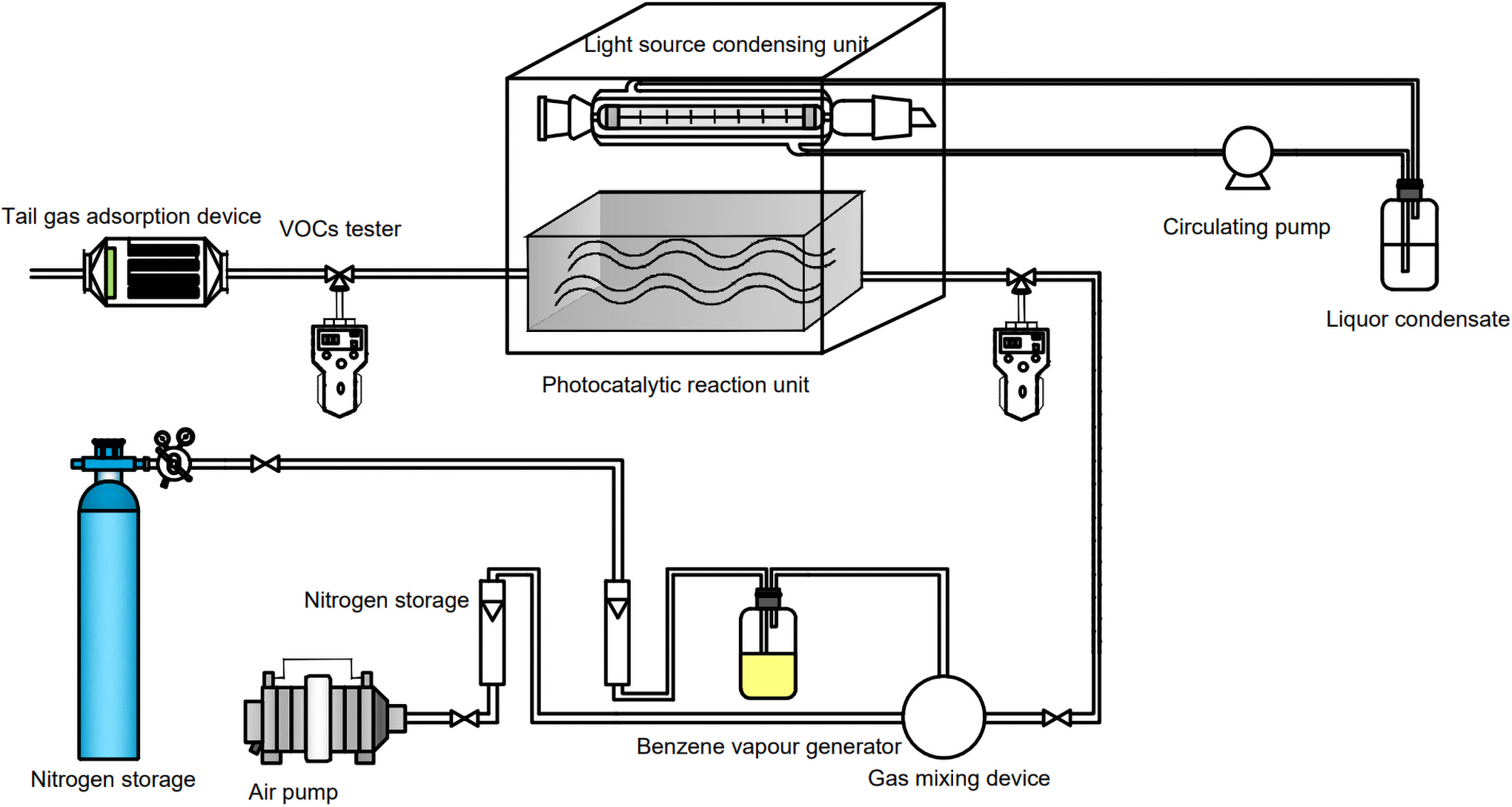
Flow diagram of photocatalytic experimental installation to study the removal of gaseous benzene.
The iodine tungsten lamp used in the experiment had a power of 300 W and the average intensity of iodine tungsten lamp was 6,400 lx [Eq. (1)]. The catalyst specification was 75 × 10 cm. The iodine tungsten lamp condensing device was equipped with 2 mol/L NaNO2 solution to filter out ultraviolet rays and condense. The self-made photocatalytic reactor was made of Quartz. The catalyst was coated on a wavy fiberglass cloth. When the experiment was carried out, the reaction system was carried on the shading treatment to prevent the outside sunlight from having an influence on the experiment result. Finally, the tail gas treatment system mainly used activated carbon to adsorb the waste gas. The light intensity of iodine-tungsten lamp is calculated by the following formula:
where Eav is the average intensity of illumination, Lux/lx; N is number of light sources; Φ is light flux of source, lm; CU is utility factor; MF is maintenance factor; M is area, m2.
N = 1, Φ = 1,500 lm, CU = 0.4, MF = 0.8, M = 0.075 m2. Eav = 6,400 lx
Synthesis of Mn/I-TiO2
Self-made photocatalyst samples were synthesized by sol-gel method. Solution A was obtained by mixing tetra-butyl titanate, anhydrous ethanol, and acetyl-acetone in a certain proportion. Solution B was obtained by mixing anhydrous ethanol, deionized water, and acetylacetone in a certain proportion. After mixing liquid A and liquid B evenly, pH was adjusted. After standing at room temperature, A gel was formed. After washing, centrifugation, and drying, A xerogel was obtained. The xerogel was ground and calcined at a certain temperature for 1 h in a tubular furnace to obtain undoped self-made TiO2.
The preparation of Mn/I-doped TiO2 catalyst was based on the preparation of pure TiO2 by adding Mn(NO3)2•4H2O or KI into solution A. Mn-I-TiO2 catalyst was added Mn(NO3)2•4H2O and KI in solution A and solution B, respectively.
Characterization analysis
Crystal phase, particle size, and molecular structure of photocatalyst were studied by XRD (model: D8 ADVANCE; Bruker, Germany) and Raman (model: SENTERRA; Bruker). XPS (model: ESCALAB 250xi; Thermo Fisher) and UV-vis-DRS (model: UV-2600 with ISR-2600 Plus; Shimadzu, Japan) were used to study the surface elements and bandgap width of the photocatalyst.
Photodegradation of gaseous benzene
The device of photocatalytic system is given in Fig. 1. In this study, the continuous flow experiment was carried out with benzene as the target material. The initial mass concentration of benzene (100 ± 10 mg/m3) was adjusted by adjusting the flow rate of N2, and air was injected into the system to ensure the constant total gas flow into the self-made photocatalytic reactor.
At the beginning of the experiment, the reaction system was shaded, making the system in a dark state. Then a mixture of gaseous benzene, nitrogen, and air was introduced to stabilize the reaction system for about 2 h. The benzene in the reactor can reach adsorption equilibrium on the catalyst. After the iodine tungsten lamp was turned on, ppbRAE 3000 portable VOCs analyzer was used to measure the mass concentration of gaseous benzene at inlet and outlet. The concentration at the inlet and outlet was collected in a certain time interval. The formula of benzene removal rate is as follows:
where ηt is the benzene removal rate; Cin,t is the inlet concentration of benzene; Cout,t is the outlet concentration. After preliminary research of the research group, the quality of benzene that can be treated by catalyst per unit time and unit mass is taken as the measurement standard, and the treatment capacity of catalyst is calculated as follows:
where φ is catalyst treatment capacity, μg C6H6/(g·h); Q is total gas flow, L/h; m is catalyst mass, g; t is reaction time, h.
Results and Discussion
Characterization of the photocatalyst
XRD analysis
As given in Fig. 2, the crystal phase composition and crystal structure of the catalyst powder were elucidated by XRD. After TiO2 co-doping modification, the proportion of rutile decreased, and the proportion of anatase increased. In addition, the characteristic peak of Mn/I could not be observed because the content of Mn/I ions in the catalyst was lower than the detection limit of XRD. The peak strength of the doped samples at the interface of anatase (101) was different because of TiO2 being doped with different elements. The crystal phase structure of Mn-doped TiO2 catalyst did not change (Shu et al., 2018). Moreover, the existence of Mn2+ and I− ions in the TiO2 resulted in the shift of the main diffraction pattern (101), as given in Fig. 2.
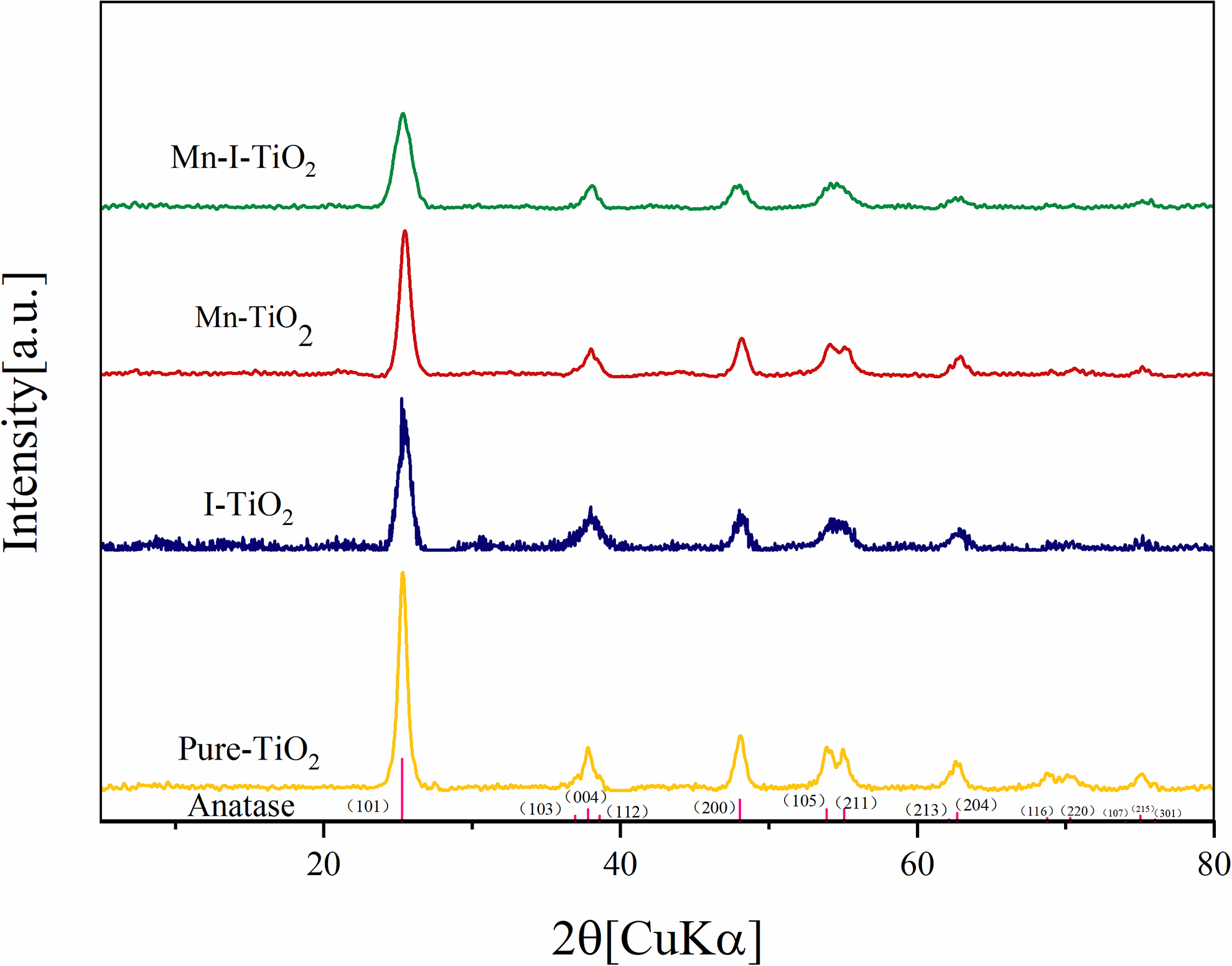
The XRD patterns of the pure, mono-doped, and co-doped TiO2. XRD, X-ray diffraction.
The anatase crystal size and lattice distortion are given in Table 1. The doping of Mn and I limited the ascent of TiO2 microcrystals, so that the grain size of both I-TiO2, Mn-TiO2 and Mn-I-TiO2 was smaller than that of pure TiO2. The grain size of Mn-TiO2 (12.73 nm) was the smallest among I-TiO2 (25.10 nm), Mn-I-TiO2 (16.73 nm), and Pure TiO2 (34.09 nm). The small amount of Mn2+ doping obtained much more lattice distortion, when considering lattice parameters (Tian et al., 2020). The reason was that Mn ions possibly incorporate into the TiO2 lattice because the ionic radius of Mn (0.067 nm) was similar to that of Ti (0.068 nm).
X-Ray Diffraction Crystallite Size and Lattice Distortion of the Undoped, Mono-Doped and Co-Doped TiO2
Raman analysis
The typical five bands of anatase in the Raman spectrum are 147, 198, 398, 515, and 640/cm. Raman spectra of the three self-made catalysts in this study all accorded with the characteristics of anatase as given in Fig. 3. Moreover, it displayed no characteristic diffraction peaks related to rutile. The Mn and I elements were successfully introduced into the TiO2 system without changing the crystalline phase of TiO2 (Szkoda et al., 2016b). The presence of iodide ion and manganese ion increased the crystal defects in the TiO2 framework and led to some Raman spectrum deviation (Bagwasi et al., 2012). Raman spectra of catalyst powders at E1g are given in Fig. 3: E1g of Pure TiO2 shifted slightly from 144.32 to 145.81 cm−1, 147.29 and 148.78 cm−1 of I-TiO2, Mn-TiO2, and Mn-I-TiO2. The doping atoms interfered with the Ti-O-Ti bond, resulting in E1g moving to a higher wave number (Lima et al., 2014; Szkoda et al., 2016b).
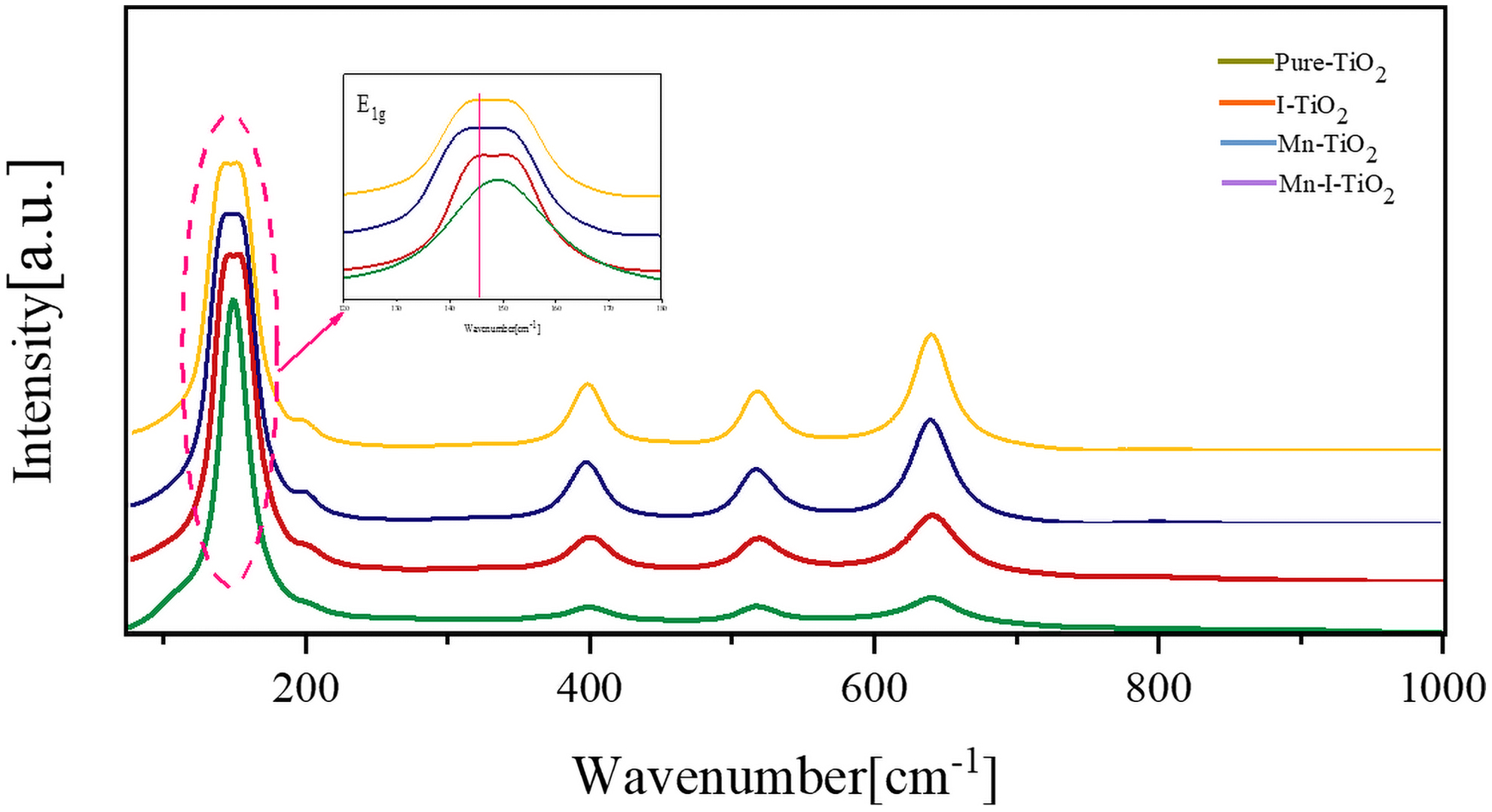
The Raman diffraction of the pure, mono-doped, and co-doped TiO2.
UV-vis-DRS analysis
It can be seen from Fig. 4, the light absorption range of Mn-TiO2, I-TiO2, and Mn-I-TiO2. Compared with undoped TiO2, doped TiO2 can absorb visible light in a certain wavelength range. According to the absorption wavelength of the catalyst, we can estimate the different bandgap width of TiO2 after doping (Cui et al., 2010):
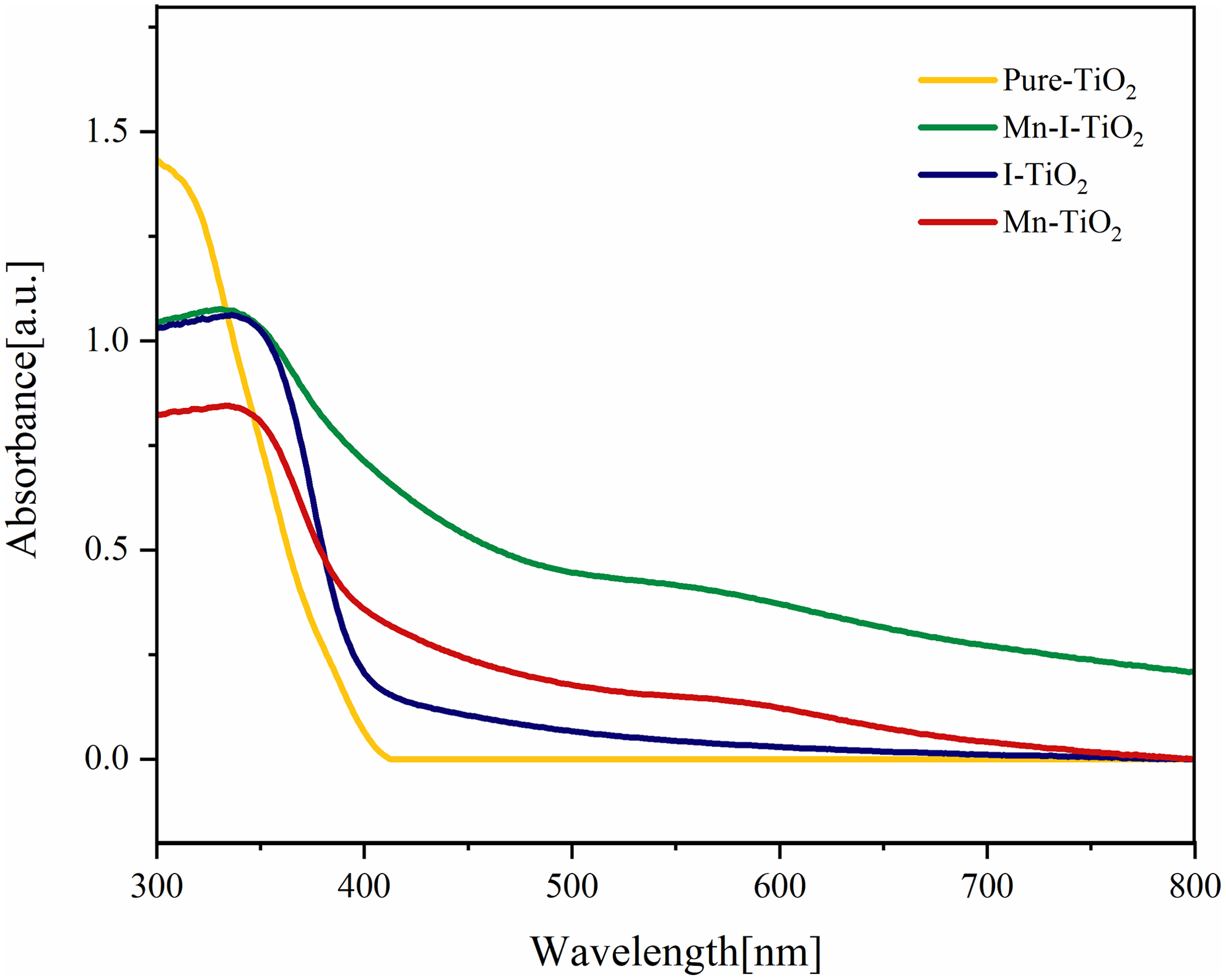
UV-vis-DRS of the pure, mono-doped, and co-doped TiO2. UV-vis-DRS, ultraviolet-visible diffuse reflectance spectroscope.
where α, catalyst absorbance; K, constant; n, takes 1/2 or 2.
The Pure-TiO2 sample displays an absorption edge at ∼360 nm in Fig. 4. Metal doping caused the absorption edge to shift to higher wavelengths. The calculated results (given in Fig. 5) showed that the bandgaps of Pure-TiO2, Mn-TiO2, I-TiO2, and Mn-I-TiO2 catalysts were 3.19, 2.54, 2.93, and 2.65 eV, respectively. The bandgap of the Mn-TiO2 particle was smaller than that of Mn-I-TiO2. Therefore, the absorption wavelength threshold of the Mn-TiO2 catalyst became larger, and its utilization rate of visible light became higher. The energy gaps reduced because of the d-d electron transition of Mn2+ and I−, which is caused by metal doping (Mohamed et al., 2020). Metal and nonmetal co-doping extended the scope of photocatalysis to visible region. Many studies showed that the catalyst grains were small and prone to blue shift (Mamaghani et al., 2017). Compared with I-TiO2 and Mn-I-TiO2, Mn-TiO2 had a blue shift, indicating that its smallest particle size conformed to the XRD results.
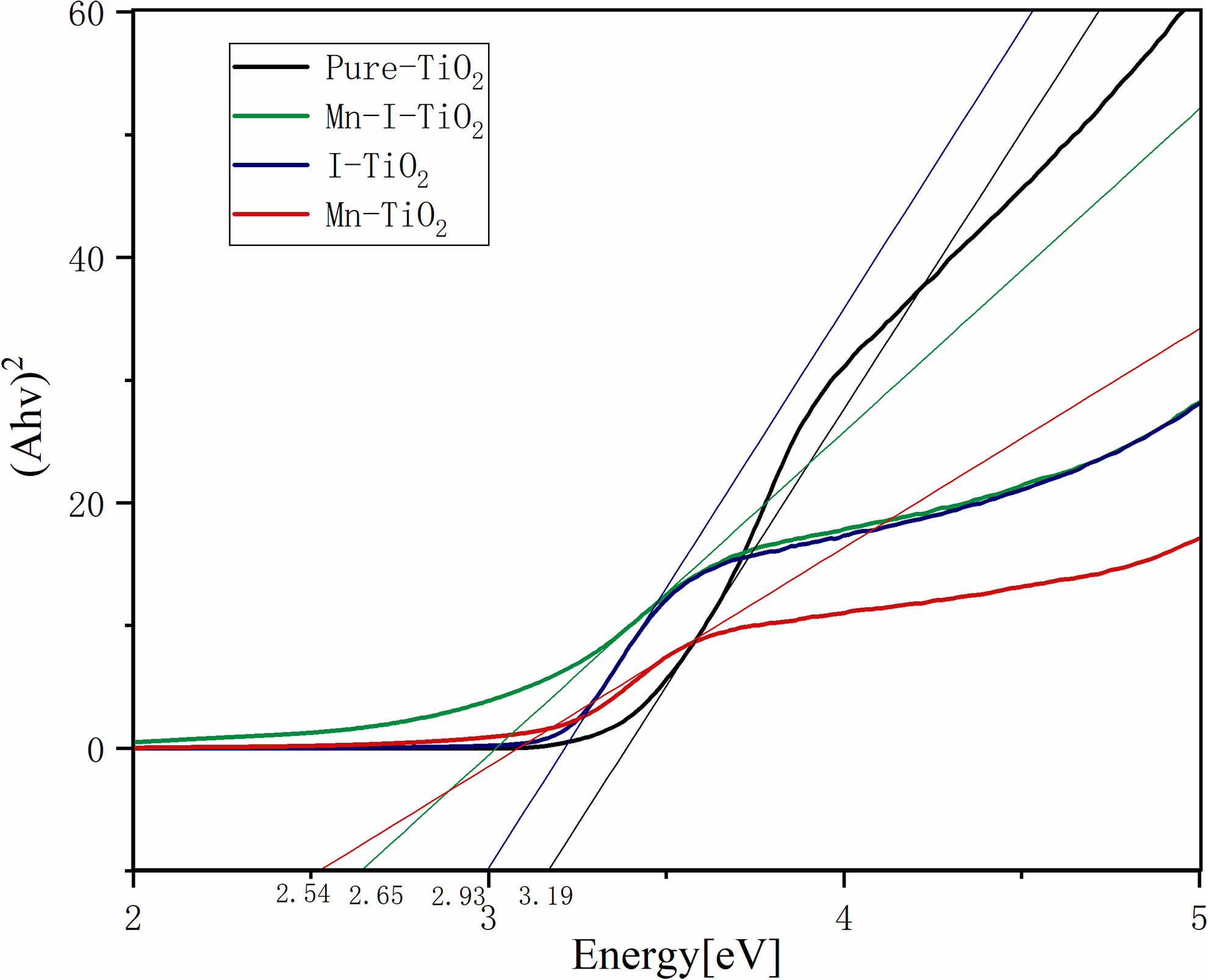
UV-vis-DRS of the pure, mono-doped, and co-doped TiO2 in Tauc plot.
XPS analysis
The XPS characterization of Mn-TiO2, I-TiO2, and Mn-I-TiO2 indicating the optical properties of the catalysts are given in Fig. 6. It revealed that the surface of the sample is dominated by Ti, C, and O elements. C element might be attributed to the oily carbon in the XPS instrument, which could be used to calibrate the spectra.
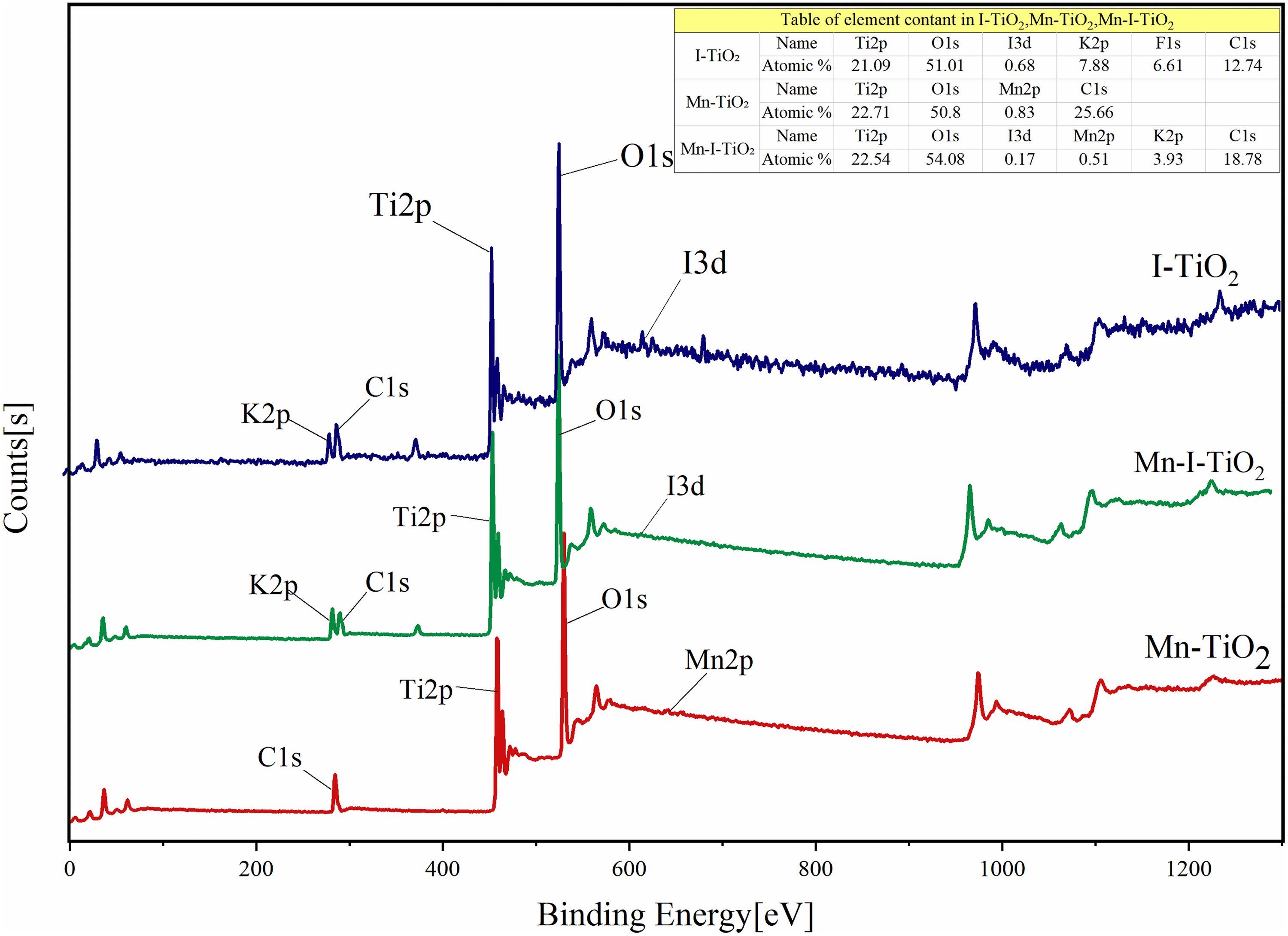
XPS survey spectrum of the pure, mono-doped, and co-doped TiO2. XPS, X-ray photoelectron spectroscopy.
It can be seen from the wide scan spectrum that I3d characteristic peaks were detected in I-TiO2; Mn2p characteristic peaks were detected in Mn-TiO2; and Mn2p and I3d characteristic peaks were observed in Mn-I-TiO2, which proved Mn2+ and I− successfully doped into TiO2. To analyze the characteristic peaks and their values observed in various samples in XPS scanning, narrow sweep of Ti2p, O1s, I3d, and Mn2p orbitals was performed.
According to the narrow scan spectrum of Ti2p in Fig. 7A, the binding energies of pure TiO2 at Ti2p1/2 and Ti2p3/2 were similar to those of Ti4 +, which were 464.6 and 458.9 eV. The binding energy of the samples modified by other doping was lower than that of pure TiO2. When Mn or I was singly doped with TiO2, Ti4+ was reduced to Ti3+ and oxygen vacancy was formed, which led to lattice defects in TiO2 and reduced the binding energy of Mn-TiO2 and I-TiO2. The binding energy of Mn-I-TiO2 was lower than that of Mn-TiO2 and I-TiO2, owing to the existence of element I in the TiO2 system in the form of a normal valence (Szkoda et al., 2016a).
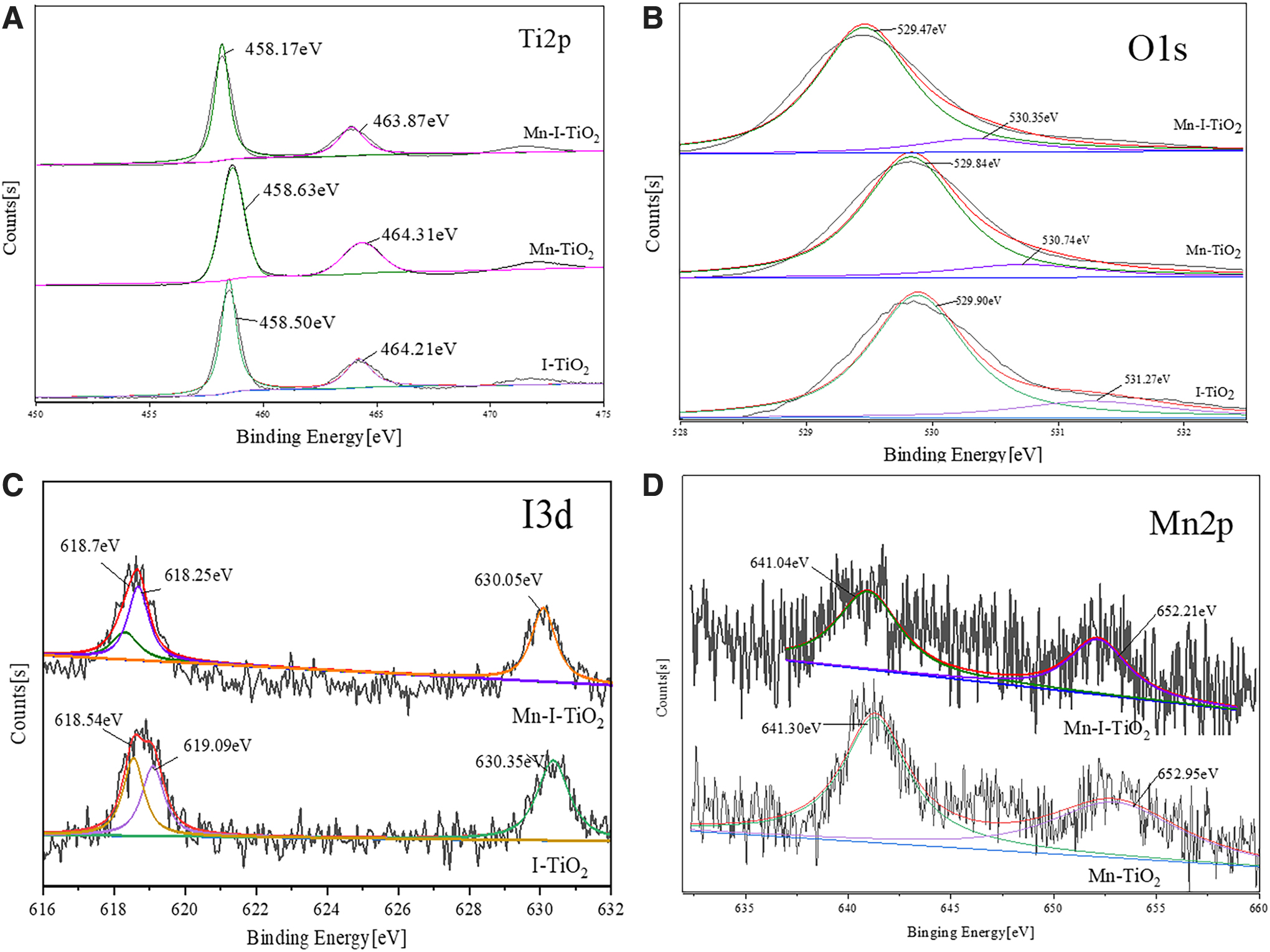
High-resolution XPS spectra:
According to the narrow scan spectrum of O1s in Fig. 7B, the binding energies of Mn-I-TiO2, Mn-TiO2, and I-TiO2 were 529.47, 529.84, and 529.90 eV corresponding to lattice oxygen of TiO2, respectively. Compared with Mn-TiO2, the binding energy of lattice oxygen in Mn-I-TiO2 decreased to different degrees, which might be caused by the different charge environment of lattice oxygen in TiO2 caused by the element I. Lattice oxygen can be converted into surface-adsorbed oxygen to react with reactants on catalyst surface. Therefore, the reduction of lattice oxygen resulted in the reduction of the catalyst's ability to degrade pollutants. The oxygen adsorption of Mn-I-TiO2, Mn-TiO2, and I-TiO2 were 530.35, 530.74, and 531.27 eV.
According to the narrow scan map of I3d in Fig. 7C, the XPS spectra of I3d region showed obvious wide peaks, namely two peaks with centers of 619 and 630 eV, respectively. The results of the I3d narrow scan in Mn-I-TiO2 were similar to those of the I3d narrow scan in I-TiO2. The binding energies of Mn-I-TiO2 were 618.25, 618.7, and 630.05 eV, of which 618.25 and 618.7 eV were attributed to I3d3/2 and 630.05 eV to I3d5/2. The appearance of the I3d bimodal peaks can be attributed to the following: the first peak was owing to the presence of I− ion, and the other peak might be because of the excessive amount of KI and the formation of I5+ ion. In addition, the existence of the Mn element can reduce the binding energy of I3d bimodal peaks.
From the narrow scan spectrum of Mn2p in Fig. 7D, 641.04 and 641.30 eV corresponded to Mn2p3/2 in Mn-I-TiO2 and Mn-TiO2, and 652.21 and 652.95 eV corresponded to Mn2p1/2 in Mn-I-TiO2 and Mn-TiO2. The gauss peak of Mn2p at 641.30 eV might be attributed to Mn2+, Mn3+, and Mn4+, and the gauss peak of Mn2p at 652.95 eV might be attributed to Mn3+. The possible existence of multivalent Mn in the Mn-TiO2 system played a positive role in charge transfer of main Ti atoms, which could be used to explain the high photoactivity of Mn-TiO2 under visible light. The binding energy of Gaussian peak in M2p narrow scan spectrum was similar to that in Mn-I-TiO2, but its binding energy was slightly reduced, indicating that the addition of the element I did not change the valence state of Mn in TiO2 system.
Photocatalytic activity
The degradation ability and efficiency of four self-made catalysts for gaseous benzene under visible light are given in Table 2. The degradation curve of benzene by TiO2 catalyst under visible light is given in Fig. 8. The results showed that ion-doped TiO2 has higher benzene degradation efficiency than pure TiO2, because Mn/I single-doped and co-doped TiO2 expand the absorption range under visible light. Among the four self-made catalysts, Mn-TiO2 had the best removal efficiency for benzene under visible light, reaching 37.86%, which was better than the Sn2+-doped TiO2 (27%) (Zhuang et al., 2014).
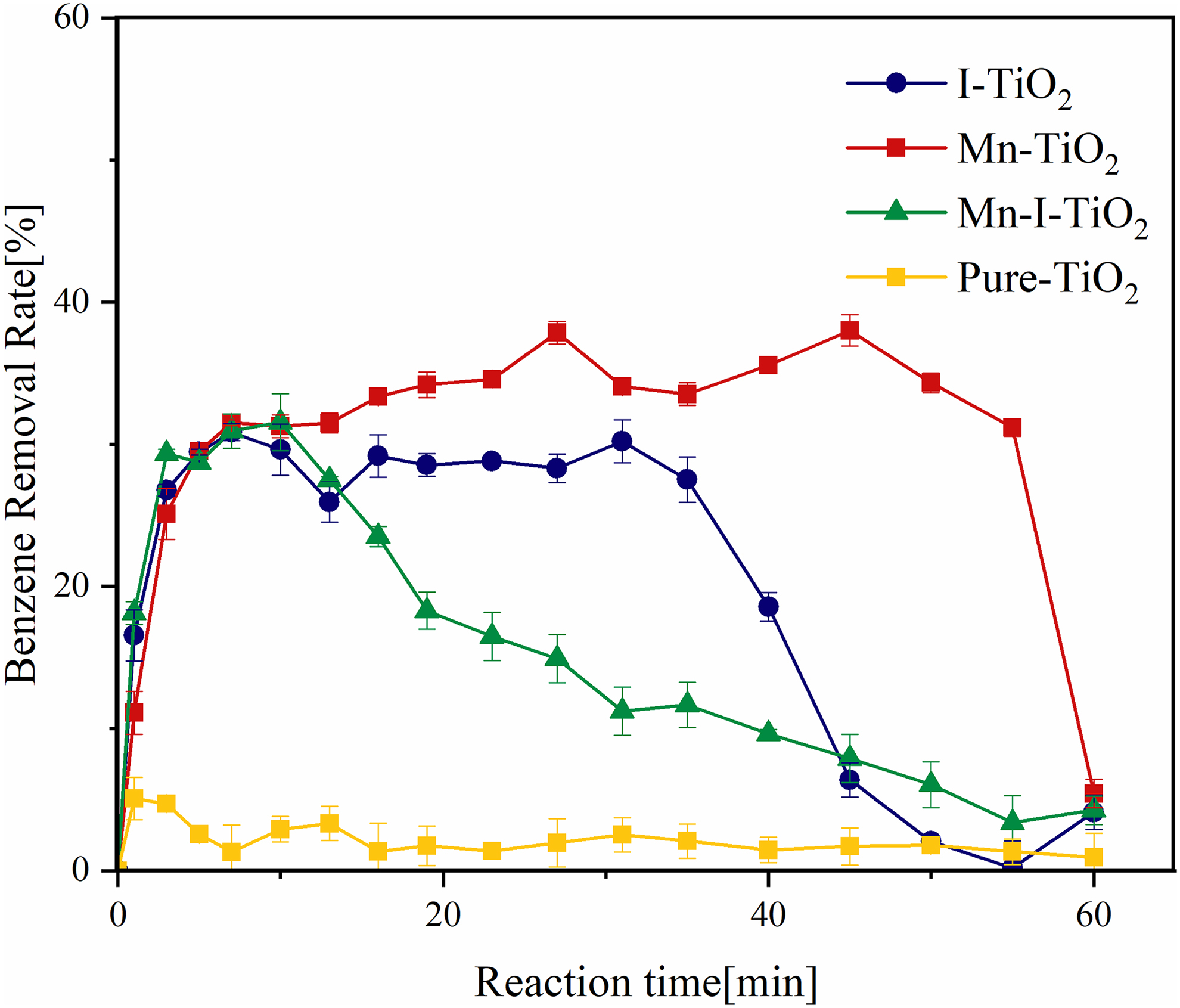
Photocatalytic performance of the obtained catalytic under visible light.
Treatment Ability and Photocatalytic Performance of Different Catalysts to Treat Benzene Under Visible Light
Before 27 min, the photoactivity of Mn-TiO2 increases, which should benefit from doping a small amount of Mn. Mn-doped TiO2 can prolong the life of photogenerated carriers and act as a trap for photogenerated electrons. From 27 to 45 min, the removal rate remained stable. After 45 min, the photocatalytic activity of Mn-TiO2 decreased. Because it was owing to the high doping amount of Mn inducing more crystal defects, it could be used as photoelectron–hole pair complex center. The deactivation of the catalyst might be owing to the production of small molecular intermediates that were easier to combine with the limited active sites on the surface of Mn-TiO2 during the degradation of benzene. When the photocatalytic reaction starts, the formation of a small number of by-products could produce an oxidative activity group ·R, which promoted the degradation of the reactants. After a period of reaction, the deposition of by-products generated during the reaction covered the active sites and caused the catalyst to deactivate (Tian et al., 2020).
The treatment ability of the photocatalyst is given in Fig. 9. Among the four self-made photocatalysts, Mn-TiO2 had the highest treatment ability (493.61 μg C6H6/[g·h]), higher than that of NH3-treated TiO2 (430.90 μg C6H6/[g·h]) (Chen et al., 2013). The removal efficiency of Mn/I co-doped TiO2 was lower than that of Mn/I mono-doped TiO2 to benzene and the ability of catalyst treatment. The presence of polyvalent Mn ions in the Mn-TiO2 catalyst increased the lattice distortion and reduced the bandgap, whereas the addition of I ions led to the oxidation reaction and decreased the hydroxyl groups or adsorbed oxygen of the catalyst. In addition, the rate of recombination of photoelectrons and holes could be effectively reduced by the transfer of photoelectrons between different valence states of iodine in photocatalysis (Tojo et al., 2008; Liu et al., 2009). Therefore, the degradability of Mn-I-Ti to gaseous benzene was the lowest among Mn-I- TiO2, Mn-TiO2, and I-TiO2.
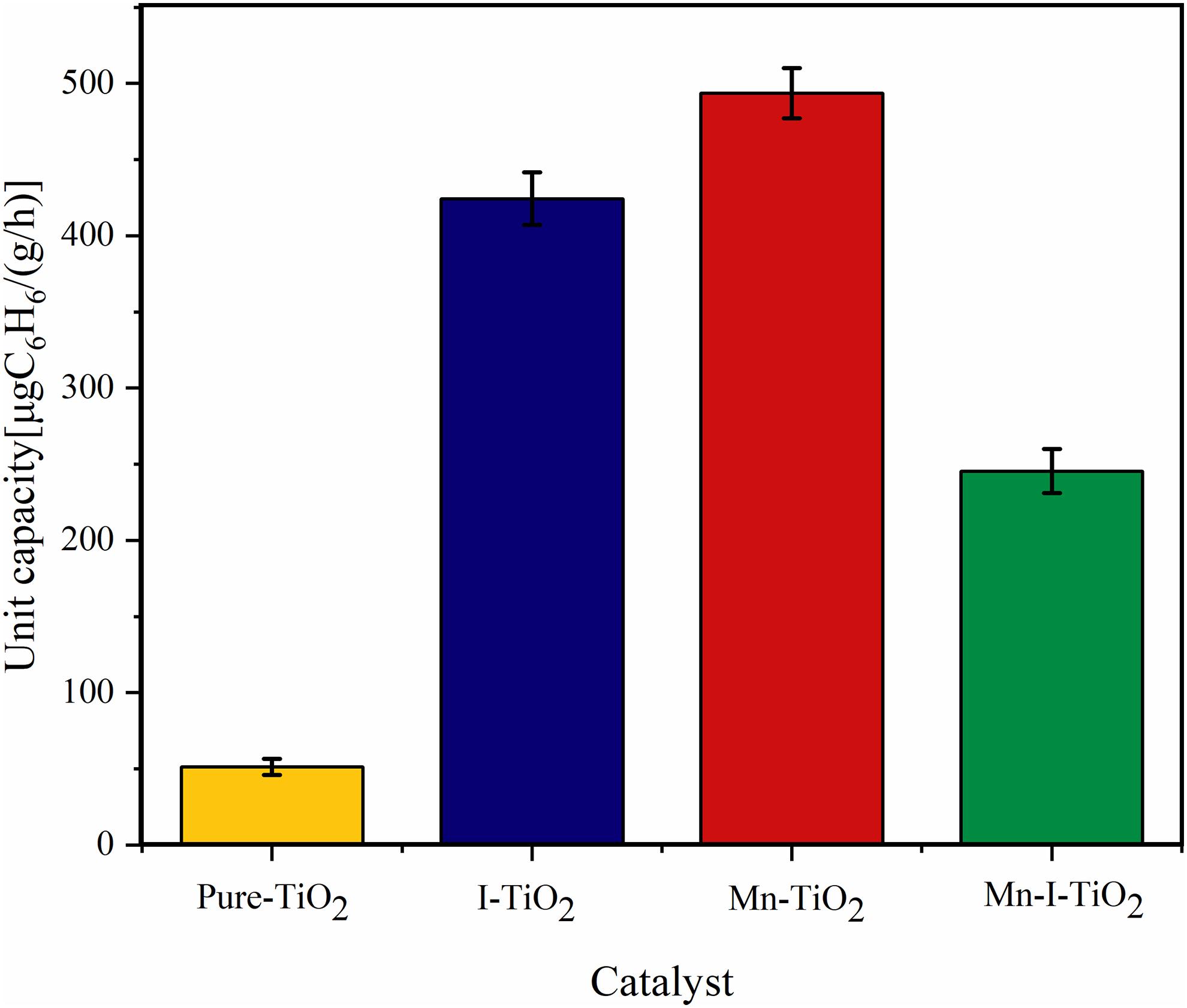
The unit capacity of different catalysts to treat benzene under visible light.
Conclusions
A series of nanosized, anatase Pure-TiO2, I-TiO2, Mn-TiO2, and Mn-I-TiO2 were synthesized by a modified sol-gel method. The catalysts were characterized by XRD, Raman, XPS, and UV-vis-DRS to study crystal structure and optical properties. The results showed that Mn-TiO2 had minimum particle size, maximum defect, and the most hydroxyl groups on the surface compared with Pure-TiO2, I-TiO2, and Mn-I-TiO2. Mn or I alone doping TiO2 reduced Ti4+ to Ti3+, forming oxygen vacancy, resulting in lattice defects of TiO2. The possible existence of multivalent Mn in the Mn-TiO2 system played a positive role in charge transfer of main Ti atoms, which can be used to explain the high photoactivity of Mn-TiO2.
The photocatalytic performance of the Mn-TiO2 particle was better than Mn-I-TiO2, because in the Mn-I co-doped catalyst, the existence of the Mn element can reduce the binding energy of I3d bimodal peaks. The co-doping of Mn ion and I ion in the catalyst inhibited the degradation of pollutants. Compared with the previous research, the grain size and bandgap width of Mn-TiO2 were smaller than that of Fe-I-TiO2, and the lattice distortion of Mn-TiO2 was larger than that of Fe-I-TiO2 (Tian et al., 2020). Among them, the degradation efficiency of Mn-TiO2 was up to 37.86%, and the highest treatment capacity of benzene was 493.61 μg C6H6/(g·h).
Footnotes
Acknowledgment
The authors acknowledge support by the Open Sharing Fund for the Large-scale Instruments and Equipments of China University of Mining and Technology (CUMT).
Authors' Contributions
Y.S., B.K.L., and F.L.C. (student) conducted all the experiments and wrote the article. L.J.T. (Associate Professor) and S.J.G. (Assistant Professor) revised the article.
Authorship Confirmation Statement
All authors of this article have read the “Information For Authors” carefully and agree to the content contained therein. All the signed authors confirm that the article has not been submitted more than once and infringes others' copyright. After publication, the copyright of the article belongs to the author, and the right of publication belongs to the journal Environmental Engineering Science.
Author Disclosure Statement
No competing financial interests exist.
Funding Information
This study was funded by the National Natural Science Foundation of China (Grant No. 51778612).