







Abstract
Neonicotinoids are extensively used to prevent and control crop diseases and insect pests. Qilu Lake Basin is an important agricultural area in Southwest China, with huge consumption of neonicotinoids. However, the lack of data on neonicotinoid residues in Qilu Lake Basin challenges us with assessing the environmental contamination levels and the potential risks for the local aquatic ecosystem. Therefore, in this study, the occurrence and spatiotemporal distribution of three neonicotinoids (imidacloprid, clothianidin, and thiamethoxam) in surface waters of Qilu Lake Basin were investigated. Their concentrations ranged from 0.65 ng/L (thiamethoxam in spring) to 1041.21 ng/L (imidacloprid in summer), which exhibited decreasing trends from the surrounding rivers to Qilu Lake. The highest concentrations were observed in summer, owing to the intensive application of pesticides and the heavy precipitation and surface runoff in this season. Imidacloprid and thiamethoxam presented relatively high ecological risks, and clothianidin was the most threatening compound, with high risk quotient values in every season owing to its low predicted no-effect concentration values and high toxicity.
Introduction
China is a huge agricultural country with large amounts of crop production and usage of pesticides. With the rapidly growing population, an increasing category of pesticides were adopted to ensure the crop yields (Huang et al, 2008; Rafiee et al, 2021). According to a recent report, the average pesticide consumption in China was 1.5–4 times higher than that of the world average value (Zhang et al, 2015). As a result, high amounts of pesticides would be accumulated in soils (Herrero-Hernández et al, 2013). The residual pesticides could migrate to the aquatic environment through soil leaching, soil erosion, surface runoff, and spray drift, which may pose risks to aquatic ecosystems and even human health (Bereswill et al, 2013; Mahmood et al, 2016; Xu et al, 2020).
Imidacloprid was introduced into the insecticide markets in 1991, followed by thiamethoxam and clothianidin in 1999. Since then, neonicotinoids have become the most widely used insecticides in the world, with a market share of 27% in 2010 (Jeschke et al, 2011; Simon-Delso et al, 2015). Neonicotinoids are considered as neuroactive insecticides with selective toxicity to target arthropods (Borsuah et al, 2020; Jeschke et al, 2011; Simon-Delso et al, 2015; Tomizawa and Casida, 2004).
In China, a large scale of neonicotinoids are produced and usually applied for pest control to ensure the food security (Shao et al, 2013). Although their toxicity to fish and mammals is relatively low, it has been known that the application of neonicotinoids in agriculture at the recommended rates had adverse effects on nontarget organisms, including pollinators (Bonmatin et al, 2015), aquatic creatures (Morrissey et al, 2015; Yamamuro et al, 2019), birds (Gibbons et al, 2015), and probably human beings (e.g., neonicotinoid exposure might cause chronic disease like renal dysfunction and systemic symptoms) (Han et al, 2017; Taira et al, 2021). In addition, neonicotinoids applied as seed treatment might not bring benefits to the yields in major cropping systems (e.g., sunflowers, maize, or soybeans), and not be necessary for integrated pest management (Bredeson and Lundgren, 2015; Douglas and Tooker, 2015; Veres et al, 2020). Therefore, many countries are gradually limiting or banning the use of neonicotinoids (EC, 2013; Yu et al, 2021).
Neonicotinoid can easily migrate into surface water from soils and exist for a long time (Goulson, 2013; Han et al, 2017). To date, neonicotinoids are frequently detected in many rivers and lakes around the world. For example, more than four neonicotinoids, including imidacloprid, clothianidin, thiamethoxam, and acetamiprid, were determined with high detection frequencies in the central Yangtze River (Mahai et al, 2019), tributaries to the Great Lakes (Hladik et al, 2018), Tagus Basin (Casillas et al, 2022), and the surface waters of Minnesota (Berens et al, 2021). However, few data were reported in Qilu Lake Basin, with widespread agricultural and residential activities. Therefore, it is necessary to investigate the neonicotinoid concentrations in waters of Qilu Lake Basin, and to further evaluate the related risks to the aquatic organisms.
The main objectives of this study were as follows: (1) to characterize the concentrations of imidacloprid, clothianidin, and thiamethoxam in surface waters of Qilu Lake Basin; (2) to investigate the spatial and seasonal distribution of neonicotinoids; and (3) to evaluate the ecological risks of neonicotinoids for local aquatic organisms. Results of this research would provide theoretical supports for pesticide application management and pesticide pollution control in this region and other similar agricultural areas in the world.
Materials and Methods
Study area and sampling sites selection
Qilu Lake Basin is located in Tonghai County, Yuxi City, which is the second largest city of Yunnan Province. The total area of Qilu Lake Basin is ∼350 km2, with a dense population of ∼270,000, accounting for 90% of the total population of Tonghai County. Qilu Lake Basin is a typical plateau lake basin, with an elevation of ∼1,979–2,100 m. The terrain of the basin is flat, with Qilu Lake in the middle, and the agricultural areas are mainly distributed in the south, west, and north of the lake, which is the main producing area of grain and crops in Tonghai County. As given in Fig. 1, 33 sampling sites, including 10 sites in Qilu Lake, 12 sites in waters of the lake shore, and the other 11 sites in surrounding rivers, were set in this study.
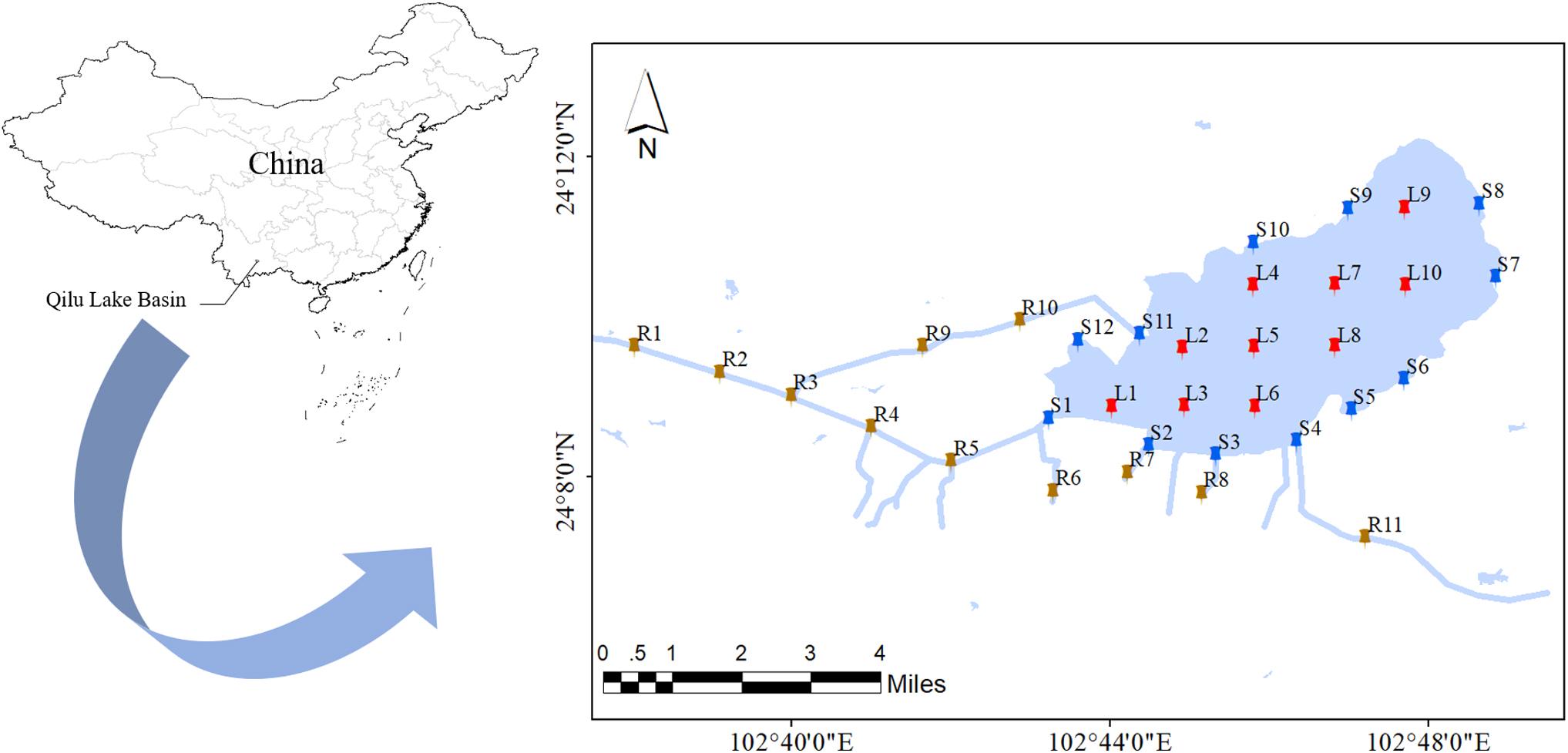
Sampling sites in Qilu Lake Basin (R1–R11: sampling sites in surrounding rivers; S1–S12: sampling sites in waters of the lake shore; L1–L10: sampling sites in Qilu Lake).
Sample collection
Water samples were collected in the above-mentioned 33 sampling sites during spring, summer, autumn, and winter from 2020 to 2021. Triplicate samples were taken from each sampling site in each season. Each sample (1 L in volume) was collected from the depth of 10–30 cm below the water surface with a plexiglass sampler and stored in a blown bottle (1 L in capacity). The water samples were directly filtered by 0.45-μm glass microfiber filters (GFF; ANPEL, Shanghai, China) within 1 day and then immediately transported to a laboratory at 4°C for analysis.
Sample pretreatment and instrumental analysis
Water samples were extracted using the hydrophile-lipophile balance cartridges (500 mg, 6 mL, ANPEL) through solid-phase extraction (SPE). Referring to the method reported by the previous studies (Li et al, 2019; Thompson et al, 2021), the SPE columns were initially conditioned using 5 mL ethyl acetate, 10 mL methanol, and 10 mL ultrapure water successively. Then the loading rate of water samples was maintained at 10 mL/min. In the next step, the target analytes were eluted with 10 mL acetonitrile. The extracts were concentrated to nearly dry using an antiseptic 24-bit nitrogen blower (ANPEL DC24-Rt, China) and then fixed to 1 mL with acetonitrile.
The concentrated samples were analyzed using an ultra-performance liquid chromatography–triple quadrupole mass spectrometer (UPLC-MSMS; Thermo Fisher Scientific TSQ Quantum, Waltham, MA) with electrospray ion source. An athena C18-WP column (2.1 × 150 mm, 3 μm; ANPEL) was used for the liquid chromatographic separation of the target neonicotinoids with 0.05% formic acid in acetonitrile/water (10:90) and 0.05% formic acid in water/acetonitrile (5:95) at a flow rate of 200 μL/min and a constant temperature of 40°C. Analysis run time was 50 min with multi-reaction monitoring mode and positive ion mode. The capillary temperature, spray voltage, sheath gas pressure, and aux gas pressure were set as 320°C, 3,500 V, 25 arb, and 10 arb, respectively. All the chemicals and solvents used in this study were analytical grade of high-performance liquid chromatography grade.
Quality assurance and quality control
High purity (>98%) mix standards of three neonicotinoids (imidacloprid, clothianidin, and thiamethoxam) were purchased from Sigma-Aldrich Co., Ltd (Shanghai, China). Analyte quantitation was performed using internal standard method with triphenyl phosphate as internal standard. About 100 ng/L triphenyl phosphate was added into each sample before extraction. The linear regression coefficients of standard calibration curves for all the target neonicotinoids were >0.99. The limit of detection (LOD) and the limit of quantification (LOQ) of each neonicotinoid were defined as the concentrations corresponding to the signal/noise (S/N) of 3 and 10, respectively. In this study, the LOD of three neonicotinoids ranged from 0.09 to 0.42 ng/L and the LOQ ranged from 0.30 to 1.40 ng/L. The detected values of neonicotinoids below LOD were reported as zero, whereas the detected values between the LOD and the LOQ were treated as half of the LOQ. The mean recoveries of 3 target neonicotinoids ranged from 72.31% to 111.57%. For each batch of 10 samples, 1 blank and 1 standard were analyzed under the same conditions.
Ecological risk assessment
The risk quotient (RQ) method was adopted to evaluate the potential risks of the neonicotinoids for freshwater species. RQ values were calculated using Equation (1). The ecological risk levels can be classified as follows: very low risk (RQ <0.01), low risk (0.01 ≤ RQ <0.1), medium risk (0.1 ≤ RQ <1), high risk (1 ≤ RQ <10), and very high risk (RQ ≥10).
In Equation (1), MEC is the measured concentrations of each neonicotinoid, and PNEC is the predicted no-effect concentration for a particular neonicotinoid. PNEC values were calculated using Equation (2).
In Equation (2), HC5 is the compound concentration at which 5% of aquatic species are exposed to chronic hazards, and it was calculated using Equation (3) owing to the scarcity of the no-observed effect concentration (NOEC) values and the lowest observed effect concentration (LOEC) values. AF represents the appropriate assessment factor, and in this study, AF was assigned as 2 for all the target neonicotinoids.
The AHC5 in Equation (3) is the concentration at which 5% of aquatic species are exposed to acute toxicity, and it was fitted using species sensitivity distribution (SSD) method, with the logarithmic values of the median effective concentration (EC50) and the median lethal concentration (LC50) of sensitive species as the abscissa and the corresponding cumulative probability as the ordinate (Chen et al, 2020; Liang et al, 2015). The EC50 is the concentration having an effect on 50% of the species population, and LC50 is the concentration causing the death of 50% of the species population. The EC50 (LC50) values of 50 species for imidacloprid, 17 species for clothianidin, and 25 species for thiamethoxam were adopted to fit the best SSD curve models of each neonicotinoid in this study. Final acute chronic ratio (FACR) was obtained using the geometric average value of the three ratios of the acute toxicity data (LC50 or EC50) and the chronic toxicity data (NOEC or LOEC) of daphnia, fish and green algae. The toxicity data (LC50, EC50, NOEC, and LOEC) of all the species was obtained from ECOTOX database (USEPA, 2021).
Statistical analysis
The data analysis was performed with the statistical software Microsoft Excel 2020 (Microsoft, Redmond, WA) and SPSS version 25 (IBM). Neonicotinoid concentrations among different seasons and among different areas were tested by using a one-way analysis of variance. Box plots and other figures were drawn by Origin 2021 (Origin Lab, Northampton, MA).
Results and Discussion
Concentrations of neonicotinoids in water samples
Table 1 provides the concentrations of the neonicotinoids measured in water samples in Qilu Lake Basin. All target neonicotinoids were present at ng/L levels. The highest mean concentration of the ∑3 neonicotinoids among different seasons was observed in summer (2593.04 ng/L). In contrast, the lowest mean concentration was observed in winter (885.86 ng/L). Seeing from different sampling areas, the highest mean concentrations of the three neonicotinoids were all observed in waters of the surrounding rivers, followed by waters of the lake shore and waters in Qilu Lake. Considering different compounds, the concentrations of imidacloprid, clothianidin, and thiamethoxam ranged from 1.39 to 3543.85 ng/L, from 8.78 to 3888.92 ng/L, and from 0.65 to 2516.56 ng/L, respectively. Imidacloprid was observed with the highest mean concentrations in summer (1041.21 ng/L) and autumn (787.71 ng/L), followed by clothianidin (832.10 ng/L in summer and 685.05 ng/L in autumn) and thiamethoxam (719.72 ng/L in summer and 599.61 ng/L in autumn). In spring, the mean concentrations of the neonicotinoids ranking from high to low were as follows: clothianidin (703.73 ng/L), imidacloprid (635.70 ng/L), and thiamethoxam (558.78 ng/L). In winter, the mean concentrations of the target neonicotinoids ranking from high to low were as follows: thiamethoxam (333.83 ng/L), imidacloprid (330.47 ng/L), and clothianidin (221.56 ng/L). It should be noted that the pretreatment procedures of the water samples including the filtering step could result in a small loss of the compounds, and the analysis results of the neonicotinoid concentrations could be slightly underestimated owing to this unknown—although a small factor.
Concentrations of Imidacloprid, Clothianidin, and Thiamethoxam Detected in Surface Water Samples of Qilu Lake Basin
Qilu Lake.
Surrounding rivers.
Lake shore.
Mean concentration in the whole Qilu Lake Basin.
Conc., concentration; Max., Maximum; Med., Median; Min., minimal.
As given in Table 2, concentrations of the target neonicotinoids among different regions were compared. The maximum concentrations of imidacloprid in Huangpu River (Xu et al, 2020), the Pearl River (Zhang et al, 2019), and Bohai Sea and its surrounding rivers (Naumann et al, 2022) were 170.20, 162, and 104 ng/L, respectively, which were less than one quarter of the mean concentration (698.78 ng/L) in this study. The concentrations of imidacloprid were extremely low in many other regions, such as the central Yangtze River (Mahai et al, 2019), seven stream basins in Iowa (Hladik et al, 2014), the Great Lakes in the United States (Hladik et al, 2018), and rivers in Osaka (Yamamoto et al, 2012). Similar to imidacloprid, the mean concentration of thiamethoxam (552.99 ng/L) in Qilu Lake Basin was 3.5 times higher than the maximum concentration (156.70 ng/L) in Huangpu River (Xu et al, 2020) and in the Pearl River (<2.5 ng/L) (Zhang et al, 2019). The concentrations of clothianidin were <100 ng/L in many regions, whereas the mean concentration in Qilu Lake Basin was 610.61 ng/L. Compared with these regions, the concentrations of imidacloprid, clothianidin, and thiamethoxam were all at a relatively high level in this study. These results indicated that extensive application of neonicotinoids could lead to high concentration residues and widespread distribution in waters, and more attention should be paid to reduce the three neonicotinoid insecticides in waters of Qilu Lake Basin.
Comparisons of Neonicotinoid Concentrations in Waters Around the World (ng/L)
ND, not detected.
Spatial distribution
The concentrations of three neonicotinoids were the highest in surrounding rivers, followed by waters in the lake shore, and the lowest concentrations were observed in Qilu Lake (Fig. 2). Neonicotinoids applied in farmlands first entered the rivers though surface runoff, and then migrated into Qilu Lake, accompanied by the processes of sedimentation, adsorption, degradation, and so on (Chen et al, 2022). It could be deduced that neonicotinoids were partially intercepted in the rivers, and probably become new sources of potential pollution, owing to the persistence of neonicotinoids.
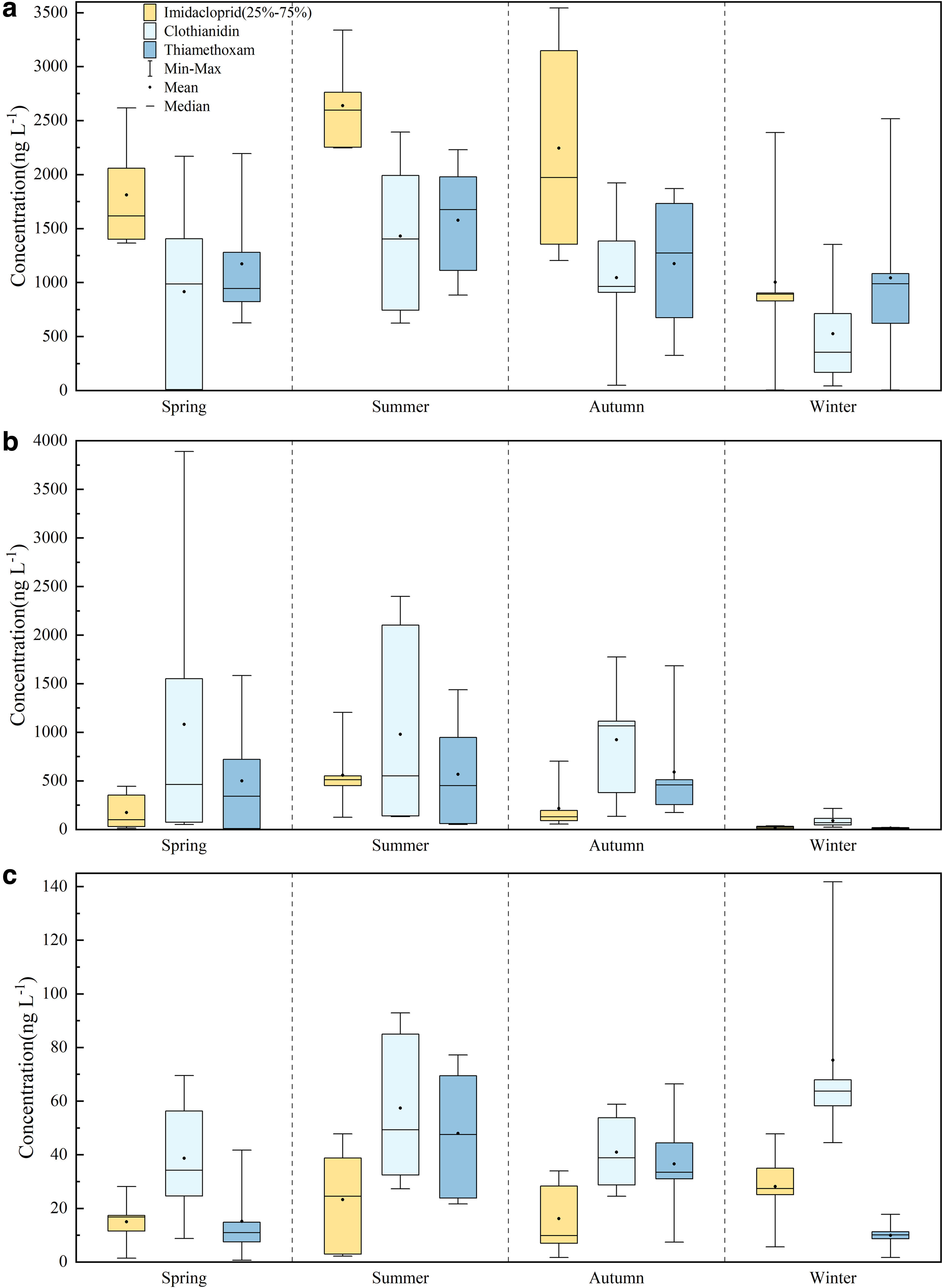
Spatiotemporal distribution of neonicotinoids in surface waters of Qilu Lake Basin.
Regional differences of neonicotinoid concentrations were also observed in surrounding rivers. Hongqi River, the largest river flowing into Qilu Lake, witnessed the increasing concentrations of imidacloprid from upstream to downstream. Similar conclusions were carried out in previous surveys located in the Huangpu River and the Pearl River (Xu et al, 2020; Zhang et al, 2019). This trend could be attributed to the agricultural activities along the river. However, for clothianidin and thiamethoxam, the highest concentrations were detected in the midstream and decreased in the downstream, which might be attributed to the variant application frequencies among different compounds. An interesting phenomenon was that the concentrations of three neonicotinoids in winter were almost undetectable in the midstream, but an extremely high concentration of thiamethoxam was observed in the upstream. It might be ascribed to the little precipitation in winter, resulting in poor flowability of substances in rivers.
The concentrations of all neonicotinoids in waters of the lake shore were higher in the west shore (S1–S8) than the east shore (S9–S12). This trend corresponded to the land use in Tonghai County, where farmlands are mainly concentrated on the south, west, and north sides of Qilu Lake (Zhao et al, 2019). Sampling sites S5–S6 were located in the southeast shore, with no river flowing into these regions, accompanied by the stable low concentrations of neonicotinoids.
The concentrations of neonicotinoids in Qilu Lake sharply decreased compared with those in surrounding rivers and in waters of the lake shore, which is similar with the conclusions carried out by the previous surveys (Li et al, 2021; Wang et al, 2021). In addition, owing to the large volume of water and the corresponding dilution capacity, the fluctuations of neonicotinoid concentrations were insignificant in Qilu Lake, which was different from the other two regions (Chen et al, 2022; Xu et al, 2020).
Seasonal distribution
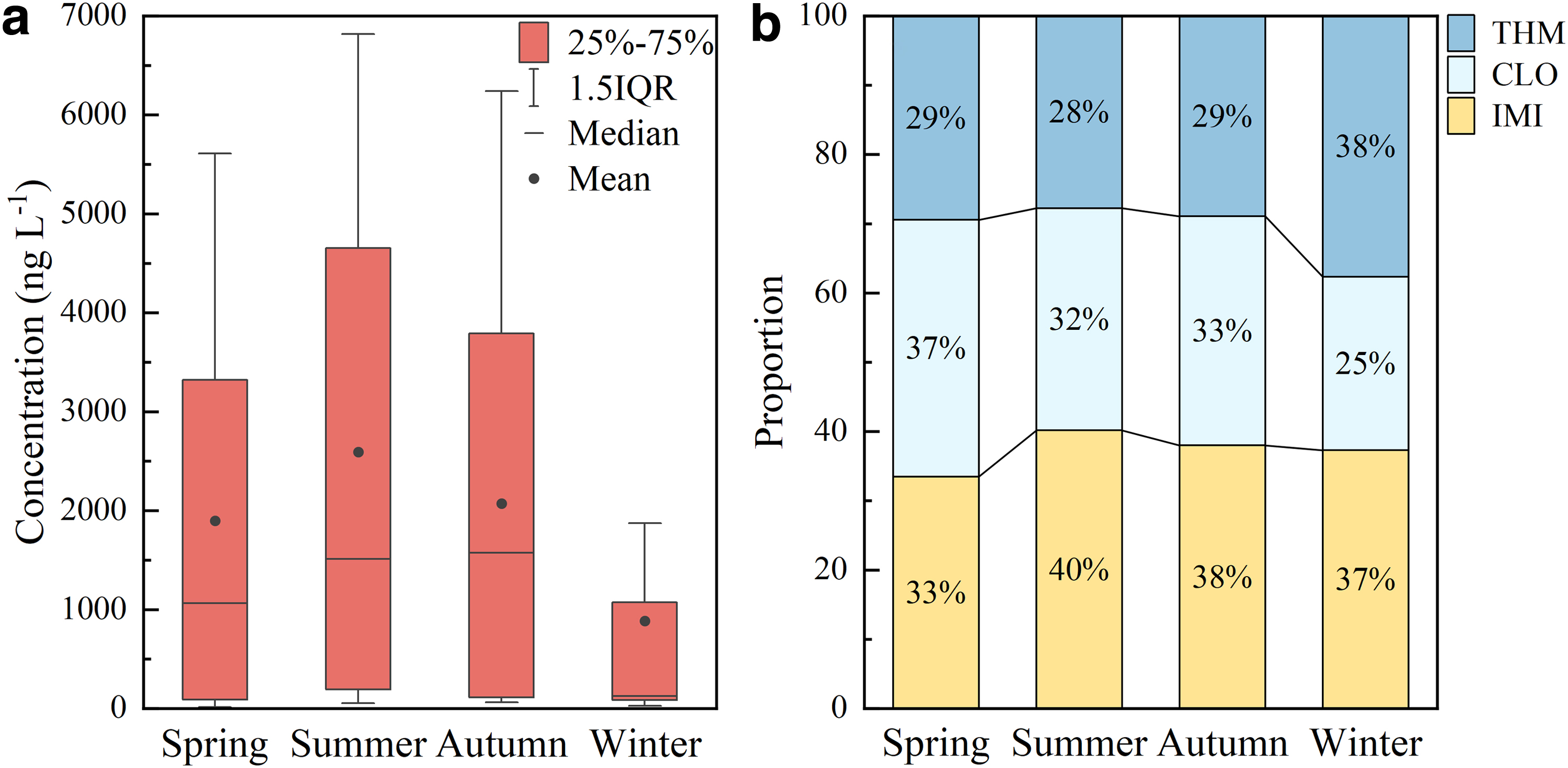
According to Figs. 2 and 3a, the neonicotinoid concentrations increased from spring to summer, and then decreased from summer to winter. As given in Fig. 3a, it could be seen that the highest and the lowest concentrations were observed in summer and in winter, respectively (p < 0.05). And there was no significant difference between spring and autumn (p > 0.05). It can be inferred that summer is a critical season with intensive application of insecticides. In addition, heavy precipitation as well as strong surface runoffs in this season intensified the migration process of these compounds from farmlands to waters. On the contrary, the intensity of agricultural activities in winter was relatively low, which could explain the lowest concentrations in this season. The proportions of these three neonicotinoids were stable in spring, summer, and autumn (Fig. 3b). However, the proportion of clothianidin declined significantly in winter (25%), and at the same time the proportion of thiamethoxam increased to 38%. This change may relate to the low water flow velocity in winter and the different Kow values of these compounds (clothianidin>imidacloprid>thiamethoxam).
Ecological risk assessment
The RQ values of the detected neonicotinoids were calculated for each sampling site and for each season based on the concentrations detected and the toxicity data available (Fig. 4). The calculated AHC5, HC5, and PNEC values of three neonicotinoids are given in Table 3. Summer was selected as a representative season with the highest concentrations of neonicotinoids, to evaluate the spatial variations of the potential ecological risks in Qilu Lake Basin.
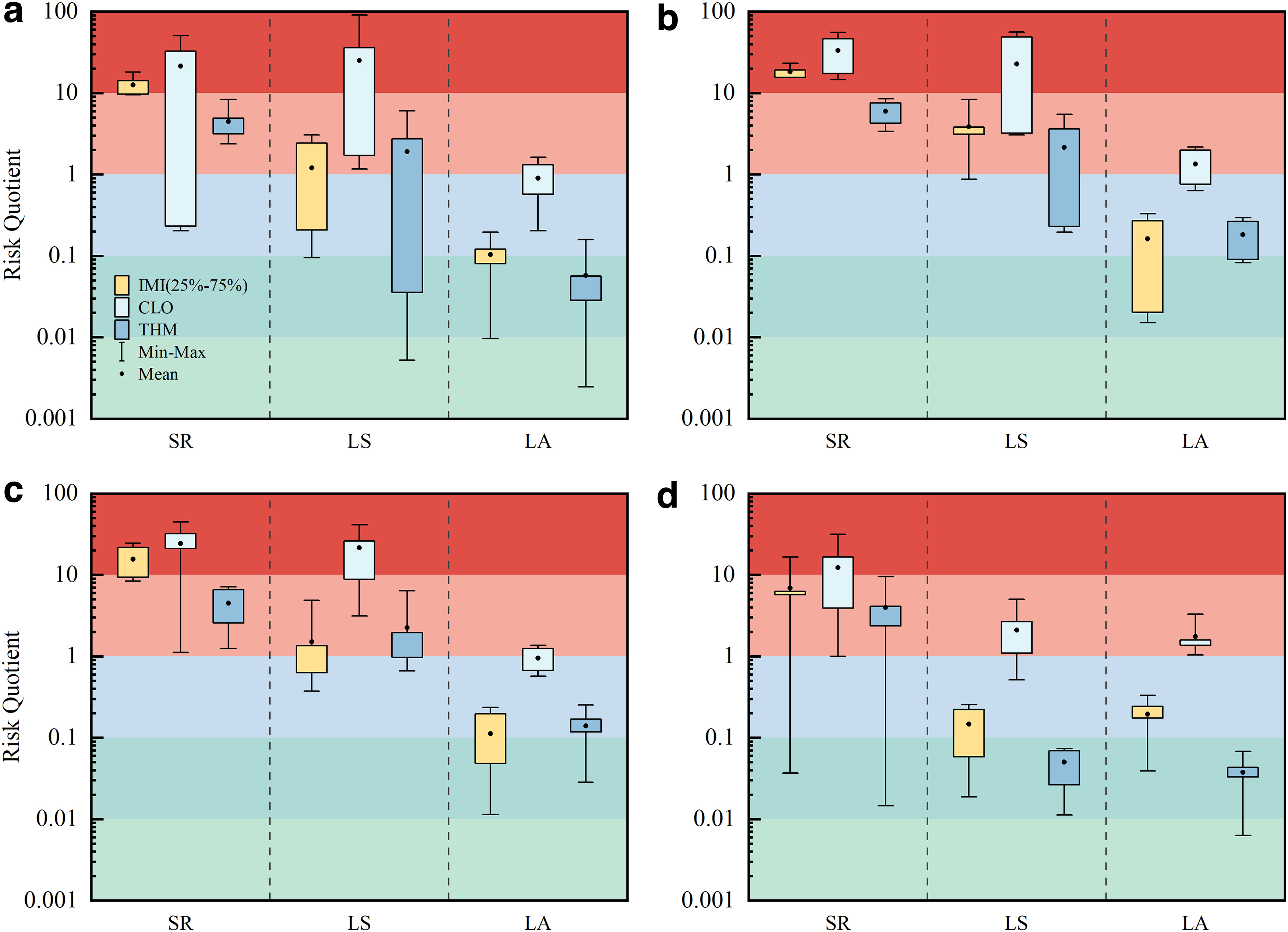
Spatiotemporal variations of RQs of the detected neonicotinoids in
Parameters for Calculating Risk Quotients
AHC5, concentration at which 5% of aquatic species are exposed to acute toxicity; AF, appropriate assessment factor; HC5, compound concentration at which 5% of aquatic species are exposed to chronic hazards; PNEC, predicted no-effect concentration.
As given in Fig. 4b, high risks and above were found for all three neonicotinoids in surrounding rivers, among which imidacloprid and clothianidin posed very high risks to the aquatic organisms. Clothianidin deserved the most attention with RQmean = 33.28 compared with imidacloprid (RQmean = 18.25) and thiamethoxam (RQmean = 6.00). In waters of the lake shore, imidacloprid and clothianidin posed high risks to the aquatic organisms, whereas thiamethoxam posed median to high risks. No sampling site was at a low-risk level or below. It should be noted that some sampling sites in the southern sites were at very high risks owing to the relatively high concentrations of clothianidin in these regions. In addition, the risk levels were at downward trends in waters of the lake shore, compared with those in surrounding rivers, and the RQmean of imidacloprid (3.86), clothianidin (22.76), and thiamethoxam (2.16) decreased by 79%, 32%, and 64%, respectively.
In Qilu Lake, lower risk levels were observed owing to the significant dilution of the neonicotinoid compounds. The RQ values of imidacloprid and thiamethoxam ranged from 0.02 to 0.33, indicating low to median risks. However, there were still high-risk areas caused by clothianidin, with RQ values of 0.63–2.16. It is noteworthy that the RQ values might be slightly underestimated because of the concentration loss during pretreatment processes as mentioned previously. As the results demonstrated in the study conducted by Xu et al (2020), the ecological risk levels in the lake area of Taihu Lake were lower than those in Huangpu River, which was akin to the spatial variations in this study.
Overall, neonicotinoids seriously threatened the aquatic organisms and the aquatic ecosystem in Qilu Lake Basin. Our previous study (Chen et al, 2022) also showed that most organochlorine pesticides might pose high risks to Qilu Lake Basin. Thus, these high-risk pesticides deserved more public attention. In addition, no simple positive correlations were observed between neonicotinoid concentrations and risk levels. Clothianidin could pose high and even very high risks to aquatic organisms in most cases, but the corresponding concentrations were not always at the highest levels, which caused by its high toxicity to arthropods and the low PNEC values (43.00 ng/L).
The PNEC values of the neonicotinoids in some other studies (Mahai et al, 2019; Naumann et al, 2022; Wang et al, 2021) showed significant differences compared with those in this study (Table 3). This discrepancy could be attributed to the representative species and the toxicity database selected. Naumann et al (2022) adopted chronic PNEC values derived from one fish and one crustacean species only, whereas Wang et al (2021) calculated the PNEC values using the toxicity data of two to three species from different trophic levels. Mahai et al (2019) obtained the toxicity data of fish and aquatic invertebrates from the Pesticide Properties Database. These articles showed feasible ways to evaluate the ecological risk by particular species. In this study, to ensure comprehensive results of the risk assessment, toxicity data of 17–50 species from different trophic levels were adopted to calculate the PNEC values for the three neonicotinoids.
Seasonal variations of RQ values of the three neonicotinoids were also analyzed in this study (Fig. 4). It was found that the risk levels assessed in spring and in autumn were similar with those in summer. However, the RQ values of imidacloprid and thiamethoxam in waters of the lake shore in winter dropped significantly compared with the other three seasons, which indicated low to median risks, and this phenomenon can be ascribed to the low concentrations (<200 ng/L) of the two neonicotinoids in winter. The fluctuation of RQ values in surrounding rivers could be attributed to the instability of corresponding concentrations.
Conclusion
In this study, high concentrations of three neonicotinoids in surface waters of Qilu Lake Basin were observed. The spatial distribution of the neonicotinoids showed a decreasing trend from the surrounding rivers to Qilu Lake. Seasonal characteristics were also identified, with the highest concentrations occurring in summer, followed by spring and autumn, and the concentrations in winter were the lowest. This phenomenon could be explained by the intensive application of insecticides and of the heavy precipitation in summer, whereas the surface runoff in winter was relatively weak. Imidacloprid and thiamethoxam presented high risks to the aquatic organisms in Qilu Lake Basin, and clothianidin was the most risky neonicotinoid, which was caused by its low PNEC values and high toxicity. Therefore, it was strongly suggested that the application of neonicotinoids for crops should be controlled by the local government to protect the ecosystems. In addition, to better understand the environmental impacts of neonicotinoids, further research could pay more attention to human health risk assessment and the removal processes (including biodegradation, photodegradation sedimentation, and adsorption) of neonicotinoids in Qilu Lake Basin.
Footnotes
Acknowledgments
The authors thank Yunnan Construction and Investment Holding Group Co., Ltd for the assistance in field investigation and sampling.
Authors' Contributions
J.L.: Conceptualization, data curation, formal analysis, investigation, visualization, writing—original draft. C.C.: Methodology, software, formal analysis, investigation, writing review and editing. C.B.: Data curation, software. W.Z.: Validation. L.M.: Supervision, resources, project administration, funding acquisition.
Author Disclosure Statement
No competing financial interests exist.
Funding Information
This work was financially supported by the government and social capital cooperation (PPP) project for ecological construction of Qilu Lake National Wetland Park in Tonghai, Yunnan (QT[2020]THXQ11), the National Science and Technology Major Project of China (2018YFC1803103), and Beijing Environment Foundation for Young Talents (BEFYT). The authors declare that there are no conflicts of interest.