







Abstract
Due to historical racial segregation, people of color are disproportionately exposed to particulate matter (PM) air pollution. Joppa, a historic Freedman’s town and predominantly African American and Hispanic community in Dallas, Texas, is surrounded by multiple air pollution sources. Using a community-based participatory research approach, the Joppa Environmental Health Project was formed in 2020 with the primary objective of determining community perceptions of air quality in Joppa and assessing general health status through a co-developed household survey. A Community Steering Committee (CSC) led numerous engagement events and organized block captains to administer a household survey from May to October 2022. Additionally, neighborhood-level fine particulate matter (PM2.5) concentration data from three local air monitors were publicly accessible from the SharedAirDFW network. A high neighborhood survey response rate (51%) revealed that the majority of respondents (62%) rated the air quality in Joppa as poor or very poor. 83% of respondents reported that air pollution in Joppa had made them or their family members sick. 40% of participants reported they avoid exercising outdoors and opening their windows due to concern about air pollution. A high percentage of survey respondents had been diagnosed with lifetime asthma (18%). Air monitoring data indicated potentially elevated levels of PM2.5 in Joppa. Overall, the application of this framework facilitated robust community engagement and resident-led research to address a critical neighborhood concern. Subsequently, an asphalt batch plant voluntarily relocated operations in June of 2023. The CSC organized a new group known as Justice for Joppa/Justicia para Joppa to sustain the environmental justice momentum created by this work that will target local zoning and land use policies.
INTRODUCTION
In recent years, university-community partnerships that employ community-based participatory research (CBPR) methods to address health disparities in underrepresented groups have grown.1,2,3,4,5 CBPR projects are particularly encouraged in environmental justice (EJ) communities, which are defined as neighborhoods that experience disproportionate exposures to pollution.6,7,8,9 Studies demonstrate that exposure to air pollution, specifically fine particulate matter (PM2.5), is associated with several adverse health effects, including cardiopulmonary diseases, lung cancer, and adverse birth outcomes. 10 Due to historical racial segregation and the proximity of EJ communities to industry, there is a critical need to characterize the environmental and health disparities experienced by the residents of these communities. This is apparent in Dallas, Texas, where citizen concerns about air pollution from local point sources spurred the creation of a collaborative community-based project in a predominantly African American and Hispanic neighborhood known as Joppa (also pronounced Jopp-ee). Historically and culturally defined as a Freedmen’s Town, Joppa is home to a population of ∼4,230 residents. 11 Due to nearby industrial zoning, the residents of the Joppa community are surrounded by multiple pollutant sources.
In 2020, the Joppa Environmental Health Project (JEHP) was formed with the primary objective of eliciting community perceptions of air quality in Joppa and assessing general health status through a codeveloped household survey. In this work, we describe our community-engaged approach and the creation of the JEHP through partnerships and coordination with local community organizers. Successful outcomes from this project include the closure of a local asphalt batch plant near Joppa and the formation of an organized group to continue nascent EJ efforts. Last, we detail the modification of this project for application in a similar EJ community in West Dallas known as the “Singleton Corridor.”
MATERIALS AND METHODS
Study area
A map of the Joppa community in southern Dallas is provided (Fig. 1). It is bordered by the Trinity River on the north and the east, Highway 12 on the south, and Interstate 45 to the west. Also, on the west there are large railyards and several industrial pollution sources, including an asphalt batch plant and an asphalt shingle factory. A concrete batch plant is also located to the south of Joppa. Three low-cost sensors, part of the SharedAirDFW network described below, were located on Hull Avenue and along Carbondale Street.
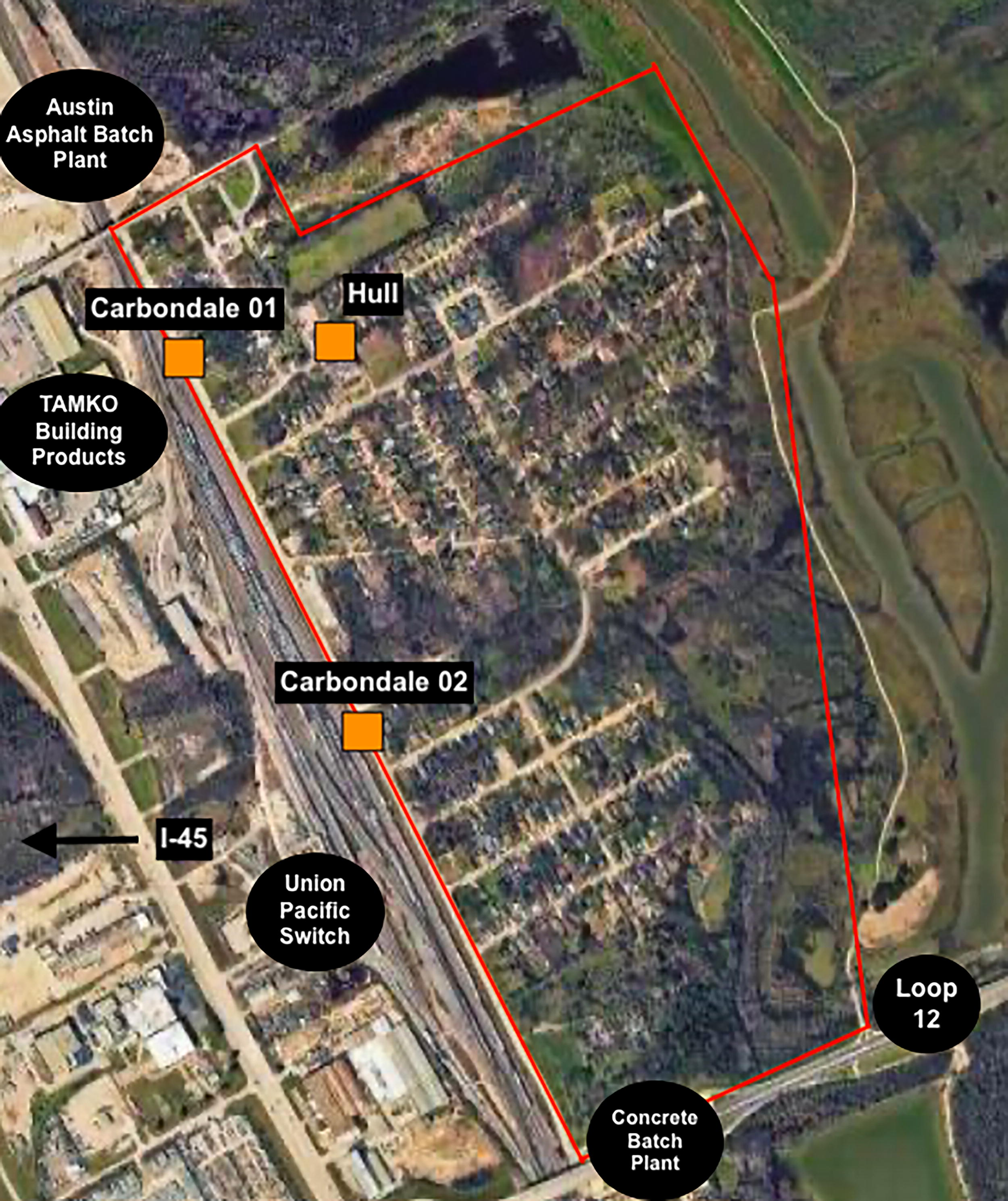
Map of Joppa, south Dallas, TX. The circles represent local point sources of pollution, and the squares represent low-cost PM2.5 sensors from the SharedAirDFW Network.
Thread of community-engaged approach
The study was conducted from 2020 to 2023. In 2017, the Dallas environmental justice grassroots organization Downwinders at Risk began working with residents in Joppa due to concerns about proposed additional batch plants. Based on PM measurements from portable monitors, Downwinders at Risk helped prevent the permitting of these proposed batch plants. This initial work signified the need for routine local PM monitoring, as well as addressing environmental disparities. In 2019, Texas A&M University researchers contacted Downwinders at Risk about initiating a CBPR project in Dallas based on known health disparities in Southern Dallas.18 Downwinders at Risk and Texas A&M researchers started working with a group of Joppa residents to formulate initial ideas around a project. In 2020, the team received funding to establish the JEHP, which was fully shaped by a Community Steering Committee (CSC).
Prior to the initiation of the JEHP, a logic model was created by the team that detailed project inputs, activities, outputs, and outcomes (see supplemental material). A thread of community-engaged approach was employed throughout the JEHP, and the CSC was involved in every step of the project, including design of the project logo, planning community engagement activities, development of project goals, survey design, data collection, and results dissemination (Fig. 2). The CSC was comprised of local African American and Hispanic residents representing churches and organizations. The CSC developed detailed working documents to set clear rules for involving key local community organizations and outlined the decision-making process for study protocol activities. Through this process, a foundation was laid for increased equitable collaboration and the establishment of a shared culture. The role of the CSC evolved from an “advisory” capacity toward sharing “governance” of the project.
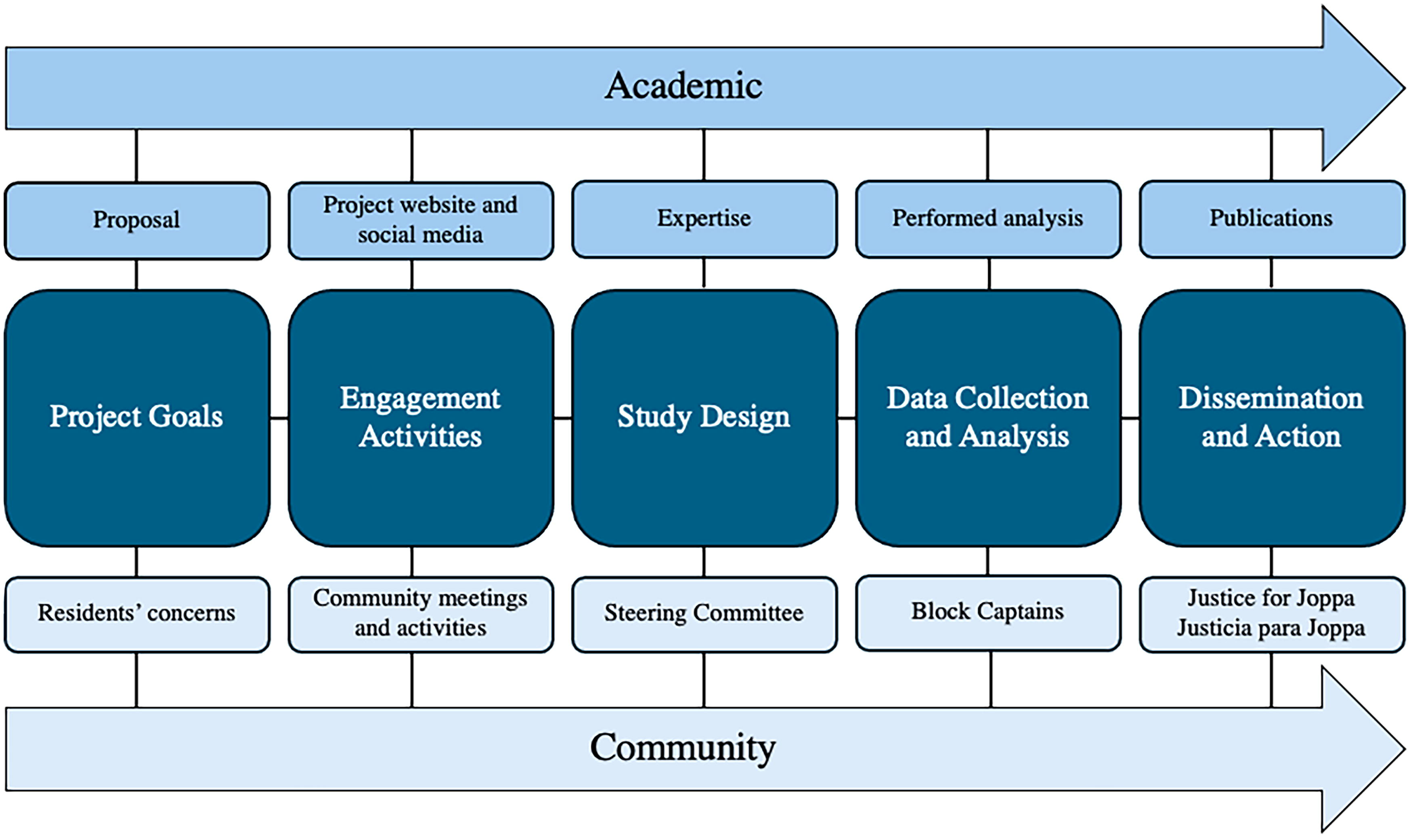
Thread of community-engaged approach throughout the Joppa Environmental Health Project (JEHP), highlighting university-community partnerships.
This committee met monthly and contributed guidance and cultural insight to all project activities and study tools. In the early phase, the research team met routinely with the CSC to develop a final research proposal. Throughout the duration of the project, the CSC met monthly and regularly interacted with the research team to discuss the survey development, data collection processes, and result dissemination strategies. All project-related documents received CSC approval before implementation in Joppa.
In addition, the research team provided multiple resources and options (e.g., online program website, social media, email address, and principal investigators’ telephone numbers) to allow residents to voice their concerns, questions, and comments about the study. The researchers and community partners addressed issues raised and provided feedback and answers during community engagement meetings.
Community engagement
To promote project activities and upcoming events, a project website and social media page were created where residents were able to access information about the JEHP. Several community engagement events were held to strengthen community interest and trust in the JEHP. The CSC held its first open house event in April 2021 and a community meeting in September 2021 to facilitate community engagement with the JEHP. In October and December 2021, JEHP partnered with a local childhood asthma organization known as Positive Breathing (Asthma Chasers) 12 and Parkland Hospital, a Dallas public hospital, to offer pulmonary function tests (spirometry screenings) and asthma education at the JEHP’s Free Asthma Clinic Day. The asthma spirometry screenings enabled participants to perform a variety of breathing exercises under 15 minutes to determine how well a participant’s lungs work. Additionally, at the JEHP’s Free Asthma Clinic Day, with the assistance of local organizations, the CSC provided free pony rides for children as well as free, fresh produce to all event attendees.
Research tools: Community household health survey and local air monitoring
From May to October 2022, a community household health survey was administered in Joppa. Prior to implementation, the survey was refined through several iterations using feedback from the CSC. The final product consisted of 30 pages (n = 66 questions total) where survey domains included (a) perceptions of air quality/pollution in Joppa, (b) general health status, (c) respiratory health status, and (d) demographic information. The survey focused on self-reported short-term health harms, with a focus on respiratory illnesses such as asthma and chronic obstructive pulmonary disease (COPD). The CSC worked with Joppa residents as block captains. Each captain received Collaborative Institutional Training Initiative training prior to administering the survey. The survey was offered both online and on paper in both English and Spanish. Only one member of each household was permitted to complete the survey; however, questions regarding the health status of their family members were also asked. Survey participants were given a $10 gift card following completion of the survey.
Previously, in 2020, Downwinders at Risk partnered with the University of Texas at Dallas (UTD) SharedAirDFW, an air monitoring network that consists of custom-built PM air monitors distributed throughout the Dallas/Fort Worth (DFW) area. Three SharedAirDFW monitors were placed in Joppa, where PM2.5 concentrations were measured. According to the City of Dallas, monitors were not permitted on public property; therefore, Downwinders worked directly with the Joppa residents to house SharedAirDFW monitors on private property. One monitor (Hull Ave.) was placed at the New Zion Missionary Baptist Church, and two monitors (Carbondale 01 and Carbondale 02) were hosted on the properties of participating residents. Real-time results were displayed on an interactive website that was available to the public.
RESULTS
Community engagement
As previously mentioned in Figure 2, members of the Joppa community were involved in every step of the project. Project goals originated from Joppa residents who were concerned about their health due to the proximity of local PM-emitting industries. Prior to beginning development of the logic model, the CSC conducted multiple listening sessions in the community to outline project goals and design community engagement activities.
All community engagement activities were held at New Zion Missionary Baptist Church, located in Joppa. Using one central community location to host the JEHP community events and meetings provided familiarity with the project and increased the engagement of Joppa residents. The open house served as the first community engagement event where food, plant giveaways, and health-related conversations with the JEHP-affiliated research scientists were provided. Over 40 volunteers signed up to assist the JEHP with future activities as a result of this event. Free asthma spirometry screenings and asthma education for local residents were provided at the JEHP Free Asthma Clinic Day (Fig. 3). In addition, the Oak Cliff Veggie Project provided fresh produce free to all event attendees.
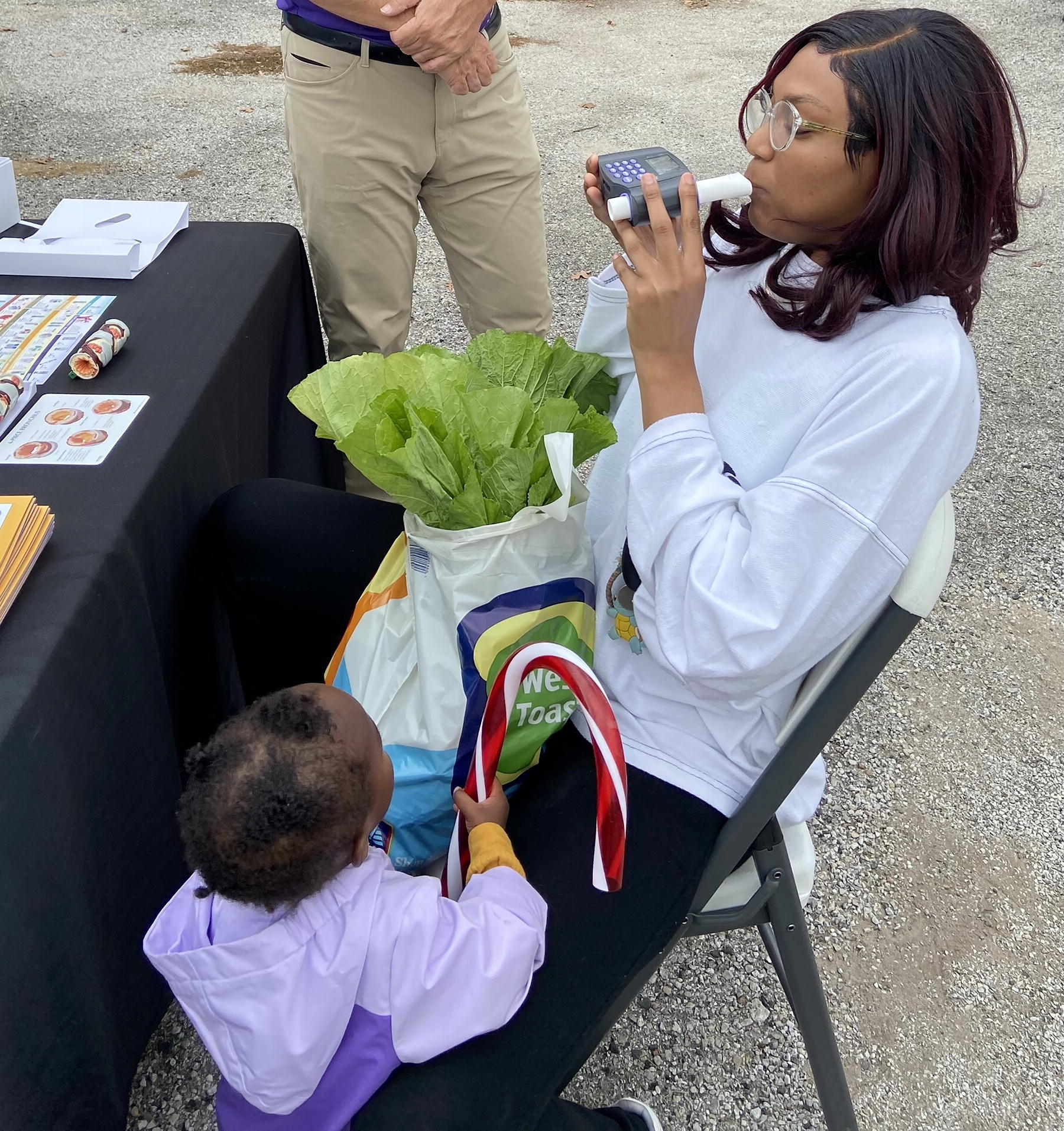
Implementation of community engagement activities. Joppa resident participating in a pulmonary function test (asthma spirometry screening) provided by Parkland Hospital at JEHP’s Free Asthma Clinic Day.
To engage the Latinx community in Joppa, especially monolingual Spanish speakers in our CBPR project, our CSC included bilingual Latinx residents. These representatives actively participated in designing culturally appropriate engagement activities and were involved in the decision-making process. They also reviewed and approved all Spanish documentation related to this project. In addition, the team provided real-time translation services during each community outreach and engagement activity. A Spanish translator was present on-site to conduct real-time translations, and monolingual Spanish speakers were provided with ear translators to ensure they could fully understand and participate in the discussions. This ensured that all Spanish-speaking residents were informed about the project’s progress and results.
Furthermore, we conducted outreach efforts specifically targeted at the Latinx community to encourage their involvement and ensure that their voices are heard. We organized focus groups and feedback sessions in Spanish, where community members expressed their concerns, suggestions, and feedback in a comfortable and supportive environment. By doing so, we aimed to build trust and foster a sense of ownership among the Latinx residents, ensuring that their perspectives are integrated into the project.
Community household health survey
The CSC guided the study design through a series of bidirectional communications, and block captains were recruited and trained to administer the survey. Empowering residents to connect with study participants and administer the survey yielded a high survey response rate (51%). The demographic profile of survey respondents is provided, where 200 households participated in the survey (Table 1). The majority of survey respondents were female (57%; n = 113), aged 35–49 (32%; n = 63), Black/African American (65%; n = 130), and held a high school diploma or GED (43%; n = 85). As regards health status, a large percentage of survey respondents were non-smokers (69%; n = 138) and obese/overweight based on body mass index (73%; n = 146). It should also be noted that the majority of respondents reported having lived in Joppa between 2 and 5 years (36%; n = 71). To answer the first domain of the JEHP survey (perceptions of air quality/pollution in Joppa), 62% of survey respondents reported that the air quality in Joppa was poor or very poor. 83% reported that air pollution in Joppa made them and their families sick. When asked about what they perceived as the source of air pollution, 93% of survey respondents indicated that nearby industry impacted air pollution in Joppa, and 58% reported that they were exposed to high or very high levels of traffic pollution. In addition, 78% of respondents reported that exposure from factories and smokestacks was high or very high, and 82% of survey respondents reported high or very high exposure to pollution from trains. Notably, 40% of survey respondents reported avoiding outdoor exercise and opening their windows due to concerns about air pollution.
Demographic Profile of the Joppa Environmental Health Project (JEHP) Survey Respondents, Dallas, Texas, 2022
Percentages may not add to 100%.
Body mass index (BMI) was calculated using the Centers for Disease Control and Prevention (CDC) standard BMI calculation.
When asked about their respiratory health status, 25% of survey respondents reported wheezing and whistling without a cold, and 17% reported having a cough, a cough with phlegm (without cold), and having a respiratory disease in the last 12 months. We found a high percentage of survey respondents diagnosed with lifetime asthma (18%), where 7% of this group reported having experienced an asthma attack in the past 12 months. Coincidentally, almost half of survey respondents (46%) believe that air pollution exacerbates asthma and other respiratory diseases, while more than half of survey respondents (52%) reported believing that air pollution may have caused or worsened their allergic reactions. Lastly, one in three survey respondents (35%) were at medium or high risk of COPD.
Local air monitoring
Community residents were able to access the air pollution dashboard provided by SharedAirDFW throughout the study period (Fig. 4A). In addition, the dashboard provided a time-series graph of hourly PM2.5 concentrations wherein community residents could select their desired date range (Fig. 4B and 4C). Carbondale 01 and Carbondale 02 were located on Carbondale Street, closer to proximal industries, whereas the Hull monitor was located in the interior of the Joppa community (refer to Fig. 1). Daily PM2.5 averages were also derived from the measurements of the SharedAirDFW monitors (n = 3) in Joppa from May 1 to September 27, 2022. Raw daily PM2.5 averages ranged from 1.58 to 56.19 μg/m3 (Carbondale 01), 0.82 to 70.90 μg/m3 (Carbondale 02), and 1.93 to 29.99 μg/m3 (Hull).

SharedAirDFW Network dashboard. Community residents had access to the SharedAirDFW dashboard
Partnership outcomes
To expand on the critical aspect of the work led by the JEHP team, advocacy efforts that were directed against Austin Industries, the owner of a major asphalt batch plant in Dallas, showcase a significant achievement in environmental activism and public health advocacy. In March 2023, the efforts of the JEHP to halt the operation of this industrial plant were focused on utilizing the public engagement aspect of the permit renewal process. By utilizing a strategic press release and a targeted social media campaign, the JEHP mobilized support from Joppa and its surroundings. 13 This community-driven approach not only brought attention to the environmental and health concerns but also underscored the power of collective action in influencing corporate decisions. The termination of plant operations in June 2023 demonstrates the potential impact of informed and persistent advocacy in achieving tangible outcomes for community health and well-being. The formation of Justice for Joppa/Justicia para Joppa from established partnerships represents a pivotal advancement in community-driven advocacy efforts. By transitioning into an official advocacy group, the members of Justice for Joppa/Justicia para Joppa will begin to employ a structured approach to challenging and potentially reforming local zoning and land use policies and deindustrializing Joppa. This strategic focus on policy change underscores the critical relationship between organized community action and sustainable environmental justice.
With the new advocacy coalition, our research team will continue to provide data expertise and analysis as well as lead or assist with grant applications in collaboration with our community partner as needed. The process from research to advocacy involves roles’ shifting, and academics’ role will change to a more supportive role in the advocacy coalition. With the current translation pathway from research to advocacy, potential challenges that may occur include differing priorities of agenda, communication gaps among different parties, sustaining engagement, and resource constraints. These challenges will be addressed through collaborative and transparent efforts. This dynamic partnership aims to ensure that academic expertise continues to support the community’s advocacy goals.
Overall, presenting project findings and future actions to the Joppa residents enhanced transparency and empowered community involvement, ensuring that future advocacy efforts are grounded in community needs and perspectives. This multilevel dissemination strategy, employing bilingual presentations and publishing an executive summary of results on the JEHP website (see supplemental material), exemplifies a comprehensive approach to advocacy, raising awareness, and fostering broad-based support for environmental justice initiatives.
DISCUSSION
Benefits and challenges of CBPR
CBPR partnerships can play a significant role in impacting health disparities and empowering positive outcomes in underserved communities near industrial facilities.14,15,16,17,18 Salimi et al. conducted a systematic review of CBPR articles where they found that collaboration among researchers, community partners, and organizations led to community-level action to improve the health and well-being of marginalized communities. Their results also showed that effective CBPR enhances the capacity of communities to perform research and builds their leadership skills. These same outcomes were observed in the JEHP, where Alicia Kendrick, a young resident of Joppa, attended one of our community engagement events, became heavily involved in our project, and was ultimately named the chair of the JEHP’s CSC. We believe that her involvement as a Joppa resident increased engagement efforts from other Joppa residents as well.
Authentic CPBR projects should incorporate grounding research with community-tailored opportunities for change and strong community partnerships. 19 We believe that having a community partner who already had an established relationship with Joppa allowed for us, as the university partner, to be accepted by and experience strong participation from the community. We worked hand-in-hand with Downwinders and our CSC in every aspect of our project, from creating our project’s goals, community engagement events, and health survey to the final presentation to the community. Boston et al., 2023, also noted that authentic CBPR projects should include flexibility in research processes as well. Occasionally, we had to adjust our timeline for data collection due to the needs and schedule of the community.
We were also flexible in adhering to the changing demographics of the community. Our team involved a CBPR researcher to review all of our English and translated Spanish files (e.g., study protocols, surveys, educational materials, result dissemination sheets) to ensure that all project-related documents were culturally and linguistically appropriate for Latinx residents. In addition, we provided a Spanish translator for our final community meeting where we presented the findings of our project.
While the literature documents the benefits of CBPR projects, challenges and barriers to research participation have also been noted. Lack of community background and cultural knowledge can lead to mistrust between community partners and researchers. 20 Hicks et al. noted that research institutions should never assume trust with a community as a given but instead should build trust through actions. 21 The JEHP did so through our community engagement events, where residents were given the opportunity to ask questions and provide feedback about our project. As previously mentioned, a project website and social media page were created to provide Joppa residents with easy access to the JEHP team and project information, as creating and maintaining bidirectional communication and collaboration can lead to lasting relationships with community partners. 22
Funding can also serve as a challenge for CBPR projects as well. Fleming et al. provide recommendations on the future of CBPR that include modifying health research funding to center priorities of racially marginalized communities and distributing research funds equitably across academic and community institutions. 23 We were very transparent about our funding, and we displayed the percentage of funds allocated to our non-profit community partner during our final community meeting.
Rickenbacker et al. also noted that another challenge inherent to CBPR projects is a lack of community input in the decision-making process. 24 To cultivate a space of shared power, our community partner and CSC were heavily involved as well as influenced the entire project. They were actively involved in each stage of project development, implementation, and dissemination. Based on the initial equitable partnership between the research team, community partners, and CSC, we shared leadership and governance. All study protocol-related activities initially developed by the researchers were discussed with the community partner and community liaison in the weekly team meeting and then submitted to the CSC for review and approval.
In addition, this project involved our community partner, Downwinders, from the beginning stages, including defining the initial research priorities and questions. Our community partner shared an interest in the selected priorities and was provided considerable opportunities for input and decision-making at all stages of the research. Both our community partner and CSC played an active role in (1) the design and implementation of outreach, recruitment, and retention activities; (2) the development of survey questions; and (3) guiding data collection formats and activities and the development of data collection instruments. For example, the involvement of our community partner and CSC in decision-making meetings led to more feasible data collection methods (expanding from online surveys only to both paper and online surveys), key investigations of areas initially not included by the researchers, and the removal of unnecessary questions, ensuring cultural appropriateness of language and methods.
The community partner and CSC had limited involvement in the data analysis stages. However, our community partner and CSC were actively involved in the dissemination of study findings, including presentations at community meetings, publication preparation, information newsletters, social media announcements, and media outreach. Community partners, including the community liaison, are also provided the opportunity to be involved as co-authors and co-presenters on publications and national conference presentations, to the extent that they are interested.
Community participation and health status
Strong community engagement efforts can increase community participation. 25 A 51% survey response rate was achieved due to sustained community engagement events and efforts from the members of our CSC. Overall, the survey provides neighborhood-level data about the perceptions of Joppa residents of the air pollution in their community and their respiratory health status. Li et al. examined the association between built environmental characteristics and asthma prevalence in North Texas, where they found hotspots or clusters of adult asthma prevalence and disparities in South Dallas. 26 Similarly, we found that the lifetime asthma rate of Joppa survey respondents was twice as high as DFW and Texas residents (7.0% and 8.4%, respectively). This data provides more evidence that environmental health disparities exist in underserved communities in Dallas.
The work of CBPR partnerships has increased to address air quality issues in Black and Brown neighborhoods. An air monitoring campaign and community survey were done in three minority communities that live near metal recycling facilities in Houston. 27 To find sustainable solutions to metal recycling-related air pollution, they utilized CBPR methods to create an action plan for reducing metal recycling-related air emissions, provided environmental health leadership training and information to residents on addressing environmental health concerns, and improved communication between residents, metal recyclers, and city officials.
Commodore et al. reported several ways of achieving agreement between expected and observed outcomes of CBPR air monitoring that include involving the community in every step of the project, addressing challenges, understanding benefits and limitations, and recognizing potential areas of debate. 28 Air monitoring data from the SharedAirDFW network indicated potential elevated levels of PM2.5 in Joppa. The nearest active regulatory PM2.v5 monitor is nine miles from Joppa. Although only three air monitors were placed in the neighborhood, findings suggest that there is a need for a permanent, local air monitoring network in the Joppa community.
Lessons learned
Many lessons were learned from this experience. First, community-based work can inherently involve conflict, and the JEHP was not without any disagreements. Being co-led by both academic and community partners, this collaboration has spanned the entire project lifecycle, including research design, management, community engagement, data collection, and dissemination of results. Specifically, we used a co-leadership approach. Our management structure includes (1) a joint decision-making process: comprising members from both the academic team and the community organization, responsible for major decision-making and project oversight; (2) a CSC/Advisory Board: consisting of local residents and stakeholders, this board guided the project to ensure it met community needs and priorities; and (3) regular team meetings: held weekly to discuss progress, address challenges, and make collaborative decisions.
Our research team relied on the governance of the CSC and their established structure that centered community voices. Next, by holding meetings and events at the New Zion Missionary Baptist Church, the JEHP gained visibility in the middle of the neighborhood, as well as provided consistency. However, a limitation is perhaps not reaching members of the community through other churches or organizations. Notably, Joppa lacks a common community center for these types of events. Efforts are ongoing to revitalize an old school for these purposes. The established funding structure also relied on direct funding to the university, with a subaward to Downwinders. This structure perpetuates traditional power dynamics. Downwinders was able to receive additional funding for community engagement from Communities Foundation of Texas. Through a clear accounting of where resources were used, our team was able to mitigate potential concerns. However, in the future, we recommend more opportunities for shared financial governance for CBPR projects. In addition, low-cost sensors offer advantages in communities seeking local air quality data; however, these low-cost sensors can have varied performance. Comparisons with reference-grade monitors and appropriate calibration models considering temperature and humidity are warranted. Last, CBPR work takes time and sustained effort. A program coordinator helped keep the team on track with routine meetings. Overall, by addressing challenges through structured communication, shared leadership, and resource mobilization, we have been able to navigate the complex power dynamics inherent in a community-university partnership. This approach has strengthened our collaboration and enhanced the impact of our project on community health and environmental advocacy.
Application of the strategies used in collaboration with the JEHP in the “singleton corridor”
Adaptations of this CBPR project will be applied to a similar EJ community located in West Dallas called “Singleton Corridor”—a predominantly low-income, African American, and Hispanic community that is home to several industrial sources of pollution. Singleton United/Unidos will serve as a community partner and will lead the effort in conducting a similar community household health survey.
CONCLUSIONS
This article details the utilization of CBPR methods to facilitate engagement and action-oriented research that explores environmental and health disparities in an EJ community. The formation of the JEHP and the application of scientific research tools to improve community health will provide neighborhood-level data to better inform local air quality and identify potential linkages to adverse health. By equitably collaborating with community residents, partners, and organizers, we believe that the JEHP will influence local health-oriented zoning policies and de-industrialize EJ communities in the City of Dallas.
Footnotes
ACKNOWLEDGMENTS
The authors sincerely thank the Joppa community for allowing them to collaborate on one of the largest environmental health studies in Dallas. They would also like to thank their community partners, Downwinders at Risk, for their sustained community engagement efforts. In addition, they thank the University of Texas at Dallas (UTD) Plano’s SharedAirDFW Network and Dr. David Lary. Lastly, thank their funders, the Robert Wood Johnson Foundation and additional funding from the Communities Foundation of Texas.
AUTHORS’ CONTRIBUTIONS
Conceptualization (A.K., M.O., J.S., E.M., P.M., and N.J.). Formal Analysis (X.F., P.M.). Funding Acquisition (J.S., P.M., and N.J.). Investigation (X.F., A.K., M.O., and E.M.). Methodology (X.F., A.K., M.O., E.M., G.S., P.M., and N.J.). Project Administration (J.S., P.M., and N.J.). Visualization and Writing—original draft (X.F.). Writing—review and editing (X.F., A.K., M.O., J.S., E.M., G.S., P.M., and N.J.).
AUTHOR DISCLOSURE STATEMENT
No competing financial interests exist.
FUNDING INFORMATION
This work was supported by the Robert Wood Johnson Foundation (RWJF) Interdisciplinary Research Leaders Program. N.J. also received support from the National Institute of Environmental Health Sciences (NIEHS) P42ES027704 and P30ES029067.