







Abstract
Pharmacological doses of zinc oxide (ZnO), far in excess of the nutritional requirement for zinc, are commonly added to weanling swine feed to suppress enterotoxigenic bacteria and thereby support piglet weight gains. However, excessive ZnO in the diet has come under scrutiny due to concerns that excreted zinc may accumulate beyond safe levels within topsoil and water supplies, as well as foster antibiotic drug resistance in bacterial pathogens that could then infect livestock and/or humans. Indeed, multidrug-resistant (MDR) Salmonella have been isolated from swine feces, focusing attention on new technologies to protect swine (and ultimately humans) while reducing dietary zinc toward the nutritional requirement. We hypothesized that NutriClayZn (an edible Generally Recognized As Safe substance consisting of low-dose ZnO immobilized on montmorillonite clay) could suppress MDR Salmonella, provide bioavailable zinc, and serve as a novel feed ingredient for weanling swine. NutriClayZn dose–response efficacy and thermal stability were assessed in cultures of MDR Salmonella Choleraesuis. Dissociated elemental zinc was measured under simulated gastrointestinal conditions. NutriClayZn consumption was assessed via ad libitum feeding, with bioavailable zinc calculations according to weanling swine treatment group intakes. Salmonella Choleraesuis (resistant to quinolone, sulfonamide, and aminoglycoside antibiotics) was susceptible to growth inhibition by heat-stable NutriClayZn. Under simulated gastrointestinal conditions, 22.8 µg of elemental zinc were released per milligram NutriClayZn. Furthermore, the rate at which weanling swine consumed NutriClayZn-containing feed (0.6 kg/day) supports fulfillment of the nutritional zinc requirement. These findings encourage future MDR Salmonella pathogen challenge trials, designed with NutriClayZn replacing pharmacological ZnO for control of enterotoxigenic bacteria in swine, as well as potentially eliminating the zinc component of mineral premixtures that are currently added to feed for nutritional purposes.
Introduction
Nontyphoidal Salmonella infections lead to 1.35 million cases of foodborne illness each year in the United States, including 26,500 hospitalizations and 420 deaths (CDC, 2023). These illnesses, often characterized by severe gastroenteritis (Saphra and Winter, 1957), come with a staggering 4.1 billion dollar negative impact on the U.S. economy in the form of lost wages and premature deaths (Hoffman and Ahn, 2021; Hoffman et al., 2015). Although foods are vulnerable to contamination at many points along the supply chain from farm to consumer (CDC, 2024), Salmonella carried by swine (and found in pork products) are thought to be responsible for 8–20% of human salmonellosis cases across the United States and Europe (Berri et al., 2020; USDA, 2020). Moreover, among 2659 Salmonella serotypes (Monte and Sellera, 2020), Salmonella enterica serotype Choleraesuis (hereinafter referred to as Salmonella Choleraesuis) stands out as having its primary reservoir in production swine (Ferrari et al., 2019), while potentially causing sickness in both the porcine host and the human consumer of pork (Soliani et al., 2023). Indeed, Salmonella Choleraesuis has been linked to invasive bloodstream infections and sepsis in humans, with endocarditis and osteomyelitis as the most common inflammatory tissue manifestations (Bäumler and Fang, 2013; Saphra and Winter, 1957; Threlfall et al., 1992).
Historically, prophylactic antibiotics were used in swine feed to prevent bacterial infections and thereby promote animal growth. However, such indiscriminate use of antibiotics is no longer allowed in the United States and Europe because this practice may foster the development of antibiotic-resistant strains of bacteria. Ensuing infections in humans and/or animals would then be especially difficult to treat under existing antibiotic regimens (Armbruster and Roberts, 2018; Dewulf et al., 2022). Strains of Salmonella Choleraesuis (Chiu et al., 2005), as well as other pathogenic microbes derived from swine (Bearson, 2022; Rodrigues et al., 2020), are known to express various forms of resistance to antibiotic drugs. Over the past 5 years, Salmonella Choleraesuis has been identified in human blood samples and found to be resistant to colistin, ampicillin, cephalosporins, sulfonamides, chloramphenicol, ciprofloxacin, nalidixic acid (quinolone), fluoroquinolone, streptomycin, and/or tetracycline (Dos Santos et al., 2020; Oransathid et al., 2022).
Following the regulatory bans on prophylactic antibiotics, industry began relying on pharmacological doses of zinc oxide (ZnO) to prevent infections and promote the growth of weanling production animals. ZnO (as a free chemical) suppresses the propagation of various bacteria in vitro (Pasquet et al., 2014) and has proven generally safe in vivo at levels up to 3000 ppm in feed for weanling pigs (Burrough et al., 2019). Although feed admixtures containing ZnO remain allowable in the United States, pharmacological ZnO (beyond the animal’s nutritional requirement for zinc) has recently been banned in Europe. The European ban was primarily due to concerns that excreted zinc (within manure) could accumulate in topsoil and ultimately exceed environmental compartment safety limits (EMA, 2017). A secondary concern was that excess zinc, unabsorbed from the gastrointestinal tract and excreted in feces, could impact microbes in soil and groundwater and thereby contribute to the threat posed by antibiotic-resistant bacteria (EMA, 2017; Langer, 2022).
In light of concerns around both prophylactic antibiotics and pharmacological doses of free chemical ZnO, swine producers have incorporated enhanced biosecurity measures (Fangman and Zulovich, 2003), while researchers explore alternative interventions (e.g., zinc nanoparticles, probiotics, essential oils, polyphenols) aimed at preventing bacterial infections and supporting normal animal growth. Although some alternatives appear promising, they often do not match the efficacy and/or feasibility attributed to pharmacological ZnO in weanling swine diets (Bonetti et al., 2021). Given that the primary role of ZnO in the diet is to provide zinc nutrition, and antibacterial efficacy is only achieved at levels far above the nutritional requirement (Sampath et al., 2023), we hypothesized that a relatively low dose of immobilized ZnO could satisfy both requirements. Herein, we describe an innovative hybrid of ZnO and montmorillonite clay (NutriClayZn) that is shelf-stable at high ambient temperature yet liberates modest amounts of free zinc under physiological conditions. Moreover, NutriClayZn is lethal against Salmonella Choleraesuis, and it is readily consumed as a feed admixture by weanling swine.
Methods
Montmorillonite clay and chemical reagents
Sodium-rich montmorillonite (MMT) clay originated from the Newcastle Formation (State of Wyoming, USA), and was curated by The Clay Minerals Society (Chantilly, Virginia, USA) with cation exchange capacity of 76.4 mEq/100g. Unless otherwise noted below, chemical reagents were obtained from Sigma-Aldrich (St. Louis, MO, USA).
NutriClayZn synthesis
NutriClayZn was synthesized using Generally Recognized As Safe (GRAS) ingredients via a four-step process, as previously described (Jackson et al., 2025). All experiments below were carried out with NutriClayZn finished by mortar and pestle to a particle size of <212 µm.
Bacterial culture and antimicrobial susceptibility
The isolated Gram-negative swine pathogen, Salmonella Choleraesuis (var kunzendorf 3246 pp), was selected for resistance to novobiocin (NO) and nalidixic acid (NA) and placed into stock culture by the USDA
Multidrug Resistance Profile for Salmonella Choleraesuis
National Committee for Clinical Laboratory Standards: Performance standards for antimicrobial disk susceptibility tests (BD BBL Sensi-Disc).
Upon NutriClayZn administration, samples were maintained at 37°C with agitation for 6 h, followed by serial dilutions in phosphate-buffered saline and plating on Brilliant Green Agar containing 25 µg/mL NO and 20 µg/mL NA. Plated cultures were allowed to incubate (37°C) overnight prior to colony counts and imaging. Each experiment produced colony count data for mean comparisons. In the case of experiments comparing two means, independent t-test (and accompanying test for homogeneity of variance) was performed. Alternatively, in experiments generating three group means, ANOVA was performed, followed by Tukey’s Studentized Range (Honestly Significant Difference) for pairwise comparisons. Statistical calculations were carried out using JMP IN (SAS Institute; Cary, NC). Significant differences were established at p < 0.05. Representative culture plates were imaged on a Bencher M2 Copy Stand with a mounted Nikon D7200 camera under 3200 Kelvin lighting conditions. All plate images were captured using identical exposure settings.
NutriClayZn dissociation under culture conditions
Zinc dissociation, away from NutriClayZn and into Mueller–Hinton broth, was measured using the above experimental design (except that no pathogenic bacteria were present in the broth, and n = 4/group), with analysis by inductively coupled plasma mass spectrometry (ICP-MS) as previously described (Jackson et al., 2025).
NutriClayZn dissociation under gastrointestinal conditions
Since NutriClayZn is intended for use as a feed additive, physiological media simulating the fed state were used, as previously described (Klein, 2010). Increasing dosages of NutriClayZn (2.62, 5.24, 7.85, 10.48, and 13.10 mg/mL) were exposed to Simulated Gastric Fluid (Ricca Chemical; Arlington, TX, USA) supplemented with 14 mg/mL whole milk powder (Hoosier Hill Farm; Fort Wayne, IN, USA) and 3.2 mg/mL pepsin from porcine gastric mucosa (≥2500 units/mg protein). Samples (n = 4/group) were allowed to incubate (37°C) with agitation for 2 h prior to pelleting of NutriClayZn by centrifugation and analysis of supernatants for elemental zinc by ICP-MS. Residual supernatants were siphoned and discarded. NutriClayZn pellets (n = 4/group) were then resuspended in Fed State Simulated Intestinal Fluid (Marques, 2004) and allowed to incubate (37°C) with agitation for 6 h prior to centrifugation and analysis of supernatants for elemental zinc by ICP-MS. Data from gastric and intestinal conditions were individually fit to Generalized Linear Models (using R statistical software) to predict bioavailable zinc across the dose range.
In vivo consumption of NutriClayZn
In accordance with an approved Institutional Animal Care and Use protocol (
Results
NutriClayZn suppresses multidrug-resistant Salmonella Choleraesuis
As outlined in Table 1, Salmonella Choleraesuis was resistant to antibiotic drugs having three distinct mechanisms of action (i.e., DNA gyrase, folic acid metabolism, and protein synthesis). Conversely, upon exposure to NutriClayZn, growth of Salmonella Choleraesuis was dose-dependently and significantly (p < 0.05) suppressed. The minimum threshold antiproliferative dose was 2620 ppm, while 7850 ppm NutriClayZn in culture broth led to 98% bacterial growth reduction (Fig. 1). If all synthesized ZnO within NutriClayZn were released, these NutriClayZn dosages could generate, respectively, 65 and 196 ppm elemental zinc within bacterial culture broth. However, NutriClayZn dosages released only portions of their synthesized ZnO, generating 47 and 91 ppm elemental zinc within culture broth.
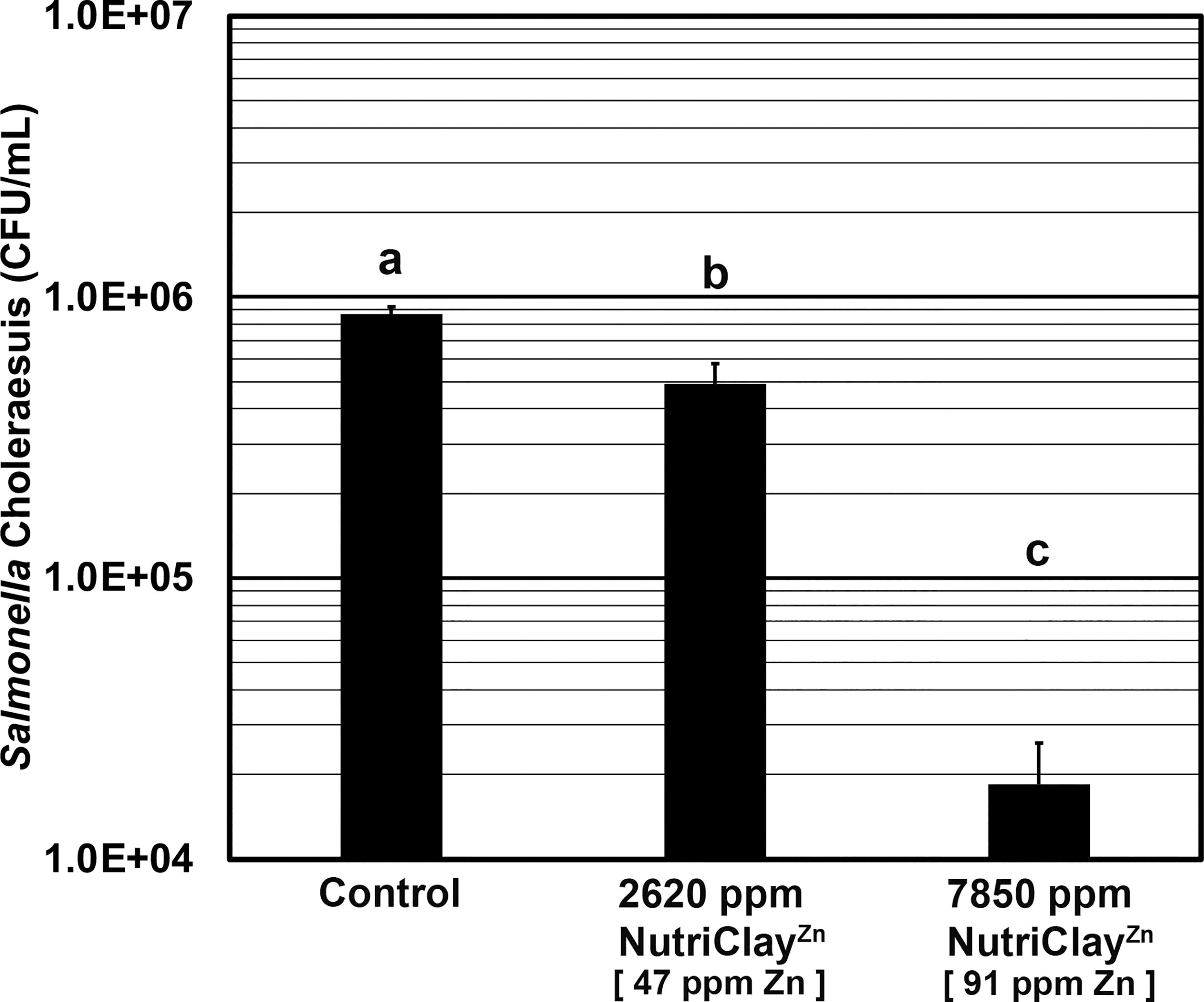
NutriClayZn suppresses propagation of Salmonella Choleraesuis. Bacterial cultures suspended in Mueller–Hinton broth were exposed to increasing concentrations of NutriClayZn that released up to 91 ppm elemental zinc within 6 h at 37°C (with agitation). Cultures were plated on Brilliant Green Agar and incubated at 37°C for 18 h prior to counting bacterial colonies. Data are expressed as colony-forming units per milliliter (CFU/mL) for documentation of logarithmic growth. Values are means ± SEM, n = 3. Means without a common letter differ, p < 0.05.
NutriClayZn is heat-stable, with consistent antibacterial efficacy and zinc dissociation
Following 70°C storage for 6 months, NutriClayZn remained effective, with the 7850 ppm concentration suppressing the growth of Salmonella Choleraesuis by 97% (Figs. 2 and 3). Moreover, the proportion of synthesized ZnO being released did not change, as both pre- and poststorage NutriClayZn samples generated 91 ppm elemental zinc within the culture broth.
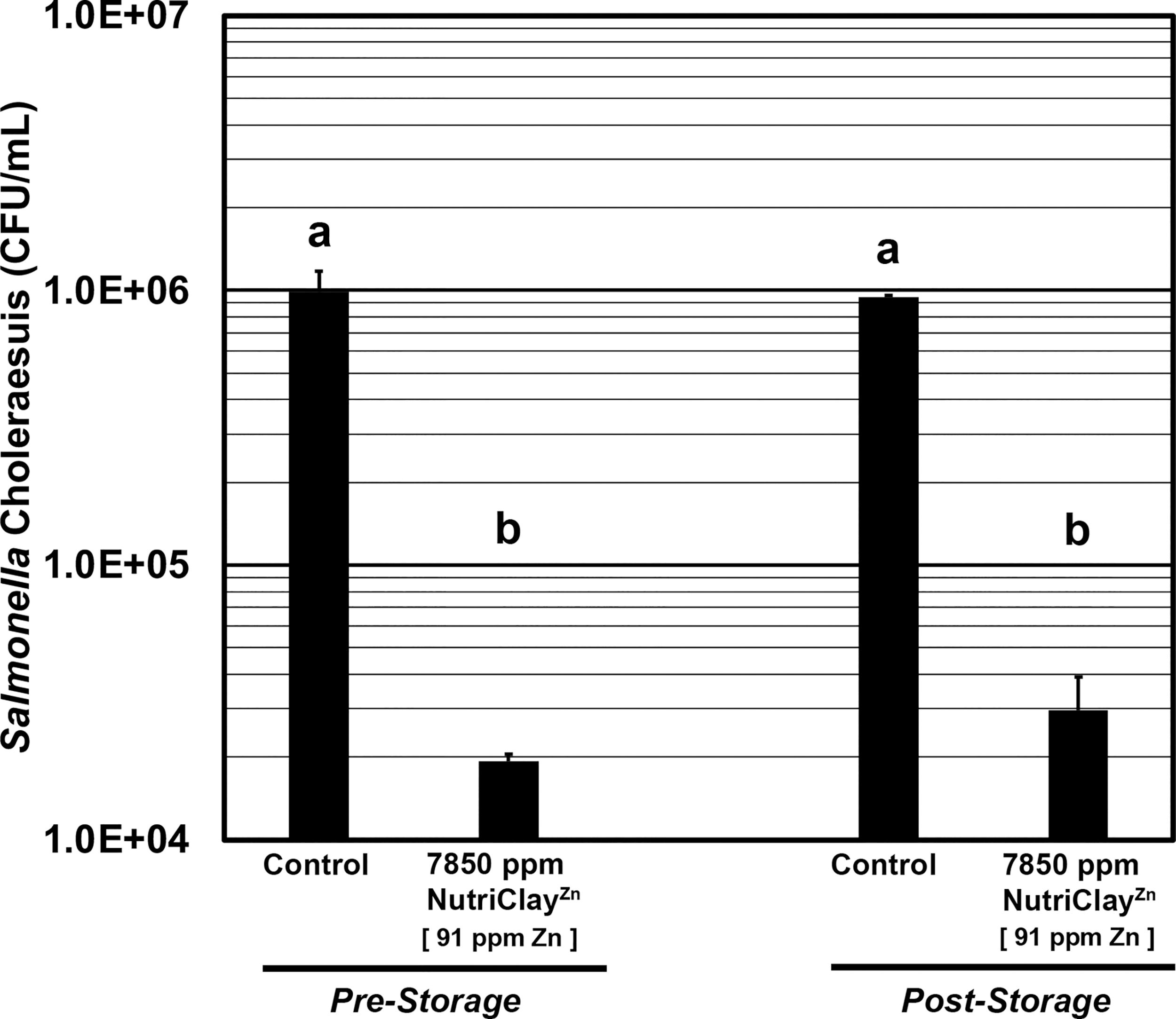
NutriClayZn suppresses propagation of Salmonella Choleraesuis and is stable following thermal stress storage. Bacterial cultures suspended in Mueller–Hinton broth were exposed to either freshly synthesized NutriClayZn or NutriClayZn stored at 70°C for 6 months. Following 6 h at 37°C with agitation, cultures were plated on Brilliant Green Agar. Plates were then incubated at 37°C for 18 h, followed by counting of bacterial colonies. Data are expressed as colony-forming units per milliliter (CFU/mL) for documentation of logarithmic growth. Values are means ± SEM, n = 3. Means without a common letter differ, p < 0.05. Pre-Storage and Post-Storage NutriClayZn samples released equal mean amounts of elemental zinc (91 ppm) into the culture broth.
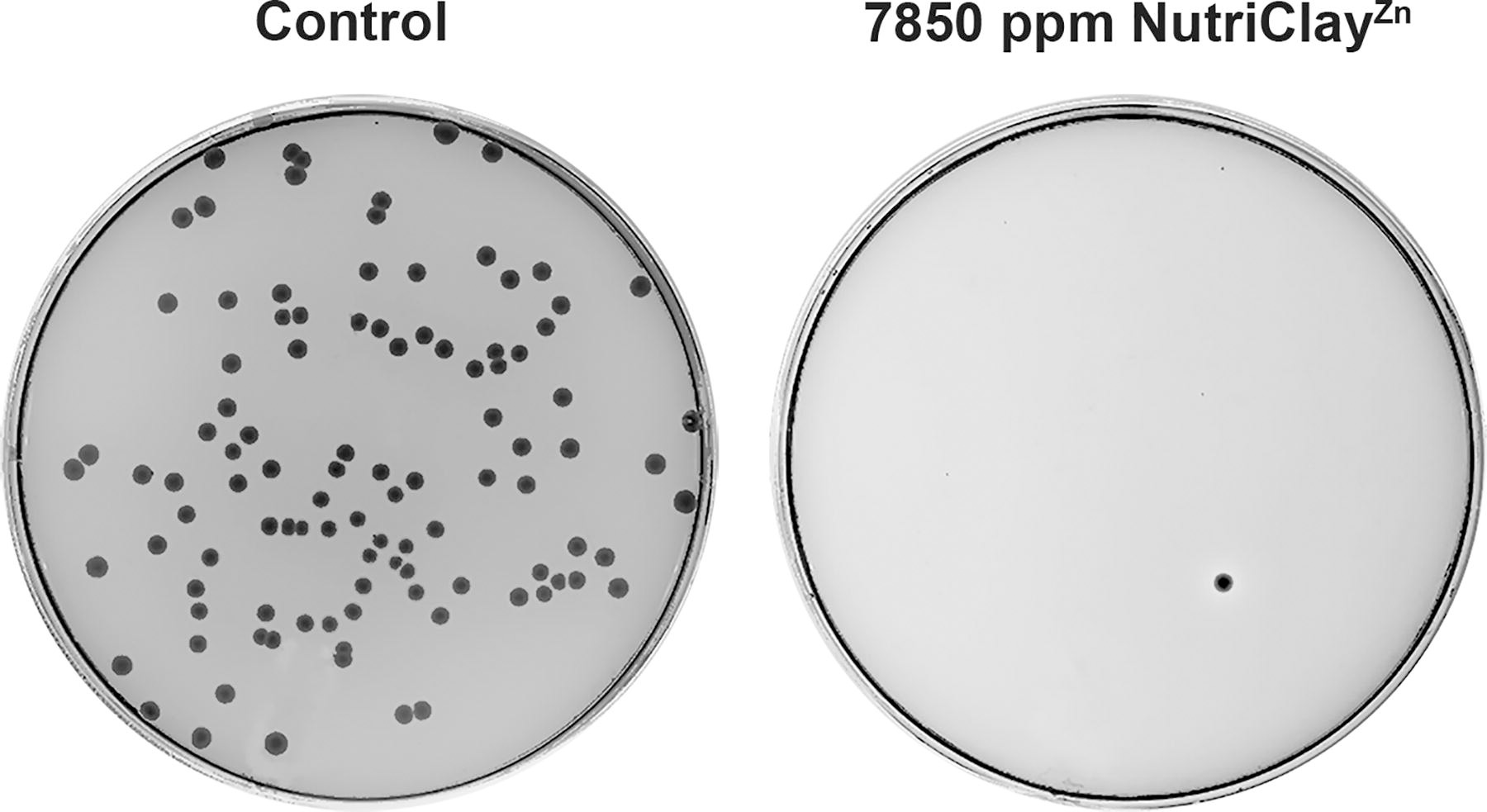
Salmonella Choleraesuis growth on Brilliant Green Agar following 6-h exposure of the bacteria to Mueller–Hinton broth only (Control) or Mueller–Hinton broth containing 7850 ppm NutriClayZn.
NutriClayZn liberates elemental zinc under gastrointestinal conditions
Release of zinc from NutriClayZn was measured under gastric and downstream intestinal conditions. Incremental dosages of NutriClayZn accounted for a range of potential maximum concentrations spanning from 1 mM ZnO (derived from 2.62 mg/mL NutriClayZn) to 5 mM ZnO (derived from 13.10 mg/mL NutriClayZn) within fed-state gastric fluid. As shown in Figure 4, release of zinc into gastric fluid followed a linear pattern, described by the equation y = 0.022(x) + 0.001. Residual zinc release into fed-state intestinal fluid was also linear [y = 0.001(x) − 0.003]. If given a 10 mg dose of NutriClayZn, 221 µg of elemental zinc would be released into gastric fluid over 2 h, with an additional 7 µg released into intestinal fluid over the subsequent 6 h.
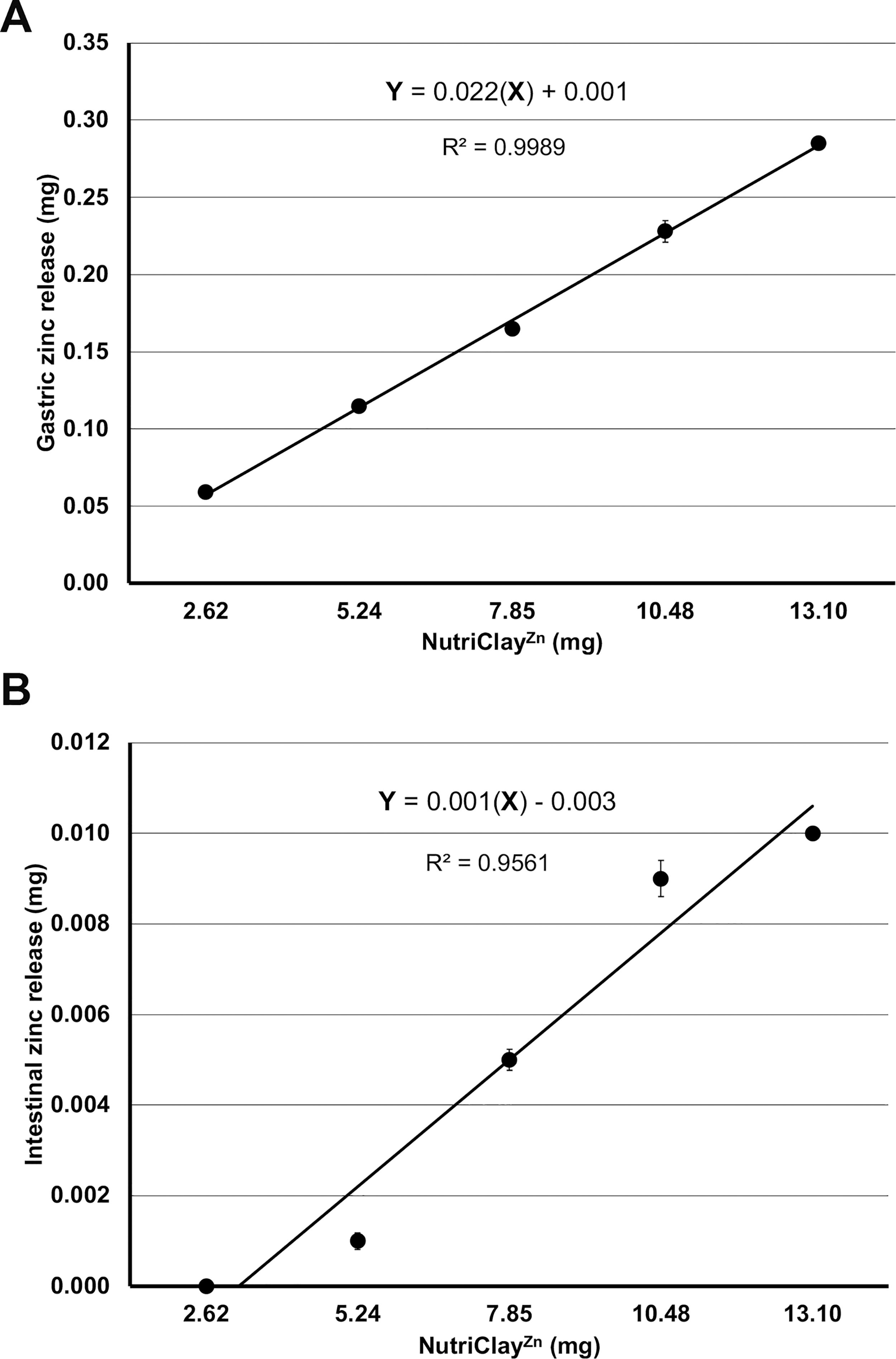
NutriClayZn liberates zinc under gastric and intestinal conditions. Increasing dosages of NutriClayZn were exposed to
NutriClayZn is readily consumed by weanling swine
Swine consumed nutritionally complete feed supplemented with 3000 ppm NutriClayZn while displaying average body weight gains that modestly (yet not significantly) exceeded control animals. As outlined in Table 2, NutriClayZn admixture did not adversely impact the consumption of control feed. Average daily feed consumption was 0.5 kg and 0.6 kg for control and NutriClayZn-supplemented diets, respectively.
Feed Consumption by Weanling Swine: Control Diet Versus 3000 ppm NutriClayZn Admixture (n = 3 Pigs/Group)
Discussion
Due to an immature gastrointestinal tract, weanling swine are especially vulnerable to Salmonella, strains of which are often resistant to the aminoglycoside streptomycin (Heo et al., 2013; Tassinari et al., 2019). Treatment for suspected Salmonella infection in swine often involves other aminoglycosides and/or broad-spectrum antibiotics (Burrough, 2021), yet these interventions can fail if the disease-causing bacterial strain (Chiu et al., 2005) has become multidrug-resistant (MDR). From the standpoint of disease prevention, administering pharmacological doses of free chemical ZnO in weanling swine feed can help control Salmonella and other gastrointestinal pathogens (Fangman and Zulovich, 2003; Langer, 2022), yet this status quo practice may impact the environment and/or promote antimicrobial resistance over time (EMA, 2017). Given limited alternatives to support swine health and ultimately protect human consumers, we questioned how to combat Salmonella that are resistant to antibiotics with disparate mechanisms of action.
Salmonella Choleraesuis was shown to be resistant to streptomycin (aminoglycoside), as well as resistant to nalidixic acid (quinolone) and the broad-spectrum antibiotic sulfisoxazole (sulfonamide). As such, this MDR Salmonella was not susceptible to three mechanistic targets (i.e., DNA gyrase, folic acid metabolism, and protein synthesis) of traditional antibiotic therapy (Pancu et al., 2021). Salmonella Choleraesuis was, however, susceptible to growth inhibition by NutriClayZn. The minimum threshold inhibitory dose of NutriClayZn liberated 47 ppm elemental zinc (Fig. 1), which is less than 2% of zinc from the standard 3000 ppm ZnO feed admixture currently given to swine for control of enterotoxigenic Salmonella. Even the higher dose of NutriClayZn, inhibiting MDR Salmonella Choleraesuis growth by 98%, generated only 91 ppm elemental zinc (i.e., less than 4% of the status quo). These findings suggest that NutriClayZn could serve as an alternative to pharmacological ZnO for control of MDR Salmonella, yet with far less zinc discharge that might impact the environment or otherwise exacerbate antimicrobial resistance.
NutriClayZn thermal stability (Fig. 2) encourages practical applications. As many swine producers work throughout the heat of summer, as well as on narrow profit margins, it is important to develop feed ingredients that do not require refrigeration or other specialized storage conditions. Our findings with NutriClayZn align with literature reporting thermal stability of MMT clays (up to 500°C) that have been pillared with metal oxides for use as industrial catalysts and adsorbents (Mishra et al., 1996). Furthermore, the remarkable thermal stability of NutriClayZn inspires use in cooking by humans at high risk for enterotoxigenic bacterial infection. Such human populations include military personnel and people displaced by natural disasters and geopolitical conflicts (Mao et al., 2023; Ziadeh et al., 2020). Indeed, MMT clay (without amended zinc or other nutritional components) has been investigated and successfully incorporated into cooking practices of the native peoples of Africa as dietary adsorbents against aflatoxin (Elmore et al., 2014).
Under gastrointestinal conditions (Fig. 4), NutriClayZn liberates elemental zinc in a linear, dose-dependent fashion. Moreover, to provide a foundation for future animal trials (investigating in vivo efficacy of NutriClayZn to protect against Salmonella challenge), we conducted a preliminary safety assessment in weanling swine. It should be noted that the control diet was minimally zinc-adequate (75 ppm ZnO in the feed), and no additional free chemical zinc was added to either the control or treatment group diets. The concentration of NutriClayZn chosen for the treatment group diet was 3000 ppm, a metric slightly higher than the minimum threshold inhibitory dose (i.e., 2620 ppm) against Salmonella Choleraesuis. Given that treatment group animals consumed the diet at a rate slightly greater than controls (Table 2), there was no indication that NutriClayZn imparted any sensory aversion or other impediment to feed consumption. Control group animals (consuming 0.5 kg feed per day, without NutriClayZn) obtained nutritional zinc only from the 75 ppm ZnO feed admixture, thereby receiving 30 mg/day free elemental zinc. Based on our in vitro gastrointestinal bioavailability data, treatment group animals (consuming 0.6 kg feed per day) could receive up to 77 mg/day of free elemental zinc, including 41 mg/day liberated from NutriClayZn and 36 mg/day from the 75 ppm ZnO feed admixture.
Back calculating from the treatment group’s total free zinc (77 mg/day), if all had been provided as free ZnO (which is, by mass, 80% zinc) without any NutriClayZn, the concentration of ZnO in feed would be 160 ppm. This is less than 6% of the 3000 ppm ZnO feed admixture currently used to control enterotoxigenic bacteria in weanling swine. Furthermore, if we consider the higher dose of NutriClayZn suppressing the growth of Salmonella Choleraesuis by 98% (i.e., 7850 ppm), and round up to 8000 ppm NutriClayZn in the diet, a treatment group eating 0.6 kg feed would obtain a total of 145 mg/day free elemental zinc. Back calculating (as above), from 145 mg free elemental zinc, yields 303 ppm ZnO in feed. This is still less than 11% of the status quo 3000 ppm ZnO in feed for controlling bacterial pathogens. Hence, our data suggest that NutriClayZn could serve to reduce dietary zinc toward the nutritional requirement and thereby lessen the environmental burden of pharmacological oral administration of ZnO in weanling swine.
Our findings establish the foundation for developing NutriClayZn as a safe and effective feed additive to replace pharmacological ZnO (complementing rigorous biosecurity management practices), while likely also providing nutritional zinc. The linear release of elemental zinc from NutriClayZn under in vitro gastrointestinal conditions allows for predicting zinc bioavailability. In turn, unimpeded feed intake by swine (0.6 kg/day containing 3000 ppm NutriClayZn) argues that NutriClayZn alone could provide 41 mg/day elemental zinc, which is somewhat higher than the 30 mg/day elemental zinc provided by 75 ppm ZnO in the control diet. Future Salmonella challenge trials should be designed to characterize NutriClayZn efficacy in vivo, alongside concurrent study arms examining outcomes of diets deficient in the zinc component of mineral premixtures that traditionally provide nutritional zinc for weanling swine.
Footnotes
Authors’ Contributions
S.J.T.J., K.A., W.J.B., G.A.A., R.C.A., R.B.H., and T.D.P. designed research. S.J.T.J., K.A., R.E.D., K.J.R., M.W., and R.B.H. conducted research. S.J.T.J., R.C.A., R.B.H., and T.D.P. provided essential reagents, materials, and/or equipment. S.J.T.J. and R.B.H. analyzed the data. S.J.T.J. wrote the article. S.J.T.J. and T.D.P. had primary responsibility for final content. All authors have read and approved the final article.
Author Disclosure Statement
No competing financial interests exist.
Funding Information
This work was funded by the U.S. Department of Agriculture (Agricultural Research Service, Texas A&M AgriLife IHA, and Texas A&M University Hatch Project TEX0-2-6215) and the U.S. National Institute of Environmental Health Sciences (P42 ES027704). Supporting sources had no restrictions regarding the publication of this work.