







Abstract
Globally, the consumption of fresh produce has increased due to their health and nutritional benefits. However, in sub-Saharan Africa (SSA), there is a growing concern about fresh produce, harboring foodborne bacterial pathogens. Among the foodborne bacterial pathogens associated with the consumption of fresh produce is Escherichia coli known for causing foodborne infections. Based on the threat from foodborne infectious E. coli, beta-lactam (β-lactam) antibiotics are always the first-line treatment regularly used to mitigate these foodborne infections in SSA. As a result of misuse of prescribed and continuous use of unprescribed β-lactam antibiotics, there has been a growing resistance in E. coli strains associated with fresh produce, which includes vegetables in SSA. This review therefore discussed not only the usage of β-lactam antibiotics as first-line treatment for foodborne infections in SSA but also the consumption of fresh vegetables linked to resistant E. coli. In addition, country-based cases regarding β-lactam antibiotic-resistant E. coli isolates linked to fresh vegetables were also discussed. The details herein therefore serve as hands-on information for consumers, health personnel, and policymakers not only in SSA but also globally.
Introduction
Vegetables are an economically important crop, highly nutritious, high-yielding with a short growth duration, and well-suited to different cropping systems. As a result of this, different vegetables are widely cultivated in SSA. Their production provides high income to the farmers and supports employment generation, economic growth, food security, nutrition, and health benefits (FAO, 2021). On the basis of their nutrition and health benefits, there has been an increase in the consumption of fresh vegetables as part of a healthy diet (Mazzoni et al., 2023). For a healthy lifestyle, the World Health Organization (WHO) 2004 report on a Global Strategy on Diet, Physical Activity, and Health suggested consuming more vegetables, with a minimum of 400 g of vegetables per day (Smith and Eyzaguirre, 2007; WHO, 2004). Nonetheless, the rise in enteric disease outbreaks linked to fresh vegetables over the last 20 years raises the possibility that enteric pathogens may be sufficiently fit to colonize and survive on plants, as the high nutrient and moisture content of fresh vegetables promote the growth of bacterial pathogens (Balali et al., 2020). Bacterial growth linked to biofilm development is the reason why bacteria thrive in raw vegetables (Buck et al., 2003) and pose health risks to consumers. Also, one major factor contributing to antibiotic resistance is the biofilm’s persistent cells and structural barriers (Yuhana et al., 2024). Since biofilms are the cause of severe nosocomial infections that are resistant to traditional antibiotics, they are presently regarded as one of the most significant bacterial virulence factors (Parrino et al., 2020). Enteric pathogens such as Salmonella, Campylobacter, Listeria, and Shigella have been found to form biofilms on a range of vegetables, which include but not limited to tomatoes, melons, parsley, cilantro, lettuce, and spinach (Annous et al., 2005; Brandl and Mandrell, 2002; Iturriaga et al., 2007; Warner et al., 2008). These biofilms can form in preharvest or postharvest settings, which increases the pathogens’ ability to persist on plants and endanger consumer health (Carter and Brandl, 2015). When antimicrobials are used, in most cases, nearly unavoidable result is drug resistance in foodborne infections (Threlfall et al., 2000). Among the foodborne bacterial pathogens is Escherichia coli, a unique bacterium with pathotoxigenic attributes (Braz et al., 2020). E. coli possess the ability to associate with fresh vegetables, adhere and colonize the vegetable tissues, and lie in wait for the fresh vegetables to be consumed (Luna-Guevara et al., 2019). Therefore, consumption of unwashed vegetables, or minimally cooked vegetables, has the potential to transfer pathogenic E. coli capable of causing foodborne infections or illnesses (Okaiyeto et al., 2024; Solomon et al., 2002).
Sub-Saharan Africa has seen an increased number of foodborne illnesses (Grace, 2023) associated with pathogenic E. coli, but all these illnesses have not been specifically linked to the consumption of contaminated vegetables due to a poor surveillance system (Aworh, 2021). As such, the public health implications of pathogenic E. coli linked to the consumption of contaminated vegetables remain not only undocumented but also unmanaged. Certain strains of E. coli are extremely pathogenic and contribute significantly to diarrheal diseases (Zahra et al., 2016) and often result in symptoms such as bloody or watery diarrhea, abdominal pain, fever, vomiting, and, in severe cases, death (Gourama, 2020).
Among the groups of antibiotics mostly consumed in SSA against E. coli infections as a result of foodborne infection are beta-lactum (β-lactam) antibiotics (Biswas et al., 2024). This is because β-lactam antibiotics are cheaper to obtain and readily available over the counter at any retail community store. This, therefore, made it easier for individuals or households in SSA to use β-lactam antibiotics as the first-line treatment against any foodborne infection without any medical consultation. Reports have established that the misuse of prescribed and continuous use of unprescribed β-lactam antibiotics will definitely increase resistance in E. coli strains (Cabral et al., 2024; WHO, 2021), especially those linked to fresh vegetables (Datta et al., 2024). Therefore, consumption of raw or minimally processed vegetables in SSA is directly or indirectly tantamount to consumption of β-lactam antibiotics-resistant E. coli. This will not only constitute a huge food safety issue but also a serious public health concern in SSA. To date, there is a paucity of information on the usage of β-lactam antibiotics against foodborne E. coli infections linked to the consumption of contaminated vegetables in SSA. However, there are experimental reports on E. coli strains isolated from fresh vegetables in SSA and their resistance to β-lactam antibiotics. Based on the available reports from SSA, this review addressed this challenge, knowing fully well that the potential for transfer of antibiotic-resistant E. coli from fresh vegetables into the human population is a great concern in SSA.
Vegetables: Health Benefits, Consumption, and Bacteria of Public Health Concern
A vegetable is an edible, nutritious, and healthy diet, either eaten fresh or prepared in a number of ways (Ajayi et al., 2022). Vegetables contain calories and adequate intake of most vitamins and minerals (ascorbic acid, folic acid, iron, zinc, magnesium, potassium, and calcium), dietary fibers, phytochemicals, saturated fat, and sodium content and are free of cholesterol, which can restore a crucial balance to diets. The health benefits of diets rich in vegetables have been linked to a variety of vegetables for consumption. That is, each vegetable contains a unique combination of beneficial phytochemicals, which differentiate it from another vegetable (Kumar et al., 2020). Specifically, dark leafy green vegetables are packed with antioxidants; cruciferous vegetables are rich in antioxidants and glucosinolates, which are compounds with anticancer properties (Stanaway et al., 2022). Dias (2012) stated that a diet rich in crucifers is likely to protect humans against colon, rectum, and thyroid cancers. Carbohydrates and antioxidants, which provide the body energy, are abundant in root vegetables. Regular bowel movements and gastrointestinal health are supported by the high fiber content found in vegetables. In addition to promoting immune system function, bone health, and general physiological well-being, vegetables also help to maintain good digestion, avoid constipation, and lower the risk of digestive problems (Stanaway et al., 2022). Based on the above facts, it has been advised that individuals should consume vegetables on a daily basis (FAO, 2021), and this has been reiterated by the scientific community to the general public (Datta et al., 2024). Unfortunately, there is a rising concern associated with the safety of fresh vegetables for consumption (Ramya and Patel, 2019) because fresh vegetables are greatly threatened by microbial contamination (Bhatia et al., 2024).
When contaminated vegetables are consumed, the overuse and abuse of antibiotics, along with inadequate infection prevention and management, will enhance the threat of pathogenic bacteria on the consumers (Manyi-Loh et al., 2018). Take for example, Clostridioides difficile can cause gastrointestinal illnesses and interfere with cell membranes, which in turn can harm the extracellular matrix (Phanchana et al., 2021). Staphylococcus aureus is another bacterium that can induce food poisoning and release exfoliative toxins that cause scalded skin syndrome and the toxin that causes toxic shock syndrome. Listeria monocytogenes have a robust association with fresh vegetables and can cause systemic illnesses (Beuchat, 1996; Cusimano et al., 2019; Gonzales-Barron et al., 2024; Kljujev et al., 2018). In addition to others, E. coli is also one of the major bacteria threatening public health when it comes to the safety of fresh vegetables for consumption. E. coli is a member of the Enterobacteriaceae family and is a Gram-negative, nonsporulating, facultatively anaerobic, oxidase negative, and catalase positive bacterium. It is regarded as a typical component of the microbiota found in the digestive tracts of humans and the majority of other warm-blooded animals. It is mesophilic, with ideal development temperatures of 35–40°C. The majority of E. coli strains are benign, but a tiny percentage have developed into pathogens that can cause dangerous clinical symptoms in humans (Ramos et al., 2020).
The presence of pathogenic E. coli in vegetables is a biological threat; thus, it represents a risk to the consumers (Datta et al., 2024). According to a study by Scheinberg et al. (2017), kale, lettuce, and spinach had 27.8% (15/54), 28.8% (15/52), and 17.4% (8/46) of E. coli, respectively. Regarding lettuce and E. coli (Datta et al., 2024), Roth et al. (2018) reported that the prevalence of the bacteria was 1.9% (2/103) in lettuce purchased from supermarkets and farmers’ markets in Florida, and Chanseyha et al. (2018) unfolded that the prevalence rate for lettuce in Thailand was 39.2% (47/120). According to records from the U.S. Centers for Disease Control and Prevention, lettuce was connected to 20 outbreaks and 634 instances of E. coli O157:H7 infection between 1998 and 2005 (CDC, 2018; Stager et al., 2023). A significant outbreak in 2019 that was connected to the consumption of romaine lettuce from the California Valley resulted in 85 hospital admissions from 27 states. Another outbreak occurred in late 2020; 40 infections were reported in 19 states; 20 patients were admitted to hospitals; and 4 patients had hemolytic uremic syndrome (Chen et al., 2023). In SSA, there is a paucity of information on outbreaks of diseases as a result of consumption of vegetables contaminated with pathogenic E. coli. However, WHO reported that out of 425,000 death cases associated with eating foods contaminated with pathogenic bacteria, including E. coli, 230,000 deaths have been on record for Africa each year (Ombarak et al., 2016). Based on this figure from WHO, the authors of this review found that reported death cases from SSA were generalized and not specifically linked to consumption of fresh vegetables contaminated by infectious E. coli, which is the interest of this review. On the contrary, outbreaks of diseases in SSA as a result of the consumption of fresh vegetables contaminated by infectious E. coli may not have been reported or underreported, or not investigated. Therefore, eating vegetables contaminated with pathogenic E. coli (Hözel et al., 2018) in SSA can put the public at risk for certain illnesses, since low doses of infection by E. coli are sufficient to cause intestinal disease (Ameer et al., 2023).
Beta-Lactam Antibiotics as a First-Line Treatment to Infectious E. coli Either Directly or Indirectly Linked to Fresh Vegetables in SSA
The management of infections caused by different E. coli strains, especially after consuming fresh vegetables contaminated by E. coli, remains a pronounced burden on the public health of many countries in SSA (WHO, 2021). In the report of the WHO African Region from 2016 to 2020, E. coli was among the pathogenic bacteria highlighted as a threat to public health in SSA (WHO, 2021). Similarly, an African-based systematic review by Tadesse et al. (2017) reported that E. coli was among the pathogenic bacteria that had the highest threshold of public health implications. As a result of the present and future public health implications foreseen by WHO (2021) in SSA, especially through foodborne infectious E. coli associated with fresh produce including fresh vegetables, different treatment options were proposed. The first option is by maintaining adequate rehydration, which has not been well practiced in SSA (WHO, 2005). Another option is the use of antibiotics for only severe cases (Paterson and Bonomo, 2005). Unfortunately, whether severe or not severe cases, individual and household used to engage antibiotics against any E. coli related foodborne infection in SSA (WHO, 2021). This is because the concerned individual or household always wants to dodge the high cost of the health care system and thus often prefers to control the illness through self-medication so as to return to their normal daily activities. Based on this understanding, the use of antibiotics through self-medication has now become a common norm as the first-line treatment in SSA (Cabral et al., 2024).
Instead of targeted diagnosis of the infection, especially that of E. coli strains linked to the consumption of contaminated fresh vegetables, the individual or household is used to administer antibiotics. Among the antibiotics that have been subjected to self-medication in SSA, β-lactam antibiotics top the lists and have been abusively used as the first-line treatment (Cabral et al., 2024; WHO, 2021) for any form of foodborne infections, either directly or indirectly linked to infectious E. coli. Thereafter, the self-medicated β-lactam antibiotics hasten the resolution of the foodborne infections, hinder the progression of the disease, and gradually reduce the associated symptoms such as vomiting, fever, and abdominal pains (Diniz-Santos et al., 2006). In many cases, the individual adopts this self-medication strategy any time foodborne infection is observed as a symptom. Surprisingly, after a while, similar symptoms reappeared within the system of the concerned individual and remain untreatable (Friedman et al., 2016), owing to the fact that the sensitivity of the β-lactam antibiotics decreased with time (Thakuria and Lahon, 2013). This agreed with our understanding that after consumption of fresh vegetables linked to infectious E. coli, β-lactam antibiotics are often used as prophylaxis instead of proper diagnosis to ascertain colonization or infection status of the infectious E. coli (Cabral et al., 2024; Thakuria and Lahon, 2013; WHO, 2021). This is an indication that the routine use of β-lactam antibiotics for foodborne infections, which includes the infections that arise as a result of consumption of contaminated fresh vegetables, could be associated with the risk of increasing antimicrobial resistance in SSA.
Resistance of E. coli to β-Lactam Antibiotics in SSA
As a result of dietary consumption of vegetables, E. coli can associate themselves with the human gut (Martinson and Walk, 2020). This is because E. coli possess adherence factors for human epithelial colonization (Barak et al., 2005); thereafter, they transmit antibiotic-resistant genes to the local gut microorganisms (Njage and Buys, 2015). This is a matter of concern, with a serious consequence, particularly in SSA, as consumption of vegetables that carry antibiotic-resistant E. coli poses a risk to public health. This could be severe and can lead to reinfections, delayed recovery, and even death in some cases (Llor and Bjerrum, 2014). Unfortunately, tracking the E. coli through the sources of the vegetables and, most importantly, through the infected individual or household has received little or no attention in SSA. However, few studies in SSA have reported isolation of E. coli strains from different vegetables and their resistance to beta-lactam antibiotics. For this section, we the reviewers consulted PubMed, African Journal Online, and Google Scholar to access information from 2014 to 2024 (Table 1). Keywords “E. coli” or “fresh vegetables” or “β-lactam antibiotics” or “antibiotic resistance” or “sub-Saharan Africa” were used separately and in combination. Preliminary information gathered shows that fresh vegetables in SSA are contaminated with antibiotic-resistant E. coli (Table 1, Figs. 1 and 2). With respect to only the countries reviewed in Table 1, it is worthy to mention that, among the vegetables usually consumed in SSA, lettuce dominated (Fig. 1), followed by both carrot and cabbage (Mensah et al., 2021). Consequently, it has been reported that lettuce, carrot, and cabbage are highly open to bacterial contamination and most often to E. coli (Luna-Guevara et al., 2019). As a result of this, the more of lettuce, carrot, and cabbage consumed unwashed or minimally cooked (Okaiyeto et al., 2024; Solomon et al., 2002) could be tantamount to loads of E. coli consumed, knowing fully well that E. coli holds so much tenacity to fresh vegetables.
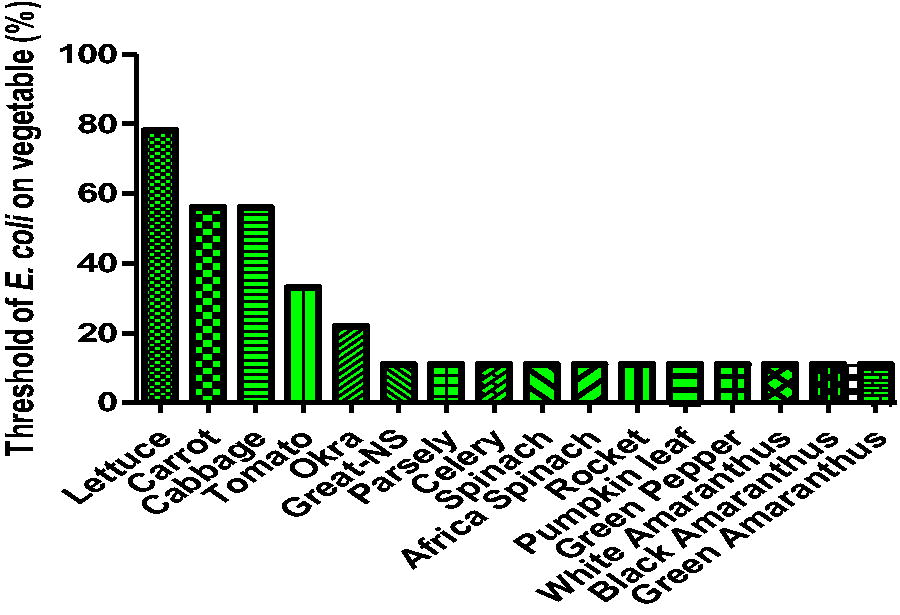
Preliminary information on the threshold of E. coli on vegetables in SSA. E. coli, Escherichia coli; NS, nightshade; SSA, sub-Saharan Africa.
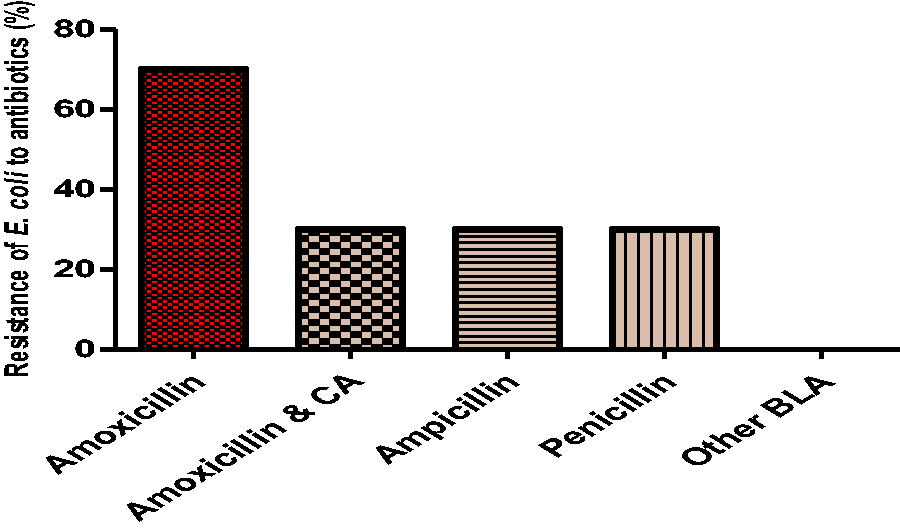
Representation of E. coli resistance to beta-lactam antibiotics in SSA. In addition, the beta-lactam antibiotics herein are the most available, cheaper to obtain over the counter, and commonly used for the treatment of foodborne infections in SSA. BLA, beta-lactam antibiotics; CA, clavulanic acid; E. coli, Escherichia coli; SSA, sub-Saharan Africa.
Different Types of Vegetables and Beta-Lactam Antibiotics That Escherichia coli Have Exhibited Resistance to Their Activities in Sub-Saharan Africa
Among the countries in SSA, only few had documented reports related to E. coli linked to fresh vegetables and their resistance to β-lactam antibiotics. Going by this review, a few examples are hereby discussed. In the Republic of Benin, E. coli isolated from lettuce, cabbage, great nightshades, and carrots demonstrated resistance to β-lactam antibiotics based on antibiotic sensitivity assays. All of the E. coli strains from the different vegetables were resistant to amoxicillin, and 92% of those strains were resistant to the combination of amoxicillin/clavulanic acid. According to the study, the majority of the E. coli strains (67.69%) did not only produce penicillinase (a resistant enzyme against β-lactam antibiotics) but also unfolded bla TEM, bla SHV, and bla CTX-M genes in 67.50%, 10%, and 22.50% of the strains, respectively (Moussé et al., 2015). In Burkina Faso, E. coli isolated from lettuce showed minimal resistance activity to β-lactam antibiotics (Rouamba et al., 2022). A similar study in Chad reported that E. coli was isolated from contaminated fresh lettuce, carrots, cabbage, okra, parsley, celery, and spinach. Unfortunately, all these leafy green vegetables showed a high level of resistance to β-lactam antibiotics, specifically amoxicillin (83.3%) and amoxicillin/clavulanic acid (50%) (Markhous et al., 2019). E. coli isolated from lettuce in Côte d’Ivoire had a 62.5% amoxicillin resistance rate. According to Amine et al. (2023), the identification of resistance genes in E. coli revealed that 56.1% of the strains had bla CTX-M, bla SHV, and bla TEM genes. In Ethiopia, the first case of E. coli O157:H7 was isolated from lettuce. Other E. coli strains were isolated from pepper and cabbage. Both E. coli O157:H7 and other E. coli strains exhibited multi-antibiotic resistance to ampicillin, amoxicillin, and penicillin, resulting in the highest antibiotic resistance profiles (Asfaw et al., 2023; Haile et al., 2021). High antibiotic resistance of E. coli to β-lactam antibiotics was observed in Ghana’s urban regions, particularly in northern Ghana. E. coli strains were isolated from a variety of vegetables, including carrots, cabbage, and lettuce. Among the samples, E. coli isolated from lettuce showed a high resistance to ampicillin and penicillin (Appau and Ofori, 2024). Further studies confirmed that the isolated E. coli harbor the bla TEM genes responsible for the resistance to β-lactam antibiotics (Quarcoo et al., 2022). In Nigeria, out of 44 E. coli isolates obtained from irrigated amaranths and fluted pumpkin, 10 (22.7%) of the isolates harbor the LT genes. Based on antibiotic sensitivity assays, E. coli isolates from the irrigated vegetables showed high resistance to penicillin, cloxacillin, and amoxicillin (Chigor et al., 2020; Oluyege et al., 2015). Another study in South Africa revealed antibiotic sensitivity assays on E. coli isolated from vegetables such as tomatoes, lettuce, spinach, cucumbers, green beans, apples, carrots, and cabbages. It was observed that E. coli isolates exhibited high resistance to ampicillin and amoxicillin (Baloyi et al., 2022; Richter et al., 2021). However, on the basis of molecular identification, the β-lactamase resistant encoding genes were detected from 56 E. coli isolates from spinach, apples, carrots, cabbages, and tomatoes, which were bla TEM, bla CTX-M GP-1, bla CTX-M Gp-9, and bla SHV genes. Baloyi et al. (2022) further reported that one of 56 E. coli isolates from tomatoes harbored antibiotic resistance genes known as EAE genes.
The contamination of fresh vegetables by antibiotic-resistant E. coli at the level representing the risk to public health implies that different undocumented β-lactam antibiotics (Table 1 and Fig. 2) may have been consumed inappropriately by individuals or households without any medical consultation. To support this claim, WHO (2021) and Cabral et al. (2024) identified SSA (Table 1) as key contributors to the surge in antibiotic consumption on a global scale (Murray et al., 2022). In addition, Klein et al. (2018) reported that global antibiotic consumption by humans has increased by 65% from 2000 to 2015, and if care is not taken in many countries, including SSA, the figure has been projected to increase to 200% by the year 2030. As a result of this, global data have projected deaths from antibiotic resistance to rise from 1.27 million deaths in 2019 to 10 million deaths annually by 2050 (Murray et al., 2022). Out of these 10 million annual deaths in 2050 (as projected), the figure for SSA may be high, and at the same time unnoticed, as foodborne infections and/or death cases, especially that of E. coli linked to contaminated vegetables, rarely received documented attention in SSA. This issue poses a substantial public health risk, as infections caused by β-lactam antibiotic-resistant E. coli linked to fresh vegetables remain invisible, and this has continued to increase at a faster rate in SSA.
Conclusions
In SSA, food safety is progressively gaining attention, and among the foods under consideration are fresh vegetables. However, consumption of fresh vegetables, already contaminated by pathogenic E. coli, threatens public health. As a result of the public health threat from pathogenic E. coli associated with the consumption of fresh vegetables, β-lactam antibiotics are always the first-line treatment in SSA. Based on this fact, E. coli strains linked to fresh vegetables have continued to exhibit resistance to β-lactam antibiotics due to misuse of prescribed and continuous use of unprescribed β-lactam antibiotics in SSA. Therefore, among the strategies to curb the menace of E. coli resistance to β-lactam antibiotics in SSA are to identify the type of vegetables harboring the pathogenic E. coli and the β-lactam antibiotics that have been used and are currently in use, specifically toward the consumption of contaminated fresh vegetables. Additionally, the antibiotics and development of E. coli biofilms linked to consumption of fresh vegetables need to be prioritized.
Footnotes
Acknowledgment
Thanks to all the authors who have published articles regarding abuse of β-lactam antibiotics, pathogenic E. coli, and fresh vegetables in SSA.
Authors’ Contributions
O.N.A.: Resources, investigation, data curation, visualization, writing—original draft, and writing—review. E.A.: Resources, investigation, visualization, writing—original draft, and writing—review. M.A.A.: Conceptualization, methodology, investigation, formal analysis, project administration, writing—original draft, and writing—review and editing. All authors have read and agreed to the published version of the article.
Author Disclosure Statement
The authors declare no competing interests for this review.
Funding Information
This review was not funded by any organization, institution, or individual.