







Abstract
Spices with low water activity (aw) often contain antibacterial substances that complicate the detection of Salmonella using traditional culture methods. These substances can drive Salmonella into a viable but nonculturable (VBNC) state, rendering it undetectable with culture-based methods. This study aimed to enhance the broth for enriching Salmonella in garlic granules by mitigating the inhibitory effects of antibacterial substances. This study optimized the enrichment broth by using 3× buffered peptone water to increase the buffering capacity of the medium, adding magnesium sulfate and sodium pyruvate to promote the self-repair and recovery of bacteria, and adding DL-dithiothreitol (DTT) and corn oil to neutralize the antimicrobial substances in garlic. Garlic granules were artificially contaminated with Salmonella and subjected to a 2-week desiccation process to simulate low aw conditions during food storage. The results showed that adding DTT and corn oil as neutralizers in the modified buffered peptone water (mBPW) broth significantly enhanced the detection capability of Salmonella in garlic granules, enabling detection of Salmonella at initial contamination levels as low as 5 CFU/g. In contrast, Salmonella was undetectable without the addition of neutralizers during enrichment. In addition, the optimized mBPW broth was tested on spices other than garlic granules, demonstrating its effectiveness (without neutralizers) in detecting Salmonella in star anise and black pepper. Notably, this study demonstrated that the combination of neutralizer-aided enrichment and PMAxx-qPCR successfully enabled the detection of viable Salmonella in garlic granules. The entire process can be completed in approximately 26 h, demonstrating the method’s swiftness and effectiveness in detecting viable cells. This approach provides a fast and sensitive method for the detection of Salmonella in garlic granules, with promising potential for application in similar inhibitory food matrices.
Introduction
Detecting Salmonella in low water activity (aw) foods, especially spices, poses considerable challenges due to the time-consuming and labor-intensive nature of traditional culture methods typically used for identifying foodborne pathogens (Gurtler et al., 2019). Certain spices, including onions, can lower the pH of the enrichment broth to levels that inhibit pathogen growth due to the release of acidic substances (Ramnani et al., 2010). To address this issue, Ramnani et al. found that increasing the concentration of buffered peptone water (BPW) components could counteract the acidity rise during the enrichment process, ensuring a suitable environment for pathogen detection (Ramnani et al., 2010). In addition, spices contain numerous bacteriostatic compounds, such as allicin in garlic (Marchese et al., 2016) and capsaicin in black pepper (Xedzro et al., 2022), which, while being beneficial for inhibiting microbial growth, complicate the detection of pathogens such as Salmonella when employing enrichment broth cultivation strategies.
In recent years, a novel detection approach has emerged, employing a substance referred to as a “neutralizer” to counteract the antimicrobial agents present in low-moisture foods, thus facilitating the growth of bacteria in the enrichment broth (Barrere et al., 2020). Currently, the types of neutralizers can be roughly divided into the following categories: The first category is liquid fats. Liquid fats act similarly to an extractant by isolating antimicrobial compounds from the bacterial growth environment, which allows Salmonella to grow in the aqueous phase of the pre-enrichment broth without interference from these antimicrobial compounds (Jean-Gilles Beaubrun et al., 2016). The second category consists of inorganic antioxidants. For instance, K2SO3 can be used to neutralize the antibacterial effects produced by disulfides in garlic and onions, possibly by reacting with the disulfide bonds (Lins, 2018). The third category includes organic compounds such as amino acids. L-Cysteine has garnered attention for its ability to completely inhibit the antibacterial activity of allicin in garlic and onions (Barrere et al., 2020), likely due to the formation of S-thiolation product, a product of the reaction between allicin and the thiol group on cysteine (Rabinkov et al., 1998).
In low-aw spices such as dehydrated garlic, Salmonella may enter a VBNC state due to dehydration and antimicrobial substances, requiring live bacterial assays for accurate detection (Jayeola et al., 2022). The PMA-qPCR detection method employs propidium monoazide (PMA) or improved propidium monoazide (PMAxx) to specifically amplify and detect only the DNA of live bacteria, offering a faster and more efficient approach to viable pathogen detection compared to the traditional culture method (Ma et al., 2024; Zeng et al., 2016). This technique has been successfully applied to detect live pathogens in low-aw foods, such as viable Staphylococcus aureus in milk powder (Zhang et al., 2015) and viable Escherichia coli O157:H7 in spices such as cinnamon and cumin (Elizaquível et al., 2012).
This study introduces a novel approach by integrating neutralizer-aided enrichment with both the traditional culture method and the viable cell detection method, PMAxx-qPCR, to improve Salmonella detection in dehydrated garlic granules. This approach neutralizes antimicrobial substances in garlic granules and enables specific detection of viable Salmonella cells, offering a promising solution for detecting Salmonella in complex food matrices like spices.
Materials and Methods
Spices
Spices, including garlic granules, star anise, black pepper, and chopped basil, were procured from a local grocery store in Guangzhou, China. These spices were stored at a controlled temperature of 4°C throughout the experimental period. All samples were initially screened for Salmonella using the FDA's Bacteriological Analytical Manual (BAM) method (Andrews et al., 2023).
Bacterial strains
The strain (Salmonella Typhimurium ATCC 14028) used in the experiment was preserved at −80°C before use. The stock culture was activated in tryptic soy broth supplemented with 0.6% yeast extract (TSB-YE, Hope Bio-technology Co., Ltd., Qingdao, China) at 37°C overnight, followed by streaking onto xylose lysine deoxycholate (XLD, Hope Bio-technology Co., Ltd., Qingdao, China) agar for incubation at 37°C overnight. Colonies from XLD agar were transferred to TSB-YE medium for incubation at 37°C overnight. One milliliter of bacterial suspension was piped into a centrifuge tube containing 9 mL of 0.85% NaCl solution, vortex mixed for 1 min, and then subjected to tenfold series dilution. One hundred microliters of bacterial suspension, with each dilution gradient, was plated on Tryptic Soy Agar with Yeast Extract (TSA-YE, Hope Bio-technology Co., Ltd.). The plates were incubated at 37°C for 24 h, and the number of colonies was counted.
Inoculation of spice samples
A variety of spices, such as garlic granules, star anise, black pepper, and basil, were artificially inoculated with Salmonella Typhimurium. The bacterial suspension was diluted using 0.85% saline to achieve a tenfold gradient dilution, and the Salmonella concentration was determined by plate counting on TSA-YE. The spice sample (25.0 ± 0.05 g) was placed in a sterile petri dish and inoculated with 100 µL of bacterial suspension at desired concentrations, achieving final Salmonella contamination levels of <5, <50, and <500 CFU/g. After inoculation, the petri dishes were transferred to sterile trays, followed by a 2-week desiccation process to simulate low aw conditions during storage of food products. Non-inoculated spice samples served as negative controls.
The inoculated samples were stored in a desiccator (Zhongheng Experimental Instrument Co., Ltd., Wuxi, China), with their aw adjusted to around 0.3. The desiccator was prepared before use as follows: Take a certain amount of silica gel self-indicator (Zhiyuan Chemical Reagent Co., Ltd., Tianjin, China) and place it on the platform of the sterilized drying cylinder, then transfer it to the oven at 110°C for drying until the color turns blue. Subsequently, transfer the dried silica gel self-indicator and the desiccator to the aseptic table for ultraviolet light disinfection for approximately 60 min to eliminate existing microorganisms, and then seal them in the desiccator.
After 2-week storage, all the artificially contaminated spice samples were subject to Salmonella detection using the BAM, neutralizer-aided method, and neutralizer-PMAxx-qPCR method. A summary of the methods was shown in Figure 1.
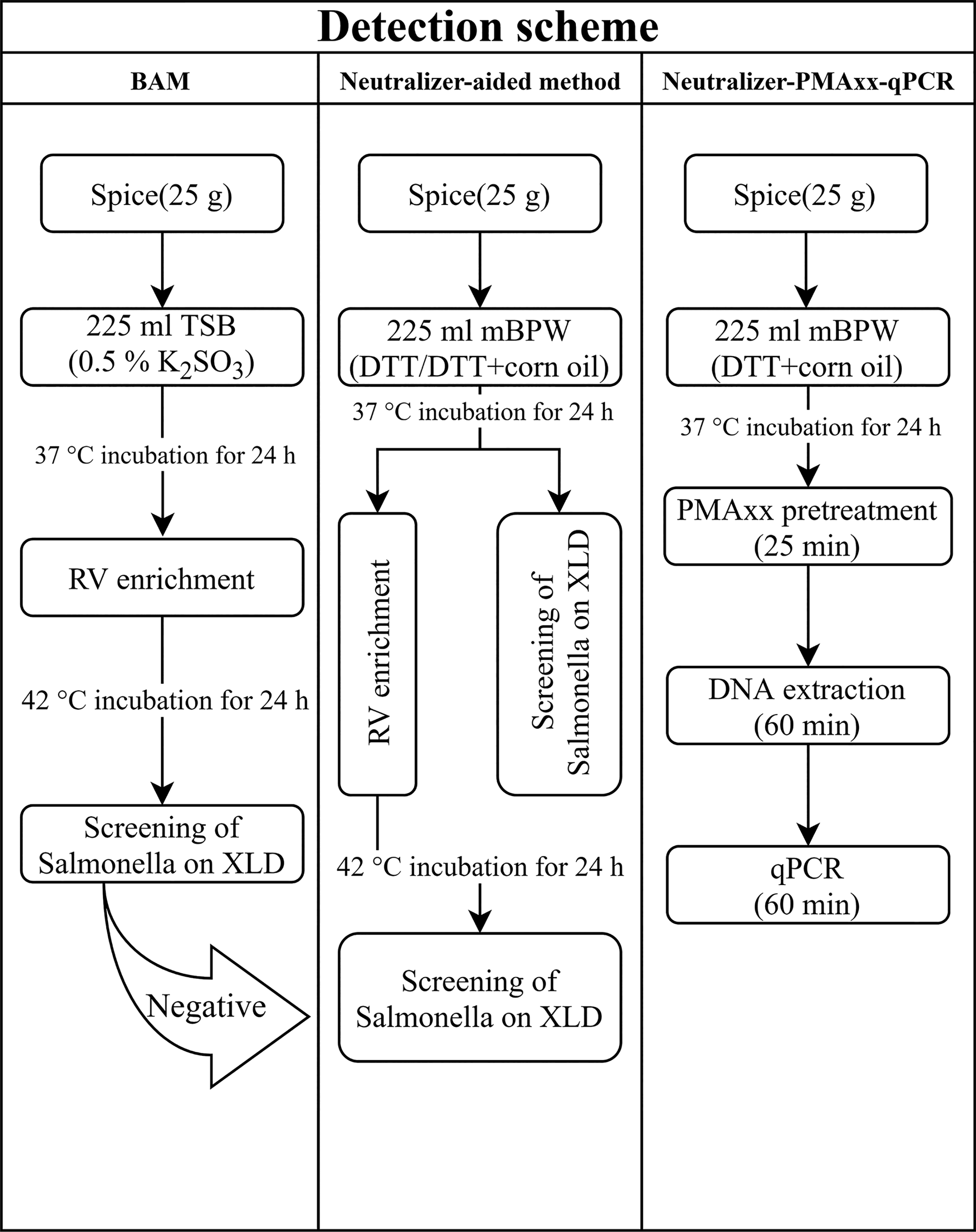
Technical route for the detection of Salmonella in spices. Garlic granules were artificially inoculated with Salmonella Typhimurium at various contamination levels, with non-inoculated samples serving as negative controls. Inoculated samples were subject to a 2-week desiccation to simulate low water activity conditions. Three detection methods were compared: (1) Traditional culture method (BAM)—Enrichment in TSB followed by incubation and streaking on XLD agar; (2) Neutralizer-aided enrichment—Enrichment in mBPW with or without neutralizers (DL-dithiothreitol and corn oil), followed by incubation and streaking on XLD agar; (3) Neutralizer-PMAxx-qPCR—Enrichment in mBPW with neutralizers, followed by PMAxx treatment and qPCR targeting the invA gene. This design evaluated the effectiveness of these methods in detecting viable Salmonella cells in garlic granules under low water activity conditions.
Detection of Salmonella by cultural enrichment
The detection of Salmonella in spices was first conducted according to the FDA BAM method (Andrews et al., 2023) with minor modifications. Briefly, the spice sample (25 g) was placed into a sterile sampling bag (Lige Technology Co., Ltd., Guangzhou, China). Then, 225 mL of Tryptic Soy Broth (TSB, Hope Bio-technology Co., Ltd.) containing 0.5% K2SO3 was added, mixed well, and kept at room temperature for 1 hour before incubation at 37°C for 24 h. After that, 0.1 mL of the enriched cultures was transferred to 10 mL of Rappaport Vassiliadis medium (RV, Hope Bio-technology Co., Ltd.), vortex mixed for 1 minute, and incubated at 42°C for 24 h, followed by direct streaking on XLD agar for Salmonella detection.
Optimization of enrichment broth with garlic granules
The optimization of the enrichment broth was conducted using garlic granules. The goal was to recover Salmonella from garlic enrichment broth that contained a high concentration of inhibitory substances.
Two types of optimized enrichment broths were used in this study, mBPW (modified buffered peptone water) (without neutralizer) and mBPW with neutralizer (DL-dithiothreitol alone/both DL-dithiothreitol and corn oil), where mBPW was a mixture of 3× BPW, magnesium sulfate (Macklin Biochemical Technology Co., Ltd., Shanghai, China), sodium pyruvate (Macklin Biochemical Technology Co., Ltd.), and glucose (Macklin Biochemical Technology Co., Ltd.).
The 3× BPW (Margot et al., 2015) used in this study was modified by supplementing with 5 g/L of sodium chloride, 4.5 g/L of KH2PO4, and 16 g/L of Na2HPO4. Magnesium sulfate (2 g/L), sodium pyruvate (1 g/L), glucose (0.1%), DL-Dithiothreitol (DTT, 30 mmol/L, Macklin Biochemical Technology Co., Ltd.), and corn oil (2%, Macklin Biochemical Technology Co., Ltd.) were added to facilitate the growth of Salmonella.
Detection of Salmonella using neutralizer-aided enrichment
The detection of Salmonella using neutralizer-aided enrichment was conducted as follows: First, 25 g of each spice sample was placed into individual sterile sampling bags. Then, 225 mL of mBPW containing neutralizers (DTT or DTT + corn oil) was added to each bag and kept at room temperature for 1 hour to allow for neutralization. A control group was included without the addition of neutralizers. Afterward, the bags were incubated at 37°C for 24 h, during which the pH values of the enrichment broths were measured at the initial time point (t0) and after 24 h of incubation (t24). Then, 0.1 mL of the enriched cultures was transferred to 10 mL of RV broth and incubated at 42°C for 24 h. The presence of Salmonella was determined by streaking on XLD agar. To expedite the detection process, we also explored bypassing the selective enrichment step in RV broth and proceeded directly to streaking on XLD agar for confirmation after the initial culture in mBPW broth.
DNA extraction
After pre-enrichment, 2 mL of inoculum was taken, and DNA extraction was performed with the Bacterial Genome DNA Extraction Kit DP302 (TIANGEN, Beijing, China) according to the manufacturer’s instructions.
Detection of Salmonella in garlic granules by Neutralizer-PMAxx-qPCR
The garlic granules, weighing 25.0 ± 0.05 g, were placed in a sterile petri dish and inoculated with 100 µL of bacterial solutions at concentrations of 5.325 × 10⁴, 5.325 × 10⁵, and 5.325 × 10⁶ CFU/mL, resulting in final Salmonella contamination levels of 213 CFU/g, 2130 CFU/g, and 21300 CFU/g, respectively. The inoculated samples were subject to a two-week drying prior to detection of Salmonella using the neutralizer-PMAxx-qPCR method.
Viable Salmonella detection was conducted using PMAxx-qPCR, adapted from the method detailed by Zhao et al., with modifications tailored for PMAxx pretreatment (Zhao et al., 2020). After cultural enrichment in mBPW with or without neutralizers (DTT or DTT + corn oil), 2 mL of inoculum were centrifuged at 8000 rpm for 5 min to collect the cells. Subsequently, the supernatant was removed, and the cell pellets were washed with 0.85% saline solution and then resuspended using 0.5 mL of 0.85% saline solution. The resuspended cells were treated with 5 µL of a 2 mmol/L PMAxx™ dye master mix (Biotium, Inc., San Francisco, USA) to achieve the desired final concentration of 20 µmol/L PMAxx per tube. After standing for 10 min in the dark, the mixture was exposed using the PMA-Lite™ LED Photolysis Device (Biotium, Inc.) for 15 min. The samples were then centrifuged at 8000 rpm for 5 min. After discarding the supernatant, the cells were washed with 0.5 mL of 0.85% saline solution to remove any residual PMAxx from the cell suspension and finally resuspended in 0.5 mL of 0.85% saline solution for subsequent DNA extraction.
Based on the study by Rahn et al. (1992), the invA gene was selected as the target for detecting Salmonella. Quantitative PCR (qPCR) assay was performed according to the manufacturer’s instruction manual (Nuoweizan Biotechnology Co., Ltd., Nanjing, China). In the PMAxx-qPCR assay, the invA gene of Salmonella was targeted using primers invA_176F (5′-CAACGTTTCCTGCGGTACTGT-3′) and invA_291R (5′-CCCGAACGTGGCGATAATT-3′), along with the invA_Tx_208 probe (5'-FAM-CTCTTTCGTCTGGCATTATCGATCAGTACCA-TAMRA-3'), which incorporated TAMRA as a quencher and FAM as a reporter, all designed in accordance with the study by Zhai et al. (Zhai et al., 2019). The reaction system for qPCR was 20 µL, comprising 10 µL of 2×AceQ qPCR Probe Master Mix (Vazyme, Nanjing, China), 0.4 µL of invA 176F (10 µM), 0.4 µL of invA_291R (10 µM), 0.2 µL of TapMan Probe (10 µM), 2 µL of DNA template, and 7 µL of ddH2O. The qPCR reaction protocol included the following steps: (1) 95.0°C for 5 min (2) 95.0°C for 10 s (3) 60.0°C for 30 s (4) Repeat steps 2–3 for an additional 39 cycles.
Statistical analysis
For the statistical analysis of the neutralizer-aided method, each group was tested with a minimum of six independent samples to evaluate the detection rate. The statistical differences among different detection methods were assessed using Fisher’s exact test at a significance level of p ≤ 0.05. The neutralizer-PMAxx-PCR method was performed in three biological replicates. Results were presented as the mean ± standard deviation to account for variability.
Results and Discussion
The enhanced BPW at triple strength facilitated the maintenance of optimal pH for bacterial growth
As shown in Table 1, the pH of the enrichment broth for all spices, including garlic, star anise, basil, and black pepper, showed a significant decrease (p < 0.05) after 24 h. This may be attributed to the release of acidic substances from the spices and the accumulation of bacterial metabolic byproducts in the broth. The addition of neutralizers did not significantly affect the overall pH of the broth (p > 0.05, data now shown), indicating that neutralizers were not the cause of the pH decline during enrichment. Except for star anise, the pH of all other spices remained above 4.5. In contrast, star anise exhibited a lower pH, likely due to its high content of organic acids (Sabry et al., 2021), which might gradually release into the medium during broth incubation, leading to the pH decrease. Similarly, Ramnani et al. observed that the additional buffering power of double-strength BPW nullified the inhibitory effect of acidic marinades on Salmonella (Ramnani et al., 2010).
Changes in pH Value of mBPW with and without Addition of DTT and Corn Oil during Incubation of Inoculated Spices
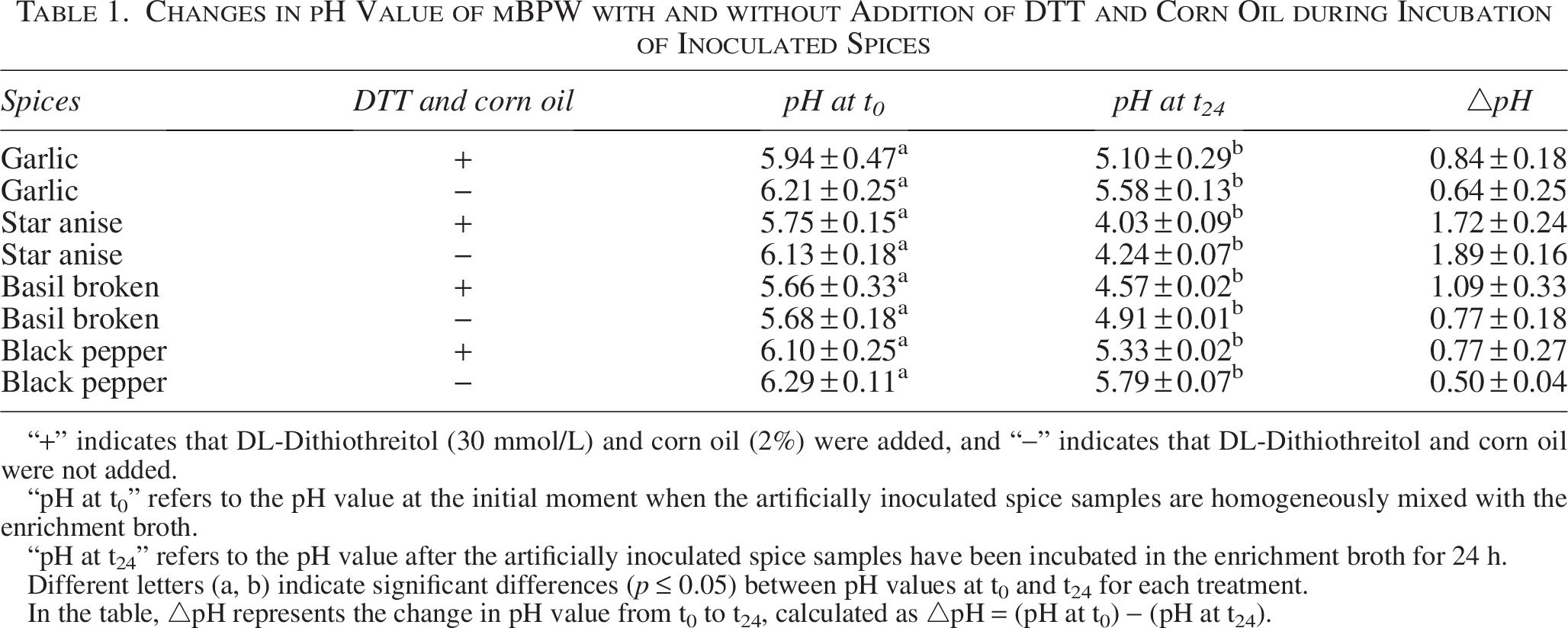
“+” indicates that DL-Dithiothreitol (30 mmol/L) and corn oil (2%) were added, and “−” indicates that DL-Dithiothreitol and corn oil were not added.
“pH at t0” refers to the pH value at the initial moment when the artificially inoculated spice samples are homogeneously mixed with the enrichment broth.
“pH at t24” refers to the pH value after the artificially inoculated spice samples have been incubated in the enrichment broth for 24 h.
Different letters (a, b) indicate significant differences (p ≤ 0.05) between pH values at t0 and t24 for each treatment.
In the table, △pH represents the change in pH value from t0 to t24, calculated as △pH = (pH at t0) − (pH at t24).
Successful detection of Salmonella in garlic using neutralizer-aided enrichment
Garlic samples were artificially inoculated to evaluate the effectiveness of the optimized enrichment broth with and without the addition of a neutralizer. As demonstrated in Table 2 and Figure 2, compared with treatments without neutralizers, the group with the addition of both DTT and corn oil was effective in recovering Salmonella from garlic (p < 0.05), with similar efficacy observed regardless of the amount of inoculated Salmonella (<50 CFU/g, or <500 CFU/g) and whether a secondary enrichment step in RV medium was applied. However, at the lowest inoculation level (<5 CFU/g), the detection rate was suboptimal (37.5%), possibly due to the incomplete neutralization against allicin. The findings indicated that adding DTT and corn oil during pre-enrichment significantly alleviated the inhibition of Salmonella growth in garlic suspension and improved detection sensitivity, even without the 24-h RV medium enrichment step (Table 2). As a comparison, Salmonella could not be recovered from the garlic enrichment by using the method described in BAM. This could be because DTT reinstated enzyme activity inhibited by allicin due to its structural resemblance to cysteine, potentially reducing allicin’s bacteriostatic efficacy (Rabinkov et al., 1998). Meanwhile, the addition of corn oil could partition hydrophobic antimicrobial substances like allicin from the aqueous phase to the organic phase, which was beneficial for the growth of Salmonella in the enrichment broth (Jean-Gilles Beaubrun et al., 2016).
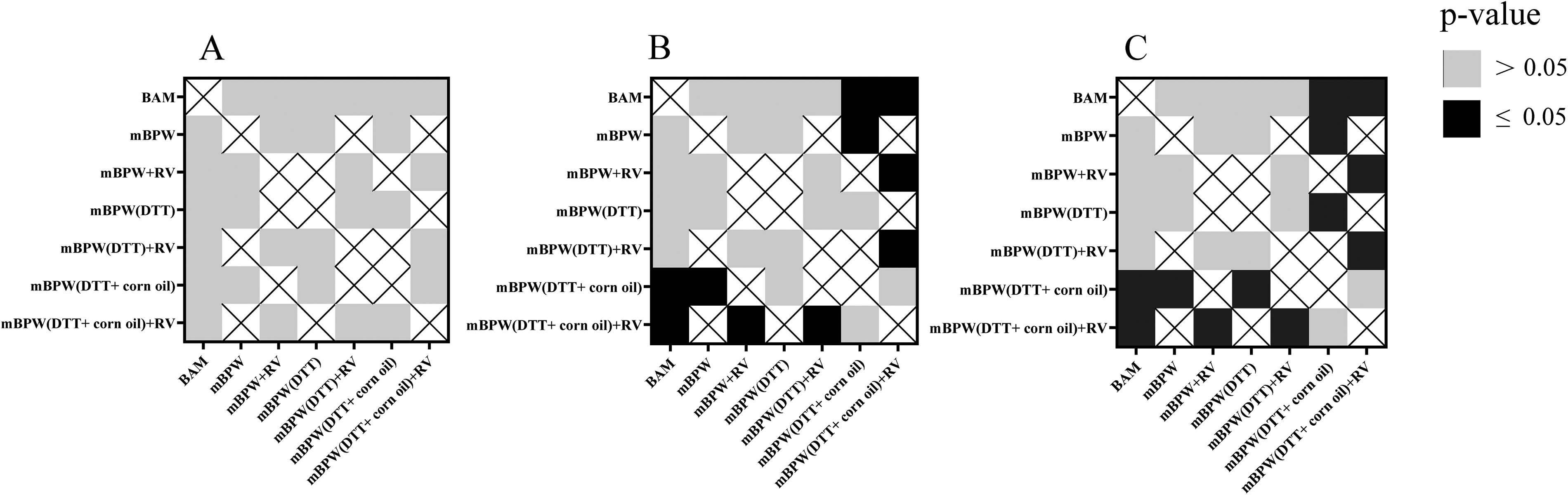
Comparison of significant differences between assays (color labeling indicates the magnitude of the p value). Differences between detection rates were analyzed using Fisher’s exact test.
Detection of Salmonella Typhimurium from Garlic after Pre-Enrichment in mBPW with or without Addition of Neutralizing Agents (DTT or DTT+Corn Oil)
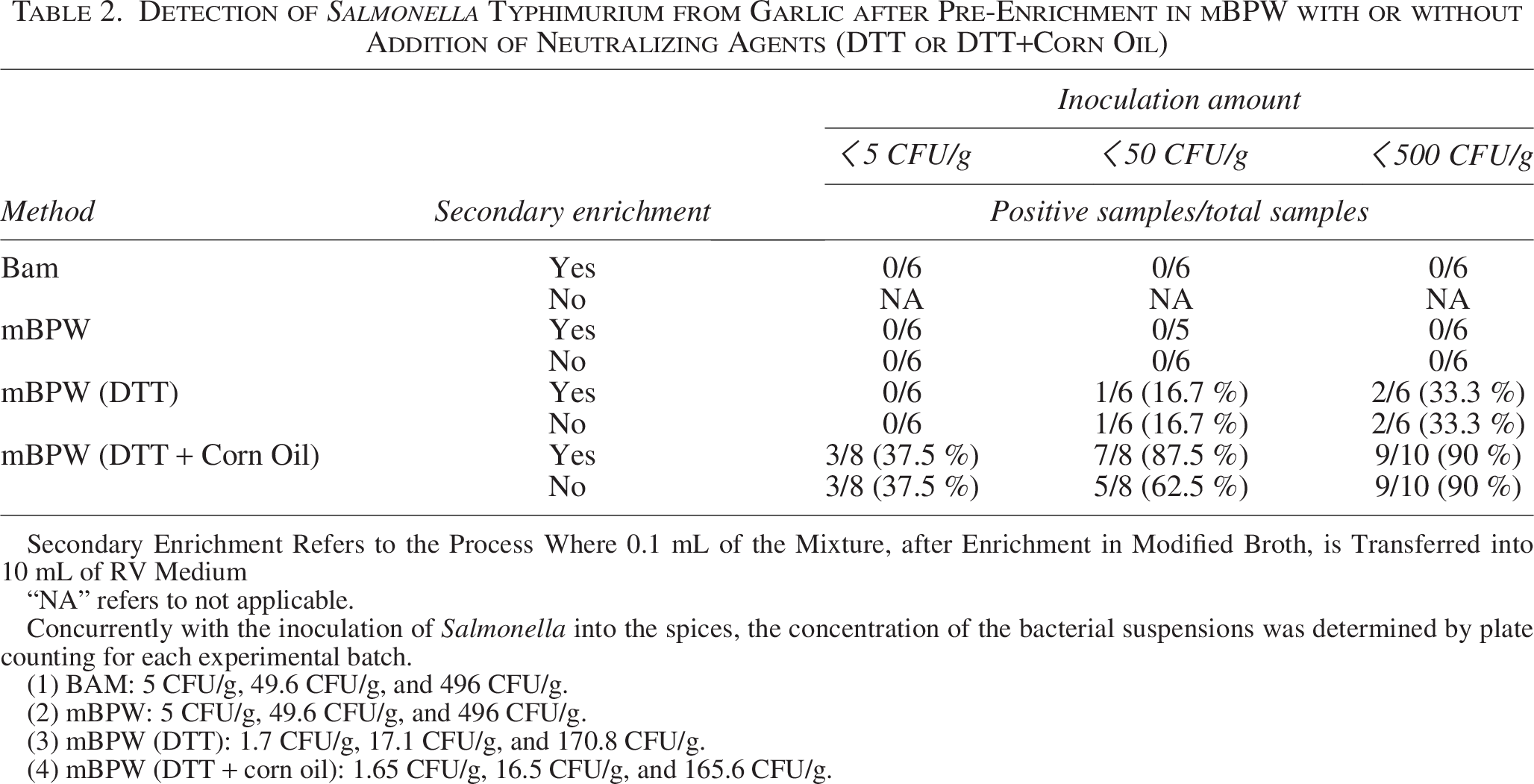
Secondary Enrichment Refers to the Process Where 0.1 mL of the Mixture, after Enrichment in Modified Broth, is Transferred into 10 mL of RV Medium
“NA” refers to not applicable.
Concurrently with the inoculation of Salmonella into the spices, the concentration of the bacterial suspensions was determined by plate counting for each experimental batch.
(1) BAM: 5 CFU/g, 49.6 CFU/g, and 496 CFU/g.
(2) mBPW: 5 CFU/g, 49.6 CFU/g, and 496 CFU/g.
(3) mBPW (DTT): 1.7 CFU/g, 17.1 CFU/g, and 170.8 CFU/g.
(4) mBPW (DTT + corn oil): 1.65 CFU/g, 16.5 CFU/g, and 165.6 CFU/g.
Detection of Salmonella in star anise, black pepper, and basil samples using neutralizer-aided enrichment
To evaluate the versatility of the developed neutralizer method, we attempted to enrich and recover Salmonella from samples of star anise, black pepper, and basil, with the results shown in Table 3. Compared with the BAM method, the detection rate using mBPW without neutralizers was equivalent for black pepper samples (p > 0.05) but significantly higher for star anise samples (p < 0.05). This may be attributed to the roles of magnesium sulfate and glucose in promoting bacterial self-repair (Kim et al., 2022) and the role of sodium pyruvate in promoting bacterial resuscitation (Margot et al., 2015). This suggested that the enrichment process in these spices may rely more on providing conditions favorable for bacterial repair and resuscitation. However, when neutralizers (DTT and corn oil) were added, Salmonella could not be detected from black pepper and star anise samples. In the case of basil, Salmonella could not be recovered regardless of whether neutralizers were added (p > 0.05). This might be because corn oil did not effectively neutralize the antimicrobial effects of essential oils present in basil, black pepper, and star anise, which are known to damage cell membranes (Li et al., 2022; Vo et al., 2025; Zhang et al., 2016). Besides, excess DTT might introduce reductive stress to bacterial cells (Huang et al., 2022), counteracting the recovery effects of magnesium sulfate and sodium pyruvate.
Detection of Salmonella Typhimurium from Anise, Black Pepper and Chopped Basil after Pre-Enrichment in mBPW with or without Neutralizing Agents (DTT + Corn Oil)
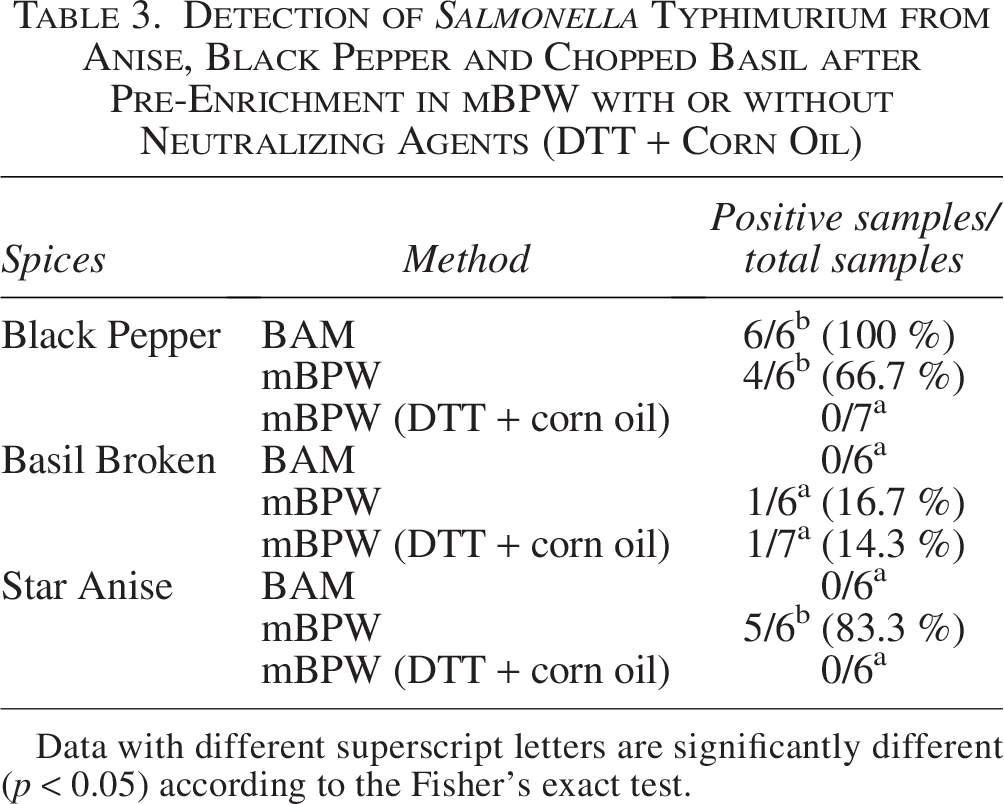
Data with different superscript letters are significantly different (p < 0.05) according to the Fisher’s exact test.
Effective detection of live Salmonella in garlic granules using neutralizer-PMAxx-qPCR
Despite the effectiveness of neutralizers in Salmonella detection from garlic, this culture-based method was time-consuming and could not detect VBNC-state cells. This study explored the application of the PMAxx-qPCR method in garlic granules but was unable to detect viable Salmonella following enrichment in mBPW. However, by incorporating neutralizer-aided enrichment (mBPW with DTT and corn oil) to mitigate the impact of bacteriostatic substances in garlic, the PMAxx-qPCR method significantly improved the detection sensitivity for viable Salmonella, allowing successful detection after two weeks of desiccation storage at initial inoculum levels of 21,300 CFU/g, 2,130 CFU/g, and 213 CFU/g (Fig. 3). The entire process of neutralizer-PMAxx-qPCR can be completed in approximately 26 h, demonstrating its efficiency for viable Salmonella detection. In another study designed for rapid detection using neutralizers, including L-cysteine and DL-serine, and real-time PCR (Barrere et al., 2020), Salmonella was successfully detected in spices, including garlic, within less than 24 h, with an initial inoculation level exceeding 106 CFU/25 g. In comparison, our findings demonstrated that the use of the neutralizer-PMAxx-qPCR method enabled successful detection of viable Salmonella cells even at lower inoculation levels in garlic.
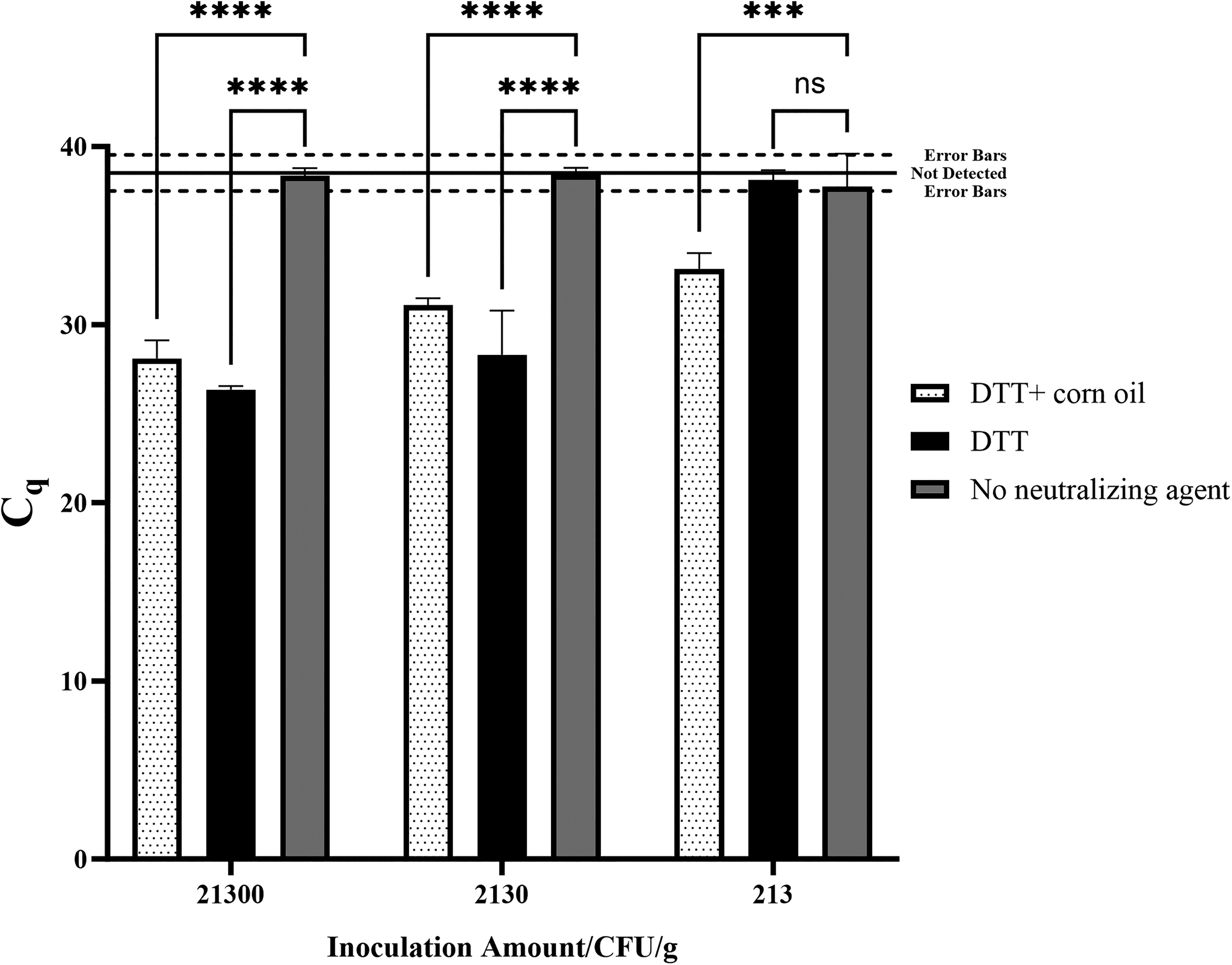
Detection of live Salmonella in garlic samples using the neutralizer-PMAxx-qPCR method. The Cq value represents the cycle threshold during qPCR analysis, indicating the number of cycles required for the fluorescent signal to exceed the threshold above baseline noise, which is used to confirm the presence of Salmonella in the samples. The Cq value is used to assess the detection sensitivity, with a focus on viable cells confirmed by the PMAxx-qPCR method. The solid line represents the limit of detection established by qPCR analysis of uninoculated garlic samples, while the upper and lower dashed lines indicate the range of standard deviation. Signals falling within this range are considered undetectable.
Conclusion
This study presented an optimized methodology for the detection of Salmonella in garlic granules. The triple-strength BPW was used to increase the medium’s buffering capacity. Magnesium sulfate and sodium pyruvate were added to promote the self-repair and recovery. Moreover, DTT and corn oil were used to neutralize the antimicrobial substances in garlic, thereby promoting the growth of Salmonella. When using the optimized mBPW broth with both DTT and corn oil as neutralizing agents, the method effectively detected Salmonella in garlic granules at initial contamination concentrations of less than 5 CFU/g. The optimized mBPW broth was tested on spices other than garlic granules, demonstrating its effectiveness (without neutralizing agents) in detecting Salmonella at initial concentrations below 50 CFU/g in star anise and black pepper. The combination of the optimized mBPW broth with PMAxx-qPCR significantly accelerated the detection of Salmonella in garlic, enabling the detection of viable Salmonella at initial contamination concentrations as low as 213 CFU/g.
Authors’ Contributions
B.L.: Experiment designing and performing, original article writing; Y.Z. and Y.H.: Experiment performing, validation; J.J.: data analyzing, writing—review and editing; S.L.: Experiment designing, article editing and writing; H.Z.: Methodology, project supervision. All the authors read and approved the article.
Footnotes
Funding Information
This work was financially supported by the National Natural Science Foundation of China (No. 32202186) and the Natural Science Foundation of Guangdong Province, China (No. 2024A1515012086).
Disclosure Statement
No competing financial interests exist.