







Abstract
Bovine subclinical mastitis (SCM), unlike clinical mastitis, characterized by the absence of visible symptoms such as swelling and abnormal milk, represents an under-recognized challenge for microbial safety within the dairy industry. Because SCM lacks visible signs, it can serve as a silent source of contamination that is not easily identified or managed during milk production. The review critically examines the multifaceted interplay between SCM and the transmission of such pathogens in milk, highlighting their entry routes, detection modalities, and contributory risk factors to the dairy industry, considering global and regional variability, the prevalence, diversity, and emerging trends in milk-borne pathogens are considered. To address these challenges, an integrative One Health-aligned mitigation framework that combines microbial risk assessment, genomic surveillance, and data-driven risk prioritization is recommended. Such strategies aim to harmonize detection protocols, optimize antimicrobial stewardship, and strengthen control measures across dairy value chains. By synthesizing current knowledge, this review article underscores the importance of SCM as a food safety issue and offers a critical foundation for developing comprehensive strategies to mitigate public health risks.
Introduction
Among the various factors influencing raw milk safety, bovine subclinical mastitis (SCM) is a risk factor that often goes undetected owing to its asymptomatic nature. This condition, caused by intramammary infections with no visible signs of disease, often goes unnoticed, thereby facilitating the potential for the silent entry of microbial foodborne pathogens into the milk production chain. The European Food Safety Authority (EFSA) has recognized mastitis as a pathogenic disease risk linked to contamination of raw milk (EFSA, 2015). This risk is further challenged by the implementation of Regulation European Union (EU) 2019/6 in early 2022, which restricts antimicrobials to prevent mastitis and imposes guidelines for their therapeutic use. This regulation aims to reduce antimicrobial resistance (AMR) (European Commission, 2019). These limitations raise new concerns regarding the increased likelihood of foodborne pathogens entering the milk supply chain. The combined challenge of regulated treatment options and the hidden nature of SCM underscores the urgent need for effective detection and risk control measures to protect the microbial safety of raw milk and dairy products.
Foodborne pathogens Staphylococcus aureus and Escherichia coli are widely recognized as the most prevalent causing bovine SCM (Guimarães et al., 2017; Rifatbegović et al., 2024; Rychshanova et al., 2022). These pathogens have also been associated with outbreaks of consumption of raw milk and dairy products (Denny et al., 2008; Johler et al., 2015), although a link has not been identified.
Other contagious pathogens, including Streptococcus agalactiae, S. dysgalactiae, Mycoplasma bovis, and Corynebacterium bovis, usually colonize the udder and teat skin during milking, whereas environmental pathogens, including S. uberis, Klebsiella spp., Enterococcus spp., coagulase-negative staphylococci (CoNS), and Pseudomonas aeruginosa, usually originate from the cow’s surroundings (e.g., bedding, water sources, and housing facilities) (Cheng and Han, 2020; Gonçalves et al., 2016; Maunsell et al., 2011). Less frequently, Listeria monocytogenes and Bacillus cereus have been implicated in mastitis cases (Eid et al., 2023; Hunt et al., 2012). Milk from cows with SCM can also serve as a source of antimicrobial residues from mastitis treatment, and the repeated treatments promote the emergence and spread of AMR strains. In addition to these public health concerns, SCM induces notable alterations in raw milk quality, such as changes in physicochemical characteristics, somatic cell counts (SCC), and enzyme activities, which can ultimately affect dairy product yield, safety, and overall consumer acceptance.
Consequently, the potential food safety risks associated with SCM-related microorganisms in the dairy chain need to be thoroughly investigated. This review aims to comprehensively investigate the role of SCM in introducing microbial contamination into raw milk and dairy products and to evaluate the implications of SCM for dairy food safety by exploring associated foodborne pathogens and risks in raw milk and dairy products while proposing predictive and mitigation strategies to enhance milk safety within a circular bioeconomy framework. Such measures are essential for reducing the likelihood of microbial contamination in the dairy food chain, ensuring compliance with food safety regulations, and protecting public health.
Bovine SCM: Implications to Milk Safety and Comparison with Nonsubclinical
Despite being a well-known issue in dairy farming, the role of bovine SCM in the introduction of foodborne pathogens into the dairy supply chain remains underexplored. Bovine SCM is mammary gland inflammation indicated by an increased SCC that occurs without visible clinical symptoms in cows or milk (International Dairy Federation, 2022). This silent infection, predominantly caused by bacterial pathogens, often goes undetected, increasing the risk of contaminated milk entering the supply chain.
However, the question arises: “How do the microbial risks in milk from cows with SCM compare with those from nonsubclinical cows?” Understanding these differences is essential for both food safety and public health. Figure 1 provides a comparative overview of the pathogen risks associated with raw milk from cows with SCM and healthy cows.
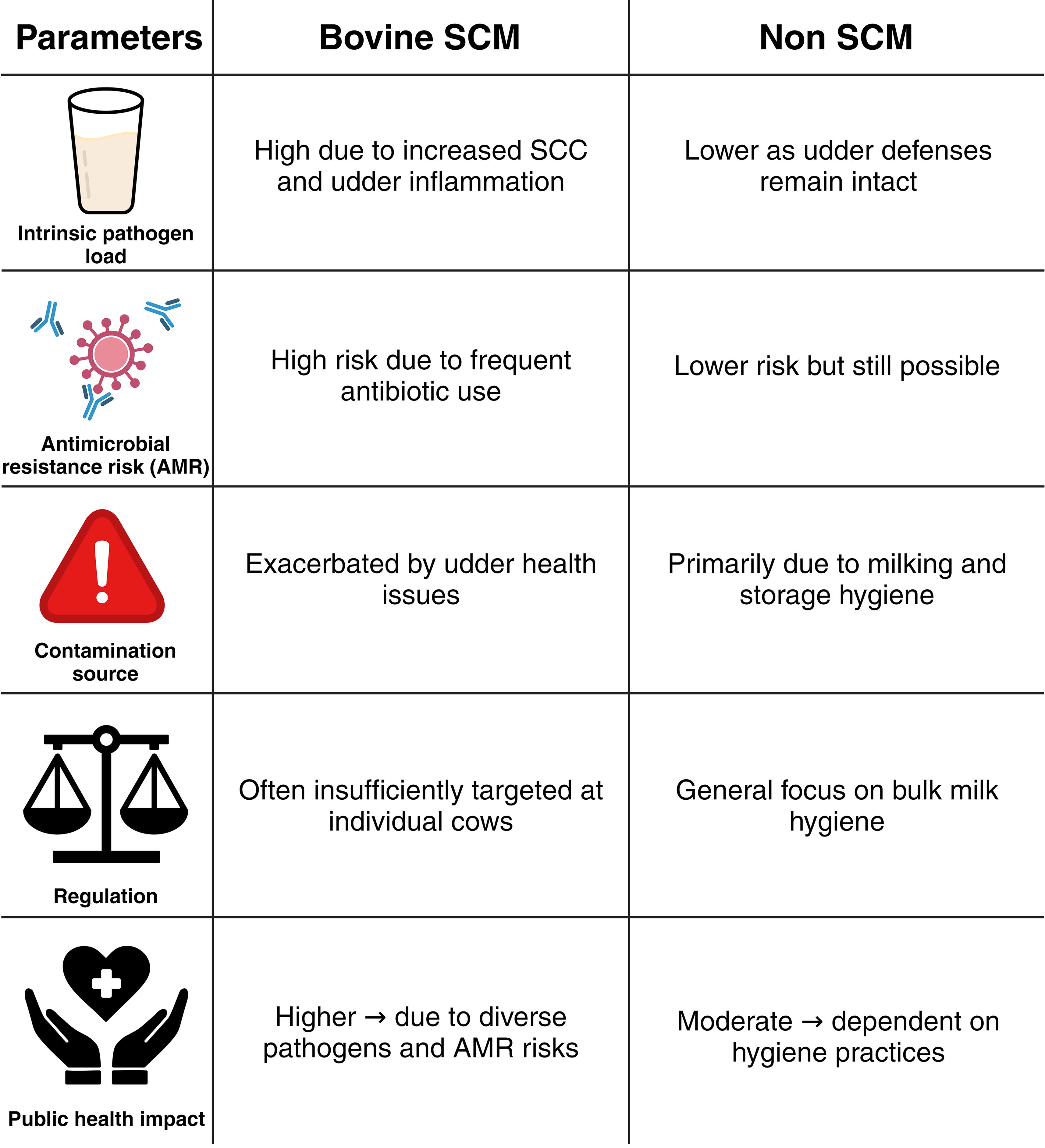
Comparative risks in raw milk from bovine SCM and non-SCM. A summary of key differences in microbial pathogen risks, AMR, contamination sources, and public health impact of raw milk from healthy dairy cows versus cows with SCM. Created in BioRender. Della, D. (2025) https://BioRender.com/j30k038.
Comparative studies have indicated that SCM milk introduces pathogens directly from intramammary infections, resulting in significantly higher total bacterial counts than milk from healthy cows, including dangerous foodborne pathogens. Infections lead to reduced microbial diversity and dominance of pathogenic genera, primarily Staphylococcus and Streptococcus, while beneficial microbes, such as Lactococcus and Lactobacillus, are diminished. Dysbiosis degrades milk quality and increases the likelihood of contamination during processing, thereby elevating food safety risks (Alessandri et al., 2023; Gonçalves et al., 2018; Sahoo et al., 2024; Zhu et al., 2024). Moreover, AMR profiles in SCM-derived milk are notably concerning, driven by the frequent use of antimicrobials to manage mastitis. For instance, S. aureus isolates from SCM cases exhibit high resistance to β-lactams (e.g., penicillin and cefoxitin), driven by the widespread use of antimicrobials in mastitis management (Király et al., 2024). Although milk from healthy cows tends to maintain a more balanced microbial community due to effective immune defenses, it is not entirely free from risks, as factors such as biofilm formation on milking equipment or suboptimal storage conditions can still lead to contamination (Fusco et al., 2020). Regulatory frameworks often fail to address individual cow health by relying on buk milk metrics, such as SCC. For example, the EU’s SCC threshold of 400,000 cells/mL for bulk tanks allows the dilution of high-risk SCM milk with milk from healthy cows, thereby masking contamination (European Parliament and Council of the European Union, 2004). This oversight can lead to the unintentional inclusion of high-risk batches of mastitis cows in the supply chain.
Source of Entry and Occurrence of Foodborne Pathogens Related to Bovine SCM
Milk contamination in the dairy supply chain can occur via several interconnected pathways. The primary reservoirs of mastitis-causing pathogens include infected mammary glands, contaminated bedding, milking equipment, and the farm environment. Unsanitary milking practices, such as inadequate cleaning of milking equipment and poor personal hygiene among dairy workers, can spread foodborne pathogens in the milk system. Although the primary pathogens implicated, S. aureus pose potential zoonotic risks as it produces heat-stable enterotoxins (e.g., SEA, SEC) that cause Staphylococcal foodborne disease in humans (Abril et al., 2020), its proliferation in milk-related outbreaks is not well reported as it rarely causes hospitalization. Exploiting poor milking hygiene, this bacterium colonizes teat canals, evades the bovine immune system through biofilm formation, and damages mammary tissues via toxin production (Campos et al., 2022). Furthermore, virulence genes such as mecA (conferring β-lactam resistance), coa (coagulase), pvl (Panton–Valentine leukocidin), spa, and foodborne-related enterotoxin genes, such as sea and sec, highlight the potential public health threats posed by these pathogens. Surveillance gaps in many regions where screening protocols for enterotoxigenic or methicillin-resistant S. aureus (MRSA) strains in bulk milk are lacking further elevate this risk.
Similarly, E. coli is frequently associated with SCM owing to its environmental persistence in bedding, manure, water, and soil. Studies have highlighted its widespread presence in raw milk, including Shiga toxin–producing strains (Shiga toxin–producing E. coli) carrying virulence genes such as stx1 and stx2 (Chowdhury et al., 2025), including the O157:H7 strains, which represent a serious threat to both dairy safety and public health (EFSA et al., 2020). Some strains often have resistance genes (e.g., blaTEM and tetA) to amoxicillin, ampicillin, and penicillin and can form biofilms, enhancing persistence in udders and resistance to treatments (Ombarak et al., 2019). Serotypes such as O157 and O111, associated with human outbreaks, have been identified in cases of bovine mastitis (Murinda et al., 2019). The significant sources of entry and transmission of foodborne SCM are shown in Figure 2.
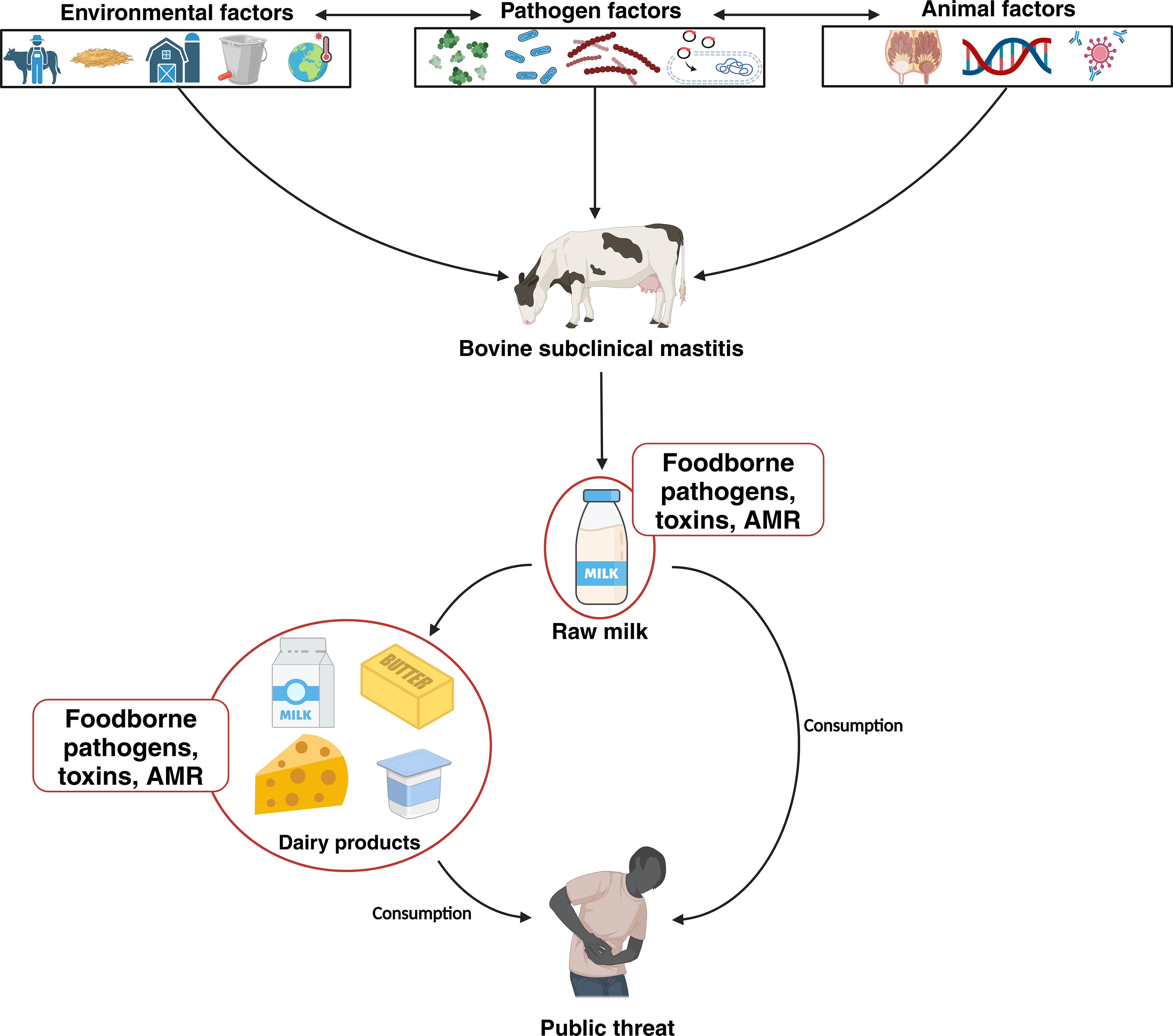
Pathways of foodborne-related SCM foodborne pathogens leading to public health threats. A schematic overview of contamination pathways and the factors contributing to foodborne-related subclinical mastitis pathogens entering the dairy chain and its public health threats. Created in BioRender. Della, D. (2025) https://BioRender.com/p23a050.
Emerging Foodborne Pathogens Related to Bovine SCM
Recent changes in microbial virulence, AMR, climate change, and modern farming practices have not only led to the identification of new hazards but have also increased the threat from previously known pathogens (EFSA, 2018).
Among these hazards, L. monocytogenes is rarely isolated from SCM. It can colonize the udder and contaminate raw milk (Hunt et al., 2012), and L. monocytogenes causes listeriosis, with a high mortality rate, especially in vulnerable populations (WHO and FAO, 2004).
B. cereus, an endospore-forming bacterium, poses another challenge. Its ability to survive pasteurization and produce heat-stable toxins under temperature abuse makes it a threat (EFSA, 2016). This poses a unique challenge to non-heat-treated and heated dairy products because of their ability to form heat-resistant endospores. These spores can survive environmental stress and persist in dairy products (Eid et al., 2023; Tirloni et al., 2022). Additionally, B. cereus secretes proteases and lipases that can degrade milk proteins and fats, leading to spoilage and reduced dairy product shelf life (Kumari and Sarkar, 2016).
Salmonella spp. can be present in raw milk through environmental contamination or due to bacteria colonizing the intestinal tract that can cause a range of gastrointestinal illnesses in humans, from mild discomfort to severe infection (EFSA, 2015; Weldeabezgi et al., 2020). A Mexican study documented Salmonella spp. in the milk of cows with SCM (Olivares-Pérez et al., 2015).
Opportunistic pathogens such as CoNS are frequently isolated from SCM cases. Their presence often signals underlying udder health issues and poor infection control practices on dairy farms (De Buck et al., 2021). Some CoNS contain enterotoxin genes and methicillin-resistance determinants (e.g., mecA), which can transfer to other bacteria, including S. aureus (Salamandane et al., 2022; Smith and Andam, 2021).
Streptococcus equi subspecies zooepidemicus, implicated in a recent outbreak linked to raw milk in Italy, can cause severe infections such as sepsis and meningitis and contribute to mastitis in dairy animals (Bosica et al., 2023; Kim et al., 2022). This dual role of S. zooepidemicus as both a mastitis-causing agent and a zoonotic foodborne pathogen highlights its potential impact on public health. The recent outbreak underscores the need for stringent control measures, including pasteurization and hygiene protocols, to prevent zoonotic transmission through dairy products.
Campylobacter jejuni is a zoonotic pathogen commonly associated with human foodborne gastroenteritis. A documented case of C. jejuni-induced mastitis occurred in a Holstein cow that presented with symptoms such as udder pain, fever, and discolored milk with small clots. C. jejuni can infect bovine udders, leading to mastitis and potential contamination of raw or under-pasteurized milk, and can act as a direct transmission route for campylobacteriosis in humans, posing a notable public health risk (Gudmundson and Chirino‐Trejo, 1993). However, cases of subclinical are unreported.
Impact of Foodborne Pathogens Related to SCM in the Dairy Chain and Environment
The safety of dairy products begins with raw milk sources, where microbial contamination can create a domino effect throughout the production chain. This underscores the importance of early identification, continuous monitoring, and effectiveness, as they can persist and pose significant public health risks (De Klerk and Robinson, 2022).
In raw milk products, S. aureus contamination can lead to prolonged clotting times and compromised quality parameters (Zalewska et al., 2025). Fermentation provides some level of pathogen reduction, but it is ineffective against pathogens; for example, thermostable enterotoxins produced by S. aureus remain active in fermented products as they resist fermentation and mild heat treatment (Emiliano et al., 2024; Hennekinne et al., 2012).
Heat-treated dairy products, such as pasteurized milk, yoghurt, and processed cheeses, are subjected to thermal treatment for pathogen reduction. While pasteurization is effective against most vegetative pathogens, they exhibit survival mechanisms, such as spore formation or the production of heat-stable toxins (Lindsay et al., 2021). As a result, heat-treated dairy products remain at risk of contamination. This underscores the need to effectively control foodborne pathogens associated with SCM at the raw milk stage.
Another major challenge is cross-contamination during post-pasteurization handling and packaging, as it can persist in the dairy processing environment, colonizing equipment, processing lines, and storage facilities. Biofilms formed by L. monocytogenes on these surfaces are a continuous source of contamination, leading to the reintroduction of pathogens into pasteurized dairy products (Ribeiro et al., 2023).
Addressing the risks posed by foodborne pathogens related to SCM requires an integrated approach spanning the entire dairy production chain. At the farm level, stringent control measures (hygiene, testing, and infection control) are applied in combination with processing control measures such as equipment design, biofilm prevention, and environmental monitoring. Regulatory interventions, such as mandatory pasteurization and stricter standards for raw milk products, can further enhance food safety (Liu et al., 2023). Finally, increased consumer awareness and education regarding the risks of consuming raw milk and unpasteurized dairy products are essential for improving public health outcomes (Fagnani et al., 2021).
SCM as a Driver of AMR, a Threat to Dairy Food Safety
The intersection of SCM and AMR threatens food safety and public health. Horizontal gene transfer in the udder or processing areas may disseminate these resistances along the dairy chain (Liu et al., 2020; Vinayamohan et al., 2022). The rise in AMR is a significant public health crisis, often called a “silent pandemic.” The World Health Organization (WHO) and European Centre for Disease Prevention and Control (ECDC) have identified AMR as one of the greatest threats to global health. With the current legislation, the balance between its use and effectiveness for disease control is paramount. AMR causes an estimated 700,000 deaths annually, with projections of millions more if adequate control measures are not implemented. In the EU alone, AMR is responsible for ∼30,000 deaths each year (ECDC, 2024).
For decades, antimicrobials have been the primary tool for managing mastitis in dairy cows, both for treatment and as preventive measures against new infections. The asymptomatic nature of SCM means that infections can persist and recur, resulting in repeated antimicrobial interventions that inadvertently drive the development of resistant bacterial strains (Oliver and Murinda, 2012). Several studies highlight SCM as an important reservoir for multidrug-resistant pathogens, contributing to persistent bacterial infections and facilitating the dissemination of resistance genes throughout the milk production chain (Gomes and Henriques, 2016; World Health Organization, 2012).
To address these issues, the EU introduced Regulation 2019/6 on Veterinary Medicinal Products in 2022, prohibiting prophylactic antimicrobial use and strictly controlling antimicrobial administration (European Parliament, 2019). While these regulations aim to mitigate AMR, they complicate SCM management, compelling farmers to adopt alternative infection prevention strategies. Additionally, resistant pathogens remaining in the dairy chain continue to threaten public health and food safety (Naranjo-Lucena and Slowey, 2023).
Overusing and misusing antimicrobials such as β-lactams (e.g., penicillin and ampicillin), tetracyclines, and macrolides (e.g., erythromycin) in livestock have accelerated the selection of resistant bacterial strains. This misuse creates a zoonotic bridge, allowing the transfer of resistance traits between animals and humans, thereby stressing the importance of prudent antimicrobial use, routine sensitivity testing, and robust surveillance measures. Studies indicate that up to 50% of mastitis-causing pathogens, such as S. aureus, S. agalactiae, and E. coli, resist commonly used antimicrobials, such as β-lactams, including penicillin (Garcia et al., 2019). This resistance complicates treatment protocols as bacteria that survive antimicrobial exposure become more resilient. As a result, milk from cows with SCM may harbor resistant bacteria and antimicrobial residues, posing dual threats to food safety.
Among various pathogens, S. aureus is notorious for its ability to acquire multidrug resistance, including MRSA (Algammal et al., 2020). The mecA gene, conferring methicillin resistance, has been detected in milk from subclinically infected cows, underscoring their role as reservoirs for resistant bacteria within the dairy production chain (Haq et al., 2024; Zaatout and Hezil, 2022). MRSA can be transmitted between dairy cattle and humans through contaminated raw milk and inadequate pasteurization.
Integrating Circular Bioeconomy Concepts for Enhanced Dairy Food Safety in the Context of SCM
In the context of SCM, integrating circular bioeconomy concepts offers an innovative pathway to enhance dairy food safety. The concept of a circular bioeconomy emphasizes the sustainable use of biological resources to generate value-added products, reduce waste, and establish closed production loops (Stegmann et al., 2020; Venkatesh, 2022). This involves investing in new infrastructure, enhancing staff training, and collaborating closely with regulatory bodies to ensure that every stage from waste collection to final product conversion meets stringent safety and quality standards. Beyond technology and economics, the holistic integration of circular bioeconomy strategies requires reconfiguring existing dairy production systems.
In dairy operations, SCM often leads to elevated SCC and increased microbial contamination, rendering milk unsuitable for direct human consumption. This approach mitigates public health risks and maximizes the utility of what would otherwise be wasted, thus fostering a more sustainable dairy system. Such comprehensive strategies significantly contribute to the dairy sector’s resilience and broader climate change mitigation efforts.
One approach is to utilize the valorization processing of dairy byproducts and waste milk. Although unsuitable for direct consumption, milk from cows with SCM can be used as a raw material for biofuels, biomaterials, and other bio‐based chemicals (Sarangi et al., 2024). For instance, Beneragama et al. (2017) demonstrated that waste milk, typically problematic owing to antimicrobial residues from mastitis treatments, can be co-digested with dairy manure under thermophilic conditions to generate renewable energy. Ozonation treatment was shown to be effective in removing antibiotic residues (Liu et al., 2022). Consequently, this strategy reduces the environmental impact and diversifies revenue streams within the dairy sector, but also reinforces food safety by ensuring that potentially contaminated milk does not reenter the dairy chain.
Climate Change and Its Cascading Effects on Dairy Food Safety: A Focus on SCM
Climate change is a global threat to global dairy systems, destabilizing ecosystems and indirectly increasing risks to dairy food safety through its impact on bovine health and environmental conditions. Unpredictable fluctuations in temperature and other climatic variables can compromise the environment, and the bovine immune system can create favorable conditions for the growth of foodborne pathogens (Bagath et al., 2019; Das et al., 2016). For example, a study predicting raw milk losses under climate change scenarios in EU found that regions such as the Mediterranean, which are already experiencing hotter, drier conditions, face a projected 3.21% increase in milk losses due to mastitis by 2050 if no adaptive measures are implemented (Guzmán-Luna et al., 2022). This projection underscores how climate-induced changes contribute to a heightened incidence SCM and food safety challenges.
The prevalence of SCM and its associated pathogens varies significantly by region, reflecting localized climatic and management vulnerability. Similarly, in southern Brazil, higher relative humidity was positively correlated with SCM incidence, highlighting how regional climate variability influences pathogen survival and transmission. These shifts are compounded by heat stress in dairy cows, which weakens immune responses and makes herds more susceptible to infections (Corrêa et al., 2024). Meta-analytical research in Africa has reported a pooled SCM prevalence approaching 48%, with areas experiencing both drought and heavy rainfall facing a dual challenge: Water scarcity may lead to poor sanitation and pathogen concentration. In addition, heavy rain can result in environmental contamination (Khasapane et al., 2023). Resource-limited daily systems are particularly vulnerable to climate-induced challenges.
The cascading effects of climate change extend beyond animal health. SCM leads to milk with elevated SCC and detectable levels of pathogens and increases the need for antimicrobial interventions where regulations are lacking, which may drive the emergence of resistant strains. Such dynamics present serious challenges to public health and emphasize the need for tailored region-specific adaptive management practices.
Approach to Predict Foodborne-Related SCM Pathogens in the Dairy Chain
Ensuring the safety of dairy production requires a proactive approach to identifying, assessing, and mitigating the risks posed by foodborne pathogens linked to SCM. Predictive tools, including microbial risk assessment (MRA) and risk ranking methodologies, are essential for systematically evaluating hazards and prioritizing intervention strategies to manage these risks effectively (Lindqvist et al., 2020). Therefore, tools and systematic frameworks are essential. MRA includes various mathematical interpretations such as the probability of contamination, prevalence of the pathogen, predictive models, and exposure assessment, which quantify the occurrence of the pathogen at different stages of the food chain (Ramos et al., 2021; Shevchenko et al., 2023). Figure 3 outlines the various steps involved in the MRA. These steps are crucial for the risk management framework to increase public health safety and well-being. The MRA also supports the development of regulatory standards and production guidelines to control these pathogens, ultimately ensuring safer milk products for public consumption.
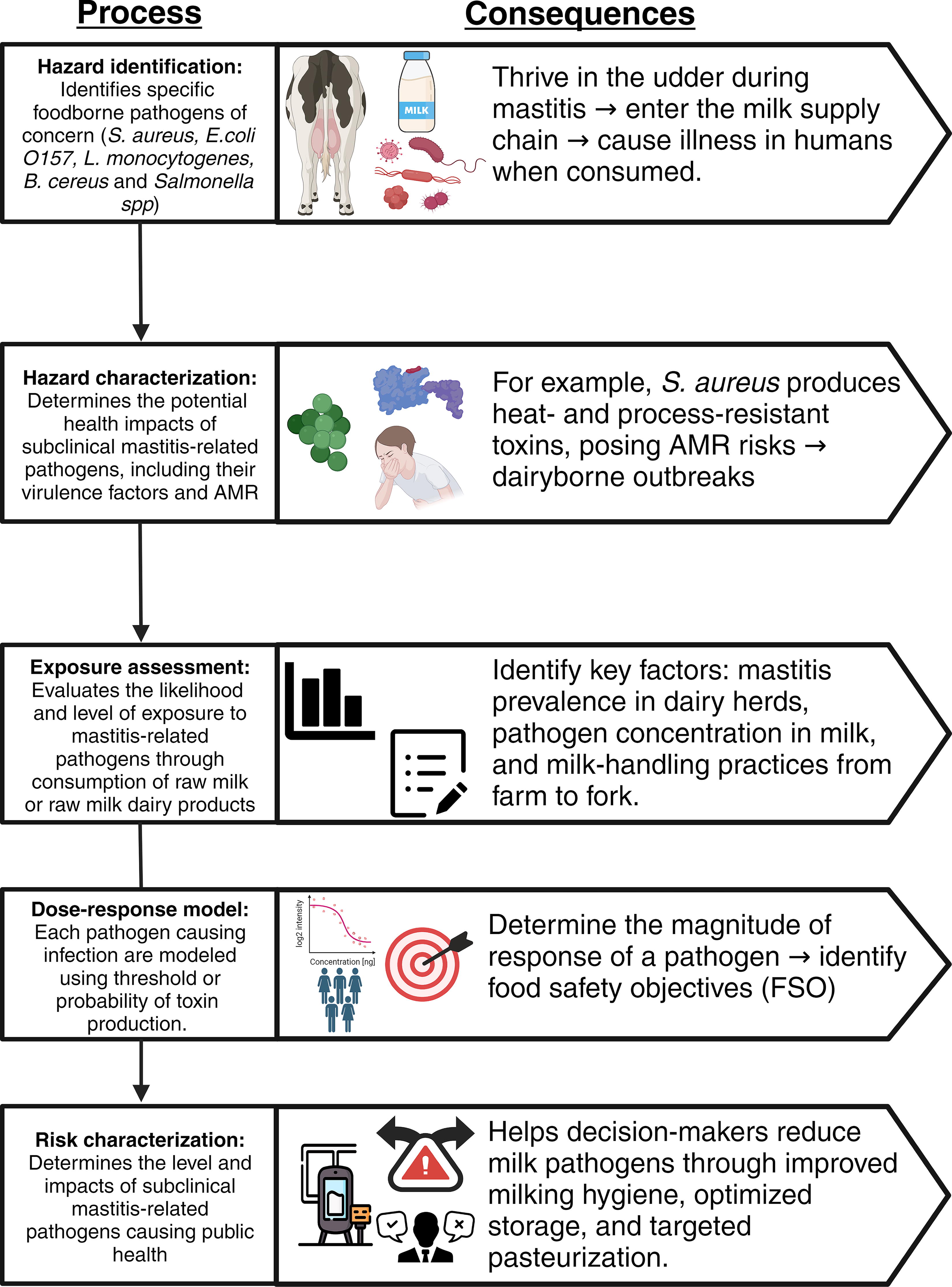
MRA process for foodborne pathogens related to bovine SCM. This figure outlines the various steps in conducting MRA, especially those associated with clinical or subclinical mastitis. These steps are crucial for the risk management framework to increase public health, safety, and well-being. Created in BioRender. Della, D. (2025) https://BioRender.com/c04v013.
Part of the MRA is risk ranking, which can be defined as the evaluation of the perceived relative level of risk each issue presents to consumers based on the likelihood and severity of adverse impacts in a target population; thus, risk management resources can be optimally applied to reduce overall foodborne public health risks (EFSA, 2012; FAO, 2020). Risk ranking aims to identify and prioritize foodborne pathogens associated with bovine SCM that pose the highest risks to public health and the dairy supply chain. According to Food and Agriculture Organization, the process followed three key steps (Table 1).
By scoring pathogens on these criteria, those with high incidence rates, severe health impacts, substantial economic consequences, or strong contamination potential are prioritized, allowing decision-makers to focus on pathogens that pose the most significant risk to both public health and the dairy industry (Garcia et al., 2019). This ranking informs decision-makers about which pathogens warrant more stringent control measures, such as enhanced surveillance, improved sanitation protocols, or the development of targeted vaccination strategies.
The final phase, prioritization, focuses on identifying high-risk pathogens to target specific interventions. Mastitis-related pathogens can contaminate dairy products at various stages from farm to table and are associated with significant health risks (Van Asselt et al., 2017).
The outcomes of the risk ranking process will support decision making for policymakers, dairy producers, and food safety authorities. Identifying high-risk pathogens can guide resource allocation and the development of targeted interventions. Control measures, such as hygiene protocols, milk testing, and equipment sanitation procedures, can be implemented at critical control points in the dairy production process. Public health authorities can also use these results to design consumer education campaigns on the risks of consuming unpasteurized milk products. Future efforts should refine the methodology, incorporate country-specific data, and engage stakeholders to ensure a comprehensive and effective risk ranking process.
Critical Analysis of Methods for Detection of Foodborne Pathogens Related to SCM in Raw Milk and Dairy Products
Detecting foodborne pathogens associated with SCM is vital for ensuring dairy product safety, safeguarding animal welfare, and maintaining the economic sustainability of the dairy industry. Innovations in rapid pathogen detection and predictive modeling can improve the early detection of SCM and mitigate the risks to dairy food safety (Pakrashi et al., 2023).
Conventional measures, such as SCC, and the California Mastitis Test provide initial signs of inflammation but they do not specifically identify the causative pathogens, potentially obscuring the contamination source (Ramuada et al., 2024). A significant hurdle in the SCM pathogen detection is the deviation from standardized methods. Inconsistent protocols, sometimes used across traditional culture techniques and alternative methods, can lead to underreporting or misidentification of contamination sources. Moreover, the complex composition of milk with its proteins, fats, and SCC can interfere with assays, highlighting the need for improved standardized sample preparation techniques, such as milk filtration and selective enrichment.
Culture-based methods remain the cornerstone for pathogen detection. Using blood agar for bacterial culture is cost-effective and supports a wide range of organisms, offering valuable initial screening data, such as growth patterns and hemolysis characteristics (Adkins et al., 2017). On-farm culture systems, such as AccuMast®, provide quicker diagnostics, typically within 18–24 h, but their high cost and narrow detection range necessitate confirmatory testing (Ferreira et al., 2018; Ganda et al., 2016). Complementary biochemical assays are essential for species confirmation (Altheide, 2020); however, they are time-consuming and depend on prior culturing, limiting their stand-alone utility (Wilson et al., 2019). After the pathogen is detected, antimicrobial-susceptibility testing can be conducted on the cultured isolate in accordance with Clinical and Laboratory Standards Institute guidelines to guide effective treatment (Humphries et al., 2018).
Immunodetection methods, including enzyme-linked immunosorbent assays, offer faster results, often within 3–4 h, and are widely employed for detecting pathogens such as Salmonella, E. coli, Listeria, and S. aureus. Similarly, biosensors provide near real-time, on-site detection but face limitations due to high initial costs, restricted multiplexing capabilities, and interference from the milk matrix (Kour et al., 2023). Molecular methods, particularly PCR-based techniques, offer high sensitivity and the ability to simultaneously detect multiple pathogens through multiplex PCR. However, challenges such as effective DNA extraction and the presence of milk inhibitors can affect the accuracy if not used correctly. Additionally, PCR that does not distinguish between live and dead cells needs to be addressed by viability PCR, which uses pretreatment agents, such as propidium monoazide, to target viable cells (Magro et al., 2023). Specific methods, such as whole-genome sequencing and metagenomics, provide comprehensive pathogen identification, source tracking, and AMR profiling all in one method, and these techniques are often constrained by cost, processing time, and the need for specialized bioinformatics expertise (Khasapane et al., 2024; Tartor et al., 2021; Zhu et al., 2024). Each method has its strengths and limitations, which are outlined in Table 2, to comprehensively compare the detection methods for foodborne pathogens related to SCM.
ELISA, enzyme-linked immunosorbent assay; mPCR, multiplex PCR.
Given the strengths and limitations of each method, a multifaceted diagnostic approach appears to be the most promising. Integrating routine SCC screening with alternative methods, such as rapid PCR and targeted culture techniques, can balance the speed and precision. Standardization and integration of these advanced methods into comprehensive herd management systems are crucial for reducing antimicrobial overuse, preventing foodborne outbreaks, and ensuring the long-term safety and sustainability of dairy products.
One Health Approach in SCM and Dairy Safety
A One Health approach that integrates animal, human, and environmental health provides a comprehensive framework for tackling these interlinked issues. The key to the One Health strategy is the development of integrated surveillance systems that track pathogen prevalence, virulence, and resistance profiles as well as antimicrobial usage across the dairy supply chain. Collaborative efforts among veterinarians, microbiologists, environmental scientists, epidemiologists, and public health experts have enabled early detection and timely assessment. This integrated surveillance system supports the deployment of a standardized approach with advanced diagnostic tools, informs MRAs, and guides risk ranking, which are essential steps to ensure that contaminated milk is identified and managed before reaching consumers.
Environmental management of manure and wastewater from dairy operations can harbor mastitis-causing bacteria, including those with enhanced resistance and virulence, which may contaminate water sources and soil. By adopting sustainable practices, such as monitoring, advanced waste treatment, responsible manure management, and stringent effluent control, dairy farms can reduce the environmental reservoirs of foodborne pathogens. These measures are vital for mitigating contamination risks during milk collection and processing (Fréchette et al., 2021; Klaas and Zadoks, 2018).
Aligning regulatory policies with ongoing research is essential for creating a cohesive One Health framework that prioritizes food safety. Policymakers must invest in integrated surveillance and prevention systems to maximize the use of current technologies to support industry, including alternative therapies that reduce antimicrobial reliance, and encourage cross-sector partnerships that bridge animal health, food safety, and environmental protection (Millar et al., 2023; Soutelino et al., 2022). Bacteriophage, probiotics, immune modulators, and natural antimicrobials can treat SCM without antibiotics (Cheng and Han, 2020; Li et al., 2023). Genetic selection for disease-resistant cattle, combined with improved herd management (e.g., optimized milking routines and stricter biosecurity), further reduces SCM incidence (Hu et al., 2020).
Conclusion
This narrative critical review explored SCM’s factors affecting dairy food safety and public health in SCM. Milk from cows affected by SCM differs from that of healthy cows, exposing the dairy chain to concealed risk. The asymptomatic nature of SCM facilitates the undetected entry of foodborne pathogens, including S. aureus and E. coli, alongside emerging threats such as S. equi subspecies zooepidemicus, Salmonella spp., B. cereus, and L. monocytogenes. Each pathogen brings unique challenges, from heat-stable toxins and spore formation to AMR. These microbial hazards can affect raw, fermented, and even pasteurized dairy products, highlighting how a singular focus on final product testing is insufficient. The impact of these pathogens on dairy products emphasizes how contamination can lead to public health concerns, including AMR. Considering these risks, integration into circular bio economy principles, especially under climate change, requires the incorporation of measures that minimize pathogen proliferation. Combined strategies, including risk assessment and sensitive analytical methods for the detection and control of SCM-related foodborne pathogens, strengthen the safety of entire dairy farm-to-fork continuum. Adopting the One Health approach that bridges animal, human, and environmental health is important for developing comprehensive management solutions under regulatory pressure. Future research should monitor the pathways through which SCM contributes to zoonotic transmission, including continuous udder colonization testing that considers intermittent shedding during milking, which is critical in measuring contaminating milk risks. Addressing these uncertainties, including longitudinal metagenomics studies, will be vital for designing targeted future interventions to maintain dairy supply chain security.
Footnotes
Acknowledgments
Della Della was in receipt of a Teagasc Walsh Scholarship.
Authors’ Contribution
D.D.: Preparation of visual material; writing, review, and editing; and literature screening. U.T. and T.O.B.: Conceptualization; writing, review, and editing; preparation of visual material; literature screening; and intellectual support, corrections, and editing. G.D., P.S.B., and M.F.: Writing, review, and editing and intellectual support, corrections, and editing.
Ethical Approval
This article does not contain any studies with human or animal subjects.
Disclosure Statement
The authors declare that they have no conflicts of interest.
Funding Information
Teagasc funded this research (1789).