







Abstract
Helminthic parasites are a significant concern for the food industry because of their detrimental effects on livestock health and food safety. This study aimed to provide data on the prevalence of helminthic parasites in 2250 slaughtered small ruminants in Qazvin Province, Iran. The overall infection rate was 56.6%, with sheep (64.9%) exhibiting a higher prevalence compared with goats (41.9%). Cystic echinococcosis (CE) was the most frequently detected parasite, followed by Moniezia expansa and Cysticercus tenuicollis. This study revealed higher susceptibility to infections in male animals and younger sheep, with infections occurring year-round, peaking in spring and summer. These findings highlight the need for targeted interventions, such as improved pasture management and deworming strategies, to mitigate economic losses and zoonotic risks. This research contributes significantly to livestock health and food safety efforts in Iran, advocating for integrated control measures within a One Health framework.
Introduction
Small ruminants such as sheep and goats are crucial livestock species in the Afro-Asian region, which is home to three-fourths of the global population of these animals (Kumar et al., 2021; Sharma et al., 2020). Small ruminant farming can enhance food security by boosting the production of animal-based foods and improving nutrition through the consumption of meat, milk, and eggs (Wodajo et al., 2020). Small ruminant farming plays a crucial role in the socioeconomic development of producers. For millions of smallholder farmers and pastoralists in developing countries, these animals serve as a vital means of livelihood. They offer essential animal protein, draught power, wool, financial income, and manure to support agricultural activities (Nji and Madi, 2017).
These species are vital to the region, contributing significantly to food security for numerous small and marginal farmers, as well as poor landless populations (Devendra and Chantalakhana, 2002). However, production of sheep and goats is significantly impacted by a range of infectious diseases, including bacterial, viral, and parasitic infections, as well as various management issues (Ali et al., 2019; Marino et al., 2016). Gastrointestinal helminth infections in small ruminants, whether in intensive or extensive farming systems, are major obstacles to their productivity. These infections result in substantial economic losses by reducing production yields and contributing to increased morbidity and mortality (Sharma et al., 2020).
Livestock production accounts for 40% of the total gross value of agriculture globally. It is the largest global consumer of land, both directly through grazing and indirectly as a source of fodder and feed grains (Steinfeld, 2004). The escalation of the human population, accompanied by heightened demands for sustenance, has prompted an accelerated transformation of livestock production systems (Thornton and Herrero, 2010). The extensive nature of global livestock systems implies that alterations in the health status of animals, especially concerning parasite prevalence, yield repercussions that transcend individual farm operations and sectoral boundaries (Rushton and Bruce, 2017).
Diseases can significantly affect livestock production by increasing expenses for treatments, preventive measures, and technical support, as well as by reducing performance and the quality of feedstock (Lopes et al., 2016). Infectious diseases in livestock pose a significant threat to global animal health and welfare. Effective control of these diseases is essential for agricultural health, ensuring national and international food security, and reducing rural poverty in developing nations (Tomley and Shirley, 2009). Currently, a significant challenge faced by animal supply chains worldwide is the issue of sanitary border control, particularly because of the emergence of new diseases and the resurgence of zoonotic infections (Dewey, 2008).
Slaughterhouses serve as the primary facilities for processing animals intended for food consumption (Besana and Paller, 2020).
Parasitic infections are a leading factor in reduced productivity among livestock globally (Ballweber, 2006; Hatam-Nahavandi et al., 2023). Helminth parasites in small ruminants pose a significant threat, causing illness and death. They lead to symptoms such as diarrhea, poor weight gain, decreased milk production, and general gastrointestinal issues, adversely affecting the health of the animals and the economic well-being of livestock farmers (Ahmed et al., 2023).
Investigating the epidemiology of helminthic infections is essential, as these diseases are found in diverse regions worldwide. Such studies provide critical information that helps in developing effective strategies for their prevention and control, ultimately reducing their impact on livestock such as sheep and goat production and public health (Biffa et al., 2006; Charlier et al., 2020).
Traditional animal husbandry is a prevalent livelihood among rural communities in Iran. Located in northwestern Iran, Qazvin Province is a key hub for livestock husbandry in the country (Izadyar et al., 2019). Small ruminants in Qazvin region are susceptible to various parasitic infections as a result of traditional farming practices, climatic fluctuations, and environmental conditions, all of which impact the prevalence of parasites (Izadyar et al., 2019).
In Iran, although many studies have examined the prevalence of parasites in small ruminants, there is a notable scarcity of data specifically related to this region. Hence, this study was carried out in selected slaughterhouses with different facilities, processing operations, and management practices in Qazvin Province, Iran.
This survey aims to provide valuable insights into the parasitic burden affecting small ruminants in Qazvin Province to assisting veterinarians, farmers, and public health officials in managing infections, improving animal health, and enhancing food safety.
Materials and Methods
Ethical considerations
Prior to initiating the study, authorization and approval were secured from the managers and/or supervisors of each slaughterhouse included in the observation. In addition, the current research was approved by the ethics committee of Qazvin University of Medical Sciences, Iran (code: IR.QUMS.REC.1403.086).
Study area
This cross-sectional study was conducted from December 2023 to November 2024 in Qazvin Province, northwest Iran. Covering 15,821 km2, the province lies between 48°45′–50°50′ E and 35°37′–36°45′ N and includes six counties: Abyek, Avaj, Alborz, Buinzahra, Takestan, and Qazvin (Fig. 1) (Jahangiri et al., 2011; Karyab et al., 2013).
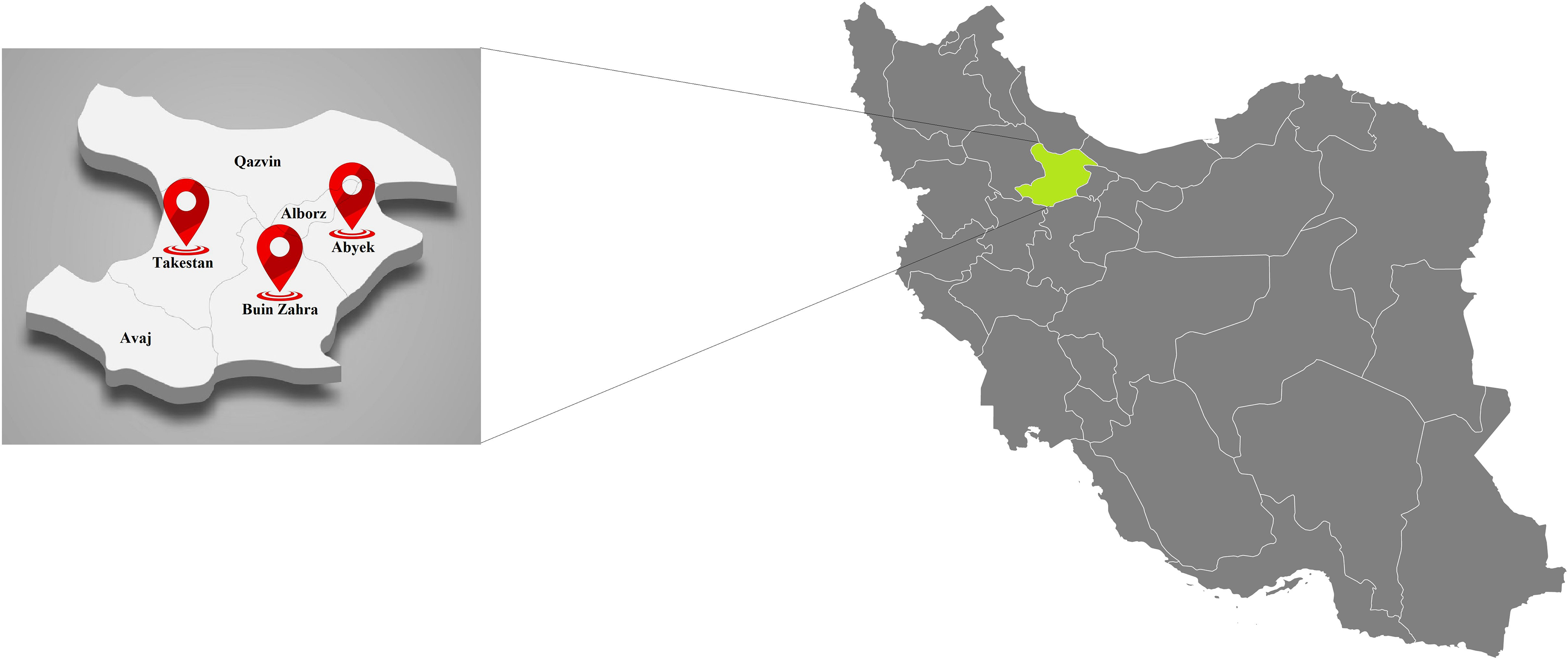
Location of Qazvin Province in Iran (Northwest of Iran).
The province is bordered by Mazandaran and Guilan to the north, Hamedan and Zanjan to the west, Markazi to the south, and Tehran Province to the east (Jahangiri et al., 2011). The region receives about 280 mm of annual rainfall, decreasing from north to south. The average temperature is 15.5°C, with potential evapotranspiration around 2200 mm (Javadi et al., 2022).
Study population, sample collection, and laboratory analyses
A total of 2250 small ruminants, including 1440 sheep and 810 goats of both sexes, were examined post-slaughter at the slaughterhouses of Abyek, Buinzahra, and Takestan in Qazvin Province between December 2023 and November 2024. The sample size was determined on the basis of the average monthly slaughter numbers in large abattoirs in Qazvin Province achieving a valid and representative measure of helminth prevalence, while mitigating the effects of seasonal and species-related variation. Based on the sex, the sheep include 943 males and 497 females, while there were 514 male and 296 female goats.
Visual examinations were performed on the slaughtered animals during the standard slaughtering procedures at each slaughterhouse. Two veterinarians conducted a visual post-mortem examination of each carcass to check for helminthic infections. The organs examined were those commonly affected by helminths, such as the liver, lungs, intestines, digestive tract, kidneys, heart, brain, and lymph nodes. The collected samples, including infected tissues and those suspected of parasitic infection, were stored in iced containers and transported to the laboratory for analysis. The organs were then carefully dissected and examined for helminth parasites in both their adult and larval stages. Moreover, coprological examination was conducted using the following instructions. To ensure the reliability and validity of coprological analysis, quality controls were applied during sample processing and analysis. Approximately 3 g of feces was added to 42 mL of 0.1% NaOH solution and stirred. The mixture was filtered, allowing parasites eggs to sediment for 5 min. The sedimentation process continued until fecal debris was sufficiently eliminated. The sediment was then resuspended in 5 mL of tap water with a drop of methylene blue for staining. All materials were placed in a petri dish for examination under low power magnification. Parasite eggs were counted by moving the petri dish for comprehensive observation.
All recovered parasites were preserved in 70% ethanol for further examination. Parasite identification was conducted using the microscopic method and via morphological features outlined by an identification key reference (Soulsby, 1982).
Results
Parasites observed in selected slaughtered animals
A total of 2250 small ruminants, comprising 1440 sheep and 810 goats, were examined for helminthic infections. The overall prevalence of helminth parasites was 56.6% (1275/2250) with 935 (64.9%) sheep, and 340 (41.9%) goats have been found infected (Table 1).
The Number and Prevalence of Helminthic Parasites Found in Slaughtered Small Ruminants (Sheep and Goats)
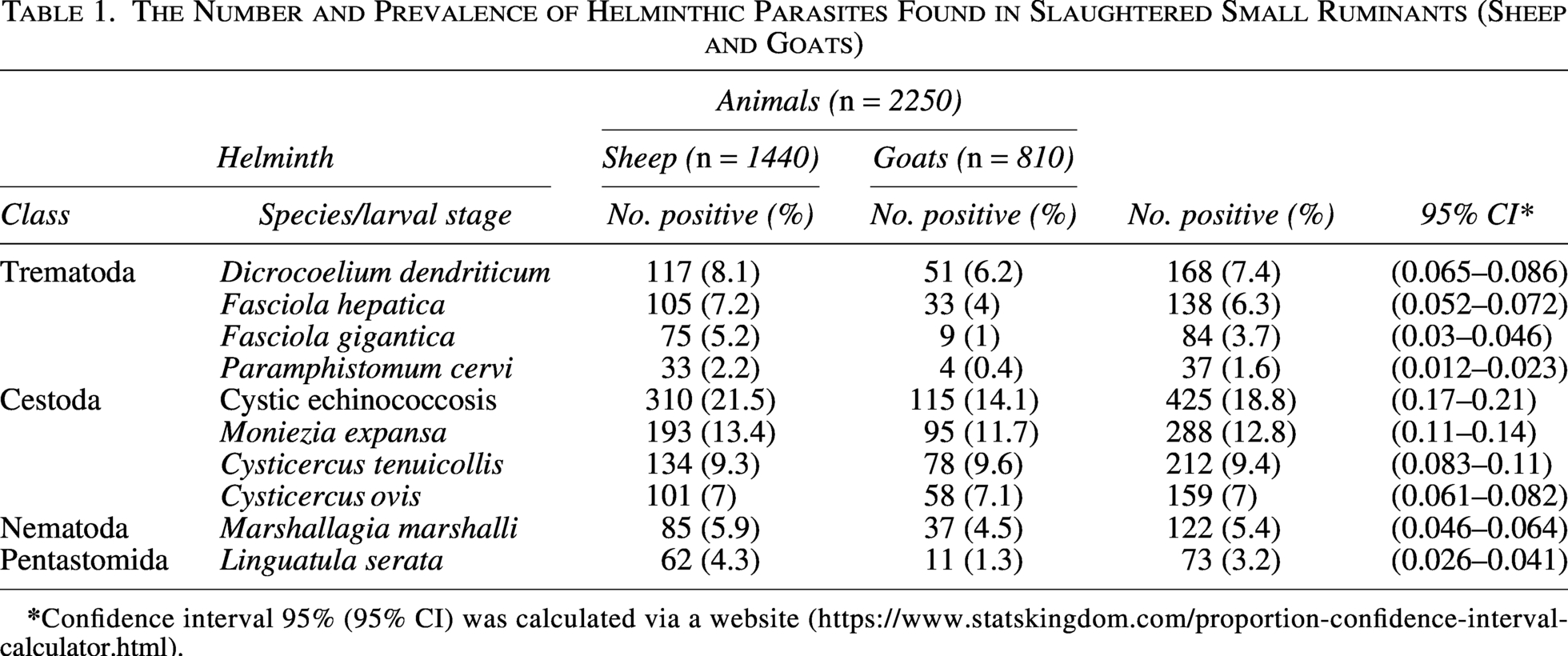
The most frequently detected parasite was cystic echinococcosis (CE), identified in 425 animals (18.8%), followed by Moniezia expansa affecting 288 animals (12.8%). Other helminthic infections were Cysticercus tenuicollis in 212 (9.4%), Dicrocoelium dendriticum in 168 (7.4%), C. ovis in 159 (7%), Fasciola hepatica in 138 (6.3%), Marshallagia marshalli in 122 (5.4%), Fasciola gigantica in 84 (3.7%), Linguatula serrata in 73 (3.2%), and Paramphistomum cervi in 37 (1.6%) animals (Figs. 2 and 3, Table 1).
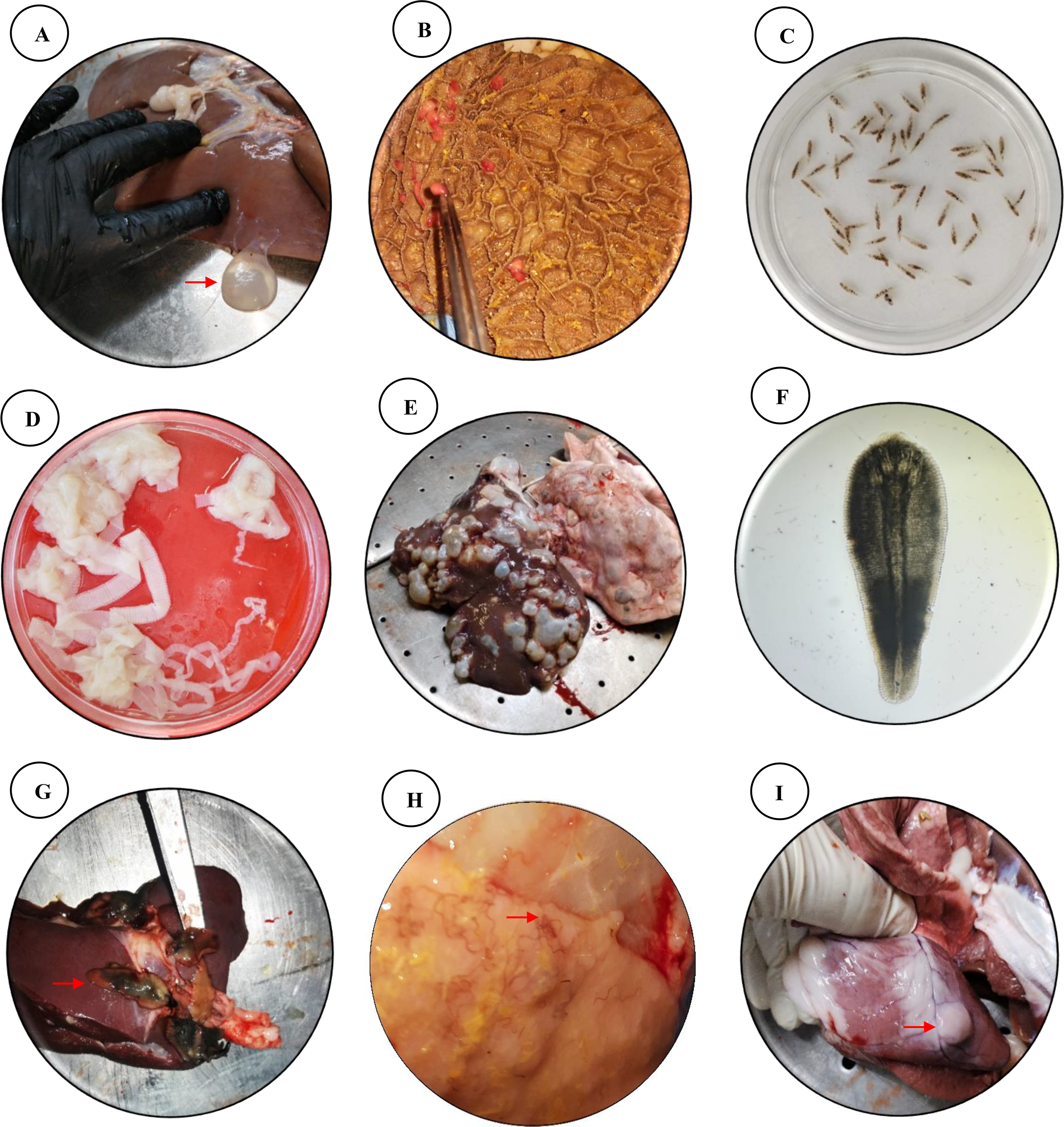
Cysticercus tenuicollis
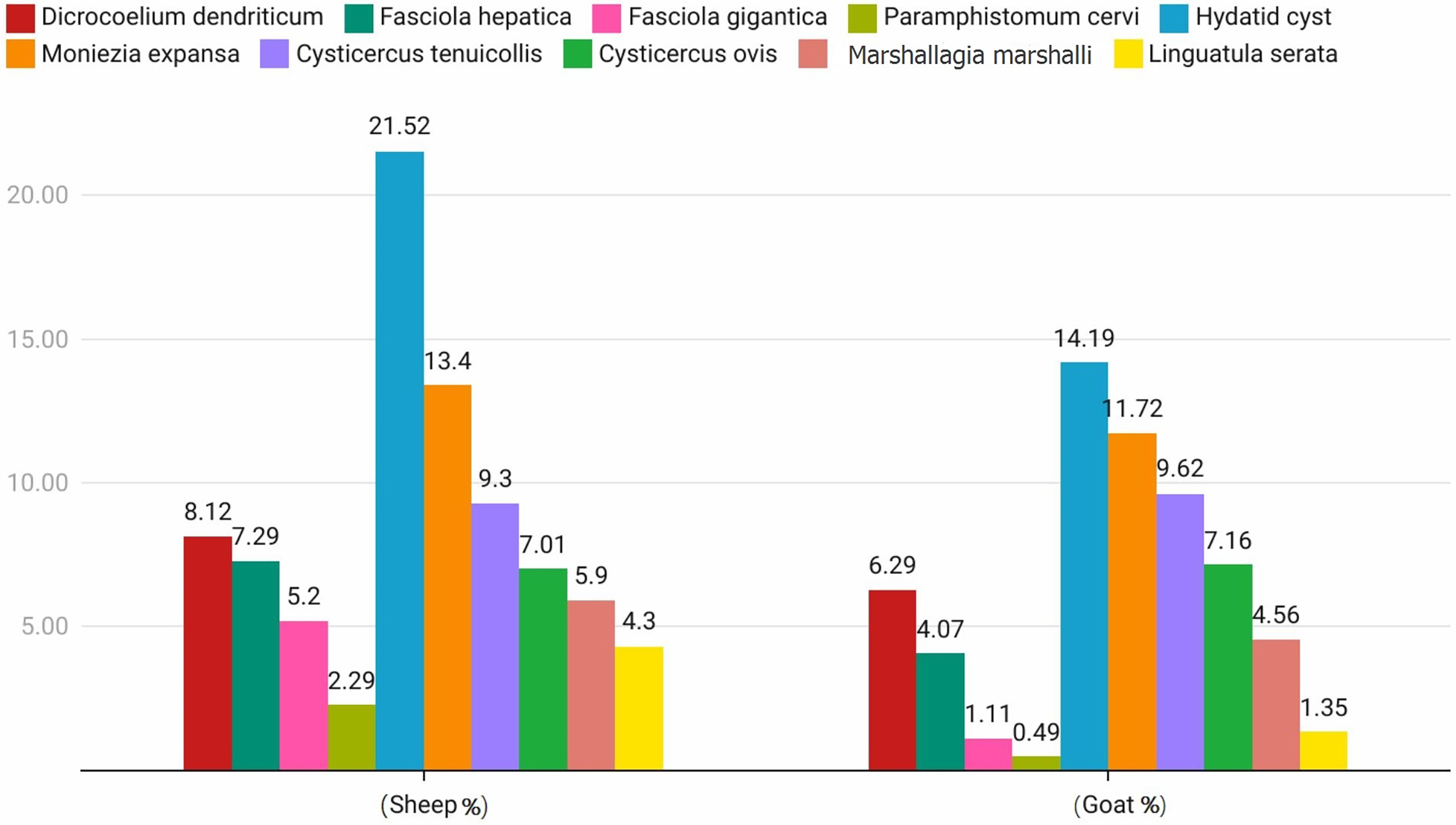
Prevalence rates of each helminthic parasite identified in the slaughtered small ruminants of Qazvin Province, Iran.
Parasitic infection in sheep
CE was the most common infection, found in 310 sheep (21.5%), followed by M. expansa, detected in 193 (13.40%). Other infections included C. tenuicollis in 134 sheep (9.03%), D. dendriticum in 117 (8.1%), F. hepatica in 105 (7.2%), C. ovis in 101 (7%), M. marshalli in 85 (5.90%), F. gigantica in 75 (5.20%), L. serrata in 62 (4.30%), and P. cervi in 33 (2.29%) (Figs. 2 and 3, Table 1).
Parasitic infection in goats
CE was the most common infection, found in 115 (14.1%), followed by M. expansa, detected in 95 (11.72%). Other infections included C. tenuicollis in 78 (9.6%), C. ovis in 58 (7.1%), D. dendriticum in 51 (6.2%), M. marshalli in 37 (4.5%), Fasciola hepatica in 33 (4%), L. serrata in 11 (1.3%), F. gigantica in 9 (1%), and P. cervi in 4 (0.4%) goats (Figs. 2 and 3, Table 1).
Mixed infections
Mixed infections occurred in 406 (18%) animals including 280 (19.4%) sheep and 126 (15.5%) goats (Table 2). In sheep, the most prevalent co-infection involved M. expansa and CE, affecting 95 animals. Another commonly observed combination was M. marshalli alongside CE, identified in 42 animals (Table 2).
Mixed Infections in 2250 Slaughtered Small Ruminants (Sheep and Goats) Examined from Qazvin Province, Iran, Between December 2023 and November 2024
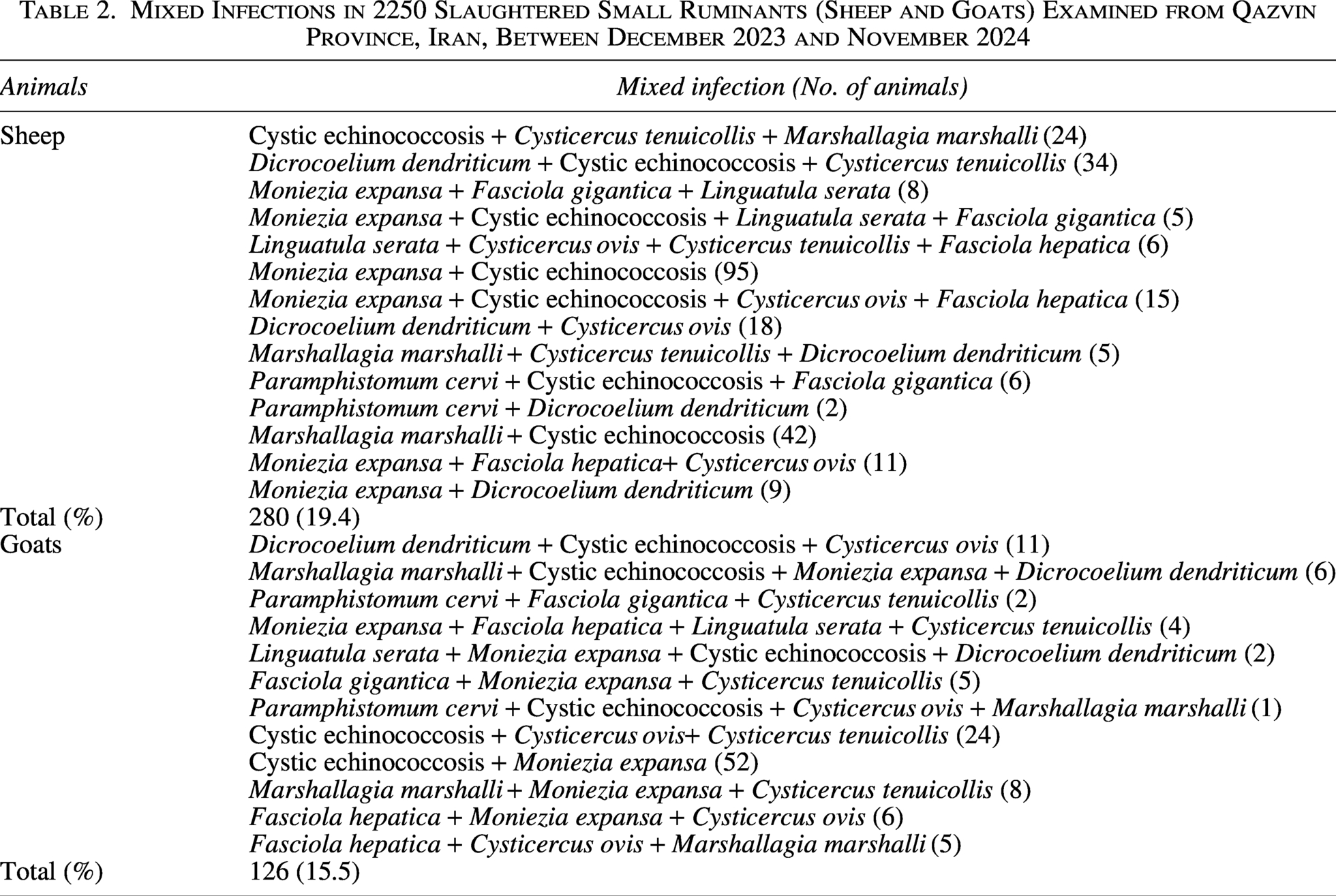
Among goats, the most frequently detected co-infection consisted of CE and M. expansa, occurring in 52 animals. Another notable combination included CE along with C. ovis and C. tenuicollis, found in 24 animals (Table 2).
Parasitic infection based on the sex and age
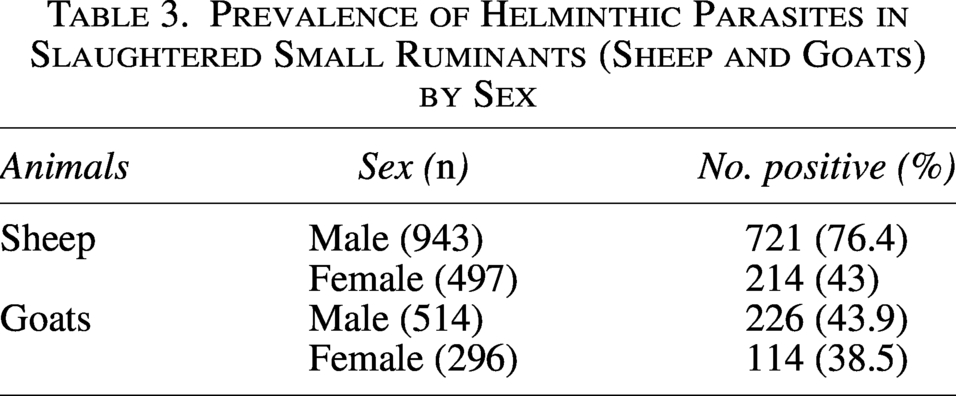
There were significant sex-based variations in the frequency of parasitic infections in sheep and goats. In sheep, the prevalence of parasite infection was considerably greater in males (76.4%) than in females (43%). Likewise, in goats, the frequency of infection was greater in males (43.9%) than in females (38.5%) (Table 3).
Prevalence of Helminthic Parasites in Slaughtered Small Ruminants (Sheep and Goats) by Sex
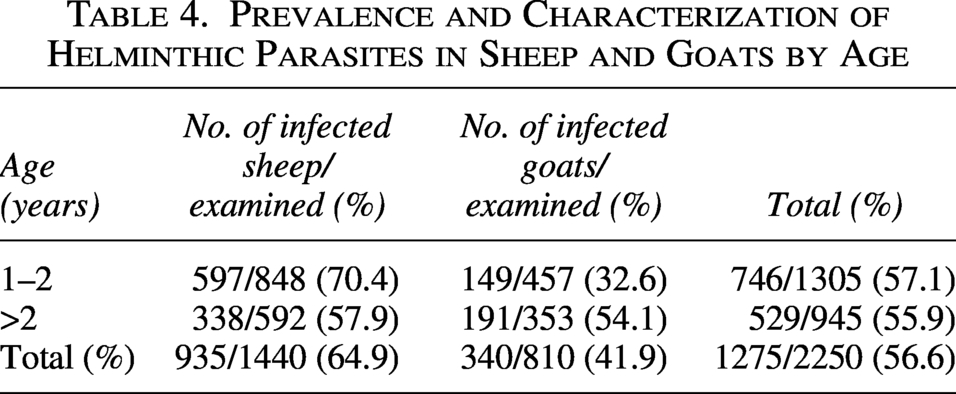
Regarding age, younger sheep (1–2 years) had a higher infection prevalence of 70.40% (597/848) compared with older sheep (>2 years), which had a lower rate of 57.9% (338/592). In contrast, the pattern in goats was reversed, with younger goats (1–2 years) showing a lower infection rate of 32.6% (149/457), while older goats (>2 years) had a higher prevalence of 54.1% (191/353) (Table 4).
Prevalence and Characterization of Helminthic Parasites in Sheep and Goats by Age
Parasitic infection based on the season
In sheep, the highest overall infection rates were observed in spring (n = 310), followed by summer (n = 304), autumn (n = 303), and winter (n = 278). Similarly, in goats, infections were most frequent in spring (n = 150), followed by summer (n = 126), autumn (n = 118), and winter (n = 97) (Table 5).
Seasonal Distribution and Characterization of Helminthic Parasites in Sheep and Goats
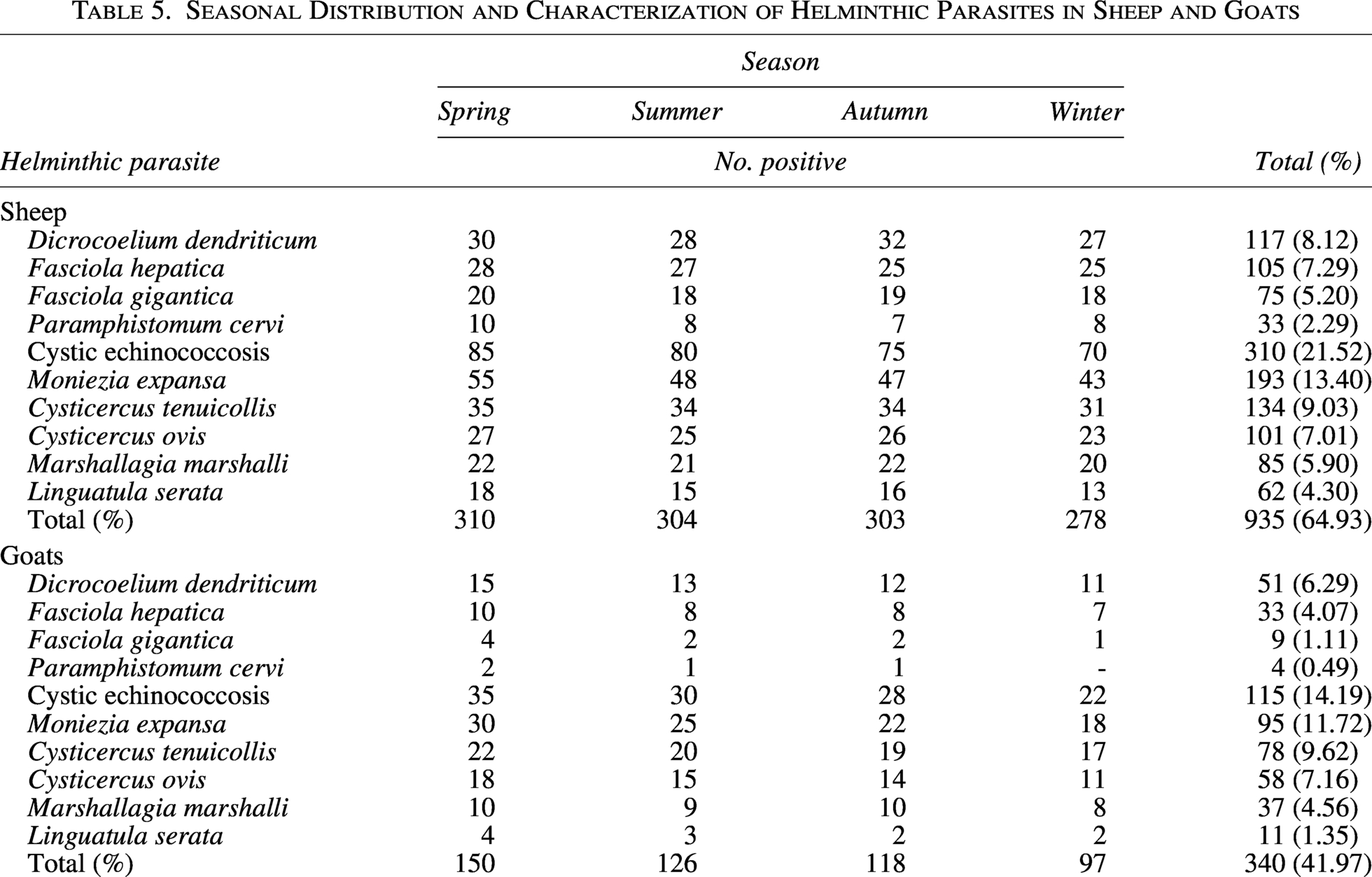
Among trematodes, D. dendriticum and F. hepatica showed relatively stable prevalence across all seasons in both species, with a slight increase in spring and autumn. Fasciola gigantica infections followed a similar pattern, with minor seasonal fluctuations. Paramphistomum cervi had the lowest prevalence, particularly in winter, where no cases were detected in goats (Table 5).
Cestode infections exhibited seasonal trends, with CE being most prevalent in spring (85 cases in sheep and 35 in goats) and showing a gradual decline toward winter (70 cases in sheep and 22 in goats). Moniezia expansa was also more frequently detected in spring and summer, with a decrease in winter. The larval cestodes C. tenuicollis and C. ovis followed a similar trend, with slightly higher infection rates in warmer seasons. Marshallagia marshalli and L. serata infections were relatively stable across seasons in both sheep and goats, although a mild reduction was noted in winter (Table 5).
Economic implications of organ condemnation
The helminthic infections identified in this study did not lead to the total condemnation of the carcasses of small ruminants. However, specific organs, primarily the liver and heart, were condemned during routine meat inspection because of the presence of parasitic lesions. Given the high market value of these organs in Iran and based on the number of livers and hearts condemned in this survey, the total economic loss was estimated to be approximately 17,890 USD.
Discussion
This study emphasizes the high prevalence of helminthic infections in small ruminants in Qazvin Province presenting significant public and animal health implications, particularly given the role these animals play in local livelihoods. The overall prevalence of 56.6% indicates the persistent challenge of parasitic infections in livestock systems, particularly in regions where traditional husbandry systems and environmental conditions predispose to parasite transmission (Nabavi et al., 2011).
In the Afro-Asian region, helminth infections cause major economic losses in sheep and goat farming because of treatment costs and environmental, climatic, and farming factors that drive infection rates (Rehman and Abidi, 2022; Sharma et al., 2020).
The present study revealed different prevalence of one species of nematode, four species of trematode, one species, and the larval stages of three cestodes, as well as one species of pentastomids. The identification of CE, Fasciola spp., D. dendriticum, and L. serata among the parasites observed in sheep and goats in this study is especially noteworthy because of their zoonotic potential.
The highest prevalence of parasites infection observed in both sheep and goat populations was CE, which corresponds with research conducted in various regions of Iran (Daryani et al., 2007; Ziaei et al., 2011) and neighboring countries such as Turkey (Gicik et al., 2004; Oguz and Deger, 2013), Azerbaijan (Azizova and Muradova, 2024), and Iraq (Kaream and Amir, 2024), underscoring the endemic characteristics of the infection within this specific geographical context. The dominance of CE in both sheep and goats mirrors findings from national abattoir surveys, which identified this infection as endemic in Iranian livestock, with prevalence rates ranging from 5.9% to 6.4% (Khalkhali et al., 2018). The high detection of CE in this study aligns with northwestern Iran’s status as a high-risk zone for this infection, likely because of close interactions between livestock and canid definitive hosts in rural areas (Kiani et al., 2021; Nabavi et al., 2011).
The global prevalence of CE is estimated to result in 1–3.6 million disability-adjusted life years worldwide, with the majority of cases occurring in low- to middle-income countries (Budke et al., 2006; Torgerson et al., 2015). In Qazvin province, a 10-year survey found 203 cases of CE, resulting in a surgical incidence rate of 1.49 per 100,000 individuals (Yazdani et al., 2021).
Livestock farming plays a crucial role in human nutrition and socioeconomic development. However, it also carries the risk of CE and zoonotic diseases, which can lead to significant economic costs for countries because of the impact of these diseases (Saeed et al., 2000; Sariözkan and Yalçin, 2009). These losses stem from the costs of treatment and the reduced productivity of infected livestock, including lower growth rates, decreased fertility, and diminished milk production (Budke et al., 2006).
Similarly, D. dendriticum and Fasciola spp. were consistent with prior reports of trematode prevalence in northern Iran, where climatic conditions and intermediate host availability drive transmission (Kiani et al., 2021; Nabavi et al., 2011).
Notably, the detection of M. marshalli and C. tenuicollis corresponds to studies in wild ruminants, suggesting overlapping parasite communities between domestic and wildlife hosts in shared grazing systems (Modabbernia et al., 2021).
The detection of C. tenuicollis and C. ovis underscores the need for targeted cestode control, as they cause serious organ damage and economic loss. In Iran, Taenia hydatigena is endemic, with dogs and wild carnivores as definitive hosts, and livestock and wild herbivores as intermediates. Cysticerci have also been reported in wild animals, especially in western and northern regions (Radfar et al., 2005).
The higher infection rates in male sheep compared with females may reflect behavioral differences, such as prolonged grazing periods or increased mobility, which elevate exposure to contaminated pastures (Nabavi et al., 2011).
This study found that helminth infections in sheep and goats were slightly more common in spring and summer, likely because of better larval survival in warm, humid conditions and increased grazing activity (Nabavi et al., 2011). For instance, the rise in cestode infections aligns with studies showing heightened Moniezia spp. transmission in spring because of intermediate host (mite) proliferation (Schuster et al., 2000). These patterns of seasonality indicate potential environmental or management-related influences on parasite transmission and host susceptibility.
Global and local changes such as shifts in temperature, rainfall, humidity, pollution, and farming practices can affect the spread and severity of infections. These stresses impact both hosts and parasites at various life stages. Climate change especially drives parasite adaptation, including changes in strain timing, genetics, or host preference, with mixed effects on their survival (Sharma et al., 2020).
Prevention of introduction of zoonotic helminths into the human food chain needs to be tackled by an integrated approach for animal health, food processing, and public awareness. Key actions include rigorous meat inspection practices to detect and remove infected tissue, proper cooking and handling of meat products, and good livestock management practices to reduce parasite infestation. Public health education campaigns also play a crucial role in making individuals aware of the risks of consuming undercooked or contaminated meat. With the integration of these steps, the spread of zoonotic helminths from animals to humans can be prevented efficiently, thereby enhancing food security and protecting public health (Elsohaby and Villa, 2023).
Limitations
While this study highlights the prevalence of helminthic parasite in small ruminants in Qazvin Province, it has limitations. Based on morphology, species may have been hard to accurately identify, especially from closely related helminths. Future studies using molecular diagnostics could enhance precision and reveal new species. In addition, since data came from abattoirs, it may not reflect parasite loads in live animals or all regions. Broader, on-farm, and long-term monitoring is needed for a fuller understanding.
Conclusion
The high prevalence of helminth infections, especially CE and other zoonotic parasites in small ruminants in Qazvin Province, highlights the urgent need for coordinated control efforts. These parasites pose risks to both human and animal health, affecting food safety and public health systems. Inadequate deworming and poor pasture management may contribute to the problem. Improving anthelmintic use and pasture rotation can boost livestock productivity. The estimated economic losses in this study reflect the substantial financial impact of parasitic infections in livestock and highlight the critical need for appropriate control measures to mitigate these effects. This study supports a One Health approach, combining veterinary, public health, and environmental strategies. Effective control requires detailed data on parasite types, prevalence, and transmission dynamics in each region.
Authors’ Contributions
M.B., G.S., and A.V.E. contributed to the study design. M.M., M.I., K.H.-N., A.J., F.N.H., S.B., A.A., A.V.E., and M.B. contributed to sample collection. M.B., K.H.-N., A.A., M.O., O.N., and A.V.E. analyzed the data and designed the figures and tables. M.B. and A.V.E. wrote the article. M.B., G.S., and A.V.E. supervised and edited the article. All authors have read and agreed to the published version of the article.
Footnotes
Acknowledgments
The authors sincerely appreciate the staff of the Medical Microbiology Research Center, Qazvin University of Medical Sciences, Qazvin, Iran.
Funding Information
This study was supported by the Medical Microbiology Research Center, Qazvin University of Medical Sciences, Qazvin, Iran, under the contract no. code: IR.QUMS.REC.1403.086.
Confirmation Statement
Each author confirms that this research is supported by an institution that is primarily involved in education or research.
Ethics Statement
The experimental research reported in this study was approved by the ethics committee of Qazvin University of Medical Sciences, Iran (code: IR.QUMS.REC.1403.086).
Data Availability Statement
The data used in this study are available upon reasonable request to the corresponding.
Disclosure Statement
No competing financial interests exist.