






Abstract
Objective: The aim of this study was to determine whether six genetic polymorphisms confer susceptibility to colorectal cancer (CRC). Methods: A systematic search for candidate genes of CRC was performed among several online databases, including PubMed, Embase, Web of Science, the Cochrane Library, CNKI, and Wanfang online libraries. After a comprehensive filtering procedure, we harvested five genes, including MGMT (rs12917 and rs2308321), ADH1B (rs1229984), SOD2 (rs4880), XPC (rs2228001), and PPARG (rs1801282). Using the REVMAN and Stata software, six meta-analyses were conducted for associations between CRC and the just-mentioned genetic variants. Results: A total of 34 comparative studies among 17,289 cases and 54,927 controls were involved in our meta-analyses. Significant association was found between ADH1B rs1229984 polymorphism and CRC (p=0.03, odds ratio [OR]=1.18, 95% confidence interval [CI]=1.01-1.36). We also found significant association between PPARG rs1801282 polymorphism and CRC (p=0.004, OR=1.498, 95% CI=1.139-1.970), and this significant association is specific in Caucasians (p=0.004, OR=1.603, 95% CI=1.165-2.205). Conclusions: The current meta-analysis has established that ADH1B (rs1229984) and PPARG (rs1801282) are two risk variants of CRC.
Introduction
C
O6-methylguanine-DNA methyltransferase (MGMT) is involved in the direct damage-reversal pathway, which repairs damaged DNA and thus decreases cancer risk (Loh et al., 2011). Aldehyde dehydrogenase-2 (ADH1B) is a major enzyme involved in the alcohol-metabolizing pathways, and ADH1B can metabolize acetaldehyde into acetic acid for detoxification (Yang et al., 2009). Although a meta-analysis reported that ADH1B genetic polymorphisms can increase the risk of cancers of the upper aerodigestive tract, including the oral cavity, pharynx, larynx, and esophagus (Guo et al., 2012), there was a lack of summary for ADH1B variants in the susceptibility of CRC. Superoxide dismutase 2 (SOD2) is a vital gene involved in the oxidative stress pathway, and is implicated in CRC development by affecting cellular processes (Funke et al., 2009). The xeroderma pigmentosum complementation group C (XPC) gene plays an important role in DNA damage recognition and repairing (Wu et al., 2011). PPARG plays a key role in the regulation of lipid, glucose metabolism, and selected insulin-sensitizing and anti-inflammatory effects (Tsilidis et al., 2009).
Associations between six single-nucleotide polymorphisms (SNPs) of the earlier-mentioned five genes and CRC have been reported in different ethnic groups (Smith et al., 2001; Landi et al., 2003, 2005; Krzesniak et al., 2004; Jiang et al., 2005; McGreavey et al., 2005; Murtaugh et al., 2005; Slattery et al., 2005, 2006; Berndt et al., 2006; Huang et al., 2006; Koh et al., 2006; Kuriki et al., 2006; Matsuo et al., 2006; Moreno et al., 2006; Theodoropoulos et al., 2006; Tranah et al., 2006; Hansen et al., 2007; Kang et al., 2007; Stern et al., 2007; Vogel et al., 2007; Yin et al., 2007; Kury et al., 2008; Funke et al., 2009; Khatami et al., 2009; Tsilidis et al., 2009; Yang et al., 2009; Engin et al., 2010; Meplan et al., 2010; Loh et al., 2011; Wu et al., 2011; Crous-Bou et al., 2012; Gil et al., 2012). These six variants comprised rs12917 and rs2308321 of MGMT, rs1229984 of ADH1B, rs4880 of SOD2, rs2228001 of XPC, and rs1801282 of PPARG.
Numerous studies have shown the association of the just-mentioned genetic polymorphisms with CRC. Since the allelic frequencies of genes often differ substantially in different ethnic groups, meta-analysis may help compare the genetic associations in different populations. In the present study, we perform meta-analyses to evaluate the contribution of the six polymorphisms to CRC susceptibility in different populations. The goal of our study is to summary the contribution of rs12917 and rs2308321 of MGMT, rs1229984 of ADH1B, and rs4880 of SOD2, and to update the meta-analyses for rs2228001 of XPC (He et al., 2013) and rs1801282 of PPARG (Xu et al., 2010).
Materials and Methods
Literature search
We searched publications in the electronic databases (including PubMed, Embase, Web of Science, the Cochrane Library, CNKI, and Wanfang online libraries) from 2000 to 2013. We used combinations of text words and medical subject headings, including “colorectal cancer” or “colorectal carcinoma” together with “SNP” or “polymorphism” or “variant” or “mutation.” The titles and abstracts were screened to collect the relative case-control or cohort studies. Full-text articles were read through to get useful information including ORs, 95% confidence intervals (CIs), and genotyping data to estimate the relative risk. References of the articles were also checked for other studies of potential relevance. After a comprehensive literature research, a total of 34 studies on six SNPs were selected in the current meta-analysis. For the meta-analysis of PPARG rs1801282, there are four additional association studies of CRC after the previous meta-analysis (Xu et al., 2010). Other meta-analyses were involved with the SNP that was reported by at least three independent association studies and had no previous meta-analysis concerning CRC.
Inclusion criteria
Studies should meet all of the following criteria: (1) be a case-control or cohort study, (2) assess the contribution of the six polymorphisms with CRC risk, (3) provide the allele frequency or genotype distribution data, (4) be an independent study, and (5) be published in the peer-reviewed journal.
Data extraction
The data retrieved from the corresponding articles included first author's name, year of publication, study design, ethnicity, genotyping method, the number of cases and controls, country of the study, and genotyping platform.
Statistical analysis
Meta χ2 tests were used to calculate the trend, odds ratios (OR), and empirical 95% CIs using REVMAN software (version 5.0; Cochrane Collaboration, Oxford, United Kingdom) and STATA (version 10.0; Stata Corporation, College Station, TX). We calculated power using PS: Power and Sample Size Calculation (version 3.0, 2009, by William D. Dupont and Walton D. Plummer, Jr.) (Dupont and Plummer, 1990). The power calculation is based on the sample size in the case-control study. Cochran's Q statistic was used to evaluate the heterogeneity of studies involved in the meta-analysis (DerSimonian and Laird, 1986). I2 statistic was applied to demonstrate the proportion of the total variation owing to heterogeneity. For I2 <50%, a fixed-effect model was used to calculate the combined ORs and their 95% CIs, otherwise a random-effect model was applied (DerSimonian and Laird, 1986). The primary statistical test is a trend test, and the effect is represented by heterozygote and homozygote ORs. If the ORs show a recessive model, then the model is not well represented by a trend test. Funnel plots were used to show publication bias (Egger et al., 1997). The pooled OR was inferred by a Z-test (Zaykin, 2011).
Results
Characteristics of published studies
A total of 2836 articles were identified during premature searches with our searching strategy of the five databases (PubMed: 2820; Wanfang database: 10; and CNKI: 6). Two thousand eight hundred thirty-six articles were retrieved after excluding overlapping studies. After excluding reviews, animal studies, comments, letters, and studies unrelated to CRC, 545 studies that assess the association between the six SNPs and CRC were found. Among the remaining 545 articles, 525 studies did not evaluate the five SNPs. Only 34 articles on the six genetic variants met our selection criteria. After searching reference lists, relevant meta-analyses, and reviews, we did not find additional studies. The selection process is illustrated in Figure 1. These 34 studies involved in this meta-analysis comprised 12 studies in the Asian population, 21 studies in the Caucasian population, and 1 study in the African population, covering in total 17,289 cases and 54,927 controls. The characteristics of selected studies are illustrated in Table 1.
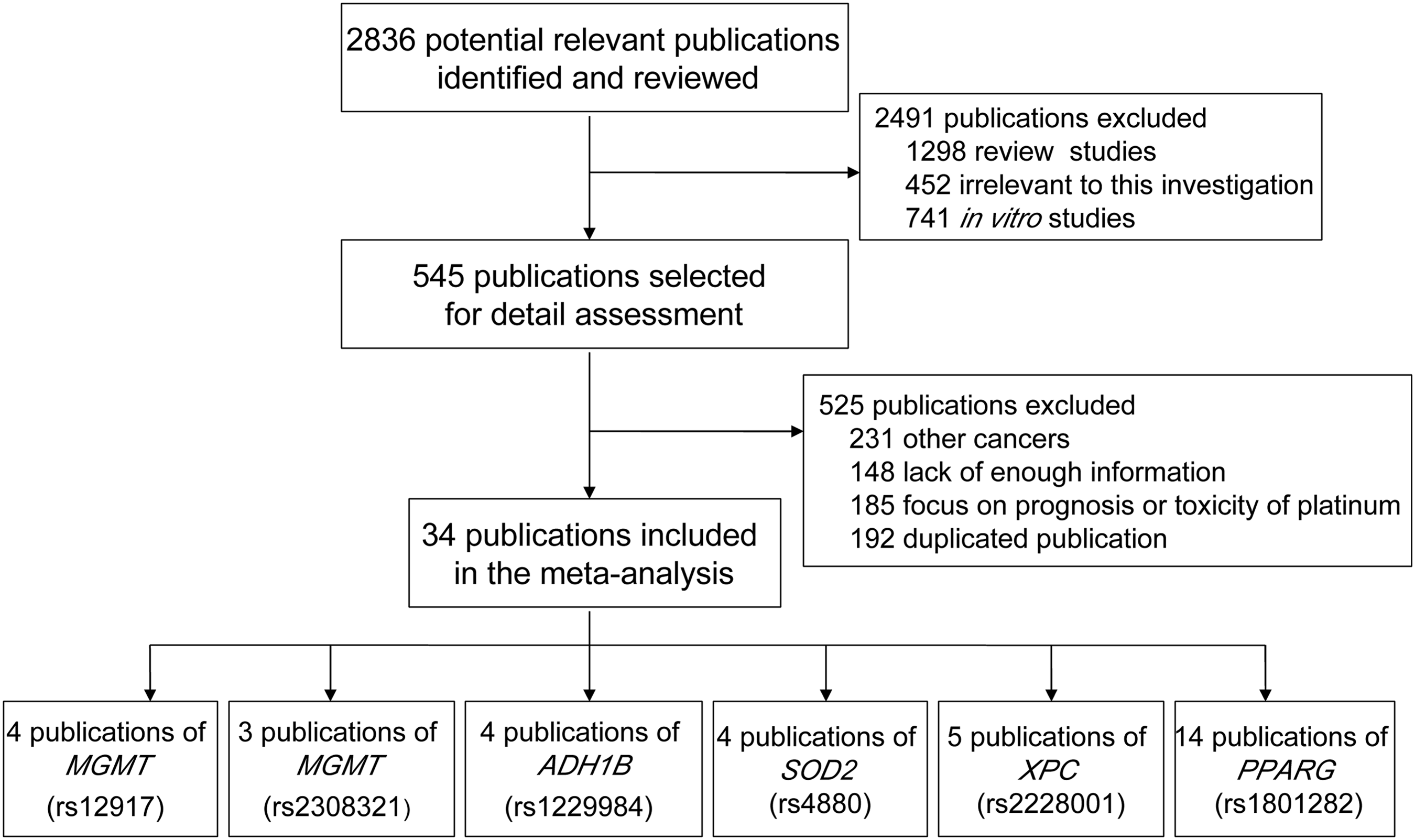
Flow diagram for selection of studies.
AA, homozygotes for the common allele; AB, heterozygotes; BB, homozygotes for the rare allele; NA, not available; PCR-RFLP, polymerase chain reaction-restriction fragment length polymorphism; PCR-CTPP, polymerase chain reaction with confronting two-pair primers; KASPar, kompetitive allele specific PCR; PCR-based DGGE, PCR and denaturing gradient gel electrophoresis; CI, confidence interval; OR, odds ratio; SNP, single-nucleotide polymorphism.
Heterogeneity
Our meta-analysis showed that there was minimal heterogeneity for rs1229984 (Arg47His) of ADH1B (I2=0%), rs12917 (Leu84Phe) of MGMT (I2=0%), and rs4880 (V16A) of SOD2 (I2=0%, Fig. 2). Large heterogeneities were observed for the meta-analyses of rs2228001 (Lys939Gln) of XPC (I2=92%), rs2308321 (Ile143Val) of MGMT (I2=95%), and rs1801282 (P12A, 34C>G) of PPARG (I2=92%, Fig. 3).
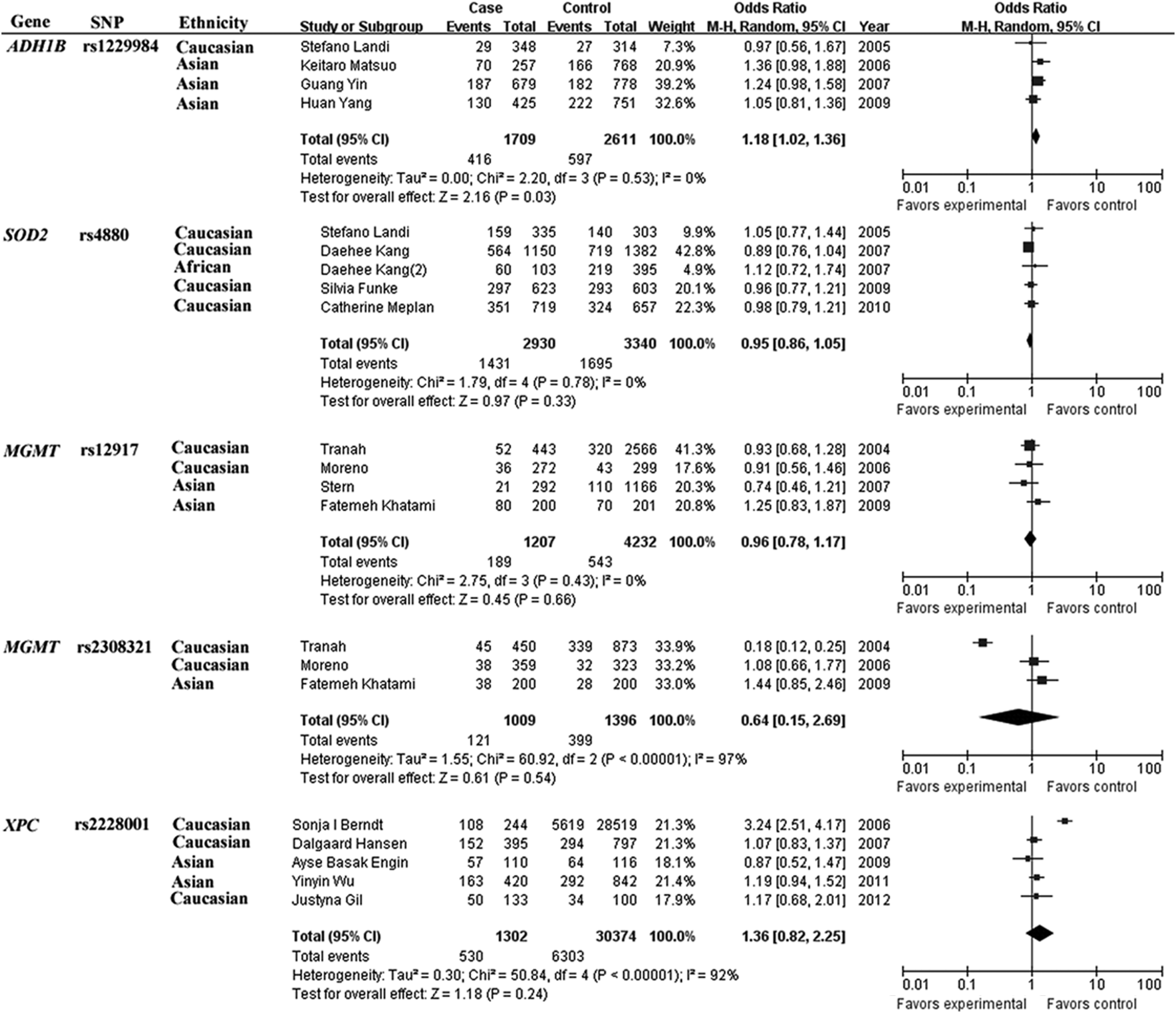
Forest plots for the case-control studies between five polymorphisms and colorectal cancer (CRC) in our meta-analysis.
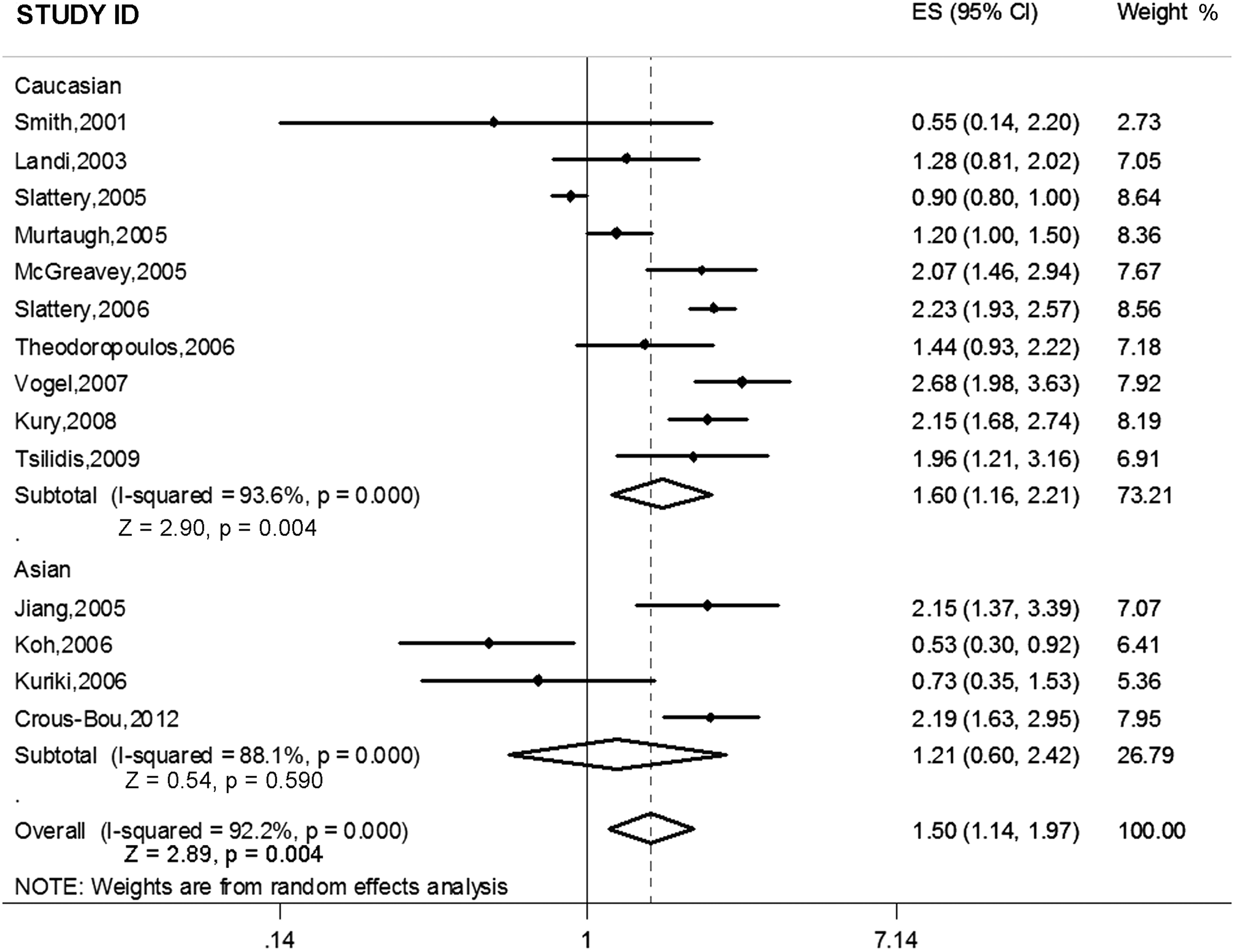
Forest plots for the case-control studies between rs1801282 of PPARG and CRC in our meta-analysis.
Publication bias
Begg's regression test was used to detect publication bias for all six polymorphisms. The results are shown in Figures 4 and 5. The publication bias in the “Results” section was also corrected. As shown in Figures 4 and 5, no statistical evidence of publication bias was found using Begg's regression test for the meta-analysis of rs1229984 of the ADH1B gene (p=1), rs12917 (p=0.734) and rs2308321 (p=0.296) of the MGMT gene, rs2228001 of the XPC gene (p=0.462), rs1801282 (P12A, 34C>G) of the PPARG gene (p=0.101), and rs4880 of the SOD2 gene (p=0.086).
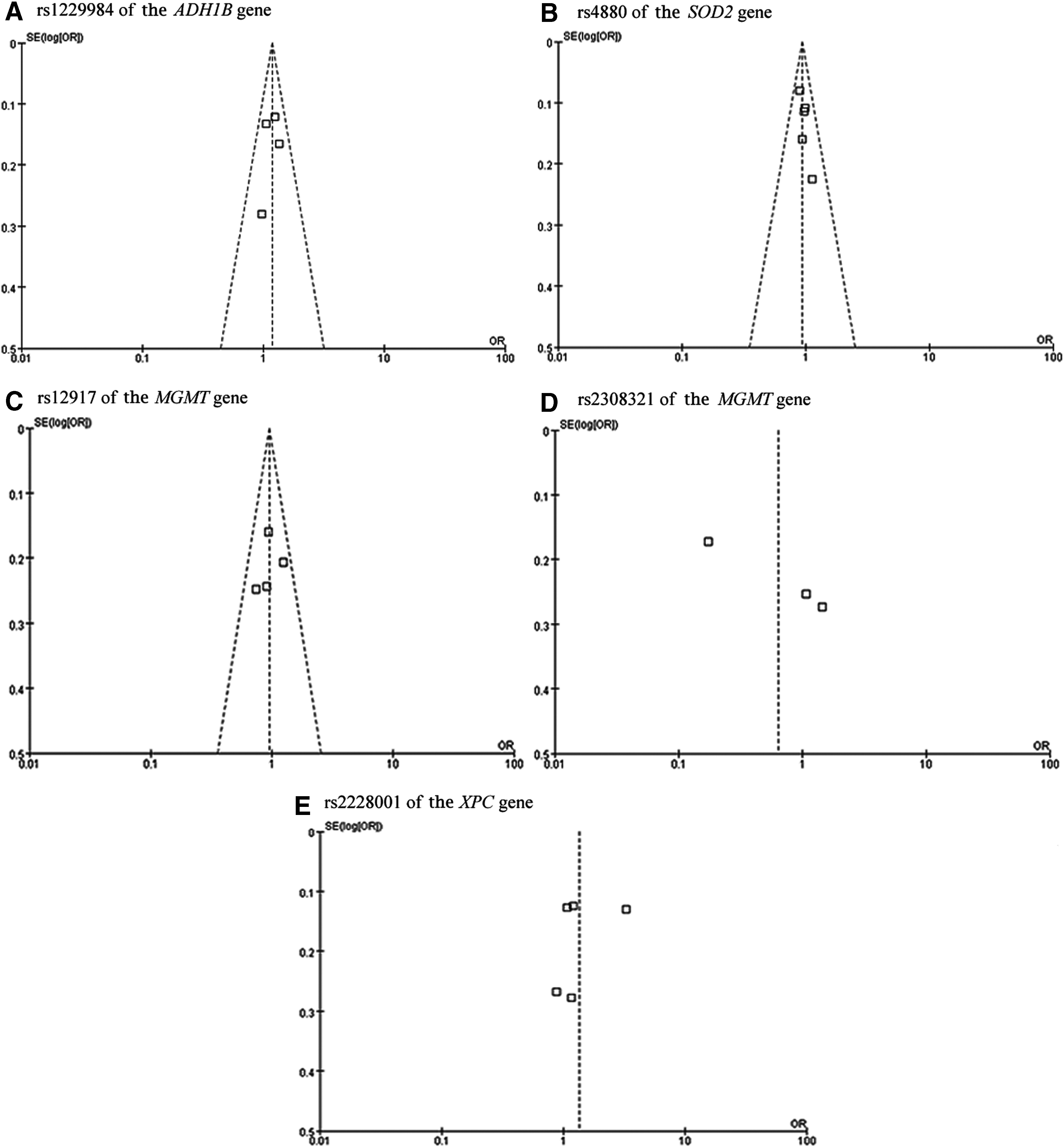
Publication bias test of five polymorphisms in our meta-analysis.
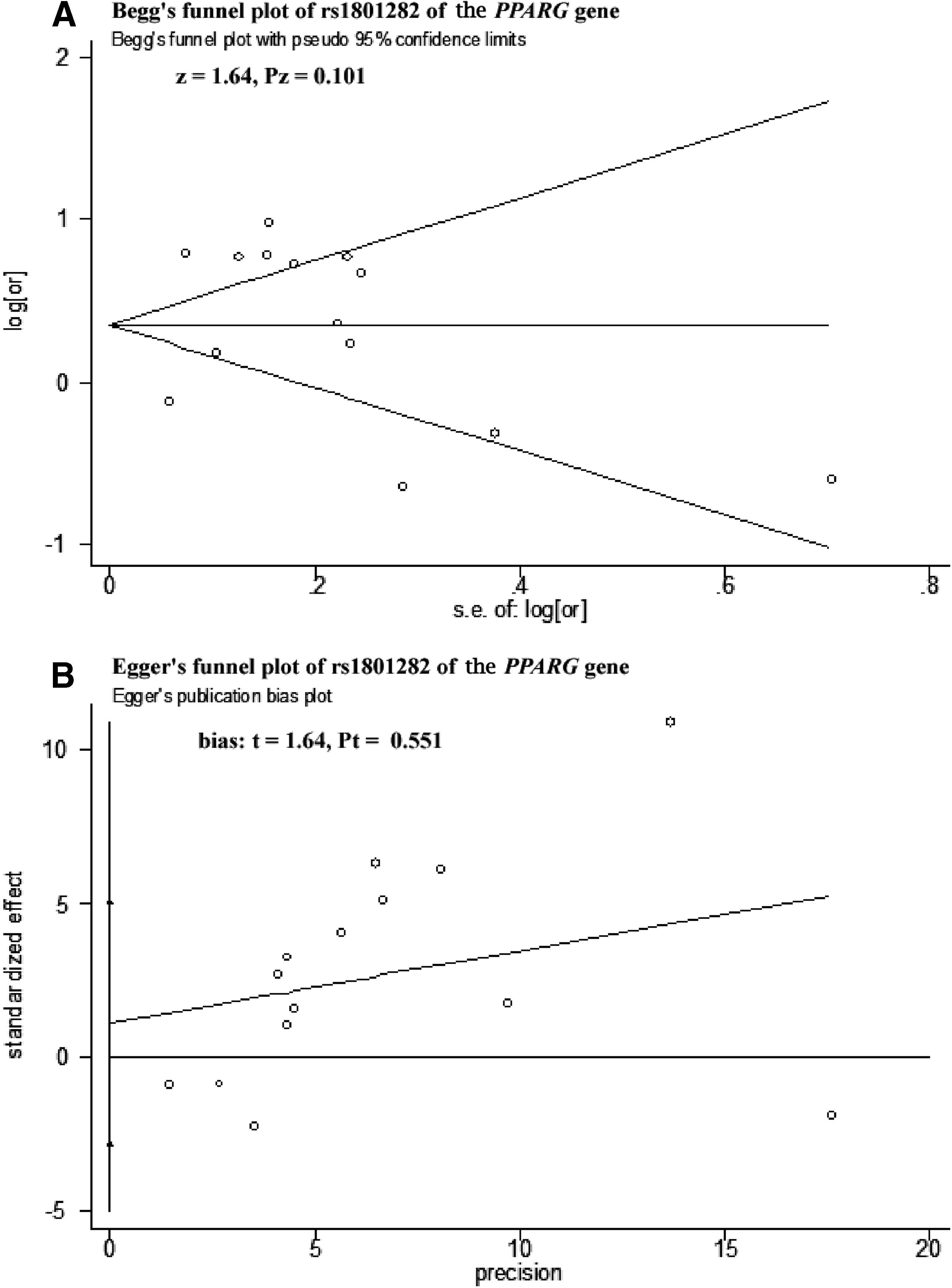
Publication bias test of PPARG rs1801282 polymorphism in our meta-analysis.
Quantitative synthesis
The meta-analysis of rs1229984 was performed among 1709 CRC cases and 2611 controls (Landi et al., 2005; Matsuo et al., 2006; Yin et al., 2007; Yang et al., 2009). As shown in Figure 2, rs1229984 of the ADH1B gene was significantly associated with CRC in the Asian and Caucasian populations (the overall OR=1.18, 95% CI=1.01-1.36, p=0.03). The meta-analysis of rs1801282/P12A/34 C>G of PPARG was involved with 14 studies (Smith et al., 2001; Jiang et al., 2005; Landi et al., 2003; McGreavey et al., 2005; Murtaugh et al., 2005; Slattery et al., 2005, 2006; Koh et al., 2006; Kuriki et al., 2006; Theodoropoulos et al., 2006; Vogel et al., 2007 ; Kury et al., 2008; Tsilidis et al., 2009; Crous-Bou et al., 2012) among 9132 CRC cases and 12,974 controls. Using the random-effect model, our result indicated that rs1801282-G contributed to the risk of CRC (the overall OR=1.50, 95% CI=1.14-1.97, p=0.004) in the Asian and Caucasian populations. Notably, significant association was found in the Caucasian subgroup when stratified by ethnicity (p=0.004, OR=1.603, 95% CI=1.165-2.205, Fig. 3). In addition, no significant association was found between the risk of CRC and the other four genetic polymorphisms (MGMT rs12917: the overall OR=0.96, 95% CI=0.78-1.17, p=0.66; MGMT rs2308321: the overall OR=0.64, 95% CI=0.15-2.69, p=0.54; SOD2 rs4880: the overall OR=0.95, 95% CI=0.86-1.05, p=0.33; and XPC rs2228001: the overall OR=1.36, 95% CI=0.82-2.25, p=0.24).
Power calculation on the combined sample size showed that the statistical powers were all higher than 80% for the meta-analyses except rs12917 of the MGMT gene (78.6%).
Discussion
Numerous studies investigated the role of genetic variants in cancer development and progression. In the current meta-analysis, we searched for evidence of associations between six SNPs of five genes and CRC. Our findings supported a significant association of ADH1B rs1229984 and PPARG rs1801282 with the risk of CRC. Further, we found that the significant association between PPARG rs1801282 and CRC was specific to the Caucasian subgroup.
It is recognized that drinking is a risk factor of CRC (Zambirinis et al., 2009). The ADH1B gene product is an enzyme involved in metabolizing alcohol. Alcohol is initially oxidized to acetaldehyde by ADH, and then further metabolized to acetate by ALDH1B (Yin et al., 2007). ADH1B rs1229984 (Arg47His) can repress the activity of ADH1B in the carriers of ADH1B His47His by 40-fold (Yang et al., 2009). The interrupted ADH1B gene function may accumulate the quantity of acetaldehyde and reactive oxygen species produced during the metabolic process, and hence increases the toxicity of alcohol and the risk of CRC (Yang et al., 2009). The current meta-analysis has indicated that the mutant allele increases the risk of CRC by 18% (p=0.03, OR=1.18, 95% CI=1.01-1.36). This agrees with the previous observation (Yang et al., 2009). The power calculation for rs1229984 suggests that the power is 94.6% to detect a relative risk at a significant level of 0.05. Allele rs1229984-A frequency is minor allele in Asians (24.7%). The allele frequency in the Asian population is consistent with the A allele frequency in the HapMap HCB population (24.4%).
PPARG is a nuclear hormone receptor, which mainly exists in adipose tissue, colon, and immune system (Tontonoz et al., 1994). PPARG plays a key role in adipogenesis, energy homeostasis, and regulation of adipocyte-specific gene expression (Martin et al., 1997). As a tumor-suppressor gene (Kliewer et al., 2001), PPARG mutations were detected in CRC, such as rs1801282 (Pro12Ala or 34C>G) (DuBois et al., 1998). PPARG gene mutation may increase risk of CRC by interruption of the metabolism of a high-fat diet (Murtaugh et al., 2005). For some studies that had not provided the number of the allele, we applied Stata software to calculate the overall OR and 95% CI. Our meta-analysis indicated that rs1801282-G contributed to the risk of CRC in the Asian and Caucasian populations (the overall OR=1.50, 95% CI=1.14-1.97, p=0.004). Notably, significant association was found in Caucasian subgroup (p=0.004, OR=1.603, 95% CI=1.165-2.205).
Our results should be interpreted with some caution. First, there is significant heterogeneity for several studies in our meta-analysis, which, along with publication bias and other unknown confounding factors, may distort the current meta-analysis. Second, limited data hampered our attempts to examine associations between these variants and the clinical manifestation of CRC. Therefore, statistical bias may exist in the current meta-analysis. Third, power calculation for rs12917 demonstrated that the meta-analysis was underpowered (78.6%). The moderate sample size in the meta-analysis of MGMT rs12917 polymorphism might be still unable to draw a conclusion of the association between rs12917 and CRC. Lastly, positive results are more likely to be published, so there may be potential publication biases in our meta-analysis.
In conclusion, the meta-analysis among 1709 cases and 2611 controls suggests that ADH1B rs1229984 is a risk variant in Asian and Caucasian populations. Another meta-analysis among 9132 cases and 12,974 controls established that rs1801282 of PPARG contributes to CRC in Asian and Caucasian populations.
Footnotes
Acknowledgments
The research was supported by the grants from the National Natural Science Foundation of China (31100919), Natural Science Foundation of Zhejiang Province (LR13H020003), K.C. Wong Magna Fund in Ningbo University, Ningbo social development research projects (2012C50032), and Scientific Innovation Team Project of Ningbo (2011B82014).
Author Disclosure Statement
None of the authors have any commercial or other associations that might pose a conflict of interest. All authors are responsible for the content and writing of the article.